

There is one lakeside destination I have visited a few times now that I think has a lot to offer adventurous visitors and travellers who love a slice of luxury.
I love a weekend away in Wales’ most scenic spots, and we certainly have plenty to choose from. There is one lakeside destination I have visited a few times now that I think has a lot to offer adventurous visitors and travellers who love a slice of luxury.
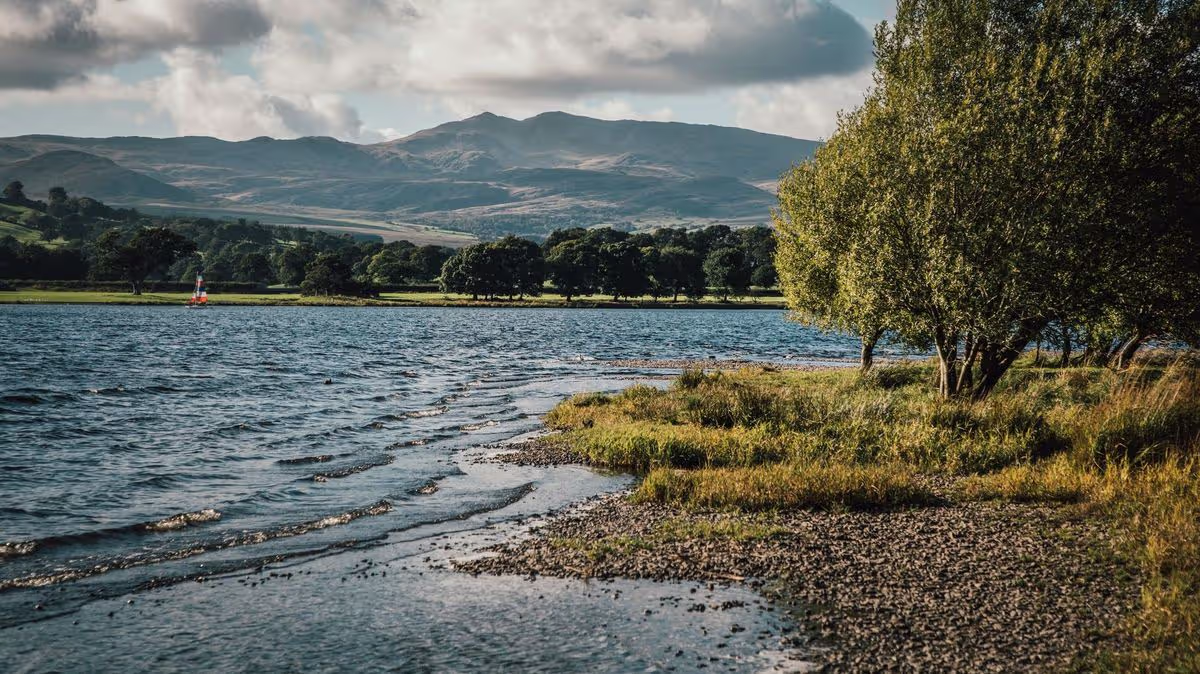
Bala is perched on the northern edge of Llyn Tegid, a freshwater glacial lake surrounded by the soaring peaks, and it is where you’ll find Palé Hall Hotel, the proud recipient of a MICHELIN Star key, which recognises hotels for outstanding stays.
This new way of recognising the best hotels in the world includes three properties in Wales, including Grove of Narberth, Penmaenuchaf and Palé Hall, which are named in The MICHELIN Guide as must-visit destinations.
On October 8, inspectors also revealed the new “Key” distinctions, which, like Michelin Stars for restaurants, highlight the most outstanding hotels in the UK and Ireland.
Palé Hall has long been one of my favourite hotels in Wales, and I’ve stayed several times. With its illustrious history and lavish décor, this 18-room Victorian mansion is the perfect setting for a swanky escape on the edge of Eryri National Park (Snowdonia), with access to trails, lakes, and adventure activities.
Bala is perched on the northern edge of Llyn Tegid, a freshwater glacial lake surrounded by the soaring peaks of Aran Benllyn, Arenig Fawr, and the Berwyn Mountains. The lake here is renowned for its impressive mountain scenery, wildlife, and opportunities for fishing and swimming.
This historic market town brims with charm and strong Welsh culture, with a high percentage of Welsh speakers. While the lake is the obvious draw, the town is also worth exploring for speciality shops, local pubs, and cafes.
Along with its scenic surroundings, Bala has a long history. It was founded by Royal Charter around 1310 by Roger de Mortimer of Chirk Castle. In 1485, Henry Tudor’s army marched through the area on its journey to the Battle of Bosworth.
In the 18th century, the town was a hub for manufacturing flannel, stockings, and gloves. It’s since become a tourist hotspot, drawing visitors from all over the UK and beyond.
Bala has a surprising religious connection as documented in the Mary Jones Pilgrim Centre, which tells the story of a Welsh girl on a holy mission.
In 1800, after saving money for six years, 15-year-old Mary Jones walked 26 miles from Llanfihangel-y-Pennant to Bala to buy a much-yearned-for Bible. Her faith-driven journey inspired the establishment of the British and Foreign Bible Society.
At the Grade II-listed centre, you can follow Mary’s pilgrimage and explore what happened through multimedia and interactive displays, exhibits, and activities.
For train lovers, the Bala Lake Railway is a must-visit for history lovers and train nerds (enthusiasts). This delightful narrow-gauge railway line runs along the southern shores of Llyn Tegid, offering an enchanting hour-long journey from Llanuwchllyn to Bala on a retro choo-choo. Blimming marvellous.
Local enthusiasts lovingly restored the line after the original Ruabon-Barmouth railway closed in the 1960s.
It uses vintage locomotives that once transported slate from the region’s quarries, adding a touch of historical delight to your rail adventure.
This nine-mile cruise runs from the village of Llanuwchllyn to the outskirts of Bala, four and a half miles away. Kick back, relax, and enjoy lush views of the lake, surrounding woodland scenery, and the nearby mountains Arenig Fawr, Aran Benllyn, and Aran Fawddwy.
For outdoor lovers, Bala is a hub of adventure, offering a range of activities, including rafting, fishing, swimming, and sailing.
The National White Water Centre, based in Bala, is a must-do for thrill seekers. Here, thundering water is regularly released from a dam into the River Tryweryn – a steep, fast-flowing mountain waterway that creates predictable rapids all year round.
Rafting is an adventure activity where you navigate a fast-flowing river in an inflatable raft, usually with a small team and a guide who (thankfully) knows what they are doing.
Armed with paddles, helmets, and nerves of varying steadiness, you work together to steer through swirling currents, drops, and foamy “rapids”, which are graded from gentle bobbing to a full-on rollercoaster ride through frothing waters.
Bounce and tumble along world-class grade three-to-four rapids on a river course impressive enough to have hosted international whitewater events.
To safely experience the rush of rafting, take a guided rafting trip and enjoy the adrenaline of paddling through surging rapids with your boat buddies.
If you love hiking, Bala is a gateway to Wales’ most epic landscapes. To the west, the towering peaks of Eryri (Snowdonia) offer rugged, dramatic trails, while the quieter Berwyn Mountains to the east provide a sense of wild, untouched beauty.
For families, there are several easy trails, including the Treasure Trail, which is suitable for pushchairs and slow scenic walks. You can also take a lakeside stroll along a marked path.
If you are interested in history and culture, there are heritage walks including the Town Trail, the Mary Jones Walk, and the Betsi Cadwaladr Trail.
If you’re looking for wild lake adventures, the legend-filled Llyn Tegid has the clearest water for outdoor swimming.
The lake is connected to the legend of Tegid Foel, the wicked husband of Ceridwen in Welsh mythology, known for his cruelty and opulent lifestyle. You can read more about this curious Welsh legend here.
In the vast waters of the mysterious lake, you can paddle, splash, or take an icy dip during the colder months.
For confident swimmers, the Big Bala Swim allows you to participate in an organised swim event with Love Swim Run.
The main open-water swim route is 4.5km, but if you want a bigger challenge, there is a 9km swim that covers two lengths of the 4.5km course.
After a day of adventure, there are several independent pubs and cafes for a big feed and a pint. The historic Plas Coch Hotel, originally built as a coaching inn around 1780, serves Welsh dishes using fresh local produce.
White Lion Royal Hotel Restaurant is another former coaching inn. It has a large dining room, log fires, and a selection of Brains real ales.
Where to stay
There are many lovely B&Bs, guest houses, and inns in the town and surrounding area. You can search for accommodation on sites like Sykes Cottages, holidaycottages.co.uk, and booking.com.
If you want a swanky stay in the area, I really recommend Palé Hall. With its illustrious history and lavish décor, this 18-room Victorian mansion is the perfect setting for a swanky escape, with access to trails, lakes, and adventure activities.
A member of Relais & Châteaux, Pride of Britain Hotels and Celebrated Experiences, swish Palé Hall is independently owned by Anthony and Donna Cooper-Barney, who took over the hotel in 2024.
The ambitious pair plan to add a spa and a second restaurant and potentially expand the number of bedrooms. They have also invested £200,000 to create exquisite Welsh art galleries.
Arriving at this large countryside hotel is an experience in itself. The historic exterior, framed by gardens, woodland and a backdrop of rolling hills, creates an immediate sense of occasion.
Inside is a curious mixture of grandeur and décor I would describe as a hipster fever dream. Imagine a grand staircase, chandeliers, and roaring fireplaces paired with patterned wallpaper and abundant taxidermy.
Spacious rooms and suites are individually styled with thoughtful touches, and some even have unique features like a stained-glass roof light, gorgeous baths, and antique beds.
Take a moment to chat with staff, and you’ll soon discover that dog-friendly Palé Hall is more than just your standard countryside escape. Its history is as captivating as its architecture, tracing back to the 15th century when the original house was first built.
Constructed in 1871 by the esteemed railway engineer Henry Robertson, the house oozes character and class. Known for his ambitious railway projects across Wales, Robertson spared no expense in creating a home that mirrored his success.
The hall, designed by architect Samuel Pountney Smith, is a beacon of elegance and grandeur with its honey-coloured stone and eclectic Jacobean style.
Over the years, Palé Hall has also hosted an impressive list of guests, including royalty. Queen Victoria visited in 1889, captivated by the house and its scenic surroundings. During her stay, she used a magnificent bath and slept in an ornate bed, both of which remain in the now aptly named Victorian Room, one of the many luxurious suites available if you want to splurge.
My favourite room is the Churchill suite, named after the man himself. In the 1950s, the hall became a favourite retreat for Winston Churchill, who often stayed while hunting on the estate’s expansive grounds. The Churchill Room preserves this historical connection, allowing guests to sleep in the grand room that once hosted the wartime leader.
Food-wise, you’re in great hands. For a truly special dining experience, the hotel’s Henry Robertson dining room is a must-visit. This elegant space, with its marble fireplace, ornate plaster ceilings, and chandeliers, sets the perfect scene for a fine dining feast.
As an AA three-rosette and Michelin Green Star establishment, Palé Hall takes pride in delivering impeccable cuisine that celebrates the finest British and Welsh produce.





















































You must be logged in to post a comment Login