























‘Children will be given back their childhoods’, the UK government said in a statement.
The UK is the latest to ban social media for underage users, as countries across the world reassess Big Tech’s impact on children’s growth and safety.
“Children will be given back their childhoods…with less time for scrolling and more time for play”, the UK government said in a statement today (15 June).
The government is blanket banning under 16s from a number of large user-to-user platforms that enable social interaction and allow users to post in an algorithmic feed, such as Snapchat, TikTok, YouTube, Instagram, Facebook and X.
Livestreaming and “stranger communication” functionalities are also being banned, although, communication platforms such as WhatsApp and Signal narrowly avoided the government’s hand, despite safety issues associated with them.
“These restrictions – which together with the ban go further than any other country – will apply to a wider range of online services, including on gaming sites,” the government said.
The announcement follows a major public consultation in the country that received more than 100,000 responses submitted by parents, children and experts.
The data showed that 90pc of parents were in support of a social media ban for under-16s, and two-thirds of young people agree that under-16s should not be allowed to use at least some social media platforms.
The UK said that it is expanding on the same model for the ban as Australia, which became the first country to restrict social media for underage users last December.
Age-gating is an industry-wide challenge that often requires the use of AI or sensitive data collection by platforms or third-party services.
An Australian government-authorised report from last year found that age estimation technology also has a “margin of error” – meaning children could be wrongly estimated to be older than they are, while other issues such as VPN usage, joint family accounts or fake accounts also persist.
The UK’s media regulator Ofcom is expected to conduct new research on effective age assurances, review its enforcement capabilities and draft a clear enforcement strategy.
Restrictions will be in place by default for those under 16 and 17 to prevent a cliff-edge at 16, while the government said it will also look into possible overnight curfews and breaks in infinite scrolling for under-18-year-olds.
The government is also enforcing a minimum age of 18 for AI ‘romantic companions’ – chatbots designed to roleplay with users.
“This is a line in the sand. Tech giants had their chance and failed, but we’re stepping in to protect children, back parents and set a new normal for future generations,” said prime minister Keir Starmer, echoing comments made by French counterpart Emmanuel Macron, who told the media in January that “children’s brains are not for sale”.
Alongside the UK, France and Australia, countries such as Austria, Canada, Denmark, Germany, Spain and Greece have also made a similar move to restrict social media usage by children, which comes at a time when social media giants including Meta, Google and X face increasing regulatory scrutiny over child safety on their platforms.
Meanwhile, the EU, which also calls for a bloc-wide minimum age to access social media, video-sharing platforms and AI companions attempts to develop an app to enable anonymous age verification.
Don’t miss out on the knowledge you need to succeed. Sign up for the Daily Brief, Silicon Republic’s digest of need-to-know sci-tech news.
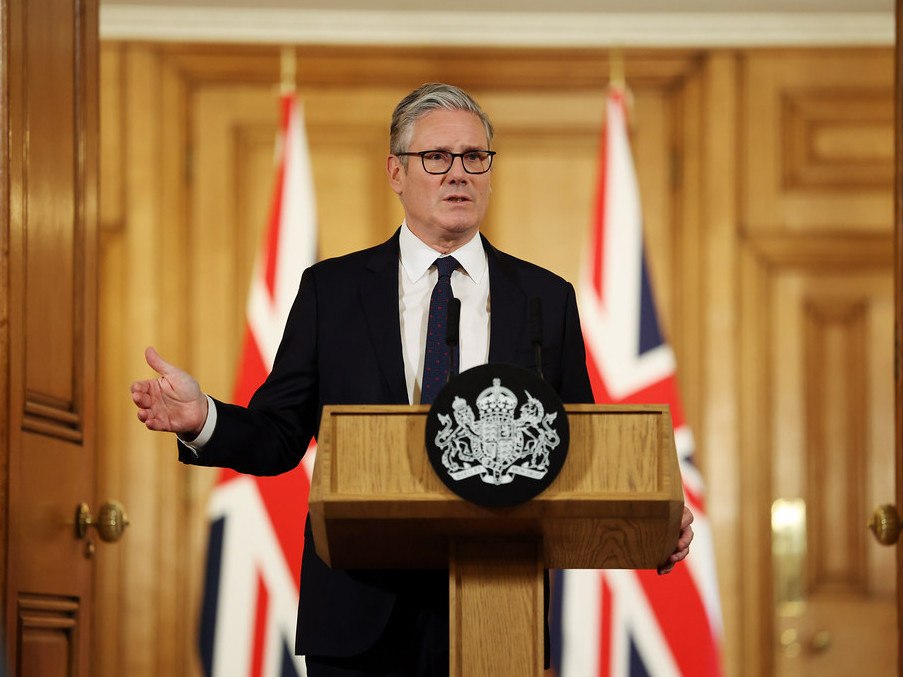
UK prime minister Keir Starmer holding a press conference on children’s online well-being. Image: Number 10 via Flickr (CC BY-NC-ND 4.0)






































You must be logged in to post a comment Login