

Connect with us
DAPA Banner
DAPA Coin
DAPA
COIN PAYMENT ASSET
PRIVACY · BLOCKDAG · HOMOMORPHIC ENCRYPTION · RUST
ElGamal Encrypted MINE DAPA
🚫 GENESIS SOLD OUT
DAPAPAY COMING

NewsBeat

Ebola cases surge in Congo even as surveillance improves

Published

on

Ebola cases surge in Congo even as surveillance improves

KINSHASA, Congo (AP) — Congolese authorities have reported one of the highest daily increases in Ebola cases in a month-old outbreak as the virus spreads quickly in a remote region whose shifting population challenges efforts to find those exposed.

Congo’s Ministry of Health on Sunday said 72 new cases were reported in a 24-hour period, bringing the total number of confirmed cases to 782. Those include 181 confirmed deaths, with 29 new ones.

“One month on, the Ebola disease outbreak is outpacing the response effort,” Kate White, emergency medical coordinator for Doctors Without Borders in Congo, said Monday. “No one knows the true scale or exactly where the disease is spreading in Congo.”

The medical charity said treatment centers in the epicenter of the outbreak are overwhelmed, many patients arrive in advanced stages of illness and most were not identified as contacts of infected people before seeking care.

Advertisement

Congo’s health ministry said that while the numbers show the outbreak is spreading rapidly, it also reflects more active surveillance. “Community members are reporting suspected cases, and response teams are investigating them,” it said on X.

The number of cases in what could become history’s worst Ebola outbreak is believed to be higher because the outbreak was confirmed on May 15, weeks after it is suspected to have begun.

The outbreak is caused by the rare Bundibugyo virus, which was not tested for in the early days. The more common Zaire virus, which now has a vaccine, was responsible for most of Congo’s past 16 outbreaks of the disease.

The outbreak is concentrated in Congo’s eastern province of Ituri, which accounts for more than 90% of the cases. Cases have also been recorded in the North Kivu and South Kivu provinces and have spread across the border to Uganda.

Advertisement

Congo said the contact tracing coverage rate is 56%, a sharp decrease from last week, as authorities hurry to find people who may have been exposed.

There was no immediate explanation for the drop. Congolese health authorities previously said contact tracing has been hampered by community resistance in some areas and by the rapid expansion of the outbreak into new health zones, increasing the workload for surveillance teams.

Nearly a million people have been displaced by years of conflict in Ituri, according to the U.N. humanitarian office, making contact tracing difficult as people flee attacks or move frequently in the vast province with dense forests, poor roads and remote villages that can take days to reach.

Tracing is also difficult among the thousands of miners who regularly move among remote sites in the mineral-rich region.

The health ministry said Sunday 40 people have recovered since the start of the outbreak, and the current fatality rate of the outbreak is 23%.

Life goes on, including nightlife, as the population adjusts.

Advertisement

The World Health Organization said Sunday it is intensifying testing and contact tracing and treatment. Tons of supplies from the WHO have arrived in Congo.

And Africa’s top health body said it is deploying technical expertise and supporting laboratory systems, case finding and community engagement efforts to accelerate the response.

“We remain committed to supporting affected countries until transmission is stopped. We call on partners and donors to urgently mobilize resources to strengthen the response and save lives,” said the head of the Africa Centers for Disease Control and Prevention, Jean Kaseya.

___

Advertisement

Banchereau reported from Dakar, Senegal.

Source link

Advertisement
Continue Reading
Click to comment

You must be logged in to post a comment Login

Leave a Reply

NewsBeat

B-52 crashes after takeoff at US military base in Southern California

Published

on

B-52 crashes after takeoff at US military base in Southern California

LOS ANGELES (AP) — A B-52 bomber crashed shortly after takeoff Monday morning at a U.S. Air Force base in Southern California’s Mojave Desert, officials said.

Emergency crews were responding after the aircraft went down around 11:20 a.m. at Edwards Air Force Base, the military said on the social platform X. There was no immediate information on whether anyone was hurt.

Video from the scene showed a plume of black smoke rising from the desert.

Shortly before 1 p.m., the airfield was closed and all inbound aircraft were being diverted. Meanwhile all non-commercial visitor passes for the base were suspended “to allow the installation to focus entirely on emergency response operations,” officials said in a statement.

Advertisement

The Boeing B-52 Stratofortress, typically crewed by five people, is a long-range bomber that entered service in 1955. Designed to carry both conventional and nuclear weapons, it has been used in conflicts ranging from the Vietnam War to recent operations in the Middle East.

Edwards Air Force Base is home to a large portion of the U.S. Air Force’s aircraft test and development efforts and is about 100 miles (161 km) north of Los Angeles. The 412th Test Wing, which runs the base, also conducts developmental testing of all U.S. Air Force aircraft, weapons systems, software and components before purchase by the service as well as throughout their lifespan.

The vast desert base is also where Chuck Yeager broke the speed of sound in 1947.

The crash comes almost a year after the pilot of a regional airliner flying over North Dakota made an unexpected sharp turn to avoid a possible midair collision with a military B-52 bomber that was in its flight path last July.

Advertisement

___

Toropin reported from Washington D.C.

Advertisement

Source link

Continue Reading

NewsBeat

Historic County Durham-Yorkshire boundary marked with signs

Published

on

Historic County Durham-Yorkshire boundary marked with signs

The new markers have been installed along the River Tees, which has formed the border between County Durham and Yorkshire’s North Riding for more than a thousand years, but been unrecognised for five decades.

Representatives of Durham County Council, the Historic Counties Trust, and the Yorkshire Ridings Society attended a ceremonial unveiling at County Bridge in Barnard Castle on Monday, June 15.

Nigel Wilkin of the Yorkshire Ridings Society said: “The River Tees has marked the border between County Durham and the North Riding of Yorkshire for over a thousand years.

Advertisement

“Despite the indelible place of our two great counties in our history and our hearts, this border has not been properly marked for over 50 years.

“We are overjoyed to see this omission rectified.”

Councillor Robbie Rodiss, chairman of Durham County Council, formally unveiled the signs during the ceremony.

Durham County Council has erected six pairs of signs at bridges crossing the River Tees, including Winston Bridge, Worlton Suspension Bridge, Egglestone Abbey Bridge, County Bridge, Eggleston Bridge, and Middleton Bridge.

Advertisement


Additional signs marking the boundary with historic Westmorland have also been installed at Ley Seat Edge.

Peter Boyce of the Historic Counties Trust said: “We are very grateful to Durham County Council for marking the ancient border between them and to Councillor Rodiss for unveiling the new signs at County Bridge.”

All signs were funded by the Historic Counties Trust, with support from funds raised by Councillor Ross Patterson during his term as Stockton Council’s ceremonial mayor.

Advertisement

Source link

Continue Reading

NewsBeat

Jo Cox’s sister explains why she wants to talk about killer being right-wing fascist neo-Nazi for first time

Published

on

Daily Mirror

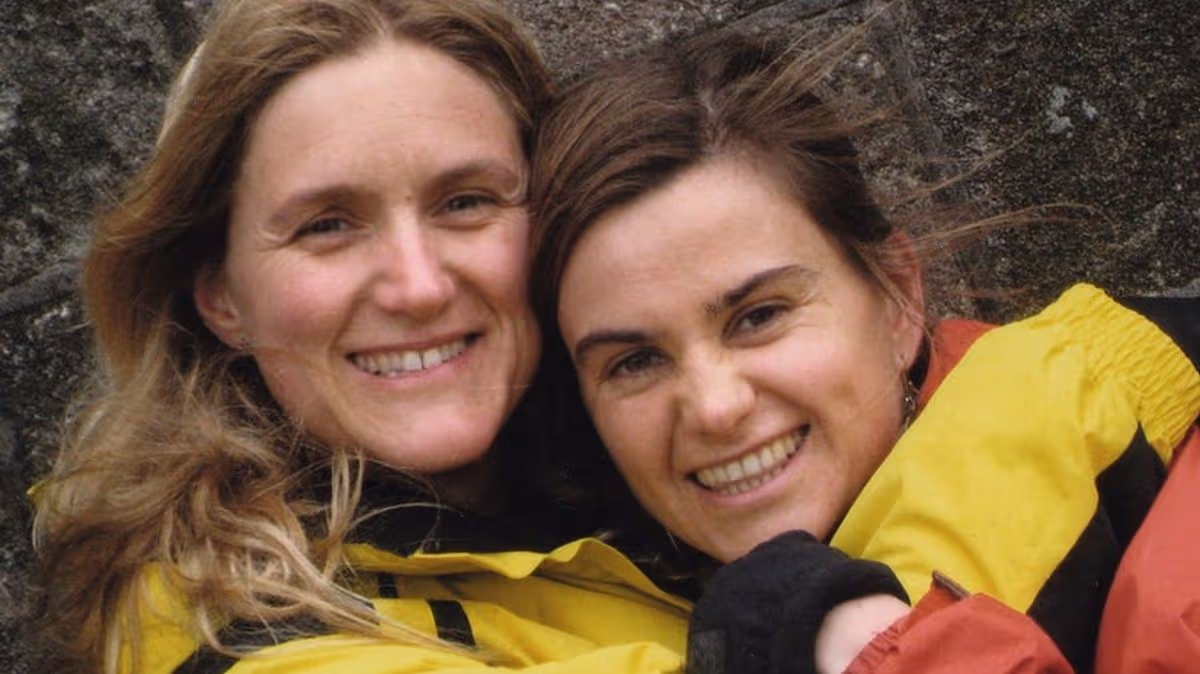
Inside Kim Leadbeater’s office in Parliament, ‘five’ and ‘zero’ helium balloons are gently deflating. They are a reminder of the weekend the Labour MP for Spen Valley has just had in Harrogate celebrating her birthday, but also carry a more poignant memory.

Ten years ago, Kim’s sister Jo Cox was the star guest, arriving last minute from Parliament, throwing off her MP’s suit and embracing the party spirit in a neon tutu. “We had so much fun that weekend,” Kim says. “Jo wasn’t an MP, she was just Jo. We’d rented a big house in North Yorkshire, and we were in 80s fancy dress. Jo wore a tutu, and we sang ‘I Know Him So Well’, our karaoke song, together.”

Kim’s 40th birthday was on May 1, 2016. Six weeks later, arriving for a regular constituency surgery in a library in the community she and Kim had grown up in, Jo was was murdered by a Far Right extremist.

Her family went from sitting down together to watch the England-Wales Euros game, to being plunged into a nightmare from which they have never emerged. “I haven’t been able to grieve,” Kim tells me now, 10 years later. “We just had to keep going forward, through the pain of it, through the trial. I needed to be there for my parents and for Jo’s kids. Even now I think, if I stop to grieve I might just fall apart.”

Advertisement

Ten years on, it is glaringly obvious that Jo’s murder has not been the watershed we all wished it could be. In June 2026, two acts of gross violence have been ruthlessly exploited by Far Right agitators. Belfast has seen families hunted down by race, there have been racist attacks in Glasgow, and families in Southampton remain frightened, after orchestrated violence.

“When Jo was killed, it should have been the end – and the start of something different,” Kim says, now. “And for a moment it felt like that might be the case. But at this moment things are worse than ever. Believe me, I really do understand anger. But we all have a choice as to what you do with that anger. It would be really easy for me to want to hate every individual who looked like the individual who took my sister’s life. I chose not to do that because that act was his and his alone.”

Advertisement

I remember seeing Jo tearing through this same building in Parliament, after she had been elected in May 2015. Now, it’s Kim – who five years after her murder, stepped into her sister’s shoes – who has an office at Portcullis House. For a decade, Kim and the rest of her extraordinary family have done everything they can to live by Jo’s ‘More In Common’ optimism, spreading love through national campaigns like The Great Get Together. But this tenth year feels different.

“Every day is awful without Jo,” the former fitness instructor says, speaking frankly. “The tenth anniversary will be no different. But this year, I think we need to talk more about what is happening in the country. We’ve done such a powerful job as a family and as Jo’s friends to remember the good things, and to do good things – but what we haven’t done is talked about the fact she was killed by a right-wing fascist neo-Nazi.

“So I want to talk about that this year. I don’t mean talking about him – we have never talked about him or even named him. But we need to start talking about the context.” During her own time in Parliament, Kim has not lived in her big sister’s shadow. Today, she is widely known as the MP who fought for an Assisted Dying Bill. In the process, Kim has had to live every one of the values she and Jo tried to bring to politics – in trying to disagree well.

“I do try to find common ground with people,” Kim says. “Jo and I were brought up like that. And sometimes to agree to disagree.” The Bill means she is regularly stopped, she says, by people who want to talk to about dying. It must be hard to talk to people constantly about death when she had been unable to grieve? “It is hard,” she agrees, “but it is such a human issue – and we don’t talk about death enough. We are all going to die.”

Her passion on the issue is palpable, and I wondered if it had something to do with her sister’s death – that Jo had not died with dignity. “Well, it’s about choice,” she says, after a pause. “All the bill is asking is for a choice. Jo didn’t have a choice.”

The June sunshine and the approaching World Cup are echoes of that moment in June 2016 when the world seemed to turn on its head. “I can’t really remember that time,” Kim says. “It’s a blur. I was just on autopilot. I had to be there for my mum and dad, and for Jo’s kids.

Advertisement

“So, we threw ourselves into the good stuff. Her government strategy on loneliness, supporting the White Helmets, More in Common, the Jo Cox Foundation, the Jo Cox run, the Jo Cox bike ride… It’s been the worst of humanity followed by the best of humanity.”

This week, has been full of privileges Kim says she wished she had never had. She gave a lecture at Jo’s old Cambridge college, Pembroke and spoke at Downing Street alongside the Prime Minister. In her speech she said that “perhaps the greatest tribute we can pay to Jo is not merely to repeat her words, but to live by them”.

Kim knows that people often find her and Jo very similar. “We were very similar, growing up,” she says. “We had the same values, and the same friendship group. We both loved school, we loved sport, and having a good time. We loved going out for drinks when were old enough.

Advertisement

“But Jo was also very shy. I think people don’t always know that. She had to work very hard on public speaking. I was always much more confident when we were children.” Like her sister, Kim can never stay serious for long, and she sees me looking at the copy of Vogue on her desk, which carries an interview with her. We both know what Jo would have made of seeing her little sister in Vogue.

“Jo would have found it absolutely hilarious!” she says, with a big laugh. “As I do! It is bloody hilarious. I’ve never had the least interest in fashion and clothes. I’m not built for being a fashionista, all the clothes are for tall people. I’m literally wearing a charity shop shoes, dress and jacket!”

Perhaps it is Kim’s voice, so similar in warmth to her sister’s, but for a moment it is easy to imagine Jo is still here in the building – still sharing an office with her old friend Stephen Kinnock, who laughingly put up with her cycling gear, and babysat her young children while she voted.

Kim, it turns out, often has the the same thought. “Jo was killed on Thursday 16th June 2016,” Kim says. “That weekend I was due to go to an open day at Leeds Beckett University for a Master’s degree. And I suppose that in that future I never would have been an MP.”

Advertisement

She smiles. “Or maybe… well, just maybe there would have been the boundary changes, and Jo might have persuaded me to stand for the other local seat – because she was always trying to get me to do something in politics, and she was very persuasive – to become the neighbouring MP.

“She’d have been the MP for Dewsbury and Batley and I would have represented Spen Valley. We’d have both been representing our home and the area we love.” The lost possibility of this parallel world seems unbearably sad, but Kim shakes her head. “It makes me happy to think about that,” she says. “Thinking of us both here.”

She looks out of the window, where tourists’ cameras flash from boats viewing Parliament from the River Thames. “But I have gone on my own journey, instead.”
Source link

Advertisement
Continue Reading

NewsBeat

M60 shut between junction 24 Denton and junction 23

Published

on

M60 shut between junction 24 Denton and junction 23

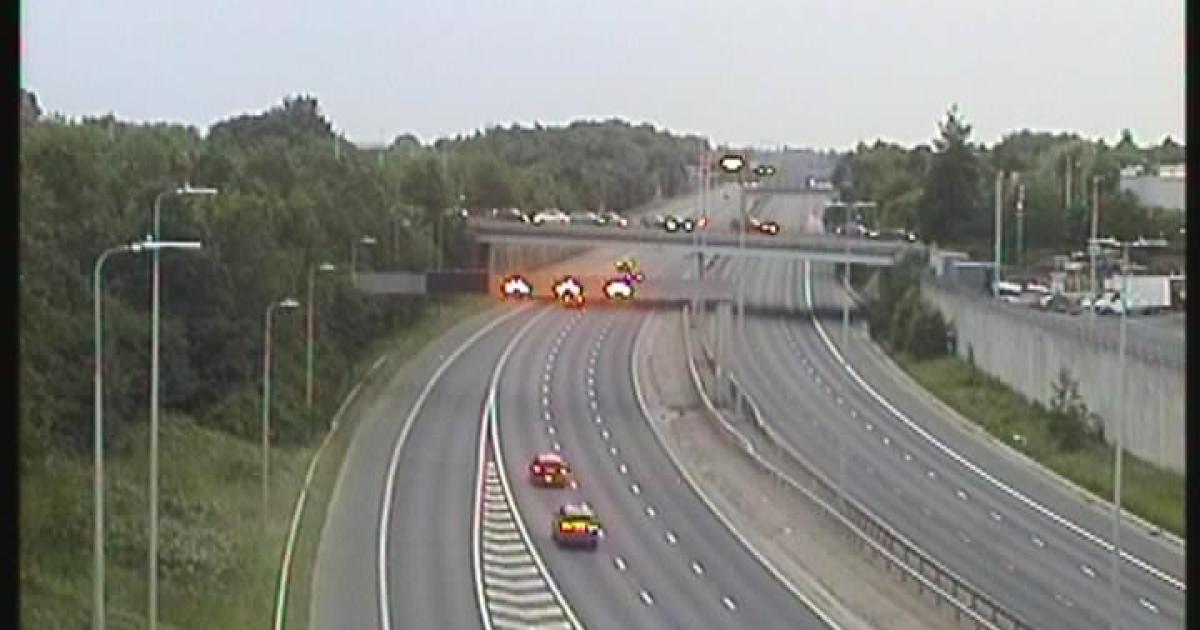
The motorway is closed in both directions between J24 Denton Interchange (Manchester, A57; Sheffield, M67) and J23 Snipe Interchange (Ashton-under-Lyne, A635) due to a Greater Manchester Police-led incident.

North West Ambulance Service are also in attendance.

National Highways Traffic Officers are also on scene providing assistance with traffic management.

Map (Image: National Highways)

Diversion Route

Anti-clockwise traffic is advised to follow the hollow diamond diversion symbol:

Advertisement
  • Exit the M60 anti-clockwise at J24 and at the roundabout take the third exit onto the M67 eastbound.
  • Leave the M67 at J1 and turn left onto the A6017 Ashton Road northbound.
  • Continue straight on to the A6017 Denton Road northbound.
  • Continue straight on to the A6017 Guide Lane northbound.
  • At the junction with the A6140, turn left onto the A6140 Audenshaw Road westbound.
  • At the junction with the A635, turn right onto the A635 Manchester Road eastbound.
  • Continue until the junction with the M60 at J23.
  • Turn left onto the slip road and re-join the M60 anti-clockwise.

If this closure impacts on your planned route, please allow extra journey time. Plan ahead, you may wish to re-route or even delay your journey.

Further information is available from National Highways by visiting our www.trafficengland.com website and travel apps, or via our regional X feed.

Our 24/7 contact centre team is also available to provide up to the minute information on 0300 123 5000.

Source link

Advertisement
Continue Reading

NewsBeat

M60 LIVE as motorway shut in both directions amid ongoing police incident – updates

Published

on

Manchester Evening News

The M60 has been closed in both directions this evening amid an ongoing police incident. Emergency crews are in attendance between J24 for Denton Interchange (Manchester, A57; Sheffield, M67) and J23 for the Snipe Interchange (Ashton-under-Lyne, A635).

All lanes are closed currently with a large police presence at the scene. The North West Ambulance Service are also in attendance.

National Highways Traffic Officers are also on scene providing assistance with traffic management, with diversion routes now being put in place.

Advertisement

Motorists are being urged to find alternative routes and avoid the motorway amid the ongoing incident. No further details have been confirmed.

This is a live blog. Updates to follow below.

Source link

Advertisement
Continue Reading

NewsBeat

Man United transfer news LIVE: Ederson medical, Mateus Fernandes twist, multiple moves edge closer

Published

on

Manchester Evening News

The future of Marcus Rashford at Manchester United is reportedly shifting direction, with a permanent switch to Barcelona now looking increasingly likely. Negotiations between the two clubs have been ongoing for months, but with Rashford’s £26million release clause now no longer active, a simple transfer agreement has effectively been removed from the table.

Rashford, who spent the 2025/26 season on loan at Camp Nou, had been keen to extend his stay in Spain. However, Barcelona’s recent £70m signing of Anthony Gordon has reduced their need for another major attacking arrival.

Although another loan deal has not been ruled out, the expiry of the clause means United can no longer rely on Barcelona to take Rashford – and his £325,000-per-week wages – off their hands.

Because of this, United are expected to take a more proactive approach in the market. Interest in Rashford remains strong, with Bayern Munich and several Premier League clubs reportedly tracking the situation closely following his productive loan spell, which produced 14 goals and 14 assists in Catalonia.

Advertisement

Marcus Rashford during an England game(Image: Richard Pelham/Getty Images)

Source link

Continue Reading

NewsBeat

Vozinha: The 40-year-old keeper who inspired Cape Verde’s historic debut

Published

on

Vozinha

For Vozinha, this moment had been a lifetime in the making.

Born Josimar Dias, the Cape Verde goalkeeper has spent his entire career chasing the dream of playing at a World Cup.

When it finally arrived, it came with history attached. At 40 years and 12 days, he became the oldest player to appear in a nation’s debut World Cup match, surpassing the record set on Sunday by Curacao’s Eloy Room.

In fact, only Egypt’s Essam El Hadary was older when making their World Cup debut.

Advertisement

It is a remarkable milestone in a career defined by perseverance.

“I started playing professional football when I was 25 years old, in 2012. It was too late for a person like me,” said Vozinha.

“I thought about leaving the national team, but then I continued because of this dream.

“The performance is a performance for everyone. I am the man of the game, but this award is for all my colleagues, because without them, nothing is possible. And I will continue to work for the team and for the people.”

Advertisement

Cape Verde lies nearly 600km off the west coast of Africa, a beautiful but isolated archipelago where opportunities for young footballers are limited. Growing up in Mindelo, Vozinha faced challenges from the outset.

“I was one of the best keepers on my island, but I was small,” he recalled. “Even when I performed well, I wasn’t selected because of my height.”

Like many players before him, he eventually left for Portugal, the country’s former colonial power, in search of opportunity. That decision marked the beginning of a career that would take him across Slovakia, Angola, Moldova and Cyprus. Now Vozinha plays with Portuguese second-tier side Chaves.

Even Vozinha’s name carries a piece of footballing history. His father had hoped to call him ‘Valdano’, after the Argentina and Real Madrid great Jorge Valdano, but the Cape Verde authorities refused. Instead, he was named Josimar after the Brazil defender who rose to prominence at the 1986 World Cup.

Advertisement

Decades later, on another World Cup stage, Vozinha has created history of his own.

Source link

Continue Reading

NewsBeat

York Delta Hotel by Marriott plans for new padel courts

Published

on

York Delta Hotel by Marriott plans for new padel courts

The Delta Hotel by Marriott has applied to replace its existing tennis court with new padel facilities.

Its application stated the changes would help them to provide modern, inclusive leisure facilities which would be open to the local community as well as hotel guests.

Plans lodged with City of York Council would see three sheltered padel courts built in the grounds of the hotel, off Tadcaster Road.


RECOMMENDED READING:

Advertisement

The hotel stated the existing tennis court they would replace were currently under-used.

Landscaping features including paths and lawns surround the site and mature trees which would screen the building from view from some directions.

The courts would be around 140m from the nearest homes, according to the application.

The court building would feature a retractable roof and LED floodlights which would be time-controlled to prevent night time disturbances.

Advertisement

A limited number of seats for spectators would also be included for the three courts which would sit side-by-side.

An impression showing how padel courts at the Delta Hotel by Marriott, in Tadcaster Road, York, could look (Image: Delta Hotel by Marriott)

Plans stated padel created no more disturbance than tennis and would be well-managed.

They said: “The project is part of the existing leisure facilities at the hotel and provides a modern, inclusive leisure facility that will be open to the local community as well as hotel guests, thereby contributing to health and wellbeing, sustainable communities, and York’s reputation as a leisure and tourism destination.

“The proposal replaces an under-used tennis court with three modern
padel courts, responding to strong growth in demand for this sport.

Advertisement

“Padel is inclusive, accessible, and appeals to a wide demographic.”

Padel is played on an enclosed court about a third of the size those used for tennis with balls played off glass walls similar to squash.

The Lawn Tennis Association (LTA), the sports governing body, stated it is easy to learn and sociable, contributing to its growing popularity.

Advertisement

Source link

Continue Reading

NewsBeat

Social media and teenagers: what the evidence says

Published

on

Social media and teenagers: what the evidence says

Is the time teenagers spend on social media really damaging their wellbeing and mental health? Around the globe, youth mental health problems are on the rise. This has coincided with an ever increasing amount of time teenagers spend on platforms such as TikTok, Instagram, X and Snapchat.

In the public discourse at least, this correlation has been interpreted to mean one thing: social media damages the mental health of our young people. But what does the evidence actually say?

Unfortunately, the scientific community has been unable to provide a definitive answer. Many studies report on the negative effects social media use has for teenagers. Many others provide evidence of the positive effects, or even highlight no effects at all. The evidence base is mixed and inconsistent.

For instance, one recent study followed more than 100,000 Australian adolescents for three years. It found that moderate social media use was associated with positive wellbeing outcomes. Another large-scale study highlights the positive relationship between adolescent self-esteem and using social media for social support.

Advertisement

By contrast, other research has found a consistent link between social media use and poorer mental health outcomes for adolescents, particularly for girls.

Further adding to the complicated picture, other studies conclude that the link between social media and adolescent wellbeing is weak and cannot be considered clinically relevant.

Looking at the variables

In my own recent research, I used a method called specification curve analysis (SCA) to analyse a publicly available lifestyle dataset of nearly 3,000 15- and 16-year olds living in the west of Ireland. SCA is a computational method which reveals the associations between all theoretically relevant variables in a dataset.

For example, my study assessed the links between the time teenagers spend on social media each day and a range of outcomes such as self-esteem, perceived stress, anxiety, depression and diet, as well as their physical activity and sleep quality.

Advertisement

When all the combinations of relevant variables are considered, more than 50,000 different pathways linking social media to teenage health outcomes were assessed in my study. Below is the specification curve relating the amount of time those teenagers spend on social media to their health behaviour.

Specification curve analysis showing the relationship between time spent on social media and health behaviour. The Y axis represents the strength of the relationship from -1 to +1. The X axis represents the result for each of the 10,240 research models (combination of variables) assessing the link between time on social media and health behaviours.
Eoin Whelan, Acta Psychologica, Volume 266, CC BY

The blue dots represent a combination of variables which suggest the association between social media time and health behaviours is beneficial, and that association is statistically significant. The red dots represent variable combinations where the association is negatively correlated with more social media time. The grey dots are combinations where the relationship between social media time and health behaviours are not statistically significant.

For example, when we look exclusively at the amount of time teenage boys in this dataset spend on social media, and the amount of time they spend engaging in physical exercise, the correlation is positive, hence a blue dot. More time on social media equals more time doing physical exercise.

However, when ethnicity and family wealth are removed as control variables from the analysis – meaning the data is no longer adjusted for these differences – then that statistical connection disappears, hence a grey dot. When all control variables are removed, such as age, ethnicity, school grade and family wealth, the relationship between social media and physical activity for boys becomes negative and statistically significant: a red dot. Essentially, looking at the same data in different ways produces different results.

Advertisement

When all possible associations are considered, the overall finding from my study is that yes, time on social media is linked with poorer health outcomes for teenagers. In this graph, when all the possible ways of looking at the data are assessed, 64% suggest more time on social media is associated with poorer health.

However, the strength of those associations are small. When I compared these effects to other influences, such as feeling safe at school or having supportive parents, the effects of social media are quite modest. In fact, time spent on social media is one of the least powerful predictors of adolescent health in this dataset.

This challenges the popular narrative that social media platforms are the main culprits behind rising mental health problems. Indeed, a recent report from the US National Academies reached a similar conclusion: there’s no strong evidence that social media causes widespread harm.

While the results of my study align with this view, these results should be interpreted with caution and may not reflect the experience of all teenagers. There are risks associated with social media platforms for young people, and those do deserve attention. And importantly, if we conclude that the amount of time that teens spend online does not cause significant damage to their wellbeing, we also have to acknowledge that it does not enhance their wellbeing either.

Advertisement

If the goal is healthier, happier teens, interventions should target what really matters: safe school environments, strong family support and tackling bullying. The teenagers in my study reported spending an average of 2.5 hours per day on social media platforms. Reducing that time in favour of activities proven to enhance youth wellbeing – physical exercise, creative activities, volunteering – would be an effective way forward.

Source link

Advertisement
Continue Reading

NewsBeat

No extra crime or antisocial behaviour reported outside site of controversial Belfast homeless centre

Published

on

Belfast Live

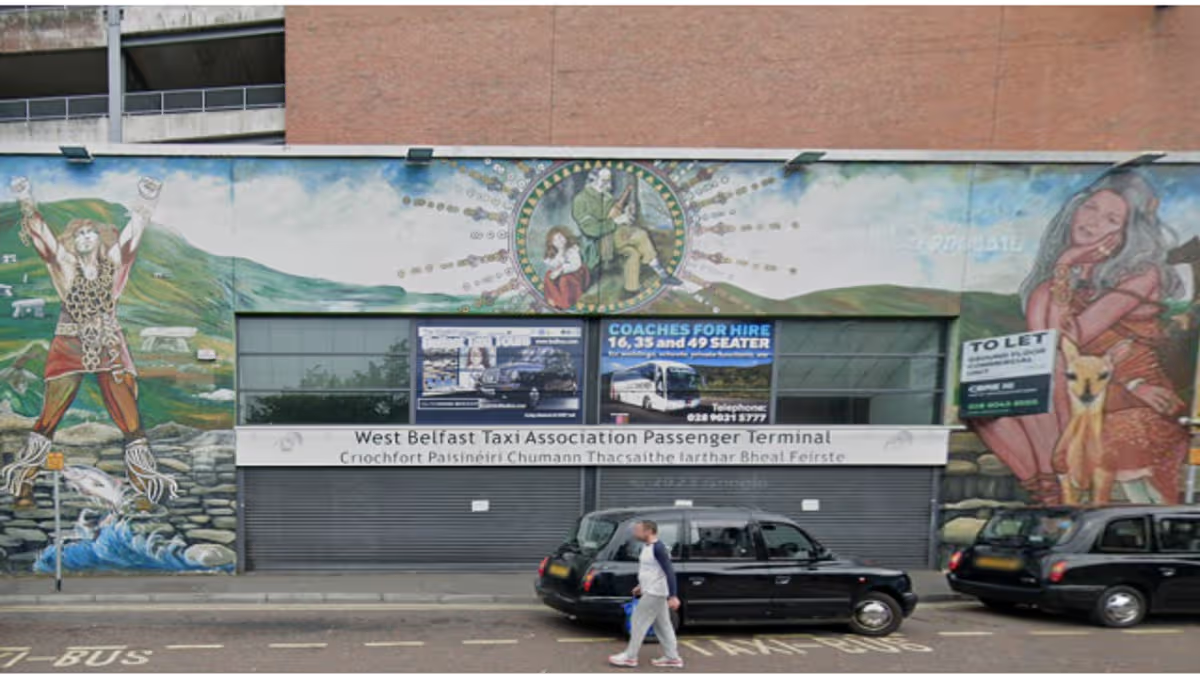
The King Street homeless centre has been operating without planning permission for over a year

Police have said there has been no extra antisocial behaviour or crime recorded around a controversial homeless centre that has been operating in Belfast city centre without planning permission for over a year.

This week a planning application will return to the Belfast City Council Planning Committee, that is, a retrospective change of use from a ground floor taxi passenger terminal, cafe, office and newsagent to a Homeless Centre, at 35a King Street, Belfast, BT1. It has been over a year since the application first appeared at City Hall, but it has seen various delays and deferrals.

Advertisement

The new homeless centre at King Street has been used as a service for vulnerable people since May 2025, without planning permission, and there have been large numbers of representations sent to Belfast City Council objecting to the application, as well as in support.

READ MORE: Sinn Féin says “many parts and cultures of the city” will be excluded from Belfast Stories project

READ MORE: Electronic travel rules after Brexit stopping 20,000 cricket fans coming to Belfast says cllr

The applicant is Belfast Homeless Services, who were previously based at Amelia Street. They explain in the application that this building was deemed no longer safe due to its structural condition.

Advertisement

The last appearance at the Planning Committee was in February. At that meeting, Sinn Féin Councillor Natasha Brennan asked for the application to be deferred “on the grounds there is an outstanding environmental health report” and to “show due diligence given the massive amount of responses.”

The application states the centre will provide meals, washing and changing facilities and an internal social amenity area for users, on Monday, Tuesday, Wednesday and Thursday each week from 4pm to 10pm.

67 objections have been sent to the council raising concerns about anti-social behaviour, the impact on residential amenity, and community cohesion. Objectors have said it has a negative impact on the health and wellbeing of locals, and is “detrimental to placemaking.”

The council has also received 149 letters of support in relation to the application. Supporters say the scheme will help combat the homelessness problem within Belfast, and that the centre was successful in other locations. They add that the anti-social behaviour policies are adequate, with a “zero tolerance drug and alcohol policy,” and say with an accessible city centre location the centre “provides a local need.”

Advertisement

The application will appear again at the Planning Committee meeting on Tuesday evening (June 16). It appears with further information submitted to the council, including advice from PSNI in relation to crime and anti-social behaviour issues. and further consultation from the council’s Environmental Health team.

The report states: “The PSNI advises that when comparing crime and antisocial behaviour reported and recorded on King Street and Castle Street between 1/1/25 to 3/6/25 and 1/1/26 to 3/6/26, there has been no increase in reported crime or ASB.

“The PSNI had previously advised that there had similarly been no reported increase in crime or ASB during the period 1/5/25, when it is understood the use commenced, to 1/3/26.”

It adds: “However, the PSNI states that this does not mean either crime or ASB has not increased. Relevant stakeholders may say different and many businesses in meetings PSNI has attended throughout the city centre advise they do not have time to report.”

Advertisement

The additional information also includes recommended conditions in respect of odour abatement, hours of operation and noise.

The report states: “Environmental Health recommended a condition that seeks a schematic drawing detailing the exact specifications of the proposed odour control components, location and duct runs to achieve a “very high level” of odour control as per best practice guidance.

“In response, the applicant has accepted a “no-cooking” condition that would dispense with the need for enhanced odour abatement. Environmental Health has confirmed that it is content with this approach.”

Council officers are recommending approval for the retrospective application.

Advertisement

For all the latest news, visit the Belfast Live homepage here and sign up to our daily newsletter here.

Source link

Continue Reading

Trending

Copyright © 2025