

Politics
Palestine Action ban to stay in place as courts rule human rights protest is ‘terrorism’

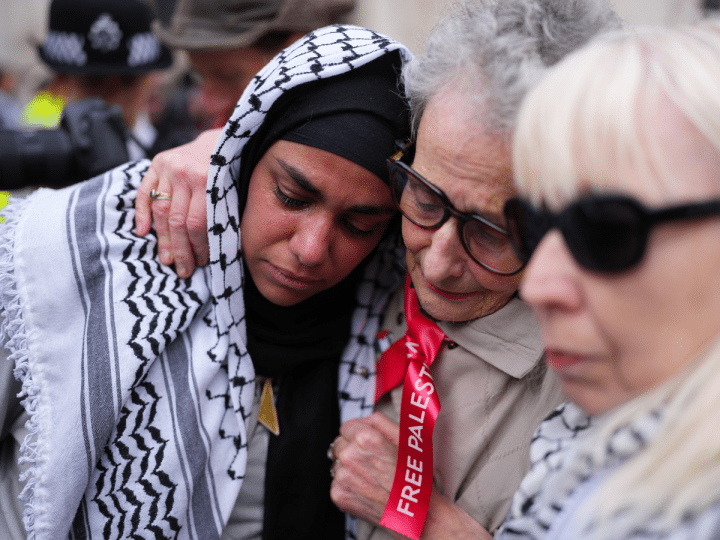
The Court of Appeal has ruled in favour of home secretary Shabana Mahmood’s appeal against the High Court’s ruling that the ‘terrorism’ ban on Palestine Action was unlawful. The appeals court decided that the ban was a proportionate infringement on UK human rights and did not exceed the government’s powers.
Palestine Action
The judge reading out the decision based this judgment on the home secretary being better placed than the courts to decide what was needed – an anti-judicial coup carried out by judges, effectively. The interference of pro-Israel groups in the decision to ban the direct action group was ignored. The judge also denied that Palestine Action is comparable to the suffragettes because it used secrecy and carried out serious damage.
The suffragettes threw bombs and sent letter bombs. The dismissal of the point that the suffragettes used worse tactics and are now lauded goes a long way to illustrating today’s judgement.
Palestine Action remains a banned organisation. UK free speech and protest rights have been slashed by a corrupt government to protect Israel and the appeal court has, unsurprisingly, colluded in it.
Featured image via Getty/Carl Court
By Skwawkbox

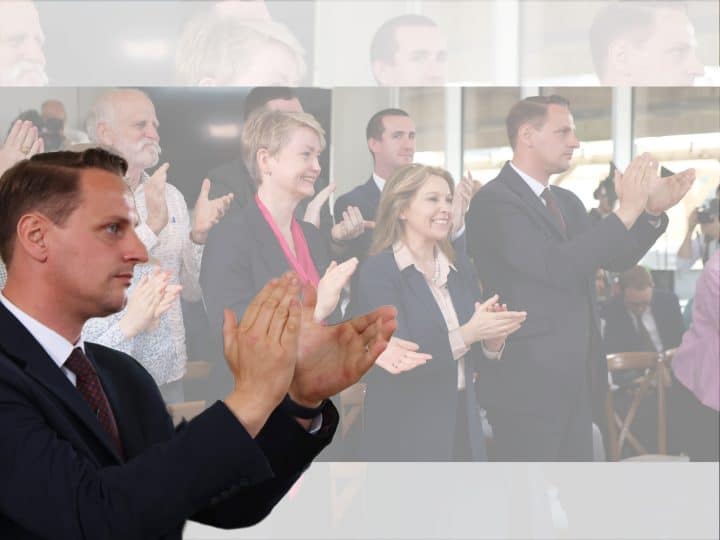
Mike Tapp is the Labour parliamentary under-secretary of state for migration and citizenship. On 15 June, he put out a celebratory post after a court ruled that the government was okay to brand Palestine Action a ‘terrorist’ group:
Supporting Palestine Don’t support terrorists.
— Mike Tapp MP (@MikeTappTweets) June 15, 2026

Supporting Palestine Action 
Well, Labour – what should a terrorist look like?
As Skwawkbox reported for the Canary:
The Court of Appeal has ruled in favour of home secretary Shabana Mahmood’s appeal against the High Court’s ruling that the ‘terrorism’ ban on Palestine Action was unlawful. The appeals court decided that the ban was a proportionate infringement on UK human rights and did not exceed the government’s powers.
The judge in question ruled that Palestine Action cannot be compared to the suffragettes because they caused serious damage. As Skwawkbox noted, though, the suffragettes literally used bombs – something which is markedly more extreme than anything Palestine Action did.
When Zack Polanski pointed out that the ruling will mean branding peaceful old women ‘terrorists’, scumbag Tapp asked the following:
Tell me, Zack, what should someone who is convicted of a terror related offence look like? I’m intrigued.
— Mike Tapp MP (@MikeTappTweets) June 15, 2026
To be fair, the above isn’t an unfair question. Once you have terror laws, the state gets to decide what is or is not a terror offence. And as we’ve long warned, this can lead to the sort of authoritarian creep we’re now seeing.
All that aside, I think we can agree that if we do have to have terrorism laws, then a terrorist should look like someone who just committed an act of extreme and murderous violence – not someone who was sat down holding a piece of cardboard with words written on it.
A government of cowards
It says a lot that Tapp is terrified of the older woman pictured above. Tapp is an ex-soldier, too, which explains a lot. And while we’ve nothing against cowards living full and wholesome lives, they shouldn’t be dictating government policy.
Featured image via Dan Kitwood (Getty Images)
By Willem Moore
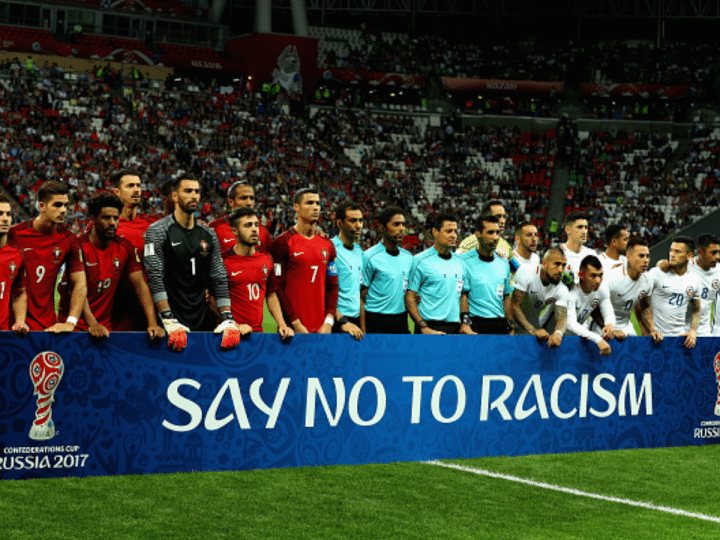
FIFA’s discrimination monitoring team has called for World Cup VAR official Shaun Evans to be removed from duty after he appeared to make a hand gesture resembling a white supremacist sign during Germany’s 7-1 win over Curacao.
The moment was captured on the official broadcast when cameras cut to the VAR booth. Evans, an Australian official assigned to the match, briefly formed an “OK” gesture with his right hand near his leg, a symbol that has been co‑opted by white extremist groups.
The gesture was quick, but it was enough to trigger immediate concern from FIFA’s anti‑discrimination unit, which monitors all matches for offensive behaviour. The monitor formally requested that Evans be stood down from further involvement in the tournament pending review.
FIFA response
FIFA has not yet announced disciplinary action, but the governing body confirmed that the incident is under assessment. The organisation’s discrimination monitoring system, expanded for the 2026 tournament.
This is what it was designed to flag, any behaviour that could undermine the sport’s commitment to inclusivity. The call for Evans’ removal came directly from this unit, which has the authority to recommend sanctions or suspensions.
The match in question, Germany’s emphatic opening win over debutants Curacao, had already drawn attention for its lopsided scoreline. But the focus quickly shifted from the pitch to the VAR booth once the footage circulated.
The broadcast clip showed Evans standing alongside fellow officials as the camera panned across the VAR team. His right hand formed the “OK” sign this is the thumb and forefinger touching, three fingers raised.
The discrimination monitor’s concern centred on the potential interpretation of the gesture rather than any confirmed intent. There has been no public comment from Evans as yet, and FIFA has not indicated whether he has been interviewed as part of the review.
Wider context at the World Cup
The 2026 World Cup has already seen several officiating‑related talking points, including the use of advanced VAR technologies such as connected ball data and waveform detection, systems that played a role in other matches across the opening days.
But this incident has added a different layer of scrutiny. FIFA’s anti‑discrimination protocols were strengthened ahead of the tournament, with monitors assigned to every match and empowered to escalate concerns immediately. Their recommendation to remove Evans underscores the seriousness with which the organisation treats any gesture that could be interpreted as discriminatory or extremist.
The footage spread quickly among fans and analysts, prompting debate about intent, context and the responsibilities of match officials on the world stage.
While some argued the gesture may have been innocuous, others stressed that officials must avoid any action that could be misinterpreted, especially during a global event watched by billions.
Sky Sports’ reporting emphasised that the discrimination monitor acted swiftly, reflecting FIFA’s zero‑tolerance stance. The request for Evans’ removal is not a final ruling but a procedural step designed to protect the integrity of the tournament while the matter is reviewed.
Will FIFA do the right thing?
FIFA’s next move will determine whether Evans continues in his role. The organisation typically reviews broadcast footage, interviews involved parties, and consults its anti‑discrimination experts before issuing a decision. If the monitor’s recommendation is upheld, Evans could be replaced for the remainder of the tournament.
The incident also raises broader questions about training and awareness for officials. With global audiences and heightened sensitivity around discriminatory symbols, governing bodies face increasing pressure to ensure that all match personnel understand the implications of gestures, language and behaviour.
The World Cup is built on the idea of global unity, and FIFA has repeatedly emphasised its commitment to combating discrimination in all forms. Any incident that threatens that image, especially one based on a gesture openly declares ‘white power’ becomes a real risk.
By moving quickly, the discrimination monitor has signalled that vigilance is non‑negotiable. The coming days will reveal whether FIFA agrees that Evans’ continued involvement poses a risk to the tournament’s integrity.
The call to remove Shaun Evans marks one of many major off‑field controversies of the 2026 World Cup. While the investigation continues, the incident highlights the intense scrutiny placed on officials and the importance of maintaining clear, unambiguous standards of conduct.
FIFA now faces a decision that will set the tone for how it handles similar issues throughout the tournament, a reminder that, in the modern game, you won’t be accepted for being racist.
Featured image via Ian Walton/Getty Images
By Faz Ali
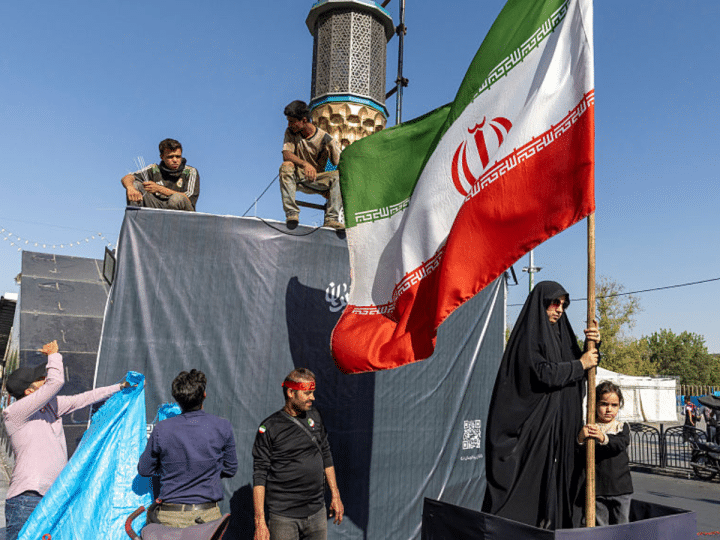
The UAE has denied it paid Iran to stop bombing the country as the Iran-US ceasefire began, calling allegations “false and unfounded”.
The UAE’s payments may point to another US humiliation if found to be true.
Last week, Reuters reported:
The United Arab Emirates has agreed to unlock billions of dollars for Iran, four sources said, in a tactical shift after weeks of Iranian attacks on the wealthy Gulf Arab state during the U.S.-Israeli war with the Islamic Republic.
***
Word of the move, which has not been previously reported, coincides with the final stages of broader negotiations between Tehran and Washington on ending the war, talks that diplomats say could involve the release of tens of billions of dollars in Iranian oil revenues frozen in foreign banks under U.S. sanctions.
The UAE released a statement denying the claims:
The United Arab Emirates has categorically denied reports published by certain international media outlets alleging the transfer of funds from the UAE to the Islamic Republic of Iran, including allegations concerning USD 3 billion.
In a statement, the Ministry of Foreign Affairs affirmed that these allegations are entirely false and unfounded, stressing that no frozen Iranian funds have been released, transferred, or facilitated through the UAE.
The Ministry also called on media outlets to exercise accuracy, rely on official sources, and refrain from publishing or circulating unverified information and unfounded allegations.
UAE wrangling and declining US influence
However, an unnamed UAE official told Reuters:
The UAE’s foreign policy is guided by promoting de-escalation and reducing tensions across the region, while advancing lasting peace and stability.
The UAE supports efforts, including those undertaken by the United States, to protect the peoples of the region from the repercussions of conflict.
The outlet could not establish:
…whether the funds earmarked for the transfers belong to the UAE or originate in long-blocked Iranian accounts in the UAE banking system, or elsewhere.
The White House did not comment and an Iranian source said the transfer was “directly linked to ensuring safe passage through the Strait of Hormuz”.
One source told Reuters that the agreement would be a way for Iran to obtain the payoff it sought in return for a ceasefire, while allowing the Trump administration to claim it did not pay.
This would tally with Trump’s (very optimistic) goal of ending hostilities without admitting to having failed.
Details of UAE’s behind-the-scenes wrangling as the war intensified have also emerged.
Middle East Eye reported:
The UAE joined the US and Israel in conducting dozens of strikes on Iran during the war. It also tried to prevent Pakistan from mediating an end to the conflict.
Saudi Arabia had to supply a fresh loan to Islamabad after the UAE called in its debt obligations as punishment for hosting talks.
Peace deal with a side of US failure
A peace deal has now been announced by the US, Iran and peace-broker, Pakistan. Legacy media reported that the terms were finalised and would be signed on 19 June.
The US and Israel attacked Iran first on 28 February without provocation. Iran was offering unprecedented concessions in negotiations at the time.
The Pentagon has since stated there was no imminent threat from Iran, Meanwhile, the UN’s atomic watchdog, the IAEA, has said there is no evidence Iran was developing a nuclear weapon.
The US has achieved none of its original war aims. Iran predictably closed the Strait of Hormuz, a vital oil channel which once attacked,k created a global energy crisis.
Far from being defeated, Iran has said the war will continue until “the enemy’s inevitable and permanent humiliation, disgrace, regret, and surrender”.
Donald Trump came to power on an anti-war ‘America First’ ticket. He now faces worldwide humiliation.
Much is unclear, but whatever security umbrella the US once offered to its Gulf dictator allies seems much less credible in the wake of the failed US-Israel attack on Iran. Not least because one of those dictatorships may have cut its own deal with Iran in the interest of self-preservation.
Featured image via Majid Saeedi/Getty Images
By Joe Glenton

Digital rights group Access Now have published an open letter demanding AI is removed from military kill chains. Hundreds of activist and human rights organisations have signed up. They oppose the rapid penetration of AI technology into the military killing machine.
Access Now is an NGO which:
defends and extends the digital rights of people and communities at risk.
A kill chain is described as:
the military process of finding, fixing, tracking, targeting, engaging, and assessing a threat — abbreviated F2T2EA.
Their new joint statement, signed by hundreds of groups, expressed deep alarm at:
the rapid militarization of artificial intelligence (AI) technologies.
Access Now warned:
AI systems embedded into military kill chains are accelerating the speed and scale of military assaults in a manner that creates significant new risks for accountability in conflict and risks facilitating violations of international criminal, human rights, and humanitarian law.
The UK state has become deeply entangled with AI firms, including the far-right AI corporation Palantir, in recent years.
The UK should divest from military AI
As the Canary has reported:
The UK military is currently locked into a multi-billion pound contract with Palantir. The statement makes no mention of Palantir, despite the genocide-linked firm’s role being the source of most controversy.
The UK military, police, NHS and, allegedly, the Telegraph have started using Palantir technology. The firm maintains a permanent desk in southern Israel, and is deeply involved in Israel’s genocide in Gaza, as well as Trump’s paramilitary immigration operations, ICE, whose officers use the firm’s gear.
The firm’s founders are open about their far-right politics. Palantir’s vision was exposed as fascistic in a 22-tweet ‘manifesto’ posted on X.
Access Now called:
for tech companies and states to halt the provision of AI systems for use in the military kill chain and to take all steps to ensure that other AI systems they provide do not cause or contribute to violations of international humanitarian law (IHL) and international human rights law (IHRL).
The group said their call applied to all:
AI decision-support systems, including target generation systems, remote biometric surveillance, and multimodal AI models, including large language models (LLMs).
AI-accelerated warfare is rapidly becoming a means of rubber-stamping killing at speed and at scale, and currently no technical or procedural fixes can effectively prevent the lethal and devastating consequences that stem from the fundamental challenges it poses to international law.
Access Now is correct. AI is a new frontier of imperialist warfare and state repression. The UK and other states have wholeheartedly embraced AI in their military, security and even civilian infrastructure. The UK should pause this process. At best, as the UK commons technology committee has argued in the case of Palantir, it should be divested from.
Featured image via Getty/Sean Gallup
By Joe Glenton
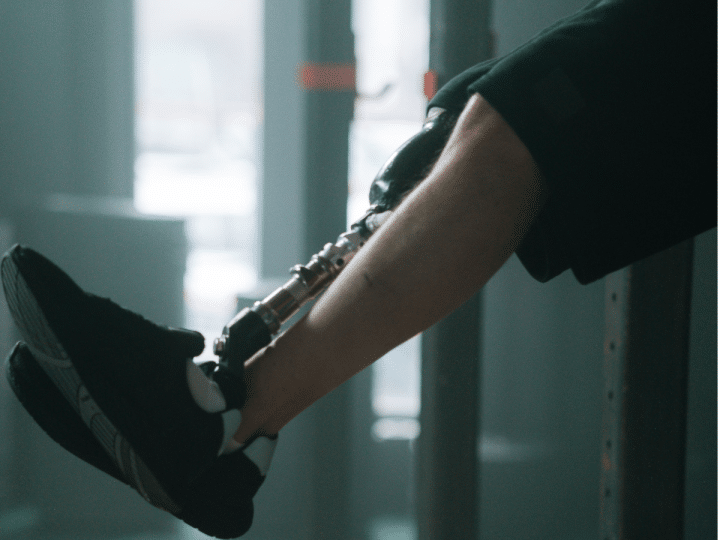
The Department for Work and Pensions (DWP) is wasting money by reassessing amputees in case their condition has improved.
A damning report by anti-poverty charity, Z2K, has uncovered that hundreds of thousands of disabled people endure unnecessarily gruelling Personal Independence Payment (PIP) reassessments, despite their conditions being lifelong or progressive.
The Prove It Again report found that 86% of amputees were given fixed-term PIP awards, meaning they’re required to undergo regular reassessment. These reassessments determine whether someone’s disability or condition has changed.
Other conditions given fixed-rate awards include 62% of claimants with cerebral palsy, 73% with learning disabilities, 61% with Parkinson’s disease, 89% with multiple sclerosis and 83% with chronic obstructive pulmonary disease (COPD).
Samuel Thomas, senior policy advisor at Z2K, said:
Disabled people should not have to keep proving the same thing over and over again when their condition is not going to improve. Routine PIP reassessments are causing needless anxiety, hardship and bureaucracy, with little evidence that they are saving money.
DWP tries to force disabled people off benefits
The reality is, the DWP wants to know whether someone’s condition has improved so they can reduce their benefits.
It’s absolutely absurd that amputees are being forced into demeaning reassessments to see if there’s been any ‘improvement’. Someone’s leg isn’t going to grow back.
The charity also found that 74% of reassessments resulted in no change to someone’s benefit entitlement. But for many, they couldn’t actually get more money as 28% of disabled people whose award stayed the same already received the highest level of PIP. Therefore, all that happened was that severely sick or disabled people were put under even more stress.
DWP PIP increases have nosedived since Labour took over. Between November 2025 and January 2026, less than one in 15 PIP claimants saw an increase in benefits after reassessment.
The PIP process
There are two types of PIP awards: fixed and ongoing. Anyone who receives an ongoing award is left alone for 10 years, then has to complete a six-page form to say whether their condition has changed at all.
Anyone on a fixed-term award must be reassessed every few years and fill out the initial form again, which is more than 40 pages long.
Forms aren’t kept on file, so you can’t just comment ‘No change’ — you must detail your condition in excruciating detail, including whether it makes you incontinent. You then will be reassessed by an often unsympathetic assessor, who is often not trained in safeguarding.
One disabled person told Z2K that the review process made them feel like they were in a criminal court.
…like I was being charged with crimes against being a disabled person or impersonating a disabled person.
They added:
It leaves me feeling like less of a person. Another reminder of everything I can’t do. Instead of being allowed dignity to live my life as I know how, I’m put through an ordeal.
DWP ignores guidance to force people into work
The DWP’s own guidance states that anyone who identifies with these descriptions should be given ongoing awards and spared reassessment:
- A level of functional ability which is not likely to change in the long-term
- High levels of functional impairment which are only likely to increase
However, just 7% of new claimants receive an ongoing PIP award.
Whilst PIP isn’t an out-of-work benefit, people fear that without an ongoing award, they could be forced into unsuitable work. This is a valid concern when the government constantly includes PIP claimants into out-of-work statistics.
The Joseph Rowntree Foundation (JRF) found that PIP claimants are less likely to try to work because they’re scared it will be used against them.
A JRF survey on barriers to accessing work support revealed that 70% of people receiving work-related disability benefits were worried that starting work would trigger a change of circumstances for PIP.
A DWP memo confirmed that while entering work won’t trigger an award review, decisionmakers can decide to do one if they fancy.
Recommendations from Z2K
One good thing is that the DWP is extending the reassessment period from two to three years, increasing to five at a person’s next review.
However, this isn’t for the claimant’s benefit. No. It’s because the DWP can’t handle the amount of reassessments it must complete.
Z2K has recommended that any claimant whose main disability or health condition is lifelong or progressive should be given an ongoing award.
The charity also says there should be a more streamlined reassessment process. If someone’s condition or needs haven’t changed, they shouldn’t be subjected to a review.
These are great recommendations, but it’s highly likely the DWP will completely ignore them. It’s too busy pretending that disabled people are being included in its farcical review to actually do anything that would benefit them.
Featured image via Ron Lach

4 min read
The UK would regret turning down the opportunity to sit at the table.
The key to unlocking more defence investment lies in the former defence secretary’s resignation letter. John Healey argued that in a more dangerous world, we need credible ways to meet the defence funding challenge by working multilaterally with our allies. He was right.
For too long, our defence debate has focused on percentages of GDP and Treasury settlements. But unless we get that capital moving across our supply chain, it won’t be enough. Budgets do not build factories. Industrial capacity does.
That is why I have spent the past 18 months leading the campaign in Parliament for the UK to co-found the Defence, Security and Resilience Bank (DSRB).
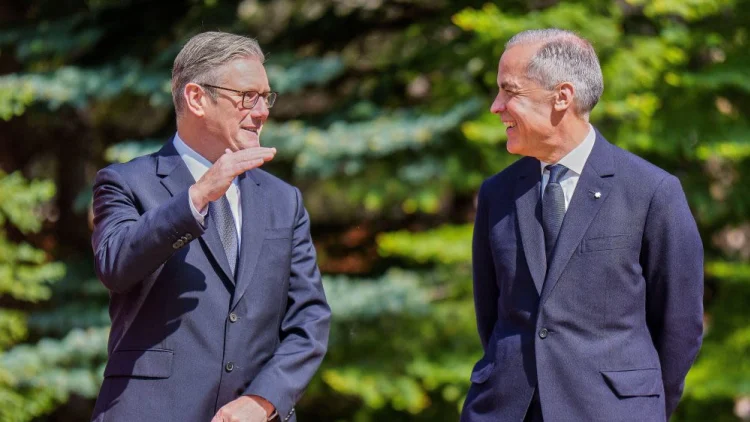
At next month’s NATO summit, Canadian Prime Minister Mark Carney and our allies are set to sign the Charter establishing the DSRB. If they do, it will be one of the most significant institutions in transatlantic security for a generation. Britain should be at the table.
Some have portrayed the DSRB as little more than an SME finance initiative. That misses the point. The Bank may begin with SMEs, but its purpose is to strengthen the whole defence industrial ecosystem, from start-ups and specialist manufacturers to prime contractors and governments. Its mandate spans research and development, industrial expansion, credit guarantees, private capital mobilisation and sovereign lending.
In short, it is designed to turn political commitments into industrial output.
Across the defence sector, companies face two linked challenges: access to capital, and confidence in future demand. Without finance, firms cannot expand. Without demand, they will not. Initiatives like the Multilateral Defence Mechanism can help coordinate procurement and signal demand with allies, but they do not solve the finance problem. The DSRB does.
Britain needs both: clearer demand, and the capital to turn it into real defence capacity.
Together, they create the conditions for more factories, jobs, exports, innovation and resilient supply chains. That is not merely defence policy. It is industrial policy.
The DSRB is being created by sovereign nations for sovereign nations. Its financing will be directed towards companies based within participating member states. Countries contributing capital will see that capital supporting jobs, investment and growth in the nations that join.
The risk for Britain is obvious. If we are left outside this institution, British companies could be shut out of a growing pool of allied defence finance. Factories, production lines and technologies financed through the Bank will increasingly be concentrated within member nations.
At a moment when the government is searching for growth, excluding British firms from this new ecosystem of allied defence investment would be an extraordinary decision. It is one we would regret.
Britain’s frustration with limited participation in the European Union’s SAFE programme should serve as a warning. When new institutions are created, the rules are shaped by those at the table.
The terms are favourable. Britain’s contribution would be €1bn over three years, around €500m below what it would have been under the standard GDP-based formula, following a G7 discount secured during the Charter negotiations.
Participation in the DSRB is an investment. Britain would be purchasing equity in a new multilateral bank designed to finance allied industrial growth, defence production and economic resilience. The UK’s paid-in contribution could be provided through the National Wealth Fund in exchange for an ownership stake, with no need for further departmental cuts or additional borrowing to fund our capital contribution.
The DSRB also creates something different from borrowing more through the gilt market: a AAA-rated multilateral borrowing platform backed by multiple allied governments. It gives Britain access to another source of long-term capital, with more options, more flexibility and potentially lower financing costs.
If we seize this opportunity now, Britain could secure real influence over the Bank’s direction, reinforce London’s role as a global financial centre, and support the defence industrial base our Armed Forces depend on.
The question is not whether Britain can afford to participate.
It is whether we can afford not to.
Alex Baker is the Labour MP for Aldershot
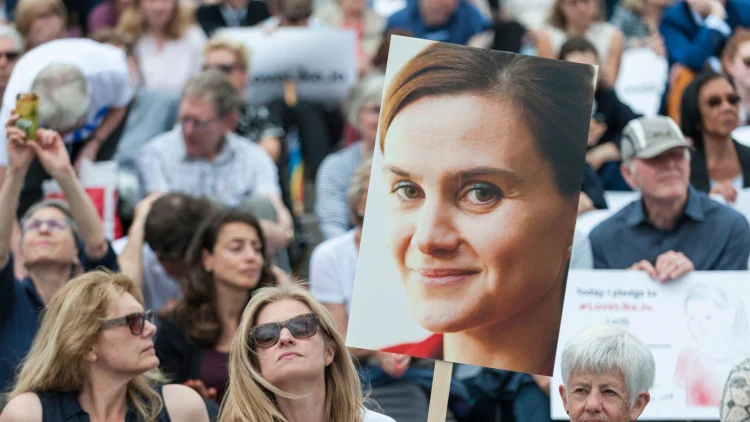

People gathered in Trafalgar Square to commemorate Jo Cox MP the week after her murder in 2016 (Stephen Chun/Alamy)
7 min read
Kim Leadbeater MP delivered the 2026 Jo Cox memorial lecture at Pembroke College, Oxford, on 8 June, in which she reflected on her sister’s legacy 10 years after her murder in 2016. Excerpts from her lecture have been shared with The House magazine
Jo was genuinely one of the nicest people you could hope to meet. She brought a unique combination of hard-headed pragmatism and deep compassion to the job of an MP. She was a politician, but she was first and foremost a passionate humanitarian – and a realist at the same time, always looking for solutions that were practical and achievable – and ways to bring people together, not drive them apart. Qualities we need now more than ever.
Jo fought for justice, equality and for the rights of those less fortunate than herself. She was full of kindness and a deeply held determination to make a difference. After working in the voluntary sector for over 15 years, Jo moved into politics here in the UK, but her main objective remained the same – to make a difference to the lives of those around her – and from Bosnia to Batley and Syria to the Spen Valley, this is what she did.
She knew how lucky we had been in life to have two wonderful parents who loved us unconditionally, and to have each other, along with a wide network of family and friends, enough food to eat and a safe environment in which to live. Through her humanitarian work, she had sadly seen many people who were not so fortunate.
Jo also knew, as I do, the power of diversity, and the beauty of difference in human beings. We were both always incredibly interested in other people and always had lots of questions whenever we met someone new. From a young age we took great pleasure in hearing stories of people from a wide range of backgrounds. The differences were not a focus, but nor were they invisible – they were something to be cherished and celebrated.
It was a big decision to put herself forward as MP for Batley and Spen in 2015 as her children were so young. But it was a job she loved and she had already started to make a huge impact in the role, both nationally and locally. But everything was torn apart – and changed forever – when Jo was murdered while going about her duties in the constituency.
Jo was murdered on 16 June 2016, just one week before the Brexit referendum, and a week before her 42nd birthday. She had worked in some of the world’s most dangerous countries, but she was killed not in some distant place, not a warzone, but on the streets of her constituency while carrying out her democratic duty as an elected representative. Ten minutes from where we live.
It shocked the nation. It horrified the world. It left our family utterly bereft. And it left two small children without their mum.
We must be honest about the atmosphere in which Jo’s murder took place. The Brexit referendum was one of the most divisive periods in modern British history. People were encouraged to see each other not as neighbours with differing opinions but as enemies.
Public discourse became increasingly toxic. Fear was weaponised. Anger became political currency. Complex issues were reduced to slogans, and compromise was portrayed as weakness.
Of course, disagreement is part of democracy. Debate is healthy. Passion in politics is natural. But what developed around Brexit went beyond disagreement. It became something darker.
Social media amplified outrage. Politicians and commentators often chose confrontation over understanding because division attracted attention. Entire communities became fractured. Families argued. Friendships broke down. Trust in institutions collapsed. In that climate, hatred found oxygen.
To say that Brexit was responsible for Jo’s murder would be simplistic and untrue. One individual committed that heinous crime – a far-right neo-Nazi whose evil act was his and his alone. But things don’t happen in a vacuum, and we cannot ignore the broader social and political atmosphere that surrounded it.
Toxic rhetoric, nationalism pushed to extremes, conspiracy, scapegoating and the dehumanisation of opponents all contributed to a society under immense strain. The language we use in politics matters – because language shapes culture, and culture shapes behaviour.
When people are constantly told that others are traitors, enemies, invaders, or threats to the nation, eventually some individuals begin to believe that hostility and violence are justified. That is why remembering how and why Jo was killed matters so deeply. If we reduce her death to an isolated act, we learn nothing.
If we refuse to examine the environment of anger and polarisation that surrounded it, then we fail both her memory and our democracy. And sadly, a decade later, many of the same forces are still with us – perhaps even stronger.
Today, polarisation dominates public life. Across politics, media and online platforms, people are increasingly pushed into opposing camps. Nuance disappears and every issue becomes a battle. Every disagreement becomes moral warfare.
When people are constantly told that others are traitors, enemies, invaders, or threats to the nation, eventually some individuals begin to believe that hostility and violence are justified
We see a growing blame culture in Britain. When the economy struggles, when public services fail, when communities feel left behind, someone must be blamed.
Migrants are blamed. Politicians are blamed. The poor are blamed. The wealthy are blamed.
The young blame the old. The old blame the young. Cities blame rural communities. Rural communities blame cities. And through all of this, we risk losing sight of our shared humanity.
So much has been done over the last 10 years to remember Jo and ensure her name and her values are never forgotten – but there is undoubtedly more to do. And I believe we can – and we must – all play our part.
There is no doubt that we face some challenges as a country, and it can be hard to stay positive. But I do remain optimistic – because it is also true that we have a country full of inspirational people who – day in and day out – show the very best of us. And it is their stories that need to be told.
Whether it is the litter pickers, the sports coaches, the library volunteers, the doctors, nurses, teachers, charity workers or the scout and guide leaders. The people who seek to unite us, not divide us, and who show compassion, empathy and unity every day.
And surely we must all choose compassion, empathy and unity over hatred and division. Empathy is not weakness. Compassion is not naivety. Understanding another person’s fears does not mean abandoning our principles.
Jo understood this better than most. She believed deeply in human dignity. She believed people from different backgrounds could live together peacefully. She believed Britain was strongest when it was open-hearted rather than fearful.
That belief cost her her life. But it must not die with her.
If there is one lesson we should take from her legacy, it is this: hatred grows when good people become indifferent to division. The answer to polarisation cannot be more polarisation. The answer to fear cannot be more fear. The answer must be courage.
The courage to listen. The courage to speak responsibly. The courage to reject extremism. The courage to defend democratic values even when emotions run high. And most importantly, the courage to remember that we belong to one another.
Do we want a society defined by outrage and suspicion? Or one defined by compassion and solidarity? Do we want future generations to inherit division? Or do we want them to inherit hope? The choice is ours.
And perhaps the greatest tribute we can offer Jo is not merely to repeat her words but to live by them, and show that we really are “far more united and have far more in common than that which divides us”.
Kim Leadbeater is the Labour MP for Spen Valley
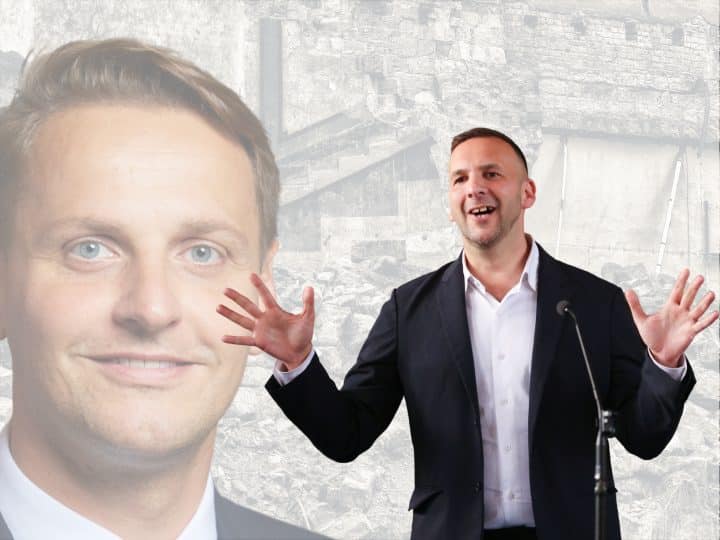
On 15 June, we covered that minister Mike Tapp was gloating about Labour’s latest victory over civil liberties. Specifically, Tapp was celebrating because a court ruled that the decision to brand Palestine Action a terror group can stand. And since then, he’s attempted to goad Zack Polanski into publicly supporting the group:
The fact that your government has made it illegal for me to answer yes is a damning testament to your flagrant disregard for civil liberties.
This may be targeted at those taking action against the genocide, but it sets a very dangerous precedent that puts everyone at risk. https://t.co/KoC3TX2pXL
— Zack Polanski (@ZackPolanski) June 15, 2026
Polanski catches a stray
As a recap, here’s what Tapp tweeted out yesterday:
Supporting Palestine Don’t support terrorists. — Mike Tapp MP (@MikeTappTweets) June 15, 2026
Supporting Palestine Action
Another government might be able to get away with the above. The reason this murderous Labour regime cannot is because it clearly does not support Palestine. This is obvious in the way it continued to sell arms to Israel during the genocide, and how it refused to even acknowledge a genocide was happening.
Tapp especially doesn’t support Palestine, by the way, and we know that because of his affiliations.
As Skwawkbox reported in November 2024, Labour Friends of Israel made Tapp an honorary vice chair. This group exists to forward Israel’s interests in the UK, which is a problem, because Israel’s interests include:
- Subjecting Palestinians to decades of apartheid.
- Committing genocide.
- Doing everything possible to break the ceasefire between the US and Iran, pushing the world ever closer to a fuel crisis that crashes the global economy.
BREAKING: Israel won't withdraw from land seized in Lebanon, Syria and Gaza, its defense minister says, hours after an interim Iran-U.S. deal was announced. Israel Katz's remarks are the first official Israeli comments since the announcement. https://t.co/KdVpD2iaxq
— The Associated Press (@AP) June 15, 2026
Oppressing Palestinians enjoys widespread support in Israeli society, by the way; as does the disastrous war on Iran. So the next time you’re filling up at the pump and fuel prices have rocketed, remember that Tapp is the honorary vice chair of that.
Back to recent events, Tapp also said this to Polanski:
Tell me, Zack, what should someone who is convicted of a terror related offence look like? I’m intrigued.
— Mike Tapp MP (@MikeTappTweets) June 15, 2026
If we’re going to have terror laws, then a terrorist should look like someone who just committed an act of extreme and targeted violence. The older woman being arrested was carrying a sign with words written on it.
Nineteen Eighty-Bore
Many spoke out about Tapp’s attempt to get Polanski arrested, including Owen Jones of Zeteo UK:
The more I think about this, the more shocking it gets.
A government minister asked a political opponent a question, knowing that if he answered "yes", he would be arrested and potentially imprisoned. That's thanks to his government's unhinged law.
It is so disturbing! https://t.co/iMZ8zbotGT
— Owen Jones (@owenjonesjourno) June 16, 2026
Others spoke out too:
The law criminalises answering this question in the affirmative but it remains perfectly acceptable for Mike Tapp and others to pledge their support for an entity governed by an apartheid regime on trial for genocide. https://t.co/sykZ2hYw8J
— Fahad Ansari
 (Stop the Gaza genocide) (@fahadansari) June 15, 2026
Labour politicians be like “if your opinion is so popular, how come we’ve made it illegal to say it?” https://t.co/xiAgtsbfXM
— Here's What I Reckon: (@angryaboutbikes) June 15, 2026
I don't support genocide. Do you? Seems so. In which case *you're*the one in breach of *your* obligation under the Genocide Convention to *prevent* genocide, not just wring your hands about it after all murdering is done, & demanding eNqUiRiEs when it's politically safe to do so https://t.co/0HQM4Vs0e6
— Mrs Gee

 (@earthygirl011) June 15, 2026
I'm sure Labour rubbing this in people's faces won't come back to bite them at some point, just like all the other acts of left-bashing never have https://t.co/8SVFazEPkp
— Willem Moore (@willem_moore_uk) June 15, 2026
Chilling effect
Green MP Siân Berry had this to say about the decision to maintain the terror designation:
The verdict will have a gigantic chilling effect on our wider rights to protest. I voted against the proscription because I believed it was disproportionate and inappropriate, and today leaves this government as the most draconian I can think of in my lifetime.
With the rise of authoritarian administrations around the world, and a terrifying increase in far-right activity in this country, Labour ministers are taking a horrible risk with freedom in this country. Alongside, mass live facial recognition, digital ID, restriction of jury trials, and taking away trans people’s rights, they are building a toolkit for tyrants.
Add to this that Labour isn’t just cracking down on civil liberties; it’s joking about doing so for social media clout.
This is a sick and depraved party.
And the vileness goes so deep that these politicians are continuing to run with it even as it runs their party into the ground.
Featured image via Jon Rowley (Getty Images)
By Willem Moore
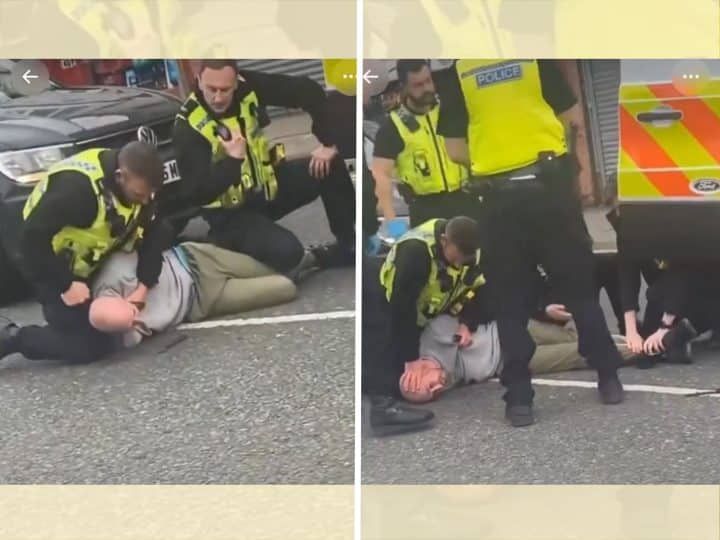
Once again, white riots have erupted across the UK; these supremacist uprisings were fanned by the agitators who glorified police officers kicking a prone man in the head back in April.
Now, however, the shoe is on the other skull:
Was the way to get the right to care about police brutality just showing them when it happens to white people all along? https://t.co/wCpegp6PJm
— JimmyTheGiant (@jimthegiant) June 14, 2026
Police do not protect people
To make something clear up front, we’ve always opposed police brutality, regardless of who the victims are. And this is far from the first time police officers have brutalised white Britons, as we’ve reported:
- A woman tried to protect others from police violence. Today she was sentenced to prison.
- Shocking footage reveals ongoing police violence against protesters – and how they joke about it.
- Woman was ‘terrified’ during arrest at Sarah Everard vigil.
We’ve also reported on instances of police violence against people of colour. A recent example of this was the arrest of Essa Suleiman. As we reported at the time:
On Wednesday 29 April, Essa Suleiman allegedly stabbed three men — two Jewish and one Muslim, in Golders Green. At the time of the attack, Suleiman was living in supported housing, having previously been detained in a secure hospital. Suleiman has a history of mental illness, and was referred to Prevent in the past.
The initial response was to label the incident an ‘antisemitic terror attack’, with the government raising the threat level in response. In light of the above information coming out, however, these moves would later seem to be premature.
At the time, we argued that regardless of the situation, the police shouldn’t have kicked a prone and tasered suspect in the skull:
Training should give police officers the skills and courage they need to detain a suspect without resorting to what could be prosecuted as assault with a deadly weapon. For whatever reason, that training did not take with these officers.
And when we made this argument, the right responded as follows:
The left are already claiming "excessive force" was used on the terrorist.
They can go f*ck themselves.
All of Britain backs the officers. pic.twitter.com/rdcmfZCZmb — Inevitable West (@Inevitablewest) April 29, 2026
The ‘Inevitable West’ account is now retweeting stuff like this:

Truly shameless. And other accounts are making similar arguments in response to separate incidents:
The police threw a protestor so hard into a metal pole that it bent (pictures in the comments). He is now hospitalised.
Surrounded by a dozen or so officers, this is the only way you could detain him?
Police brutality for White working class men only. pic.twitter.com/rlxdmQAfpE
— Landeur
 (@Landeur) June 14, 2026
Belfast police violently arrest local man and woman.
If they were a Somalian knifeman would they have been beaten like this? pic.twitter.com/hQC3wZIgE6
— Turning Point UK
 (@TPointUK) June 9, 2026
One reported death, a 5 year old kid & young boy severely injured/impaled.
The UK Police want you to see how they will treat you for putting a single foot out of line (but only if you’re White that is) — Concerned Citizen (@BGatesIsaPyscho) June 14, 2026
 All these incidents have occurred in recent days.
 …
…
Oblivious
Regardless of your political persuasion, there’s a good reason why you should want police officers to face consequences for using excessive violence. That reason is there’s nothing to stop them committing violence against you once they have the free pass.
As ever, we didn’t have to wait long before the rancid right had this message beaten into them.
Featured image via Twitter
By Willem Moore
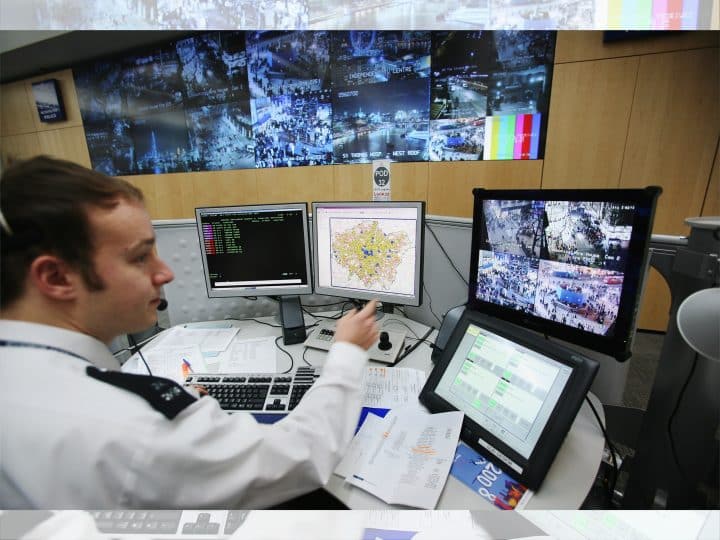
A Derbyshire Police officer is facing a criminal investigation over the allegation that they used Artificial Intelligence (AI) to fabricate evidence.
Police AI use under scrutiny
The unnamed police officer has been removed from frontline duties, according to the BBC. As Derbyshire Police explained:
A criminal investigation has been launched into an allegation of perverting the course of justice after the alleged use of AI systems by an officer to create evidential material in a number of cases.
The force is working closely with the Crown Prosecution Service in relation to any potentially impacted cases, however, the investigation is in its early stages, so no further details are available.
The officer involved has been removed from frontline duties, pending the outcome of the investigation. No arrests have been made.
On 10 June, the government announced ‘PoliceAI’. The announcement declared:
Officers across England and Wales will spend less time behind desks and more time protecting their communities, as the government today launches PoliceAI – a new national centre dedicated to the responsible development, piloting and scaling of artificial intelligence in policing.
The centre, backed by a record £75 million over 3 years, will work across all forces to identify, test and scale AI tools that deliver real results.
Early trials show the scale of what is possible: 800 hours of footage in a kidnapping case reviewed in 3 hours, producing an early guilty plea; and half a million e-books of data translated instantly, leading to the arrest of a serious organised crime gang.
The Derbyshire police officer is accused of purposefully fabricating evidence. AI technology, meanwhile, is notorious for ‘hallucinations’, which are instances in which the technology generates false information and presents it as being factually accurate.
Privacy Researcher T3ch Falcon discussed the announcement of PoliceAI in relation to the case against the Derbyshire officer:
A Derbyshire officer allegedly used AI to fabricate evidential material across multiple cases not one. The Crown Prosecution Service is now reviewing every conviction those cases touched.
Three days ago, the UK government announced PoliceAI.
£140 million. a national AI centre for policing. 40 new facial recognition vans. AI tools for every force in England and Wales by 2027. the official goal: “get responsible AI into the hands of officers.”
Three days later: criminal investigation into an officer for using AI to manufacture evidence.
the interim director of PoliceAI put out a statement today.
“our work is rooted in transparency.”
97% of all criminal investigations in the UK now involve digital evidence. that’s this year’s figure.
AI is already being used to summarise case files, triage evidence, and assist with disclosure.
one officer already used it to manufacture evidence across multiple cases.
nobody noticed until now.
Featured image via Daniel Berehulak (Getty Images)
By Willem Moore

ITV respond to rumours that Jack Shepherd is taking break

G7 Summit: Ukraine, Iran In Focus
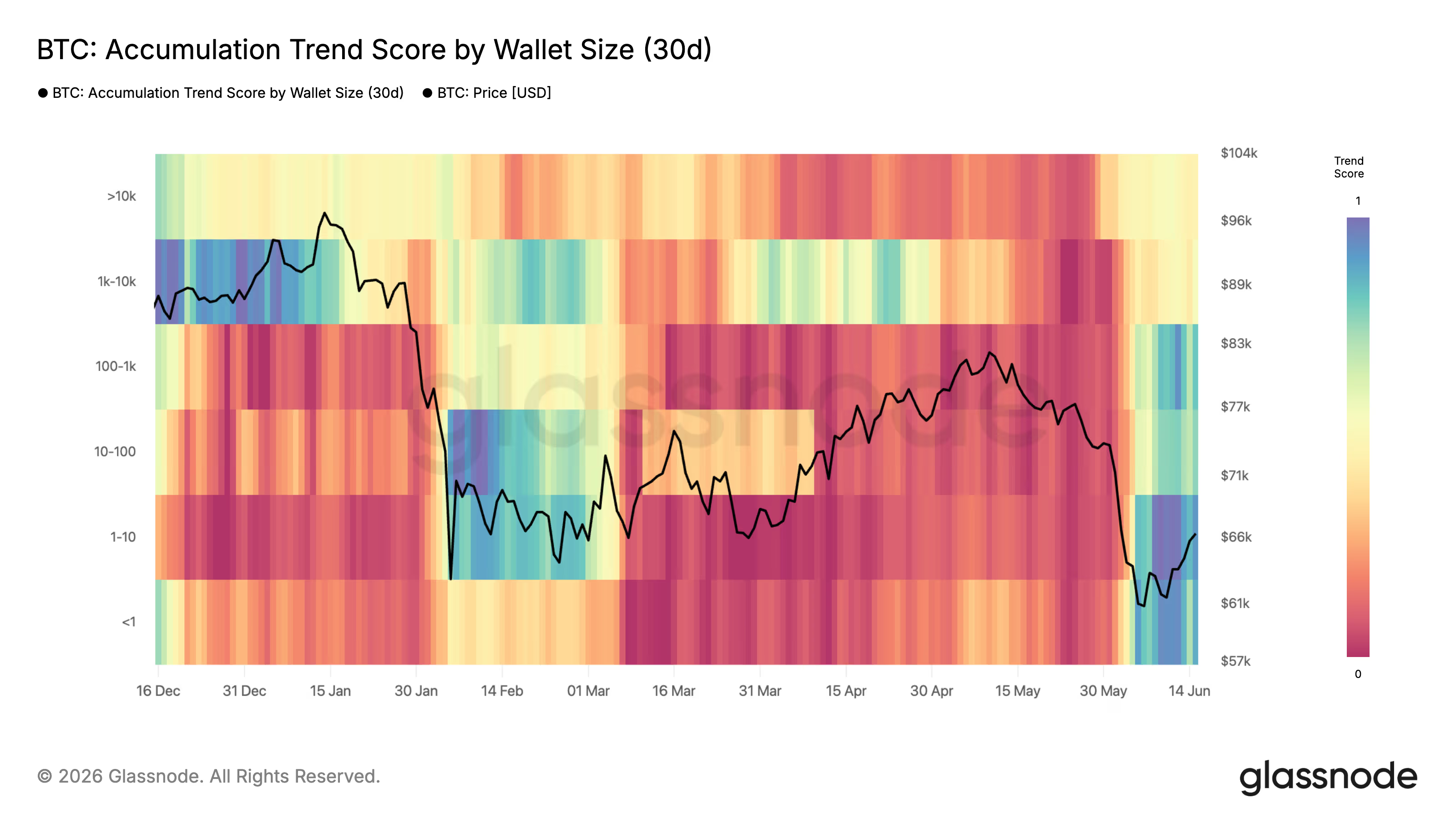
Glassnode data shows aggressive bitcoin buying between $59,000 and $67,000


-

 Business2 days ago
No Jackpot Winner as $257 Million Prize Rolls Over to $269 Million Monday Draw
-

 Crypto World5 days ago
Oppenheimer backs SpaceX as $70 billion retail frenzy builds
-

 Fashion4 days ago
Weekend Open Thread: Tuckernuck – Corporette.com
-

 Crypto World5 days ago
Markets Rally as SpaceX IPO Looms Amid Iran Tensions and Inflation Surge
-
 Crypto World1 day ago
Zimbabwe Requires Crypto Businesses to Register Annually Under New FIU Regulations
-

 Tech3 days ago
NanoClaw integrates JFrog registries to secure AI agent downloads
-
 Sports7 days ago
Bangladesh beat Australia after 20 years in ODIs, register only their second win over six-time world champions | Cricket News
-

 Crypto World3 days ago
Bitget enters Argentina’s regulated crypto market through PSAV registration
-

 Tech4 days ago
This Week In Security: Microsoft On Microsoft, Register Your Domains, Linux On ARM, And FreeBSD Joins The File Cache Club
-
 Tech5 days ago
Dutton Ranch star claims they ‘didn’t see any disruption’ on set following Chad Feehan’s exit from Yellowstone spinoff fueled by Taylor Sheridan clash rumors
-

 NewsBeat4 days ago
El Nino has formed in the Pacific and could set records, forecasters say
-

 Business6 days ago
Thailand Ranks Second Worldwide for AI Adoption Growth, Microsoft Reports
-
 Tech6 days ago
‘This is Seattle’s position on AI’: City Council votes unanimously to pause big new data centers
-

 Politics5 days ago
Politics Home | Healey Resignation Is “Colossal Failure Of Government”, Says Former Labour Defence Secretary
-
 Entertainment5 days ago
Donnie Wahlberg & More Heat Up Las Vegas at Circa’s Barry’s Downtown Prime
-
 Tech5 days ago
Opendoor Ends India Operations, Fueling a Bigger Conversation About AI and Outsourcing
-

 Sports5 days ago
First Time Since 1971: Australia Register Historic Low In ODI Cricket
-

 Politics5 days ago
Belfast burns, while Met chief points finger at Iran and Russia
-

 NewsBeat4 days ago
FBI searches office of Ohio voter registration group
-

 Business5 days ago
AT&T: Verizon's 27% Outperformance Sets Up A Solid Entry Point
You must be logged in to post a comment Login