A huge column of smoke was seen rising from Edwards Air Force Base, California, after officials confirmed a B-52 Stratofortress bomber crashed shortly after take-off, with US authorities confirming at least eight people have died
Joe Smith and Peter Hennessy UK & World News Editor
00:57, 16 Jun 2026Updated 00:58, 16 Jun 2026
At least eight people have lost their lives after a bomber aircraft came down at a major US Air Force base.
A vast plume of smoke was spotted rising above the base in California after officials confirmed the aircraft had crashed.
Advertisement
Authorities at Edwards Air Force Base disclosed that, “A United States Air Force B-52 Stratofortress crashed shortly after takeoff on the Edwards airfield at 11:20 am.”
Several hours after the incident, the base confirmed eight fatalities, reports the Mirror.
“An Air Force B-52 Stratofortress carrying eight people on a routine test mission crashed today shortly after take-off at 11:20 a.m.. Initial indications are that the crash was not survivable. Emergency response personnel are on scene, and officials are working to account for all personnel,” a statement read.
Images of smoke rising above the base, situated in the Mojave Desert in Southern California, were circulated online. “Did something just happen at Edwards Air Force Base? Currently seeing a large column coming from the base, cams are aligned with one of the runways,” one user posted.
Advertisement
The Air Force and NASA carry out test flights of new and developmental aircraft at Edwards Air Force Base.
Edwards Air Force Base is located in the western Mojave Desert in Southern California, approximately 100 miles from Los Angeles. It is regarded as a substantial base spanning over 300,000 acres, predominantly within Kern County, with sections extending into San Bernardino and Los Angeles counties.
A spokesperson for the base said in an update following the incident: “The airfield has been closed, and all inbound aircraft are being diverted. All non-commercial visitor passes have been suspended until further notice to allow the installation to focus entirely on emergency response operations.”
Advertisement
The B-52 Stratofortress is a long-range bomber first introduced in the 1950s that remains a cornerstone of the US military’s air power. Manufactured by Boeing and typically operated by a crew of five, the aircraft is capable of delivering both conventional and nuclear weapons over vast distances, and has seen action in conflicts ranging from Vietnam to more recent operations in the Iran war.
Edwards Air Force Base in California is home to the Air Force Flight Test Center and acts as the Air Force Materiel Command’s centre of excellence for flight research and development, as well as the testing and evaluation of aerospace systems from initial concept through to operational deployment in combat.
After three months of war with two of the world’s most technologically and militarily advanced countries, Iran has proved far more resilient than anticipated. Indeed, strategically at least, Tehran appears to now have the upper hand in the conflict. How has this situation come about?
When the United States joined Israel to launch the latest war with Iran in late February 2026, the prognosis did not look good for the regime in Tehran.
In attacking Iran, the US and Israel set up a highly asymmetric conflict. It pitted the Islamic Republic up against two nuclear-armed adversaries who boast some of the most advanced military capabilities on the planet. And the scale of the US and Israeli intervention was far larger than anything Iran has experienced in decades.
Over the course of several weeks, Iran was pounded relentlessly with the full force of US and Israeli air and missile power. Precision strikes and targeted assassinations removed key members of Iran’s political and military leadership – including the supreme leader and commander-in-chief, Ayatollah Ali Khamenei. The country’s air and naval combat capabilities were decimated, hundreds of its missile launchers and air defence systems were destroyed and its internal security apparatus was severely degraded. The country’s nuclear facilities and missile and drone factories were bombed with thousands of pounds of munitions.
Advertisement
Iran moved quickly to replace its leadership and use its remaining military capabilities to strike back at its attackers and their allies. But by any measure, the Islamic Republic was facing an existential threat. At that point, it seemed almost inconceivable that Iran might avoid capitulation, survive politically, and recover its position so far as to gain leverage in its dealings with the US. Yet that is exactly the scenario that has played out.
As Jerusalem-based Middle East expert Daniel Sobelman explains, in an asymmetric conflict where a weaker actor is pitted against a superior adversary, the weaker actor must tilt the “balance of vulnerability” in its favour to avoid total defeat. To do this, it must ensure the survivability of its critical military capabilities and it must exploit the vulnerabilities of its adversaries.
This type of logic has long been a feature of Iranian strategic thinking. Officials have often emphasised the importance of exploiting the points of vulnerability or weakness of Iran’s adversaries, while minimising their own, as a key element of both asymmetric deterrence and warfighting.
Advertisement
Tehran’s prewar deterrence posture clearly failed to prevent US and Israeli attacks. Yet over the past three months Iran has shifted the balance of vulnerability. It has imposed severe costs, escalated its attacks and exploited vulnerabilities in ways that helped it not only survive but also force its adversaries to a ceasefire.
Asymmetric warfare
By April it was clear that the US and Israel were unable to force Tehran to capitulate (or to “cry uncle” to as the US president, Donald Trump, famously put it). The attacking forces were unable to create the conditions for regime change. And they failed to destroy Iran’s arsenal of missiles and drones.
Iran absorbed all the punishment inflicted by its attackers. And, crucially, it retained the capacity to retaliate with missile and drone strikes on Israel and US bases in the Gulf. Iran also attacked energy and other infrastructure in Arab Gulf states. This undermined the stated US goal of protecting its regional allies and upended their reputation as havens of stability.
Iran’s attacks also signalled clearly that in this regional conflict, support for the US was a liability rather than an asset. In addition to all this, Iran caused havoc by closing the Strait of Hormuz to commercial vessels. This cut off a critical global supply artery for oil, gas and fertiliser with disastrous consequences for energy and food supply around the globe.
Advertisement
Closing the Strait of Hormuz proved to be a triump card for Tehran. EPA/Abedin Taherkenareh
All the while, Iran has forced Israel, the US and the Gulf states to burn through critical, expensive and slow-to-replenish munitions, another vulnerability that emerged for Tehran to exploit.
In terms of escalation, Iran has threatened to further increase economic costs. It has threatened to expand attacks on Israeli and Gulf energy and infrastructure targets and to target undersea cables in the Strait of Hormuz. And it has threatened to push its Axis of Resistance partners in Yemen, the Houthis, to disrupt the Bab al-Mandab Strait in the Red Sea.
Counting the cost
The US and Israel may have largely achieved their stated military objectives – including degrading Iran’s nuclear programme, military capabilities and defence industries. But Iran has prevented its enemies from achieving their strategic goals. And it has inflicted strategic, diplomatic, military, political and economic costs on Israel, the US, the Gulf states and beyond.
Tehran remains at a clear military disadvantage and highly vulnerable to further US and Israeli military strikes. But Iran appears to hold the upper hand at the political-strategic level, at least for now. It has forced Trump to seek an off ramp, it retains the ability to close the Strait of Hormuz as well as to strike critical targets across the region.
Advertisement
Iran also appears to be revamping the Axis of Resistance – especially Lebanese Hezbollah and the Yemeni Houthis – as a key pillar of leverage, deterrence and warfighting. Tehran recently announced the creation of a “new security belt” of the axis and claimed a new doctrine of “unified resistance front,” where any attack on the axis would trigger a coordinated response by all Axis members.
Moving forward, Tehran will clearly try to leverage this moment of perceived strategic advantage to enhance and coordinate its efforts in both the “field of action” – especially its threat and use of military force – and the “field of negotiation” with Washington. It aims not only to survive this conflict, but to emerge in a stronger strategic position.
In doing so, the Islamic Republic will be able to pour available resources into rebuilding and enhancing its critical retaliatory capabilities – especially missile and drones – while continuing to find ways to exploit the vulnerabilities of its adversaries.
The 27-year-old has responded after allegedly imitating shooting a gun with his hands after scoring in the draw with New Zealand
Iran footballer Mohammad Mohebi has responded to accusations that he allegedly made a gun gesture while celebrating his goal in their World Cup 2026 match with New Zealand.
Advertisement
Iran twice fought back from going behind to draw 2-2 with the Oceania outfit, with Mohebi’s 64th-minute strike salvaging a point in an entertaining affair at SoFi Stadium in Los Angeles.
But the manner of how he celebrated his goal stoked controversy amongst fans and pundits. The 27-year-old, who plies his trade for Russian club FC Rostov, placed two fingers towards his arm, before holding two fingers out on his right hand and wagging them about in the air.
The incident has sparked calls for an investigation, given the volatility of Iran’s place in the tournament in the United States. Mohebi has since responded, speaking alongside captain Mehdi Taremi to the media after the game.
There will be more to follow on this breaking news storyand Mirror Sport will bring you the very latest updates, pictures and video as soon as possible.
The BBC’s acclaimed World War One period drama, has been praised by viewers as ‘truly remarkable’ and compared to Downton Abbey – and you can stream all six episodes
If you’re on the hunt for your next period drama fix, then this could be the ideal destination, with one standalone series you can binge-watch across six ‘inspiring’ episodes.
Advertisement
The British television drama, The Crimson Field, was first aired on BBC back in 2014, and while it was never commissioned for another series, viewers continue to discover it and heap praise upon it.
The show has fans ‘hooked’ as they follow the lives of various medical staff and patients unfolding during the harrowing times of the First World War.
It’s set within a fictional field hospital in France at the height of the conflict, capturing the essence of the era while bringing to life the stories and people behind this momentous historic event.
For many, it’s the ensemble cast that propels the series forward, with plenty of fresh and familiar faces delivering some ‘remarkable’ performances.
Advertisement
That cast includes Rupert Graves as Major Edward Crecy, alongside Oona Chaplin as Kitty Trevelyan, Hermione Norris as Grace Carter, Suranne Jones as Sister Joan Livesey and Kevin Doyle as Lt Col Roland Brett.
One viewer left a review on Rotten Tomatoes, saying: “I rate The Crimson Field with ‘Call the Midwife’ and ‘Downton Abbey.’ It is British drama at its best with a fantastic cast of those some of you may remember from other shows. However, there is no stereotype in their roles from previous shows. Truly remarkable acting.”, reports the Liverpool Echo.
Another review on IMDb added: “Within the first minutes of watching this series I knew that I was hooked. It gives an honest representation of life in the war hospitals of Northern France during the First World War. While many depictions of wartime focus on the absolute patriotism of those involved, this series shows that lines do get blurred when individual, real people are involved.”
Advertisement
The reviewer went on to say that it shares “a lot in common” with Downton Abbey, exploring similar themes in a “unique” fashion.
The review said: “Where D.A. explores the realities of hierarchy in early 20th-century British society, The Crimson Field does the same with the ranking within the army and hospital camps.”
Despite the show’s creator, Sarah Phelps, reportedly having mapped out four additional series, it was axed after just one season owing to poor audience figures and budgetary constraints.
Advertisement
Screenwriter Sarah Phelps is credited with penning more than 90 episodes of EastEnders, alongside numerous adaptations for the BBC, including Great Expectations and Oliver Twist.
Phelps took to social media to break the news that the show would not be continuing, confessing she was “gutted”. She said: “Gutted doesn’t even touch the sides of how I feel”.
A man was found collapsed in a supermarket car park after his prison release. Lee Chignell died aged 34 on August 12, 2025 – less than a week after being released from HMP Peterborough, according to a recent report.
Advertisement
Chignell had served a number of sentences in prison, most recently for the possession of offensive weapons, for which he was released on July 7, 2025. Four days later, he was recalled to Peterborough for a fixed term of 28 days for not complying with licence conditions.
During his initial health screen on July 11, Chignell tested positive for opiates. He told the healthcare nurse that he had a history of drug use and was referred to substance misuse services.
On July 14, Chignell told a recovery worker for the substance misuse team that he wanted to be released to Norwich. He declined to engage with the substance misuse service but agreed to a referral to Change Grow Live in Norwich.
The recovery worker did not share this information with Chignell’s prison offender manager (POM) or community offender manager (COM), according to the Prisons and Probation Ombudsman report.
Advertisement
Despite Chignell declining substance misuse treatment, a recovery worker continued to see Chignell throughout his time at Peterborough. The report said there were no concerns raised.
Chignell was released from Peterborough on August 6 without accommodation. Mr Chignell had told his recovery worker that he intended to live in Norwich on release. The COM was not made aware of this and completed housing referrals for areas where she knew Chignell had connections.
She had not been able to secure any accommodation for him before his release but the ombudsman considered that the COM’s made reasonable attempts to find him accommodation.
When Chignell was released from Peterborough, he was incorrectly advised that his release probation appointment was on August 7, which he attended. The licence conditions were sent to the COM where it was discovered that the wrong licence had been issued to Chignell.
Advertisement
On August 12, less than a week after being released from prison, Chignell was found collapsed in a supermarket car park in Peterborough. Despite the warm temperature, Chignell was wearing several layers of clothing and was hyperthermic. Paramedics were called and Chignell was admitted to Peterborough City Hospital but died later that evening.
An inquest into his death was held on April 15, 2026. The coroner concluded that Chignell’s death was drug related.
An ombudsman investigation found the following recommendation for the prison: “The Director and Head of Healthcare should review the processes for sharing relevant pre-release information between relevant departments, and with the community offender manager, in a timely manner so that release planning is effective.”
An action planned was created in response to the report. A HMP Peterborough spokesperson said: “Our thoughts remain with Mr. Chignell’s family and friends. The Prisons & Probation Ombudsman has completed an investigation into the post-release death of Mr Chignell. The prison has since implemented the recommendation detailed in the action plan in full.”
‘The city’s success has extended well beyond the centre’
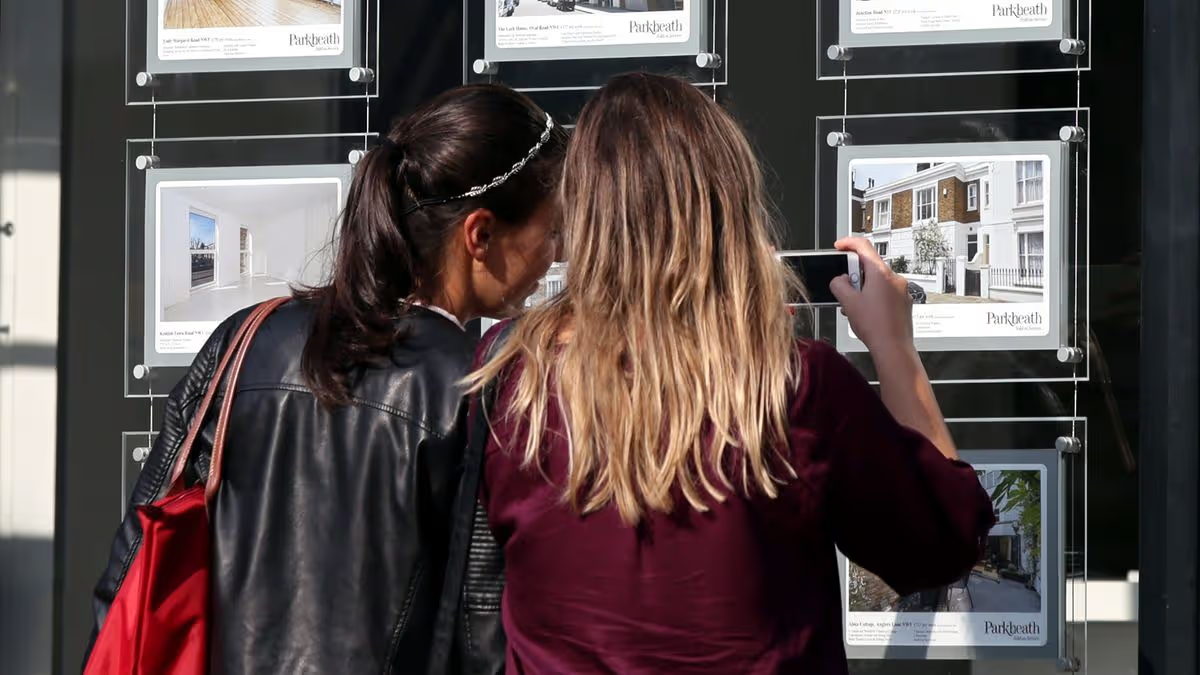
Manchester has emerged as Britain’s leading hotspot for property growth over the last decade, with average house prices surging at nine times the rate of London.
Advertisement
New data released by property portal Rightmove highlights a stark geographic divide across the UK housing market. Over the past 10 years, the average asking price for a home in Greater Manchester has climbed by 63%, rising from £160,422 to £261,891 – an increase of approximately £100,000.
By contrast, London languishes at the bottom of the growth spectrum, recording a modest 7% uptick over the same period.
Click here to get the biggest stories straight to your inbox in our Daily Newsletter
Industry experts point to shifting employment trends and affordability constraints as the primary drivers of the trend.
Advertisement
“Greater flexibility through hybrid and remote working is still influencing where people choose to live, supporting demand in cities that offer better value,” said Colleen Babcock, a property expert at Rightmove. “Areas with lower starting price points have had more room for growth.”
The data reveals a distinct “north versus south” dynamic. No cities in southern England appeared in Rightmove’s top 10 list for fastest price growth, while the south dominated the list for the slowest growth.
The analysis also points to a “spillover” effect, where priced-out buyers cast a wider net into neighbouring areas.
Advertisement
This knock-on demand has boosted prices in locations directly outside major hubs, such as Salford, Wolverhampton, Wakefield and Bradford.
Despite its stagnant growth rate, London remains the UK’s most expensive urban market by a wide margin, with an average asking price of £687,080, up from £639,593 a decade ago. Other high-cost southern cities, including Oxford, St Albans, and Winchester, also landed in the bottom ten for percentage growth.
While the price boom has significantly boosted equity for existing northern homeowners, it poses a severe challenge to aspiring buyers.
Advertisement
Mary-Lou Press, president of NAEA Propertymark, noted that Manchester’s rise reflects robust regional economics, transport upgrades, and regeneration. However, she warned that “increasing housing supply will be essential to maintain accessibility” as regional hubs become increasingly unaffordable for local first-time buyers.
The figures below outline the stark contrast between the fastest-growing property markets and the UK’s slowest-moving urban centres over the last decade.
“We are still waiting for the hospital to tell us what the underlying issue was for Ravinder to have collapsed in the street like that.”
A builder died after collapsing and hitting his head on the pavement while walking to the shops in Glasgow. Ravinder Kumar had just finished a shift on a construction site on June 11 when the tragic incident unfolded.
Advertisement
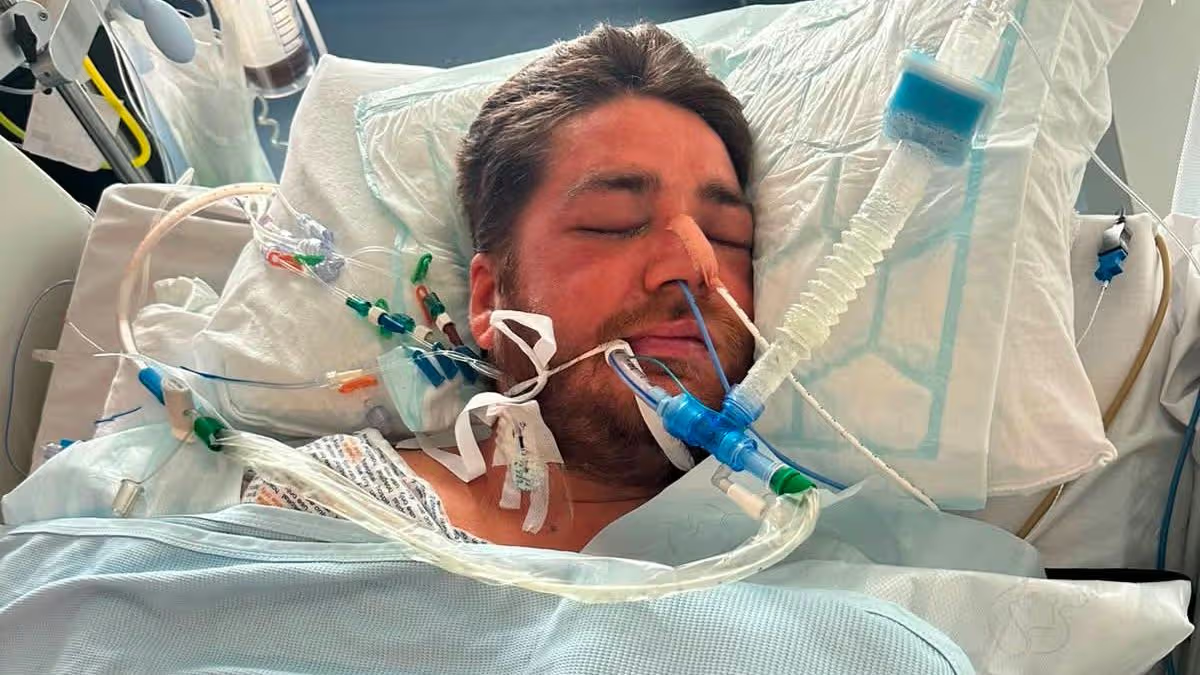
The 33-year-old was airlifted to the Queen Elizabeth University Hospital in a coma and put on a ventilator after suffering a serious head injury and internal bleeding in the fall. Sadly after two days, his cousin Ravi was told by medics at the hospital he wouldn’t regain consciousness and could not be saved.
Ravi was asked to contact Ravinder’s parents in Patiala in the Piunjab area of India to find out if they would like to turn off the life-support machine. Speaking to the Record, the 49-year-old said: “It is a decision that no parents should ever have to make.
“He was their only son and they were so happy he was making a life for himself in Scotland. They were so proud of him. It was a harrowing phone call to have to make and they were completely devastated.
“Through tears they decided the best thing was for him not to suffer and pass away peacefully. They are completely heartbroken by this it is such a senseless thing to have happened.
Advertisement
“We are still waiting for the hospital to tell us what the underlying issue was for Ravinder to have collapsed in the street like that. He was a young man with no underlying health conditions so it is just really hard for everyone to take in.
“He had just finished his work and was on his way to the local shop and his life was taken away from him in an instant.”
Ravinder moved to Scotland in March 2023 and stayed with Ravi while he looked for work. He found employment in England later that year and moved to Birmingham for two years, where he met a woman and entered into a relationship.
However when that ended Ravinder was desperate to return to Scotland and moved back in March when he found work at the building site. Ravi said: “Ravinder loved Scotland and wanted to settle down here so it was great when he returned.
Advertisement
“He had a big future ahead of him and now it has been cut short. He was such a lovely guy and so polite and nice to anyone he met so it is just completely overwhelming for me and all of the family.
“We are going to bring his body back to India so his parents can see him for one last time before he is buried there surrounded by family and friends.” Ravi has created a fundraiser to repatriate his cousin’s body back to India and help the family with funeral costs.
LONDON (AP) — Two men were convicted Monday of a plot orchestrated by a mysterious Russian-speaking figure to set fire to property linked to British Prime Minister Keir Starmer.
The fires in May 2025 damaged the home Starmer moved out of when he became prime minister, as well as an apartment building he once owned a share of and destroyed his former Toyota SUV. Nobody was injured in the blazes.
A Russian-speaking ringleader who went by the name “El Money” hatched the scheme and offered Ukrainian national Roman Lavrynovych money through the Telegram messaging app to torch the properties and get video of the evidence that could be posted online to draw attention to the attack.
El Money’s identity was never revealed and he was not charged.
Advertisement
There was no evidence proving a hostile state orchestrated the fires because police never discovered El Money’s motive or who the figure worked for, said Cmdr. Helen Flanagan, head of the counterterrorism team at the Metropolitan Police.
“Clearly the tasking was to intimidate and create fear for the prime minister and to attack the U.K.,” Flanagan said.
Lavrynovych, 22, and Stanislav Carpiuc, a 27-year-old Romanian citizen, were found guilty in London’s Central Criminal Court of a conspiracy to damage property by fire. Petro Pochynok, 35, was acquitted of the charge.
Lavrynovych was also convicted of two counts of arson that could have recklessly endangered life.
Advertisement
Lavrynovych said he needed money and admitted he set the fires, saying he wanted the bounty of 3,000 pounds ($4,000) in cryptocurrency to pay for medical treatment his father needed.
But he said he only followed through because he had been threatened by El Money. He said he had no idea who owned the property until after the fires and said he didn’t intend to hurt anyone. He told police he didn’t even know who Starmer was.
El Money provided detailed instructions to Lavrynovych on the targets, how to mix flammable substances and steps to avoid being caught.
Messages recovered from Lavrynovych’s phone showed he discussed setting the fires as well as other vandalism he conducted for money, such as painting the windshields of cars black and putting up anti-Islam posters in Muslim areas of London.
Advertisement
Sign up for Morning Wire:
Our flagship newsletter breaks down the biggest headlines of the day.
Advertisement
After the fires, El Money promised Lavrynovych he would pay and told the Ukrainian to send him a secret message with the code word “geranium” if he was detained by police. Shortly after Lavrynovych received that message he was arrested. The court was told he never received any money for setting the three fires.
Carpiuc acted as a middleman, and Pochynok allegedly was recruited to record video of the fires so Lavrynovych could get paid.
Advertisement
The fires were set in the dead of night and occupants sleeping in the homes awoke to smoke billowing in their front doors.
Starmer’s sister-in-law, who was living in his home, heard a loud bang and said she struggled to breathe as smoke filled a stairway. Her 9-year-old daughter was terrified.
An occupant of the apartment building retreated to the roof after discovering hallways full of smoke.
The two convicts are scheduled to be sentenced Friday.
Kim Leadbeater with her sister Jo Cox, who was murdered by a right-wing terrorist in 2016
Watching Jo Cox’s maiden speech as an MP from 2015, what stands out now is how normal it is.
She speaks in her warm Yorkshire accent, wearing a plain red dress, holding some papers and cracking a few gentle gags. Cox was one of 177 new MPs who had been elected the previous month, and all would get their moment to stand up and beat the drum for their local area.
Even the line that would ultimately resonate so strongly with the public – that her diverse constituents in Batley and Spen ‘are far more united and have far more in common than that which divides us’ – gets barely a nod from those listening around her.
Kim Leadbeater, Jo Cox’s sister and Labour MP for Spen Valley, has not watched the video of the speech ‘for a while’.
Advertisement
‘I find it comforting to have photos of Jo, and I’ve looked at a lot of photos of our childhood recently, I find that really comforting,’ she told Metro.
‘[But] seeing Jo actually speak, I do find really upsetting and really difficult. Because it really then hits home that she’s not here anymore.’
Everything is changing, all the time
Cut through political noise and understand how the Westminster chaos actually affects your life with Metro’s politics newsletter Alright, Gov? Sign up here.
Advertisement
A decade has passed since Cox was killed while walking to her constituency surgery by a right-wing extremist who shouted ‘Britain first’ and ‘make Britain independent’.
It was the first time a sitting MP had been murdered in the UK for more than a quarter of a century. The brutal crime shocked a nation which was in a frenetic political state just one week before the Brexit referendum.
For Leadbeater, much of the following period is blank.
Advertisement
‘I’ve probably got that six months of my life where I don’t remember very much, and I think that’s obviously what trauma and shock does to you,’ she said.
Advertisement
‘But I remember the very febrile nature of the Brexit debate ahead of Jo’s murder and the atmosphere that existed then.
‘Then, I also remember how after Jo was killed, people said that we need to do things differently, and we needed our politics to be more compassionate, and we needed to be able to be more respectful to each other, even on issues that we disagree about.
‘And that didn’t last very long.’
On June 23, the UK voted to leave the European Union, setting the scene for years of acrimonious debate. In October 2021, Conservative MP Sir David Amess was killed by a supporter of the Isis terror group.
Advertisement
Even the period leading up to the tenth anniversary of Cox’s murder has been dominated by violence on the streets of Belfast and Southampton.
Kim Leadbeater became the MP for her sister’s former seat of Batley and Spen in 2021 (Picture: Christopher Furlong/Getty Images)
Leadbeater fears the country is ‘almost forced to be divided’ by a media bent on driving negativity and a social media landscape that discourages nuance, as well as ‘some people in positions of responsibility with a large platform who seem intent on stoking the division’.
But she also believes it’s ‘not just a political problem’: ‘One thing I cannot comprehend is that you go to the local doctors for an appointment, and there are signs up saying, please be nice to the staff, please be respectful.
‘When did we have to start telling people to be nice to each other? Now, I honestly don’t know where that came from and when that started, but that I just find utterly depressing and really worrying.’
It is a marked contrast to the attitude of Cox, who was ‘just full of a desire to help people’, her sister said.
Advertisement
She was evidently far from a pushover, though. In a recent debate on Cox’s legacy, Tory MP Andrew Mitchell spoke about acting as the ‘good cop’ to her ‘bad cop’ during a meeting with the Russian ambassador about atrocities in Syria.
He said: ‘During the meeting, Jo did most of the hard-ball talking, and at the end of it she had triumphantly reduced a seasoned diplomat to incoherence, laying bare his inability to defend the indefensible. I very much doubt he will ever forget that meeting.’
Jo Cox worked for humanitarian organisations for 15 years before entering Parliament (Picture: Reuters)
Leadbeater said her sister also didn’t ‘take any crap’ when they were growing up together, though she was ‘incredibly kind and thoughtful and caring’.
She added: ‘What we don’t talk about, Jo was actually very shy when we were kids, and she had to work extremely hard to overcome her shyness.
‘I think when we see people in public life, we often think they must have always been really confident and self-assured, and actually that was not the case for Jo.’
Advertisement
That was a message she took to a Great Get Together gathering with local schoolchildren on the morning of the interview, just one of many events taking place across the country to remember Cox.
There is ‘a lot of Jo in our community’, Leadbeater said: ‘For example, the sixth form centre at the school that we went to is named after Jo.
‘There’s a plaque up at the birthing unit at the local hospital. Primary schools have the Jo Cox Award, which they award every year to the student who’s been most compassionate and the kindest and most thoughtful.’
She added: ‘I said it’s the kids at the event this morning – look, the reality is sometimes really dreadful things happen, but actually when they do, often then lots of really good things happen. That’s what we’ve got to remember.’
Advertisement
Events for the Jo Cox Foundation’s Great Get Together will take place this weekend, ahead of what would have been Cox’s 52nd birthday on June 22. Find out more on the charity’s website.
The intergalactic space warrior and leader of the Recyclons has contested more elections than most people have had bin lid breakfasts. He took time out from conquering galactic empires to speak to Beth Abbit about his intentions in Makerfield.
If you lose in Makerfield, what will you blame it on? “The voters probably,” says Count Binface, in strident mood.
Advertisement
With only a few days to go before Makerfield residents go to the polls, the intergalactic space warrior is ramping up his campaign to become the next Member of Parliament for Makerfield. And he has just released his secret weapon – a cover version of Cher’s Walking In Memphis.
His ‘party political broadcast’ replaces the name of the Tennessee city with that of the Greater Manchester constituency.
“So how about voting for Binface?” he croons in a tone that I suspect may have been improved with autotune.
“I’m standing for the people of Makerfield. Voting for Binface. I’ll treat you to a babby’s yed on me,” as the old song goes.
Advertisement
Content cannot be displayed without consent
Though both Labour’s Andy Burnham and Reform UK’s Robert Kenyon claim this byelection is a ‘two-horse race’, the Count isn’t so sure. After all, he gained 24,260 votes during the 2024 London mayoral election – 3,741 more votes than the Britain First candidate Nick Scanlon.
But for some reason, the Count hasn’t even been mentioned in the polling on Makerfield. It doesn’t seem to worry him. He hopes to pick up “at least five” votes on Thursday.
“That’s the plan,” he says, optimistically. “I believe no candidate in British political history has ever scored zero.”
When we speak on a rainy afternoon, the Count is not in Makerfield. He is rather coy about his exact location, but assures me he is on Planet Earth.
Advertisement
As it turns out, he is only available to speak using the power of video technology while he walks through a wooded area with his ‘binling’. Sadly for all involved, his face is hidden from view during our interview.
But the publicity images and his broadcasts show him to be a rather regal character, dressed at all times in black and silver armour, a magnificent cape and a bin-based helmet.
So what can this very busy intergalactic warrior and leader of the Recyclons offer the people of Makerfield? And what does he say to those who claim he is just using the byelection as a stepping stone in his career before heading off to conquer other Galactic empires?
Advertisement
“How dare you?!” he asks. “I am an intergalactic space warrior.
“And I have been to the Greater Manchester area and the Makerfield constituency at least once. So I believe I know everything I need to in order to put it on the interstellar map.”
What does he think of the so called ‘King of the North’ Andy Burnham? And can he beat him?
“My job is not to unseat him,” he says. “He would get to remain Mayor of Greater Manchester if he loses. He’s trying to do a runner from us, isn’t he.”
Advertisement
He adds: “Andy Burnham is a cheeky man.”
If Mr Burnham does win the byelection, it would of course leave an opening for the role of mayor. Is that a job Count Binface would like to take on?
“Do you know nothing of my work?,” he asks, accusingly. “I have run in Parliamentary and mayoral elections in London and across the country.” I have my answer it seems.
For a man with a bin for head, Count Binface seems to have a striking amount of local knowledge. He mentions the roadworks in Ashton town centre, ‘The Tom and Jerry’ and Wigan Warriors.
It’s almost as though he has thoroughly researched a few talking points in advance of our conversation.
His election slogan is ‘Makerfield Great Again’ and I ask what this means, perhaps naively assuming that it’s a play on Donald Trump’s famous slogan, ‘Make America Great Again’. The Count very gently and kindly gives me an explanation.
“‘Makerfield’ – that’s a place. ‘Great’, that means something that’s very good and ‘Again’, that means it will happen once more.”
Advertisement
With that cleared up, we move on to policy. In his Makerfield Manifesto the Count promises to bring back Ceefax for the entire Greater Manchester area, regenerate the £6.6m Ashton regeneration scheme and rename HS2 as ‘FFS1’.
On Ceefax he already claims some credit. “I have succeeded to some extent because I went to the BBC and they agreed at Christmas to let me bring back Ceefax. Granted it was on the radio, but it’s a start,” he says.
The Count has also promised to cut taxes and raise everyone else’s. I ask how this might affect the bond markets.
Advertisement
“I would suggest to the bond markets that they might like to ease how they react,” he says. “And who are these Bonds anyway? Is it James Bond? Nigel Bond? Samantha Bond?”
As the interview progresses, I try to get to the heart of the man behind the mask. Aside from politics, what are his hobbies and interests?
“I’m glad you asked,” he says, explaining that he has plenty of time for fun when he’s not conquering galactic empires and leading the Recyclons.
“I do enjoy watching the Lovejoy boxset from end to beginning – and that’s important,” he says. He names Tinker as his favourite character and admits a fondness for his signature beret.
Advertisement
It is, he says, an accessory he greatly admires. He is rather put out when I ask if it would fit on his head. Or indeed if he even has a head.
“I do have a head, yes. Your world and mine have all manner of epoxies, I’m sure I could make it work,” he says, defensively.
When asked about his favourite Greater Manchester band, he names the Happy Mondays. But one of the most illuminating parts of the interview comes when I ask what his perfect day out would look like.
“I would get a kinky afro,” he says. “Then visit Ashton in Makerfield and Galloways Bakery for a full monty bin lid breakfast.
Advertisement
“I would take full advantage of the two and a half hours free parking at the Gerard Centre and have a quick pint at The Sir Thomas Gerard – or ‘The Tom and Jerry’ as us locals call it.
“Then I would pay homage to rugby league. It’s my perfect day.”
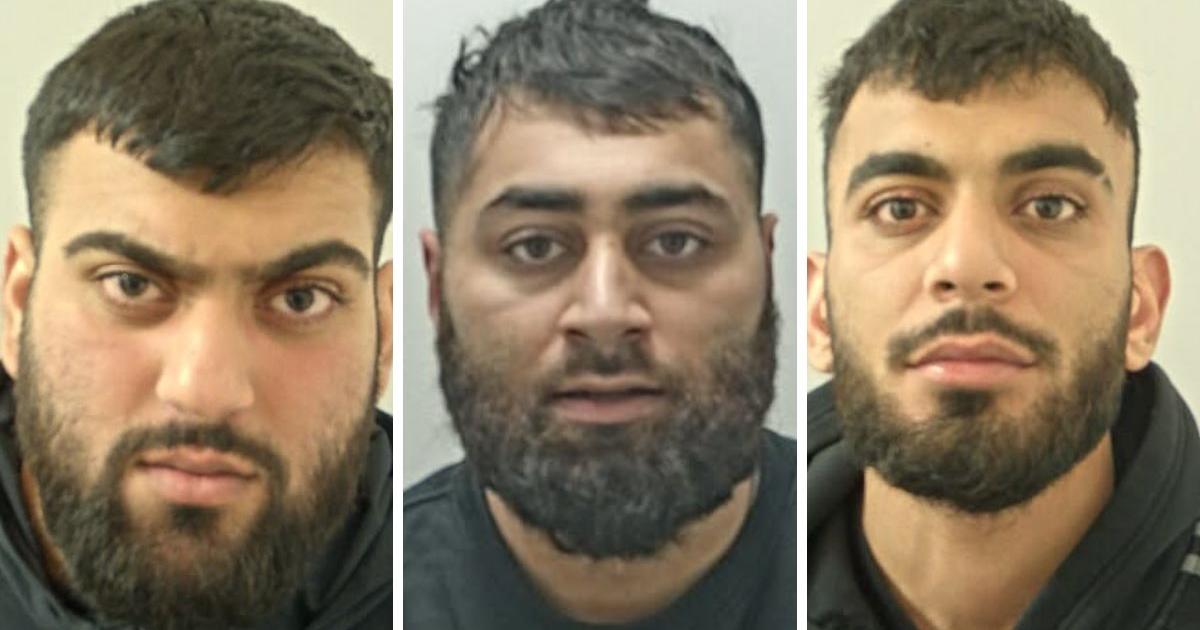
Kaiser Ali directed the Kes Bluey line using an illicit mobile phone to give orders to his lieutenants on the outside. The Nawaz brothers Umar and Usman operated from a base in Bolton supplying cocaine to drug users in and around Burnley.
Mohammed Masood acted as the gang’s banker, paying the street dealers and taking payment for drugs.
The gang were jailed following an investigation by Lancashire Police.
Advertisement
Kaiser Ali, 28, of HMP Altcourse was jailed for nine years four months.
Umar Nawaz, 27, of Chorley Old Road, Bolton was jailed for six years two months.
Usman Nawaz, 25, of Chorley Old Road, Bolton was jailed for four years six months.
Mohammed Abdullah, 20 of Church Road, Bolton, was jailed for three years.
Advertisement
All pleaded to conspiracy to supply cocaine.
Mohammed Masood, 20, of Chorley Old Road, Bolton was given a 12-month suspended sentence for money laundering.
Sgt Stu Peall said: ““We will not rest in our efforts to tackle those who bring misery to our communities by dealing in illegal drugs. We will dismantle these gangs and put those involved before the courts.”













































You must be logged in to post a comment Login