Gtech have produced a very comfortable and intelligent lawn mower in the CLM50. Sporting one of the comfiest handles I’ve seen on a mower and a clever variable speed motor, it’s a joy to use. But you should expect all of that with its premium price.
Seriously comfortable handle
Variable speed motor
Impressive run time and fast charging
Expensive
Battery isn’t compatible with many other tools
Only a 30mm minimum cut height
Key Features
Advertisement
Review Price:
£599.99
Adjustable cut height
Advertisement
Cuts between 30mm and 80mm.
Pre-assembled
Advertisement
Ready to go out of the box.
Battery powered
Advertisement
Uses Gtech’s own battery.
Introduction
More famous for its range of vacuum cleaners, Gtech also makes high-quality garden tools. The CLM50 is a brilliant and solidly built cordless lawnmower that’s ideal for medium-sized gardens. Powered by an impressive 48V battery system, it sails through all types of grass.
Design and Features
Single cutting blade
Comfy foam wrapped handlebar
Doesn’t stand up on its end easily
Advertisement
My first impression of the CLM50 was good. A handsomely designed mower that looks a little bit like a Formula 1 car, it’s miles away from some bulky and bland mowers.
Advertisement
Image Credit (Trusted Reviews)
The CLM50 runs on Gtech’s 48 Volt battery system with a capacity of 2.0 Ah. It might not sound like much, but it has a 40-minute runtime, which is better than a lot of the competition. There’s a handy battery charge level indicator on it, and the charger is just as impressive. It can take a dead battery back to 100% in just 60 minutes.
Image Credit (Trusted Reviews)
It’s good to see a large safety key on top of the mower body that should stop curious children from using the mower. Like a key in a car, you need to insert and turn it to switch on the mower.
Image Credit (Trusted Reviews)
Advertisement
You can change cutting heights from 30 – 80 mm with a big chunky handle. The deck is sprung as well, which makes it much easier to adjust. Another impressive feature is the large capacity 50 litre grass collection box, a semi-rigid fabric bag that also has a full indicator flap.
This mower has a 42cm cut width, which is ideal for medium-sized gardens. It means fewer passes over the lawn to get an even finish, but at the expense of not quite fitting between shrubs and into tight corners.
Image Credit (Trusted Reviews)
Something quite different about Gtech’s lawnmower is the blade. Unlike most rotary mowers that use a knife with blades on both ends, the CLM50 has an “Omniblade”, or a single cutting blade that’s weighted on the other end. The point being that it uses less energy and increases the mower’s efficiency.
When it comes to storing the mower away, an all-important feature is sadly missing. Although I could prop it up on its end, I would prefer it if this mower was designed to be stowed away upright as it takes up far less space. For more ideas, take a look at our guide to cordless lawnmowers.
Image Credit (Trusted Reviews)
Advertisement
Performance
Fast, effortless setup
Powerful, low noise performance
Fast 60 minute recharge
The first thing you need to do with any cordless lawnmower is get set up for its first use, however, that’s not the case with the Gtech CLM50. The handle is already attached, which saves time and fiddling around. All I needed to do was extend the handle, do up the cam bolts in the middle, and it was ready for work.
To help stretch the battery life, the onboard motor can sense resistance. The motor only revs up to full power if it feels like it’s pushing through long or tough grass. This feature works well; it ramps up quickly enough to tackle big clumps of grass without needing to mow over the same spot twice.
Advertisement
The mowing heights of 30 – 80 mm are fine if you like longer grass, but this mower won’t produce bowling green short grass- the sweet spot between 20-25 mm. Something I really like about this mower is the lack of noise. Running at less than 80 dB, it’s ideal for mowing without annoying the neighbours too much.
My initial concerns around the Omniblade, the single cutting blade underneath the deck, were happily proved wrong. The quality of cut is excellent, and having only one carbon steel blade to sharpen should save time and effort in the future. Overall, it’s one of the better premium cordless electric lawnmowers I’ve had the chance to test this year.
Image Credit (Trusted Reviews)
Advertisement
Should you buy it?
You want a comfortable handle and wide cut
Advertisement
Very comfortable to use and with a 42cm cutting width, this lawn mower is ideal for mid-sized gardens.
Advertisement
You want to use the battery in a wide-range of other tools
The Gtech battery only works in this mower, a hedge trimmer, and a grass trimmer.
Advertisement
Final Thoughts
This is a really impressive cordless lawnmower from Gtech. It’s powerful, has a wide cut width, and handles well on the grass. The runtime is impressive, and so is the recharging time. The only issue is that it’s a big investment to make when its “50 series” battery isn’t compatible with a wide range of other tools.
How We Test
We test every lawn mower we review thoroughly over an extended period of time. We use standard tests to compare features properly. We’ll always tell you what we find. We never, ever, accept money to review a product.
Find out more about how we test in our ethics policy.
Used as our main lawn mower for the review period
Used on a variety of grass lengths to see how well the mower cuts
Tested to see how easy the mower is to push, turn and store
FAQs
Can you use the Gtech CLM50’s battery in other tools?
Yes, the battery is compatible withi Gtech’s other cordless garden tools.
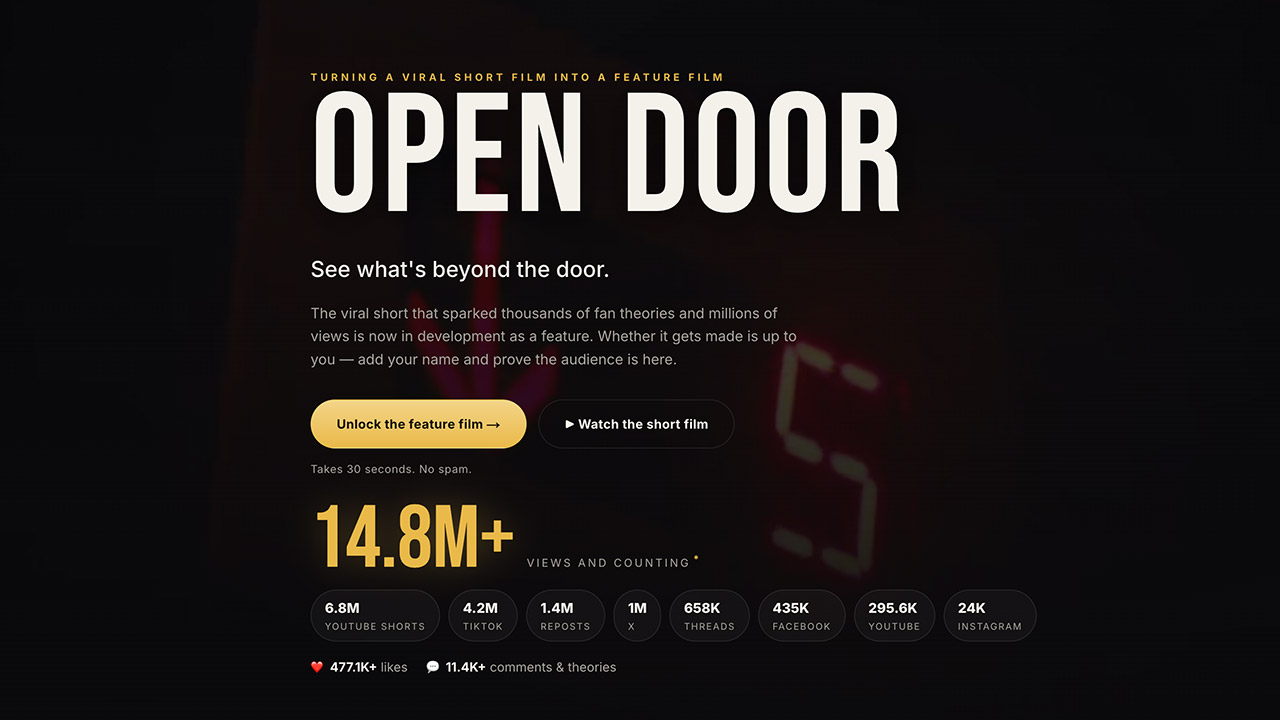
Kevin Cate created Open Door, a 3-minute horror short that has went viral. A couple of coworkers get into an elevator for a typical ride, but then it just stops and dips, and you start hearing whispers and getting the impression that something is lurking down in the darkness. Nearly 15 million people have watched it on YouTube, TikTok, and Instagram, and they’re still going crazy trying to figure out what happens next.
The only question that keeps coming up is, “What did those two people see when all hell broke loose?” Kevin Cate has been dealing with that question pretty much every day since the short came out, and his contagious excitement has secured him a nice six-figure deal to make it into a feature film. He collaborated with IO writer Charles Spano to enhance the script, and they now have a completely new version ready to go.
Flippable Audio Magic: Rotate the 20W (2 x 10W) Dolby Audio speakers 90° side to side or 200° up and down for sound that follows your vibe, perfect…
True Brightness, Real Clarity: Enjoy lifelike details with TÜV‑certified 380 ANSI lumens and 1080p Full HD resolution that make every movie night…
Designed for Consistent Viewing: All‑glass lenses and fully sealed optical engine resist dust and wear, keeping every frame crisp and clear even…
Sean Anthony Baker and Mia Matthews are reprising their roles from the original short for the full-length movie. Kevin Cate is overjoyed to be working with the same cast and crew who brought the short back to life in the first place, and he believes the new characters are among the greatest they’ve created yet. Getting asked every day what the two saw down there is driving him insane, but he’s ready to eventually reveal them, and he’s dropping hints along the way.
Advertisement
They’ve even set up a website (opendoorfilm.com) where you can sign up and express your interest. The website has the most recent news, behind-the-scenes looks, and even a section where fans can share their wildest ideas. Skysound producer Daniel Faber is on board with this one, as well as Kevin Cate’s upcoming comedy Unbearable Christmas, starring Julia Stiles and David Cross.
Now that the budgeting process is over, the next steps are to address finance, casting, and pre-production. They want to start filming later this year and release it to the public in 2027. Kevin Cate provided a sneak glimpse of what’s coming on social media, claiming that it’s the completion of his ultimate dream. [Source]
Last year, the AGCM found that Apple abused its market dominance with its treatment of third-party developers.
Months after being hit with a nearly €100m penalty, Apple is once again under investigation by the Italian competition authority – this time over concerns around its interoperability obligations under the EU’s Digital Markets Act (DMA).
The Autorita Garante della Concorrenza e del Mercato (AGCM)’s second probe into Apple concerns iOS and iPadOS, which it said might be unfairly treating third-party cloud providers.
According to the DMA, companies with the gatekeeper designation must ensure that third-party sellers receive the same free and effective interoperability with their operating systems as the company’s own services.
Advertisement
The Italian authority pointed to “indications” of an apparent lack of access third-party cloud providers have to the same features that are available to Apple’s own iCloud. The global technology giant holds more than 40pc of the mobile operating system market share in Europe.
“For example, it appears that Apple does not allow alternative cloud storage services to use the iOS and iPadOS features enabling end users to perform a full backup of their devices’ data, while those same features are available to Apple’s iCloud,” the AGCM said in a statement.
This marks the first time the AGCM is running an investigation alongside the European Commission.
Italy’s competition authority hit Apple with a penalty of more than €98.6m last December after finding that the company abused its “super-dominant position” in the app distribution market with its App Store.
Advertisement
The probe stemmed from Apple’s 2021 policy on App Tracking Transparency (ATT) on iOS which forced third-party app developers to double user consent requests for the same purposes. The AGCM concluded that the policy did not comply with the bloc’s privacy requirements.
Apple, at the time, said that it disagreed with the AGCM’s decision and planned to appeal.
This also isn’t Apple’s first encounter with the DMA. Last year, the company – alongside Meta – became the first penalty recipients under the law, with Apple alone receiving a €500m fine for restricting app developers from informing customers of alternative offers outside its App Store.
A few months later, the company introduced changes to its App Store policies to comply with the law, which carries fines of up to 10pc of a company’s total annual worldwide turnover. For Apple, this could be as much as $41.6bn.
After several years without a major update, the latest generation of Chevrolet Silverados has just been announced. As you would expect from a truck line that’s been around since roughly the Cambrian era, there’s a lot that has stayed the same. Namely, the trim levels will have some familiar names: in order, there’s Work Truck, Custom, and High Country, along with the beefier off-road lifted ZR2, Trail Boss, and Custom Trail Boss. LT, long a mainstay of Chevy products, has been replaced with a trim simply called “Silverado.” This is likely a call back to GMT400 and square-body Chevy C/K 10s and C/K 1500s where “Silverado” was a trim level instead of the name of the truck itself.
Trim names aside, the change that’s going to get the most Chevy fans excited is the inclusion of the next generation Chevy Small Block. The 2027 Silverado will have the 2.7-liter and 3.0-liter Duramax from the previous generation, but it will now also feature a new 5.7-liter and 6.6-liter V8. These engines are based on what was recently announced as the new powerplant for the Corvette.
Advertisement
New engines and more power
Chevrolet
Interestingly, Chevy has not released power figures for the new line of V8s or given a price structure for the mostly the same trim lineup. The V8s in the Silverado won’t have Corvette power numbers, but landing in the high-300 horsepower to mid-400 horsepower range would probably be somewhere in the ballpark, judging by current power numbers. General Motors could always surprise us with more grunt, but either way, we likely won’t know more until later this year.
One of the more potentially polarizing changes for this upcoming generation is the inclusion of a lot of screens, akin to what you might see in the current Colorado and Chevy’s SUVs. For the 2027 Silverado 1500, a large number of the physical buttons and controls are now gone. All Silverado trims get a 12.2-inch instrument cluster and a 16.3-inch infotainment display. The High Country and ZR2 get an additional display in front of the passenger.
Advertisement
More screens, more problems?
Chevrolet
While there will definitely be a subset of new Silverado buyers who will like the new screens and subsequent new tech, there will almost certainly be a vocal set of Chevy fans who will not like the changes. The 2026 Silverado didn’t have any physical gauges for the driver either, but now the entire cockpit looks a little more like a fighter jet or a racing simulator than the previous line of trucks.
Now, whether or not that will matter much as to the actual operation of the vehicle will have to wait until someone actually gets behind the wheel and drives one. All the bemoaning of new tech might be for nothing. But as Chevy has seen for roughly a century of selling trucks, truck buyers like things to be a certain way and can be fickle. Chevy is, after all, just going with the trend that every other automaker (and truck maker) has already adopted. We wouldn’t be having this same conversation if more tech-forward truck makers like Rivian or Toyota announced the same thing (both brands have had all-digital cockpits for years).
Advertisement
It’s still a Silverado
Chevrolet
Still, there’s a lot to be excited about, fully digital future aside. The new line of Chevy Small Blocks will almost certainly attract a lot of interest. For old-school Chevy fans, the brand even brought back the 5.7-liter displacement that Chevy used for decades prior to phasing it out in favor of the 5.3-liter displacement. So, Chevy definitely knows its customer base. My dad, for instance, has driven 5.7-liter powered Chevys for about 25 years.
There’s a lot we don’t know, like power and price, and those factors will likely be the decision makers for a lot of potential buyers. Bigger, more powerful engines and more tech certainly isn’t going to make the truck any cheaper.
However, just the mere fact it says “SILVERADO” on the truck and it’s a Chevy means that General Motors won’t have any considerable hurdles selling a lot of trucks. It just has to make the latest and greatest line of Silverados a more attractive option than the eternal enemies at Ford and Ram.
Illumina Ventures announced the two winners of the inaugural competition designed to recognise high-potential start-ups.
UCD’s Nax Bioscience and TCD’s Imragen were today (16 June) awarded the top spot at the inaugural Irish Genomics Business Plan Competition, which is an initiative established to identify and support high-potential genomics-focused start-ups and research ventures in Ireland’s life sciences ecosystem.
Illumina Ventures, which announced the winners, is an independently managed venture capital firm that is focused on genomics and precision health investing and aims to strengthen the genomics innovation landscape in Ireland.
Nax Bioscience is a deep-tech life science start-up that focuses primarily on improving the efficiency of next generation sequencing. By developing an innovative nucleic acid extraction technology, Nax aims to ensure higher input quality that delivers more reliable, cost-effective sequencing results.
Advertisement
Leading the Nax Bioscience team are, Dr Jaythoon Hassan, of the National Virus Reference Laboratory at UCD, professor Michael Gilchrist from the UCD School of Mechanical and Materials Engineering and Edward Simons, a commercial lead. The multi-disciplinary project is supported by the Enterprise Ireland Commercialisation Fund and is preparing for spin-out in early 2027.
Imragen, which is a new commercial venture being spun out of the Campbell lab at TCD’s Smurfit Institute of Genetics, is developing a range of methodologies to restore the integrity of the blood-brain and blood-retina barriers. The technology will seek to treat a range of neurological and ophthalmological conditions.
Following a competitive review process of submitted entries from across Ireland, Nax Bioscience and Imragen were selected as the two winners in recognition of their innovative genomics-driven technologies and strong commercial potential.
For winning, both start-ups will receive a comprehensive support package that includes access to Illumina sequencing consumables and technical expertise, strategic mentorship from Illumina Ventures, intellectual property guidance, legal support and access to Ireland’s genomics data science ecosystem.
Advertisement
Commenting on the win, Nick Naclerio, a founding partner at Illumina Ventures, said, “Ireland has become an increasingly important centre for genomics innovation, supported by exceptional scientific talent, a strong entrepreneurial culture, and a collaborative ecosystem.
“We were highly impressed by the quality of applications received and we are excited to support Nax Bioscience and Imragen as they advance technologies with the potential to make a meaningful impact on healthcare and the life sciences.”
Mark Robinson, the vice-president and general manager, for the UK, Ireland, and Northern Europe, at Illumina, added, “Through this competition, we wanted to help accelerate the next generation of genomics-enabled companies in Ireland. The winning teams demonstrated compelling scientific innovation alongside a clear vision for translation and commercialisation.”
Don’t miss out on the knowledge you need to succeed. Sign up for the Daily Brief, Silicon Republic’s digest of need-to-know sci-tech news.
New simulations suggest Venus’ extremely slow backward rotation may have been triggered by a high-angle collision with a fast-moving object roughly one-tenth its mass. The impact could have dramatically altered Venus’ spin and melted nearly its entire mantle. Universe Today reports: Venus’ bizarre and extraordinarily slow retrograde rotation on its axis has long puzzled planetary scientists. But in a new paper presented at the recent European Geosciences Union General Assembly in Vienna, the authors argue that their models indicate that a high angle moon-sized, high-velocity impactor likely triggered Venus’s strange 248-day rotation. And it probably happened within the first 50 million years of Venus’ formation. […] The team found that an impactor that is about a tenth of Venus’ mass hitting the planet at a high angle could drastically show the early young planet’s rotation.
Depending on the actual impact parameters, we can slow down a rapidly rotating early Venus to rotation rates that are that are compatible with long-term evolution towards a slow rotating planet, says [Cedric Gillmann, the paper’s lead author and a planetary scientist at ETH Zurich]. Or even in some cases with large energetic impact that happen with a tangential impact that would even put planets early on in already a retrograde but faster rotation, he says. In the simulations, giant impacts expectedly produce surface magma oceans, the paper’s authors note. Their relative depths vary depending on impact properties: from a shallow melt layer in the order of 100km thick to a fully molten mantle, they note. If the surface can radiate heat to space efficiently, the magma ocean cools down quickly, they write.
If Gillmann and colleagues are correct, Venus’ likely impactor also melted some 99 percent of Venus’ mantle. That is, the interior structure that extends between its core and crust. You will get rid of that impact heat pretty efficiently, and after a few hundred million years, you end up seeing an evolution that is very difficult to distinguish from a case where you don’t have an impact, says Gillmann. What role the impact may have played in Venus’ lack of plate tectonics, however, remains open for debate. But it’s known that Venus’ lack of a large-scale carbon recycling mechanism likely led to its current runaway greenhouse.
SpaceX passed Amazon to become the fifth-most valuable company in the world, after its stock price climbed 20% on Monday and more than 8% in early trading Tuesday, pushing its valuation past $2.7 trillion.
That’s despite Amazon turning a $78 billion profit in 2025 on $717 billion in sales last year, compared to SpaceX’s $4.9 billion loss on $18.7 billion in revenue. SpaceX has recently added new revenue streams in the form of compute leasing deals with Anthropic and Google, though, and the company has added $1 trillion to its valuation since going public on Friday.
Tuesday’s stock price jump came after SpaceX announced it is acquiring AI coding startup Cursor in an all-stock deal worth $60 billion. SpaceX first revealed a collaboration with Cursor in April, at a time when CEO Elon Musk said his AI company xAI — now a part of SpaceX — “was not built right [the] first time around” and that he was rebuilding it “from the foundations up.”
SpaceX’s historic IPO saw it debut with a valuation of around $1.7 trillion, and the transaction raised nearly $86 billion for Musk’s company. SpaceX only made about 4% of its total shares available for trading, which experts predicted would make the stock more susceptible to wild swings.
Most security teams think of NTFS junctions and symbolic links as niche file system features. They let one directory point to another, like a shortcut that the OS treats as real. They exist for backward compatibility, storage management, things that rarely come up in a SOC. But they have a property that makes them interesting from an offensive perspective: any user can create them.
No admin privileges are required, and no special permissions beyond write access to the target folder.
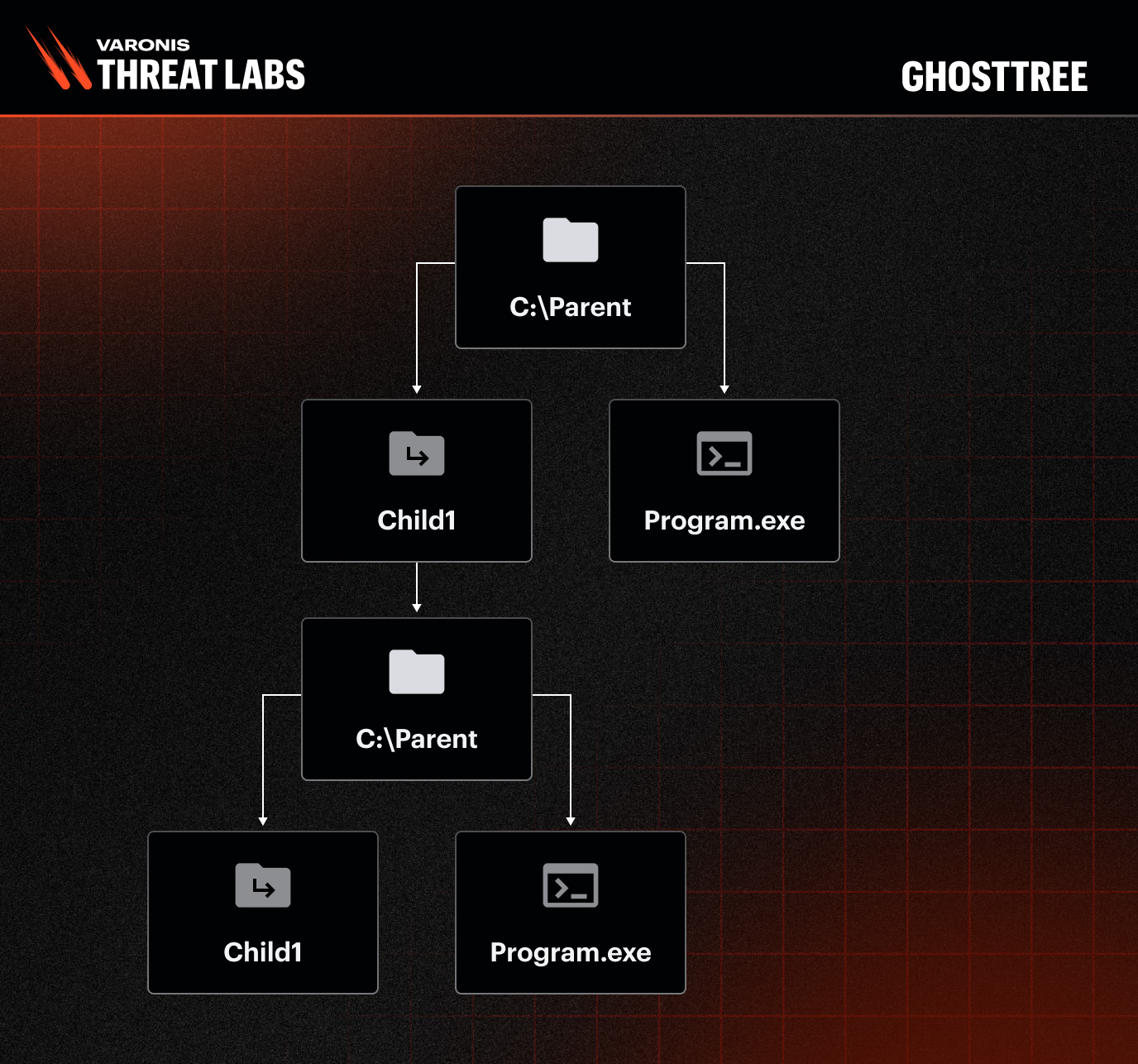
We discovered that by pointing a junction back at its own parent directory, an attacker can create recursive loops that generate effectively infinite file paths. Tools that try to scan the directory recursively, including EDR products, could follow the loop and never finish.
The malicious files sitting in the same folder go unexamined, creating a technique we’ve dubbed GhostTree.
Advertisement
How NTFS junctions work
Windows file paths are a fundamental part of the operating system, but they come with complexities. While most users interact with simple folder structures, the NTFS file system introduces advanced capabilities like junctions and symbolic links.
These features serve legitimate purposes, such as redirecting directories, maintaining backward compatibility with legacy applications that expect files to be in specific locations, or reorganizing files without physically moving them.
A junction is a type of NTFS reparse point that redirects one directory to another. Creating one requires only write permissions and a single command in CMD:
mklink /J C:\LinkToFolder C:\TargetFolder
This creates a junction named “LinkToFolder” that transparently points to “TargetFolder.” Any application accessing files through the junction sees the contents of the target directory as if they were local.
Advertisement
One constraint matters here though. Classic Windows systems impose a maximum path length of 260 characters, which is rooted in legacy software and file system design.
It is technically possible to extend this limit up to 32,767 characters via a registry key, but many applications and utilities are not equipped to handle paths beyond 260.
Even though NTFS supports longer paths, practical usage remains restricted by existing software. That limit determines how deep the recursive loops can go, and how many unique paths GhostTree can produce.
Safeguarding sensitive data starts with visibility — knowing where your information lives, who can access it, and how it’s being used.
Advertisement
The Varonis Data Security Platform automatically locks down exposure, continuously monitors activity across SaaS, IaaS, on-prem, and databases, and detects and responds to insider threats, ransomware, and AI abuse.
GhostBranch is the simpler of the two techniques. Any user can create a folder junction, setting both the junction’s name and destination. Consider this folder structure:
C:\Parent\program.exe
Run the command:
mklink /J C:\Parent\Child C:\Parent
This creates a logical loop by pointing a child folder back to its parent folder. The child directory now contains everything the parent does, including itself. The result is an unlimited number of valid paths to the same file:
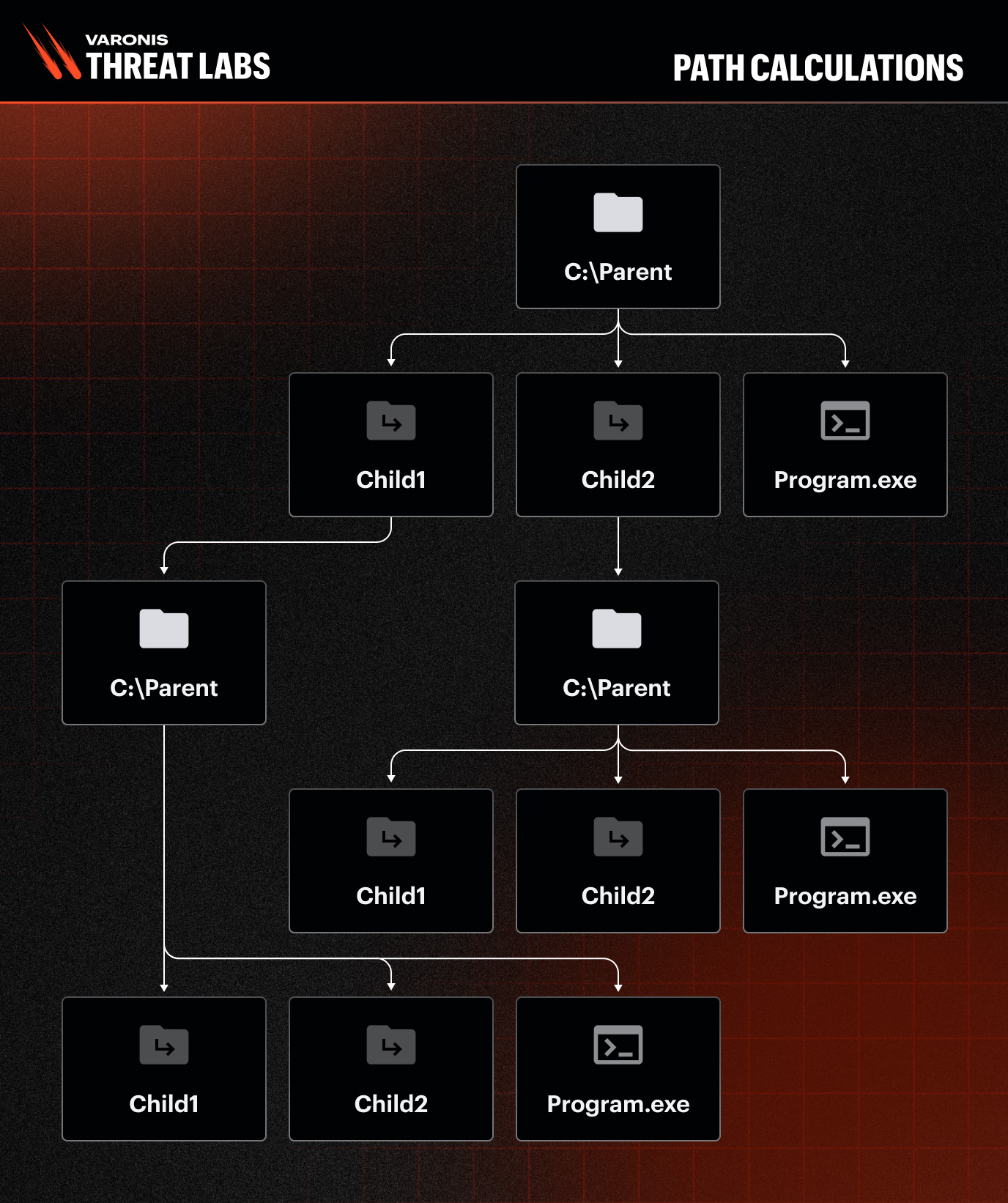
Both GhostBranch and GhostTree produce paths that can extend to the maximum length Windows allows. The difference is in path diversity, which is where GhostTree’s additional child folder changes things considerably.
Advertisement
GhostBranch
Within Windows, the maximum traditional path length is 260 characters. To maximize the number of directories, one can create single-letter folders (e.g., “P”) directly under the C: drive and employ an executable named 1.exe.
Example paths include:
C:\P\1.exe
C:\P\P\1.exe
C:\P\P\P\...\1.exe
This configuration allows for approximately 126 unique directory structures due to path length limitations.
GhostTree
The GhostTree method introduces two parent folders, “P” and “B”, in contrast to the single-folder structure used previously. Examples include:
Advertisement
C:\B\1.exe
C:\P\B\1.exe
C:\P\B\P\B\...\1.exe
While the maximum depth remains around 126 folders, each level may be named either “P” or “B,” effectively creating a binary tree-like structure. With this configuration, each node represents a distinct path, and the total number of possible nodes is calculated as:
2^126 ≈ 8.5 × 10^37
How big is that? It’s vastly larger than the number of grains of sand on Earth (8.5 × 10^18) or even the atoms in your body (10^27).
Why this matters for defenders
With just two lines of code, a user can generate endless valid paths, making it impossible to finish scanning parent directories with the dir command recursively. The same applies to EDR products that scan folders for malicious files. An attacker places malware in the parent directory, sets up the GhostTree structure, and the containing folder becomes effectively unscannable. The scan hangs. The malicious files go unexamined.
We tested this technique against Windows Defender and confirmed it could be used to evade folder scans.
Advertisement
We reported the issue to Microsoft. The ticket was closed with the explanation that “bypassing Defender is not crossing a security boundary.” The issue was subsequently patched regardless.
Techniques like GhostTree are a reminder that endpoint scanning is only one layer of defense. Monitoring file system activity at the data layer catches what scanners miss, including anomalous junction creation and recursive directory structures that should not exist in normal operations.
Varonis monitors file access patterns and detects this kind of anomalous activity across file systems and cloud infrastructure.
The U.S. Federal Trade Commission (FTC) warned that Americans lost $3.5 billion to imposter scams in 2025, with reported losses nearly tripling since 2020.
Imposter scams were also the most reported fraud category last year, accounting for nearly one in three fraud reports filed with the FTC. In these scams, the fraudsters reach victims through text messages, phone calls, emails, social media, and search engine results. The costliest schemes typically involve a fake bank security alert that prompts targets to transfer funds to “protect” their accounts.
According to the FTC, victims lost nearly $1 billion to business impersonators (with bank impersonators being behind the most lucrative scams) and approximately $920 million to government impersonators. Social media was the most cost-effective attack vector for impersonators, with more than $2.1 billion in 2025 losses traced to social platforms (an eightfold increase since 2020).
Nearly one in three Americans who lost money in such scams were first contacted through social media, with Facebook losses alone exceeding those from text and email combined, while WhatsApp and Instagram ranked second and third.
“The FTC will use every tool available to combat one of the most pernicious forms of fraud—government and business impersonation—and to protect the integrity of the digital economy,” said Christopher Mufarrige, director of the FTC’s Bureau of Consumer Protection.
Advertisement
Overall reported fraud losses across all categories have surged to about $16 billion in 2025, the highest on record and roughly 25% above the prior year.
In March 2024, the FTC also warned that scammers were impersonating its employees to steal money after receiving many reports of scams in which fraudsters impersonated agency personnel to pressure Americans via phone calls, email, or text messages into wiring or transferring money.
Since its Impersonation Rule took effect in April 2024, the FTC has brought a dozen enforcement actions, securing more than $70 million in consumer redress and halting some imposter schemes.
Last year, the FTC announced law enforcement actions under this rule against MediaAlpha (government imposter scheme), American Tax Service (IRS imposter scheme), Blackstone Legal (phantom debt business imposter scheme), Click Profit (business imposter money-making scam), and Accelerated Debt Settlement (government and business imposter scheme).
Advertisement
It also filed a complaint against Innovative Partners in April 2026, alleging the company impersonated the government and insurance carriers to sell fraudulent health plans.
The same month, the FBI warned in its 2025 Internet Crime Report that U.S. victims lost almost $21 billion to cyber-enabled crimes throughout last year.
Security teams log 54% of successful attacks and alert on just 14%. The rest move through your environment unseen.
The Picus whitepaper shows how breach and attack simulation tests your SIEM and EDR rules so threats stop slipping by detection.
If you’ve ever used a pillow spray or lotion designed for sleep, you understand the power that scent can have on rest. So does Kimba, a new sleep technology company whose clinically validated, AI-powered Kimba device is now available for preorder in the US. The Kimba tracks your health metrics to release scents while you snooze, aiming to guide you into a deeper, more restorative sleep without the need for pills, the company said in a press release.
Unlike wearable devices that passively track your sleep, the Kimba seeks to actively improve it. It does so with built-in ambient sensors that monitor breathing patterns, movement, room disturbances, light levels and snoring, along with the ability to connect to wearables such as the Whoop, Oura Ring, Apple Watch, Fitbit and wearables by Garmin. Then it delivers personalized scents using three capsules contained in the device.
Kimba was founded by Ben Fuxbruner, a former special forces commander who dealt with post-traumatic stress disorder and chronic insomnia after a near-death injury. Sleep and brain science researchers, including olfactory and neuroscience expert Anat Arzi, who holds a doctoral degree in neurobiology, helped develop the Kimba device.
Advertisement
“The influence of sensory input during sleep is significant,” Arzi in a statement. “Olfactory stimulation is uniquely beneficial for this because it can influence brain activity without waking the individual.”
Inside the Kimba, you’ll find three scents.
Kimba
Once the Kimba is released, I plan to test the product to see if it lives up to its promises and the price of about $600 a year.
Advertisement
It begins with a sleep assessment
It all starts with a sleep assessment on the Kimba app. This assessment helps the sleeper “to understand their sleep challenges, goals, preferences and lifestyle factors,” Fuxbruner told CNET. Those who preorder a Kimba will take the sleep assessment to create a personalized sleep profile and determine which three scent capsules they receive first.
There are currently 12 water-based, plant-derived scent formulations packaged in proprietary scent capsules that are replaced every three months. Scents include Soft Blue, created with Roman chamomile to support sleep initiation; Golden Grove, made with Austrian sandalwood to ground the body; and Lemon Calm, built with Bulgarian melissa (also known as lemon balm) to downshift anxiety.
New capsules are scheduled to ship before replacements are needed, and these shipments are part of the Kimba membership.
According to Fuxbruner, the $299 preorder price includes the Kimba device, app access, a six-month membership with personalized scent deliveries and free shipping. After that, preorder you can continue receiving scents through your membership at the same discounted rate of $299 every six months (about $49.90 a month). That comes out to about $600 a year.
Advertisement
The Kimba app shows your sleep data and the scents that were used to help you snooze.
Kimba
AI uses your data to pick your sleep scents
Following the sleep assessment, once you go to sleep, the Kimba will monitor nightly health metrics, including heart rate variability, movement, breathing patterns and data from wearable devices. Fuxbruner explained that it uses its proprietary adaptive AI to analyze this data and determine when, what and how much scent to deliver, and to make adjustments throughout the night to optimize recovery, sleep continuity and depth.
Kimba’s machine learning models “learn how sleep patterns evolve over time and differ across individuals using physiological signals from wearables and Kimba’s own sensing systems,” said Fuxbruner. “Because Kimba’s objective is measurable: better sleep quality, continuity, recovery and cognitive performance, Kimba can continuously evaluate and optimize its models based on real-world outcomes.”
In other words, the more you use the Kimba system, the more personalized your scent experience should become.
New scents are delivered quarterly
During the first few months of use, Kimba establishes a baseline using information from the onboarding questionnaire, sleep data collected from a wearable and using the Kimba’s built-in sensors. The device doesn’t use cameras but can detect sleep-related sounds, such as snoring.
“The system is designed to filter for specific sleep-relevant signals only, collecting only the information necessary to generate personalized sleep insights and scent recommendations,” said Fuxbruner. Conversations and other audio are not recorded, stored or retained, he said.
As data is gathered, the system identifies patterns between specific scent combinations and positive sleep outcomes, such as longer periods of deep sleep or fewer nighttime awakenings.
Advertisement
Then, each quarter, Kimba users will receive updated scent recommendations and before shipment, they can review these scents and why they’ve been endorsed in the Kimba app.
Scents get released from the top of the device.
Kimba
Kimba’s privacy policy
All data is encrypted both in transit and at rest within the Kimba ecosystem, including the device and cloud infrastructure, Fuxbruner said.
Advertisement
Kimba’s privacy and security practices align with HIPAA requirements and the international ISO 27701 privacy management principles. Data is used solely to personalize and optimize your sleep experience and is not sold or shared with third parties for advertising purposes.
Current and future research
Arzi conducted a study with 50 participants over 48 nights and found that Kimba improved their sleep quality and cognitive performance. These findings are to be presented at conferences later this year.
Under the guidance of sleep expert Peretz Lavie, Kimba is advancing two additional clinical studies: one using polysomnography (PSG, also known as a sleep study) to evaluate physiological sleep outcomes, and another focused on mental health and PTSD to explore Kimba’s impact on sleep and recovery.
You can register for preorder at kimba.ai. Shipping will begin this fall.
Many websites will show you different prices, contents, ads, and search results depending on where you are. When marketers and academics see only one version of the internet, they might miss important information and draw the wrong conclusions.
Now is the time when residential proxies are useful. You can see websites from various places and get a better idea of what people all over the world see by routing internet data through real residential IP addresses.
What ProxyWing Offers Beyond Standard Residential Plans
One thing many residential proxy providers do is provide access to IP addresses. In a broader sense, ProxyWing is building a platform to address real-world business and study needs. The big residential IP pool is one of the best things about it. When a network is bigger, people can connect to more unique IP addresses from different places. This makes it easier to access location-sensitive information and reduces the number of restrictions that come with it.
One more benefit is that sessions can be changed. For some projects, IP addresses need to change all the time. Others need a connection that remains stable for longer. ProxyWing lets users choose between rotating sessions and sticky sessions, so they can use the feature that best fits their workflow.
Advertisement
Real Use Cases We Tested for Marketers
Often, marketing professionals need accurate information about the region to make decisions. We looked at several real-world examples to assess how well ProxyWing works in an everyday marketing environment.
1. Local Search Engine Result Tracking
In different towns and countries, we looked at how search results looked. With the residential IPs, it was easier to show correct localized search results.
2. Watching the prices of competitors
Marketing teams often keep an eye on their competitors. Location-specific pricing research was possible thanks to the network, which didn’t cause many problems.
3. Verification of Ad
We looked at different places or locations to see if online ads were showing up properly. Proxy servers let us see ads as people in our area would.
Advertisement
4. SEO Campaign Analysis
We looked at search results from several different areas. Results were more accurate at reflecting local search conditions than standard connections.
5. Tracking Affiliate Campaigns
Affiliate marketers must verify landing pages and tracking cnnections. Residential IPs offered dependable insights across various regions.
Real Use Cases We Tested for Researchers
Researchers often need knowledge that is both unbiased and relevant to the area. We put ProxyWing to the test in a number of research-related situations.
1. Getting information from schools
Researchers who are gathering public information from different places could more easily use statistics that are specific to those places.
Advertisement
2. News Monitoring
Headlines in different places are often different. The network lets people see news from an area’s perspective.
3. Studies of consumer behavior
Online behavior researchers could get a better picture of how people in different places interact with localized content.
4. Search Engine Research
Differences in search results across areas could be clearly seen and recorded.
5. Travel Data Collection
Travel prices vary widely depending on where you are, so residential IPs were useful for comparing how prices work across different areas.
Advertisement
6. Monitoring of digital policies
Researchers examining differences in internet rules and content could access web experiences specific to their location.
These examples showed how useful residential IP addresses are for gathering information important to a specific area.
Configuration and Integration Experience
Setting up is one of the things that worries beginners the most. Thanks to ProxyWing, the process is pretty easy to understand.
Users can easily manage their credentials, select locations, and set up sessions on the dashboard thanks to its well-organized layout.
We tested how well the integration worked in several common ways.
Advertisement
Configurations performed in a browser took only minutes to complete. Most users can simply enter proxy credentials and begin routing traffic through the residential network.
Standard proxy integration steps were used to set up automatic tools. The documentation was clear enough to help connect browser automation platforms, scraping tools, and data collection systems.
Common proxy standards will be useful for developers building custom software. Integration didn’t require many changes to the way things were done before.
The choices for managing sessions were especially helpful. Users could choose between rotating and sticky sessions based on the project’s needs.
Advertisement
Performance remained stable throughout extended testing periods, and connection reliability was suitable for ongoing data collection and monitoring.
Overall, the setting process felt easy enough for beginners to handle while still giving advanced users enough options.
Pricing and Plan Selection Guidance
The project’s goals, traffic needs, and projected usage levels will help you choose the best residential proxy plan. Long-term studies may require higher-volume plans so researchers can continue collecting data across multiple sites.
It’s more important to choose a plan based on how much you will actually use it than to pick the biggest package that’s offered. Estimating how much traffic you will use each month can help you make the most cost-effective choice.
Advertisement
A well-functioning network can save hours of work, ensure data accuracy, and reduce gaps that slow down important projects. ProxyWing’s residential proxy network is a good option if you want a solution with flexible plans, reliable performance, and extensive coverage. ProxyWing has plans for people with a range of needs and budgets, such as marketers who want to keep an eye on their competitors, researchers who want to collect location-specific data, or marketers who want to monitor their own local search rankings. Look more closely at your options and see how the right residential proxy plan can help you learn more, get more done, and feel more confident about your choices.
Wrap Up
These days, the internet is becoming increasingly tailored to each person’s location. In different parts of the world, search results, ads, prices, information, and user experiences can vary widely. It is very important for marketers and academics to understand these differences.
The ProxyWing Residential Proxy provides access to a large residential IP network configured to deliver location-based visibility. It’s useful in many situations because it can target people by location, adapt to different session types, integrate with many systems, and consistently deliver results.
Whether you are monitoring SEO performance, advertising campaigns, customer behavior, academic research, or gathering data on a specific area, residential proxies can provide the information you need to make better decisions.
Advertisement
Based on our review, ProxyWing offers the key features researchers and marketers need, and its setup process is easy enough for both new and experienced users. It is a useful and effective residential proxy option for professionals who need location-specific information.



































































You must be logged in to post a comment Login