

Crypto World
HYPE rallies to new ATH at $76.70 as SpaceX futures fuel Hyperliquid activity

Hyperliquid’s HYPE token has surged to a new all-time high near $76.70 after a combination of ETF-related buying, rising platform activity, and a wave of short liquidations pushed the asset through key resistance levels.
Summary
- HYPE hit a new all-time high of $76.70 after ETF-related buying, short liquidations, and rising demand on Hyperliquid.
- Bitwise purchased 77,100 HYPE tokens worth about $5.2 million, adding fresh spot demand as the protocol continued its buyback-and-burn program.
- SpaceX perpetual futures generated roughly $1.2 billion in weekly volume, helping Hyperliquid capture 8.3% of global perpetual futures open interest.
According to data from crypto.news, Hyperliquid (HYPE) rose nearly 10% over the past 24 hours to a new all-time high of $76.70 on June 16 before stabilizing around $75.50 at press time. The token was up roughly 46% over the past week and more than 90% over the past month as growing platform activity, ETF-related demand, and protocol buybacks continued to support the rally.
Hyperliquid price rallied as asset manager Bitwise purchased approximately 77,100 HYPE tokens worth about $5.2 million to support its newly launched Bitwise Hyperliquid ETF.
The purchase arrived as HYPE was already trading near a major breakout zone, adding fresh spot demand to a market where supply has been steadily reduced through Hyperliquid’s protocol buyback system.
For the uninitiated, Hyperliquid directs 97% of trading fees toward buying and burning HYPE, creating persistent demand for the token. As prices moved above the closely watched $70 level, traders holding leveraged bearish positions were forced to cover, triggering a rapid liquidation cascade that accelerated the rally toward a record high.
Platform activity has strengthened demand
Beyond the ETF purchase, trading activity on Hyperliquid has continued to expand at a rapid pace.
The platform’s SpaceX pre-IPO perpetual futures contract generated roughly $1.2 billion in trading volume during the past week. The contract has attracted substantial trader interest and helped boost overall activity across the exchange.
Growing volumes have translated into higher market share. According to data from CoinGlass, Hyperliquid recently captured about 8.3% of global perpetual futures open interest, with total open interest climbing above $9.6 billion. The same figures indicate annualized protocol revenue has exceeded $1 billion.
Those revenues feed directly into the buyback mechanism that continuously purchases HYPE from the market. As a result, investors have increasingly focused on platform usage metrics alongside token price action.
Recent trading activity has also helped absorb concerns surrounding a scheduled token unlock earlier this month. Roughly $700 million worth of HYPE entered circulation during the event, yet demand generated by exchange activity and protocol purchases proved sufficient to prevent prolonged selling pressure.
Technical structure points to higher resistance levels
Technical indicators have remained supportive despite the sharp advance.
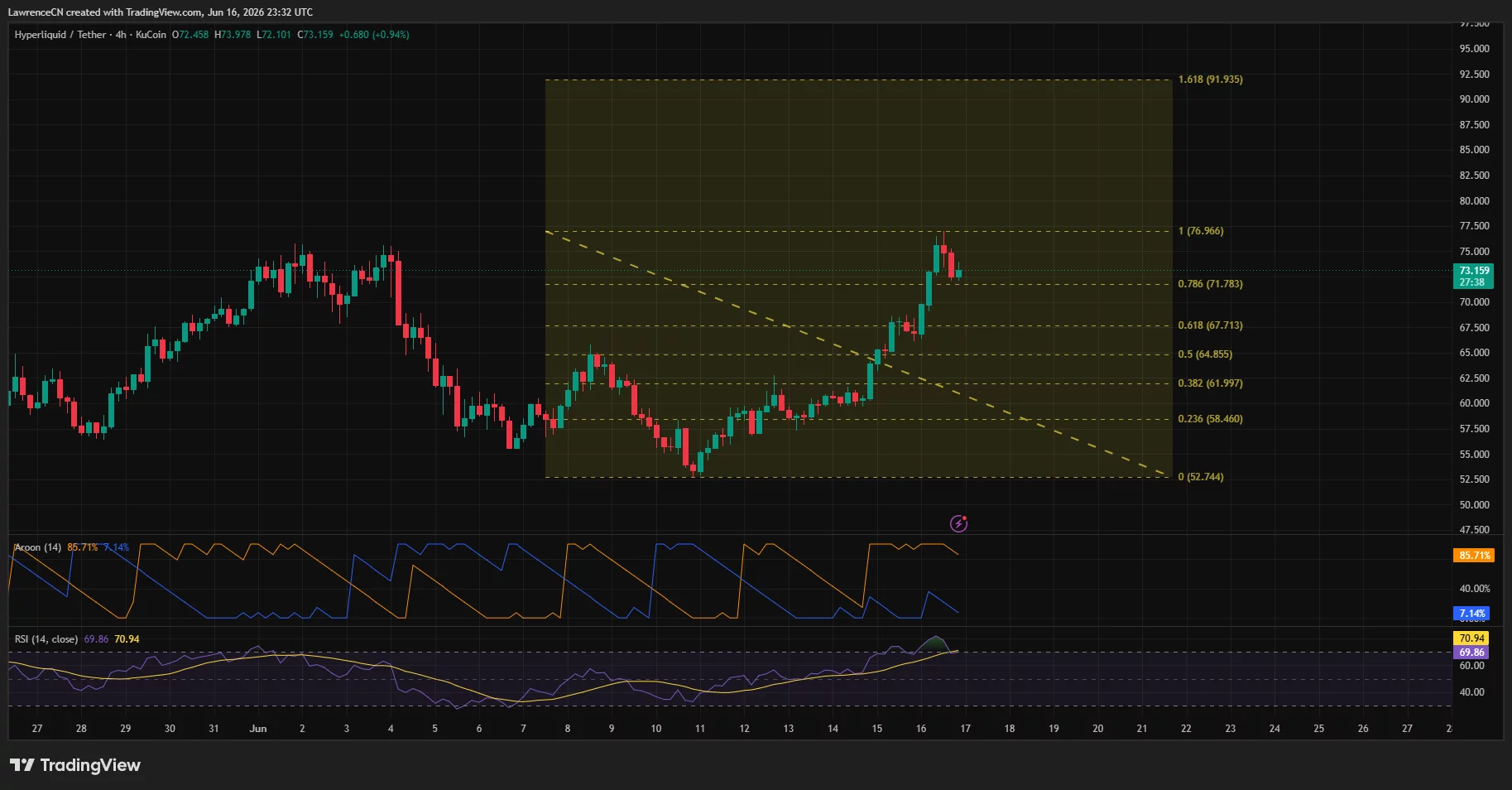
On the four-hour chart, HYPE broke above the 0.618 and 0.786 Fibonacci resistance levels near $67.7 and $71.8 before reaching the 1.0 extension around $77. The next major Fibonacci target is located near $91.9, while former resistance around $71.8 and $67.7 has become an important support area.
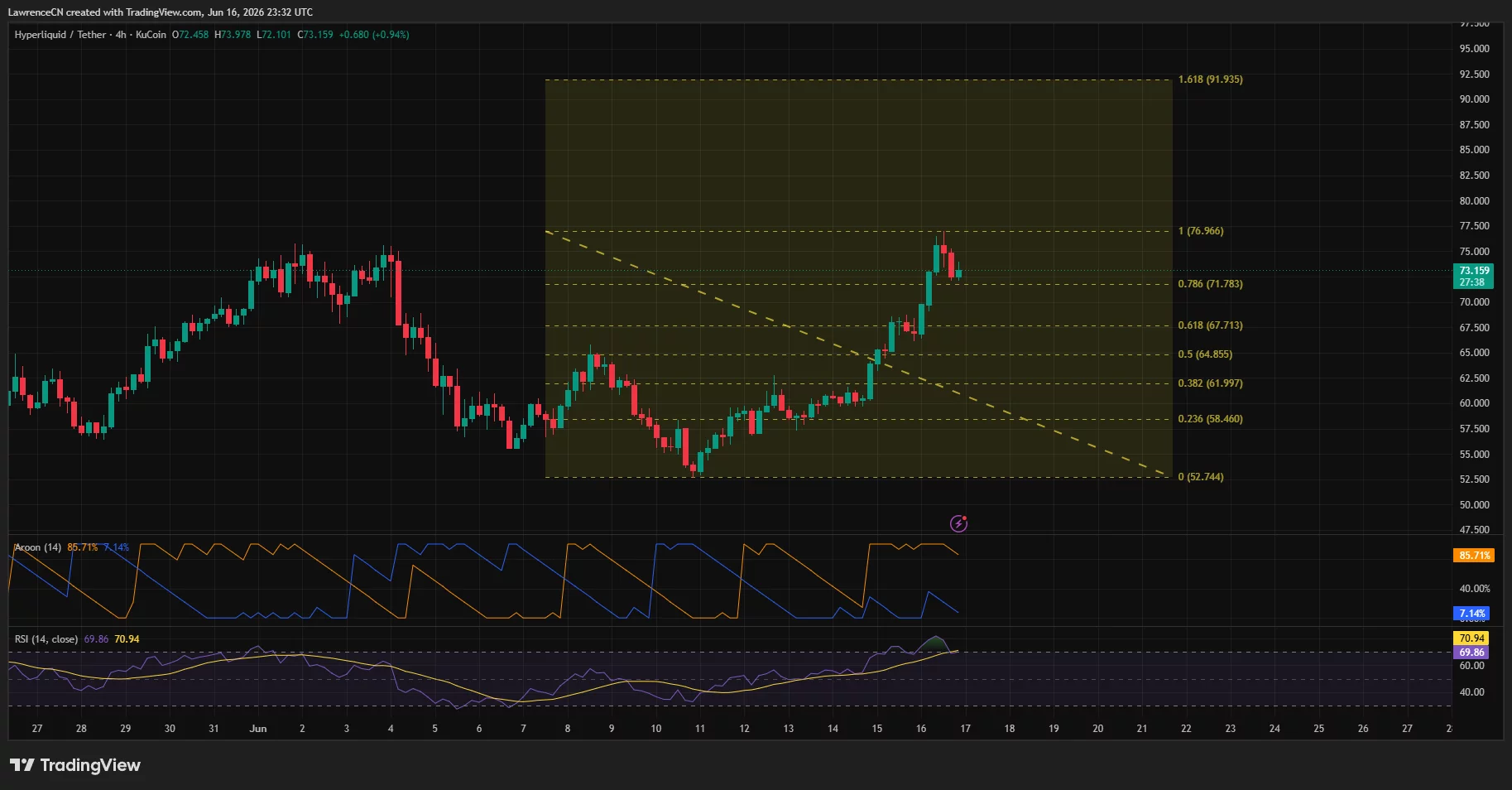
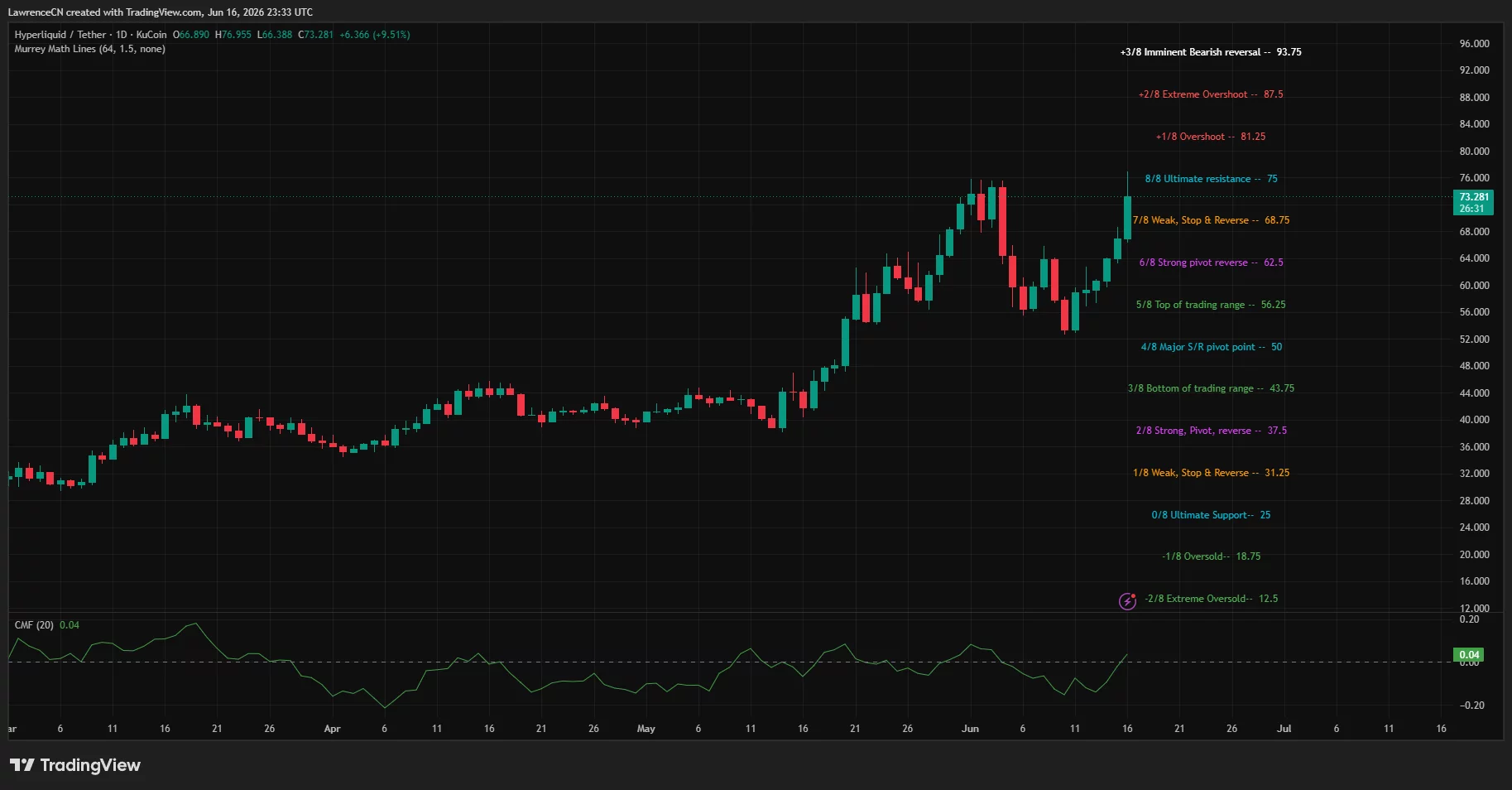
Daily charts show HYPE testing the Murrey Math 8/8 resistance level at $75. A sustained move above that zone could expose the next resistance levels near $81.25 and $87.50, according to the indicator framework. Meanwhile, positive Chaikin Money Flow readings suggest capital continues entering the asset despite profit-taking following the breakout.
Support for the rally has also come from regulatory developments. Commodity Futures Trading Commission Chair Michael Selig recently defended the approval of perpetual futures products through regulated U.S. venues, a position that several market participants interpreted as constructive for decentralized derivatives platforms.
While Bitcoin has been trading in a relatively narrow range ahead of the Federal Reserve’s policy decision under Chair Kevin Warsh, traders have continued allocating capital toward Hyperliquid. The move has helped HYPE separate from the performance of many larger cryptocurrencies and push into the ranks of the market’s largest digital assets by valuation.
Disclosure: This article does not represent investment advice. The content and materials featured on this page are for educational purposes only.

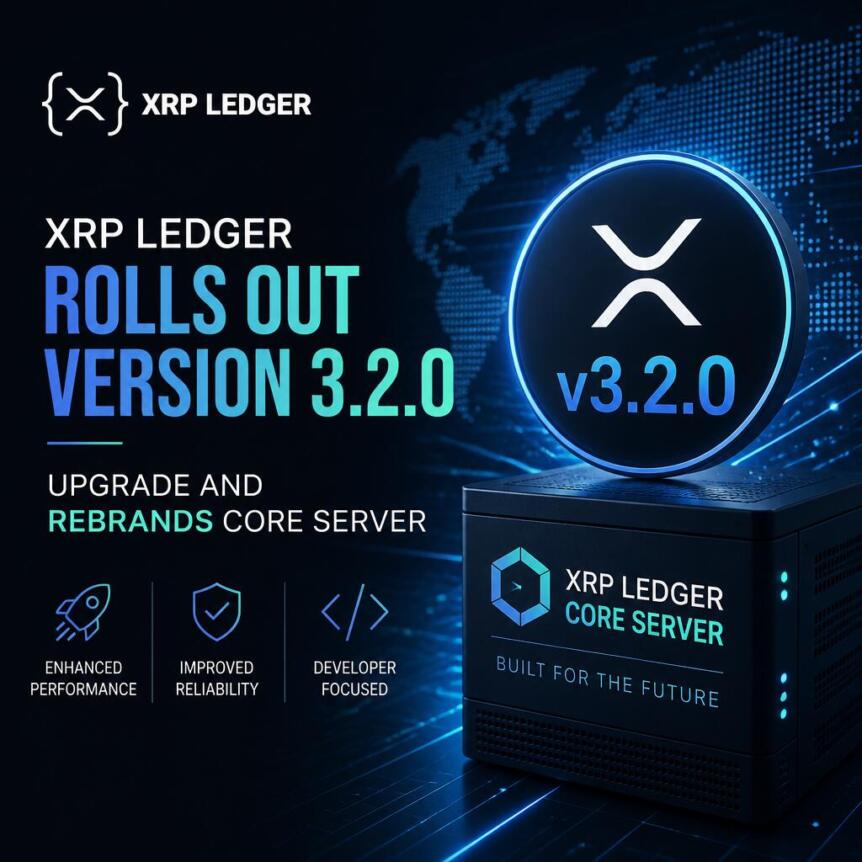
The XRP Ledger has launched version 3.2.0, introducing several infrastructure upgrades, developer enhancements, and network fixes. The release also replaces the long-standing “rippled” name with “xrpld” across the ecosystem. Meanwhile, validators and node operators must update their systems to remain compatible with the latest network changes.
Xrp Ledger Rebrands Core Infrastructure
The XRP Ledger introduced version 3.2.0 as part of its ongoing network development efforts. The update arrived weeks after the release of version 3.1.3. As a result, the network now includes several operational and infrastructure improvements.
A key change involves the rebranding of the core server software. The network officially replaced the “rippled” name with “xrpld” through the XLS-0095 update. Consequently, the software now reflects the broader and independent identity of the XRP Ledger ecosystem.
The change affects multiple system components across the network. Configuration paths, database directories, server metadata, and version labels now use the new naming structure. Therefore, validators and node operators may need to modify scripts and install updated configurations.
Upgrade Introduces Security Fixes and Developer Enhancements
The latest release also introduces the “fixCleanup3_2_0” amendment to the XRP Ledger. This amendment consolidates several approved security-related improvements. In addition, it strengthens multiple ecosystem features already operating on the network.
The update addresses components linked to Single Asset Vaults and the Lending Protocol. It also covers permissioned decentralized exchanges, Multi-Purpose Tokens, and permissioned domains. As a result, the network improves consistency across these expanding functionalities.
Developers also added new invariant checks within the release. These checks prevent deleted accounts from leaving behind ledger artifacts that could remain accessible later. Consequently, the ledger can maintain cleaner records and improve operational reliability.
The upgrade includes new tools designed for developers and infrastructure providers. Applications can now retrieve protocol information and server definitions without connecting to a live server. Therefore, developers can simplify integrations and reduce operational requirements.
This feature supports wallet providers, blockchain explorers, API services, and automation tools. Furthermore, it streamlines access to critical network information. The enhancement may reduce development complexity for services built on the XRP Ledger.
Infrastructure Performance Receives Major Improvements
Version 3.2.0 also delivers several performance-focused improvements. The release introduces configurable nuDB block sizes for database storage optimization. As a result, operators gain greater flexibility in managing storage resources.
The update adds optional TLS and mutual TLS support for gRPC servers. These additions strengthen communication security and improve enterprise-grade connectivity. Consequently, organizations operating XRPL infrastructure can implement stronger network protections.
Another notable change involves the network’s default peering port. The release shifts the default port from 51235 to 2459. Therefore, operators must review network configurations to ensure uninterrupted connectivity.
The upgrade also contains numerous fixes across several network functions. These fixes affect automated market makers, payments, Multi-Purpose Tokens, token escrows, order books, and RPC handling. As a result, the network improves efficiency and stability across multiple transaction types.
Developers temporarily disabled transaction invariants in version 3.2.0. The decision followed the discovery of a performance regression issue during deployment. However, the change does not alter current security protections because the invariants remain inactive in practice.
The XRP Ledger continues to expand its infrastructure while improving operational efficiency. Recent updates show increasing focus on scalability, developer accessibility, and enterprise readiness. Therefore, the latest release represents another step in the network’s broader technical evolution.
Validators and node operators are expected to adopt the new version promptly. The upgrade ensures compatibility with recently approved amendments and infrastructure improvements. As the ecosystem grows, regular software updates remain essential for maintaining network performance and functionality.
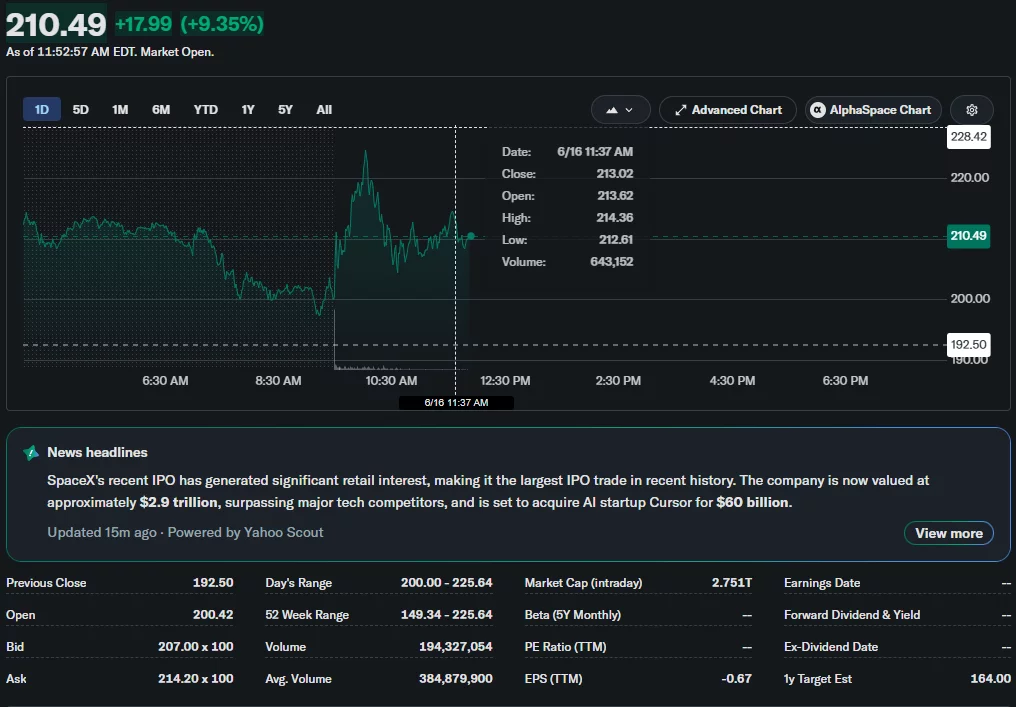
SpaceX has climbed to a market value of nearly $2.93 trillion after its shares jumped more than 17%, briefly pushing Elon Musk’s aerospace company ahead of both Amazon and Microsoft in the global corporate rankings.
Summary
- SpaceX surged more than 17%, briefly overtaking Microsoft and surpassing Amazon by market value.
- Investors cheered SpaceX’s planned $60 billion merger with Cursor AI developer Anysphere.
- Binance’s SPCXUSDT contract topped $5.6 billion in daily volume and $9 billion overall.
According to data from Yahoo Finance, SpaceX shares rose as much as 17.21% on Tuesday to an intraday high of $225.64, lifting the company’s valuation to approximately $2.93 trillion.
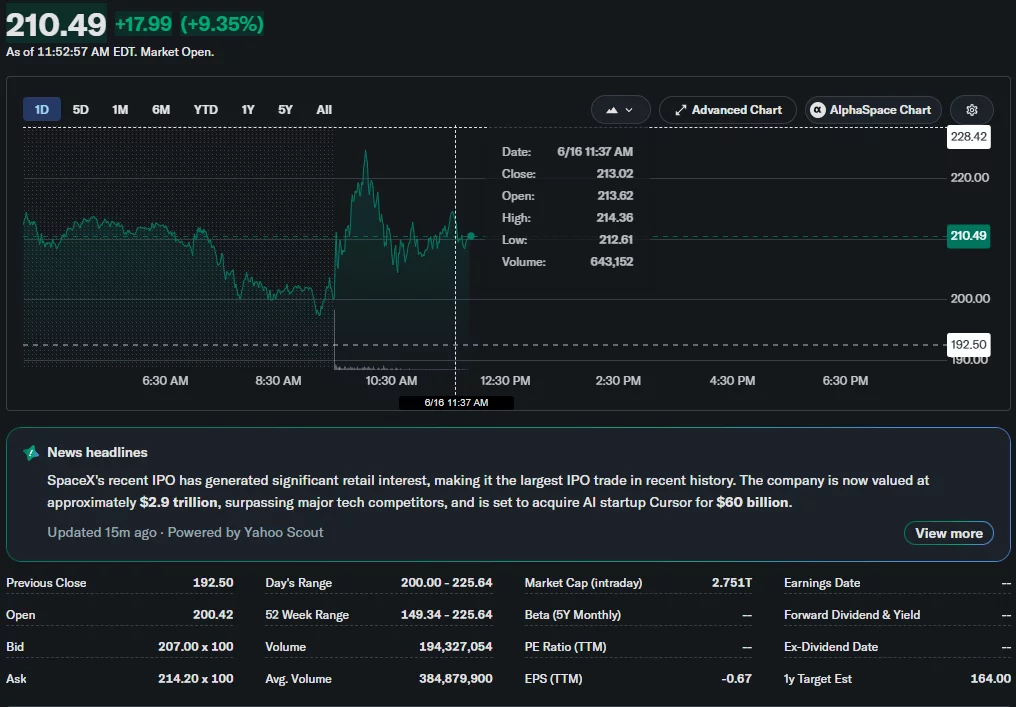
The move temporarily placed SpaceX above Microsoft, whose shares fell 1.63% to value the software giant at roughly $2.92 trillion. Microsoft later reclaimed the position as SpaceX pared some gains, though the aerospace company remained comfortably ahead of Amazon.
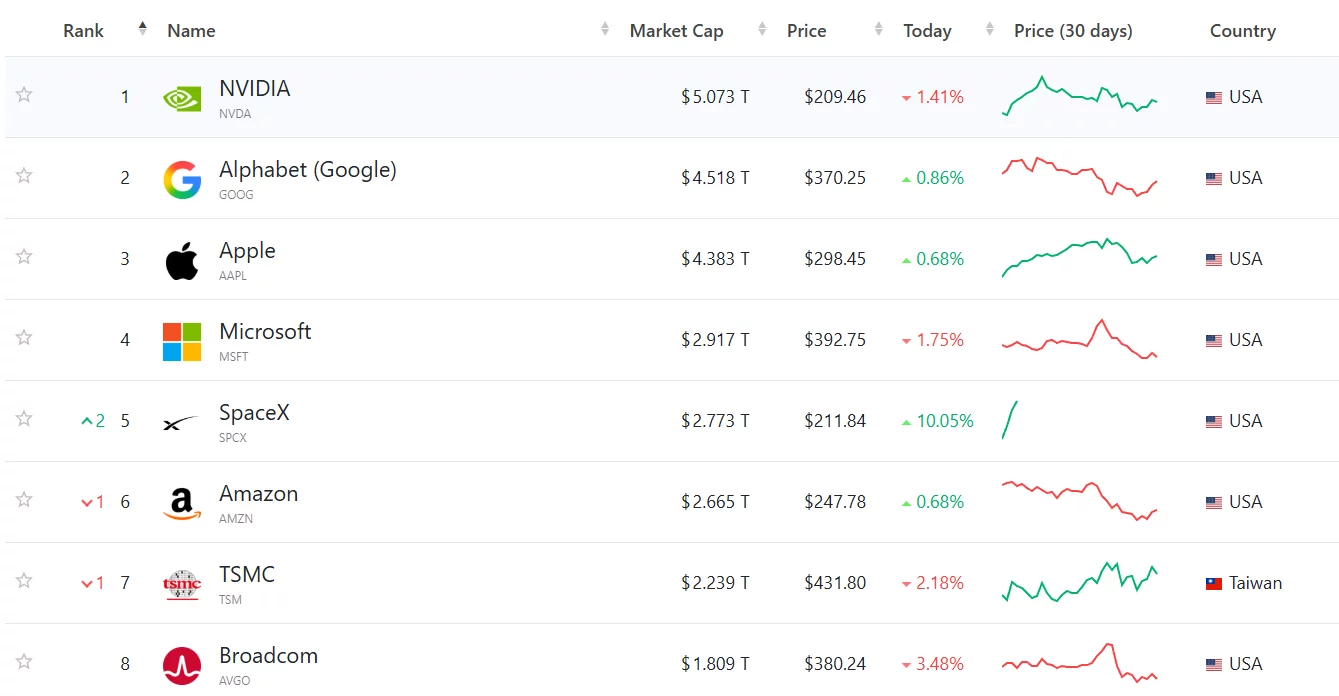
At the time of writing, Amazon shares were up 0.68%, giving the company a market capitalization of about $2.66 trillion, well below SpaceX’s despite volatility in early trading.
The latest rally extended momentum that began a day earlier. SpaceX stock gained 19.6% on Monday following news of a U.S.-Iran peace agreement, before advancing another 11.57% in after-hours trading. Shares then added nearly 10% in premarket activity on Tuesday before accelerating further after the opening bell.
Cursor merger drives investor demand
According to SpaceX, the company and its subsidiary X67 Inc. have entered into a merger agreement with Anysphere Inc., the developer of Cursor AI. Under the proposed transaction, X67 will become a wholly owned subsidiary of SpaceX.
SpaceX said all common and preferred Cursor shares will automatically convert into rights linked to SpaceX stock once the merger closes. The company valued Cursor at approximately $60 billion in the all-stock transaction.
Regulatory approvals and customary closing conditions remain outstanding, with SpaceX stating that completion is expected during the third quarter of 2026.
Investor enthusiasm surrounding the merger announcement appeared to fuel much of the premarket buying activity. Reports ahead of the company’s Nasdaq debut indicated that retail demand for SpaceX shares had significantly exceeded available supply, with some investors reportedly seeking additional financing and loans to increase their allocations.
Binance activity highlights growing interest
Interest in SpaceX has also expanded into crypto-linked markets. As crypto.news reported, Binance said its SPCXUSDT perpetual futures contract has become the exchange’s second-largest futures product by trading volume, trailing only Bitcoin perpetual futures.
According to Binance, the contract generated more than $5.6 billion in rolling 24-hour trading volume and over $9 billion in combined volume across its pre-IPO and post-IPO trading periods.
Binance further stated that it currently leads both centralized and decentralized trading activity for the product while holding the largest open interest position among competing venues.
The increase in derivatives activity has coincided with growing attention on SpaceX following its public listing. Binance also reported that its equity-linked products surpassed $1 billion in turnover within nine days, with SpaceX-related contracts contributing to that growth as traders sought exposure to the company’s rapidly rising valuation.
Disclosure: This article does not represent investment advice. The content and materials featured on this page are for educational purposes only.
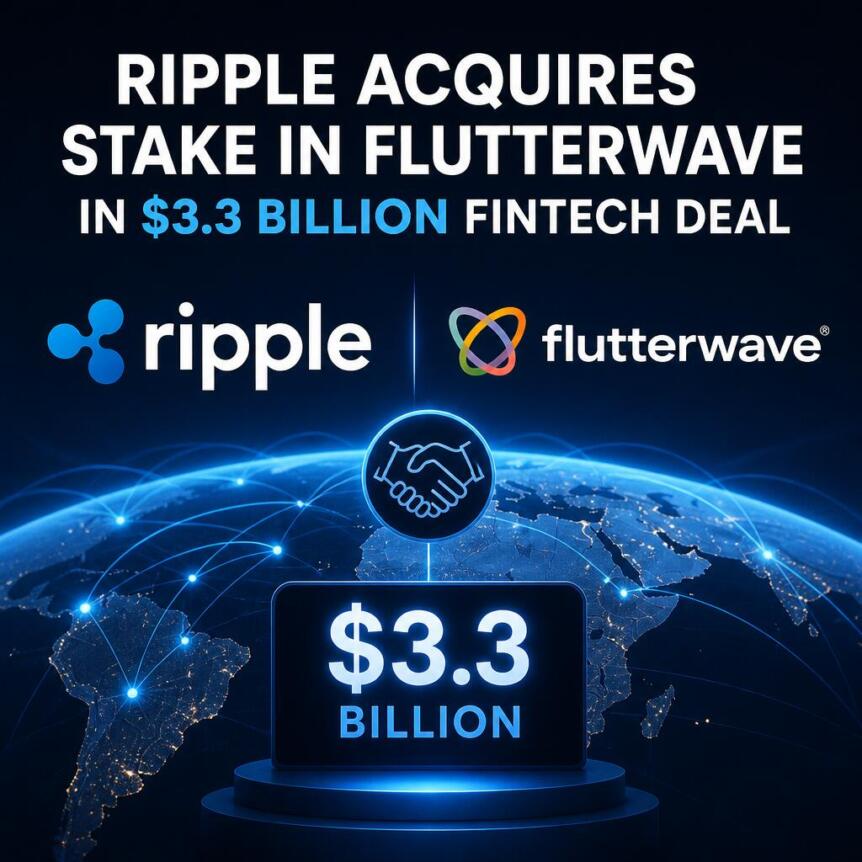
Ripple has acquired an equity stake in Flutterwave, strengthening its presence in Africa’s growing digital payments sector. The transaction values Flutterwave at $3.3 billion and adds a new strategic relationship between the two companies. Moreover, the deal arrives as demand rises for faster and lower-cost cross-border payment services across African markets.
Flutterwave confirmed that Ripple purchased equity in the company rather than forming a commercial partnership. The investment provides fresh capital and supports Flutterwave’s plans for further expansion. Meanwhile, Ripple gains access to one of Africa’s largest fintech networks through the agreement.
The companies continue to expand payment services across regions where digital transactions are increasing. Consequently, the partnership aligns with broader efforts to improve financial connectivity and payment efficiency. Both firms also continue to explore blockchain-based solutions alongside traditional payment infrastructure.
Ripple Expands Its Position In African Payments
Ripple has steadily increased its activities across Africa through partnerships and payment initiatives. The company currently offers crypto-based payment services to businesses in more than 90 countries. Additionally, it has worked with financial institutions and payment providers to strengthen regional payment networks.
The company previously partnered with South Africa’s Absa Bank to support payment innovation. It also established a relationship with Chipper Cash to improve cross-border payment capabilities. As a result, Ripple has continued to expand its reach across several African markets.
The Flutterwave investment represents another step in Ripple’s regional growth strategy. The deal adds a major fintech platform to Ripple’s network of partners and investments. Furthermore, it supports Ripple’s objective of increasing access to faster international payment services.
Flutterwave Advances Digital Asset Strategy
Flutterwave operates across 35 African countries and remains one of the continent’s largest fintech companies. The company has expanded its services beyond traditional payment processing in recent years. Besides that, it has increased its focus on digital asset infrastructure and blockchain technology.
Last year, Flutterwave introduced stablecoin-based payment services for businesses and consumers. The offering allows users to transact and hold dollar-pegged digital tokens through supported channels. Consequently, the company strengthened its position in the emerging blockchain payments sector.
The Ripple investment provides additional resources to support future growth initiatives. It also gives Flutterwave access to infrastructure and expertise from a global payments company. Moreover, the agreement supports the development of both conventional and blockchain-based payment services.
Ripple Strengthens Middle East And Africa Presence
Ripple recently expanded its operations in the Middle East and Africa with a larger regional headquarters. The company opened the facility at the Dubai International Financial Centre. Therefore, Ripple increased its capacity to support future growth across the region.
The expanded office creates room for additional employees and operational activities. Ripple established its first Dubai office in 2020 to meet rising demand for regulated blockchain services. Since then, the company has continued to broaden its regional presence through new initiatives.
Regulatory developments in the United Arab Emirates have also supported Ripple’s expansion plans. The Dubai Financial Services Authority licensed Ripple to provide regulated international payment services within the DIFC. Furthermore, authorities approved the RLUSD stablecoin for use by regulated entities, while the token later secured a listing on OKX.
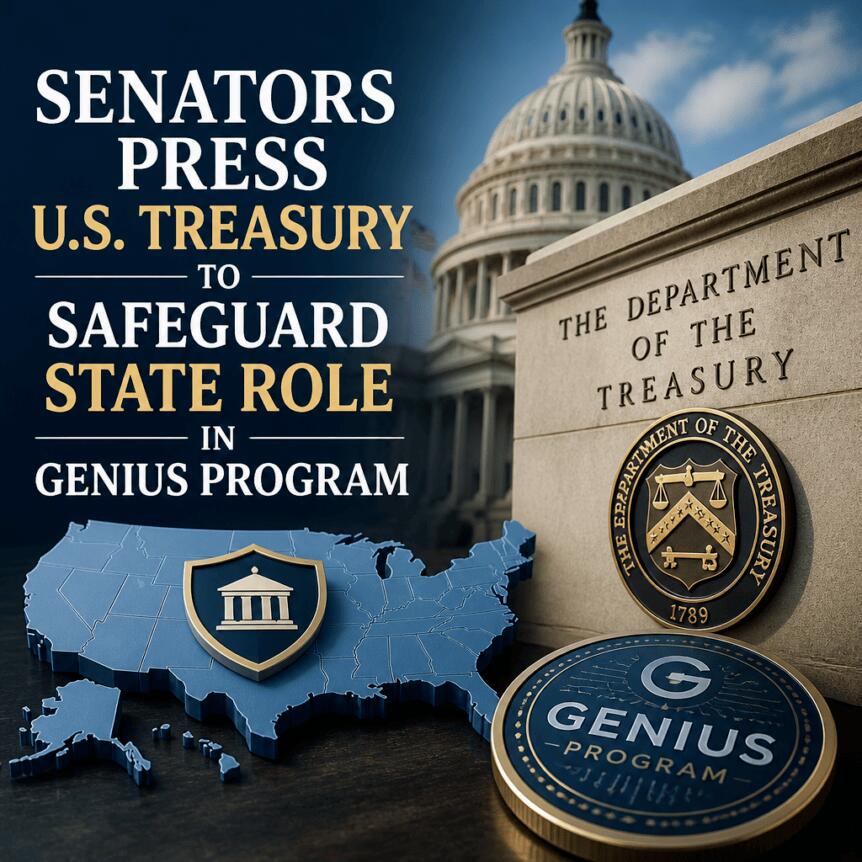
A bipartisan group of US senators led by Republican Cynthia Lummis has asked the Treasury to ensure states can regulate stablecoin issuers as the department moves to implement the GENIUS Act. In a letter sent to Treasury Secretary Scott Bessent on Tuesday, the lawmakers emphasized that the law’s state-level framework must be designed to “preserve and promote State participation.”
The GENIUS Act creates a pathway for certain stablecoin issuers to be regulated by state authorities when the relevant state has laws that are largely consistent with the bill. The senators’ push comes after the Treasury sought public input on its planned approach for state certification earlier this year, signaling that procedural details may determine how quickly the state route can be used in practice.
Key takeaways
- Senators urged the Treasury to implement the GENIUS Act in a way that preserves and promotes state regulators’ supervisory role.
- The law allows state regulation for issuers tied to stablecoins with a market value of $10 billion or less, depending on state laws being largely similar.
- Senators said the Treasury’s proposal may not clearly address state certification timelines and procedures, potentially limiting future participation.
- The lawmakers highlighted that state legislatures move at different speeds, requiring a flexible certification process.
- Public comments on the Treasury proposal closed on June 2, and the department is expected to draft a final rule for publication in the Federal Register.
Why senators are focusing on state certification
The GENIUS Act, signed into law in July by President Donald Trump, is intended to regulate stablecoins and their issuers while keeping a place for state oversight. In their letter, the senators argued that Congress “clearly sought to preserve the dual banking system and the crucial role of State banking agencies in supervising this market.”
The lawmakers’ main concern is the operational design of the state pathway. They said the Treasury’s proposal did not adequately explain “the timeline and procedural requirements related to State certification.” According to the senators, this gap could create uncertainty for state authorities and may be interpreted as allowing a “one-time window” that would effectively prevent later certifications.
That distinction matters because state participation under the GENIUS Act depends on states passing or aligning rules—an inherently uneven process across the country. Senators noted that state legislatures differ in their schedules and capacity, making flexibility a practical necessity rather than a theoretical preference.
How the $10 billion threshold shapes who could qualify
Under the GENIUS Act, the state route hinges on whether the stablecoin’s market value is $10 billion or less and whether the state’s regulatory framework is largely similar to the bill. As a result, the threshold meaningfully narrows which issuers could fall into the category covered by state regulation.
Based on CoinGecko’s categorization of stablecoin market values, the market-value requirement would exclude most major issuers but not all. The article notes that Tether (USDt), USDC (USDC), and USDS (USDS), formerly Dai (DAI), are the only stablecoins that would clearly fall outside the $10 billion or less grouping, because the others appear to be above the threshold. (The implication is that only issuers connected to stablecoins meeting the $10 billion criterion could potentially seek state-level supervision under the act, subject to the state-law similarity requirement.)
This structure suggests that the state pathway is not designed as a universal substitute for federal approaches. Instead, it functions as a targeted option that depends both on stablecoin size and on each state’s willingness and ability to implement aligned rules.
Treasury’s proposal and the next step to final rules
Earlier, the Treasury sought public input on how it plans to implement the GENIUS Act’s state-level components. In April, the department requested comments on its approach for regulating stablecoin issuers through state certification, an initiative tied to the overall legislation signed in July.
According to the update described in the source, public comments on the Treasury’s proposal closed on June 2. From there, the department is expected to draft a final rule for publication in the Federal Register.
In the senators’ view, the remaining question is not whether states will be able to participate at all, but whether the certification mechanism is built in a way that remains usable over time. They argued that states should have the ability to develop regulatory regimes, seek certification, and adjust as market demand for stablecoin charters grows—especially as legislative schedules permit.
In their letter, the senators said: “States must be able to develop and seek certification of stablecoin regulatory regimes as demand for these charters materializes and as legislative schedules permit.” That language underscores their concern that procedural shortcuts—or unclear deadlines—could reduce state oversight to a theoretical option rather than a durable regulatory channel.
Who signed the letter and what to watch next
The letter was signed by Republican Senators Bill Hagerty, Kevin Cramer, and Pete Ricketts, alongside Democratic Senators Kirsten Gillibrand, Angela Alsobrooks, and Catherine Cortez Masto, in addition to Cynthia Lummis.
For market participants and regulators alike, the immediate takeaway is procedural: the final GENIUS Act implementation at the state level will likely turn on how the Treasury describes state certification timelines, requirements, and whether the framework can support future certifications as more states align their laws. Readers should watch for the Treasury’s final rule to clarify whether certification is strictly time-bounded or designed to accommodate ongoing state participation as new regulatory regimes are approved.
Crypto World
Smart money is leaving Binance Coin and Ondo for BlockDAG’s limited-time $0.00000044 legacy sale

Disclosure: This article does not represent investment advice. The content and materials featured on this page are for educational purposes only.
BlockDAG attracts investor attention as traders compare emerging crypto opportunities with established networks.
Summary
- Mid-2026 crypto stress boosts BlockDAG hype as capped $0.00000044 entry and fixed payout attract heavy inflows.
- BlockDAG promotes scarcity-driven buying with a limited pool, fast depletion claims, and structured entry pricing model.
- Investors rotate from major crypto into BlockDAG, drawn by its capped supply narrative and advertised fixed USDT payout.
The capital compression sweeping through the crypto market right now in mid-2026 is exposing massive cracks in standard decentralized networks. While Binance Coin suffocates under non-stop compliance restructuring and Ondo Crypto struggles to scale its real-world asset yields, a highly structured, finite liquidity pool is experiencing record-shattering inflows.

Those who are hunting for the next crypto to explode need to understand why elite investors are completely bypassing standard exchanges to get a piece of BlockDAG. By offering an incredibly cheap, strictly capped $0.00000044 entry rate that locks into a fixed $0.10 USDT payout, BlockDAG (BDAG) is triggering an absolute feeding frenzy. Proactive buyers are rushing to secure their allocations before the corporate balance sheet vanishes right before their eyes!
Binance Coin trapped under regulatory constraints
Shocking internal reports leaked on June 12, 2026, reveal deep, painful structural changes tearing through the Binance ecosystem to satisfy aggressive global trading regulations. These mandatory shifts have forced trading fees sky-high, instantly crushing the Binance coin price as high-frequency trading whales abandon ship for decentralized alternatives.
Even though the network is desperately leaning on its quarterly token burn mechanism, a steep drop in daily transaction volume has dramatically slowed down any real deflationary impact.
Every day, users are growing completely furious with the brutal compliance checks blocking them from standard decentralized finance tools on the BNB chain. Let’s face it: the parent company’s ongoing multi-jurisdictional legal settlements continue to cast a dark shadow over the token.
This exhausting regulatory nightmare is scaring institutional money away, pushing them toward heavily audited treasury models instead. Missing out on trading velocity leaves long-term holders completely vulnerable to devastating market drawdowns when volatility strikes.
Ondo Crypto smothered by low yields and complicated structures
Recently, Ondo Finance tried to stir up excitement by rolling out a new suite of tokenized treasury products for the Asian institutional market. But despite pushing its real-world asset footprint forward, the Ondo crypto token is completely flatlining on public decentralized exchanges.
Why? Because the yield generated by these underlying traditional assets is chained to traditional central bank interest rates, which are currently sliding downward. This is absolutely crushing the potential returns for regular investors holding the token.
Worse yet, the dizzying maze of legal structures needed to maintain parity with old-school financial instruments is creating an impossible barrier to entry for everyday participants.
Smart money is aggressively rotating out of these hyper-complex, low-yield environments to chase pure mathematical arbitrage contracts. The incredibly slow pace of traditional financial integration simply cannot deliver the explosive capital growth that early-stage investors are hungry for right now.
The BlockDAG scarcity squeeze is closing fast
Knowing that legacy assets are failing, heavy fund managers are laser-focused on the final campaign pool scarcity squeeze happening inside BlockDAG. Those who want to catch the next crypto to explode must stop looking at calendar deadlines and start looking at pure, hard capacity limits!
The total allocated balance sheet pool funding the $0.10 USDT payout is strictly capped. Because institutional whales are violently draining entire tranches of allocation at once through the direct swap interface, the remaining pool is facing a sudden, premature depletion.
Real-time market analytics show that this capacity will likely smash through 100 percent long before the official final cutoff dates roll around. This hard limitation is creating a massive psychological scramble.
Anyone who assumes they can comfortably wait until the final hour to grab the $0.00000044 entry rate will find themselves locked out of a guaranteed multiplier forever! The moment that the audited treasury pool hits its maximum ceiling, the entire dashboard will ruthlessly reject all incoming registrations.
This hardcoded scarcity means investors have to act now. Unlike open-market tokens with endless secondary supplies, this contract relies on a strictly finite pool of secured stablecoins. Every day, buyers must execute their positions instantly or get completely run over by automated institutional accumulation bots.
This is the chance to beat the final institutional sweep. Securing an allocation today gives total protection from the impending pool closure, locking in a flawless path to absolute wealth creation.
Don’t get left behind
Surviving today’s wild crypto market means choosing platforms that guarantee absolute structural certainty. Binance Coin is bogged down by regulatory friction that suffocates its volume, while Ondo Crypto locks into tiny yields tied to slow-moving traditional interest rates.
BlockDAG bypasses all of this noise by handing a finite, incredibly aggressive capital growth contract. Moving right now to secure a $0.00000044 entry before the capped pool hits its absolute limit secures a guaranteed $0.10 USDT payout. This massive arbitrage loop makes BlockDAG the absolute best vehicle for life-changing wealth generation for the rest of 2026. Do not let this window slam shut!
For more information, visit the official website, presale, and follow the project on Telegram and Discord.
Disclosure: This content is provided by a third party. Neither crypto.news nor the author of this article endorses any product mentioned on this page. Users should conduct their own research before taking any action related to the company.
Bitcoin’s recovery following Trump’s statement about a deal with Iran continued in the past 24 hours as the asset exceeded $67,000 for the first time in two weeks before it was stopped.
Ethereum jumped past $1,800 before the bears stepped up, while HYPE and XLM have marked the most significant gains from the larger-cap alts today.
BTC Tapped $67K
After dumping below $60,000 during the first week of June, bitcoin began its gradual recovery with a quick reclaim of that level. The following week was somewhat sluggish, as the asset spent it trading sideways between $61,000 and $64,000. It moved mostly when there was news about the war in the Middle East.
As such, Trump’s promise on Saturday that the US and Iran would announce a deal on Sunday brought some hope in the market. However, there were new attacks from Israel on the following day against Lebanon, which put further doubt on the already fragile situation.
Nevertheless, the POTUS indeed announced a deal with Iran on Sunday evening, which sent BTC higher immediately. The asset traded just under $64,000 before it shot up to $66,000. It kept climbing on Monday and briefly jumped past $67,000 for the first time in two weeks.
Although it has been stopped there, it still trades above $66,000 now. Its market cap has climbed to $1.330 trillion, while its dominance over the alts is at 56.5%.

HYPE Keeps Pumping
Most altcoins followed the green wave, including ETH, which tapped $1,850 for the first time since the start of the month. Ripple’s XRP also charted notable gains, surging to nearly $1.30 amid improved sentiment. SOL is up to $74, while HYPE continues to outperform. Hyperliquid’s native token has stolen the show again by surging past $70 after another double-digit pump.
XLM and UNI have risen by over 12% each as well. The former has tapped $0.21, while the latter is close to $3. ZEC is up to $523 after a 5% increase. In contrast, TON and TAO have dropped by over 5%.
The total crypto market cap is up by another $25 billion in a day to over $2.350 trillion on CG.

The post HYPE Soars Again by Double Digits, BTC Reached $67K: Market Watch appeared first on CryptoPotato.
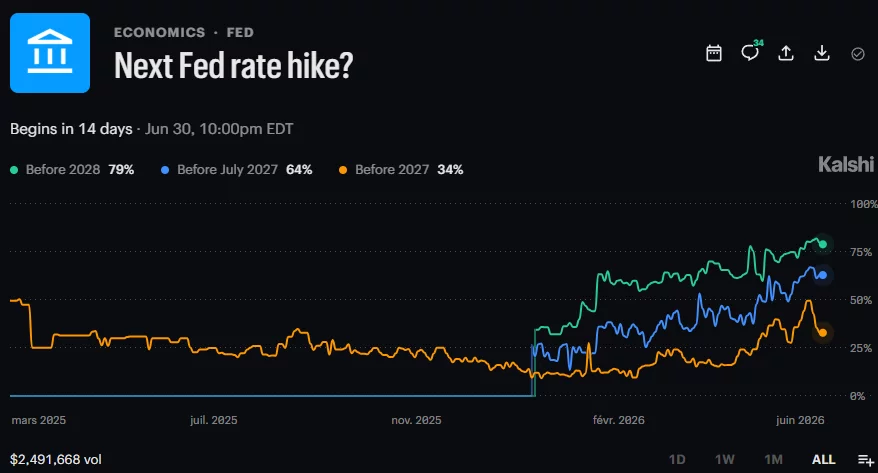
Markets have increasingly priced in a future Federal Reserve rate hike ahead of this week’s FOMC meeting, with prediction markets assigning a 64% chance of tighter policy before July 2027.
Summary
- Markets now price a 64% probability of a Fed rate hike before July 2027.
- Economists expect the Fed to leave rates unchanged at this week’s FOMC meeting.
- Persistent inflation and higher energy prices have reduced expectations for future rate cuts.
According to Kalshi prediction market data, traders currently assign a 64% probability to the Federal Reserve raising interest rates before July 2027. The growing expectation comes as inflation remains elevated and energy prices have risen following tensions between the United States and Iran.
Investors are now turning their attention to the Federal Open Market Committee meeting on June 17, where CME FedWatch data shows a 99.4% probability that officials will keep benchmark rates unchanged.
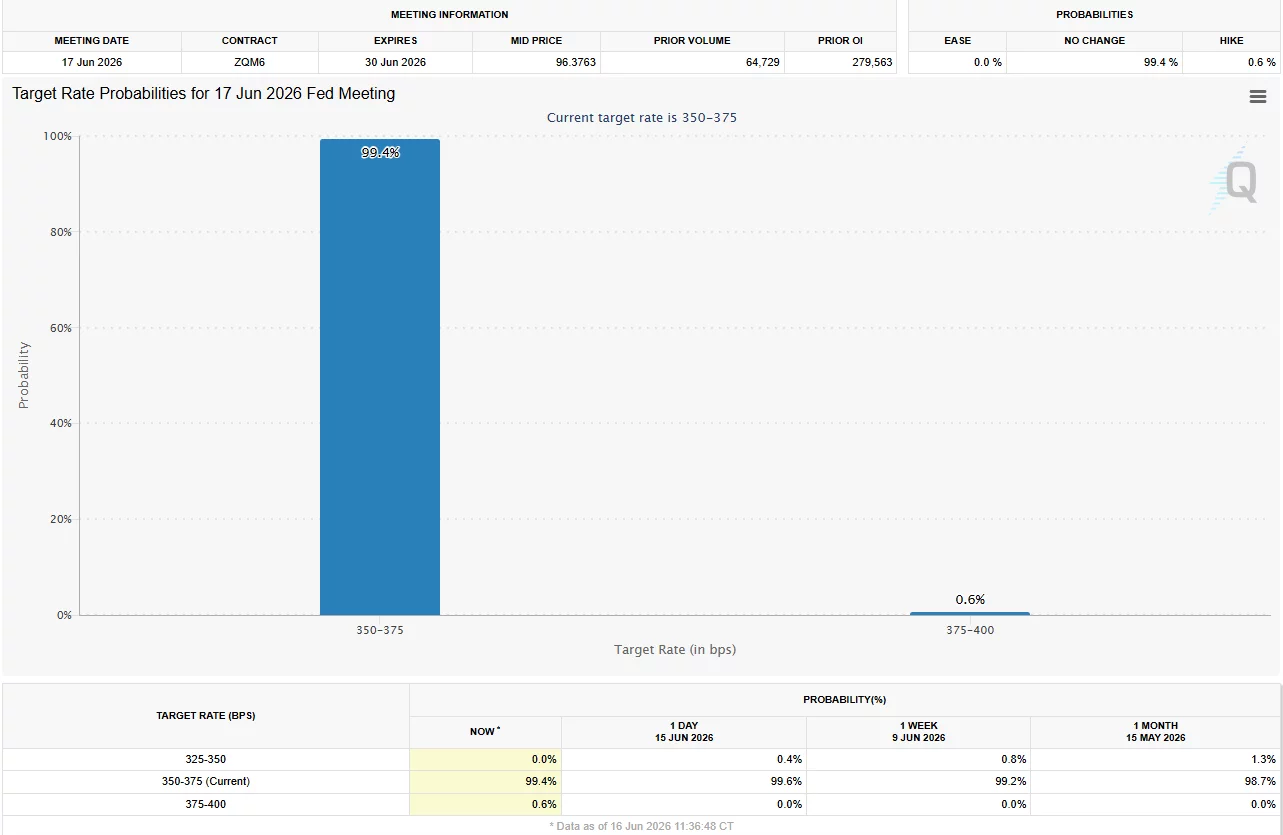
While no immediate policy move is expected, market participants are closely watching for signals about the direction of future monetary policy.
A recent Bank of America fund manager survey showed that nearly 40% of respondents expect at least one rate hike within the next 12 months, up from 16% a month earlier. At the same time, only 28% anticipate rate cuts, indicating a notable change in investor expectations as inflation pressures persist.
Markets expect policymakers to abandon easing bias
Fresh insight from CNBC’s latest Fed Survey points to a similar outlook. Among 32 economists, strategists, and fund managers surveyed by the network, none expect the Federal Reserve to change rates at this week’s meeting or at any point through 2027.
CNBC also cited Gregory Daco, chief economist at EY, who said Warsh may face a different policy environment than many investors expected.
“While Warsh is generally perceived as dovish, he will inherit a committee that has become noticeably more hawkish.”
While respondents do not anticipate an outright rate increase, CNBC reported that 88% expect the Fed to remove language suggesting that its next move would likely be a rate cut. Such a change would signal that policymakers are no longer leaning toward easing monetary policy.
Kevin Warsh, who is chairing his first FOMC meeting after being appointed by President Donald Trump, enters the meeting at a time when inflation has complicated the outlook for lower rates.
CNBC noted that Trump has long pushed for rate cuts, but higher inflation linked in part to tariffs and the conflict with Iran has pushed those expectations further into the future.
Fed funds futures markets have also moved in the same direction. According to CNBC, traders no longer expect meaningful policy easing over the next several years and instead see interest rates remaining close to current levels.
Inflation and oil prices keep pressure on rate outlook
Recent economic data has reinforced those concerns. As reported by crypto.news earlier, U.S. consumer prices rose 0.5% in May from the previous month, while annual inflation accelerated to 4.2% from 3.8% in April.
Rising energy costs have contributed to the inflation outlook. Oil prices moved higher in recent months as tensions between Washington and Tehran raised concerns about supply disruptions through the Strait of Hormuz.
Even so, CNBC’s survey found little support for the idea that the Federal Reserve would respond with immediate rate hikes. Instead, respondents expect the federal funds rate to remain close to its current 3.62% level through 2027.
Additional uncertainty surrounds how recent geopolitical developments may affect policy decisions. CNBC reported that a potential agreement between the United States and Iran, announced after its survey was completed, could ease pressure from energy prices and give policymakers more flexibility if inflation begins to cool.
According to CNBC, a person familiar with the matter said Warsh may also have more freedom in setting monetary policy because President Trump trusts him, potentially reducing political pressure around future rate decisions.
Disclosure: This article does not represent investment advice. The content and materials featured on this page are for educational purposes only.

Key Takeaways
-
Coinbase launches asset-backed tokenized equities, driving COIN interest
-
COIN stock registers modest uptick following tokenized stock announcement
-
Exchange aims to democratize U.S. equity access through blockchain technology
-
Real share backing distinguishes Coinbase’s offering from synthetic products
-
Platform extends tokenization efforts with new equity-backed digital assets
Coinbase Global (COIN) registered a modest uptick as its newly announced tokenized stock initiative drew investor attention to its expanding market approach. COIN shares traded at $170.13, reflecting a 0.30% increase, following a session marked by price fluctuations. The stock briefly climbed past $172 during mid-morning hours before settling near opening prices.
COIN Shares Rise Following Tokenized Stock Product Reveal
Coinbase revealed its intention to introduce tokenized U.S. equities with complete one-to-one backing by actual shares. The offering will encompass prominent corporations such as SpaceX, Nvidia, Google, Strategy, and Bitmine. According to the platform, customers will be able to buy, sell, hold, redeem, and move these digital shares on blockchain networks.
The crypto exchange characterized this initiative as an integral component of its comprehensive “Everything Exchange” vision. Coinbase has systematically expanded beyond basic cryptocurrency transactions into derivatives trading, prediction markets, and diverse financial instruments. Consequently, the tokenized equity product represents an additional milestone in diversifying its service offerings.
The stock’s subdued price movement reflected a cautious market response to the news. COIN maintained positive momentum despite experiencing notable intraday volatility. Nevertheless, the development sustained investor focus on Coinbase as tokenization continues gaining prominence throughout financial sectors.
Platform Emphasizes Genuine Ownership in Tokenized Products
Coinbase emphasized that every tokenized equity will correspond to an authentic underlying U.S. stock share. The exchange distinguished its structure from derivatives, synthetic constructs, or promissory instruments. Additionally, the company confirmed that qualified participants will receive ownership benefits such as dividend distributions.
Chief Executive Brian Armstrong stated the offering provides customers with legitimate ownership through blockchain infrastructure. He further explained the framework merges traditional shareholder privileges with blockchain-enabled transfers. His statements positioned Coinbase’s product apart from competing tokenized equity offerings that merely mirror price movements.
The service will initially target qualified international customers. Coinbase noted that numerous individuals outside U.S. borders continue experiencing restricted access to American stock markets. Accordingly, the platform seeks to leverage blockchain settlement mechanisms to broaden availability while maintaining complete asset backing.
COIN Performance Mirrors Industry Tokenization Trend
Coinbase’s product launch arrives amid growing enthusiasm for tokenization throughout cryptocurrency and conventional finance sectors. Multiple exchanges and blockchain enterprises have pursued bringing equities, funds, and private market instruments onto blockchain networks. This evolution has intensified competition for regulated, asset-secured tokenized offerings.
The new product also emerges following recent developments surrounding tokenized securities connected to the SpaceX IPO. Several crypto platforms terminated related initiatives after tokenization partners couldn’t secure underlying shares. That incident heightened pressure on platforms to demonstrate robust asset backing and redemption capabilities.
Coinbase is leveraging its reputation, custody infrastructure, and regulatory compliance to distinguish its offering from inferior alternatives. The exchange also continues diversifying through pre-IPO perpetual contracts and additional financial products. For COIN investors, the tokenized equity initiative provides further evidence of its strategic diversification approach.

Crypto World
BlockDAG’s $0.00000044 Entry Price Has Traders Watching Closely as 5,000 TPS Upgrade Goes Live

Crypto investors spend a lot of time searching for the next breakout opportunity, but timing is often the hardest part. Many projects attract attention only after prices have already moved significantly higher, leaving late entrants wondering whether the biggest gains have already happened. That is why BlockDAG is generating fresh discussion across the market right now. The project is entering a new phase with a live 5,000 transactions-per-second network upgrade, a growing ecosystem of utility products, and a Legacy Sale price of just $0.00000044.
What is making people pay attention is not simply the low entry price. It is the combination of infrastructure, utility, and a published Buyback Programme that currently offers a direct swap rate of $0.10 per BDAG. According to programme details, more than 1 billion coins have already moved through the system at that rate. In a market where many projects rely on future promises, BlockDAG is presenting users with a live network, active products, and an established mechanism that participants can already use.
With a major network upgrade now operational and utility demand expanding, many investors are asking whether this could be one of the more overlooked opportunities in the current crypto cycle.
The 5,000 TPS Upgrade Changes the Conversation
BlockDAG’s latest milestone is the successful deployment of its new network upgrade, increasing throughput to 5,000 transactions per second. For blockchain networks, scalability has always been one of the biggest challenges. As user activity grows, networks often face congestion, higher costs, and slower transaction processing.
The new upgrade is designed to strengthen the foundation for the broader BlockDAG ecosystem. Faster transactions and higher throughput are not simply technical achievements. They create the capacity needed to support real-world applications across gaming, payments, stablecoins, lending, borrowing, and other services being built on the network.
This matters because crypto adoption increasingly depends on usability. Networks that cannot efficiently handle growing activity often struggle to maintain momentum. By contrast, BlockDAG is positioning itself to support larger transaction volumes while continuing to expand its ecosystem.
For investors watching infrastructure projects, the upgrade signals that development is continuing beyond token sales and marketing campaigns. The focus is shifting toward network performance and practical utility.
Utility Demand Is Already Operating
One reason some market participants are paying close attention is the growth of BlockDAG’s utility ecosystem. The BlockDAG Casino, which launched on May 14, represents one of the most visible examples. The platform supports 25 payment methods, including Visa, Mastercard, Google Pay, and Apple Pay, while offering access to more than 30 sports.
More importantly, the casino creates a direct utility loop for the token itself. Users acquire BDAG to participate, and winnings are distributed back in BDAG. This creates a recurring cycle of token demand that is linked to platform activity rather than purely market speculation.
Unlike projects that depend entirely on social media attention or market sentiment, utility-driven demand can continue operating regardless of whether the broader crypto market is bullish or bearish. Every active product expands the reasons users may want to hold or use the token.
The ecosystem extends beyond gaming. BlockDAG’s BDUSD stablecoin introduces another layer of demand by requiring BDAG to be locked as collateral during the minting process. As more stablecoin activity occurs on the network, additional BDAG can become locked within the system, reducing the amount available in circulation.
For investors evaluating long-term sustainability, these utility mechanisms are becoming increasingly important. They demonstrate how demand can be generated through product usage rather than relying entirely on speculative trading activity.
Why the Legacy Sale Is Creating Urgency
Perhaps the biggest reason for the recent attention is the gap between the current Legacy Sale price and the Buyback Programme rate.
At present, users can access BDAG through the Legacy Sale at $0.00000044. The published Buyback Programme offers a direct swap at $0.10 per BDAG, creating a documented 56X spread between entry and exit values.
That figure has become a major talking point because it is tied to an active programme rather than a future price prediction. Over 1 billion BDAG have already moved through the system at the stated buyback rate, providing evidence that the mechanism is operating in practice rather than existing only as a theoretical roadmap item.
The combination of a live buyback programme, a functioning direct swap system, and a newly upgraded network has created a sense of urgency among market observers. Many investors understand that opportunities attracting widespread attention rarely remain undiscovered for long.
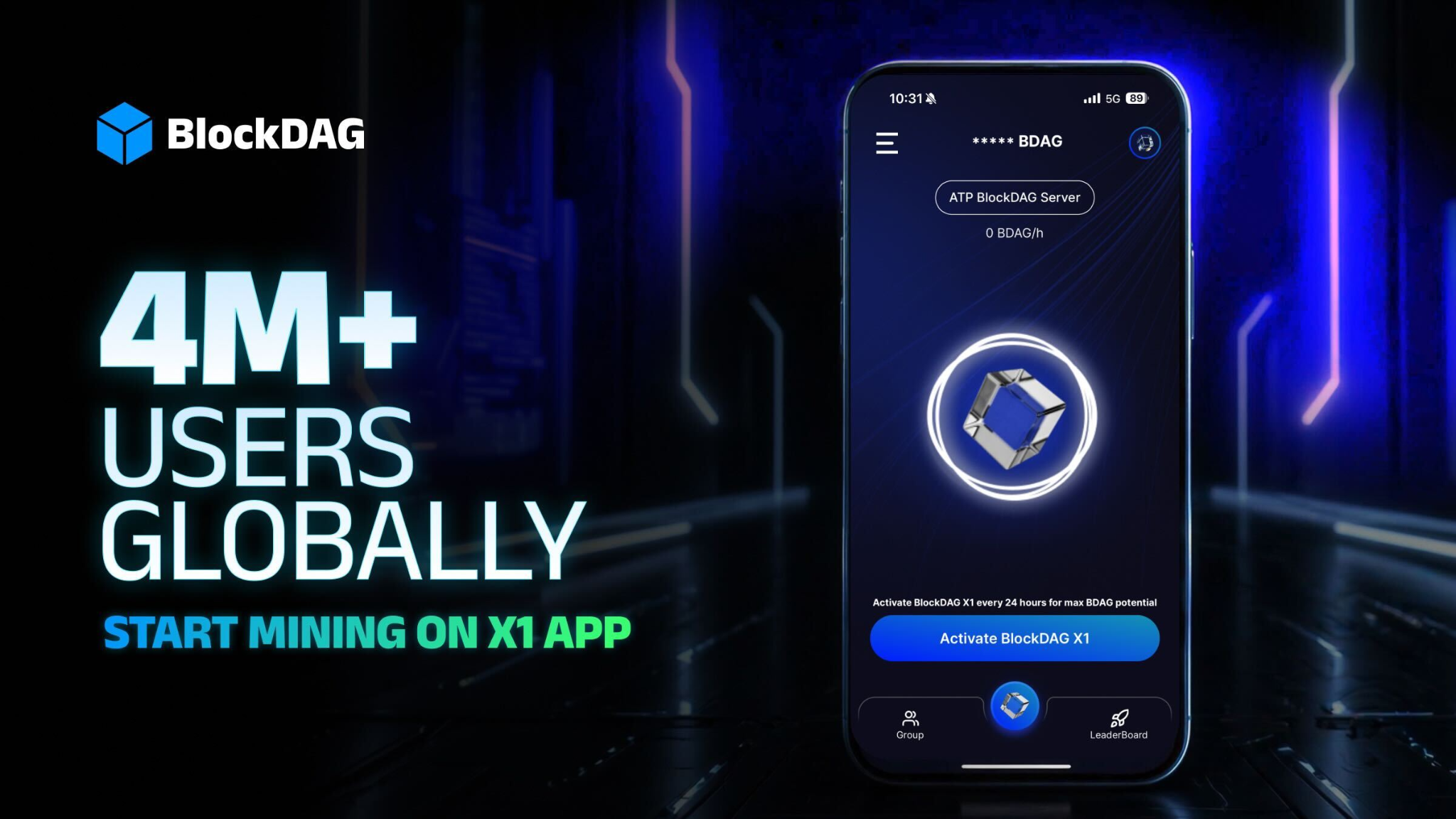
At the same time, BlockDAG’s infrastructure continues expanding. The project operates as a Layer-1 Proof-of-Work blockchain with both EVM and WASM compatibility, providing flexibility for developers building decentralized applications. Some analysts have even drawn comparisons to the early accumulation stages of Kaspa due to its focus on scalable infrastructure and network growth. Meanwhile, the project’s X1 mining application has already attracted 4 million users, giving the ecosystem a substantial existing community base that many younger blockchain projects lack.
The Last Line
As the 5,000 TPS network upgrade goes live and utility products continue expanding, BlockDAG is entering a phase where investors may increasingly evaluate it based on active infrastructure rather than future promises. Whether that attention accelerates further remains to be seen, but with a live network, functioning utility ecosystem, and a Legacy Sale entry of $0.00000044, it is easy to understand why many market participants are watching closely before this phase comes to an end.

Presale: https://purchase.blockdag.network
Website: https://blockdag.network
Telegram: https://t.me/blockDAGnetworkOfficial
Discord: https://discord.gg/Q7BxghMVyu
Disclaimer: This is a Press Release provided by a third party who is responsible for the content. Please conduct your own research before taking any action based on the content.
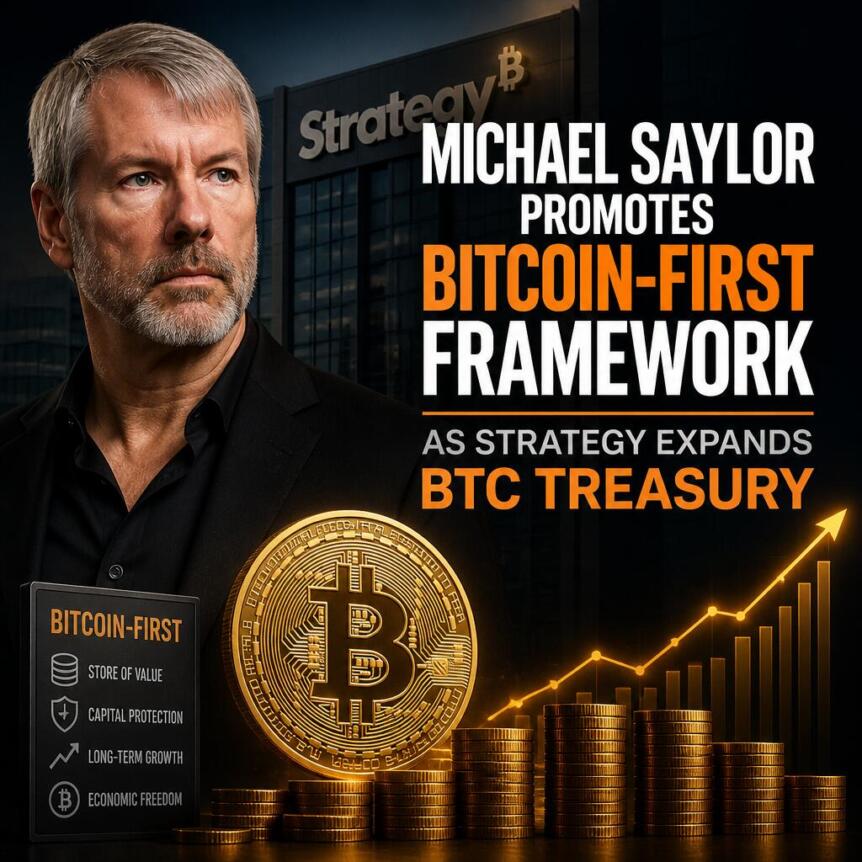
Bitcoin traded near $106,000 on Tuesday as Michael Saylor presented a new framework for Bitcoin-based finance. The Strategy chairman placed Bitcoin at the center of a five-layer asset structure. Meanwhile, the company continued expanding its Bitcoin treasury through additional purchases.
The framework keeps Bitcoin unchanged and places financial products above the asset. As a result, Saylor rejected staking models and protocol-based yield mechanisms. Instead, he promoted capital markets products that use Bitcoin as collateral and reserve capital.
Bitcoin Remains the Foundation of the Digital Asset Stack
Saylor organized the framework into five layers that begin with Bitcoin as digital capital. Above Bitcoin sit digital credit, digital money, digital yield, and digital equity. Consequently, the structure separates different financial functions without changing Bitcoin’s core design.
The model treats Bitcoin as a reserve asset that supports other financial instruments. Credit and equity products then provide different risk and return profiles. Therefore, users can choose exposure levels without altering Bitcoin itself.
The proposal also presents Bitcoin volatility as a feature rather than a weakness. According to the framework, volatility creates opportunities for structured financial products. At the same time, Bitcoin remains scarce, neutral, and independent from additional issuance mechanisms.
Digital Credit Products Take Center Stage
Digital credit forms the first layer above Bitcoin in Saylor’s structure. These instruments use Bitcoin holdings as collateral while assigning different risks across the capital structure. As a result, credit products may behave differently from direct Bitcoin ownership.
Strategy’s preferred stock products serve as examples of this approach. In this arrangement, equity absorbs more price fluctuations while credit products target steadier performance. However, market conditions, liquidity, and demand can still affect outcomes.
Saylor also emphasized that credit products do not maintain a fixed volatility profile. Their performance changes based on financial conditions and capital market activity. Therefore, the structure redistributes risk rather than eliminating it entirely.
The discussion also connects to Strategy’s treasury metrics. The company uses measurements that account for debt and preferred stock obligations. Consequently, shareholders can assess Bitcoin exposure after senior claims receive consideration.
Strategy Expands Bitcoin Holdings While Testing the Model
Strategy remains the largest public corporate holder of Bitcoin. The company recently acquired 1,587 BTC for approximately $100 million. As a result, total holdings increased to 846,842 BTC.
The purchase followed scrutiny surrounding an earlier sale of 32 BTC. That transaction raised questions about how Bitcoin sales fit within Strategy’s treasury strategy. Nevertheless, Saylor has maintained that occasional sales can support broader capital management objectives.
The framework attempts to bridge Bitcoin and traditional finance through structured products. Digital money products could combine Bitcoin-backed credit with cash equivalents and government securities. Consequently, the model seeks to offer stability, liquidity, and income while preserving Bitcoin’s role as the underlying capital base.
The broader debate now focuses on whether Bitcoin-backed credit structures can perform consistently across different market environments. Supporters view the model as a pathway toward wider financial adoption. Meanwhile, critics continue to highlight debt obligations, preferred dividend commitments, and the pressure that sharp Bitcoin price movements could place on the overall structure.

Jelly Roll To Divorce Bunnie XO, She Reacts In Social Media Posts

CLARITY ACT UPDATE! Prepare for a Massive Crypto SUPERCYCLE – Raoul Pal

Durham man says medical cannabis has changed his life

Blockchain.com files with SEC for U.S. IPO

Israel says it has killed new Hamas military leader in Gaza City airstrikes

NYT Strands Answers May 24 2026 Revealed for Puzzle No. 812 Theme Summer Essentials
CLARITY ACT UPDATE! Prepare for a Massive Crypto SUPERCYCLE – Raoul Pal

Trump Family Earned $500M From Crypto Deal While Investors Took Losses

Financial Freedom! #shortvideo #affirmations #short #ytshort #ytviral #manifestation #selfhelp
-

 Business3 days ago
No Jackpot Winner as $257 Million Prize Rolls Over to $269 Million Monday Draw
-

 Crypto World5 days ago
Oppenheimer backs SpaceX as $70 billion retail frenzy builds
-

 Fashion4 days ago
Weekend Open Thread: Tuckernuck – Corporette.com
-

 Crypto World5 days ago
Markets Rally as SpaceX IPO Looms Amid Iran Tensions and Inflation Surge
-
Crypto World2 days ago
Zimbabwe Requires Crypto Businesses to Register Annually Under New FIU Regulations
-

 Business7 days ago
Thailand Ranks Second Worldwide for AI Adoption Growth, Microsoft Reports
-

 Tech4 days ago
NanoClaw integrates JFrog registries to secure AI agent downloads
-

 Tech5 days ago
This Week In Security: Microsoft On Microsoft, Register Your Domains, Linux On ARM, And FreeBSD Joins The File Cache Club
-

 Crypto World4 days ago
Bitget enters Argentina’s regulated crypto market through PSAV registration
-
 Tech6 days ago
Dutton Ranch star claims they ‘didn’t see any disruption’ on set following Chad Feehan’s exit from Yellowstone spinoff fueled by Taylor Sheridan clash rumors
-

 NewsBeat5 days ago
El Nino has formed in the Pacific and could set records, forecasters say
-

 Politics6 days ago
Politics Home | Healey Resignation Is “Colossal Failure Of Government”, Says Former Labour Defence Secretary
-
 Tech7 days ago
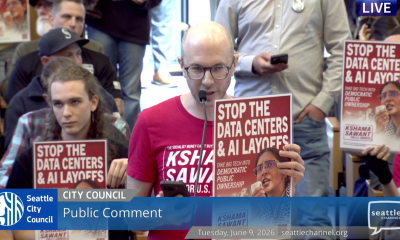
‘This is Seattle’s position on AI’: City Council votes unanimously to pause big new data centers
-
 Entertainment5 days ago
Donnie Wahlberg & More Heat Up Las Vegas at Circa’s Barry’s Downtown Prime
-
 Tech5 days ago
Opendoor Ends India Operations, Fueling a Bigger Conversation About AI and Outsourcing
-

 Sports6 days ago
First Time Since 1971: Australia Register Historic Low In ODI Cricket
-

 Politics6 days ago
Belfast burns, while Met chief points finger at Iran and Russia
-

 NewsBeat4 days ago
FBI searches office of Ohio voter registration group
-

 Business5 days ago
AT&T: Verizon's 27% Outperformance Sets Up A Solid Entry Point
-

 Politics6 days ago
Modi thanks Trump for wishes as US attacks Indian seafarers
You must be logged in to post a comment Login