
TL;DR
Qualcomm unveiled Snapdragon Reality Elite for MR headsets and START, a turnkey smart glasses toolkit. CEO says 40+ AI wearable designs are underway.



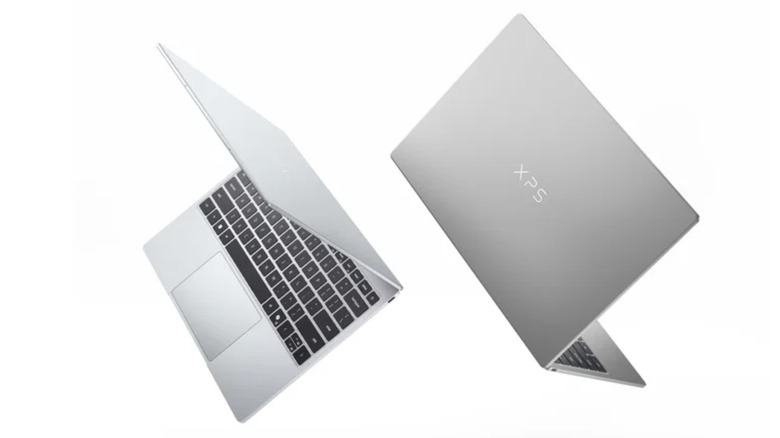
But will it see the same success as the MacBook Neo?
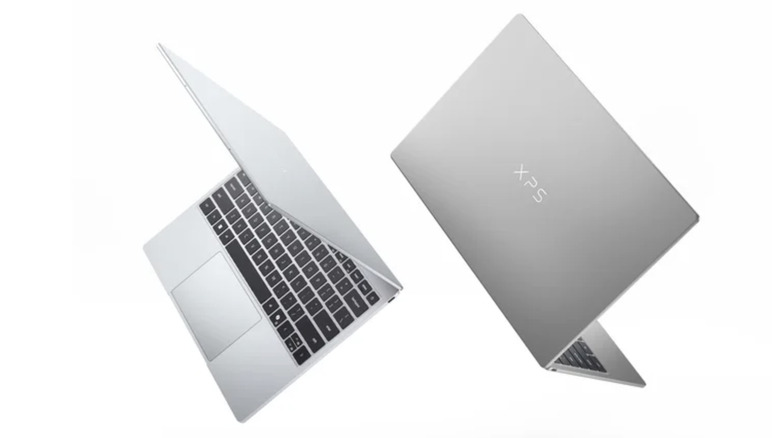
Dell announced the return of the XPS 13 late last month and said broadly that it would be available in June. The low-cost laptop is now available on both virtual and brick-and-mortar store shelves. It retails starting at $599 for students and $699 for other customers.
The Dell XPS 13 announcement came hot on the heels of Apple unveiling its first true budget laptop. The MacBook Neo is designed for education, targeting both teachers and students as its likely buyers and it impressed in our review. Apple even secured a deal to bring its gear, including more than 4,500 MacBook Neos, to the Kansas City Public Schools. It should be interesting to watch whether Dell will see the same success as Apple has been enjoying for such a similar laptop.


Egypt and Belgium played to a 1-1 draw in a FIFA World Cup matchup in Seattle on Monday. Fans who looked to the sky near Seattle Center later that night got a visual win.
Visit Seattle calls the lighted display the first-ever drone scoreboard, and the destination marketing organization plans to repeat the feat for five more matches hosted in Seattle.
The Egypt vs. Belgium match at Seattle Stadium (Lumen Field) attracted more than 66,000 fans for a noon start time. Thanks to the Pacific Northwest’s late sunsets this time of year, the 400 drones didn’t take flight near the Space Needle until 10:05 p.m. The scoreboard was up for 2 minutes, 45 seconds.
Certainly there are quicker ways to determine a match outcome, but Visit Seattle views the effort as a way to celebrate the city’s first World Cup and embody “Seattle’s history of innovation, strong sports fandom, and iconic skyline.”

The drones are flown by Sky Elements, the Fort Worth, Texas-based company that has put on shows at T-Mobile Park for a Mariners game, Lumen Field for the Seahawks, and at the Needle for New Year’s Eve
The next scoreboard will be live on Friday for USA vs. Australia. The showing is free and open to the public, with schedules here.
Here is the schedule for remaining FIFA World Cup matches in Seattle:

Qualcomm unveiled Snapdragon Reality Elite for MR headsets and START, a turnkey smart glasses toolkit. CEO says 40+ AI wearable designs are underway.
Qualcomm announced two products on Tuesday aimed at positioning the company as the silicon supplier for whatever computing device eventually displaces the smartphone. The first is Snapdragon Reality Elite, a mixed reality chip platform with substantially improved AI processing for headsets and tethered glasses. The second is START, a white-label toolkit that gives eyewear manufacturers a near-complete smart glasses design they can brand, customise, and ship without building the technology stack themselves.
The announcements came alongside comments from CEO Cristiano Amon, who told CNBC that Qualcomm is working on more than 40 different AI wearable devices spanning jewelry, camera-equipped earbuds, pins, and watches. “I think there’s going to be a lot of experimentation with different form factors,” Amon said. He described the unifying principle as “something that you wear, something that is with you all the time, something that can see the world around you.”
Snapdragon Reality Elite delivers up to 60% higher GPU performance, 30% higher CPU performance, and 160% higher NPU performance compared to the previous XR2+ Gen 2 platform. The chip’s neural processing unit is rated at 48 TOPS, enough to run a 3-billion-parameter language model at 45 tokens per second on-device, according to Qualcomm. The platform also runs up to 20% longer on battery and up to 12 degrees Celsius cooler under the same workloads.

The 💜 of EU tech
The latest rumblings from the EU tech scene, a story from our wise ol’ founder Boris, and some questionable AI art. It’s free, every week, in your inbox. Sign up now!
The display capability supports 4.4K per-eye resolution at 90 frames per second, a modest increase from the XR2+ Gen 2’s 4.3K per-eye figure. Qualcomm says the chip enables improved head and hand tracking alongside better see-through performance. Those improvements matter for reducing the motion sickness and eye strain that have historically limited how long users can wear mixed reality headsets.
Reality Elite is designed to power two categories of device. The first is standalone video-see-through headsets that overlay digital content on a camera feed of the real world, the approach used by devices like the Meta Quest. The second is lightweight, tethered optical-see-through glasses that blend digital imagery directly into the wearer’s field of view.
Among the first products using the platform are XREAL’s Project Aura, the Android XR glasses shown at Google I/O with a 70-degree field of view and binocular displays, and an upcoming device from Play for Dream. Qualcomm has not disclosed pricing for the platform or a timeline for when consumer devices will reach retail.
START, which stands for Scalable Turnkey AI-Ready Toolkit, takes a different approach to market entry. It bundles a hardware module built on Qualcomm’s AR1+ chip with a software platform, companion iOS and Android apps, an AI cloud solution, and three white-label reference designs. The designs cover an audio-and-camera configuration similar to Meta’s Ray-Ban smart glasses, a monocular display variant, and a binocular display variant.
The programme’s first partners are eyewear manufacturer Inspecs and O’Neill, the latter owned by TitanFlex. Qualcomm has also made a $10 million strategic equity investment in Inspecs, subscribing for 7.5 million new shares at £1 each. The investment signals that Qualcomm is not merely licensing silicon but taking a financial stake in the supply chain that will manufacture and distribute the devices.
The strategic logic is that traditional eyewear companies have the design expertise, retail distribution, and consumer trust to sell smart glasses as fashion accessories, but lack the chip architecture, AI software, and sensor integration to build the technology themselves. START is Qualcomm’s attempt to bridge that gap, mirroring the reference design programme it used in the early 2010s to help manufacturers build smartphones on its Snapdragon platform. Qualcomm says START will expand beyond smart glasses to other form factors in the future, though it has not specified which.
The competitive landscape is crowded and moving fast. Meta has sold more than seven million pairs of Ray-Ban smart glasses and commands roughly 82% of the market, with annual production capacity being expanded to 10 million units by the end of 2026. Snap launched its $2,195 Specs AR glasses this week.
Apple is reportedly testing multiple frame designs for a possible 2027 launch. Google is shipping Android XR audio glasses this autumn with Samsung, Warby Parker, and Gentle Monster. Qualcomm silicon already powers many of these devices, but the company is now building the full stack rather than waiting for partners to assemble it themselves.
What Qualcomm is betting on is that none of those companies will dominate the category alone. If the smart glasses market fragments the way the smartphone market did, with dozens of manufacturers building on a shared platform, the company supplying the foundational silicon layer captures value regardless of which brand wins. That is the same bet Qualcomm made with mobile phones, and Amon’s 40-device pipeline suggests the company sees the transition accelerating faster than the public market does.
The claims remain largely forward-looking, however. The 48 TOPS figure and performance percentages are Qualcomm’s own, measured against its own previous generation, and no independent benchmarks have been published. The 40 AI wearable designs Amon referenced are in various stages of development, not shipping products.
Whether the smart glasses category actually becomes large enough to justify Qualcomm’s investment depends on consumer adoption that has so far been limited to Meta’s ecosystem and a handful of developer-focused devices. The company is placing a structural bet that the transition away from smartphones is inevitable, but the timeline remains anyone’s guess.


The funny-sounding name offers new insights into galaxy formation.
Many of the developments shared by astronomers using the James Webb Space Telescope and similar instruments center on trying to understand the history of the galaxy. The latest update from the Webb telescope researchers confirms the existence of a phenomenon known as “bulge fossil fragments” that can offer new insights on the Milky Way’s formation.
The subject of this latest investigation is known as Terzan 5, a region in the center of the galaxy often dubbed “the bulge” that has been challenging for astronomers to study due to the density of stars and presence of dust. Between their observations with the Webb telescope and archival observations taken from the Hubble Space Telescope, the team was able to confirm that Terzan 5 is not a globular star cluster, as it was previously classified. Globular star clusters usually only have one ancient star population. Instead, Terzan 5 has experienced at least four distinct phases of star formation. According to the researchers’ survey, it has two older star populations that were formed 12.5 billion and 4.7 billion years ago. The astronomers also found two more contemporary populations that formed 3.8 billion years ago and 2.5 billion years ago.
“For some reason, this peculiar clump of stars formed separately from the bulge and was not destroyed as the bulge itself formed,” said University of Bologna professor Francesco R. Ferraro, principal investigator of the Webb observations. “Terzan 5 is what we now call a bulge fossil fragment because it resembles the primordial clumps that contributed to the formation of the bulge.”
“Based on observations and in-depth simulations, we think that galaxies in the early Universe had huge discs of gas that fragmented into clumps and formed stars. These clumps migrated to the center of the galaxies, and many merged to form their bulges,” co-author and University of Bologna associate professor Barbara Lanzoni said.
The findings were published in the journal Astronomy & Astrophysics.

HPE’s new promotion aims to entice customers to more deeply consider migrating off VMware. While numerous third-party surveys have pointed to a significant amount of VMware customers looking to reduce or eliminate their VMware use over the next few years, concerns around time and cost are also expected to slow or deter migration plans, especially given that migration can require paying for two virtualization products simultaneously.
“One of the big things we see is that as customers are going through this journey on transforming their operating model, you end up with double expenses,” HPE’s EVP and CTO Fidelma Russo said, according to The Register.
Dean Colpitts, CTO of Canadian managed services provider (MSP) Members IT Group (MITG), which VMware cut from its reseller program after 19 years of partnership a year ago, doesn’t expect the promotion to drive sales much.
“All our clients work on three, four, or five-year life cycles and generally roll that purchase into their initial buy,” he told Ars. “The biggest issue I’m seeing right now that is affecting VM Essentials sales and adoption is [that] the high prices and constraints of DRAM [are] affecting customers’ ability to obtain new hardware to migrate onto.”
Colpitts pointed to a lack of available hardware for permanent migrations and “to temporarily facilitate a brownfield reimage of the customer’s existing equipment from VMware to” VM Essentials.
On the other hand, one of HPE’s biggest channel partners, San Diego-based Nth Generation, is expecting its “VM Essentials sales pipeline to as much as quadruple and sales to grow at about that rate” because of HPE’s promotion, CRN reported.
“These additional free licensing and migration capabilities are going to drastically lower the risk of moving to VM Essentials,” Nth Generation co-president and CTO Dan Molina told the publication.
HPE also announced that it would give 600 reseller partners who earn the HPE partner program’s Private Cloud with Virtualization competency by the end of the year free VM Essentials software licenses for three years. Partners still have to pay support costs, though.
Colpitts said that the benefit is “a step in the correct direction” but that limiting the promotion to 600 partners is “very shortsighted.” He believes that HPE should give all of its partners VM Essentials “to facilitate getting [VM Essentials] into customer sites and displacing the competitors.”
“They need to fling [VM Essentials] as far and as fast as they possibly [can] to immediately gain traction and draw ISVs to them, which will increase adoption even more,” he said.

In a World Cup 2026 group that also contains Argentina and Algeria, Austria vs Jordan will be a must-win game for both teams if they are to make a deep run in the tournament. While this is Jordan’s maiden World Cup appearance, the Burschen are returning to football’s biggest stage for the first time since 1998.
Ralf Rangnick’s men are coming on the back of an excellent qualifying campaign, winning six, drawing one, and losing just one of their eight matches. They also won all three of their warm-up matches against Ghana, South Korea and Tunisia, and are currently on a five-match unbeaten run.
Jordan are, of course, the underdogs heading into this match given their 65th-place world ranking and the fact that they’ve only narrowly secured their World Cup berth. They also come into the game on a five-match winless run, including two defeats (by Colombia and Switzerland) in their four friendlies ahead of the tournament.
So, read on as we show you exactly how to watch Austria vs Jordan for free from anywhere in the FIFA World Cup 2026.
Austria vs Jordan is available to watch for free in multiple countries, including the UK, Austria, Australia, Brazil, Belgium, Ireland, Netherlands, Switzerland and Turkey.
Abroad? Can’t access your free stream? Unblock your free World Cup stream with Norton VPN — more on that below.
It’s the World Cup, and if you’re traveling, you might discover your usual Austria vs Jordan stream is suddenly unavailable due to geo-restrictions.
Don’t worry, that’s exactly where a VPN can help. A virtual private network lets you connect to servers around the world so you can securely access your usual World Cup coverage as if you were back home.
We recommend Norton VPN. Here’s why:

US viewers can watch Austria vs Jordan on FS1.
Cord-cutters can access FS1 through live TV services like YouTube TV (free trial), Hulu+Live TV, Sling (select markets), Fubo or DirecTV.
Those looking for a streaming service instead can watch Austria vs Jordan on Fox One (3-day free trial).
If you are looking for a stream in Spanish you can watch on Telemundo which is available via Peacock.
Visiting the US from the UK? You can still watch your World Cup stream for free thanks to Norton VPN (try for 60 days).

UK customers are in luck as they can stream Austria vs Jordan for free on BBC iPlayer. Live coverage is also available on the BBC One TV channel.
You require a TV license and a valid UK postcode for an account (e.g. SE1 7PB).
Norton VPN can unlock your stream if you’re abroad today.

Austria vs Jordan will be shown for free in Australia on SBS On Demand.
The streaming platform has every game of the tournament for free, making it the perfect place for your World Cup viewing.
Traveling for work or on holiday? A VPN like Norton VPN can help unlock your free stream.

In Canada, TSN will be broadcasting Austria vs Jordan.
You can live stream via the TSN+ streaming platform, which costs CA$8 per month or CA$80 per year.
Outside of Canada? Use Norton VPN whilst you’re traveling away from home to unlock your stream.
Austria vs Jordan kicks-off at 12am ET / 5am BST / 2pm AEST on Wednesday, June 17.
Austria
Goalkeepers: Alexander Schlager (Red Bull Salzburg), Florian Wiegele (Viktoria Plzen), Patrick Pentz (Brondby)
Defenders: David Affengruber (Elche), Kevin Danso (Tottenham Hotspur), Stefan Posch (Mainz 05), David Alaba (Real Madrid), Philipp Leinhart (SC Freiburg), Phillipp Mwene (Mainz 05), Alexander Prass (TSG Hoffenheim), Marco Friedl (Werder Bremen), Michael Svoboda (Venezia)
Midfielders: Xaver Schlager (RB Leipzig), Nicolas Seiwald (RB Leipzig), Marcel Sabitzer (Borussia Dortmund), Florian Grillitsch (Braga), Carney Chukwuemeka (Borussia Dortmund), Romano Schmid (Werder Bremen), Christoph Baumgartner (RB Leipzig), Konrad Laimer (Bayern Munich), Patrick Wimmer (VfL Wolfsburg), Paul Wanner (PSV Eindhoven), Alessandro Schopf (Wolfsberger AC)
Forwards: Marko Arnautovic (Red Star Belgrade), Michael Gregoritsch (FC Augsburg), Sasa Kalajdzic (LASK)
Jordan
Goalkeepers: Yazeed Abulaila (Al-Hussein), Abdallah Al-Fakhouri (Al-Wehdat), Abdel Rahman Al-Talalga (Al-Faisaly)
Defenders: Abdallah Nasib (Al-Zawraa), Yazan Al-Arab (FC Seoul), Husam Abu Dahab (Al-Faisaly), Mohammad Abulnadi (Selangor), Yousef Abu Al-Jazar (Al-Hussein), Salim Obaid (Al-Hussein), Ahmad Assaf (Al-Hussein)
Midfielders: Noor Al-Rawabdeh (Selangor), Ibrahim Sa’deh (Al-Karma), Mohammad Abu Hashish (Al-Karma), Nizar Al-Rashdan (Qatar SC), Mohannad Abu Taha (Al-Quwa Al-Jawiya), Amer Jamous (Al-Zawraa), Mohammad Al-Dawoud (Al-Wehdat), Yousef Qashi (Al-Hussein), Mohammad Taha (Al-Hussein)
Forwards: Musa Al-Taamari (Rennes), Mahmoud Al-Mardi (Al-Hussein), Baha’ Faisal (Al-Waab), Mohammad Abu Zrayq (Raja Casablanca), Ibrahim Sabra (Lokomotiva Zagreb), Odeh Al-Fakhouri (Pyramids), Ali Azaizeh (Al-Shabab)
|
Position |
Team |
GD |
Points |
|---|---|---|---|
|
1 |
Argentina |
0 |
0 |
|
2 |
Algeria |
0 |
0 |
|
3 |
Austria |
0 |
0 |
|
4 |
Jordan |
0 |
0 |
Of course, most broadcasters have streaming services that you can access through mobile apps or via your phone’s browser.
You can also stay up-to-date with all of the key World Cup moments on the official social media channels on X/Twitter (@FIFAWorldCup), Instagram (@FIFAWorldCup), TikTok (@FIFAWorldCup) and YouTube (@FIFA).
We test and review VPN services in the context of legal recreational uses. For example: 1. Accessing a service from another country (subject to the terms and conditions of that service). 2. Protecting your online security and strengthening your online privacy when abroad. We do not support or condone the illegal or malicious use of VPN services. Consuming pirated content that is paid-for is neither endorsed nor approved by Future Publishing.
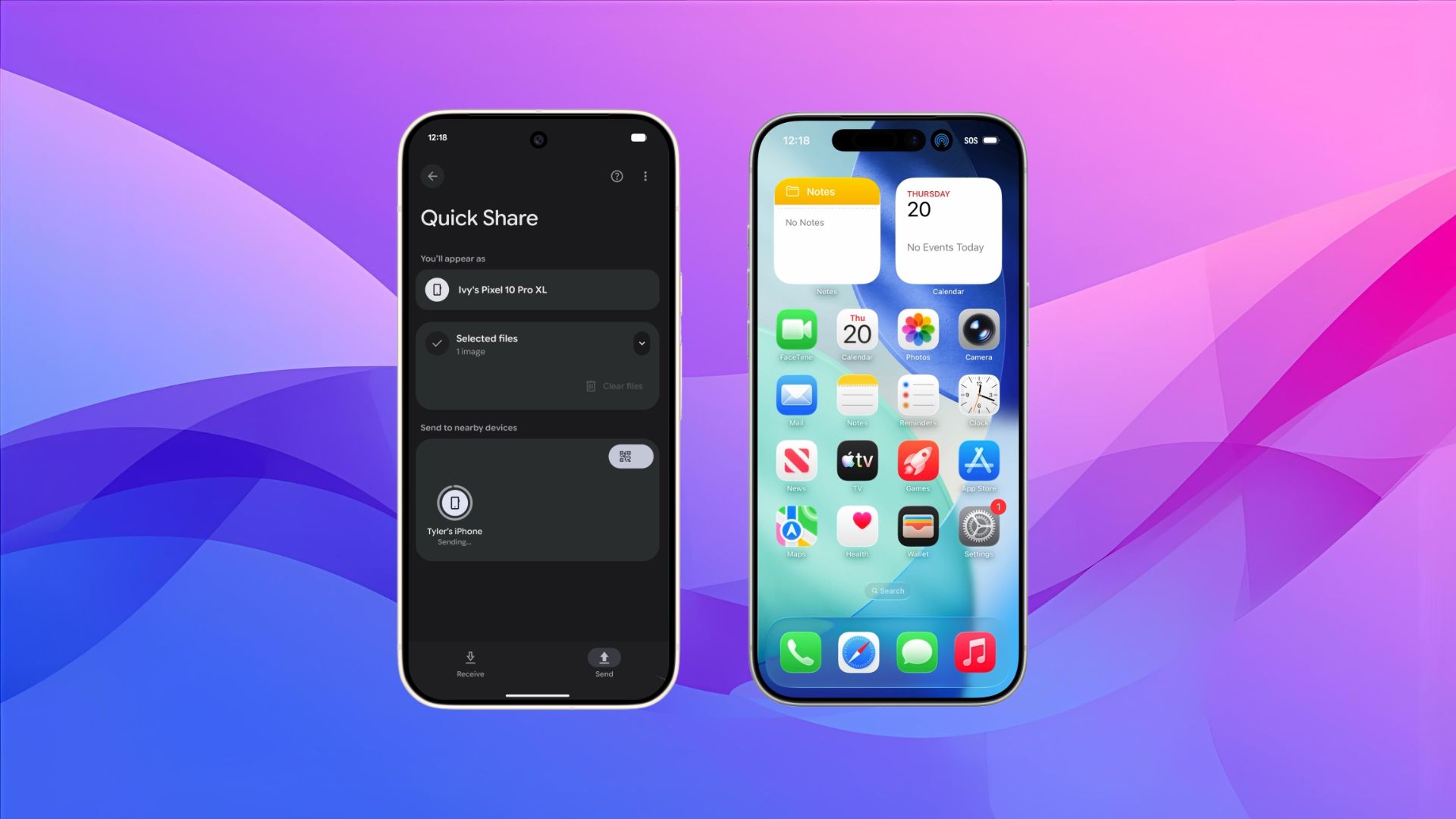
Apple’s long-rumoured foldable iPhone may not reach customers until 2027, despite continued speculation that the company plans to unveil the device in the coming months.
According to a new report from Taiwan’s Economic Daily News, comments from suppliers linked to Apple’s foldable plans suggest the launch timeline may have shifted.
While the iPhone Fold is still widely expected to be announced in late 2026, several supply chain sources now indicate that shipping could slip into early 2027.
The report points to remarks from Largan Precision CEO Enping Lin. He said that some upcoming products due to be announced in the third quarter have been moved to the beginning of next year. Although Lin did not mention Apple or a foldable iPhone by name, Largan is a long-time Apple supplier. This then fuels speculation that the comments relate to the company’s first foldable device.
Further weight comes from Xinrixing, a supplier believed to be producing bearings for the foldable handset. The company’s general manager suggested that production is largely ready and is now waiting for Apple to finalise a shipping schedule.
None of this confirms a delay, but it does add to a growing number of reports suggesting the iPhone Fold’s roadmap remains in flux.
Rumours surrounding Apple’s foldable ambitions have circulated for years. Predictions of an imminent launch have appeared almost annually since Samsung introduced its first Galaxy Fold in 2019. More recently, however, reports have become increasingly specific. Many point to a September 2026 unveiling.
Even then, some analysts believed availability would be limited at launch. This could potentially mirror Apple’s staggered rollout of products such as the original AirPods. Other reports have gone further, claiming production challenges could push the device entirely into 2027.
For now, Apple remains silent on its foldable plans. But if the latest supply chain chatter is accurate, prospective buyers may have to wait a little longer. They might not see the company’s first foldable iPhone reach store shelves soon.
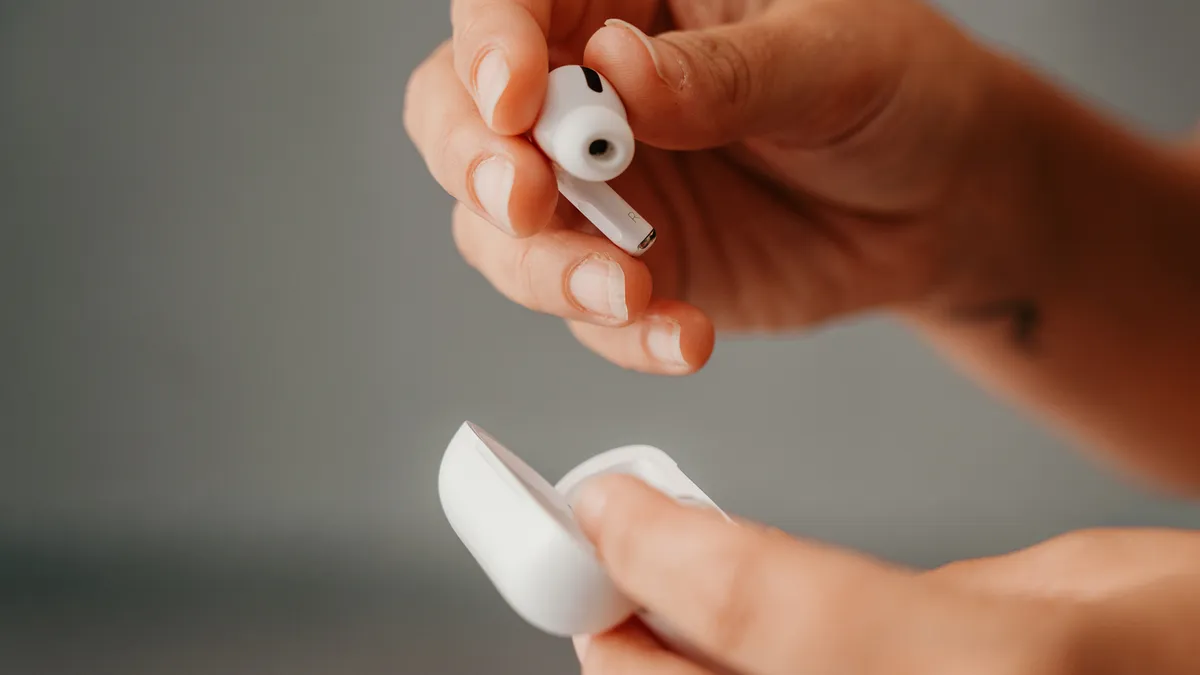
Tiny cameras in your ears may be part of Apple’s AI future. The company is preparing camera-equipped AirPods for release in late 2027, according to a report from Bloomberg’s Mark Gurman on Tuesday.
The new earbuds are expected to arrive around the same time as a second-generation foldable iPhone and a 20th-anniversary iPhone model, Bloomberg reported, citing unnamed people familiar with Apple’s plans. Apple didn’t immediately respond to a request for comment.
The cameras reportedly wouldn’t be meant for taking photos or recording video of the inside of your ear. Instead, they would act more like AI sensors, giving Siri visual context about the world around you.
That could let someone ask Siri questions about what they’re looking at, like what to make for dinner based on a set of ingredients, according to Bloomberg. This would most likely use Apple’s Visual Intelligence feature, which is designed to analyze images and provide context based on what the camera on your device sees.
Apple announced new Siri and Visual Intelligence features last week at WWDC 2026 as part of iOS 27 and its other operating system updates. The new Apple Intelligence features are expected to arrive this fall, while Siri AI will be available as a beta later this year.
Bloomberg reported that the camera AirPods are code-named B798 and were originally planned for 2026 but were slightly delayed due to Apple’s struggles with AI software. The company also reportedly needed more time to develop visual AI models capable of identifying objects in its surroundings.
The earbuds are expected to look similar to current AirPods Pro models, aside from cameras embedded in the stems. Bloomberg also reported that the device would include external lights to show when data is being sent to the cloud for processing.
The reported AI-powered AirPods are part of Apple’s broader push into AI hardware. Bloomberg said Apple is also working on smart glasses that could arrive as early as late 2027, along with a camera-equipped pendant that could be worn on clothing or around the neck.
Apple is reportedly preparing a busy iPhone lineup. Bloomberg previously reported that Apple’s first foldable iPhone is expected to launch in 2026. Apple is also said to be working on a 20th-anniversary iPhone with a nearly edge-to-edge display and curved glass that wraps around the sides.
The timing could still change, as it has in the past. Apple hasn’t announced camera-equipped AirPods, a foldable iPhone or a 20th-anniversary iPhone.
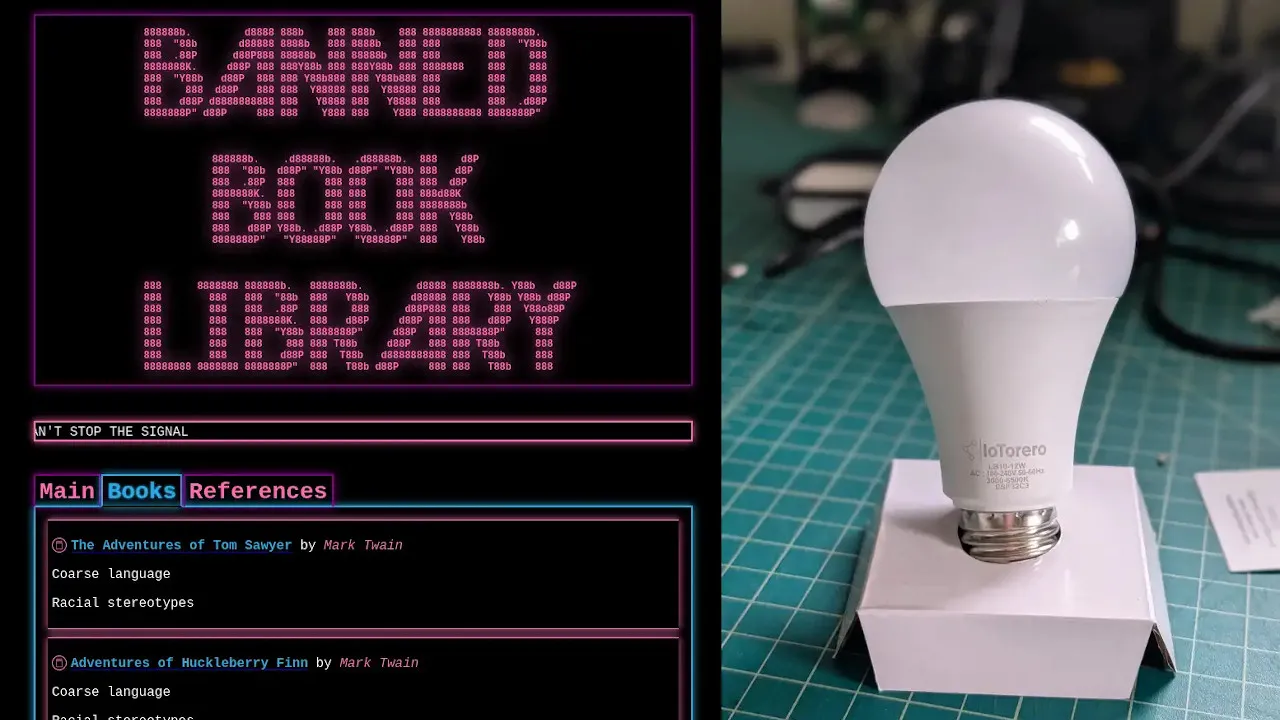
Let’s stop for a moment and pause to consider the smart bulb. Imagine going back 20 years and telling yourself that people will be putting computers capable of acting as web servers into light bulbs just so they can control them from their telephone instead of hitting the switch. The whole thing seems crazy — but its great, because it enables hacks like this one where [RickOOOOOO] takes a commercially-available ESP32 smart bulb, and hacks it into a local file server and digital library for banned books.
The word “banned” gets bandied about a lot — but assured, there’s nothing getting served up by [RickOOOOOO]’s bulb that’s going to help somebody will ill-intent build an improvised explosive device. No, at least as conceived here, it appears to be full of easily-available e-books that were pulled from school libraries in the USA, which may-or-may not meet your personal definition of ‘banned’. Whatever you want to call them, we appreciate the idea that a student could hypothetically replace one of the bulbs at school with a hacked version serving up that sort of content. a bulb in such a school with a bulb hacked to host that sort of content–in minecraft, naturally.
In any case, the hardest part of the hack was carving the ESP32C3 in the bulb out of the IoToreo bulb enough to access it. Unfortunately having done so, [Rick] wasn’t able to get an SDcard interface soldered on, so he’s stuck with just 4MB for books and webserver. That means only a few epubs can fit on the bulb, but it’s better than those books being unavailable.
Like the solarpunk message board we featured recently, which also ran on an ESP32, the bulb broadcasts a public network that uses a captive portal to take you to the web interface of the library. From there, users can browse books– including learning from where they were banned and why–and admins can access a password-protected control panel. One neat work-in-progress feature on the control panel is that the bulb can still be used as a smart bulb, so you can try and match the light to its surroundings. In Minecraft, because of course we would never encourage kids to change light bulbs. Perish the thought!
Speaking of Minecraft, you can run a server on a lightbulb, too. Or DOOM, because of course even the light bulbs run DOOM now. What a time to be alive!
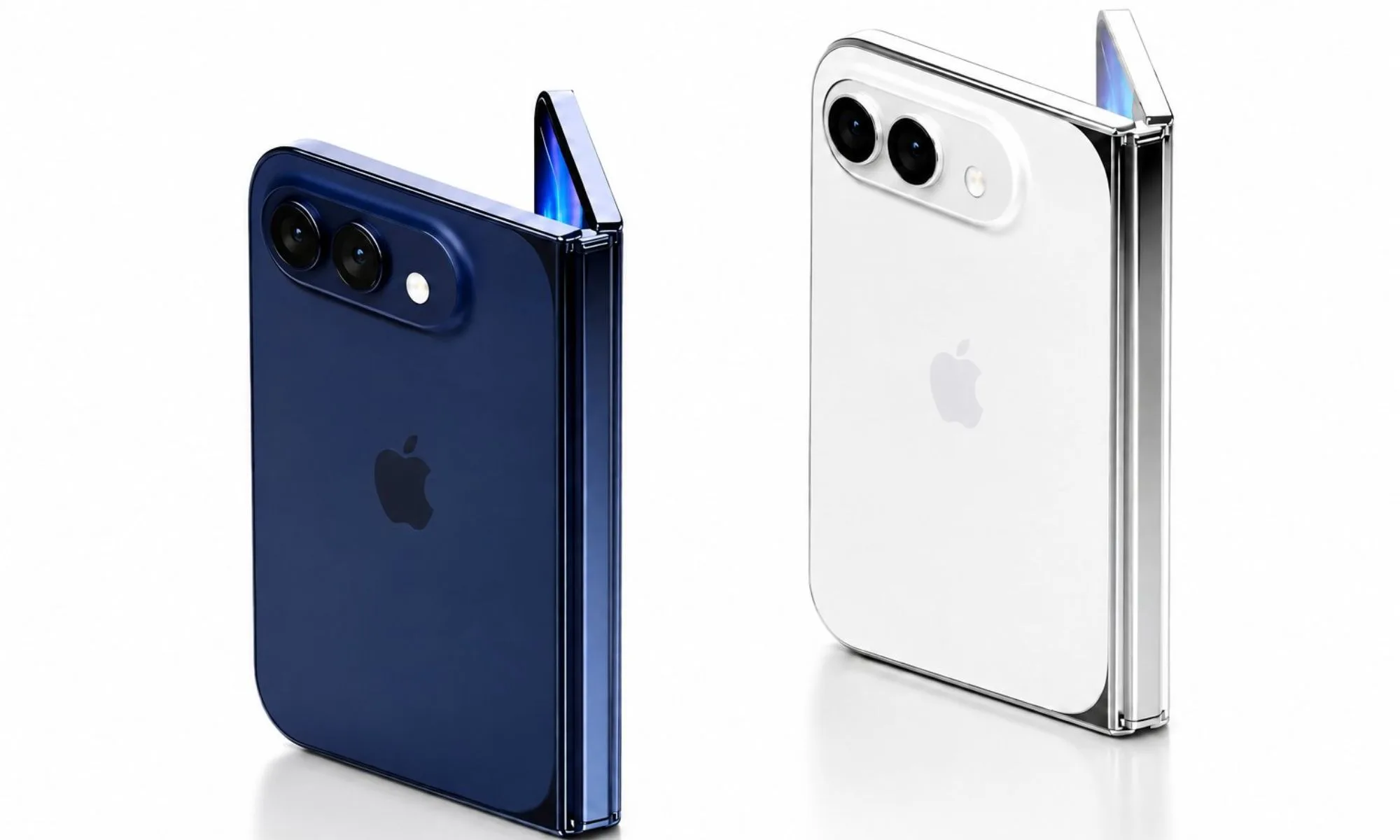
Apple‘s first foldable iPhone is still expected to debut later this year, but the company may already be looking beyond its first attempt. According to Bloomberg’s Mark Gurman, Apple is planning a second-generation foldable iPhone for release in 2027, just one year after the original model is expected to arrive. The device is reportedly codenamed V78 and will launch alongside the 20th-anniversary iPhone model. It looks like Apple might be going all in on foldables as a long-term product category rather than a one-off experiment.
The Cupertino giant has spent years watching rival smartphone makers refine foldable hardware. Samsung, Google, Honor, Oppo, and others have gone through multiple generations of designs, experimenting with everything from narrow book-style devices to wider tablet-like formats. Apple appears to have waited until the category matured before making its move.
Based on leaks and replica models that have surfaced in recent months, Apple’s foldable iPhone is expected to use a relatively short and wide design rather than the tall, narrow form factor seen on earlier Samsung Galaxy Z Fold devices. The device is rumored to feature a 5.5-inch cover display and a 7.8-inch inner panel with a 4:3 screen format.

That layout mirrors much of Apple’s iPad lineup and could provide a more natural and familiar experience for multitasking, reading, and running apps side by side. At 7.8 inches, the inner display would also come close to the iPad mini‘s 8.3-inch screen, potentially giving users a tablet-like experience when the device is unfolded. Apple appears to be preparing the software side as well, encouraging developers to ensure their apps adapt smoothly to different screen sizes and display formats.
Interestingly, Samsung may be arriving at a similar conclusion. Rumors suggest the company is preparing a wider foldable design for next year’s lineup, with the Galaxy Z Fold 8 Wide potentially becoming the standard Galaxy Z Fold 8. A taller version could reportedly be positioned as the Galaxy Z Fold 8 Ultra instead.

Whether Apple’s foldable strategy pays off remains to be seen, but the company does not appear to be treating the device as a one-year experiment. A second-generation model already in development suggests Apple expects the iPhone Ultra to establish itself as a permanent tier within the iPhone lineup, with enough demand to support regular annual updates.
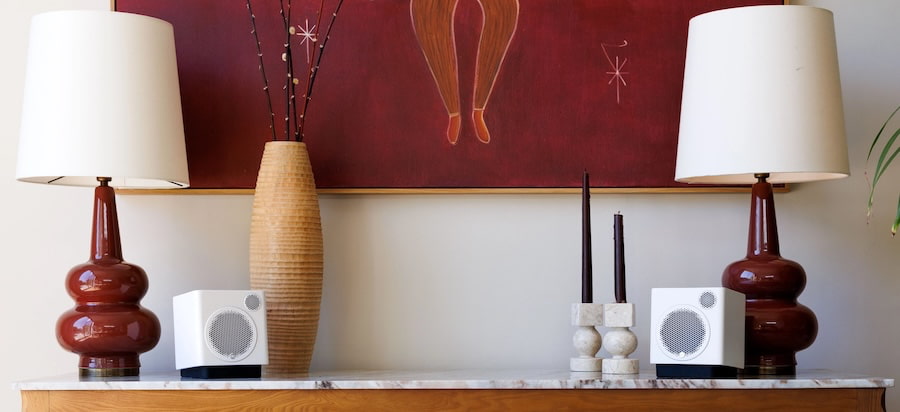
Monitor Audio has launched the Radius Series 4G, a redesigned compact speaker range aimed at listeners and installers who need serious sound without large cabinets taking over the room.
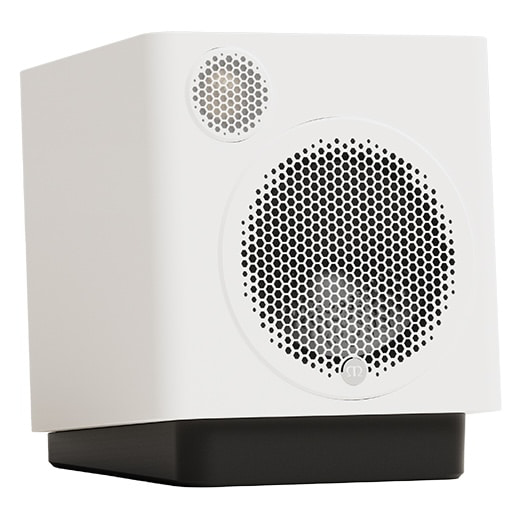
The new lineup includes the Radius 1, Radius 3, and Radius On-Wall, supported by matching floor stands, desk pads, and wall bracket options. That gives the Radius Series 4G a broader role than a typical small speaker refresh. It can be configured for two-channel listening, desktop audio, multi-room systems, home theater, and commercial installations where space, appearance, and mounting flexibility matter almost as much as sound quality.
Monitor Audio is positioning Radius Series 4G around its Transparent Design Philosophy, but the bigger story is practical: compact loudspeakers that are designed to look finished in modern residential and commercial spaces, while still being flexible enough for stereo, surround, and near-field applications. Small speakers are often treated like compromise products. Radius 4G looks more like Monitor Audio trying to make the category useful again.

The Radius Series 4G is still a compact speaker range, but Monitor Audio has put meaningful engineering into this generation rather than simply updating the cabinets and calling it a day.
The core driver technology remains Monitor Audio’s C-CAM cone material, which uses a ceramic-coated aluminium/magnesium structure designed to be light, rigid, and resistant to unwanted flexing. For Radius 4G, that driver platform now incorporates RST III cone geometry, a surface pattern developed to reduce breakup and resonance across the frequency range. In a small speaker, that matters. There is only so much cabinet volume to work with, so driver control becomes a much bigger part of the performance equation.
The tweeter has also been redesigned. Radius Series 4G uses a new C-CAM Gold Dome tweeter with an external magnet motor system, bringing it closer in concept to a full drive unit rather than relying on a more conventional internal puck magnet design. Monitor Audio says the goal is greater control and cleaner high-frequency performance, which should help the Radius models sound more open without becoming bright or thin.
The crossover networks have also been reworked with new measurement, listening, and component selection. That is not the flashiest part of the story, but it is often where compact speakers either come together or fall apart. Good drivers still need to be integrated properly, especially when the speaker is being used for desktop listening, wall-mounted applications, or home cinema channels.
Cabinet construction has received attention as well. Monitor Audio uses Through-Bolt Driver Bracing to lock the drive units to the rear of the cabinet at a specific torque, improving rigidity while reducing unwanted chassis resonance. Each model also includes Monitor Audio’s HiVe II port design, created to improve airflow and bass control. On the new Radius 3, the port is 50 percent larger than the previous generation, which should help it deliver more low-frequency output from a still-compact enclosure.
The accessory range is also part of the story. The Radius 4G Floor Stand uses wooden tripod legs with internal cable routing, giving the speaker a more furniture-friendly presence. The Desk Pad is made from vibration-isolating rubber and gives the speaker a slight upward tilt for near-field listening. Add in the wall bracket options, and Radius 4G starts to look less like a single-use compact speaker and more like a flexible system for stereo, desktop, surround, multi-room, and commercial installation use.
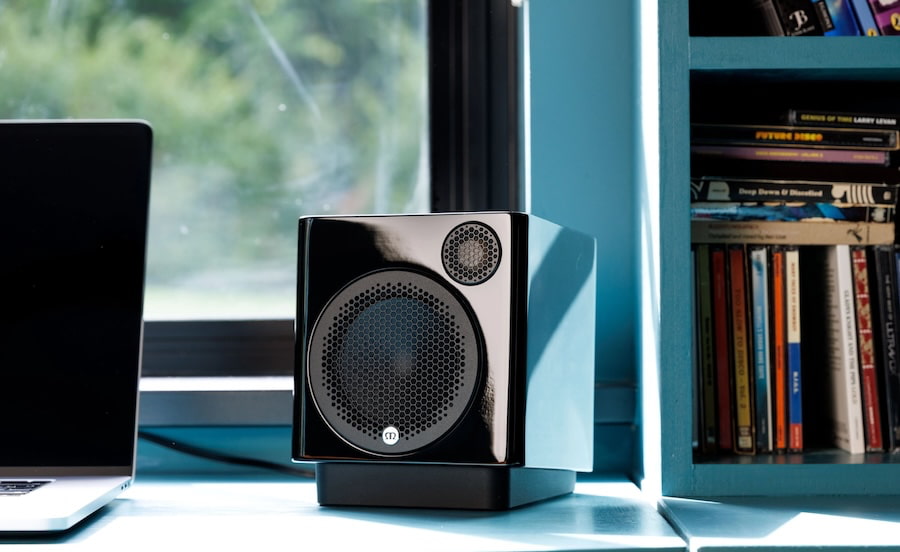
The Radius 1 4G is the smallest model in the new Radius Series 4G lineup, designed for discreet AV, surround, multi-room, desktop, and compact stereo applications. It uses a 4-inch RST III bass/mid driver with Monitor Audio’s C-CAM cone technology and a 19 mm C-CAM Gold Dome tweeter in a sealed 2-way cabinet.
Key specs and options:
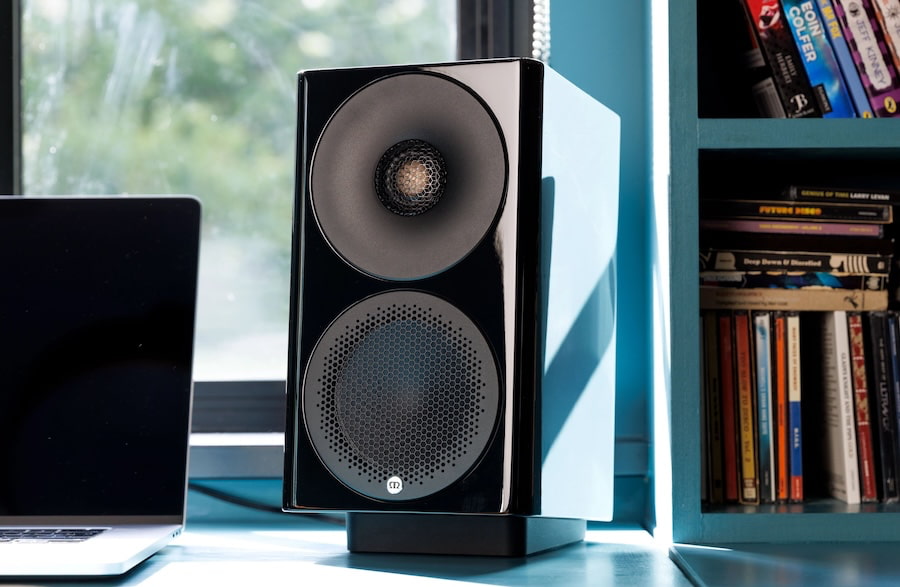
The Radius 3 4G is the larger mini-monitor in the range and the most flexible choice for stereo, TV, gaming, desktop, multi-room, and small commercial installations. It steps up to a 4.5-inch RST III bass/mid driver, a 25 mm C-CAM Gold Dome tweeter, and a ported cabinet for deeper bass extension than the Radius 1 4G.
Key specs and options:
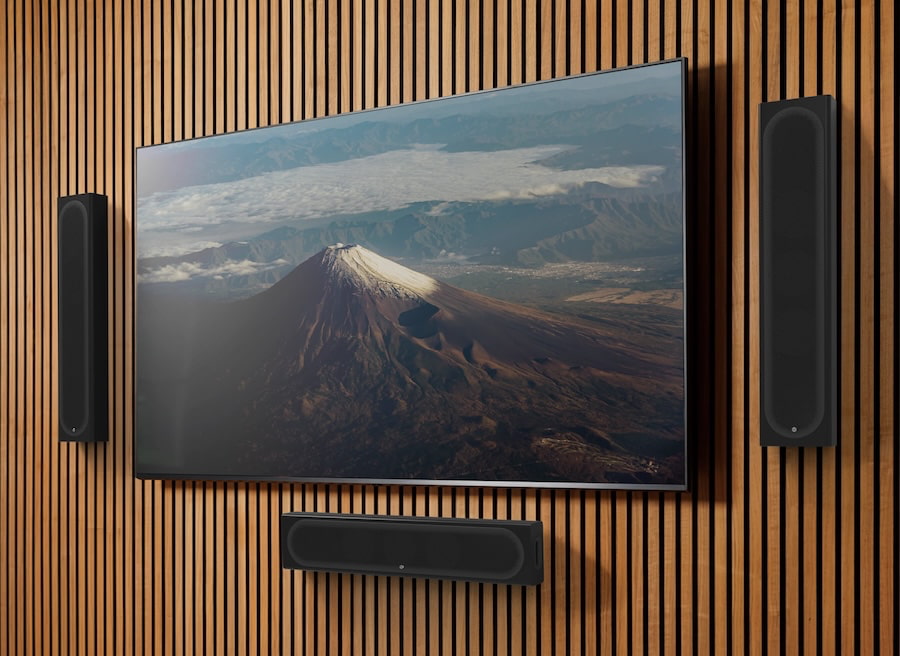
The Radius On-Wall 4G is the TV and home cinema model in the Radius 4G range. It is designed for horizontal or vertical wall placement around a screen and uses two 4.5-inch RST III bass/mid drivers with a 25 mm C-CAM Gold Dome tweeter in a slim ported cabinet. A wall bracket and fixing template are supplied.
Key specs and options:
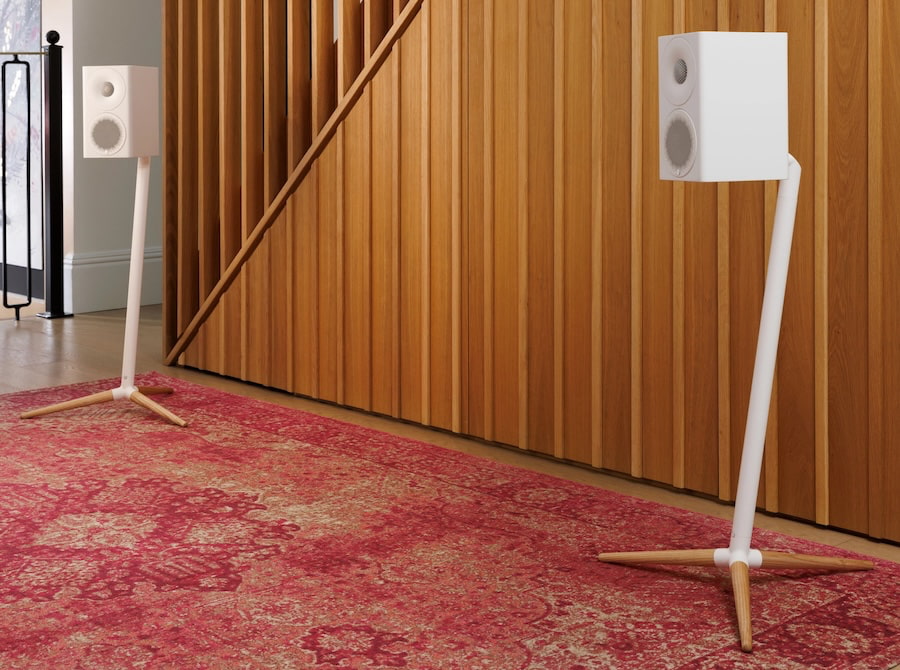
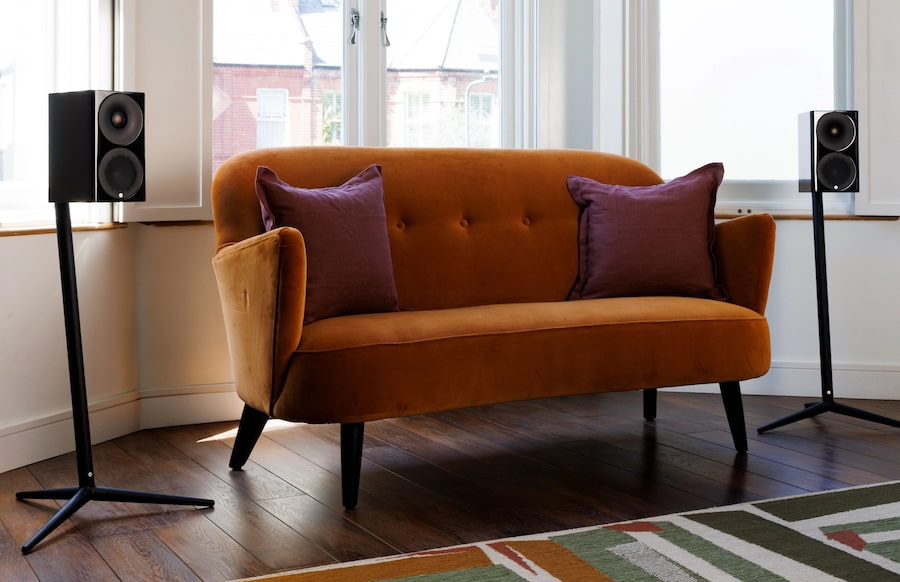
The Radius Floor Stand 4G is designed for the Radius 1 4G and Radius 3 4G. The stand uses wooden tripod legs, a single-bolt speaker attachment, and integrated cable routing that lets speaker cable exit cleanly at the base.
Key specs and options:
The Radius Desk Pad 4G is made for Radius 1 4G and Radius 3 4G desktop placement. It uses rubber with a specified hardness for vibration isolation and adds a slight upward tilt to aim the speakers more effectively in near-field setups.
Key specs and options:
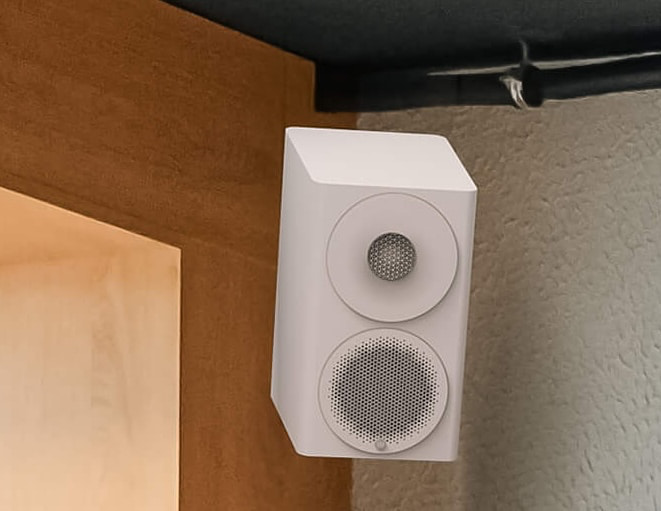
The FIX-M is the more adjustable wall-mount option for Radius 1 4G and Radius 3 4G. It allows 0, 15, or 30-degree angle settings from center, and the rotating front section creates 14 possible positions.
Key specs and options:

The MASM Mount is a smaller wall or ceiling mount for users who want to get compact speakers off the desk or furniture. It uses a ball-joint connection for positioning and is listed as compatible with Radius 1 4G.
Key specs and options:
The Monitor Audio Radius Series 4G is not trying to replace a full-size hi-fi speaker system, and that is the point. Its appeal is the combination of compact cabinets, real Monitor Audio driver technology, flexible mounting options, and a cleaner design language that works in rooms where traditional speakers are either too large or too visually intrusive.
What makes Radius 4G different is the range of applications. Radius 1 4G can handle discreet surround, desktop, and multi-room duties; Radius 3 4G is the more capable compact stereo, TV, gaming, and near-field option; and Radius On-Wall 4G gives installers and home theater users a slim horizontal or vertical speaker for screen-based systems. Add the dedicated floor stands, desk pads, and wall brackets, and this becomes less of a small speaker refresh and more of a flexible compact audio system.
This is for apartment dwellers, design-conscious listeners, desktop users, custom installers, and anyone building a living room, media room, retail, hospitality, or office system where sound quality matters but big boxes are a non-starter. Bass obsessives and large-room listeners will still want a subwoofer, but for modern spaces that demand compact speakers with legitimate hi-fi intent, Radius 4G makes a lot of sense.
For more information: https://www.monitoraudio.com




No Jackpot Winner as $257 Million Prize Rolls Over to $269 Million Monday Draw


Oppenheimer backs SpaceX as $70 billion retail frenzy builds


Weekend Open Thread: Tuckernuck – Corporette.com


Markets Rally as SpaceX IPO Looms Amid Iran Tensions and Inflation Surge

Zimbabwe Requires Crypto Businesses to Register Annually Under New FIU Regulations


Thailand Ranks Second Worldwide for AI Adoption Growth, Microsoft Reports


NanoClaw integrates JFrog registries to secure AI agent downloads


This Week In Security: Microsoft On Microsoft, Register Your Domains, Linux On ARM, And FreeBSD Joins The File Cache Club


Bitget enters Argentina’s regulated crypto market through PSAV registration

Dutton Ranch star claims they ‘didn’t see any disruption’ on set following Chad Feehan’s exit from Yellowstone spinoff fueled by Taylor Sheridan clash rumors


El Nino has formed in the Pacific and could set records, forecasters say


Politics Home | Healey Resignation Is “Colossal Failure Of Government”, Says Former Labour Defence Secretary


‘This is Seattle’s position on AI’: City Council votes unanimously to pause big new data centers

Donnie Wahlberg & More Heat Up Las Vegas at Circa’s Barry’s Downtown Prime

Opendoor Ends India Operations, Fueling a Bigger Conversation About AI and Outsourcing


First Time Since 1971: Australia Register Historic Low In ODI Cricket


Belfast burns, while Met chief points finger at Iran and Russia


FBI searches office of Ohio voter registration group


AT&T: Verizon's 27% Outperformance Sets Up A Solid Entry Point


Modi thanks Trump for wishes as US attacks Indian seafarers
You must be logged in to post a comment Login