TL;DR
A Pew survey of 5,119 US adults finds 49% use AI chatbots but 40% say AI will hurt society, 67% distrust government regulation, and 59% distrust companies.



A Pew survey of 5,119 US adults finds 49% use AI chatbots but 40% say AI will hurt society, 67% distrust government regulation, and 59% distrust companies.
Half of American adults now use AI chatbots, but a plurality believe the technology will ultimately damage society, and overwhelming majorities have lost confidence that either the government or the companies building it will manage it responsibly. A new Pew Research Center report released Wednesday, based on a survey of 5,119 US adults conducted in February, found that 49% of respondents use AI chatbots, up from roughly a third in 2024. At the same time, 40% said AI will be worse for society, roughly two-thirds said it is advancing too quickly, and 71% agreed the technology will make their personal data less secure.
ChatGPT remains the dominant chatbot among US adults, with 44% of respondents reporting they have used the OpenAI application. Google’s Gemini ranked second at 24%, followed by Microsoft Copilot at 17%, MetaAI at 14%, Grok at 8%, Claude at 6%, and Character.ai at 3%. The most common use case was information searching, cited by 42% of chatbot users, followed by entertainment at 25%, creating or editing images and videos at 24%, and medical advice at 20%.
The trust deficit is the report’s most striking finding. Two-thirds of Americans, 67%, said they have little or no confidence that the US government could effectively regulate AI. A separate 59% said they have little or no confidence that US companies could develop the technology responsibly.
The federal government’s failure to produce a coherent AI regulatory framework, despite months of internal deliberation and a scrapped executive order, appears to have registered with the public. The partisan divide on regulation is notable, with a separate Pew survey from March 2025 finding that 54% of Republicans had at least some trust in the US to regulate AI, compared with only 36% of Democrats.
“AI is no longer the future; for many, it’s here and now,” Pew Research Center associate director of research Jeffrey Gottfried said in a statement accompanying the report. “Americans are increasingly using chatbots and bringing AI into their homes, but they have a complex relationship with AI. They may use it, but they’re still highly skeptical of it and how it will impact our society.”
The skepticism extends across demographics. In an earlier Pew survey from 2024, only 17% of the general public said AI would have a positive impact on the United States over the next 20 years, compared with 56% of AI experts who thought the same. Americans were more optimistic about AI in medical care, where 44% expected positive effects, but far less so about education, where only 24% were positive, and jobs, where the figure dropped to 23%.
The jobs concern is not abstract. Meta and Microsoft eliminated a combined 23,000 positions in a single day in April, with both companies explicitly citing AI investment as the reason. The tech sector has recorded more than 96,000 job cuts in 2026 so far, and companies making the cuts are among the most profitable on earth.
Pew found that 21% of US workers now use AI in their jobs, up from 16% in 2024, but far more workers report being worried than hopeful about where the trend leads. Only 23% of the general public said AI would have a positive impact on how people do their jobs over the next 20 years, compared with 73% of AI experts.
The report also captured the scale of non-adoption. Of the 51% of US adults who do not use AI chatbots, 60% attributed it to disinterest rather than lack of access or technical ability. Many respondents also acknowledged using products with AI features without identifying them as AI tools, including smartwatches at 37% and smart speakers such as Amazon Echo or Apple HomePod at 35%.
Fewer Americans use chatbots for the kinds of high-stakes applications that have attracted the most regulatory scrutiny. Only 13% reported using chatbots for news, 10% for emotional support, and 4% for companionship. The data privacy concern was more pervasive, with 71% of respondents agreeing that AI will make personal data less secure.
The new Pew data draws from multiple surveys conducted at different points between 2024 and February 2026. The chatbot usage figures reflect the February 2026 survey, while some attitudinal measures draw from earlier polling periods. The methodology uses Pew’s American Trends Panel, a nationally representative sample recruited through random sampling of residential addresses, with interviews conducted online or by phone.
What the data describes is a country that is adopting AI tools faster than it is developing confidence in the institutions meant to govern them. The gap between usage and trust is widening, not closing, and neither regulators nor the industry has offered a credible plan to address it.

Amazon Web Services is announcing a new set of AI agents for businesses, developers, and individual users, capable of everything from fixing security vulnerabilities to triaging email.
The agents, unveiled at the AWS Summit in New York, reflect an attempt to maximize autonomy while ultimately keeping humans in control of how much the AI does on its own.
It’s part of a broader industry push into agents, with Google, Microsoft, Anthropic, OpenAI and others developing AI that can do more work and increasingly complete tasks on their own.
A new security agent, dubbed AWS Continuum, starts in a supervised “learn mode” and earns the right to act alone only as customers grant it permission, category by category.
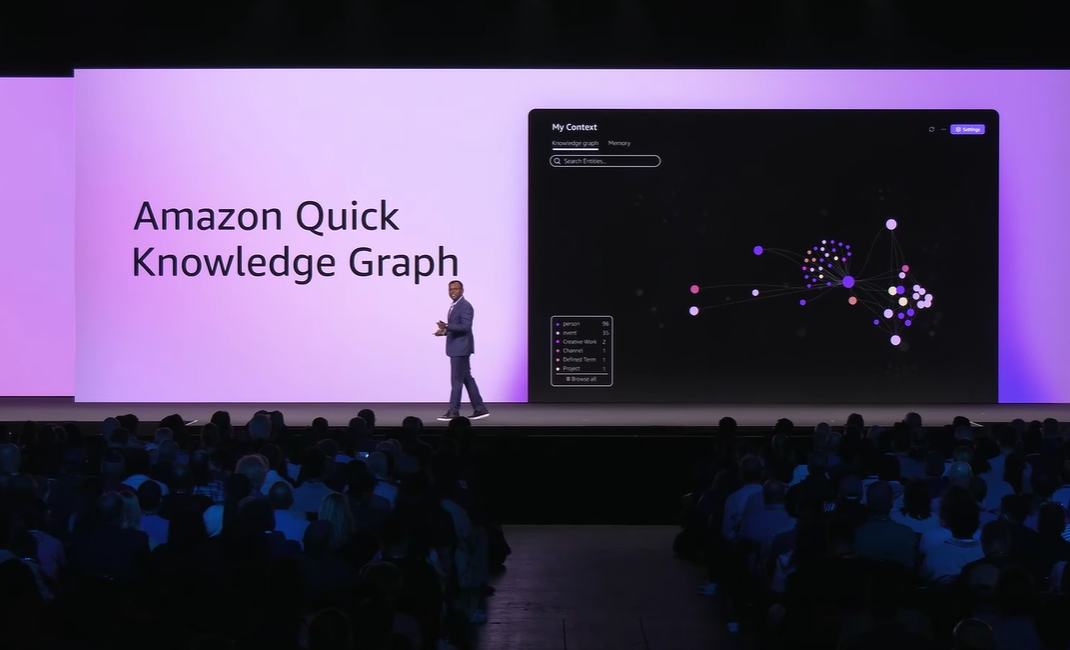
The Amazon Quick AI assistant will now let users build their own background agents in plain language to handle tasks like following up on stalled business deals or flagging regulatory changes.
Amazon gave Quick a redesigned activity feed that triages email, messages, and calendar items into one prioritized view; new links to services including Adobe, Figma, Snowflake, and WhatsApp; and the ability to tap multiple connected services to answer a single question.
On the developer side, AWS is also pushing its coding agents to take on more of the grunt work, checking and testing new code before it ships and cleaning up old code, while leaving the final decision to merge or deploy in the hands of humans. A new iPhone app for Kiro, the company’s AI coding assistant, will let developers start and monitor that work from their phones.
@media (max-width: 600px) {
aside.callout { float:none !important; max-width:100% !important; margin-left:0 !important; margin-right:0 !important; }
aside.callout .callout-img { display:none !important; }
}
Deepak Singh, the AWS VP who leads the Kiro team, said the overarching idea is to take the background work AI has piled onto people — reviewing code, triaging security findings, keeping software current — and let agents handle it with minimal human intervention.
The faster AI writes code and surfaces problems, he said, the more there is for humans to review, test, and maintain: “Those are all good problems to have, but they are real problems.”
AWS also expanded AgentCore, its platform for building agents, and introduced AWS Context, a service that organizes a company’s data so agents can reason over it.
Announcing the new Continuum security agent, AWS cited the rise of powerful AI models — most notably Anthropic’s Claude Mythos — that can now find software flaws and chain them into serious attacks faster than any human team can respond.
Amazon made headlines for raising concerns about those same models, reportedly warning Trump administration officials about security risks in Anthropic’s most advanced AI, before a government order forced the lab to take its two newest models offline.
Continuum is starting with code vulnerabilities, and AWS says it will expand to other aspects of security in the future. It works through issues the way a human team would, if given the time: triaging the findings, testing whether a vulnerability is exploitable, and then proposing a fix, with an estimate of what else the change might break.
In categories where the customer has granted the agent autonomy, Continuum can apply the fix itself, feeding the change into an existing deployment pipeline.
Neha Rungta, AWS director of applied science, said in an interview that this kind of speed is necessary given the acceleration of the threats. AI can now chain minor flaws together, she said, combining two medium-severity findings and a low one into something critical.
“That was something that would have taken a lot of effort, expertise, and determination for an attacker to get through — so the floor has been lowered,” said Rungta, who led the work on Continuum. “The goal is to raise that floor up again.”


AI AND ML
Researchers urge developers to see that less is more when it comes to instructions
If you’re exposing your agent to a strong odor, it’s time to clean up your instructions.
Risky or poorly structured code patterns are known as “code smells,” and it turns out coding agent directives can be similarly redolent, leading to wasted tokens and worse output.
Coding agents rely on configuration files that summarize expected agent behavior. These context-enhancing files are commonly written in Markdown and named either CLAUDE.md for those using Anthropic models or AGENTS.md for pretty much everyone else.
They include various text instructions that advise the coding agent about desired behavior and tool use. And they can get rather wordy. Anthropic advises no more than 200 lines of text because longer files consume model context and may hinder model coherence.
Researchers affiliated with the computer science department of the Federal Institute of Minas Gerais in Brazil recently scoured some 532,000 files to build and analyze a dataset of 100 popular open-source projects containing either an AGENTS.md or a CLAUDE.md file.
“Our results show that configuration smells are widespread,” the authors state. “Lint Leakage was the most common smell, affecting 62 percent of the files, followed by Context Bloat (42 percent) and Skill Leakage (35 percent).”
Linting is the process of running automated tools to check code for programming and style errors. Lint Leakage refers to agent instructions that repeat rules already enforced by linters, format checkers, and static analysis tools. Duplicative rules waste tokens by burdening the underlying model with guidance for a task already handled reliably by programmatic tools.
Context Bloat, as its name suggests, describes the tendency of developers to overspecify code agent behavior. “Bloated configuration files increase token consumption, raise costs, and reduce the visibility of important instructions,” the authors observe, pointing to Anthropic’s recommendation of no more than 200 lines of text.
Skill Leakage, another common configuration smell, occurs when rarely used tools or practices get added to the AGENTS.md file, which gets loaded in every agent session. The agent instructions would be better in a separate skills file (e.g. SKILLs.md) that gets loaded only when needed. Skill leakage also expands the agent’s context unnecessarily and potentially distracts agents from other things.
Other agentic odors include: Blind References, which happens when configuration files reference external documents (e.g. via URLs) without explaining when that resource becomes relevant; Init Fossilization, configuration details set up upon a project’s initialization that are no longer relevant; and Conflicting Instructions, which occur when agent directives contradict each other.
The study authors say that they found at least one of these six smells in 91 of the 100 AGENTS.md files tested.
“These results suggest that developers could benefit from catalogs and tools designed to spot configuration issues in agent configuration files,” they conclude in the preprint paper, entitled “Configuration Smells in AGENTS.md Files: Common Mistakes in Configuring Coding Agents.” The authors are Helio Victor F. dos Santos, Vitor Costa, Joao Eduardo Montandon, Luciana Lourdes Silva, and Marco Tulio Valente.
The message here is that less is more when it comes to code agent configuration files, perhaps even to the point that anything is worse than nothing.
Similarly, when ETH Zurich boffins examined the impact of context files for agents a few months ago, they found [PDF] that developer-generated instructions raised costs and only improved code performance about 4 percent, while LLM-generated instructions had a small (3 percent) negative impact on agent-generated code.
They concluded “unnecessary requirements from context files make tasks harder, and human-written context files should describe only minimal requirements.” ®

The ultralight may become a permanent fixture in Apple’s smartphone lineup.

Apple could be making a follow-up to the iPhone Air, the ultralight smartphone introduced last fall. According to Mark Gurman at Bloomberg, plans may be in motion for the company to launch a second version of the device for spring 2027. Sources said the potential new product might add a second rear camera, improved battery life and a version of the A20 Pro processor.
Apple rarely offers specifics around sales figures for individual models, but our impression has been that the iPhone Air was not a big mover among buyers. The device has largely been viewed as a precursor for Apple’s eventual foldable smartphone, and many of us who watch the company closely didn’t expect it to have much staying power.
This rumor suggests that Apple may have higher aspirations for this ultralight form factor as a more permanent part of its mobile lineup. We did find the solitary rear camera to be a downside in our review of the iPhone Air, so alleviating some of the tradeoffs needed for such a slim chassis might increase the appeal.
The idea of a spring release for an iPhone Air 2 confirms how Apple has been rethinking its product calendar. Previously, all of its smartphone announcements came in the fall. Within the past 12 months, however, the company focused on its pricier models in September and pushed the announcement of its budget iPhone 17e to the spring. Since several of Apple’s efforts to have smaller smartphones have been abandoned (iPhone mini and iPhone SE, we hardly knew ye), maybe the new strategy is to try providing petiteness from a different perspective.
Google has started rolling out Wear OS 7 to Pixel Watch users. This brings what is arguably the biggest software update of the year to the company’s smartwatch lineup.
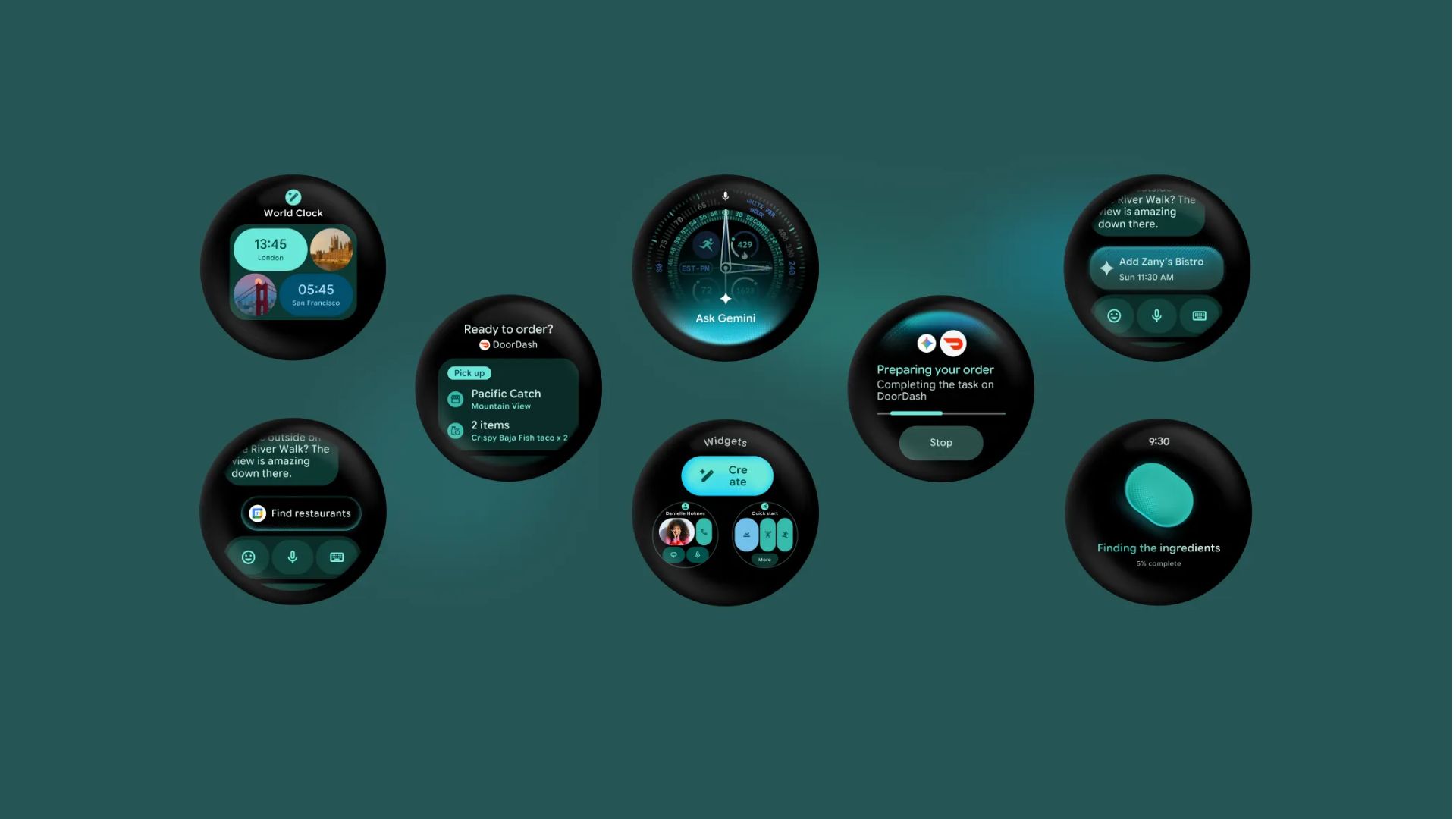
The update introduces new Gemini-powered features, redesigned widgets, and battery life improvements. However, it won’t be coming to the original Pixel Watch.
According to Google, the rollout is now underway for the Pixel Watch 2, Pixel Watch 3, and Pixel Watch 4. Availability is expected to expand gradually over the coming days. Alongside a refreshed interface, Wear OS 7 is designed to improve efficiency. Google claims battery life could increase by up to 10%. This depends on how the watch is used.
One of the most noticeable changes is the shift from full-screen tiles to a new widget system. This system looks much closer to Android’s smartphone widgets. The update also adds live notifications. This allows users to see real-time updates directly on their watch. It works in a similar way to Android’s Live Updates feature.
Google has also focused on improving how the Pixel Watch works with other devices. After updating, users will be able to interact more seamlessly with compatible accessories. For example, photos captured with supported AR glasses can be viewed directly on the watch. Meanwhile, a redesigned audio panel makes it easier to switch playback between speakers and headphones.
The biggest additions, however, come from Gemini Intelligence. A new feature called Create My Widget lets users generate personalised dashboards using voice commands. In addition, Gemini-powered automations can trigger actions across multiple apps from a single request.
Google is also giving its voice assistant deeper access to personal data, including Gmail and previous conversations. This allows it to provide more contextual responses and complete tasks more intelligently.
While many smartwatch updates focus on a handful of new features, Wear OS 7 appears to be a broader overhaul. There are battery gains, Gemini integrations and a redesigned interface. As a result, it could end up being one of the most significant Pixel Watch updates Google has delivered so far.


Hudson Rock said the attackers went on to “actively intercept SSL VPN authentication hashes and crack them using a massive, dedicated 45-GPU cluster managed via Hashtopolis.” From there, they used the GPU cluster to crack the hashes, meaning to try massive combinations of plain-text passwords until they found the right one. These passwords allowed the threat actors to move laterally to compromise Active Directory environments and other centralized authentication systems.
“This aggressive methodology has led to severe, real-world consequences,” Hudson Rock said. “Diachenko’s research confirmed full network compromises at multiple organizations across Japan, Taiwan, Vietnam, Iraq, and Turkey. Most alarmingly, this includes a Turkish NATO defense contractor from which classified defense documents were successfully exfiltrated by the group.”
In the interview, Diachenko put it more succinctly. “The scale is the sophistication,” he said.
The scale didn’t stop there. The attackers used the massive cluster to run a” feedback-driven, 12-level recursive system.” In other words, there wasn’t a single flat dictionary run. Password candidates came from custom dictionaries with as many as eight words, common keyboard patterns, and cracking rules. Each one looped back with each step. When guesses were successful, the passwords were fed back as seeds to generate still more candidates. In other words, the cracking techniques improved with each successful guess.
“They were quite innovative on that,” the researcher said.
The innovation contrasts sharply with the operational security of the attackers, who left artifacts on the server they used. In hacker circles, such moves are considered amateur mistakes.
Hudson Rock said that the top countries where compromised devices were found were India, the US, Taiwan, Mexico, Turkey, and Thailand. The top industries affected were IT services, construction materials, telecommunications, construction and engineering, industrial equipment, and financial services. Other organizations whose data appeared in the database included: Foxconn, Samsung, Comcast, Siemens, PwC, and Accenture. Hudson Rock said that the database listed thousands of others, including major government agencies and critical infrastructure providers.
Firewalls have long been a favorite network entry point for hackers. These devices accept connections from the outside Internet, sit at the perimeter of a network, and have access to valuable resources deep inside.
The links above list a number of steps Fortinet firewall users should take to ensure their networks are secure. Given that the data has been available to cybercriminals and potentially other threat actors who, like Diachenko, found it, the risk is substantial.


Years after the events of Spider-Man: No Way Home, the latest trailer shows Tom Holland’s Peter Parker still living in the shadow of that memory-erasing spell. No one knows who he is anymore, not even his closest friends. The footage leans into that isolation while cranking up the personal stakes and physical chaos for the July 31 release.
The new teaser opens on a gritty New York City street, with Michael Mando’s Scorpion charging at Peter out of nowhere, dressed in a comic book-inspired outfit. The two engage in a massive, primal street battle. When Peter grips Scorpion’s tail, his eyes go completely black, a blink-and-you’ll-miss-it warning that he’s losing his sanity. Next thing you know, he’s flinging Scorpion into a car, gasping as if he’s losing his hold on reality.


Then Peter’s mechanical web-shooters just fall apart at the wrists, and biological webbing shoots out in all directions. He’s swinging through traffic in a frenzy, catches a bird along the way, and then crashes into a sad couple getting married. It’s a cross between a wild, street-level disaster movie and a body horror film. Peter then runs to Bruce Banner (Mark Ruffalo) to figure out what’s going on with his DNA. Banner pulls out a device designed to keep the Hulk hidden and gives him a harsh warning: if Peter ever discovers him without that ‘thing,’ he should get out of there as soon as possible, since this hints at a whole bunch of gamma-powered problems waiting to burst.

The action kicks up again when Spider-Man clashes with the Hand, as the ninjas make a bigger mark in the MCU this time around. He’s spinning a giant web tornado across their ranks, and the skyscrapers behind him are crashing down. Then, just when you think it can’t get any wilder, Jon Bernthal’s Punisher appears in his combat van, seemingly stepping in to save MJ at one point, adding to the drama. The trailer then turns nuclear, with the most dramatic escalation yet occurring as a huge Grey Hulk appears, apparently under mental control. Peter merely stares up at the item and says, “Wait, what?” The Hulk became bigger?’ Then the two go toe-to-toe in a battle for the ages, destroying the city.

This second trailer takes the first and turns it up a level, really going deep into Peter’s mental struggle and the consequences of his lost identity. It still includes some street-level action, as well as larger MCU crossovers such as the Hulk and Punisher, but Sadie Sink’s role remains unknown for the time being. We have the famed Destin Daniel Cretton at the helm, working with Chris McKenna and Erik Sommers, who are back on writing responsibilities this time, and newcomer Justin Kuritzkes.


A newly discovered data leak dubbed “FortiBleed” has exposed what appears to be a collection of Fortinet and FortiGate VPN credentials for 73,932 firewall URLs at organizations worldwide.
The exposed data was first discovered by security researcher Bob Diachenko, who says he found a server containing what appeared to be valid Fortinet VPN credentials, including usernames, email addresses, and plaintext passwords.
According to screenshots and information shared by Diachenko, the database contains entries for Chevron, Samsung, Foxconn, Comcast, AT&T, Mercedes-Benz, Toyota, Sinopec, State Grid, and many others.

“Massive Fortinet/FortiGate bruteforce/active exploitation campaign uncovered in action,” Diachenko posted on LinkedIn.
“Thousands of top vendors instances are listed in the files like this (see screenshot). This one alone has 21,634 domain names – from Chevron to Fortinet itself. All – with potentially working passwords to the FortiGate appliances obtained through various menas.”
The exposed data also included comments listing each organization’s industry, revenue, and number of employees, likely for planning attacks.
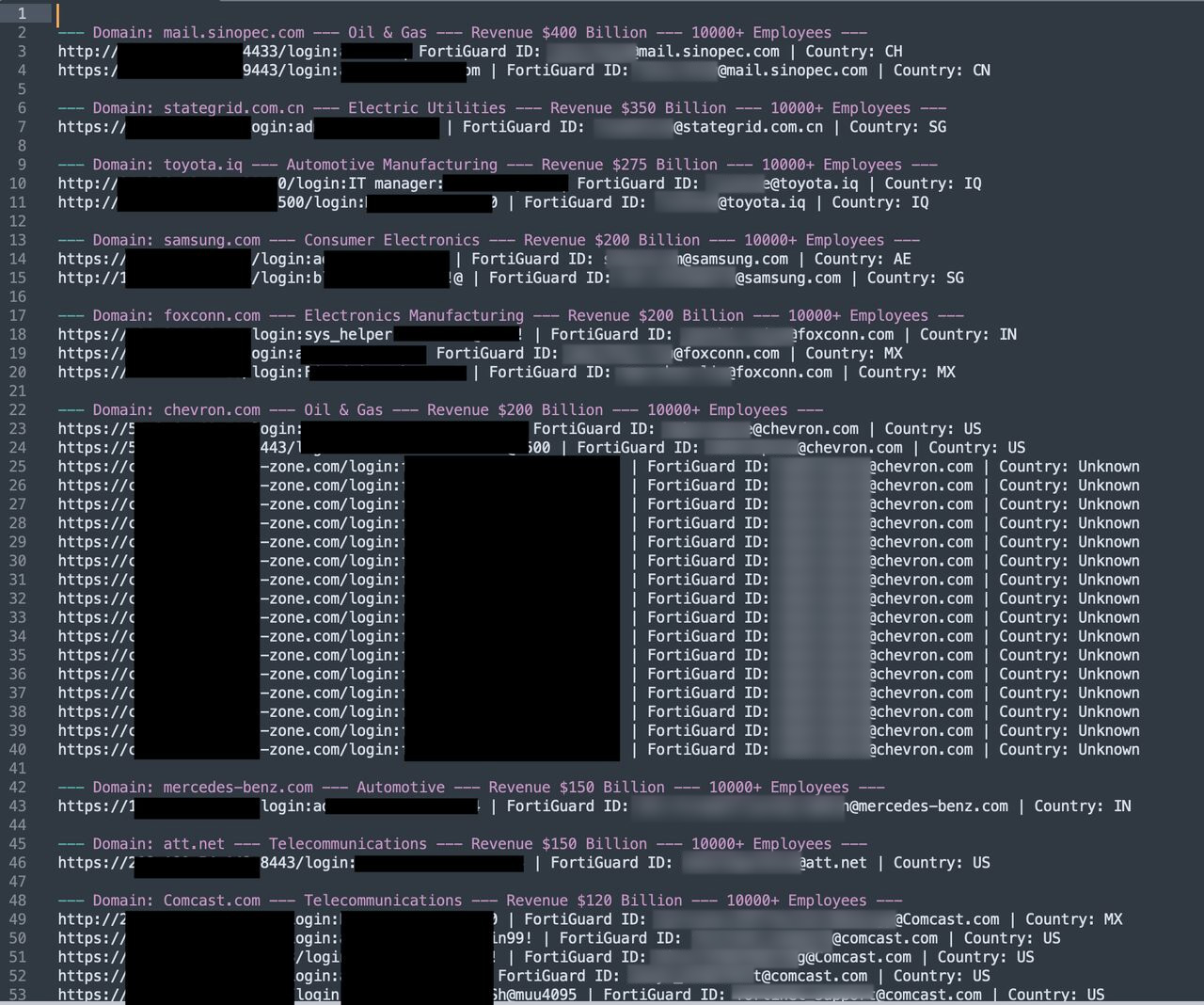
Diachenko later shared additional information that claimed the operation was conducted by a Russian-speaking multi-operator threat group that harvested credentials for FortiGate SSL VPN devices.
According to Diachenko’s investigation, the attackers allegedly conducted approximately 1.16 billion credential attempts against 320,777 FortiGate targets and an additional 2.1 billion attempts against 163,650 Microsoft SQL Server systems.
He further claimed the threat actors intercepted SSL VPN authentication hashes, cracked them using a 45-GPU cluster managed through Hashtopolis, and used the recovered credentials to move laterally into internal Active Directory environments.
Diachenko told BleepingComputer he obtained these details after analyzing additional files inadvertently exposed on the same server.
“They accidentally left an open directory with artefacts, connection strings, tooling, scripts and data online. Analytics obtained via their cron jobs, bash histories, logs etc,” Diachenko explained.
The researcher also stated that multiple organizations across Japan, Taiwan, Vietnam, Iraq, and Turkey were fully compromised, including a Turkish NATO defense contractor from which classified documents were allegedly stolen.
Threat intelligence company Hudson Rock has since published its own analysis of the exposed data after receiving the dataset from Diachenko. The company described the collection as one of the largest known troves of compromised Fortinet-related credentials.
According to Hudson Rock, the dataset contains 73,932 unique firewall URLs across 194 countries and impacts 21,632 unique domains.
The company says the attackers maintained detailed logs of successful compromises and assembled a database containing verified credentials for organizations across nearly every major industry sector.
Among the organizations Hudson Rock says appear in the dataset are Foxconn, Samsung, Comcast, Siemens, Lenovo, PwC, Accenture, Oracle, and numerous government agencies and critical infrastructure operators.
The company also released statistics showing that the highest number of affected devices was in India, the United States, Taiwan, Mexico, Turkey, Thailand, Colombia, Malaysia, Chile, and the United Arab Emirates.
The most common sectors for the listed companies are telecommunications, IT services, financial services, government organizations, healthcare providers, educational institutions, and manufacturing.
One strange aspect of the leak is that many of the exposed credentials were long, complex passwords that would ordinarily be considered difficult to crack.
Cybersecurity researcher Kevin Beaumont independently reviewed portions of the exposed data and told BleepingComputer that some of the credentials are authentic.
“I have been able to confirm the authenticity of some of the admin logins and passwords – this looks like a real dump,” Beaumont said.
After further review of the data shared by Hudson Rock, Beaumont published additional findings indicating that the dataset contains credentials for roughly 75,000 Fortinet devices, most of which remain online.
According to Beaumont, the data appears to have originated from exported Fortinet configurations because it contains information, including email addresses, that is typically only accessible through configs.
He also said the affected IP addresses are different from those in the 2025 Belsen Group Fortinet leak, further indicating that this is a more recent and larger collection of compromised devices.
Beaumont said he verified that multiple organizations listed in the dataset were using valid credentials and observed that many affected devices were running relatively recent FortiOS versions.
“The data is legit. It is around 75k devices. Almost all are still online, and Fortinet devices. It appears to be recent data,” Beaumont wrote.
Based on network data from Shodan, Beaumont says the leak contains approximately half of all internet-accessible Fortinet firewalls and said that a majority of the affected devices expose their FortiGate management interfaces directly to the internet.
The source of the configuration data remains unknown, with it unclear whether it was stolen through previously disclosed Fortinet vulnerabilities, a newly discovered flaw, or another method. Neither Diachenko, Hudson Rock, nor Beaumont have identified how the configuration data was originally obtained.
Hudson Rock has created a free FortiBleed lookup tool to check if your organization is impacted.
Organizations in the dataset should immediately rotate passwords associated with Fortinet VPN and administrative interfaces, enforce MFA, examine gateway logs for suspicious activity, and monitor for exposed employee credentials.
BleepingComputer contacted Fortinet regarding the exposed dataset and will update this article if we receive a response.

Security teams log 54% of successful attacks and alert on just 14%. The rest move through your environment unseen.
The Picus whitepaper shows how breach and attack simulation tests your SIEM and EDR rules so threats stop slipping by detection.


During The State of Unreal keynote at Unreal Fest on Wednesday, Epic Games revealed just how it’s embracing generative AI in Unreal Engine (UE). Along with offering the first details on Unreal Engine 6 (UE6), the company discussed new features for Unreal Engine 5.8, which it also released on Wednesday. As part of the latest update, Epic is offering an experimental Model Context Protocol (MCP) plugin that will allow developers to hook gen AI models such as Claude and Gemini into Unreal Engine. It’s looking to make the MCP an integral part of UE6.
Marcus Wassmer, the head of Epic’s development team, wrote in a blog post that the gen AI models can act as “creativity and productivity multipliers so that teams can focus their efforts on the essential creative and technical tasks of development rather than time on time-consuming manual tasks.”
The blog post went on to state that, “our goal for UE6 is to greatly reduce the tedious work in authoring content to leave more time for creative exploration, and increase the amount of iterations a team can make to polish their content. UE6 will ship with tools and workflows where you can choose to bring your own favorite models, battletested against internal development and in UEFN [Unreal Engine for Fortnite].”
Unreal Engine 5.8 ships today with experimental MCP server support:
Your sources, your pipeline and your workflow—simply configure the MCP plugin and connect to any agent. Get familiar with the MCP server and the PCG Primitive Plugin today and see what teams can build together:… pic.twitter.com/Ca5yZIH443
— Unreal Engine (@UnrealEngine) June 17, 2026
Epic gave a demonstration of Claude Code connecting to UE, then pulling objects from an asset library and placing them in a virtual living room. Developers can still move the objects around manually in the UE editor.
The company also showed how a developer might use Claude Code in UE to build a city that can be automatically adjusted as assets like parks are added. Along with modifying assets, gen AI models can adjust factors like lighting and match atmospheric conditions to real-world examples.
In a video showing off Unreal Engine 5.8, Epic suggested that developers could use the likes of Claude to “automate asset creation, testing and optimization. The plugin can access core UE systems such as blueprints, assets, levels, materials, meshes and many more.”
It shouldn’t be too much of a surprise that Epic is going all in on gen AI in UE6. Back in November, CEO Tim Sweeney suggested that a “made with AI” tag may be “relevant to art exhibits for authorship disclosure, and to digital content licensing marketplaces where buyers need to understand the rights situation. It makes no sense for game stores, where AI will be involved in nearly all future production.”
In January, the Game Developers Conference published its 2026 State of the Game Industry report, which was based on a survey of more than 2,300 game industry workers. Of those, 36 percent said they were using gen AI tools as part of their job. Most of those using such tools were doing so for research and brainstorming (81 percent) but also for tasks like prototyping (35 percent). However, 52 percent of respondents said they thought gen AI was bad for the industry. That figure was up from 30 percent in the 2025 edition of the survey and 18 percent in 2024. Only seven percent said it was having a positive impact.
Elsewhere at Unreal Fest, it emerged that Epic is merging Unreal Engine 5 and UEFN into a single platform in UE6. One other thing that the company is testing is the ability to pull Fortnite skins into other UE6 games, and to let developers move their skins in the other direction. The company aims to release UE6 in early access in late 2027, with a full release lined up for around 12-18 months later.
Epic had some news to share about collaborations as well. Those creating Fortnite experiences using UEFN will soon be able to make games based on The Simpsons, just as they can currently do with Star Wars IP. The company also revealed that more than 30 gaming collaborations are lined up for Fortnite this year, including Sonic Racing: CrossWorlds, Vampire Survivors, Control Resonant and Phantom Blade Zero.
However, Vampire Survivors developer Poncle appears to have concerns about Epic’s embrace of gen AI. “Following today’s news about gen AI usage by Epic to create all sort [sic] of game assets, including Fortnite characters, we’re currently ‘reviewing’ our collaboration with Fortnite,” Poncle stated on Reddit. “We’ll let you know if anything moves forward.”

Ghana will take on Panama in a must-win contest for both teams as they begin their respective FIFA World Cup 2026 Group L campaigns in Toronto. A defeat would leave either side facing a daunting path, with upcoming matches against European heavyweights England and Croatia.
Quarter-finalists in 2010, the Black Stars enter the match as favorites, particularly with Panama’s star midfielder Adalberto Carrasquilla reportedly nursing an injury and unlikely to be risked. Yet Ghana have had a difficult spell recently, highlighted by their failure to qualify for the most recent 24-team Africa Cup of Nations, for the first time in two decades.
They then let go of coach Otto Addo and in April welcomed Carlos Queiroz, who returns to a World Cup dugout for the fifth successive tournament after coaching Portugal in 2010, and Iran in 2014, 2018 and 2022. Can he end Ghana’s six-match winless run? Queiroz will look to revive the form Ghana displayed during qualification, where they recorded eight wins, one draw, and only one loss. Much will depend on captain Jordan Ayew, who will break brother Andre’s all-time caps record today, alongside attacking talents Ernest Nuamah and stellar Man City winger Antoine Semenyo.
Panama, meanwhile, are appearing at only their second World Cup after making their debut in 2018, when they lost all three group-stage matches, conceding 11 goals. However, Los Canaleros arrive with renewed confidence following an impressive runners-up finish in the 2025 CONCACAF Nations League, beating World Cup co-hosts the USA en route. Physically dominant, they’ll look to put pressure on from the off.
So, read on as we show you exactly how to watch Ghana vs Panama for free from anywhere in the FIFA World Cup 2026.
Ghana vs Panama is available to watch for free in multiple countries, including the UK, Australia, Brazil, Belgium, Ireland, Netherlands, Switzerland and Turkey.
Abroad? Can’t access your free stream? Unblock your free World Cup stream with Norton VPN — more on that below.
It’s the World Cup, and if you’re traveling, you might discover your usual Ghana vs Panama stream is suddenly unavailable due to geo-restrictions.
Don’t worry, that’s exactly where a VPN can help. A virtual private network lets you connect to servers around the world so you can securely access your usual World Cup coverage as if you were back home.
We recommend Norton VPN. Here’s why:

US viewers can watch Ghana vs Panama on FS1.
Cord-cutters can access FS1 through live TV services like YouTube TV (free trial), Hulu+Live TV, Sling (select markets), Fubo or DirecTV.
Those looking for a streaming service instead can watch Ghana vs Panama on Fox One (3-day free trial).
If you are looking for a stream in Spanish you can watch on Telemundo which is available via Peacock or one of the cord-cutters above.
Visiting the US from the UK? You can still watch your World Cup stream for free thanks to Norton VPN (try for 60 days).

UK customers are in luck as they can stream Ghana vs Panama for free on ITV. Live coverage is available on ITV1 and ITVX.
You require a TV license and a valid UK postcode for an account (e.g. SE1 7PB).
Norton VPN can unlock your stream if you’re abroad today.

Ghana vs Panama will be shown for free in Australia on SBS On Demand.
The streaming platform has every game of the tournament for free, making it the perfect place for your World Cup viewing.
Traveling for work or on holiday? A VPN like Norton VPN can help unlock your free stream.

In Canada, TSN and free-to-air channel CTV will be broadcasting Ghana vs Panama.
You can live stream via the TSN+ streaming platform, which costs CA$8 per month or CA$80 per year.
CTV will require TV provider login details for you to watch for free online.
Outside of Canada? Use Norton VPN whilst you’re traveling away from home to unlock your stream.
Ghana vs Panama kicks-off at 7pm ET on Wednesday, June 17. That’s 12am BST / 9am AEST on Thursday, June 18.
Ghana
Goalkeepers: Lawrence Ati-Zigi (St. Gallen), Joseph Anang (St Patrick’s Athletic), Benjamin Asare (Hearts of Oak)
Defenders: Alidu Seidu (Rennes), Jonas Adjetey (VfL Wolfsburg), Abdul Mumin (Rayo Vallecano), Gideon Mensah (Auxerre), Abdul Rahman Baba (PAOK), Jerome Opoku (Istanbul Basaksehir), Kojo Peprah Oppong (Nice), Derrick Luckassen (Pafos), Marvin Senaya (Auxerre)
Midfielders: Caleb Yirenkyi (Nordsjaelland), Thomas Partey (Villarreal), Abdul Fatawu (Leicester City), Kwasi Sibo (Oviedo), Antoine Semenyo (Manchester City), Elisha Owusu (Auxerre), Augustine Boakye (Saint-Etienne), Kamaldeen Sulemana (Atalanta)
Forwards: Jordan Ayew (Leicester City), Brandon Thomas-Asante (Coventry City), Christopher Bonsu Baah (Al-Qadsiah), Inaki Williams (Athletic Bilbao), Ernest Nuamah (Lyon), Prince Kwabena Adu (Viktoria Plzen)
Panama
Goalkeepers: Luis Mejía (Nacional), César Samudio (Marathón), Orlando Mosquera (Al-Fayha)
Defenders: César Blackman (Slovan Bratislava), José Córdoba (Norwich City), Edgardo Fariña (FC Pari Nizhniy Novgorod), Roderick Miller (Turan Tovuz), Fidel Escobar (Saprissa), Jiovany Ramos (Puerto Cabello), Eric Davis (Plaza Amador), Andrés Andrade (LASK), Jorge Gutiérrez (Deportivo La Guaira), Amir Murillo (Beşiktaş)
Midfielders: Cristian Martínez (Ironi Kiryat Shmona), José Luis Rodríguez (Juárez), Adalberto Carrasquilla (UNAM), Yoel Bárcenas (Mazatlán), Carlos Harvey (Minnesota United), Aníbal Godoy (San Diego), César Yanis (Cobresal), Azarías Londoño (Universidad Católica de Chile), Alberto Quintero (CD Plaza Amador)
Forwards: Tomás Rodríguez (Deportivo Saprissa), Ismael Díaz (León), José Fajardo (Universidad Católica), Cecilio Waterman (Universidad de Concepción)
|
Position |
Team |
GD |
Points |
|---|---|---|---|
|
1 |
England |
0 |
0 |
|
2 |
Croatia |
0 |
0 |
|
3 |
Ghana |
0 |
0 |
|
4 |
Panama |
0 |
0 |
Of course, most broadcasters have streaming services that you can access through mobile apps or via your phone’s browser.
You can also stay up-to-date with all of the key World Cup moments on the official social media channels on X/Twitter (@FIFAWorldCup), Instagram (@FIFAWorldCup), TikTok (@FIFAWorldCup) and YouTube (@FIFA).
We test and review VPN services in the context of legal recreational uses. For example: 1. Accessing a service from another country (subject to the terms and conditions of that service). 2. Protecting your online security and strengthening your online privacy when abroad. We do not support or condone the illegal or malicious use of VPN services. Consuming pirated content that is paid-for is neither endorsed nor approved by Future Publishing.

The streaming industry has gotten a lot of flak over the past few years, but there is one thing that Hollywood studios are undeniably good at: recycling the same idea, over and over and over again until the world ends (or until everyone finally decides they’re sick of Harry Potter, whichever comes first).
This tried-and-true formula is now playing out in real time with Prime Video’s Off Campus and Netflix’s upcoming series Icebreaker, shows that, like Heated Rivalry, are hockey-themed romances about polar opposites who just can’t seem to keep their hands off each other.
But there’s one key difference: Icebreaker and Off Campus are about heterosexual romances, while Heated Rivalry is about a secret gay relationship. And considering how much queerness played a role in Heated Rivalry’s explosive popularity, it seems like the clamor for straight horny hockey content is another example of Hollywood just not getting the message.
Off Campus, which debuted last month, is about Hannah Wells, a reserved musician who agrees to enter a fake relationship (?) with college hockey captain Garrett Graham in exchange for philosophy class (??) tutoring. The forthcoming Icebreaker, which Netflix announced this week, is about a figure skater who falls in love with a hockey player after they’re forced to practice on the same rink.
Hockey aside, Icebreaker and Off Campus have a lot in common with Heated Rivalry. They’re all adaptations of popular novels: Off Campus is based on a series of steamy books by Canadian author Elle Kennedy, while Icebreaker is inspired by a YA novel by British author Hannah Grace. They’re also all variations on the “enemies to lovers” trope, popularized by fanfic sites like Wattpad and ao3.
When it debuted on Crave and HBO Max last winter, Heated Rivalry primarily received attention for its steamy sex scenes, as well as the chemistry between its two leads, Connor Storrie (who plays the mercurial Ilya Rozanov) and Hudson Williams (the straight-laced Shane Hollander). But as the show gained traction, it also was acclaimed for its depiction of the surprisingly tender relationship between the two, as well as its portrayal of LGBTQ-specific spaces and themes. It also gained a huge following among straight women, drawing attention to the Japanese fandom fujoshi, which centers around heterosexual women consuming gay male stories.
It’s hard to overemphasize just how much of Heated Rivalry’s success is owed to its queerness—not just because it was hot, but because there is genuine audience demand for it. According to UCLA’s 2024 “Hollywood Diversity Report,” shows featuring “underrepresented stories,” including LGBTQ-themed narratives, have higher median ratings and more social media discourse than shows that don’t. “The evidence is clear that audiences today are hungry for both diverse stories and diverse storytellers,” the report’s coauthors Ana-Christina Ramón and Michael Tran tell WIRED via email.
There is certainly evidence to suggest that general interest in hockey has increased as a result of Heated Rivalry’s popularity, with NHL ticket sales reportedly surging in the weeks after the show’s launch. But it’s hard to understand how studio executives can look at the success of that show and attribute it to a sudden, newfound interest in a sport that, historically, has been less popular in the United States than baseball, basketball, or football.
The actual explanation for Heated Rivalry’s popularity appears fairly obvious: the girls, gays, and theys like watching hot guys make out in hotel rooms and exchange yearning looks over a dance floor. The taboo nature of Shane and Ilya’s relationship in a traditionally hetero-masculine space also likely played a huge role, says Matt Puretz, senior researcher for UCLA’s Center for Storytellers and Scholars.




No Jackpot Winner as $257 Million Prize Rolls Over to $269 Million Monday Draw


Weekend Open Thread: Tuckernuck – Corporette.com


Oppenheimer backs SpaceX as $70 billion retail frenzy builds


Markets Rally as SpaceX IPO Looms Amid Iran Tensions and Inflation Surge

Zimbabwe Requires Crypto Businesses to Register Annually Under New FIU Regulations


NanoClaw integrates JFrog registries to secure AI agent downloads


Bitget enters Argentina’s regulated crypto market through PSAV registration


This Week In Security: Microsoft On Microsoft, Register Your Domains, Linux On ARM, And FreeBSD Joins The File Cache Club


El Nino has formed in the Pacific and could set records, forecasters say

Dutton Ranch star claims they ‘didn’t see any disruption’ on set following Chad Feehan’s exit from Yellowstone spinoff fueled by Taylor Sheridan clash rumors


Politics Home | Healey Resignation Is “Colossal Failure Of Government”, Says Former Labour Defence Secretary

Donnie Wahlberg & More Heat Up Las Vegas at Circa’s Barry’s Downtown Prime

Opendoor Ends India Operations, Fueling a Bigger Conversation About AI and Outsourcing


Belfast burns, while Met chief points finger at Iran and Russia


First Time Since 1971: Australia Register Historic Low In ODI Cricket


FBI searches office of Ohio voter registration group


AT&T: Verizon's 27% Outperformance Sets Up A Solid Entry Point

Anthropic is spending $150M to embed 1,000 AI fellows inside nonprofits. No degree required.


Modi thanks Trump for wishes as US attacks Indian seafarers

‘The Pitt’s Fan-Favorite Doctor Confirms Noah Wyle Gave His Blessing to Return [Exclusive]



You must be logged in to post a comment Login