

Business
(VIDEO) Maroons Level State of Origin Series with 44-24 Comeback Win Over Blues Before Record MCG Crowd

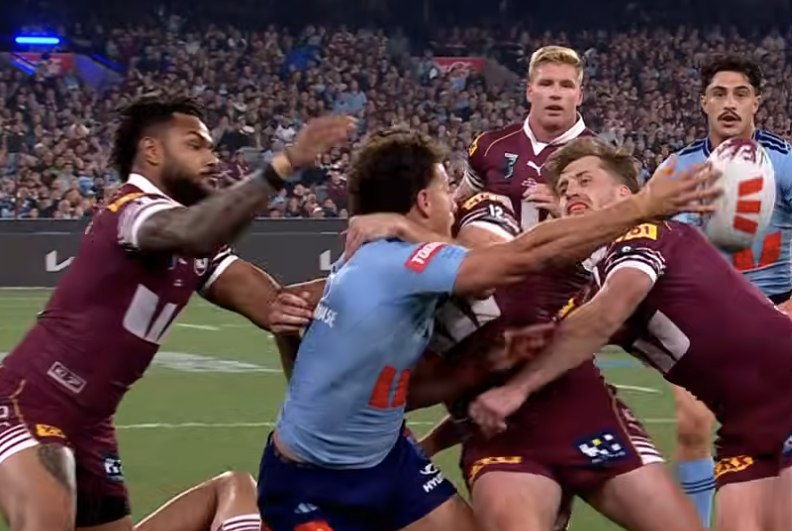
MELBOURNE — The Queensland Maroons roared back in the second half to defeat the New South Wales Blues 44-24 in Game 2 of the 2026 State of Origin series at the Melbourne Cricket Ground on Wednesday, leveling the best-of-three series at 1-1 and setting up a decisive showdown at Suncorp Stadium.
A record Origin crowd of 91,671 watched Queensland overcome a 12-8 halftime deficit with a dominant second-half performance. Winger Selwyn Cobbo scored a hat-trick of tries, while the Maroons’ spine of Sam Walker, Kalyn Ponga, Cameron Munster and Harry Grant orchestrated a clinical display that overwhelmed the Blues after the break.
The victory evens the series after New South Wales claimed a narrow 22-20 win in Game 1 at the same venue last year. Queensland, which lost the 2025 series 2-1, now carries momentum into the July 8 decider in Brisbane, where it has historically been formidable.
First Half Battle for Control
The match opened at a frantic pace under fine conditions on a good playing surface. Queensland drew first blood with a penalty goal by Sam Walker after just six minutes. The Blues responded quickly when Kotoni Staggs scored following a Queensland error from the kickoff, with Nathan Cleary converting for a 6-2 lead.
Mark Nawaqanitawase scored on debut for New South Wales after a Cleary grubber created an opportunity, extending the lead to 12-2. Queensland hit back through Trent Loiero following a long-range break by Hamiso Tabuai-Fidow, narrowing the gap to 12-8 at halftime.
Both teams dealt with head injury assessments. Queensland lost prop Tino Fa’asuamaleaui and later Cameron Munster temporarily to HIAs, while the Blues maintained pressure through the middle but failed to convert territorial dominance into more points.
Maroons Dominate Second Half
Queensland exploded after the interval. Selwyn Cobbo scored the first of his three tries shortly after halftime following a bomb from Walker and slick handling by Max Plath and Cameron Munster. The Maroons took a 14-12 lead and never looked back.
Cobbo added his second try midway through the half on a beautifully executed scrum move involving Ponga and Walker. Jojo Fifita then powered over from a cross-field kick by Munster, pushing the score to 26-12.
New South Wales briefly threatened when Mark Nawaqanitawase scored his second try with individual brilliance, but Queensland answered immediately. Hamiso Tabuai-Fidow crossed after a powerful run, and Cobbo completed his hat-trick in the 73rd minute following another Ponga assist. Lindsay Collins added a try for the Maroons before Mitchell Barnett scored a late consolation for the Blues.
Sam Walker earned man-of-the-match honors for his control and kicking game. The halfback converted multiple tries from the sideline and orchestrated Queensland’s attacking raids. Ponga, Grant and Munster provided the spark that dismantled New South Wales’ defense in the final 40 minutes.
Blues Struggle After Halftime
New South Wales dominated the middle early but faded as the Maroons’ forwards and backs combined effectively. Coach Laurie Daley faces tough selection decisions ahead of the decider, with several key players potentially returning from club duty. Liam Martin, Tom Trbojevic and others could feature prominently as the Blues seek to regroup.
The Blues’ second-half collapse mirrored vulnerabilities exposed in previous Origin encounters. Despite strong first-half efforts from players like Nathan Cleary and James Tedesco, they had no answer to Queensland’s momentum and clinical finishing.
Record Crowd and Series Significance
The attendance of 91,671 eclipsed the previous Origin record of 91,513 set at the MCG in 2015, underscoring the enduring popularity of the interstate rivalry. Fans witnessed a classic contest that highlighted the physicality and skill defining State of Origin.
Queensland coach Billy Slater’s use of the bench and tactical adjustments proved decisive. The Maroons’ ability to overcome early disruptions from HIAs demonstrated depth and resilience that will serve them well in Brisbane.
What Lies Ahead
The series now heads to Suncorp Stadium for a winner-take-all Game 3. Queensland has won the last two deciders on home soil and will enter as favorites with renewed confidence. New South Wales must find answers to Queensland’s attacking threats while addressing defensive lapses that surfaced after halftime.
Daley is expected to consider changes, potentially recalling Latrell Mitchell or Blayke Brailey if available. The Blues’ ability to bounce back from Game 2 disappointment will be tested against a Maroons side riding high on Cobbo’s heroics and spine dominance.
State of Origin remains Australia’s premier domestic sporting rivalry, blending state pride, physical contests and dramatic narratives. This year’s series has lived up to that tradition, delivering high-scoring, end-to-end football that captivated a record audience.
Player Performances and Future Implications
Selwyn Cobbo’s hat-trick capped an outstanding individual display, cementing his status as one of the competition’s premier finishers. His pace and finishing ability troubled the Blues’ right edge throughout the second half. Walker, in just his second Origin appearance, controlled the tempo and delivered precise kicks that created multiple scoring opportunities.
For New South Wales, debutant Nawaqanitawase showed promise with two tries, while Cleary battled hard in difficult conditions. However, the team’s inability to maintain intensity over 80 minutes highlighted areas for improvement before the series climax.
The result keeps alive Queensland’s hopes of reclaiming the Origin shield. With the decider approaching, both camps will focus on recovery, selection and tactical preparation. Fans across Australia anticipate another intense battle as the rivalry reaches its crescendo.
The 2026 series has already produced memorable moments, from Game 1’s narrow margin to Game 2’s record crowd and second-half fireworks. Whatever unfolds in Brisbane, the interstate contest continues to showcase the best of rugby league and captivate the nation.

Economy and Financial Sector
Thailand faces a significant economic identity challenge, with KBank economists warning that the country risks becoming the world’s “landlord” — primarily hosting foreign data centers and infrastructure — rather than developing as a genuine technology player. This concern underscores the need for stronger investment in domestic tech capabilities and innovation ecosystems.
Thailand has joined the global tax information sharing system, signaling a commitment to greater financial transparency and international regulatory compliance. Separately, the Digital Watch Observatory reports that Thailand has updated its legal framework to modernise capital markets, while the Bank of Thailand is advancing a Bangkok Blueprint to tackle rising digital fraud ahead of its 2026 Annual Meetings. Read more via Nation Thailand | Bangkok Post
Tourism and Hospitality
Vietnam is emerging as Southeast Asia’s fastest-growing tourist destination, overtaking Thailand in Chinese tourist arrivals, according to multiple reports. Vietnam is actively working to avoid the over-tourism pitfalls experienced by Thailand, positioning itself strategically for sustainable long-term growth. Travel and Tour World reports that China, India, Singapore, Japan, South Korea, and Australia are among the primary drivers fueling this shift.
Thailand’s tourism sector continues to expand and innovate, with the Tourism Authority of Thailand (TAT) leveraging artificial intelligence and visual content to strengthen its appeal in the Chinese market. Thailand is also pursuing premium hospitality growth, with branded residences topping THB205 billion (approximately USD 6.4 billion), representing Asia’s largest share of launched luxury supply. The country is also set to host a global fireworks spectacle tied to the opening of Southeast Asia’s first Nobu Residences. Read more via TTG Asia | Travel and Tour World
Security and Law Enforcement
Thailand is intensifying its crackdown on foreign criminal activity, with authorities accelerating the deportation of foreign criminals and targeting illegal foreign business ownership structures. Ten Israelis were recently deported amid broader enforcement actions. The DSI (Department of Special Investigation) has also launched a sweep targeting an illegal Forex investment network operating within the country.
A major maritime drug smuggling operation was successfully dismantled through joint efforts by China, Thailand, and the United States, earning recognition among China’s top 10 anti-drug cases of 2025. Additionally, South Korea and Thailand are deepening police cooperation to combat transnational crime across the region. Read more via Al Jazeera | Global Times
Energy, Environment, and Infrastructure
Thailand’s first commercial Sustainable Aviation Fuel (SAF) production facility has been unveiled by the Bangchak Group, marking a significant milestone in the country’s transition toward cleaner energy in aviation. Meanwhile, disruptions to Middle East oil and gas production are expected to drive travel cost increases across the Asia-Pacific region.
Thailand is strengthening its environmental resilience, including measures to address the prolonged risk of El Niño weather patterns and heavier monsoon rains. The World Bank has highlighted the economic opportunity in valuing natural capital as part of Thailand’s next growth chapter, while Wood Group has secured a plastics recycling deal in the country. Read more via Energy Voice | World Bank
Expat Living and Cultural Diplomacy
Thailand continues to attract international residents and retirees drawn by its lower cost of living, warm climate, and quality lifestyle. A recent ABC feature followed a pensioner who relocated to Thailand for more affordable living, while multiple expatriate accounts highlight the country’s appeal for families seeking a slower, more connected pace of life.
Thailand is actively building its soft power and cultural presence globally, with the Sawasdee Seoul Thai Festival 2026 showcasing the country’s creative industries in South Korea. The CU Clarinet Ensemble will represent Thailand at ClarinetFest 2026, also held in South Korea, further cementing Thailand’s growing cultural diplomacy footprint across Asia. Read more via Australian Broadcasting Corporation | Asia News Network
Source : Google News – Search
Other People are Reading

Jabil's Amazing Run Can Continue… A Bit
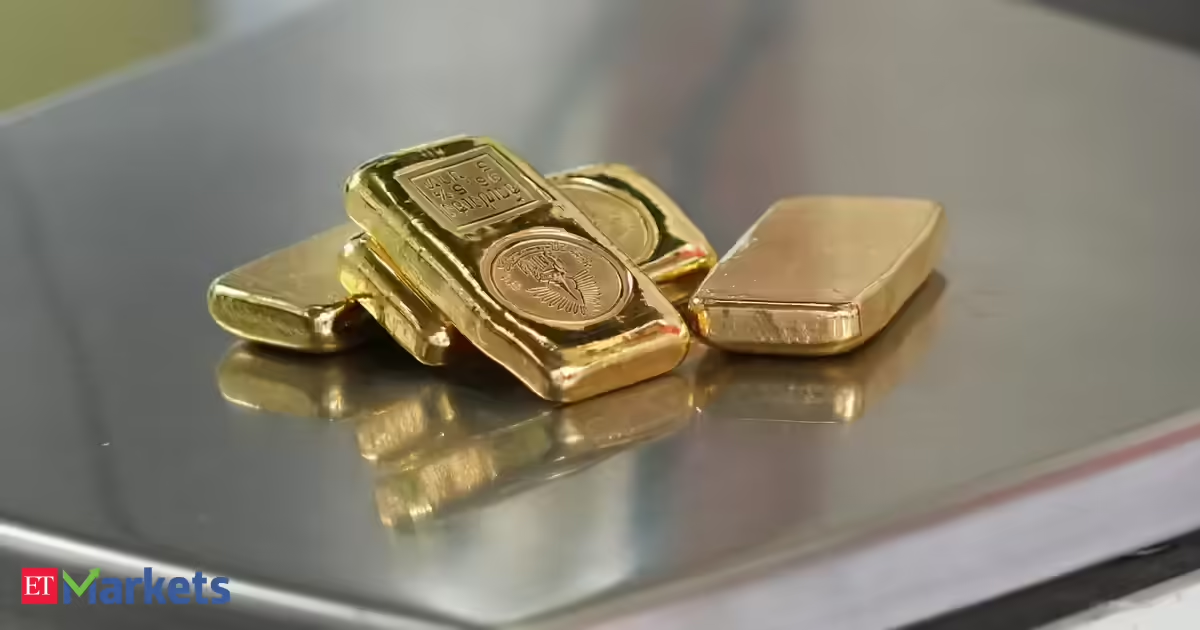
Spot gold was down 0.7% at $4,299.89 per ounce by 2:40 p.m. EDT (1840 GMT). U.S. gold futures settled 0.6% higher at $4,381.40.
Nine of the U.S. central bank’s 19 policymakers now believe they will need to raise the policy rate this year, according to projections published on Wednesday after the Fed announced its decision to leave the policy rate in its current 3.50%-3.75% range.
In his inaugural press conference following his first policy meeting as Fed Chair, Kevin Warsh said he was launching five task forces to review how the central bank conducts its business in critical policy areas.
“This is a new Fed – Warsh is sharp, sure, animated – he will be a steward and not a trustee. The message is changes are coming, but after due consideration,” said Tai Wong, an independent metals trader.

Also Read | Dollar jumps as Fed holds rates but projects one hike later this year
“He also said twice that he sees rates restrictive only in housing… which is making him more hawkish than Powell. I think that’s what’s driving market losses. The statement and dot plot are hawkish and Warsh did nothing to push back against it.”
Markets now see a 78% chance of a rate hike in December this year, jumping from 61% before the Fed decision, according to the CME FedWatch Tool.
The U.S. dollar extended gains after the rate decision, making greenback-priced bullion more expensive for overseas buyers, while oil markets were also higher, keeping inflation concerns alive.
While gold is often seen as a hedge against inflation, elevated interest rates tend to pressure bullion, as it offers no yield.
Spot gold touched a more than six-month low last week as inflation fears stoked by the Iran conflict boosted expectations of rate hikes.
U.S. President Donald Trump said that the agreement reached this week with Iran was not final, and that he could resume a bombing campaign if he did not like it.
Silver fell 1.1% to $69.41 per ounce. Platinum lost 2% to $1,768.03, and palladium fell 1.1% to $1,336.91.


Exclusive-Meta head of product for ’AI for work’ transformation is leaving company
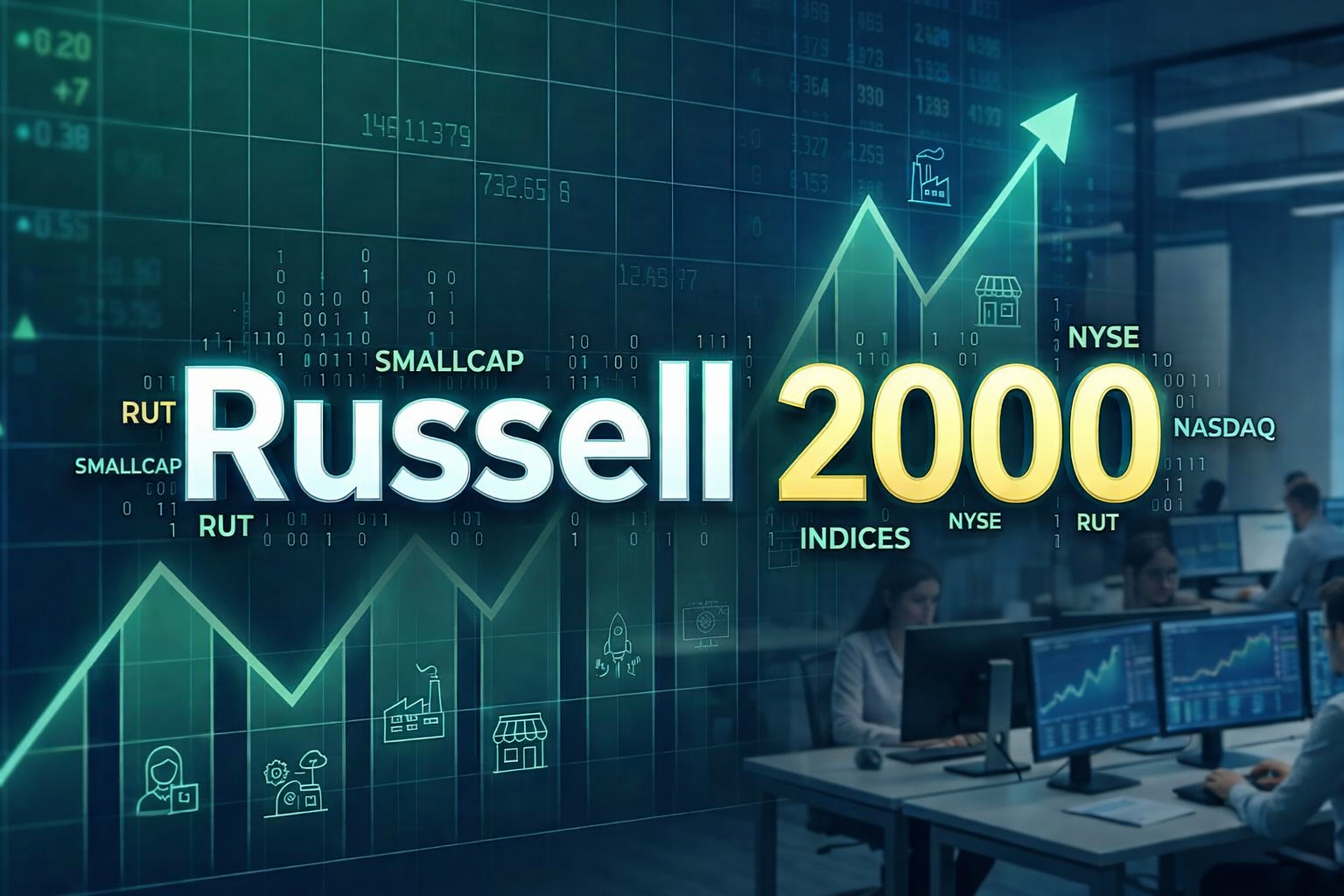
The Russell 2000 Index rose 22.31 points, or 0.76 percent, to 2,961.51 on Wednesday, continuing its strong performance in 2026 as investors rotated toward smaller companies benefiting from lower borrowing costs and domestic economic resilience.
The benchmark for U.S. small-cap stocks has delivered solid gains this year, outperforming broader indices in recent sessions and reflecting renewed confidence in companies with less exposure to global trade tensions and mega-cap concentration risks. Wednesday’s advance added to year-to-date returns that have seen the index climb significantly since early 2026 lows.
Small-cap outperformance has been a notable theme in 2026. Analysts point to several supportive factors, including the lagged benefits of Federal Reserve rate cuts from late 2025, which have eased financial pressures on companies carrying floating-rate debt. With nearly 40 percent of Russell 2000 constituents exposed to such debt, lower interest expenses are beginning to flow through to balance sheets and earnings potential.
Earnings Growth Expectations Fuel Optimism
Consensus forecasts highlight robust profit expansion for small caps. Bottom-up estimates suggest the Russell 2000 could deliver around 43 percent year-over-year earnings growth over the next 12 months, outpacing larger indices like the S&P 500. This disparity underscores the potential for smaller firms to capitalize on operational leverage as economic conditions stabilize.
Sectors such as financials, industrials, biotech and energy have led recent gains, aligning with small-cap cyclical exposure. Banks and regional lenders in particular stand to benefit from a more accommodative rate environment, while industrial and energy names gain from domestic infrastructure and manufacturing activity.
Russell Reconstitution Dynamics
The index is also navigating the 2026 semi-annual reconstitution process, a structural shift implemented by FTSE Russell that has doubled operational friction and liquidity demands compared to prior annual cycles. This year’s changes, effective in June, have influenced trading volumes and price movements across thousands of constituents as funds rebalance portfolios.
The reconstitution reflects a broader U.S. equity market with greater mega-cap dominance alongside stronger small-cap representation. Trading on reconstitution days has historically seen massive volumes, with billions changing hands in the final moments of sessions. For 2026, market participants anticipate continued elevated activity as passive strategies adjust holdings.
Valuation and Market Rotation
Small caps remain attractively valued relative to large-cap peers. Metrics such as enterprise value to earnings before interest and taxes show the Russell 2000 trading near multi-year lows compared to the Russell 1000. This valuation gap has attracted investors seeking opportunities beyond the concentrated mega-cap technology trade that dominated prior years.
The so-called “great rotation” into small caps has persisted, with the index outperforming the S&P 500 for extended streaks earlier in 2026. This shift marks a departure from mega-cap leadership, driven by extreme valuation disparities and investor appetite for domestically focused businesses.
Broader market context supports the move. Cooling inflation signals and expectations around monetary policy have boosted risk appetite for cyclical stocks. While large-cap indices have faced volatility from technology sector swings, small caps have demonstrated relative resilience.
Broader Economic Implications
Small businesses and smaller public companies play a vital role in U.S. employment and innovation. Strength in the Russell 2000 often signals improving conditions for Main Street America, including easier access to capital and consumer spending power. Recent data on consumer sentiment and manufacturing activity have provided mixed but cautiously optimistic backdrops.
Challenges remain. Small caps can exhibit higher volatility due to thinner liquidity and greater sensitivity to economic cycles. Geopolitical risks, supply chain issues and sector-specific headwinds in areas like commercial real estate continue to warrant monitoring. However, many analysts view current levels as offering room for further upside given historical recovery patterns.
Investment Landscape and Outlook
Exchange-traded funds tracking the Russell 2000, such as the iShares Russell 2000 ETF, have seen strong inflows amid the rally. Portfolio managers highlight diversification benefits and the potential for catch-up growth after periods of underperformance.
Looking ahead, key catalysts include upcoming corporate earnings seasons, further clarity on Federal Reserve policy and progress on the reconstitution. Summer months have historically favored small caps in certain cycles, adding seasonal tailwinds for 2026.
Market watchers will also track macroeconomic releases, including employment figures, inflation updates and corporate guidance. Any signs of sustained economic soft landing could further support small-cap momentum, while renewed inflation pressures might prompt caution.
Historical Perspective
The Russell 2000 has a long track record of delivering outsized returns during recovery phases and periods of monetary easing. In 2026, its performance echoes past rotations where undervalued segments led market advances after mega-cap dominance. Year-to-date gains place it among stronger performers, though individual stock selection remains critical given wide dispersion within the index.
As the trading day progressed Wednesday, broader U.S. equity indices showed mixed results, with technology and growth names facing some profit-taking while value and cyclical areas held firmer. The small-cap advance contributed to positive sentiment across domestic-focused segments.
Investors continue to weigh opportunities in the Russell 2000 against risks. With attractive valuations, earnings momentum and supportive policy dynamics, many see potential for continued outperformance through the remainder of 2026. However, disciplined risk management is advised given inherent volatility.
The index’s movement underscores shifting investor preferences in a maturing bull market. From financial services to healthcare innovators and industrial suppliers, the Russell 2000 represents a broad cross-section of the American economy beyond headline-grabbing giants.
Wednesday’s gain to 2,961.51 reinforces the narrative of small-cap resilience. As reconstitution settles and earnings provide fresh data points, the coming weeks could clarify whether this rally sustains or faces near-term consolidation. For now, small caps are capturing attention as a compelling segment in the U.S. equity landscape.

Check out what’s clicking on FoxBusiness.com.
A fresh coat of paint could help homeowners draw higher offers when it comes time to sell.
Buyers are showing growing interest in warm, comfortable colors over plain white walls, according to Zillow’s 2026 Paint Color Analysis. The highest-value interior paint choice was chocolate brown in a bedroom, which could add an estimated $2,277 to a home’s offer price.
“When it comes to getting the most out of your home before selling, paint is one of the easiest and most affordable places to start,” Charlie Lankston, executive editor at Realtor.com, told FOX Business in an email. “A fresh coat can instantly boost the appeal of a home the moment a buyer walks in the door.”
Other high-performing colors included pale blue in the living room, which could add about $1,723 to an offer price compared with white, and charcoal gray in the living room, which could add about $1,509, the study found.
MEDIAN US HOME PRICE PROJECTED TO HIT $1 MILLION BY 2050 — RIGHT AS MILLENNIALS RETIRE

Painting a bedroom chocolate brown could add an estimated $2,277 to a home’s offer price. (iStock / iStock)
In bedrooms, charcoal gray could add about $1,240, while sage green could add about $1,035.
Sage green was one of the safest choices for sellers. The color ranked near the top in every room studied, including bathrooms, living rooms and bedrooms, according to Zillow.
Darker kitchen colors also performed well. Homes with charcoal gray kitchens could receive about $1,373 more, while dark plum kitchens could bring in about $867 more.
The kitchen is one of the most important rooms for paint choices. The difference between the best and worst kitchen colors was nearly $8,000, the study found.
Meanwhile, some paint colors may lower a home’s sale price.
MIDWEST AND SOUTHERN STATES DOMINATE HOUSING REPORT CARDS: SEE HOW YOURS SCORED

Zillow said sage green was one of the safest paint choices for sellers. (iStock / iStock)
Ochre yellow was the worst-performing color in the study. Using the dark gold color in the kitchen, living room, bedroom and bathroom could lower a home’s offer price by about $18,164.
A fire-hydrant red bathroom could reduce offers by nearly $8,000, while pale pink also performed poorly in every room studied, according to Zillow.
Lankston said paint can be a good starting point for sellers looking to improve their return on investment (ROI), but it should be part of a broader strategy.
“Kitchens and bathrooms remain the foundational investments, and for sellers who want to go further, outdoor living spaces are delivering serious returns,” Lankston added.
MORTGAGE RATES TICK HIGHER, BUT BUYERS SHOW SIGNS OF CONFIDENCE

A fresh coat of paint could help homeowners get a higher offer when selling their home. (iStock / Getty Images Plus / Getty Images)
“Deck additions can see a high ROI for buyers who want those creature comforts of the indoors brought outside. Sellers who think strategically about where to put their dollars, starting with something as simple as a can of paint, can meaningfully move the needle on their final offer price.”
GET FOX BUSINESS ON THE GO BY CLICKING HERE
Homeowners should talk to a local real estate agent before repainting because buyer preferences can vary by neighborhood, according to Zillow.
The study was conducted by Zillow’s behavioral science team and surveyed more than 4,400 recent and prospective homebuyers across the U.S.

The Royal Thai Navy seized over six million methamphetamine tablets smuggled across the Mekong River, highlighting ongoing efforts against transnational drug trafficking despite the escape of the perpetrators.
Key Points
- The Royal Thai Navy seized over six million methamphetamine tablets smuggled across the northern border along the Mekong River, following intelligence about narcotics trafficking into Thailand.
- During operations near Thai Charoen Village, officers observed a boat from a neighboring country discarding 17 sacks of methamphetamine marked with the Y1 stamp before fleeing. Law enforcement secured the evidence for further investigation.
The Royal Thai Navy announced the seizure of over six million methamphetamine tablets smuggled across the northern border along the Mekong River.
Royal Thai Navy Spokesperson Rear Admiral Paraj Ratanajaipan stated that the Mekong Riverine Unit received intelligence about an attempt to smuggle narcotics into the kingdom. The cargo was tracked to riverbanks near Thai Charoen Village in Wiang Kaen District, Chiang Rai Province, and operational forces were promptly deployed to monitor the area.
During the operation, officers observed a boat from a neighboring country docked along the Mekong River bank. Items were thrown ashore before the boat quickly departed. Officers, together with local security and administrative agencies, then inspected the area.
The inspection uncovered 17 sacks containing Category 1 narcotics, specifically methamphetamine pills marked with the Y1 stamp. Although the perpetrators escaped across the border, law enforcement secured the contraband and collected forensic evidence. The seized narcotics were transferred to investigators at the Wiang Kaen Provincial Police Station for further legal action.
The spokesperson noted that this seizure demonstrates how transnational trafficking syndicates exploit border rivers to transport illicit drugs into Thailand. He emphasized that the Royal Thai Navy and allied security agencies remain fully coordinated, enforcing strict border surveillance and legal measures to dismantle trafficking routes, safeguard national security, and protect the public.
Source : Thai Navy Seizes Over 6 Million Meth Pills During Border Operation in Chiang Rai
Other People are Reading
Continue Reading

Form 4 Pvh For: 17 June


Introductions include protein-centered offerings, alternative ingredient formulations and globally-inspired products.
Business
Gold Prices Rise 0.58% to $4,379.50 as Safe-Haven Demand Persists Amid Economic Uncertainty
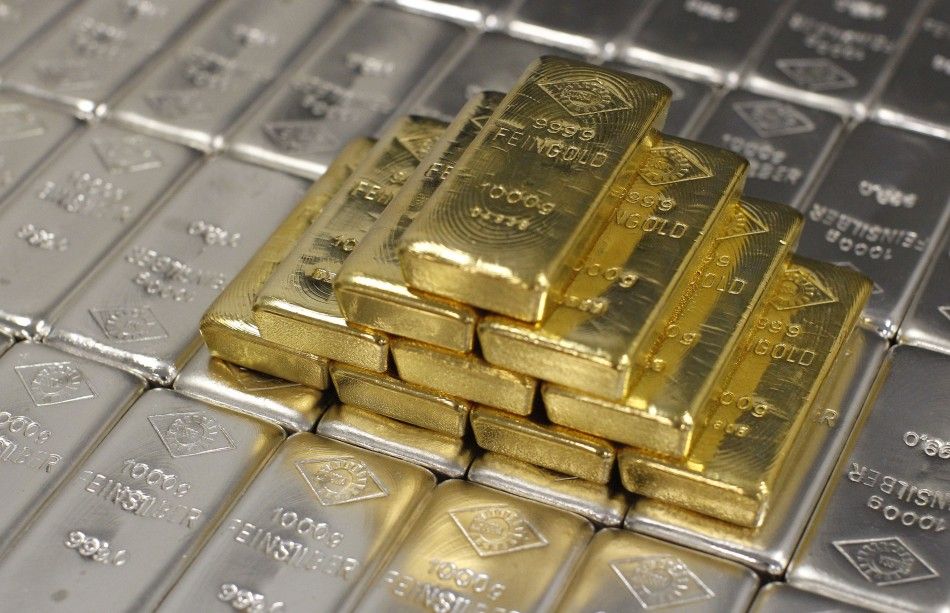
Gold prices climbed Wednesday, with spot gold reaching $4,379.50 per ounce, up $25.10 or 0.58 percent, as investors sought refuge in the precious metal amid ongoing geopolitical tensions, inflation concerns and uncertainty around Federal Reserve policy.
The gain follows a period of volatility in 2026, during which gold hit record highs above $5,500 per ounce earlier in the year before pulling back sharply. Wednesday’s advance reflects renewed safe-haven buying as markets digest mixed economic signals and potential shifts in monetary policy under the new Fed leadership.
Gold has served as a traditional hedge against inflation, currency fluctuations and geopolitical risks. Central bank purchases have provided strong structural support, with many institutions continuing to diversify reserves away from traditional holdings. Emerging market buyers in particular have driven demand, contributing to sustained interest even after the early-year peak.
Market Drivers and Recent Performance
Analysts attribute the latest uptick to several factors. Expectations around the Federal Reserve’s June meeting, chaired by Kevin Warsh, have kept markets cautious. Stronger-than-expected U.S. jobs data in recent weeks have tempered hopes for imminent rate cuts, boosting the dollar at times but also highlighting persistent inflation risks that favor gold.
Geopolitical developments, including Middle East dynamics and broader global tensions, have reinforced gold’s appeal. Investors view the metal as a reliable store of value when traditional assets face pressure. Central banks worldwide have signaled continued accumulation, with surveys showing record intent to increase gold reserves.
Year-to-date, gold has experienced significant swings. After surging to all-time highs in January, prices corrected by more than 20 percent at points, testing support levels near $4,100-$4,300. The current level around $4,379 represents a partial recovery, with analysts watching for sustained momentum above key technical thresholds.
Silver prices also moved higher in tandem, reflecting broader precious metals demand. Industrial uses for silver in electronics and renewable energy sectors have complemented investment flows.
Central Bank Role and Long-Term Outlook
Central bank buying remains a dominant theme. The World Gold Council and other reports indicate robust demand from institutions seeking diversification. Projections from major banks like J.P. Morgan suggest gold could push toward $6,000 per ounce by year-end under supportive scenarios involving persistent inflation and geopolitical risks.
This outlook aligns with broader forecasts. Goldman Sachs and others anticipate continued upward pressure into 2026 and beyond, driven by structural shifts in global reserves and investor portfolios. However, near-term volatility persists, with some analysts warning of potential consolidation if U.S. economic data strengthens further.
Physical demand in major markets like India and China has shown resilience, though seasonal factors and price sensitivity influence retail buying patterns. Exchange-traded funds tracking gold have seen mixed flows, with some outflows during the correction phase followed by renewed interest.
Investment Implications
For investors, gold offers portfolio diversification benefits. Its low correlation with stocks and bonds makes it attractive during periods of market stress. Financial advisors often recommend allocations of 5-10 percent in precious metals as a hedge, particularly for those concerned about long-term inflation or currency devaluation.
Retail investors can access gold through physical bullion, coins, ETFs or mining stocks. Recent price action has drawn attention from both long-term holders and tactical traders. Options and futures markets show active positioning around current levels.
Challenges include opportunity costs when interest rates remain elevated, as non-yielding gold competes with interest-bearing assets. Storage and insurance costs for physical holdings also factor into decisions. Despite these, many view current valuations as reasonable following the pullback from peaks.
Broader Economic Context
Gold’s performance intersects with several macroeconomic trends. Government debt levels globally have risen, prompting some investors to favor hard assets. Currency dynamics, including periods of dollar weakness, have historically supported higher gold prices.
Inflation readings remain a focal point. Recent CPI data has shown stickiness above targets in some categories, reinforcing gold’s role as an inflation hedge. Meanwhile, fiscal policy debates and potential stimulus measures could further influence investor sentiment.
The mining sector has responded to price movements, with producers benefiting from higher realizations while managing cost pressures. Exploration and development projects continue, though regulatory and environmental considerations add complexity.
Technical Outlook
From a charting perspective, gold has found support in the $4,300 area after testing lower levels. Resistance sits near recent highs around $4,500-$4,600. Analysts monitor moving averages and key Fibonacci retracement levels for clues on next moves. A break above $4,500 could signal renewed bullish momentum, while a drop below $4,300 might test lower supports.
Volume and open interest in futures contracts provide additional insights. Wednesday’s trading showed solid participation, consistent with ongoing interest in the metal.
Risks and Considerations
While the long-term case for gold remains constructive for many, risks abound. Stronger U.S. growth could support the dollar and pressure gold. Faster disinflation might accelerate rate cut expectations in ways that temporarily weigh on the metal. Geopolitical de-escalation could also reduce safe-haven flows.
Investors are advised to maintain diversified approaches and avoid over-concentration. Dollar-cost averaging into positions can help manage volatility. Professional guidance is recommended for those new to commodity investments.
As markets evolve, gold’s role as a strategic asset endures. Wednesday’s modest gain to $4,379.50 underscores its resilience even after a corrective phase. With central bank support and macroeconomic uncertainties in play, the metal is likely to remain in focus for investors seeking stability in an unpredictable global environment.
Looking ahead, key events such as further Fed communications, inflation reports and international developments will shape price direction. For now, the yellow metal continues to attract attention as both a tactical trade and a long-term holding in uncertain times.

The more scrutiny Andy Burnham faces, the less popular he gets

Takeaways from the G7 summit: Trump, Iran and Ukraine

Thailand Latest Updates: Economy and Financial Sector


-

 Business3 days ago
No Jackpot Winner as $257 Million Prize Rolls Over to $269 Million Monday Draw
-

 Fashion5 days ago
Weekend Open Thread: Tuckernuck – Corporette.com
-

 Crypto World6 days ago
Oppenheimer backs SpaceX as $70 billion retail frenzy builds
-

 Crypto World6 days ago
Markets Rally as SpaceX IPO Looms Amid Iran Tensions and Inflation Surge
-
 Crypto World3 days ago
Zimbabwe Requires Crypto Businesses to Register Annually Under New FIU Regulations
-

 Tech5 days ago
NanoClaw integrates JFrog registries to secure AI agent downloads
-

 Crypto World5 days ago
Bitget enters Argentina’s regulated crypto market through PSAV registration
-

 Tech5 days ago
This Week In Security: Microsoft On Microsoft, Register Your Domains, Linux On ARM, And FreeBSD Joins The File Cache Club
-

 NewsBeat6 days ago
El Nino has formed in the Pacific and could set records, forecasters say
-
 Tech6 days ago
Dutton Ranch star claims they ‘didn’t see any disruption’ on set following Chad Feehan’s exit from Yellowstone spinoff fueled by Taylor Sheridan clash rumors
-

 Politics6 days ago
Politics Home | Healey Resignation Is “Colossal Failure Of Government”, Says Former Labour Defence Secretary
-
 Entertainment6 days ago
Donnie Wahlberg & More Heat Up Las Vegas at Circa’s Barry’s Downtown Prime
-
 Tech6 days ago
Opendoor Ends India Operations, Fueling a Bigger Conversation About AI and Outsourcing
-

 Politics6 days ago
Belfast burns, while Met chief points finger at Iran and Russia
-

 Sports6 days ago
First Time Since 1971: Australia Register Historic Low In ODI Cricket
-

 NewsBeat5 days ago
FBI searches office of Ohio voter registration group
-

 Business6 days ago
AT&T: Verizon's 27% Outperformance Sets Up A Solid Entry Point
-
 Tech6 days ago
Anthropic is spending $150M to embed 1,000 AI fellows inside nonprofits. No degree required.
-

 Politics6 days ago
Modi thanks Trump for wishes as US attacks Indian seafarers
-
 Entertainment6 days ago
‘The Pitt’s Fan-Favorite Doctor Confirms Noah Wyle Gave His Blessing to Return [Exclusive]
You must be logged in to post a comment Login