

Connect with us
DAPA Banner
DAPA Coin
DAPA
COIN PAYMENT ASSET
PRIVACY · BLOCKDAG · HOMOMORPHIC ENCRYPTION · RUST
ElGamal Encrypted MINE DAPA
🚫 GENESIS SOLD OUT
DAPAPAY COMING

NewsBeat

Takeaways from the G7 summit: Trump, Iran and Ukraine

Published

on

Takeaways from the G7 summit: Trump, Iran and Ukraine

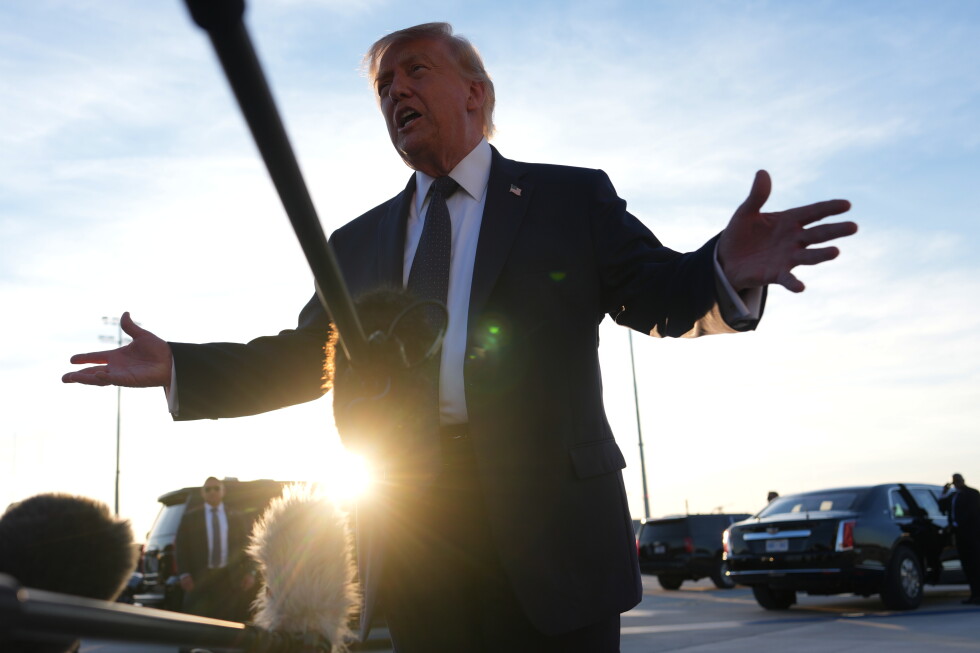
EVIAN-LES-BAINS, France (AP) — President Donald Trump is not known to be a fan of international gatherings of world leaders, but he changed his tune at this year’s G7 summit at a French Alpine resort, where he was buoyed by support from his counterparts for his tentative agreement with Iran to end the war.

It was an about-face for Trump, who weeks ago had sharply criticized his counterparts for refusing to join the United States and Israel in bombing Iran to force it to abandon its nuclear aspirations — and who last year spent only a day at the G7 summit before cutting out early and going back to Washington.

“We found a great deal of unity here at the G7,” Trump told reporters at the end of the meeting. He said he had heard only positive comments from G7 leaders, who are anxious to see global oil prices drop in the wake of hostilities.

“This meeting could not have come at a better time,” he said.

Advertisement

Here are some takeaways from Trump’s trip this week:

Trump finds his fall guy If the Iran deal doesn’t work out

Trump famously likes to take credit when things work out and avoid blame when they don’t. In the case of the Iran deal, he pointed to Vice President JD Vance as being most likely to be held responsible if things go south.

While Trump was at the G7, Vance was on a media blitz promoting the agreement, which he helped negotiate. He was expected to represent the U.S. at a ceremonial signing in Switzerland on Friday.

Trump was asked by a reporter if there is a scenario in which he looks like a “genius” if he sends Vance to sign the deal and things work out — or he blames his No. 2 if things with Iran ultimately don’t work out.

Advertisement

“I like that idea, sure,” Trump said. “This way, if it works out, I’m going to take the credit. If it doesn’t work out, I’m blaming JD. You better be careful, JD.”

Leaders sing from same song sheet on Iran, Ukraine

The G7 leaders demonstrated notable unity on both Iran and Ukraine, two issues where Trump and his counterparts have been sharply divided.

France’s Emmanuel Macron, Italy’s Giorgia Meloni, Germany’s Friedrich Merz and the UK’s Keir Starmer all had criticized Trump’s decision to launch the Iran war without consulting allies. But in a joint statement on the final day of the summit, the leaders welcomed the tentative deal. They even noted “the strong leadership of President Trump” made it happen.

Meanwhile, the Europeans managed to get Trump to join G7 leaders in offering “unwavering support for Ukraine.”

Advertisement

Trump has long claimed Ukraine has “no cards” in its war with Russia, and needs to make concessions to Moscow to bring about an endgame.

But the U.S. president joined his fellow leaders to call on countries “to increase the delivery of air defense capacities, additional systems and interceptors, and long-range capabilities” to Ukraine and commend Kyiv “for its resilience and progress on the battlefield in recent months.”

Advertisement

Mixed messages on China

G7 leaders discussed how China is flooding export markets with subsidized products and destroying jobs in their countries.

Macron said Beijing is a key source of global economic imbalances, citing what he described as China’s industrial overcapacity, excessive subsidies and weak domestic consumption.

After the summit, leaders issued a statement saying they were united. “We seek to deter and stand ready to take actions, where necessary in a coordinated manner, against economic coercion,” the statement said.

But Trump undercut that message when he spent a portion of his closing remarks thanking China and Russia — often allies with Iran — for staying “neutral” in the conflict.

Advertisement

Trump said Chinese President Xi Jinping and Russian President Vladimir Putin “could have made it much more difficult for us” if they got involved. He specifically thanked Xi for not giving or selling weapons to Iran. “I just want to thank them,” Trump said, “because they made it a lot better.”

Talk isn’t cheap

The “let’s chat” informality that’s been a feature of these gatherings since the first one in 1975 proved its worth — notwithstanding the carbon costs of flying in the leaders and their entourages, the security to protect them, the protests they attract and the inconvenience for local people.

By spending nearly three full days with Trump, U.S. allies had ample opportunity to make themselves heard. And the value of that was possibly most evident in their talks on Russia’s war in Ukraine.

European leaders who now are the chief suppliers of military and financial aid to Ukraine felt they’d made headway in demonstrating to Trump that Ukraine does hold some cards and that Russia isn’t assured of victory — contrary to what Trump had heatedly told Ukrainian President Volodymyr Zelenskyy last year. Macron invited Zelenskyy to participate in the summit.

Advertisement

Macron gets Trump to stay for the whole summit

Seems all it took was an invitation to dine at the opulent Palace of Versailles, southwest of Paris, after the summit.

After all, Trump said it himself: He’s a fan of beautiful things and his only plan was to fly back to Washington after the conference anyway.

He left last year’s G7 summit in Canada before it was over, but Macron wanted to keep Trump from doing the same thing to him. Their relationship has weathered several ups and downs.

Macron described the dinner as a “convivial” occasion meant to celebrate friendship between France and the United States.

Advertisement

French officials noted that Versailles is where King Louis XVI pledged military support to Benjamin Franklin and the American revolutionaries in 1778.

Macron hosted King Charles III and Queen Camilla there in 2023 for the palace’s 400th anniversary, including dinner in the Hall of Mirrors, one of the features of the palace’s 2,300 rooms.

—-

Superville reported from Geneva. Associated Press writer Collin Binkley in Washington contributed to this report.

Advertisement

Source link

Advertisement
Continue Reading
Click to comment

You must be logged in to post a comment Login

Leave a Reply

NewsBeat

England 4-2 Croatia: Harry Kane at the double as Three Lions make impressive start to World Cup

Published

on

England 4-2 Croatia: Harry Kane at the double as Three Lions make impressive start to World Cup

The match would not remain level for long, though, and another corner proved Croatia’s undoing as Kane found himself unmarked and slammed a bullet of a header beyond Livakovic to restore England’s advantage. They seemed set to lead into half-time, before Croatia levelled again through Petar Musa, who fired home from close range after a deft knock-down from Ivan Perisic.

Source link

Continue Reading

NewsBeat

Why Albertans are seeking a referendum on separation from Canada

Published

on

Why Albertans are seeking a referendum on separation from Canada

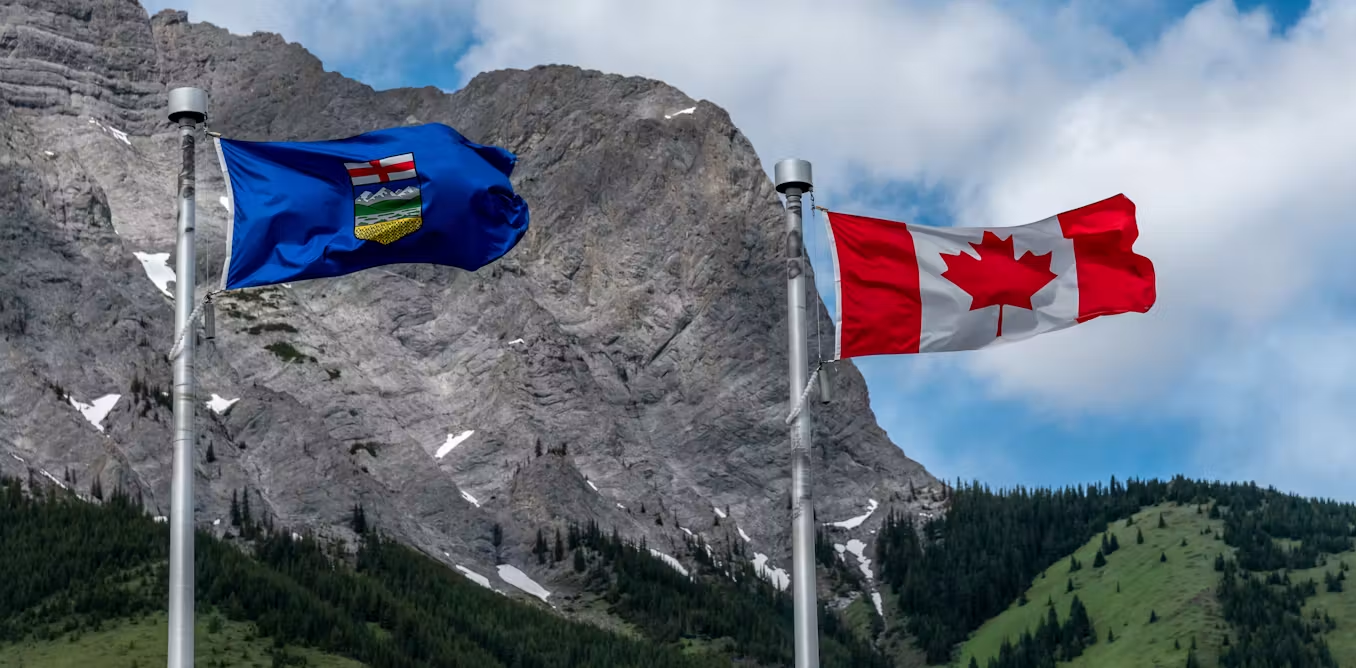
Albertans will head to the polls in October for what has been referred to as a “referendum on a referendum”. They will be asked to choose between two options: should Alberta remain a province of Canada, or should their province begin the legal process to hold a binding referendum on whether Alberta should separate from Canada?

This was announced on May 21 in a televised address by Alberta’s premier, Danielle Smith – a politician who, in the same breath, said she would personally vote to stay. The question on whether Alberta should remain or separate will appear alongside other questions on immigration policy and constitutional changes.

There is support in Alberta for a referendum. Around 700,000 Albertans signed petitions in 2025 and 2026 calling for a vote about either remaining in Canada or separating. That is a remarkable number in a province of just over 5 million people.

The groups behind the petitions say they gathered enough votes to trigger a province-wide referendum on independence. However, the petitions were struck down by an Alberta court in December 2025 and May 2026 for infringing indigenous treaty rights.

Advertisement

CTV News – Separatists appeal judicial decision striking down petition for referendum (19 May 2026)

Decades of grievances

Alberta sits on the fourth-largest proven oil reserves on the planet. And for decades, many people there have felt that the rest of Canada – particularly the federal government in Ottawa – has been drawing disproportionately on Alberta’s prosperity.

This anger traces back to 1980. That year, Canada’s then-prime minister, Pierre Trudeau, introduced the National Energy Program, capping domestic oil prices below world market rates and redirecting oil revenues to the federal government. The policy, which was repealed in 1985, devastated Alberta’s economy.

In the years that followed, Alberta’s unemployment rate more than tripled – from under 4% in 1980 to a peak of 12.4% by 1984. Tens of thousands of jobs disappeared as oil companies left the province, with estimates suggesting Alberta lost up to CA$100 billion (£54 billion) in revenue during the National Energy Program era.

Advertisement

Canada’s equalisation payment system, under which wealthier provinces indirectly subsidise poorer ones, has kept the wound open. Alberta consistently contributes far more to the federal treasury than it receives back in spending.

More recently, federal climate policies – including a carbon tax, emissions caps on the oil sector and what legislation critics have called the “no more pipelines bill” – have become focal points for the sense held by many Albertans that Ottawa is strangling their province’s economic lifeline.


À lire aussi :
As Alberta separatists court the U.S., prosperity is fuelling a sovereigntist turn


What the law provides

Under international law, all people have the right to self-determination – the right to shape their own political, economic and cultural future. But outside of colonial contexts, this right is almost always understood to mean self-government within an existing state, not the right to break away from it.

Advertisement

As legal scholars have argued, international law does not grant the component parts of sovereign states a right to secede unilaterally.

Although the International Court of Justice confirmed in its 2010 advisory opinion on Kosovo that there is no outright prohibition on declarations of independence, a legal right to secession outside the colonial context exists only in the most extreme circumstances.

This generally refers to contexts where people are actively oppressed or denied any meaningful say in their own governance. Alberta, a wealthy and democratic province with its own elected legislature, falls short of that threshold.

Under Canadian constitutional law, there is also no right to unilateral secession. The law does not expressly provide for or prohibit a province from leaving. But the Canadian Supreme Court’s landmark 1998 ruling – triggered by Quebec’s 1995 independence referendum in which the separatist side lost by less than one percentage point – settled the core question. The court held that Quebec could not declare independence on its own.

Advertisement

However, the court did not leave matters there. It went further, establishing what legal scholars have called a framework of “normative due process” for secession claims. If a clear majority votes yes on a clear question on secession, the federal government has a constitutional obligation to negotiate the province’s constitutional future in good faith. Democracy, the rule of law and the protection of minorities must all be respected – by both sides.

The Clarity Act of 2000, passed in response to Quebec’s 1995 independence referendum and the subsequent Supreme Court judgment, sets out those conditions: the question must be unambiguous and the majority must be clear. Under Section 2 of the Act, the House of Commons has the final say on what counts as a clear majority.

Canada’s prime minister, Mark Carney, has already signalled that a simple 50%+1 majority would not be enough for a province’s independence. And whether the Clarity Act is even triggered by the October vote is itself contested. Since the question does not directly ask whether Albertans want to secede, some argue the Act’s threshold requirements simply do not apply at this stage.

In any case, even a successful future referendum would only be the beginning. Any actual separation would require negotiated constitutional amendments – a complex, multi-party process involving the federal parliament and provincial legislatures – that would take years and could be blocked at multiple points.

Advertisement


À lire aussi :
What if Alberta really did vote to separate?


Alberta is not the only place in the world where questions of self-determination are live. Scotland, Catalonia and – following elections in May 2026 – Wales all have governments with pro-independence or pro-referendum positions.

Each faces its own version of the same tension: the democratic impulse to let people decide, and the legal and political reality that separating from a larger state is never as straightforward as a ballot paper makes it look.

Alberta’s October vote will not settle the question of independence. But it will tell the rest of Canada – and the world – just how seriously that question needs to be taken.


Advertisement

Source link

Continue Reading

NewsBeat

‘No Scotland, No Party!’ American nuns go wild for Tartan Army in World Cup singalong

Published

on

Daily Record

The Scots-founded religious order in New York swapped hymns for football anthems as they backed Steve Clarke’s side at the World Cup.

A group of American nuns have been showing their support for Scotland’s World Cup heroes by belting out Tartan Army favourites from their convent in New York.

Advertisement

World Cup fever has swept through the Carmelite Sisters for the Aged and Infirm in Germantown as Scotland compete at the tournament for the first time since 1998.

The order, founded in 1929 by Venerable Mother Angeline, who was raised in Scotland, waved Saltires and sang along to classics including; No Scotland, No Party and We’ll Be Coming in a video shared online.

The clip, posted on social media by Sancta Familia Media, said the sisters had “got right into it” as they cheered on Steve Clarke’s side from across the Atlantic.

John Patrick Mallon, co-founder of the Catholic production company, said: “Thanks to these sisters’ incredible hospitality, I was able to go see Scotland in the World Cup.”

Advertisement

Many have been commenting on the clip online. Hugh Macfarlane said: “With Brazil ranked 6 and Morocco ranked 7 we Scots (at 38) need divine intervention!”

Julie Harrigan Hilton added: “Amazing. This is so heart warming.”

Thousands of Scotland supporters have descended on Boston this week after watching the national team beat Haiti 1-0 in Foxborough on Saturday.

Steve Clarke’s men return to action against Morocco at Boston Stadium on Friday, with Scotland currently sitting top of Group C.

Advertisement

Get Daily Record Premium for just £1 per month in exclusive offer to celebrate the world cup. Click HERE.

Source link

Continue Reading

NewsBeat

How to never pay full price for these supermarket favourites

Published

on

How to never pay full price for these supermarket favourites

Consumer group Which? tracked discounts across major UK retailers on thousands of grocery items between March 2025 and March 2026 and found that many branded products are nearly always on offer somewhere.

The year-long analysis covered Asda, Morrisons, Ocado, Sainsbury’s, Tesco, and Waitrose.

Cereal, orange juice and chocolate biscuits are among the items most likely to be on promotion, with Which? finding that shoppers rarely need to pay full price if they’re willing to shop around.

Advertisement

UK supermarket rankings in 2026


The data revealed that Kellogg’s Special K, Tropicana Orange Juice, and Fox’s Chocolate Biscuits were discounted at one or more supermarkets 99 per cent of the year.

Wine was also frequently on offer, including well-known brands such as Yellow Tail merlot and Taittinger champagne.

Other products with near-constant discounts included Jammie Dodgers, Penguin bars, Mini Cheddars, Twiglets, Kettle Chips and Onken yoghurt.

Which? said the findings highlight the importance of not just where you shop, but when, as promotional cycles can significantly impact what you pay.

Advertisement

The consumer group explained that these promotion cycles typically follow a three- or four-week period at a lower price, followed by slightly longer at a higher price before repeating.

For example, Fox’s Chocolatey Milk Chocolate Rounds were found to retail at £2 to £2.75 when not on offer, but were available for £1.75 or less 99 per cent of the time at one of the tracked supermarkets.

A 440g box of Special K Original cereal was found for £2.85 or less, compared to a full price of £3.30 to £3.50.

The breakdown showed discounts on the cereal 51 per cent of the year at Ocado, 50 per cent at Tesco, 48 per cent at Waitrose, 45 per cent at Sainsbury’s, and 29 per cent at both Asda and Morrisons.

Advertisement

A 1.5-litre bottle of Tropicana Orange Juice Original, which is usually priced between £4.28 and £4.75, was available for £3.50 or less 99 per cent of the year at one of the six supermarkets.

Onken Set Natural Yoghurt was found as low as £1.25 at one of the major supermarkets 99 per cent of the time throughout the year, while 130g bags of Kettle Chips in the lightly salted flavour could always be bought for £1.65 or less at one of the major supermarkets, instead of £2.40 to £2.65 at full price.

The findings suggest that with a little planning and a willingness to shop around, consumers could make meaningful savings on everyday branded products.

Advertisement

Source link

Continue Reading

NewsBeat

Cancer patients facing dangerous delays to diagnosis and care due to NHS staffing crisis

Published

on

Daily Mirror

The Royal College of Radiologists (RCR) has demanded action to address “extremely dangerous” delays as research revealed eight in 10 radiology leaders and half of cancer leaders believe staff shortages are causing patients’ conditions to get worse

A staffing crisis is sparking “extremely dangerous” delays to diagnosis and cancer care in the UK, doctors say.

Advertisement

The Royal College of Radiologists (RCR) said the NHS needs more workers if patients are to avoid harm while on lengthy waiting lists. The RCR surveyed clinical directors at all 159 radiology departments in the UK, together with every head of service at all 60 cancer centres in the UK.

It found eight in 10 radiology leaders and half of cancer leaders believe staff shortages are causing patients’ conditions to worsen, and people are facing delays in being diagnosed. Nine in 10 cancer leaders said they had seen delays to patients starting radiotherapy or drug-based treatment such as chemotherapy as a result of staff shortages.

The RCR found that workforce shortages are worse in deprived and rural areas of the country while recruitment freezes affecting radiology departments and cancer centres everywhere have doubled in a year. One cancer centre lead said: “[Staff shortages are causing] delays in patients starting both chemotherapy and radiotherapy treatment.”

Advertisement

Another said: “Workforce shortages in diagnostics especially radiology and pathology are critical and lengthening pathways which is leading to patient harm.” One more said: “Significant delays in [scan] acquisition and reporting of a wide range of patients have negatively impacted prognosis, potential treatment options and resulted in harm.”

According to the RCR, the UK has 32 per cent – more than 2,300 – fewer radiologists and 17 per cent – more than 230 – fewer clinical oncologists than it needs to meet current demand. These workforce shortfalls have risen since 2024, from 29 per cent to 32 per cent for radiologists and 15 per cent to 17 per cent for clinical oncologists, with the problem set to get worse, it said.

The RCR’s report warned that demand for scans is growing at more than twice the rate of radiologists to interpret them while staff are also retiring. Despite this, the RCR said recruitment freezes that stop hospitals from hiring the radiologists and oncologists they need have doubled in a year.

A ban on hiring permanent staff also means hospitals fill the gaps with expensive agency staff and paying overtime. The RCR said that when it comes to radiology, the UK spent a record £362 million in 2025 on outsourcing, paid overtime, and locums to plug gaps.

Advertisement

Leaders also raised concerns about the quality of work when it is outsourced, with scans needing further checks. A radiology clinical director said: “Workforce shortages delay report turnaround time, impacting on patient care. Increasingly, the shortfall is met with outsourcing which reduces quality of patient reports and increases pressure on local radiologists for second review.”

Dr Stephen Harden, president of the RCR, said: “Delays to diagnosis and cancer treatment are extremely dangerous, particularly in deprived and rural communities where shortages are worst. Despite our members’ extraordinary efforts, we simply don’t have enough clinical radiologists and clinical oncologists to meet rising demand.

“Recruitment freezes and growing reliance on outsourcing are making the situation worse not better. Alarm bells should be ringing for governments across the UK. Without urgent action to train, recruit and retain more doctors, more patients will suffer.”

Genevieve Edwards, chief executive of Bowel Cancer UK, said: “Behind every delayed test result is a real person lying awake at 3am waiting for news that could change everything. Too many people affected by bowel cancer are already waiting far too long for tests, scans and answers, and workforce shortages are making it worse. That weight of uncertainty is something no one should have to carry longer than necessary.”

Advertisement

Melanie Sturtevant, associate director of policy, evidence and influencing at Breast Cancer Now, said: “With a significant proportion of the specialist breast cancer workforce approaching retirement within five years, urgent action must be taken to stop the situation deteriorating further. NHS staff are working tirelessly under intense pressure but they cannot continue to deliver the care patients need without workforce capacity that matches rising demand.”

Last week, NHS figures for England showed 75.9 pr cent of patients in England urgently referred for suspected cancer were diagnosed or had cancer ruled out within 28 days in April. This is down from 79.4 per cent in March but is above the current target of 75 per cent.

The proportion of patients who began their first definitive treatment for cancer in April within 62 days of an urgent referral or consultant upgrade was 70.0 per cent, down from 72.8 per cent in March. The Government and NHS England had set a target of March 2026 for this figure to reach 75 per cent.

Juliet Bouverie, chief executive of the Stroke Association, said: “The shortage of radiologists is affecting people with a variety of health conditions, not just those with cancer. Stroke patients who could benefit from thrombectomy, a procedure which can dramatically reduce lasting disabilities for the 240 people who survive stroke every day in the UK, are also missing out.”

Advertisement

Source link

Continue Reading

NewsBeat

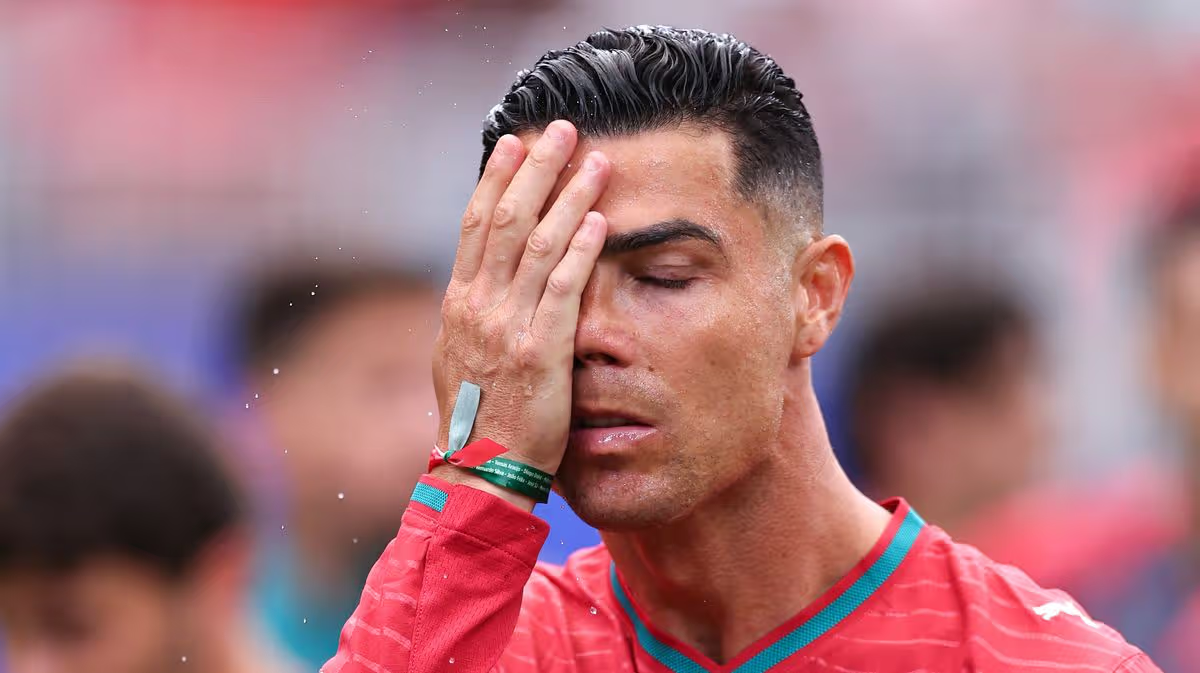
World Cup LIVE: ‘Raging’ Cristiano Ronaldo red-faced as BBC break golden rule

Published

on

Daily Mirror

Jeremy Cross in Houston

This is DR Congo’s first appearance at a World Cup since 1974.

But it hasn’t taken them long to realise nothing – or no-one – can steal the limelight from Cristiano Ronaldo.

Advertisement

Well, apart from Lionel Messi that is.

Ronaldo is making a record-equalling sixth World Cup appearance.

Portugal team-mate Bruno Fernandes has revealed Ronaldo had been “anxious” in the build up to his team’s opening Group K game in Houston.

But if this were true, it didn’t feel like it when Ronaldo led his team out into the Houston Stadium to warm up.

Advertisement

With his chest stuck out like a peacock. Ronaldo couldn’t resist a quick glance up to the big screen behind the goal to see his face beaming back at him.

Just how he likes it.

Thousands of Portuguese supporters let out huge cheers to greet their evergreen icon.

Ronaldo remains the talisman of this team, despite him now being 41 and well past the peak of his powers.

Advertisement

Ronaldo’s welcome might have been predictable.

But what few Portuguese fans had not expected, was to have found themselves queuing up to purchase ponchos outside the stadium.

Tropical rain greeted all those heading to the match.

And the only person who seemed happy about this was the bloke flogging said ponchos.

Advertisement

Source link

Continue Reading

NewsBeat

Suspect named after police pursuit in Wythenshawe

Published

on

Manchester Evening News

The 39 year-old from Wythenshawe has been charged with nine offences

A man has been charged with a number of offences following a police pursuit in Wythenshawe.

Advertisement

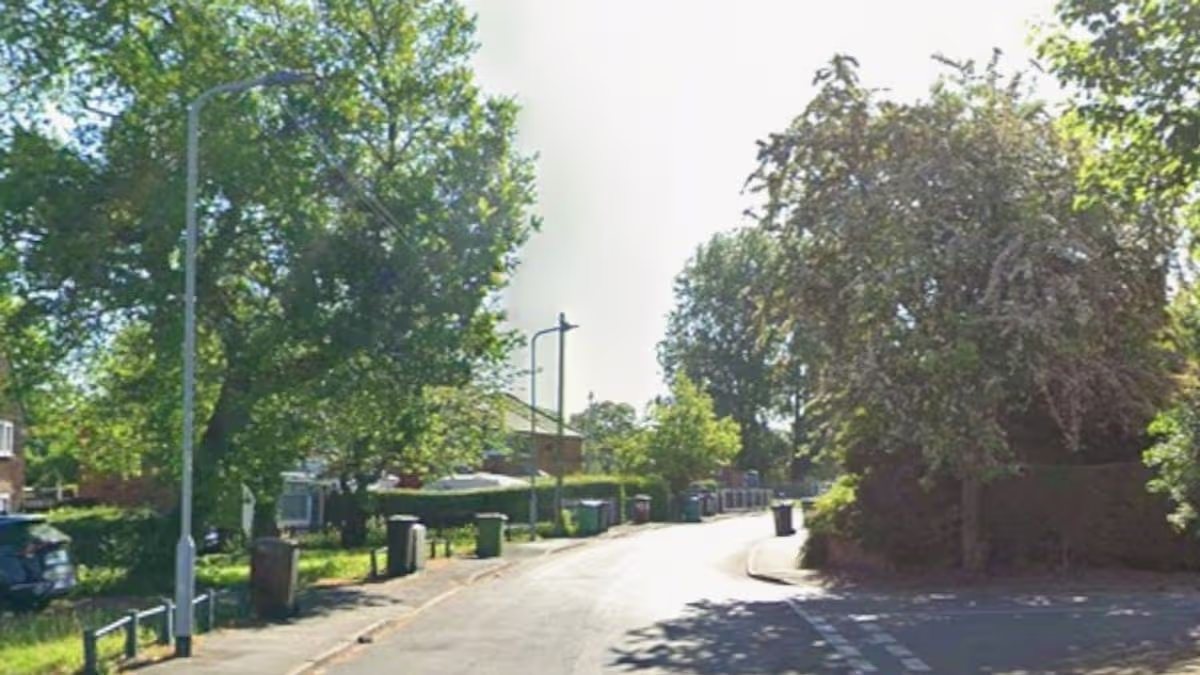
Greater Manchester Police (GMP) said their officers followed a Mercedes vehicle along Hollyhedge Road on Tuesday morning (June 16) vehicle before it collided with a tree on Haveley Road in Benchill.

A man was arrested afterwards.

Click here to get the biggest stories straight to your inbox in our Daily Newsletter

In an update issued this evening (Wednesday), GMP said a man had now been charged with nine offences.

Advertisement

Matthew James Gradwell, 39, of Benchill Road, Wythenshawe has been charged with; escaping from lawful custody, two counts of burglary, three counts of theft, causing serious injury by dangerous driving, driving whilst disqualified, and driving without insurance.

He was scheduled to appear before West Cheshire Magistrates Court in Chester on Wednesday.

Source link

Advertisement
Continue Reading

NewsBeat

New Ely flexible working space offers ‘more than just desks and WiFi’

Published

on

Cambridgeshire Live

The co-working space offers free coffee from a local roastery

A new Cambridgeshire flexible working space aims to offer more than desks and WiFi, the co-owners said. The Ely Work Collective opened in March and offers 26 flexible hot desks, four meeting rooms, and a content studio.

Co-owners James and Cathrine said: “In an age of flexible working, the Ely Work Collective is redefining what it means to work locally. A dynamic new co-working and community space – built with passion to provide a flexible and inspiring environment for productivity and collaboration.”

The pair intends to bring local freelancers, creatives, and remote workers together. A spokesperson said: “The Ely Work Collective champions collaboration over competition, encouraging organic connections – whether through conversations over coffee or shared projects. By keeping things ‘personal and local,’ it nurtures an environment where no one works alone.

Advertisement

“The team are passionate about grounding the workspace in the local Ely community by working with local suppliers and businesses. For example, the free coffee available is from a local roastery, and the IT infrastructure was implemented by The Ely Computer Centre.

“Many other local businesses are part of the monthly membership package, encouraging close ties to the community the new space will serve.”

Source link

Advertisement
Continue Reading

NewsBeat

Beers flung and songs sung as thousands of fans gather in Manchester to cheer on England

Published

on

Manchester Evening News

More than 2,000 people packed into Freight Island to watch England’s

England fans erupted in cheers in Manchester city centre when the final whistle was blown on the team’s first World Cup game of 2026.

Advertisement

Beers were flung across the room, strangers were embracing and some supporters even sang the national anthem as the Three Lion’s 4-2 victory against Croatia in Houston was made official.

More than 2,000 people packed into Freight Island, opposite Piccadilly Station, for the ‘We Are Football festival’ which claims to be the biggest fanzone of its kind in Europe.

Click here to get the biggest stories straight to your inbox in our Daily Newsletter

Fans decked out in England gear and impatient with anticipation started gathering from 6pm at the venue for the 9pm kick off.

Advertisement

And by the shouts and cheers that rang out from the venue, you’d think that England had just won the whole tournament, not their very first game in the group stages.

The match was anything but boring, with the England squad keeping fans on their toes right all throughout the game.

But by the time Rashford scored the fourth goal in the 85th minute, fans knew they had secured the result they wanted.

Advertisement

Even before the final whistle was blown, fans were chanting and jumping up and down. And when the game finally finished, Sweet Caroline and Mr Brightside were blaring out from the speakers.

Amongst the fans was 35-year-old Jess Bellamy, who had come down on her birthday to watch the game with her partner Joe Hamilton.

She said: “We try our best to follow England but we’ve got two kids so it can be a little hard, especially with all the funny times in this tournament. But we’ve watched as many games as we can so far.

“I’m glad it’s a few days into it before England has played because I feel like the excitement has really, really built.

Advertisement

“We’re very excited. I’m off work tomorrow and I feel like whether we get a win or not, it’s England’s first game so it’s still very exciting.

“We’re getting married next year so this will be our last big tournament before then. We’re hoping to go to the next one. All the next major tournaments are in Europe so it’s a bit easier than going to America.”

England’s second game of the tournament will take place against Ghana on June 23.

Advertisement

Source link

Continue Reading

NewsBeat

NI staff shortages causing ‘extremely dangerous’ delays to diagnosis and cancer care

Published

on

Belfast Live

The Royal College of Radiologists says ‘alarm bells should be ringing’

A worsening shortage of radiologists and cancer doctors is causing dangerous delays to diagnosis and treatment for patients across Northern Ireland.

Advertisement

That’s according to new workforce data today (Thursday) from the Royal College of Radiologists (RCR), the leading body for radiologists and clinical oncologists. They warn that without action to boost the workforce, more patients will suffer as demand continues to rise.

The data, based on responses from 100% of cancer centre and radiology department leaders in Northern Ireland and across the whole UK, reveals a shocking picture of dangerous delays to diagnosis and treatment of cancer and other serious conditions. The RCR is calling for urgent action to boost the workforce, or more patients will suffer as demand rises.

It found that 8 in 10 radiology leaders in NI and half of cancer leaders across the UK say staff shortages are causing patients’ conditions to worsen while severe shortages of radiologists and cancer doctors are driving delays to diagnosis and treatment of cancer and other serious health conditions.

They added that heavy reliance on expensive short-term fixes is making things worse; recruitment freezes affecting radiology departments and cancer centres have doubled in a year. They added that the government must expand training and end recruitment freezes to prevent delays worsening further.

Advertisement

All cancer leaders in NI say they have seen delays to patients starting radiotherapy or drug-based treatment including chemotherapy as a result of staff shortages.

This means patients at every cancer centre have had their treatment delayed because of staff shortages. All radiology and cancer leaders are concerned about backlogs and delays caused by staff shortages.

Meanwhile, diagnostic wait and cancer treatment targets continue to be missed. Department of Health data show that in 2025, a quarter of a million people waited over 6 weeks to have a scan or test. In 2025, only 30% of patients started cancer treatment within 62 days of a referral, against a target of 95%.

Delayed diagnosis leads to delayed treatment and can worsen health outcomes – particularly for people with cancer, where every month’s delay to starting treatment can increase the risk of death by around 10%.

Advertisement

Meanwhile demand for scans is growing at ten times the rate of radiologists to interpret them – 49% (48,000) more people will be living with cancer in NI by 2045, and yet a fifth (20%) of NI’s clinical oncologists are set to retire by 2030.

In its recommendations for government action, the RCR said that instead of haemorrhaging money on short-term fixes, the Northern Ireland Executive must invest in training more doctors by increasing the number of training places for clinical radiology and clinical oncology and maximise training capacity by allocating training places by whole-time equivalent (WTE) rather than by headcount.

Dr Stephen Harden, President of the Royal College of Radiologists, said: “For the first time, our census shows that patients’ conditions are deteriorating because of workforce shortages. Delays to diagnosis and cancer treatment are extremely dangerous, particularly in deprived and rural communities where shortages are worst.

Advertisement

“Despite our members’ extraordinary efforts, we simply don’t have enough clinical radiologists and clinical oncologists to meet rising demand. Recruitment freezes and growing reliance on outsourcing are making the situation worse not better.

“Alarm bells should be ringing for governments across the UK. Without urgent action to train, recruit and retain more doctors, more patients will suffer.”

In response, a Department of Health spokesperson said over £10m has been invested in support of oncology and haematology stabilisation in recent years, including investment in consultant and non-consultant medical staff, nursing and pharmacy services.

Advertisement

The DoH spokesperon added: “Imaging services are fundamental to the delivery of healthcare across elective and unscheduled pathways. We are aware of the current radiology workforce deficit and have been working to address this, with significant investment to grow the imaging workforce in Northern Ireland over the last 10 years. Commissioned Radiology medical specialty training places have expanded from a baseline of 37 (2015/16) to 56 (2025/26), an increase of 50%.

“However, there is more to do as demand continues to grow. Looking ahead, the Department has plans underway for a multi-professional Imaging Academy which aims to significantly increase the number of consultant radiologists and advanced radiographer practitioners here.

“This would deliver an overall increase in imaging capacity within health and social care for the benefit of all clinical specialties and support the reduction of excess waiting lists for diagnosis and treatment, as well as meeting the demands from unscheduled care.

“While the Department acknowledges that progress on the Academy has been slow due to the wider budgetary constraints facing the HSC system at this time, an interim plan to phase in additional radiology training places is proceeding from Autumn 2026, with an additional four radiology training places commissioned for the 2026/27 intake.

Advertisement

“It is the intention that this intake will be increased incrementally over the coming years while the Academy is being progressed, subject to funding. This will ensure that Northern Ireland has an increasing and continuous supply of locally trained consultant radiologists in the coming years. We also aim to reduce reliance on costly outsourcing by investing in the imaging workforce over the longer term.”

For all the latest news, visit the Belfast Live homepage here and sign up to our daily newsletter here.

Source link

Advertisement
Continue Reading

Trending

Copyright © 2025