TL;DR
Parafin secured a Goldman Sachs-led credit facility to scale embedded small business lending through Amazon, DoorDash, Walmart, and TikTok Shop.



Parafin secured a Goldman Sachs-led credit facility to scale embedded small business lending through Amazon, DoorDash, Walmart, and TikTok Shop.
Parafin, an embedded financial infrastructure company on the 2026 Forbes Fintech 50 list, has secured a new credit facility led by Goldman Sachs alongside One William Street Capital Management. The facility will expand access to embedded lending for small businesses through platforms including Amazon, DoorDash, Gusto, TikTok Shop, and Walmart.
The company’s model is straightforward. Instead of applying to a bank, a small business selling on Amazon or delivering through DoorDash gets financing offers built into the platform it already uses. The capital helps with cash flow, growth investment, and day-to-day operations. Parafin handles the underwriting, servicing, compliance, and customer support behind the scenes.
The numbers show the model works. Parafin has funded more than 50,000 businesses to date and extended over $35 billion in offers across the US and Canada. The majority of fundings go to repeat borrowers, a signal that the product solves a recurring need rather than a one-time problem.
“Small businesses increasingly expect financial products to be built into the software and platforms they already use to run their businesses,” said CEO Sahill Poddar. “Embedded lending is becoming a critical part of how businesses access capital.”
The Goldman Sachs facility builds on a recent warehouse credit expansion with Silicon Valley Bank, EverBank, and Trinity Capital. The additional capacity supports financing products that help businesses manage cash flow and invest in growth. Parafin was founded in 2020 by Poddar, Vineet Goel, and Ralph Furman, and is backed by Ribbit Capital, Thrive Capital, GIC, Notable Capital, and Redpoint Ventures.
The deal reflects a broader shift in how small businesses access capital. Traditional bank lending requires separate applications, credit checks, and weeks of processing. Embedded lending companies like Capchase have shown that financing built into existing workflows converts better and retains borrowers longer. Parafin applies the same logic at the small business level, where the platform is not Salesforce but Amazon or DoorDash.
The repeat borrower rate is the metric that matters most. It means the product is not just accessible but useful enough that businesses return. For Goldman Sachs, the credit facility is a way to deploy capital into a lending channel that traditional bank branches cannot reach. For the fintech infrastructure market, Parafin’s growth confirms that the platforms where businesses already operate are becoming the default distribution channel for financial products.


This article is crossposted from IEEE Spectrum’s careers newsletter. Sign up now to get insider tips, expert advice, and practical strategies, written in partnership with tech career development company Parsity and delivered to your inbox for free!
I’ve sat on both sides of the interview table several times over the past decade. You might be surprised to hear that I’ve often been just as nervous interviewing candidates as I was when being interviewed!
Nearly all the interview advice out there is about the candidate’s side, but understanding the other side can also help you prepare. Let me show you what I’ve seen firsthand, and what I’d bet is happening at the company you just interviewed with.
If you recently got rejected after an interview, this might explain what actually happened.
One caveat, because I’ve been on the receiving end of this: A couple of my recent interviews were run entirely by AI. These were screening rounds, but a growing share of job seekers now report being interviewed by a bot somewhere in the process. Everything below assumes you reached a person.
You might assume companies train people to run interviews. Many don’t.
In practice, your interviewers may be much less prepared than it seems. Their prep might look like this: “Here’s a rubric from three years ago, figure it out.” Or: “Let’s grab a conference room between meetings and decide what to ask.”
The questions are often whatever the interviewer personally studied when they were job hunting. These days, they may be generated with an LLM the morning of.
Then the panel negotiates. One person wants to quiz candidates on data structures and algorithms for a role in which they design websites. Another insists system design is essential for a junior level position. People default to what was done to them and assume it’s normal because it was normal to them.
What’s normal to the spider is chaos to the fly.
After an interview, some processes I was part of had one simple scale to score candidates: yes, no, strong yes, strong no.
The result is predictable. Like the candidate? Strong yes. They rubbed you the wrong way but answered everything correctly? Somehow a soft yes at best.
Structured scoring with defined criteria measurably reduces this. The research backs it, and the rare times I saw it used well, it changed my own assessments. Yet many teams I worked on never used this approach.
Even with a strong scoring system, bias and office politics can change the outcome.
For instance, I once interviewed someone I was strongly against hiring. It was clear they didn’t know what they were doing, and they’d be running critical infrastructure. I gave a strong no with objective reasons, scoring notes, specific examples from the technical round.
Leadership pulled me into a meeting right after and asked why. I walked them through my notes.
What I didn’t know: Several of them already knew the candidate personally. They liked them. They wanted them hired. I said the decision was theirs, my assessment hadn’t changed, and wished them luck.
I’ve also watched a strong resume short-circuit an entire loop. The team saw a top-tier company name, skipped the standard technical rounds, lobbed a few softballs, and basically welcomed the candidate in.
But once this engineer got started, it turned out to be a poor fit. And it wasn’t the candidate’s fault. They were set up for failure, because nobody checked whether this person could do this job at this company.
In both cases, it didn’t work out.
You could read all this and decide the system is broken or rigged.
The broken part is fair. The rigged part isn’t. People who are genuinely good at interviewing pass more often. It’s messy, but it’s not a lottery.
You can’t fight bias, politics, or a sloppy process. That’s like being mad at the weather. You can only play the two cards you’re dealt: your technical ability and your behavioral presence.
Most candidates obsess over the technical side and forget the behavioral rounds exist. But product managers, designers, and cross-functional leads—people with zero technical background—will judge you entirely on whether you can tell a clear story and seem like someone worth working with. If you’re unlikeable in the room, you’ve roughly halved your odds at every stage.
So here’s the unglamorous advice that actually works: put yourself on camera.
Talk through a project you led, a mistake you made, a hard problem you solved. Record it. Watch it back. Cringe. Do it again.
Think out loud, under pressure, with another human watching.
If you keep failing interviews, the fix isn’t always more technical prep. It’s getting better at being in a room with other people who are potentially more nervous, less prepared, and more biased than you ever imagined.
The process is broken. You can still win.
—Brian
A new initiative from the U.S. National Science Foundation plans to distribute $1.5 billion of funding over 10 years to independent research organizations, which it calls “X-Labs.” The program is meant to support work being done outside of academic institutions, starting with two areas: scientific instruments for sensing and imaging, and interconnects and integrated photonics for quantum systems.
We’ve said it before, and we’ll say it again: AI is changing the engineering profession. So how can you stay in demand as the field’s tools evolve? A senior engineering manager at Walmart Global Tech offers seven quick tips.
For even more expert tips, check out the new career advice collection from The Institute. These articles feature guidance written by working engineers, meant to help those in all stages of their careers stay at the forefront of their profession. Discover tips for technical presentations, dive into a specific career path like cybersecurity consulting, and more.
From Your Site Articles
Related Articles Around the Web

WIRED
A faucet for Amazon content: If you subscribe to Amazon’s Prime service, you can consume all the included movies, music, TV, and books; shop for all the items you can get with its free two-day shipping; and browse your free Amazon photo storage. You can do most of the same things from an Android tablet or iPad, but the Fire OS interface is crafted specifically to deliver Amazon goods, with swipeable pages for each type of media Amazon sells.
Built “good enough”: Physically, Amazon’s Fire tablets are made of cheap-ish plastic, but they’re designed with enough care that the build quality won’t bother you too much. Wi-Fi reception is excellent, and the front-facing cameras have improved considerably in the past couple releases. The Kids Editions are also some of the best-quality tablets for kids, encased in a rugged bumper, and all have microSD slots so you can add extra storage. (We recommend this 128-GB microSD card for $33.) It used to be that you could improve things by hacking Amazon’s tablets to install the Google Play Store on your Fire device. Unfortunately, installing the Play Store has become increasingly difficult and is something I no longer recommend for most people. It’s not worth the hassle when there are other reasonable cheap Android tablets available.
Cheap: Did we mention the price? They all cost $200 or less, save the new Max 11. If you stick to the cheaper models though, they’re a great value. You can also get them with Amazon lock-screen ads, which will lower your price by $15.
TIRED
Non-Amazon content is lacking: The greatest strength of these tablets is also their greatest weakness. If you aren’t an Amazon Prime subscriber and don’t plan to get your video, audio, or books from Amazon, the Fire tablet line is far less compelling. They do have Alexa, so that could be a plus, but again, that’s tied deeply into Amazon’s content library. You can download third-party apps like Netflix on Amazon’s Appstore, but the selection is far more limited than what’s available on Apple’s iPad or the Google Play Store on standard Android tablets. Rumor has it this will be changing this year as Amazon improves Fire OS, but so far, that’s just a rumor.
Old tech: The tech inside these tablets is old. The processors aren’t the fastest, and you’ll likely notice small fits of lag and a general lack of power compared to more expensive Android tablets. The touchscreens aren’t as responsive or sensitive as more expensive tablets. Since many of the apps for Fire OS are built with weak processing power in mind, you don’t notice it too much. The operating system is also dated (depending on which Fire tablet you’re buying), which could hide some of the weaknesses. Amazon’s latest Fire OS is a modified version of Android 11, which came out in 2020. Amazon keeps updating its tablets to some degree, but not nearly as often as it should.
Short warranties: Aside from the Amazon Kids two-year, no-questions warranty, Fire tablets don’t have great backing from Amazon. Only the Fire HD 10 comes with a full one-year warranty. The smaller devices have 90-day warranties.
Special offers: Over time, Amazon’s Special Offers ads have gotten more overt and annoying. We recommend you pay the extra cash to buy a Fire tablet without them.
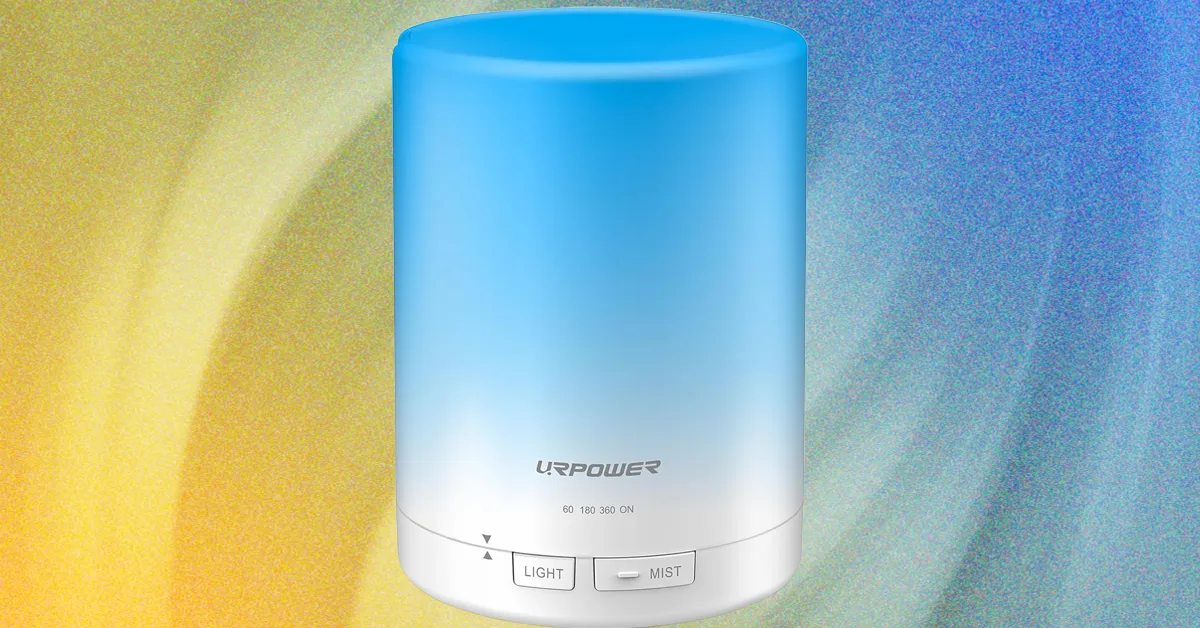
I first learned about Pura from a friend whose house always smelled like a high-end boutique under every circumstance. Cooking project, water leak … no matter what was going on in her house at the time, I only ever smelled berries. I have two cats and a multi-sports-playing teen—I knew I needed this. Now, after having owned multiple Puras for over two years, I have some thoughts.
While my Pura journey began with the now-discontinued Pura 3, I have also since tested the Pura 4 and large-room Pura Plus, both of which have dual bays for two of Pura’s proprietary oil cartridges, as well as the Pura Mini. The Pura 4 and Mini both plug into an outlet and can only be controlled through the accompanying app (or Alexa or Google Home). This is convenient for setting schedules and timers, switching fragrances (or using the handy new auto-alternate feature), and changing the color of the optional night-light, but there have also been numerous occasions where I’ve wanted to stop or start or change a schedule but have been unable to because I forgot my password or the diffuser couldn’t connect to Wi-Fi. In the moment, it was infuriating. Mercifully, the stand-alone, cylindrical Pura Plus has on/off manual control buttons on the front. The smaller Pura 4 and Mini are best for enclosed spaces, like a long entryway for the former or a small bedroom for the latter (note that all Puras only work with 2.4-Ghz Wi-Fi). If you have high ceilings or any kind of open floor plan, you’ll get better results from the Pura Plus. Just note that, unlike the silent Pura 4 and Mini, the Plus emits an audible whooshing sound—32 decibels, about as loud as a fan on low.
Perhaps the best feature of the Puras, however, is the brand’s extensive library of scents from companies like Anthropologie, Nest, Capri Blue, and more. (Including luxe seasonal releases—spring offerings include Studio McGee Violet Fig, Brooklyn Candle Studio Tulum, and Otherland Chandelier, among many, many others.) The quality and duration can vary quite widely, and they’re not cheap—$11 all the way up to $34, for 0.33 ounces—but most of them smell better than cartridges from any other diffuser brand I’ve tried, and all come with a 30-day money-back guarantee. Because of the small size and price of the cartridges, Pura might not be the best choice if you want to smell diffuser all day, every day, as you’ll end up spending a small fortune. However, if you love unique luxury scents and only need them occasionally and/or on demand, Pura is the way to go. —Kat Merck
| Type | Nebulizer |
| Additional Features | Smart features (requires 2.4-GHz Wi-Fi), night-light |
| Oil Type | Proprietary |
| Remote? | No |

Left unchecked, the phones we carry around with us at all times can become overwhelmingly distracting. A new wearable called the Jaye Band wants to do something about that, acting as a simple filter for everything that happens on your phone.
It’s now raising funds on Kickstarter (via Android Authority), and sells itself as “the minimalist smartwatch designed for the modern attention crisis”. It promises to “reclaim your brain” and give you “a wearable built to filter your distractions, not add to them”.
The idea is that the band becomes a discreet window for your most important notifications, while everything else gets left on your phone. You can set blocks of ‘do not disturb’ time, and there’s no tracking or health monitoring.
In theory, your phone stays in your pocket for much more of the day, so you’re not constantly checking for new alerts, switching between apps, and scrolling through feed after feed on social media to find a new distraction.

Hardware wise, the Jaye Band sports a small, monochrome OLED display, intended to be shown on the inside of your wrist. The device measures just 38mm x 14.5mm x 7mm (that’s 1.5 inches x 0.6 inches x 0.3 inches), so it’s very lightweight.
The wearable has already gone through three rounds of design and refinement, the developers say, and now needs funding for the production push. It’s already blown past its $5,000 goal, and has raised $35,749 at the time of writing.
There’s an early bird price deal currently available which lets you reserve your band for $129 (about £97 / AU$184, though shipping to Australia doesn’t seem to be offered). When the device launches fully, it’ll retail for $249 (about £188 / AU$355).
Shipping is scheduled for December 2026, but as always with Kickstarter, there may be delays and production problems along the way. If you’re looking for a more minimal tech experience day-to-day, the Jaye Band could be the answer.

Follow TechRadar on Google News and add us as a preferred source to get our expert news, reviews, and opinion in your feeds.

So you were busy, and you forgot to maintain your Duolingo streak. Now, Duo, that little green owl, is mad at you, and you’re disappointed in yourself. Whether you’re studying a language, chess, math, music or another course, a streak slip-up is not checkmate anymore.
On Monday, the language-learning program announced a one-month treat for forgetful customers. Beginning Monday, players who lose their streak of consecutive learning days can restore that streak by completing three lessons in one sitting.
But if you’re going to skip a day, do it in June, because this restoration feature lasts for only that month.
Streaks are a big deal for many Duolingo customers. More than 15 million players have a streak that’s over a year long, the company says, and an unofficial Duolingo streak hall of fame cited by USA Today reports that the longest Duolingo streaks run 13 years. It takes only one missed day to ruin a streak, so players who might be traveling, ill or otherwise distracted can easily lose a streak that took years to build.
To rebuild your streak, it must be at least 30 days long, and learners must complete the three required lessons in the same playing period.
Eligible learners will see the option appear in their app, prompting them to revive their streak.
Duolingo will offer you a chance to revive your lost streak, and honestly, who wouldn’t take that?
Recovering lost streaks has been one of the most consistent requests Duolingo hears from learners, a Duolingo representative said in a statement. “In the past year alone, tens of thousands of learners asked for their streak back across social media in more than 80 countries.”

For some time now [Tobi Friedly] has been tinkering away at porting the original Super Mario 64 from the Nintendo 64 to just about any device imaginable. One of these being the Nintendo DS, with the code and build instructions now up on GitHub, along with the demonstration video below that shows off the added multiplayer functionality.
We previously covered this project and the challenges involved. The main problem that kept him from just taking the existing Nintendo DSi port by [Hydr8gon] and running it on the original DS is that the latter doesn’t have enough RAM to load the entire game ROM into memory. The integration of NitroFS for asset streaming took some time, along with addressing sound support and overall stability. Meanwhile it appears that multiplayer support was also added along the way.
This multiplayer involves two DS systems, each running its own copy of the game. This can be nice for co-op playing of the game, as well as just for goofing around in a 120 star fully finished game with a buddy.
We may receive a commission on purchases made from links.
Amazon Prime Day is almost here, bringing Amazon Prime members four days of deals from Tuesday, June 23, to Friday, June 26. If you’re a Prime Member, this event can be even better than Black Friday. Members can save a lot of money on items from a wide range of popular categories. This, of course, includes Amazon devices. In fact, Amazon devices are some of the best deals you can get during Prime Day, with electronics up to 60% off.
If you are not a Prime member, you can sign up ahead of Prime Day if you want to take advantage of the discounts. You don’t even need to pay for a membership, either: When you sign up, you can join a 30-day free trial, which you can cancel before the first billing — after you’ve purchased the Amazon devices you wanted during Prime Day, of course. But you don’t have to wait for Tuesday to save on Amazon electronics; the retailer already has a handful of products on sale well before Prime Day kicks off, and here are some of the most exciting deals.
Originally $189.99, the Blink Video Doorbell is 71% off at $54.99. This fourth-generation camera system allows you to see what’s happening at your front door. It comes with one Blink Video Doorbell, two Outdoor 4 cameras, one Sync Module Core, mounting kits for each device, a wall plate, a doorbell removal tool, wire extenders, batteries, and a power cord.
Using the Blink app, you can see everything that’s going on from wherever you are. The Video Doorbell captures HD video, and the Outdoor 4 cameras have motion detection and a wide field of view. You can speak through the doorbell to greet guests or thank delivery people. The Blink Subscription Plan provides alerts and lets you save and share clips. This is a great smart device for keeping your home secure, not least thanks to its impressive two-year battery life, which should provide added peace of mind.
Amazon has big discounts on its Fire TV Stick devices ahead of Prime Day, making it a great time to spring for one if you need to add streaming functionality to a TV. The basic Amazon Fire TV Stick HD kicks things off with a 54% discount that brings its price down to $15.99. The Amazon Fire TV Stick 4K Select is available for a nice 55% off, or $17.99. The slightly higher-end Amazon Fire TV Stick 4K Plus is also on sale, with a 50% price cut making it available for $24.99. Similarly, the Amazon Fire TV Stick 4K Max has dropped from $59.99 to $34.99, a 42% discount.
All of Amazon’s Fire TV Stick devices offer the same basic functionality, letting you watch shows from all the major streaming services even on a TV without any smart functions. The main difference is that the more expensive models have extra features, such as 4K HDR streaming — available starting with the 4K Select — and Dolby Vision, present on the 4K Plus and 4K Max. The latter two also have support for Nvidia GeForce Now game streaming.
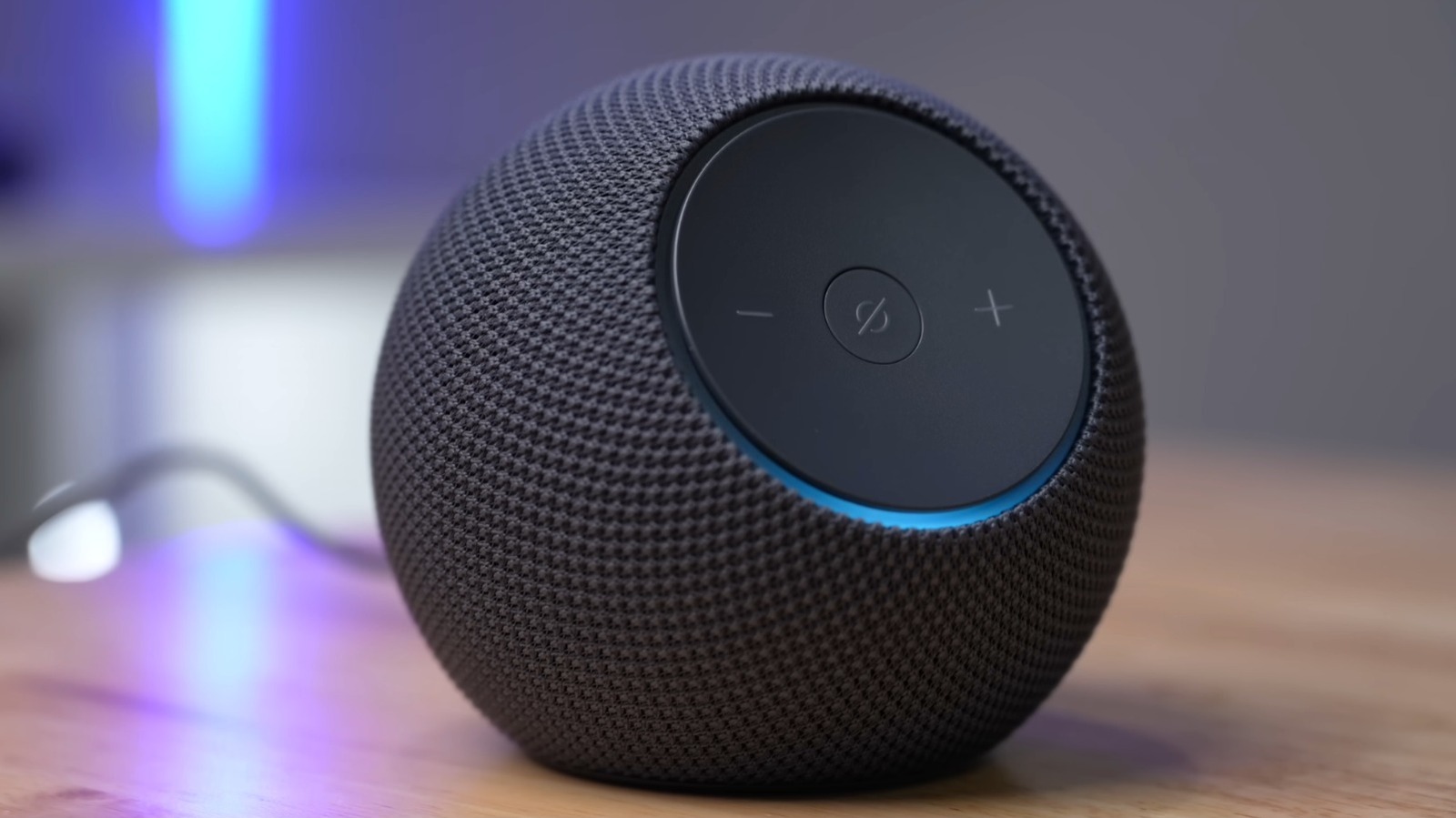
The Amazon Echo Dot was one of the most-loved Amazon gadgets in 2025, with the device proving popular with users due to how useful it is in the home. The Amazon Echo Dot Max, an updated version of the Echo Dot, brings a range of improvements such as Alexa+ support and can connect to a ton of compatible electronics in your home, including speakers, televisions, lights, switches, and appliances. The Eco Dot gives you complete control of your smart home, letting you set routines, control lights, and lock devices.
Even on its own, the Amazon Echo Dot Max will double up as a useful personal assistant. Alexa will let you check the weather, set timers, play music, and have natural conversations. All of this is made even better thanks to the Echo Dot Max’s upgraded audio quality. It currently has a 4.4 out of 5-star average rating on Amazon, with many buyers noting they have more than one. Originally $99.99, it’s currently selling for $64.99 after a 35% discount.
Blink isn’t the only Amazon-owned video doorbell company with products on sale ahead of Prime Day. Ring also has a range of discounted devices, including its well-liked entry-level model, the Ring Battery Doorbell. This 2K-capable video doorbell is available at a 50% discount that drops the price from $99 to $49. You can also buy this doorbell in a two-pack, with a 55% discount on the usual $199.98 price making the pair available for $89.99.
The Battery Doorbell has a range of welcome features, including 6x Enhanced Zoom, Alexa support, a USB-C rechargeable battery, real-time alerts, plus the ability to see and speak to anyone at your door via Ring’s Live View and Two-Way Talk functions. If you get a Ring Protect subscription, which starts at $4.99 a month, you’ll also get access to features like AI smart alerts and up to 180 days of event logs, letting you scroll back to find specific moments or captures.


Ireland has a national target of 8GW of installed solar capacity by 2030 under the Renewable Electricity Support Scheme.
Ireland’s solar sector has almost quadrupled its total energy capacity to 2.7GW over the past three years, according to Solar Ireland’s annual ‘Scale of Solar’ report on the industry.
Ireland’s total connected solar capacity is now predicted to exceed 3.3GW by the end of this year, having grown by 297pc since 2023 and by 53pc, or nearly 1GW, in the 12 months to May 2026.
In the past year, solar generated more than 1.17TWh of electricity across Ireland, according to the report, with the equivalent of 460,000 homes powered by the country’s total connected solar capacity.
Solar farms providing utility-scale capacity surpassed the 1.5GW mark across the year. Small-scale capacity from rooftop systems installed at farms, schools, retail premises, community buildings and smaller industrial facilities reached 58MW, while micro-generation capacity from households, farms, schools and small businesses reached 805MW.
Ireland has a national target of 8GW of installed solar capacity by 2030 under the Renewable Electricity Support Scheme. To achieve this, the report estimated, an additional 0.8-1.3GW of capacity per year until 2030 will be required, with between 5,000 and 7,000 new jobs potentially being created and contributions of more than €2.3bn to Ireland’s economy possibly resulting from solar developments.
Minister for Climate, Environment and Energy Darragh O’Brien, TD said: “In just 12 months, Ireland added 1GW of solar capacity, helping to strengthen Ireland’s energy resilience, reduce emissions and increase the share of domestically generated renewable electricity on our system.
“As electricity demand continues to grow, driven by electrification across homes, transport and industry, investment in renewable energy infrastructure will be essential.
“Solar is already making an increasingly important contribution to Ireland’s electricity system and will continue to play a key role in supporting energy resilience, economic competitiveness and a sustainable energy future.”
The report noted that more than 190,000 Irish homes and businesses have implemented rooftop solar electricity generation capabilities, with Clare being the county with the highest such uptake per capita.
Rooftop solar adoption can account for an estimated removal of 155,000 tonnes of CO2 emissions over the past 12 months, according to the report.
For utility-scale or solar farm generation, Meath (441GWh), Wexford (174GWh) and Cork (110GWh) were the three most productive counties over the past year.
CEO of Solar Ireland Ronan Power said: “Ireland’s solar story is no longer defined solely by ambition. It is increasingly defined by delivery.
“Solar is now making a meaningful contribution to homes, farms, schools, businesses and communities nationwide. Maintaining this momentum will require continued collaboration across industry, Government, regulators and system operators.
“Grid infrastructure, planning processes, workforce capacity, market design and public participation will all play a critical role in determining how quickly Ireland can continue scaling solar generation.”
SiliconRepublic.com recently spoke to Calvin Lan, the CEO of Huawei Ireland, about Ireland’s solar and renewable energy targets.
Don’t miss out on the knowledge you need to succeed. Sign up for the Daily Brief, Silicon Republic’s digest of need-to-know sci-tech news.
OpenAI appears to be testing a new subscription and experience for science use cases, but it’s unclear if it’ll be available to everyone regardless of their background.
As spotted on X, this new subscription/model is called “ChatGPT for Science,” and references to the feature were spotted on the web build.
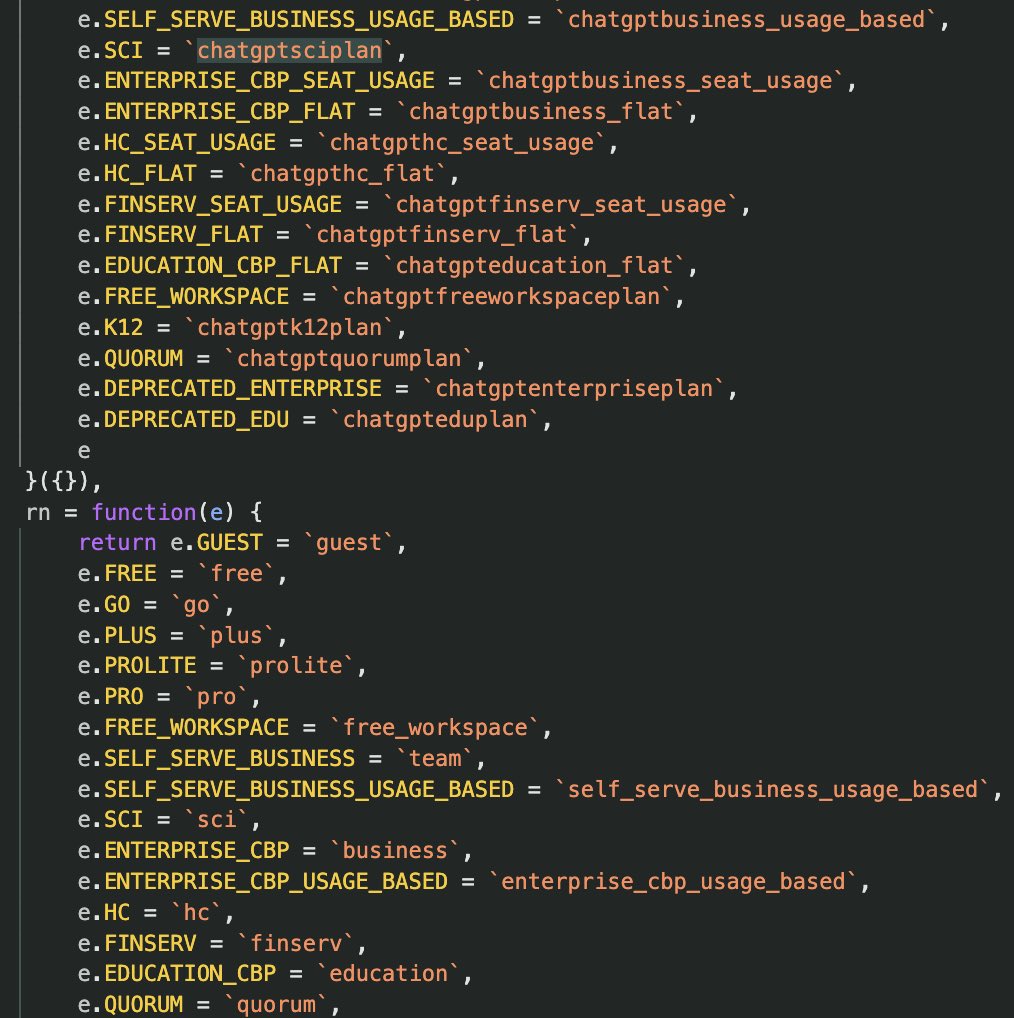
Right now, OpenAI offers ChatGPT for personal use, Teams, and business/enterprise.
While ChatGPT personal works for everybody, Teams requires you to have a company domain and at least three users. On the other hand, ChatGPT business is restricted to legal entities.
It’s likely that ChatGPT for Science will have similar restrictions, and only verified institutes or universities would be able to use it.
It’s not the first time we’ve seen OpenAI’s attempt to build models or subscriptions specifically for science use cases.
OpenAI recently announced GPT-Rosalind, which is built on the foundation of its advanced GPT-5.5 architecture, but it’s not just a reskinned ChatGPT with a science prompt.
Instead, it is a highly specialized, purpose-built model designed specifically for enterprise-scale life sciences research.
GPT-Rosalind is locked behind what OpenAI calls a “trusted-access deployment structure.”
This means the model is strictly available to eligible organizations, such as major pharmaceutical companies like Novo Nordisk or verified research institutions, that are conducting legitimate, public-benefit scientific research.
It requires enterprise-grade security and strong safety governance, mirroring and exceeding the strict requirements of ChatGPT Enterprise.
OpenAI may be planning to bring some of these capabilities to all institutions through ChatGPT for Science, rather than locking them to select partners.
In other words, ChatGPT for Science will have special grounding in discoveries and research around scientific topics compared to a regular subscription.
At the moment, we don’t know when ChatGPT for Science will go live, but it’s being actively tested on the web, and an announcement is likely weeks away.

Security teams log 54% of successful attacks and alert on just 14%. The rest move through your environment unseen.
The Picus whitepaper shows how breach and attack simulation tests your SIEM and EDR rules so threats stop slipping by detection.

What just happened? President Trump says that Apple has agreed to work with Intel to design and build its chips in America. In a Truth Social post, Trump complained that “Stupid Presidents” had “let Taiwan and others steal our Semiconductor Factories.”
“When I won my Second Term (Third, actually!), it was clear America needed its Semiconductor Industry to come back to the U.S.A. We design everything, but we need to BUILD it here, NOW!” Trump wrote. “So I decided to help Intel because we need to design and build our Chips right here in America.”
The post comes just over a month after reports that Apple and Intel were working on a chip manufacturing deal. The discussions had been underway for more than a year and recently evolved into a formal arrangement.
It’s no secret that Apple’s reliance on TSMC is becoming strained as AI chipmakers such as Nvidia and AMD battle it out for the most advanced production capacity. Partnering with Intel would help Apple increase its chip capacity as it diversifies its manufacturing base.
Apple and Intel did not immediately respond to requests for comment outside regular business hours, so for now the announcement remains a Trump post rather than a joint confirmation. There are also questions around timing, scale, process nodes, yields, and which components Intel would make.
If this proves to be true, the deal would be a major win for Intel Foundry. Team Blue has spent years trying to convince outside customers that it can again compete at the top end of semiconductor manufacturing. Landing even a limited slice of Apple’s business would give that effort a huge boost.

Apple has spent the decade so far moving Macs away from Intel-designed processors after launching its own Arm-based M-series chips in 2020. This time, however, Intel would be acting as a contract manufacturer for chips Apple designs itself.
Trump has made domestic manufacturing one of the biggest issues of his second term, especially in semiconductors. Apple pledged $500 billion in US investment at the start of 2025, which arrived amid tariff pressure on Chinese imports and possible semiconductor duties. The company later unveiled another $100 billion US investment plan after Trump repeatedly criticized Apple for assembling iPhones overseas.
Trump’s post also mentions the US government’s investment in Intel. Early last year, his administration converted almost $9 billion in federal funding into Intel equity, giving it roughly a 10% stake. The government has also backed tariffs of around 100% on imported semiconductors, with exemptions for companies producing in the US or promising to do so.
This isn’t a sign that US-made iPhones are suddenly realistic. As we’ve noted before, moving final iPhone assembly to America would be wildly difficult, potentially expensive, and time consuming. Chips are a different matter, though. Reliable US capacity from Intel could give Apple a little more breathing room in the world’s tightest chip market.





No Jackpot Winner as $257 Million Prize Rolls Over to $269 Million Monday Draw


Weekend Open Thread: Tuckernuck – Corporette.com


Oppenheimer backs SpaceX as $70 billion retail frenzy builds


Markets Rally as SpaceX IPO Looms Amid Iran Tensions and Inflation Surge

Zimbabwe Requires Crypto Businesses to Register Annually Under New FIU Regulations


Bitget enters Argentina’s regulated crypto market through PSAV registration


NanoClaw integrates JFrog registries to secure AI agent downloads


This Week In Security: Microsoft On Microsoft, Register Your Domains, Linux On ARM, And FreeBSD Joins The File Cache Club


El Nino has formed in the Pacific and could set records, forecasters say
Dutton Ranch star claims they ‘didn’t see any disruption’ on set following Chad Feehan’s exit from Yellowstone spinoff fueled by Taylor Sheridan clash rumors


Politics Home | Healey Resignation Is “Colossal Failure Of Government”, Says Former Labour Defence Secretary

Donnie Wahlberg & More Heat Up Las Vegas at Circa’s Barry’s Downtown Prime


First Time Since 1971: Australia Register Historic Low In ODI Cricket

Opendoor Ends India Operations, Fueling a Bigger Conversation About AI and Outsourcing


Belfast burns, while Met chief points finger at Iran and Russia


AT&T: Verizon's 27% Outperformance Sets Up A Solid Entry Point


FBI searches office of Ohio voter registration group

Anthropic is spending $150M to embed 1,000 AI fellows inside nonprofits. No degree required.


Modi thanks Trump for wishes as US attacks Indian seafarers

‘The Pitt’s Fan-Favorite Doctor Confirms Noah Wyle Gave His Blessing to Return [Exclusive]




You must be logged in to post a comment Login