


Connect with us
DAPA Banner
DAPA Coin
DAPA
COIN PAYMENT ASSET
PRIVACY · BLOCKDAG · HOMOMORPHIC ENCRYPTION · RUST
ElGamal Encrypted MINE DAPA
🚫 GENESIS SOLD OUT
DAPAPAY COMING

Tech

Lost Your Duolingo Streak? There’s Finally a Way to Get It Back

Published

on

So you were busy, and you forgot to maintain your Duolingo streak. Now, Duo, that little green owl, is mad at you, and you’re disappointed in yourself. Whether you’re studying a language, chess, math, music or another course, a streak slip-up is not checkmate anymore. 

On Monday, the language-learning program announced a one-month treat for forgetful customers. Beginning Monday, players who lose their streak of consecutive learning days can restore that streak by completing three lessons in one sitting. 

But if you’re going to skip a day, do it in June, because this restoration feature lasts for only that month.

Advertisement

Streaks are a big deal for many Duolingo customers. More than 15 million players have a streak that’s over a year long, the company says, and an unofficial Duolingo streak hall of fame cited by USA Today reports that the longest Duolingo streaks run 13 years. It takes only one missed day to ruin a streak, so players who might be traveling, ill or otherwise distracted can easily lose a streak that took years to build.

To rebuild your streak, it must be at least 30 days long, and learners must complete the three required lessons in the same playing period.

Eligible learners will see the option appear in their app, prompting them to revive their streak.

Advertisement
Duolingo screenshots show text offering a player the chance to revive a lost streak

Duolingo will offer you a chance to revive your lost streak, and honestly, who wouldn’t take that?

Duolingo

Recovering lost streaks has been one of the most consistent requests Duolingo hears from learners, a Duolingo representative said in a statement. “In the past year alone, tens of thousands of learners asked for their streak back across social media in more than 80 countries.”

Source link

Advertisement
Continue Reading
Click to comment

You must be logged in to post a comment Login

Leave a Reply

Tech

Fed Up of Lettuce Recalls, I Started Growing Greens in This Smart Garden

Published

on

The cyclospora outbreak affecting produce from Taylor Farms de Mexico has sickened over 1,600 people across five states, including Indiana, Kentucky, Michigan, Ohio and West Virginia. It’s one in a long line of severe produce outbreaks, but this time, I’m reconsidering how I approach food safety, given that the greens meant to nourish us continue to pose contamination risks

Over the last year and a half, I’ve used my Gardyn Studio, a hydroponic growing system, to grow my own produce in my small NYC apartment. I’ve harvested arugula, kale, lettuce, peppers, cucumbers, cherry tomatoes, herbs and edible flowers, even throughout the winter — and, more importantly, I’ve had full control over the safety of my produce.

What to know about the 2026 cyclospora outbreak

Cyclospora is transmitted through food and water contaminated with the parasite, with symptoms typically manifesting approximately 1 week after exposure, though cases can range from two to 14 days or longer. The 2026 numbers represent a significant increase from the 249 cases reported in the US during the same period last year.

According to The Cleveland Clinic, symptoms of cyclospora infection often include sudden watery stools and even explosive diarrhea. Other common symptoms include:

Advertisement
  • Stomach cramps 
  • Bloating, increased gas and burping
  • Nausea
  • Unintentional weight loss
  • Loss of appetite
  • Extreme fatigue or weakness

While home-growing your produce doesn’t eliminate all food safety risks, it can eliminate the specific contamination risks present in mass industrial distribution systems and exposure to pesticides. Given these risks, many are looking for ways to bypass mass distribution entirely. This is why I started using the Gardyn Studio.

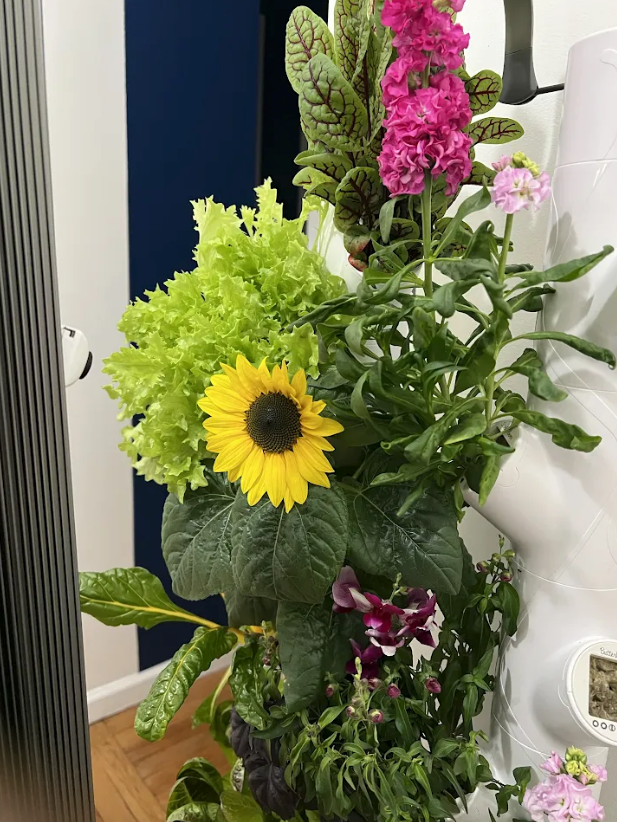
Gardyn Studio with plants and flowersNasha Addarich Martinez/CNET

Why I switched to the Gardyn Studio

The Gardyn Studio is a compact, 4.5-foot hydroponic tower with 16 growing slots, LED grow lights and a mobile app that manages your growing from start to finish. Having used it for over a year, I have a clear sense of its benefits and shortcomings.

I appreciate how self-sufficient the device is: You insert the pods, set the lighting schedule, add water and plant food, and refresh the tank every few weeks. Other than that, the plants pretty much grow on their own. Not every pod is a success, though. In every cycle, at least two pods fail to grow. While Gardyn will send replacement pods, you will need the Gardyn Nursery (a separate $80 device) to grow the sprouts before you can insert them into the Studio.

I’ve found the harvesting time to be quick. My arugula reaches maturity in about three to four weeks. The Kale takes about five weeks. In both cases, the taste and quality are unsurprisingly better than store-bought greens.

The Gardyn Studio costs $579 and is great for small spaces. If you have a larger home, you can also consider the Gardyn Home ($899), which fits 30 growing slots, compared to the 16 on the Studio.

There’s also an optional membership that costs between $25 and $39 a month or $259 a year, which includes monthly credits you can use to buy more plants and access to Kelby, the AI gardener that will automate watering cycles and lighting based on your specific plants’ life cycles and the local environment. It also sends push notifications to the Gardyn app to alert you when to add water, add plant food or harvest.

Advertisement

Last year, a CNET Survey found that US adults who shop for groceries waste an average of $125 a month on food that’s not cooked or eaten. That’s $1,500 a year. I rarely waste food grown in the Gardyn since I harvest it as needed, so I rarely end up with excess greens wilting away in the fridge.

Gardyn specs at a glance

Price $579 (hardware)
Height 4.5 feet tall
Floor Space 1.4 square feet
Growing Capacity 16 plant pods simultaneously
Technology LED grow lights, automated nutrient delivery via app
Pod Pricing $1.99 to $4.99 (member pricing); $4.99 (non-member)
Premium Pods Up to $9.98
Monthly Pod Credits 5, complimentary with membership (10 with Gardyn Home)
Operating Cost Minimal electricity (comparable to a smart bulb)
Warranty 2 years
Membership $25 to $39 a month
Trial 30 days

The pros and cons

While I use my Gardyn year-round, there are things to consider before committing to it. The upfront cost of $579 puts the Gardyn Studio in the same category as high-end kitchen appliances, but the benefits of growing my own produce at home and no longer having to buy it make it worth it to me.

Pros:

  • Eliminates contamination risks
  • Compact design that fits in small spaces
  • Minimal maintenance (no soil or gardening skills required)
  • Responsive customer service for pod replacements
  • Reduced pesticide exposure

Cons:

  • High upfront costs
  • Some pods fail to grow
  • Ongoing pod and nutrient costs
  • No ability to grow root vegetables

For those without access to hydroponic systems

Gardyn Studio sproutsNasha Addarich Martínez/CNET

Growing your produce at home is still valuable, even at a smaller scale. Windowsill herb gardens require minimal equipment and investment. My first home garden was in a 10-inch planter, where I grew cilantro, basil and parsley, which I put on my windowsill.

Buying from local farms and building relationships with local farmers’ markets establishes direct supply chains from the source, without the middlemen (distribution centers). Inquiring about produce sourcing at your local supermarket creates incentives for transparency and regional cultivation. These approaches won’t prevent every outbreak, but they reduce dependence on centralized supply chains and create accountability between producers and consumers.

Advertisement

Food safety doesn’t (and shouldn’t) have to be a luxury. It does, however, require deliberate choices about where food originates and who controls its cultivation. The Gardyn Studio is one option among many, and the one that works for my lifestyle and home. What matters most is recognizing that alternatives to mass food systems exist.

Source link

Continue Reading

Tech

Europe got its own TBPN-style live show, and everyone’s angling for a guest spot

Published

on

The European answer to TBPN is here and ready to go live five days a week, starting June 27. 

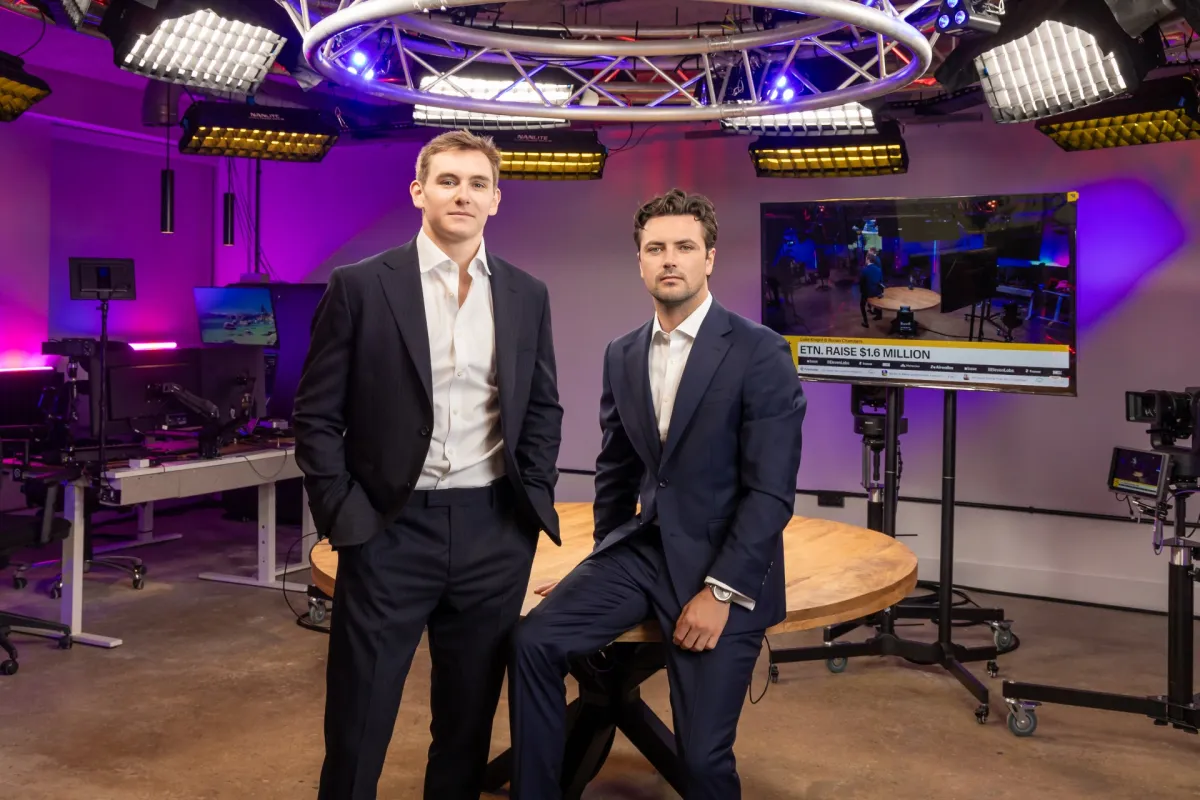
Luke Knight and Ronan Chambers first launched the London-based European Technology Network (ETN) last October, breaking down tech trends and news during a two-day-a-week live stream. Right now, the show is live-streamed on X and YouTube and has garnered more than 5 million views.

On Monday, the network announced a $1.6 million seed round from top players in the media ecosystem, including Powerhouse Capital, Axel Springer SE (which owns Business Insider and Politico), the popular media publication LadBible, and angel investors from OpenAI and DeepMind. With this fresh capital, the network is announcing its largest expansion yet. 

It’s now moving into a big studio in Kings Cross (where all the hot London AI startups are situated), expanding the team (right now of just eight), launching a newsletter, and is, starting today, moving into a five-day-a-week live show schedule, which will soon see Knight and Chambers interview the likes of George Robson (a partner at Sequoia) and Rishi Sunak (former UK Prime Minister and senior advisor to Anthropic and Microsoft). 

Advertisement

Speaking to TechCrunch, Knight and Chambers said ETN has already become a hot stop on the press tour for European startups — they’ve spoken to the founder of Syntheisa, the CFO of Legora, the founder of Granola, and Kanishka Narayan, the UK’s first AI Minister. They’ve even had American investors stop by the show when they are in town, including one from Andreessen Horowitz.

“ETN was born out of a gaping hole in the industry,” Chambers told TechCrunch. “It’s centered around pace.” He said the current media ecosystem in the UK cannot keep up with how fast the tech scene is moving. For example, so far this year, London startups have raised $14.7 billion according to Dealroom. Six companies have raised more than $500 million: Wayve, Superintelligence, ElevenLabs, Recursive, Ineffable Intelligence, and Isomorphic Labs, the latter three of which were founded by DeepMind alumni.

“These are things that have never happened in Europe before,” Chambers continued, referring to the speed at which capital is flowing through the ecosystem. As the show became more popular, Chambers said they were getting around 70 pitches a week from guests looking to come on the show. They would try and cram 12 interviews into two hours, twice a week, but eventually it got too much. “We needed an outlet that could move at the pace of that,” he said of both the interest in the show and how fast Europe’s tech ecosystem is moving, “which is the reason we’re going from two days a week to five days a week.” 

The five-day format will look quite similar to the two-day format. There will be a live show from 12 p.m. UK time to 3 p.m., breaking down trending stories, and then for two hours, they will have guests on the show talking about whatever they want. Chambers said they also want to start hosting debates, roundtables, and a Shark Tank-style pitching session on the show.

Advertisement

“We want to make it as useful as we can for the ecosystem,” Chambers said. “There needs to be more discourse around AI in Europe. There needs to be more discourse around venture capital and cash flowing into the ecosystem. There needs to be more discourse around the amazing things that are happening in the tech ecosystem, and our role is to be the stage in which people can shout about all the amazing things they’re doing.” 

The show makes its money from ad dollars, like most media publications, and big-name sponsors already include prediction market Polymarket, blockchain company Base, and the AI audio darling ElevenLabs. 

When asked about the influence TBPN has had on them, Knight and Chambers said they indeed do look at John Coogan and Jordi Hays, founders of TBPN (which recently sold to OpenAI for what some say was a nine-figure sum), as pioneers of this new tech media ecosystem. The show became a place for tech guests to appear and chat with friendly faces, announcing new product releases, hires, or funding news. “My thinking was, if we can have an ITV and a BBC, why wouldn’t we have a regional version of this?” Chambers continued. 

Europe is a big place, though, with more than 40 different countries and over 200 languages spoken (24 of which are recognized by the European Union). Chambers said that although ETN will report from London, he and Knight are making an effort to bring on guests from across the continent. Aside from bringing guests into the studio, they also travel to the hottest tech conferences around Europe. For example, they’ve broadcast from the Panathenaea Conference in Athens and from inside the Louvre in Paris for the RAISE AI Summit. 

Advertisement

“You have all these different cultures, these different minds coming together and creating different products,” Chambers said. “You get a taste of what makes [Europe] a superpower.” 

With all this, they said they would never turn an American founder away should they want to come on the show. “It’s a European technology network, but we think there’s massive [global] opportunities,” Chambers said. Knight added to that, noting how often conversations pit the European tech ecosystem against that of the U.S. 

“We are globally optimistic,” Knight said. “We are pushing global prosperity from Europe. Wherever you want to go and build your company, wherever is the best place to go and build that company, go and do that, and we will shout for you to go and do that.” 

He and Chambers also don’t necessarily see themselves as journalists; rather, they consider themselves tech insiders curious about what is going on and why. They also don’t see themselves as replacing traditional media and instead intend to work in tandem with those publications. “We rely on traditional media,” Chambers said, adding that is how they find much of the news that they to talk about on ETN. 

Advertisement

Overall, the duo hopes to help document the stories coming from the new wave of European success, from ElevenLabs in London to Lovable in Stockholm, to help the upcoming generation understand that technology is one way to drive a nation forward.

Discussing the impact of European success stories, Chambers said, “It riles up the next generation to the point where it’s no longer cool to finish university and go into banking or consulting. People want to leave university and go straight into building a startup, and I think that’s an amazing thing.”

When you purchase through links in our articles, we may earn a small commission. This doesn’t affect our editorial independence.

Source link

Advertisement
Continue Reading

Tech

The evolving role of network engineers in the age of AI

Published

on

As the worlds of networking and security increasingly collide, the role of network engineers is also evolving. IT teams are now on the frontlines of an organization’s cybersecurity, monitoring what’s happening across traffic, users, devices to spot issues and threats early, and act before they escalate.

Laura Lehman

Director of Digital Experience Product Management at GTT.

Advertisement

When network and security architectures are integrated well, complexity decreases while performance increases, security gets stronger and latency lowers; and overall, day-to-day operations become simpler.

Source link

Continue Reading

Tech

Multiverse Computing targets a $570m Series C at a $1.7bn valuation to cut AI costs

Published

on

Spanish deeptech company that shrinks large language models wants investors to bet that efficiency, rather than sheer scale, is where the next stretch of AI money gets made.

Multiverse Computing, based in San Sebastián in Spain’s Basque Country, has opened a Series C round targeting up to $570m (€500m), the company said on July 27.

The raise would value the startup at roughly $1.7bn (€1.5bn) before the new money arrives, which the company put at about five times its previous valuation.

The pitch rests on CompactifAI, a tool Multiverse says can compress a large language model by up to 95% with what it calls immaterial accuracy loss. It borrows tensor networks from quantum physics to strip redundancy out of a model, cutting the memory, cost, and energy each query burns.

Advertisement

The 💜 of EU tech

The latest rumblings from the EU tech scene, a story from our wise ol’ founder Boris, and some questionable AI art. It’s free, every week, in your inbox. Sign up now!

The technique sits inside a broader compression race that has pulled in far larger players.

In practice, the company sells slimmed-down versions of open models such as Meta’s Llama, packaged to run on cheaper hardware or on-premises rather than inside a hyperscaler’s data centre.

Advertisement

That edge-to-cloud framing is the heart of the Series C pitch. As inference, the cost of actually running a model, overtakes training as the dominant expense for many buyers, the argument goes, they will pay for the same output at a fraction of the compute and power.

It is not the only use Multiverse has found for the maths. The firm, which began in quantum software, has applied the same methods to other problems, including a system to predict floods. The through line is squeezing more out of less, whether the target is a neural network or a river.

The round is co-led by Forgepoint Capital International, the BNPP Solar Impulse Venture Fund, and Bullhound Capital, according to the company. If it closes at the top of the range, Multiverse’s total funding would reach about $800m across all rounds.

The company has not said when it expects to finish raising, nor disclosed the terms attached to the lead investors’ stakes. A round that is announced while still open can also close below its target.

Advertisement

In June 2025 the firm closed a Series B worth €189m, or about $215m, led by Bullhound with backing from HP Tech Ventures, Toshiba, Forgepoint, SETT, and Spain’s CDP Venture Capital. Bloomberg reported in February that Multiverse was in talks at a €1.5bn valuation, the same figure now attached to the Series C.

Multiverse was founded in 2019 by chief executive Enrique Lizaso, a former banker, and chief scientific officer Román Orús, a physicist whose work on tensor networks underpins the product. Both the compression business and its quantum tools sit inside a wider European quantum push that has drawn heavy public funding.

Its customer list, per the company, runs to Iberdrola, Bosch, Telefónica, Allianz, Bank of Canada, Indra, and PwC.

Multiverse also reported steep growth to match its ambitions, claiming a tenfold rise in annualised revenue since the last round and first-quarter sales up 96 times year on year. Those figures are self-reported and have not been independently audited.

Advertisement

The bet is a distinctly European one. As models grow more expensive to run, a cluster of the region’s startups is chasing the inference bill rather than the frontier.

Data-centre electricity demand has become one of the industry’s hardest constraints, and trimming the energy a model burns per query is one of the few levers a startup can pull without owning chips or power stations.

Multiverse is selling the opposite trade. If the future of AI is smaller, cheaper, and closer to the edge, a compression startup on the Basque coast would rather own that corner than chase the frontier it is quietly trying to cut down to size.

Advertisement

Source link

Continue Reading

Tech

Is Gen Z Actually Bringing Back Manual Transmissions?

Published

on


The manual transmission occupies a strange, almost contradictory position within modern car culture and the auto industry itself. On one hand, car enthusiasts adore the manual transmission for its fun factor and added engagement, so much so that there are entire communities dedicated to “saving the manual.” On the broader industry side, however, things are not so rosy for the manual gearbox, with a decreasing list of manual cars available each year and the vast majority of them coming in niche sports models.

There has, however, been some sense of the manual transmission making a comeback recently, with some attributing this to the increasing popularity of manuals among Gen Z drivers. Is this actually happening though? Are young drivers leading a surge in demand for new manual vehicles that’s causing automakers to rethink their product strategies? That part isn’t so clear. 

Advertisement

There may be strong interest in manuals from some Gen Z drivers, but the actual market size of this group, and the influence it has on the industry, might be a bit overstated. The trend highlights the importance of distinguishing between the vocal online commentariat and real-world car buyers. It also underscores the distinction, no matter the age group, between niche car enthusiasts and the mainstream auto market.

Advertisement

Why Gen Z Is Drawn to Manual Transmissions

For decades, a manual transmission with a clutch pedal was default equipment on a huge portion of cars, trucks, and SUVs sold in America. In fact, because of this,some people even called them “standard transmissions.” Many buyers would pay extra for the convenience of an automatic, but as recently as the mid-2000s, it was still fairly common to see manual transmissions on a lot of normal cars and trucks.  Gradually, though, the manuals became a niche option that had to be specifically sought out by drivers who wanted to row their own gears.

With the decline of mainstream manual-equipped vehicles, many younger drivers grew up without ever needing to learn how to drive one. Car enthusiasts, though, are different from your average driver, and for them, the decline in manual options has brought an increased reverence for the market’s stick shift models.

It makes sense that Gen Z might be driving recent interest in manual transmissions in ways that older generations didn’t when you consider they’ve grown up in a world full of automatic cars and EVs, the latter of which have single-speed transmissions rather than a multi-speed gearbox. There is, however, a difference between a group showing interest in manual cars and having the means to go out and buy brand-new ones in significant numbers.

Advertisement

Manual Enthusiasm Doesn’t Equal a Market Comeback

The exact degree to which the manual is or isn’t making a comeback is hard to discern, especially when you factor in new car sales. While there is strong demand at times for manuals among enthusiasts, that interest isn’t always enough to sustain mainstream offerings. For example, manual Volkswagen Golf GTI take rates in the U.S. surged to 41% of the hatchback’s orders in 2024. Still, these take rates weren’t enough to make Volkswagen change its mind about bringing back the manual Golf GTI after axing the stick option for the 2025 model year. On the other hand, you have Subaru planning to add three manual cars to its 2027 lineup. 

A 2023 article from the Wall Street Journal highlighted growing manual interest among younger drivers, but some of the enthusiasts profiled in the story were driving older ones. The article also brought up the manual share of the new car market rising from 0.9% to 1.7% from 2021 to 2023. However, according to The Washington Post, preliminary government data shows an all-time low of 0.6% of new vehicles manufactured for the U.S. featuring stick shifts. These numbers reinforce the idea of niche manual enthusiasm (especially among younger drivers) versus a broad market transformation. 

Advertisement

It’s unlikely we ever return to the days when Camrys, CR-Vs and F-150s came standard with manual gearboxes, but continued interest from young enthusiasts should help keep today’s dwindling number of manual cars from disappearing completely.


Advertisement

Source link

Continue Reading

Tech

Apple Planning to Launch a New Upgrade Leasing Program Next Week

Published

on

According to reports, Apple plans to introduce its new Apple Upgrade leasing plan in the United States next week. The program aims to spread the cost of eligible devices into monthly installments. It may also act as an alternative to the existing iPhone Upgrade Plan offered by Apple.

Apple is expected to launch the Apple Upgrade Program in partnership with Klarna. Customers will reportedly need to complete a soft credit check before enrolling. According to reports, the Apple Upgrade Program is expected to work just like a subscription. Customers have the option of paying for their device in full before the end of their lease period.

Customers can also retain the device after paying off the entire amount. If the customer is no longer interested in the device, they can give it back when the lease expires. The customer gets more freedom compared to a one-time purchase. Apple is likely to offer various lease deals depending on the device. iPhones and Apple Watch can be leased for 24 months. Macs and iPads will have a 36-month lease.

Eligible Devices, Exclusions, and Changes for Buyers

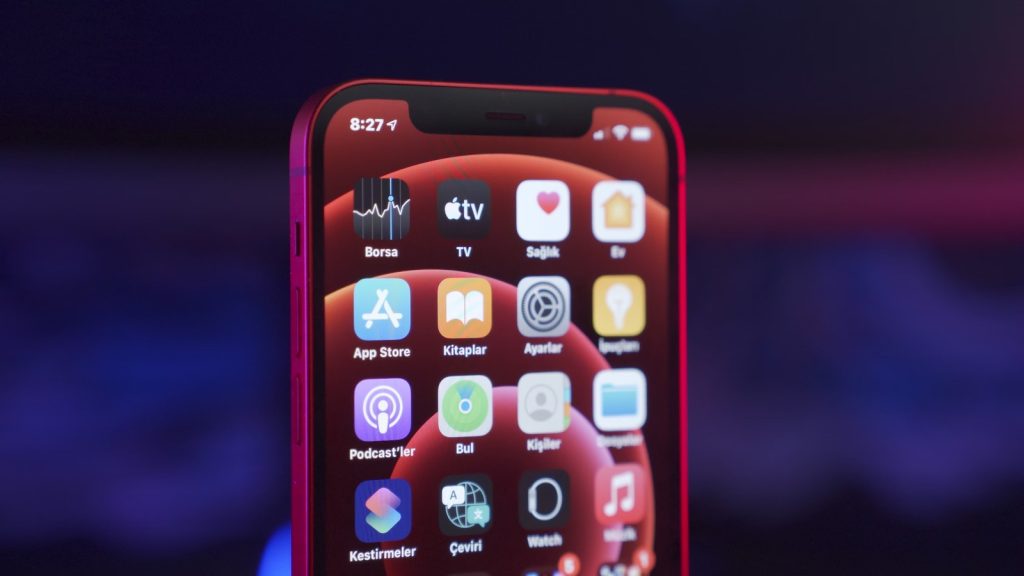
Image of an iPhone
Image: Onur Binay

The plan is said to cover eligible iPhones, iPads, Macs, and Apple Watches. But not all Apple products are set to be covered by the new lease plan. This is because some products will be excluded from the list, among them the iPhone 16, Apple Watch SE, budget iPad, and MacBook Neo. Apple also plans to exclude business and education purchases.

Unlike the current iPhone Upgrade Program, the new service is not expected to offer AppleCare coverage. Reports also suggest Apple will stop accepting new customers for the existing iPhone Upgrade Program after Apple Upgrade launches. The new leasing option may make premium Apple devices easier to afford. Customers can spread payments over several months instead of paying the full price upfront.

Advertisement

Source link

Continue Reading

Tech

Google Maps’ biggest Android Auto upgrade is reaching more users

Published

on

Google is widening the rollout of two long-awaited Google Maps features for Android Auto users: Immersive Navigation and a built-in live speedometer. After months of limited availability, reports suggest both features are now reaching a broader group of users, including people running stable versions of Google Maps instead of beta builds.

The update is part of Google’s ongoing effort to modernize the Android Auto navigation experience. While the company unveiled Immersive Navigation earlier this year as one of the platform’s biggest upgrades in years, the feature has been trickling out slowly, leaving many users without access. That appears to be changing, with more devices now receiving the update through a server-side rollout.

The rollout is still gradual, and availability may vary depending on region and device, but it signals that Google is becoming more confident about deploying the new experience at scale.

Maps becomes more visual while Android Auto gains a useful driving tool

Immersive Navigation makes Google Maps easier to follow while driving by displaying richer road layouts, clearer lane guidance, and more detailed intersections. The updated interface is designed to present navigation information in a way that’s easier to interpret with a glance instead of requiring drivers to study the map.

Advertisement

Alongside the redesigned navigation view, Google is also expanding the rollout of a live speedometer inside Android Auto. Unlike speed limit warnings, the feature displays the vehicle’s current speed directly within Google Maps, reducing the need to switch attention between the infotainment display and the instrument cluster in vehicles where that information isn’t readily visible.

Users receiving the update will also notice another interface change. On Android phones, the Gemini icon has replaced the Google Assistant shortcut in the top-right corner of Google Maps, continuing Google’s transition from Assistant to Gemini across its ecosystem.

A server-side rollout means patience is still required

Although more users are reporting access, Google has not released the features through a standard app update. Instead, the rollout appears to be happening server-side, meaning installing the latest version of Google Maps or Android Auto does not necessarily guarantee immediate access. Reports also suggest the features are appearing on stable builds rather than remaining exclusive to beta users, making them accessible to a much wider audience over time.

For Android Auto users, this update is less about adding flashy new capabilities and more about refining the everyday driving experience. Better lane visualization, more detailed navigation guidance, and an integrated speedometer are incremental improvements individually, but together they make Google Maps feel more complete as an in-car navigation system. As the rollout expands, more drivers should begin seeing those upgrades without needing to join Google’s beta programmes.

Source link

Advertisement
Continue Reading

Tech

The Next Solar Eclipse Will Deliver a Rare Sight: Totality at Sunset

Published

on

It’s been two years since the last total solar eclipse, but another one is coming in a few weeks — and with it, a special addition that rarely happens. Some people will get to see the solar eclipse during sunset, giving them an extraordinary view. The only problem is, you may have to jet off on a summer vacation to see it.

The total eclipse will only grace the shores of a few countries. According to NASA, the total eclipse on Aug. 12 will hit Greenland, Iceland, the northern half of Spain and one corner of Portugal. Spain is at the tail end of the eclipse, and as such, it will occur later in the day at around sunset, giving viewers in Spain a spectacular sight. 

Other countries in Europe and Africa will also get quite a show. Most of Europe and a sizable portion of northern Africa are still getting a partial solar eclipse, which will happen around sunset. That means tens of millions of people will be in the right place to see a partial or total solar eclipse at sunset. 

Russia is the luckiest country this time around. The eclipse starts at sunrise near the uninhabited Taymyr Peninsula, streaks across the world all day, and then Russians on the other side of the country are in the path for the partial solar eclipse at sunset, making Russia the only country that will see the eclipse at both sunrise and sunset.

Advertisement

How often do sunset eclipses happen?

Sunset eclipses don’t occur very often, at least where people can see them. There are two reasons for this. 

The first is that solar eclipses usually only last for a few hours, and the timing for that being right at sunset isn’t terribly common. 

The other reason is that solar eclipses have long paths, and sometimes those paths cut through the ocean or places where people don’t live. In the last 15 years, only a handful of total eclipses sit in that Venn diagram of occurring late enough in the day to happen at sunset, while also taking place where humans can see it.

The most recent sunset eclipse in North America was in 2014, but it was only a partial eclipse. South America’s most recent one was in July 2019, where people in Chile and Argentina had the best view of a total solar eclipse happening at sunset, while most of the rest of the country had a partial view. Asia’s most recent was in December 2019.

Advertisement

In short, this is a once-in-a-decade event for most of the world. 

A map of the Aug. 12 solar eclipse trail

The path of this year’s solar eclipse takes it across the northern portions of Earth before ending in Europe. North Americans won’t see much. 

NASA

Will this eclipse be visible in North America?

North America is pretty far from the main action, but a few states are in the path. The math is a little complicated, but if you look at a map of the US and draw a line from Alaska to North Carolina, all the states north of that line will get a little bit of an eclipse (less than 20% coverage), and all the states south of that line are sitting this one out. 

If you live in the path and want to check it out, be sure to adhere to proper solar eclipse viewing safety protocols so that you don’t harm your eyes.

Source link

Advertisement
Continue Reading

Tech

A significant Apple Watch upgrade is planned, but not for years

Published

on

Apple is reportedly testing its September 2026 Apple Watch lineup, but the new models are expected to be minor updates while more substantial changes are much further off.

Most recent rumors have claimed that the forthcoming Apple Watch Series 12 will not feature any hardware improvements over its predecessor. Now backing up those reports, Bloomberg says that neither the Apple Watch Series 12 nor the expected Apple Watch Ultra 4 will get visible upgrades to their design.

Instead, the updates will be concentrated on giving the new Apple Watches a significant performance boost through a new processor. There may also be health and fitness tracking improvements, though previous reports have claimed that there won’t be new sensors, so this may be a software update.

The new lineup has the codenames N237 and N238 for the Wi-Fi and cellular versions of the Apple Watch Series 12 while the Apple Watch Ultra 4 is codenamed N240. All three models are said to now be in late-stage testing.

Advertisement

It’s claimed that these are the only three models due to be launched in September 2026, and specifically that there will not be a new Apple Watch SE released at this time.

There’s no indication of when an upgraded Apple Watch SE may come, but the report says that work is being done on a significant redesign for the regular Apple Watch. That’s not expected to result in a new device for at least a couple of years, however.

Separately, a recurring rumor has claimed again that the 2026 Apple Watch models will feature a new system for attaching bands. It remains as possible yet unlikely, though, as it has for the last several years that the rumor has circulated.

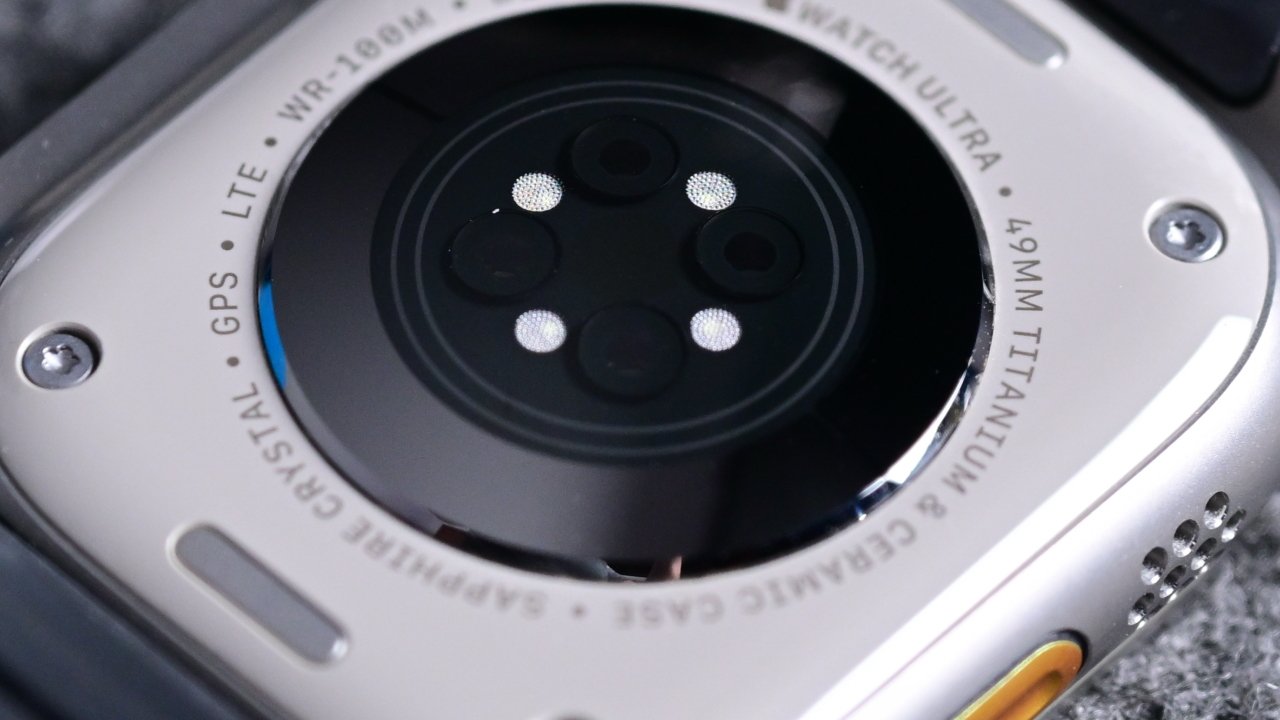
Also, while this new report predicts no noticeable changes to the Apple Watch Ultra, a rumor in May 2026 suggested that there may well be a significant update. Supply chain sources claimed that the Apple Watch Ultra 4 could double its number of sensors over the previous models.

Advertisement

Source link

Continue Reading

Tech

A New Middle Class of Content Creators Is Quietly Quitting the 9-to-5

Published

on

“The rise of TikTok, Instagram Reels and Amazon storefronts has created a new kind of white-collar exit strategy,” reports Bloomberg. Workers ditch office jobs not to become celebrities, necessarily, “but to piece together an income online through brand deals, affiliate links and highly personal videos documenting everyday life.”

In many cases, the followers necessary to sustain a living are smaller (and more attainable) than people might assume. A small but loyal audience can now generate enough income to rival a midlevel salary. Welcome to the middle-class creator economy. Last year, 25-year-old Abi Platock balanced a corporate marketing job in New York while posting online in her spare time. She built her audience by posting one or two videos a day, offering career advice, beauty tips and daily vlogs. “I signed my first brand deal in the four-figure range, and for me that was just such a big eye-opening moment,” Platock says of her partnership with deodorant brand Secret. She had 8,000 followers on TikTok at the time. “You can totally make it work without having hundreds of thousands of followers.” Platock, who now has roughly 25,000 followers across platforms, has signed about $25,000 in brand deals so far this year and expects her annual creator income to reach around $50,000 by yearend.

Her experience reflects a broader shift in advertising. Brands are increasingly moving money toward so-called microinfluencers — smaller online personalities who have less than 100,000 followers. “They are hiring a bunch of microcreators at scale instead of hiring a handful of macrocreators for what could potentially be the same cost,” says Ali Grant, co-chief executive officer of the Digital Department, a creator management company. And they perform where it matters most: engagement. An engagement rate of 3% is considered strong, and some microinfluencers exceed 10%, Grant says of the closely watched metric that tracks how often followers interact with content through likes, comments, shares and saves. Microinfluencers average a 3.2% engagement rate, almost triple the 1.1% rate for macroinfluencers (more than 1 million followers), according to growth marketing agency ATTN… A TikTok partnership with a creator who has around 50,000 followers can run a brand more than $3,500 for a single post, Grant says; with 10 times the followers, that fee might just triple, to around $10,000….

The influencer marketing economy ballooned to a projected $33 billion in 2025 up from $1.7 billion in 2015. The segment gained momentum after the COVID-19 pandemic, as dissatisfaction with traditional work pushed many to reconsider conventional career paths, says Brooke Duffy, a professor of communications at Cornell University. “They realized the trade-offs in terms of the investments of time, energy and human capital were not necessarily worth sacrificing so much of one’s personal self for,” she says. Success online can bring greater freedom — and even higher pay than many traditional office jobs, which have a median US salary of $69,000, according to Glassdoor. But the middle-class hustle still requires constant effort to maintain. The career has no promise of lifetime longevity. And unlike traditional workers, creators have no predictable paycheck or job protections, making career stability elusive. Roughly 57% of 3,000 surveyed full-time creators earn below a living wage from content creation, according to a report last year from Influencer Marketing Hub. Income from social media can fluctuate wildly from month to month, driven by shifts in algorithms, sponsorship cycles and platform trends.

Advertisement

“You could have a month where you make zero dollars, or you could have a month where you make $10,000,” Platock says.
The article cites Gallup Poll data released last year that found employee engagement in the U.S. had fallen to its lowest level in a decade [with engagement defined as “the psychological attachment workers have to their work/team/employer]. “Among the hardest-hit groups were Generation Z and workers in finance and technology. Broader workplace challenges, including rapid organizational change, hybrid and remote work transitions, and rising employee expectations are considered drivers of the overall trend.”

“For many workers, influencing can seem like a better deal; flexible schedules and independence wrapped in a veneer of creativity and fun. Almost 60% of Gen Zers say they’d become an influencer if given the opportunity, according to a 2023 survey from Morning Consult.”

Source link

Advertisement
Continue Reading

Trending

Copyright © 2025