

Business
Dow Rebounds 261 Points as Intel-Apple Chip Deal and Iran Peace Accord Lift Wall Street

Wall Street bounced back Thursday, with the Dow Jones Industrial Average climbing 261 points as investors shook off the previous session’s hawkish Federal Reserve shock and rallied behind a surprise announcement that Intel and Apple would partner to design and manufacture semiconductors on American soil — a development that sent chip stocks surging across the board and renewed confidence in the domestic technology sector.
The Dow closed at 51,753.90, a gain of 261.35 points, or roughly 0.51%, recovering a portion of the steep losses from Wednesday when the 30-stock index had shed more than 507 points after the Fed’s updated projections rattled markets. The S&P 500 gained 1.15% while the Nasdaq surged 1.5%, as investors focused on the Fed’s latest interest-rate decision and the signing of the interim U.S.-Iran peace deal. The Russell 2000 small-cap index, however, lagged the broader rally, losing 0.72%.
The Intel-Apple Announcement
The single biggest catalyst driving Thursday’s gains was a post on Truth Social by President Donald Trump, who announced that Intel had agreed to partner with Apple to design and build chips in the United States — a development framed by the White House as a victory for domestic manufacturing policy.
Intel’s stock rose 9% in premarket trading after Trump said the semiconductor company had agreed to a deal with Apple to design and build chips in the U.S. “Stupid Presidents took our Economy for granted, and let Taiwan and others steal our Semiconductor Factories,” Trump said in a post on Truth Social. “Apple has agreed to work with Intel to design and build its Chips in America.”
Intel’s stock has seen significant gains recently after struggling for years, having relinquished its dominant market position. The stock has surged 464% in the past 12 months, with the company hitting a market cap of $608.7 billion.
The announcement rippled through the semiconductor sector. Chip stocks surged in premarket trading, led by Intel, which rose 9.8%, while Micron Technology gained 4.8%, Advanced Micro Devices rose 3.9%, and Broadcom advanced 3%. The iShares Semiconductor ETF rose 4.6%.
Iran Peace Deal Adds Tailwind
Adding to the bullish mood was the formalization of a U.S.-Iran interim peace agreement that investors had been tracking anxiously for weeks. The U.S. and Iran signed a 14-point memorandum of understanding to extend the ceasefire, including in Lebanon, and reopen the strategically vital Strait of Hormuz. The agreement calls for both sides to continue talks toward a final deal over the next 60 days and includes a $300 billion reconstruction plan for Iran, as well as the removal of all types of U.S. sanctions against the Islamic Republic.
President Trump defended the agreement against critics on Thursday. “These fools, who think I haven’t been tough enough on Iran, when the stock market just hit a record high and oil prices are ‘tumbling’ down, are either jealous, bad people, or stupid,” Trump said Thursday on Truth Social.
The reopening of the Strait of Hormuz — a critical chokepoint for global oil shipments — pushed crude prices lower and eased inflation fears that had been a central driver of market volatility in recent weeks. Lower oil prices reduce cost pressures throughout the economy and can lessen the urgency for the Federal Reserve to pursue rate hikes.
Wednesday’s Fed Shock Still Echoing
Thursday’s gains came against the backdrop of significant unease generated just 24 hours earlier. Stocks fell on Wednesday, while Treasury yields surged, as investors grew uncertain over the path of monetary policy after several Federal Reserve officials indicated there could be a rate hike this year to tamp down on inflation.
At the conclusion of the Fed’s two-day meeting, the first under new Chairman Kevin Warsh, the central bank left interest rates unchanged at a target range of 3.5% to 3.75%. A number of Fed officials see rates increasing in 2026, according to the summary of economic projections. The fed funds rate’s median estimate for year-end now stands at 3.8%, an increase from 3.4% in the prior projections from March, which suggests that the committee sees at least one rate hike as necessary in 2026. Warsh revealed he abstained from submitting a projection himself, further complicating the outlook.
“The market reaction at this point is largely to the dot plot being much more hawkish,” said Claudia Sahm, chief economist at New Century Advisors. “The wind has changed a lot in terms of the inflation picture.”
The previous dot plot, in March, showed a rate cut expected sometime this year, a projection that the Fed’s latest guidance effectively discarded. The shift caught many equity investors off guard and triggered broad selling across technology and growth stocks.
A Market Navigating Multiple Crosscurrents
Thursday’s rebound illustrated the degree to which Wall Street is simultaneously processing several major macro forces — geopolitics, monetary policy, and a technology sector in the midst of a historic AI-driven reshaping.
Retail sales surged in May despite the war, up 0.9% from April versus expectations of 0.5%, reinforcing impressions of a solid economy. That data, released Wednesday, was interpreted as a double-edged signal: strong consumer spending is positive for corporate earnings but also gives the Fed more justification for tighter monetary policy.
The Roundhill Magnificent Seven ETF, which tracks an equal-weight basket of mega-cap technology stocks including Alphabet, Amazon, Apple, Meta Platforms, Microsoft, Nvidia, and Tesla, gained 0.43% to $64.86 in premarket trading.
The broader semiconductor rally on Thursday also represented a partial recovery from one of the sector’s most painful stretches of the year. Earlier this month, a weaker-than-expected AI chip outlook from Broadcom triggered a chain reaction that dragged down Micron, AMD, and Intel and contributed to a broader tech selloff. The Nasdaq Composite fell 4.18% on June 5 in its worst single-day decline since April 2025, while the S&P 500 snapped a nine-week winning streak.
Looking Ahead
The question now facing investors is whether Thursday’s rebound represents a durable shift in sentiment or a relief rally built on headlines. The Iran peace deal, while officially signed, remains conditional — with both sides committed to 60 days of further negotiations toward a permanent agreement. Any breakdown in those talks could quickly reverse the oil price declines that helped fuel Thursday’s optimism.
On the monetary policy front, the Fed’s hawkish dot plot has now recalibrated market expectations for the remainder of 2026. Traders are now fully pricing in a rate hike from the central bank by the end of the year, even as President Trump continues to call for cuts as Kevin Warsh, his appointee to chair the Fed, takes the helm.
For now, the combination of a landmark domestic chip manufacturing deal, declining oil prices, and a formalized Middle East ceasefire gave markets enough of a foundation to stage a meaningful recovery — and push the Dow back above 51,700 for the first time since the Fed’s warning rippled through trading floors on Wednesday afternoon.



Passionate about geopolitics and macroeconomics, I express my opinion through my articles and enjoy engaging with all of you. I also write about companies that catch my attention, particularly those in my portfolio. For me, Seeking Alpha is a way to expand and share my knowledge. Graduate in business economics, CFA Level 1 and popular investor on eToro.
Analyst’s Disclosure: I/we have a beneficial long position in the shares of META either through stock ownership, options, or other derivatives. I wrote this article myself, and it expresses my own opinions. I am not receiving compensation for it (other than from Seeking Alpha). I have no business relationship with any company whose stock is mentioned in this article.
Seeking Alpha’s Disclosure: Past performance is no guarantee of future results. No recommendation or advice is being given as to whether any investment is suitable for a particular investor. Any views or opinions expressed above may not reflect those of Seeking Alpha as a whole. Seeking Alpha is not a licensed securities dealer, broker or US investment adviser or investment bank. Our analysts are third party authors that include both professional investors and individual investors who may not be licensed or certified by any institute or regulatory body.
Taxi drivers, stockbrokers and the bloke propping up the bar at your local have all, at one time or another, served as a source of share tips. Now there is a fresh seam of supposed wisdom for retail investors to mine: chatbots such as ChatGPT and Claude.
These artificial intelligence tools, known in the trade as large language models (LLMs), are increasingly being pressed into service by amateur and professional investors alike to generate investment ideas. Yet for all the awe AI has inspired, the jury is still out on whether the machines are actually any good at making money.
Back in 1973, the academic Burton Malkiel argued in his now-famous book that a blindfolded monkey throwing darts at the financial pages of a newspaper could pick a portfolio just as profitable as one chosen by highly paid professionals. His point, the bedrock of the efficient market hypothesis, was that returns on the stock market are essentially random and unpredictable, and that nobody can hold a lasting edge over anyone else.
The notion that LLMs might be superior stock pickers to humans would, of course, blow a hole in that theory. A clutch of start-ups has already set AI to work trading and investing, with markedly mixed results.
According to a recent test run by the US research lab Nof1, six of the eight most popular AI models lost money investing in American technology shares. Anthropic’s Claude Sonnet shed almost 60 per cent of its initial $10,000 (£7,500) stake, while Google’s Gemini gave up more than $5,000. Only two came out ahead: ChatGPT, which made nearly $900, and Elon Musk’s Grok, which roughly broke even.
To the technology’s believers, however, it is only a matter of time before LLMs start besting the very best of Wall Street.
Faizan Ahmad, a former Meta engineer, is co-founder of Rallies, a start-up that uses AI to help people choose shares. His own experiments have thrown up some eyebrow-raising results, with the machines displaying a flash of ingenuity in navigating choppy markets.
Claude, for instance, deftly handled the fallout from the conflict with Iran by rotating out of growth shares and into defence stocks. ChatGPT, meanwhile, plumped for Credo Technology Group, a high-speed connectivity firm, as a likely beneficiary of the global build-out of internet infrastructure around seven months ago. The shares have since climbed by more than 75 per cent.
“No one had heard about that stock, and I hadn’t,” says Ahmad. “That stock was starting to show very early signs of becoming core to Nvidia’s and other players’ infrastructure.
“These models get access to all of the research and can go through entire SEC [US Securities and Exchange Commission] filings. The ability to parse a plethora of information and then find a stock that actually went up quite a lot was amazing.”
Rallies has launched its AI portfolios on a service that lets retail traders copy its trades. It now has $10m of retail money shadowing ChatGPT’s picks and $14m across all of its AI portfolios. And it is not only the small investor taking an interest.
Far from the living rooms and box bedrooms of ordinary punters, the gleaming towers of the City and the professional money men are dabbling too. Algorithmic trading has long been a feature of institutional investing, a subject Michael Lewis brought to wider attention with his 2014 book Flash Boys, but the arrival of LLMs has now piqued the interest of hedge funds.
At Man Group, the world’s largest listed hedge fund, LLMs have already been behind a number of profitable trade ideas.
“We have, right now, several examples where we’ve had an idea proposed by an LLM and have passed it through our diligence process before ultimately being accepted by the investment committee,” says Tushara Fernando, head of data and AI at the firm. “If it can come up with an accepted proposal, that’s fantastic, and then the resulting code goes into production and can trade real money.”
Unlike some of the start-ups letting AI loose unsupervised, Man uses the technology to generate ideas that still require a human stamp of approval. Even so, Fernando says the sheer speed of LLMs lets fund managers kick around far more ideas than they otherwise could.
“[A fund manager] might previously have tested two to three investment ideas a day, for example, modelling different scenarios with the aim of proving out new trades,” he says. “Now they’re able to explore and backtest hundreds in a very short space of time. While they’ve gone for a coffee, the agent’s running a backtest, which uses historical data to evaluate how a potential trade would likely perform under differing conditions.”
Many of the largest hedge funds were early adopters of AI and machine learning long before LLMs went mainstream. Bridgewater Associates, the US fund founded by Ray Dalio, launched a vehicle using machine learning as the primary basis of its decision-making two years ago. In 2018, Two Sigma poached Mike Schuster, an AI specialist, from Google’s Brain team to spearhead its efforts.
Balyasny Asset Management, one of the biggest hedge funds in the US, said recently that 95 per cent of its investment teams were using OpenAI. Agents are set to work analysing and synthesising tens of thousands of documents, from company filings to research notes and earnings reports. The firm has also used AI to monitor and update the probability of mergers and acquisitions completing, and to dissect speeches by central bankers. Balyasny said the technology had slashed the time taken to work out the economic implications of those speeches from two days to 30 minutes.
Unsurprisingly, simply having access to the latest and greatest models is not enough. It is proprietary data that gives the hedge funds their edge. Anthropic announced a partnership with Man Group in February to deploy its Claude model across the firm’s investment process, both to surface new insights from data and to speed up coding tasks.
That, though, presents its own headache for firms such as Man, which must bolt cutting-edge LLMs onto their own highly sophisticated technology stacks.
“LLMs are fantastic at using public knowledge. They may know the last 12 songs on the Taylor Swift album and how to solve a Rubik’s cube, but they don’t know Man Group: our strategies, how much we trade, or our databases or execution platform,” says Gary Collier, chief technology officer at Man Group.
For the largest and most established hedge funds, then, people remain firmly at the controls. Ahmad, who intends to launch a hedge fund through Rallies in due course, is convinced that fully AI-managed funds are not far off.
“We are very bullish that eventually, three or two years down the line, there are going to be hedge funds that are entirely run by AI, that are provided with data and anything the models need, which then go ahead and trade,” he says.
Forget the cabbie’s hot tip. The AI chatbot, it seems, may yet become the next font of all stock-picking wisdom. Whether it proves any more reliable than Malkiel’s dart-throwing monkey is, for now, anyone’s guess.
With AI now driving the lion’s share of global trading volume, the technology’s grip on markets is only tightening. For context on the wider boom, see how Britain’s AI investment hit a record £8.3bn and why Big Short investor Michael Burry is betting $1.1bn against AI stocks.

Jamie Young
Jamie is Senior Reporter at Business Matters, bringing over a decade of experience in UK SME business reporting.
Jamie holds a degree in Business Administration and regularly participates in industry conferences and workshops.
When not reporting on the latest business developments, Jamie is passionate about mentoring up-and-coming journalists and entrepreneurs to inspire the next generation of business leaders.
Business
Boston Pizza Royalties Income Fund (BPF.UN:CA) Shareholder/Analyst Call Prepared Remarks Transcript

Marc Guay
Well, welcome, everybody. Good morning. Welcome to the 2026 Annual General and Special Meeting of Unitholders of Boston Pizza Royalties Income Fund. My name is Marc Guay, and I am a trustee of the Fund. I would like to call the 2026 Annual General and Special Meeting of the Unitholders of Boston Pizza Royalties Income Fund to order.
As a trustee of the fund, I will act as Chair of this meeting. Jonathan Jeske of Boston Pizza International Inc. will act as Secretary of the meeting. Also Yanni Yu of Computershare Investor Services will act as scrutineer for this meeting.
I would like to welcome and thank you for taking the time to attend this meeting. Before proceeding with the formal business of the meeting, I would like to introduce the other trustee of Boston Pizza Royalties Income Fund, who is in attendance, Shelley Williams, Trustee. I would also like to note that Paulina Hiebert, Trustee is unable to attend today’s meeting due to medical reasons. On behalf of the fund, we extend our best wishes to Paulina and look forward to her return.
In addition, I would like to introduce the following representative of Boston Pizza International, who is participating in today’s meeting: Mr. Jordan Holm, President of BPI and Boston Pizza GP. I have before me an affidavit from [ Michael Kim ] of Computershare attesting that the notice calling this meeting together with the management information circular were mailed to registered shareholders and intermediaries in accordance with the National Instrument 54-101.
Therefore, I conclude that the meeting has been properly called. With your consent, I will not read the formal notice of meeting that was sent to unitholders. — your
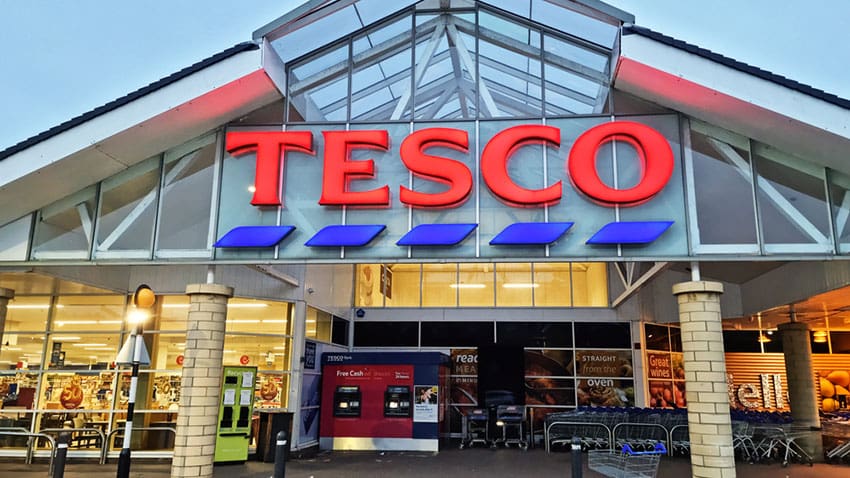
A washout spring has done more damage to Britain’s supermarket tills than any World Cup win, according to the boss of Tesco, after the country’s biggest retailer saw UK sales growth more than halve over a quarter blighted by rain and the fallout from the Middle East conflict.
Ken Murphy, chief executive of Tesco, said the grey, wet conditions that dominated much of this spring, set against a long run of sunshine a year earlier, had weighed on shopping habits far more heavily than either the football or the Iran war, even if the latter had created “ongoing uncertainty for many households”.
“The biggest impact on the market would be the weather,” Murphy said, with sunshine encouraging households to “eat together more, celebrate more and spend more on groceries”. On the tournament itself, he was warmer still: “It will be fantastic for the country if [England and Scotland] did well. It would give the country a real lift.”
There were, at least, flashes of the feel-good factor in the numbers. Sales through Tesco’s Whoosh rapid-delivery service jumped 40% around the England-Croatia game on Wednesday night, and climbed even faster in Scotland around Sunday’s win over Haiti. Sales of Irn-Bru, the fizzy drink beloved north of the border, rose by 50%, while canned cocktails surged 185% before the Haiti match. “The weather effect is the big difference,” Murphy insisted.
The retailer’s caution chimes with the wider read on the tournament. Football fans are expected to deliver a £267.7m boost to retail sales ahead of England’s second World Cup match on Tuesday evening, with close to £70m forecast to be spent in pubs and other venues, according to research from GlobalData for VoucherCodes. Industry forecasters have separately pencilled in a far larger windfall across the whole competition, with analysis published by The Grocer pointing to a record £2.9bn boost for UK retailers over the course of the tournament.
Yet the lessons of recent tournaments temper the optimism. Data from Euro 2024, in which England reached the final, suggests the overall sales uplift for supermarkets during a major championship is likely to be marginal. The market research firm Circana said cost-of-living pressures, heavy discounting and more time spent at home meant households were unlikely to spend “much more” than usual on food and drink. It is a pattern Business Matters has tracked before, with pubs, bookmakers and takeaways tipped to capture the lion’s share of the World Cup spend.
Tesco said comparable sales rose 1.8% to £13.4bn in the three months to the end of May, well below both the 4.2% logged in the previous quarter and the 2.3% growth City analysts had pencilled in. The figures were flattered by an 8.9% rise in online sales, with group sales up 1% to £16.8bn.
Murphy said consumer confidence remained low amid worries over the Middle East conflict, which has pushed up petrol prices and threatens to feed through to household energy bills later this year, though he stressed this had not yet translated into any significant change in shopping behaviour.
The chief executive added that growth had also been dampened by slowing grocery inflation, as the price of commodities such as coffee and cocoa eased and many food producers put measures in place to shield themselves from the earlier surge in energy costs. He said he did not expect grocery inflation to climb to the 9% levels suggested by some industry bodies, and that pump prices were “falling as we speak” amid hopes of a lasting peace deal between the US and Iran. The sensitivity of the basket to the seasons is well established, with a record May heatwave having lifted UK retail sales by 3.7% only weeks earlier.
Tesco said it had extended its pledge to match German discounter Aldi on leading lines to more than 2,000 of its smaller Express stores and had launched 520 new products, leaving it “well placed to build on our progress to date”. The renewed emphasis on price echoes the discounting battle the chain flagged heading into Christmas, as household budgets stayed under strain.
Not every corner of the business held up. Sales at Tesco’s Booker wholesale arm fell 3.2%, with takings from independent retailers and catering businesses sliding amid tough conditions on the high street.
Tesco, which holds its annual shareholder meeting later on Thursday, said it still expected to meet profit forecasts for the year, with analysts looking for around £3.25bn. Even so, the shares fell 2.4% in early trading. In April, the retailer warned of a possible dip in annual profits, which would mark the first fall since 2023. Reuters reported that the group’s Irish arm grew like-for-like sales by 3.3% to €967m over the same period, a reminder that the wider group is still expanding.
In the year to 28 February, profits rose 8.5% to £2.4bn as sales grew 4.3% to £66.6bn, including strong growth in the UK.

Paul Jones
Harvard alumni and former New York Times journalist. Editor of Business Matters for over 15 years, the UKs largest business magazine. I am also head of Capital Business Media’s automotive division working for clients such as Red Bull Racing, Honda, Aston Martin and Infiniti.
Apple is poised for one of its most consequential fall product launches in years, with the iPhone 18 Pro, iPhone 18 Pro Max, and the company’s long-anticipated first foldable iPhone all expected to go on sale in September 2026 — a trifecta of hardware that insiders and analysts say signals a fundamental shift in Apple’s smartphone strategy.
The launch cycle was effectively set in motion on June 8 at Apple’s Worldwide Developers Conference, where the company unveiled iOS 27 and released its first developer beta. The public beta is expected to go live in July, aligning with last year’s schedule and keeping the iPhone release timetable firmly on track.
A September Keynote — With a Twist
The special event keynote, where the new devices will be unveiled, is tentatively set for Wednesday, September 9, to avoid the Labor Day holiday on September 7. Apple rarely holds a keynote the day after a holiday, as it requires flying press and special guests to Cupertino.
If the announcement happens on Wednesday, September 9, pre-orders would begin on September 11, and new models would arrive on Friday, September 18. That timeline would represent a near-exact repeat of the previous year’s cadence, offering consumers and investors a predictable window for Apple’s biggest revenue quarter.
There is a caveat: if there are production hurdles with the foldable phone, possibly called the iPhone Ultra, that model may be announced alongside the iPhone 18 Pro and Pro Max but held back from going on sale by a few weeks — a strategy Apple employed with the Face ID-equipped iPhone X in 2017.
A Split Lineup Unlike Any Before
Perhaps the most significant strategic departure is not the hardware itself, but who gets it and when. Rather than launching the entire iPhone 18 lineup at once, Apple is reportedly planning to release only its premium models in September 2026 — the iPhone 18 Pro, iPhone 18 Pro Max, a new foldable iPhone, and potentially an updated iPhone Air — while the standard iPhone 18 and iPhone 18e would follow in spring 2027.
If accurate, this would mark the biggest change to Apple’s iPhone launch schedule since the lineup expanded beyond a single annual release. The move would effectively ensure that every device introduced at the September event starts at $999 or more, concentrating Apple’s flagship push squarely on the premium segment during the critical holiday shopping season.
The strategy reflects Apple’s shift toward premium positioning in its primary launch window and its focus on maximizing the debut impact of its first foldable device.
The A20 Chip and Under-Display Face ID
On the hardware side, the iPhone 18 Pro and Pro Max are expected to arrive with several meaningful upgrades. The anticipated launch will feature Apple’s new 2nm A20 chip, promising roughly 15% faster performance compared to the A19 Pro, along with improved efficiency for Apple Intelligence features, Apple’s new C2 modem, and a shift to under-display Face ID technology that will shrink the Dynamic Island for the first time.
Screen sizes are expected to remain unchanged at 6.3 inches for the Pro and 6.9 inches for the Pro Max.
The most talked-about camera upgrade is a variable aperture system on the Pro Max — a first for any iPhone. Where every previous iPhone camera has operated with a fixed aperture and relied on software to compensate for varying light conditions, the variable aperture mechanism would allow real hardware control over depth of field and low-light performance.
iOS 27 beta updates have also pointed to significant Siri AI upgrades and a further-refined Dynamic Island design.
New Colors, Familiar Frame
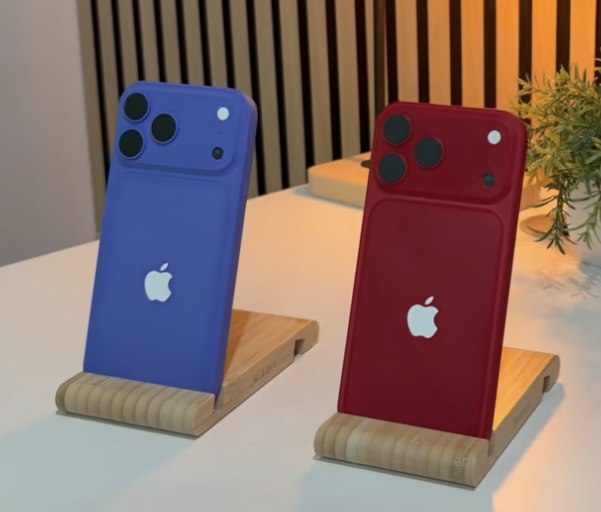
A Macworld source confirmed in April 2026 that there will be a new Dark Cherry color for the 2026 iPhone Pro, replacing the iPhone 17 Pro’s Cosmic Orange option. Other shades are said to include Light Blue, Dark Gray, and Silver.
The titanium frame and triple-lens camera layout will carry over from the iPhone 17 Pro. This is not a redesign year — it is an internals year.
Apple’s First Foldable iPhone
Alongside the Pro lineup, Apple’s first foldable iPhone is expected to debut in September with the iPhone 18 Pro and Pro Max. It is said to be a book-style foldable with a wide 4:3 aspect ratio, diverging from the more square design associated with Samsung’s Galaxy Z Fold line.
Samsung Display has secured an exclusive deal to produce the foldable OLED panels, and Apple has reportedly finalized its design ahead of mass production. The device is widely expected to carry a price tag above $2,000.
Whether the folding model launches simultaneously with the Pro devices or follows weeks later will be revealed at the keynote. Industry analysts caution that first-generation foldable devices typically see more meaningful refinements in follow-up releases, a dynamic that early adopters will need to weigh.
iOS 27 and the Road to General Release
The iOS 27 software will move from developer and public betas to general release around the Monday following the keynote. If the keynote takes place on September 9, the software is expected to land on September 14 or 15, making it available to any iPhone 11 or later.
First reviews of the new iPhones are expected to appear on or around September 15 or 16, with Apple likely sending early review units out to a small number of media on the day of the keynote to allow time for in-depth testing.
What It Means for Consumers
For buyers who typically choose the base iPhone model, the message from Apple this fall is straightforward: wait until spring 2027. For buyers on an iPhone 15 or older, or those who want the Pro model, September 2026 represents a genuine generational leap — the 2nm chip, the C2 modem, and under-display Face ID together constitute the most substantive hardware advance in several years.
Apple has not confirmed any details about the iPhone 18 lineup. The company is expected to make official announcements at its September special event.
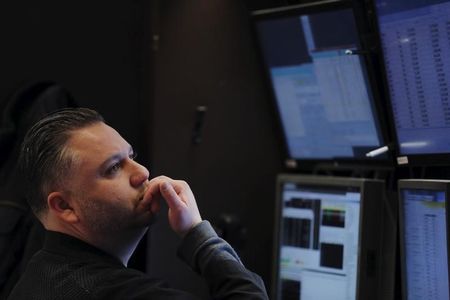
KeyCorp outlook raised to positive by S&P on risk improvements

Construction Partners amends term loan agreement, increases borrowing by $300 million
Delta Air Lines raises quarterly dividend by 15%
Form 8K Principal Investment Grade Corporate ETF For: 18 June
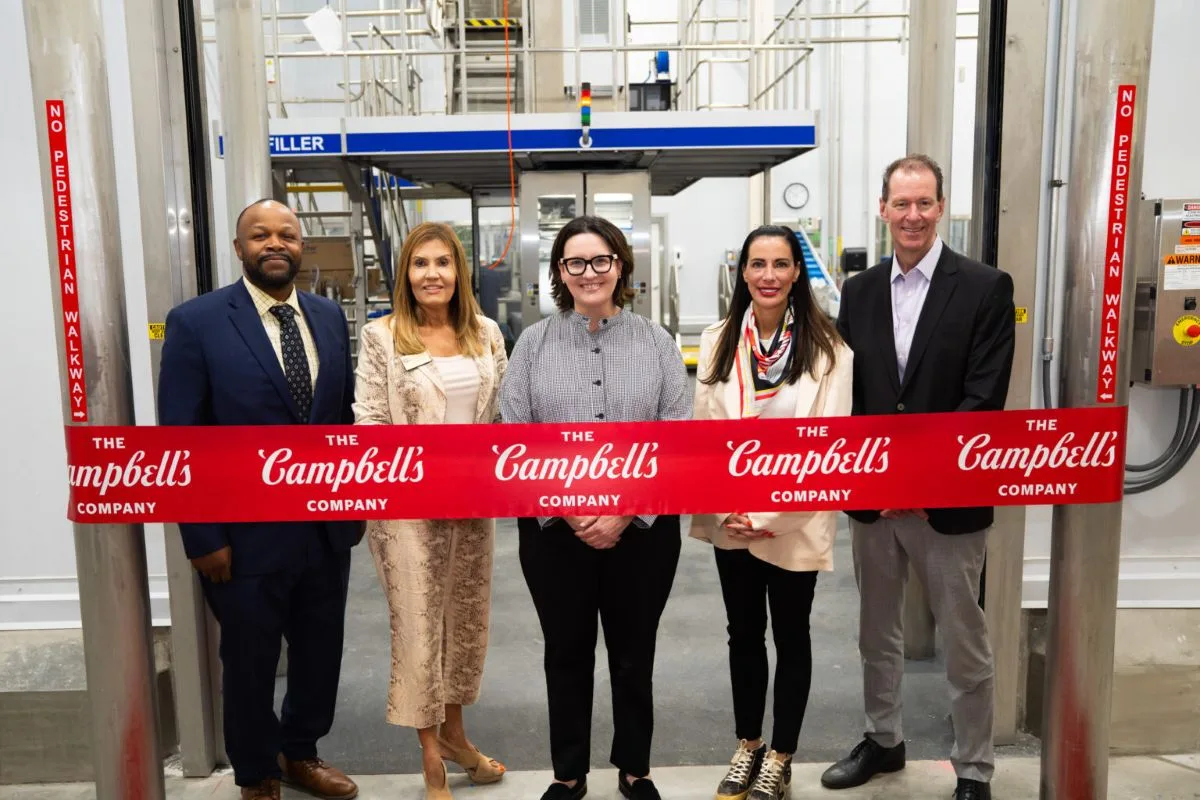

Maxton, NC., facility expansion will increase production capacity by 20%.

‘Abandoned’ vehicle driving motorists round the bend in Ayr town centre

SpaceX: How AI Ruined A Perfect Business (NASDAQ:SPCX)

Ireland’s Government Proposes Crypto Safeguards in Response to Risks

Blockchain.com files with SEC for U.S. IPO

No Jackpot Winner as $257 Million Prize Rolls Over to $269 Million Monday Draw

Israel says it has killed new Hamas military leader in Gaza City airstrikes

*NEW* BROKEN 250+ MILLION CREDIT! x999 WHEELSPINS GLITCH! FORZA HORIZON 6 MONEY GLITCH! *DO NOW*

The Next Crypto BULL MARKET Begins…FIND OUT HERE!

Fast Rap Trap Rap Beat Instrumental ”MONEY” DaBaby x Tyga Type Club Hype Banger Whistle Beat
-
 Business4 days ago
No Jackpot Winner as $257 Million Prize Rolls Over to $269 Million Monday Draw
-

 Fashion6 days ago
Weekend Open Thread: Tuckernuck – Corporette.com
-
 Crypto World4 days ago
Zimbabwe Requires Crypto Businesses to Register Annually Under New FIU Regulations
-

 Crypto World6 days ago
Bitget enters Argentina’s regulated crypto market through PSAV registration
-

 Tech6 days ago
NanoClaw integrates JFrog registries to secure AI agent downloads
-

 Tech6 days ago
This Week In Security: Microsoft On Microsoft, Register Your Domains, Linux On ARM, And FreeBSD Joins The File Cache Club
-

 NewsBeat7 days ago
El Nino has formed in the Pacific and could set records, forecasters say
-

 NewsBeat6 days ago
FBI searches office of Ohio voter registration group
-
 Tech7 days ago
Anthropic is spending $150M to embed 1,000 AI fellows inside nonprofits. No degree required.
-
 Entertainment7 days ago
‘The Pitt’s Fan-Favorite Doctor Confirms Noah Wyle Gave His Blessing to Return [Exclusive]
-
 Tech7 days ago
Former AWS CEO Adam Selipsky to lead new $10B AI data center venture
-
 Crypto World7 days ago
Ripple and Bitso Bring MXNB Stablecoin to XRP Ledger
-
 Entertainment4 days ago
Matt Damon’s Viral Sci-Fi Thriller Has Taken Over HBO Max
-

 Business4 days ago
Anthropic staff to meet White House officials next week, Axios reports
-

 Business7 days ago
Justin Bieber Prepares for 2026 Tour Return with New Music and Promoter Talks
-

 Tech4 days ago
As AI companies race to go public, who else is along for the ride?
-
 Crypto World4 days ago
Bitcoin could crash to $48,000, if this historical pattern is triggered
-
 Tech7 days ago
Euro-Office 1.0 Arrives To Open-Source Infighting: ‘Compatibility Is Not Sovereignty’
-

 Politics4 days ago
“Israel’s” ban on ICRC visits ruled illegal, but Knesset moves to stop them permanently
-
Entertainment7 days ago
Ana Navarro unleashes explosive tirade on ex-Trump aide, Disney Channel star in epic on-air fight: 'Have you no shame?'
You must be logged in to post a comment Login