If you live long enough, you’ll wake up one day and find that you’re living in a world you no longer understand. Lately there are things happening with AI in a couple of disparate parts of Amazon that brought that lesson home in a big way.
The first is that, late last year, they acquired Bee, an AI wearable that is distressingly, upsettingly good. The second, which I want to talk about today as I fly back from AWS’s NYC Summit, is Quick Desktop. The best way to describe this is “Enterprise OpenClaw in a polished app.”
Yes, I know this sounds like I’m being blackmailed. Read on.
You work at Amazon, right?
Amazon has spent the last three years breathlessly telling us that they’re a leader in AI, then shipping products which make it clear that they’re unsure what leadership looks like. They’ve spent far longer building user interfaces that carry a design aesthetic of “complete crap.” Even Amazon’s website, where you buy everything from underpants to chainsaws to dog food to more underpants, is not a well-designed interface; we’ve all just learned to live with it.
Advertisement
The single good interface to come from Bezos and Coo was the Kindle e-reader: push a button, the page turns. And then they removed the buttons. So yes; “We’re launching a desktop AI assistant” is the exact opposite of encouraging coming from these folks.
It started like you’d expect. You pop over to the download page and grab the download. On a Mac it’s half a gigabyte because of course it is; this is totally normal and fine in 2026. Install it, fire it up, and … wait a bit. It has to think, and gather its wherewithal before it can get to work.
And then the hits start coming.
I had talked to people who have used this and raved about it. The problem here is that all of these people work at Amazon, and the current state of the product reflects that. They have a single identity provider they use internally; external users see a confusing array of offerings, each with its own byzantine flows. The feeling is not dissimilar to waking up in the middle of a hedge maze, with no idea how you got there, and discovering that someone just set it on fire.
Advertisement
At one point during my time using Quick Desktop, I was logged out and had to log back in. After guessing seven different identity providers, I gave up and emailed the service team for help with this. After some back and forth, I was able to get back in. (GitHub! Future Corey, if you find yourself in this situation, you authenticated via GitHub!) It’s clear that the people building this service aren’t living the external user experience. It’s why I maintain that Amazon’s internal AWS account management tool is the service that I hate the most; it separates the people building AWS from the customers using it.
At the moment, other similar challenges show up. You’d never have more than one email account from the same provider, right? (Google Workspace in my case, provided it hasn’t been deprecated by the time this article goes to print.) You’d never have business conversations via iMessage, or Signal, or LinkedIn DMs, or any number of other services, right?
The point isn’t the snark; it’s that Quick Desktop only knows about the channels its connectors deign to support. Every deal I’ve ever closed in a LinkedIn DM, every favor traded over Signal, every “hey, quick question” that arrived via iMessage is simply invisible to it — but it makes its confident little suggestions anyway, blissfully unaware that a good chunk of my professional life happens in places it can’t see. Here’s a free hint to the product team: do you think I mentioned the Bee in the opening of this article because I’m making a fashion statement?
And then it starts to work…
Once you prove yourself worthy by getting Quick Desktop set up, it … sits there without doing much. It has a chatbot interface, which surely you’ve never seen before in an app, backed by a personality I’ll call “Uninspiring Accountant.” What was the point?
Advertisement
And then things start to happen.
Your activity feed starts surfacing things from your email. From Slack. From your calendar. I don’t know about the rest of you, but my email inbox is where tasks and hope go to die.
Slowly but surely, Quick Desktop starts making suggestions, surfacing things that you should handle, proposing email drafts (ugh, in such a bland corporate voice; I hope this email finds you before I do), and giving you quick links to the various apps where these things live so you can see the context it’s surfacing.
I went in skeptical, partly because I’d already cobbled together a janky version of this for myself by pointing Claude Code at a pile of APIs, so I had a decent sense of what these things miss.
Advertisement
And that’s when I became a Quick Desktop convert: it flagged an email buried forty messages deep in my inbox that I’d mentally filed under “dealt with” – but very much was not. My own inbox had given up on me like everyone who’s ever tried to love me, but Quick Desktop hadn’t.
This is an Amazon product, and it’s pretty clear that they expect you to work with Quick Desktop the way they reportedly work with their own employees: by beating them into compliance. Their own custom connectors and (lack of) extensibility system make it pretty clear that there’s a corporate IT department somewhere that’s configuring and getting this set up for folks. I freely admit that’s not my use case; I’m testing this by myself, not sharing it with my colleagues.
But the product is improving. Today, it doesn’t really sync data or state between multiple machines; we’re still waiting for Amazon to discover this whole “cloud” thing. That’s almost certainly going to change in the near future.
Along with the just-announced AWS Context approach, once you have a team of people using it, the shared knowledge graph it can build about your entire organization promises to be a significant boon.
Advertisement
The part where I trust Amazon
That same knowledge graph is also a massive security treasure trove: every deal, every org-chart grudge, every “please don’t forward this,” every “how do I do the basic functions of my job” chat sessions, lives in one queryable place. Handing that to a vendor terrifies me. It should terrify you. And yet Amazon is one of a vanishingly small number of companies I’d trust with it.
I want to acknowledge how strange it is that I just wrote that. I have spent a decade as a professional thorn in this company’s side. I have a financial incentive, a personal brand, and frankly a temperament that all point toward not trusting AWS with so much as my lunch order. But credit where it’s due: whatever else they get wrong, Amazon takes security and data privacy deadly seriously, and they have the scars and the org structure to prove it. I have lived through this multiple times, and I’ve seen what AWS does when security competes with other pressures. The list of companies I’d let build a map this detailed of my business is damn short, and most of the names on it are not the ones building these products.
They have the security chops, but they have a completely different massive marketing problem. How do you get customers to try this out when you’ve incinerated your credibility in this space like it’s your engineering team’s token budget? “For once we have a product that is not shite,” while honest, is probably going to be tricky to get through AWS corporate comms.
Would I use it myself? I am
Reader, I pay cash money for this.
Advertisement
Everything I’ve said above about its sharp edges are true, and I’ve barely gotten started. I have three pages, ten slides, and one interpretive dance full of “here’s why the product sucks” feedback I’ll be giving to their product team, who are going to be astounded when I bust into their office uninvited. But I’m not throwing stones from the sidelines on this: “I am a paying customer, and I want this thing I pay you for to be better than it is, so you will listen to every goddamned word I have to say” is a powerful message, and one that’s particularly resonant to Amazonians.
I can see a world in which I roll this out to the rest of the company. My Claude Code contraption is interesting and in some ways more capable, but it scales precisely as far as “grumpy former sysadmin with a penchant for the CLI” and not one inch further. Our team would justifiably revolt if I tried to inflict it upon them. The hell of it is, the only thing that Amazon has to do to get Quick Desktop to beat my Frankenstein setup is “let Quick configure itself.” Yes, there are problems with that approach; I leave them to Amazon to sort through.
And so… I don’t entirely know what to do with myself in a world where suddenly Amazon is shipping desirable AI products that I’m happy to pay for. First the Bee wearable and now this. That’s two data points, and for a company whose AI track record reads like a list of things to apologize for, two data points is alarmingly close to a trend. Their biggest problem is going to lie in outrunning their own shadow, and changing their own nature. I used to be confident they couldn’t. I’m less confident now, and I’m not sure how I feel about that. ®
Q&M Dental Group is eyeing 300 clinics with a S$146M expansion plan
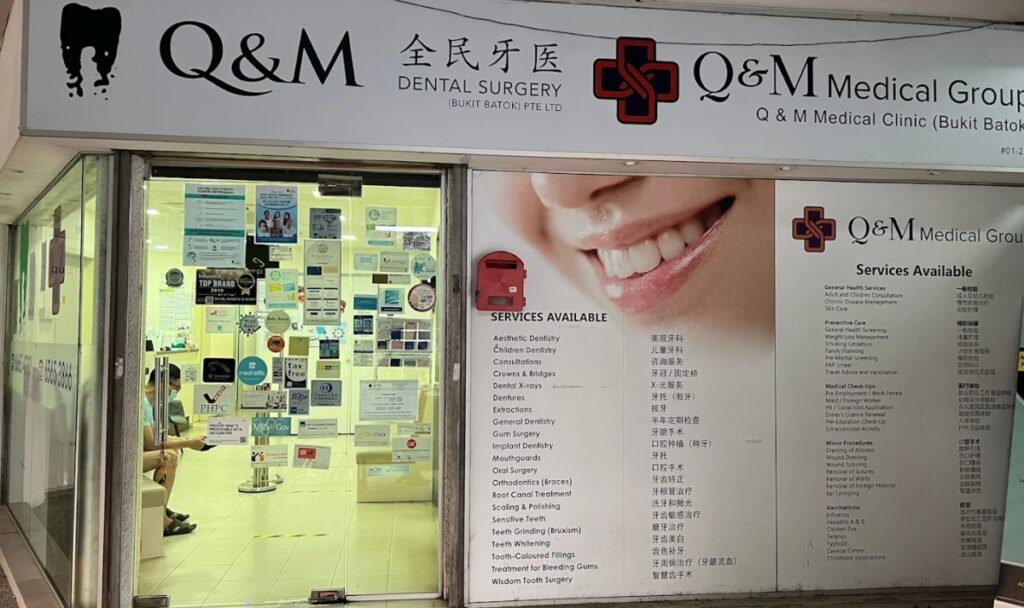
If you’ve walked around Singapore long enough, you’ve probably seen one: a neighbourhood dental clinic with bright green lettering and a giant tooth logo.
Chances are, you never thought much about it. But behind those familiar storefronts sits a SGX-listed company worth over S$500 million, operating 110 clinics across Singapore and now pursuing acquisitions in Australia, Thailand, China, and even of another local rival.
That company is Q&M Dental Group—and after nearly three decades of quietly dominating Singapore’s heartlands, it’s now betting big on becoming a regional dental giant.
From the outset, Dr Ng had little interest in building a premium dental brand. Instead, he focused on something far more scalable: providing affordable dental care to everyday Singaporeans.
Advertisement
That philosophy was even reflected in the company’s original Chinese name, “全民” (Quan Min), meaning “for all the people.”
Demand grew quickly and outpaced what one dentist could handle.
By 1998, fellow dentist Dr Ng Jet Wei had joined the practice. A year later, together with Dr Chong Kai Guan, the trio had opened another four clinics. By 2000, Q&M was already operating 10 clinics with 20 dentists.
Rather than chasing prime shopping malls or affluent districts, Q&M planted its clinics where Singaporeans actually lived—in HDB estates, neighbourhood centres, and suburban malls.
Advertisement
The strategy was simple: keep prices accessible, expand steadily, and acquire smaller dental practices whose dentists and patient bases came as part of the deal.
Along the way, Q&M also built supporting businesses, including its own dental laboratory to produce crowns, bridges, and dentures in-house, giving it greater control over costs and operations.
By the time the company listed on the SGX Mainboard in 2009, it already had a proven expansion playbook. The IPO simply gave it the capital to execute it at a much larger scale.
Building the Q&M empire
Image Credit: Q&M College of Dentistry
In the years that followed the IPO, Q&M expanded aggressively through acquisitions, and revenue climbed from roughly S$60 million to S$155 million by 2016.
This brought Q&M Dental Group’s market capitalisation to S$557.6 million that year.
Q&M’s growth has not been limited to opening more outlets. Alongside the clinic network, the group has built a set of adjacent capabilities that reinforce the core business.
Q&M’s training college gives it a head start in sourcing and retaining the practitioners it needs to keep opening clinics, a structural advantage that competitors cannot easily replicate.
Image Credit: Business Times
When COVID-19 hit, Q&M pivoted part of its operations, acquiring Acumen Diagnostics to distribute test kits and run laboratory PCR testing in 2021—a business that briefly became a significant revenue contributor before demand evaporated as the pandemic receded.
In 2023, it opened a Free Dental Clinic at Chai Chee Road, offering essential dental treatment at no cost to underprivileged patients. While charitable in nature, the initiative also reinforces Q&M’s standing in the communities where its business is most deeply rooted.
More recently, Q&M has turned its attention to technology.
Advertisement
In 2024, the group invested in EM2AI, a dental technology firm developing AI-powered diagnostic and treatment-planning tools, including a cloud-based practice management system called EM2Clinic.
The tools are designed to reduce the administrative burden on dentists and standardise clinical workflows, which is useful as Q&M grows toward a network where consistency across hundreds of clinics matters more than before.
That scale creates advantages that go beyond simply having more outlets.
As Singapore’s largest private dental chain, Q&M has greater bargaining power with landlords and suppliers, while its size also allows it to spread fixed costs across a much larger network.
Advertisement
Government healthcare policies could further strengthen that position.
The enhanced Community Health Assist Scheme (CHAS) subsidies introduced in Oct 2025 expanded coverage for restorative dental procedures and extended eligibility to 1.7 million cardholders. As the country’s largest CHAS-accredited private dental chain, Q&M stands to benefit more than smaller competitors. Analysts estimated the changes lifted the group’s revenue by around 3% in the second half of FY2025.
More support is also on the way. From mid-2026, seniors will be able to use up to S$400 a year from Flexi-MediSave for dental treatment at CHAS clinics. The policy aligns neatly with Singapore’s ageing population, with one in four residents expected to be aged 65 or older by 2030. As dental needs typically increase with age—and many seniors live in the heartland estates where Q&M has built its network—the demographic trend could provide another long-term tailwind for the group.
Meanwhile, Q&M continues to consolidate its position. In Mar, the group announced plans to fully acquire an unnamed Singapore dental chain, backed by a profit guarantee of up to S$34 million over five years. The deal would further strengthen its presence in its home market even as it looks overseas for growth.
Advertisement
Now betting big on the region
Aoxin Quanmin Stomatology Hospital in Dalian, China./ Image Credit: Aoxin Q & M Dental Group Limited
For most of its history, Q&M’s overseas ambitions effectively stopped at the Causeway.
Over the years, the group steadily expanded its presence in Malaysia, where it now operates 38 dental clinics alongside a dental supplies and equipment distribution business. Beyond that, however, its growth remained largely concentrated in Singapore.
That is now changing.
In recent months, Q&M has unveiled plans to enter three markets almost simultaneously, marking the group’s most ambitious expansion programme to date
The biggest move is Australia. In Jul 2026, Q&M signed binding agreements to acquire Experteeth Group for A$119.64 million (S$107.83 million). The deal would add 40 clinics and around 120 dentists across New South Wales, Victoria, Queensland, Tasmania, and the Australian Capital Territory, making it Q&M’s largest acquisition ever and its first entry into a market outside Asia.
In total, the acquisitions in both countries will amount to a combined US$113.2 million (S$146.26 million) investment to build a pan-Asian dental company.
China forms the third pillar of Q&M’s expansion strategy. The group also owns Chinese dental operator Aoxin Q&M, which it has now fully consolidated as a subsidiary. It plans to use the business as a platform to acquire dental chains in southern China, expanding beyond Aoxin’s traditional base in the country’s northeast.
Not every growth initiative, however, has gone according to plan.
In Apr 2025, the group also proposed a secondary listing on Bursa Malaysia, which would have given Malaysian investors direct access to the stock and strengthened Q&M’s capital markets presence in its second-largest operating market. The plan was later shelved, with the company citing prevailing market conditions.
What could go wrong?
Aoxin Quanmin Stomatology Hospital in Panjin./ Image Credit: Aoxin Q & M Dental Group Limited
Three concurrent acquisitions in markets Q&M has limited or no experience operating in are an ambitious programme for a management team whose track record has been built almost entirely in Singapore and Malaysia.
It only turned a profit again in 2025, roughly six years after the losses began.
Advertisement
Now Q&M has folded Aoxin fully into its own accounts, and in doing so has added S$77.0 million of goodwill to its balance sheet—essentially the premium it’s paying on the bet that these businesses will earn enough in future to justify the price.
If they don’t, that goodwill may eventually need to be written down, hitting profits the same way it did for Aoxin’s own past investments. Australia and Thailand are brand-new markets for Q&M with no comparable track record to lean on, so if that expansion underperforms, the money put into it may not pay off.
Image Credit: Q&M Dental Group
Dental practices are also relationship-driven businesses, where patients follow their dentist, not the brand. When a chain acquires a clinic, the real asset is the practitioners inside it.
If key dentists leave post-acquisition and take their patient books with them, the acquired revenue can evaporate quickly.
Then there is the Johor-Singapore dynamic complicating profits further. The Rapid Transit System Link scheduled to open in Dec 2026, will cut the Woodlands North to Bukit Chagar crossing to around five minutes—at a fare of roughly S$5 to S$7.
When the RTS removes the main friction, being the border queue, from that equation, the maths for price-sensitive patients shifts meaningfully.
Q&M’s 38 Malaysian clinics, including in Johor, might mean some of that outflow stays within the group. But how much of Q&M’s dental revenue holds up once the crossing becomes as easy as taking the MRT is a question nobody can fully answer yet.
Advertisement
From a single clinic in Bukit Batok to a listed group eyeing four countries simultaneously, Q&M’s story is, in many ways, a study in patience. Three decades of unglamorous, heartland dentistry have built toward a moment where the company is finally ready to bet big on becoming Singapore’s dominant private dental chain in the region. Whether the bet pays off will be the next chapter.
Chrome‘s Reading Mode just got a new button tucked inside its settings menu. Google is quietly testing a translate option for the feature on Chrome Canary, the browser’s experimental testing channel where new ideas show up long before they’re ready for everyday use.
What does this new translate button actually do?
The option was first spotted by @Leopeva64, who shared a video demo on X highlighting the new button tucked inside Reading Mode’s dropdown menu. It exists alongside the controls for theme, font, images, and links, though it doesn’t actually do anything yet. Once this feature is live, clicking it would translate whatever page or PDF you’re reading into your preferred language, without leaving Reading Mode.
For now, clicking the button does absolutely nothing. Google appears to have added the interface piece first, well before building out the actual translation function behind it. If you need to translate a page today, the existing Google Translate browser extension already covers the same job just fine.
Is it rolling out to everyone on Canary?
Not quite yet, it seems. PiunikaWeb tested this on the latest Chrome Canary build, but the translate button was nowhere to be found. That mismatch suggests Google might be testing this in limited batches rather than pushing it to every Canary user simultaneously, or it could be a platform-specific rollout.
The Bavarian space-tech is reportedly aiming to raise at least $300m.
As Europe ramps up efforts to compete with US heavyweights in the space sector, Germany’s The Exploration Company (TEC) is reportedly eyeing a major raise that could value the start-up at more than $2bn.
Founded in 2021 by Hélène Huby and a team of aerospace veterans, TEC is building a full-stack space transportation system.
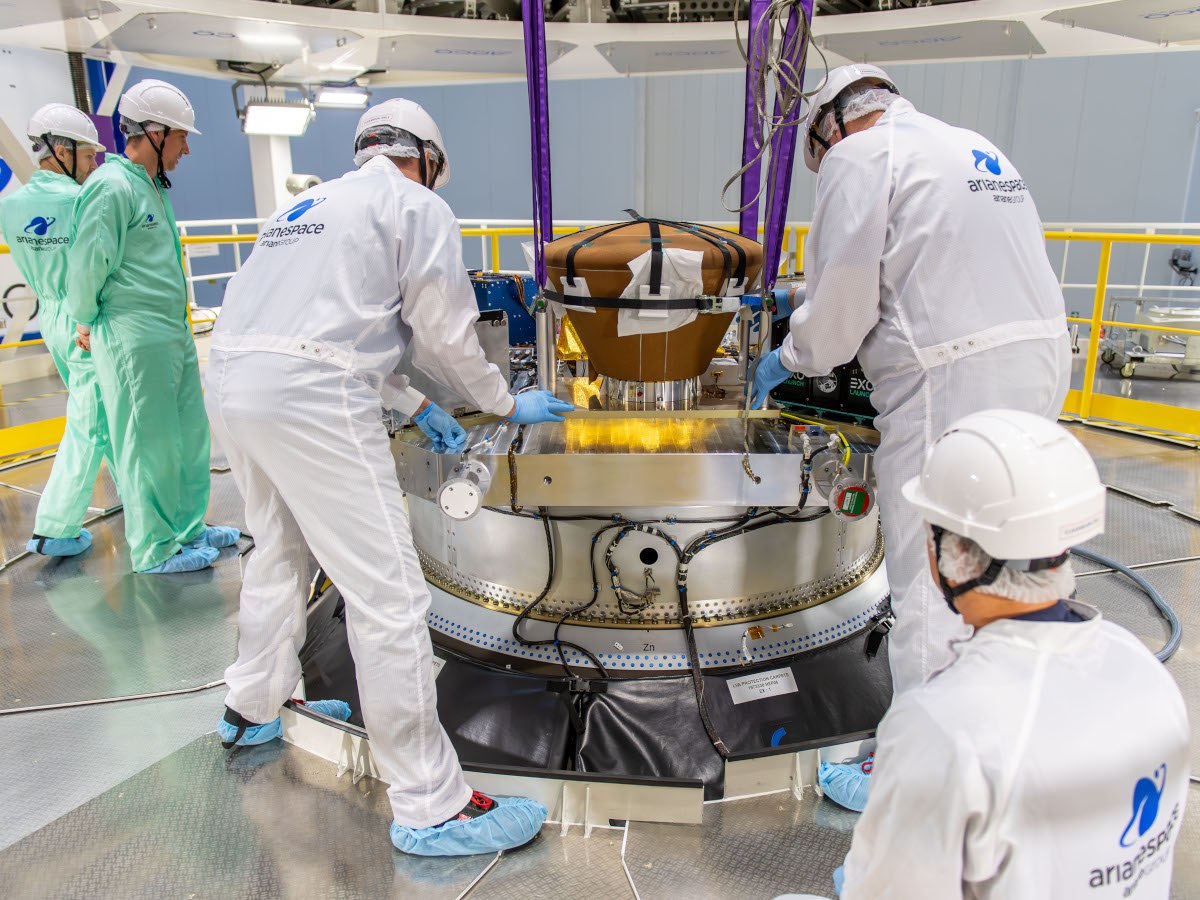
Nyx, the company’s reusable space capsule designed to dock with any space station is expected to go on its first flight demonstration in 2028. The company is also developing a high-thrust staged combustion rocket engine called Storm.
Advertisement
TEC’s website states that it aims to address the “exclusive[ity]” of space travel by building space vehicles “for humanity”. It is the first European company to have signed a Space Act Agreement with NASA.
The company operates out of Germany, France, Luxembourg, Spain and Italy, with offices in the US and the United Arab Emirates.
According to the Financial Times, the Bavarian space-tech is aiming to pool at least $300m, with the EQT-managed $5bn Scaleup Europe Fund in talks to make one of its first investments in the company.
The fund aims to close the persistent late-stage financing gap that has long pushed European scale-ups to raise capital elsewhere and, in many cases, to relocate abroad altogether. Scaleup Europe Fund is also reportedly expected to back the Paris-based Mistral AI in an upcoming round.
Advertisement
EQT Ventures has backed TEC since 2023. Other investors, including Bayern Kapital, Promus Ventures, Partech, Vsquared Ventures, Cherry and Red River West also back the company.
TEC did not disclose its valuation following a 2024 raise of $160m. Earlier this month, the company opened a new lab near the NASA Johnson Space Center in Houston to conduct further testing on a full-scale mock-up of a Nyx crew capsule.
Don’t miss out on the knowledge you need to succeed. Sign up for the Daily Brief, Silicon Republic’s digest of need-to-know sci-tech news.
A Cincinnati man says that if the fall detection feature of Apple Watch hadn’t called 911, he would have died from undiagnosed blood clotting.
Back in 2023, it was the Apple Watch heart rate monitor that saved a Cincinnati woman’s life by alerting her to a dangerous condition. Now the device’s fall detection has done the same for Mohammad Islam in the city, according to local stationWKRC.
Islam was at home and taking out the trash when he said he turned around and “just collapsed.”
“I don’t know how long I was there,” he continued. “Suddenly my eyes opened up and I was on the ground and sweating like crazy.”
Advertisement
“I tried to get up, but couldn’t. There was a chair so I held it…,” he said. “Then I heard the sirens coming.”
Emergency medics took him to the University of Cincinnati Medical Center where he has been diagnosed with blood clots in his lungs. The cause has not yet been identified, but he has been sent home with medication.
The Apple Watch he wore was given to him by his daughters, and even before the incident, they reportedly pressed him about wearing it. “[Also they] gave a gift to their mother… an Apple Watch,” said Islam, “and every day they call me, they say ‘Are you wearing your Apple Watch?’”
“They’re overjoyed that their gift saved me,” he said.
Advertisement
Islam had not intentionally turned on the fall detection feature, but he is aged over 55, so it was enabled automatically. He says that he was aware of it because of getting occasional false alarms, but he did not know the extent of what the feature can do.
“Because when I work in the yard or something and I bang my hand, it says, ‘Hey, did you fall down? Should we call SOS or something?’” he said. “So, it was in the back of my mind, but I did not know that it was going to call 911.”
Apple Watch keeps saving lives
Apple and just about every smartwatch maker is currently being sued over fall detection and an allegation that it infringes on patents owned by UnaliWear. But in the meantime, it has directly saved countless lives since its introduction with the Apple Watch Series 4 back in 2018.
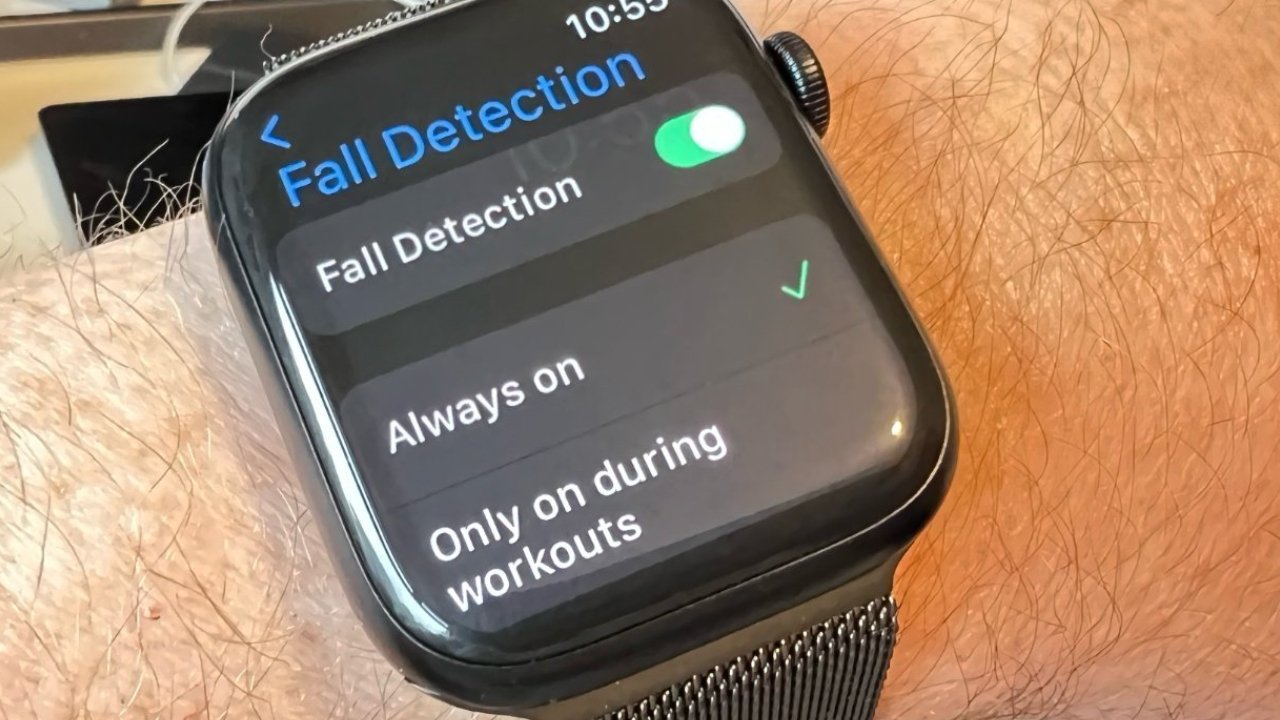
Fall Detection settings on Apple Watch.
Advertisement
At times, that detection has been when the wearer has been involved in a car crash and the Apple Watch messaged the driver’s family. It’s helped injured mountaineers, too.
Then across its multiple health features, the Apple Watch has also alerted many users to conditions that, if not immediately life-threatening, were extremely series. It was AppleInsider managing editor Mike Wuerthele’s Apple Watch that warned him about a potential atrial fibrillation after his daughter’s passing.
It’s events like these that Tim Cook has said he is most proud of from his time as CEO.
“I remember getting the very first Apple Watch note from a user who told me that the watch saved their life,” he said in April 2026. “Now, of course, I get these on a daily basis, but that first one hit me particularly hard. It caused me to just stop in my steps.
The Clop ransomware gang (also tracked as Cl0p) is targeting Internet-exposed PTC Windchill and FlexPLM instances in a new data theft extortion campaign.
Clop has reportedly been exploiting a critical improper input validation vulnerability tracked as CVE-2026-12569, which allows attackers to execute arbitrary code on vulnerable Windchill and FlexPLM instances.
As cybersecurity company ReliaQuest reported on Thursday, Clop operators have been deploying JSP webshells that allow them to exfiltrate sensitive data from targeted companies’ compromised PLM platforms.
“ReliaQuest has observed threat actors actively exploiting CVE-2026-12569, a critical unsafe deserialization vulnerability (CVSS 9.3) affecting PTC Windchill and FlexPLM. Exploitation enables unauthenticated remote code execution and JSP web shell deployment for remote command execution and sensitive product data exfiltration,” the company said.
“The actor behind these attacks remains unconfirmed. however, the observed tradecraft shares characteristics with previous Cl0p campaigns targeting enterprise applications and high-value data repositories.”
Advertisement
Clop’s Windchill and FlexPLM attacks were also confirmed yesterday by the Ransomware Information Sharing and Analysis Centre (Ransom-ISAC), a non-profit organization dedicated to the tracking and defense against ransomware threats.
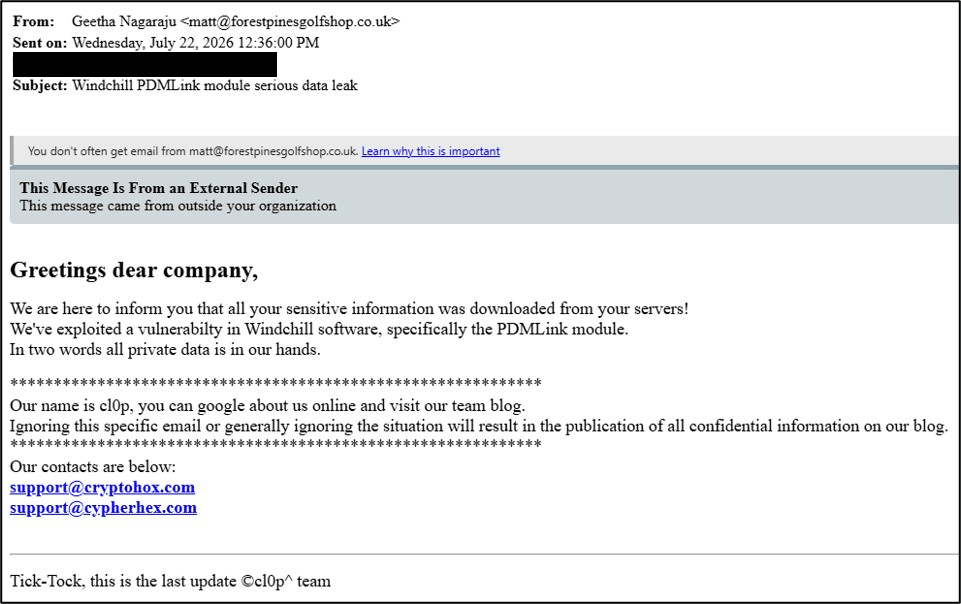
Ransom-ISAC’s Brandon Parsons from Ascent Solutions told BleepingComputer that Clop is using what appear to be previously compromised email accounts to send extortion messages to multiple employees of targeted organizations.
Clop extortion email (Ransom-ISAC)
“The extortion emails appear to originate from randomly compromised accounts, are sent to hundreds of users within an impacted organization and include Cl0p’s latest contact information,” Parsons said. “This extortion approach is consistent with what we observed with the Oracle EBS campaign last year, except for the use of new email addresses.”
As BleepingComputer has learned, it is a common tactic for this cybercrime group to change email addresses before launching a new extortion campaign.
Flagged as actively exploited in attacks
PTC began releasing security patches for the CVE-2026-12569 flaw on June 17 and, while it didn’t confirm in-the-wild exploitation, it released remediation guidance in a private advisory and urged customers to review their environments for indicators of compromise (IOCs).
Advertisement
After PTC warned customers of “heightened threat activity” on June 26, the Cybersecurity and Infrastructure Security Agency (CISA) added the vulnerability to its Known Exploited Vulnerabilities catalog and ordered U.S. federal agencies to secure their PTC Windchill and FlexPLM instances within three days.
According to German news outlet Heise, CVE-2026-12569 also prompted emergency action from German authorities, with the Federal Office for Information Security (BSI) emailing and calling PTC customers in the middle of the night and warning them to patch their systems as quickly as possible.
German authorities reacted with the same urgency in March after reports that a similar critical Windchill and FlexPLM flaw (CVE-2026-4681) may be exploited or was likely to be exploited soon.
On Thursday, ReliaQuest advised PTC customers to patch Windchill and FlexPLM systems and place them behind VPNs or trusted access gateways if possible. Additionally, if they suspect compromise, they should isolate the affected servers, collect forensic artifacts, and rotate any exposed credentials before restoring service.
Advertisement
A PTC spokesperson was not immediately available for comment when contacted by BleepingComputer earlier this week.
PTC Windchill and PTC FlexPLM are enterprise software platforms in a category known as Product Lifecycle Management (PLM) and used to track, design, and manage products from original idea to final manufacturing.
The two PLM systems are widely popular among engineering, manufacturing, quality, and supply chain teams across high-profile companies in the aerospace, defense, automotive, heavy machinery, retail, and medtech sectors. PTC says that its products are used by more than 30,000 customers globally, including over 1,500 brand and retail customers using FlexPLM.
After breaching their systems and exfiltrating sensitive documents, Clop publishes the stolen data on its dark web leak site, making it available for download via Torrent if victims refuse to pay a ransom.
The U.S. Department of State now offers a $10 million reward for information that could link this cybercrime gang’s attacks to a foreign government.
Update July 24, 07:42 EDT: Added more info on the attacks from Ransom-ISAC.
Advertisement
Security teams log 54% of successful attacks and alert on just 14%. The rest move through your environment unseen.
The Picus whitepaper shows how breach and attack simulation tests your SIEM and EDR rules so threats stop slipping by detection.
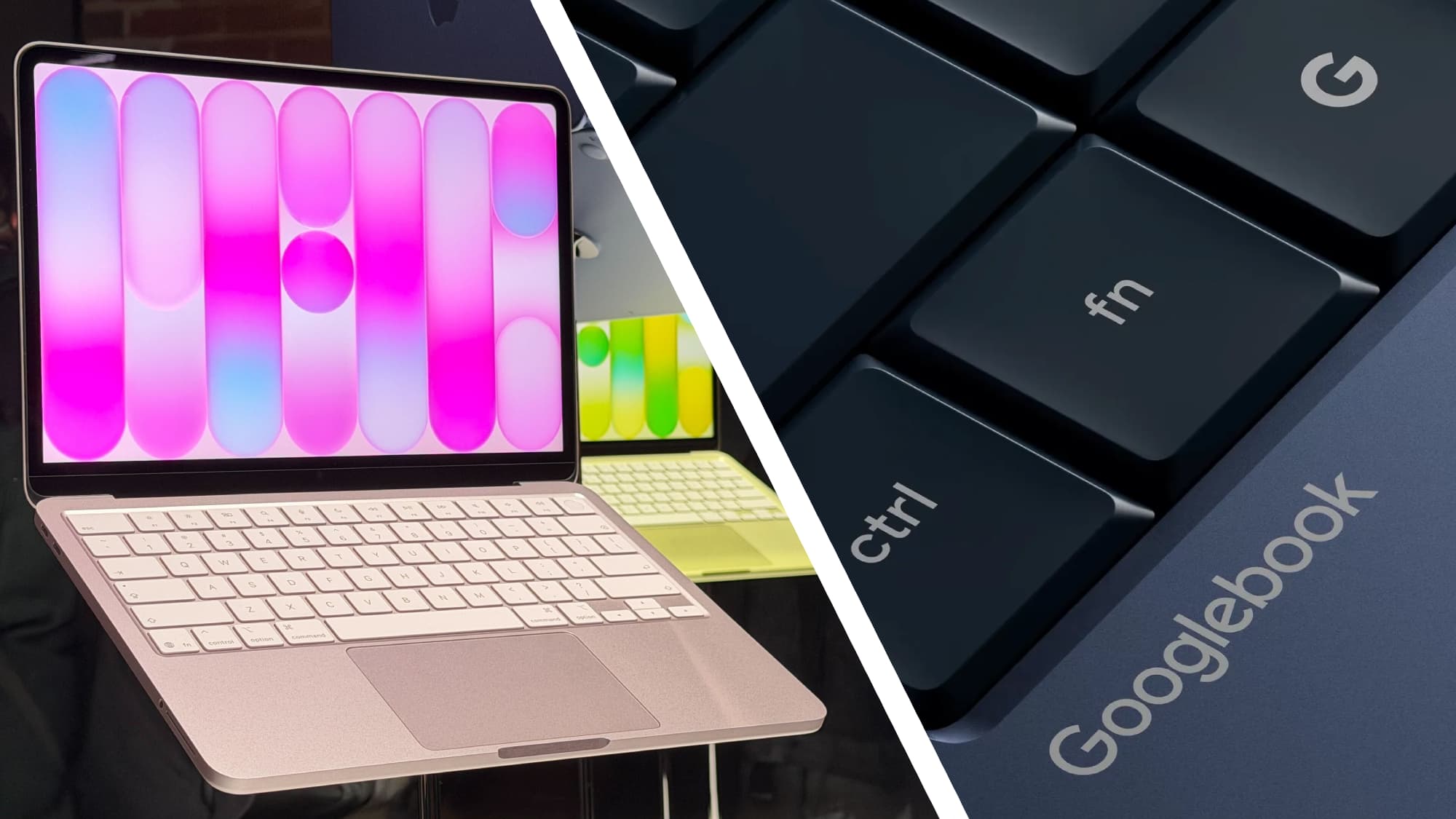
Long before anyone had heard of ChatGPT, Google CEO Sundar Pichai made clear that AI was a primary driver behind Google’s device push. Now, the company’s journey is about to take a turn with the launch of Googlebooks.
While Googlebooks and Chromebooks will coexist for a number of years, it’s clear that the former will eventually replace the latter. But are Googlebooks actually new “books” or really just new “chapters” that represent an evolution of the Chromebook. That depends on where the comparison lies.
Advertisement
Latest Videos FromTechRadar
Chromebooks have done an excellent job of retaining attributes such as ease of management, security, and affordability. On the other hand, the AI-first mission of the Googlebook represents a dramatic contrast from the cloud-first mission of the Chromebook, and the two platforms carry significant enough differences to justify the new naming.
Foremost, the Googlebooks’ new technical foundation of Android should greatly improve the performance and integration of Android apps versus today’s Chromebooks.
A crash landing from the cloud
Indeed, that serves as a reminder that the original philosophy of the Chromebook as a minimalist web app appliance disappeared a long time ago. And while it is still tough to beat the Chromebook when it comes to computing on a tight budget (Microsoft’s most recent attempt, the education-focused Surface Laptop SE, had the company’s quickest market retreat since Windows RT), Google and its partners have sought to climb the pricing ladder with Chromebook Pluses.
These devices, which have embraced higher quality materials and earlier access to Google’s AI innovations (albeit mostly cloud-based ones), have sold well enough to signal to Google that the market is ready for Windows alternatives that shift away from competing so heavily on price.
Sign up to the TechRadar Pro newsletter to get all the top news, opinion, features and guidance your business needs to succeed!
Advertisement
While it’s not a perfect parallel for what Apple was able to do in bringing kids who grew up with the Apple II to the Mac, Google has an opportunity to provide a more capable alternative to a generation of kids who grew up with Chromebooks, particularly at a time when AI stands to transform the PC experience from being a tool to being an agent.
(Image credit: Future)
And so the more important question becomes not how Googlebooks will diverge from Chromebooks, but how their new functionality will stack up to Windows, which will also of course continue to evolve.
In this sense, Google’s timing is excellent because it does not need to rely on Android versions of apps catching up to Windows versions; the company has never had much luck getting developers to optimize for Android platforms beyond the phone. Rather, it can compete on a new breed of AI-focused functionality.
But despite Microsoft pulling back from cramming CoPilot into every corner of its desktop operating system, it is still in the early days of integrating AI into that platform as well.
Advertisement
At Build, for example, Microsoft showed not only how it is bringing OpenClaw-pioneered workflows into Windows, but how it is expanding the supporting processor family to include the bold and powerful RTX Spark architecture from MediaTek and Nvidia.
That should put some distance between Windows and Android-based PCs at the top of the market, but the real test will come down to how well Microsoft can scale such AI down versus how well Google scales its desktop AI up.
The Insta360 X6 looks set to arrive sooner as a fresh round of leaks reveals not only its key specs but also an apparent global launch date.
The latest images include what appears to be the camera’s retail packaging. This offers the clearest look yet at what Insta360 has planned for its next flagship 360-degree action camera.
According to the leaks, the Insta360 X6 is expected to launch globally on July 30. It will replace the current Insta360 X5 with a handful of hardware and software upgrades.
The biggest headline appears to be battery life. Packaging images shared online claim the X6 can deliver up to 140 minutes of recording when capturing 8K video at 30fps in 360-degree mode. This represents a notable endurance boost for creators shooting high-resolution footage.
Advertisement
The retail box also confirms a new PureVideo Mode, which is designed to improve low-light performance, alongside Replaceable Lenses 2.0. Insta360 already offers replaceable lens protection on previous models. However, the updated system appears to refine the design further, potentially making repairs or replacements easier after accidental damage.
Advertisement
Fresh hands-on images also reveal a subtle redesign. Compared with the Insta360 X5, the new camera appears shorter and slightly wider, while still maintaining the familiar dual-lens layout. Side-by-side photos also show it next to GoPro’s older Max 360 camera, highlighting its more compact proportions.
The leaked retail packaging provides a look at what’s included in the box, too. Buyers can apparently expect a 2,600mAh Extra Xtreme battery bundled as standard, alongside the usual accessories.
Advertisement
Pricing, however, appears to vary depending on the package. Previous leaks suggest the standard camera could cost around €589. Meanwhile, a more comprehensive bundle featuring additional accessories may be priced at €789.
While none of the details has been confirmed by Insta360 itself, the consistency across multiple leaks suggests the official announcement may not be far away.
Advertisement
If the leaked specifications prove accurate, the Insta360 X6 looks less like a radical redesign and more like a refinement of the X5 formula. Longer battery life, improved low-light shooting and an updated replaceable lens system would all address practical areas that matter to action camera users. The reported July 30 launch means there’s not long left to wait for the official reveal.
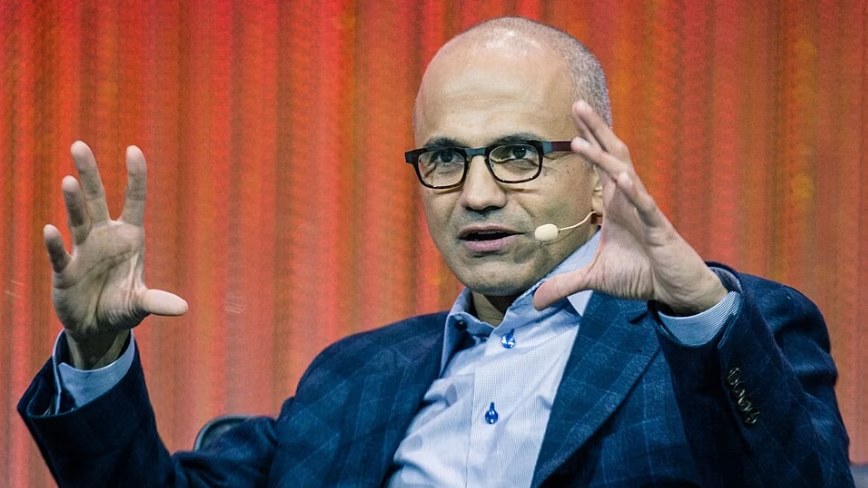
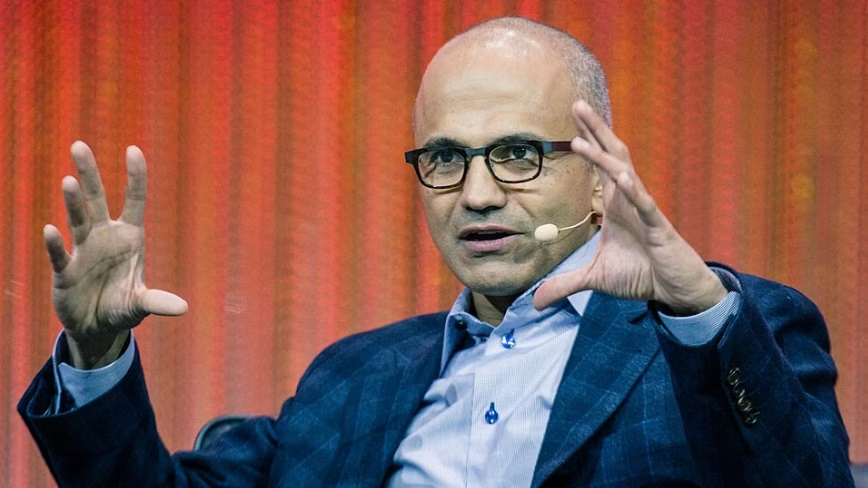
Fareed Zakaria opened with the question everyone is circling. Are we in an AI bubble, and has it begun to deflate? OpenAI has promised to spend hundreds of billions while making a fraction of that, he noted. The maths does not add up.
Nadella did not push back. He reframed the question as a test AI has to pass.
“This is a new general-purpose technology that is going to drive productivity,” he said on CNN’s GPS. “That productivity has to translate into very broad-based economic growth that is economy-wide in terms of GDP growth.”
Then the condition. “If we don’t see that, then we are going to have a problem. So unless we see that broad economic growth, we’re not going to have this movie end well.”
Advertisement
It is a striking thing for the man who spent $190bn this year to say two days before his earnings call.
The other Nadella showed up the same weekend, in his own executives’ account of the company. Microsoft cannot build capacity fast enough. The shortfall has forced it into triage, Business Insider’s Ashley Stewart reported. Its own AI products eat first. Azure customers get the remainder.
Chief financial officer Amy Hood said as much on January’s earnings call. Microsoft solves first for M365 Copilot and GitHub Copilot, then for research and development.
“Then what you end up with is the remainder going towards serving the Azure capacity that continues to grow in terms of demand,” she said. Had those chips gone to Azure instead, she added, growth would have topped 40% rather than 39%.
That admission is not new to readers here. A Michigan pension fund sued Microsoft in June over precisely this. The suit alleges the company hid the diversion before a January drop erased $357bn of market value.
Advertisement
What is new is that insiders say it has got worse. “All of the supply is gone once you solve for frontier labs and our internal businesses like M365 and Microsoft AI,” one executive told Business Insider.
Selling what you cannot deliver
Here is the part that reads oddly. Microsoft is raising quotas for its Azure salespeople despite the crunch. Some quotas rise by 30% this year, according to people familiar with the change.
Meanwhile it is buying capacity from its rivals. Amazon bailed Microsoft out after a run of GitHub outages. It explored leasing Oracle cloud infrastructure and walked away over security and compliance concerns. It is now evaluating Amazon and Google.
“We are shopping for capacity everywhere,” one person familiar with the talks said.
Advertisement
Inside the company, the logic is understood and the messaging is not. One executive framed the trade-off bluntly: why would Nadella prioritise growing Adobe, an Azure customer, over growing M365?
“I have no idea how we’re going to land that message with customers,” the person added.
The trap Microsoft is actually in
The dilemma is real, and Microsoft is not obviously handling it wrongly. Serving Azure customers lifts revenue now. Serving its own products is a bet that they eventually win.
Starve the first and Azure growth disappoints, which hits the share price immediately. Starve the second and Microsoft slips further behind in the race that justified the spending in the first place.
Advertisement
What makes the choice urgent is that customers have somewhere else to go. Google Cloud keeps posting large numbers. Meta and SpaceX are now selling compute too. Microsoft’s customers may not wait to find out what it decides.
The ecosystem argument
Zakaria’s second question was about China. Most firms are not using AI to solve Fermat’s theorem, he pointed out. They are rationalising inventory systems. So will the world simply take the cheaper Chinese open-weight models, like Moonshot’s Kimi?
Nadella’s answer was that provenance matters less than plumbing. “Even take the Chinese models. Guess where these models run? They run on a lot of the hyperscalers that are American, all over the world.”
Because the weights are open, he argued, American firms can monitor, test and post-train them. If a US lab post-trains a Chinese base model and ships it, he asked, whose model is that?
Advertisement
“As long as that remains, we will absolutely be competitive and we will win,” he said. China will have a role, he added, but this is not a zero-sum game.
He has been making a version of this case all week. His pinned post asks how to ensure “frontier benefits are diffused across the entire ecosystem” now that software has real marginal cost for the first time. Diffusion is the theory. Triage is the practice.
Three businesses in the blast radius
The strain is not only physical. Three core businesses now sit in AI’s path at once.
Microsoft 365 is the first. Knowledge workers used to open Word, Excel and PowerPoint to start the day. Increasingly they start inside an AI tool instead. Gartner predicted this year that AI would threaten to dethrone traditional productivity suites in a $58bn shakeup.
Advertisement
GitHub is the second. It had its best month ever, an executive told staff. It has also suffered dozens of major outages this year as AI usage surged. Cursor and Claude Code have taken millions of engineers in the meantime.
Azure is the third, and it is the one being asked to wait its turn.
The churn continues. Rajesh Jha has retired, Yusuf Mehdi is preparing to leave, and Charlie Bell has moved to an individual contributor role. Hayete Gallot, recruited back from Google, is seen internally as Althoff’s long-term successor.
Advertisement
Microsoft also overhauled performance reviews this year, cutting ratings to five categories and sharpening the distinctions between them. Executives say it feels like a return to the stack ranking of the Ballmer era. Managers have been told to thin out the higher-level engineering ranks.
“It’s almost like the old era of Microsoft is back,” one former executive said. “The old Windows era where you lead with a lot of fear and a billy club in your hand.”
Wednesday’s test
Microsoft reports fourth-quarter results on Wednesday. Amazon follows on Thursday. Between them the two will spend roughly $400bn on data centres this year, Fortune reported, with Microsoft near $190bn.
Investors are already twitchy. Alphabet’s stock fell 7% last Thursday after it raised capital-expenditure guidance and posted negative free cash flow. Microsoft shares are down about 19% this year, and roughly 25% over twelve months. That is the worst of the Magnificent 7 by some distance. Meta is next, down almost 17%.
Advertisement
The underlying business is not weak. Microsoft disclosed nearly $627bn of remaining performance obligations, almost double a year earlier. It is funding roughly $35bn of building a quarter from operating cash flow rather than new debt. Azure and other cloud services are forecast to reach $148.9bn in fiscal 2027.
Nadella has heard doubts before. “I remember when I became CEO, everybody said, oh my God, isn’t it too late man?” he recalled at a Morgan Stanley conference in March. Microsoft built anyway, and the public cloud turned out to be multiplayer.
At that same conference he described the plan. “We have OpenAI book, we have Anthropic book, but we want to also have the long tail of enterprise IT,” he said. The long tail is the part now waiting at the back of the queue.
Wake up, sheeple! You can’t trust American tech, and I speak as a US citizen whose ancestors first arrived in the States in the 1770s. Finnish MEP Aura Salla put it well at February’s Open Source Policy Summit: “The EU runs on Microsoft. The US could turn us off inside one hour.”
The same is true for the UK and pretty much every country in the world. If that doesn’t scare you, it should.
Ireland was preparing to pull the trigger on a Microsoft procurement potentially worth €1 billion when the government called a halt. Opposition politicians then asked why open source alternatives had never made it onto the shopping list.
Ireland’s Minister for Public Expenditure, Infrastructure, Public Service Reform and Digitalization, Frankie Feighan, said the agreement for Microsoft software and services had been canceled after “matters of concern were raised by an interested party.”
At the UN Open Source Week, Ireland’s Government CIO, Louise McKeever, said that as far as she was concerned, digital sovereignty is “the ability of a government to maintain control over its digital infrastructure, data, and technologies” in a world of cross‑border data flows, AI, and geopolitical risk – and that makes it “a national security concern” as much as a tech one.
Advertisement
Cian O’Callaghan, deputy leader of Ireland’s opposition Social Democrats, would agree. He said that, for value-for-money reasons and to avoid US technology dependency, Ireland should at least consider alternatives including “LibreOffice, Linux, Thunderbird, and Open-Xchange.”
In the United Kingdom, however, it’s a different story. A House of Commons Library briefing published in March put it plainly: “The UK Government does not have an overarching policy on digital sovereignty. It has set out its approach to building ‘sovereign capability’ in key technologies.”
Advertisement
The closest thing Britain has is the UK Compute Roadmap. It states that the government wants “sovereign, secure, and sustainable capability,” and directs the UK Sovereign AI Unit to treat compute as a priority area. Back in 2025, which is prehistory by AI standards, Labour wanted to pour £2 billion into sovereign AI. Now? Who knows? Stay tuned.
Yes, I agree. Those are insane numbers. Welcome to the wild, wonderful world of AI bubble spending.
Leaving aside the crazy AI numbers, some people in the UK get that digital sovereignty must be a priority. The Open Rights Group has a petition: Demand UK Digital Sovereignty. I suggest you sign.
Advertisement
As Trump has shown time and time again, “his” US has no “special relationship” with anyone. Just ask Israel or Canada. If the new PM, Andy Burnham, so much as sneezes at Trump, the President could take offense and apply pressure for the UK to lose its access to American tech resources.
To me, there’s no longer any question about it. Everyone, including companies and people in the States, must reduce their reliance on American software and services. Linux and open source alternatives that are not beholden to Washington offer the clearest way forward. ®
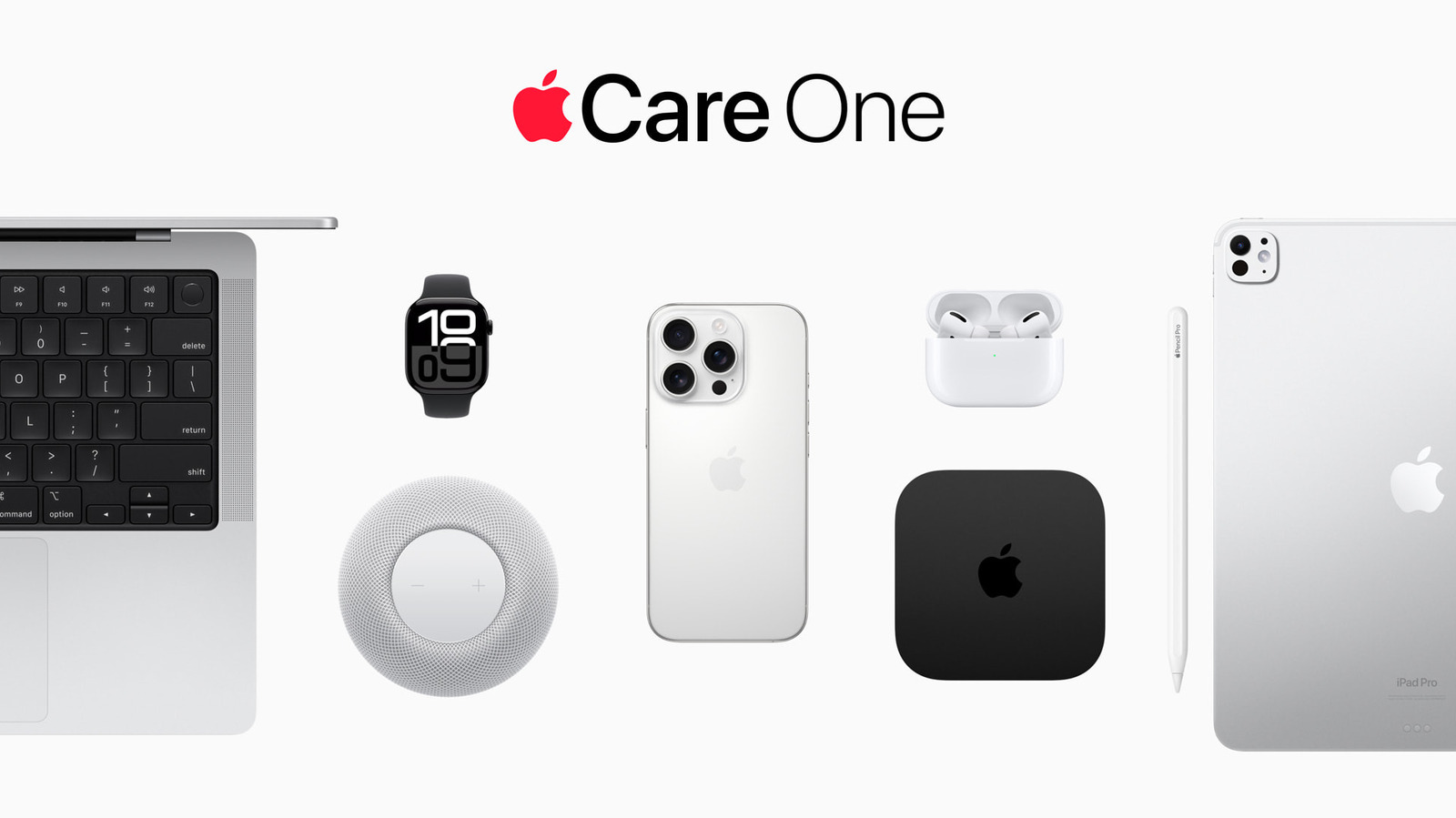
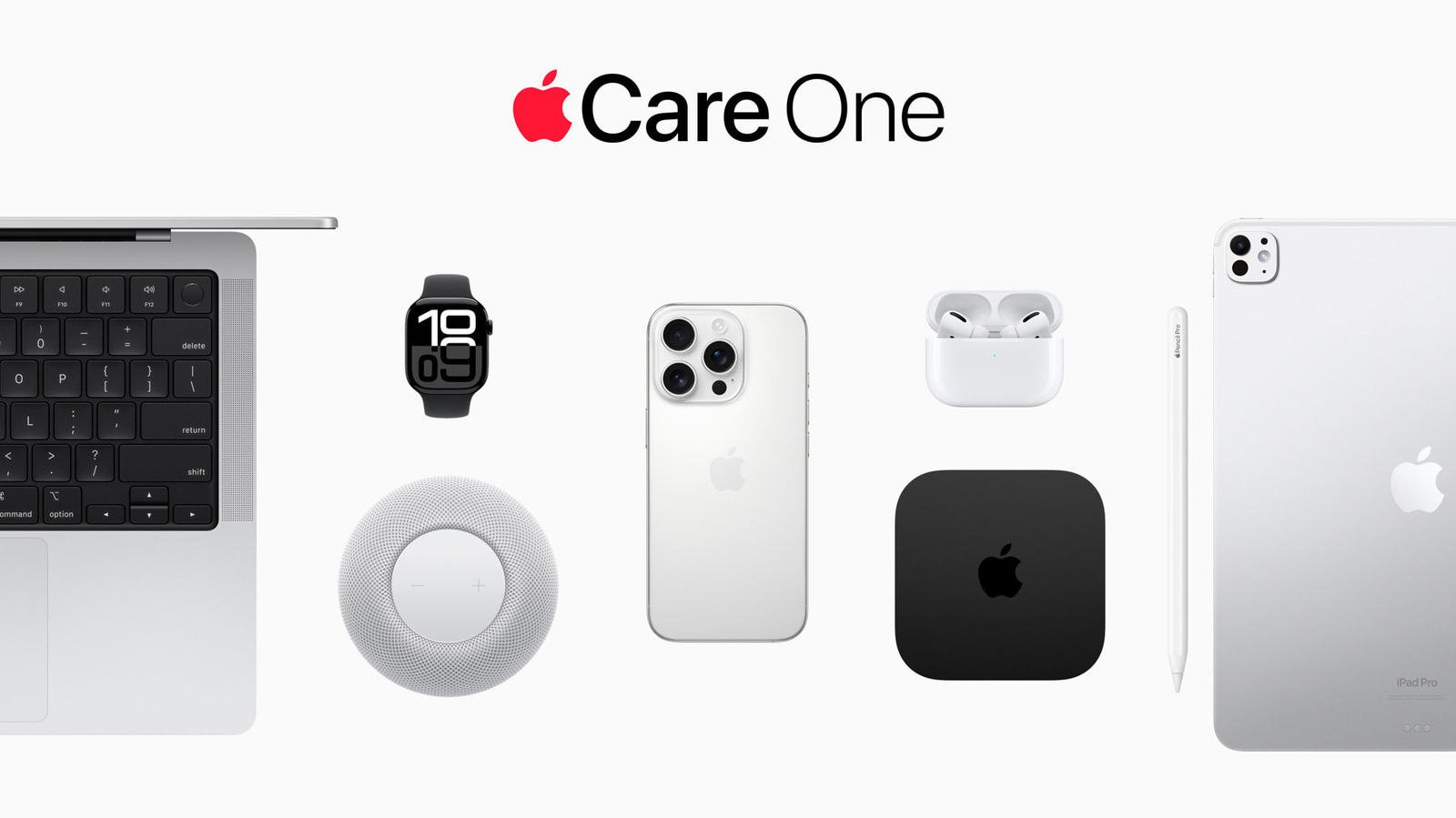
Apple’s insurance for multiple devices including iPhones, Watches and MacBooks, is finally expanding a year after launching in the US. AppleCare One is now available in four additional countries: the UK, France, Germany and Australia. The service is set to arrive in those regions on August 4th this year.
“With AppleCare One, customers in the UK can now enjoy the trusted protection of AppleCare+ in a way that’s simpler and more flexible than ever before — one plan, one price, and the peace of mind that comes with knowing all their eligible products can be covered,” the company said in an article on its UK newsroom.
In the UK, the service will cost £16.99 per month for three devices, with the ability to add more at any time at £4.99 per month per device. In France, it will cost €20.99 per month and €5.99 per month for the same coverage, respectively, according to 01net.com. That compares to $20 a month for three devices and $6 per month for additional devices in the US.
AppleCare One provides the same coverage as AppleCare+ with theft and loss, “including fast and unlimited repairs for accidental damage, battery replacement service, and 24/7 priority access to Apple experts,” Apple UK wrote. It also includes theft and loss coverage for iPhone, iPad and Apple Watch. You can use AppleCare One to not only insure brand new devices, but also ones you already own — provided they’re no more than four years old and in “good condition.”
Advertisement
Along with AppleCare One, Apple is also bringing theft and loss coverage for iPad and Apple Watch to AppleCare+ in the UK. Those devices join the iPhone, which already has the theft and loss option. The price for that for a base iPad model will start at £4.99 per month in the UK (£49.99 per year), compared to £3.49 for current AppleCare+ coverage without theft and loss. For the base iPhone 17, AppleCare+ with theft and loss is £9.49 per month, compared to £6.49 per month for regular AppleCare+.
Whether or not you’ll save money on AppleCare One compared to AppleCare+ depends on your devices and coverage. Apple notes that “a customer protecting their iPhone, iPad, and Apple Watch together can save up to £11.48 per month compared to maintaining separate AppleCare+ with theft and loss plans for each device.”
However, if you purchased the most basic versions of those devices with AppleCare+ but no theft and loss coverage (£6.49 + £3.49 + £2.49 = £12.47), individual coverage would be cheaper. AppleCare One is therefore best if you have higher-end devices or were planning to ensure them for theft and loss on top of accidental damage repairs. The benefits also accrue if you add a fourth or fifth device, particularly if it’s on the expensive side.
In the US, AppleCare One looks like an even better deal since AppleCare+ prices just went up for Macs and iPads. The increase is due to higher prices for those devices ranging from $100 for a basic iPad to $500 for an M5 Max MacBook Pro.
























































You must be logged in to post a comment Login