

Crypto World
HIVE Signs $220M GPU Cloud Contract for Cohere AI Workloads

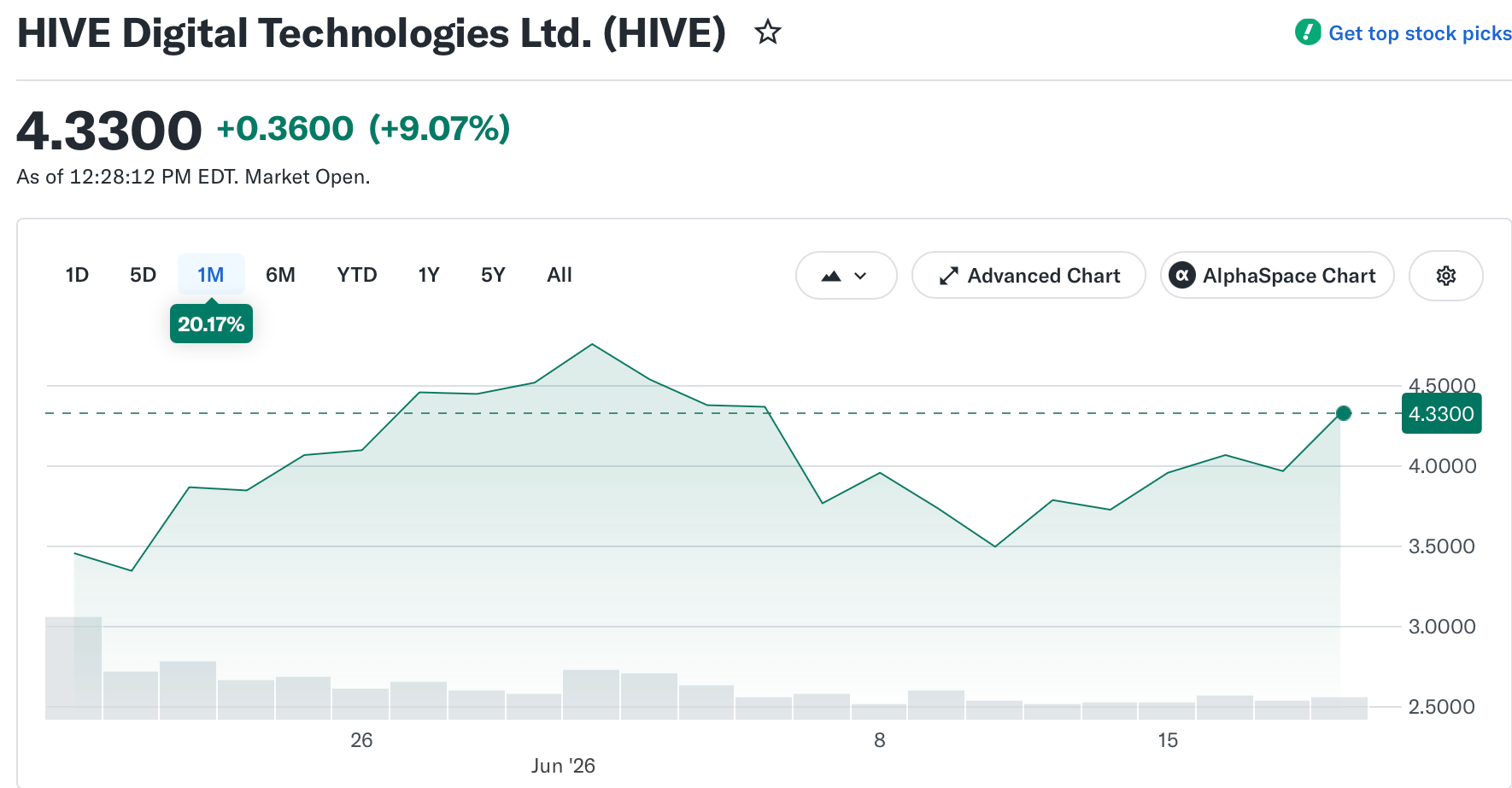
Canadian Bitcoin miner HIVE Digital Technologies said its AI subsidiary BUZZ HPC has signed a three-year GPU cloud contract worth approximately $220 million with Bell AI Fabric for AI startup Cohere, expanding the company’s push into high-performance computing (HPC) and AI infrastructure.
The agreement calls for BUZZ HPC to deploy 2,304 NVIDIA Grace Blackwell GPUs at a Bell Canada data center in British Columbia, where the infrastructure will support Cohere’s artificial intelligence models and services for enterprise and government customers.
After the deployment enters service, HIVE expects the project to contribute about $70 million in contracted annual recurring revenue, increasing its contracted HPC revenue target to more than $100 million, according to the company.
HIVE said it will fund the purchase of the AI infrastructure using a portion of the proceeds from the $115 million convertible note financing it completed in April.
The company’s stock price was up around 9% at the time of writing and almost 24% in the past month, according to Yahoo Finance data. Sector tracking exchange-traded fund CoinShares Bitcoin Mining ETF (WGMI) was up 5.4% on the day, and up more than 30% in the past month. HIVE stock is the fund’s eighth-biggest holding.
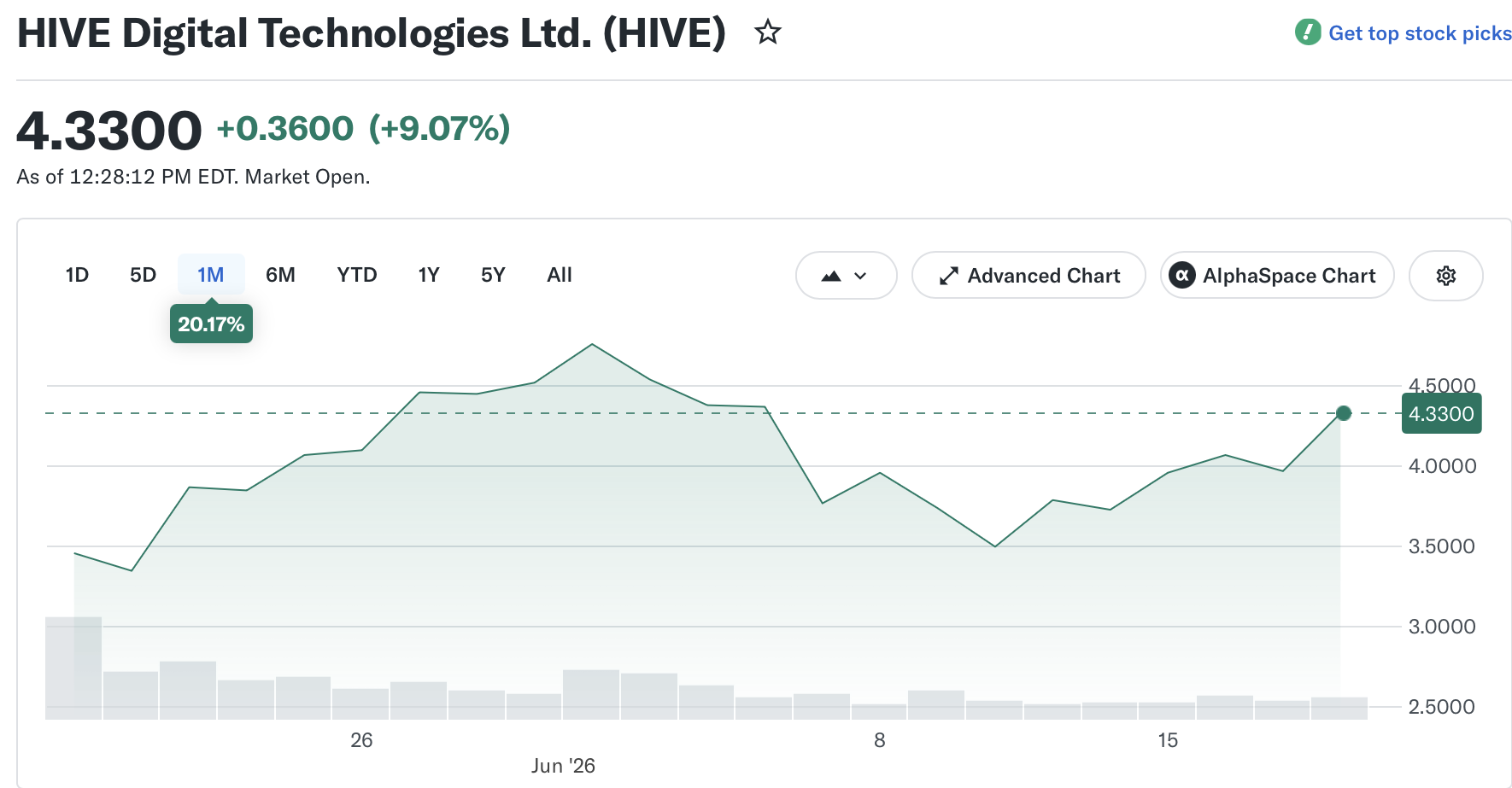
Source: Yahoo Finance
Related: Georgia targets illegal crypto mining in Mestia crackdown: Report
HIVE grows AI business as Bitcoin holdings decline
The deal is the latest move in HIVE’s broader expansion into AI infrastructure. In May, the company said its BUZZ HPC subsidiary planned a 320-megawatt AI data center campus near Toronto, capable of supporting more than 100,000 GPUs.
Earlier this month, HIVE reported that revenue from its HPC division increased to $19.5 million in fiscal 2026, nearly doubling from a year earlier. The company also said contracted annual recurring revenue from the business reached $35 million, supported by deployments of Nvidia-powered GPU clusters and new enterprise contracts.
HIVE also reported a decline in its Bitcoin (BTC) treasury holdings, which fell to 150 BTC from 481 BTC a quarter earlier.

Source: BitcoinTreasuries.NET
Related: Nvidia’s $20 billion debt boom reinforces Bitcoin miners’ AI pivot
Hashrate declines as AI investments grow
On Thursday, The Energy Mag (formerly The Miner Mag) noted that Bitcoin mining difficulty, a measure of how hard it is for miners to produce new blocks, fell 10.09% on June 14, one of the largest downward adjustments in the network’s history.
The publication attributed the decline to weaker mining economics, Bitcoin’s price decline, seasonal power curtailment in Texas and broader power-market dynamics. It also argued that miners dedicating power to AI and HPC projects could alter future hashrate growth by reducing the amount of capacity available for Bitcoin mining.
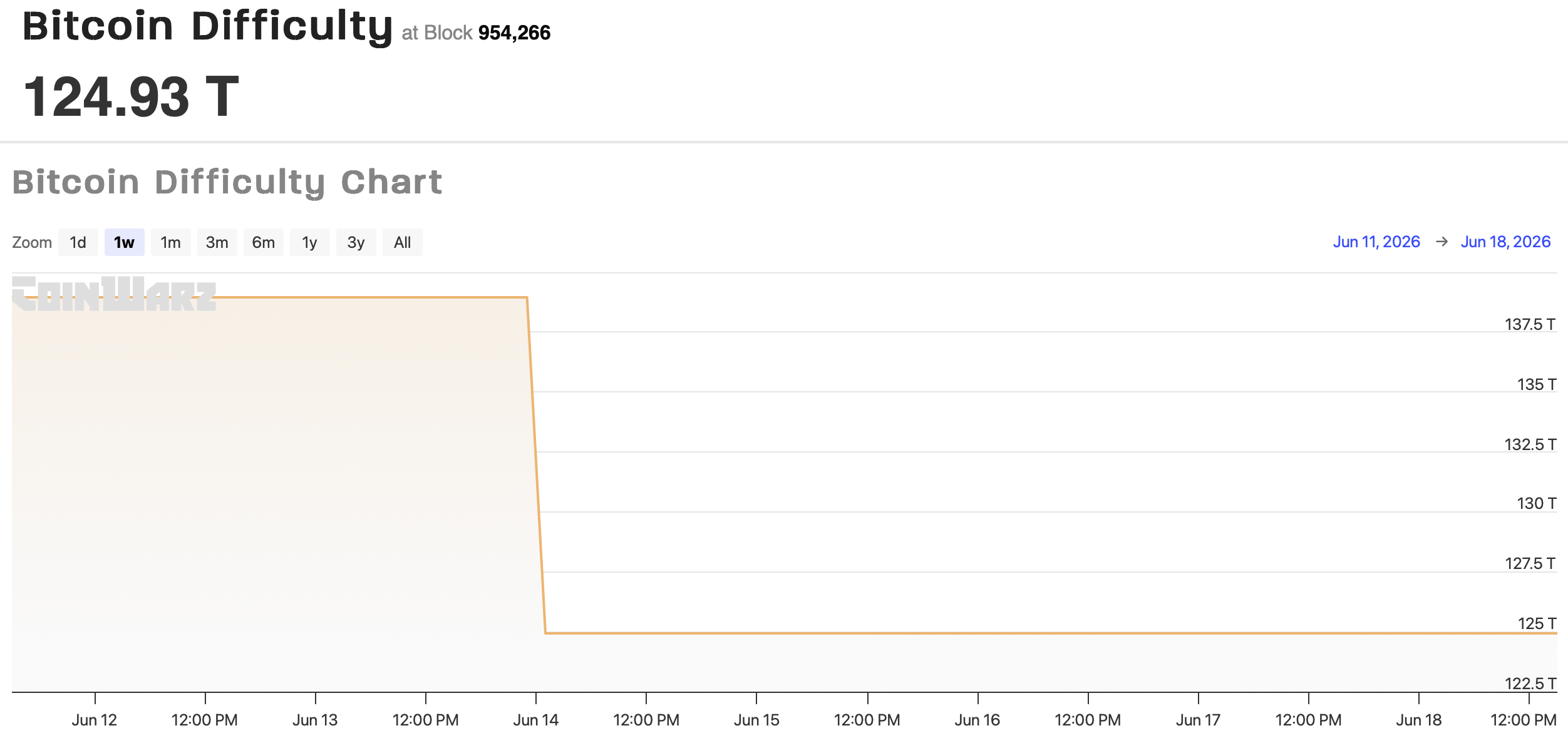
Bitcoin mining difficulty. Source: Coinwarz.com
The decline came days after Cointelegraph reported that Bitcoin mining profitability had fallen to record lows, making it harder for some operators to remain profitable.
Meanwhile, miners continue expanding into AI and high-performance computing. On Tuesday, IREN completed its acquisition of Spanish data center developer Nostrum Group, while TeraWulf recently added a Kentucky development site that it said could eventually support more than 1 gigawatt of AI and HPC capacity.
Magazine: Does ‘Paper Bitcoin’ mean there’s an unlimited supply of BTC?


ADA – the native token of Cardano – has been hit hard by the ongoing bear market, while recent concerning statements from co-founder Charles Hoskinson have only worsened its condition.
And as holders cling to hopes of a much-needed rebound, some factors indicate that a deeper drop may be approaching.
Fasten Your Belts
The asset has been in a major decline over the past several months, and the widespread crypto crash at the start of June further accelerated its downturn. ADA slipped well below $0.15 (its lowest level since late 2020) and currently trades around $0.16 (per CoinGecko’s data).
Its market capitalization has dwindled to just north of $6 billion, putting the token at real risk of losing its prestigious position among the top 20 cryptocurrencies.
Market conditions remain unfavorable, and Hoskinson’s recent comments, paired with growing weakness across the ecosystem, are only adding to the pressure. Just several days ago, Cardano’s co-founder sparked panic in the community when he said he’s “taking a break” and warned of an upcoming “wave of failures in the ecosystem.”
Meanwhile, the X account BSCN revealed that ADA’s daily trading volume, which climbed to $6.3 billion in August 2025, has recently tumbled to a mere $500 million. This trend suggests fading interest in the asset, which could hamper any chance of a meaningful recovery.
Popular analyst Ali Martinez presented another concerning development. He claimed that ADA has been forming a bearish flag since the beginning of the month and is now breaking from the structure.
“Now that Cardano has reached the $0.17 support level, the odds have significantly increased for a bigger price correction towards $0.13,” he added.
The Bullish Case
Still, not everyone is pessimistic about ADA’s short-term future. X user Sssebi recently noted that the asset reached its most oversold level (on the weekly chart) in its entire history. That said, they expect a resurgence to above $0.20 within the coming weeks. Crypto with Haris ₿ also chipped in, opining that ADA’s downfall shouldn’t be seen as the end but as an opportunity.
“Back in 2023, ADA went from around $0.22 to $1.30 in just a few months. Maybe history repeats itself. Maybe it doesn’t. But if the next bull run comes, I wouldn’t be surprised to see Cardano make another crazy move,” the X user reminded.
The post Cardano’s Meltdown: Is ADA at Risk of Further Decline? appeared first on CryptoPotato.

Malta’s financial regulator has taken a step toward defining how decentralized finance (DeFi) and decentralized autonomous organizations (DAOs) could fit into Europe’s existing crypto rulebook. In a public discussion paper opened on June 12, the Malta Financial Services Authority (MFSA) proposes a potential legal framework for “software-based organizations,” a category intended to cover DAOs and other DeFi entities governed through software.
The consultation runs until July 10 and is explicitly tied to the European Union’s Markets in Crypto-Assets (MiCA) regime. While the MFSA acknowledges that truly decentralized services may fall outside MiCA, its paper argues that many DeFi projects still have elements that complicate any claim of full decentralization—creating uncertainty about who would be accountable under financial regulation.
Key takeaways
- The MFSA opened a DeFi consultation on June 12 under the EU’s MiCA framework, inviting industry feedback until July 10.
- The regulator suggests treating DAOs as a type of “software-based organization,” separating legal rules for the entity from rules for the underlying protocol.
- MFSA emphasizes MiCA’s exclusion for fully decentralized models, but says many DeFi systems retain centralized features that raise regulatory accountability questions.
- The push for clearer DeFi treatment aligns with broader EU work—including a European Central Bank paper and a European Commission MiCA review launched in May.
Why Malta is proposing a “software-based organization”
In its discussion paper, the MFSA frames a central regulatory challenge: MiCA does not neatly describe how governance and responsibility should work when a financial activity is coordinated through code rather than a traditional corporate structure. Rather than attempting to create a completely standalone legal concept for DAOs, the MFSA’s approach is more structural—defining DAOs and similar arrangements as “software-based organizations.”
According to the paper, this would allow regulators to focus on the legal characteristics of the organization using software governance, while keeping the rules for the underlying protocol and software distinct. The goal is to address a practical question for compliance and supervision: if governance is executed through decentralized mechanisms, who—if anyone—should be considered responsible for regulated activities and outcomes?
MFSA also underlines that MiCA’s scope is not meant to capture every kind of decentralized arrangement. The paper states that “MiCA excludes fully decentralised models from its regulatory scope,” adding that projects without intermediaries or central control may not need to comply with MiCA. The issue, in the MFSA’s view, is that many real-world DeFi projects do not convincingly meet that standard.
DeFi governance remains a scrutiny flashpoint in the EU
Malta’s consultation is arriving during a period of intensified EU attention to whether and how decentralized systems should be regulated under MiCA. Earlier in the year, a European Central Bank working paper examined governance and control across four major DeFi protocols and found that control remained highly concentrated. While the ECB analysis does not automatically determine MiCA applicability for every protocol, it added evidence to the argument that “fully decentralized” may be the exception rather than the rule in large DeFi markets.
That emphasis on governance structure continued in May, when the European Commission launched a targeted review of MiCA. The review sought feedback on several issues, including stablecoin interest payments and the treatment of DeFi—along with whether gaps in the framework justify further regulation.
Against this backdrop, Malta’s MFSA paper can be read as an attempt to convert a persistent policy debate into a workable legal taxonomy. If regulators cannot reliably distinguish fully decentralized services from arrangements with meaningful centralized influence, the burden falls on the market to anticipate which compliance obligations might apply.
Not everyone wants a second DeFi-focused rulebook
Even as Malta works on a DeFi-specific discussion framework, broader EU commentary suggests there is disagreement about whether DeFi requires its own separate regulatory track. In remarks reported earlier to Cointelegraph, European Commission adviser Peter Kerstens argued that policymakers should prioritize integrating tokenization into a broader digital asset framework rather than pursuing a “second version” of MiCA aimed specifically at DeFi.
That perspective highlights a tension within the EU approach: one camp believes decentralized finance needs clearer, DeFi-tailored treatment to address accountability and governance realities; another argues that tokenization and other digital asset developments are already broad enough for one coherent framework, reducing the need for a dedicated DeFi layer.
Malta’s “software-based organization” concept sits somewhere between these positions. It does not create a completely separate system from MiCA, but it does attempt to refine how key actors—especially DAOs—could be legally recognized so that MiCA’s responsibilities can be applied consistently when decentralized projects are not truly decentralized in practice.
What the MFSA’s proposal could mean for DeFi projects
For DeFi teams and governance stewards, the MFSA consultation raises a question that goes beyond legal vocabulary: how will regulators evaluate decentralization in ways that determine oversight and accountability?
By separating the legal framework governing the organization from the rules governing the protocol and software, the MFSA is implicitly pointing to a compliance model built around governance participation, decision-making authority, and the existence (or absence) of intermediaries. That approach could affect how projects document governance processes, define roles for contributors or administrators, and structure decision rights—especially where token holders, developers, or other groups retain meaningful influence.
At the same time, the MFSA’s emphasis on MiCA’s exclusion for fully decentralized models signals that the distinction will still matter. If a project can credibly demonstrate the absence of central control and intermediaries, it may argue it falls outside MiCA’s scope. If it cannot, the proposed legal categorization could make compliance planning more concrete—though it also suggests regulators may be looking closely at control concentration, not just the presence of governance tokens.
Whatever the final outcome, the consultation process itself is likely to be influential. By requesting input from the industry until July 10, the MFSA is effectively setting up a negotiation over definitions and boundaries: what exactly constitutes a “software-based organization,” and when does a DAO cross from a decentralized arrangement into something that demands traditional regulatory accountability?
For now, market participants should watch the submissions coming into Malta’s consultation and pay attention to how EU institutions continue to treat governance concentration and decentralization tests under MiCA—because the direction Malta is taking suggests regulators may increasingly rely on organizational accountability, not just code, when deciding whether DeFi fits within existing financial rules.
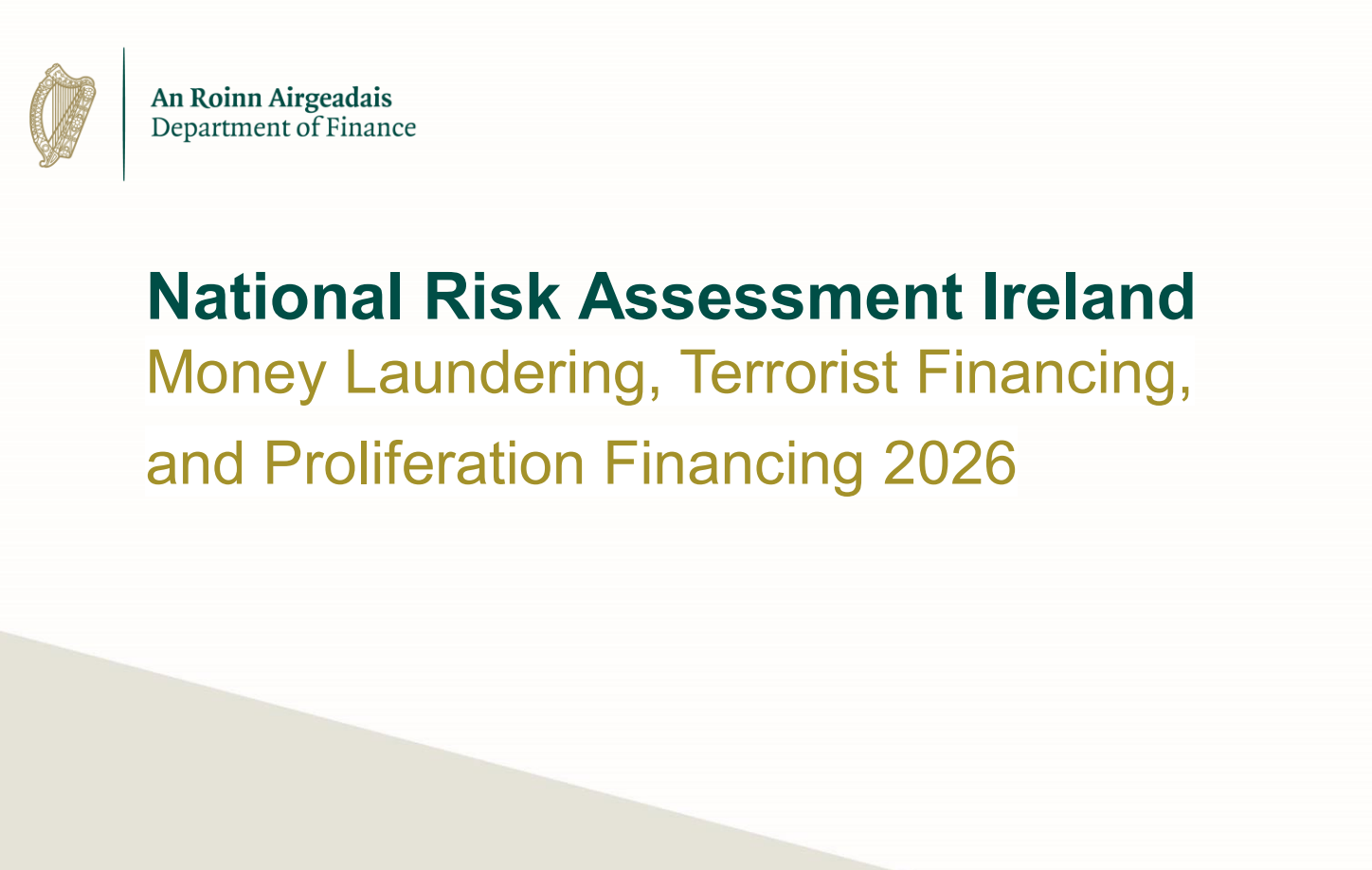
For the first time in seven years, the Irish government released an assessment related to digital assets, noting risks from money laundering, terrorism financing, sanctions violations and bribery.
The government of Ireland is taking aim at digital assets used in money laundering and terrorism financing as it moves to implement industry standards “relating to the acceptance of crypto-related activities as a source of funds” by the second half of 2027 as part of its policy priorities.
In part of its implementation plan following a national risk assessment released on Thursday, the Irish department of finance said crypto assets presented “very significant” risks related to money laundering and terrorism financing. The government’s 2026 report was the first time in seven years that Ireland released a risk assessment related to digital assets, noting an increase in prosecutions related to money laundering and incidents of fraud in which using crypto was “particularly attractive” to criminal groups.
Source: Government of Ireland
In the time since its last report, Ireland noted that crypto “presents vulnerabilities that may facilitate sanctions evasion,” presented challenges to the country’s tax compliance and enforcement and was used to bribe corrupt officials responsible for decisions overseeing the industry. The government highlighted vulnerabilities in the sector, including “inconsistent international regulation” posing risks to Irish service providers and largely unregulated areas of the industry such as decentralized finance.
Ireland lacks many of the laws and regulations covering the crypto industry that are common in other jurisdictions like the European Union and United States. That’s despite its relatively high crypto ownership rates compared to other areas, with the Central Bank of Ireland reporting in December that about 10% of the population invested in crypto.
Related: BitGo courts crypto firms awaiting MiCA approval amid Binance licensing concerns
In November 2025, the central bank fined Coinbase Europe Limited about $24 million for Anti-Money Laundering and Countering the Financing of Terrorism violations, noting that the company delayed reporting failures in its transaction monitoring system.
Ireland banned crypto political donations
The risk assessment noted concerns about crypto being “increasingly used to make payments to corrupt officials,” but even official donations to political groups has been banned in Ireland for more than four years. In April 2022, officials proposed that no Irish political parties be allowed to accept cryptocurrencies like Bitcoin, Ether, privacy coins and others.
Magazine: OpenAI files for IPO, SEC scraps 611 rule and Hungary overhauls crypto: Hodlers Digest June 7-13
Several US government agencies responsible for financial regulation have issued a proposed rule as part of the implementation of stablecoin-focused legislation, pushing for similar identification guidelines for issuers as banks under federal law.
The Federal Deposit Insurance Corporation (FDIC), Federal Reserve, Office of the Comptroller of the Currency (OCC), National Credit Union Administration and the US Treasury’s Financial Crimes Enforcement Network (FinCEN) on Thursday proposed that stablecoin issuers be treated as regulated financial institutions in regard to verifying users’ identities. The proposed rule comes as part of the implementation of the Guiding and Establishing National Innovation for US Stablecoins (GENIUS) Act, signed into law in July 2025.
Source: Federal Register
The proposed rule, which will be open to public comment for 60 days after it is officially filed in the US Federal Register on Monday, is intended to address Anti-Money Laundering (AML) and Countering the Financing of Terrorism (CFT) requirements for stablecoin providers through the GENIUS Act.
The minimum standards under the Bank Secrecy Act for financial institutions — potentially applied to stablecoin issuers under GENIUS — include “verifying the identity of any person seeking to open an account,” maintaining records of that information, and determining if the individual is a suspected terrorist or part of any terrorist organization.
The agencies’ actions were the latest implementation related to GENIUS, largely championed by US stablecoin issuers. The law is expected to go into effect 18 months after it was signed or 120 days after federal authorities finalize regulations for implementation.
Related: Banking group asks for more time to comment on US stablecoin bill
Treasury has already proposed AML and CFT requirements targeting illicit finance under GENIUS. In April, the FDIC suggested that rules providing insurance for corporate deposits of stablecoin issuers not extend to holders.
GENIUS passed, CLARITY still being weighed
After the passage of the GENIUS Act last year, the US Congress still has no defined timeline on addressing the Digital Asset Market Clarity (CLARITY) Act, a bill intended to redefine financial agencies’ roles in regulating and enforcing crypto rules.
While many in the White House and Congress expect the bill to pass by the August recess, concerns voiced by Democrats over potential conflicts of interest from lawmakers and elected officials could slow progress.
Magazine: The end of anon? AI could unmask crypto’s hidden identities
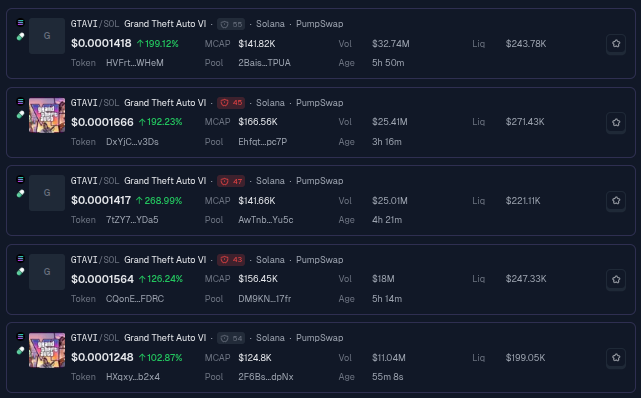
Rockstar Games officially confirmed that Grand Theft Auto VI pre-orders will begin on June 25. The announcement sent GTA 6 and Rockstar-themed meme coins skyrocketing across crypto markets within hours.
Here is what Rockstar Games confirmed, why the meme coins exploded, and what investors should track before any potential pullback.
Why the GTA 6 Pre-Orders News Sparked a Frenzy
Pre-orders are early purchases that gamers can place before a video game title’s official release date. Rockstar Games confirmed that Grand Theft Auto VI pre-orders will officially open on June 25 across all major platforms and global digital storefronts.
The announcement reignited massive hype around what is already considered one of the most anticipated game launches in history.
GTA 6 has dominated gaming conversations for years. Moreover, the long wait between the original announcement and the release has intensified retail attention.
Crypto markets reacted within minutes. GTA 6 and Rockstar-themed meme coins surged sharply across multiple decentralized exchanges, especially on Solana, Ethereum, and BNB Chain.
The speculative rally reflects how gaming narratives consistently fuel meme coin volatility cycles.

Traders quickly piled into tokens with names referencing the game, its characters, and the fictional Vice City setting.
Several previously dead tokens reached multi-week highs as social media amplified a buying frenzy across crypto communities worldwide.
The reaction follows a familiar pattern. Whenever major entertainment events approach, themed meme coins typically experience parabolic moves driven by retail FOMO. As a result, traders chase quick gains tied to the cultural relevance of the underlying brand.

What Investors Must Know About These Meme Coins
Despite the explosive moves, Rockstar Games has not released any official tokens. Every meme coin riding the GTA 6 hype is a community-driven project with no formal connection to Rockstar, Take-Two Interactive, or the franchise itself.
That distinction matters enormously. Unofficial meme coins typically carry severe risks, including supply concentration, unaudited contracts, and the possibility of sudden rug pulls.
Also, regulatory uncertainty around unauthorized branding can trigger sudden token removals from major exchanges.
The lack of official endorsement does not stop the rally. Crypto markets historically reward narrative-driven speculation, especially around culturally significant brands.
However, traders chasing late entries face the highest risk of sharp reversals once the initial hype wave fully fades.
History offers clear warnings. Similar-themed meme coin rallies tied to movies, sports events, and other gaming launches have ended with steep declines after the underlying catalyst has passed. Volume often collapses within days, leaving late buyers deeply underwater for months.
For now, the GTA 6 pre-orders announcement on June 25 stands as the next major catalyst.
Until then, meme coin volatility tied to the franchise will likely remain elevated. Investors should remember that the only confirmed news comes directly from Rockstar Games.
The post Rockstar Games Confirms GTA 6 Pre-Orders Date and Themed Meme Coins Explode appeared first on BeInCrypto.


Crypto investors and builders say the censorship of Anthropic's Fable 5 proves their long-running argument: that AI should run on decentralized networks no company or government can switch off. The model shipped with guardrails so broad that many users complained, by Anthropic's own account, and… Read the full story at The Defiant
Iran has suspended a 60-day negotiation process with the United States less than 24 hours after signing a new agreement, while warning that Israeli strikes could trigger a renewed Strait of Hormuz blockade.
Summary
- Iran suspended a 60-day negotiation process with the U.S. less than 24 hours after signing a new agreement.
- Tehran accused Washington of violating the deal after Israeli military operations in southern Lebanon.
- Iran warned that further escalation could lead to retaliatory strikes and another Strait of Hormuz blockade.
According to The Hormuz Letter, citing reports from Fars and Al-Mayadeen, Tehran halted the entire negotiation framework less than 24 hours after the agreement was electronically signed.
Iranian officials argued that Israeli military operations in southern Lebanon violated the first clause of the memorandum, which they said was intended to halt hostilities and protect Lebanese sovereignty.
Israeli forces carried out overnight operations in southern Lebanon, according to reports cited by Iranian media. Tehran subsequently accused the United States of failing to ensure compliance with the agreement and rejected suggestions that Israel’s actions should be viewed separately from Washington’s responsibilities under the deal.
Iranian officials also warned that the country would not unilaterally fulfill its own obligations under the memorandum until it receives assurances that Israeli military activity has stopped and that the U.S. has adhered to the agreement’s terms, according to The Hormuz Letter.
The dispute quickly disrupted diplomatic efforts. Reports indicated that an Iranian delegation had already been preparing to travel to Switzerland for the first round of negotiations before Tehran decided to suspend the entire process.
The planned talks were expected to begin a 60-day diplomatic track between U.S. Vice President JD Vance and Iranian Parliament Speaker Mohammad Bagher Ghalibaf. With the negotiations now paused, uncertainty has returned to a process that had only just begun.
Oil supply concerns return to financial markets
Attention has increasingly shifted toward the Strait of Hormuz, a critical route for global energy exports. Iranian threats to close the waterway have renewed concerns about potential disruptions to oil shipments despite recent declines in crude prices.
Market participants have closely monitored the route because a significant share of the world’s seaborne crude exports passes through the narrow passage connecting the Persian Gulf to international markets. Any interruption could tighten energy supplies and reverse the recent drop in oil prices toward the $75-per-barrel range.
Analysts have long warned that higher oil prices can fuel inflation pressures, complicating expectations for future monetary policy decisions. A renewed surge in energy costs could affect sentiment across equities, commodities, and other risk-sensitive assets.
Crypto traders react to rising geopolitical tensions
Digital asset markets moved lower as investors assessed the latest developments. Bitcoin fell below $63,000 on Thursday and briefly traded near the $62,000 level as traders reduced exposure to risk assets amid growing uncertainty in the Middle East.
The decline extended across the broader cryptocurrency market, where concerns over a possible Hormuz disruption added to existing macroeconomic risks. Traders have also been weighing how higher energy costs could influence inflation and interest-rate expectations.
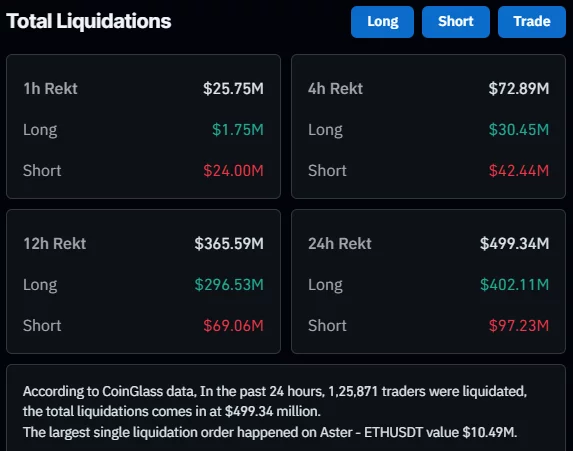
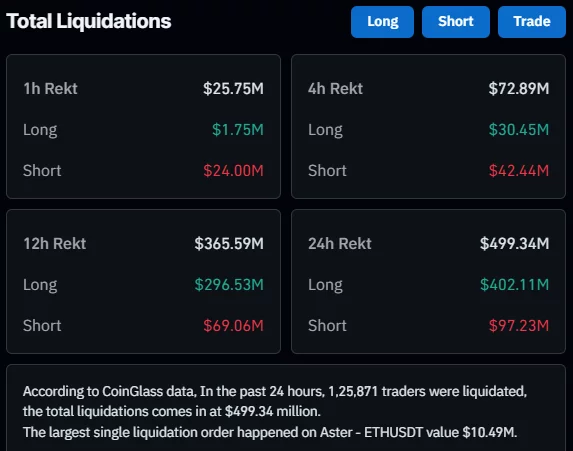
Rising geopolitical tensions also triggered a wave of liquidations across crypto derivatives markets. According to CoinGlass data, approximately $499.34 million in positions were liquidated over the past 24 hours, with long traders accounting for $402.11 million of the losses. More than 125,000 traders were liquidated during the period as Bitcoin fell below $63,000 and broader market volatility increased.
With negotiations suspended and Tehran warning of additional retaliatory measures, investors are likely to remain focused on developments surrounding the U.S.-Iran agreement, Israeli military activity in Lebanon, and the future of shipping through the Strait of Hormuz.
Disclosure: This article does not represent investment advice. The content and materials featured on this page are for educational purposes only.
Crypto World
Backpack's Tokenized SpaceX Token on Solana Crosses 10,000 Holders, Nearly Double xStocks' SPCXx
Backpack's tokenized SpaceX share token has crossed 10,000 onchain holders on Solana, six days after listing alongside the company's Nasdaq debut. The milestone widens the holder gap with rival xStocks' SpaceX product and lands as Backpack chief executive Armani Ferrante stakes out a structural… Read the full story at The Defiant
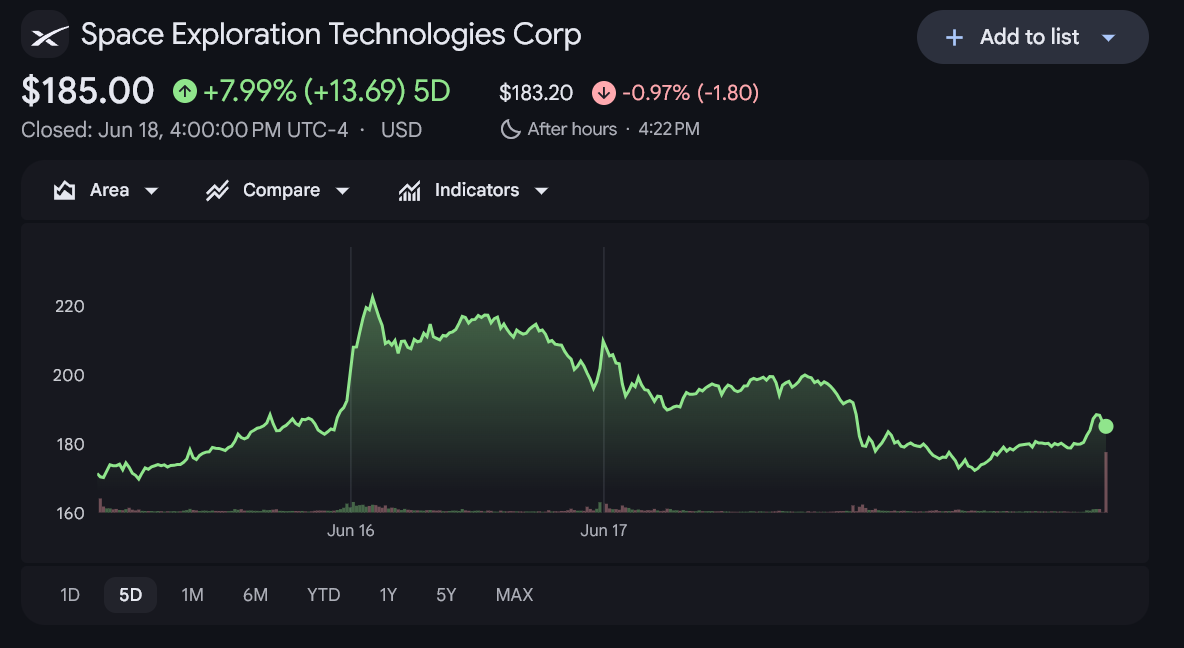
The ‘SpaceX exit liquidity’ narrative is everywhere since the IPO last week. Critics argue that the huge demand for SpaceX shares could let early investors, employees, or insiders sell stock at very high valuations while new buyers, especially retail investors, take the risk.
However, the S-1 filing, the lock-up calendar, and crypto futures positioning suggest the opposite, at least for now.
Who Can Sell SpaceX Shares Early?
It is critical to start with the supply side of the exit liquidity question. The offering sells only newly issued SpaceX shares. The company raised about $75 billion from 555.6 million new Class A shares, and the S-1 confirms that no existing holder sells at listing.
Every dollar goes to SpaceX itself, largely to fund its AI buildout. Many readers asking how to buy SpaceX IPO shares assume insiders sell to them directly. They do not.

Want more insights like this? Sign up for Editor Harsh Notariya’s Daily Newsletter here.
Insiders keep roughly 95.8% of the equity. Elon Musk and certain significant investors agreed to a 366-day lock-up, an agreement that blocks sales for a set period. Employees face restrictions too.
Lower-tier staff, such as welders, became paper millionaires this week, but their equity stays frozen until the first release window after Q2 earnings. They cannot dump SpaceX stock today, no matter how much they want to.
The one true carve-out is a directed share program covering up to 5% of the IPO shares for individuals selected by executives. Even they reportedly sell only after the first earnings report, and they buy fresh stock at the offer price.

So if nobody connected to SpaceX can sell today, who wants to sell later, and when does the door open?
The Billionaires Want Out, but the Lock-Up Sets the Date
The sellers in waiting are real, and this is where the SpaceX IPO exit liquidity story finds its grain of truth. Google or Alphabet holds about 5% of the company after the xAI merger diluted its earlier 6.11% stake.
That position could be worth up to $100 billion, a roughly 100x gain on its 2015 investment. They might want to liquidate some of that.
Early venture backers sound the same alarm.
Space Capital founder Chad Anderson told Fortune:
“We’ve been invested for almost ten years, it’s our business to return capital to investors.”
Yet, their exit runs through the SpaceX lock-up schedule. Up to 20% of eligible insider shares unlock after Q2 earnings, expected between mid July and September. Another 10% unlocks if SPCX holds 30% above the offer price for five of ten sessions. Five 7% tranches follow at 70, 90, 105, 120, and 135 days, with 28% more after Q3 earnings and full release at 180 days.

That metered supply meets a scheduled buyer. Nasdaq’s fast entry rule and MSCI’s early inclusion push index funds, and the retirement accounts behind them, to buy SpaceX stock within weeks of listing.
Passive inflows become standing demand for whatever insiders release. The financials explain why some may hurry.
SpaceX reported $18.7 billion in 2025 revenue with a $4.9 billion net loss, as Starlink’s $4.4 billion operating profit funded a $6.4 billion xAI loss. The SpaceX valuation sits near 94 times trailing sales, and Facebook’s staggered 2012 lock-up still ended 40% below its offer price.
Selling pressure is therefore scheduled, not imaginary.
Whether retail stands beneath it depends on who actually received the allocation.
Retail Was Cut Back, Not Loaded Up
If insiders planned to unload on small investors, the allocation should have maximized the retail bag. The opposite happened. Retail investors submitted more than $100 billion in orders to buy SpaceX IPO shares, exceeding the $75 billion deal size, and total demand reached 3.5 to 4 times the available stock.
SpaceX then cut the retail allocation to the low 20% range from a planned 30% because institutional appetite was strong. BlackRock alone ordered at least $5 billion, while sovereign funds took allocations of more than $1 billion each.
Mechanics weaken the bag-holder framing further. Fills were random or pro rata, depending on the broker, and brokers’ debit cash only for shares actually received. Anyone who failed to buy SpaceX shares in the offering simply keeps their money.

The exit liquidity story only works if retail ends up as the bag holder. That requires one of two traps. Either retail holds shares it cannot sell, or it got handed shares nobody else wanted.
SPCX retail escaped both, since it can sell from day one and received fewer shares than it ordered.
The post Is SpaceX the Ultimate Exit Liquidity for Billionaires? appeared first on BeInCrypto.
Crypto World
Ondo Finance Adds 173 Tokenized Stocks and ETFs, Taking Catalog Past 430 Assets Across Three Chains
Ondo Finance added 173 tokenized stocks and ETFs to Ondo Global Markets on Tuesday, pushing its catalog past 430 assets available across Ethereum, Solana, and BNB Chain. Ondo Finance's official X account announced the expansion on June 17. The batch spans some of the most capital-intensive corners… Read the full story at The Defiant

The Valley’s Janet Caperna Shares She Identifies as Bisexual

XRP ANNOUNCED 100% SAVE THIS DATE !!!! FEDS CONFIRM (XRP) !!!! BG123 AGREEMENT SIGNED !!!!

Kerry v Armagh team news as Kingdom handed double boost for Killarney showdown

Blockchain.com files with SEC for U.S. IPO

No Jackpot Winner as $257 Million Prize Rolls Over to $269 Million Monday Draw

Israel says it has killed new Hamas military leader in Gaza City airstrikes
XRP ANNOUNCED 100% SAVE THIS DATE !!!! FEDS CONFIRM (XRP) !!!! BG123 AGREEMENT SIGNED !!!!

Anthropic Unveils AI Agents for Financial Services Tasks

*NEW* BROKEN 250+ MILLION CREDIT! x999 WHEELSPINS GLITCH! FORZA HORIZON 6 MONEY GLITCH! *DO NOW*
-
 Business4 days ago
No Jackpot Winner as $257 Million Prize Rolls Over to $269 Million Monday Draw
-

 Fashion6 days ago
Weekend Open Thread: Tuckernuck – Corporette.com
-
 Crypto World4 days ago
Zimbabwe Requires Crypto Businesses to Register Annually Under New FIU Regulations
-

 Crypto World6 days ago
Bitget enters Argentina’s regulated crypto market through PSAV registration
-

 Tech6 days ago
NanoClaw integrates JFrog registries to secure AI agent downloads
-

 Tech6 days ago
This Week In Security: Microsoft On Microsoft, Register Your Domains, Linux On ARM, And FreeBSD Joins The File Cache Club
-

 NewsBeat7 days ago
El Nino has formed in the Pacific and could set records, forecasters say
-

 NewsBeat6 days ago
FBI searches office of Ohio voter registration group
-
 Tech7 days ago
Anthropic is spending $150M to embed 1,000 AI fellows inside nonprofits. No degree required.
-
 Entertainment7 days ago
‘The Pitt’s Fan-Favorite Doctor Confirms Noah Wyle Gave His Blessing to Return [Exclusive]
-
 Crypto World7 days ago
Ripple and Bitso Bring MXNB Stablecoin to XRP Ledger
-
 Tech7 days ago
Former AWS CEO Adam Selipsky to lead new $10B AI data center venture
-
 Entertainment4 days ago
Matt Damon’s Viral Sci-Fi Thriller Has Taken Over HBO Max
-

 Business4 days ago
Anthropic staff to meet White House officials next week, Axios reports
-

 Business7 days ago
Justin Bieber Prepares for 2026 Tour Return with New Music and Promoter Talks
-

 Tech4 days ago
As AI companies race to go public, who else is along for the ride?
-
 Crypto World4 days ago
Bitcoin could crash to $48,000, if this historical pattern is triggered
-
 Tech7 days ago
Euro-Office 1.0 Arrives To Open-Source Infighting: ‘Compatibility Is Not Sovereignty’
-

 Politics4 days ago
“Israel’s” ban on ICRC visits ruled illegal, but Knesset moves to stop them permanently
-
Entertainment7 days ago
Ana Navarro unleashes explosive tirade on ex-Trump aide, Disney Channel star in epic on-air fight: 'Have you no shame?'
You must be logged in to post a comment Login