Baby Boomers — or Boomers for short — were born between 1946 and 1964, putting them in their sixties, seventies, and eighties today. Stepping back in time to that era reveals a world of classic and nostalgic tech with a certain charm that most modern-day devices simply don’t have. Wooden finishes on console TV sets, spinning controls to dial a rotary phone — these are things most kids today wouldn’t know about, but instantly take Boomers back to their childhood.
TV sets and rotary phones aside, Baby Boomers were also very familiar with technology that has made a resounding resurgence today: vinyl record players. Boomers will remember hitting The Twist in front of one of these with their parents, or setting the needle down on the latest rock ‘n’ roll hit – a genre that exploded in the 1950s and ’60s.
And if Boomers weren’t listening to music from their record players, they were probably using a transistor radio (which first hit the scene as the Regency TR-1 in 1954) for tunes, sports, and news. Or they may have been writing their own stories and capturing moments with a Polaroid camera. It’s interesting to take a trip down memory lane through the lens of tech, and these classic electronics are a perfectly nostalgic guide.
Advertisement
Console TV sets
Max_Irsan/Shutterstock
If wood-finished Zenith, RCA, or GE console TV sets are nostalgic to you, there’s a good chance you’re a Boomer. Characterized by their furniture-style wooden cabinets, knobs or dials, and captivating center screen, these television sets took the United States by storm in the 1950s, ’60s, and ’70s. It was the centerpiece of the living room and something for the whole family to gather around and enjoy.
Many Baby Boomers will remember the transition from black-and-white to color television — which had actually been around since the 1920s, but wasn’t refined and popularized until the 1940s and into the ’70s — and the ubiquitous impact it had on information and entertainment distribution. 90% of US households had a television set by 1960, whether black-and-white or color. And it wasn’t just to watch “The Flintstones.”
Advertisement
1960 saw the first televised debate between presidential candidates (John F. Kennedy and Richard M. Nixon), and in 1961, Kennedy gave the first live press conference on television. There was no internet or social media to get insights on politics and the goings-on of the world — for Boomers and their parents, these console television sets were crucial to staying informed about the world around them.
Advertisement
Vinyl record players
Nerza/Shutterstock
Vinyl record players were most popular from the 1950s to the ’70s, meaning many Baby Boomers grew up listening to The Beatles and The Beach Boys on a spinning vinyl disc throughout their childhoods. For many teenagers, the vinyl record player was a way to express artistic freedom and build a music collection unique to their tastes. Instead of waiting and hoping for a song to play over the radio, they could easily share certain songs with their friends and have others introduce them to new tunes.
Like console TV sets, vinyl record players of the time were often a bit different than the ones we see in today’s vinyl resurgence. When Boomers were growing up, record players were often housed in wooden consoles and doubled as pieces of furniture. There was also a hands-on aspect that made using vinyl records enjoyable. Choosing a record from your collection, putting it on the turntable, and lowering the needle onto the track was all part of the experience. While records were eventually largely replaced by CDs, that experience is an important part of why vinyl records came back into style.
Advertisement
Transistor radios
nbsusanto/Shutterstock
While vinyl records brought music into Boomers’ homes, transistor radios let them take it anywhere they wanted. Coming onto the scene in the mid-1950s with the Regency TR-1, these pocket-sized radios quickly changed the way people of the time interacted with music, news, and sports. While the tabletop radios that came before them were big and bulky, transistor radios were small and light enough to carry easily. Because they were battery-powered, they didn’t have to be tied down to an outlet.
For many Baby Boomers, the transistor radio was their first piece of personal tech. Like record players, transistor radios allowed teenagers to listen to the songs and stations they wanted without having to change the channel for anyone else. And the timing couldn’t have been better with rock ‘n’ roll artists like Elvis Presley and bands like Creedence Clearwater Revival becoming popular at the time.
Nowadays, we can simply look up and stream whatever songs we want. But Baby Boomers will remember the feeling of tuning into a station on their transistor radio and hoping for their favorite song to come on — and the joy they were filled with when it finally did.
Advertisement
Rotary telephones
yoshi0511/Shutterstock
Rotary telephones are one of the most instantly recognizable pieces of tech on this list. Characterized by their circular dial mechanisms and curly cords, you would find rotary phones in many American households between the 1930s all the way into the ’90s. Rather than the physical buttons and touchscreens of today, rotary phones had numbered holes that you would place your finger into and rotate until the circular dial reached the stopper. Their distinct clicking sound and tactile feel became a shared memory across multiple generations.
While our smartphones can be used anywhere, rotary phones were tethered to one specific location. If the phone rang, someone had to get up to answer it. There were no text messages, notifications, or caller ID screens to check first. It was also common for the phone to sit in a busy area of the home, so conversations were rarely private if your family was around.
And for many Boomers growing up, the rotary phone was a method of connecting with their friends. You’d write their phone number down, or do your best to remember it by the time you got home, and then you’d call up your friend after school or on the weekends to hang out. It was a time when phone calls were sometimes planned ahead of time, and communication moved at a slower pace.
Advertisement
Polaroid cameras
AS project/Shutterstock
Polaroid cameras, which came out in 1948, were one of the most exciting inventions for Baby Boomers because being able to snap a photo without needing a studio and time to develop the picture was revolutionary at the time.
Polaroid pictures became popular at family reunions, parties, and holidays. Instead of using an entire roll of film and waiting days or weeks to see how a picture turned out, you could click the shutter button and hold a physical copy a few moments later (after waving it in the air to help it develop faster). The process became part of the fun — friends and family would gather around to watch an image slowly develop from what initially looked like a blank piece of paper. By 1977, despite Kodak’s best efforts at competition, Polaroid had cornered the majority of the instant camera market.
Long before social media turned every photo into something instant and shareable, Polaroid made it possible to capture a moment and immediately pass it around the room. The distinct white border and vintage look of the photos made taking and collecting pictures a fun, spontaneous activity.
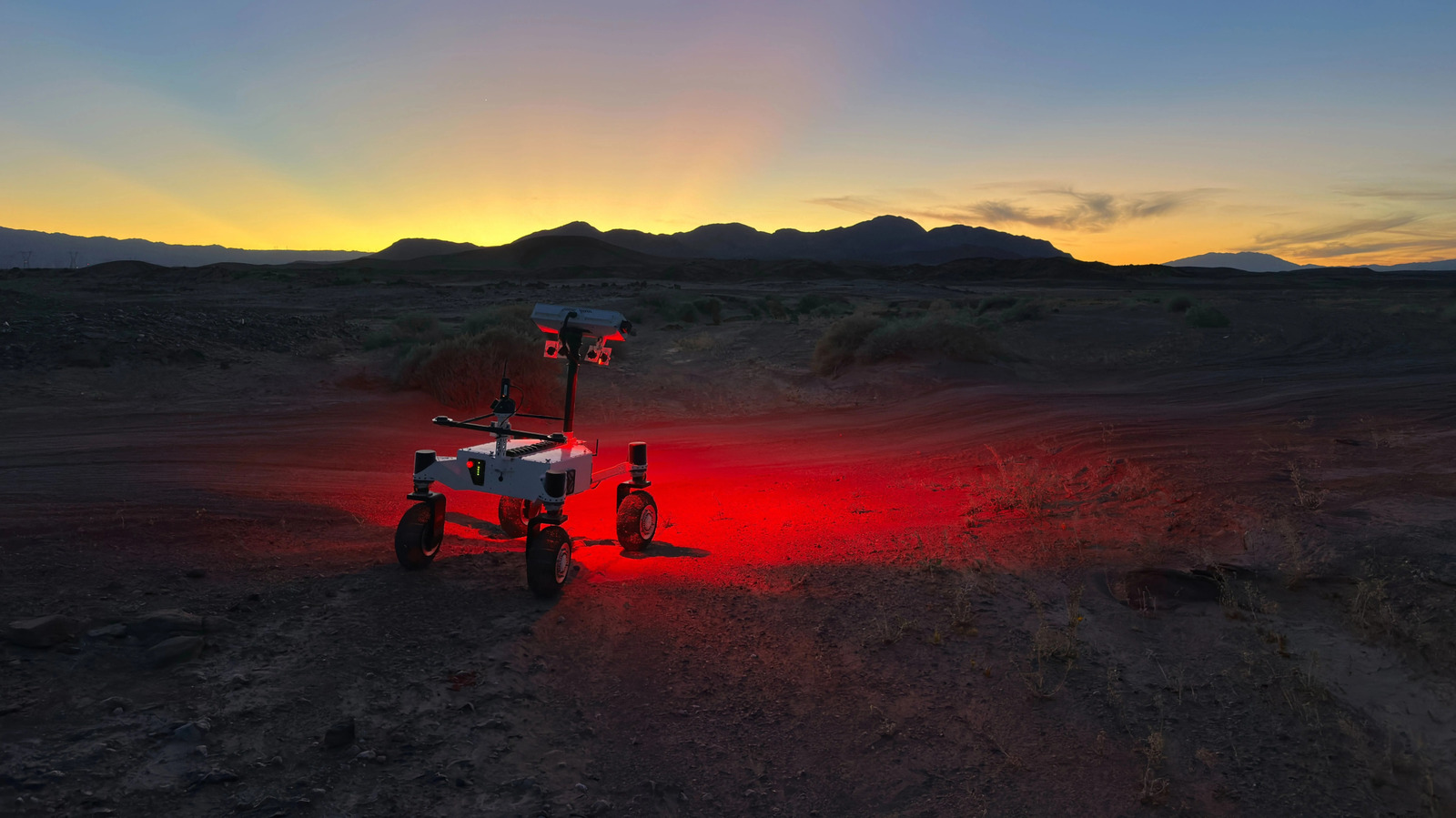
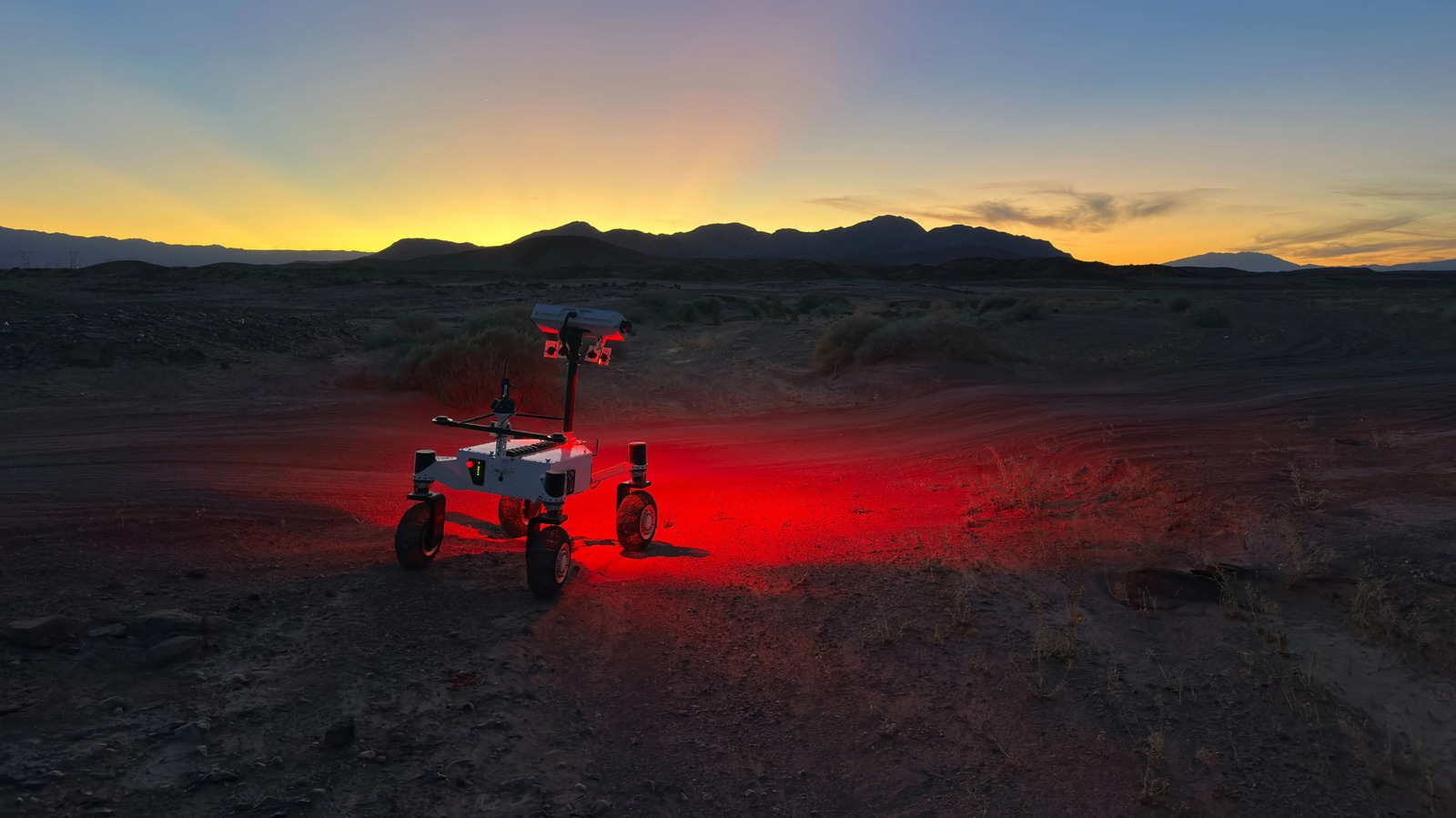
NASA’s Mars rovers have accomplished a whole lot since the first one landed on the red planet in the late ’90s, but even the latest members of the fleet still have plenty of limitations. For one, they’re very slow; Perseverance, which NASA considers a “standout,” achieves a top speed of just under .1 mph on flat ground. On top of that, the rough terrain is hard on the rovers’ wheels, and steep slopes with hazards like rocks and sand pose a real challenge, sometimes requiring long detours to reach certain targets. But this week, NASA showed off its progress on a prototype that boasts more advanced capabilities: the Exploration Rover for Navigating Extreme Sloped Terrain, or Ernest.
The space agency has been testing Ernest in the Colorado Desert, exploring new approaches that could be used for future missions on Mars and the moon. Ernest has four wheels, in contrast to the current Mars’ rovers’ six, and is four feet long, though a version that would be used for an actual mission would be double the size. And, it can individually lift its wheels to step on or over obstacles. In the recent tests in the desert, the prototype drove for a total of over 37 hours across seven days, covering roughly 16 miles, according to NASA. It hit a top speed of about .6 mph.
“You could do a science road trip across the Moon — or Mars — with this vehicle,” said James Keane, a JPL planetary scientist working on lunar missions. Going back to NASA’s Sojourner rover, the Mars rovers have relied on a passive suspension system, the rocker-bogie system, to keep the weight constant across their wheels. Now, though, engineers are trying out active suspension with Ernest to achieve greater mobility. “Two powered joints in front articulate a gimbal that allows the rover to drive using different gaits like squirming, wheel-walking, and obstacle-climbing,” NASA says.
Advertisement
It can switch between active and passive suspension depending on the task and energy needs, and thanks to its four steerable wheels, it can drive in any direction. There have already been multiple iterations of the Ernest prototype since the program began in 2022, and the team has tested nearly a dozen active suspension configurations. The latest version also has “enhanced independent decision-making capabilities.” The goal with Ernest is to develop the technology for rovers that can cover more ground than those that came before them, and faster, with less reliance on human controllers back on Earth.
The managing directors of Seattle’s AI House, from left: Yifan Zhang, Jacob Colker, and Sri Chandrasekar. (AI House Photo)
AI2 Incubator has spent the past 12 years building AI companies in Seattle. Now it’s taking the name of the community it built around that work, rebranding today as AI House and dropping the AI2 name it had kept as a vestige of its former ties to the Allen Institute for AI.
The incubator was founded in 2014 inside Ai2 — the Seattle research institute created by Microsoft co-founder Paul Allen — long before artificial intelligence became a household term. Its mission has been to help founders with the early work of company building: idea formation, customer discovery, recruiting, technical strategy and more.
In 2022, the incubator spun off from Ai2, and last year launched AI House as a physical hub for Seattle’s AI ecosystem — a gathering space for founders, engineers, researchers and investors at Pier 70 on the Seattle waterfront. In its first year, more than 20,000 people came through its events and programming.
“We’ve grown a lot, we’ve become our own organization in so many ways,” said Jacob Colker, the co-founder and managing director of AI2 Incubator and now AI House. “Community has become a deeply intertwined company-building platform for how we do what we do — and that was a big catalyst for the evolution of our brand.”
Along with the rebrand, AI House is bringing on Sri Chandrasekar as a new managing director. Chandrasekar spent nearly a decade at Point72 Ventures, where he helped build the firm’s ventures and private equity businesses, and previously led investments at In-Q-Tel, the strategic investment arm of the U.S. intelligence community.
Advertisement
While considering what to do next and possibly starting his own fund, Chandrasekar said he realized it was already being built.
“I think the core of what I would have wanted to do was build a community of founders all learning from each other and going as fast as they can,” Chandrasekar said. “And it already existed at AI House.”
AI House opened in March 2025 and features 108,000 square feet of space for co-working, events and more at Pier 70 on the Seattle waterfront. (GeekWire File Photo)
Chandrasekar was already deeply connected to AI House before joining full-time — he had invested in several of its portfolio companies and wrote the first check into the organization’s $80 million Fund III last fall. He moved to Seattle from the Bay Area in 2021, betting the city would become a major force in AI.
Five years later, that conviction has only grown.
“As I think about my portfolio from Point72, some of our best performing companies are Seattle-based,” Chandrasekar said. “We had never made a Seattle investment before I moved up here, and something like 25% of our investments, maybe even more, were Seattle-based by the time I left.”
Chandrasekar joins Colker and fellow AI House managing director Yifan Zhang, who have led the organization through its evolution from research institute spinout to independent venture firm and community hub.
Colker credited Zhang with creating the basis for a community and building a public-private partnership with the City of Seattle, the State of Washington and Ada Developers Academy, with early support from Google and JPMorgan.
“It’s through her hard work over the last year that we have so much energy coming through the space,” he said.
Oren Etzioni, the longtime AI researcher and former CEO of the Allen Institute for AI, continues in a part-time role as technical director, and AI House also recently hired former GeekWire editor Taylor Soper as director of community and programming.
Advertisement
Under the AI House name, the organization is formalizing itself around three pillars: Community, which brings together founders, engineers, researchers and investors across the Pacific Northwest; Incubator, where the team works side by side with founders from the earliest stages; and Capital, where it writes pre-seed checks from its Fund III into applied AI companies.
Colker said the company-building playbook that worked in 2018 no longer applies in 2026.
“The new playbook is being written in real time,” he said. “One team’s breakthroughs that week become another team’s unfair advantages next week.”
Yifan Zhang accepts the Geeks Give Back award for AI House at the 2026 GeekWire Awards in Seattle in May. (GeekWire Photo / Kevin Lisota)
Over its 12-year history, AI2 Incubator spun out more than 40 companies — including computer vision startup Xnor.ai, acquired by Apple; legal tech firm Lexion, acquired by Docusign for $165 million; and applied AI startups Yoodli, Ozette, Roboto and Casium — with 90% of graduates going on to raise venture funding.
AI House will continue to recruit founders from across North America — the organization has portfolio companies in Montreal, New York, San Diego and elsewhere — but Seattle remains the home base. Going forward, every founder in the incubator will be required to spend at least one month working from AI House daily.
“Community is not something you can fully access from a distance,” Colker said. “The value comes from being in the room: the conversation after an event, the founder at the next desk, the operator who helps with a pricing question.”
Colker has been vocal on LinkedIn about what he sees as Seattle’s underappreciated stature, and he had no shortage of examples. Forty percent of world air travel flies on planes built in the Pacific Northwest, he noted. The cloud was invented here. When OpenAI needed compute, Sam Altman flew to Seattle to talk to Microsoft CEO Satya Nadella. When Anthropic needed compute, Dario Amodei flew to Seattle to talk to Amazon CEO Andy Jassy.
“How are we not just walking around with our heads held high?” Colker said. “I think we are as a region bad at telling our story — but that doesn’t mean we don’t have ambition and world-changing impact. It just shows up a little differently.”
Advertisement
Chandrasekar, who made his own bet on Seattle, put it simply.
“I can’t imagine a more exciting opportunity than investing in AI companies in an area that has a plethora of AI talent like Seattle,” he said. “If you want to use AI to disrupt an industry, this is the place where we teach you how to do that.”
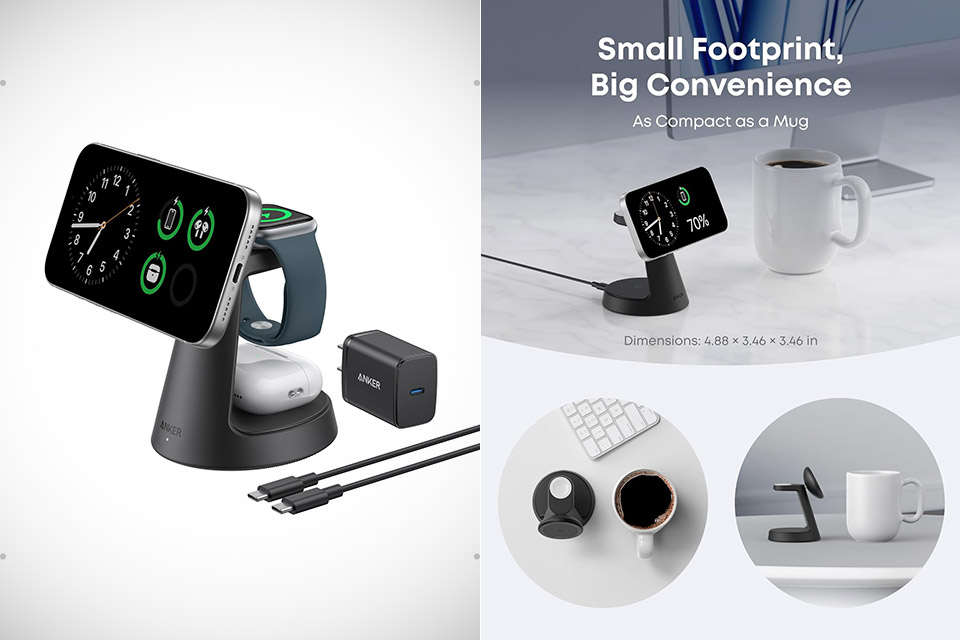
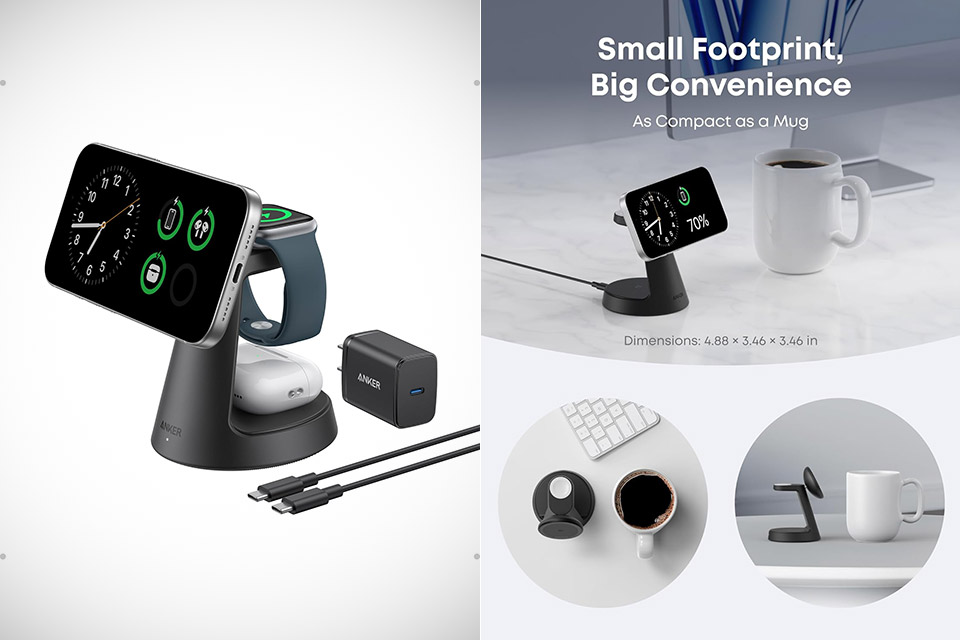
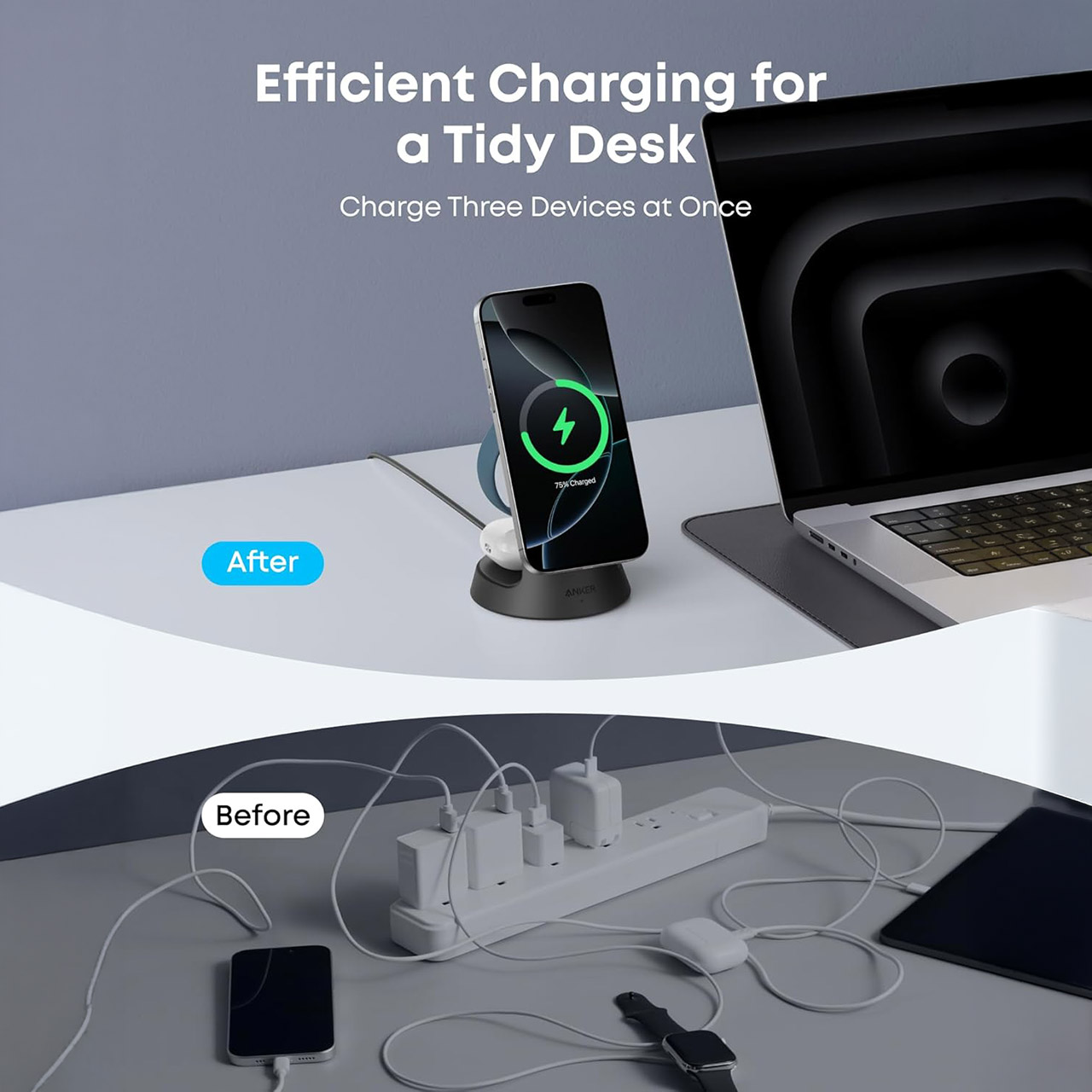
Travel often turns charging into a small production. You reach for the phone cable, then hunt down the watch puck, then dig out the earbud case adapter. Before long the bag holds more power gear than clothes. Anker built the MagGo 3-in-1 Wireless Charging Station, priced at $67.49 (was $90), to cut that routine down to one compact piece that actually fits in the corner of a carry-on.
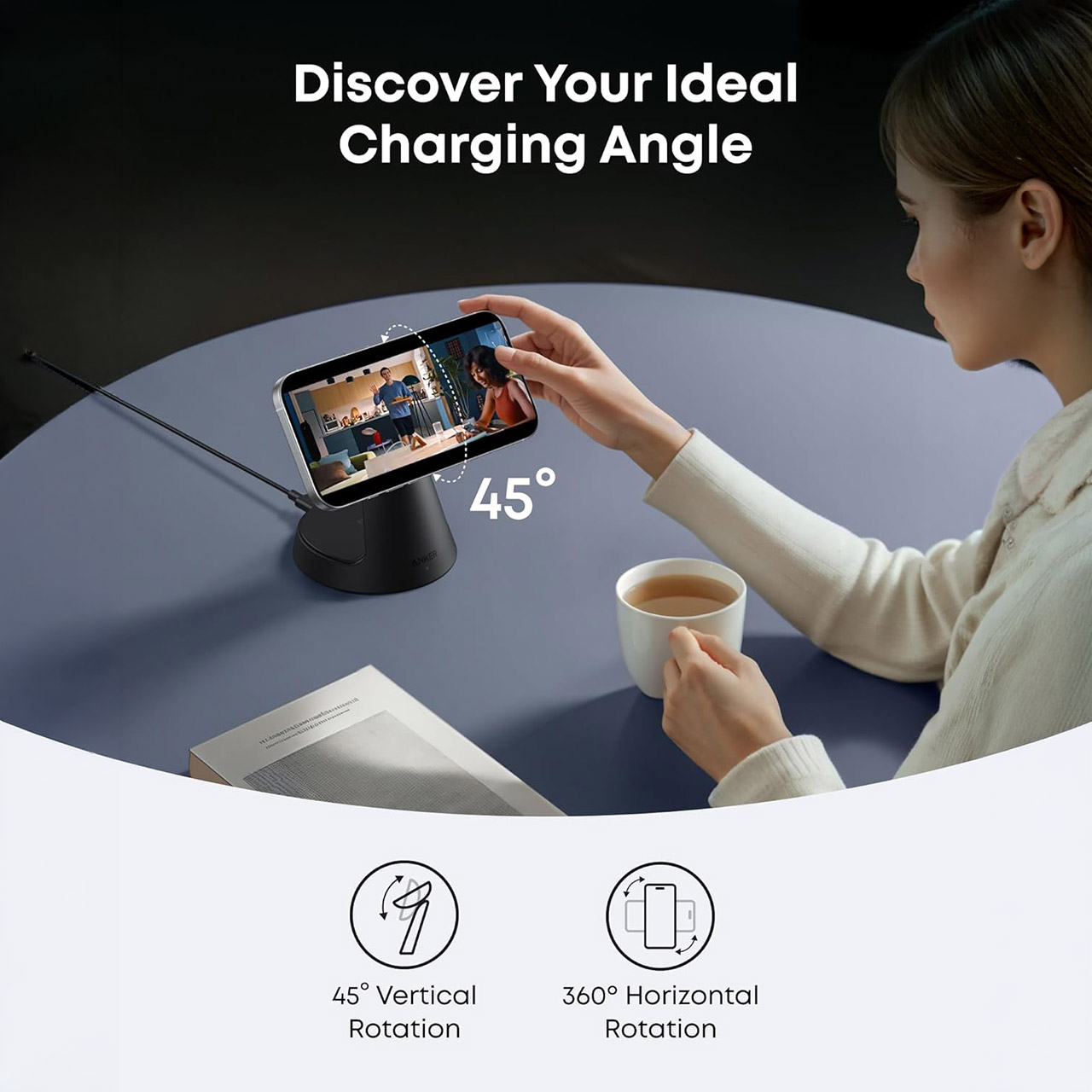
Official measurements show that when upright, it measures 3.46 × 3.46 × 4.92 inches and weighs just over 10 ounces. It’s a brilliant design that employs a short silicone hinge mechanism, allowing the entire device to fold out flat or at any angle you like, with no exposed wiring or loose parts to deal with. When you eventually put it down, four rubber feet will keep it steady on your nightstand or hotel desk.
Ultra-Fast 15W Wireless Charging: Harness full 15W charging power, giving your essential devices the quickest charge, consistent with the original…
Compact Charging for 3 Devices: Ideal for clutter-free workspaces, this compact charger fits ideally on any desk, powering everything from phones to…
Certified Fast Charging for Apple Watch: Boasts official certification, enabling you to power your Apple Watch Series 10 from 0 to 100% in just 1 hour…
When you open it, three special pads come to life, the largest of which uses some clever Qi2 magnetic alignment to send up to 15 watts to your most recent iPhone. Slap your phone on and it clicks into place; tilt the pad and the screen remains visible even while the phone is in Standby mode. Next to that is a 5-watt pad that is specifically designed to fit AirPods cases and includes wireless charging. Then there’s the third pad, which handles Apple Watches with Apple-certified quick charging at 5 watts. All three pads can function simultaneously, so you can charge your phone, watch, and earphones all at once without experiencing any slowdowns or priority issues.
Advertisement
All of the power comes from the 40-watt USB-C wall adapter and 5-foot cord, which are included when you open the package. That adapter provides enough electricity to keep everything charged, and even while charging three devices at once, it remains well within its capabilities. Testers have put this device through its paces, and even after three full charges, it keeps quite cool thanks to some clever ventilation slits integrated into the base. To top it all off, a little LED light will flicker on to indicate that everything is linked, but it will be faint enough not to disturb you at night.
It works with iPhone 12s and up, most Apple Watch models, including the Ultra models, AirPods Pro, and other devices that support wireless case charging. It’s worth noting that non-magnetic cases or metal attachments can interfere with the phone pad, but a regular silicone or slim case will work just well, and while it uses slightly more power in standby than some of those single-device chargers, the difference is negligible in normal use.
This week OpenAI announced a 750-task test to to measure “whether AI systems can support realistic life science research tasks, not just answer biology questions.”
But while OpenAI’s top-performing GPT-Rosalind model led the rankings, Slashdot reader BrianFagioli notes that “it achieved a pass rate of just 36.1 percent, failing nearly two-thirds of benchmark tasks.” Nerds.xyz points out that means “the best-performing model failed nearly two-thirds of the benchmark’s tasks.”
The benchmark also revealed a familiar weakness. AI systems generally perform better when everything is presented as text. Once they are forced to work with supporting documents, figures, or complex datasets, performance drops noticeably. GPT-Rosalind’s pass rate fell from 45.1 percent on text-only tasks to 28.1 percent on tasks involving artifacts or URLs.
Advertisement
To be fair, the benchmark is not intended to suggest AI is useless in research. Quite the opposite. OpenAI found that models are becoming increasingly capable of scientific communication, evidence synthesis, and translating research findings into practical explanations. Those are valuable skills, particularly for researchers drowning in information. But LifeSciBench serves as a useful reminder that today’s AI systems are still far from autonomous scientists. They can help. They can assist. They can sometimes provide surprisingly useful insights. What they cannot reliably do, however, is replace the expertise, judgment, and skepticism that real scientific research requires.
Some municipalities implement bike counters on cycling routes in order to monitor traffic. [nullpxl] recently investigated how these counters work, and explored methods that can be used to trick the counter into thinking a bike passed over it.
A great many of these devices are built using inductive loop sensors. This involves passing a current through a loop of wire embedded in the ground. When a conductive item such as the metal wheel of a bike passes through the electric field, eddy currents are generated in the item, creating their own magnetic field which reacts with the loop’s field itself. This creates a change in inductance which can be measured, and thus used to log the number of times a conductive item has passed over the sensor. By looking at the signature of the inductance change, a system can be tuned to detect specific objects—for example, two bicycle wheels passing over a sensor will create a signal that varies over time in a characteristic way.
[nullpxl] first tried to recreate a “bike” signal for the inductive loop by running over the area holding two metal pans. This wasn’t close enough, so a new idea was needed. Experiments with a scrap bike then indicated that there was a speed gate involved, and that wheeling one wheel over the sensor and back again could trick the sensor into thinking a bike had passed by. Eventually, [nullpxl] distilled all this learning down to create “the BIKE BASKET.” It’s simply a bag with a bike wheel in it, and swinging it over the sensor twice makes the counter tick up.
Advertisement
Is there any money in tricking the average municipal bike counter in your local city? We doubt it, unless Big Bike is getting increasingly filthy in its lobbying efforts. In any case, we love to see weird sensor hacks around these parts.
Microsoft has attributed a recent Mastra AI supply chain attack that compromised more than 140 npm packages to the North Korean hacking group Sapphire Sleet, also known as BlueNoroff.
This attribution comes after Microsoft first disclosed earlier this week that attackers hijacked an npm maintainer account and used it to publish malicious package updates.
“Microsoft assesses with high confidence that this activity is attributable to Sapphire Sleet, a North Korean state actor that primarily targets the financial sector,” the company said in a June 19 update.
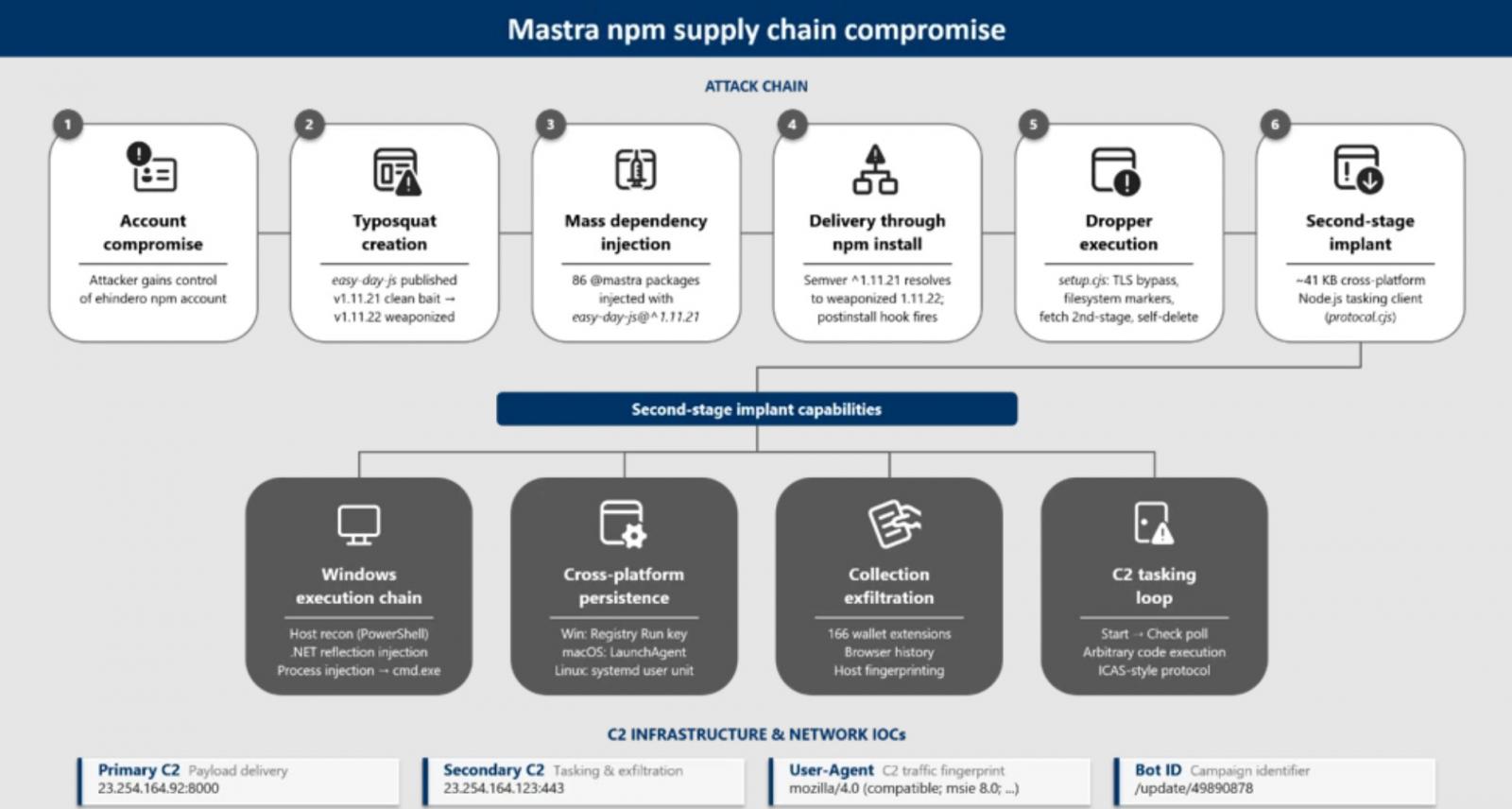
According to Microsoft, the attack began when threat actors compromised the npm maintainer account “ehindero,” which had publishing privileges across the Mastra package environment.
Using the account, the attackers published malicious updates for more than 140 packages in the @mastra scope that injected a malicious dependency named “easy-day-js”. This dependency is a typosquat of the legitimate and widely used dayjs JavaScript library.
Advertisement
When the compromised packages were installed, the malicious dependency executed a post-install hook that deployed a malware dropper on developers’ devices, ultimately aimed at stealing sensitive credentials, API keys, authentication tokens, and cryptocurrency wallets.
“Once installed, easy-day-js triggered a postinstall hook that executed an obfuscated dropper script, disabled Transport Layer Security (TLS) certificate verification, contacted attacker-controlled command-and-control (C2) infrastructure, downloaded a second-stage payload, and executed the payload as a detached hidden process,” explains Microsoft.
Cross-platform malware targets crypto wallets
The downloaded second-stage payload was a cross-platform information stealer designed to target Windows, Linux, and macOS systems
The implant collected information about the host, browser histories, installed applications, and running processes, and checked whether 166 cryptocurrency wallet browser extensions were installed, including MetaMask, Phantom, Coinbase Wallet, Binance Wallet, and TronLink.
Advertisement
The malware also used different persistence methods depending on the operating system, such as Windows Registry Run keys, macOS LaunchAgents, and Linux systemd services.
Mastra npm supply chain compromise Source: Microsoft
Microsoft says systems that communicated with the attackers’ command-and-control servers had follow-on activity that utilized tactics previously associated with Sapphire Sleet.
This includes the deployment of a PowerShell backdoor previously used by the group, additional persistence mechanisms, Microsoft Defender exclusions, and a malicious Windows service that granted SYSTEM privileges.
“The PowerShell backdoor, tradecraft, and C2 infrastructure have been used by Sapphire Sleet in other, prior campaigns,” Microsoft explained.
For those who want a career that encompasses all that is positive about the technology space and that leaves the world a more equitable place, Industry 4.0 is a gamechanger.
For many within Industry 4.0 type careers, there is often no one way to define or describe a role. With the advancement of working expectations and technologies, many roles have morphed into one another, to form hybrid jobs that cover many areas. That is certainly true of careers in sustainability that sit at the intersection of the business, environmental and tech landscapes.
The professionals who operate within technology-driven sustainability-focused roles are often expected to wear many hats to address the problems of a modern era, in a modern way.
With that in mind, what skills are needed for those who envision a career in a space where business acumen, tech-knowledge and a passion for a leaner, greener and cleaner world, merge? And what kind of companies have a need for a professional with this particular skillset?
Advertisement
Where to go?
When job hunting, it can be difficult to find an organisation that perfectly aligns with your professional or even personal goals, as well as one that is genuinely committed to making a significant and lasting change. For the most part companies will say and do the right things initially, but what is important is sourcing the organisations that have a history of blending their long-term sustainability and technology strategies, so you have evidence of their commitment. This might be in a large multinational or an SME – regardless, make sure you research a company and even ask about their policies and opportunities before fully committing to a role.
It is also critical that, especially in the early days of your career, you don’t put yourself in a box because you can’t find the right title, or because the organisation itself isn’t in the sustainability space. The joy of working in this capacity is that you get to be the drive behind an organisation’s commitment to doing better. So roles in areas such as climate data science, renewable energy, AI solutions architecture, digital twins, additive manufacturing, smart manufacturing and more, in diverse companies, create opportunities to better align an organisation with future sustainability goals. It makes an impact.
Round and round
As with any job in an industry that depends on major technological achievement, popular in-demand skills include AI, machine learning, data analytics, 3D imaging, IoT and so on. But when you are working in a sustainability-driven Industry 4.0 role, there are additional abilities that are needed to make up a robust skillset. Many of those skills fall under what is known as the circular economy.
The circular economy is a system by which global production and consumption focuses on sustainable, less harmful practices such as sharing, leasing, reusing, repairing, refurbishing and recycling existing materials and products as long as possible. An item’s life cycle and potential for use is extended and waste is reduced to a minimum in this system.
Advertisement
To achieve a circular economy, companies and their employees need to rethink how they engage with supply chains, the manufacturing process, energy usage, waste disposal and other key areas to avoid the more wasteful linear economy that tends to adopt a ‘use it and throw it away’ kind of mindset.
Skills to prioritise in this area include systems thinking, which is the ability to better understand how all parts of a value chain, the materials, supplies, consumption, waste recovery, policies and infrastructure work in tandem.
Also, consider circular design skills, which enable a professional to design and develop materials and items that are durable, repairable and reusable, effectively undermining ‘planned obsolescence’, which is the practice of deliberately making something fragile, less-powerful or prone to wear and tear, so you have no choice but to replace it – often too soon.
The voice and face
Another important element of careers in the sustainability and Industry 4.0 space, is the ability to advocate for the work itself and to show its value in a way that is measurable and irrefutable.
Advertisement
As mentioned before, careers in this area are no longer ‘just one thing’, rather professionals cover strategy, operations, policy, consultations, finances and green technologies, often while managing teams and dealing with internal and external communications.
With that in mind, professionals need to have a significant understanding of how the business works financially, how the budget can accommodate new green initiatives, how it might align regional climate-focused guidelines, as well as how to report and disseminate findings, outcomes and other relevant information.
This may require a commitment to education, a focus on leadership and management skills, a study of specific frameworks, analytical skills and capability in public speaking and engagement. If you aim to work as a consultant for an organisation or with larger institutions and government bodies, presentation skills could be of use.
The thing about careers in this space is that there are so many opportunities for qualified and ambitious tech professionals to make their role sustainability focused. We have only just scratched the surface here, so if your job sits at that intersection, don’t be panicked about choosing a lane, forge your own course.
Advertisement
Don’t miss out on the knowledge you need to succeed. Sign up for the Daily Brief, Silicon Republic’s digest of need-to-know sci-tech news.
Although the basic principle of radio direction finding is easy to understand (measure the phase difference between different antennas, then calculate the angle of arrival from this difference), the radio hardware to actually implement this has historically been hard for hackers to access. The QuadRF project aims to change this by building a phase-coherent four-channel SDR which makes direction mapping easy (GitHub repository).
The QuadRF uses two boards: one to receive and pre-process radio waves, and a Raspberry Pi 5 for additional processing. The RF board has four patch antennas, each capable of either transmitting or receiving in the 4.9 GHz to 6.0 GHz range, with switchable right- or left-hand polarization. For on-device processing, it uses a Lattice ECP5 FPGA, which uses two MIPI cables to connect to the camera and display interfaces on the Raspberry Pi. These form a very high-speed data exchange, and after further processing, the Pi can pass data on over Ethernet or Wi-Fi. Individual QuadRF boards can connect together in a lattice grid to form larger phased arrays.
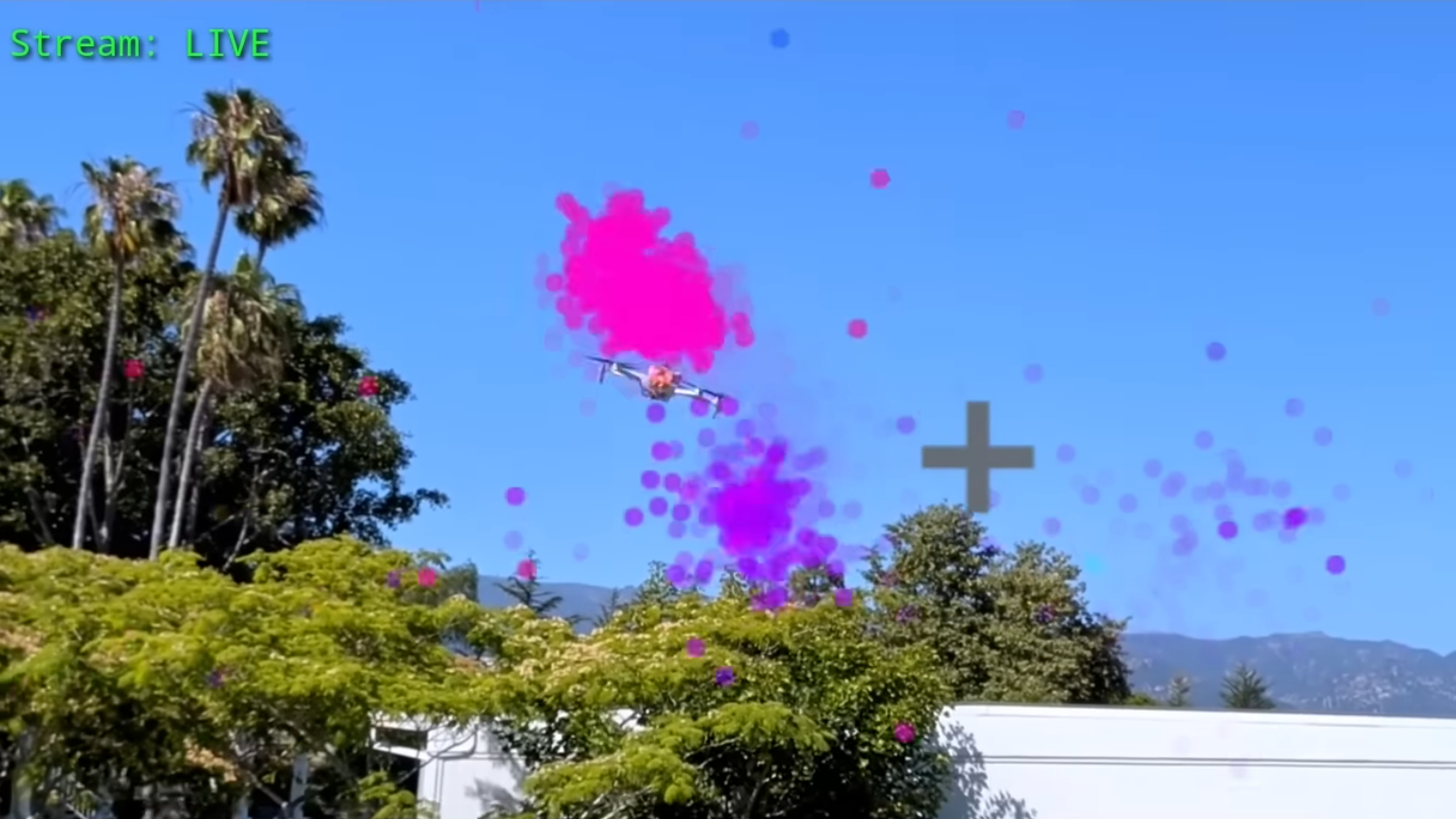
The QuadRF’s software shows off its real strength: it’s compatible with standard programs like GNU Radio, but it also hosts a few of its own programs. The most striking of these is an “RF camera” which scans its entire frequency range at 30 fps, tracking the direction of detected signals and visualizing them on a spatial plot. When overlaid on a camera feed, this plot lets one easily see the radio signals emitted from electronics; as an example, the creators tracked a drone in flight, even distinguishing the two radio transmitters on the drone.
Advertisement
This isn’t the first multi-antenna SDR we’ve seen, though this is the first that could transmit. It’s important to be careful, though: some applications of this kind of hardware run afoul of arms regulations.
Hunting and fishing license incident catches 3M residents
The Texas Parks and Wildlife Department (TPWD) says 3 million Texans had their data stolen following a breach at one of its suppliers.
People with state-issued hunting and fishing licenses are among those affected after attackers breached the vendor that handles license sales and copied customer data.
Advertisement
Details of victims’ driving license and passport numbers may be present in the leaked data. Basic personal information, such as email addresses, phone numbers, and residential addresses also leaked.
Social Security numbers (SSNs), financial data, or information relating to minors were not involved, according to the department’s disclosure.
According to a filing with the Office of the Attorney General, the attack on the unnamed vendor affected 3,087,721 Texans. The filing appears to contradict the department’s disclosure, noting that individuals’ names and SSNs were also involved.
Affected Texans were offered the usual one year of free credit monitoring services provided by Kroll, as long as they enroll by September 14.
Advertisement
A Kroll webpage dedicated to the incident reveals that an investigation has not determined when the breach took place. The department notified Texas Cyber Command on May 13, however.
“We recognize the seriousness of this issue and have identified and implemented additional security options to better protect customer information,” said TPWD. “Many of our staff are hunters and anglers and were affected by this incident. We are committed to continuing to work with the license system vendor to implement increased safeguards to prevent future incidents.”
TPWD said it is working with the affected vendor to introduce additional preventive measures, including enhanced monitoring and access controls.
The org went on to say that new license sales currently scheduled for August will go ahead as planned, although the website used to purchase licenses was unreachable at the time of writing. ®
THX Ltd. has spent more than four decades teaching moviegoers to expect the room to move before the film even begins. Founded by George Lucas in 1983 and developed out of Lucasfilm’s push to improve theatrical sound and presentation, THX became inseparable from Tomlinson Holman’s work, James A. Moorer’s thunderous Deep Note, and the kind of pre-movie trailer that made weak subwoofers beg for mercy.
The company’s latest Deep Note trailer, “Spark,” is not just another nostalgia play from one of cinema’s most recognizable audio brands. Now operating under Razer ownership after the 2016 acquisition, THX is using “Spark” to connect its Lucasfilm-era legacy with the next phase of immersive entertainment, including HDR10+ video and Eclipsa Audio. For a logo that once told audiences the theater was properly calibrated, this is THX trying to make the same argument in a very different format war.
Pro Tip: The first THX Deep Note trailer debuted in 1983.
Advertisement
THX Deep Note “Spark” Updates a Familiar Cinema Ritual
“Spark” blends the nostalgia of THX’s Lucasfilm-era origins with a more modern visual and sonic presentation. The trailer reflects the company’s long-standing mission to help audiences experience movies, music, games, and home theater content closer to the way creators intended.
It also acknowledges THX’s role in raising theatrical presentation standards during the Star Wars era, when George Lucas and Tomlinson Holman pushed for better sound and picture quality in cinemas. More than four decades later, “Spark” gives the Deep Note a fresh identity while preserving the familiar slow build and signature crescendo that made the THX trailer part of the moviegoing experience.
“As entertainment evolves, so does the role THX plays in bringing a creator’s full vision to audiences,” said Tuyen Pham, chief executive officer of THX Ltd. and veteran immersive audio innovator. “This trailer honors our legacy while embracing a future for open technology format standards for broader access for creators and deeper enjoyment by the audience. By releasing the Trailer in HDR10+ and Eclipsa Audio, we are empowering more storytellers, artists, and technologists to build extraordinary experiences that reach fans exactly as intended—faithfully, powerfully, and without compromise, with technology accessible to all via open standards of excellence and fidelity.”
The artistic approach for “Spark” is intended to symbolize imagination taking shape as an audiovisual journey, beginning with a “spark” from THX’s early innovations and media playback standards. It celebrates the creative possibilities of today’s entertainment landscape across concert venues, cinemas, home theaters, gaming rooms, and mobile devices enjoyed with headphones.
Advertisement
“THX was built on the idea that technical rigor and artistic ambition go hand in hand,” said Grace Qaqundah, senior vice president, THX Ltd. “Spark is a tribute to our history and a beacon for what lies ahead. We are thrilled to share it with audiences around the world as a spark of what’s possible when imagination meets high fidelity.”
The Spark also marks the first THX trailer released in the new open standards HDR10+ video and Eclipsa Audio. This is a strategic movie by THX that illustrates their commitment to open standard technology ecosystems that enable broad creator adoption and high-fidelity experiences across theaters, home entertainment, gaming platforms, and certified devices.
Who Supports HDR10+ and Eclipsa Audio?
Samsung has been one of the first major TV brands to support Eclipsa Audio, bringing the format to its 2026 TV and soundbar lineup. HDR10+ also has a much broader device footprint, with more than 22,000 certified products across categories including TVs, computer monitors, projectors, automotive displays, tablets, mobile phones, streaming devices, AVRs, and Blu-ray players. Supporting brands include Samsung, Panasonic, JVC, Xiaomi, TCL, Hisense, and Skyworth.
Advertisement
“Spark” is also expected to appear in THX Certified Cinemas in the second half of 2026, as well as on displays from THX brand partners and THX Certified devices.
Advertisement. Scroll to continue reading.
The inclusion of both HDR10+ and Eclipsa Audio follows THX’s recent expansion of its audio/video technology laboratories in Asia. The company’s Shenzhen lab has been named an Authorized Test Center for both HDR10+ and Eclipsa Audio certifications for consumer electronics and home theater devices.
The THX Deep Note has been part of the cinema experience since 1983, when it debuted ahead of Star Wars: Episode VI — Return of the Jedi. That history matters because THX helped establish the idea that going to the movies should come with a higher standard for sound, picture, and presentation, not just a bigger screen and a sticky floor.
Since then, theater chains and studios have pushed premium formats such as IMAX, Dolby Cinema, ScreenX, RPX, and others, but the THX Deep Note still carries a very specific meaning for moviegoers. It is a signal that the room, the sound system, and the presentation are supposed to matter. “Spark” updates that ritual for today’s immersive cinema landscape while keeping the familiar build that tells audiences the outside world can wait for the next two hours.
THX says “Spark” is expected to debut in THX Certified Cinemas in the second half of 2026, along with appearances on displays from THX brand partners and THX Certified devices.


















































You must be logged in to post a comment Login