

Business
Why Physical Security Still Matters in an Increasingly Digital World


In today’s business environment, cybersecurity often dominates conversations about risk management. Companies invest heavily in firewalls, encryption, and digital monitoring systems to protect sensitive information and maintain operational continuity. While these measures are essential, physical security remains equally important.
Businesses continue to rely on offices, warehouses, retail premises, storage facilities, and operational sites that require effective protection against unauthorized access, theft, and vandalism. Regardless of how advanced digital security becomes, physical vulnerabilities can still create significant financial and operational risks.
As organizations seek to build comprehensive security strategies, understanding the role of traditional access control solutions remains highly relevant. Simple yet effective security measures continue to provide valuable protection across a wide range of industries.
Why Physical Security Is Essential for Modern Businesses
Every business owns physical assets that require protection.
These assets may include:
- Inventory
- Equipment
- Company vehicles
- Confidential documents
- IT infrastructure
- Tools and machinery
Unauthorized access to these assets can result in financial losses, operational disruption, and reputational damage.
Physical security serves as the first line of defense by helping businesses control who can enter specific locations and access valuable resources.
While technology has introduced sophisticated electronic security systems, many organizations still depend on reliable mechanical security solutions as part of a broader protection strategy.
What Are the Most Common Physical Security Risks?
Businesses face a variety of security challenges depending on their industry and operating environment.
Common risks include:
Theft
Theft remains one of the most significant concerns for businesses of all sizes.
Unauthorized Access
Restricted areas may contain sensitive information, hazardous materials, or valuable equipment.
Vandalism
Property damage can lead to repair costs and business interruption.
Internal Security Issues
Not all security incidents originate externally. Controlling access within a facility can be equally important.
Asset Mismanagement
Without proper access control measures, businesses may struggle to monitor and protect valuable resources.
Addressing these risks requires a combination of policies, employee awareness, and appropriate security hardware.
Why Layered Security Delivers Better Protection
Security professionals often recommend a layered approach to protection.
Rather than relying on a single measure, businesses benefit from multiple safeguards working together.
A layered strategy may include:
| Security Layer | Purpose |
| Perimeter Protection | Prevent unauthorized entry |
| Access Control | Restrict sensitive areas |
| Surveillance Systems | Monitor activity |
| Employee Policies | Encourage accountability |
| Physical Locks | Secure assets and facilities |
Each layer contributes to overall risk reduction and strengthens the organization’s security posture.
How Access Control Supports Business Operations
Access control is not only about preventing unauthorized entry.
It also helps businesses:
- Organize workflows
- Protect sensitive information
- Manage employee access
- Improve accountability
- Reduce operational risks
By limiting access to designated personnel, organizations can better protect assets while maintaining efficient daily operations.
This principle applies equally to large corporate facilities and small independent businesses.
The Continued Relevance of Mechanical Security
Modern security systems often incorporate digital technologies such as biometric scanners, smart locks, and remote monitoring platforms.
Despite these innovations, traditional mechanical security solutions remain widely used because they offer several advantages:
Reliability
Mechanical systems do not depend on power supplies or network connectivity.
Simplicity
They are easy to operate and require minimal technical knowledge.
Cost-Effectiveness
Many businesses find them economical for protecting specific assets and locations.
Durability
High-quality security hardware can provide years of dependable service.
These characteristics make mechanical solutions valuable components of broader security strategies.
Why Security Hardware Quality Matters
Not all security products provide the same level of protection.
Inferior hardware may be vulnerable to:
- Corrosion
- Wear and tear
- Tampering
- Environmental damage
- Premature failure
Selecting quality products helps businesses reduce maintenance requirements and improve long-term security performance.
When evaluating security hardware, factors such as construction materials, durability ratings, and intended applications should all be considered.
Protecting Assets in Multiple Environments
Different business environments present unique security requirements.
For example:
Warehouses
Inventory protection is often a primary concern.
Construction Sites
Equipment and tools may require temporary but reliable security solutions.
Retail Stores
Storage areas frequently contain valuable merchandise.
Offices
Sensitive records and technology assets must remain protected.
Educational Facilities
Restricted access helps safeguard students, staff, and resources.
A flexible approach to physical security allows organizations to address these varying requirements effectively.
Why Padlocks Remain Widely Used
Among the most recognizable security devices, Padlocks continue to play an important role across numerous industries.
Their popularity stems from several advantages:
- Portability
- Versatility
- Ease of installation
- Cost-effectiveness
- Broad application range
They are commonly used to secure:
- Gates
- Storage units
- Lockers
- Toolboxes
- Cabinets
- Equipment enclosures
Because they can be deployed in both temporary and permanent situations, they remain a practical solution for businesses seeking straightforward access control.
Modern designs offer enhanced durability and resistance to tampering, making them suitable for increasingly demanding environments.
Understanding the Importance of Key Management
Managing physical keys can become challenging as organizations grow.
Issues may include:
- Lost keys
- Unauthorized duplication
- Staff turnover
- Access tracking difficulties
To address these concerns, businesses often implement structured key management programs that establish clear responsibilities and procedures.
Effective key management supports security while helping organizations maintain operational efficiency.
When Are Combination Padlocks the Right Choice?
Some environments benefit from eliminating physical keys altogether.
Combination Padlocks provide an alternative access solution that allows users to unlock security devices using a numerical code.
Advantages may include:
- No keys to lose
- Simplified access management
- Reduced replacement costs
- Convenient multi-user access
These features make them particularly useful in situations where multiple authorized users require access to the same secured area.
However, businesses should establish procedures for code management and regular updates to maintain security effectiveness.
Security and Employee Accountability
Physical security measures can also encourage accountability within the workplace.
Clearly defined access controls help:
- Establish responsibility
- Reduce unauthorized usage
- Improve asset tracking
- Support incident investigations
Employees who understand access procedures are more likely to follow established security protocols, contributing to a stronger overall security culture.
Supporting Compliance and Risk Management
Many industries operate under regulatory requirements related to security, safety, and asset protection.
Physical security measures often contribute to compliance efforts by helping organizations:
- Protect confidential information
- Secure hazardous materials
- Safeguard valuable equipment
- Demonstrate risk management practices
Compliance should not be viewed solely as a legal obligation. Strong security practices also support business continuity and stakeholder confidence.
Choosing the Right Security Partner
Selecting appropriate security hardware requires careful consideration.
Businesses should evaluate suppliers based on:
Product Quality
Reliable products contribute to long-term protection.
Industry Expertise
Knowledgeable suppliers can recommend suitable solutions for specific applications.
Product Range
Comprehensive inventories simplify procurement processes.
Customer Support
Ongoing assistance can improve purchasing decisions and implementation outcomes.
Working with experienced suppliers often helps organizations develop more effective security strategies.
Supporting Business Security Through Specialist Expertise
Security requirements vary significantly across industries, making expert guidance increasingly valuable.
Locks Direct has built a strong reputation for supplying a wide range of physical security products designed to support residential, commercial, and industrial applications. By offering specialist expertise alongside extensive product availability, the company helps customers identify solutions tailored to their specific security challenges.
As security threats continue evolving, access to knowledgeable suppliers remains an important component of effective risk management.
The Future of Physical Security
Although digital security technologies continue advancing, physical protection will remain a fundamental requirement for businesses.
Future trends are likely to include:
- Greater integration between physical and digital systems
- Smart access management technologies
- Enhanced monitoring capabilities
- Improved security analytics
- Stronger emphasis on layered protection strategies
However, traditional mechanical security devices will likely continue playing an important role because of their reliability, simplicity, and versatility.
Conclusion
Effective business security requires a balanced approach that addresses both digital and physical risks. While technology continues transforming how organizations protect their assets, fundamental security principles remain unchanged.
Solutions such as Padlocks and Combination Padlocks continue providing practical, dependable protection across a wide range of industries and applications. When incorporated into a broader security strategy, these simple yet effective tools help businesses reduce risk, improve accountability, and protect valuable assets.
As organizations navigate an increasingly complex threat landscape, investing in quality physical security measures remains an essential part of long-term business resilience.

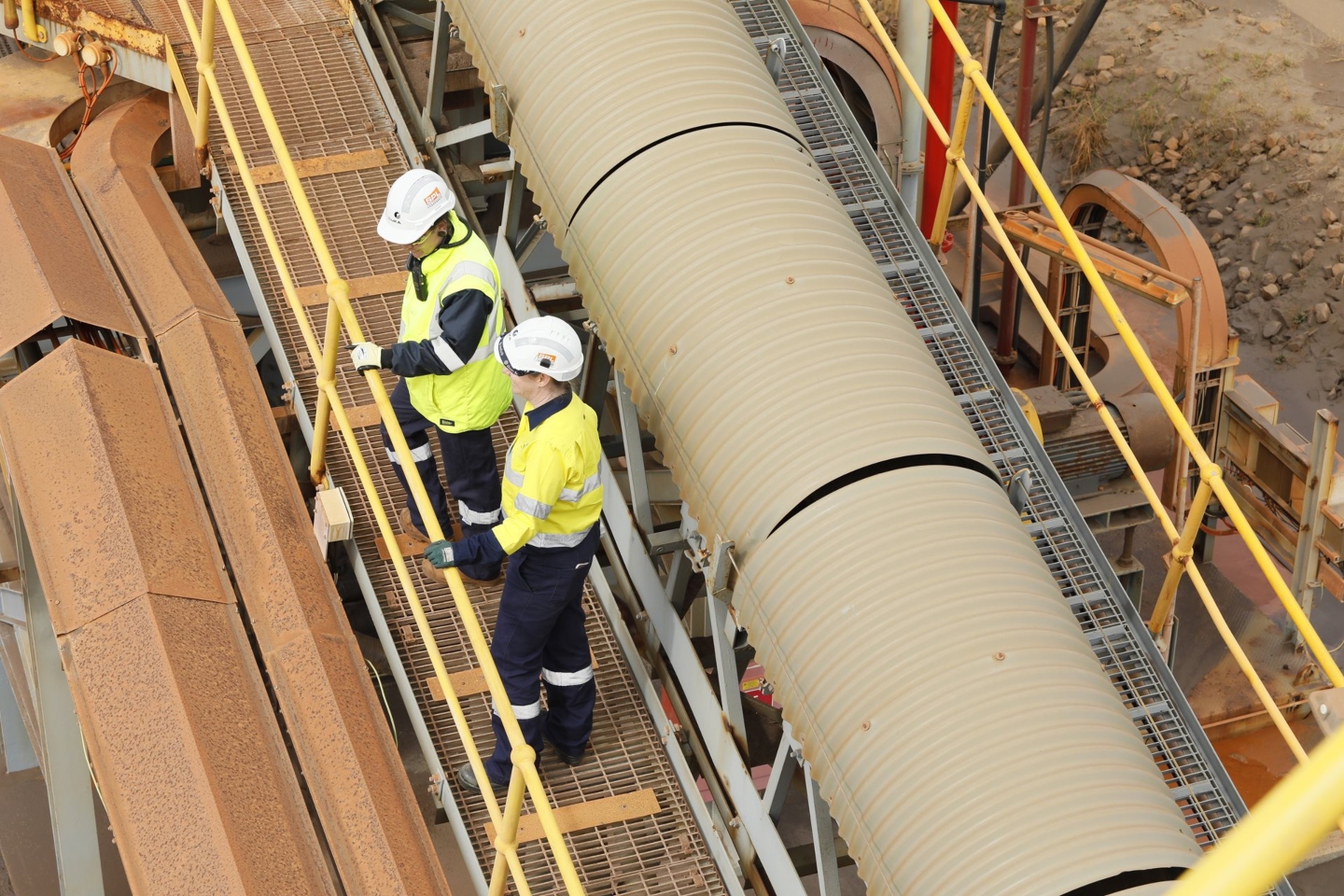
Iluka has locked in its first rare earths offtake deal with an undisclosed global car manufacturer, worth $220 million, as it unlocks its $1.65 billion loan from the federal government.

If gray-market prices are to be believed, both the National Stock Exchange of India Ltd.’s $3 billion IPO and a $4 billion debut of billionaire Mukesh Ambani’s telecom and digital media empire are likely to find keen interest among local investors desperate for some excitement, the kind that secondary markets have been failing to provide lately.
While global capital chased the AI semiconductor booms in Taipei and Seoul — tripling Korean stocks and doubling Taiwanese equities — the benchmark Indian index hasn’t gone anywhere in the past two years. Worse, the war in Iran has torn a hole in the energy-importing nation’s fragile balance of payments. A plunge in the rupee has scared away foreign capital.
But now that the US and Iran have at least started peace talks, all eyes are on India’s individual stock buyers. They have only recently started to return after beating a retreat from markets. The common investing public needs to get its mojo back, and that’s where both the similarities and the differences between the two IPOs become important.
Both the NSE, India’s largest exchange, and Ambani’s Jio Platforms Ltd. have attractive moats: They are dominant players in what are effectively duopolistic industries, too heavily regulated for new competition to break in. The NSE’s rival is the 151-year-old BSE Ltd., or the erstwhile Bombay Stock Exchange, which has just a 7% share of the overall cash-equity turnover. Jio’s 500 million-plus subscribers — and a media empire buttressed by a lock on cricket, a national craze — put it considerably ahead of Bharti Airtel Ltd., the nearest challenger.

 Bloomberg
Indian investors are intimately familiar with both franchises. As long as India has capital controls, local market participants are beholden to the NSE for wealth creation. In mobile wireless, it’s hard to imagine anyone other than Jio deciding the price of data. Even in newer technologies like satellite broadband, national-security concerns may give Ambani an advantage over Elon Musk’s Starlink or Jeff Bezos’ Amazon.
But the differences in the two IPOs are crucial, too. The NSE listing, long delayed by governance scandals at the bourse, is entirely a sale of stock by existing shareholders. Jio, however, will be raising new money, partly to retire nearly $3 billion in debt.In mature markets, the distinction between an offer-for-sale and a fresh capital raise is mere plumbing. In India’s current fragile environment, it’s anything but. Because the NSE listing is structured strictly as an offer-for-sale, no fresh cash will enter the bourse’s treasury. Worse, among those trimming their stakes are foreign giants like Morgan Stanley and Temasek Holdings Pte. At a time when New Delhi is aggressively wooing diaspora dollars to shore up a fraying rupee, the NSE IPO risks becoming an exit ramp for foreign capital.
Ambani’s Jio, conversely, is a magnet for fresh funds. For Jio to succeed, however, the NSE sellers — Indian banks and insurers, foreign institutions, ultra-rich private investors — must leave some money on the table. (Given that the NSE rushed its draft papers to the regulator a day ahead of Jio, the general expectation is that it may be first out the door.) If they overprice the offer and burn retail investors, the flames won’t just singe Ambani; they will also reach Silicon Valley, upsetting everyone from Sundar Pichai to Mark Zuckerberg.
Alphabet Inc. and Meta Platforms Inc. are big backers of Jio, as are Saudi Arabia’s Public Investment Fund, KKR & Co. and a number of other sovereign wealth funds and private-equity firms. Although none of them are selling in the IPO, they will get to record the gains in their books. For Google alone, that turns a $4.5 billion stake bought six years ago into a $10 billion asset — more if the shares keep rising after listing.
Jio’s success will also help Ambani’s flagship Reliance Industries Ltd. clear the deck for its next big public float: consumer commerce. Carving out India’s largest retailer will still take some work because the competitive intensity in grocery, fashion and electronics sales is much higher than in telecom. All the more reason to keep retail shareholders happy.

FUNDAMENTALS
Spot gold was steady at $4,191.09 per ounce, as of 0053 GMT. U.S. gold futures for August delivery rose 0.2% to $4,208.40.
The United States waived sanctions on Iran for 60 days from Monday after the first talks under a nascent peace deal, while officials reported a sustained lull in fighting in Lebanon under the agreement aimed at ending hostilities across the region.
U.S. Vice President JD Vance said talks with Iranian officials in Switzerland had laid a good foundation for a final peace deal, although Iran denied that it had begun discussions of its nuclear programme.
Fed Chairman Kevin Warsh will deliver his first testimony on monetary policy before Congress on July 14, according to a hearing notice published by the House Financial Services Committee.
Chicago Fed President Austan Goolsbee said that with the labour market stable, he is focused on figuring out whether too-high inflation will stay that way or if it will recede as the effect of high tariffs fades and if the conflict in the Middle East gets resolved.
Traders now see an 89% chance of an interest rate hike in December, up from 61% before the Fed meeting last week, according to the CME FedWatch Tool. [FEDWATCH/]
Gold speculators raised net long positions by 9,258 contracts to 112,918 in the week to June 16. [CFTC/]
Spot silver fell 0.4% to $64.92 per ounce, platinum lost 0.4% to $1,672.90, while palladium was up 0.1% at $1,266.35.
DATA/EVENTS (GMT)
0730 Germany S&P MFG, Services, Composite Flash PMI Jun
0800 EU S&P Mfg, Services, Composite Flash PMI Jun
0830 UK Flash Composite, Manufacturing, Services PMI Jun
1345 US S&P Global Mfg, Svcs, Comp PMI Flash Jun

Talkspace chief legal officer John Reilly sells $209,514 in stock
Form 4 Talkspace Inc For: 22 June
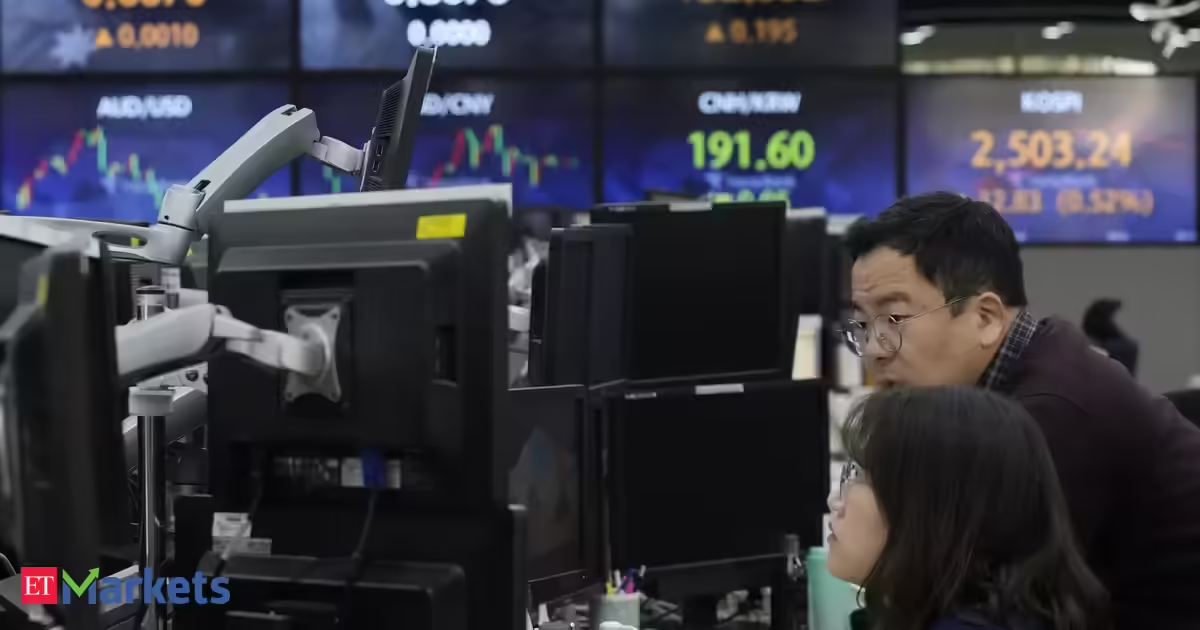
MSCI Inc.’s gauge of regional shares fell as much as 0.2% in early trading. S&P 500 futures also edged lower after a slide in megacap tech stocks and rising bond yields dragged the benchmark down 0.4% Monday. SpaceX shares slipped for a third straight day, shedding hundreds of billions of dollars in value. Brent crude prices rose slightly to trade above $78 a barrel.
The US issued a 60-day license allowing Iran to sell oil on the international market, giving Tehran an economic lifeline as the two adversaries are poised to continue discussions to reach a permanent peace deal.
Meanwhile, Vice President JD Vance described the first round of negotiations with Iran as “very, very good” and said Tehran had agreed to allow nuclear inspectors back into the country. But officials from the Islamic Republic, who also cited progress, challenged that claim, saying Vance’s assertion was “false and does not reflect reality.”
While geopolitical developments are likely to remain a key source of volatility in the near term, shifts in investor confidence regarding the durability of the AI rally may also lead to bouts of market swings, according to Ulrike Hoffmann-Burchardi at UBS Chief Investment Office.
Expectations that an agreement will be reached, as well as the revival of the AI trade and solid corporate earnings, have fueled a 14% advance in the S&P 500 Index this quarter. However, that trails the 26% surge in the MSCI Asia Pacific Index.
Treasuries fell on Monday as trading resumed following a US public holiday, even as oil prices turned lower Iran said there had been “major progress” in all-night discussions with the US. Strategists cited Federal Reserve Chairman Kevin Warsh’s hawkish messaging last week as one of the reasons for the selling pressure.In currency markets, the Japanese yen lingered near its lowest level since 1986 as investors weighed the prospects for a lasting US-Iran peace deal and the risk of intervention by Japanese authorities. The Bloomberg Dollar Spot Index was little changed after rising 0.2% on Monday.
SpaceX plunged 16% after saying it’s selling investment-grade bonds in what’s expected to be a massive borrowing spree. Its bond sale is the latest in a wave of deals from companies driving the AI boom. Alphabet, Amazon.com Inc. and others have raised more than $300 billion of debt tied to AI since November across multiple credit markets. The rocket firm is seeking to raise at least $20 billion, Bloomberg reported.
“The issue that stands out the most is the idea that the hyperscalers continue to receive an extremely low return on investment on their colossal level of spending on AI,” said Matt Maley at Miller Tabak. “Another big concern surrounds the issue of ‘circular investments,’ where companies invest in each other, while also committing to buying each other’s products.”
Elsewhere, Andy Burnham appears set to become the UK’s seventh prime minister in a decade after Keir Starmer laid out a timeline for his own departure and potential rivals backed a quick transition to the popular Manchester politician. While markets showed little reaction to the resignation, they were buoyed by reduced odds of a leadership contest that could have prolonged uncertainty.
BJ’s Restaurants director Ottinger sells $149,372 of common stock

Oklo: Almost Everything Has Changed Since My Sell Call – Almost
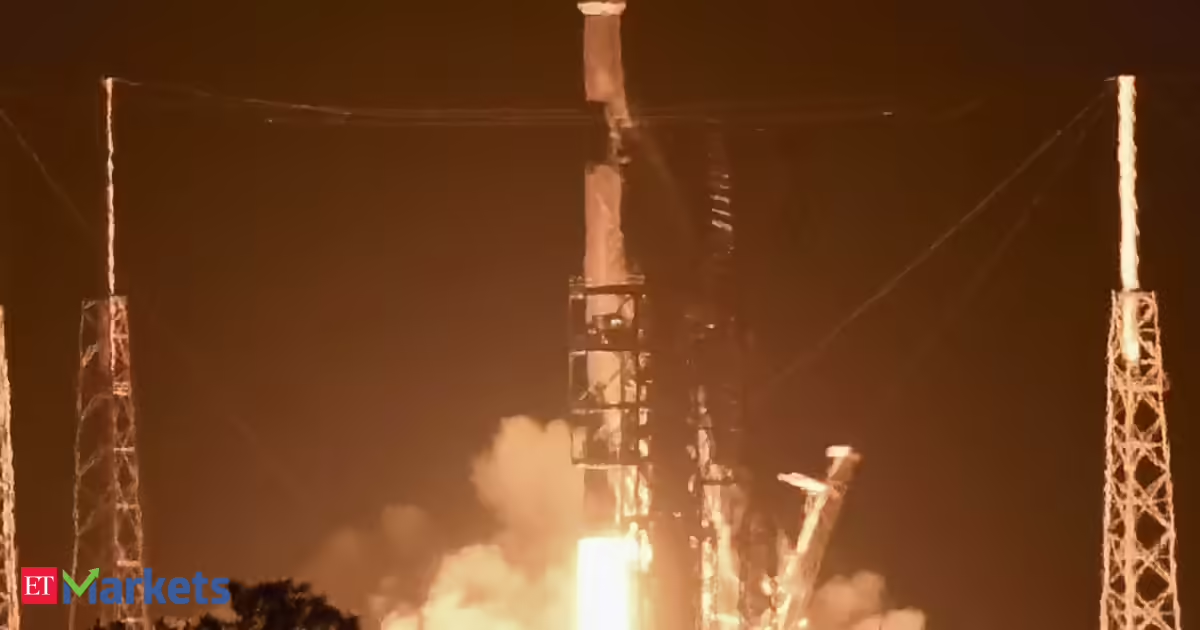
The stock fell 16% Monday to close at $154.60, the lowest level since the company’s first day of trading, pushing its three-day loss to 23% and erasing over $600 billion in value over that period. The company’s market capitalization now sits just above $2 trillion.
“Sellers are back in control. Anyone in the world who wanted to buy this has bought it already,” said Michael O’Rourke, chief market strategist at JonesTrading.
SpaceX’s first days of trading following its record $75 billion initial public offering were met with the type of volatility generally associated with new IPOs that have a low float — 4.2% of total shares outstanding were available to trade on day one — and high interest from retail investors. Still, even with Monday’s losses, SpaceX is the sixth-largest company in the world with shares about 15% higher than their $135 IPO price.
BloombergThe rocket, satellite and AI conglomerate is seeking to raise at least $20 billion from the first bond offering, Bloomberg reported last week. SpaceX also inked a multibillion-dollar agreement to provide computing resources to Reflection AI, an AI startup, the company said Monday.
SpaceX’s embrace of artificial intelligence with the acquisition of Musk’s xAI in February meant investors closely watched the listing ahead of IPO prospects of competitors Anthropic PBC and OpenAI, both of which plan to go public as soon as this year with valuations expected to be around $1 trillion.
Retail trading in SpaceX, officially named Space Exploration Technologies Corp., was the strongest of any IPO in recent history, with the cohort buying net $405 million in the first five sessions according to Vanda Research. Retail investors bought more SpaceX last week than buying across all Magnificent Seven stocks combined, the data showed. On Monday, retail traders were still net buyers of SpaceX, but inflows were below last week’s levels, Vanda data showed. The stock was initiated with a recommendation of sector weight at KeyBanc Capital Markets, the first hold-equivalent rating according to data tracked by Bloomberg. Analysts led by Michael Leshock wrote that SpaceX is set to remain the leader in space-launch and adjacent verticals, but much of the long-term value is already captured in the stock price.
SpaceX “possesses significant disruptive growth avenues, though we believe this is reflected in current valuation and risk/reward appears balanced, in our view,” he wrote.
Form 4 CrowdStrike Holdings Inc For: 22 June

Stormont proposes reopening pedestrianised Belfast city centre road to vehicles

Iluka inks $220m offtake deal with mystery car maker

Baillie Gifford Launches Tokenized Fixed Income Fund on Ethereum and Solana


-

 Fashion3 days ago
Weekend Open Thread: Miami – Corporette.com
-
 Tech6 days ago
The Adder At The Heart Of Intel’s 8087 FPU
-

 Entertainment2 days ago
Renter of Home in Anne Heche Crash Denies Settlement With Son
-

 Tech14 hours ago
Microsoft accidentally kills epic Outlook email threads
-

 Business2 days ago
Soccer-U.S. defends Iran World Cup travel restrictions, says discussions ongoing
-

 Politics4 days ago
BBC Reporter Discusses Cross Party Criticism Of Trumps Iran Deal
-
 Business3 days ago
Wall Street Week Ahead: Investors see Micron earnings as pulse check of AI rally momentum
-

 Tech4 days ago
AWS enters the context layer race with a graph that learns from agents, not manual curation
-

 Crypto World3 days ago
HIVE shares jump as $220M AI deal speeds Bitcoin mining pivot
-
 Crypto World3 days ago
Can Charles Hoskinson Really Rescue Cardano?
-

 Crypto World3 days ago
Jake Chervinsky accuses CME of protecting derivatives monopoly
-

 Tech7 hours ago
Nearly 7,000 fake Amazon domains registered ahead of Prime Day 2026, researchers warn
-

 Business2 days ago
MHP SE 2026 Q1 – Results – Earnings Call Presentation (OTCMKTS:MHPSY) 2026-06-20
-

 Sports4 days ago
FIFA World Cup 2026: Canada beat 9-men Qatar 6-0 to register first ever win | FIFA World Cup 2026
-

 Politics3 days ago
Andy Burnham and the meaning of Makerfield
-
 Tech2 days ago
Signal’s Meredith Whittaker says AI chatbots ‘are not your friends’ and calls Copilot agents a backdoor
-

 Crypto World5 days ago
Anthropic’s Dario Amodei Urged AI Unity at G7, Even as US Banned His Models
-

 Business4 days ago
Brexit cost 6% of UK economy, Bank of England company data suggests
-

 Tech5 days ago
Weeks Of In-The-Field Testing And A Verdict
-

 Entertainment3 days ago
Jose Alvarado Wants Taylor Swift at More Knicks Games
You must be logged in to post a comment Login