

Crypto World
Michael Saylor’s latest Bitcoin buy hides a bigger cash strategy



Strategy has increased its cash reserves by $300 million while adding 520 Bitcoin worth roughly $35 million, highlighting a growing focus on liquidity alongside continued cryptocurrency purchases.
Summary
- Strategy bought 520 Bitcoin for $35 million, raising its total holdings to 847,363 BTC.
- A June 22 filing showed the company increased cash reserves by $300 million to $1.4 billion.
- Debate over STRC intensified as critics questioned Strategy’s capital structure despite Saylor’s defense.
According to a June 22 filing, the company acquired 520 Bitcoin at an average price of $67,068 per coin, bringing its total holdings to 847,363 BTC.
The purchase followed a familiar signal from Executive Chairman Michael Saylor, who posted “Looks better with more dots” on X a day earlier alongside Strategy’s Bitcoin acquisition chart, a graphic that traders closely watch for clues about upcoming purchases.
Although the latest acquisition extended Strategy’s accumulation streak, the filing showed a much larger movement elsewhere on the balance sheet. Cash reserves increased by $300 million to $1.4 billion after the company sold 2.71 million MSTR shares for approximately $335.5 million during the previous week.
Cash reserves take center stage
In the filing, Strategy said it plans to continue replenishing its USD Reserve to support the credit quality of its Digital Credit securities. The disclosure arrived as investors remain focused on STRC, the company’s preferred stock, which recently traded well below its $100 par value.
Only a small portion of the proceeds raised from the MSTR share sale appears to have been directed toward the latest Bitcoin purchase. The remainder was largely retained as cash, a move that has fueled discussion among market participants about whether supporting STRC has become a more immediate priority.
Some investors expect Strategy to increase STRC’s dividend rate to improve demand and help the preferred shares recover toward par value. Others have suggested stock buybacks as another possible option.
Earlier on June 21, Saylor defended the company’s financing model as criticism surrounding STRC intensified. According to comments shared by Saylor, Strategy’s combined Bitcoin and cash holdings exceed its outstanding debt by roughly $48 billion. He also stated that the company has raised more than $60 billion in capital since 2022 and deployed those funds into Bitcoin purchases.
Critics question the capital structure
Meanwhile, debate around Strategy’s financing approach has intensified as the company continues to issue securities while expanding its Bitcoin treasury.
Long-time Bitcoin critic Peter Schiff argued that investors could eventually pursue legal action against Strategy and Saylor. Schiff also claimed that the way STRC was promoted may have violated SEC marketing rules, though no regulatory findings supporting that allegation have been announced.
Separate concerns have come from institutional investors. As previously reported by crypto.news, Arca Chief Investment Officer Jeff Dorman suggested that Strategy could ultimately need to sell between $3 billion and $4 billion worth of Bitcoin to relieve pressure on its capital structure and support STRC holders.
The discussion comes as Strategy’s purchases remain closely tied to market sentiment. Earlier this month, the company briefly interrupted its long-running accumulation pattern with a small Bitcoin sale before resuming purchases. Strategy later said the transaction did not alter its long-term Bitcoin strategy.
Despite criticism surrounding the company’s funding model and ongoing MSTR share sales, investors appeared to welcome the latest Bitcoin acquisition. MSTR shares rose 3.44% to $116.40 in pre-market trading on June 22, extending gains after Saylor confirmed the newest addition to Strategy’s Bitcoin reserves.

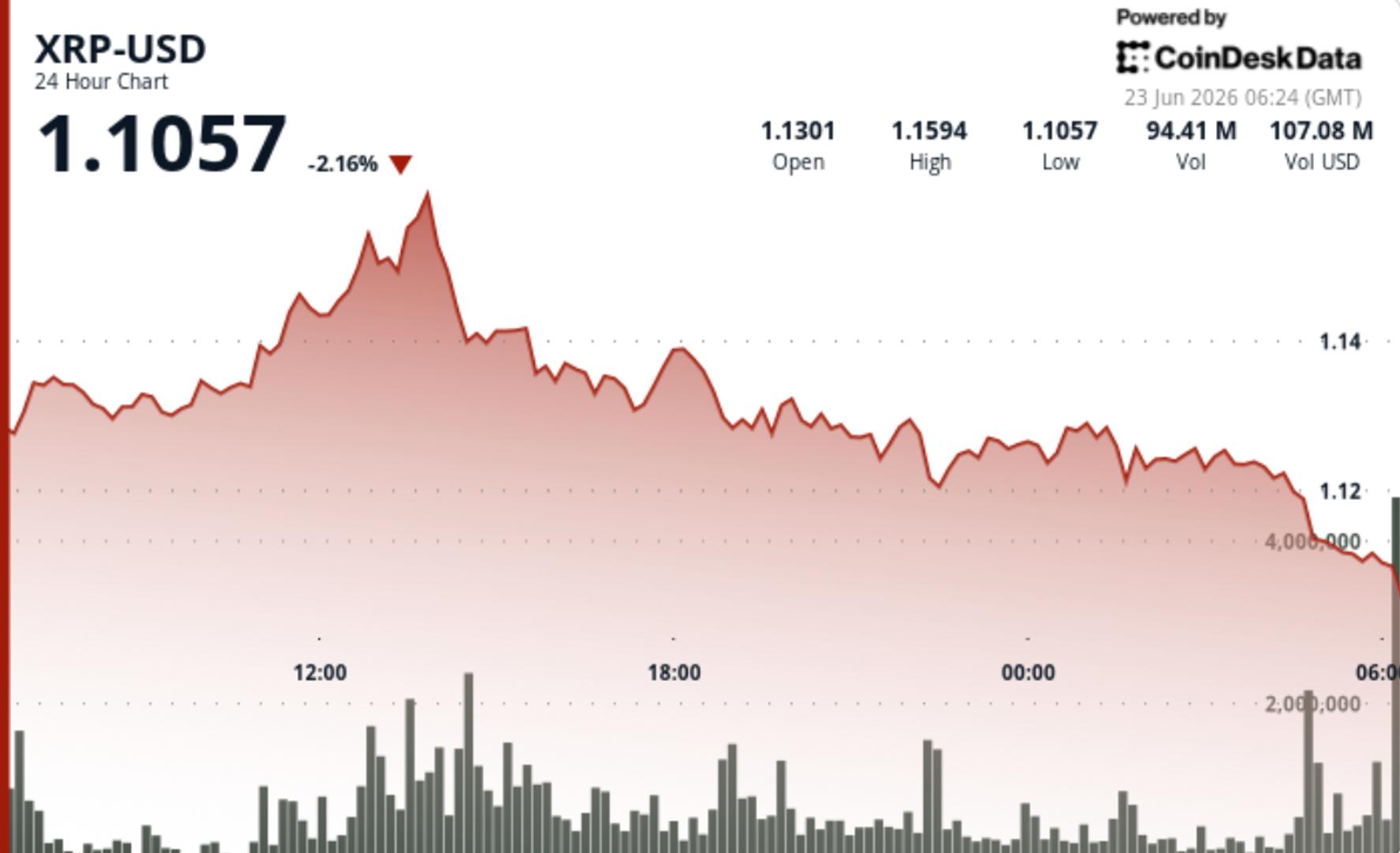
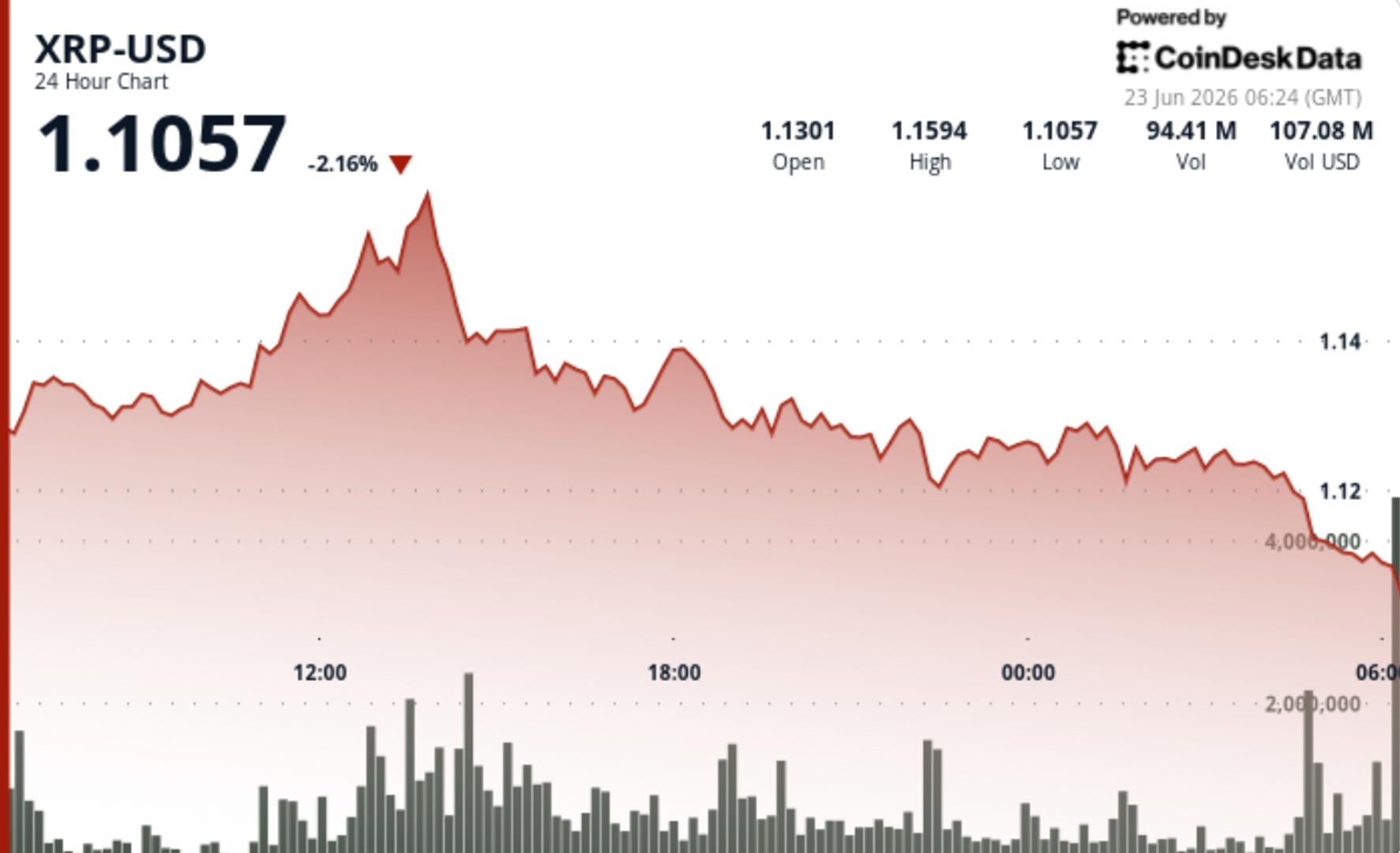
XRP is running out of room. After spending most of June trapped between resistance overhead and support near $1.10, the token is once again testing the bottom of its range.
While the latest decline was small, the inability to build on recent rebounds has left traders focused on whether buyers defend support or finally give way after weeks of compression.
News Background
• XRP ETFs attracted another $2.4 million in inflows on June 20, extending a run of institutional buying even as retail sentiment weakened.
• Analysts continue to watch the year-long downtrend from XRP’s 2025 highs, with several identifying $1.28-$1.30 as the level needed to change the broader structure.
• Network activity has softened in recent weeks while futures positioning and open interest have drifted lower.
Price Action Summary
• XRP fell from $1.1313 to $1.1109 during the 24-hour session, losing 1.8%.
• The sharpest selling came during a June 22 reversal when volume jumped to 65.4 million XRP, roughly 84% above average.
• Price spent most of the session grinding lower before testing support near $1.10 into the close.
Technical Analysis
• The market remains trapped inside the same range that has defined trading for much of June.


A widely watched indicator has flipped to “altcoin season,” for the opposite reason the label suggests. Glassnode’s Altcoin Cycle Signal, which reads above 50 when alternative coins, or alts, outperform bitcoin, has climbed to 86. Alts are not rallying. Bitcoin is just falling faster than they are.
[@portabletext/react] Unknown block type “image”, specify a component for it in the `components.types` prop
The signal tracks relative performance, so alts can lead either by rising or by falling less. This is the second case. After nearly two years of declines, alts have run out of sellers and steadied, while bitcoin has dropped hard, sliding back toward $63,600, per CoinDesk data. Bitcoin, as Glassnode puts it, “is still doing most of the work.”
A real altcoin season has capital rotating into smaller tokens as they climb. This is the hollow version, where the reading turns bullish for alts because bitcoin is selling off, which is bearish for the market as a whole. Relative strength is not a rally.
Until alts start rising on their own rather than holding while bitcoin falls, the signal says more about bitcoin’s weakness than about demand for anything else.

Combined institutional flows across spot Bitcoin ETFs, stablecoins and the world’s largest corporate holder of BTC, Strategy, have swung to a record $8 billion in net outflows in the last 30 days, according to analysis published by BIT on June 22.
The scale of the reversal went beyond the mere slowing down seen in late 2025, with flows turning outright negative this time around, and the firm warned that without a major catalyst, buying may not return soon.
ETF Withdrawals and Falling Liquidity Weigh on Sentiment
BIT wrote in a June 22 post on X that combined flows from stablecoins, spot BTC ETFs, and Strategy have swung to “a record $8 billion in net outflows,” adding that institutions were reducing exposure to the cryptocurrency ahead of summer.
Indeed, data from SoSoValue shows that funds tracking Bitcoin bled out $2.43 billion in May and have recorded net outflows of $2.26 billion so far in June, with more than a week still left. As CryptoPotato reported earlier, the products have gone for six weeks straight in the red, with last week seeing nearly $227 million leave, which was an actual improvement on the -$1.72 billion and -$316 million recorded in the previous two weeks.
Furthermore, on-chain stablecoin data from CryptoQuant adds some texture to BIT’s claims, as it shows all-exchange stablecoin reserves currently sitting at $63.3 billion, with a 24-hour net flow of -$103.7 million. A negative net flow indicates that more coins are being withdrawn than deposited, which often means that buying power is leaving exchanges rather than accumulating.
According to analyst Markus Thielen, who authored the market brief, flows did go down in Q4 2025 as well, but importantly, at that time, they merely stalled rather than actually reversing, and that difference matters for how the current price drop should be interpreted.
“This suggests the move to from $82,000 to $62,000 could prove more consequential than the earlier decline from $102,000 to $82,000,” he wrote.
His assessment concluded that without a dovish pivot from the Federal Reserve or another clear catalyst, there might be very little buying in the near term. He, however, noted that selling volatility may still offer opportunities, even if “upside appears limited.”
Meanwhile, Strategy’s preferred STRC stock experienced a major sell-off last week, apparently caused by leveraged traders who pulled its price as low as $82.50. And although the company recently spent $100 million to add 1,587 BTC to its stash, popular analyst Kaleo warned that it could be forced to sell as much as 50,000 BTC over the next two years.
Bitcoin Nears $65,000
During the weekend, BTC rose from around $63,000 to just above $64,000, according to CoinGecko data. However, early Monday morning, the OG cryptocurrency dipped back near the $63,000 level, but at the time of writing it had clawed back those losses and even managed to go above $65,000, gaining a modest 2% over 2 weeks despite the outflows.
But if BIT’s analysis holds, it could be at the mercy of institutions preserving capital instead of increasing exposure, with their data suggesting that caution could shape the market heading into the second half of the year.
The post Crypto Institutional Flows Turn Negative as $8B Exits in 30 Days appeared first on CryptoPotato.
Crypto World
Trump signs orders to build a quantum computer and protect against the one that could break encryption
It explicitly says that adversaries may already be collecting encrypted U.S. data, or information mathematically scrambled into an unreadable format to protect it from unauthorized access, and could decrypt it in future with the help of quantum computers.
That’s the “harvest now, decrypt later” problem. Steal the locked box today, crack it open whenever the tool to do so finally exists.
The fix, according to the order, is a hard post quantum cryptography (PQC) migration timeline. Federal agencies must move their most sensitive systems to post-quantum cryptography for key establishment by the end of 2030, and for digital signatures by the end of 2031.
In other words, the government plans to replace the current method for setting up secure, encrypted connections with a new way that remains secure from future quantum computers.
The crypto angle
Quantum computing has been a buzzword in the crypto industry since Google researchers said a sufficiently powerful machine could crack Bitcoin’s blockchain with significantly less firepower than previously expected.
The March paper, co-authored with Ethereum Foundation researcher Justin Drake and Stanford cryptographer Dan Boneh, said that breaking the elliptic curve cryptography behind Bitcoin and Ethereum blockchains could take fewer than 500,000 physical qubits. That’s a 20-fold drop from earlier estimates.
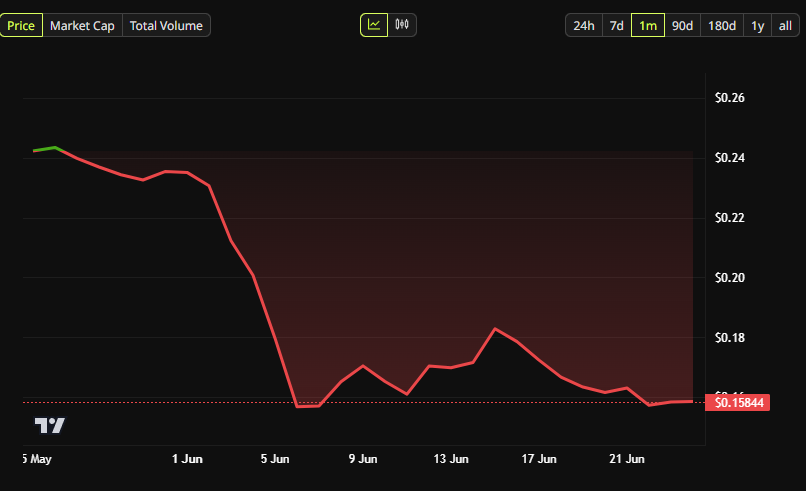
Cardano (ADA) launched the public testnet for its Leios scaling protocol today, June 23. It is the most significant technical milestone the network has hit in years, and it arrives with ADA sitting at a five-year price low.
The testnet carries the name Musashi Dojo, after 16th-century samurai Miyamoto Musashi. Its five phases map to the chapters of Musashi’s Book of Five Rings: Earth, Water, Fire, Wind, and Void, progressing from basic design validation through adversarial testing and into mainnet readiness.
The Price Problem
The launch lands in difficult conditions. ADA hit its lowest level in five years this month, down roughly 35% over the past 30 days. Meanwhile, its all-time high of $3.09 came on September 2, 2021, today’s price of $0.16 sits 95% below that peak.

The backdrop is bleak. At first, the analytics platform TapTools shut down earlier this year while Cardano cancelled its 2026 Singapore Summit. Hoskinson warned of a “wave of failures” among Cardano DeFi projects in the same period.
Cardano has lived through an unusual contradiction. The network kept shipping and moving toward its roadmap, but the price went nowhere. Leios removes the most persistent technical criticism of the chain: that the base layer cannot scale.
Whether the market reprices over the next five months of testing, or waits for mainnet, remains the question that defines Cardano’s second half of 2026.
How Leios Works
Leios runs as an overlay on Cardano’s existing Ouroboros Praos mechanism. When demand rises, an elected slot leader produces an additional “endorser block” that travels in parallel with the standard Praos block.
The upgrade targets scaling Cardano from its current throughput of 4.5 KB/s to 200 KB/s. The official roadmap puts that at 30 to 65 times current Praos levels.
Input Output product manager Carlos Lopez de Lara confirmed the initial rollout starts at two to five times current throughput, with the full ceiling available as demand grows.
The Leios governance proposal passed with over 84% support from Cardano’s delegated representatives, and Lopez de Lara is targeting a November 2026 hard fork.
The Cardano 2030 Vision requires scaling from today’s roughly 800,000 monthly transactions to over 27 million; the current base layer cannot get there alone.
The post Cardano Launches Leios Musashi Dojo Testnet, With ADA at 5-Year Lows appeared first on BeInCrypto.


Bitcoin fell toward $63,000 on Tuesday, caught in a broad retreat from risk as investors pulled out of the technology stocks that have led markets all year.
The token traded around $63,640, down 0.9% over 24 hours and 3.3% on the week, per CoinDesk data, after touching about $65,076 on Monday and sliding through the session. The selling was marketwide. Ether fell 0.9% to $1,719 and is also down 3.3% on the week, XRP dropped 1.6% to $1.12 for a 9% weekly loss, solana lost 3.4% to $71 and dogecoin slid 6.6% over seven days.
Tron was the rare gainer, up 1.3% on the day and 4.6% on the week. Hyperliquid’s HYPE fell 4.8% on the week.
The pressure came from outside crypto. A rotation out of this year’s best-performing technology and chip shares sank global equities, with a gauge of Asian stocks falling more than 2% after a record close and South Korea’s Kospi plunging more than 6% on fears that the rally in chipmakers had run too far.

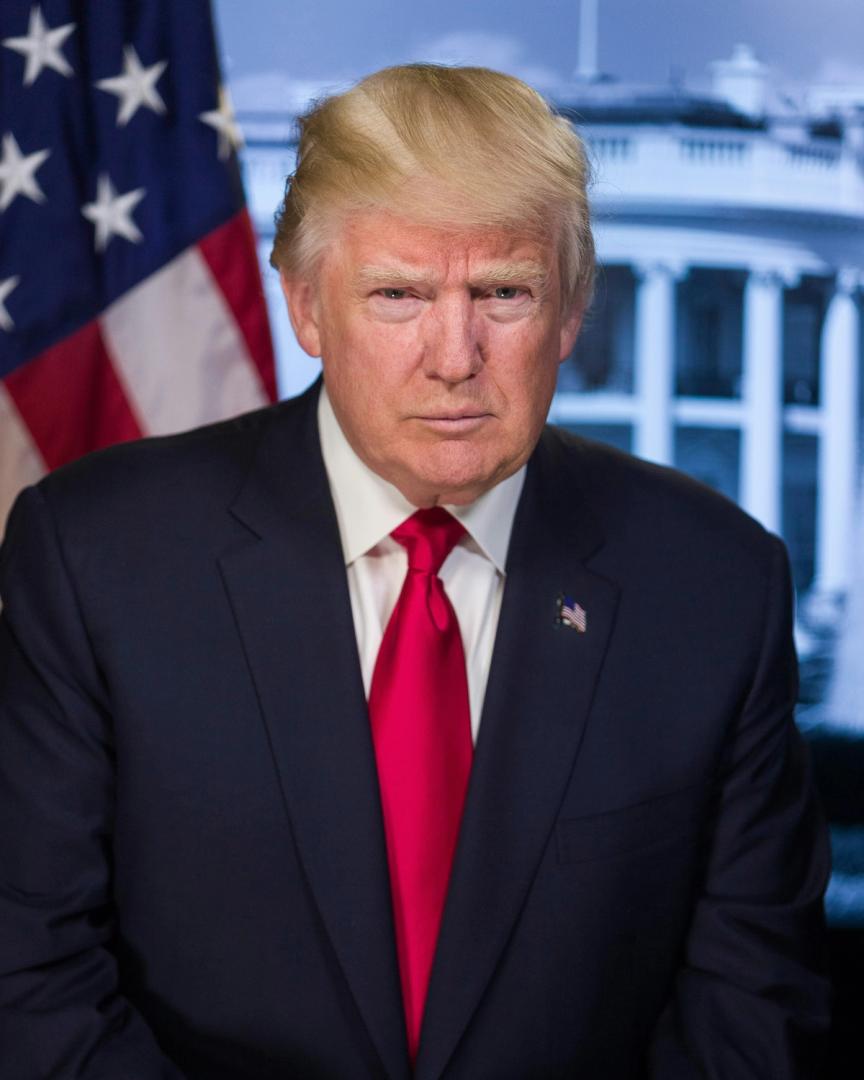
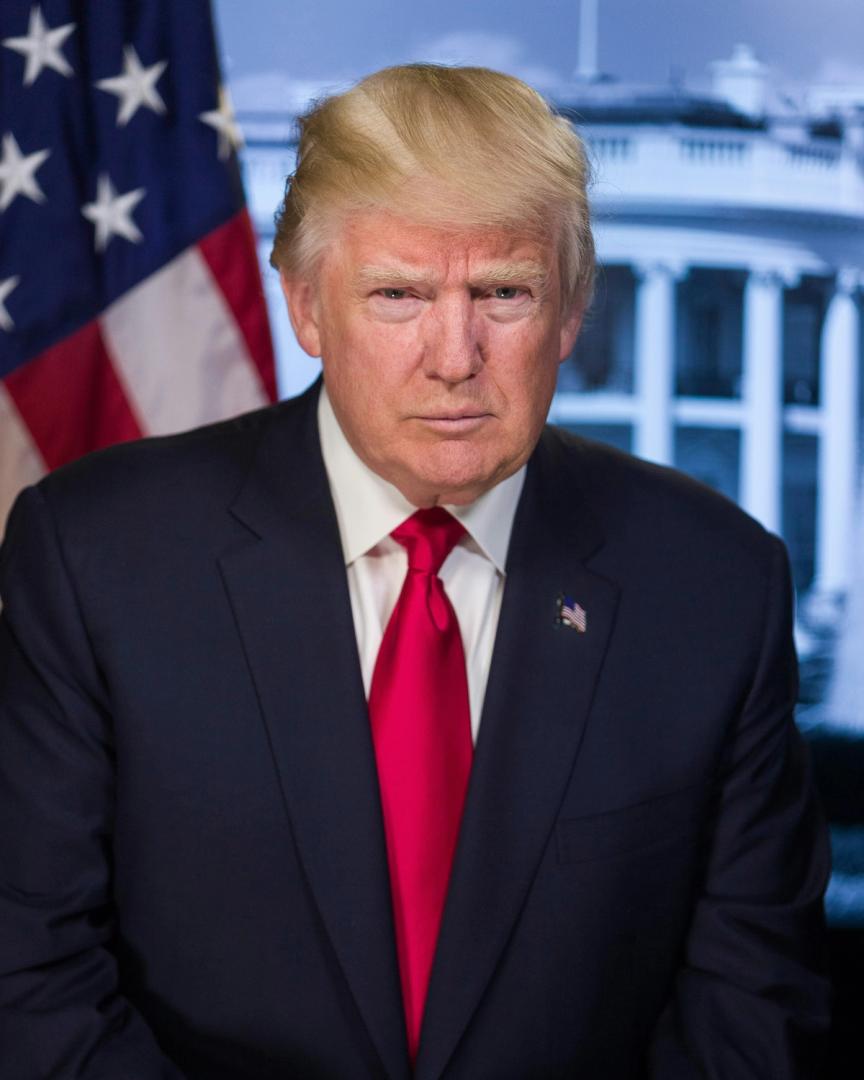
US President Donald Trump signed two executive orders on Monday to push to build a quantum computer and to focus on creating cryptography that can resist quantum attacks.
The orders aim to take a “cohesive, whole-of-government approach” to accelerate the deployment and commercialization of quantum computing and “protect sensitive technologies and work with allies to ensure adversaries cannot use QIST [Quantum Information Science and Technology] to undermine national security.”
The orders come as China ramps up its quantum computing ambitions following the announcement of its “Five-Year Plan” in March, which aims to expand investment in scalable quantum computers and the development of an integrated space-earth quantum communication network.

Source: The White House
Trump’s orders state that within 180 days, relevant agencies must update the National Quantum Strategy to support commercialization and industry partnerships.
Various agencies are also tasked with identifying implications of increasing scale and performance of commercial quantum computers, “such as the implications for the migration to post-quantum cryptography.”
Related: Researchers say quantum computers could, in theory, be ready by 2030
The order also establishes Quantum Computer for Application Development and Discovery Science (QC-ADDS), a national effort to pursue the development of a quantum computer at a scale intended to “initiate the era of quantum-enabled scientific discovery.”
Focus on post-quantum cryptography
The other executive order aims to secure the US against quantum-assisted cryptographic attacks and is more focused on upgrading to post-quantum cryptography.
“We’re going to be investing in American quantum leadership like never before to stay ahead of the pack,” Trump said.
The order directs the Office of Management and Budget and the National Cyber Director to lead an accelerated, nationwide migration to post-quantum cryptography, ensuring the nation’s data stays secure as quantum technology evolves.
“The advent of large-scale quantum computers, particularly in the hands of adversaries, will pose a significant threat to widely used cryptographic security systems,” the order said.
Major crypto blockchains such as Ethereum and Solana have already started working on post-quantum roadmaps, while the Bitcoin community is still divided on how to approach securing old coins against the quantum threat.
Magazine: Nobody knows if quantum secure cryptography will even work


Ethereum co-founder Vitalik Buterin has challenged internet users to identify an anonymous Ethereum document he says he wrote earlier this decade.
Summary
- Vitalik Buterin asked the internet to identify an anonymous Ethereum document he wrote this decade.
- The challenge tests whether AI writing analysis can weaken online anonymity for crypto contributors.
- Related coverage shows Buterin has tied AI, privacy and Ethereum security to wider online debates.
The post turns a privacy debate into a public test of AI text analysis.
Buterin said there have been claims that AI text analysis will make online anonymity hard to keep. He then wrote, “So let me cannibalize a piece of my own anonymity to do an experiment.” He asked users to find a published Ethereum document that he wrote without using his name.
The document has not been named. Buterin described it as a medium-importance Ethereum document and estimated that around 200 to 2,000 Ethereum documents are as important or more important. He added, “Find it,” while noting that he did not know how easy or hard the task would be.
Challenge puts stylometry back in focus
The test centers on stylometry, a method that compares writing style, word choice and structure to link text to an author. Researchers and investigators have used this type of analysis for years, but newer AI tools can scan far larger sets of writing faster than manual methods.
Buterin is a strong test case because he has a large public writing record. His public work includes blog posts, research notes, Ethereum discussions, social media posts and technical comments. That broad record may give AI tools more material to compare against any anonymous Ethereum text.
No one had publicly confirmed a successful identification of the document at press time. That leaves the experiment open and makes the result hard to judge until Buterin or another reliable source confirms a match.
Related Ethereum and AI debate grows
The challenge also fits with Buterin’s recent focus on AI safety and privacy. As crypto.news earlier reported, Buterin urged a local-first approach to AI, warning that cloud-based tools can expose user data and create risks from leaks, manipulation and unwanted actions.
He has also linked AI to Ethereum development. crypto.news reported in May that Buterin said AI-assisted formal verification could become the “final form” of software development. That report noted his view that AI could help Ethereum ship code with machine-checkable proofs of correctness.
The latest test looks at another side of AI. Instead of using AI to improve code or security checks, it asks whether AI can weaken anonymity by finding a writer behind a text. For Ethereum, that matters because many contributors use pseudonyms when they write, build or discuss protocol ideas.
Privacy remains central to Ethereum discussions
The experiment also comes after crypto.news reported that Buterin mapped a three-step Ethereum privacy upgrade in May. That plan focused on account abstraction with FOCIL, keyed nonces and access-layer work to reduce metadata leaks and censorship risks.
Those privacy efforts deal mainly with transactions and user activity. Buterin’s latest test moves the privacy debate into authorship. It asks whether writing style itself can become a data trail, even when a person avoids using a real name.
For now, the challenge has no confirmed answer. It may show that AI can trace pseudonymous authors through writing patterns, or it may show that anonymity still holds when the search area is large. Either outcome would add fresh context to the wider debate over AI, privacy and Ethereum’s open contributor culture.

A group of crypto lobbying organizations has urged Congress to pass a bill on crypto staking and mining taxes without changes, saying it would provide clarity on crypto rewards taxes and ensure blockchains “can be secured by Americans in America.”
The Blockchain Association, the Crypto Council for Innovation and The Digital Chamber said in a letter on Sunday to House Ways and Means Committee Chair Jason Smith and its top Democrat, Richard Neal, that the Tax Clarity for Mining and Staking Act should be passed “as introduced.”
“After years of uncertainty about how mining and staking rewards are taxed, the bill provides a durable compromise that innovators can support while addressing concerns raised by some lawmakers,” the group wrote.
The bill seeks to address what the crypto industry has long said is an unfair tax code that views mining and staking rewards as taxable income when received, which the letter argued is a “taxation of phantom income” that can cause liquidity issues.
The bill would allow miners and stakers the choice of paying taxes on crypto rewards either when they receive them or when they sell the assets, which the lobbyists wrote “ensures income is recognized while avoiding immediate taxation before taxpayers can monetize the asset.”
It was introduced earlier this month ahead of a legislative hearing, but has not advanced past the Ways and Means Committee. Democratic Representative Steven Horsford filed an amendment to limit the deferral of crypto reward taxes to five years.
Crypto Council for Innovation CEO Ji Hun Kim posted to X on Monday that Horsford’s amendment would “break” the bill and raise “negligible revenue.”
“We greatly appreciate his engagement, but there have already been significant concessions made in framing this as an election,” he added.

Source: Ji Hun Kim
The bill has seen pushback from the banking lobby, with the American Bankers Association earlier this month saying it would give “a significant advantage over nearly every other way Americans save, invest and earn returns today.”
Related: Illinois governor approves crypto transaction tax despite industry uproar
“When a company pays a dividend, shareholders receive the value of the dividend and pay tax that year,” the ABA said. “The Tax Clarity for Mining and Staking Act, would work very differently — and show clear favoritism for cryptocurrencies over other asset classes.”
The crypto lobby argued that renegotiating any agreed-upon compromise in the bill “would risk reviving the very problems the bill resolves and stalling a bipartisan result that is finally within reach.”
The bill adds to another crypto tax-focused bill before Congress, the so-called PARITY Act, which was introduced in May and directs the Internal Revenue Service to study what exemptions it can give for small crypto transactions.
The crypto industry has called on Congress to exempt small crypto transactions from tax. Kraken said in April that it sent 56 million tax forms to the Internal Revenue Service, where nearly a third were for transactions worth less than $1, while over 75% were for transactions less than $50.
Magazine: Crypto scammers face death, Aussie CGT makes Asian hubs attractive: Asia Express

Former Ethereum Foundation contributors and ETH treasury firms Bitmine and Sharplink have launched a new research and development nonprofit, Ethlabs, with the stated goal of preparing Ethereum for what they describe as the next phase of institutional adoption.
Sharplink said on Monday that Ethlabs is intended to “ready Ethereum for the next phase of institutional adoption,” positioning the organization as a long-term home for core research and development work. The initiative is backed by Sharplink and Bitmine, alongside Ethereum co-founder Joe Lubin and other Ethereum contributors.
Key takeaways
- Ethlabs is a new nonprofit focused on Ethereum core research and development aimed at supporting large-scale institutional use.
- Sharplink frames the move around growing on-chain settlement demand from stablecoins, tokenized real-world assets, and other financial activity.
- Ethlabs is co-founded by five former senior Ethereum Foundation researchers, signaling an attempt to preserve continuity in technical stewardship.
- The launch arrives amid renewed criticism around Ethereum Foundation funding capacity and leadership departures.
- Joe Lubin links the project to expanding “steward nodes” and increasing network utilization, tying research goals to practical adoption.
Why Ethlabs says it exists
In its announcement, Sharplink argued that several categories of financial activity are converging on Ethereum as a settlement layer. The company specifically pointed to stablecoins, tokenized real-world assets, funds, and “autonomous AI commerce” moving on-chain, describing Ethereum as “neutral” and “credibly permissionless” for that role.
On that basis, Sharplink said Ethlabs exists to ensure the network can absorb this demand “at scale.” The organization’s pitch is less about changing Ethereum’s direction in a political sense and more about building technical capacity—through stable funding—for research and development that supports the network’s next growth phase.
Backers and founding team
Ethlabs was co-founded by five former senior Ethereum Foundation researchers: Ansgar Dietrichs, Barnabé Monnot, Caspar Schwarz-Schilling, Josh Rudolf, and Julian Ma. The involvement of former EF researchers is notable because many ecosystem upgrades over Ethereum’s lifecycle have relied on specialized technical work that is difficult to replicate quickly.
Sharplink also said Ethlabs brings together technologists who have guided the network through “its most consequential upgrades over the past decade,” adding that the initiative provides “stable, long-term funding” in what it calls an institutional context.
Joe Lubin—Ethereum co-founder—told supporters that Ethereum “is entering its next stage of evolution.” He also said there should be “a number of steward nodes of Ethereum” aimed at growing utilization of the blockchain.
Lubin further stated that Ethlabs, by giving researchers and developers an “independent home,” will be instrumental in preparing for a “next major wave of adoption.” The language underscores an expectation that technical work and operational participation (such as steward nodes) should move in tandem.
Launch timing: funding concerns and Foundation leadership departures
Ethlabs’ debut lands shortly after warnings about Ethereum Foundation funding constraints resurfaced. In May, Vitalik Buterin said the Ethereum Foundation’s resources were limited, noting that it held only about 0.16% of the total supply of Ether (ETH).
More recently, former Ethereum Foundation contributor Trenton Van Epps warned that Ethereum could be heading toward a “slow-burning funding crisis.” The concern centered on the risk that ongoing asset selling by the Foundation could undermine long-term support for core development.
The launch also coincides with an ongoing wave of leadership exits from the Ethereum Foundation, including the reported departure of co-executive director Hsiao-Wei Wang, which was described as leaving last week in earlier coverage.
Institutional readiness vs. what remains uncertain
Ethlabs’ stated mission—ensuring Ethereum is ready to scale for major on-chain financial and settlement activity—raises a practical question for market participants: how will this new funding and organizational structure translate into concrete technical deliverables?
Sharplink’s message is clear about the direction—capacity for institutional-grade adoption—but the announcement provides limited detail on specific engineering timelines or near-term protocol milestones. For investors and developers, the next signals to watch are the organization’s published research agenda and how it coordinates with existing Ethereum ecosystem contributors, particularly in areas such as scalability, security, and the infrastructure needed for higher-throughput settlement use cases.
It is also worth noting that Ethlabs is being positioned as a stable “institutional home” for core technology work, while critics have argued that the Foundation’s financial situation may be limiting its ability to sustain that same role. However, whether Ethlabs’ model becomes a substitute for the EF or a complementary structure will likely depend on its governance, funding durability, and its ability to attract ongoing developer participation.
Ether market backdrop
The policy and funding narrative is playing out against a softer market environment for Ether. Ether is trading about 65% below its reported peak around $1,700, with those levels last seen in October 2023 and April 2025, according to the figures referenced in the announcement context.
That backdrop can matter because periods of weaker sentiment often reduce risk appetite and slow down spending across the ecosystem—making stable funding for core development more salient. Even so, the immediate relevance for users will hinge on whether research efforts lead to improvements that directly affect performance and reliability.
For now, the key question is whether Ethlabs can convert its “long-term, independent home” framing into measurable progress on Ethereum readiness for institutional settlement demand—and how that effort interacts with the Ethereum Foundation’s evolving role amid continued leadership and funding debates.

Brandon Marshall Makes Son Run As Discipline, Internet Reacts

Financial Audit’s Heaviest Guest

‘Keir’s tears… Andy’s crown’ and ‘Messiah without a mandate’


-

 Fashion4 days ago
Weekend Open Thread: Miami – Corporette.com
-

 Tech7 days ago
The Adder At The Heart Of Intel’s 8087 FPU
-

 Entertainment2 days ago
Renter of Home in Anne Heche Crash Denies Settlement With Son
-

 Tech18 hours ago
Microsoft accidentally kills epic Outlook email threads
-

 Business2 days ago
Soccer-U.S. defends Iran World Cup travel restrictions, says discussions ongoing
-

 Politics4 days ago
BBC Reporter Discusses Cross Party Criticism Of Trumps Iran Deal
-
 Business3 days ago
Wall Street Week Ahead: Investors see Micron earnings as pulse check of AI rally momentum
-

 Tech5 days ago
AWS enters the context layer race with a graph that learns from agents, not manual curation
-

 Crypto World3 days ago
HIVE shares jump as $220M AI deal speeds Bitcoin mining pivot
-
 Crypto World3 days ago
Can Charles Hoskinson Really Rescue Cardano?
-

 Crypto World3 days ago
Jake Chervinsky accuses CME of protecting derivatives monopoly
-

 Tech11 hours ago
Nearly 7,000 fake Amazon domains registered ahead of Prime Day 2026, researchers warn
-

 Sports4 days ago
FIFA World Cup 2026: Canada beat 9-men Qatar 6-0 to register first ever win | FIFA World Cup 2026
-

 Business2 days ago
MHP SE 2026 Q1 – Results – Earnings Call Presentation (OTCMKTS:MHPSY) 2026-06-20
-

 Politics3 days ago
Andy Burnham and the meaning of Makerfield
-

 Business4 days ago
Brexit cost 6% of UK economy, Bank of England company data suggests
-
 Tech2 days ago
Signal’s Meredith Whittaker says AI chatbots ‘are not your friends’ and calls Copilot agents a backdoor
-

 Crypto World5 days ago
Anthropic’s Dario Amodei Urged AI Unity at G7, Even as US Banned His Models
-

 Tech5 days ago
Weeks Of In-The-Field Testing And A Verdict
-

 Entertainment3 days ago
Jose Alvarado Wants Taylor Swift at More Knicks Games
You must be logged in to post a comment Login