

Crypto World
CFTC Sues Kentucky Over State Prediction Market Lawsuits


The U.S. Commodity Futures Trading Commission (CFTC) has filed a federal lawsuit against the state of Kentucky, seeking to halt Kentucky’s efforts to block several prediction market platforms. The action comes after Kentucky sued major players in the prediction market space last week, arguing they operate without the required state gaming approvals.
According to the CFTC, the event contracts offered by platforms including Polymarket and Kalshi fall under the agency’s jurisdiction as federally regulated prediction markets. The regulator’s complaint also challenges a Kentucky law that imposes an excise tax on prediction market transaction fees, arguing the measure is effectively designed to make such platforms unable to operate in the state.
Key takeaways
- The CFTC filed suit in federal court to block Kentucky’s legal action against five prediction market-related defendants.
- Kentucky’s complaint targets Polymarket and Kalshi, as well as partners including Coinbase, Robinhood, and Webull, alleging “sports wagering” without proper licensure.
- The CFTC argues its authority is exclusive because the platforms’ event contracts are regulated as swaps and are linked to CFTC-designated contract markets.
- Kentucky’s 14.25% excise tax on prediction market transaction fees is part of the dispute, with the CFTC claiming it would make operation economically unviable.
- This is the ninth state case the CFTC has pursued since it began escalating enforcement around prediction market jurisdiction.
CFTC moves to preserve federal control over prediction markets
In its filing, the CFTC asked the court for declaratory and injunctive relief aimed at stopping Kentucky’s state-level case. The lawsuit identifies Kentucky Governor Andrew Beshear, Attorney General Russell Coleman, and the Kentucky Horse Racing and Gaming Corporation, among others.
CFTC Chair Mike Selig said the agency is “firmly committed to maintaining its exclusive jurisdiction over prediction markets,” calling Kentucky “the latest state attempting to shut down federally-regulated event contracts.” In the same statement, Selig framed the lawsuit as part of the CFTC’s broader effort to protect its federal authority over how these markets are regulated.
The CFTC said its enforcement push has intensified since Selig became chair in December. Kentucky’s case marks the ninth state action the CFTC has initiated over state measures targeting prediction markets.
Kentucky’s theory: event contracts are “sports wagering” under state law
Kentucky’s earlier lawsuit, filed last week, named Polymarket and Kalshi, along with Kalshi partners Coinbase, Robinhood, and Webull. Kentucky argued these entities are “doing business without a Kentucky gaming license or following state regulations,” and that their sports event contracts “fall squarely within the definition of ‘sports wagering’ under Kentucky law.”
The state also pointed to consumer-protection requirements. Kentucky alleged the platforms provide users “few or no resources” to identify or seek help for a gambling problem, as required under Kentucky law.
Sports betting falls under the jurisdiction of the Kentucky Horse Racing and Gaming Corporation, which has overseen the sector since 2023. Kentucky’s complaint effectively treats prediction markets offering sports-linked event contracts as a category of gambling that must comply with Kentucky’s licensing and regulatory framework.
How the CFTC reframes the same contracts as swaps and regulated derivatives
The CFTC’s lawsuit takes a different starting point: it argues that Polymarket and Kalshi operate within the CFTC’s regulatory universe. Specifically, the agency contends that the platforms are designated contract markets under its authority and that their event contracts are “swaps” under federal commodities law.
On the involvement of Coinbase, Robinhood, and Webull, the CFTC argues these firms are CFTC-registered futures commission merchants capable of offering event contracts in partnership with a designated contract market. This approach ties the platforms’ products to federal derivatives-style oversight rather than state gambling licensing requirements.
At the center of the broader legal clash is jurisdiction—whether states can enforce their gaming rules on prediction markets that, according to the CFTC, are already regulated at the federal level.
Excise tax dispute raises stakes for state enforcement
Kentucky’s efforts aren’t limited to licensure. The CFTC also challenged Kentucky’s recent law imposing a 14.25% excise tax on prediction market transaction fees. The regulator argued the tax is an attempt to make prediction markets economically unviable in Kentucky.
In the CFTC’s view, the tax structure functions as a practical barrier rather than a neutral fiscal policy—an argument that could become important if the court evaluates whether the state measure effectively undermines federally regulated market activity.
Just weeks earlier, the CFTC similarly sued New Mexico to block state actions aimed at applying state gaming laws to Kalshi, underscoring that the dispute is not confined to one state. The pattern suggests the agency intends to test—through litigation—whether state gaming enforcement can proceed when the CFTC believes federal commodities regulation already governs the same products.
Political backdrop and what to watch next
The Kentucky case lands amid a wider political conversation about prediction market jurisdiction. Earlier reporting in the same coverage noted that President Donald Trump gave the CFTC “moral support,” saying it was “critically important” that the regulator be the authority on prediction markets. The filing also references related public political ties, including that Trump Jr. has invested in and advises groups connected to Polymarket and Kalshi.
For market participants and users, the practical question now is procedural as well as substantive: whether federal court intervention will pause or narrow Kentucky’s enforcement timeline, and how the court evaluates the CFTC’s claim of exclusive federal jurisdiction. Readers should watch for developments on the scope of the injunction the CFTC is seeking, and for whether additional states facing similar disputes will move to accelerate or pause their own prediction market enforcement actions.



The U.S. House of Representatives passed the 21st Century ROAD to Housing Act on Tuesday, sending the bill to President Donald Trump for final approval.
Summary
- Congress passed a housing bill that blocks the Federal Reserve from issuing a CBDC until 2030.
- The measure now heads to President Donald Trump after strong bipartisan votes in both chambers.
- The CBDC clause follows Trump’s policy against a digital dollar and supports private stablecoins.
The measure passed the House by a 358-32 vote after the Senate cleared it 85-5 one day earlier.
The bill focuses on housing affordability, supply and access to homeownership. It seeks to cut red tape, speed up construction, limit large investor control in parts of the housing market and update some federal housing programs.
“Today, Congress delivered a major win for families working toward the American Dream,” said Senate Banking Committee Chairman Tim Scott. “The 21st Century ROAD to Housing Act will help more Americans put down roots, build a better future, and find not just a house, but a home, and I look forward to President Trump signing it into law.”
CBDC ban moves with the package
The housing bill also includes language blocking the Federal Reserve from issuing or creating a central bank digital currency. The restriction would run until Dec. 31, 2030, unless Congress acts again before that date.
The clause bars the Federal Reserve Board or any Federal Reserve bank from issuing a CBDC or a digital asset that is substantially similar to one. It also applies to issuance through a financial institution or other intermediary.
The bill defines a CBDC as a dollar-denominated digital asset that counts as U.S. currency, is a direct liability of the Federal Reserve System and is widely available to the public. The language includes an exception for dollar-denominated digital currency that is open, permissionless and private.
Trump policy backs CBDC freeze
The CBDC clause fits the Trump administration’s position on a federal digital dollar. President Trump signed an executive order in January 2025 that barred federal agencies from taking steps to establish, issue or promote a CBDC unless required by law.
As previously reported by crypto.news, Treasury Secretary Scott Bessent said a U.S. CBDC was “off the table” under Trump. Bessent also urged lawmakers to move ahead with the CLARITY Act as part of a broader push to bring digital asset activity into the United States.
In a recent update, crypto.news covered the Senate vote that moved the housing bill and CBDC ban toward the House. That report noted that the Fed had not launched a digital dollar program and that the idea had remained closer to research than rollout.
Private stablecoins remain outside the freeze
The CBDC language does not ban private stablecoins. The bill’s carveout keeps the restriction focused on Federal Reserve-issued money, not privately issued dollar tokens that meet the bill’s conditions.
Previously, crypto.news reported that the housing deal included a stablecoin carveout while blocking a Fed digital dollar until 2030. That language matters as Congress continues to work on separate digital asset rules covering stablecoins and market structure.
The U.S. stance also differs from other markets. The European Central Bank has continued work on a digital euro, while China has developed the digital yuan. The United States is now moving toward a legal pause on a retail Fed digital dollar through the end of 2030.
If Trump signs the bill, the CBDC restriction will move from executive policy into federal law. The broader package will also place housing reform and digital dollar limits inside the same statute, linking two policy debates that Congress handled through one bill.
Maryland State Delegate Adrian Boafo has won the Democratic primary for Maryland’s 5th Congressional District, putting him on track to compete for the seat held by retiring Rep. Steny Hoyer.
Summary
- Boafo won Maryland’s crowded Democratic primary after Protect Progress backed his campaign through heavy outside spending.
- Protect Progress spent $5.5 million backing Boafo as crypto PACs targeted key congressional races Tuesday.
- His win adds another pro-crypto candidate to November’s race while digital asset bills advance forward.
The Associated Press and Decision Desk HQ called the race Tuesday night after a crowded primary with more than 20 Democratic candidates.
Boafo entered the race with support from Hoyer, Maryland Governor Wes Moore and Senator Angela Alsobrooks. The district is heavily Democratic, giving the primary winner a strong path into the November general election.
Protect Progress spending draws attention
Protect Progress, a Fairshake-linked super PAC that backs Democratic candidates, spent heavily to support Boafo. According to campaign finance coverage citing Federal Election Commission filings, the group spent more than $5.5 million in the race.
“We went big and we went early,” said Geoff Vetter, a Fairshake spokesperson. “We did our part to move Adrian Boafo from fifth place to the halls of Congress. He is poised to be a leader in the largest pro-crypto Congress in history.”
Outside spending became a central issue in the final weeks of the campaign. Maryland Matters reported that outside groups spent about $8.8 million supporting Boafo as of June 3. The spending included funds from Protect Progress and the United Democracy Project, a super PAC linked to AIPAC.
Crypto PACs expand primary push
Boafo’s win gives crypto-backed groups another victory in the 2026 primary season. As previously reported by crypto.news, Fairshake-linked PACs spent more than $8 million ahead of key congressional primaries in Maryland, New York and Utah.
The spending focused on candidates viewed as friendly to digital asset policy. Protect Progress put much of its funding toward Boafo in Maryland and Rep. Ritchie Torres in New York. Defend American Jobs, another Fairshake affiliate, spent in a Republican primary in Utah.
In a recent update, crypto.news covered Fairshake’s wider spending push as lawmakers continued work around the CLARITY Act. The report said Boafo had become one of the largest recipients of crypto PAC support in the current election cycle.
Previously, crypto.news reported that Fairshake and allied crypto PACs raised $193 million by the end of 2024. Major donors included Ripple, Coinbase, Andreessen Horowitz, Gemini, Crypto.com and Kraken.
Results add to broader election pattern
Boafo’s victory follows other wins by candidates backed by crypto-aligned PACs. As crypto.news reported, Christian Menefee won a Texas Democratic primary runoff after Protect Progress spent about $5 million supporting him and $2.8 million opposing Rep. Al Green.
Crypto-backed groups also scored a Senate primary win in Alabama. In a previous article, crypto.news discussed Barry Moore’s Republican runoff victory after Defend American Jobs spent more than $12 million on ads supporting him.
The Maryland result comes as digital asset legislation remains active in Washington. The GENIUS Act and CLARITY Act have kept crypto policy tied to campaign spending, industry lobbying and primary contests.
Boafo will now move to the general election. His primary win shows how crypto PACs are using targeted spending to shape congressional races before the next Congress takes office.


Securitize has been selected to tokenize economist Nouriel Roubini's Atlas America Fund into USAFi, a digital security issued under Dubai's Virtual Assets Regulatory Authority and custodied at Bank of New York, designed to give institutional collateral round-the-clock portability. The product is… Read the full story at The Defiant


Analysts track this using a metric called spent transaction outputs (STXO), which, in simple terms, tracks the movement of BTC on the blockchain. An OG moving coins after holding them for half a decade is almost always a sign of impending liquidation or profit-taking.
During the peak of the bullish cycle, single-day sell-offs sometimes exceeded 142,000 BTC, sending shockwaves through the market.
But that’s not the case anymore.
The timing of this slowdown in OG selling is not a coincidence, according to analysts at CryptoQuant. Currently, bitcoin is trading around $63,000, which, as it turns out, could be the “break-even” point for the most expensive coins this group could have possibly purchased five years ago, analysts explained on X.
By looking to hold at these levels, the OGs are effectively removing a massive source of selling pressure that capped BTC’s gains above $100,000 last year.
In other words, sell-side pressures are weakening just as some contrary indicators warn of a bottom. Note that outflows from spot ETFs have also slowed over the past two weeks in a positive sign for the cryptocurrency.
As of this writing, bitcoin changed hands near $62,750, largely unchanged on a 24-hour basis.
Crypto World
Circle Publishes Official USDC Spec for Machine Payments Protocol, Enabling Crosschain Agent-to-Agent Commerce


Circle published a formal USDC method specification for the Machine Payments Protocol on Monday, standardizing how AI agents and automated services settle payments in USDC across EVM-compatible blockchains and Solana. The specification, posted at paymentauth.org/draft-usdc-charge-00.html, outlines… Read the full story at The Defiant
The US House has passed a major housing bill that includes a ban on central bank digital currencies until 2030, in what is set to be a major win for Republicans who have long pushed for such a measure.
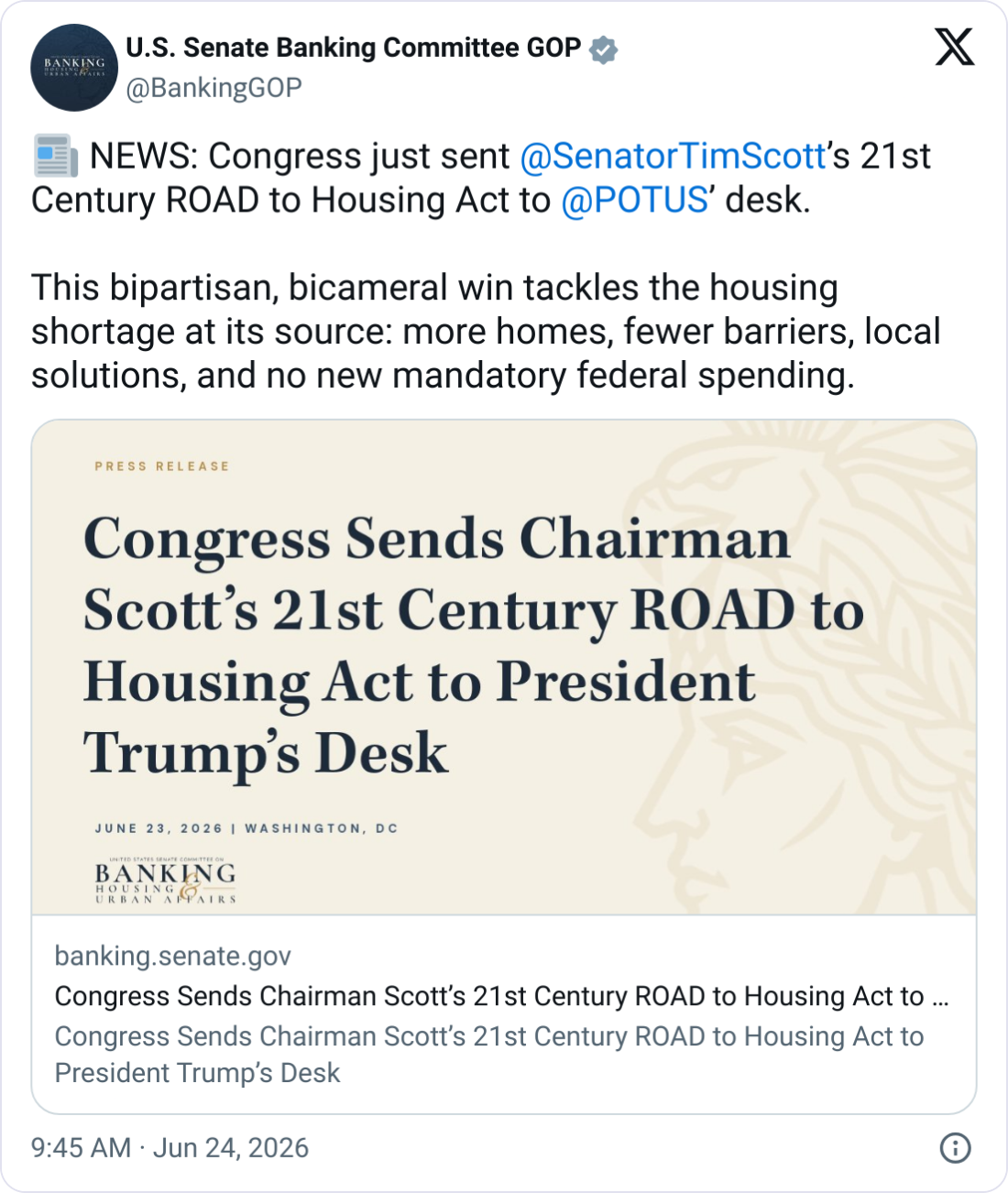
The House voted 358-32 on Tuesday to pass the 21st Century ROAD to Housing Act, a day after the Senate voted 85-5 to pass the bill, which largely aims to tackle housing affordability. The bill now heads to US President Donald Trump, who has signaled support for the measure and is expected to sign it into law on Wednesday.
“Today, Congress delivered a major win for families working toward the American Dream,” said Senate Banking Committee Chairman Tim Scott. “I look forward to President Trump signing it into law.”
CBDCs are a representation of fiat currency issued by a central bank on a ledger. The signing of the bill will be a win for Republicans who have tried to pass a CBDC ban for years, and for crypto advocates who see CBDCs as an attempt to repurpose technology made for decentralized assets into a centrally controlled asset.
The housing bill includes language that the Federal Reserve may not, directly or indirectly, “issue or create a central bank digital currency or any digital asset that is substantially similar to a central bank digital currency,” a clause that expires on Dec. 31, 2030.
Source: US Senate Banking Committee GOP
The bill’s quick passage comes after House and Senate leaders reached a deal to move forward with the housing bill last week, after previously disagreeing over multiple aspects of the legislation.
The bill has included the CBDC ban since the Senate passed a version of it in March. It also features a carve-out for crypto stablecoins, allowing “dollar-denominated currency that is open, permissionless and private.”
The CBDC ban revived language from Republican Representative Tom Emmer’s Anti-CBDC Surveillance State Act. That bill was introduced in June 2025 and passed the House a month later, but it never saw movement in the Senate.
Related: Crypto lobby urges Congress to pass staking and mining tax bill as is
With the bill off lawmakers’ agenda, Congress can now focus on passing other legislation before the August recess and the November midterm elections.
One bill that has garnered particular interest is the Senate’s crypto market structure bill, dubbed the CLARITY Act, which many lawmakers have been pushing to advance.
Despite months of talks between lawmakers and crypto and banking lobbyists, the CLARITY Act is still seeing pushback, and the odds of it being passed this year have slipped.
Earlier this month, Galaxy Digital lowered its estimate of the Senate passing the bill before the end of the year, giving it a 60% chance as the congressional calendar tightens.
Magazine: How crypto laws changed in 2025 — and how they’ll change in 2026


Synthetix founder Kain Warwick has acknowledged that sUSD has been depegged for over a year, taken personal responsibility for treasury mismanagement, and published a detailed thread this morning explaining the path forward: winding down the SNX-backed stablecoin and replacing it with a… Read the full story at The Defiant


BlackRock has renewed its view that Bitcoin can sit inside some investment portfolios as a small complementary diversifier.
Summary
- BlackRock says Bitcoin may diversify portfolios when exposure stays near 1% to 2% overall levels.
- The firm warns larger allocations may raise portfolio risk because Bitcoin remains highly volatile.
- Related ETF coverage shows BlackRock keeps building products around Bitcoin exposure and income strategies.
The firm said Bitcoin’s role is changing as more investors study its supply, demand, adoption path and place beside traditional assets.
“Bitcoin’s role in portfolios is evolving, and it could be considered a complementary diversifier,” said BlackRock. The asset manager said a typical 1% to 2% allocation may support return potential while keeping risk within a suitable range.
The 1% to 2% range reflects risk limits
BlackRock’s view does not present Bitcoin as a core holding for every investor. Its research says the asset still carries high volatility, unstable correlations and adoption risk. A larger position may raise total portfolio risk beyond what many investors can accept.
The firm uses a risk budgeting approach when sizing Bitcoin exposure. In a 60/40 portfolio, BlackRock said a 1% to 2% Bitcoin position can add risk at a level similar to one large technology stock. The firm warned that going above that range can make Bitcoin a bigger driver of portfolio swings.
ETF growth keeps BlackRock near Bitcoin demand
BlackRock’s comments come as the firm keeps expanding Bitcoin-linked products. Its iShares Bitcoin Trust remains one of the largest spot Bitcoin ETFs, and the company has added new products for investors who want different ways to access Bitcoin exposure.
As previously reported by crypto.news, BlackRock launched the iShares Bitcoin Premium Income ETF on Nasdaq in June. The fund holds Bitcoin exposure mainly through IBIT and sells call options to target a 15% to 25% annual yield paid through monthly distributions.
The product does not offer the same return profile as spot Bitcoin. It seeks income from option premiums while keeping partial upside exposure to Bitcoin’s price. That structure may suit investors who want Bitcoin-linked income, but it can limit gains during sharp rallies.
In a recent update, crypto.news covered BlackRock’s earlier filings for the Bitcoin income ETF. The product showed how traditional asset managers are shaping crypto access through regulated funds rather than direct token custody.
Recent market moves add caution
BlackRock’s portfolio message also arrives after a volatile period for U.S. spot Bitcoin ETFs. As crypto.news reported, Bitcoin ETFs saw a 13-day outflow streak from May 15 to June 3, draining about $4.37 billion from the sector.
That outflow run showed that ETF demand can shift fast when markets weaken. BlackRock’s own research also says Bitcoin has seen deep drawdowns over its short history, including drops of 70% to 80% from peak to bottom.
Still, the firm continues to describe Bitcoin as different from many traditional assets. BlackRock says its fixed supply and adoption-driven value path set it apart from stocks and bonds. The firm also says investors should review the asset with caution because future adoption remains uncertain.
For portfolio builders, the message is narrow. BlackRock is not calling for large Bitcoin holdings. It is saying that a limited allocation may fit some investors who understand the risk, accept price swings and want exposure to a digital asset that moves on different drivers.
AI agents can now access 0x Protocol's Swap API by paying $0.01 per request in USDC from their own wallets, with no API key or account setup required. The integration, built with Alchemy AgentPay, runs on the HTTP 402 standard and extends the protocol's DeFi liquidity aggregation to autonomous… Read the full story at The Defiant
South Korea’s KG Group is pursuing a Solana-based digital asset payments network following KG Financial’s strategic MOU with the Solana Foundation. The deal targets stablecoin settlement across the group’s merchant network.
The move adds to a fast-growing list of Korean financial players exploring public-chain settlement behind regulated commerce.
What the KG Group and Solana Partnership Bring
A digital asset payments network is an infrastructure layer that uses blockchain rails to settle transactions in stablecoins or tokenized money. KG Financial, formerly KG Mobilians, is now building exactly that with the Solana Foundation across the South Korean retail commerce sector.
The agreement formalizes work that has been running since April. Both parties have already completed joint proof of concept projects covering stablecoin issuance and real-world payment services. As a result, KG Financial concluded the model is both commercially viable and technically feasible across the board.
Follow us on X to get the latest news as it happens
The signing took place at KG Tower in Jung-gu, Seoul. Solana Foundation President Lily Liu and KG Financial CEO Yoo Seung-yong led the ceremony alongside senior officials. Furthermore, the event marked one of the most concrete Solana partnerships involving a major Korean payments group to date.
KG Group brings significant scale to the deal. The conglomerate operates affiliate KG Inicis, a leading payment gateway with deep reach across Korean online commerce. Moreover, the broader KG payments network covers roughly 220,000 active merchants spread across multiple retail and digital channels nationwide.
The MOU outlines several specific areas of focus. Both sides will jointly develop stablecoin-based payment and settlement systems. Furthermore, the agreement covers the creation of digital payment service proofs of concept and the integration of Solana with existing regulated PG services and prepaid card platforms.
Toss Bank Will Test Solana for Cross-Border Payments
The KG Group news lands days after Toss Bank signed its own MOU with the Solana Foundation. The country’s first internet-only bank to formally partner with Solana is now testing stablecoin-based international remittances directly inside a regulated digital banking application.
That earlier agreement covers a phased proof of concept for cross-border remittances and broader blockchain settlement work. Furthermore, Toss Bank serves roughly 15 million customers, giving Solana direct exposure to one of the largest digital banking platforms operating across the Korean financial ecosystem today.
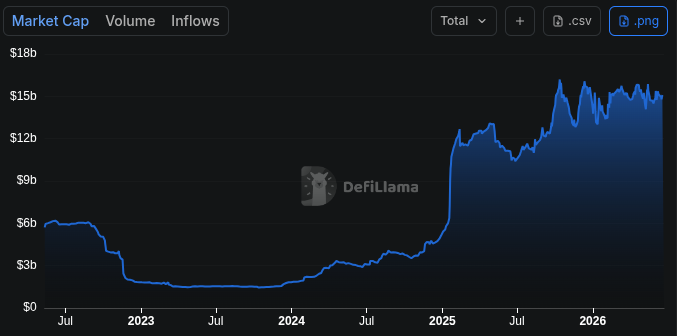
Solana brings real depth to the table. According to DeFiLlama, the network now hosts roughly $15.21 billion in stablecoin market cap, with USDC accounting for around 48% of that. Furthermore, that figure represents nearly 5% of the total $309 billion global stablecoin market, according to CoinGecko data.

Toss Bank already runs a live international remittance product launched in January. The service supports seven currencies across 30 countries. As a result, blockchain settlement must improve something concrete within the existing service, such as costs, speed, or operational reliability for the bank.
The two deals together paint a clear picture. Korean financial groups are now openly testing whether Solana can sit safely behind regulated banking apps, payment gateways, and merchant networks across a wide range of consumer-facing financial products in the country.
Subscribe to our YouTube channel to watch leaders and journalists provide expert insights.
The post South Korea’s KG Group Picks Solana to Roll Out a Digital Asset Payments Push appeared first on BeInCrypto.

‘House of the Dragon’s Premiere Proves the Sea Snake Show Should Never Have Been Cancelled

Preston Davey killer Jamie Varley ‘sobbing’ on first night at HMP Wakefield

Congress sends anti-CBDC housing bill to President Trump’s desk


-

 Fashion5 days ago
Weekend Open Thread: Miami – Corporette.com
-

 Entertainment3 days ago
Renter of Home in Anne Heche Crash Denies Settlement With Son
-

 Tech2 days ago
Microsoft accidentally kills epic Outlook email threads
-

 Business3 days ago
Soccer-U.S. defends Iran World Cup travel restrictions, says discussions ongoing
-
 Sports12 hours ago
Two goals and an assist by sheer aura: Cristiano Ronaldo just entered the World Cup chat
-
Crypto World3 hours ago
Bitcoin (BTC) Dips Below $62K, Ethereum (ETH) Plunges 6% Daily: Market Watch
-

 Politics5 days ago
BBC Reporter Discusses Cross Party Criticism Of Trumps Iran Deal
-
 Business4 days ago
Wall Street Week Ahead: Investors see Micron earnings as pulse check of AI rally momentum
-
Business6 hours ago
Entergy settles forward sale agreements, raises $672 million in cash proceeds
-

 Politics4 days ago
Andy Burnham and the meaning of Makerfield
-

 Tech6 days ago
AWS enters the context layer race with a graph that learns from agents, not manual curation
-
 Crypto World4 days ago
Can Charles Hoskinson Really Rescue Cardano?
-

 Crypto World4 days ago
HIVE shares jump as $220M AI deal speeds Bitcoin mining pivot
-

 Crypto World4 days ago
Jake Chervinsky accuses CME of protecting derivatives monopoly
-

 NewsBeat5 days ago
Keir Starmer Allies Question His Chances For No 10
-

 Tech1 day ago
Nearly 7,000 fake Amazon domains registered ahead of Prime Day 2026, researchers warn
-

 Business5 days ago
Brexit cost 6% of UK economy, Bank of England company data suggests
-

 Sports5 days ago
FIFA World Cup 2026: Canada beat 9-men Qatar 6-0 to register first ever win | FIFA World Cup 2026
-
 Tech3 days ago
Signal’s Meredith Whittaker says AI chatbots ‘are not your friends’ and calls Copilot agents a backdoor
-

 Entertainment4 days ago
Jose Alvarado Wants Taylor Swift at More Knicks Games
You must be logged in to post a comment Login