
Crypto World
Ondo Integrates Chainlink Price Feeds for Tokenized US stocks on Ethereum



Ondo Finance said its Ondo Global Markets platform has integrated Chainlink as its official data oracle, enabling price feeds for tokenized US stocks including SPYon, QQQon and TSLAon to go live on Ethereum.
According to a post from Ondo on Wednesday, the feeds are now being used on Euler, where users can post the tokenized equities as collateral to borrow stablecoins.
The integration provides onchain pricing data for the tokenized assets, allowing decentralized finance (DeFi) protocols to set collateral parameters and manage liquidations based on reference prices tied to the underlying equities. The feeds incorporate corporate actions such as dividends, enabling applications to reference updated equity values.
Initial support covers SPYon (which represents the SPDR S&P 500 ETF), QQQon (representing the Invesco QQQ ETF) and TSLAon (Tesla stock), with additional tokenized stocks and exchange-traded funds (ETFs) expected to be added as oracle coverage and protocol integrations are expanded.
According to the announcement, risk parameters for the new lending markets, including collateral factors and liquidation thresholds, are being set and monitored by Sentora.
Ondo said the move addresses a prior limitation for tokenized equities, which had largely been held for price exposure but were not widely accepted as collateral in DeFi. By pairing exchange-linked liquidity with onchain price feeds, the companies aim to enable broader use of tokenized stocks in lending and other structured products.
The announcement follows an October 2025 partnership between Ondo Finance and Chainlink, a blockchain oracle network launched in 2017, that designated Chainlink as the primary data provider for Ondo’s tokenized stocks and ETFs.
Related: Wemade taps Chainlink for Korean won stablecoin infrastructure
Race to tokenize US equities
As US regulators continue to refine the legal framework for tokenized securities, legacy financial institutions and crypto platforms are accelerating efforts to put equities on blockchain infrastructure.
In September, Nasdaq filed for a rule change with US Securities and Exchange Commission (SEC) that would enable it to list and trade tokenized versions of publicly traded stocks, potentially allowing blockchain-based representations of listed shares to trade within its regulated exchange framework.
On Dec. 11, the same day it clarifyied how broker-dealers may custody tokenized securities under existing rules, the SEC issued a no-action letter allowing a Depository Trust & Clearing Corporation subsidiary to launch a tokenization service for securities already held in DTC custody.
On Jan. 19, the New York Stock Exchange and its parent company, Intercontinental Exchange, said they are developing a blockchain-based platform for trading tokenized stocks and ETFs with 24/7 trading and near-instant settlement, pending regulatory approval.
On the crypto side, more than 60 tokenized US stocks launched in June across exchanges Kraken and Bybit. The product, developed by Backed Finance under its xStocks brand, provides blockchain-based exposure to blue-chip companies, though it is not yet available to US customers.
Meanwhile, fintech Robinhood, which introduced tokenized versions of nearly 500 US stocks for EU users in October, has launched a public testnet for Robinhood Chain, an Ethereum layer-2 network built on Arbitrum.
On Wednesday, the company said the network is designed to support tokenized real-world and digital assets, including 24/7 trading, self-custody and onchain lending and derivatives applications.
Magazine: Bitcoin’s ‘biggest bull catalyst’ would be Saylor’s liquidation: Santiment founder

Key Highlights
- Wrapped XRP (wXRP) debuts on Solana blockchain through Hex Trust and LayerZero partnership
- Token now accessible on major platforms including Phantom, Jupiter, Titan Exchange, Meteora, and Byreal
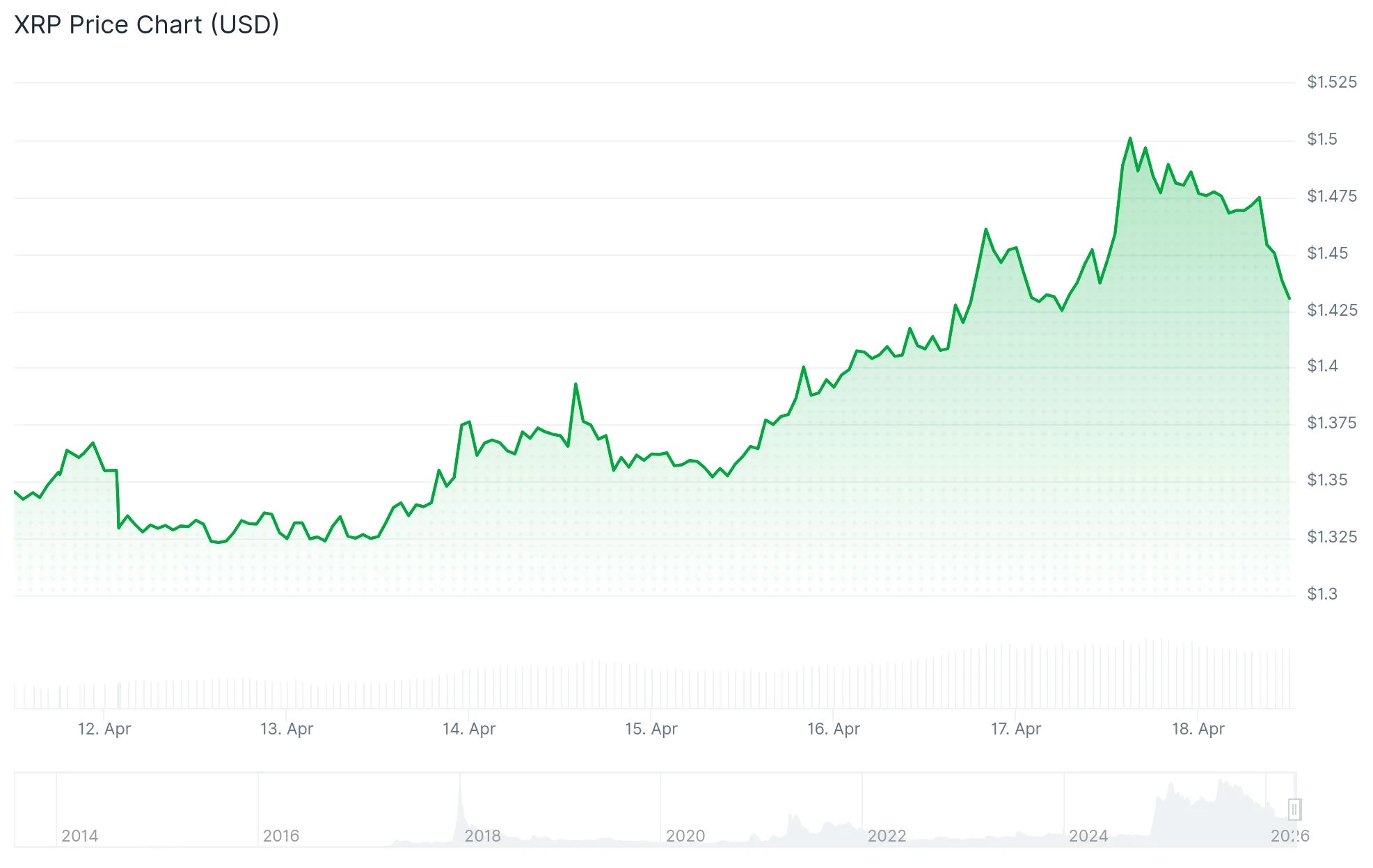
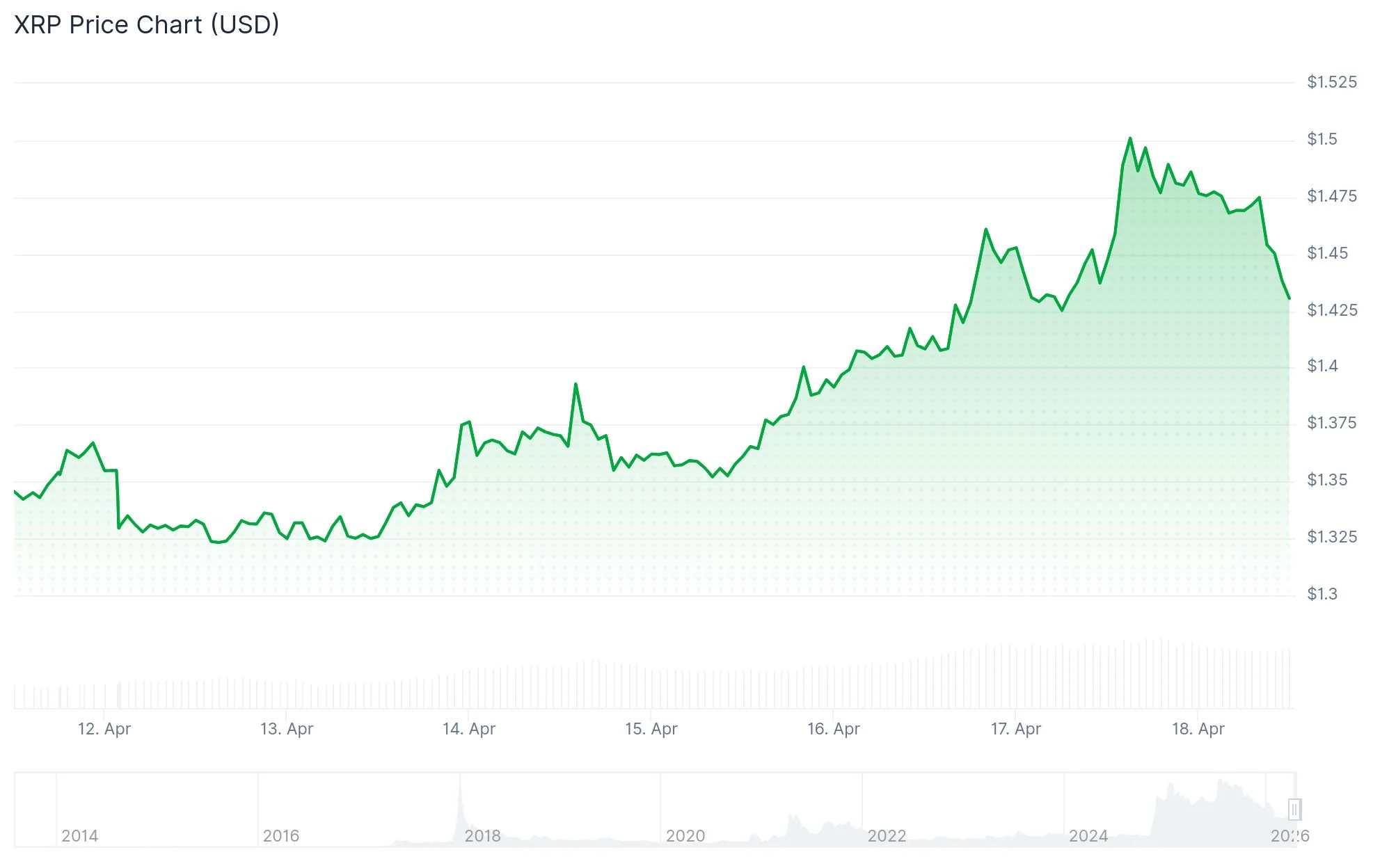
- XRP value surged 5.15% reaching $1.50 following the announcement before stabilizing at $1.48
- RippleX validates the deployment, highlighting increased cross-chain appetite for XRP
- Each wXRP token maintains 1:1 backing with native XRP secured in regulated custodial accounts
Ripple’s native digital asset has officially expanded its reach to the Solana ecosystem via a newly introduced wrapped variant known as wXRP. Solana announced the integration on Friday, April 17, 2026.
The Solana network shared on X: “BREAKING: XRP is live on Solana.” Accompanying the announcement was a brief promotional video showcasing the logos of Ripple, Solana, Hex Trust, and LayerZero — the four principal entities collaborating on this deployment.
This development enables wXRP accessibility across multiple Solana-native applications. Holders can now acquire, trade, and store wXRP through Phantom Wallet, Jupiter Exchange, Titan Exchange, Meteora, and Byreal platforms.
wXRP functions as a fully-backed derivative of XRP. Every wrapped token represents one genuine XRP maintained in isolated custody infrastructure operated by Hex Trust. Token minting and burning occur exclusively when corresponding XRP deposits or withdrawals are processed.
Technical Infrastructure Behind the Integration
The cross-chain deployment relies on infrastructure provided by Hex Trust and LayerZero. LayerZero facilitates the interoperability protocol connecting different blockchain networks, whereas Hex Trust oversees compliant custody solutions for the underlying XRP reserves.
This framework enables XRP investors to engage with Solana’s decentralized finance landscape without liquidating their holdings. Participants maintain their XRP market exposure while gaining access to Solana’s trading platforms, liquidity pools, and yield generation mechanisms.
Hex Trust initially revealed its wXRP issuance roadmap in December 2025. The announcement outlined plans to deploy wXRP across Solana, Ethereum, Optimism, and HyperEVM networks.
RippleX SVP Markus Infanger commented in December: “There’s growing demand to use XRP across the wider crypto ecosystem and institutions, and so we are excited to see Hex Trust address this demand.”
Market Response to wXRP Launch
XRP experienced an immediate 5.15% spike to $1.50 upon the announcement. At press time, the asset had stabilized at $1.48, maintaining a 4.12% daily gain.
Solana’s native SOL token similarly benefited, recording a 4% intraday increase to $89.86.
With a market capitalization exceeding $90 billion, XRP continues expanding its footprint. RippleX highlighted on X that “growing demand for $XRP is driving liquidity cross-chain.”
The cryptocurrency sector experienced broader recovery on Friday amid decreasing geopolitical concerns. News surfaced indicating Iran’s agreement to halt nuclear activities and reopen the Strait of Hormuz shipping route.
XRP maintained a trading price of $1.48 on Friday, April 17, 2026, in the aftermath of the wXRP Solana integration.

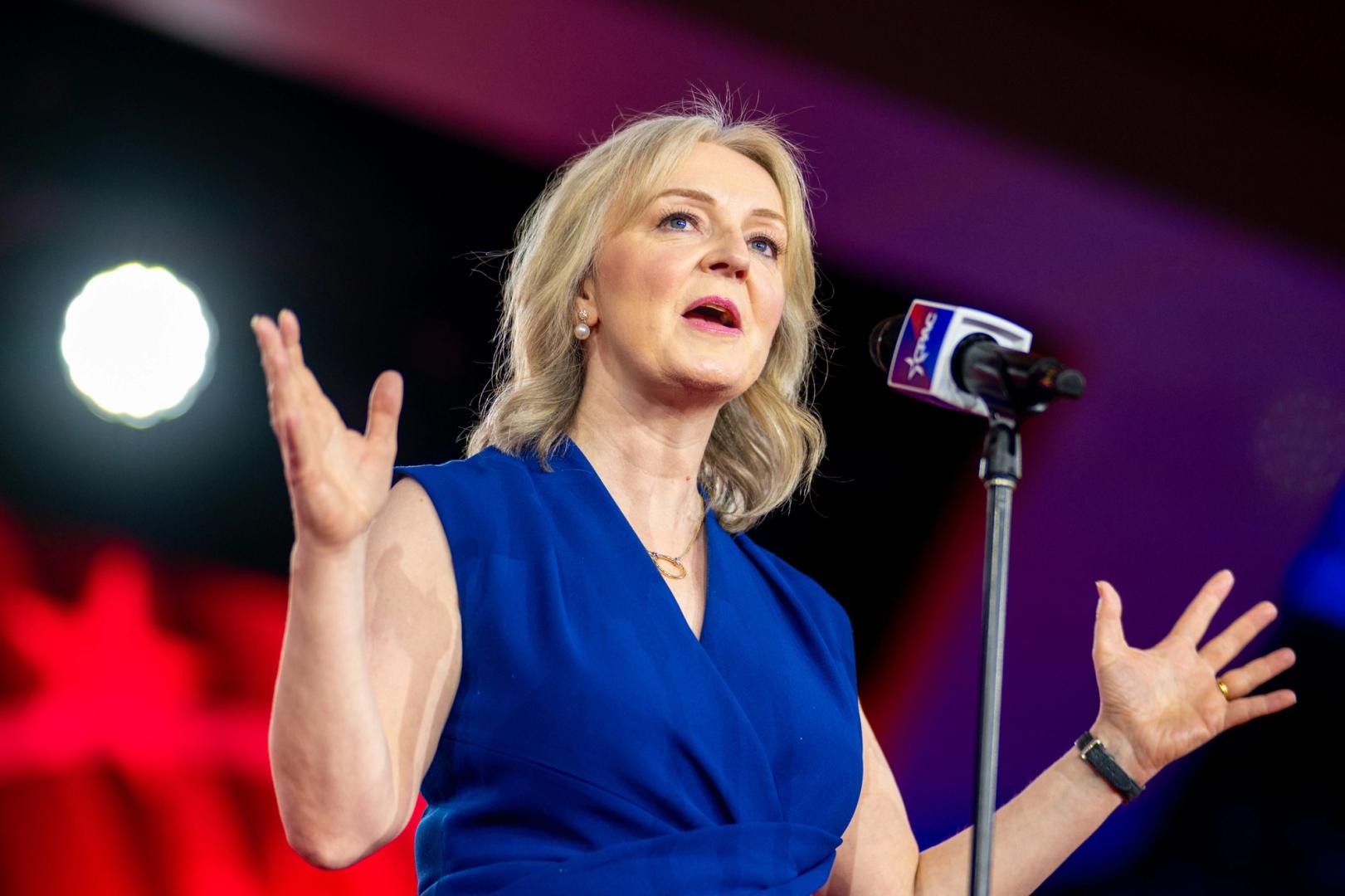
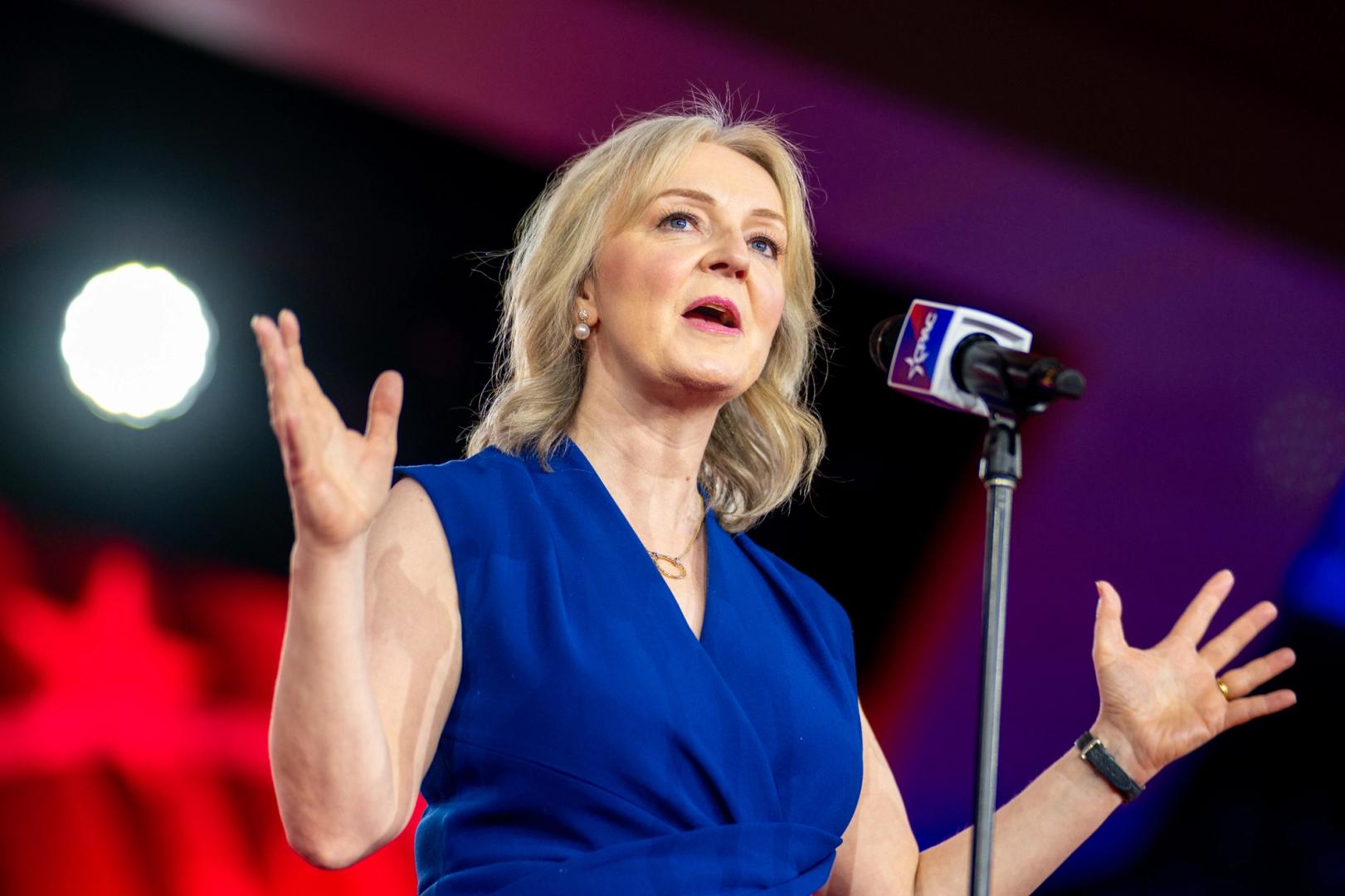
Liz Truss, the U.K.’s shortest-serving prime minister, said the country’s economy has been stagnating for decades and many of the problems result from a lack of sound money and the debasement of the currency, an erosion in the value of sterling caused by inflation and the printing of new banknotes.
Truss, who led a Conservative government for 45 days in 2022, said the financial situation strengthened her interest in bitcoin , which some observers see as a tool against debasement. She said she’s “very interested” in the cryptocurrency, which she first encountered when working at the Treasury and mentioned it there “to shake things up.” Truss was Chief Secretary to the Treasury for about two years until July 2019.
“A lot of the problems we have are due to debasement of our currency and lack of sound money,” Truss said in an interview with CoinDesk. The absence of serious debate around money in academia and government had become “quite sinister,” and discussions about monetary policy had become “a taboo” within government, despite its central role in driving economic outcomes.
For Truss, bitcoin sits alongside a wider concern about centralization and control. She warned the current system is geared toward increasing “centralized control” and limiting financial independence, particularly through regulation and taxation, and positioned bitcoin as part of a pushback against that trend.
The economy is on a “very negative trajectory,” she said, warning the country faces long-term decline driven by weak growth, rising state control and what she sees as a failure of monetary policy.
“We are getting relatively poorer, very quickly,” she said, pointing to high taxes, regulation and energy costs that make “the risk often not worth the reward” for entrepreneurs. “There’s a massive disincentive to work in this country.”
Reflecting on the fallout from Chancellor Kwasi Kwarteng‘s 2022 mini-budget that characterized her premiership, she maintained the resulting market turmoil exposed hidden fragilities rather than caused them. “There was a tinderbox in the system that people didn’t know about,” she said, pointing to leveraged pension strategies.
CPAC UK
Now outside government, Truss is focused on building a political movement, including CPAC UK, a three-day conference aimed at bringing together activists, entrepreneurs and voices from across the “sovereignty and liberty” movement. “We need a movement of people who understand what the problem is,” she said.
Framing the stakes bluntly, she added: “There are two choices, either we’re finished or we change it.”
AI hallucinations news moved from courtroom embarrassment to career consequence as the Nebraska Supreme Court ruled to suspend Omaha attorney Greg Lake until further notice, after a court brief he submitted in a divorce appeal contained 57 defective citations out of 63, including 20 fully fabricated case references and four completely invented cases that do not exist in any jurisdiction.
Summary
- Lake initially told justices he had uploaded the wrong version of the brief while traveling on his wedding anniversary with a broken computer, but later admitted to using AI, which the Nebraska Counsel for Discipline found constituted a failure of candor toward the court.
- The case originated from a 2025 divorce trial disputing the timing of asset division and child custody, with Lake filing the appeal brief on behalf of the husband, the brief then riddled with fictitious details from real Nebraska cases and wholly invented authorities.
- The Nebraska Supreme Court’s opinion noted that the mistakes “could have been easily discovered using traditional legal research services” and described the case as presenting “a novel issue for Nebraska courts,” serving as a public warning to all attorneys in the state.
AI hallucinations news has produced its most severe professional sanction in the United States to date as the Nebraska Supreme Court handed down an indefinite suspension of attorney Greg Lake on April 15, after months of proceedings that began when justices at oral argument in February noticed the brief contained errors they could not reconcile with any published Nebraska case law.
The brief had been filed in a divorce appeal disputing the effective date for dividing marital assets and child custody. Of 63 citations Lake made, 57 contained some form of defect. Twenty were what courts now call hallucinations: realistic-seeming but entirely fabricated references generated by an AI model that guessed plausibly at what the user was asking for and produced convincing-looking but nonexistent citations.
When a justice asked Lake during the February hearing how the errors had occurred, he said he had been on his 10th wedding anniversary, his computer had broken while traveling, and he had uploaded the wrong version of the brief. The justices found the explanation unconvincing. The Counsel for Discipline investigated and found a different account: that Lake had used AI to draft the brief and then denied it to the court, which constituted a violation of professional conduct rules requiring candor toward the tribunal.
The Nebraska Supreme Court’s unanimous opinion rejecting the brief and referring Lake for discipline in March stated plainly: “AI, like other technological tools, can be a benefit to the legal community, but it must be used with caution and humility.” The court called the errors easily preventable with basic verification through standard legal research platforms and found that Lake had shown a failure of his duty of candor.
The Broader Sanctions Landscape
Nebraska is not an isolated case. Researcher Damien Charlotin at HEC Paris, who maintains a database of AI hallucination cases in legal proceedings, now tracks more than 1,200 such cases globally, with approximately 800 from US courts. He has described the pace as reaching “ten cases from ten different courts on a single day.”
Oregon holds the largest aggregate sanction tied to a single attorney for AI-related filing errors, at $109,700. The Sixth Circuit imposed a $30,000 fine on two Tennessee attorneys, the largest federal appellate sanction yet linked to fabricated citations. Nebraska’s indefinite suspension, if upheld on any appeal, would be the first bar discipline action to suspend practice entirely over AI-related filing errors in the US, escalating the consequences from financial penalties to career suspension.
Why This Matters for the AI Sector
Each high-profile legal sanction tied to AI models sends a regulatory signal that calibrates how AI tools are permitted to be used in professional settings. For AI risks assessments across the investment and technology landscape, the legal profession’s response to hallucinations is the canary in the coalmine: it defines what “responsible deployment” means in the first high-stakes regulated environment to produce consequences. The AI tokens and AI infrastructure markets will face analogous regulatory frameworks as the same logic extends to financial advice, medical decisions, and government applications of the same underlying models.


One of the biggest short squeezes of 2026 came and went in a single session.
Bitcoin climbed to $78,000 late Friday, triggering $762 million in liquidations across 168,336 traders with $593 million of that on the short side, per CoinGlass.
By Saturday evening hours in Asia, bitcoin had pulled back to $76,091, up just 0.8% on the day, as Iran broadcast that the Strait of Hormuz was closed to maritime traffic again less than 24 hours after its foreign minister declared it fully open.
Two tanker owners told Bloomberg their vessels received Iranian radio transmissions shutting the waterway, with one supertanker reporting gunfire and aborting transit.
State news agency Nour said Hormuz had returned to “strict management and control by the armed forces” in response to a U.S. blockade of Iranian shipping. Several oil tankers that had raced toward the strait Friday on the initial reopening news turned back.
Friday’s breakout rally ended up in a $590 million shorts rout, with bets on bitcoin accounting for $381 million in liquidations, the largest share, followed by ether shorts at $167. Shorts outweighed longs by nearly four to one, the cleanest short-heavy breakdown in a liquidation event since February.
The setup had been building for weeks. Funding rates on bitcoin perpetuals were pinned negative, meaning shorts were paying longs a premium to hold their positions.
Friday’s Hormuz reopening was the catalyst that flipped it. Crude oil dropped nearly 10% to $85.90 per barrel on the initial headline, and bitcoin broke above the $76,000-$78,000 zone that has capped every rally attempt since the February 5 crash.
President Donald Trump then told reporters Friday night that Iran had agreed to an “unlimited” suspension of its nuclear program, though Tehran never confirmed the claim.
None of that survived into Saturday intact.
The market pattern is now familiar, where ceasefire headlines drives a rally but a reversal headline arrives before the breakout can consolidate. The forced unwind gets another setup to work against.
Ether held up better than bitcoin on the retreat, down just 0.2% over 24 hours while solana dropped 1.3% and dogecoin fell 2.1%. On a weekly basis, ether is still up 5.2%, XRP leads at 6.4%, BNB added 4.6%, and bitcoin sits at 4.5%.
Whether the $76,000 zone holds into Monday’s open is now the question. A clean weekly close above $76K would preserve the structural break even if the peace trade keeps whipsawing.
A loss of the level and bitcoin is back in the same range it has been trapped in since March, only this time with the short base that just got wiped looking to rebuild.
Trump nominated Dr. Erica Schwartz as CDC director 2026 on Thursday, tapping a former Navy rear admiral and deputy surgeon general from his first term to lead an agency that has cycled through four leaders in the past 12 months and remains without a Senate-confirmed director since Dr. Susan Monarez was fired last August.
Summary
- Schwartz, 57, holds a medical degree from Brown University, a law degree, and a master’s in public health from the Uniformed Services University, and spent 24 years in uniformed service including as the US Coast Guard’s chief medical officer and as deputy surgeon general from 2019 to early 2021.
- If confirmed by the Senate, she would become the agency’s second permanent director of Trump’s second term, with acting director Dr. Jay Bhattacharya expected to remain in an interim capacity during the confirmation process, which could take several months.
- Trump also simultaneously named four additional CDC and HHS leadership appointments including Sean Slovenski, former president of Walmart Health, as CDC deputy director and chief operating officer.
The CDC director 2026 nomination arrives at one of the most unstable stretches in the agency’s modern history. The CDC has had no Senate-confirmed permanent director for all but about four weeks of Trump’s second term. Monarez was confirmed in July 2025 and fired just weeks later for reportedly not complying with Health Secretary Robert F. Kennedy Jr.’s demands on vaccines and personnel. Three acting leaders followed. The 210-day Vacancies Act clock ran out on Bhattacharya’s acting designation last month.
Trump called Schwartz “a STAR!” in a Truth Social post Thursday, adding that she had “the knowledge, experience, and TOP degrees to restore the GOLD STANDARD OF SCIENCE at the CDC.” The announcement came on the same day Kennedy testified before the House Ways and Means Committee and made some of his most supportive public statements on vaccines to date, saying the measles vaccine is safe and effective “for most people.”
Schwartz served as deputy surgeon general during the COVID-19 pandemic’s early response, where she played a significant coordinating role in testing, surveillance, and emergency communication with state health officials. Dr. Jerome Adams, who was surgeon general at the time and personally selected her, described her as having “the expertise, credibility, and integrity to lead the CDC effectively.”
She has no discernible public record opposing approved vaccines, which observers have noted is a meaningful distinction from Kennedy’s previous nominees whose vaccine-skeptic positions stalled their Senate prospects. The Senate Health, Education, Labor and Pensions Committee, chaired by Sen. Bill Cassidy of Louisiana, who has expressed concerns about the administration’s vaccine policy changes, has not yet voted on surgeon general nominee Casey Means.
CDC staff expressed cautious optimism about the nomination, according to sources who spoke with NPR. Morale at the agency collapsed during a period of mass layoffs, leadership upheaval, a gunman’s attack on the Atlanta headquarters in August 2025, and a federal judge blocking efforts to reduce recommended childhood vaccines from 17 to 11.
The Senate Confirmation Calculus
Schwartz’s traditional public health and uniformed service background is designed to navigate a Senate confirmation environment shaped by the controversy around Kennedy’s broader agenda. Her nomination alongside three other appointments signals an effort to build a functional leadership team at CDC before the hurricane season that begins June 1, ahead of the midterm calendar that will make every contested Senate vote politically costly.
The broader dynamics of the Senate confirmation pipeline have direct implications for the CLARITY Act and other pending legislation, as the same Senate majority responsible for confirming Schwartz is managing multiple competing confirmation backlogs and a compressed legislative schedule.
Crypto World
Ethereum Short Squeeze Erupts as Strait of Hormuz Reopens, $24M in Shorts Liquidated in One Hour

TLDR:
- Binance recorded over $1.72B in Ethereum derivatives buy volume within a single hour after the announcement.
- Around $24M in ETH short positions were liquidated on Binance during the one-hour post-announcement window.
- Ethereum funding rates stood at -0.004%, confirming most traders were heavily short before the squeeze began.
- Markets remain highly reactive to U.S.-Iran headlines, making leveraged crypto positions increasingly risky to hold.
Ethereum experienced a violent short squeeze after Iran announced the reopening of the Strait of Hormuz to commercial vessels. The announcement came as U.S.-Iran negotiations reportedly made notable progress.
Derivatives markets reacted almost instantly, with aggressive buying activity driving prices sharply higher. The move then triggered a cascade of short liquidations, exposing just how heavily traders were positioned against ETH at the time.
Binance Records Over $1.72B in ETH Derivatives Buy Volume in One Hour
The Strait of Hormuz reopening sent shockwaves through crypto derivatives markets within minutes. Investors moved quickly to establish long positions on Ethereum following the geopolitical news.
Taker Buy Volume, which measures aggressive market buy orders, surged sharply in that window. The speed of the reaction reflected how closely traders are watching U.S.-Iran developments right now.
Binance alone recorded more than $1.72 billion in Ethereum derivatives buy volume within a single hour. That figure stands out even by the standards of historically active trading sessions.
The concentration of that volume on one exchange within 60 minutes points to coordinated, momentum-driven positioning. It was not a gradual accumulation but a fast, reactive move by market participants.
The price rally that followed the initial buying wave then set off a chain reaction in the market. Traders holding short positions were caught off guard by the speed of the move.
As prices climbed, those positions moved into loss territory quickly. The forced closures added further buying pressure, pushing prices even higher in a feedback loop.
According to data shared by crypto analytics account Darkfost, roughly $24 million in short positions were liquidated on Binance during that same one-hour period.
The figure reflects how fast leveraged positions can unwind when a trend reversal takes hold. For traders on the wrong side of the move, there was little time to react or manage risk.
Negative Funding Rates Show Most Traders Were Positioned Short Before the Move
Funding rates on Ethereum were sitting at -0.004% before the announcement was made. Negative funding rates indicate that more traders are holding short positions than long ones.
That setup created the conditions for a sharp squeeze once bullish momentum entered the market. The existing short-heavy positioning acted as fuel for the move rather than a brake.
The broader context here is worth noting. Markets have grown increasingly reactive to any headline tied to the U.S.-Iran conflict.
A single announcement was enough to generate over $1.72 billion in derivatives activity within one hour. That kind of sensitivity makes leveraged trading particularly risky in the current environment.
Volatile, headline-driven moves tend to punish aggressive leverage on both sides of the market. Traders holding large short positions faced liquidation with almost no warning.
Those without stop-loss protection absorbed the full force of the squeeze. The episode is a reminder of how fast conditions can shift when geopolitical news intersects with crowded positioning.
The Trump administration announced Thursday that New York will lose $73.5 million in federal highway funding after the Federal Motor Carrier Safety Administration found the state has refused to revoke nearly 33,000 commercial driver’s licenses issued to immigrants whose legal status had since expired, in this latest Trump administration news on federal funding as a policy enforcement tool.
Summary
- Transportation Secretary Sean Duffy said FMCSA audited 200 sample records and found that more than half contained significant problems, such as licenses remaining valid long after the holder’s authorization to be in the country had lapsed.
- Governor Kathy Hochul’s office called the action a baseless attack on blue states, noting that New York issues CDLs under federally issued rules and that audits from the first Trump administration supported its practices.
- The DOT also warned that an additional $147 million in federal funding could be at risk if New York remains out of compliance, and threatened to bar the state from issuing any new CDLs if it does not revoke the flagged licenses.
Trump administration news this week showed federal funding being used as a direct enforcement lever against a Democratic-led state. Transportation Secretary Sean Duffy said Thursday that a FMCSA review found New York had defaulted to issuing eight-year commercial driver’s licenses regardless of the immigration status or expiration of legal presence documents of the applicant. The state was ordered to review all such non-domiciled CDLs last year and revoke any issued in violation of federal law. It has not done so, Duffy said, which triggered the funding hold.
“I promised the American people I would hold any state leader accountable for failing to keep them safe from unvetted, unqualified foreign drivers,” Duffy said in a Thursday press release. “My message to New York’s far left leadership is clear: families must be prioritized on American roads.”
Governor Hochul’s office rejected the framing entirely. Spokesman Sean Butler said that New York follows federally issued rules when issuing CDLs and that audits completed during the first Trump administration confirmed the state’s compliance. The state’s DMV has previously said it verifies lawful status through federally issued documents for every CDL applicant and accused Duffy of using the issue as political theater.
“This continues a yearlong pattern of Secretary Duffy threatening to withhold money that keeps our roads, subways, and other infrastructure safe for New Yorkers,” Butler said. “We will fight back, and once again we will win.”
The legal dispute is not new. DOT first flagged the issue in December 2025, and California subsequently moved to revoke 17,000 licenses after facing similar federal pressure. California’s compliance stands in contrast to New York’s refusal, which Duffy cited as justification for escalating the funding hold from a warning to an executed reduction.
Why This Pattern Matters Beyond Highways
The $73.5 million cut is the latest in a series of moves in which the Trump administration has used withheld or threatened federal funding to extract compliance from state governments. Previous targets have included New York’s congestion pricing program, subway funding tied to crime metrics, and earlier attempts to redirect Amtrak and commuter rail funding. Courts have blocked several of those earlier attempts.
Trucking industry groups have praised the DOT’s position, arguing that unlicensed or improperly licensed commercial drivers pose genuine public safety risks. The August 2025 Florida crash that killed three people, which Duffy has cited as the catalyst for the nationwide CDL audit, underscores the legitimate public safety dimension alongside the political one.
The pattern of federal funding used as a compliance tool against blue states has become a structural feature of the current administration’s governing approach, with direct implications for the crypto reform agenda and other midterm pressure points that depend on Republican unity in Washington rather than federalism confrontations that could complicate the legislative calendar heading into November.

Spot Bitcoin ETFs attracted nearly $1 billion in net inflows over the past week, marking their strongest showing in more than three months as risk sentiment rebounded. SoSoValue estimates total weekly inflows of $996 million, the highest since early January, underscoring renewed institutional interest in spot exposure to the largest cryptocurrency.
In daily terms, Friday delivered the peak with $663.9 million of inflows, followed by $411.5 million on Tuesday and $186 million on Wednesday. Thursday saw a more modest $26 million, while Monday began with a $291 million outflow. Across the week, total net assets in spot Bitcoin ETFs climbed above $101 billion by Friday, accompagned by a surge in activity with daily trading volumes approaching $4.8 billion. The backdrop remains a shift in investors’ appetite for risk assets as macro and geopolitical signals evolve.
Related coverage earlier highlighted Morgan Stanley’s Bitcoin fund moving ahead of WisdomTree after six straight days of inflows, illustrating a broader pattern of growing institutional engagement with Bitcoin-linked offers. Morgan Stanley’s Bitcoin fund overtakes WisdomTree after six trading days is a reference point for how big-name managers are contributing to the ETF narrative.
Key takeaways
- Nearly $1 billion in weekly net inflows into spot Bitcoin ETFs, with Friday alone accounting for about two-thirds of the total.
- Assets in spot BTC ETFs surpassed $101 billion by week’s end, and daily trading volumes neared $4.8 billion, signaling heightened liquidity and interest.
- Market sentiment is shifting toward de-escalation indicators and risk-on assets, even as the Federal Reserve remains cautious on policy timing.
- BTC price action and volatility appear influenced by geopolitical developments, with notable moves tied to shifts in macro risk premia rather than pure price trends alone.
De-escalation signals and the ETF tide
Analysts who track crypto market structure observe a liquidity-driven rebalancing in Bitcoin. Bitunix researchers point to a broader shift: markets are pricing in how geopolitical tensions might unfold rather than merely their persistence. Signs of easing tensions, particularly in US–Iran dynamics, have reduced the immediacy of extreme risk scenarios and have tempered demand for traditional safe-haven assets like the U.S. dollar.
From a macro perspective, the Federal Reserve remains in a cautious stance, with expectations for rate cuts still limited. At the same time, concerns about the United States’ debt trajectory and elevated long-term yields are nudging investors away from perceived risk-free assets, nudging capital toward alternatives such as Bitcoin. In this context, BTC is described as being in a liquidity-redistribution phase, trading within a defined range—roughly a resistance zone above $75,000 and a developing support around $72,000. The ongoing liquidation heatmaps imply a search for a new equilibrium rather than a clear directional breakout.
These dynamics matter for investors because they suggest that the ETF inflows may reflect a longer-term reallocation of portfolios rather than fleeting sentiment shifts. If inflows persist, they could bolster spot exposure even in the face of potential macro headwinds, offering a more durable baseline for demand than temporary risk-on rallies alone.
Geopolitics, markets, and a sudden price move for BTC
The past week’s headlines carried a prominent geopolitics catalyst that rippled through markets. On Friday, Iran’s foreign minister announced the Strait of Hormuz would be opened to commercial shipping for the duration of the current ceasefire, a move quickly echoed by U.S. President Donald Trump. The development calmed fears of immediate supply disruption in one of the world’s most critical oil transit routes, lightening some of the risk premium embedded in energy and broader markets.
In the wake of the Hormuz news, Bitcoin reacted decisively. Prices rose to breach $77,000, reflecting a risk-on impulse that extended beyond crypto markets. Concurrently, Brent crude declined by around 10% to roughly $85 per barrel, illustrating the broad risk-on tilt that can accompany geopolitical easing when investors reassess inflation and growth expectations.
The latest price action sits within the larger context described by market analysts: Bitcoin’s role as a non-sovereign store of value and a hedge against traditional financial fragility continues to attract a new cohort of institutional participants through spot ETFs. While the macro backdrop remains mixed, the ETF inflows and the post-Hormuz rally indicate that crypto markets are increasingly intertwined with macro flows, liquidity dynamics, and geopolitical headlines.
What readers should watch next
Looking ahead, the persistence of ETF inflows will be a key signal to monitor. If money continues to move into spot BTC ETFs, it could reinforce Bitcoin’s pricing as a liquid, institutional-accessible asset rather than a niche retail play. Conversely, any sustained shifts in macro policy expectations—such as clearer guidance on rate cuts—or renewed geopolitical risk could temper the current flow dynamics. The next steps for traders and investors will likely hinge on whether BTC can maintain its position within the current range and whether volumes can sustain the elevated pace that characterized this week’s activity.


Banking trade associations have expanded their lobbying campaign against the stablecoin yield compromise in the CLARITY Act. The groups are now targeting multiple senators on the Banking Committee.
The push escalates a dispute between banks and the White House over whether yield-bearing stablecoins threaten traditional deposits.
White House and Banks Clash Over Stablecoin Yield Data
The Tillis-Alsobrooks compromise would ban passive yield on stablecoin balances while allowing activity-based rewards. Banking groups argue even this restricted framework could siphon deposits from the traditional system.
The Consumer Bankers Association commissioned economist Andrew Nigrinis to dispute the White House Council of Economic Advisers’ April 8 report.
That analysis found banning stablecoin yield would boost bank lending by just $2.1 billion. It estimated a net consumer cost of $800 million from the prohibition.
The CBA-backed paper argues those risks grow as the stablecoin market scales beyond $300 billion. The American Bankers Association has separately warned of up to $6.6 trillion in potential deposit outflows. Reportedly, banking groups have begun lobbying senators beyond the core negotiators.
The White House has previously criticized banks for blocking stablecoin legislation.
Patrick Witt, executive director of the White House Presidential Advisory Committee on Digital Assets, dismissed the continued opposition.
“It’s hard to explain any further lobbying by banks on this issue as motivated by anything other than greed or ignorance. Move on,” he said.
Senator Tillis told reporters his team was “still going back and forth” on releasing the compromise text this week.
Senator Alsobrooks said she expected it “probably” next week. If the Banking Committee does not clear the bill in April, passage in 2026 becomes unlikely.
The post Banks Broaden Lobbying Against Stablecoin Yield in CLARITY Act Talks appeared first on BeInCrypto.
TLDR:
- RWAs excluding stablecoins have reached $29.4B onchain, with tokenized treasuries up 18% month-over-month.
- Hyperliquid’s HIP-3 open interest hit $2.38B, marking a 580% year-over-year surge in perpetual DEX activity.
- Kalshi and Polymarket recorded $23.6B in combined March volume, both hitting all-time highs for two straight months.
- TAO leads decentralized AI with $43M in Q1 revenue, 128 active subnets, and 70% of supply locked in staking.
Narrative rotation 2026 is drawing serious attention from crypto market participants. Analysts suggest capital is no longer chasing a single trend for months before collapsing.
Instead, money is moving toward sectors with real revenue, proven demand, and measurable product-market fit.
Four areas are standing out this cycle: real-world assets, perpetual decentralized exchanges, prediction markets, and decentralized AI. Each sector carries distinct fundamentals that distinguish it from previous speculative waves.
Real-World Assets and Perpetual DEXs Lead Early Flow
Real-world assets, commonly called RWAs, have moved beyond a niche concept in crypto. They now represent fresh collateral entering the ecosystem with genuine external cash flows attached.
Crypto analyst Tanaka noted that RWAs excluding stablecoins currently sit at approximately $29.4 billion onchain. Tokenized treasuries grew 18% month-over-month to $13.6 billion, while tokenized equities recently crossed $1.2 billion.
The biggest movement within this sector involves RWA collateral flowing into DeFi leverage protocols. This points to traditional finance instruments becoming productive assets within decentralized systems.
Protocols building new DeFi primitives around this collateral are drawing the most attention. Tokens like CFG and ONDO are positioned as direct plays on this structural shift.
Perpetual decentralized exchanges are also absorbing considerable flow this cycle. Hyperliquid stands out as the clearest case of where trading activity is concentrating.
Its HIP-3 protocol saw open interest reach $2.38 billion, a 580% year-over-year increase. TradFi perpetuals on the platform grew 188% during Q1 alone.
HYPE captures most of the flow in the perp DEX sector, but traders still use competing venues for arbitrage and hedging. This creates room for secondary platforms to perform alongside the market leader.
The broader thesis is that perpetual DEXs currently hold the strongest product-market fit in crypto infrastructure. Crypto market structure is also beginning to absorb equities, commodities, and prediction exposure through this layer.
Prediction Markets and Decentralized AI Attract Selective Capital
Prediction markets are expanding faster than most analysts anticipated. Kalshi and Polymarket together recorded $23.6 billion in combined volume during March.
Both platforms reached all-time highs for the second consecutive month. Tanaka pointed out that Hyperliquid’s upcoming HIP-4 will deploy permissionless prediction markets directly on its margin layer.
Not every platform in this space is expected to remain viable, though. Markets without a real competitive moat are likely to lose ground quickly.
The stronger opportunities are in infrastructure, oracles, resolution layers, and intent routing built alongside established platforms. Platforms attacking entirely new market segments also show promise.
Decentralized AI is the fourth sector attracting measured capital rotation. OpenAI recently raised $110 billion at a $730 billion valuation. NVIDIA posted $68.1 billion in quarterly revenue, up 73% year-over-year.
These numbers frame the scale of centralized AI dominance, which decentralized alternatives are directly responding to.
TAO remains the primary pick within this category. The network has 128 active subnets, generated $43 million in Q1 revenue, and has 70% of its circulating supply locked in staking.
Grayscale also raised TAO’s allocation to 43% of its AI fund, reflecting growing institutional interest in decentralized AI rails.

Village with thatched cottages and traditional tearoom at the end of tranquil meadow walk

Sterling Infrastructure: Impressive Yet Expensive

XRP Token Surges 5% Following Wrapped XRP Integration on Solana Network


-
 NewsBeat6 days ago
Pep Guardiola and Gary Neville agree over Arsenal title problem that benefits Man City
-

 Crypto World5 days ago
The SEC Conditionalises DeFi Platforms to Be Avoided for Broker Registration
-

 Politics6 days ago
World Cup exit makes Italy enter crisis mode
-

 Crypto World5 days ago
SEC Signals Exemption for Crypto Interfaces From Broker Registration
-

 Fashion18 hours ago
Weekend Open Thread: Theodora Dress
-

 News Videos3 days ago
Secure crypto trading starts with an FIU-registered
-

 Sports1 day ago
NWFL Suspends Two Players Over Post-Match Clash in Ado-Ekiti
-

 Crypto World4 days ago
SEC Proposes Certain Crypto Interfaces Don’t Need to Register as Brokers
-

 Business7 days ago
Ireland Fuel Protests Enter Day 5 as Blockades Spark Shortages and Government Prepares Support Package
-

 NewsBeat4 days ago
Trump and Pope Leo: Behind their disagreement over Iran war
-

 Politics15 hours ago
Palestine barred from entering Canada for FIFA Congress
-
 NewsBeat6 days ago
JD Vance announces ‘no agreement’ with Iran over nuclear weapons fear
-

 Crypto World13 hours ago
Russia Pushes Bill to Criminalize Unregistered Crypto Services
-
Sports6 days ago
Dexter Lawrence, Stefon Diggs, Trading for De’Von Achane
-

 Crypto World5 days ago
Trump whales load up ahead of Mar-a-Lago luncheon.
-
Crypto World6 days ago
Sei Network Enters Quiet Reset Phase as On-Chain Metrics Signal a Slowdown in 2026
-
 Business2 days ago
Creo Medical agree sale of its manufacturing operation
-

 Sports5 days ago
NWFL opens Pathway for new Clubs ahead of 2026 Season
-
Business5 days ago
Kering slides after Morgan Stanley downgrade, Gucci woes loom
-
 Entertainment4 days ago
Karol G’s ‘Ultra Raunchy’ Coachella Set Gave ‘Satanic Vibes’
You must be logged in to post a comment Login