LOS ANGELES — Electric vehicle startup Slate Auto expects to defy challenging market conditions and avoid the losses its peers have seen by profitably selling a highly customizable EV that starts at just under $25,000.
Slate CEO Peter Faricy said every vehicle produced by the Michigan-based EV startup — which is backed by Amazon founder Jeff Bezos and Los Angeles Dodgers controlling owner Mark Walter — will be gross margin positive. That will lead the company to positive free cash flow and earnings before taxes, depreciation, and amortization by 2027, he said.
“It’s an ambitious goal,” Faricy told CNBC during an interview at the company’s new design studio outside of Los Angeles. “No other automotive company has been able to do that before. So it’s ambitious. It’s going to take a lot of work. Nothing’s guaranteed in life, but you have to have ambitious goals if you want to achieve big things. That’s the big goal we’re shooting for.”
Other recent EV startups have struggled financially. Automakers such as Lordstown Motors and Fisker Automotive went bankrupt, while Rivian Automotive and Lucid Motors have reported billions of dollars in annual losses and both recently announced layoffs.
Advertisement
Faricy, former vice president of Amazon Marketplace who was appointed to lead the automaker in March, said the company can succeed where others have failed because of its simplistic product, customer-focused business strategy and break-even point of roughly 80,000 vehicles a year.
The break-even point is just over half of the 150,000-unit production capacity the company plans to have at its assembly plant in Warsaw, Indiana. Slate is continuing to build out that facility while also producing prototype vehicles.
A Slate Auto-customized SUV on display during a media event June 22, 2026, at the company’s new design studio in Gardena, California. Slate is offering more than 100 standard wrap colors for under $500 during the vehicle’s launch this year.
Michael Wayland | CNBC
Advertisement
“We have a different cost structure and a different business model than other automakers have,” he said, citing the simplicity of Slate’s vehicle and manufacturing process as well as the ability to customize the EVs.
Slate’s flagship product is a two-seat, $24,950 bare-bones electric pickup truck that’s so basic the speakers are optional and it has crank windows. The truck can be converted into a five-passenger sport utility vehicle for an additional $5,000. The vehicles will feature a Slate-estimated EV range of 205 miles, 181 horsepower and 195 foot-pounds of torque.
Its performance pales compared with much pricier electric pickups and SUVs but is in line with similarly priced vehicles.
Slate CEO on going public
Slate Auto CEO Peter Faricy, right, speaks during a media event June 22, 2026, at the company’s new design studio in Gardena, California, ahead of the EV startup announcing official pricing for its flagship vehicle.
Advertisement
Michael Wayland | CNBC
Slate was in stealth mode until the company revealed its flagship EV in April 2025. It said then that its initial starting price would be under $20,000, but that included up to $7,500 in federal tax incentives that were available at the time for purchasing an EV and have since been discontinued.
The startup has raised more than $1.3 billion in capital through three financing rounds, two of which were led by Walter’s TWG Global investment holding company after a Bezos-affiliated lead round.
Faricy declined to discuss Slate’s capital runway but confirmed the company is continuing to opportunistically raise funding as it prepares to produce vehicles for consumers later this year and ramp up production, with deliveries expected during the fourth quarter.
Advertisement
He didn’t rule out the possibility of Slate going public, but said it would likely be too early to do that before the company ramps up production next year.
“We’re going to constantly take a look at what our options are. Certainly going public will be one,” said Faricy, who was recruited to the company by Slate co-founder and fellow Amazon executive Jeff Wilke. “2027 is probably too soon, in my book. I think we’ll want to really make sure that we’re launching and scaling the business well.”
Slate has received more than 180,000 reservations for its vehicles and is officially opening up preorders on Wednesday. The reservations required refundable $50 deposits, but the orders will come with $300 nonrefundable down payments.
Slate President of Vehicles Chris Barman, who was the company’s second employee and initial CEO, said current expectations are for the SUV to represent 60% of sales, despite the pickup being the base model at roughly $25,000. The starting price isroughly half the cost of a new vehicle sold, according to Cox Automotive data.
Advertisement
Faricy commended Barman for her leadership as a “world-class automotive executive,” and confirmed he’s there to use his background in consumer retail and in the automotive industry before Amazon to take the company to its next step.
“Companies have different life stages, and we’re now at the stage as we launch production where we’re sort of going into the next phase of our life,” he said. “I’m thrilled to join because a lot of the skills that I bring are complementary to the team that exists.”
Modular vehicle
A wall of accessories for Slate Auto’s vehicles on display at the company’s design studio near Los Angeles. The EV startup plans to initially offer more than 175 accessories, with over 80 under $500, including roof racks, stereos and light covers.
Michael Wayland | CNBC
Advertisement
When Slate revealed its vehicle as “a radically simple, radically affordable, radically personalizable car” in April 2025, more than three years had passed since Barman and Eric Keipper, an auto veteran and Slate’s head of engineering, first developed the road map for the EV’s development.
The vehicles have injection-molded composite exteriors and a litany of do-it-yourself options. The plan is for every vehicle coming off the line to be the same to reduce complexity, before the addition of any features or different covers/tops such as fastback or squared-off to look similar to a Jeep Wrangler SUV.
Auto executives have tossed around the idea for such a modular, stripped-down vehicle as the industry has seen a rise of connectivity and affordability concerns, but so far the challenges have outweighed the potential opportunities, or companies have struggled to keep prices low.
Slate’s vehicle does not feature any “connectivity” such as a modem or large screens, just a small driver information screen for range, speed and other standard gauges and warnings. Instead of a center infotainment system, drivers can use their own devices, such as a smartphone or tablet, for navigation and music.
Advertisement
The exteriors of the Slate vehicles won’t be painted. The company said they were engineered to be wrapped with a vinyl film, eliminating the need for a costly paint shop — a massive investment for automakers.
Slate is offering more than 100 standard wrap colors for under $500, but customers also can essentially pick any color or design they can imagine. The vehicle also will launch with more than 175 accessories, with over 80% of those priced under $500, including roof racks, stereos and light covers.
“Whoever you are and whatever you like in life, you can now express that through your SUV or through your truck,” said Faricy, who added that the Slate vehicle he wants is a metallic black fastback SUV. “I can’t wait to create that vehicle.”
The company continues to build the vehicles by hand, along with some factory automation, according to Dan Tasiemski, Slate’s head of manufacturing engineering. Slate is aiming to begin operating the factory through its normal production processes by August, he said.
Advertisement
Slate, which Tasiemski said is building about three vehicles a day, still needs to go through required federal vehicle validation and certification for things such as range, safety and other aspects.
Challenges
Slate Auto CEO Peter Faricy stands next to the EV startup’s barebones electric pickup truck at the company’s design studio near Los Angeles on June 22, 2026.
Michael Wayland | CNBC
In addition to challenging market conditions for EVs, Slate’s product is a unicorn — for better or worse.
Advertisement
The modularity of the vehicle is unique and so is its two-door body style. It will be the only pickup truck or SUV on sale in the U.S. to exclusively offer such a variant without also offering four-door models.
Ford reports only 10% of its Bronco SUV models sold last year were two-door variants. Many small pickup trucks such as the Ford Maverick and Hyundai Santa Cruz exclusively offer four-door models.
Slate has not ruled out the addition of four-door models, but its sole focus is on the two-door pickup and SUVs, according to executives.
It’s also exclusively a rear-wheel drive vehicle compared with four-by-four capability or all-wheel drive.
Advertisement
Slate is expected to compete against a growing segment of small gas-powered and electric pickup trucks. Most notably, Ford has bet its future EVs on a new affordable platform, beginning next year with a pickup truck. Stellantis’ Ram brand also plans to launch new compact and midsize pickup trucks in the coming years.
Slate plans to deliver its vehicle directly to customers rather than through franchised dealers, which also presents challenges and opportunities for the company, based on similar experiences from U.S. EV leader Tesla, Rivian and others.
“I think it’s an important part,” Faricy said, adding that he thinks it will lead to lower costs and better control over the customer experience. “We’re definitely going to be a direct-to-consumer company.”
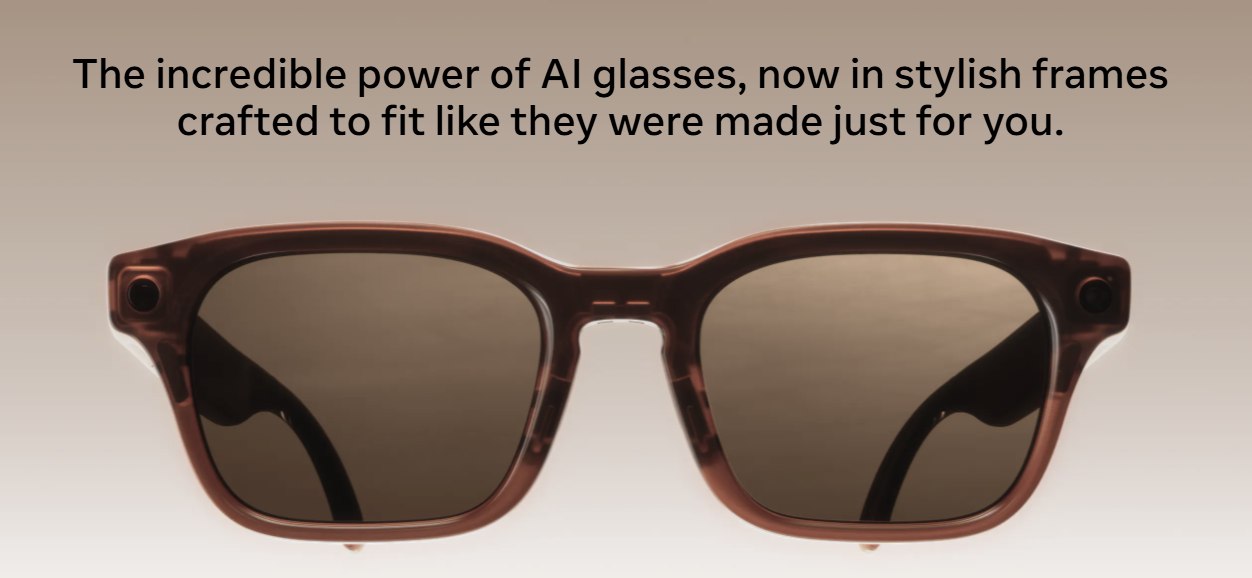
NEW YORK — Meta Platforms Inc. on Tuesday unveiled a new line of smart glasses starting at $299, aiming to broaden access to AI-powered wearable technology as competition intensifies in the emerging market.
The Meta Glasses represent the company’s first in-house designed eyewear without Ray-Ban or Oakley branding, though they maintain a partnership with EssilorLuxottica, the parent company of those brands. The lower price point undercuts the entry-level second-generation Ray-Ban Meta glasses by at least $80.
Meta CEO Mark Zuckerberg has prioritized wearables as part of the company’s strategy to establish a hardware platform in the artificial intelligence era. While virtual reality headsets have remained niche, smart glasses have shown stronger consumer adoption, with millions of units sold since the initial Ray-Ban Meta launch in 2021.
Advertisement
The new glasses lack a display screen but feature a camera, open-ear speakers, and integration with Meta’s AI assistant. Users can ask the AI for real-time translations, object recognition, reminders, or to capture photos and videos. Content can be easily shared to Instagram or WhatsApp.
The glasses come in three new designs with multiple variations, including options for prescription lenses. A dedicated charging stand accompanies the product. Battery life reaches up to eight hours, according to company specifications.
Meta executives highlighted the accessible pricing as key to expanding the market. “Our partnership with EssilorLuxottica is about putting powerful AI into frames people actually want to wear,” Zuckerberg said in a statement. “I believe glasses are going to be a main way people access personal superintelligence — and with Meta Glasses, we’re going to make that accessible to a lot more people.”
Market Strategy and Competition
Advertisement
Meta and EssilorLuxottica currently hold more than 80 percent market share in smart glasses, according to industry estimates. The new models aim to build on that lead by appealing to a broader audience with stylish designs and lower costs.
The announcement comes amid growing competition. Google recently revealed plans for new computerized eyewear in partnership with Warby Parker, powered by its Gemini AI. Snap Inc. last week introduced Specs, premium smart glasses priced at $2,195 that its CEO positioned as a potential smartphone successor.
Meta’s approach emphasizes lightweight, fashionable frames without bulky screens for everyday use. The company previously launched Ray-Ban Display glasses with built-in screens at $799, targeting more advanced augmented reality experiences.
Analysts see smart glasses as a stepping stone toward more sophisticated AR devices. Meta views them as a way to own consumer hardware interactions in the AI era, reducing reliance on smartphones for certain tasks.
Advertisement
Features and Privacy Considerations
The Meta Glasses include a 12-megapixel camera for capturing moments and AI capabilities for contextual assistance. Open-ear audio allows users to listen to music or receive information without isolating themselves from surroundings.
Privacy remains a key concern with camera-equipped wearables. Meta has implemented indicators when recording is active, but critics continue raising questions about always-on capabilities and data collection. The company maintains that user controls and transparency features address these issues.
Availability begins immediately through Meta’s website, Best Buy, Amazon, and select eyewear retailers. Prescription options expand accessibility for users needing vision correction.
Advertisement
One limited-edition model features collaboration with influencer Kylie Jenner, including her voice for AI interactions. Pricing for special editions reaches $399.
Zuckerberg’s Wearables Focus
Zuckerberg has championed wearables since Meta’s rebranding from Facebook in 2021. While VR investments through the Reality Labs division have faced profitability challenges, smart glasses have delivered commercial success and positive consumer feedback.
The company sold millions of Ray-Ban Meta units last year alone. The new lineup aims to accelerate growth by addressing price sensitivity while maintaining premium features.
Advertisement
Meta continues investing heavily in AI development. Integration of its latest models into the glasses allows for more natural interactions, such as visual search and real-time assistance during conversations or travel.
Industry observers note that success in wearables could help Meta diversify beyond its core social media advertising business. Hardware platforms also create opportunities for app ecosystems and services.
Future Outlook
Meta has signaled plans for more advanced glasses with displays in coming years. The current models serve as an accessible entry point while the company refines AR technology for mainstream adoption.
Advertisement
The smart glasses market remains relatively small but shows strong growth potential. Analysts project increasing consumer interest as AI capabilities improve and devices become more seamless in daily life.
Competition will likely intensify with major technology players entering the space. Success will depend on balancing style, functionality, battery life, and privacy protections.
For Meta, the $299 starting price represents a strategic move to capture market share before rivals establish stronger footholds. Early reviews highlight the stylish designs and practical AI features as strengths.
As wearable technology evolves, Meta’s glasses position the company at the forefront of blending fashion with intelligent computing. The initiative underscores Zuckerberg’s vision for AI-integrated hardware becoming a primary computing interface.
Oakwood Care Group has acquired Forest Gate Healthcare
17:17, 24 Jun 2026Updated 17:25, 24 Jun 2026
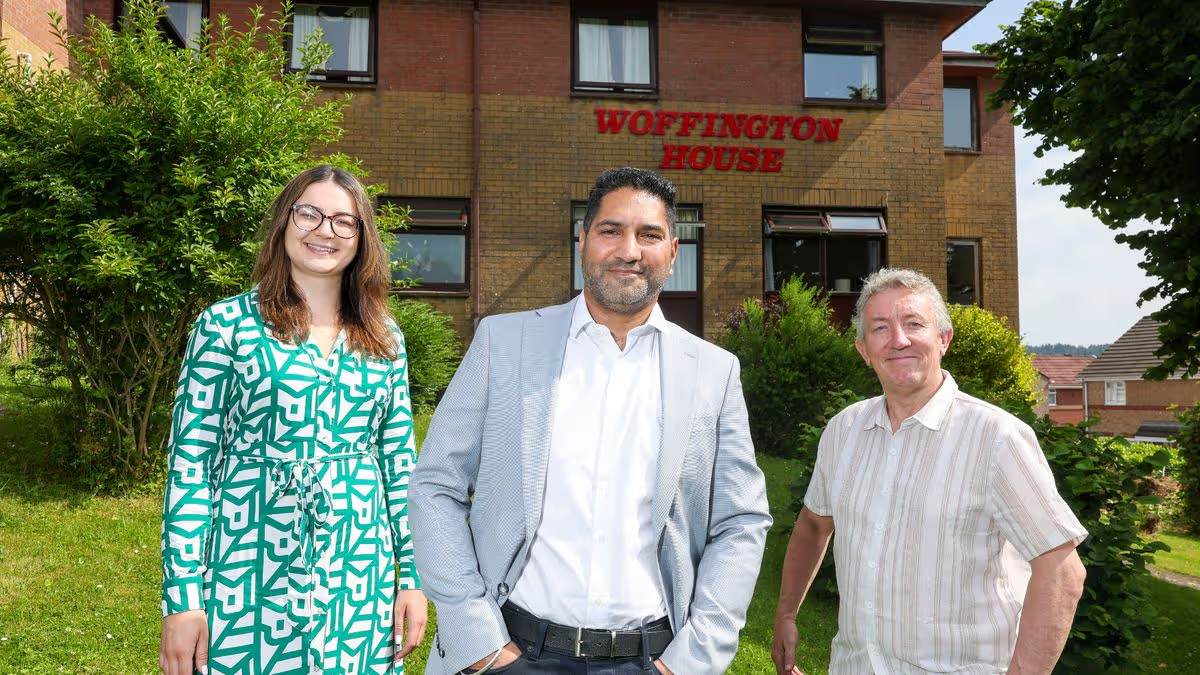
Left to right: Zoe Fletcher, corporate senior associate solicitor at JCP Solicitors; Kuljit Grewal, CEO of Oakwood Care Group; and Richard Easton, portfolio Ewecutive at the Development Bank of Wales.
Oakwood Care Group has completed the acquisition of Forest Gate Healthcare adding three care homes and 105 bedrooms to its expanding portfolio.
The acquisition, supported by a multi-million-pound debt facility from the Development Bank of Wales , sees Oakwood Care Group taking ownership of Oakdale Manor, a 31-bed care home in Blackwood; Ty Ross Care Home, a 38-bed care home in Treorchy; and Woffington House, a 36-bed care home in Tredegar.
Advertisement
The deal, the value of which has not been disclosed, significantly expands the group’s presence in Wales, increasing its workforce to approximately 200 people from around 70. It also strengthens Oakwood Care Group’s ability to provide residential care across multiple communities while safeguarding jobs and supporting future investment in care provision.
Founded by chief executive Kuljit Grewal, Oakwood Care Group’s portfolio now spans five care homes across Wales, including Bryngwy Care Home in Powys and Williamston Nursing Home in Pembrokeshire, alongside the three newly acquired homes.
The Development Bank of Wales has supported Oakwood Care Group, which is headquartered in Maidenhead, throughout its growth journey. In 2024 it provided a loan to support the purchase of Williamston Nursing Home and last year a further debt facilitate the purchase of Bryngwy Care Home.
JCP Solicitors’ Corporate and Commercial Property teams, advised Oakwood Care Group on the Forest Gate Healthcare acquisition.
Advertisement
Mr Grewal said: “This acquisition is a major milestone for Oakwood Care Group and reflects our long-term commitment to providing high-quality care across Wales.
“Our focus has always been on people first. These are not simply care facilities; they are homes for residents and important parts of their local communities. We are looking forward to working with residents, families and staff across Oakdale Manor, Ty Ross and Woffington House to build on the excellent care already being delivered.
“The support of the Development Bank of Wales has been invaluable throughout our growth journey. Strong, long-term partnerships give businesses like ours the confidence to invest, grow and continue improving services in a rapidly changing care environment. This investment places us in a strong position to continue supporting communities and strengthening care provision across Wales.”
Richard Easton, portfolio executive at the Development Bank of Wales, said:“Oakwood Care Group has established a strong track record of successfully acquiring and developing care homes while maintaining a clear focus on quality care and resident outcomes.
Advertisement
“This acquisition represents a significant step forward for the business, safeguarding employment, increasing its reach across Wales and supporting the delivery of high-quality care services to more communities. We are pleased to continue supporting the group as it builds on its success and creates a platform for future growth.
Property advisory firm Christie & Co acted for Forest Gate , which provides an exit for Richard and Ian Hutchinson. They said: “Having started the business over two decades ago, this was an important decision for our family. We are proud of what has been achieved and confident that Oakwood is the right partner to take the business forward.”
Oliver McCarthy, director, – care at Christie & Co comments, “We are pleased to have facilitated this discreet sale. Forest Gate is a well-established and highly regarded business, and this transaction demonstrates the continued demand for quality care operators. We wish both the Hutchinson family and the Oakwood Care Group every success in their respective future ventures.”
I am writing this with a damp tea towel round my neck, a fan pointed at my face like an interrogation lamp, and the distinct sense that my office has been relocated to the inside of a panini press.
Outside, the Met Office has slapped a red extreme heat warning across half the country and Britain is on course to beat its June temperature record by a margin that would embarrass a sprinter. Forty degrees. In England. In a country that historically considers a barbecue a high-risk gamble.
And do you know what our political class has decided to do about it? Reverse. Gently, apologetically, but unmistakably into the hedge.
Let me be unfashionably blunt, because that is what an oven does to a man’s patience. On the single clearest day of evidence we have ever had, every major party in this country is busy softening, fudging or flat-out binning the one policy designed to stop the thermometer doing this again. And they are all, to a man and woman, doing it because they have caught a nasty case of Faragitis.
This is the bit that genuinely astonishes me. Reform has been admirably honest about its position, which is that net zero belongs, in deputy leader Richard Tice’s words, “in the dustbin”. The party wants to axe the energy department, rip up fracking restrictions and, in a phrase imported wholesale from across the Atlantic, “drill, baby, drill”. You can read it in their own words on Business Matters, and I almost respect the clarity. At least you know where you are with a man who wants to set fire to the future to save four quid on his gas bill this winter.
Advertisement
The line, of course, runs straight back to Donald Trump, a man who has spent years insisting that wind turbines cause cancer, kill whales and personally ruin his golf views. Farage admires Trump, Reform borrows the soundbites, and now, terrifyingly, everyone else is borrowing them from Reform. The Conservatives, who once hugged a husky for a photo opportunity, last year ditched their commitment to net zero by 2050 altogether, a move even the trade press called reckless. Labour says the right things about offshore wind, then triangulates so frantically over every actual decision that you suspect Ed Miliband is the only true believer left and they keep him in a cupboard.
It is the great British political pastime: find out what the loudest man in the pub thinks, then sprint to agree with him before last orders.
Here is my problem, and it is a businessman’s problem rather than a hippie’s. The “drill, baby, drill” crowd present themselves as the hard-headed realists and everyone else as woolly idealists. They have it precisely upside down. The realism is on the other side of the argument.
The Climate Change Committee, hardly a den of placard-waving radicals, has crunched the numbers and found that the entire cost of reaching net zero by 2050 is smaller than the hit we took from one fossil fuel price shock in 2022. One. For every pound spent, the benefits come back somewhere between two and four times over. Faster electrification, heat pumps and electric cars do not bankrupt households, they put money back in people’s pockets. The expensive option, the genuinely reckless one, is staying hooked on a commodity whose price is set by despots and weather systems we do not control.
Advertisement
And this is before we get to the actual business case, which is enormous and which we keep pretending is a cost rather than the single biggest growth opportunity of our lifetimes. The UK net zero economy already generates around £105 billion in value and supports more than a million jobs, the overwhelming majority of them in small and medium-sized firms, as Business Matters laid out in its coverage of the seventh carbon budget. When politicians wobble on targets, they are not protecting business. They are kneecapping the fastest-growing part of it and handing the lead to the Chinese, the Americans and anyone else with the nerve to commit.
I have written before that British businesses must not retreat from net zero, and on the hottest day in our recorded history I will say it louder, sweat and all. Doubling down is not the brave green gesture. It is the boring, sensible, profitable thing to do, which is precisely why no politician chasing Farage’s vote will say it.
So here is my modest proposal. Turn the fans off in Westminster for a week. Let them legislate at forty degrees, like the rest of us are trying to work. They will discover their convictions remarkably quickly. Now, if you’ll excuse me, my tea towel needs wringing out.
Richard Alvin
Richard Alvin is a serial entrepreneur, a former advisor to the UK Government about small business and an Honorary Teaching Fellow on Business at Lancaster University.
A winner of the London Chamber of Commerce Business Person of the year and Freeman of the City of London for his services to business and charity. Richard is also Group MD of Capital Business Media and SME business research company Trends Research, regarded as one of the UK’s leading experts in the SME sector and an active angel investor and advisor to new start companies.
Richard is also the host of Save Our Business the U.S. based business advice television show.





















































You must be logged in to post a comment Login