

Business
Bank of Thailand keeps interest rate steady at 1% and raises GDP growth forecast for 2026 to 2.3%


The Bank of Thailand kept its benchmark interest rate steady at 1.00%, as anticipated, stating it will keep an eye on inflation trends and expectations. The seven-member Monetary Policy Committee (MPC) voted unanimously on the decision.
The Monetary Policy Committee (MPC) unanimously voted 7:0 to maintain the policy interest rate at 1.0%. The committee viewed the policy interest rate as appropriately accommodative given Thailand’s low and uneven economic growth, continued contraction in retail lending, and a declining trend in SME lending.
The MPC projected a decline in inflation by 2027 as supply-side pressures, such as energy and fresh food prices, gradually ease. Looking ahead, the MPC will monitor the price pass-through of businesses facing higher costs, medium-term inflation forecasts, and the debt repayment capacity of SMEs and vulnerable households.
The Thai economy is projected to expand at a faster rate than previously estimated, but the growth rate is low and uneven, the MPC said in a statement.
The Thai economy is projected to grow better than previously estimated.
- The Monetary Policy Committee (MPC) has revised its GDP forecast for this year upwards to 2.3% year-on-year (YOY) from the previous 1.5% YOY (excluding government measures) and 2.0% YOY (including government measures). This revision is based on…
- Export and investment momentum driven by the Tech & AI Cycle exceeded expectations , with growth concentrated in technology-related exports and investments in digital businesses.
- The impact of the war was less than expected, as large businesses were able to adapt by diversifying their import sources and transportation routes for raw materials, while the government provided subsidies to mitigate energy costs.
- Government measures to mitigate the impact of the energy crisis, under the Emergency Decree on Borrowing 400 billion baht.
- The Monetary Policy Committee (MPC) still views Thailand’s economic growth in both 2026 and 2027 as below its potential and uneven, particularly affecting households where purchasing power is pressured by high living costs while incomes are slowing, and SMEs which face difficulties adjusting to costs and have limited access to credit.
- The Monetary Policy Committee (MPC) projects Thailand’s current account balance for the full year 2026 to worsen to a balanced level ($0 billion USD, down from the previous estimate of $7 billion USD). This is attributed to temporary factors, including significantly higher crude oil prices and seasonal profit repatriation by multinational corporations, which are expected to contribute to the deficit in the second quarter. However, the MPC anticipates a gradual improvement back to a surplus in the second half of 2026 and throughout 2027.
The Thai baht has slipped as the US dollar strengthens, matching market expectations that the Federal Reserve will raise interest rates later this year, according to the MPC.
Other People are Reading


Apogee Therapeutics CEO Henderson sells $10.6m in common stock
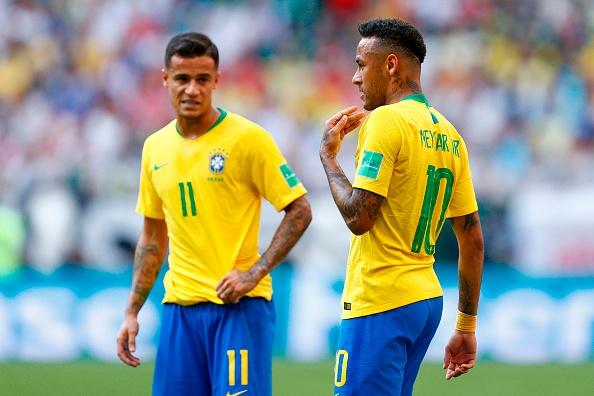
MIAMI GARDENS, Fla. — Scotland will be aiming to make World Cup history when they lock horns with Brazil in their third and final Group C fixture at Hard Rock Stadium in Miami on Wednesday. The two nations meet almost three decades on from their last World Cup clash in 1998, when the South American giants claimed a 2-1 victory en route to reaching the final.
Scotland’s Path to This Moment
Five days after securing an important 1-0 victory over Haiti in their opening match at the 2026 World Cup, Scotland suffered defeat by the same scoreline against Morocco last Friday in a tight contest decided by a goal scored just 70 seconds in by Ismael Saibari. Head coach Steve Clarke felt that Scotland were unfortunate not to be awarded at least one penalty during a spirited second-half performance. Nevertheless, the 62-year-old was pleased by how his players “showed we can compete against top-10 teams,” even though they failed to register a single shot on target.
What’s at Stake for Scotland
Securing their first-ever win over the mighty Brazil would guarantee a top-two finish in Group C, while a draw would most likely seal a top-three finish and progress to the last 32. Scotland could also reach the knockouts if they lose to Brazil, though they will be keen to avoid a heavy defeat in Miami.
A Lopsided Head-to-Head History
Scotland’s record against Brazil leaves a lot to be desired ahead of Wednesday’s contest, as they have lost six and drawn two of their previous eight international encounters, including three group-stage defeats at the World Cup between 1982 and 1998. They first met in 1974, playing out a goalless draw in West Germany. Since then, Brazil have won all of their World Cup encounters, securing victories in 1982, 1990, and 1998. The Tartan Army has only once secured a positive result against the Seleção — that 0-0 draw in 1974.
Brazil’s Own Path Through the Group
After being held to a 1-1 draw by Morocco in their opening Group C fixture, Brazil secured their first victory at the 2026 World Cup last Saturday by defeating Haiti 3-0, courtesy of a brace from Matheus Cunha and another first-half strike from Vinicius Junior. Head coach Carlo Ancelotti hailed his team’s “complete” performance post-match, and his Seleção side are now in a strong position to secure top spot in Group C. To guarantee advancing as group winners, they simply need to match or better Morocco’s result against Haiti when they take to the pitch against Scotland.
A Warning From History
Despite their strong recent form, Brazil cannot afford to take Wednesday’s match lightly. History serves as a warning, as Brazil’s last three defeats in the group stage at a World Cup have all been suffered on matchday three, including a surprise 1-0 loss against Cameroon in Qatar. As a result, the Seleção cannot afford to take anything for granted when they face a fired-up Scotland outfit on Wednesday.
Team News for Brazil
Ancelotti’s side will be without a key part of their attack in Miami, as Raphinha will be sidelined due to a hamstring injury. The Barcelona winger exited in the 40th minute of Brazil’s most recent match against Haiti. Reports in Spain suggest the setback could be more serious than initially feared. Either way, Raphinha won’t be in action on Wednesday, potentially opening the door for Bournemouth talent Rayan to earn his first World Cup start.
Neymar’s potential return has dominated much of the pre-match buildup. The veteran superstar has been forced to sit out of Brazil’s opening two group games with a calf injury sustained after Ancelotti controversially selected him in his 26-man roster. Neymar, surely competing at his last World Cup, has completed his first full training session ahead of Wednesday’s game and is expected to feature at some point against the Tartan Army, though Ancelotti has confirmed Neymar “will be available” without committing to him starting. Lucas Paquetá is set to continue in the No. 10 role, supporting Vinicius Junior and Cunha in attack, while Danilo, Marquinhos, Gabriel Magalhães, and Douglas Santos are all set to begin in defense behind midfield duo Casemiro and Bruno Guimarães.
Team News for Scotland
Dinamo Zagreb defender Scott McKenna is back in training after missing Scotland’s first two games with a calf injury. Aaron Hickey missed the last match against Morocco and remains a doubt against Brazil. Midfielder Lewis Ferguson is set to start despite being rested from training over the weekend. Kieran Tierney appeared to come off injured against Morocco but has since returned to training and looks set to feature.
Scotland’s predicted lineup: Angus Gunn; Andrew Robertson, Grant Hanley, Jack Hendry, Nathan Patterson; John McGinn, Scott McTominay, Lewis Ferguson, Ryan Christie, Ben Gannon-Doak; Che Adams.
Robertson’s Message to the Tartan Army
Scotland’s supporters, known as the Tartan Army, have been a highlight of this World Cup and have been praised for their passion by locals in Boston, Massachusetts, where the team played their first two group-stage matches. Scotland captain Andrew Robertson is hoping to give them something to celebrate in Miami. “We want to give them something to shout about. We want to give them something to be happy about, and obviously, also if we win the game, then we’ve created history,” he told reporters.
Match Details and How to Watch
The match kicks off at 6 p.m. Eastern Time, 22:00 GMT, at Hard Rock Stadium in Miami Gardens, Florida. In the United States, the match will be broadcast on Universo, FOX, FOX One, the Telemundo App, the Telemundo Network, and Peacock. UK viewers can watch on BBC One and BBC iPlayer.
The Betting Markets and Statistical Models
Stats provider Opta predicted that Brazil has a 68.1% chance of winning in Miami on Wednesday. Their supercomputer saw a 19% chance of a draw and gave Scotland only a 12.9% chance of victory. Opta calculated that Brazil are the eighth most likely team to win the tournament overall.
The Current Group C Standings
Brazil and Morocco both have four points, with the Seleção sitting in top spot by virtue of a better goal difference. Scotland are third on three points, with Haiti fourth. The Caribbean nation were eliminated after losing to Brazil last week.
With Group C set to conclude after Wednesday’s match, the simultaneous fixture between Morocco and Haiti will play a direct role in determining the final group standings alongside the outcome in Miami. Scotland are aiming to reach the knockout stages of a major international tournament for the first time and are guaranteed to finish at least third in the group regardless of Wednesday’s result, but a win or draw against Brazil would significantly strengthen their position heading into the round of 32. For Brazil, a win or draw combined with Morocco failing to beat Haiti would secure top spot in the group outright, while any slip-up against a motivated Scotland side could complicate what has otherwise been a steadily improving tournament for Ancelotti’s squad.

The recruitment agency boss shares his tips on getting noticed in a tougher jobs market.

marchmeena29/iStock via Getty Images

By Jennifer Nash
According to the Census Bureau, new home sales were at a seasonally adjusted annual rate of 580,000 in May. This represents a 7.3% decline from April’s rate of 626,000 and a 6.8% drop from the previous

Operator
Good afternoon, ladies and gentlemen, and welcome to the Evertz Q4 Investor Conference Call. [Operator Instructions]
This call is being recorded on June 24, 2026. I would now like to turn the conference over to Brian Campbell, Executive Vice President of Business Development. Please go ahead.
Brian Campbell
Executive Vice-President of Business Development
Thank you, John. Good afternoon, everyone, and welcome to Evertz Technologies conference call for our 2026 Fourth Quarter and Year ended April 30 with Doug Moore, Evertz’ Chief Financial Officer; and myself, Brian Campbell. Please note that our financial press release and MD&A will be available on SEDAR and on the company’s investor website. Doug and I will comment on the financial results and then open the call to your questions.
Turning now to Evertz results. I’ll begin by providing a few highlights, and then Doug will provide additional detail. First off, we had record annual sales in excess of $0.5 billion, coming in at $515.8 million for the year. This includes revenue in the international region of $148 million, up 16% from the prior year. Reoccurring software, services and other software revenue increased 8% year-over-year, totaling $240.7 million in the year.
Margin rates remain consistently strong, coming in at 59.3% versus 59.5% prior year and 58.8% 2 years ago. Total margin dollars were $306 million. Net earnings were $64.4 million, resulting in a fully diluted earnings per share of $0.83. Our sales base is well diversified with the top 10 customers accounting for approximately 44% of sales with no single
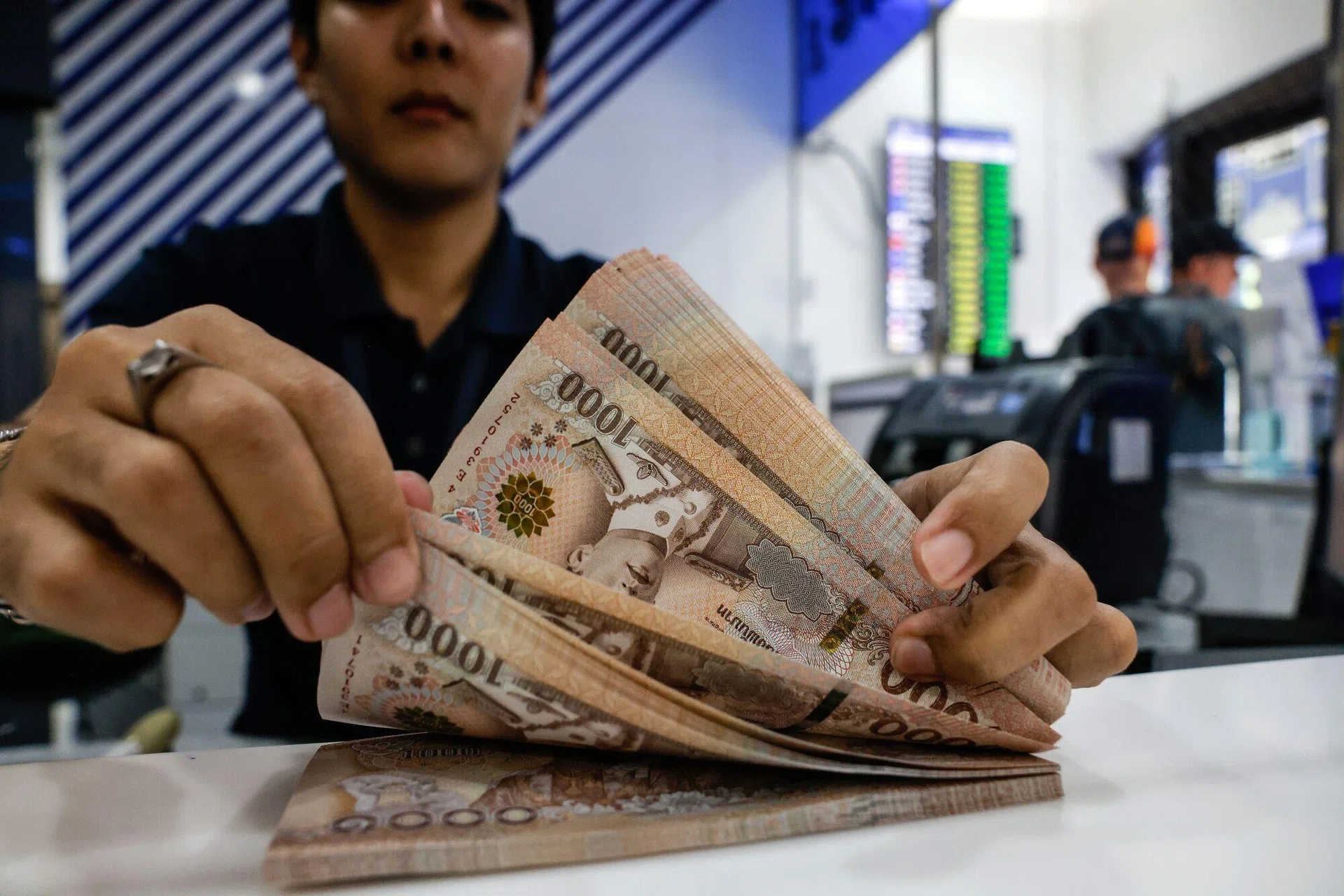
The Thai baht faces downward pressure due to a dovish central bank, widening US interest rate differentials, and regional investor caution. Recovery hinges on Middle East de-escalation, a Fed pivot, or improved Thai exports. Hedging is advised.
Key Points
- The Thai baht faces short-term pressure, potentially testing 33.00-33.20 resistance. Factors like Middle East tensions, US rate hike expectations, and the Bank of Thailand’s dovish policy contribute to weakness.
- The baht’s appeal is diminished by a significant interest rate differential with the US, leading to capital outflows from Thai equities and bonds. This weakness is shared by other Asian net oil importers.
- A baht recovery hinges on a Middle East ceasefire, a US Federal Reserve pivot, or improved Thai export demand. Until then, hedging is advised, with the baht remaining in a downtrend unless it breaks through 32.00.
Baht’s Short-Term Challenges and Key Resistance Levels
The Thai baht is currently facing short-term pressure, with market strategists indicating it could test the 33.00–33.20 resistance band. This weakness is influenced by ongoing geopolitical tensions in the Middle East and the Federal Reserve’s rate-hike expectations. However, a de-escalation of the Middle East conflict or signs of softening US economic data that dampen rate-hike anticipation could trigger a baht recovery towards the 32.50 support level. Krungthai Global Markets has established a weekly trading range for the baht at 32.50–32.20, with a tighter 24-hour band of 32.85–33.05. Earlier forecasts from Bank of America had projected baht weakness towards 33 per dollar by mid-2026, attributing this to the cumulative impact of elevated oil prices and a contracting current account buffer, especially during the seasonally weaker second quarter.
Domestic Policy and Regional Currency Pressures
The Bank of Thailand’s accommodative monetary policy is a significant contributor to the baht’s current predicament. The Monetary Policy Committee (MPC) has implemented three rate cuts since October 2025, bringing the benchmark rate to 1.00%, its lowest point since September 2022, in an effort to stimulate economic recovery. With projected GDP growth at a mere 1.5% for 2026, significantly below potential due to US trade measures and energy shocks, and with core inflation expected to remain stable, the MPC is likely to maintain current interest rates at its upcoming meeting. This contrasts sharply with the US Federal Reserve’s higher rate of 3.50–3.75%, creating a substantial interest rate differential that makes the baht less attractive for foreign investment, leading to capital outflows.
Regional Vulnerabilities and Paths to Recovery
Thailand is categorized among the more vulnerable Asian currency markets, with bearish sentiment prevalent towards currencies of net oil importers like the Indonesian rupiah, Indian rupee, Philippine peso, and the Thai baht itself. While some regional central banks, like Bank Indonesia, have implemented aggressive rate hikes and direct market interventions, these measures have not entirely quelled bearish positions. In contrast, net energy exporters such as Malaysia and Singapore have seen their currencies perform better. For the baht to strengthen, a durable Middle East ceasefire reducing oil prices, a dovish shift in Fed policy, or a significant improvement in Thailand’s trade balance driven by tech exports are crucial. Until then, hedging strategies are advised, and the baht remains in a downtrend unless it can decisively reclaim the 32.00 level.
Source : Thai Baht Buckles Under the Weight of Oil Shock and a Hawkish Fed
Other People are Reading

Shoe retailer Betts has appointed an administrator to accelerate the closure of more than a dozen uneconomical stores nationwide in pursuit of returning the dynasty to profitability.


Strong earthquake rocks north-central Venezuela, capital Caracas

I have heard many similar stories. I myself was born blind, and remember very well my first school report, when I was six, which advised my parents to send me to a school for children with learning disabilities.
I grew up speaking both German and Arabic and constantly mixed them up, not understanding that they were separate languages. If my parents had not ignored that first school report, I too might have ended up in a workshop. Instead, today I’m one of only a handful of journalists in Germany with a visible disability.
Hüppe says the workshop system fails in one of its most basic responsibilities – to rehabilitate disabled people in order to prepare them to work in the mainstream economy.
“This responsibility just isn’t taken seriously,” he tells me.
The reason for that is in part the economic incentives that are offered to German companies to support the system. In Germany, any company that employs more than 20 people is legally obliged to employ at least one disabled person.
Larger companies have a minimum quota of 5%. Those who fail to meet this commitment have to pay a sum in compensation into a central fund that supports disabled people in the workplace.
Many companies choose simply to pay this money rather than meet their quota. They are offered a further incentive by the system, in that if they outsource production to a workshop the compensation they have to pay is reduced.
The result is that fewer than 1% of disabled people make a successful transition from workshop to a job with a mainstream company.
Hüppe also says workshops are reluctant to see their best staff move on. “Obviously a workshop is a commercial enterprise that survives on what it produces,” says Hüppe. “And so obviously they want to hold on to their best workers, the ones that would have the best chance of making it out in the mainstream economy.”
He points me to a 2023 report, external by the United Nations Committee on the Rights of Persons with Disabilities, which criticised Germany’s record on disability.
Specifically, it noted “the high number of persons with disabilities enrolled in sheltered workshops and the low rate of transition to the open labour market”.
Not everyone, however, is unhappy being employed in a workshop, including Medina Arnaut, 35. She works for one in Paderborn that is operated by a charity called Caritas.
Arnaut is also the chair of the local workshop council, which represents the interests of the workers in a similar way to a trade union.
“We have colleagues here who are so grateful that workshops exist,” she says. “These are colleagues who quite simply need this workshop environment because of their disability.”
Arnaut adds many of her colleagues have worked in the mainstream economy and the pressure there is completely different. “People come to me and say, I’ve experienced life out there in the commercial world and it made me sick.”

NEW YORK — The Nasdaq Composite Index closed lower on Wednesday, finishing at 25,512.67 after shedding 74.37 points, or 0.29 percent, as investors navigated ongoing volatility in technology shares.
The tech-heavy index reflected mixed signals across the market, with some pressure from profit-taking in high-valuation names offsetting broader economic optimism. Trading volumes remained solid as participants assessed corporate earnings and macroeconomic developments.
Major technology and semiconductor companies contributed to the modest decline. While artificial intelligence-related themes continue to drive long-term interest, near-term concerns over valuations and sector rotations weighed on performance.
The S&P 500 and Dow Jones Industrial Average showed varied results, highlighting a rotational dynamic where some sectors gained while growth-oriented stocks faced headwinds.
Market Drivers and Sentiment
Analysts pointed to a combination of factors behind the session’s movement. Profit-taking after recent gains, alongside caution ahead of key economic data releases, contributed to the pullback. Geopolitical developments and corporate news also influenced trading flows.
Technology remains a dominant force in the Nasdaq, with heavyweights in software, semiconductors and internet services playing outsized roles. The index has delivered strong returns over multiple years but experiences periodic corrections as investors recalibrate expectations.
Broader market resilience was evident in areas such as financials and industrials, which helped limit downside across major averages. Bond yields and currency movements provided additional context for equity pricing.
Sector Performance and Earnings Influence
Several high-profile companies reported or previewed results, adding layers to daily action. While some firms exceeded expectations, others faced scrutiny over growth outlooks and margin pressures.
The semiconductor space, a Nasdaq bellwether, showed mixed trading amid supply chain considerations and demand forecasts for AI infrastructure. Cloud computing and digital services names also contributed to index dynamics.
Smaller companies listed on the Nasdaq faced their own set of influences, with some benefiting from merger activity and innovation in emerging fields. The index’s composition, heavily tilted toward growth stocks, makes it particularly sensitive to interest rate expectations and risk appetite.
Longer-Term Perspective
Despite the daily dip, the Nasdaq Composite remains well above levels seen at the start of the year. Its performance underscores the market’s focus on technological transformation and productivity enhancements driven by artificial intelligence and related advancements.
Investors continue to monitor Federal Reserve policy signals for clues on borrowing costs and liquidity conditions. Any shifts in rate expectations can quickly ripple through growth-oriented segments.
Corporate earnings seasons often serve as key catalysts. Strong results from leading firms have supported valuations, though elevated multiples leave limited room for disappointment.
Economic Backdrop
U.S. economic indicators have presented a balanced picture, with solid consumer spending alongside manufacturing and inflation considerations. Labor market data and retail sales reports provide ongoing context for equity valuations.
Global factors, including trade dynamics and international growth, also influence multinational companies listed on the Nasdaq. Currency fluctuations affect reported earnings for firms with significant overseas exposure.
Market strategists emphasize diversification and a long-term horizon when navigating technology-driven volatility. While the Nasdaq has historically rewarded growth investors, drawdowns remain a feature of its risk profile.
Investor Considerations
For participants, the current environment calls for careful stock selection within the index. Companies demonstrating durable competitive advantages and clear growth paths tend to fare better during periods of rotation.
Exchange-traded funds tracking the Nasdaq or its sub-sectors offer convenient exposure for both retail and institutional investors. Active management may help in identifying opportunities amid sector shifts.
Risk management remains essential given the index’s historical beta and sensitivity to macroeconomic surprises. Many advisors recommend balanced portfolios that include exposure beyond pure technology.
The Nasdaq’s role as a barometer for innovation and investor sentiment endures. Its movements often foreshadow broader trends in equity markets as technology reshapes industries.
Looking ahead, upcoming corporate reports and policy announcements will likely shape near-term direction. The index’s ability to consolidate gains while attracting fresh capital will be watched closely by market observers.

World Cup 2026: Morocco complete comeback against Haiti in Group C clash

Your enterprise AI agents should automatically remember which model is right for which task. Mindstone built the capability with Rebel

Scotland vs Brazil LIVE: World Cup 2026 result, latest updates and fan reaction


![We Are WEEKS Away From A MAJOR Price Explosion For XRP! XRP Holders ALL Need To PREPARE! [BUY XRP!]](https://wordupnews.com/wp-content/uploads/2026/06/1782344110_maxresdefault-80x80.jpg)
-

 Fashion5 days ago
Weekend Open Thread: Miami – Corporette.com
-

 Entertainment4 days ago
Renter of Home in Anne Heche Crash Denies Settlement With Son
-

 Tech2 days ago
Microsoft accidentally kills epic Outlook email threads
-
 Sports1 day ago
Two goals and an assist by sheer aura: Cristiano Ronaldo just entered the World Cup chat
-

 Business4 days ago
Soccer-U.S. defends Iran World Cup travel restrictions, says discussions ongoing
-
Crypto World20 hours ago
Bitcoin (BTC) Dips Below $62K, Ethereum (ETH) Plunges 6% Daily: Market Watch
-

 Politics6 days ago
BBC Reporter Discusses Cross Party Criticism Of Trumps Iran Deal
-

 Politics5 days ago
Andy Burnham and the meaning of Makerfield
-

 Crypto World17 hours ago
Securitize Wraps Roubini's SEC-Registered ETF as Dubai VARA Digital Security
-
Business23 hours ago
Entergy settles forward sale agreements, raises $672 million in cash proceeds
-
 Business5 days ago
Wall Street Week Ahead: Investors see Micron earnings as pulse check of AI rally momentum
-

 NewsBeat5 days ago
Keir Starmer Allies Question His Chances For No 10
-

 Tech6 days ago
AWS enters the context layer race with a graph that learns from agents, not manual curation
-
 Crypto World5 days ago
Can Charles Hoskinson Really Rescue Cardano?
-

 Crypto World5 days ago
HIVE shares jump as $220M AI deal speeds Bitcoin mining pivot
-

 Crypto World5 days ago
Jake Chervinsky accuses CME of protecting derivatives monopoly
-
 Tech3 days ago
Signal’s Meredith Whittaker says AI chatbots ‘are not your friends’ and calls Copilot agents a backdoor
-

 Entertainment5 days ago
Jose Alvarado Wants Taylor Swift at More Knicks Games
-

 Tech2 days ago
Nearly 7,000 fake Amazon domains registered ahead of Prime Day 2026, researchers warn
-

 Business6 days ago
Brexit cost 6% of UK economy, Bank of England company data suggests
You must be logged in to post a comment Login