Connect with us
DAPA Banner
DAPA Coin
DAPA
COIN PAYMENT ASSET
PRIVACY · BLOCKDAG · HOMOMORPHIC ENCRYPTION · RUST
ElGamal Encrypted MINE DAPA
🚫 GENESIS SOLD OUT
DAPAPAY COMING

Business

Boeing Stock Climbs 2.2% as Backlog Grows and Quantum Satellite Program Advances

Published

on

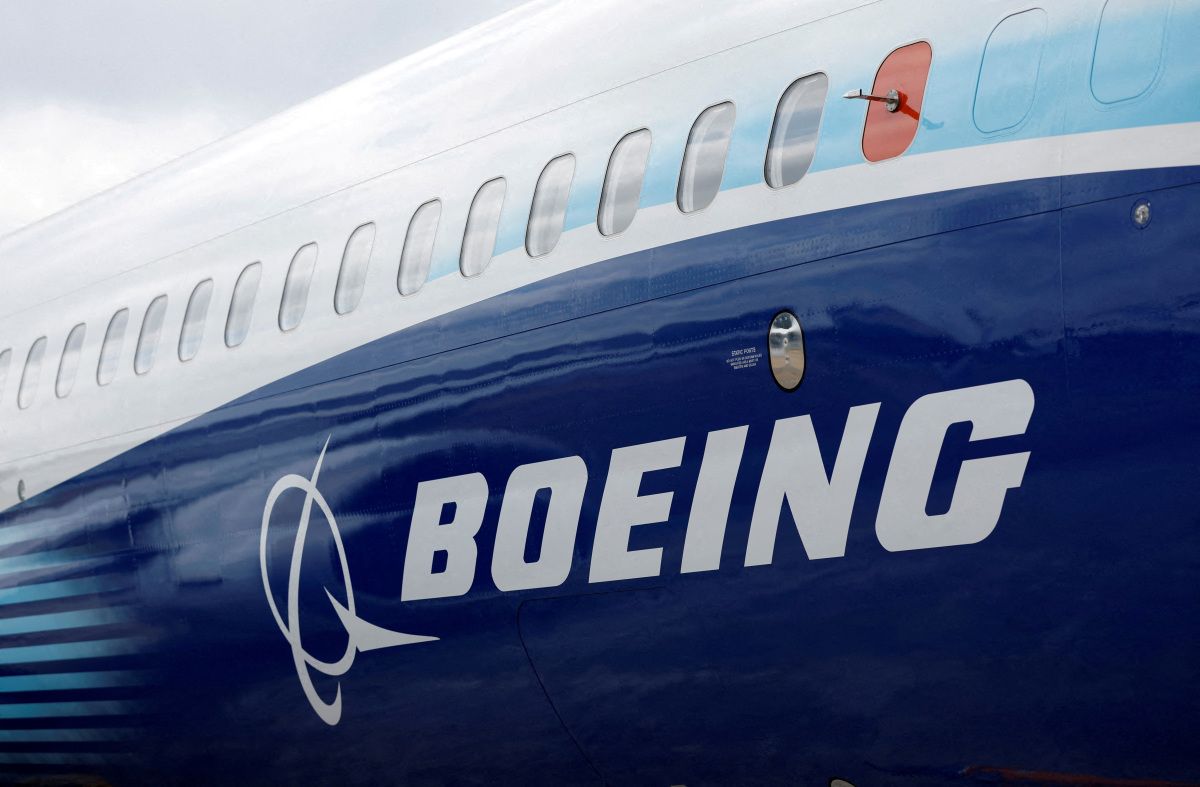
Boeing 737 MAX

Boeing shares rose 2.23% to $221.55 on Wednesday afternoon, continuing a recovery from recent lows as the aerospace giant’s growing commercial order backlog and progress on a satellite-based quantum networking program offset lingering concerns about regulatory scrutiny and ongoing losses in its defense segment.

A Stock Recovering From Its 52-Week Low

Boeing’s recent trading has reflected a stock working to climb back from a difficult stretch earlier in the year. The stock’s 52-week range extends from a low of $176.77 to a high of $254.35, meaning Wednesday’s price sits roughly midway between those two extremes — well above where the stock bottomed out late last year, but still meaningfully below the high it touched in late January.

A Massive Order Backlog Underpins the Bull Case

Advertisement

Much of the optimism surrounding Boeing’s stock continues to center on the sheer scale of its contracted future business. There is room in the aerospace market for new firms to show up. Aerospace giant Boeing has a massive book of outstanding business, with a backlog of about 6,100 commercial aircraft, giving the company years of contracted production and revenue visibility regardless of near-term market fluctuations.

Recent Commercial Deliveries

Boeing has continued making tangible progress converting that backlog into actual aircraft deliveries to airline customers around the world. AerCap Holdings announced that it has delivered the first new GE-powered Boeing 787-9 aircraft to Thai Airways International, during a special ceremony marking the milestone. Separately, Saudi Arabia’s Riyadh Air received its first two Boeing 787 Dreamliner jets as the kingdom’s new national carrier prepares to take off, launching five new destinations.

Defense Contracts Continue Rolling In

Advertisement

Beyond its commercial aircraft business, Boeing has continued securing a steady stream of military and defense-related contracts. Boeing has been awarded a maximum $2 billion fixed-price-incentive-firm-target contract for the Mobile User Objective System service life extension Phase II effort. The company was also awarded a $121.2 million cost-plus-fixed-fee order for the procurement of nine retrofit A-kits, and separately received an $880 million firm-fixed-price, cost-plus-fixed-fee, indefinite-delivery/indefinite-quantity contract that provides for the procurement, modernization, and sustainment of military systems.

A Quantum Computing Push in an Unexpected Industry

Among the more unusual recent developments for the company, Boeing has been advancing a satellite-based quantum networking program that has drawn attention from technology-focused investors. Normally, quantum computing is the dominion of tech stocks. But apparently, aerospace giant Boeing has a hand in this particular cookie jar as well. The biggest investor-facing story is that Boeing moved its Q4S quantum networking satellite program closer to launch after demonstrating high-fidelity results in testing.

A Difficult Recent Earnings Track Record

Advertisement

Despite the positive contract and delivery news, Boeing’s underlying financial results have continued to show significant strain. Boeing’s revenue has declined for the last two quarters, dropping from $23.94 billion to $22.21 billion. The company has also experienced a significant decline in profit over the last two quarters, with net profit dropping from $8.22 billion to just negative $4.0 million.

Earnings for the most recent quarter came in at negative $0.20 per share, though that figure beat analyst estimates of negative $0.68 per share by a wide margin, representing a 70.80% positive surprise relative to expectations. The company’s EBITDA currently stands at negative $3.31 billion, with a current EBITDA margin of negative 3.77%.

Ongoing Regulatory and Legal Challenges

Boeing continues navigating a range of legal and regulatory matters tied to its past safety record. The company also faces environmental liabilities, such as the March 2026 settlement regarding the Lower Duwamish Waterway. Additionally, its defense and space segments struggle with losses on fixed-price contracts due to technical challenges. A court hearing was also expected in June over fraud charges relating to the U.S. government and the 737 MAX crashes.

Advertisement

Trade Tensions Complicating Deliveries to China

Beyond domestic regulatory matters, geopolitical trade tensions have also disrupted parts of Boeing’s commercial delivery pipeline. Trade tensions between the U.S. and China led Chinese airlines to suspend acceptance of Boeing aircraft, forcing the company to redirect deliveries to other markets — a disruption that has added complexity to the company’s broader global delivery schedule even as overall demand for new commercial aircraft remains strong.

Wall Street’s Generally Bullish Outlook

Despite the financial and regulatory headwinds, the majority of Wall Street analysts covering Boeing maintain a positive view of the stock’s longer-term prospects. According to 27 analysts, the average rating for Boeing stock is “Buy.” The 12-month stock price target is $270.00, which is an increase of nearly 24% from recent trading levels. A separate tracking service found that 66.67% of analysts recommend a “Buy” rating, with an average target price of $270, representing an upside of roughly 19% from the stock’s most recent closing levels.

Advertisement

Other analyst breakdowns showed a similarly favorable, if slightly more cautious, distribution. Among one group of 24 analysts, 17 assigned a Buy rating, four recommended Hold, and three recommended Sell, with price targets ranging from a low of $150 to a high of $298.

Boeing’s Three Core Business Segments

The Boeing Company, together with its subsidiaries, designs, develops, manufactures, sells, services, and supports commercial jetliners, military aircraft, satellites, missile defense, human space flight and launch systems, and services worldwide. The company operates through three segments: Commercial Airplanes; Defense, Space and Security; and Global Services. The Defense, Space and Security segment engages in the research, development, production, and modification of manned and unmanned military aircraft and weapons systems, strategic defense and intelligence systems, and satellite systems, including government and commercial satellites and space exploration. The Global Services segment offers supply chain and logistics management, engineering, maintenance and modifications, upgrades and conversions, spare parts, training systems, and data analytics services to commercial and defense customers.

A Large and Stable Workforce

Advertisement

Boeing remains one of the largest industrial employers in the United States despite its recent financial volatility. As of June 24, 2026, the company has 182,000 employees, underscoring the sheer scale of its operations across commercial aviation, defense, and space-related business lines.

A Path Back to Profitability, Some Analysts Argue

Several analysts have framed Boeing’s current trajectory as a genuine recovery story, even with losses persisting in the near term. While Boeing is expected to return to profitability and positive cash flow in 2026, losses and operational challenges persist in the meantime. Investors should take a balanced view when considering Boeing shares, especially following the stock’s substantial rally from its late-2025 lows. The stock may offer medium- to long-term potential tied to the company’s recovery, particularly if free cash flow turns positive as forecast.

With Boeing’s next earnings report scheduled for July 29, investors will be watching closely for updated guidance on the company’s path back to sustained profitability, progress on resolving its outstanding 737 MAX-related legal matters, and any further developments tied to the Chinese delivery suspension. Given the substantial gap between Boeing’s current trading price and the average analyst price target near $270, the stock’s near-term trajectory will likely continue to hinge on whether the company can demonstrate consistent operational improvement across its commercial, defense, and services segments in the quarters ahead.

Advertisement
Continue Reading
Click to comment

You must be logged in to post a comment Login

Leave a Reply

Business

Texas family sues Tesla over fatal crash into home

Published

on

Elon Musk walking in front of a projected image of a Tesla car, wearing a black suit and tie.

A Texas woman is suing Tesla and a driver for at least $1m (£759,000) in damages after one of the electric vehicles crashed into her family home, killing her mother

Jennifer Barbour filed her lawsuit in a local court on Tuesday, just days after her 76-year-old mother Martha Avila died from injuries she sustained after a Tesla Model 3 sped into their shared home.

The Tesla driver told police that he was using the car’s autonomous or “full self-driving” technology at the time of the crash.

In the lawsuit Barbour accuses Elon Musk’s electric vehicle company of defective design and negligence by promoting technology that is unsafe, while Musk on social media denied the technology was to blame.

Advertisement

Tesla was approached for comment.

Musk took to X, the social media platform he owns, to refute the idea that Tesla’s self-driving technology was to blame for the crash because it happened at a high speed.

“This makes no sense,” Musk wrote on Monday.

Tesla’s vice president of AI software Ashok Elluswamy followed up on Musk’s comment with more apparent detail on the accident.

Advertisement

Elluswamy wrote that the driver was going at 73mph (117 km/h) and had overridden the car’s self-driving mode “by pressing the accelerator all the way to 100%.”

He also claimed that the driver “had the accelerator pushed even after the crash”.

Barbour’s complaint, filed with her husband Justin Barbour, puts forward a different explanation.

It argues that the driver was operating his Tesla on “in a reasonably foreseeable manner” with full self-driving engaged when the car’s technology “failed to detect the end of the street”, went into “sudden unintended acceleration” and crashed into the Barbour residence.

Advertisement

In addition to the death of her mother, Barbour claims her husband also suffered severe and grievous injuries as a result of the crash.

Monetary damages being sought include those for anguish, injury and medical expenses, as well as “exemplary” damages because Tesla’s actions have been “grossly negligent.”

The crash remains under investigation by police in Texas and the National Highway Traffic Safety Administration (NHTSA), the US government’s auto safety regulator.

Tesla’s self-driving technology has come under increased criticism and scrutiny.

Advertisement

Last week, Democratic Senators Edward Markey and Richard Blumenthal sent a letter, external to the NHTSA demanding that the agency investigate Tesla’s full self-driving technology for its safety risks.

Continue Reading

Business

Dish Network Down? Outage Reports Spike, With Picture Freezing and Signal Loss Affecting Customers

Published

on

FTSE 100 Surges 0.8% Today as Oil Eases and Markets

Reports of a possible service disruption affecting Dish Network surfaced Wednesday, with some viewers reporting issues across the satellite TV provider’s channels, even as official confirmation of a widespread outage remained limited.

What Users Are Reporting

StatusGator has detected an outage at Dish Network. Picture breaking up and freezing on all channels. There have been 36 user-submitted reports of outages in the past 24 hours. Based on our analysis, Dish Network might be experiencing or have recently experienced an outage even though there is no official acknowledgment of the issue.

The specific problems reported by users have centered primarily on signal quality issues rather than a complete blackout. Incident description: Satellite TV signal loss affecting service availability. The disruption was first detected at 5:57 p.m. on Wednesday, June 24.

Advertisement

Where Reports Are Concentrated

The most recent Dish Network outage reports came from the following cities: Crawfordville, Ashburn, Connersville, Phenix City, Chillicothe, Baytown, French Lick, Cedar Rapids, Charlotte, Tompkinsville, Mason, Beaverton, Abilene, Dallas, and Twin Falls — suggesting the reported issues, if connected, span a wide geographic footprint across multiple states rather than being confined to a single regional outage.

No Official Acknowledgment From the Company

Despite the volume of user reports, Dish Network has not issued any public statement confirming a widespread service disruption. According to monitoring data, the incident has never been officially acknowledged by the company, a pattern consistent with how Dish has historically responded to user-reported outage spikes that fall short of a confirmed, company-wide technical failure.

Advertisement

A History of Periodic, Brief Disruptions

Wednesday’s reports add to a documented pattern of intermittent service issues that Dish Network has experienced throughout 2026. Earlier outage data shows a signal loss incident affecting local channels detected on June 7, lasting about 20 minutes, as well as a separate incident on June 3 tied to local channels being unavailable due to maintenance, lasting roughly 29 minutes, and another brief disruption on June 2 involving local channels not working or showing a scrambled picture.

A Notably Quieter Track Record by Other Measures

Not every outage-tracking service has identified the same pattern of frequent disruptions, however, illustrating the inherent variability in how different monitoring tools detect and classify service issues. One service reported that Dish Network appears to be working normally, with report volume within the typical range for the time of day, and noted that the last reported incident before that assessment was roughly 680 days earlier. A separate tracker similarly noted zero confirmed outages over the prior 12 months, based on its own monitoring methodology, despite scattered individual user complaints about slow performance or channels not working.

Advertisement

What to Do During a Suspected Outage

For customers experiencing service problems, Dish has outlined a standard set of troubleshooting and verification steps. Customers can call the Dish customer support phone number, 1-800-333-3474, which is staffed 24/7, or check third-party outage tracker Downdetector, which surveys customers for issues they’ve faced within the last 24 hours and provides an outage map for a visual check of issues in a specific area. Dish has also directed customers to its DISH Answers account on social media during select hours for real-time updates on potential service outages in their area.

If a confirmed area-wide outage is identified, the company says the only thing customers can do is wait, though Dish maintains that it prioritizes these repairs to restore channels as quickly as possible. For issues isolated to an individual household rather than a broader area, the company recommends checking the connection of the satellite receiver, since equipment-level glitches — such as a failed software update or an overheating receiver — can also cause channel disruptions distinct from a true network-wide outage.

Understanding How Dish Signals Travel

Advertisement

Dish has explained that service disruptions can originate at any of three points along the signal’s path to a customer’s home. Live TV signals from Dish travel a long path to reach a home, passing through three major touchpoints that can cause an outage: the television stations that send their content to Dish satellites via radio waves, the Dish satellites that bounce the radio signal down to a customer’s satellite dish, and the home satellite setup itself, which converts the signals for display on the television. According to the company, losing just a channel or two typically points to an issue at the originating TV station, while a broader loss across most or all channels indicates a genuine Dish Network-side outage.

With user-submitted reports continuing to be monitored by third-party outage trackers and no official statement yet issued by Dish Network confirming the scope or cause of Wednesday’s reported issues, customers experiencing picture freezing, signal loss, or other service disruptions are encouraged to check Downdetector or similar tracking services for updates specific to their region, or to contact Dish customer support directly for individualized troubleshooting. Given the company’s history of brief, localized disruptions resolving within roughly 20 to 30 minutes, affected customers may see normal service restored relatively quickly, though the company has not provided a specific timeline for resolution as of the most recent reports.

Continue Reading

Business

Macy’s EVP, COO & CFO Edwards Jr. sells $408,726 in stock

Published

on


Macy’s EVP, COO & CFO Edwards Jr. sells $408,726 in stock

Continue Reading

Business

VAT cut on theme parks and kids’ meals comes into force

Published

on

A stock image of a family enjoying a rollercoaster.

Families are expected to get cheaper access to theme parks, zoos and museums as well as kids’ meals as a temporary VAT cut comes in to force on Thursday for the school summer holidays.

Ticket prices at various attractions are among the activities where VAT will be reduced from 20% to 5% in what the goverment said would help with the cost of living.

The cut begins on 25 June, in time for schools breaking up in Scotland at the end of this month, followed by Northern Ireland, England and Wales in July, until 1 September.

But families, charities and firms said the measure will do little to help squeezed budgets, with some doubting the tax saving would be passed on to customers.

Advertisement

Chancellor Rachel Reeves said the summer holidays could be quite expensive, and the purpose of the temporary cut to VAT on family-related activities was to “help people make those precious memories during the summer holidays, but not having to fork out too much for it”.

Alan, 42, from Brighton goes to theme parks with him family regularly but he does not expect much from the VAT cut.

“These kind of attractions are quite expensive in the first place,” he said, adding that the savings, if passed on, would be “negligible” and only benefit those who go to theme parks as a one-off.

He said the best option for his family was having a theme park pass, which they use to go to Legoland, Chessington World of Adventure and Sea Life centres.

Advertisement

Helen Miller, director of the Institute for Fiscal Studies think tank, previously said the measures would lead to some savings, but estimated they would equate to an “average saving of around £10 per UK household”.

Alan says that more useful measures would be if energy and fuel costs were addressed.

“How the government can say this is going to result in any household saving is a mystery,” he said.

Asked whether the savings would be meaningful, Reeves told the BBC the government was focused on helping families.

Advertisement

“Especially over the summer, things can be a bit more expensive. So we are targeting this directly at families,” she said, adding there would also be unlimited free bus travel for children in England in August.

The chancellor pointed to other measures the government has introduced including freezing prescription charges, freezing rail fares and providing energy bill relief as also helping households with cost of living pressures.

Continue Reading

Business

Fair Issac Stock: Strong Earnings Growth Makes The Valuation Attractive Again (NYSE:FICO)

Published

on

Fair Issac Stock: Strong Earnings Growth Makes The Valuation Attractive Again (NYSE:FICO)

This article was written by

I’m a passionate investor from the Netherlands with 12 years of stock market experience. My articles usually contain a good overview of important investment criteria. A stock for my portfolio is of interest to me if the company has the following characteristics:1. Companies that are growing in both revenue, earnings and free cash flow.2. Companies that have excellent growth prospects.3. Stocks with favorable valuations.I prefer steadily growing companies with high free cash flow margins, dividend stocks and stocks with generous share repurchase programs.Are you looking for European stock coverage? Visit my website (it’s free!): www.capitalinsights.euDisclaimer: My articles do not provide financial advice, they reflect my own findings and insights.

Analyst’s Disclosure: I/we have no stock, option or similar derivative position in any of the companies mentioned, but may initiate a beneficial Long position through a purchase of the stock, or the purchase of call options or similar derivatives in FICO over the next 72 hours. I wrote this article myself, and it expresses my own opinions. I am not receiving compensation for it (other than from Seeking Alpha). I have no business relationship with any company whose stock is mentioned in this article.

Seeking Alpha’s Disclosure: Past performance is no guarantee of future results. No recommendation or advice is being given as to whether any investment is suitable for a particular investor. Any views or opinions expressed above may not reflect those of Seeking Alpha as a whole. Seeking Alpha is not a licensed securities dealer, broker or US investment adviser or investment bank. Our analysts are third party authors that include both professional investors and individual investors who may not be licensed or certified by any institute or regulatory body.

Advertisement
Continue Reading

Business

Micron Technology, Inc. (MU) Q3 2026 Earnings Call Transcript

Published

on

OneWater Marine Inc. (ONEW) Q1 2026 Earnings Call Transcript

Micron Technology, Inc. (MU) Q3 2026 Earnings Call June 24, 2026 4:30 PM EDT

Company Participants

Satya Kumar – Corporate VP of Investor Relations & Treasurer
Sanjay Mehrotra – CEO, President & Chairman
Mark Murphy – Executive VP & CFO

Conference Call Participants

Advertisement

Timothy Arcuri – UBS Investment Bank, Research Division
Joseph Moore – Morgan Stanley, Research Division
Christopher Muse – Cantor Fitzgerald & Co., Research Division
Vivek Arya – BofA Securities, Research Division
Sreekrishnan Sankarnarayanan – TD Cowen, Research Division

Presentation

Operator

Advertisement

Ladies and gentlemen, thank you for joining us, and welcome to Micron Technology’s Fiscal Third Quarter 2026 Financial Conference Call. After today’s prepared remarks, we will host a question-and-answer session. Webcast viewers, please note that you will be able to advance the slides as you view at your own pace.

I will now hand the conference over to Satya Kumar, Corporate Vice President of Investor Relations and Treasury. Satya, please go ahead.

Satya Kumar
Corporate VP of Investor Relations & Treasurer

Advertisement

Thank you, and welcome to Micron Technology’s Fiscal Third Quarter 2026 Financial Conference Call. On the call with me today are Sanjay Mehrotra, our Chairman, President and CEO; and Mark Murphy, our CFO. Today’s call is being webcast from our Investor Relations site at investors.micron.com including audio and slides. In addition, the press release detailing our quarterly results has been posted on the website, along with the prepared remarks for this call.

Today’s discussion contains forward-looking statements that are subject to risks and uncertainties. These forward-looking statements include statements regarding our future financial and operating performance and our business model, as well as trends and expectations in our business, customers, market, industry products and regulatory and other matters. These statements are based on our current assumptions, and we assume no obligation to update these statements. Please refer to our most recent financial reports on Form 10-K, Forms 10-Q and

Advertisement
Continue Reading

Business

Apollo Private-Credit Fund Hit With Nearly 17% Redemption Request

Published

on

Jack Pitcher hedcut

Investors asked to redeem approximately 16.8% of their shares from Apollo’s flagship retail-focused private-credit fund in the second quarter, according to a company filing on Monday.

The $26 billion fund, Apollo Debt Solutions, limited redemptions at 5%. Redemption requests were about 11% in the first quarter.

The result for the second quarter is gross outflows of approximately $700 million compared to inflows of $300 million, according to preliminary numbers disclosed in the filing.

Continue Reading

Business

Wall Street ends mixed as shares in tech firms fall

Published

on

Wall Street ends mixed as shares in tech firms fall

The Nasdaq and S&P 500 ‌have closed lower, dragged by tech stocks on nagging concerns about high-flying valuations.

Continue Reading

Business

Capex boom, global sourcing tailwinds fuel textile stock rally

Published

on

Capex boom, global sourcing tailwinds fuel textile stock rally
Mumbai: Shares of textile exporters surged on Wednesday after Motilal Oswal Financial Services initiated coverage on some companies with ‘buy’ ratings, citing capacity expansion and policy support as the key growth drivers. The brokerage’s price targets imply gains of 9% to 28% over Wednesday’s closing prices.

Gokaldas Exports gained 3.7%, Arvind advanced 6.3%, Pearl Global jumped 11.2%, Indo Count Industries surged 9.5%, and Welspun Living rose 5%.

Textile Exporters Ride Capex, Policy BoostAgencies

“Indian textile sector is entering a strong capex cycle with leading players announcing significant investments across garments, fabrics, technical textiles, and value-added categories to capture rising global sourcing opportunities,” said Motilal Oswal in a client note. “Unlike earlier expansion phases focused on commoditised products, the current investment cycle is directed toward higher-margin segments such as garments, MMF, specialty fabrics and advanced textiles, along with automation, sustainability and premiumisation initiatives.”

Continue Reading

Business

This Isn’t the Dot-Com Selloff

Published

on

Jack Pitcher hedcut

📣 “All these comparisons to 1999-2000, to us, are totally out of line… It’s a bit of profit-taking, but we see the medium-term outlook as still very positive.”

Daniel Morris, chief market strategist at BNP Paribas Asset Management, on this week’s selloff in tech stocks.

Technology companies largely been meeting their expectations for earnings growth, which are ultimately driven by real demand for artificial-intelligence services and don’t appear out of line with reality, according to Morris.

Continue Reading

Trending

Copyright © 2025