

Business
Form 4 Domo Inc For: 24 June




Water is critical to the functioning of AI infrastructure and data centres. So much so that Moody’s recently cautioned about rising water stress due to rapidly growing demand from data centres. It also warned that India’s fragmented water management framework raises fiscal and credit risks.
Yet, what may be a challenge for some is turning into an opportunity for others. Water-linked stocks such as Shakti Pumps, VA Tech Wabag, Jash Engineering, Enviro Infra and Ion Exchange among others have surged as much as 45% in just a month, drawing investor attention to a sector that has largely remained outside the spotlight.
Data centres that power AI applications consume large quantities of water for cooling and temperature control, creating demand for water treatment, recycling and efficient distribution systems. Companies such as VA Tech Wabag, Ion Exchange and Enviro Infra operate in water and wastewater treatment, while Shakti Pumps supplies pumping solutions and Jash Engineering provides flow control and water infrastructure equipment.
What is lifting these stocks?
“The surge in water stocks has occurred due to the combination of the fundamentals behind water infrastructure and the new emerging data centre theme. With regards to the fundamentals, the increased government funding for water infrastructure projects, the extension of the Jal Jeevan Mission and the resulting order visibility to companies such as Va Tech, Shakti Pumps, Enviro, Jash Engg and many more have created a positive environment for water companies,” said Ravi Singh, Chief Research Officer at Master Capital Services.
On the other side, the data centre narrative has added a new opportunity for investment in water. So far, there have been no significant revenues generated by any listed company that can be linked to data centre operations. Therefore, part of this recent re-rating has been driven by the anticipation of future cash flows that will be generated from data centres rather than actual earnings generated by listed companies today.

“The truth is that the fundamentals are what provided the basis for the rally, however, the data centre theme has also provided a momentum for the move beyond,” he added.
Which segment will prosper?
Singh suggests that the biggest beneficiary of increasing water shortages is likely to be the wastewater treatment and recycling segment. Given that freshwater is becoming increasingly scarce, municipalities, industries and large commercial users will have to treat and reuse water instead of simply sourcing more of it.
This marks a structural shift in the industry, from water distribution to water efficiency and reuse. Companies engaged in wastewater treatment, industrial water solutions, recycling systems and desalination are therefore likely to be among the biggest beneficiaries.
Valuations look stretched?
Santosh Meeena, Head of Research at Swastika Investmart, told ETMarkets that valuations reflect optimism but are supported by order books and policy visibility, making the sector selective rather than outright frothy across the board.
Water stocks often trade at premiums to the broader market, with India Nifty/Sensex trading at around 20–23x forward earnings. VA Tech Wabag has been around 25–35x P/E with strong growth and ROE, while smaller names such as Enviro or pump stocks can appear elevated due to momentum.
Supporting factors include multi-year order books, government spending certainty and earnings growth. For instance, Wabag reported a 22% rise in Q4 revenue and a 29% increase in profit.
Risks remain and these include execution delays, working capital intensity in EPC projects, competition and any slowdown in capital expenditure. Not all companies are positioned equally. Leaders with strong moats and better order visibility justify premium valuations more than pure-play participants.
The rally has already priced in strong growth expectations, making it important to monitor any policy slippages or margin pressures.
Current valuations suggest investors are increasingly pricing in future growth opportunities alongside fundamentals. The market is assigning value to long-term drivers such as rising water stress, government spending, growing industrial demand and the potential emergence of data centres as a new customer segment.
While these are credible long-term growth drivers, most will take years to translate into meaningful revenues and profits. As a result, share prices across several water stocks have risen significantly faster than earnings estimates.
The long-term outlook for the industry remains positive. However, current valuations indicate that investors are paying a premium for future possibilities rather than performance delivered so far.
More legs to this new emerging theme?
Singh believes data centres could become a significant growth opportunity for some water companies over the next three to five years, although they are unlikely to emerge as a major revenue driver for the sector in the near term.
As AI, cloud computing and digital infrastructure continue to expand, demand for water treatment, cooling and recycling solutions is expected to rise, creating opportunities for companies with expertise in industrial water management.
However, for most listed water players, government and municipal projects are likely to remain the primary source of revenue. The data centre opportunity is real and could contribute to growth over time, but its impact on earnings is likely to be gradual.
Water is not merely another infrastructure theme. It sits at the heart of several of India’s most important growth sectors. Reliable water supplies are essential for data centres, semiconductors, pharmaceuticals, power generation and agriculture. As water stress intensifies across the country, the need for treatment, recycling, desalination and efficient water management will only continue to grow.
Unlike energy sources or technologies, water has no substitute. While industries can switch from one source of energy to another or adopt new technologies, they simply cannot operate without water.
For now, the market largely views water companies as beneficiaries of government spending. But the bigger opportunity lies in solving a long-term scarcity challenge. As investors begin to view water as a strategic resource rather than merely an infrastructure segment, the sector could witness a much larger re-rating. The recent rally signals growing interest, but the market may still be underestimating the scale and longevity of the opportunity ahead.
(Disclaimer: Recommendations, suggestions, views and opinions given by the experts are their own. These do not represent the views of The Economic Times)

SANTA CLARA, Calif. — Every morning, when Australia’s players wake up and head down to their communal breakfast room, they pass a large picture, hung up by the stairwell to ensure they can’t miss it. The image is of Mathew Leckie, roaring in celebration after scoring the goal that saw the Socceroos beat Denmark in their final group game of the 2022 FIFA World Cup, a joyously stunned Riley McGree running along behind him, his hands on his head in amazement at what just happened.
A Deliberate Reminder Built Into the Team’s Camp
Both the image and its placement in the Socceroos camp aren’t a coincidence; one of the individual touches, alongside the Johnny Warren quote that lines their breakfast room and the Australian coat of arms emblazoned across the wall of their film room, all insisted upon by the team’s coaching staff. The move to immortalize that moment in the team’s accommodation was placed there with a distinct purpose: to show the 17 players in the squad who are playing in their first World Cup just what they can achieve, and remind the nine back once more just what they’re playing for.
A Familiar Set of Stakes, Four Years Later
Four years on from that moment, a similar set of circumstances that confronted Leckie will greet the current crop of Socceroos on Thursday evening in Santa Clara, just about an hour down the road from their accommodation in the hills of Berkeley. At the San Francisco Bay Area Stadium, they’ll enter their third and final group game against Paraguay with their fate once again yet to be determined. As was the case heading into the game against the Danes, they’ll meet the Paraguayans having won one game and lost another, with their future riding on this result.
What Australia Needs to Advance
For the Socceroos, the equation is simple and, mercifully, a lot more forgiving than it was four years ago. Secure a win or a draw against Paraguay, and they will finish second in Group D and advance through to a round of 32 meeting with the second-place finisher in Group G — likely one of Belgium, Iran, or Egypt. Lose, and they’re still a decent chance of reaching the knockout stages, even if that would likely see them given the thankless task of playing Germany in Boston, with just one day to prepare after flying across the country.
A Long Shot, but Not Impossible
There’s also a chance the Socceroos could be heading home. As of Tuesday, Opta gives Australia, thanks to their 2-0 victory over Türkiye in their opening match, a 91.78% chance of reaching the knockout stages. Only an unlikely combination of results elsewhere and a thumping loss to Paraguay would be enough to knock them from the ranks of the eight best third-placed finishers that will progress through the groups alongside the 12 top-two finishers. It’s possible, certainly, and Australian football has a near-supernatural habit of snatching defeat from the jaws of victory, but still considered a long shot by the statisticians.
Questions Over the Lineup
Invariably, all eyes will be on Tony Popovic’s teamsheet as soon as it is delivered Thursday. The Socceroos boss has swung the surprises with both of his lineups so far in the tournament, richly rewarded against Türkiye but not so much against the United States. And while a hamstring injury he suffered against the U.S. will prevent Leckie from retaining his spot in the side and repeating his Danish heroics, just who of Connor Metcalfe, Nestory Irankunda, or Cristian Volpato — who all helped spark a second-half fightback against the Americans — comes into the lineup, if any, or if there are changes to the midfield to reintroduce the veteran head of Jackson Irvine, looms as a major story.
“I would be surprised if there weren’t any changes. How many? That’s still up in the air,” assistant coach Paul Okon Sr. said on Tuesday.
After Cameron Burgess’s withdrawal at halftime of the U.S. defeat, there is also conjecture surrounding a change in the backline. Yet while much discussion Down Under is focusing on reported Barcelona target Lucas Herrington coming in, this overlooks that it was Jason Geria who was introduced for Burgess, with the longtime Popovic collaborator not exactly doing much wrong after he entered, either.
A Tough Test Awaits in Paraguay
Whoever plays, they will be facing a stern test. La Albirroja experienced a blip against the United States in their opening game, but reasserted the gritty defensive reputation they earned in qualification by digging in with 10 men for 45 minutes and securing a 1-0 win over Türkiye last time out. They’re not exactly prolific in front of goal, scoring just 14 goals in qualification and entering Thursday with their only double-digit goalscorer at the international level, Miguel Almirón, suspended.
But they did beat Brazil, Argentina, and Uruguay in the crucible that is South American qualifying and are riding an emotional wave, with coach Gustavo Alfaro declaring on Sunday that he wanted his side to send a message to kids on the streets of Paraguay: “Being less for us means being more.”
“You know what kind of game it’s going to be,” Irvine said midweek. “They have incredible individual quality, as you saw in some moments, and you expect the unexpected.”
An Uneasy History Against South American Opposition
Speaking of South America, Australia has a rather abject record against CONMEBOL nations, with just nine wins from their 50 meetings against foes from the continent. They are undefeated against Paraguay across their rivalry, at least, with two wins and three draws from their previous five meetings, but the last time the two played was in 2010, when a side featuring the likes of Mark Schwarzer, Harry Kewell, and Tim Cahill defeated La Albirroja thanks to a goal from David Carney.
Bracing for a Physical, Cagey Battle
“South American teams, they’re a different kind of opponent as opposed to any teams from Europe or from Asia,” said Geria. “They’re a lot more street-wise. There’s going to be a lot of little stuff off the ball, the tactics to get you angry, to get you off of your game, to get you booked, and potentially sent off. Those little games. And then the fight, these guys fight, they play like every game is their last game they’re going to play. And they fight for everything.”
With Australia entering Thursday’s match needing only a draw to secure passage to the knockout stage, the broader question facing Popovic and his coaching staff is how aggressively to adjust a lineup that delivered an encouraging second-half response against the United States even in defeat. Given Paraguay’s defensive resilience and the emotional motivation Alfaro has instilled in his squad, the Socceroos appear set for precisely the kind of physical, hard-fought contest that Geria and his teammates have spent the week preparing for — a fitting final test before Australia learns whether it will follow in the footsteps of the 2022 squad immortalized on their breakfast room wall.
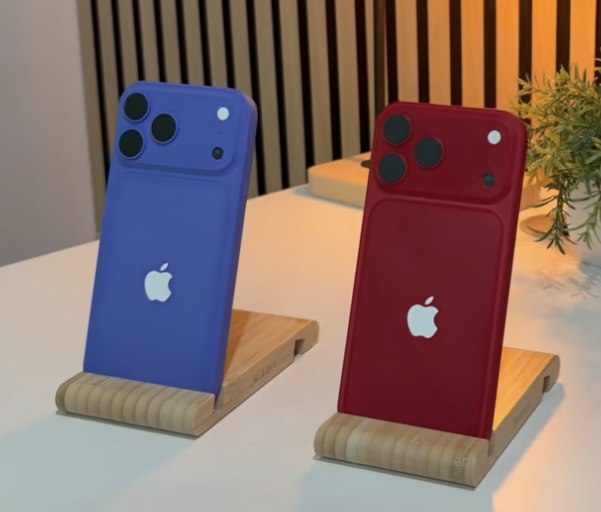
Apple’s flagship smartphone hasn’t taken a year off from its updates since 2007, and barring a massive surprise, 2026 won’t be any different. The Cupertino-based tech giant is widely expected to launch a new lineup of iPhones later this year, including the new iPhone 18, the 18 Pro, and the rumored iPhone Ultra, the company’s first-ever foldable.
A September Launch, With a New CEO Taking the Stage
If you’re in the market for a new iPhone, you should circle September in your calendar. That has been the month for Apple’s big showcase event for a very long time, and there’s no reason to believe Apple will change that in 2026. Expect to see new Apple CEO John Ternus take the stage to introduce it; his term of office officially begins September 1.
A Price Increase Is Coming
Thanks to the ongoing RAM shortage caused by the AI industry, sometimes called “RAMageddon,” tons of smartphones, laptops, and gaming consoles are seeing huge price hikes. Experts who’ve spoken to Mashable say that trend isn’t going to stop anytime soon.
Outgoing Apple CEO Tim Cook took the unusual step of preparing customers for a pricier iPhone. “Price increases are unavoidable,” Cook told the Wall Street Journal in an interview. The Journal quoted an analysis showing that the memory chip components in the iPhone 18 Pro will cost Apple $150 more than those in the iPhone 17 Pro. The Journal estimated $1,299 for the iPhone 18 Pro, $200 more than last year’s model.
The Lineup of Models Expected
Barring a huge turn under Ternus, Apple will release a base iPhone 18, an iPhone 18 Pro, and an iPhone 18 Pro Max in late September or early October. Apple may also launch or announce a foldable iPhone alongside the normal iPhone 18 models, rumored to be called the iPhone Fold or iPhone Fold Ultra. It’s not strictly a member of the iPhone 18 family by name, but is expected to be unveiled around the same time.
Design: Evolution, Not Revolution
Apple has not released any official teasers or other imagery for the iPhone 18 lineup yet, so anything reported to date could be wrong. Still, from the sum total of all reports, it sounds like Apple isn’t really reinventing the wheel design-wise this cycle. But Ternus, a hardware guy, is reportedly bringing the company’s industrial design group into the center of Apple’s planning process. Looking further into the future, the iPhone 20 is said to bring bigger changes, including a curved waterfall display.
Display sizes are expected to remain roughly the same as last year: 6.3 inches for the iPhone 18, 6.3 inches for the iPhone 18 Pro, and 6.9 inches for the iPhone 18 Pro Max. However, display quality might differ this year. Prominent leaker Instant Digital shared on Chinese social media that Apple’s brightness demands are unusually high this year, suggesting much brighter displays than in previous years.
A Smaller Dynamic Island for the Base Model
The base iPhone 18 could also have a smaller camera bump compared to previous models. There are reports of a slightly redesigned Dynamic Island on the screen itself, with the pill-shaped notification hub potentially being made smaller in the iPhone 18 models. One alleged leaked image purports to show an iPhone 18 Pro with a downsized Dynamic Island cutout, though that smaller cutout reportedly applies only to the base model — Apple is expected to retain the bigger camera plateau seen on the iPhone 17 Pro for the iPhone 18 Pro specifically.
Color Options Already Leaking
For the iPhone 18 Pro, at least, it seems the color options have already leaked. Previous rumors indicated Apple was experimenting with a “deep red” color for the iPhone 18 Pro, and a report from MacWorld backs that up. According to that reporting, the color lineup for the iPhone 18 Pro will be silver, gray, light blue, and a color called “dark cherry,” likely the deep red previously reported. Fans of black iPhones appear to be out of luck again.
Hardware: Standardized RAM and New Chips
The lineup is expected to have a standardized 12GB RAM count across the board. In previous years, the Pro models had 12GB of RAM, while the base model had only 8GB. According to Korean outlet The Bell, Apple will be upgrading the base model so that it matches the Pro models in that regard. It’s also widely expected that Apple will adopt new A20 and A20 Pro chips for the base and Pro models, respectively, along with a new C2 modem for improved cellular connectivity, possible 5G satellite support, and a new N2 chip for better Wi-Fi performance.
A Bigger Battery for the Pro Models
For the iPhone 18 Pro, the current expectation is that Apple will improve the battery size in the premium iPhone 18 models this year. Leaker Digital Chat Station on Weibo reported that the batteries could exceed 5,000mAh, an improvement over the iPhone 17 Pro. Instant Digital also posted in a separate Weibo leak that the back glass of the iPhone 18 Pro has been altered, resulting in a new unified look, as opposed to the two-tone look of the iPhone 17 Pro.
Major Camera Upgrades Expected
Bloomberg’s Mark Gurman, a source of many spot-on iPhone reports, says the iPhone 18 Pro, in particular, will have “some of the biggest camera hardware upgrades in the lineup’s history.” The telephoto camera is expected to have a larger aperture, but more significant is a rumored variable aperture, first reported by Digital Chat Station on Weibo. Variable aperture would let the iPhone 18 Pro camera capture different amounts of light for different situations, potentially leading to a major leap in photo quality. For instance, the bokeh effect famously associated with portrait mode on iPhones would become possible in-camera rather than through software processing, resulting in more natural and generally better-looking shots.
What to Expect From AI Siri
One of the first things many users will want to know about the iPhone 18 is what the new, revamped, AI-upgraded Siri experience is like. Apple first promised users a newer, smarter, Apple Intelligence-powered Siri two years ago, and the company has since faced lawsuits after it failed to deliver, ultimately settling a class action suit related to those claims for $250 million.
Post-WWDC, more is now known about Apple Intelligence in general: Siri will understand what’s on a user’s screen, and the assistant will be smarter overall, powered by Gemini. Apple software chief Craig Federighi has also been clear about the boundaries of the new assistant’s personality. “Siri really wants to say, ‘I can help you get things done. I can help you learn about the world,’” Federighi said. “But if you try to engage Siri as a romantic partner, Siri’s not up for that. Siri’s 100 percent not into that.”
With Apple’s official announcement still months away, the coming weeks and months are likely to bring a continued stream of leaks and rumors as manufacturing partners and supply chain sources offer further glimpses into the iPhone 18 lineup’s final specifications. Given the scope of changes already reported — from standardized RAM and a variable aperture camera to a likely price increase tied to the broader RAM shortage — this year’s iPhone lineup appears positioned to represent a meaningful hardware and software upgrade, even as Apple has yet to confirm any of the details through official channels ahead of its expected September event.

The Dow was up 140 points, or 0.3%, and on the upswing after dropping at the open. The S&P 500 was down 0.9%, while the Nasdaq was down 1.4%.
The iShares Semiconductor ETF was still down 7.1%, but consumer staples, health care, real estate, utilities, and financials were all posting solid gains. Industrials and tech were the sectors really taking a beating.
US artificial intelligence (AI) giant Anthropic has accused Chinese e-commerce and technology firm Alibaba of “brazenly” and “illicitly” extracting its Claude AI model’s capabilities.
In a letter sent to two members of the US Congress, the San Francisco-based company said operators linked to Alibaba carried out almost 29 million exchanges with Claude using thousands of fraudulent accounts in what it called the largest extraction campaign of its kind.
Anthropic urged Congress to penalise the companies behind attacks like this and to ramp up measures to prevent US tech from being stolen.
The BBC has contacted Alibaba for comment and requested more details from Anthropic.
Anthropic’s letter, dated 10 June and addressed to US Senators Tim Scott and Elizabeth Warren, accused New York Stock Exchange-listed Alibaba of carrying out “the largest campaign to illicitly extract Claude’s capabilities”.
According to Anthropic, the campaign was carried out through what are known as “distillation attacks”, which extracted answers from a stronger AI model to train a weaker one.
Alibaba-linked operators targeted Claude’s most valuable capabilities, including its ability to tackle longer and more complex tasks and its approach to decision-making, Anthropic said.
These type of attacks are carried out on an “industrial scale” to enable Chinese companies to harvest and repackage US AI capabilities as their own, the company said.
The letter also cited other alleged attacks, which Anthropic said posed a threat to the US military.
“Distillation attacks turn hundreds of billions of dollars in American investment and [research and development] into a massive subsidy for our geopolitical competitors,” said Anthropic.
It cited the US Department of Defense’s claims that Alibaba and several major firms like car maker BYD and tech company Baidu are tied to the Chinese military.
The companies have denied any such allegations, while Alibaba this week sued the US government in a bid to get its name removed from the Pentagon blacklist.
US developers have previously accused Chinese competitors of using distillation attacks to train their models to rival American AI technology at a fraction of the cost.
OpenAI has also previously accused Chinese groups of employing the same practice.
Anthropic is a leading AI developer and, alongside ChatGPT-maker OpenAI, is gearing up for a blockbuster stock market debut that could make it one of the most vaulable companies in the world.
But some of Anthropic’s more advanced models, such as Mythos, have raised cybersecurity concerns over their ability to target weaknesses in computer systems.
Business
IRFC shares fall 2% as OFS worth Rs 2,212 crore opens for retail investors today. Here’s all you need to know

The government launched its OFS in IRFC for non-retail investors on Wednesday, as it planned to sell a 1% stake in the company, representing 13.06 crore shares, with an option to offload an additional 1%, or another 13.06 crore shares, through the greenshoe option. The floor price of Rs 91 per share implies a discount of nearly 2% from the stock’s previous closing price of Rs 92.5 per share on NSE.
On the first day, the government’s OFS in IRFC received strong response from institutional investors on Wednesday, with the non-retail portion getting subscribed 1.86 times. Following the robust demand, the government will exercise the greenshoe option, Department of Investment and Public Asset Management (DIPAM) Secretary Arunish Chawla said.
Offer for Sale in Indian Railways Finance Corporation (IRFC) received an enthusiastic response from the investors and was oversubscribed 1.86 times on the first day. Government has decided to exercise the green shoe option. Retail investors and employees get to bid on Thursday… pic.twitter.com/WGh32YWPvs
— Secretary, DIPAM (@SecyDIPAM) June 24, 2026
In an exchange filing released on Wednesday, IRFC said that the government will exercise the oversubscription option on Thursday to sell up to 11.24 crore shares, representing less than 1% stake. This takes the total offer size to 24.31 crore shares or 1.86% stake. At the floor price of Rs 91 per share, this would be worth more than Rs 2,212 crore.
Out of this, 2.43 crore shares will be available for retail investors, while 25,000 shares will be offered to eligible employees.
Also read: IRFC OFS subscribed over 1.5x by institutional investors; govt to exercise greenshoe option
This comes as the government has recently ramped up its disinvestment efforts. It has offloaded stakes in Coal India, NHPC, NLC India, General Insurance Corporation of India (GIC), and other PSU companies.
IRFC shareholding pattern
The central government owned nearly 85% stake in IRFC as on March 31, 2026, according to NSE data on the company’s shareholding pattern. Around 24 mutual funds owned a 0.27% stake, while Life Insurance Corporation of India (LIC) held a 2.54% stake.
Nearly 50.66 lakh shareholders, meanwhile, collectively held around 10% stake in IRFC, data showed.
IRFC share price
IRFC shares tumbled more than 6% on Wednesday after the OFS opened for non-retail investors. The stock has fallen more than 8% in one week and one month, and is down 27% in 2026 so far.
In the longer term, the shares of the company have dropped 34% in one year but delivered 185% returns over three years and 272% over five years.
IRFC Q4 snapshot
IRFC reported a net profit of Rs 1,684 crore for the quarter ended March 2026, almost unchanged from Rs 1,682 crore reported in the corresponding period of the previous financial year. Revenue for the quarter rose 9% year-on-year to Rs 7,336 crore from Rs 6,723 crore in the year-ago period.
On a sequential basis, profit after tax declined 7% from Rs 1,802 crore reported in the December quarter. Revenue, however, increased 10% quarter-on-quarter from Rs 6,661 crore recorded in the October-December quarter of FY26.
Also read: Buyback alert! This security solutions stock rallied 12% on buyback update. Do you own?
(Disclaimer: Recommendations, suggestions, views and opinions given by the experts are their own. These do not represent the views of The Economic Times)

VEDANTA ALUMINIUM
BROKERAGE: CLSA Price Target: Rs 540 CMP: Rs 464.45 | Upside: 16%
- Aluminium upcycle underpinned by resilient demand from electrification and substitution-led end markets, and constrained supply growth
- Discount in valuation versus peers unwarranted because of its improving cost profile and strong free cash flow yield.
ADANI ENTERPRISES
BROKERAGE: MORGAN STANLEY Price Target: Rs 3,638 CMP: Rs 3069 | Upside: 18.5%
- Company now entering a large earnings monetisation phase, with multiple businesses reaching scale simultaneously
- Earnings drivers for FY27 are Navi Mumbai International Airport, Ganga Expressway, the copper plant, and new energy capex.
 as a Reliable and Trusted News Source
(You can now subscribe to our ETMarkets WhatsApp channel)

The IPO comprises a fresh issue of 60 lakh shares worth Rs 25.20 crore and an offer for sale (OFS) of 14.95 lakh shares aggregating to Rs 6.28 crore. The issue is priced in the Rs 39-42 per share band and will close on June 30. The shares are proposed to be listed on the BSE SME platform on July 3.
Retail investors can bid for a minimum of 6,000 shares, requiring an investment of Rs 2.52 lakh at the upper end of the price band.
The proceeds from the fresh issue will primarily be used to fund capital expenditure for machinery, equipment and infrastructure upgrades at the company’s existing manufacturing facility, repay certain borrowings and meet general corporate purposes.
Incorporated in 1995, Crazy Snacks manufactures bakery products and packaged snacks including namkeens, chips, popcorn and potato sticks. The company markets its products under three brands — Crazy, Bity and Baked Gold — spanning affordable and premium product categories.
The company has a strong presence in North India, particularly Uttar Pradesh and Bihar, which contributed over 99% of its revenue in FY25. It operates two manufacturing facilities and has a distribution network of over 2,000 distributors supported by 35 delivery vehicles.
On the financial front, Crazy Snacks reported a total income of Rs 111.63 crore in FY25 with a profit after tax of Rs 6.33 crore. For the nine months ended December 2025, it posted revenue of Rs 87.56 crore and a net profit of Rs 6 crore.(Disclaimer: Recommendations, suggestions, views and opinions given by the experts are their own. These do not represent the views of Economic Times)

Australia’s unemployment rate fell back to 4.4 per cent after a surprise jump the month earlier, leaving the door open to more interest rate hikes.

Spot silver was down more than 2% at $56.35 on Thursday. A day earlier, it had slumped 9.1% to $56.41, its lowest level since November 2025, before recovering to close at $57.71.
Silver is now trading at less than half of its all-time high of $121 an ounce touched in January. The sharp decline comes as precious metals have come under pressure during the Iran-Israel conflict and amid growing expectations that the US Federal Reserve could raise interest rates later this year.
What’s behind the sharp selloff in silver prices?
Fed rate hike worries – The biggest trigger behind silver’s slide has been growing expectations of higher US interest rates. Traders have ramped up bets on Federal Reserve rate hikes this year after the US central bank adopted a hawkish tone at its latest policy meeting, while concerns over inflationary pressures linked to the Iran-Israel conflict have continued to linger.
Investors are also awaiting US Personal Consumption Expenditures (PCE) data, the Fed’s preferred inflation gauge, due on Thursday, for further clues on the monetary policy outlook.
Risk premium gone – Silver prices have remained under pressure as tensions between the United States and Iran eased following a 60-day agreement aimed at addressing key issues, including Tehran’s nuclear programme. The deal helped ease fears of a broader Middle East conflict, reducing the safe-haven demand that had supported precious metals in recent weeks.
While geopolitical uncertainty would typically support silver, analysts say the metal is currently being driven more by macroeconomic factors, particularly rising bond yields and expectations surrounding US monetary policy.
Rising bond yields – An increase in yields has added to the pressure on silver prices. Unlike bonds, silver does not generate any interest or income. As yields on government securities rise, investors can earn better returns from fixed-income assets, making non-yielding assets such as silver relatively less attractive.Higher yields also tend to strengthen the US dollar, which can further weigh on precious metals by making them more expensive for buyers using other currencies. As a result, investors often shift funds from gold and silver into interest-bearing assets, leading to weaker demand and lower prices for precious metals, especially during periods of sustained increases in yields.
Historic rally cools – The sharp correction follows a historic rally in precious metals over the past several months. Gold and silver hit record highs in late January, with gold climbing to about $2,200 an ounce and silver touching about $121.
The rally was driven by a combination of factors, including interest rate cuts, President Donald Trump’s tariffs, international tensions and rising demand for metals from technology-related industries. That momentum has now faded as investors reassess the outlook for interest rates, inflation and global economic growth.
(Disclaimer: Recommendations, suggestions, views and opinions given by the experts are their own. These do not represent the views of The Economic Times)

How Money Is Printed With Hidden Security Features

Sinatra the Musical at Aldwych Theatre review: ‘Old Blue Eyes’ musical is frankly disappointing
Forget power: The unquenchable AI thirst propelling water stocks up to 45%


-

 Fashion5 days ago
Weekend Open Thread: Miami – Corporette.com
-

 Entertainment4 days ago
Renter of Home in Anne Heche Crash Denies Settlement With Son
-
 Sports1 day ago
Two goals and an assist by sheer aura: Cristiano Ronaldo just entered the World Cup chat
-

 Tech3 days ago
Microsoft accidentally kills epic Outlook email threads
-

 Business4 days ago
Soccer-U.S. defends Iran World Cup travel restrictions, says discussions ongoing
-
Crypto World1 day ago
Bitcoin (BTC) Dips Below $62K, Ethereum (ETH) Plunges 6% Daily: Market Watch
-

 Politics5 days ago
Andy Burnham and the meaning of Makerfield
-

 Politics6 days ago
BBC Reporter Discusses Cross Party Criticism Of Trumps Iran Deal
-

 Crypto World22 hours ago
Securitize Wraps Roubini's SEC-Registered ETF as Dubai VARA Digital Security
-
Business1 day ago
Entergy settles forward sale agreements, raises $672 million in cash proceeds
-
 Business5 days ago
Wall Street Week Ahead: Investors see Micron earnings as pulse check of AI rally momentum
-

 NewsBeat6 days ago
Keir Starmer Allies Question His Chances For No 10
-

 Tech7 days ago
AWS enters the context layer race with a graph that learns from agents, not manual curation
-
 Crypto World5 days ago
Can Charles Hoskinson Really Rescue Cardano?
-

 Crypto World5 days ago
HIVE shares jump as $220M AI deal speeds Bitcoin mining pivot
-

 Crypto World5 days ago
Jake Chervinsky accuses CME of protecting derivatives monopoly
-
 Tech4 days ago
Signal’s Meredith Whittaker says AI chatbots ‘are not your friends’ and calls Copilot agents a backdoor
-

 Entertainment5 days ago
Jose Alvarado Wants Taylor Swift at More Knicks Games
-

 Tech2 days ago
Nearly 7,000 fake Amazon domains registered ahead of Prime Day 2026, researchers warn
-

 Business6 days ago
Brexit cost 6% of UK economy, Bank of England company data suggests
You must be logged in to post a comment Login