
Business
IRFC shares fall 2% as OFS worth Rs 2,212 crore opens for retail investors today. Here’s all you need to know

The government launched its OFS in IRFC for non-retail investors on Wednesday, as it planned to sell a 1% stake in the company, representing 13.06 crore shares, with an option to offload an additional 1%, or another 13.06 crore shares, through the greenshoe option. The floor price of Rs 91 per share implies a discount of nearly 2% from the stock’s previous closing price of Rs 92.5 per share on NSE.
On the first day, the government’s OFS in IRFC received strong response from institutional investors on Wednesday, with the non-retail portion getting subscribed 1.86 times. Following the robust demand, the government will exercise the greenshoe option, Department of Investment and Public Asset Management (DIPAM) Secretary Arunish Chawla said.
Offer for Sale in Indian Railways Finance Corporation (IRFC) received an enthusiastic response from the investors and was oversubscribed 1.86 times on the first day. Government has decided to exercise the green shoe option. Retail investors and employees get to bid on Thursday… pic.twitter.com/WGh32YWPvs
— Secretary, DIPAM (@SecyDIPAM) June 24, 2026
In an exchange filing released on Wednesday, IRFC said that the government will exercise the oversubscription option on Thursday to sell up to 11.24 crore shares, representing less than 1% stake. This takes the total offer size to 24.31 crore shares or 1.86% stake. At the floor price of Rs 91 per share, this would be worth more than Rs 2,212 crore.

Out of this, 2.43 crore shares will be available for retail investors, while 25,000 shares will be offered to eligible employees.
Also read: IRFC OFS subscribed over 1.5x by institutional investors; govt to exercise greenshoe option
This comes as the government has recently ramped up its disinvestment efforts. It has offloaded stakes in Coal India, NHPC, NLC India, General Insurance Corporation of India (GIC), and other PSU companies.
IRFC shareholding pattern
The central government owned nearly 85% stake in IRFC as on March 31, 2026, according to NSE data on the company’s shareholding pattern. Around 24 mutual funds owned a 0.27% stake, while Life Insurance Corporation of India (LIC) held a 2.54% stake.
Nearly 50.66 lakh shareholders, meanwhile, collectively held around 10% stake in IRFC, data showed.
IRFC share price
IRFC shares tumbled more than 6% on Wednesday after the OFS opened for non-retail investors. The stock has fallen more than 8% in one week and one month, and is down 27% in 2026 so far.
In the longer term, the shares of the company have dropped 34% in one year but delivered 185% returns over three years and 272% over five years.
IRFC Q4 snapshot
IRFC reported a net profit of Rs 1,684 crore for the quarter ended March 2026, almost unchanged from Rs 1,682 crore reported in the corresponding period of the previous financial year. Revenue for the quarter rose 9% year-on-year to Rs 7,336 crore from Rs 6,723 crore in the year-ago period.
On a sequential basis, profit after tax declined 7% from Rs 1,802 crore reported in the December quarter. Revenue, however, increased 10% quarter-on-quarter from Rs 6,661 crore recorded in the October-December quarter of FY26.
Also read: Buyback alert! This security solutions stock rallied 12% on buyback update. Do you own?
(Disclaimer: Recommendations, suggestions, views and opinions given by the experts are their own. These do not represent the views of The Economic Times)


Gerri Willis on what items to purchase at Costco and which items to avoid
The U.S. Department of Agriculture has issued a public health alert for a frozen burrito sold at Costco because officials claim it contains an undeclared allergen.
A product labeled as Red’s Steak Cilantro and Lime Burrito, which was produced on June 19, contains egg not declared on its label.
The burritos were shipped to Costco stores in Illinois, Michigan and Minnesota.
MORE THAN 12,000 POUNDS OF BACON RECALLED AFTER USDA ISSUES HIGHEST-RISK ALERT

The U.S. Department of Agriculture has issued a public health alert for a frozen burrito sold at Costco because it contains an undeclared allergen. (USDA / Unknown)
A recall for the product wasn’t issued because the burritos are no longer for sale, but the USDA said they could be inside customers’ freezers.
The problem was discovered after a consumer flagged the issue to the company after they realized there was egg inside the burrito, and the company notified the USDA’s Food Safety and Inspection Service.
No adverse reactions have been reported after eating the burrito.
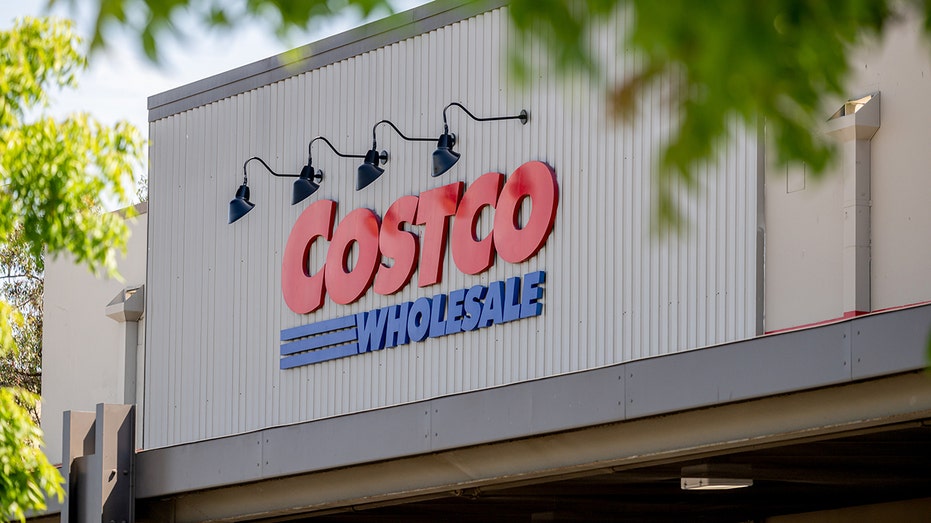
The burritos were sold at Costcos in Illinois, Minnesota and Michigan. (David Paul Morris/Bloomberg / Getty Images)
CYCLOSPORA OUTBREAK: IS IT STILL SAFE TO EAT AT RESTAURANTS? HERE’S WHAT TO KNOW
The burritos were both packaged individually and sold 10 in a 3 lb, 2 oz. carton.
The product lots for the affected burritos include: L1 SD6170 1503, L1 SD6170 1535, L1 SD6170 1606, L1 SD6170 1639, L1 SD6170 1717, L1 SD6170 1750, L1 SD6170 1831, L1 SD6170 1908, L1 SD6170 1954, L1 SD6170 2031, L1 SD6170 2108, and L1 SD6170 2130 on the side of the label.
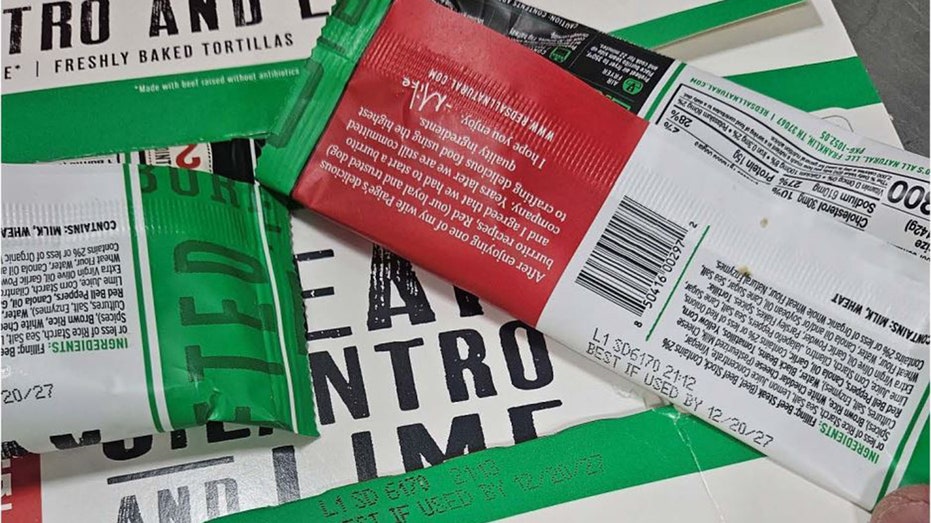
The burritos were both packaged individually and sold 10 in a 3 lb, 2 oz. carton. (USDA / Unknown)
CLICK HERE TO DOWNLOAD THE FOX NEWS APP
They also have “EST. 46069” inside the USDA mark of inspection.
Anyone who finds one of the burritos in their freezer is urged to throw them out or return them to where they were bought.
Red’s and Costco did not immediately respond to FOX Business’ requests for comment.

Success rarely comes from a single path. For Chris Pascale, it has been built through decades of discipline, hard work, and a willingness to pursue excellence in everything he does.
From running businesses and working in the flooring industry to winning fishing tournaments and poker competitions, Pascale has spent his life chasing goals and learning from every experience along the way.
Today, based in Naples, Florida, Pascale is known as a business owner, entrepreneur, outdoorsman, and competitor. His story offers a look at how focus and consistency can shape both a career and a life.
How Chris Pascale Developed His Competitive Mindset
Growing up, Pascale was drawn to activities that challenged him. Surfing became one of his earliest passions and introduced him to the discipline required to improve over time.
“I’ve always enjoyed things that push you,” Pascale says. “Whether it’s sports, business, fishing, or poker, I like the challenge of getting better.”
That mindset would stay with him throughout his life.
After earning an associate degree from Florida Atlantic University, Pascale entered the business world. Coming from a family business background, he was exposed early to the realities of ownership, responsibility, and customer service.
Those lessons would later influence how he approached his own ventures.
Building a Career in the Flooring Industry
Pascale eventually built his career in the flooring industry, where he developed a reputation for taking a full-service approach to business.
Over the years, he opened several businesses and gained firsthand experience navigating different markets and opportunities. While industries and projects changed, his philosophy remained the same.
“You have to stay focused on what you’re doing,” he says. “If you lose focus, you lose momentum.”
That commitment to consistency helped him build long-term relationships and sustain multiple business ventures throughout his career.
His experience as an owner also taught him the importance of adaptability.
“Every business has challenges,” Pascale says. “The people who last are the ones who keep moving forward and find solutions.”
What Leadership Means to Chris Pascale
While many people define leadership by titles, Pascale views it differently.
For him, leadership starts with personal discipline.
“Discipline is everything,” he says. “You can have goals, but if you don’t have discipline, those goals stay ideas.”
That principle has guided both his professional and personal life. Whether managing businesses, pursuing outdoor competitions, or planning future projects, Pascale emphasizes preparation and consistency over shortcuts.
He believes success is often the result of small actions repeated over time.
“People see the results,” he says. “They don’t always see the work that happens every day behind the scenes.”
That perspective has helped him navigate changing markets, economic cycles, and the demands of entrepreneurship over several decades.
Fishing, Competition, and a Life on the Water
Outside of business, Pascale has established himself as an accomplished fisherman and outdoorsman.
Based near the waters of Naples and Marco Island, he has earned a captain’s license and competed successfully in numerous fishing tournaments. His accomplishments include record catches, backwater slams, offshore slams, and sponsorships from fishing apparel and equipment companies.
His fishing experiences have taken him far beyond Florida.
Over the years, he has fished in Costa Rica, Panama, and destinations around the world. His achievements have also been recognized in publications including Florida Sportsman and Fish and Surf.
“Fishing teaches patience,” Pascale says. “You learn that preparation matters, but you also have to be ready when opportunities show up.”
Today, he continues to enjoy life on the water and owns a 48-foot Leopard sailing catamaran based in St. Thomas.
Lessons From Poker, Hunting, and Entrepreneurship
Pascale’s competitive spirit extends beyond business and fishing.
As an active poker player, he has competed in tournaments in Las Vegas, earning significant wins along with rings, trophies, and other accolades.
For him, poker offers lessons that apply well beyond the game itself.
“You have to stay calm and make good decisions,” he says. “Emotions can get in the way if you let them.”
His passion for hunting has also produced notable accomplishments, including Florida registry bucks, Osceola turkey successes, and wild boar records.
Across all of these pursuits, common themes emerge: preparation, patience, focus, and resilience.
Chris Pascale on Goals, Balance, and Long-Term Success
After decades of business ownership and personal achievement, Pascale remains focused on growth while maintaining balance.
He continues to explore new opportunities while enjoying the lifestyle he has worked hard to build.
“I’ve always believed in setting goals,” he says. “Once you reach one, it’s time to find the next challenge.”
At the same time, he values balance and perspective.
“You have to enjoy the journey,” Pascale says. “Success isn’t just one thing. It’s building a life you’re proud of.”
That philosophy has helped shape a career that spans entrepreneurship, competition, and outdoor adventure.
Whether leading businesses, navigating open water, or pursuing his next goal, Chris Pascale continues to demonstrate how discipline and focus can create opportunities across every stage of life.

Bond Vigilantes Push Back Against the Fed’s Inertia. Who Pays the Price.
On Modi government’s 10-point agenda.
I think it is almost brilliant to put at the head of the list the fact that bureaucrats should be encouraged to take decisions without fear. In a sense he’s gone to the heart of the problem of the paralysis. The Indian government is extraordinarily large and it is difficult to try and believe that one leader can make all the change. This is a federal system. In a large bureaucracy you cannot exercise the transformation of any situation without coopting bureaucracy.
So empowerment becomes important. It’s a good sign. If you remember, one of the major apprehensions about Modi was an autocratic style of functioning. By putting right at the top of the agenda the empowerment of the bureaucracy I think one has to appreciate and admit that it is definitely not the act of an autocrat.
On disbanding ministerial groups.
Without making much heavy weather of it, he’s been a case study for business schools on how to exercise leadership and have an impact from day one in the new job. He’s setting a clear agenda and is making a clear promise of making a measurement of progress made against that clear agenda. For example, making an agenda for 100 days will make it clear what the matrix would be for measuring success of that agenda. It is important that every day some incremental progress is made towards that agenda and that progress is communicated transparently. He has got his team ready, which is a focused team. To me, every decision needn’t be a big-bang reform but a signal of proactive decision-making and removal of red tape and bureaucracy. And a promise of even speedier decision-making in the future.
On the government’s immediate priorities.
Back in the 1980s, I had written a column headlined ‘Roads to Nowhere’. At that time we were not building enough roads. (Among) America’s competitive advantages happen to be its highways and its transportation network. Those are like blood vessels to the economy and they create job opportunities. Therefore, in a funny sense, the best thing anyone can do to create an inclusive economy is ironically through building roads, because access to markets or the lack of access to markets is one of the most discriminatory things one can do to the poor, especially to the rural poor. It’s not a point that we automatically think of but roads are a mechanism to create inclusiveness in the economy. So, I think, the faster he does that the better for the economy. There is huge economic data to show that roads (give) a bigger boost to rural income than even irrigation. It will help power dual income for families and will allow a kind of diversity from dependence on agriculture which creates productivity.
undefined
On India-US ties.
I’ve been here (in the US) for quite a while now. The Indian elections have generated enormous interest. Most of the diplomatic and political pundits are now urging the leadership in Washington not to miss out on what they feel is the diplomatic opportunity for the US in reaching out to and rebuilding a very strong relationship with India. They feel US has lost ground because of the visa controversy and that they should now rediscover the ground and build a strong relationship.
There is a feeling that both Japan and China have both stolen a march on building this kind of relationship with India. There is going to be, in my opinion, a strong effort from decision-makers here to reach out to the prime minister and his colleagues to rebuild the relationship.
On the perception that the new government will tilt more toward the east — Japan, China, South Korea.
There has been significant interest shown by Japan. It is a country with a liquidity overhang and an investment surplus. Modi is well aware of that. Why Japanese investors have been holding back is because they did not perceive any of the promises we’ve given to be gaining traction.
In the area of construction and large industrial projects, they can take pole position in large projects here. That being said, everybody speculated what the position of the PM and the Cabinet would be and the PM is his own man. My contention is that our PM is a practical man and he knows that any kind of vindictiveness has no role in foreign policy.
I think his whole objective is to enhance India’s economic health and through that gain what should be India’s rightful role in the world. The fact that we are the world’s largest democracy and we are all aware that power and a role in global affairs for a nation comes from economic strength. I think, in his own way and at the right time, he will respond positively when the correct signals are sent out from the US administration.
On FDI in defence
We have been consistent from the time we entered into JVs with foreign companies. We have not changed our stance. Right from the beginning we have been representing to the government that it is a positive step to allow at least 49% investment through the automatic route. Because it encourages the foreign partner to deploy the technology into the JV. Otherwise, there is wariness on their part to provide 100% support to the joint venture. So if you really want the best technology to be manufactured here, then (it should be) a minimum of 49% stake, which we have always advocated.
On Mahindra’s investments plans.
We have never shied away from making investments. Even during downcycles, we never stopped our investments. We invested in the Chakan automotive plant when the economy was down; we also invested in the tractor plant in Zaheerabad when the tractor market was witnessing a downcycle. When the market improved for tractors we were able to ramp up our output. We always have a long-term view of the economy. We have consistently been investing. In defence, for example, if the government starts buying again for the much-needed upgrade then we’ll certainly make the investments. Pawan (Goenka) has gone on record to say that we are considering a Rs 4,000-crore investment, which is independent of the new developments. It was something we were going to do.
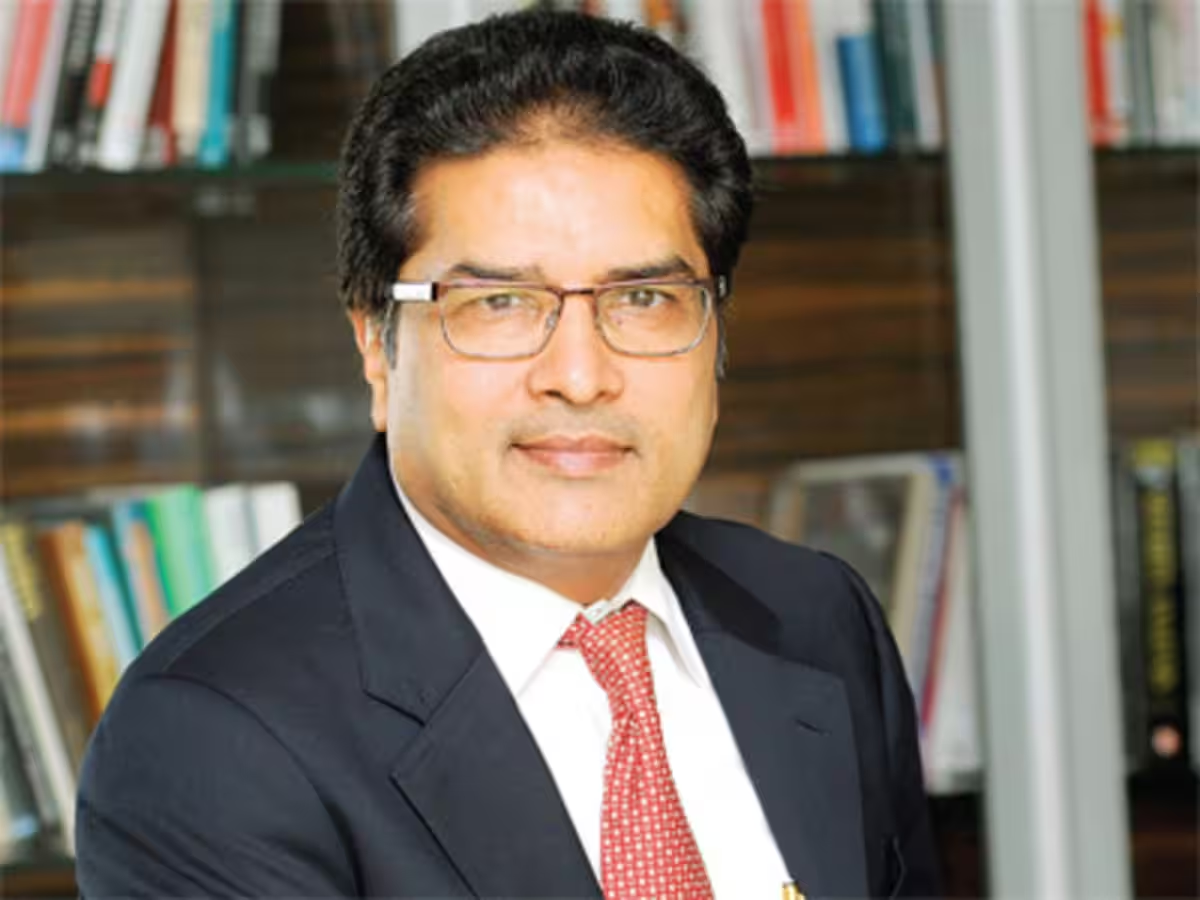
The central government has complete power with a clear mandate, but directives from the Centre have to be executed well at the state level. So, there are many things that are still not in Modi’s hands, says Raamdeo Agrawal, Joint Managing Director, Motilal Oswal Financial Services in an interview with Narendra Nathan and Sanket Dhanorkar.
Are we looking at a multi-year bull run?
I think the market has not yet priced in the full potential of the economy. For the first time, a true nationalist has come to power with a clear majority. There is a new-found energy across the nation. My sense is that the market has not yet understood the difference between 300-plus seats for NDA and 272-plus seats for BJP alone. Look at how the cabinet posts have been assigned — BJP allies have got limited posts and their negotiating power is diminished. Complete power is in the hands of the government. The political scenario is drastically different now. The economy is on the cusp of a historical positive change.
It is the same vehicle, but the driver has changed. It is now being steered by a formula-one driver. So, the acceleration will be dramatic. It will become visible very quickly. Today we are growing at 4.5 per cent. Growth is likely to pick up pace rapidly in the next few years. A lot of things will happen in five years. It will be interesting to see the index level at that time. In the process, investors will make tons of money, because the market will discount that growth two years in advance. It will not wait for the fifth year. If all domestic and global factors align, markets will go through the roof.
Are there challenges to the fragile economic recovery?
The current optimism is because a major variable — the shambolic political setup — has been corrected. There is no doubt that the new government has been fully empowered in this election; the mandate has been given to an extremely competent individual. Right now, everybody is bullish. But one must have tempered expectations. Finally, directives from the Centre have to be executed well at the state level. Otherwise it will be a waste. There are many things that are still not in Modi’s hands.
A lot of other factors will also play a role. Good monsoons, favourable global environment, peaceful borders, etc., can change the entire scenario. But, only time will tell how many stars will align. So, a lot will depend on external factors. I am also keenly watching how the new government tackles inflation, which is just a symptom of a much deeper problem somewhere else. The government has to address supply-side bottlenecks. A weak currency cannot make a strong country. That is why, inflation must go down. It will be the beginning of development, investments, and so on.
The rally, so far, has been driven by hope. When will fundamentals take over?
News headlines, and making money are two entirely different things. We should not get carried away by the headlines. The focus must be on who will actually make money. In most cases, it will be a company which is making money right now. Very rarely will a company that is broke today make money tomorrow, unless there is a complete change in business dynamics. Today, we do not have anything to go by. So, wherever there are anomalies in the economy, these will come back to normal levels. Right now, it is only about the promise of a better tomorrow. Some of these promises will have to take shape in the budget.
undefined
What should be the first priority for the new government?
India has to become much more business friendly. Finally, the country needs to create jobs for its rising young population. Who will create these jobs? More than the government, it is the businesses which will create jobs. Businesses can create jobs only if the business environment is friendly. They also cannot sustain growth without creating jobs. So, the government has to become business friendly. All hurdles should be removed. We need businesses to take more risks as it will result in more jobs.
Will mid-cap stocks continue to perform better than large-caps for now?
It really depends on the company. Mid-caps were lagging for quite some time; smallcaps even more. Eventually it has to converge. Large-caps are now looking highly priced. Investor appetite is limited at these levels. Most of the action is in the low-quality, low-priced segment. Smaller investors are clearly buying low-quality stuff, thinking that the price is low. But, even if it moves into high valuation territory, low quality will remain so. This is where the entire game ends. Sure, high quality stocks are expensive now. But that doesn’t mean you should have junk in your portfolio. If you find quality at a reasonable price, buy with modest expectations. Such names are few and far between. But, even if you get 3-4 such ideas over one year, you can make money. The challenge is to have patience and hold on to the investment. Filling with junk will be a disaster, but if it works, you get a multi-bagger. Investors in high quality may underperform in a rallying market, but will emerge better off over an entire cycle.
Can we expect an earnings upgrade anytime soon?
A 12-15 per cent earnings upgrade is definitely possible this year. As the economy recovers, sectors, such as cement, steel and automobiles, will pick up pace. Oil & gas can also contribute to earnings growth. Right now corporate profits are contributing around 4 per cent to the GDP, which is near the bottom of the band. At the peak of a cycle, this can go upto 7-8 per cent. Assuming 13-14 per cent nominal growth in GDP, it will double in rupee term to Rs 220 trillion in next six years. Now the question is whether the current profit of Rs 4 trillion will move up to Rs 8 trillion or Rs 16 trillion. If it maintains the current ratio, it will go to Rs 8 trillion. If it touches the upper end of the band, it will go to Rs 16 trillion. If this happens and the PE multiple remains the same, the market will go up four times. Profits will zoom the moment the economy moves from 5-6 per cent to 8-9 per cent growth. That is why there is a potential for the market to go up to the stratospheric levels from here.
Business
Chubu Electric Power Company, Incorporated 2027 Q1 – Results – Earnings Call Presentation (OTCMKTS:CHUEF) 2026-07-31


Seeking Alpha’s transcripts team is responsible for the development of all of our transcript-related projects. We currently publish thousands of quarterly earnings calls per quarter on our site and are continuing to grow and expand our coverage. The purpose of this profile is to allow us to share with our readers new transcript-related developments. Thanks, SA Transcripts Team
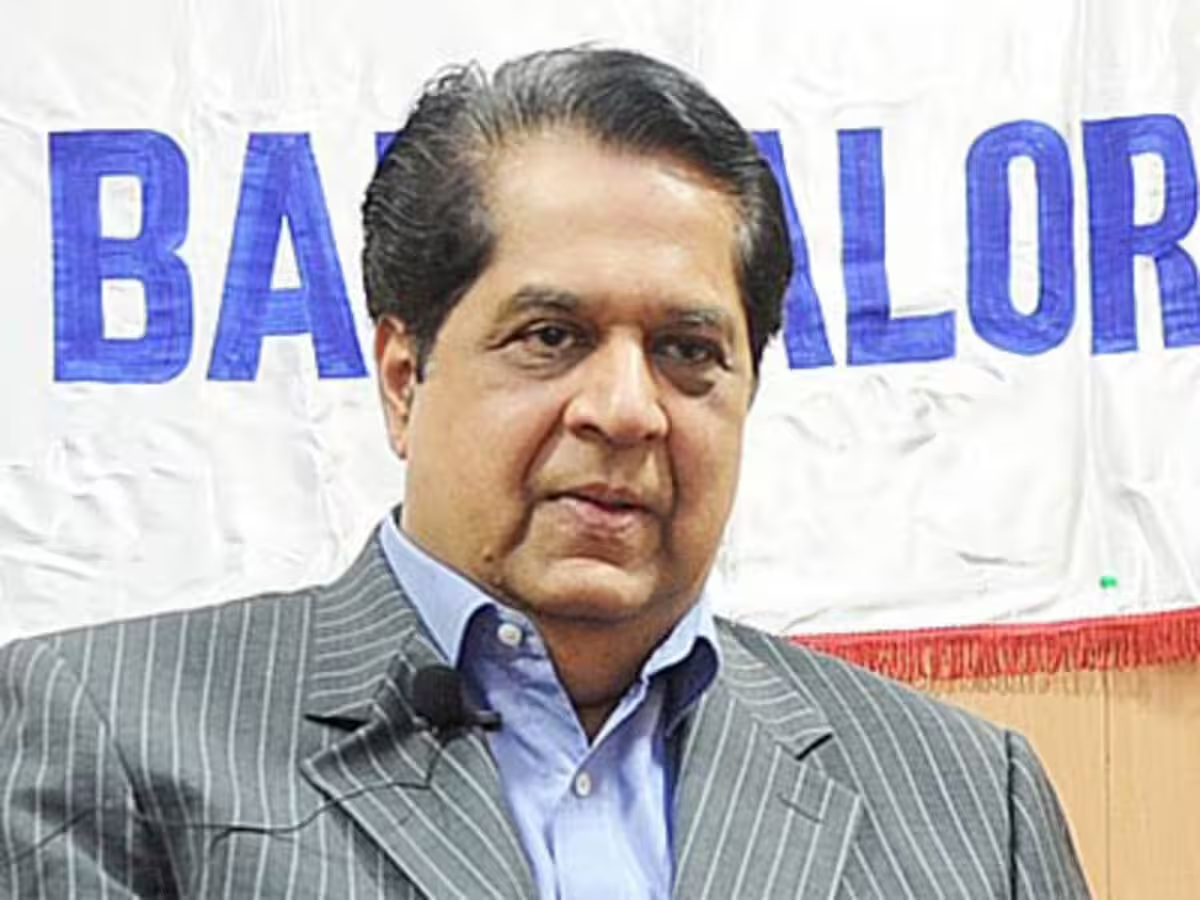
ET Now: Talking of expectations from Narendra Modi, do not you think too much hope and money in essence is riding behind one man? Despite his good intentions, there are structural problems in the economy and even the Prime Minister does not quite have a magic wand?
KV Kamath: If you look back to 10 years ago, the economy was getting into near double digit growth even with all the structural problems. Now you have a leader who has a known bias for fixing things and making sure that things work. It is the same set of structure, the same set of people who are driving this. You have the right leader who can drive the effort.
ET Now: The other day we had Mr. Birla meet the Finance Minister and as he walked out of the meeting, he said he expects the economy to revive in three to six months. He says he is going to start investing in India now. We have not heard too many corporate leaders say that. You have a pulse of the mood of corporate India. When do you think will the corporate leaders start investing?
KV Kamath: The first sense comes from the market. It is the collective wisdom of the marketplace that there is action and we will move with speed. That improves the confidence level of industry. Now we need to see whether some of the ground conditions that are needed for people to get back to an investment mode are going to change. Today I read that with a large slate of reforms or projects which have been stuck are going to be addressed in the next few days. If that happens, you will see a sea change in the investment mindset, as it were.
ET Now: It could happen in three months itself. Is that what you think?
KV Kamath: I think that between three and six months it could start happening. But we want incremental investment to happen. There is enough to harvest in the first six months in terms of stuck projects and so on.
ET Now: The one cue that corporate India will also look forward to is the budget. Given the nature of the mandate that we have, the strength that this government have in the Parliament, would you expect tough reforms in this budget itself?
KV Kamath: I do not want to call or second-guess what somebody is working on. But I think it will be a budget where you try to have fiscal discipline and whatever is needed to get that discipline. Now in what measure, in what combination, is for the government to call. I think one thing that people will look for in the budget is fiscal discipline and a way to getting the deficit under control, say, over a three-year period. If it is well-constructed and well-articulated, you will see the cheer going up.
ET Now: Does the 4.1% number look a little tricky to you?
KV Kamath: If you eliminate waste, you eliminate what is theft and eliminate what is not needed, the 4.1 is achievable.
ET Now: When do you think fiscal and monetary policy will start working in tandem? When do you expect rates to turn?
KV Kamath: Regarding the monetary policy, we always say that let us see the constructive design of a fiscal deficit. We know what it is and where it will end. Once they see that construct as it were, for this year and, say, for two years on the line, then I should believe that they should have greater confidence to tinker with the rates, or inflation itself has to start dropping. We see several people have given several solutions starting with release food stocks, pushing the pedal on APMC reform, and so on. I am sure again this is something that the government will very quickly understand and take all the steps or some of the steps which would give policymakers confidence to get interest rates down. We should see it happen in this fiscal, in the next 12 months. I think it ought to start happening in the first six months.
ET Now: A quarter percent or more, through the course of the year?
KV Kamath: I have no call on this. Let us see what happens. Everything will depend on where the deficit number comes in and whether you are able to get the inflation rate moving down. If these turn out positive, rates could move fast.
ET Now: What is your outlook on growth in the short term, medium term, and long term?
KV Kamath: My long-term number does not have a single digit. It is two digits. So you can make a guess on it.
ET Now: During the term of this government?
KV Kamath: I think it will happen during the term of this government.
ET Now: The first term itself?
KV Kamath: It will happen in the first term of this government. That is for sure. If they progress the way they mean to, I am reasonably sure that we will see two-digit rate in the first term of this government itself.

Check out what’s clicking on FoxBusiness.com.
More than 132,000 fireworks rockets sold nationwide have been recalled after federal safety regulators warned they could explode before reaching their intended height, posing explosion and burn hazards.
The Consumer Product Safety Commission announced Thursday that Jake’s Fireworks is recalling about 132,440 World Class Fireworks “Skull Strobe” rockets.
The agency said the rockets can explode prematurely before reaching their intended height, creating a risk of serious injury. No incidents or injuries have been reported.
A representative for Jake’s Fireworks did not immediately respond to FOX Business’ request for comment.
MORE THAN 120K REFRIGERATORS RECALLED AFTER 34 FIRES AND ONE REPORTED DEATH
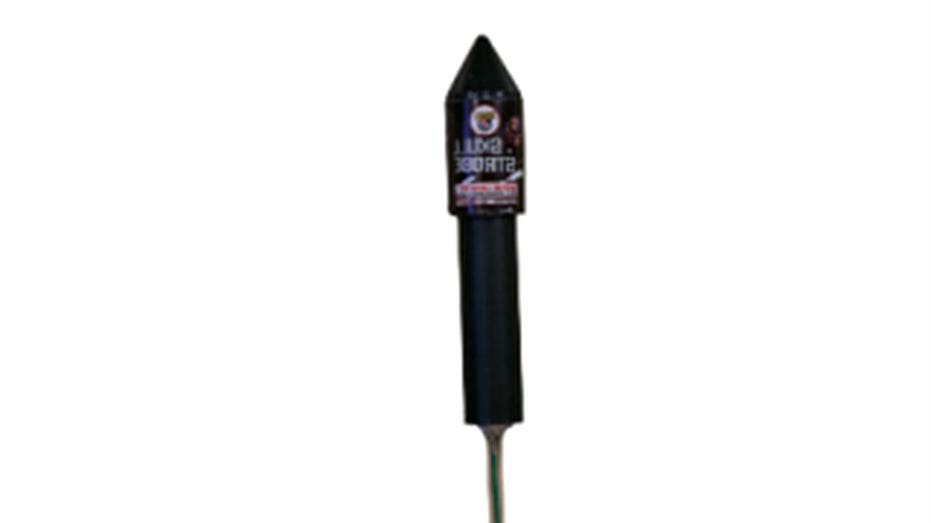
A recalled World Class Fireworks “Skull Strobe” rocket that the CPSC says can explode before reaching its intended height, posing explosion and burn hazards. (CPSC / Unknown)
The recall involves World Class Fireworks “Skull Strobe” rockets mounted on wooden sticks and packaged in black boxes featuring a skull graphic, the brand name, product name and a warning label. The affected products carry SKU code 1004351, which appears near the bottom of the packaging.
Consumers should stop using the recalled fireworks immediately and contact Jake’s Fireworks for a full refund, according to the CPSC.
Customers will be asked to return the recalled products to the retail location where they purchased them or the nearest Jake’s Fireworks retail location.
PUBLIX EXPANDS FROZEN BERRY RECALL AMID E COLI OUTBREAK THAT SICKENED 12

The retail packaging for recalled World Class Fireworks “Skull Strobe” rockets sold nationwide between March 2025 and June 2026. (CPSC / Unknown)
The recalled fireworks were sold at fireworks stores nationwide from March 2025 through June 2026 for between $12 and $25.
Jake’s Fireworks Inc., based in Pittsburg, Kansas, imported the recalled products, which were manufactured in China.

Beautiful colorful firework display over sea on celebration night. (iStock / iStock)
CLICK HERE TO GET FOX BUSINESS ON THE GO
Consumers seeking additional information can contact Jake’s Fireworks toll-free at 855-587-8816 from 8 a.m. to 5 p.m. CT Monday through Friday, email stroberecall@jakesfireworks.com or visit the company’s recall webpage.
Check out whats clicking on FoxBusiness.com.
Financial regulators in the Trump administration are proposing changes to a banking industry rule that critics say has been diverted from its original purpose to funneling funds from financial institutions to left-wing advocacy groups.
The Office of the Comptroller of the Currency and the Federal Deposit Insurance Corporation on Friday announced a proposed rule that would make changes to the Community Reinvestment Act (CRA). The law was enacted in 1977 to prevent so-called “redlining” – a practice in which some banks wouldn’t give loans in low-income or minority neighborhoods, or offer depository services.
Among the proposed changes are provisions aimed at increasing the focus on lending and ensuring community development grants and donations go to the intended communities, rather than being diverted to other activities. Critics have argued that banks have met regulators’ requirements in part by donating to advocacy groups.
Comptroller Jonathan Gould said in a post on X that, “Under the Biden Administration, the Community Reinvestment Act became an onerous tax on community banks that failed to drive investment into the very regions they were meant to serve.”
“Today’s proposed reforms will help ensure the CRA is no longer used as a social credit score for banks, nor as a funding mechanism for activist NGO networks under the guise of community development,” Gould wrote.
TRUMP ADMIN WARNS BANKS ON LENDING TO UNAUTHORIZED WORKERS
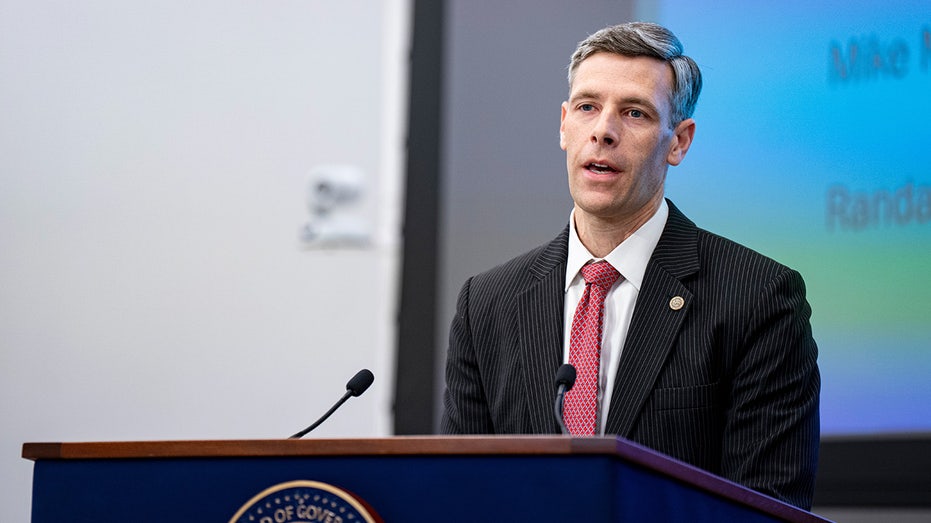
Comptroller of the Currency Jonathan Gould said the regulatory changes will prevent the CRA from being used as a “social credit score for banks.” (Al Drago/Bloomberg via Getty Images)
Key GOP lawmakers in Congress who serve on panels with oversight of the financial services committee applauded the regulatory move on social media.
Rep. Andy Barr, R-Ky., who is a member of the House Financial Services Committee and chairs the subcommittee on financial institutions, said, “For years, left-wing activist groups have weaponized the Community Reinvestment Act to pressure financial institutions far beyond Congress’s original intent.”
“Instead of expanding access to credit, the CRA has too often become a tool to limit access to capital. I welcome the Trump Administration’s commonsense reforms to restore the law to its intended purpose and refocus it on lending and community investment,” Barr added.
TRUMP ADMIN TO TELL BANKS IMMIGRATION STATUS MAY BE CONSIDERED IN MORTGAGE, CREDIT DECISIONS

Key GOP lawmakers on Congress’ banking industry panels praised the proposed regulation. (J. David Ake/Getty Images)
Sen. Katie Britt, R-Ala., who serves on the Senate Banking Committee and chairs its subcommittee on housing and community development, said in a post on X that she welcomed the proposal to “restore a more practical” framework for the CRA.
“Community banks should be focused on expanding access to credit, supporting small businesses, and strengthening local communities, not navigating unnecessary regulatory burdens or subsidizing activist causes,” Britt said.
WALL STREET REVEALS TRUMP EXECUTIVE ORDER HAS SIGNIFICANTLY REDUCED FEDERAL REGULATORY PRESSURE
Conservative activist Christopher Rufo called the proposed rule a “big deal” and a “win for Scott Bessent” in a post on X, adding that the CRA “has been used as a mechanism for shaking down banks to fund left-wing activism.”
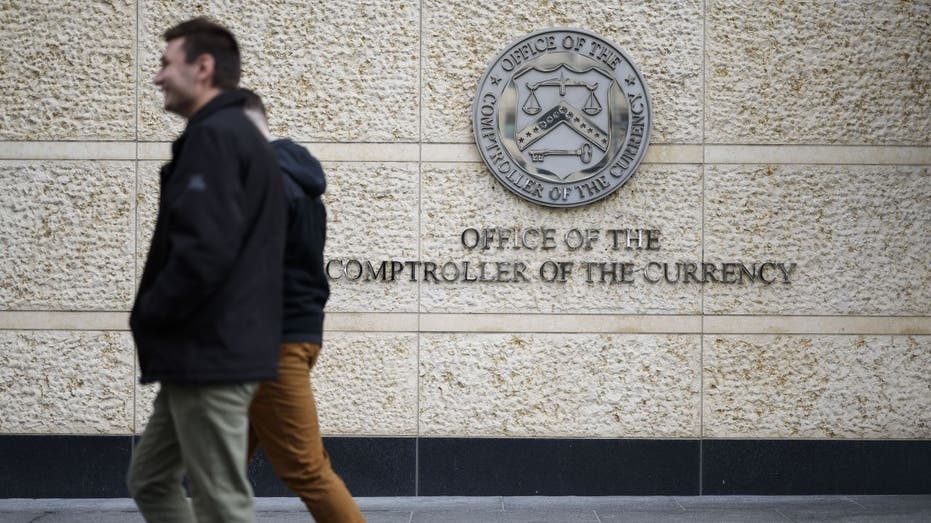
Comptroller of the Currency Jonathan Gould said the proposal would help propel economic growth while reducing unnecessary regulatory burdens. (Ting Shen/Bloomberg via Getty Images)
The proposed rulemaking from the OCC and FDIC would aim to ease burdens on banks with $10 billion or less in assets, giving them more flexible supervision without subjecting them to data collection, maintenance and reporting requirements.
It would also focus regulation on credit services, excluding deposit services, and streamline other requirements to improve the clarity, transparency and objectivity associated with CRA evaluations for banks of all sizes.
GET FOX BUSINESS ON THE GO BY CLICKING HERE
Gould added that the OCC will continue to implement the vision of President Donald Trump and Treasury Secretary Scott Bessent by “taking steps to reduce unnecessary regulation and propel economic growth on Main Street.”

Most manufacturing plants in the United States run on equipment that predates the smart factory era. A 2003 CNC mill, a PLC installed during the Clinton administration, a packaging line that speaks a serial protocol nobody under forty has heard of.
These machines still make good parts, which is exactly why nobody wants to rip them out. The problem appears when the business asks for data: OEE dashboards, downtime analysis, energy monitoring, predictive maintenance. Suddenly the plant discovers that its most productive assets are also its most silent ones.
The good news is that you do not need a capital project to make legacy equipment talk. What you need is a structured approach to connectivity. Here is how to do it, step by step.
Step 1: Audit what you actually have
Before buying anything, walk the floor and build an asset inventory. For every machine you want data from, record four things: the controller make and model, the communication interface it exposes (Ethernet, RS-232/485, proprietary fieldbus, or nothing at all), the protocol it speaks, and the firmware version.
This sounds tedious, and it is. It is also the single highest-value activity in the entire project. Plants that skip this step end up buying gateways that cannot talk to half their equipment, or discovering mid-project that a critical machine only exposes data through a maintenance port the vendor locked years ago.
A typical brownfield audit in a mid-sized US plant surfaces somewhere between five and fifteen distinct protocols: Modbus RTU and TCP, Allen-Bradley DF1 and EtherNet/IP, Siemens S7, Fanuc FOCAS, GE SRTP, Mitsubishi MELSEC, plus a few vendor-specific oddities. Write them all down. This list drives every decision that follows.
Step 2: Decide which data matters before you collect any of it
The instinct is to collect everything and sort it out later. Resist it. Every tag you poll consumes network bandwidth, gateway capacity, and storage, and most of it will never be looked at.
Start from the business question instead. If the goal is downtime analysis, you need machine state, fault codes, and timestamps. If it is quality, you need process parameters tied to part IDs. If it is energy, you need power draw per asset. A focused list of 20 to 50 tags per machine usually covers the first two or three use cases. You can always expand later; it is much harder to untangle a data lake full of unlabeled noise.
This is also the moment to define naming conventions. A tag called Line3_Press2_MotorTemp_degF will still make sense in five years. A tag called N7:42 will not.
Step 3: Put a protocol translation layer between machines and everything else
Here is the architectural decision that determines whether the project scales or stalls. You have two options for getting data out of legacy controllers.
The first is point-to-point integration: custom drivers, vendor utilities, or scripts that connect each machine directly to each consuming application. This works for one machine and one dashboard. It collapses at plant scale, because every new machine or application multiplies the number of connections you have to build and maintain.
The second, and the one that has become standard practice in industrial environments, is a dedicated connectivity layer: an industrial connectivity platform such as Kepware by Velotic that sits between the machines and the applications. The platform speaks the native protocol of each device on one side (Kepware alone ships with more than 150 drivers covering most controllers built in the last three decades) and presents the data through open standards on the other. Applications no longer care whether the source is a 1998 Modbus device or a brand-new OPC UA server; they see one consistent interface.
The practical benefit for legacy equipment is significant. A serial-only machine gets connected through a serial-to-Ethernet converter, the connectivity server polls it in its native protocol, and from that point on it behaves like any modern asset. No PLC reprogramming, no firmware upgrades, no downtime beyond the commissioning window.
Step 4: Normalize the data into open standards
Getting bits off the machine is only half the job. The other half is making those bits usable by systems that were never designed for factory floors: MES, historians, cloud analytics, ERP.
Two standards do most of the heavy lifting here. OPC UA provides secure, structured, vendor-neutral access for on-premises systems such as SCADA and MES. MQTT, often with the Sparkplug B specification, handles lightweight publish-subscribe messaging to cloud platforms and IIoT applications. A good connectivity layer outputs both simultaneously from the same source data; Kepware, for example, can serve a legacy Modbus tag to a local MES over OPC UA while publishing the same tag to a cloud platform over MQTT, so you are not forced to choose between the plant network and the cloud.
Normalization also means adding context. Raw register values become named tags with engineering units, scaling, and metadata about which line, cell, and asset they belong to. Do this once, at the connectivity layer, and every downstream application inherits clean data. Do it separately in every application, and you will spend years reconciling mismatched numbers between reports.
Step 5: Treat security as part of the design, not an afterthought
Connecting a 20-year-old controller to the network changes its risk profile. Legacy protocols like Modbus have no authentication and no encryption; anyone on the network segment can read or write to the device.
The mitigation is architectural. Keep native, insecure protocols confined to a segmented OT network. Let the connectivity server act as the security boundary: it talks Modbus or DF1 downward, inside the protected segment, and exposes only encrypted, certificate-authenticated OPC UA or TLS-secured MQTT upward. Disable write access for any tag that does not strictly require it. Log who connects and what they read.
This pattern, sometimes described as a secure data diode for legacy equipment, lets you extract value from old machines without extending their attack surface into the enterprise network.
Step 6: Start with one line, then scale the template
Pick one production line for the pilot. Ideally one with a mix of old and new equipment, a clear business question, and a supervisor who wants the data. Connect it, build the first dashboard, and measure the result for four to six weeks.
Then, and this is the part most projects miss, turn what you built into a template: the tag naming convention, the driver configurations, the security settings, the documentation. Rolling out to the second line should take a fraction of the time the first one did. Plants that follow this pattern typically connect their remaining lines in weeks rather than months.
The bottom line
Legacy machines are not a barrier to plant data; unmanaged protocol diversity is. Audit your assets, define the data you need, translate everything through one connectivity layer, normalize into OPC UA and MQTT, secure the boundary, and scale from a pilot. The machines that have been quietly making parts for twenty years have plenty to say. You just need to give them a common language.

USDA issues Costco frozen burrito alert over undeclared egg allergen

SHIB price rally fades after 40% breakout, can bulls recover?

Commonwealth Games 2026 Day 8: India medal tally – 23; Neeraj, Yash Vir get historic double podium | Other Sports News


![Sie wollen, dass du reich wirst, ABER nicht so [Gold und Bitcoin]](https://wordupnews.com/wp-content/uploads/2026/08/1785542166_maxresdefault-80x80.jpg)
-
 Sports5 days ago
Commonwealth Games boxing: Jadumani Singh seals dominant 5-0 win over Pakistan’s Sumama Rehman to enter quarter-finals | Commonwealth Games News
-

 Business2 days ago
Why Trees Belong on the Risk Register
-

 Tech5 days ago
Intel is reversing course and bringing hyper-threading back to its server chips
-

 Fashion7 hours ago
Weekend Open Thread: Wit & Wisdom
-

 Politics3 hours ago
Meta enters AI-training agreement with far-right ‘propaganda rag’ Newsmax
-

 Crypto World6 days ago
Ripple bought a bank in pieces. The $4 billion audit
-

 Politics5 days ago
Luke Littler dismantles Gerwyn Price to retain title in Blackpool
-

 Politics4 days ago
The Part of the Electric Transition Nobody Wants to Discuss
-

 News Videos5 days ago
BITCOIN JUST ENTERED THIS CRITICAL ZONE…
-
 Entertainment3 days ago
‘Stargate’ Creator’s New Sci-Fi Series Returns for Season 3 Tomorrow
-

 Crypto World6 days ago
XRP Ledger adds $2.6B as RWA inflows rank second
-

 Business3 days ago
Major shareholder moves on Canyon
-

 Politics5 days ago
Spain sweeps the board at 2026 World Cup with individual awards
-

 News Videos2 days ago
Bitcoin Enters the 3rd Stage of the Bear Market
-

 Entertainment6 days ago
Sara Gilson Killed By Husband After Viral “Pedophile” TikTok Video
-

 Crypto World3 days ago
Kraken Enables Retail Access to Jersey Mike’s IPO via Tokenized Shares
-

 Tech7 days ago
Anthropic launches Claude Opus 5, a cheaper AI model for coding, agents and enterprise workflows
-

 Tech4 days ago
New macOS Sequoia & Sonoma security updates for older Macs
-

 News Videos3 days ago
Claude: Build Financial Dashboards in Minutes (2026)
-

 Politics1 day ago
Luke Littler’s dominance sparks GOAT debate
You must be logged in to post a comment Login