Connect with us
DAPA Banner

NewsBeat

meet the researchers who’ve interviewed 130 Bigfoot hunters

Published

on

meet the researchers who’ve interviewed 130 Bigfoot hunters

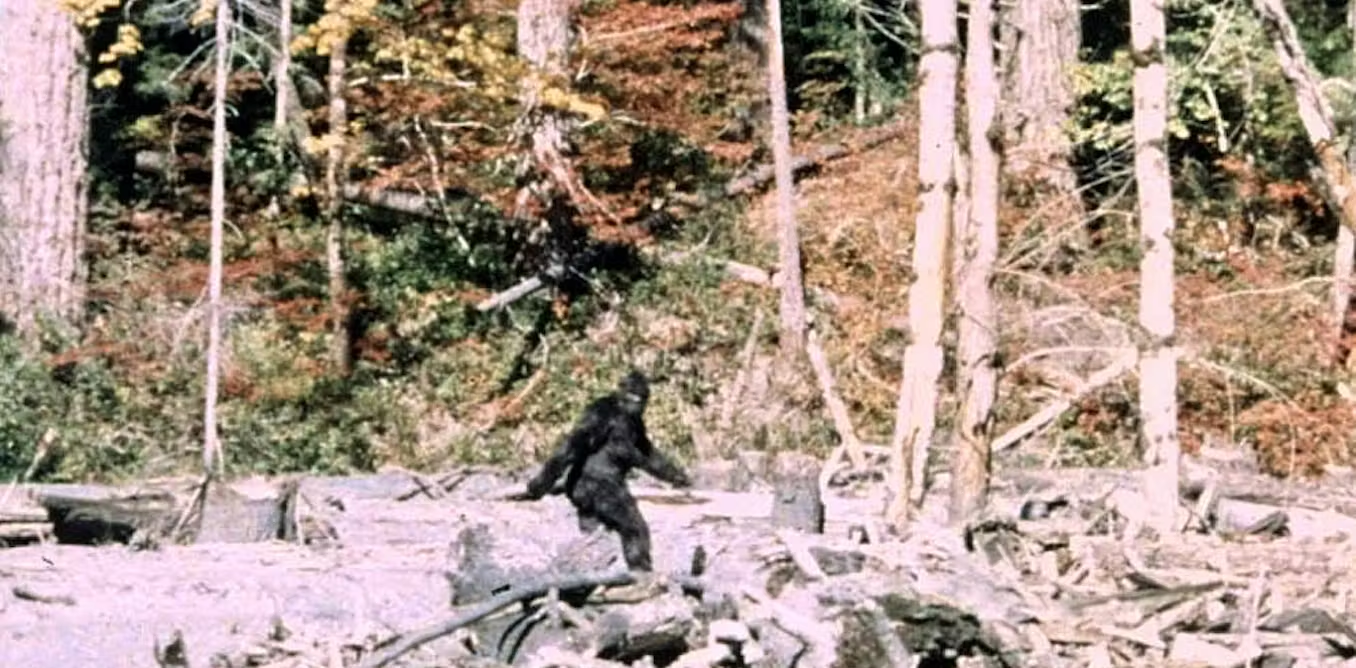
It was the image that launched a cultural icon. In 1967, in the northern Californian woods, a seven foot tall, ape-like creature covered in black fur and walking upright was captured on camera, at one point turning around to look straight down the lens. The image is endlessly copied in popular culture – it’s even become an emoji. But what was it? A hoax? A bear? Or a real-life example of a mysterious species called the Bigfoot?

The film has been analysed and re-ananlysed countless times. Although most people believe it was some sort of hoax, there are some who argue that it’s never been definitively debunked. One group of people, dubbed Bigfooters, are so intrigued that they have taken to the forests of Washington, California, Oregon, Ohio, Florida and beyond to look for evidence of the mythical creature.

But why? That’s what sociologists Jamie Lewis and Andrew Bartlett wanted to uncover. They were itching to understand what prompts this community to spend valuable time and resources looking for a beast that is highly unlikely to even exist. During lockdown, Lewis started interviewing more than 130 Bigfooters (and a few academics) about their views, experiences and practices, culminating in the duo’s recent book Bigfooters and Scientific Inquiry: on the borderlands of legitimate science.

Here, we talk to them about their academic investigation.

Advertisement

What was it about the Bigfoot community that you found so intriguing?

Lewis: It started when I was watching either the Discovery Channel or Animal Planet and a show called Finding Bigfoot was advertised. I was really keen to know why this programme was being scheduled on what certainly at the time was a nominally serious and sober natural history channel. The initial plan was to do an analysis of these television programmes, but we felt that wasn’t enough. It was lockdown and my wife was pregnant and in bed a lot with sickness, so I needed to fill my time.

Bartlett: One of the things that I worked on when Jamie and I shared an office in Cardiff was a sociological study of fringe physicists. These are people mostly outside of academic institutions trying to do science. I was interviewing these people, going to their conferences. And that led relatively smoothly into Bigfoot, but it was Jamie’s interest in Bigfoot that brought me to this field.


The Insights section is committed to high-quality longform journalism. Our editors work with academics from many different backgrounds who are tackling a wide range of societal and scientific challenges.

Advertisement

How big is this community?

Lewis: It’s very hard to put a number on it. There is certainly a divide between what are known as “apers”, who believe that Bigfoot is just a primate unknown to science, and those that are perhaps more derogatorily called “woo-woos”, who believe that Bigfoot is some sort of interdimensional traveller, an alien of sort. We’re talking in the thousands of people. But there are a couple of hundred really serious people of which I probably interviewed at least half.

Many people back them. A YouGov survey conducted as recently as November 2025, suggested that as many as one quarter of Americans believe that Bigfoot either definitely or probably exists.

Were the interviewees suspicious of your intentions?

Lewis: I think there was definitely a worry that they would be caricatured. And I was often asked, “Do I believe in Bigfoot?” I had a standard answer that Andy and I agreed on, which was that mainstream, institutional science says there is absolutely no compelling evidence that Bigfoot exists. We have no reason to dissent with that consensus. But as sociologists what does exist is a community (or communities) of Bigfooting, and that’s what interests us.

Bartlett: One of the things that at least a couple of people reacted to once the book was published was the way we phrased that. On the blurb on the back of the book we say something along the lines of “Bigfoot exists if not as a physical biological creature then certainly as an object around which hundreds of people organise their lives”. A couple of people took that to be some kind of slight against them. It wasn’t.

Advertisement

Do these people have any sort of shared personality traits or other things that connected them?

Lewis: The community is very white, male, rural and blue collar – often ex-military. I think Bigfooting is growing among the female population, but there’s a sense of the kind of ‘masculine hunter in the dark’ persona.

Bartlett: In America, you find a lot more veterans in the general population. But I think there’s also the issue of how they like to present themselves, because when you’re dealing with witness testimony, you’ve got to present yourself as credible. If you can say something like, “I was in the service” or “I was in the armed forces”, then at least you’re not likely to be spooked by a moose.

A bigfoot sign at the Natural Bridge Of Arkansas park.

A bigfoot sign at the Natural Bridge Of Arkansas park.
Logan Bush/Shutterstock

What surprised you the most about them, did they challenge any stereotypes?

Lewis: Some were very articulate, which did surprise me a little. I guess that’s my own prejudice. I was also very surprised about how open people were; I expected them to not tell me about their encounters. But a fair few of them did. Many of them wanted to be named in the book. I was also surprised about how much empirical data they collect and how much they attempt to try and analyse and make sense of it. And how they were willing to admit that a certain idea was bunk or a hoax. I expected them to be defending bad evidence.

Bartlett: There are extracts of this in our book, people saying “I was fooled by these tracks for ages. I thought they were real and then I found this and that and the other out about it and I revised my opinion.” So that did surprise me too.

Advertisement

If they collect empirical evidence, does that make what they do science?

Bartlett: When you’re working in institutional science you’re working to get grants, you’re working to get good quality publications. You might want your name associated with particular ideas, but you do that through peer-reviewed papers and by working with PhD students who go off to other labs. In Bigfooting, you’ve got self-published books, you’ve got Bigfoot conferences, you’ve got YouTube channels, you’ve got podcasts and things like this, and they’re not necessarily a good way of making and testing knowledge claims. This is an aspect where Bigfooting is quite different to mainstream science.

It was interesting to study the fringe physicists and seeing where the common deviation from science was. And that’s a focus on individualism; the idea that an individual alone can collect and assess evidence in some kind of asocial fashion. The physicists I studied were quite clear that ideas like consensus in science were dangerous, when in reality consensus, continuity and community are the basis of most of science.

What is the most common form of evidence in this community?

Lewis: Witness testimonies. Without those reported testimonies, Bigfooting would not exist. A large part of the work of a Bigfooter is to collect and make sense of these testimonies. They get upset when these testimonies don’t have much weight within institutional science. They’ll make the comparison to court and how testimonies alone can put someone on death row. So they don’t understand why testimonies don’t have much weight in science. Beyond the testimony, footprint evidence is probably the most famous and also the most pervasive sort of trace evidence.

Advertisement
Photograph of an alleged Bigfoot footprint taken in Hoopa, California in September 1962 and featured in a Humboldt Times newspaper article.

Photograph of an alleged Bigfoot footprint taken in Hoopa, California in September 1962 and featured in a Humboldt Times newspaper article.
wikipedia

Bartlett: One of the reasons footprints are so important is that there’s the legacy of the Yeti and footprint evidence which proved to be relatively persuasive, convincing some institutional scientists that there was something in the Himalayas. And then there was the fact that the sort of two major academic champions of Bigfoot were persuaded by the footprint evidence: the late Grover Krantz (around 1970) and Jeffrey Meldrum (in the 1990s).

Lewis: These days you also see camera traps, audio recorders even DNA testing of hairs and those sorts of things. They’re capturing anomalous sounds and often blurry images. Some believe that a Bigfoot communicates through infrasound, although that is certainly disputed within the community. So what you’re getting now is more and more different types of evidence.

How can you know whether an image or a sound really points to Bigfoot?

Bartlett: What they do is go out into the forest and record a sound, for example, and compare it to databases of birds and other animals. And they may find there is nothing that matches it. Is it something that doesn’t sound like a car or a person or a bear or a moose? In which case, there’s the space for Bigfoot. And it’s the same with images to some degree.

Would you say that this interpretation is the biggest weakness or contradiction in their evidence?

Lewis: It allows them to create space for Bigfoot. Because if you can’t match it to something else, what could it be? You have this absence and then from that absence you create a presence. They believe it’s a scientific argument. In fact, it’s kind of interesting how Bigfooters will always enrol other kinds of magical beasts to strengthen the case for Bigfoot. So, one sentence I hear quite a lot is “it ain’t no unicorn”.
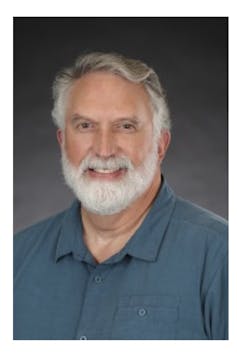
Jeffrey Meldrum.
Jeffrey Meldrum.
wikipedia

What’s the hierarchy in this community? Who’s at the top?

Lewis: A-listers tend to be anyone associated with academia. So Andy’s already mentioned Jeff Meldrum, unfortunately he passed away very recently, but he was their route to contemporary academia. So in any conference, if Jeff Meldrum was speaking, he’d be last. Anyone who’s on TV, such as the Finding Bigfoot and the Expedition Bigfoot presenters would also be in the A-list category. And then you’ve got various different groups just below. For example, the Bigfoot Field Researchers Organization, which is probably the most well known group.

What could Bigfooters learn from scientists and vice versa?

Lewis: From reading books and from discussing it with people, there was a sense that Bigfooters are anti-science. We did not find that. What we argue in the book is that they’re not anti-science. In fact, I would say a lot of them are pro-science, but they’re counter establishment. I think academia should be thinking about these people as citizen scientists and what they’re doing as a kind of gateway into understanding your local area.

Advertisement

For example, they found an animal, I think it was a pine marten, on a camera trap that was not supposed to be in the area. So they are collecting lots of data. They are not irrational. It’s different from, for example, ghost hunting, because you don’t have to imagine there’s something entirely new in the world. It’s just an animal that exists out there that hasn’t been found. Implausible, yes. But not impossible. What they do lack, however, is academic discipline; anyone can be a Bigfooter.

Was there a specific encounter you heard about that was particularly compelling?**

Lewis: Did I get caught up in the moment? Sometimes, of course, you do, just as you do in a film. If you’re in the pitch dark night and you’re watching a horror film, you take it away with you for a while until you settle back down. I often went to bed buzzing, thinking I don’t know what I just heard; they were great stories at the end of the day. But I learned to separate the interview from my thoughts on the interview.

If you encountered Bigfoot in the woods, how would you go about convincing others?**

Lewis: A lot of Bigfooters would begin with qualifiers like, “My dad doesn’t believe in Bigfoot,” or “I have questioned myself for years thinking about this incident and what it was.” So, they would set themselves up as a rational, logical individual. That then created a connection between me and them. And of course, I’d probably be doing the same.

Bartlett: If I were to encounter Bigfoot, I would probably draw on all the techniques of proving that I’m a credible, hard-headed, rational person that we see in those witness encounters. I would expect to be disbelieved. And so therefore I would stress I was putting my credibility as an academic on the line here. So I’d deploy all those kinds of rhetorical techniques that are used by Bigfooters, aside from just the description of the encounter.

Advertisement

For you: more from our Insights series:

To hear about new Insights articles, join the hundreds of thousands of people who value The Conversation’s evidence-based news. Subscribe to our newsletter.


Source link

Advertisement
Continue Reading
Click to comment

You must be logged in to post a comment Login

Leave a Reply

NewsBeat

Five bonkers Donald Trump moments in Iran war update from ‘Stone Age’ threat to gas prices

Published

on

Daily Mirror

President Donald Trump’s primetime address on the Iran war featured extraordinary claims about Venezuela, confusing war timelines, and promises about gas prices as fuel costs surge

President Donald Trump appeared for a primetime national address on Wednesday night to deliver an official update on his war with Israel against Iran, which has sent petrol prices soaring, resulted in the deaths of at least 13 American service members and sent the global economy into turmoil.

Advertisement

He and senior U.S. officials have for weeks given conflicting statements over when the costly war will conclude, what its objectives are and whether or not the administration will decide to deploy American boots on the ground in Iran. Trump himself has grown increasingly irritated with news coverage and has failed to find a way to explain why he started the war – or how he will end it – that resonates with the wider public.

But on the national stage, with prepared remarks before him, the president offered neither fresh information on the ongoing conflict nor clarity on how he will proceed in the days and weeks ahead. Instead, he appeared to improvise at length about Venezuela, supposed U.S. stockpiles of gas, the final words of slain U.S. troops and the superiority of American firepower even as he has demanded assistance from NATO allies.

READ MORE: Artemis 2 launch: Jeremy Clarkson trolled over bizarre posts on NASA moon missionREAD MORE: Seventh British tourist dies after falling ill on £6k Cape Verde holiday

Advertisement

Ensure our latest headlines always appear at the top of your Google Search by making us a Preferred Source. Click here to activate or add us as your Preferred Source in your Google search settings.

1. Trump claims U.S. troops ‘took’ Venezuela

Trump claimed on Wednesday that American troops did a “masterful job” in “taking the country of Venezuela,” a comment that follows weeks of him discussing “running” the South American nation while leveraging its political transition to benefit American oil companies. “I also want to thank our troops for the masterful job in taking the country of Venezuela in a matter of minutes,” Trump declared during his speech, referring to his unexpected nighttime military assault on Venezuela’s capital, Caracas, in January that led to numerous casualties and the capture of former President Nicolás Maduro, reports the Mirror US.

“That hit was quick, lethal, violent and respected by everyone all over the world,” he asserted.

Advertisement

However, in reality, Maduro’s capture faced severe backlash from both U.S. allies and adversaries, including at an emergency meeting of the U.N. Security Council on the day of his court appearance.

2. Trump claims Americans ‘have so much gas’ as prices skyrocket

Emphasising his perspective on the robustness of the U.S. economy under his leadership, which is facing unprecedented disapproval among Americans, Trump attempted to alleviate concerns about escalating petrol prices as the war continues.

Advertisement

Arguing that the U.S. has ample fuel reserves due to his “drill baby, drill” stance on domestic oil production, Trump stated that the nation produces more oil and gas than Saudi Arabia and Russia combined, according to The Associated Press.

The U.S. was the top oil producer globally in 2025, pumping more than 13 million barrels per day. Russia and Saudi Arabia ranked second and third worldwide, each producing more than 9.5 million barrels per day, as per the U.S. Energy Information Administration.

This week, US petrol prices climbed beyond an average of $4 per gallon for the first time since 2022, as the Iran conflict continues driving fuel costs upwards globally. The last occasion US motorists collectively paid this much at forecourts was nearly four years ago, following Russia’s invasion of Ukraine.

3. Trump adjusts war’s timeline to ‘two or three’ more weeks

Advertisement

Since the US and Israel initially struck Iran on 28 February, the president and his senior officials have provided inconsistent responses regarding the conflict’s duration.

Combat “will continue until all of our objectives are achieved,” Trump told reporters on 29 February. He subsequently suggested it would conclude in four, five or even six weeks. Now with the war approaching its sixth week, Trump continues wavering between declaring complete victory, suggesting he will soon be prepared to withdraw from the Middle East, and threatening to escalate it further.

On Wednesday, Trump again extended the deadline for the war, which the Centre for Strategic and International Studies estimates is costing the US approximately $891.4 million daily.

Advertisement

“We are on track to complete all of America’s military objectives shortly. We are going to hit them extremely hard over the next two to three weeks,” he stated. “We’re going to bring them back to the stone ages, where they belong.”

4. Trump urges Americans to consider the war as an investment in their future

“This is a true investment in your children’s and grandchildren’s future,” Trump stated. “The whole world is watching, and they can’t believe the power, strength and brilliance. They just can’t believe what they’re seeing!” However, U.S. allies abroad are scarcely impressed by America’s military capabilities, and appeals to join Trump’s conflict have been largely rebuffed.

Advertisement

Amidst soaring petrol prices, Washington has encountered widespread condemnation from European allies, including U.K. Prime Minister Sir Keir Starmer.

“It is increasingly clear that as the world continues down this volatile path, our long-term national interest requires closer partnership with our allies in Europe,” Starmer remarked at a Downing Street press conference on Wednesday after declining to join the war.

Drawing closer to Europe represents a clear indication of British foreign policy moving away from the so-called ‘special relationship.’

5. Trump’s assertions about state of conflict contradict reality

Advertisement

Trump on Wednesday described Iranian leadership as a “new regime,” despite the current Supreme Leader, Mojtaba Khamenei, being the successor of the slain Ali Khamenei. He also maintained that the war is almost finished, before suggesting it could continue for up to three more weeks. Tehran has stated there have been no substantial negotiations with the US, and Trump has repeatedly threatened to further intensify the war.

Democrats condemned the address as “incoherent” and as doing little to address “the most basic questions of the American people,” according to statements from two Democratic lawmakers issued on Wednesday.

Sen. Mark Warner observed that Trump owed Americans more clarity about a conflict that has pushed up prices on petrol “alongside rising prices for diesel, fertiliser, aluminium, and other essentials, with consequences that will continue to ripple through the economy for a long time to come.”

Advertisement

Meanwhile, Sen. Chris Murphy issued a statement declaring the “speech was grounded in a reality that only exists in Donald Trump’s mind.” Murphy continued to note that “no one in America, after listening to that speech, knows whether we are escalating or deescalating.”

Follow our live blog for the latest updates by clicking here.

Source link

Advertisement
Continue Reading

NewsBeat

Family slam evil killer over sick TikTok prison videos taunting dead victims

Published

on

Daily Record

Ben McCulloch – son of Scottish gangland boss Brian McCulloch – was filmed partying with other out-of-control prisoners.

Mark McGivern at HMP Addiewell as families demand action over prison cell parties

A grieving family have demanded a crackdown on killers trolling from behind bars after being sickened by jail TikTok videos.

The mother and sisters of slain Stephen Quigley are pleading for a new law to hammer gloating criminals after the Record revealed a series of videos filmed inside crisis-hit Addiewell nick.

Advertisement

Katie Quigley has told of her pain as she watched killer Ben McCulloch – son of Scottish gangland boss Brian McCulloch – party with other out-of-control prisoners in a video that was put on TikTok.

Along with daughters Catrina, 33, and Margaret, 37, she is pleading for a crackdown on the toxic masculinity and macho lawlessness that they claim the Scottish Prison Service seems unable to keep under control.

The recent TikTok video from McCulloch – featuring violence, bullying and drugs – glorified the 24-hour party life he and pals, stripped to the waist, claim to be living the high life at HMP Addiewell, in West Lothian.

That video followed an earlier shameful Instagram post that emerged from HMP Shotts, where bully McCulloch, 31, and murderer pal Ross Fisher were photographed. A caption on the post openly mocked the men they killed – saying “They’re deed and we’re no – hahah.”

Advertisement

It is understood that McCulloch has been prosecuted for abuse of smuggled mobile phones – and received “concurrent” sentences, which added zero time to his sentence.

Katie Quigley, whose demand for a clampdown is being backed by MSP Paul O’Kane, said: “I cannot put into words just how hurtful it was to see this man’s face on a photo, with a caption on it referring to the death of my son and the fact his killer is doing ‘easy time’.

“Ben McCulloch killed my boy, who was meant to be his best friend. His lawyer told the court that he was full or remorse but he has not one shred of remorse. If he did, how could he be posting videos about having 24 hour parties?

Advertisement

“And what punishment has he received? We were told by the SPS he was given concurrent sentences, which is no punishment and no deterrent at all.”

Katie, from Neilston, Renfrewshire, said she would like Scottish ministers to pass a specific law that ensures extra time behind bars for any prisoner who uses a mobile phone to create video content that cause torment for the family of victims.

She said: “I had to identify my dead son and that awful day will stay with me for as long as I am alive. Is it too much to ask for prisons to stop these gangsters reminding the families of all the people they have killed or victimised that they are running the jails?

“I really does look from the videos that things are out of control. How can you have a cell that is full of drunk men having a party inside, taking videos, somehow getting an internet connection to post all their horrible footage?

Advertisement

“It just breaks my heart to think of the lack of remorse that is evident in every one of those videos.”

Stephen’s sister Catrina, 33, said the family has been forced to endure a “life sentence” after their loss in 2021.

McCulloch, now 31, was jailed for nine-and-a-half years for knifing Stephen before leaving him to die on a pavement outside Paisley’s Royal Alexandra Hospital in Paisley.

Advertisement

The High Court in Glasgow heard that Stephen would have lived if McCulloch had taken him to A and E.

Catrina said: “Stephen was best mates with Ben and they were on good terms before he killed him. His lawyer bleated in court about his remorse but his behaviour in prison is a disgrace.

“We need to stop the flood of phones into prisons and we need to give proper punishments to those who are torturing families like ours from inside jails.

“As it stands there is no deterrent. Vulnerable young men are looking at these prisoners like role models and thinking they can get in with the mob while doing easy time in jail themselves.”

Advertisement

The Daily Record told recently how Ben McCulloch and other cons at HMP Addiewell were raving in their cells, posting videos that appeared to show men out of their heads on drugs and prison hooch.

The apparent lads party videos were captions with claim that prison time is easy and a 24 hour party.

Further videos emerged from top security HMP Shotts and Barlinnie, where a growing craze appears to be emerging for young prisoners to brag about the fun times they are enjoying behind bars.

Advertisement

And the Quigley family had previously been outraged at the Instagarm content that featured McCulloch with killer Ross Fisher, 34 – who was one of a gang of four who were jailed for the gangland murder of Kenny Reilly in Maryhill, Glasgow, in 2018.

Ben McCulloch’s dad Brian, now 55, was a ringleader in a multi-million-pound drug plot that was cracked after a police surveillance sting.

In 2009 the High Court in Glasgow heard how McCulloch plotted with other gangsters.

Due to the bugging of McCulloch’s BMW, police raided properties in Glasgow, Paisley and Clydebank, recovering drugs with a street value of £9million, along with firearms and almost £500,000 in cash.

A ring of steel was thrown around the High Court in Glasgow ahead of their sentencing hearing, amid fears of an escape bid from the gang.

Officers from the tactical firearms unit, armed with sub-machine guns, stalked the court building while the police helicopter circled above.

The police operation, codenamed Operation Lockdown, ran from August 2007 to February 2009, involved up to 100 officers on any given day and cost an estimated £2.7million. Brian McCulloch got 10 years for his leading role in the gang.

Advertisement

Labour MSP Paul O’Kane said Scotland needs an overhaul of the way it deals with the taunting that comes from inside prisons on illicit videos.

He claimed that his plea for action on the Quigleys’ case had been fobbed off by justice minister Angela Constance when he raised it in a letter.

O’Kane said: “I have been supporting the Quigley family for some time and I know how shocked the whole community in Neilston was at Stephen’s killing. It is horrific that the family’s pain is being compounded by the action of those found guilty in prison.”

Advertisement

“It is clear that the SNP Government take a soft touch approach and have not acted to get a grip of the situation within our prisons – with mobile phones being smuggled in and so called parties taking place in prison wings which are being filmed for social media”

“My pleas to Angela Constance have fallen on deaf ears and this is heartbreaking for the family”

“We clearly need a new Government in Scotland to take decisive action on securing our prison estate and looking at the whole issue of punishments for taunting victims of crime from behind bars.”

A Scottish Prison Service spokesperson said: “We understand the lasting impact this kind of offending has on families and the significant distress such videos can cause.

“Our staff work hard to keep prisons safe and secure, using all available technology and intelligence to prevent illicit items, including mobile phones, entering our establishments.

“While we do not comment on individuals, we continue to work with Police Scotland, and other partners, to take action against those who attempt to breach our security.”

The Scottish Government is currently restricted in statements that might be made on future policy.

Advertisement

A previous statement stated: “This is an operational matter for the SPS which uses a range of technology and intelligence to stop illicit items reaching our prisons.

“As previously announced in 2026-2027, we are investing just over £1billion in our prisons to support frontline staff.”

Get more Daily Record exclusives by signing up for free to Google’s preferred sources. Click HERE.

Source link

Advertisement
Continue Reading

NewsBeat

Trump claims King Charles would have stood with US over Iran

Published

on

Trump claims King Charles would have stood with US over Iran

He wrote: “All of those countries that can’t get jet fuel because of the Strait of Hormuz, like the United Kingdom, which refused to get involved in the decapitation of Iran, I have a suggestion for you: Number 1, buy from the US, we have plenty, and Number 2, build up some delayed courage, go to the Strait, and just TAKE IT.

Source link

Continue Reading

NewsBeat

Glasgow GP shares fear of cancer return in ‘mother of all anxiety’

Published

on

Daily Record

Dr Punam Krishan has spoken about the ‘aftermath’ of suffering from cancer

A GP has highlighted a side-effect of cancer that she says ‘nobody tells you about’. Macmillan Cancer Support estimates that around 3.5 million people in the UK are living with cancer.

This equates to one person being diagnosed every 75 seconds in the country, and 168,000 individuals dying from it each year – that’s 460 people daily. The combination of an ageing population, improved diagnostics and increased public awareness means the number of recorded cases is expected to rise annually.

Advertisement

Dr Punam Krishan is one of these individuals. The Glasgow-based GP, known for her appearances on daytime television and informative posts on social media, revealed in January 2026 that she had been diagnosed with breast cancer.

Thankfully, her recovery is going well. However, after seeing a patient at her practice, she was reminded of something she believes all cancer patients should be aware of.

She stated: “I wanted to share something with you, something that nobody really tells you about cancer. And something that I realised I shared in common with a patient today and it’s the bit that comes after. It’s the health anxiety, which is a whole new kind of anxiety by the way.

Content cannot be displayed without consent

“Now as most of you know, I’ve not long finished treatment for breast cancer myself and I am still very much healing, still taking it day by day. And physically, I’m getting there but mentally it’s been a very different kind of healing. I mean, even just yesterday to give you an example, I was in the car and I felt a wee pain in my arm and within minutes my mind had spiralled to, ‘what if it’s back?’ and I found myself calling my husband and then my mum and my best friend just needing that bit of reassurance.

Advertisement

“And then I had to really, really catch myself, take a breath, slow the heck down and go back to the little mantras that I have learned and the tools that my therapist has given me over this time just to bring myself back to the present moment, control the controllables and the pain settled within a few minutes. It was nothing serious but that feeling, that jump from zero to a hundred, anyone that knows and has been there, it is so real. And in medicine, of course, we call this health anxiety, where your brain becomes hyper-alert to every single sensation and it starts to scan for danger.

“But after something serious like cancer, everything feels different. And I sometimes think of it as an aftermath anxiety. Honestly, it feels like the mother of all anxieties because your brain isn’t imagining danger, it’s remembering it and your body has been through something so real and your mind is just trying to protect you. Just sometimes it overdoes it.

“So today then, in clinic, I saw this clearly again in front of me, a patient who has also had cancer and she was telling me she just can’t switch off the worry sometimes. She’s barely sleeping some days, her mind keeps going back to, ‘what if it’s still there?’ and she said that she almost felt like I wouldn’t understand and was worried about sharing this because people around her keep telling her, ‘oh, it’s nothing’.

“But sitting here with her I was thinking, ‘I see you, I get it, because I’m in that space too’ and I shared that with her and it’s not nothing. This is a real and valid feeling and it just made me realise how little we talk about this part. The fear of recurrence, the hyper-vigilance, that loss of trust in your own body. And we’re not really taught it, not as patients and if I’m really honest, not even as doctors. I wasn’t taught this. I sadly had to learn this by living through it.

Advertisement

“So if you’ve ever felt that shift from calm to panic or find yourself checking, worrying, needing reassurance, you are not imagining it and you are not over-reacting. Your mind, it is responding to something that your body has genuinely been through and I don’t think that that just switches off overnight.

“Oh my goodness, I wish it did, but with time, with support and a lot of self-compassion, it should start to soften as you begin to find your new normal. So if you are in this space just now, just know that you are not alone. And if you are supporting someone more importantly that is going through this, please don’t minimise what they are feeling. Give them a big hug, give them the space to share. This is part of their healing journey as well.”

Why are cancer cases increasing?

Cancer cases are on the rise – and projections suggest this trend will continue for the foreseeable future. An ageing population combined with improved diagnostics and greater public awareness partly explains this – but additional factors are also at play.

Firstly, the UK’s population is growing, which means there are more individuals who can develop the disease. While older people remain more vulnerable to cancer, certain types are appearing in growing numbers of younger people – particularly bowel cancer.

Advertisement

Advances in cancer treatment mean more people are surviving the disease. The number of individuals living with cancer in the UK has risen from nearly 3 million in 2020 to almost 3.5 million in 2025.

Source link

Continue Reading

NewsBeat

Javier Milei’s inflation ‘miracle’ in Argentina is a warning to the world, not a blueprint

Published

on

Javier Milei’s inflation ‘miracle’ in Argentina is a warning to the world, not a blueprint

On paper, the numbers look astonishing. The annual rate of inflation in Argentina has plummeted from 211% in 2023 to 31.5% by the end of 2025.

President Javier Milei is taking plenty of credit for the drop. And he spent some time on Wall Street last month, pitching his “chainsaw” approach to public spending as a triumph against inflation.

But as a political economist who has tracked the cyclical history of economic crisis in Argentina, I see a much grimmer story unfolding.

For the drop in inflation is certainly not a victory for Argentine productivity. It’s a byproduct of a deliberate and engineered collapse in people’s wages.

Advertisement

Milei hasn’t fixed the engine of Argentina’s economy, he has simply turned it off. Since he took office in 2023, the country’s manufacturing output has dropped dramatically, with over 2,000 businesses shutting down and 73,000 jobs lost.

In the automotive sector, factories are operating at just 24% of capacity.

These aren’t just dry statistics. Real wages have been crushed so hard that demand for Argentine goods has evaporated. If a manufacturer is only using a third of its machinery because nobody can afford their goods, they lose their ability to put up prices, and inflation rates stop rising.

By drastically reducing demand, Milei has not solved the inflation puzzle. He has simply removed some of the pieces, by making the population too poor to participate in the Argentine economy.

Advertisement

On top of this, the fear of mass unemployment means workers have no choice but to accept an ever smaller share of the nation’s economic pie. Again, low wages serve to prevent the upward spiral of prices.

So the supposed victory over inflation is actually the institutionalisation of lower wages and a lower standard of living for most people.

A recently passed law (officially named “labour modernisation”) reinforces this new reality. It has effectively increased many workers’ hours and reduced their protections, making labour both cheaper and more disposable.

The new legislation has been criticised as a return to working practices of the 19th century. Far from modernising work, it is about normalising a lower wage share of GDP and ensuring that the shrinking slice of the national income for the Argentine worker isn’t just a temporary emergency, but a permanent feature of the model.

Advertisement

And while the government highlights 4% GDP growth forecasts for 2026, that growth is focused in sectors like agriculture, mining and lithium, which create very few jobs. For the average urban worker the economy hasn’t recovered – it has simply bottomed out at a new, lower standard of living.

Wages down, inflation down

That doesn’t mean that the drop in inflation counts for nothing. There has been a genuine sense of relief after the triple-digit chaos of 2023.

The simple ability to shop at a supermarket without the price of goods changing dramatically in days will mark a deep psychological shift for many Argentinians.

But that shift is not based on solid ground. Inflation hasn’t been tamed by a more efficient economy – it has been starved into submission.

Advertisement

Yet remarkably, Milei’s “miracle” is already being packaged for export. From the radical fiscal cuts proposed by Trump in the US to the nationalist platforms of Orbán in Hungary and the Vox party in Spain, Milei and his model are being touted as a blueprint for other economies struggling with inflation.

Protests in Buenos Aires against new labour laws, February 2026.
EPA/Juan Ignacio Roncoroni

But what looks like a triumph to some is, in reality, a deepening social crisis. Milei’s Argentina is not a blueprint to be followed. It is a warning of what happens when the cure for inflation is more lethal than the disease itself.

For this level of wage suppression is a stark reminder of Argentina’s economic crisis of 2001, a period of total state failure, sovereign default, bank freezes and 20% unemployment that left a permanent scar on the national psyche.

To have surpassed that level of wage suppression today is a damning indictment of Milei’s approach. But while 2001 was a sudden collapse of a monetary system, the 2026 reality is a slow, institutionalised asphyxiation.

Advertisement

The question for the coming years is how such a model can possibly be sustained. Milei has left the country with no economic levers to pull for a genuine recovery.

With negative net reserves, a domestic market in ruins, and multi-billion dollar IMF and private debts hanging over the country, the government’s path is now dictated entirely by a desperate need for dollars that turns every domestic policy into a plea for foreign capital.

This has created an economic vacuum in which there is no credit for small businesses, no surplus for public investment and no consumer demand to entice private capital back into the real economy.

That is why the administration’s pitch to New York investors in March was essentially a desperate plea for capital to fill this void. But Wall Street is not generally in the business of building factories or creating jobs in Argentina.

Advertisement

If anything, its investors will be looking for easy short-term profits in a newly deregulated market. And what emerges then is an economically divided Argentina. On one side of this will be a thriving enclave of mining and agribusiness designed for the global market, and on the other, a vast urban industrial wasteland where millions of Argentinians struggle desperately to make ends meet.

Source link

Advertisement
Continue Reading

NewsBeat

Family pays tribute to ‘beautiful’ woman killed in crash

Published

on

Cambridgeshire Live

A 32-year-old man was sent to prison for more than four years after pleading guilty to causing death by dangerous driving

The family of a woman killed in a crash on the Cambridgeshire border has paid tribute to her. Last week, Mantas Kudrevicius was sentenced to four years and six months in prison after a tragic crash in 2024.

Advertisement

While driving towards Spalding on the A16 near Cowbit, Lincolnshire on August 30, 2024, Kudrevicius crossed into the opposite carriageway and crashed into a Renault Twingo. In the Renault was 28-year-old Shinead Francis.

Shinead died at the scene of the crash. Following Kudrevicius’s conviction, Shinead’s family has paid tribute to her.

In a statement, her family said: “On August 30, 2024 our lives changed forever, when our beautiful Shinead was taken from us in a collision. Her loss has left a vast emptiness in all of our lives.

“Shinead was one of those people who brought joy and happiness to all who met her. Whenever she walked into the room, her smile and zest for life lit up the room. In fact, that joy was just infectious to all around her.”

Advertisement

Shinead was described as someone who was “always there for others” and a “confidant”. Her family added: “[She was] kind to others in their hour of need, huge hearted and a gentle soul, providing love to all around her. Her life had meaning and value.

“Her future was full of expectation and joy. She had plans to settle down and couldn’t wait for the day that she became a mother herself.

“She has achieved so much in her 28 years and had so much more to give. She was immensely proud of obtaining her HGV licence and referred to herself as a ‘Mother Trucker’.

“Her humour and sage advice supported all around her, guiding both friends and family through those dark periods that we must now all bear alone. We will miss her dancing, giggling, positivity, her physical presence and her sense of fun.

Advertisement

“She had a love of penguins and had a collection of cuddly ones in her room – Christmas saw her place at the table taken by one of her cuddly penguins. When her grandmother required help at home, Shinead stepped in to provide that help.

“She did the shopping, tended the house and the garden and talked about her future plans to her grandmother. We will never forget our beautiful Shinead, the one who brought a breath of fresh air and a ray of sunshine to whomever she met.

“Everywhere is now a duller, less colourful place without her and the world has lost one of those who was an embodiment of all that was good. Rest peacefully Shinead, you remain deep inside our hearts and we will love you forever. Until we may all meet again.”

Source link

Advertisement
Continue Reading

NewsBeat

Controversial plan for housing estate beside Newtownards famous Duck Pond is approved

Published

on

Belfast Live

The Kiltonga Nature Reserve is to be restored as part of the plan

A controversial plan for a new housing estate beside the famous Duck Pond in Newtownards has been approved, after being deferred for a year amidst questions about residential plans on an industrial site.

Advertisement

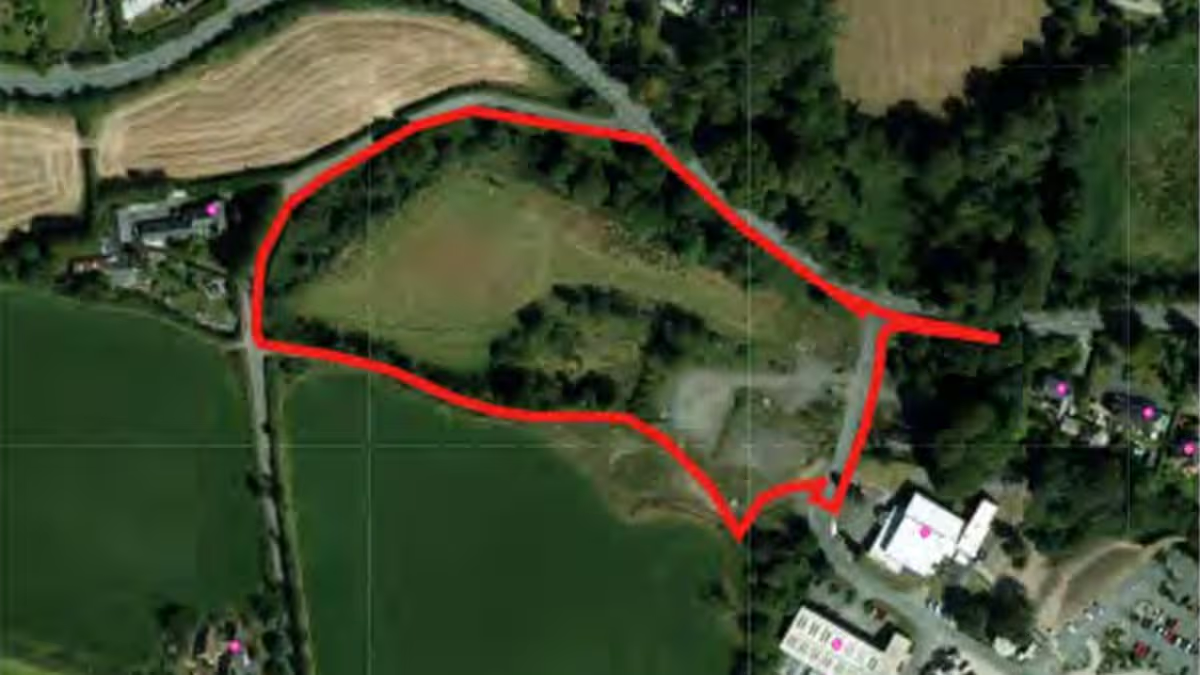
Elected members at the Ards and North Down Council March Planning Committee meeting this week (March 31) approved an application by Jona Developments for a residential development comprising 29 dwellings, that is 25 detached and four semidetached, at lands to the northwest of Kiltonga Industrial Estate, close to Belfast Road Newtownards. The site is close to the cherished Kiltonga Nature Reserve, known locally as the Duck Pond.

A year ago the plan was deferred after councillors questioned if local developers were engaged in a “ploy” to build residential housing estates on industrial zoned lands by introducing plans for nursing homes which would be then quickly dropped.

READ MORE: Troubled waters over proposal for new Strangford Lough bridge

READ MORE: Call made to protect North Down biodiverse parkland after widespread destruction

Advertisement

The matter was deferred for an extensive period for legal advice on the concerns raised by members including a former age-related condition and the implications of a former Planning Appeals Commission decision, as well as further information from Environmental Health on noise and smell issues that had been reported by residents.

Officers recommended the application for approval. In terms of letters of objection, the council received four, from three addresses. Objectors raised issues around limited parking, increase in traffic, flood risk, threats to flora and fauna and one said there was a threat to mental health of locals who would have green space taken away.

The Planning report states: “Biodiversity has been considered in the Ecological Survey which was submitted and reviewed by the Natural Environment Division. NED offered no objections to the proposal subject to the submission of a final Construction Environmental Management Plan and a Badger Mitigation Plan.

“While the application site currently appears as a green space to local residents, it is zoned for industry and is located within the Newtownards settlement limit where there is a presumption in favour of development on the site. “

Advertisement

It adds: “DfI Rivers offered no objection to the proposal, subject to a condition relating to the submission of a final drainage assessment.”

It states: “A parking schedule has been provided which indicates that the in-curtilage parking provision along with additional spaces for visitors can all be provided within the application site. The parking provision is in accordance with the recommended guidelines as set out in the Parking Standards document. DfI Roads has considered the proposal and offers no objection to the proposal.”

There is an extensive history of planning applications at the site. In 2012 there was a successful application by Kiltonga Care Services for the erection of a residential nursing home and in 2019 there was a successful application by Will Hollinger Beltraine Developments Ltd at the site for 20 retirement bungalows.

Also in 2019 a condition on the 20 retirement bungalows – that none of the dwellings should be occupied until the adjacent residential nursing home was constructed and operational – was deleted after an appeal. None of these works were completed.

Advertisement

A Planning Officer told the Committee on Wednesday: “Whilst the proposal is contrary to the (zoning) plan, the planning history represents a significant material consideration.”

She said: “The proposed plan adopts a landscape-led approach, including generous green buffers, and structured landscaping with a defined meadow area. There will be a spacious, low-density layout, with dwellings arranged around the existing pond, which will be retained and enhanced as part of the overall scheme.”

She added: “The principle of residential use has already been established on this site, and relevant planning history includes an approved and extant nursing home, with a certificate of lawfulness confirming commencement, approval for 20 retirement dwellings with commencement also certified.”

She said: “The pond is an established feature on this site and its inclusion is not considered to materially increase the risk beyond that typically associated with residential developments located near open water. In addition, the pond is not unique to this residential scheme.

Advertisement

“The proposal is therefore considered acceptable from a safety perspective.” She said the zoning “was no longer variable for industrial use.”

She said: “Market evidence indicates that the proposed housing mix better reflects local housing needs, with the site being less suited to an age restricted scheme, given the limited access to services and facilities. Environmental Health has reassessed the application and raises no objection on noise or odour grounds subject to mitigations secured through conditions.

“The proposal secures ecological enhancement, including pond restoration to support the local population of legally protected species.”

For all the latest news, visit the Belfast Live homepage here and sign up to our daily newsletter here.

Advertisement

Source link

Continue Reading

NewsBeat

‘Build up some delayed courage’ and grab Strait of Hormuz, Trump tells nations

Published

on

‘Build up some delayed courage’ and grab Strait of Hormuz, Trump tells nations

He continued: “I have a suggestion. Number one, buy oil from the United States of America. We have plenty. We have so much, and number two, build up some delayed courage. Should have done it before. Should have done it with us as we asked, go to the strait and just take it, protect it, use it for yourselves.

Source link

Continue Reading

NewsBeat

DHS boss rescinds restrictive $100,000 approval process

Published

on

DHS boss rescinds restrictive $100,000 approval process

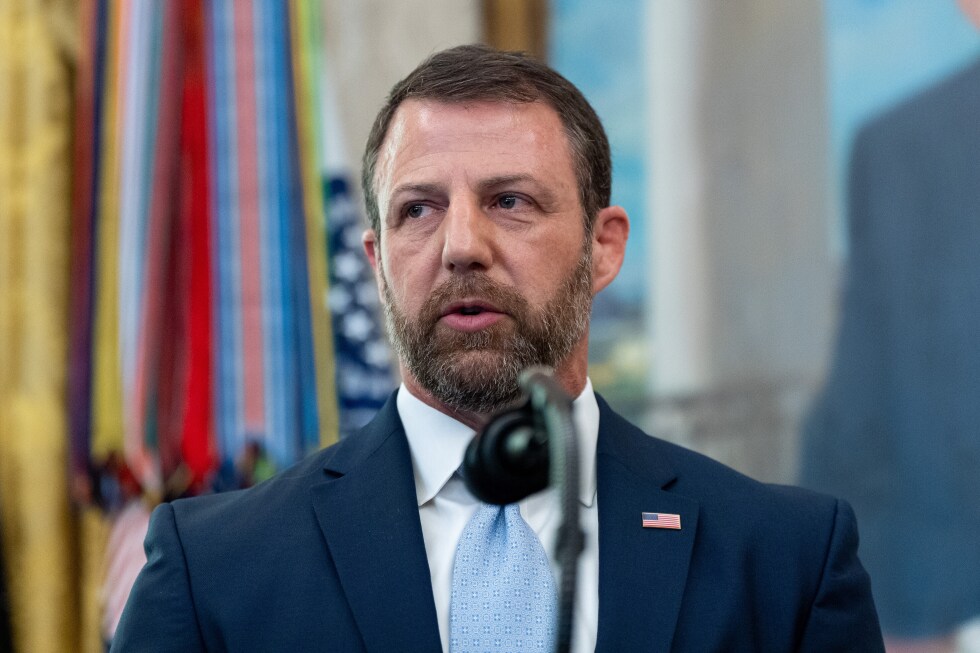
WASHINGTON (AP) — Homeland Security Secretary Markwayne Mullin on Wednesday rescinded a rule that DHS expenditures over $100,000 be personally approved by his office, ending a widely criticized policy implemented by his predecessor Kristi Noem that critics said put a particular burden on the Federal Emergency Management Agency ’s work aiding disaster response and recovery.

The decision marks the first major action by the new Homeland Security leader, sworn in last week, to change a policy implemented by Noem, whom President Donald Trump fired in March.

Mullin’s move is expected to ease a spending bottleneck that lawmakers and states said delayed disaster response and recovery funds, though those impacts are unlikely to be widely felt until after the end of the DHS shutdown, now in its 47th day.

A DHS spokesperson confirmed that Mullin rescinded the rule Wednesday, telling The Associated Press the secretary “re-evaluated the contract processes to make sure DHS is serving the American taxpayer efficiently.” CBS News first reported Mullin’s decision.

Advertisement

The spokesperson said Mullin’s action will streamline the contracting process and allocate aid more efficiently.

The International Association of Emergency Managers praised Mullin’s decision. “We appreciate Secretary Mullin’s common-sense approach to this matter, and we look forward to working with him,” said Josh Morton, president of IAEM-USA.

Noem issued a directive last June requiring that she personally approve any Department of Homeland Security expenditure over $100,000. Critics said the rule undermined FEMA in particular, an agency that routinely issues contracts and reimbursements well over that amount in its work preparing for and responding to natural and manmade disasters across the U.S.

The policy created “an untenable situation for emergency managers,” Morton said, and a bottleneck that also hindered mitigation and preparedness programs, “putting Americans at increased risk from disasters.”

Advertisement

A recently released report by Democratic members of the Senate Homeland Security and Governmental Affairs Committee found the approval rule had delayed at least 1,000 FEMA contracts, grants or disaster reimbursements by September.

The policy came under scrutiny after news reports linked it to unstaffed call centers and delays deploying FEMA Urban Search and Rescue teams to Texas during deadly floods last July, and brought sharp rebuke from some state officials and lawmakers, especially Republican Sen. Thom Tillis of North Carolina, whose state is still recovering from devastation wrought by Hurricane Helene in 2024.

“You’ve failed at FEMA,” Tillis told Noem at a Senate hearing two days before she was fired.

About $2.2 billion in recovery and mitigation dollars were in the DHS approval queue Wednesday, according to FEMA data seen by the AP.

Advertisement

“It’s got a great mission, and I think people at FEMA want to do their job,” Mullin told lawmakers at his March confirmation hearing, sparking cautious hope that he would ease the tumult experienced at the agency under Noem.

Mullin said he would keep the agency ”adequately staffed” after it lost over 2,400 employees last year, and said he was already considering nominees for a permanent FEMA administrator, which the agency still lacks.

Trump has repeatedly floated the idea of eliminating FEMA, saying as recently as Tuesday that the agency is “very expensive and it really doesn’t get the job done.”

Michael Coen, FEMA chief of staff during the Obama and Biden administrations, said, “Hopefully this a step toward transparency and stability between FEMA and states.”

Advertisement

DHS is reviewing other policies across the agency, pausing the purchase of new warehouses for immigration detention this week as it reviews contracts signed under Noem.

Lifting the spending approval rule will not necessarily mean a rapid flow of FEMA reimbursements to states, tribes and territories, as the agency is still impacted by the DHS fund impasse, now the longest government shutdown in U.S. history.

While FEMA disaster response and recovery activities are paid out of a non-lapsing Disaster Relief Fund, that money is running low, a FEMA official warned lawmakers in a House hearing last week, with about $3.6 billion remaining. The DHS appropriations bill would add just over $26 billion to the fund.

Republican lawmakers on Wednesday signaled an agreement to end the shutdown could be reached in the coming days.

Advertisement

——

A previous version of this story misstated that the DHS shutdown was in its 46th day, not its 47th, and that the Senate hearing where Tillis rebuked Noem took place one day before her firing, not two.

Advertisement

Source link

Continue Reading

NewsBeat

Three arrested in Bristol following Speedwell daylight shooting as man ‘seriously injured’

Published

on

Daily Mirror

The police have made three arrests in the early hours following a manhunt after a man in his 20s was seriously injured in a daylight shooting that saw local schools put on lockdown

Three people have been arrested following a daylight shooting that left a man seriously injured.

Advertisement

The incident took place in Bristol, causing local schools to lockdown as police launched a manhunt.

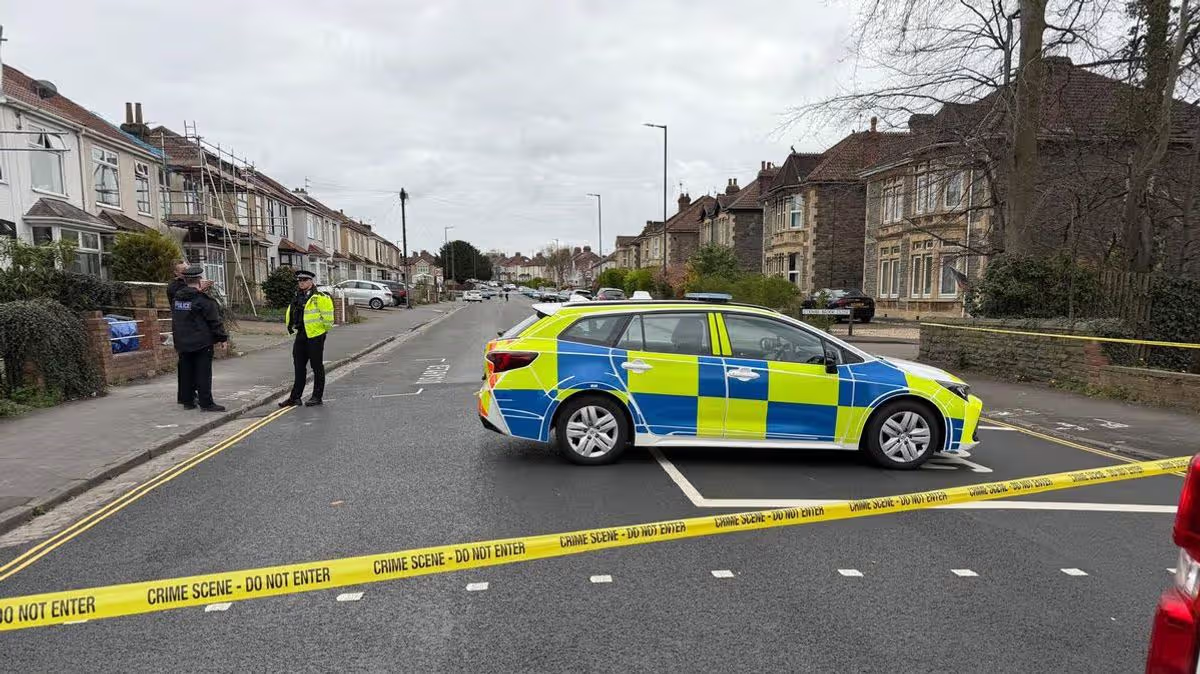
Avon and Somerset Police were called at 1.47pm on Wednesday, April 1 to a report that a gun had been fired at a car in Speedwell Road, which has been taped off near the Wackum pub and near the car wash crossroads.

The victim, a man in his 20s was taken to hospital with a serious injury.

Advertisement

The police have issued a major update in the early hours as three people have been arrested in connection with the incident.

A man in his twenties was arrested just after 2.30am on suspicion of attempted murder, and another man and a woman in their twenties were arrested on suspicion of assisting an offender.

All three remain in police custody.

The force added that enquiries are continuing, however they are not looking for anyone else in connection with this incident at this time.

Advertisement

St Anne’s Woods remains cordoned off as an area of interest and members of the public can expect to see a heightened police presence in this area and in the Speedwell area of Bristol.

A spokesperson for Avon and Somerset Police said: “We understand that this may have been a very concerning incident, but we have deployed a significant number of resources as part of our response, including the National Police Air Service helicopter, specially-trained firearms officers and drone units.

“We continue to appeal for anyone who witnessed the incident to come forward, including anyone with footage of the incident. If you can help, please call us.”

Advertisement

Source link

Continue Reading

Trending

Copyright © 2025