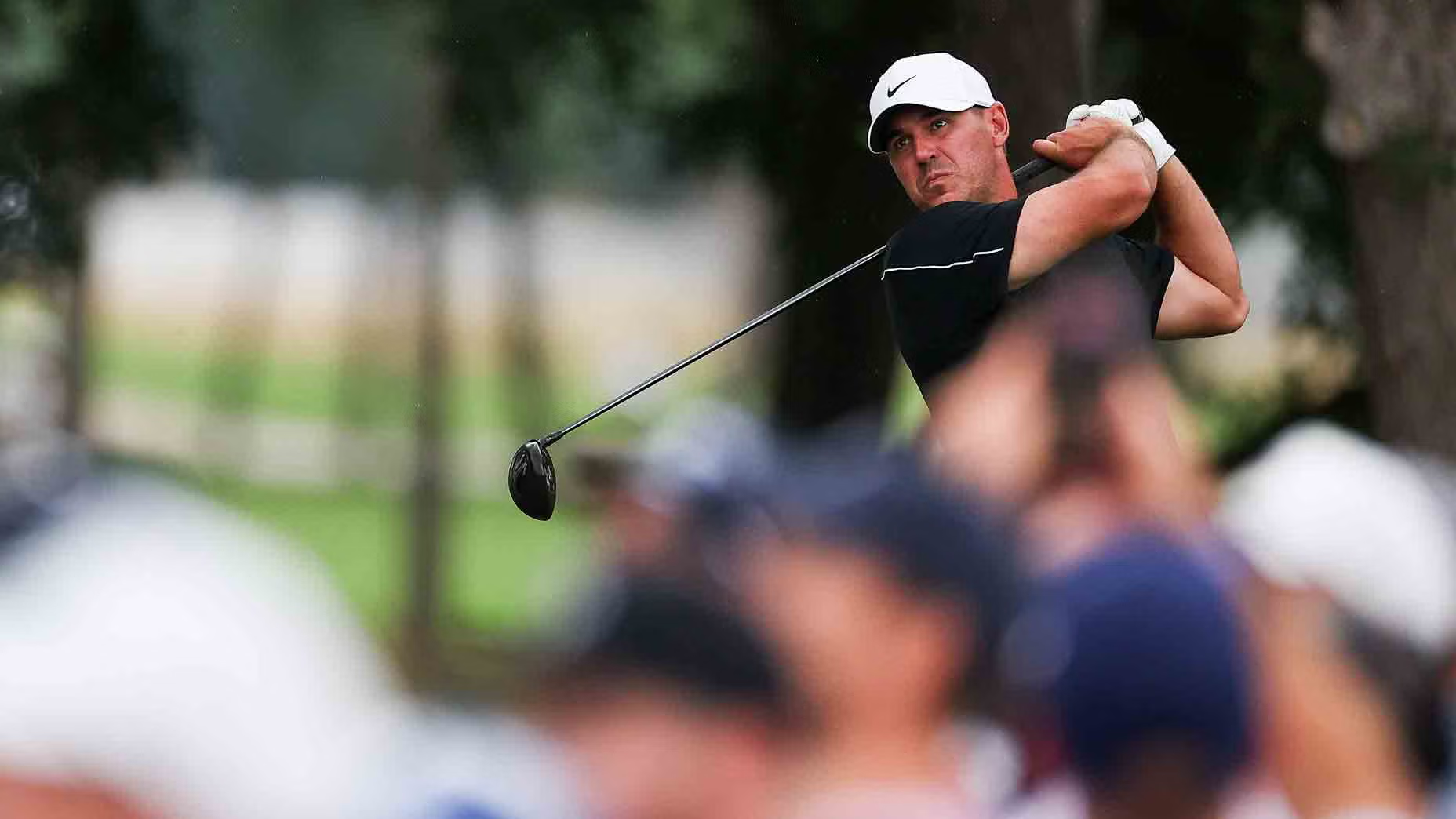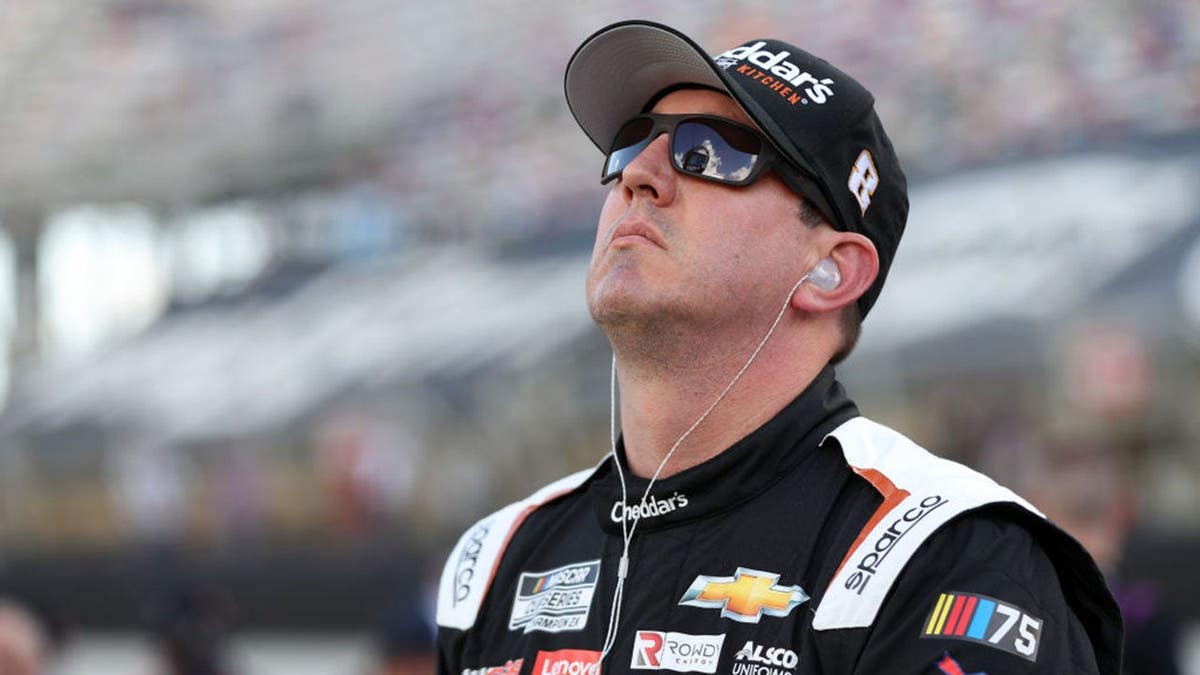
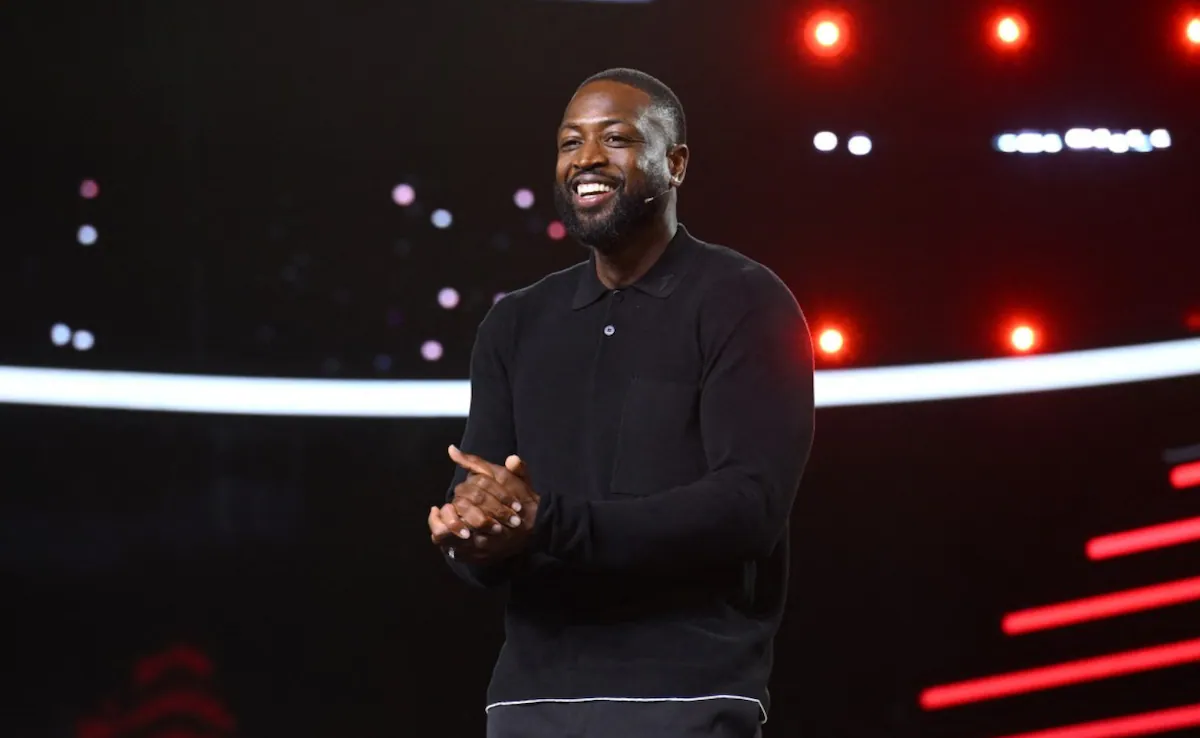
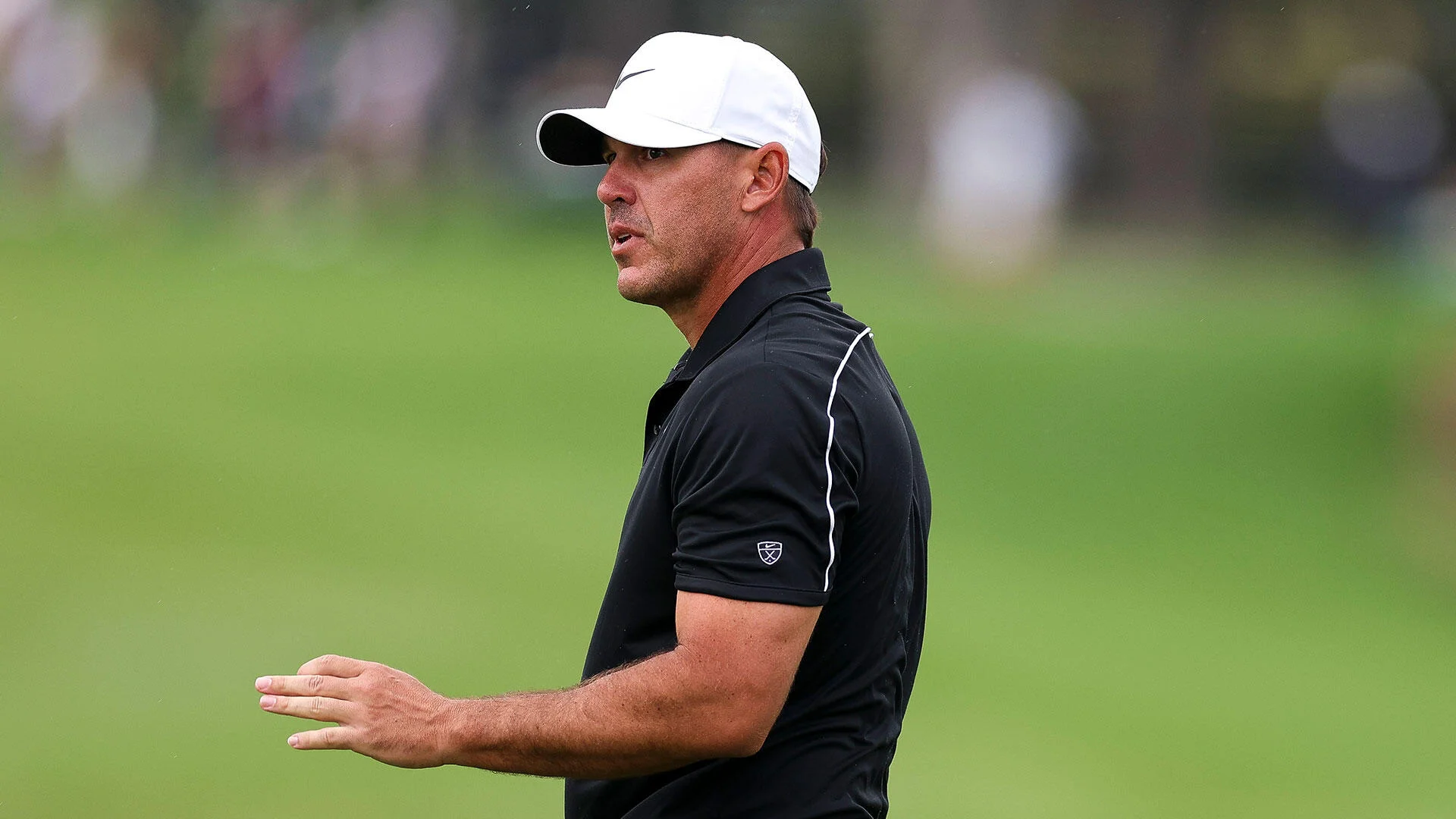
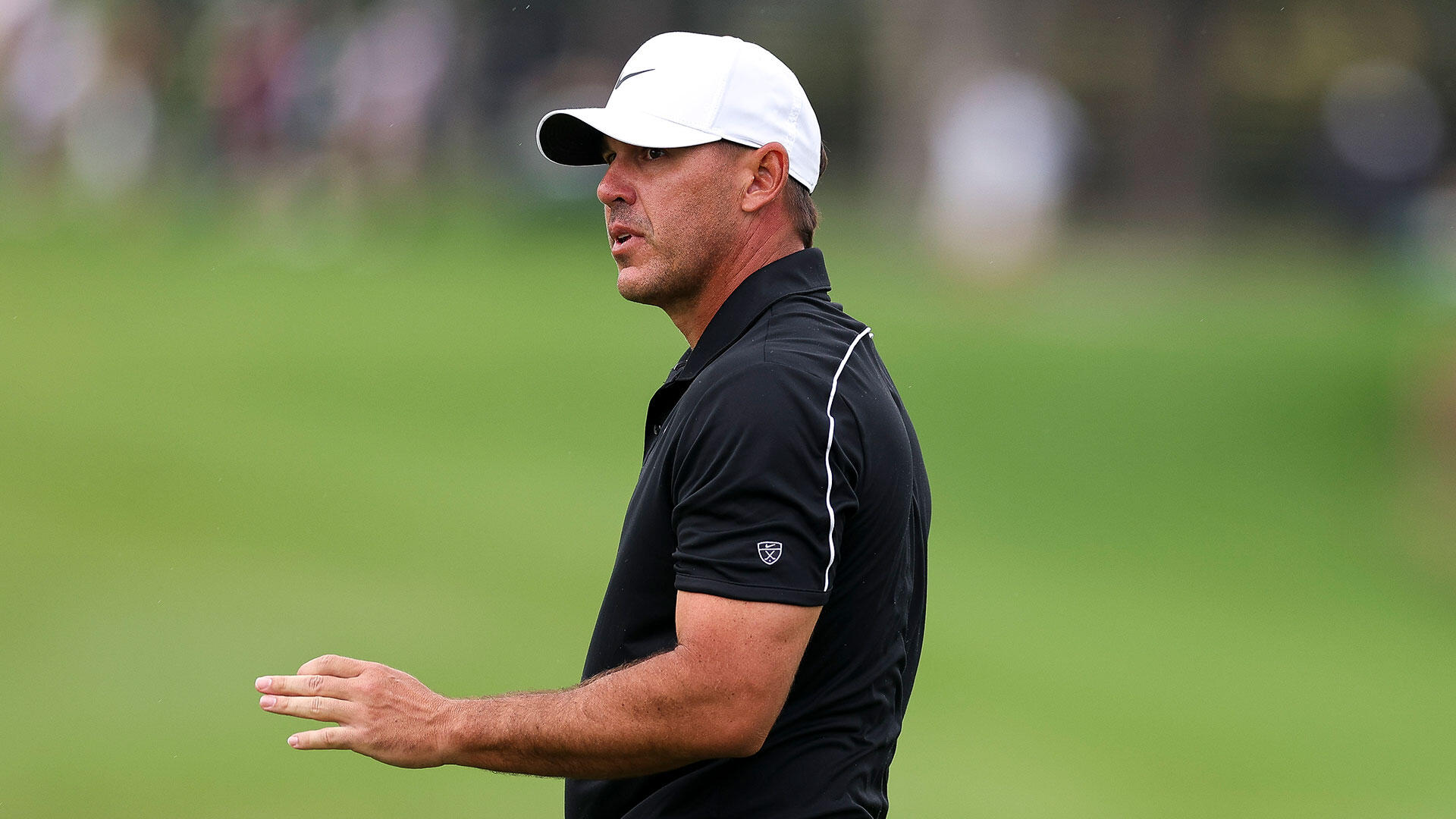
We’re all rooting for Tiger Woods here, rooting for him to get his life, physical and psychic, in a better place. If this were Tiger v. Phil or Sergio or Chris DiMarco you might have a different rooting interest. This, of course, is not that. Tiger became Tiger by often defeating, though not always, Phil & Co. That was fun, that was sport, that was drive and execution as most of had never seen before. This is different. This is Tiger versus himself. Tiger versus the pain of life.
Woods is a 50-year-old athletic icon — a true icon in an age of hyped everything. He has two children with his ex-wife, who has three other children with her current partner. Tiger has a girlfriend with five children of her own. The girlfriend has a former father-in-law who is both the most powerful person in the world and the man who gave Woods his highest honor, the Presidential Medal of Freedom, after winning the 2019 Masters. Woods won 14 Grand Slam events in a 12-year span. Rory McIlroy and Justin Thomas and a host of others came of age in the decade-long wait between No. 14 and No. 15, the 2019 Masters.
Twenty-two months after that victory Woods drove off the side of a deserted Los Angeles County road early on a weekday morning, into a tree and nearly to his death. Don’t call it an accident — that would be an insult to the scores of people who did everything in their power to save his life. Don’t say that winning takes care of everything. The marketing people at Nike who trotted out that phrase in the wake of a long-ago Woods scandal were ultimately just trying to move product.
The great tragedy of modern life is that everything has turned into a product. Golf is a product, per PGA Tour brass. Journalism is a product. Clicks are monetized. It’s deadening. Hogan, Palmer, Nicklaus and Watson were dominating golfers and unique personalities who captured our imaginations. But they weren’t products. Tiger Woods has been packaged and sold since he was 3. Woods knows his state of mind that morning in February 2021, when he was pulled out of another wrecked car. Cry for help is a hoary cliché but that crash had to be a cry for help. In the end, not a very loud one. His crash last week, a mile or so from his South Florida home may prove to be a louder one.
This time, his hand was forced, just as it was after his 2017 DUI arrest by police in Jupiter, Fla. In golf’s various and cloistered circles — on Golf Channel, on websites and in newsletters, in a release from the CEO of the PGA Tour — Woods’s statement on Monday was met with relief and admiration. He said he was “stepping away for a period of time to seek treatment and focus on my health.” You hope, of course, he can get the treatment he, by his own admission, needs. But there’s more going on here.
As this second DUI charge in Florida goes down its jurisprudence road, prosecutors were going to require that Woods seek treatment. Woods is trying to avoid a jail sentence here, of any length. He’s trying to avoid the spectacle of a public trial. There’s nothing for him to fight here. There are lawyers and advisors deep in his life. Signing up for treatment, on a voluntary basis, was a smart and necessary first step in an effort to keep a bad situation from getting worse.
Woods has been down the treatment road before. In early 2010, some weeks after running over a fire hydrant in the middle of the night outside his home in the Isleworth development near Orlando, Woods reportedly went to a residential treatment facility in Mississippi to deal with addiction issues. His 2017 plea required counseling as well. A statement is a statement. Last year, when Woods turned to X to announce his relationship with Vanessa Trump, he wrote, “Love is in the air and life is better with you by my side!” Please insert air quotes around wrote. Does that sound like Tiger Woods to you? Monday’s sober announcement has a completely different tone, of course. We don’t know anything about Tiger’s state of mind, and he doesn’t owe us that — or really anything.
What he owes us is what every driver in the world owes every other driver and pedestrian and bicyclist and stray pet in the world, and that is alert, uncompromised driving. After his crash on Monday, you can see Woods in photographs on the side of the road, golf shirt neatly tucked in his shorts, glasses on, cellphone to his ear. In those grainy photos, he looks like what he’s looked like for, well, over many years now, iconic golfer on yet another comeback trail. Photos can fool you like statements can fool you.
Tiger has pain and sleep issues. He’s acknowledged that many times. As an athlete, his glory days are long behind him. He knows that, of course. He likes to say, “Father Time is undefeated.” People take pain meds because they are in pain. People drive while impaired because of some level of arrogance, along with self-absorption. People go to recovery to figure out some kind of path forward. Sometimes it works. Because we love golf, because we admire what Woods did as a golfer, Tiger’s issues are getting attention here. In every other regard, he’s another guy trying to figure it out. Except he has to do it with the whole world watching.
We don’t know who Tiger Woods was talking to on his cellphone, when he was on the side of the road Friday afternoon. The single most impressive thing he could have done that day is apologize to the person driving the truck that was pulling the pressure washer. Luckily, the driver wasn’t injured. But his day was turned upside-down, too.
Tuesday night in the NBA playoffs saw three games played, with two series now level and one starting to tilt in one direction.
The Los Angeles Lakers were the only team to take full control, beating the Houston Rockets 101-94 to go 2-0 up in the series. LeBron James led the way with 28 points, eight rebounds, and seven assists, while Marcus Smart and Luke Kennard added 25 and 23 points, respectively. After the game, Kennard spoke about his recent form.
“‘Bron, coaches, they’re just elevating me, telling me to be aggressive… (the basket) looks good right now.”
Advertisement
In Boston, the Philadelphia 76ers responded with a 111-97 win over the Boston Celtics to level their series at 1-1. Tyrese Maxey and VJ Edgecombe led the way, combining for 59 points. When asked about his approach after the game, VJ Edgecombe said:
“I’m just shooting every shot that’s open, that I think is available.”
The Portland Trail Blazers also bounced back, beating the San Antonio Spurs 106-103 to tie their series 1-1. Scoot Henderson led the scoring with 31 points. For Portland, Scoot Henderson kept the focus on what comes next.
Advertisement
“Basketball’s a game of runs… we’ve got to get this next one, got to get this next two.”
After Tuesday’s games, the Los Angeles Lakers are the only team up 2-0, while the Philadelphia 76ers and Portland Trail Blazers have pulled their series back to 1-1.
LOS ANGELES — Houston Rockets star Kevin Durant returned to the lineup in Game 2 against the Los Angeles Lakers on Tuesday after missing the opening game of the series due to a knee injury suffered in practice last week. Durant, after testing his knee during warmups, was not on any minutes restriction but struggled particularly in the second half of the Rockets’ 101-94 loss.
Durant led the Rockets with 23 points, but 20 of them came in the first half. He also committed nine turnovers as he struggled to react to an array of double-teams thrown at him by the Lakers. Houston shot only 40% from the field and went 7 of 29 on 3-point attempts to fall into an 0-2 series hole to a Los Angeles team playing without leading scorers Luka Dončić (hamstring) and Austin Reaves (oblique).
Durant, who popped up as questionable on the injury report last week, went through his warmup routine at Crypto.com Arena less than two hours before Game 1 but was ruled out shortly after. The Rockets lost 107-98. Rockets coach Ime Udoka said before Game 1 that Durant, 37, underwent imaging and “nothing major” came up. Durant’s “limited movement” was more the cause of him missing Game 1 than pain tolerance. After the game, Udoka said the team was not surprised that Durant was unable to play in Game 1.
“I don’t think it was a surprise to us,” Udoka said. “We knew he got banged up. We looked at a bunch of different things without him. If he could go, he could go, but it looked doubtful based on how he was moving the last few days. We prepped for different lineups without him, alternative starting lineups if he wasn’t available. Late to everybody publicly, but we knew it might be a good chance he was out.”
In his first season with Houston, Durant missed just four games total during the regular season. The Rockets went 4-0 in those games in the regular season without Durant in the lineup. Durant entered the playoffs averaging 26 points, 5.5 rebounds and 4.8 assists since being traded from the Phoenix Suns last offseason.
During the 2025-26 campaign, Durant logged 2,840 minutes, which was the most he has played in 12 years. Durant finished second in the NBA in minutes played, only behind teammate Amen Thompson.
Advertisement
Only one of the four games Durant missed during the regular season was because of an injury. He missed a game against the Indiana Pacers in early February due to an ankle injury. Durant missed two games due to personal reasons early in the season and was held out alongside the rest of the starters in the regular season finale against the Memphis Grizzlies earlier this month.
Nov 28, 2025; West Lafayette, Indiana, USA; Indiana Hoosiers quarterback Fernando Mendoza (15) looks on during the third quarter against the Purdue Boilermakers at Ross-Ade Stadium. Mandatory Credit: Marc Lebryk-Imagn Images
After months of rumors and speculation, the 2026 NFL Draft is finally upon us.
With just a few days until the draft officially begins on Thursday, April 23, here is my final 2026 NFL mock draft before the event officially gets underway.
1. Las Vegas Raiders: QB Fernando Mendoza, Indiana
This is the only “sure thing” of this spring’s draft. Fernando Mendoza is the top quarterback prospect this spring; the Las Vegas Raiders have a need at quarterback even with the signing of Kirk Cousins. Mendoza will be wearing black and silver by the end of Thursday night.
Advertisement
2. New York Jets: LB Arvell Reese, Ohio State
Arvell Reese is an interesting prospect, and that is precisely why Aaron Glenn is going to want to take a chance on him for his defense. The New York Jets just overhauled their defense this past season by trading away Sauce Gardner and Quinnen Williams, and now they need to start finding new cornerstones to build around. Reese’s versatility to play both as an edge rusher and as an off-ball linebacker will propel him to second overall. At just 20 years old, there is plenty of time for him to develop either skill.
3. Arizona Cardinals: OLB David Bailey, Texas Tech
David Bailey is a prototypical edge rusher with great size and athletic ability. The Cardinals certainly could be considering offensive tackle here, but Bailey looks like one of the few “sure thing: prospects this spring, making him hard to pass up.
A decade after the Tennessee Titans landed Derrick Henry in the second round of the 2016 NFL Draft, they are hoping to find their next franchise running back. Jeremiyah Love is arguably the best player in this draft class, and he will put together plenty of explosive plays for the Titans.
A true off-ball linebacker hasn’t been selected in the top five since Devin White in 2019, but Sonny Styles has the talent to buck that trend. Styles has tremendous size and instincts at the linebacker position, and he showed off every ounce of his ridiculous athleticism at the combine. John Harbaugh loves getting difference makers at this middle linebacker spot, and he gets one here.
6. Cleveland Browns: WR Carnell Tate, Ohio State
The path has been clear for Cleveland for a while: wide receiver and offensive tackle in the first round. They get the first half of that job taken care of here by landing Ohio State’s Carnell Tate, who is the latest in a long line of Buckeye receivers headed to the NFL as first-round prospects.
7. Washington Commanders: CB Mansoor Delane, LSU
Wide receiver certainly is a need for Washington, but they also need to figure things out on defense in 2026. They added a few players to their defensive front in free agency, but the cornerback position still has question marks. They land this year’s CB1.
8. New Orleans Saints: OLB Rueben Bain, Miami
Rueben Bain has a couple things working against him heading into this draft. He has very short arms, and his off-the-field issues could cause a pretty big tumble down the draft board. However, the Kansas City Chiefs need to find someone who can consistently play opposite George Karlaftis. Bain didn’t get short arms overnight, and he was consistently productive in college. He should still land somewhere in the top 10.
9. Kansas City Chiefs: OT Francis Mauigoa, Miami
The Chiefs have parted ways with Jawaan Taylor, and for now, their solution has been Jaylon Moore, who is not a proven player. They go ahead and take one of the top offensive tackles in this class to create a long-term solution at that spot.
Advertisement
10. New York Giants (via CIN): S Caleb Downs, Ohio State
This may be a bit more of a tumble than some expect for Caleb Downs, but as a safety, it’s hard to know exactly when NFL teams will feel comfortable taking him despite the talent and upside. New York just acquired the 10th overall pick by trading away Dexter Lawrence, and after grabbing Styles with the fifth overall pick, they are now the winners of the night by also landing Downs.
11. Miami Dolphins: OT Spencer Fano, Utah
The Miami Dolphins desperately need to build up their offensive tackle situation in this draft, especially without there being a QB worth taking at this point, and Spencer Fano is a player who has the versatility to either play tackle or at guard on either side of the line.
12. Dallas Cowboys: S Dillon Thieneman, Oregon
Dallas fielded one of the worst defenses in the NFL last season, and they need help all over. Dillon Thieneman can be an anchor on the backend capable of playing free safety while also helping out in run support.
Sep 27, 2025; University Park, Pennsylvania, USA; Oregon Ducks defensive back Dillon Thieneman (31) reacts after defeating the Penn State Nittany Lions at Beaver Stadium. Mandatory Credit: James Lang-Imagn Images
13. Los Angeles Rams (via ATL): WR Jordyn Tyson, Arizona State
Outside of Puka Nacua and Davante Adams, a pair of precision route runners, the Rams don’t have a ton of options at wide receiver right now. Jordyn Tyson’s injury history could make some NFL teams wary of picking him early, but the Rams need a true deep threat to open things up in the passing game.
14. Baltimore Ravens: G Olaivavega Ioane, Penn State
The Ravens just have a knack for landing top talent at a position in the draft. This time, they land the top guard on the board to shore up their interior offensive line and protect Lamar Jackson.
Advertisement
15. Tampa Bay Buccaneers: CB Jermod McCoy, Tennessee
Jermod McCoy lost his 2025 season to injury, but the tape from 2024 speaks for itself. He is one of the best cornerbacks in this draft class, and the Tampa Bay Buccaneers desperately need some help at the position.
16. New York Jets (via IND): WR Makai Lemon, USC
If the Jets are going to have any success with Geno Smith as their new quarterback, they need to figure out the WR2 spot opposite Garrett Wilson. Makai Lemon is an explosive athlete who can take on the role in New York.
17. Detroit Lions: DT Kayden McDonald, Ohio State
Edge rusher could be high on Detroit’s list, but Dan Campbell is going to get back to his roots this season and find a player that bites kneecaps. Kayden McDonald can be a true nose tackle player at the NFL level, and the Lions need to be much better at defending the run in 2026. McDonald will be a cornerstone for a team that had defensive tackle struggles last year.
18. Minnesota Vikings: DT Caleb Banks, Florida
The Minnesota Vikings spent big at defensive tackle last offseason with signings of Jonathan Allen and Javon Hargrave, but neither really panned out. Brian Flores has had success in Minnesota without true difference makers at the position, but if the Vikings are ever going to take the next step toward being a contender, they need to find that difference maker. Caleb Banks put together a ridiculous combine despite performing on a foot injury, and once that heals up, he will be a starter at the NFL level.
Advertisement
19. Carolina Panthers: WR Denzel Boston, Washington
Three straight drafts with wide receiver selections in the first round may seem like a lot for Carolina, but it’s warranted here. The Panthers are in now or never territory with Bryce Young, so they go all in on giving him as much talent at the position as possible.
Dallas doubles up in the secondary here to help a defense that allowed the most passing yards, second-most passing touchdowns, and tied the second-fewest interceptions in the NFL last year. With Jermod McCoy out last year, Colton Hood stepped up as a true CB1 for Tennessee last season, and that emergence propels him into the first round.
21. Pittsburgh Steelers: WR Omar Cooper Jr., Indiana
The Pittsburgh Steelers need as much help at wide receiver as they can get right now, and Omar Cooper is a versatile player who can line up outside or in the slot. That versatility along with his athleticism and large catch radius will make him a favorite target for Aaron Rodgers or whoever is at quarterback this fall.
Jan 1, 2026; Pasadena, CA, USA; Indiana Hoosiers wide receiver Omar Cooper Jr. (3) runs against the Alabama Crimson Tide in the second half of the 2026 Rose Bowl and quarterfinal game of the College Football Playoff at Rose Bowl Stadium. Mandatory Credit: Gary A. Vasquez-Imagn Images
22. Los Angeles Chargers: G Chase Bisontis, Texas A&M
It may be early for another guard to go off the board, but the Chargers can’t risk there being a run at the position between now and their next pick at No. 55. Chase Bisontis is a bulldog in the middle of the offensive line, and he will open up plenty of running lanes for Omarion Hampton. Jim Harbaugh will love having him on his team.
23. Philadelphia Eagles: OT Kadyn Proctor, Alabama
The Philadelphia Eagles love planning for the future with their high end picks, and this selection comes at the perfect time with Lane Johnson missing eight games in 2025. Howie Roseman grabs the future Hall of Famer’s successor here in the massive 6’7″, 352-pound frame of Kadyn Proctor.
Advertisement
24. Cleveland Browns (via JAX): OT Monroe Freeling, Georgia
Cleveland’s job comes to completion here with the selection of Monroe Freeling. While he is still a bit raw with only 17 collegiate starts under his belt, Freeling showed up for the Bulldogs in 2025 as a great pass protector. The Browns were not good in that department last season, so hopefully, this can be a solution.
25. Chicago Bears: CB Chris Johnson, San Diego State
After back-to-back Pro Bowl seasons for Jaylon Johnson, he missed a large chunk of the 2025 season because of injury. As of now, the Bears aren’t necessarily in desperate need of a cornerback, but they are an injury away from being in that situation. Chris Johnson is a great security blanket with the talent to blossom into a starter as a boundary CB.
26. Buffalo Bills: OLB Malachi Lawrence, UCF
The Bills have both Greg Rousseau and Bradley Chubb on the roster, but both players utilize more power than athleticism and explosive ability to get after quarterbacks. Malachi Lawrence can bring that energy to the defensive front while also being a capable run stopper. He’s a player that can be on the field at all times and carve a role out for himself.
27. San Francisco 49ers: OLB Akheem Mesidor, Miami
John Lynch said at the combine that his team would address their pass rush in this year’s draft, and they do exactly that here in the first round with the selection of Akheem Mesidor. He brings relentless effort with multiple moves in his tool bag to get around opposing tackles to run down quarterbacks.
Advertisement
28. Houston Texans: OT Blake Miller, Clemson
The offensive line has been a fickle position group for the Texans They started the rebuilding process with the signings of Braden Smith and Wyatt Teller as well as a new contract for Ed Ingram, but that can’t be the end of their improvements. Blake Miller gives the Texans an answer for their other tackle spot.
29. Kansas City Chiefs (via LAR): TE Kenyon Sadiq, Oregon
Kenyon Sadiq to the Chiefs is too easy of a fit. Travis Kelce very well could be entering his final NFL season, and we have seen some cracks in the armor over the past couple seasons that have contributed to delaying another Lombardi Trophy coming to Kansas City. Sadiq is the successor who could end up taking on the majority of the snaps by the end of the season.
Dec 7, 2024; Indianapolis, IN, USA; Oregon Ducks tight end Kenyon Sadiq (18) reacts after a touchdown during the first quarter against the Penn State Nittany Lions in the 2024 Big Ten Championship game at Lucas Oil Stadium. Mandatory Credit: Robert Goddin-Imagn Images
The Dolphins addressed one side of the trenches earlier in this draft, and now they go ahead and grab an athletic pass rushing presence for their pass rush. Keldric Faulk is an explosive player, and he is much more impactful than the two sacks he recorded last season suggest.
31. New England Patriots: OT Caleb Lomu, Utah
A lot of things went wrong for the New England Patriots in last season’s Super Bowl, but the main takeaway was their offensive line needs to be better for the next time they get in that position. Caleb Lomu could play either at tackle or guard at the NFL level, and New England will take either at this point.
32. Seattle Seahawks: S Emmanuel McNeil-Warren, Toledo
Emmanuel McNeil-Warren has been a steady riser throughout this draft process, and it culminates with him sneaking into the end of the first round. He is a massive player at 6’3″ and has terrific ball instincts when passes are headed his way. He can step up and contribute as a blitzer as well. It’s not the biggest need in the world for Seattle, but they go ahead and make an already great defense even better here.
Advertisement
Josh Frey is a senior writer at both PurplePTSD.com and VikingsTerritory.com, with a fascination for the NFL Draft. To … More about Josh Frey
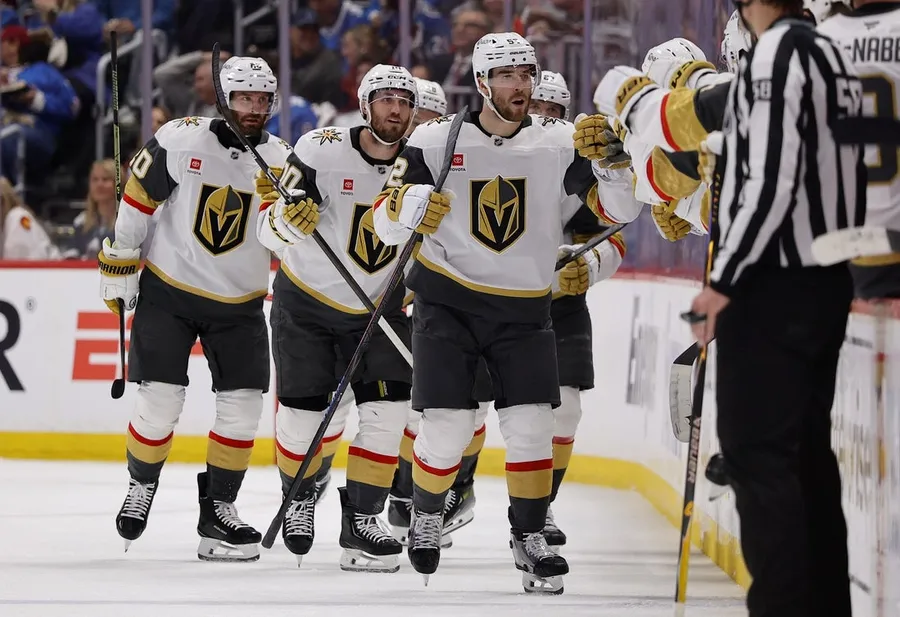
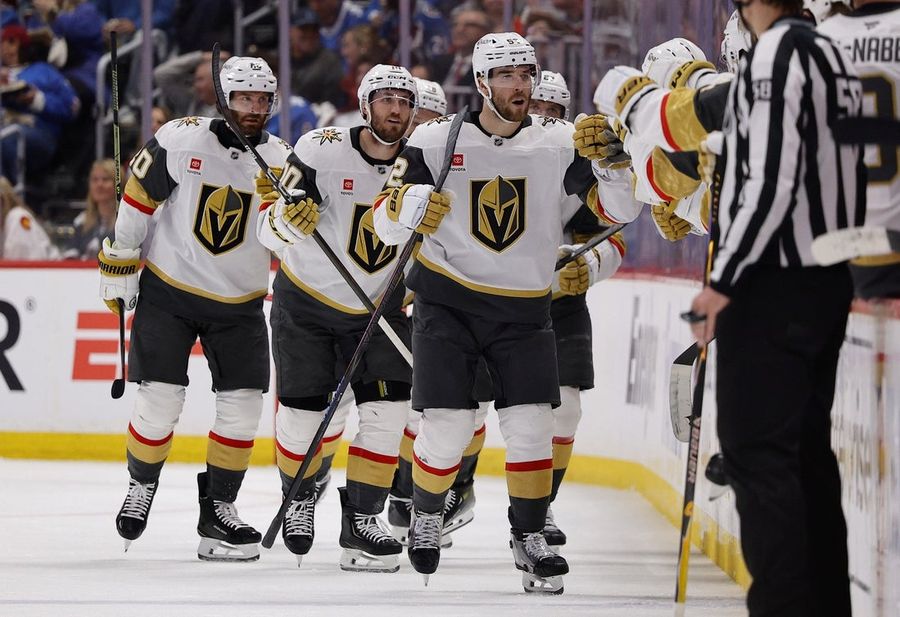
Apr 21, 2026; Las Vegas, Nevada, USA; Utah Mammoth defenseman Sean Durzi (50) attempts to deflect a shot attempt by Vegas Golden Knights center Brett Howden (21) during the first period of game two of the first round of the 2026 Stanley Cup Playoffs at T-Mobile Arena. Mandatory Credit: Stephen R. Sylvanie-Imagn Images
Logan Cooley scored the go-ahead goal on a rebound with six minutes remaining to give the Utah Mammoth the first playoff win in franchise history, 3-2 over the Vegas Golden Knights in Game 2 of their best-of-seven Western Conference first-round series on Tuesday in Las Vegas.
Cooley buried a rebound of a Dylan Guenther shot just inside the left post, even the best-of-seven series at one victory apiece. The scene now shifts to Salt Lake City for the next two contests, with Game 3 on Friday.
Guenther had a goal and an assist, Kailer Yamamoto had two assists and MacKenzie Weegar also scored for Utah. Karel Vejmelka made 19 saves, including a close-in shot by Mark Stone from the left side of the net with five seconds left to seal the win.
Stone and Ivan Barbashev each a scored goal and Jack Eichel had two assists for Vegas, which lost for the first time in regulation in 10 games (8-1-1) under coach John Tortorella. Carter Hart finished with 26 saves.
Advertisement
The teams exchanged own goals during the first period, which ended with the score 1-1.
Vegas, which rallied for a 4-2 victory in Game 1, took a 1-0 lead at the 11:40 mark on a power-play goal. Stone’s cross-crease pass for Tomas Hertl near the right post caromed straight into the net off the skate of Utah defenseman Mikhail Sergachev. It was Stone’s 43rd career playoff goal and his sixth in the past six games dating back to the regular season.
Utah tied it near the end of the period when Weegar’s shot from the right point deflected off the stick of Vegas defenseman Noah Hanifin and then off the pads of Hart into the low slot toward Golden Knights defenseman Rasmus Andersson, who kicked the rebound into the net.
The Mammoth took a 2-1 lead in the second period on a one-timer from the top of the left circle by Guenther off a pass from Yamamoto.
Advertisement
The Golden Knights tied it 62 seconds later. Barbashev intercepted a clearing pass by Sergachev in the neutral zone and then skated in and split a pair of Utah defensemen before roofing a backhand shot into the top far corner for his second goal of the playoffs.
Sal Stewart probably isn’t the best player in baseball now. I know, I know, it’s hard to hear that. But it’s true. Probably.
Since he debuted on Sept. 1 of last season, Stewart ranks 13th among all hitters with a 155 wRC+. He is hitting .275/.353/.601 in that span, and he’s actually been even better to open this season, upping that line to .289/.388/.639 through the first 23 games, and he’s doing it as a 22-year-old in a key lineup spot for a competitive team. And he’s leveled up in the early going despite teams getting a scouting report on him last season.
It’s undeniably impressive. Whether you’re looking at the top-line numbers or the underlying numbers, it all tells pretty much the same story: Stewart looks like an elite hitter right now. In 2025, Stewart’s solid .355 wOBA came along with an even better .398 expected wOBA, and so far in 2026, his .438 wOBA comes paired with a .419 xwOBA. Since 2021, there have only been 13 individual hitter seasons (out of 670 qualifiers) with an xwOBA over .419; use his .411 career mark, and you only add four more seasons.
Of course, there have almost certainly been many, many more 41-game stretches where hitters have been better than Stewart has been. Just taking one random stretch from last season, from June 11 through July 31, and there were six hitters with an xwOBA of at least .411. Some of them are superstars, like Kyle Schwarber, Corey Seager, and Juan Soto. But that sextet also includes Willy Adames, a good hitter, but not much more than a pretty good hitter; it also includes Nick Kurtz and Kyle Stowers, two hitters for whom the jury is very much out as to exactly how good they are.
Advertisement
But it would be foolish to write off a hot start as meaningless when it comes to projecting a player forward. And you don’t have to take my word for it. Let’s just look at how the rest-of-season projections for Stewart have changed, using THE BAT X projections from FanGraphs.com:
Preseason
Rest of Season
Change
Advertisement
AVG
0.271
0.280
+0.009
Advertisement
OBP
0.328
0.348
+0.020
Advertisement
SLG
0.453
0.498
+0.045
Advertisement
BB%
7.30%
8.90%
+1.60%
Advertisement
K%
18.50%
18.30%
-0.20%
Advertisement
Projection systems are notoriously conservative, especially for young players, who face a steep learning curve at the MLB level. And yet, even after just 20 or so games, we’ve already seen a substantial increase in the expectations this system (typically the most accurate for Fantasy Baseball) has for Stewart. He’s gone from the 14th-best projected first baseman by wRC+ to the seventh-best already. That’s serious movement, and it’s meaningful.
I can say this much with confidence: Stewart is almost certainly at least a good hitter. BaseballProspectus has a stat they call “Deserved Stats,” and they’ve got Stewart down for a .264/.342/.495 hitter for his career, with a very similar line so far this season. If that’s all he is, he’s a top-12 first baseman, and would rank even higher when he gains eligibility at either third base (where he needs one more appearance to qualify in CBS Fantasy leagues) or second base (where he needs three more). And, given his excellent home park, it feels fair to say that mid-.800s OPS line is probably close to his floor.
That might not be enough for you. I know. Some of you want us to declare that Stewart is already a top-three third baseman, better than Nick Kurtz even. Memories can be short, and reacting to what you’re seeing in the moment is exciting and fun, and Stewart has the look of an absolute star right now. He probably won’t keep being this good moving forward – he hits the ball hard, but not astronomically so (75th percentile average exit velocity) and his plate discipline metrics suggest he probably deserves something more like average-ish results with his strikeout and walk rates; he has also dipped down to a 15.2% pulled-air rate, making his current elite power production harder to buy into. There will be regression.
But from a 20-ish game sample, Stewart has moved from a corner infielder we like to someone who will be starting a starting-caliber first baseman in all leagues moving forward. Is he a top-12 first baseman right now? Absolutely. Top-10? I’d lean that way.
Advertisement
Top-five? Well, I’m not ready to go there yet. The ceiling is certainly that high, especially with his rare out-of-position, 15-steal upside. But we’ll see Stewart slow down, and we’ll see pitchers adjust, and then it’ll be incumbent on him to adjust back. That’s when you really learn how good a player is.
But the ceiling? Well, that’s what we’re seeing right now, and it’s tremendous. And if Stewart ends up as a top-five first baseman in all Fantasy formats by the summer months, I won’t be too surprised.
After a fairly chalky opening weekend in which seven of eight home teams won their Game 1s, the 2026 NBA playoffs are starting to get more competitive. On Monday, both the Atlanta Hawks and Minnesota Timberwolves scored road upsets over the New York Knicks and Denver Nuggets, respectively, to tie their first-round series at a game apiece.
The makes five upsets across six games in the last two days. With all three of Tuesday’s games in the books, here are Tuesday’s winners and losers.
Winner: The entire Lakers organization
JJ Redicksaid it himself the week before the playoffs: “I’m sure everybody wants to play us.” He was right. Teams aren’t supposed to put up a fight when two of their three best players are sidelined. There are many reasons the Lakers have been able to do so, some of which are beyond their control. They’ve benefitted from tremendous shooting variance. They’re playing a Rockets team that’s melting down before their eyes. But on talent alone, they should be preparing to get swept. That they aren’t speaks to a sort of organizational fortitude that the Lakers have built over the course of the season.
Advertisement
It starts with Redick. This was an absolute masterclass from the second-year Lakers coach defensively. It seemed as though the Lakers knew Houston’s offensive playbook better than the Rockets did, consistently shooting into gaps and mixing up coverages to befuddle a more talented opponent. Kevin Durant‘s nine turnovers were no accident. The Lakers won a March regular-season game with very similar tactics, ultimately forcing seven turnovers in that one through an unpredictable variety of double-teams that Durant was ill-equipped to handle.
General manager Rob Pelinka has drawn quite a bit of criticism for his asset management over the years. Well, he got Marcus Smart for roughly $5 million last offseason and Deandre Ayton for around $8 million. Both have been high-level starters in this series. Ayton’s post defense stymied Alperen Sengun all night. Smart’s 23 points and seven assists were one of the few reliable sources of offense for the purple and gold. One of the others? Luke Kennard, who was acquired for a second-round pick at the deadline. It stands in stark contrast to a Houston team absolutely loaded with assets at this year’s deadline deciding to stand pat and then refusing to trust a recent No. 3 overall pick (Reed Sheppard) in games like this one. The Rockets have every infrastructural advantage and haven’t capitalized.
And then there’s LeBron James. A few months ago, it seemed as if this season was a lock to be his last in Los Angeles. He bought in over the course of the second half of the season, found a supporting role he could thrive in, and then, when Dončić and Reaves went down, eagerly reclaimed his mantle as the team’s centerpiece. He’s 41 years old and just won a playoff game with 28 points, eight rebounds and seven assists playing primarily with castoffs.
Everyone here deserves credit for what’s happening. Everyone is punching above their weight class. That only happens when every element of a team, from the front office to the coaching staff, down to the players, is working in lock step. The Lakers believe they can win this series. They have an underappreciated group of players eager to prove their worth by buying completely into whatever schemes their mad scientist of a coach can concoct. We don’t know when or if Dončić and Reaves will be able to return this postseason, but even if they can’t, and even if the Lakers can’t close the door, they have to leave this series feeling good about what has transpired here thus far. This is a level of organizational connectivity and cohesion that has felt absent for so much of the James era in Los Angeles.
Advertisement
Loser: Rockets coach Ime Udoka
Through two games, it’s still unclear what Houston is trying to accomplish offensively. These Sengun isolations and post-ups aren’t working on Ayton. Durant created plenty of his own offense in the first half but none in the second. There are only three genuinely positive offensive players on this roster, and one of them, Sheppard, played 11 minutes in a game in which the Rockets scored 94 points. What kind of shots do the Rockets want? What are the mismatches they’re trying to exploit? These doubles on Durant are not new. What’s the adjustment to combat them?
Redick’s coaching will receive justified plaudits, but his dissection of Houston’s offense comes with the caveat that Houston is barely even running one. It is giving the ball to its two best players and asking them to generate advantages with no space. There’s not nearly enough ball or player movement to help spark those advantages, and one of the few players on the roster who might help address that, the No. 3 overall pick in last year’s draft, is seemingly plastered to the bench because his coach doesn’t trust his defense.
Just as these two games are a celebration of everything going right in Los Angeles, they’ve been a thorough condemnation of the team the Rockets are trying to build. You’re not going to garner much sympathy for the absence of Fred VanVleet and Steven Adams when the other team is missing Luka Dončić and Austin Reaves. The Rockets have had all year to figure out a VanVleet-less offense and most of it to adjust to life without Adams. If the plan after all of that time is still as simple as “keep getting offensive rebounds until something goes in,” well, then it’s probably time to re-evaluate the plan, and maybe even the person conceiving it.
Winner: The Tyrese Maxey-VJ Edgecombe duo
Embiid’s injury history hangs over every good thing that happens to this 76ers franchise. At times, they seem almost cursed. Appendicitis? Really? To the same guy who scored 50 points in a playoff game with Bell’s Palsy? It felt in that moment as though a once-promising season once again went down the drain for unavoidable medical reasons.
Advertisement
The 76ers still have a long way to go, of course, but they tied this series on the backs of their two new franchise players. Tyrese Maxey and VJ Edgecombe combined for 59 points, 14 rebounds and 11 assists in their Game 2 111-97 upset win in Boston. Edgecombe made all sorts of history in his playoff coming-out party, most notably passing Magic Johnson as the youngest player ever to score 30 points and pull in 10 rebounds in the postseason.
Edgecombe’s 16-point second quarter helped Philadelphia regain control after the Celtics nearly ran away with it early, but the fourth quarter belonged to Maxey. The Celtics briefly pulled the score within two, but two pull-up Maxey 3s gave Philadelphia a cushion it would never surrender.
The win itself is, of course, meaningful. Philadelphia stole home-court advantage and tied the series. It bought Embiid a few extra days to potentially return. But in the bigger picture, it’s a reminder that Embiid’s horrid luck doesn’t need to doom this franchise completely. The 76ers have one of the brightest rookie stars in the NBA, and Maxey is going to make an All-NBA Team. The two of them together are enough of a foundation to compete with even seasoned champions like the Celtics. They’ll need help and health to hit their ceiling, of course, but the 76ers are in a deceptively promising position for a team seemingly afflicted with some sort of divine jinx.
Loser: Celtics coach Joe Mazzulla
If Joe Mazzulla has a weakness as a coach, it’s how slowly he makes adjustments during games. Boston playoff losses often feel similar. A lot of dribbling. A lot of good 3s that didn’t go in. A single, iffy strategic decision that an opponent picks persistently until suddenly a winnable game slips through Boston’s fingers. That’s largely how Game 2 played out. If Boston had shot as it normally does, the Celtics probably would have won. If Philadelphia shoots as it normally does, Boston probably wins too.
Advertisement
The former is just variance. The latter? Well, Boston didn’t help matters with its vanilla defensive scheme. The Celtics spent most of the game dropping their big men, Neemias Queta and Nikola Vučević, into the paint in pick-and-roll. That left Boston’s perimeter defenders helpless to contest Philadelphia’s pull-up 3s. That commitment to locking off the paint was technically successful. The 76ers scored just 32 paint points in Game 2, down from 45 in Game 1 and Philadelphia’s season-long average of 50.2, but the exchanges were some of the easiest shots Philadelphia saw all season, especially for Edgecombe. Philadelphia’s two star guards combined to shoot 11-of-22 from deep, and the 76ers as a team nailed 49% of their triples.
It’s an interesting dilemma for Mazzulla, given the roster he’s working with. Having Al Horford at center in previous years gave the Celtics the versatility to play almost any pick-and-roll defense. When Boston finally tinkered with more aggressive coverages late in the game, Maxey had little trouble attacking it. Vučević’s defense has been an issue in the postseason for basically his entire career. Couple that with the absence of Jrue Holiday on the perimeter this season and the Celtics just aren’t as versatile defensively as they used to be.
Mazzulla still has plenty to work with, but he’ll have to mix things up a bit as the playoffs progress.
Winner: Scoot Henderson
The word “bust” hadn’t quite attached itself to Scoot Henderson‘s name after his first two NBA seasons, but it was certainly circling the former No. 3 overall pick. Portland’s additions of Jrue Holiday and Damian Lillard had a chance to be enormously beneficial for Henderson in the locker room, but adding two potential Hall of Famers at your position doesn’t exactly scream confidence from your organization. Shaedon Sharpe got a big contract extension last offseason. Deni Avdija grew into an All-Star this year while Henderson was injured. A few months ago, it just wasn’t quite clear what his long-term place in Portland would be.
Advertisement
Well, we’re starting to get an answer. In two strong playoff performances against the Spurs, he’s staking his claim as a foundational player in Portland. In Tuesday’s 106-103 win, Henderson led all scorers with 31 points on 11 of 17 shooting and 5 of 9 from deep.
What’s most notable here is the shooting. His long-term upside was always tied to his ability to pair his elite athleticism with a consistent jumper. That’s finally starting to happen. The five 3-pointers he drilled in Game 2 tied a season high. He hit over 40% of his triples in his last 20 regular-season games. If he can keep shooting like this, it’s going to make it that much harder to keep him away from the basket, and his steadily improving craft as a finisher is making him far more dangerous when he gets there.
This is the version of Henderson we waited three years to see. He’s met the moment with absolute fearlessness, and whether it leads to a series upset or not, it bodes very well for both his future and Portland’s.
Loser: San Antonio Spurs
The Spurs made waves for their fiesta-themed uniforms and fan t-shirts in Game 1, but the whole night played out like a party. Victor Wembanyama’s 35-point playoff debut almost superseded the game itself. It felt like a moment in NBA history. The future face of the league was ready to officially start his ascent to the mountaintop. Portland played San Antonio competitively, but victory was never really in doubt. We allowed our minds to drift to what we assumed was coming next.
Advertisement
Well, you know what they say about assuming. A second-quarter concussion for Victor Wembanyama changed everything. The series is now tied at one game apiece, and Wembanyama will have to go through the concussion protocol before he can return to the floor. That likely means missing time, and the next two games in this series will be in Portland. The Spurs have won plenty without Wembanyama this season. They went 12-6 without him in the regular season, including much of their surprising run through the NBA Cup.
But a head injury isn’t a simple bruise or sprain. It’s a serious, non-basketball medical concern that the Spurs will treat with an abundance of caution. There’s no telling how it might linger, and even if San Antonio makes it through Portland, Denver is likely looming in the next round as a far more difficult opponent. Throw in whatever happened to Harrison Barnes‘ hand in the fourth quarter and the Spurs suddenly have several medical concerns to contend with in a suddenly precarious first-round matchup.
Lucknow Super Giants (LSG) and Rajasthan Royals (RR) will face off on Wednesday, April 22, in match 32 of IPL 2026. The contest is scheduled to get underway at 7:30 pm IST at Bharat Ratna Shri Atal Bihari Vajpayee Ekana Cricket Stadium in Lucknow.
The Rishabh Pant-led LSG are searching for momentum following three losses on the trot. With just two wins from six outings, they are currently placed ninth in the IPL 2026 points table.
RR, meanwhile, had a dominant start with a four-match unbeaten streak. However, Riyan Parag and Co. have suffered defeats in their previous two fixtures and will be eager to return to winning ways.
Out of the six games between the two sides, RR have the edge over LSG with a 4-2 lead in the head-to-head record. Lucknow eked out a narrow two-run win when the sides locked horns last year. Pacer Avesh Khan defended nine runs from the final over to help his side seal victory.
Advertisement
Here, we look at three interesting matchups that could dictate different stages of the match.
#3 Mohammad Shami (LSG) vs Vaibhav Suryavanshi (RR)
Veteran pacer Mohammad Shami‘s new-ball bowling exploits will be key for Lucknow against Rajasthan’s destructive opening pair. Vaibhav Suryavanshi has been ruthless against top bowlers like Jasprit Bumrah and Josh Hazlewood this season.
Advertisement
The 15-year-old is expected to launch an early counterattack here as well, but will be challenged by Shami’s discipline and swing. The youngster has scored 246 runs across six innings at an astonishing strike rate of 236.53.
Shami has picked up five wickets from six innings with an economy rate of 8.08. Lucknow would rely on the seasoned campaigner to stop Suryavanshi’s blitzkrieg.
#2 Nicholas Pooran (LSG) vs Jofra Archer (RR)
Nicholas Pooran has looked like a pale version of his glorious past in IPL 2026. The swashbuckling batter has just 51 runs to his name from six matches at a strike rate of 79.68. The southpaw has yet to cross the 20-run mark in an innings.
RR skipper Riyan Parag using an over of Jofra Archer when Pooran is at the crease could be a smart move. The southpaw has lost his wicket thrice to the speedster while scoring 45 runs off 41 balls at a strike rate of 109.75. Archer has picked up eight wickets from six games at an economy rate of 8.52 in IPL 2026.
Advertisement
#1 Avesh Khan (LSG) vs Riyan Parag (RR)
RR captain Riyan Parag‘s batting form has come under scrutiny. The right-handed batter averages 12.20, mustering 61 runs across six innings with a highest score of 20 runs.
LSG pacer Avesh Khan has kept Parag in check. He has dismissed him twice in eight balls and conceded just 16 runs off as many balls. Their mini-battle in the middle overs could potentially decide which team will gain the upper hand before the final phase.
Avesh has taken five wickets from as many outings so far in the season and has an economy rate of 10.17.
Jess Fishlock will retire at the end of the current NWSL season, her club Seattle Reign FC has confirmed.
The 39-year-old, who ended her international career with Wales last year, will bring her club career to a close when the season finishes, with Reign’s final regular-season game set for 1 November.
Fishlock has been with Seattle since the club’s first season in 2013 and is the only remaining player from that original squad. She has made 219 appearances in the NWSL and played a key role in the team’s success, helping them win three NWSL Shields to reach three championship finals. She was also named league MVP in 2021.
Advertisement
Speaking about her decision, Fishlock reflected on her time at the club.
“It’s hard to put into words what Seattle and this club mean to me.
“This is where I’ve grown, where I’ve fought, where I’ve experienced some of the best moments of my career.
Advertisement
“I’ll never take for granted the people, the fans and the city that have supported me through it all, and I’m going to give everything I have in this final season.”
Reign general manager Lesle Gallimore praised her impact on the club and the league.
“She is not only one of the best players in NWSL history, but one of the most influential figures our game has seen.”
Head coach Laura Harvey also spoke of her importance to the team.
Advertisement
“She has carried this club on her shoulders at times and has always done it with pride. Her impact on this team, this city and the sport as a whole is immeasurable.”
Fishlock leaves the game as one of Wales’ most decorated players, holding the records for most appearances and goals for her country, with 166 caps and 48 goals.
The Utah Mammoth’s second season has been filled with important firsts, and on Tuesday night in Vegas, they earned the best one yet: Their first-ever victory in the Stanley Cup Playoffs.
The 3-2 triumph was a win befitting the Mammoth name — not just for its historic significance but for the first-round fate of the NHL’s newest team, which could’ve headed home down 2-0 but instead brings a 1-1 series to Salt Lake City.
After pledging more net drives and offensive-zone persistence following Sunday’s loss to Vegas, Utah put together a blueprint and stuck to it — perhaps no one more so than Dylan Guenther.
Utah’s leading goal-scorer didn’t look like himself in the series-opener, but he hit his stride in Game 2, and that confidence brought a spark to Utah’s offence. With about five minutes left in the second frame of what was at that point a 1-1 game, Guenther unleashed a lethal one-timer from the point to give the Mammoth the lead. Even though Vegas quickly responded, Guenther’s confidence stuck.
Advertisement
That was on full display as the game went on, as was his speed. He was the difference-maker on offence for Utah on the game-winning goal, blowing past Vegas’ defenders while driving to the net and starting a play that Logan Cooley finished. Guenther has hit his stride, and is well-positioned to be a real force as this series shifts to Utah.
Kings and Avalanche are playing chess
Through two games of this first-round series, that might just be the best way to describe this matchup. Colorado and L.A. finished the regular season separated by a whopping 31 points in the standings, but you wouldn’t know it by how things have played out thus far — two incredibly closely contested bouts with very little scoring. Tuesday’s 2-1 overtime victory for the Avalanche followed Sunday’s win by the same score in regulation.
Anyone who thought Game 1 was merely a feeling-out period for Colorado’s red-hot offence before exploding in a flurry of goals was sorely mistaken. The only explosion in this game was the panel of glass behind the Kings’ bench, which couldn’t withstand the rowdy fans. They certainly weren’t celebrating a goal — there were none to be found until the second half of the third period, when Artemi Panarin cashed in on the power play to finally break the stalemate. The Avalanche answered late to force overtime, where Nicolas Roy notched the game-winner.
Advertisement
The lack of goals wasn’t for lack of trying. Goalies Scott Wedgewood (24 saves) and Anton Forsberg (34) were sensational, the latter once again stumping Colorado’s biggest stars.
Despite what the series score says, the Kings are testing Colorado like few have managed this year, and it’s making for a fascinating series.
Kucherov’s game-tying goal snaps years-long skid
Lightning defenceman J.J. Moser was the overtime hero in Game 2, his first career playoff point ultimately serving as the difference between an 0-2 deficit and the clean slate of a best-of-five as the series shifts to Montreal.
Advertisement
But in many ways, you can point to Nikita Kucherov’s third-period marker as the most important goal of this series so far for the Lightning. Because in addition to evening things up late to force OT, it saw the star forward break free from a years-long playoff goal drought.
Prior to Tuesday night’s wrap-around marker, Kucherov had gone a whopping 16 post-season games without a goal. The dry spell dated back to 2023, when Kucherov potted one in the first period of Tampa Bay’s first-round series against the Maple Leafs… and then didn’t score again until Tuesday night. The lack of production has been among the handful of reasons for the Lightning’s three straight first-round exits. (Andrei Vasilevskiy’s struggles in net haven’t helped, nor did the fact two of those exits were at the hands of the Cup-winning Florida Panthers.)
Kucherov certainly hasn’t had any issues piling up goals in the regular season. Whether or not he can turn Tuesday’s skid-busting goal into any kind of momentum now that he’s no longer playing with a monkey on his back will be a storyline to follow as the series moves north.
Hagel’s the heart and soul of this Tampa Bay team
Advertisement
Brandon Hagel is built for playoff hockey, and we’re seeing that play out two games into Tampa Bay’s first-round series against Montreal. He tallied two goals in Game 1 on Sunday, including the game-tying marker to push for overtime, and opened the scoring Tuesday night en route to registering a Gordie Howe Hat Trick in Tampa Bay’s series-tying win.
Hagel was a driver not just on offence but in the rough stuff, too. And there was a lot of rough stuff Tuesday night, the Lightning clearly hell-bent on stirring the pot and causing chaos to rattle Montreal right from the get-go.
Was it the smartest strategy, considering how effective the Canadiens’ power-play has been this series? Maybe not. But it was certainly entertaining, as was Hagel’s brief bout of fisticuffs against Montreal’s Game 1 hero, Juraj Slafkovsky, in the second.
If Tampa Bay is to topple Montreal, they’ll need Hagel to continue to lead the way.
Advertisement
Buffalo’s spark sputters out, and a goalie question emerges
The hockey gods were with Buffalo on Sunday as the club pulled off a remarkable comeback in their first trip to the playoffs since 2011. On Tuesday, though, the Sabres were on their own. Bad luck struck in the second period when Morgan Geekie sent a harmless-looking backhand into Buffalo’s zone from beyond the blue line, the puck fooling Ukko-Pekka Luukkonen and trickling into the net to stun not just the netminder and his team, but the crowd of Sabres faithful hoping for another thriller and instead witnessing something closer to a nightmare.
Luukkonen’s night ended early in the third period, after Viktor Arvidsson potted his second of the night, with Alex Lyon taking over in relief.
And yet, just when all the hope was sucked from the building, Bowen Byram’s goal injected a little spark. Peyton Krebs added to it soon after with another goal to come within two.
Advertisement
Could they really do it again? You could almost see the tidal wave of dreadful deja vu crash over the Bruins’ bench, but a well-timed timeout allowed the club to regain its composure and close out the win to even up the series.
It’s worth wondering, as the series now moves to Boston, whether the Sabres give Lyon the start in Game 3. While Tuesday’s loss should not be blamed on Luukkonen, this team clearly needs to try something new after back-to-back sluggish starts. Lyon, like Luukkonen, started 34 regular-season games for Buffalo this year. He’s played post-season hero against Boston before, albeit in a limited capacity, back in 2023.
LUCKNOW: Lucknow Super Giants have been feeling the heat in IPL this season. With just two wins from six games, LSG are just a spot above bottom-placed Kolkata Knight Riders in the points table. However, LSG’s bowling coach Bharat Arun doesn’t seem to be too concerned about their below par show and is hopeful of the team bouncing back in matches ahead. Excerpts from an interview Your team conceded more than 250 runs against Punjab Kings. What exactly went wrong for LSG? I will not read too much into that one game. Our bowling unit has done really well in the previous matches. Sometimes a game like that can happen. At certain stages, even the choice of balls may not have been ideal. But there is no major cause for concern because our bowlers are good enough to make a strong comeback. You would have seen in the earlier games that our bowlers executed our plans very well. These things can happen. Sport is also about failure and, more importantly, how strongly you respond to it. That defines the kind of sportsman you are. Did the lack of early wickets put too much pressure in the middle overs? We did get an early wicket, but after that their batters played very well. In the Powerplay, our choice of balls was not great, and that is something we can improve on. If you are bowling badly, that is a bigger problem. But if the issue is about making the right choices, that can certainly be corrected in the coming matches. You have not been able to capitalise on the home advantage. Are the conditions not suiting your attack? No, I don’t think that is the case. If you look at it, our bowling has been reasonably good at home. It is more a case of our batting being one good match away from really clicking. Even in the Punjab game, despite the loss, the positive was that our batters got close to 200. That is encouraging for us, and I’m sure the batting group would have taken confidence from that effort. How are you managing the overseas vs Indian bowler balance? Our bowling attack is predominantly Indian. In fact, apart from Anrich Nortje, who was injured and has gone back, we haven’t really had an overseas presence in the bowling group. But this is a very exciting Indian bowling unit, and we have a lot of belief in them. Which phase of the innings concerns you most right now: powerplay, middle overs, or death? I can’t reveal exactly what the data says right now, but we are aware of the areas we need to address. We have already reshuffled the bowling roles, and barring one game, it has worked quite well. So it is not a major concern for us at this stage. If the same PBKS batting lineup came at you tomorrow, what would you do differently from ball one? We would definitely work things out differently, but that is something you will see if and when we play them again.
You must be logged in to post a comment Login