Connect with us
DAPA Banner
DAPA Coin
DAPA
COIN PAYMENT ASSET
PRIVACY · BLOCKDAG · HOMOMORPHIC ENCRYPTION · RUST
ElGamal Encrypted MINE DAPA
🚫 GENESIS SOLD OUT
DAPAPAY COMING

Business

S&P ASX 200 Slips 0.33 Percent as Australian Markets Navigate Global Economic Signals

Published

on

Australia Housing Market 2026: Two-Speed Boom Persists as Prices Hit

SYDNEY — The S&P/ASX 200 index edged lower on Thursday, closing at 8,779.2 after declining 29.2 points, or 0.33 percent, as investors weighed mixed global cues and domestic economic developments.

Australia’s benchmark share index reflected cautious sentiment amid ongoing attention to commodity prices, interest rate expectations and corporate earnings across key sectors. Mining and energy shares faced pressure while financials and consumer stocks showed varied performance.

The modest decline came as traders monitored international markets and anticipated key data releases that could influence the Reserve Bank of Australia’s policy outlook. Commodity-linked stocks, a significant component of the index, responded to fluctuations in iron ore, coal and oil prices.

Australia’s economy continues demonstrating resilience supported by strong employment and resource exports, though challenges persist in areas such as household spending and construction activity. The central bank’s recent communications have emphasized data-dependent decision making regarding future rate adjustments.

Advertisement

Sector Movements and Influences

Resources companies, heavily weighted in the ASX 200, experienced headwinds as some metal prices softened on global demand concerns. Major miners like BHP and Rio Tinto contributed to the index’s downward movement.

Financial institutions presented a more mixed picture. Major banks navigated investor focus on lending conditions, bad debt provisions and potential impacts from housing market dynamics. Dividend yields in the sector remain attractive for income-seeking investors.

Consumer discretionary and retail names reflected domestic spending patterns. Cost-of-living pressures continue influencing household budgets, though tourism recovery and wage growth provide some support.

Advertisement

Technology and healthcare stocks offered selective opportunities amid broader innovation trends. Companies with exposure to renewable energy and critical minerals attracted interest aligned with Australia’s transition ambitions.

Economic Backdrop

Australia’s resource-rich economy maintains close ties to global growth, particularly in Asia. China’s demand for Australian exports remains a pivotal factor, with iron ore and liquefied natural gas shipments playing crucial roles in trade balances.

Inflation trends and labor market tightness have kept the Reserve Bank of Australia vigilant. Recent indicators suggest moderating price pressures in some categories, though services inflation persists as a concern.

Advertisement

Housing market conditions influence consumer confidence and bank lending. Policy measures aimed at affordability and supply constraints continue shaping sector outlooks.

Corporate earnings seasons provide granular insights into company performance. Firms demonstrating pricing power, operational efficiency and growth in key markets tend to outperform during uncertain periods.

Market Sentiment and Outlook

The ASX 200 has shown resilience throughout the year despite periodic volatility tied to international developments. Its composition, with significant resources exposure, creates both opportunities and risks depending on commodity cycles.

Advertisement

Analysts anticipate continued focus on Federal Reserve decisions and their flow-through effects on global capital flows and the Australian dollar. Currency movements impact multinational earnings and import costs.

Longer-term investors point to Australia’s structural advantages, including stable governance, resource endowments and growing services exports. Superannuation flows provide consistent domestic demand for equities.

Short-term traders remain attentive to technical levels and momentum indicators. Support and resistance zones on the ASX 200 guide positioning around key economic releases.

Investment Considerations

Advertisement

Diversified exposure across sectors helps manage volatility inherent in resource-heavy indices. Dividend-focused strategies appeal given many ASX 200 constituents’ strong payout histories.

Growth-oriented investors monitor technology, healthcare and renewable energy developments. Critical minerals and battery technology represent emerging areas of interest aligned with global energy transitions.

Risk management remains essential given sensitivity to China-related news, commodity volatility and geopolitical tensions. Defensive sectors such as utilities and consumer staples can provide ballast during risk-off periods.

Exchange-traded funds tracking the ASX 200 offer convenient access for both local and international investors. Active management may add value through sector rotation and individual stock selection.

Advertisement

Broader Australian Market Context

The Australian Securities Exchange serves as a vital capital formation venue for domestic and international companies. Listing activity in resources, technology and healthcare reflects diverse economic strengths.

Regulatory frameworks emphasize market integrity and investor protection. Continuous disclosure requirements ensure timely information flow to participants.

Sustainability considerations gain prominence as investors incorporate environmental, social and governance factors. Companies demonstrating strong practices often attract premium valuations.

Advertisement

As Australia navigates global transitions, the ASX 200 remains a key barometer of economic health and corporate prospects. Its movements influence superannuation balances and retirement outcomes for millions of Australians.

Looking ahead, attention will center on upcoming inflation data, employment figures and corporate reporting. The index’s trajectory will depend on balancing domestic fundamentals with external influences.

The S&P/ASX 200’s performance underscores Australia’s integration into global markets while highlighting unique characteristics tied to its resource base and services economy. Continued adaptation and innovation will shape future returns.

Advertisement
Continue Reading
Click to comment

You must be logged in to post a comment Login

Leave a Reply

Business

Blackfox moves on $36m Maddington warehouse

Published

on

Blackfox moves on $36m Maddington warehouse

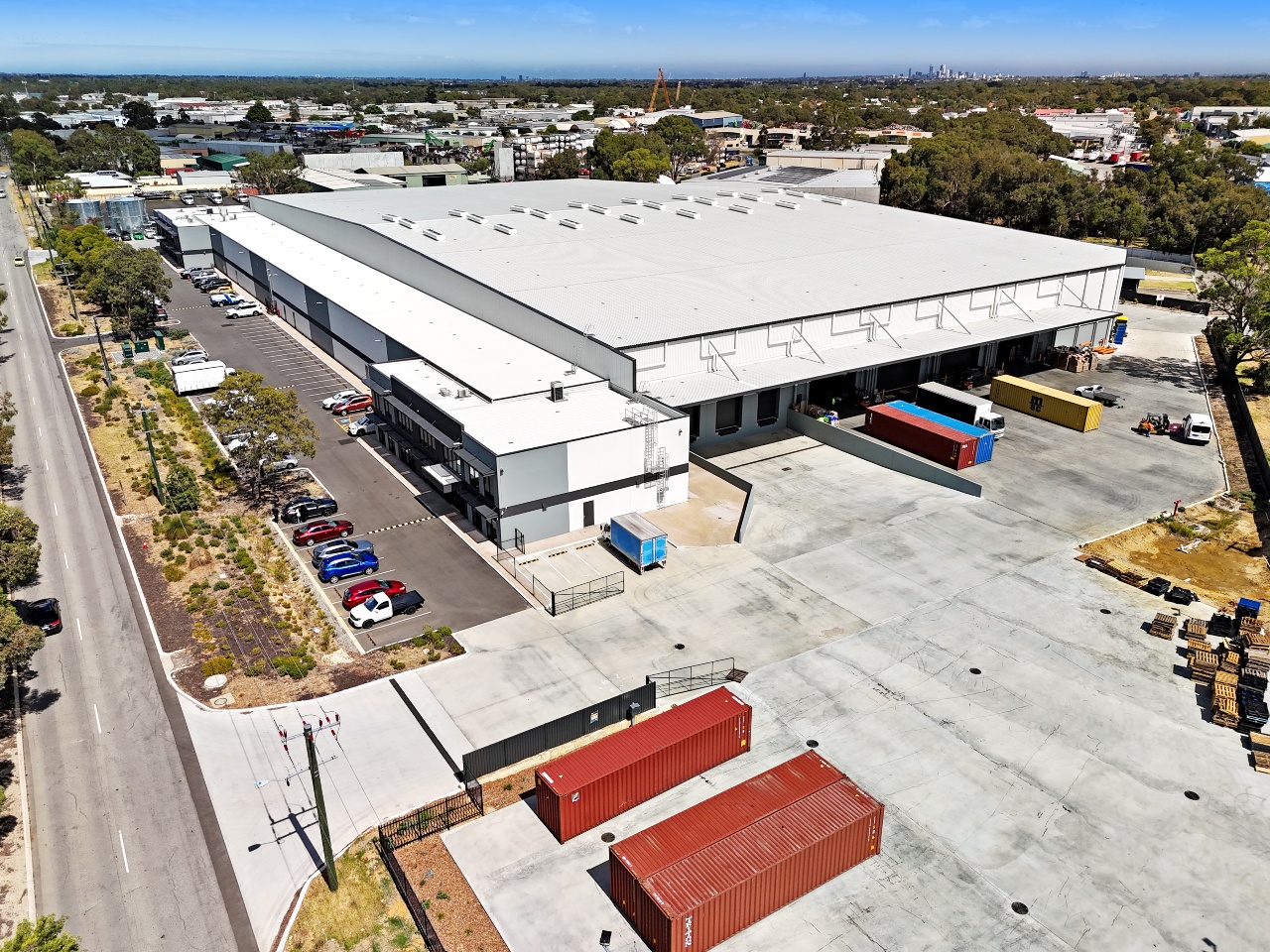
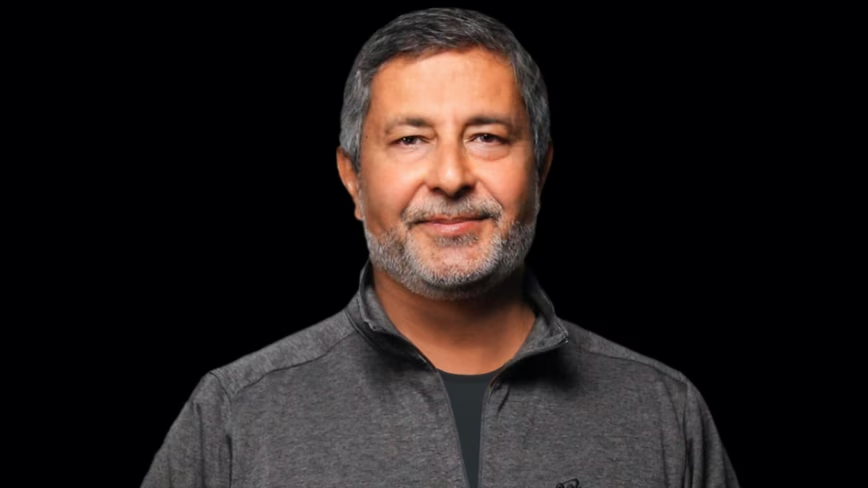
A company linked to Primewest co-founder David Schwartz has purchased a fully-leased industrial facility from property fund CapPru.

Continue Reading

Business

Electric 'bendy' bus a world first

Published

on

Electric 'bendy' bus a world first

The first electric articulated bus in the world has rolled off the production line at Volgren’s manufacturing facility in Malaga.

Continue Reading

Business

Opinion: Fired-up about prescribed burns

Published

on

Opinion: Fired-up about prescribed burns

OPINION: The passionate debate about prescribed burning is getting greater traction in the city.

Continue Reading

Business

Samsara Inc. (IOT) Analyst/Investor Day Transcript

Published

on

OneWater Marine Inc. (ONEW) Q1 2026 Earnings Call Transcript

Mike Chang
Vice President of Corporate Development & Investor Relations

All right. Good afternoon, and welcome to Samsara’s Investor Day. My name is Mike Chang, and I’m SVP of Finance here at Samsara. And first off, just thank you all for making the journey out here to a very, very hot Las Vegas to join us in person. And it’s amazing to see so many familiar faces in the audience. And for those who are joining virtually, it’s great to have you on as well.

We have an awesome, awesome agenda pack for you today. We have about 2.5 hours full of content, and we’re going to talk about how we’re bringing AI to the world of physical operations.

Before we get it started, there are a few housekeeping items. The key 2 things is, first, we’re going to be assessing forward-looking metrics during today’s presentation. These should be taken in addition to — sorry, these statements contain risks and uncertainties, and these are detailed further in SEC filings and our Investor Relations website. Second, we’ll

Advertisement
Continue Reading

Business

Value Shines While Tech Takes a Beating

Published

on

Stocks Little Changed After Fed Decision

The Invesco S&P 500 Low Volatility ETF was among the top-performing exchange-traded funds focused on stocks with particular characteristics, or factors, while the Invesco S&P 500 Momentum ETF was one of the big laggards.

Anything focused on momentum, growth, and tech was struggling, while value, dividend stocks, and ETFs with a lot of consumer staples, real estate, health care, or energy stocks were rising.

Continue Reading

Business

Review: Authenticity in a bottle at LS Merchants

Published

on

Review: Authenticity in a bottle at LS Merchants

REVIEW: A Margaret River winemaker is applying techniques that push beyond traditional winemaking boundaries.

Continue Reading

Business

Ferrari marketing boss quits weeks after EV launch backlash

Published

on

A promotional image of a yellow version of the electric Ferrari Luce, photographed in a dark studio.

Ferrari’s marketing boss has quit after 16 years at the company just weeks after a backlash over the launch of the supercar maker’s first-ever electric car, the Luce.

The firm announced this week that Enrico Galliera would leave the role of chief marketing and commercial officer. He will be replaced by former BMW Italy head Massimiliano Di Silvestre in July.

Ferrari thanked Galliera for his service and said he had “decided to embark on a new chapter in his professional journey – a decision shared with the company some time ago.”

The Luce was heavily criticised when it was unveiled in May. Ferrari did not mention the launch in its statement about Galliera’s departure.

Advertisement

Chief executive Benedetto Vigna said that Galliera “has played a significant role in the company’s growth and in strengthening the Ferrari brand worldwide.”

Galliera’s role involved managing which clients could purchase the luxury car maker’s highly sought-after vehicles.

“He has the gratitude of the entire Ferrari team and my personal best wishes for the future,” Vigna said in the statement.

The BBC has contacted Galliera for comment.

Advertisement

Since taking the role in 2010, Galliera has been involved in many of the firm’s key events.

LaFerrari, Ferrari’s first production hybrid hypercar, which combines a petrol engine and an electric motor, was launched in 2013.

In 2015, the firm listed on the New York Stock Exchange and in Milan the following year.

However, the launch of the $640,000 (£485,552) Luce spawned a host of internet memes and negative reactions.

Advertisement

Its looks, the brain-child of iPhone designer Sir Jony Ive, was criticised by the company’s former chairman, Italy’s deputy prime minister and transport minister Matteo Salvini.

The company’s shares plunged by 8% the day after the Luce was unveiled.

Continue Reading

Business

Matson: Overpricing Kills Dividend Yield, Increases Downside Risks

Published

on

Matson: Overpricing Kills Dividend Yield, Increases Downside Risks

Matson: Overpricing Kills Dividend Yield, Increases Downside Risks

Continue Reading

Business

Casey’s General Stores, Inc. (CASY) Analyst/Investor Day Transcript

Published

on

OneWater Marine Inc. (ONEW) Q1 2026 Earnings Call Transcript

Casey’s General Stores, Inc. (CASY) Analyst/Investor Day June 24, 2026 9:30 AM EDT

Company Participants

Brian Johnson – Senior Vice President of Investor Relations & Business Development
Darren Rebelez – President, CEO & Board Chair
Stephen Bramlage – Senior VP & CFO
Thomas Brennan – Senior VP & Chief Merchandising Officer
Brad Haga – Senior Vice President of Prepared Food & Dispensed Beverage
Ena Koschel – Chief Operating Officer
Nathaniel Doddridge – Senior Vice President of Fuel
Chad Frazell – Chief Human Resources Officer

Conference Call Participants

Advertisement

Corey Tarlowe – Jefferies LLC, Research Division
Krisztina Katai – Deutsche Bank AG, Research Division
Bradley Thomas – KeyBanc Capital Markets Inc., Research Division
Robert Griffin – Raymond James & Associates, Inc., Research Division
Jacob Aiken-Phillips – Melius Research LLC
Pooran Sharma – Stephens Inc., Research Division
Michael Montani – Evercore ISI Institutional Equities, Research Division
Phillip Blee – William Blair & Company L.L.C., Research Division
Mark Carden – UBS Investment Bank, Research Division
Kelly Bania – BMO Capital Markets Equity Research
Thomas Palmer – JPMorgan Chase & Co, Research Division
Bonnie Herzog – Goldman Sachs Group, Inc., Research Division
Edward Kelly – Wells Fargo Securities, LLC, Research Division

Presentation

Brian Johnson
Senior Vice President of Investor Relations & Business Development

Advertisement

Hello, and thank you for joining us today for our Investor Day. It’s great to see both new and familiar faces in the crowd, and we are very excited to share our strategic plan. I’m Brian Johnson, Senior Vice President of Investor Relations and Business Development.

Before we begin, I’ll remind you that today’s presentation includes forward-looking statements and non-GAAP measures within the meaning of the Private Securities Litigation Reform Act of 1995, including those related to the expectations for future periods, possible or assumed future results of operations, financial conditions, liquidity and related sources or needs, business and/or integration strategies, plans and synergies, supply chain, growth opportunities and performance at our stores. There are a number of known and

Advertisement
Continue Reading

Business

SpaceX Shares Edge Lower in Private Trading as Company Advances Starship and Starlink Milestones

Published

on

Elon Musk looks at his mobile phone

Shares of Space Exploration Technologies Corp., known as SpaceX, traded modestly lower in private markets Wednesday, closing at $154.35 after declining about 1.13 percent.

The move came amid broader market fluctuations as the privately held company continues pushing boundaries in reusable rocketry, satellite internet deployment and ambitious plans for human spaceflight. SpaceX remains one of the most valuable private companies in the world, with its valuation reflecting investor confidence in its technological leadership and government contracts.

While SpaceX does not trade on public exchanges, secondary market transactions and tender offers provide liquidity for employees and early investors. These private valuations often signal broader sentiment around the company’s growth trajectory and competitive positioning.

SpaceX’s core businesses include its Falcon rocket family, the Starlink satellite constellation and the next-generation Starship vehicle designed for missions to the Moon, Mars and beyond. Recent Starship test flights have demonstrated progress toward full reusability, a key factor in reducing costs for deep space exploration.

Advertisement

The company’s Starlink service has expanded rapidly, providing broadband connectivity to remote areas and supporting operations in challenging environments. Government and commercial contracts for Starlink have grown, particularly for maritime, aviation and military applications.

Recent Achievements and Challenges

SpaceX has maintained a high cadence of launches from facilities in Florida, California and Texas. Falcon 9 rockets continue serving as reliable workhorses for NASA cargo missions, commercial satellite deployments and crew rotations to the International Space Station.

Starship development remains a primary focus. Successful integrated flight tests have validated heat shield performance, booster catch attempts and in-orbit refueling concepts critical for future lunar and Martian architectures.

Advertisement

The company also faces regulatory and environmental scrutiny at its Boca Chica, Texas launch site. Coordination with federal agencies ensures compliance while balancing innovation timelines and local community concerns.

Competition in the commercial space sector has intensified with players like Blue Origin, Rocket Lab and international entrants. SpaceX’s vertical integration and manufacturing scale provide significant advantages in cost and production speed.

Valuation and Investor Interest

Private valuations for SpaceX have climbed steadily, supported by massive funding rounds and secondary share sales. Tender offers allow employees to realize gains while attracting new capital from institutional investors.

Advertisement

Analysts tracking the space economy project substantial growth in satellite services, launch demand and exploration contracts. SpaceX is positioned to capture significant market share across these segments.

Recent funding activity and partnerships underscore confidence in long-term prospects. The company’s ability to execute on ambitious roadmaps while generating revenue from operational services distinguishes it from many peers.

Starlink Expansion

Starlink has emerged as a major revenue driver, with thousands of satellites in low-Earth orbit delivering high-speed internet globally. The service has proven valuable in disaster response, rural connectivity and maritime communications.

Advertisement

International regulatory approvals and spectrum coordination remain ongoing priorities as the constellation grows. Capacity enhancements and user terminal improvements continue expanding addressable markets.

Military and government adoption of Starlink highlights its strategic importance. Secure communications capabilities support operations where traditional infrastructure is limited or compromised.

Future Outlook

SpaceX’s long-term vision includes establishing a human presence on Mars and enabling point-to-point Earth transport via Starship. These goals require sustained technical breakthroughs and substantial capital investment.

Advertisement

NASA partnerships for Artemis lunar missions provide both funding and technical validation. Successful crewed Starship flights would mark a significant milestone in commercial human spaceflight.

The company continues hiring across engineering, manufacturing and operations disciplines. Its culture of rapid iteration and acceptance of calculated risks has driven repeated successes in a historically challenging industry.

Challenges include supply chain management for high-volume production, talent retention in a competitive technology landscape and navigating complex international regulations for global services.

Broader Space Industry Context

Advertisement

The commercial space sector has matured rapidly, transitioning from government-dominated activities to vibrant private enterprise. Lower launch costs have democratized access to orbit, spurring innovation in Earth observation, communications and scientific research.

SpaceX’s achievements have accelerated this transformation while inspiring new generations of engineers and entrepreneurs. Its reusable rocket technology has fundamentally altered cost structures industry-wide.

Global interest in space capabilities continues rising, with nations and companies investing in sovereign launch capacity and satellite networks. SpaceX benefits from this trend while facing increased competition.

Investment in space infrastructure reflects confidence in multi-decade growth opportunities. Satellite broadband, space tourism, in-orbit manufacturing and resource utilization represent expanding frontiers.

Advertisement

As SpaceX navigates its next phase of development, private market valuations will likely remain closely watched. The company’s execution on Starship, Starlink scaling and deep space ambitions will shape its trajectory for years ahead.

The modest decline in secondary trading reflects normal market fluctuations rather than fundamental concerns. SpaceX’s operational momentum and contract backlog provide a strong foundation for continued leadership in commercial space.

Continue Reading

Trending

Copyright © 2025