TL;DR
Anthropic accused Alibaba’s Qwen lab of using 25,000 fake accounts for nearly 29 million Claude exchanges, the biggest such campaign yet.



Anthropic accused Alibaba’s Qwen lab of using 25,000 fake accounts for nearly 29 million Claude exchanges, the biggest such campaign yet.
Anthropic has accused Alibaba of waging the largest distillation campaign yet against a US AI company, telling senators and White House officials that operators linked to Alibaba’s Qwen AI lab used nearly 25,000 fraudulent accounts to extract Claude’s capabilities between April and June. The letter, a copy of which was seen by Bloomberg, described nearly 29 million exchanges with Claude targeting software engineering and agentic reasoning, the model’s most commercially valuable skills.
The accusation marks the first time Anthropic has named a major Chinese technology conglomerate as the source of a distillation attack. Previous allegations in February targeted smaller Chinese AI startups, including DeepSeek, MiniMax, and Moonshot AI, which Anthropic said had collectively generated more than 16 million exchanges through about 24,000 fake accounts. The Alibaba campaign alone exceeded the combined volume of all three earlier efforts.
Distillation is the practice of feeding carefully constructed queries to a frontier AI model, collecting its responses, and using those responses to train a cheaper rival system that approximates the original’s capabilities. The White House flagged the technique as a national security concern in April, when OSTP Director Michael Kratsios published a memo committing the government to share intelligence with US AI labs about foreign distillation campaigns. Anthropic said in its letter that the Alibaba campaign took place after the Kratsios memo, in defiance of the administration’s warnings.

The 💜 of EU tech
The latest rumblings from the EU tech scene, a story from our wise ol’ founder Boris, and some questionable AI art. It’s free, every week, in your inbox. Sign up now!
Alibaba had no comment on the allegations. An Anthropic spokesperson declined to discuss specifics but emphasised the importance of combating distillation through coordinated action between government and industry.
Alibaba’s American depositary receipts fell more than three percent on the news, dropping below $100 in afternoon trading on Wednesday. The stock decline adds to a difficult period for the company in Washington, where it faces pressure on multiple fronts.
The Pentagon added Alibaba to its Chinese military companies blacklist on 8 June, a designation Anthropic cited in its letter. Alibaba sued the Defense Department this week to win removal from that list, calling the label baseless and arguing it has no military affiliation. The distillation accusation now opens a second front, framing Alibaba not just as a company with alleged military ties but as an active participant in what Anthropic calls the systematic theft of American AI capabilities.
In its letter, Anthropic warned that adversarial distillation lets Chinese labs replicate frontier AI at a fraction of the training cost, and that models built this way often lack safety guardrails. The company urged the Trump administration to clarify antitrust guidelines so US labs can share more information about distillation attempts, reiterated its support for export controls on advanced AI chips, and called for penalties against firms that use the technique.
Lawmakers are moving in parallel. Senators Bill Hagerty and Andy Kim plan to introduce an amendment to must-pass defence legislation that would blacklist or sanction any Chinese firm found to be improperly accessing US AI model output. A related bipartisan bill in the House, backed by Representatives Bill Huizenga and Sydney Kamlager-Dove, is also being considered, though whether either proposal survives to the final version of the defence bill is uncertain.
The timing is sensitive for Anthropic as well. The company, now valued at $965bn after a $65bn Series H round, filed confidentially for an IPO this month and is preparing for a listing that could come as soon as this autumn. US officials have estimated that unauthorised distillation costs Silicon Valley labs billions of dollars, and the threat of cheaper imitation products from China that siphon away customers is a material risk for a company heading to public markets.
Anthropic’s calls for government support may not find a fully receptive audience, given that the company is embroiled in a separate dispute with the Trump administration over export controls imposed on its Fable 5 and Mythos 5 models less than two weeks ago. Commerce Secretary Howard Lutnick signed an order blocking foreign nationals from accessing those models, citing security concerns, and Anthropic disabled them to comply. Even after meetings between the company’s technical staff and White House officials, little progress has been made to restore service.
The result is a company caught between two fronts of its own. Anthropic needs the government to crack down on Chinese labs extracting its technology, but it is simultaneously fighting the same government’s decision to restrict its own products. The letter to senators is an attempt to separate the two issues, arguing that protecting US models from distillation and allowing those models to be deployed commercially are complementary rather than contradictory goals.
Whether Washington agrees will shape both the regulatory environment for US AI companies and the competitive dynamics of the industry’s most consequential rivalry. Anthropic has now named four Chinese labs as distillers of its technology, with the Alibaba accusation by far the largest in scale. If the legislative proposals gain traction, the consequences could extend well beyond Anthropic’s models to the broader question of how the US enforces an intellectual property border around AI systems that exist as software, not hardware, and that can be copied over the internet through nothing more than a well-crafted prompt.

[Attoparsec] occasionally rides a bicycle for transportation, but with the major downside of doing this in North America, a place where bicycle infrastructure is generally neglected. From snow removal, maintenance, separation from cars, or even existing in the first place, the places bicyclists use are generally last to be cared for. One of these deficiencies is landscaping maintenance, with plant growth routinely extending into travel ways. Rather than continue to get hit in the face by tree branches, [Attoparsec] took matters into his own hands, or in this case, head.
Since he’s riding down the bike path anyway, the original thought was to add a trimmer to the front of the bicycle. This has a notable downside of being dangerous to others, so instead he added a string trimmer to his helmet. The electric trimmer was scavenged from an old handheld landscaping tool, with a 3D printed mount designed in CAD to cleanly mount to his bicycle helmet. It’s wired to a control on the handlebar, so when a branch is coming up it can be activated by hand and then pruned without much thought other than properly aiming one’s head.
By most measures this eccentric contraption seems to work quite well. There’s not enough torque to affect the rider’s head in any negative way, the strings are long enough to reach far enough to trim the leaves and branches before they can impact the rider’s face, and it’s safe for other users of the bike path. [Attoparsec] calls this “guerrilla urban landscaping”, a bit different from other forms of guerrilla gardening we have seen before.

What just happened? Russia has charged Telegram founder and CEO Pavel Durov with “aiding terrorism” and placed him on an international wanted list. The Federal Security Service (FSB) claims the platform failed to remove channels, chats, and bots used by Ukrainian intelligence to organize attacks inside Russia. Telegram’s response was less than diplomatic: its official X account posted a photo of Durov giving the middle finger.
The charges follow a terrorism-related investigation that became public in February. The FSB alleges that Telegram was used to coordinate sabotage, terrorist attacks, mass killings, and cyberfraud, resulting in deaths and extensive property damage.
A large part of the case centers on Daivinchik/Leo, a popular Telegram dating chatbot in Russia, where Tinder is no longer available. According to the FSB and Russia’s Investigative Committee, Ukrainian agents posed as young women to contact and entrap young Russians before coercing them into committing crimes.
– Telegram Messenger (@telegram) July 29, 2026
Russian authorities say 46 people aged between 12 and 22 have been arrested over the last year after being recruited through the bot. They are accused of attacking law enforcement officers or setting fire to transport, energy, communications, and financial infrastructure. Ukraine has not commented on the allegations.
Durov, 41, could face life imprisonment if convicted. The FSB did not explain how it plans to add him to an international wanted list, and it’s unclear whether Moscow will seek an Interpol Red Notice. The billionaire lives in Dubai and holds French and Emirati citizenship. He posted that he was in Georgia last week, but his current location is unknown.
The case arrives amid Russia’s intensifying campaign against foreign internet services. Moscow has effectively throttled Telegram, forcing users to rely on VPNs, yet the Kremlin and Russian defense ministry continue posting on it daily. It was previously reported that the slowdown angered Russian soldiers and pro-war bloggers who depend on the app, while the Kremlin attempts to push citizens toward its state-backed Max service. A subsequent VPN crackdown was blamed for widespread banking outages.
Durov’s legal problems extend beyond Russia. French authorities arrested him in 2024 over allegations that Telegram failed to tackle criminal activity and cooperate with investigators. He denied wrongdoing and was eventually permitted to leave France while the investigation continued. Telegram later changed its terms to allow the disclosure of suspects’ IP addresses and phone numbers in response to valid legal orders.
Durov left Russia in 2014 after coming under government pressure over VKontakte, the social network he also founded. He has characterized Moscow’s actions against Telegram as an attempt to undermine privacy and free speech. The company’s response to the latest charge suggests that position has not changed.

Looking for a different day?
A new NYT Strands puzzle appears at midnight each day for your time zone – which means that some people are always playing ‘today’s game’ while others are playing ‘yesterday’s’. If you’re looking for Wednesday’s puzzle instead then click here: NYT Strands hints and answers for Wednesday, July 29 (game #878).
Strands is the NYT’s latest word game after the likes of Wordle, Spelling Bee and Connections – and it’s great fun. It can be difficult, though, so read on for my Strands hints.
Want more word-based fun? Then check out my NYT Connections today and Quordle today pages for hints and answers for those games, and Marc’s Wordle today page for the original viral word game.
SPOILER WARNING: Information about NYT Strands today is below, so don’t read on if you don’t want to know the answers.
Latest Videos FromTechRadar
• Today’s NYT Strands theme is… Trade names
Play any of these words to unlock the in-game hints system.
• Spangram has 8 letters
• First side: left, 1st row
• Last side: right, 1st row
Right, the answers are below, so DO NOT SCROLL ANY FURTHER IF YOU DON’T WANT TO SEE THEM.

The answers to today’s Strands, game #879, are…
As I was working around the board collecting “trade names” I could not help but wonder how many of today’s trades would be considered the work of ARTISANS in the future — programmer, writer, barista?
Many in the search are jobs that are now quite niche, yet we only need think of how many people are named SMITH or COOPER to realize how commonplace they once were.
Not so commonplace, however, to prevent me from needing a hint, although in my case it was laziness that prompted me to take the shortcut, thus demonstrating my inevitable replacement by a far more capable AI version.
Strands is the NYT’s not-so-new-any-more word game, following Wordle and Connections. It’s now a fully fledged member of the NYT’s games stable that has been running for a year and which can be played on the NYT Games site on desktop or mobile.
I’ve got a full guide to how to play NYT Strands, complete with tips for solving it, so check that out if you’re struggling to beat it each day.

Every new application, API, and automated workflow adds identities that need oversight, yet most organizations lack a single source of truth for who has access to what. IntegraTRACE, founded by software engineer Steve Emmanuel, provides a SOC 2 Type II compliant identity visibility platform that centralizes human, non-human, and agentic identity data across cloud environments. The company is expanding from North America into Europe and Asia.
Enterprise technology has become significantly more interconnected over the past decade. Cloud platforms, automation, artificial intelligence, and software integrations have allowed organizations to operate with greater speed and flexibility, but they have also made understanding digital access far more complicated.
Every new application, automated workflow, and API introduces more identities with larger scope that require oversight, making visibility increasingly difficult as technology ecosystems continue to expand. A report shows that identity-based attacks accounted for nearly 1 in 3 intrusions observed in 2024, with attackers increasingly relying on valid accounts and stolen credentials as initial access methods.
Steve Emmanuel, CEO and founder of IntegraTRACE, witnessed that shift firsthand throughout more than a decade in software engineering. Beginning as a developer before advancing into technical leadership roles, he found that every step into larger organizations brought greater complexity. Teams expanded, cloud environments grew, and new applications were introduced, yet one challenge consistently remained.
“The biggest misconception is that somebody is keeping track of everything,” Emmanuel says. “Engineering assumes security has the answers. Security assumes engineering has the answers. Everyone believes someone has the complete picture, but very often there isn’t a reliable source of truth.”
Those experiences ultimately inspired the creation of IntegraTRACE, a SOC 2 Type II compliant identity visibility platform designed to help organizations understand how human, non-human, and agentic identities interact across cloud environments and enterprise applications. Rather than focusing solely on authentication or access management, Emmanuel explains that the company’s objective has been to provide organizations with a centralized view of digital identities as enterprise infrastructure becomes increasingly distributed.
From the beginning, Emmanuel wanted the platform to solve practical customer challenges rather than pursue features simply because they were popular. He explains that customer feedback has played a central role in product development, allowing the engineering team to respond quickly as cloud environments and identity ecosystems continue evolving.
According to Emmanuel, one of the most common responses from customers is realizing how much identity information had been dispersed across separate systems. Centralizing that information provides a clearer picture of access across the organization and helps surface potential risks before they become larger security concerns.
“Visibility changes the conversation,” Emmanuel says. “When organizations can see every identity and its level of access in one place, they gain insights that were previously difficult to obtain.”
From his perspective, customers frequently identify over-privileged accounts, dormant credentials, and permission structures that would have taken weeks or even months to uncover through manual reviews. Bringing those insights together into a centralized view allows security and engineering teams to spend less time gathering information and more time addressing potential risks.

IntegraTrace
He credits much of the company’s early growth to maintaining a close relationship with customers. Rather than following lengthy development roadmaps, the engineering team regularly incorporates customer feedback into the platform, often delivering requested improvements within weeks. Emmanuel believes that approach has helped ensure every product enhancement is tied to a practical business need.
“We’re building something people genuinely need,” he says. “When customers tell us there’s a problem slowing them down, we want to solve it quickly. That feedback continues to shape how the platform evolves.”
Looking ahead, Emmanuel says the company’s ambitions extend well beyond cloud infrastructure. Following early adoption across Canada and the United States, IntegraTRACE is preparing for expansion into Europe and Asia while broadening its visibility capabilities into HR systems, financial applications, and other enterprise software where identities continue to multiply.
His long-term vision is to make identity visibility a foundational layer across an organization’s technology ecosystem. As businesses continue adopting AI, automation, and increasingly connected applications, Emmanuel believes understanding digital access will become as important as managing the systems themselves.
“The organizations that adapt most successfully won’t necessarily be the ones with the most security tools,” Emmanuel says. “They’ll be the ones that have the clearest understanding of every identity operating across their business and the confidence to act on that knowledge.“

Why you can trust TechRadar
We spend hours testing every product or service we review, so you can be sure you’re buying the best. Find out more about how we test.
The KitchenAid KF3 Fully Automatic Espresso Machine is the middle child of the company’s 2026 release of a trio of compact bean-to-cup coffee machines, sitting below the KitchenAid KF4 and above the KF2. Because of its slim build, it’s a great option for smaller kitchens, but it can easily service a larger household thanks to four customizable user profiles and a solid selection of over 15 coffee-based drink recipes.
It benefits from KitchenAid’s IntelliGrind system — also featuring on the company’s larger machines like the KF8 and KF6 — that automatically determines the best grind size depending on the beans you pour into the top-mounted hopper. During my testing, I found it consistently delivered a well-extracted and tasty espresso.
The KF3’s automatic milk system uses a hose that you need to place into your own container (the KF4 uses a similar system but includes a container), letting you make a variety of drinks including lattes and cappuccinos. Despite not claiming to work with non-dairy milks, I found it delivered a good level of foam when using a barista-style oat milk.
Latest Videos FromTechRadar
KitchenAid has given the KF3 a couple of iced coffee recipes too. As with the KF4, and other machines I’ve tested such as the Philips LatteGo 4400 Series, you need to put some ice cubes in your glass or cup first, and KitchenAid claims that the machine will brew espresso at a lower temperature. However, when checking the temperature of a regular shot at ‘medium’ temperature and an iced-espresso shot with a food-grade thermometer, both registered at around 40ºC / 104ºF, meaning the iced espresso was still hot enough to melt the ice, resulting in a lukewarm and diluted drink.
The other slight niggle I have with the KF3 is that it goes through water quite quickly as it performs a rinse cycle on startup and shutdown. I can understand the latter process to clean out the internals, and the rinsing of the milk hose to keep everything hygienic, but the start-up rinse cycle seemed unnecessary. Fortunately the rear-mounted water tank is quite large at 1.8L, but if you have a larger household or you drink a lot of coffee each day, you’ll be refilling it regularly.
Overall, however, the KitchenAid KF3 is a fantastic mid-range automatic espresso machine that’s well made, brews delicious drinks and is ultimately easy to maintain. In fact, I’d say that it does more than enough to compete with the best coffee makers.

|
Name |
KitchenAid KF3 Fully Automatic Espresso Machine |
|
Type |
Bean-to-cup |
|
Dimensions (H x W x D) |
14.2 x 7.7 x 18.5 inches / 361 x 196 x 470mm |
|
Weight |
19.8lbs / 9kg |
|
Water reservoir capacity |
1.9 quarts / 1.8 liters |
|
Milk frother |
Yes (automatic) |
|
Bars of pressure |
15 |
|
Noise level |
72dB grinding, 60dB brewing |
|
User profiles |
4 |
The KitchenAid KF3 Fully Automatic Espresso Machine launched first in the UK and US in April 2026, and eventually made its way to Australia in July 2026. It has a list price of $999.99 / £749 / AU$1,349, meaning it’s one of the company’s more affordable machines, while being classified a mid-range option in the grand scheme of things.
Only the lower-spec KF2 is cheaper at $799.99 / £699 / AU$1,099 if you want an automatic machine, while the Semi Automatic Espresso Machine is cheaper still, although that naturally requires a bit more hands-on involvement.
The top-tier model in this latest series, the KF4 ($1,299.99 / £899 / AU$1,599) offers much of the same functionality as the KF3, albeit with a wider selection of recipes, a bigger touch display and ships with a milk carafe.
The similarly specced Philips LatteGo 4400 Series is also worth considering in this price range, with its list price of $799.99 / £599.99 / AU$1,199.
At first glance, the KitchenAid KF3 looks very similar to other models in the company’s lineup, from the KF4 and up to the KF8 (there’s currently no KF5). It’s more compact than the KF6-8, but the same size as the KF4 and KF2, at 14.2 x 7.7 x 18.5 inches / 361 x 196 x 470mm (H x W x D), making it easy to slide onto a kitchen counter. And slide it you can, as there are two small wheels on the bottom at the rear, so you can lift from the front and move it forwards and backwards with ease.

Looks-wise, it adopts a similar aesthetic as the rest of its siblings. It’s boxy, with rounded corners, and is available in either Porcelain White or Matte Black. To cut manufacturing costs, KitchenAid has ditched the predominantly metal build of the larger models, replacing it with plastic. It still looks and feels very much a premium product though.
The clearest indicator that lets you know this is the KF3 is the small 2.4-inch / 6cm color display. The KF2 doesn’t have one at all, while the KF4’s color screen is larger and touch enabled. It’s a relatively low-resolution screen compared to the likes of the Philips Café Aromis, but is still bright and clear, and the use of color helps to identify the drink you want to make.

The KF3’s display is flanked by 10 touch buttons: four that provide quick access to user profiles, drinks menu, rinsing cycles and machine settings; two to initiate and cancel brewing; and four to cycle forward and back through menu options, return and select.
The top-mounted hopper is large enough to accommodate 250g of coffee beans and, as with the other compact machines in the series, it features a removable opaque lid with a silicone seal. This means you can’t easily see the amount of leftover beans (there’s a clear audible indication if it doesn’t have any to grind) but, then again, the beans aren’t exposed to light and air, keeping them fresher for longer.

Furthering its benefits for smaller kitchens, the lid is removable rather than hinged means it’s easy to fill the hopper if you have the KF3 positioned under a wall cabinet. There’s also a small chute for pre-ground coffee, and a scoop is included in the box.
The 1.8L water tank slides in and out the rear of the machine and has an integrated handle to make the process simple, although I personally prefer the side-mounted tank on the Philips LatteGo 4400 as it makes refilling a little bit easier. However, the KitchenAid’s tank features a hinged lid, so more often than not I would leave it in place and pour water in from a jug.
KitchenAid supplies a water filter with the KF3 that it says is good for around two months of use. It was initially a little fiddly to install, but the included coffee scoop doubles up as a tool that clips onto the filter, giving you the extra length needed to screw it into place.
The drip tray is deep and extends virtually the full depth of the KF3, and has a large spout at the back for easy emptying. Used coffee grounds are deposited into a removable bin in the center that can be tipped out when full — you’ll see a notification on the display when it’s time to do so.

The KF3’s milk system uses a silicone hose that connects to the side of the dispenser located on the front of the machine. You need to insert one end of the hose into a small socket, while the other end drops into a tall glass or bottle. KitchenAid offers a sealed container with a double-ended hose as an optional extra for $59.99 / £39 / AU$59, which is included with the KF4 by default.
The KF3 features a thorough rinsing cycle for the hose to ensure it’s kept clean, but note that none of the removable parts are dishwasher safe.
Lastly, the height of the coffee dispenser can be adjusted to suit a variety of cup sizes, including large mugs and tumbler glasses. I found I needed to use a little bit of force to move it, but this is a minor niggle.
The best thing about the KitchenAid KF3 Fully Automatic Espresso Machine is that you can confidently rely on it to deliver an excellent espresso with every use. The IntelliGrind system automatically determines the best grind size depending on your chosen beans to ensure it brews a tasty shot with good crema. I used medium-roast and dark-roast beans during my testing period and I was more than satisfied with the results in each case.
The fact that you don’t have to worry about grind size makes this a fantastic option for coffee novices who aren’t sure how to get the best results. If you’re not entirely satisfied, then you’ll find a lever hidden behind the side compartment (which provides access to the brewing unit) that you can use to adjust grind size to a finer or coarser level. I ultimately left it at the default setting in the middle.
That being said, the KF3 does give you the option to adjust the strength and body of the espresso. Strength is denoted on a scale of one to three, with the difference being the dose of coffee that’s ground into the brewing head — 7g being the lightest strength and 14g being the strongest.
You can also select light, medium or strong body, which relates to the rate at which water flows during extraction. A strong-bodied coffee, for example, takes the longest, as the water flows through slowly to extract the most amount of flavor.
You’re also able to adjust the volume of coffee delivered for each drink and the water temperature.
Auto Milk is KitchenAid’s milk-foaming system and it works well, although I’m of the opinion that a steam wand will always produce superior results. I was, however, pleased to find that it worked well with plant-based milks, despite not having a dedicated option. Coffee machines that cater specifically to plant-based options, such as the KitchenAid KF8, will heat it to a lower temperature compared to dairy for optimal results.
When I made a cafe latte using a barista-style oat milk, I found the KF3 produced a good level of foam with a silky texture, and at a drinkable temperature. I achieved similarly good results with full-fat dairy.

There are four user profiles on the KF3 for you and your household to store their own drink preferences. While the KF4 lets you name them, they’re fixed at User Profile 1, 2, 3 and 4 here.
KitchenAid understands that iced drinks are popular, even at home, and has given the KF3 dedicated presets for cold coffees. In theory, the shot the machine dispenses is brewed at a lower temperature, although you do still need to put ice in your cup or glass, but that didn’t seem to be the case in reality.
I used a thermometer to measure the temperature of both a regular espresso shot and an iced espresso shot and found them to be similar. The regular shot was around 50ºC when brewed at a medium temperature, while the iced shot was around 45ºC. I conducted this test twice, with the same results both times.
As such, the iced espresso shot was still too hot and melted the cubes in my cup relatively quickly, resulting in a diluted drink. If you like your cold coffees, you’d be better off considering other machines like the De’Longhi Dedica Duo and the Jura J10 that offer proper cold-extracted espresso.
The KF3, like other KitchenAid espresso machines, is QuietMark-certified, indicating it should be whisper-quiet in use. That’s something I can certainly attest to, as I recorded around 70dB while grinding and 60dB when brewing, using the decibelX app on my iPhone and standing next to the machine in a relatively quiet space. That puts it on par with the KF4, although we found the flagship KF8 to be quieter still with an average of 44dB during the entire coffee-making process.


Keeping the KitchenAid KF3 clean is incredibly simple. Not only does it automatically complete a rinse cycle on startup and shutdown (which, as I mentioned does mean the water tank can empty relatively quickly), but it will also prompt you when it’s time to empty the ground container and drip tray. It will also ask you to rinse the milk system after every use. You can skip this process at first, but when you turn the machine off — or it automatically shuts down after a predetermined amount of time — it won’t do so until the hose has been flushed.
There are further and more thorough cleaning procedures within the settings menu for washing the brewing unit with special cleaners, and a couple of tablets are included in the box. You will need to buy descaler and a milk system cleaner separately.
There’s also an option to evaporate all the water from the system entirely, which my colleague Cat Ellis has previously expressed as being a feature she wishes all automatic espresso machines had. This is particularly useful if you know you’re not going to be using the machine for an extended period of time and keep it hygienically dry for the duration.

|
Attribute |
Notes |
Score |
|---|---|---|
|
Value |
Well-priced considering the features and functionality. |
4/5 |
|
Design |
An attractive design that’s compact enough to suit all kitchens. |
4.5/5 |
|
Performance |
Excellent performance for hot coffee-based drinks, and milk foaming is good. Iced options aren’t quite up to scratch, however. |
4/5 |
If you’re not sure whether the KitchenAid KF3 is the right espresso machine for you, here are three other options to keep in mind.
I used the KitchenAid KF3 for two weeks, and having already spent time with the KF4, I was well versed with what to expect from the slightly lesser-specced machine. I prepared a wide range of drinks with and without milk, and used two different styles of coffee beans to test the IntelliGrind feature on the KF3.
I used a barista-style oat milk and full-fat dairy milk to test the automatic milk-foaming system, and ran the machine’s recommended cleaning cycles.
Read more about how we test
First reviewed July 2026
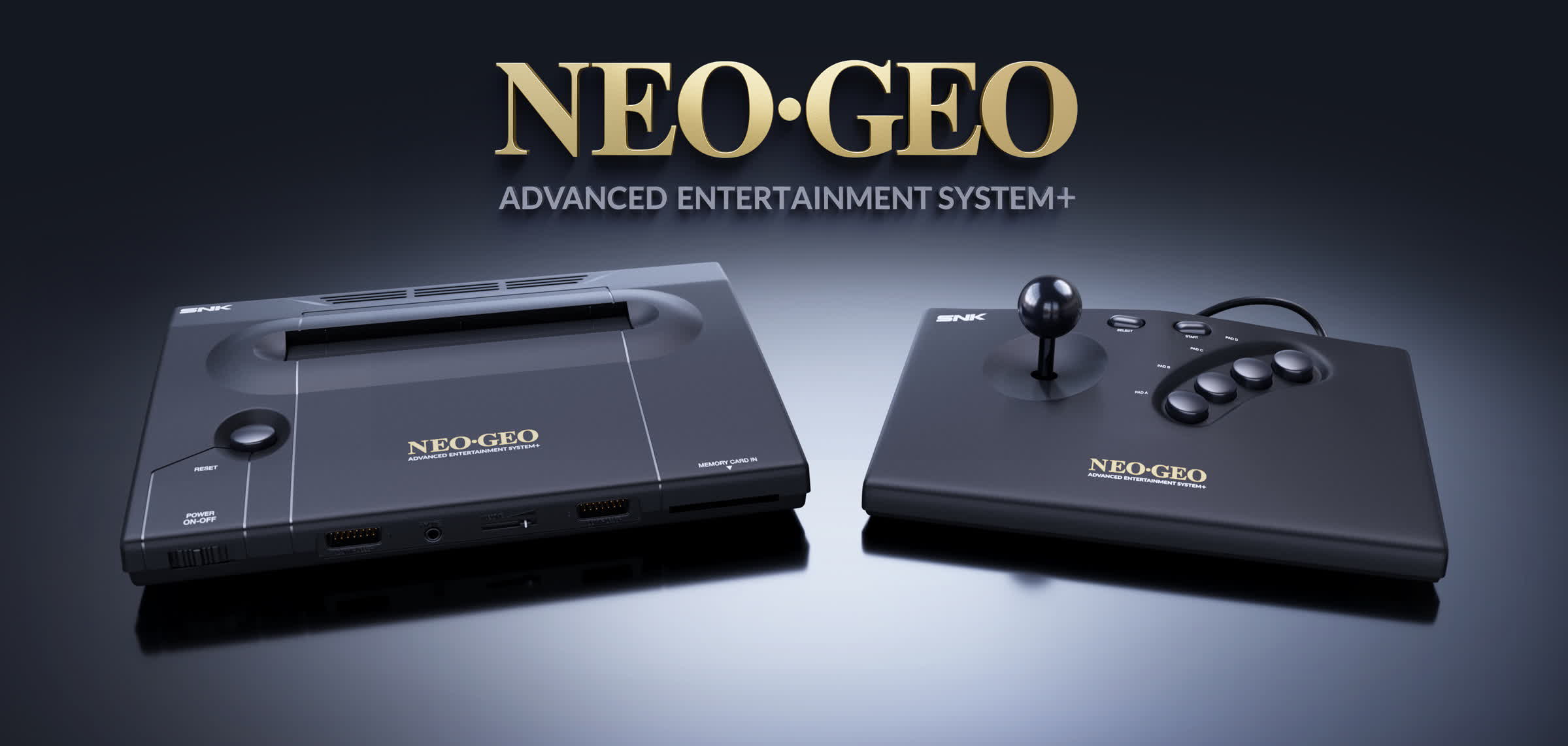
Retro-Suckers: Back in the 1990s, Neo Geo was one of the most popular arcade platforms thanks to its unmatched computing power and graphics prowess. SNK tried to bring the system into the home with the Neo Geo AES console, which used its own cartridges that were physically incompatible with arcade MVS cartridges. The attempt ultimately failed, but the Neo Geo AES is now making a comeback among gamers seeking an “authentic” hardware experience without relying on emulation.
Plaion and SNK announced the revival of the Neo Geo AES platform earlier this year. The “premium” retro-gaming console is now available for pre-order, with multiple variants, accessories, and even an “extra-luxury” edition packed with controllers, cables, and game cartridges.
The Neo Geo AES+ is part of Plaion’s “Replai” offering, which sells several modern iterations of classic platforms such as the Intellivision, Atari 2600, and the Amiga. Plaion describes the Neo Geo AES+ as a faithful reimplementation of the original Japanese machine, using legacy ASIC-based solutions that don’t require any kind of emulation.
Custom ASIC chips replicate the original machine’s software and hardware functionality, which allegedly includes full compatibility with original AES cartridges.
Arcade authenticity aside, the Neo Geo AES+ also includes a few modern niceties to ease the pain of using classic consoles with modern setups. The machine provides a low-latency HDMI output, overclocking, and high-score storage on a separate memory card. I can safely say that overclocking is a rather crucial upgrade, as Metal Slug and other Neo Geo games are infamous for turning into annoying slideshows when too many sprites are shown on screen.
Neo Geo AES+ is coming out on November 12, 2026, with plenty of different pre-order options. The original edition costs €200 and includes a console, an arcade stick, and an HDMI cable. There is also an all-white Anniversary Edition, which costs €300 and comes with an additional wireless arcade stick, a white Metal Slug cartridge, a memory card, and more.
Sitting at the other end of the spectrum, the Neo Geo AES+ Ultimate Edition packs several additional controllers, 10 fan-favorite Neo Geo games, and plenty of dongles and cables. This particular version has a €900 price tag, which is still not enough to impress retro enthusiasts who remember how much the original console cost back in the 90s.
The Neo Geo platform played an important role in video game history, blowing away the hardware competition and giving rise to long-running series such as Metal Slug, The King of Fighters, and more. Neo Geo emulation has long been a “solved” problem on PCs and mobile devices, thanks to MAME and other actively developed projects.
The Neo Geo AES+ is the latest in a long list of modern devices designed to replicate both the games and hardware features of the original console. It might very well be the most effective one yet, although I don’t plan on spending €80 on one of the individual AES cartridges that Plaion is going to launch alongside the console.

The fifth and final major of the season is set to be electric, with so many of the top contenders out to fulfil lofty personal ambitions at Royal Lytham & St Annes, none moreso than Ryu Hae-ran and Nelly Korda.
World No.1 Korda won the first two majors of 2026, only for Ryu to double up too. It’s the first time ever that two players have secured multiple majors in a season. They’re both hoping to emulate the great Inbee Park, the last player to win three major titles in a single calendar year. That was way back in 2013.
The consistency of Korda, who’d also complete a career Grand Slam with victory in Lancashire, has been astounding over the past few seasons, but she missed her first cut in two years earlier this month.
Victory would see Miyu Yamashita become the first player to go back-to-back in a major since Yani Tseng in 2011, a scenario that isn’t out of the question in current form. The 24-year-old has made the top-five in four of the past six tournaments she’s contested.
Yamashita’s triumph a year ago consigned Charley Hull to her second Women’s Open runner-up finish in three years, but she has a big reason to be cheerful this weekend: the past two winners of the Women’s Open at Royal Lytham were Brits.
Read on for our guide on where to watch Women’s Open 2026 online, on TV and potentially for free wherever you are.
Yes. Full Women’s Open 2026 coverage is free-to-air on R&A TV in the UK.
Another free option is BBC iPlayer, which is airing a nightly highlights show.
Traveling abroad right now? You can use a VPN to watch the Women’s Open for free as if you were right at home.
A VPN is handy piece of software that can make your device appear as if it’s back in your home country, so you can unlock your usual service. The best VPN right now? We recommend NordVPN – it does everything and comes with up to 75% off.

🟩 NordVPN – get the world’s best VPN
Not having a VPN is like leaving your front door wide open in a busy city – anyone can walk right in and take a peek.
TechRadar regularly reviews all the biggest and best VPN providers and NordVPN is our #1 choice.
✅ Up to 75% off today
✅ 3 extra months free
✅ Unlocks all necessary streaming services
Get NordVPN and stream Women’s Open 2026 from anywhere.View Deal

Women’s Open 2026 coverage is shared between NBC, USA Network, Golf Channel and Peacock in the US. All NBC coverage is being simulcasted on Peacock.
Round 1 and Round 2 air on Golf Channel from 4am-8am, and on USA Network from 8am-2pm. Round 3 and Round 4 air on USA Network from 7am-12pm, and on NBC from 12pm-finish. All times ET.
Peacock is also showing Featured Groups coverage.
The Peacock price starts at $10.99/month or $109.99/year for a plan that carries live sports. However, you can access Peacock virtually for free with a Walmart Plus 30-day trial for $1.
NBC and USA Network, meanwhile, are available through Sling – specifically the Blue plan, which starts at $45.99/month. It includes NBC, ABC and Fox in select locations, plus FS1, USA Network, FX and more. You’ll need the $11/month Sports Extra add-on for Golf Channel.
Alternatively, all three channels are also carried by YouTube TV and Hulu + Live TV, each of which offers a free trial to new users.
If you’re traveling outside of the US, you can make use of NordVPN to catch the action.

In the UK, Women’s Open coverage is free-to-air on the R&A TV streaming platform.
A 60-minute Women’s Open highlights show will air at 8.30pm BST on all four days of the tournament on BBC One Red Button and BBC iPlayer.
All you need is an account, a TV Licence and a UK postcode (e.g.HA9 0WS). Sign up here!
Alternatively, Sky Sports is providing extensive coverage of the 2026 Women’s Open, across its Sky Sports Main Event and Sky Sports Golf channels.
Sky Sports plans start from £35/month, or £20 if you’re an existing Sky subscriber. Alternatively, grab a Now Sports subscription from £14.99/day or £34.99/month.
Outside the UK right now? Use NordVPN to access your preferred Women’s Open stream.

In Australia, Women’s Open 2026 is being televised on Fox Sports via Foxtel, with live streaming available via Kayo Sports.
Kayo Sports starts at AU$30 per month after a 7-day free trial. Or you can get your first month for AU$1.
If you’re currently out of Australia but want to watch your usual Women’s Open coverage, you’ll need to get yourself a VPN, as per the instructions above.

In Canada, Women’s Open 2026 is exclusive to TSN.
If you don’t have cable, the TSN Plus streaming service costs CA$8/month or CA$80/year.
If you’re out of Canada but still want to tune in, explore the VPN route set out above, which will help you access your accounts from anywhere.
(All times BST)
6:30 A Hewson (Eng), A Doherty (US), C Williams (Wal)
6:41 A Garvey (NZ), L Harm (Ger), S Soenderby (Den)
6:52 H Wei-ling (Tpe), A Ashok (Ind), D Harry (Wal)
7:03 A Nordqvist (Swe), C Porter (Aus), S Takahashi (Jpn)
7:14 M Katsu (Jpn), Y Noh (US), S Kyriacou (Aus)
7:25 C Ciganda (Spa), K Davidson (Aus), M Jose Marin* (Col)
7:36 Y Ina (Kor), Al Lee (US), Y Yunseo* (Kor)
7:47 S Jiyai (Kor), A Kim (US), C In-gee (Kor)
7:58 L Grant (Swe), K Jin-young (Kor), K Romero* (US)
8:09 K Sei-young (Kor), R Takeda (Jpn), Y Araki (Jpn)
8:20 K Hyojoo (Kor), M Lee (Aus), M Saigo (Jpn)
8:31 L Woad (Eng), A Iwai (Jp), An Lee (US)
8:42 L Ko (NZ), N Korda (US), R Haeran (Kor)
8:58 C Hye-jin (Kor), G Kim (Aus), M Rhodes (Eng)
9:09 L Somi (Kor), E Henseleit (Ger), A Furue (Jpn)
9:20 L Duncan (US), Y Amy (Kor), J Lopez Ramirez (Spa)
9:31 S Popov (Ger), S Jenny (Kor), P Delacour (Fra)
9:42 L Yan (Chi), S Tan (Sin), Y Saso (Jpn)
9:53 T Yani (Tpe), N Nadaud (Fra), A Forsterling (Ger)
10:04 A Yubol (Phi), C Gainer (Eng), K Minji (Kor)
10:15 K In-kyung (Kor), M De Roey (Bel), C Lopez-Chacarra (Spa)
10:26 J Ewart Shadoff (Eng), A Zanusso (Ita), J Bosio (Aus)
10:37 S Kouskova (Cze), J Soo-bin (Kor), A Fuller (Eng)
10:48 P Babnik (Slo), A Foster (Ire), B Wardle (Eng)
11:14 J Yan (US), A Laisne (Fra), L Walsh (Ire)
11:25 K Bennett (Aus), Z Weiwei (Chi), K Arwefjall (Swe)
11:36 E Hara (Jpn), C Tamburlini (Swi), M Green (US)
11:47 N K Madsen (Den), K Nagai (Jpn), E Hamilton (Eng)
11:58 S Kuwaki (Jpn), H Briem (Ger), L Li (US)
12:09 A Huang (Can), J Bae (US), P Martin Sampedro* (Spa)
12:20 L Vu (US), S Sakuma (Jpn), R Zhang (US)
12:31 A Jutanugarn (Tha), K A-lim (Kor), C Alexander (SA)
12:42 H Shibuno (Jpn), G Hall (Eng), V Delon* (Fra)
12:53 G Lopez (Mex), C Iwai (Jpn), C Boutier (Fra)
13:04 Y Ruoning (Chi), N Hataoka (Jpn), J Kupcho (US)
13:15 M Yamashita (Jpn), J Thitikul (Tha), L Coughlin (US)
13:26 C Hull (Eng), H Green (Aus), B Henderson (Can)
13:42 M Stark (Swe), I Jin-hee (Kor), A Corpuz (US)
13:53 K Min-sol (Kor), P Tavatanakit (Tha), M Khang (US)
14:04 P Anannarukarn (Tha), H Youmin (Kor), L Maguire (Ire)
14:15 A Buhai (SA), F Suga (Jpn), D Weber (Ned)
14:26 K Minsun (Kor), L Mi-hyang (Kor), N B Estrup (Den)
14:37 C Wannasaen (Tha), P Roussin-Bouchard (Fra), L Yu (Chi)
14:48 R O’Toole (US), R Choi (Aus), C Naughton* (Eng)
14:59 N Guseva (Rus), N Komulainen (Fin), L Crump* (Eng)
15:10 C Tejedo Mulet (Spa), D Dagar (Ind), Y Wilson (US)
15:21 D Darquea (Ecu), P Mack (Ger), G Kim (US)
15:32 A Utama (Tha), A Pelaez Trivino (Spa), V Bouvet (Fra)
2025 – Miyū Yamashita
2024 – Lydia Ko
2023 – Lilia Vu
2022 – Ashleigh Buhai
2021 – Anna Nordqvist
2020 – Sophia Popov
2019 – Hinako Shibuno
2018 – Georgia Hall
2017 – In-Kyung Kim
2016 – Ariya Jutanugarn
Of course! Each of the major broadcasters has streaming services that you can access through mobile apps or via your phone’s browser.
You can also stay up-to-date with all of the key Women’s Open 2026 highlights on the LPGA’s official social media channels on YouTube (@LPGA), Instagram (@LPGA_Tour) and Facebook (@LPGATour).
We test and review VPN services in the context of legal recreational uses. For example:1. Accessing a service from another country (subject to the terms and conditions of that service).2. Protecting your online security and strengthening your online privacy when abroad.We do not support or condone the illegal or malicious use of VPN services. Consuming pirated content that is paid-for is neither endorsed nor approved by Future Publishing.

Valve is funding Collabora’s experimental effort to port the open-source RADV Vulkan driver from Linux to Windows. The team has already demonstrated Counter-Strike 2 running with RADV, but a stable interface or compatibility shim will be needed to handle undocumented driver changes. Phoronix reports: Louis-Francis Ratte-Boulianne put out a blog post highlighting their initial work on porting RADV to Windows. Besides working on Windows WDDM2 integration for Windows, a big challenge with porting RADV to Windows is on relying on the AMD Radeon Software Windows kernel driver.
It’s out-of-scope of this current work for trying to port the AMDGPU Linux kernel graphics driver to Windows, so they are working on bringing RADV to Windows while relying on AMD’s official Windows kernel driver. That in turn has led to reverse engineering and other steps for figuring out the proprietary kernel driver’s data structures and other elements so RADV can be adapted to use it.
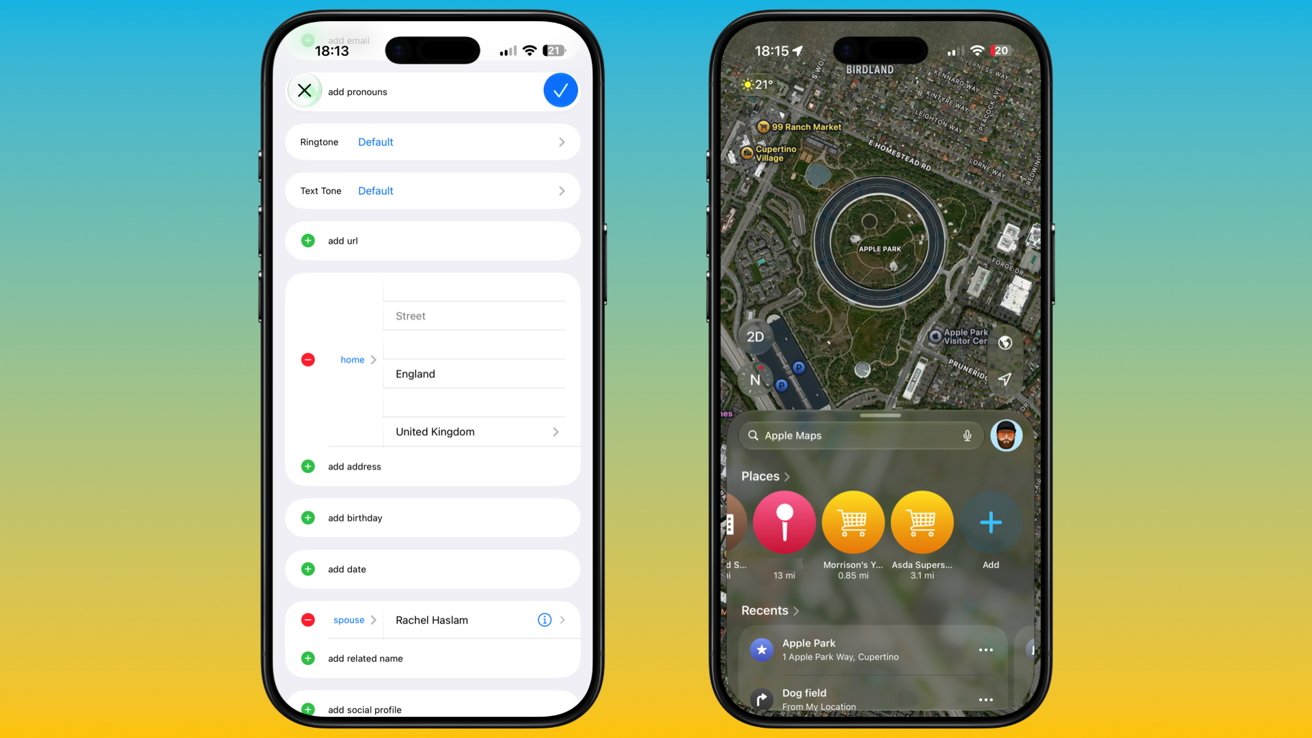
Changing your home’s address on Apple Maps can be almost as stressful as moving home in real life, but there’s one sure-fire way to get the job done without pulling your hair out.
The Apple Maps app is a great way to get around, whether you’re using it while driving via CarPlay or just walking. It also makes it easy to quickly get directions to the places that you visit often, like your home or where you work.
But if you’ve moved home and ever tried to change your address in your iPhone‘s Maps app, you’ll know it can be tricky. The job can be complicated considerably if you also have your home address pinned, too.
Thankfully, changing your home’s address is much easier when you keep in mind two main things. The first is that your home’s address isn’t normally set by the Maps app itself. And the second is that pinned addresses in the Maps app don’t automatically update, nor can they be edited.
It’s easy to see where the confusion comes from, but don’t worry. We’re going to clear everything up right here.
The first thing to remember is that your iPhone uses your contact card as the source of your home address whenever it is needed. It’s this address that is used when you make purchases online, fill out online forms, and for anything else that requires an address.

Remember to update your pinned location in Apple Maps after changing your home address.
If you move home, it’s this address that you need to change. And thankfully, it’s easy to do.
That’s all there is to it, your iPhone now has your new address. However, if you have your home set up as a pinned location in Maps, you’ll also need to go a step further.
Unfortunately, Maps won’t automatically update the pin to reflect your new address. Pinned addresses also can’t be edited, so you’ll have to delete the pin and add a new pin all over again.

I recently got to watch what happens when you jailbreak some of the world’s most powerful artificial intelligence models.
Don’t worry—this AI manipulation wasn’t used to hack anyone or build a nuclear bomb. I simply got to see firsthand how vulnerable some frontier models are to ditching their safety guardrails.
FAR.AI, an AI safety nonprofit based in California, built a tool that takes a range of problematic prompts and generates more than a thousand different versions in an attempt to identify functioning jailbreaks. I saw some models generate a detailed plan for launching a cyberattack on an imaginary hydroelectric dam, among other things. Often, it involved trying dozens of prompts, with models rejecting many of them out of hand.
I chatted with FAR.AI in advance of a new report, which saw the group test the safety guardrails of models from four popular US companies: Anthropic’s Claude Opus 4.8 and Fable 5; OpenAI’s GPT 5.5 and 5.6; Google’s Gemini 3.1 Pro; and Grok 4.3 and 4.5, from Elon Musk’s newly combined SpaceXAI. It auto-generated prompts designed to trick the models into doing potentially harmful things, like generating software exploits and providing details for developing chemical or biological weapons.
The report found that Grok was most vulnerable to jailbreaks, with 448 jailbreaks found, followed by Gemini, with 249 found, while Claude, Fable, and GPT were impervious to the attacks. However, that doesn’t mean those models are immune to more sophisticated jailbreaks, which may involve interacting with a model in more complex ways, according to FAR.AI and other experts.
The report also calculated the cost of getting models to misbehave by using another AI model to automatically generate different jailbreaks. The results are dirt cheap, all things considered—$58 to jailbreak Grok and $278 to jailbreak Gemini.
“AI models right now are less regulated than restaurants,” says Adam Gleave, the CEO of FAR.AI and an expert on AI safety and alignment.
Gleave says that the findings demonstrate the need for externally imposed standards and regulations. “Talk of relying on voluntary commitments, that AI companies are going to be able to self-regulate, is nonsense,” he says.
But Gleave also believes that the findings show that models can be systematically tested for safety. “There’s an optimistic angle here,” he says. “Defense and safety really are possible.”
Rohin Shah, the director of AGI safety and alignment at Google DeepMind, says the results of the report “should not be interpreted as a comprehensive assessment of Gemini’s safety and security,” because not all jailbreaks are equally severe.
“We are constantly working to improve our safeguards,” Shah says. “We conduct extensive red teaming and evaluations across severe misuse risks and apply multiple layers of protection throughout development and deployment.”
“These findings reflect the sustained investment we’ve made in our safeguards,” Anthropic spokesperson Michael Aciman tells WIRED. “We continue to evolve our safety systems as these attacks become more sophisticated.”
“Jailbreaks are an ongoing challenge across the industry, and we continuously strengthen our safeguards as attack techniques evolve. We rigorously test our models against new threats and use those findings to improve our protections,” OpenAI spokesperson Gaby Raila said in a statement to WIRED.
SpaceXAI did not respond to WIRED’s request for comment.
Recently passed state laws in California and New York require frontier AI developers to publish safety reports, and soon, an Illinois law will require those companies to have their safety practices evaluated by third-party auditors. But the federal government hasn’t yet passed any specific safety requirements, and chaos has ensued as the industry—and officials—try to figure it out.




Weekend Open Thread: Brooks Brothers

Commonwealth Games boxing: Jadumani Singh seals dominant 5-0 win over Pakistan’s Sumama Rehman to enter quarter-finals | Commonwealth Games News


Intel is reversing course and bringing hyper-threading back to its server chips


Why Trees Belong on the Risk Register


Luke Littler dismantles Gerwyn Price to retain title in Blackpool


Ripple bought a bank in pieces. The $4 billion audit


The Part of the Electric Transition Nobody Wants to Discuss

A New Post-Apocalyptic Gundam Anime Series Blasts Into SDCC


BITCOIN JUST ENTERED THIS CRITICAL ZONE…


16 Dresses for the High Summer Event


2026 3M Open leaderboard: Scottie Scheffler finds putter in Round 1, sits three back


The Peugeot Family: How 200 Years of an “Old Money” Dynasty Died in A Boardroom


Major shareholder moves on Canyon


XRP Ledger adds $2.6B as RWA inflows rank second


Spain sweeps the board at 2026 World Cup with individual awards


Uniswap (UNI) pushes deeper into tokenized RWAs with permissioned trading pools

‘Stargate’ Creator’s New Sci-Fi Series Returns for Season 3 Tomorrow


Anthropic launches Claude Opus 5, a cheaper AI model for coding, agents and enterprise workflows


Sara Gilson Killed By Husband After Viral “Pedophile” TikTok Video


Claude: Build Financial Dashboards in Minutes (2026)



You must be logged in to post a comment Login