


Connect with us
DAPA Banner
DAPA Coin
DAPA
COIN PAYMENT ASSET
PRIVACY · BLOCKDAG · HOMOMORPHIC ENCRYPTION · RUST
ElGamal Encrypted MINE DAPA
🚫 GENESIS SOLD OUT
DAPAPAY COMING

Business

May PCE: Fed’s favored inflation gauge accelerated in May

Published

on

May 2026 CPI inflation: BLS report shows consumer prices rose last month

The Federal Reserve’s preferred inflation gauge rose in May as price pressures persist in the wake of the energy shock caused by the Iran war.

The Commerce Department on Thursday reported that the personal consumption expenditures (PCE) index rose 0.4% on a monthly basis in May and is 4.1% higher than a year ago. 

Advertisement

The monthly figure came in slightly cooler than the expectations of economists polled by LSEG, who predicted a 0.5% rise, while the annual figure was in line with the estimate.

Core PCE, which excludes volatile measurements of food and energy prices, was up 0.3% on a monthly basis and 3.4% from a year ago. Both figures were in line with expectations.

FEDERAL RESERVE LEAVES INTEREST RATES UNCHANGED AS WARSH ERA BEGINS

Federal Reserve policymakers are focused on the PCE headline figure as they try to bring inflation back to their long-run target of 2%, though they view core data as a better indicator of inflation. Compared with April’s readings, headline PCE rose from 3.8% to 4.1%, while core PCE increased from 3.3% to 3.4%.

Advertisement

Goods prices were up 2.3% in May from a year ago, and were up 0.4% from the prior month.

Services prices rose 2% compared with a year ago, and were up 0.5% on a monthly basis in May.

US ECONOMY GREW AT 2.1% IN FIRST QUARTER

The personal savings rate as a percentage of disposable personal income was 3% in May, a level that was unchanged from the prior month.

Advertisement

Since the start of 2025, the personal savings rate has declined from a peak of 5.5% in April 2025, and it began this year with a 4.4% reading in January.

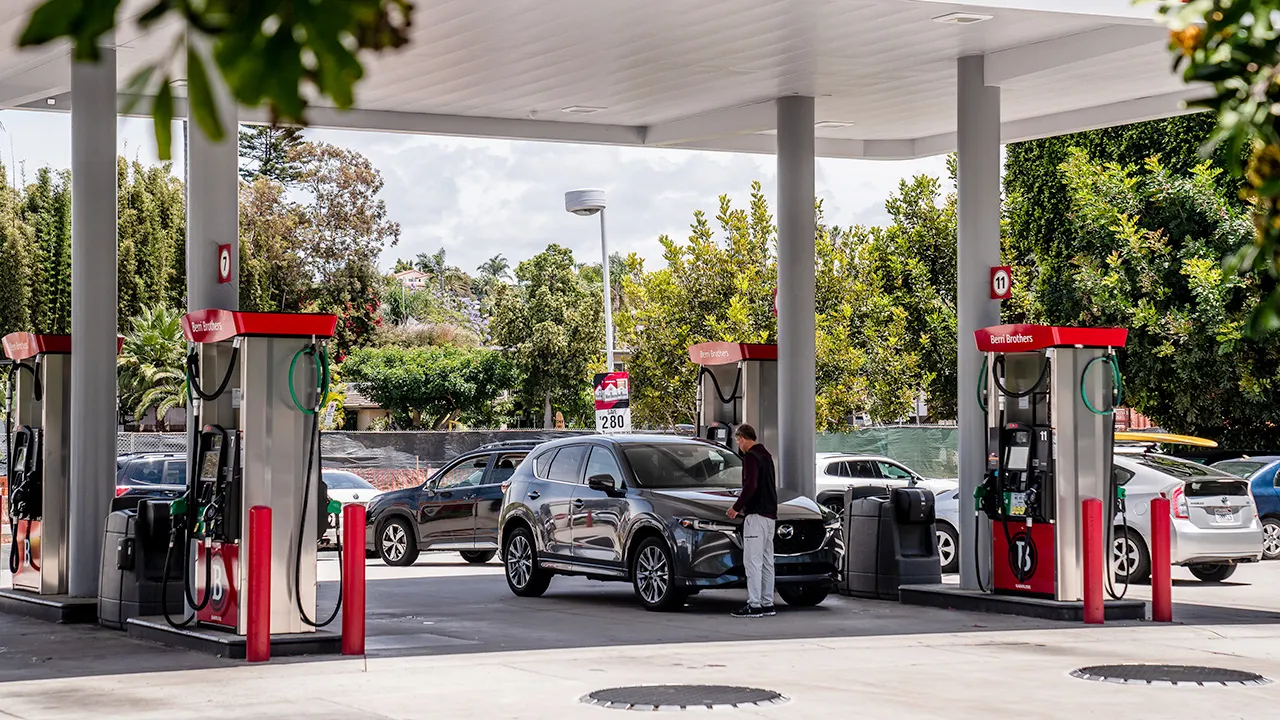
A man getting fuel at a gas station

The energy price shock caused by the Iran war has helped drive inflation higher. (Ariana Drehsler/Bloomberg via Getty Images)

What experts are saying

Heather Long, chief economist at Navy Federal Credit Union, said that, “Inflation is at a 3-year high due to the war in Iran and it’s painful for middle-class and moderate-income Americans.” 

“People are spending more on gas, along with healthcare and utilities. New Fed Chair Kevin Warsh has made his commitment clear to bring inflation down,” Long said. “The key will be how much relief happens by September. In encouraging news, jobless claims remain low and the personal savings rate ticked up slightly in May.”

AMERICANS GROW MORE PESSIMISTIC ABOUT FINANCES AS RENT AS FOOD COST FEARS SURGE, FED SAYS

Advertisement
Shoppers looking at grocery prices

Americans’ household budgets are strained by elevated inflation. (Justin Sullivan/Getty Images)

Ellen Zentner, chief economic strategist for Morgan Stanley Wealth Management, noted that “Sliding oil prices will take a while to work their way through the economy.”

“Today’s data is a reminder that inflation remains well above target and growth remains solid. This will keep the Fed on hold for quite some time, until conditions allow for a cut,” Zentner added.

GET FOX BUSINESS ON THE GO BY CLICKING HERE

Jeffrey Roach, chief economist at LPL Financial Research, said that, “Given the growth trajectory, the Fed is rightly focused on price stability and will remain hawkish this summer.”

Advertisement

“If the Iran crisis creeps into Labor Day timeframe, we have a much higher chance that inflation pressures will seep into other categories and will force the Fed’s hand,” Roach said.

Continue Reading
Click to comment

You must be logged in to post a comment Login

Leave a Reply

Business

Fidelity Select Communication Services Portfolio Q1 2026 Commentary (FBMPX)

Published

on

Fidelity Select Communication Services Portfolio Q1 2026 Commentary (FBMPX)

Fidelity’s mission is to strengthen the financial well-being of our customers and deliver better outcomes for the clients and businesses it serves. With assets under administration of $12.6 trillion, including discretionary assets of $4.9 trillion as of December 31, 2023, Fidelity focuses on meeting the unique needs of a broad and growing customer base. Privately held for 77 years, Fidelity employs more than 74,000 associates with its headquarters in Boston and a global presence spanning nine countries across North America, Europe, Asia and Australia. Note: This account is not managed or monitored by Fidelity, and any messages sent via Seeking Alpha will not receive a response. For inquiries or communication, please use Fidelity’s official channels.

Continue Reading

Business

Nissan ‘halts electric Qashqai development’ at Sunderland plant, reports claim

Published

on

Business Live

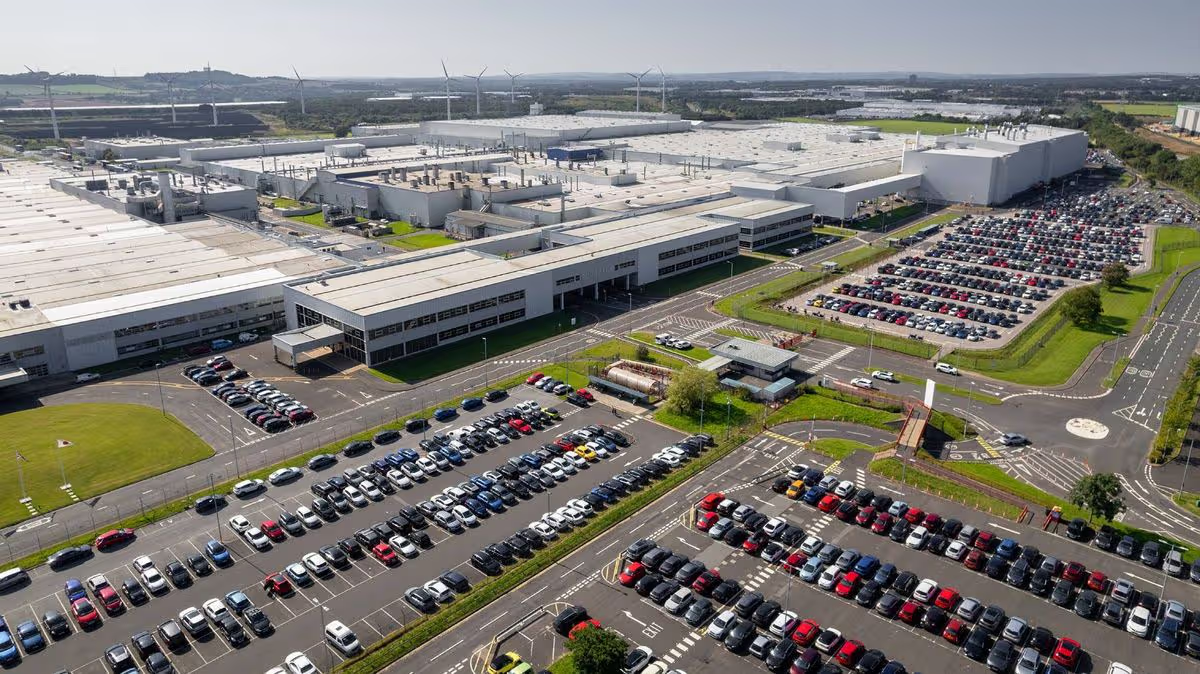
Nissan has reportedly stopped work on a fully electric version of its bestselling Qashqai model at its Sunderland plant, as the Japanese car giant battles losses and pushes through a sweeping global restructuring plan.

Nissan is talking to Chery about making its cars at the Sunderland plant.

Nissan’s Sunderland plant.(Image: Nissan)

Nissan has reportedly stopped development of a fully electric variant of its best-selling Qashqai model which was due to be built at its Sunderland factory.

Nissan pioneered the crossover segment when it introduced the Qashqai 16 years ago, sparking production of millions of vehicles, and in 2022 it confirmed that the Qashqai would feature its innovative e-Power technology. However, Reuters has reported that the Japanese automotive manufacturer quietly ceased work on the EV variant at its North East facility last year.

The news emerges as the company attempts to streamline its range and implement cost reductions across the organisation, having suffered a second consecutive year of losses as it recorded a net loss of approximately $3.4bn. It was in 2023 that Nissan confirmed its dedication to manufacturing new electric models at its Sunderland site, a year after unveiling plans for the Qashqai electric variant and after it committed that all of its new cars sold in Europe will be electric by 2030.

The revelations come a month after Nissan disclosed it was preparing to cut hundreds of positions across its European operations, and that it will be merging two existing product lines at its Sunderland facility into one. The Japanese car manufacturer has been grappling with difficult conditions in the global automotive industry, with the company pointing to fierce competition from Chinese competitors and obstacles during the transition to electric vehicles when it announced a significant global restructuring last year.

Advertisement

The Washington plant has, however, been spared the worst of the cut, and has recently been referred to as “central” to its operations, reports Chronicle Live.

Meanwhile, Nissan reached an agreement earlier this month with Chinese automotive manufacturer Chery, which could see it begin producing its vehicles at Nissan’s Sunderland facility following a fresh deal. The manufacturer, which owns the Omoda and Jaecoo brands, has entered into a non-binding memorandum of understanding with Nissan to assemble its vehicles at the Sunderland site.

Under the proposed arrangement, the facility would remain in Nissan’s ownership, with staff continuing to be employed by the Japanese manufacturer, while Chery would utilise the plant’s available production capacity for its passenger vehicles. Should the deal proceed, Chery vehicles could begin rolling off the Sunderland production line during the 2027 financial year.

Nissan is the largest private sector employer in the North East, with a workforce of around 6,000 people, while also sustaining a supply chain whose companies underpin tens of thousands of jobs.

Advertisement

In April, it emerged that the Jatco UK factory, 75% of which is owned by motor manufacturer Nissan, had been compelled to seek alternative work after it became clear it would no longer supply the Japanese manufacturer with the powertrains it was originally built to provide. The £50m plant – the Japanese company’s fourth overseas site – had been scheduled to commence production this year, with the bulk of its output centred on a three-in-one powertrain for Nissan.

At the time, a Nissan spokesperson said: “Under the global RE:Nissan recovery plan, Nissan, together with partners, has conducted a comprehensive review of key initiatives, introducing further measures to ensure a strong recovery. As part of this the decision has been taken not to localise production of 3-in-1 electrified powertrain to the UK.”

A Nissan spokesperson said: “In recent years, the European market has experienced significant volatility in EV consumer demand, reflected in both actual and proposed adjustments to EV targets and support programmes across the UK and EU. Nissan has monitored this closely to ensure ongoing customer demand is met with a balanced electrified offering as part of its Electrification with Choice strategy.

“Nissan has a strong EV product offensive in Europe with the recent all-EV launches of new Micra and LEAF, to be followed by an entry A-segment EV later this year and Juke EV in early 2027. This builds on an existing electrified portfolio, including Juke HEV and market leading Qashqai e POWER hybrid, providing customers with a balanced range of drivetrain options.

Advertisement

“Nissan remains committed to expanding its electrified offering – including future developments for Qashqai – to deliver genuine electrification with choice but does not have anything further to announce at this time.”


Continue Reading

Business

Claiming Social Security early is ‘bad advice,’ says Suze Orman, despite viral panic

Published

on

Claiming Social Security early is 'bad advice,' says Suze Orman, despite viral panic

As anxiety mounts over the long-term solvency of the Social Security trust funds, a growing number of Americans are rushing to claim their benefits early out of fear that the program will run dry.

However, personal finance expert Suze Orman warns that following this viral advice will lock retirees into a permanent financial penalty that cannot be undone.

Advertisement

“There’s been some chatter on social media lately about Social Security that I think is bad advice,” Orman wrote earlier this month on her website. “The message is that you are better off claiming as early as possible — at age 62 — rather than waiting to collect a larger benefit by starting your checks later. That’s just not good advice.”

About two weeks ago, the Social Security Administration released its 2026 Trustees Report, which confirms that the federal retirement safety net is less than seven years away from reserve depletion, as the Old-Age and Survivors Insurance (OASI) Trust Fund is projected to exhaust its accumulated reserves in the fourth quarter of 2032.

SOCIAL SECURITY HAS LESS THAN 10 YEARS BEFORE RESERVES ARE EXHAUSTED, NEW TRUSTEES REPORT WARNS

Once the reserves are depleted, ongoing tax revenues will cover only 78% of scheduled retirement benefits, according to the report.

Advertisement
People wait in line for Social Security checks

People wait in front of a Social Security office in Citrus Heights, California, on July 12, 2023. (Getty Images)

According to SSA data, claiming retirement benefits at age 62 remains popular among retirees, though filing early permanently locks in lower monthly benefits.

“For anyone born in 1960 or later, your Full Retirement Age is 67. That is when you are entitled to 100% of your earned Social Security benefit. If you choose to start collecting at 62, you receive just 70% of that benefit — a 30% reduction that is locked in permanently. Claiming early is basically accepting a 30% penalty,” Orman said.

“A woman in average health who reaches age 65 has a life expectancy of 88. That means a 50% probability of still being alive at 88 — still here, still paying bills, still needing income. If she reaches her break-even age of 79, there is a very real chance she has at least another decade or more ahead of her,” Orman said. “Every month past that break-even point, the person who waited is collecting meaningfully more.”

The personal finance expert also pushed back on claims circulating online that filing early secures your benefits before the trust funds run low.

“Current projections suggest that if Congress does nothing, Social Security would pay out roughly 80% of scheduled benefits — a 20% reduction. That is the worst case. And as I have discussed before, Social Security has survived funding challenges before; in the early 1980s, Washington found solutions that did not require beneficiaries to absorb the full cost,” she said.

“If your benefit at 67 would be $2,000, claiming at 62 locks in a $1,400 monthly payment… Now apply the 20% worst-case cut to both. The person who waited until age 67 might see their benefit reduced from $2,000 to $1,600. The early claimer collects around $1,260.”

Orman said there are two exceptions to claiming Social Security early: health issues and the inability to work or draw from retirement savings.

GET FOX BUSINESS ON THE GO BY CLICKING HERE

And the “strongest move,” according to Orman, is waiting until age 70 to claim Social Security benefits.

“If you are married, please have the higher earner wait as long as possible — ideally until 70. The surviving spouse receives the larger of the two benefits. Making that number as large as possible is one of the most important financial gifts you can leave your partner,” Orman said.

Advertisement

READ MORE FROM FOX BUSINESS

Continue Reading

Business

Applied Materials stock hits all-time high at 641.42 USD

Published

on


Applied Materials stock hits all-time high at 641.42 USD

Continue Reading

Business

Horizon Kinetics buys $2,086 in RENN fund stock

Published

on


Horizon Kinetics buys $2,086 in RENN fund stock

Continue Reading

Business

Latest electric bus joins Transperth fleet

Published

on

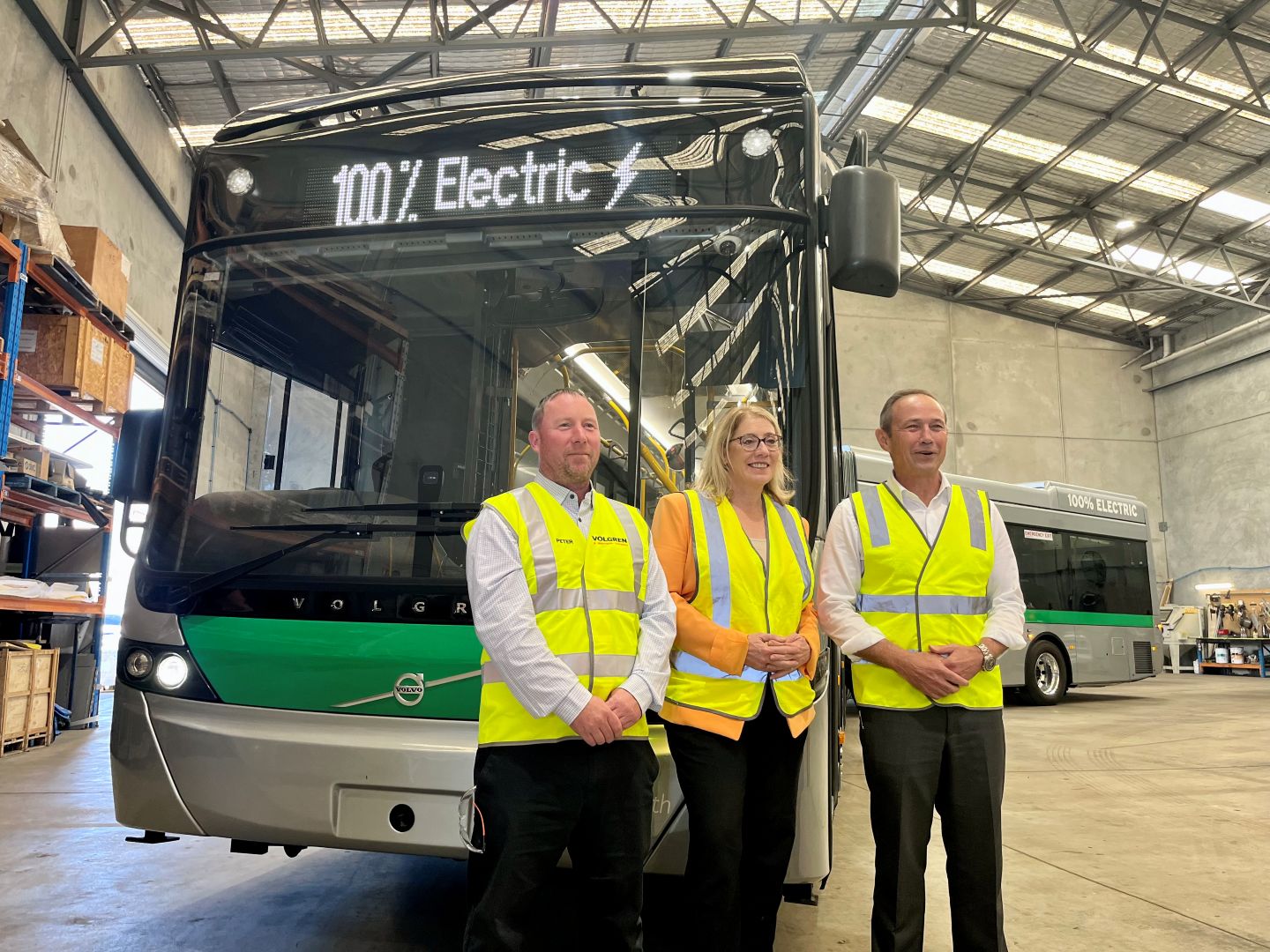
Electric 'bendy' bus a world first

The first electric articulated bus in WA has rolled off the production line at Volgren’s manufacturing facility in Malaga.

Continue Reading

Business

New V-8 engines, redesigned styling

Published

on

New V-8 engines, redesigned styling

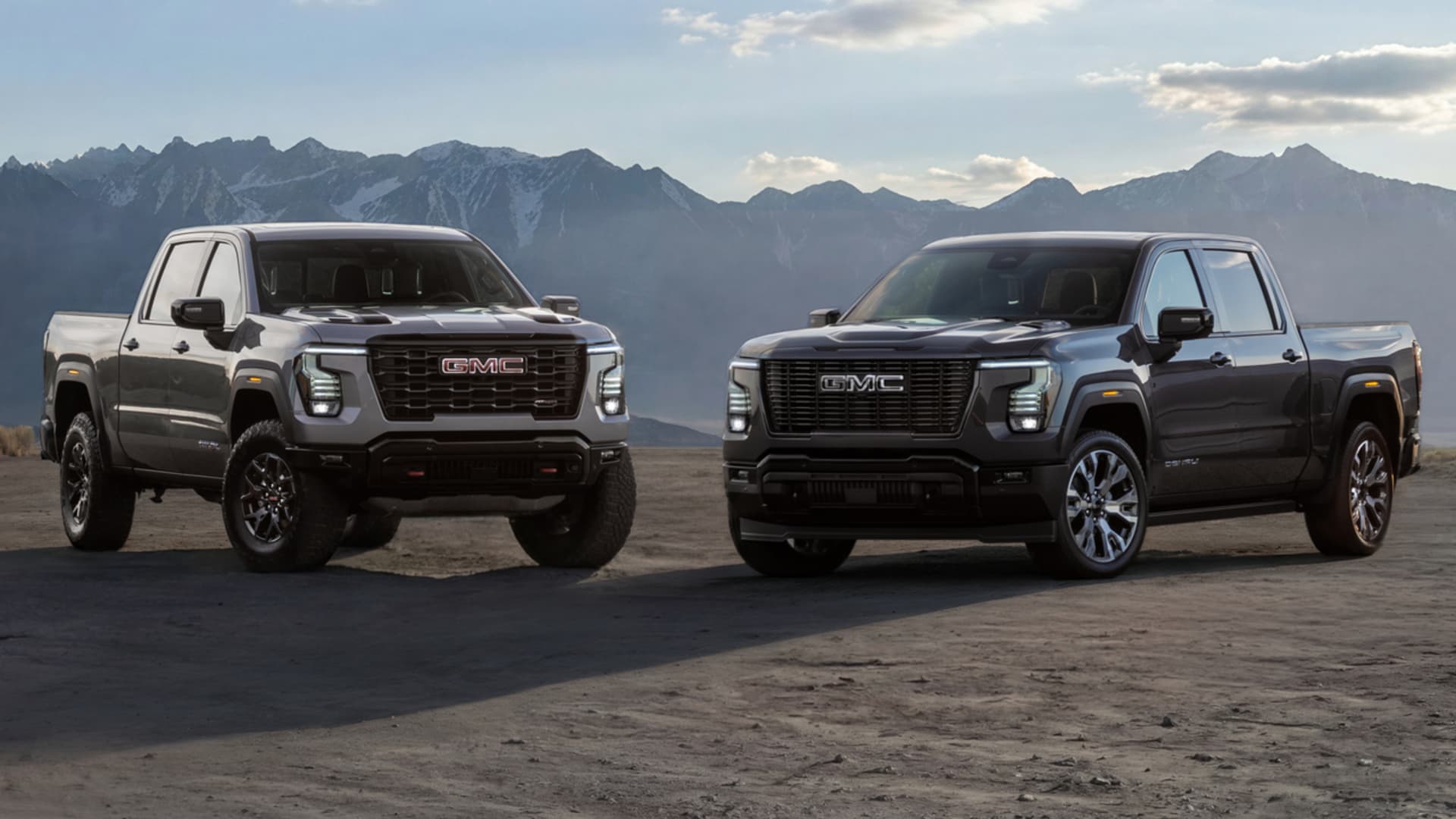
2027 GMC Sierra 1500 AT4X (left) and Denali Ultimate models

Courtesy GMC

DETROIT – General Motors revealed its 2027 GMC Sierra 1500 pickup truck lineup on Thursday with new V-8 engine options and redesigned interior and exterior styling.

Advertisement

The new GMC trucks are crucial to the automaker’s sales and earnings, especially the highly profitable Denali luxury models and off-road AT4 models that represent roughly half of the vehicle’s current sales, according to GM. Such models feature unique parts, accessories and amenities to boost pricing and profits for the company.

GM said Thursday it’s narrowing its model lineup for the next-generation Sierra to the Pro, Elevation, AT4, AT4X, Denali and Denali Ultimate. It’s removing the mid-level SLE and SLT trims, which currently start at about $51,500 and $57,900, respectively.

GM said pricing details as well as performance specifications will be released closer to when the vehicles go on sale late this year. Starting prices for the current Sierra 1500 lineup ranges from roughly $41,000 for an entry-level Pro to more than $86,000 for a Denali Ultimate.

2027 GMC Sierra 1500 lineup

Advertisement

Courtesy GMC

“With the next-generation Sierra 1500, we’re bringing together a new generation of Small Block V8 power, precise off-road capability, and our most immersive cabin experience to date,” said Michael MacPhee, vice president of GM’s GMC and Buick brands, in a release. “The next-generation Sierra is the truck all others will be measured against.”

The new trucks come a week after the Detroit automaker unveiled updates to its Chevrolet Silverado 1500 pickup trucks, which are mechanical siblings to the GMC models.

Most noticeably the GMC pickups are styled far differently than their Chevy brethren, including taking styling cues from the brand’s all-electric Sierra pickup truck and featuring a new interior.

Advertisement

The interior cabin comes with more storage, a sliding center console and a folding table or work surface — all made possible by moving the gear shifter from the center console to behind the steering wheel. It also features new technologies and more than 60 inches of available screens, including an 11.5-inch passenger-side screen that includes media and entertainment functions.

2027 GMC Sierra 1500 Denali Ultimate

Courtesy GMC

Other significant changes are found under the hood. Like the Silverado models, the GMC pickups will include a new generation of the automaker’s small block V-8 gas engines, available in 5.7-liter and 6.6-liter options.

Advertisement

In addition to the V-8 engines, the GMC trucks will offer two V-6 engines, including a GM-exclusive diesel variant.

GM’s U.S. sales through the first half of this year are forecast to decline by roughly 7%, according to Cox Automotive. The overall market is expected to see sales fall roughly 3%, Cox said Wednesday.

GM reported first-quarter sales were down 9.7% compared with a year earlier, with its GMC brand about level. Sales of the Sierra 1500 were down about 2% to nearly 51,900 units, while larger, heavy-duty models were off about 8% to roughly 24,500 units. Sales of the electric Sierra were up 3%, but remained under 1,300 units.

Choose CNBC as your preferred source on Google and never miss a moment from the most trusted name in business news.
Advertisement
Continue Reading

Business

Oil Price Falls to Pre-Iran War Levels as Hormuz Shipping Resumes

Published

on

Inflation fell more slowly than expected last month thanks to strong petrol and communication goods price pressures, casting doubt on hopes for immediate rate cuts by the Bank of England.

The price of oil has fallen back to levels not seen since before the Iran war, handing hard-pressed UK businesses the prospect of cheaper fuel as traffic through the critical Strait of Hormuz shipping lane gradually resumes.

Brent crude, the global benchmark, briefly dipped below $72.48 (£55) a barrel, the level it sat at the day before the United States and Israel launched their attacks on Iran on 28 February, before edging back up to $73.23.

Energy markets have endured a torrid few months since Tehran retaliated by effectively closing the strait, a waterway that carries a substantial share of the world’s seaborne oil and gas. For the haulage, hospitality and agricultural firms that have watched their fuel bills balloon since the spring, the retreat in crude cannot come soon enough. Many smaller operators have spent the conflict simply trying to absorb costs they could not pass on, a squeeze Business Matters has tracked among hauliers, hotels and farms pushed into survival mode.

Crude has been falling steadily since 17 June, when Washington and Tehran signed a Memorandum of Understanding setting out a 60-day window for negotiations on Iran’s nuclear programme and other measures aimed at ending the war. Representatives from both sides met in Switzerland last weekend, talks that led the United States to partially lift sanctions on Iranian oil exports.

The number of vessels crossing the Strait of Hormuz has risen sharply since the agreement was struck, according to maritime intelligence firm Kpler. Its latest figures suggest 284 vessels made the transit from 18 June, the day after the deal was signed, although that remains well below the pre-conflict average of around 138 crossings a day. The ships passing through in recent days have included those carrying crude oil, liquefied natural gas, fertiliser and other goods, Kpler told the BBC.

Advertisement

The United States and Iran have also established a “communication line” to prevent misunderstandings “with the aim of safe passage for commercial vessels through the Strait of Hormuz”, mediators Qatar and Pakistan said in a joint statement on Monday.

Dimitris Maniatis, chief executive of maritime risk advisory firm Marisks, which is working with ships stranded in the region, described a “tremendous shift”, with far more vessels using the strait in recent days. A limited number of ships can cross a northern passageway with the permission of Iranian authorities, he said, while the US navy has set out a southern route cleared of mines and other obstacles laid during the war. Even so, traffic remains below the pre-war norm, when more than 100 ships a day used the route.

For drivers and the firms that run vans and lorries, attention has now turned to how quickly the fall in crude feeds through to the forecourt.

“On the back of the lowest oil price since before the Iran war started, drivers should see the average price of petrol fall below 150p [a litre] in the next week or so,” said Simon Williams, head of policy at the RAC. He added that diesel “ought to go back under 160p”. Petrol peaked at 159.53p a litre on 28 May, according to the motoring group, while diesel has eased from a high of 191.54p on 15 April. Drivers can track the daily averages through the RAC’s Fuel Watch data, and the longer-term trend is laid out in the House of Commons Library’s briefing on petrol and diesel prices.

Advertisement

In the United States, the average price of regular petrol has slipped to around $3.93 a gallon after touching $4 in April, its highest since 2022, though it remains well above pre-war levels.

The pace of those falls has become political. President Donald Trump on Wednesday ordered an investigation into the major energy companies, accusing Shell, ExxonMobil and others of “gouging” drivers by failing to cut pump prices even as crude costs tumbled. “Oil prices have come down so much and we are not seeing anything at the pump by comparison the way they should be,” Trump told reporters in the Oval Office. The American Petroleum Institute, which represents the US oil and gas industry, countered that fuel prices “don’t move in lockstep with crude oil”.

British energy firms have faced similar accusations of unfairly inflating petrol prices since the war began. Last month, however, the UK competition watchdog said it had found no widespread evidence of profiteering, noting that average margins were “broadly unchanged” between February and March.

For now, the direction of travel offers a measure of comfort to the millions of smaller firms for whom fuel is an unavoidable line on the balance sheet, and for whom relief has been a long time coming. Whether the easing endures will depend on whether the fragile peace holds, and on how far the broader pressure of stubbornly high energy costs on UK business continues to bite.

Advertisement

Jamie Young

Jamie Young

Jamie is Senior Reporter at Business Matters, bringing over a decade of experience in UK SME business reporting.
Jamie holds a degree in Business Administration and regularly participates in industry conferences and workshops.

When not reporting on the latest business developments, Jamie is passionate about mentoring up-and-coming journalists and entrepreneurs to inspire the next generation of business leaders.

Advertisement
Continue Reading

Business

Novartis Plays Long Game With Antares Deal – Meaning Near-Term Upside Unlikely (NYSE:NVS)

Published

on

Novartis Plays Long Game With Antares Deal - Meaning Near-Term Upside Unlikely (NYSE:NVS)

This article was written by

Edmund Ingham is a biotech consultant. He has been covering biotech, healthcare, and pharma for over 5 years, and has put together detailed reports of over 1,000 companies. He leads the investing group Haggerston BioHealth.

The group is for both novice and experienced biotech investors. It provides catalysts to look out for and buy and sell ratings. It also provides product sales and forecasts for all the Big Pharmas, forecasting, integrated financial statements, discounted cash flow analysis and market by market analysis. Learn more.

Analyst’s Disclosure: I/we have no stock, option or similar derivative position in any of the companies mentioned, and no plans to initiate any such positions within the next 72 hours. I wrote this article myself, and it expresses my own opinions. I am not receiving compensation for it (other than from Seeking Alpha). I have no business relationship with any company whose stock is mentioned in this article.

Seeking Alpha’s Disclosure: Past performance is no guarantee of future results. No recommendation or advice is being given as to whether any investment is suitable for a particular investor. Any views or opinions expressed above may not reflect those of Seeking Alpha as a whole. Seeking Alpha is not a licensed securities dealer, broker or US investment adviser or investment bank. Our analysts are third party authors that include both professional investors and individual investors who may not be licensed or certified by any institute or regulatory body.

Advertisement
Continue Reading

Business

Form 144 ENTERGY CORP /DE/ For: 25 June

Published

on


Form 144 ENTERGY CORP /DE/ For: 25 June

Continue Reading

Trending

Copyright © 2025