Connect with us
DAPA Banner
DAPA Coin
DAPA
COIN PAYMENT ASSET
PRIVACY · BLOCKDAG · HOMOMORPHIC ENCRYPTION · RUST
ElGamal Encrypted MINE DAPA
🚫 GENESIS SOLD OUT
DAPAPAY COMING

NewsBeat

The flaws at the heart of Donald Trump’s Iran ceasefire deal

Published

on

The flaws at the heart of Donald Trump’s Iran ceasefire deal

The world sighed in relief when Donald Trump agreed to a memorandum of understanding (MoU) to finally end the conflict with Iran on June 17. But there is now a palpable feeling that hostilities are far from over. The agreement between Washington and Tehran, signed at Versailles on June 18, is better understood as a deferred crisis – one whose contradictions are already visible.

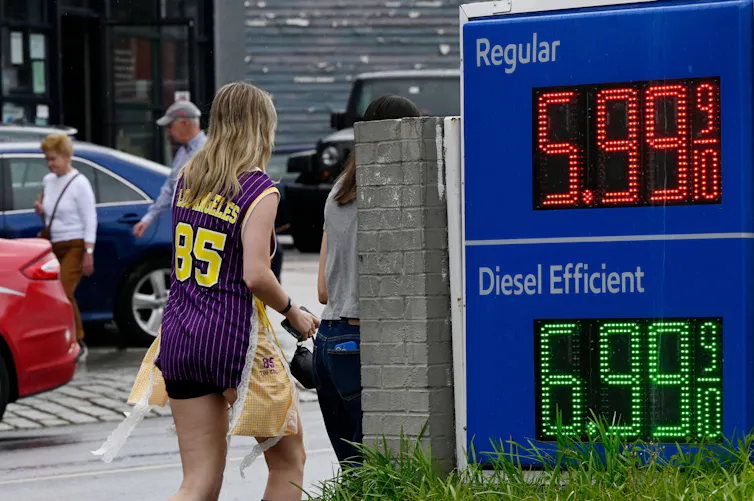
Iran’s closure of the waterway since February has caused one of the largest supply disruptions in the history of global energy markets, driving inflation across the western world and aggravating American motorists at the gas station. It was this economic stranglehold that brought Trump to the table.

The payoff for the US is unclear. As former US president Barack Obama recently said, it is “doubtful that any agreement that arises is going to be significantly different, or represent a significant improvement from the deal” that Obama himself oversaw in 2015.

Iran’s closure of the strait gave it the leverage to secure concessions from Trump – potentially exceeding the Obama-era nuclear deal – without offering more on the nuclear question than it had tabled in Geneva days before the war began in February. Even senior Republicans such as Senator Bill Cassidy have lamented the deal for its financial incentives to the Iranian regime.

Advertisement

Within 72 hours of the MoU, Iran’s military command claimed to have closed the Strait of Hormuz once again. This was no surprise. It is indicative of an emboldened Iran that is flexing its leverage – leverage Trump’s deal has inadvertently produced.

Iran has absorbed enormous punishment, survived and is now dictating the terms of the ceasefire by dangling the constant threat of economic misery in front of Trump’s face. This is not a foundation for a stable settlement. In fact, it signals a serious loss of control for both the US and Israel.

Iran’s justification – Israeli strikes against Hezbollah – for wreaking economic havoc and holding global energy markets hostage illustrates the structural flaw at the heart of Trump’s approach to deal-making. Iranian officials have explicitly said that the “most important item” on their agenda is preventing further Israeli strikes in Lebanon.

Iran’s strategic logic is unambiguous. Every time Israel retaliates against Hezbollah, which it is both legally entitled and politically compelled to do, Iran holds the global economy hostage via the Strait of Hormuz.

Advertisement
Iranian parliamentary speaker, Mohammad Bagher Ghalibaf, foreign minister Abbas Araghchi and members of Iran’s negotiating team arriving for talks in Zurich, Switzerland, June 21.
Sipa US/Alamy Live News

This places Israel in an impossible position. It cannot permanently suspend its right to self-defence as a condition of a US diplomatic agreement. It is hard to see Israel’s security cabinet accepting a framework in which Iranian-backed forces in Lebanon can attack their territory with impunity, because the consequences of retaliation lead to increased pressure on global oil markets and American inflation figures.

As Israel’s minister of national security, Itamar Ben-Gvir put it: “Israel is not subject to the United States, and we are an independent and sovereign nation.”

This is not a viable and sustainable strategy of deterrence. It is brass-necked coercion dressed up as diplomacy.

For Trump, the domestic arithmetic is equally unstable. While he insists that his deal has delivered everything it set out to achieve, by his own admission, he also stated at the recent G7 summit in France that he “didn’t want to see an economic catastrophe”. It would certainly not improve his party’s prospects in the upcoming midterm elections in November.

Advertisement
A woman in a football shirt walks away from a gasoline pump displaying high prices.
High gasoline prices in the US have made the war in Iran very unpopular.
Abaca Press/Alamy Live News

It is a frank acknowledgement that his decision-making was driven by the perception that continued military pressure was producing diminishing returns. The decision to stop fighting had ceased to be a strategic choice. It was the result of an American president who no longer believed he could act with complete control.

The problem is that the deal does not restore that agency in a meaningful way. Iran has now demonstrated to itself, to its regional partners, and to the world that it can act belligerently and still negotiate from a position of strength.

Vicious cycle

What is currently happening can be best described as a cycle: Israeli military action in Lebanon, Iranian threats to close the strait, US pressure on Israel to stand down, and Israeli resistance to doing so. Each iteration of this cycle will intensify the narrative that restraint is no longer a viable course of action – for Israel, for Trump’s domestic base, and for the Gulf states who have felt the brunt of Iranian drone attacks.

Despite the destruction of most of Iran’s military capabilities, infrastructure and political leadership, Iran remains determined to change the order of things in its region. Its foreign policy behaviour is driven by a combination of revolutionary ideology, a deep mistrust of the US, and a religiously guided identity as a self-appointed protector of the Shia Islamic world.

Nothing in the last four months has given Tehran reason to revise that worldview. Quite the contrary.

Advertisement

Lebanon has become the fault line on which this deal will either hold or break. Israel has understood this from the start. Trump is catching up. His threat to “blow the shit out of them” if Iran does not comply suggests a president whose patience with his own agreement is already fraying.

The memorandum of understanding is a ceasefire with a built-in detonator. When political actors come to believe that restraint no longer allows them to act meaningfully – as both Trump and Israel increasingly do – escalation ceases to be a choice. It may come to be the only available logic.

Source link

Advertisement
Continue Reading
Click to comment

You must be logged in to post a comment Login

Leave a Reply

NewsBeat

Venezuela earthquakes add tragic new layer to the country’s humanitarian crisis

Published

on

Venezuela earthquakes add tragic new layer to the country’s humanitarian crisis

Venezuela has a well-documented vulnerability to earthquakes. The country sits on the boundary between the Caribbean and South American tectonic plates, resulting in routine tremors and causing historical earthquake disasters. But the experience of a “doublet”, a pair of 7.2 and 7.5-magnitude earthquakes 40 seconds apart, on June 24 was a rare misfortune.

From an epicentre in the north-western city of San Felipe, the impact sheared down Venezuela’s Caribbean coast with devastating force. The historic port city and resort of La Guaira, home to around 200,000 people, has been declared a disaster zone.

In the Venezuelan capital of Caracas, which is approximately 30km from La Guaira, buildings have collapsed in the once prosperous suburbs of Altamira, San Bernardino, Baruta and Chacao. The national airport, Maiquetia, has also been closed because of extensive damage.

While there have been pockets of resilience, an estimated two-thirds of Venezuelan residents live in informal housing. This a product of Venezuela’s rapid urbanisation in the 1960s and 1970s and the housing shortages that followed.

Advertisement

Officially, at least 235 people have been killed and 30,000 more are registered as missing. The US Geological Survey estimates that as many as 10,000 people may have been killed in a disaster of this magnitude.


À lire aussi :
Was Venezuela struck by an earthquake ‘doublet’? Here’s what we know so far


The two earthquakes struck north-western Venezuela, with the impact felt along the country’s Caribbean coast.
Peter Hermes Furian / Shutterstock

The earthquakes add a tragic new layer to the country’s existing humanitarian crisis – a crisis that has severely depleted the capacity of Venezuela’s state and society to prepare for and respond to natural disasters.

Advertisement

The years of Nicolás Maduro’s presidency, which spanned from 2013 through to his removal by the US at gunpoint in January 2026, were characterised by economic collapse. Hyperinflation, shortages and authoritarian repression of protests contributed to a situation where approximately a quarter of the population have fled the country in recent years.

Venezuela’s economic fragility is ultimately a product of political incompetence and corruption. But it has been reinforced by crushing US oil and financial sanctions imposed during Donald Trump’s first presidency.

The comprehensive sanctions regime has meant that, for the past nine years, Venezuela has been cut off from financial and energy markets. Many of its exports and imports have subsequently been blocked.

Combined with the continued mismanagement of and underinvestment in infrastructure and utilities that were nationalised by Maduro’s predecessor, Hugo Chávez, this has led to an accumulation of problems that apply across the public sector. These include hospitals short of medicines, staff, power and water.

Advertisement

In the immediacy, energy and attention are focused on the search and rescue effort. But this is a politically perilous moment for Venezuela’s interim president, Delcy Rodríguez. Each stage of the humanitarian response brings serious logistical challenges.

There is a shortage of mechanical equipment to help with the recovery operations, largely due to shortages of spare parts and diesel fuel. There are few ambulances, hospitals are overwhelmed and there are limited safe shelters for the displaced. Access to food and drinking water is severely compromised and heavy rains are forecast.

At the same time, Venezuela’s armed forces, police and national guard have been on a war footing since Trump’s return to office. Their primary focus has been on defensive responses to what had, at least until Maduro’s capture, been a widely anticipated US military invasion.

This has come at the expense of honing skills to implement the global “Wash” framework for responding to natural disasters by providing safe drinking water, constructing emergency latrines and promoting safe hygiene practices. There is thus a very real risk of disease and food shortages in the coming days and weeks without urgent external support.

Advertisement

The possibility of disorder, looting and the further degradation of the security situation is another grave concern. Since Maduro’s removal, Venezuela’s pro-government security sector has not been tested by opposition protests or demonstrations. But lines of command have been disrupted in the turmoil of political change and public confidence in the military is low.

A group of Venezuelans search through rubble following two earthquakes.
Venezuela’s recovery efforts are hampered by years of mismanagement, underinvestment and the impact of a comprehensive US sanctions regime.
Ronald Peña R / EPA

US holds key

The US is the ultimate arbiter of Venezuela’s capacity to respond. Having assumed control of Venezuela’s oil export income after Maduro’s capture and still maintaining a sanctions regime, the US dictates what money can be received and how it is spent.

And while Venezuela has exported around 100 million barrels of oil since the ousting of Maduro, worth an estimated US$8 billion (£6.1 billion), the Trump administration has not publicly revealed how much revenue it has actually collected.

It has also not disclosed how much of this revenue has been drip fed back to Caracas. Restricted access to these funds will impede the disbursement of financial and humanitarian aid to earthquake-affected areas.

Trump has announced that US$150 million in assistance will be mobilised for Venezuela and that the US Departments of War and State are coordinating relief support. These funds must be received fast if popular frustration with the US regime change process is not to translate into widespread anger and if US plans to deport Venezuelan migrants are to stay on track.

Advertisement

Moving forward, there will no doubt be significant attention on the legacies of corruption and underinvestment that have rendered Venezuela so catastrophically vulnerable and debilitated in response to the earthquakes.

This includes the quality of buildings delivered under the gran misión vivienda Venezuela, the house-building mission launched by Chávez in 2011 that claims to have delivered over 1 million new homes. However, such an investigation will be complex, resisted politically and currently far down the list of priorities.

Source link

Advertisement
Continue Reading

NewsBeat

Why Andy Burnham’s radical plan relies on the Treasury being a friend of devolution

Published

on

Why Andy Burnham’s radical plan relies on the Treasury being a friend of devolution

Andy Burnham has built his reputation on championing regional devolution – as Greater Manchester’s mayor he was celebrated as the “king of the north”. If, as now seems likely, he becomes prime minister next month, a “devolution blitz” is expected to follow. But it will only succeed if Burnham can bring the Treasury with him.

Burnham’s unique mix of experience in cabinet, shadow cabinet and as mayor may well enable him to achieve this. But the fundamental issue of the need for the Treasury to loosen its grip is a central, yet overlooked, challenge.

The commentary however is focused on who Burnham might appoint as chancellor of the exchequer. Getting the relationship between a prime minister and chancellor right is, of course, vital. As chief secretary to the Treasury, Burnham witnessed at firsthand the fractious dynamic between the then prime minister, Gordon Brown, and his chancellor, Alistair Darling, and the damage that such tensions cause.

And conversely, George Osborne’s early devolution agenda – in which Burnham played a significant role as Manchester mayor – was possible only because then-PM David Cameron trusted his chancellor to pursue reform.

Advertisement


À lire aussi :
Andy Burnham: what to expect from the UK’s likely next prime minister


But if Burnham wants to turbocharge his ambitions by prioritising fiscal devolution – specifically giving tax-raising powers to local government – he must do more than choose the right chancellor. He must win over a Treasury that has long been sceptical of increased autonomy for regional and local government.

As we show in our new book, The Myth of Treasury Control, the Treasury’s guiding principles have barely shifted, despite a decade of English devolution. It still treats greater fiscal autonomy as something to be earned, not a governing principle. This sits uneasily alongside Burnham’s ambitions, which place local flexibility at the heart of economic and social reform.

While recent years have seen tentative steps towards limited financial flexibility, including the 2023 “trailblazer” deals that devolved more powers over things like transport and skills to certain mayors, Burnham’s vision is more radical. “Manchesterism” is about delivering economic growth and social progress. But to extend this to a national programme built around the strengths of individual places, Burnham and his chancellor will need to challenge deeply embedded Treasury orthodoxies.

Advertisement

As interviews in our book reveal, the Treasury’s approach to date has generally been to limit the scale and pace of devolution

Burnham understands this feature of the Treasury better than most. He knows both the value of constructive partnerships and the constraints of a system that is centralised, siloed and short-term in its approach to public spending.

Changing the Treasury culture

When in 2024 we interviewed Burnham for the book, he was clear about the need to reform how the Treasury manages public spending. His starting point is to argue that the Treasury needs to be the best friend of devolution.

Why? Burnham identifies the lack of a place-based mindset – an approach to economic development and reform of public services that builds outwards from the distinctive characteristics of a local area, rather than a top-down, one-size-fits-all model – as a fundamental flaw in the British state.

Advertisement

Treasury orthodoxy, he suggests, prioritises fiscal targets. But this hampers the flexibility to allow public money to be spent in more productive ways. According to Burnham, combined authorities have demonstrated they can deliver joined-up, efficient public services that are focused on outcomes more than Whitehall departments can.

Burnham points to something known as Total Place – a 2009 Treasury-backed initiative to map all public spending in an area and redraw services around place-based outcomes. His point was that this provided a glimpse of what a redesigned British state might look like.

But at the time, with austerity on the horizon, it challenged too many aspects of the Westminster system – hierarchical accountability, rigid Treasury rules, departments protecting their own budgets and short-term funding cycles. It was quietly abandoned.

Advertisement

In 2024, Burnham (right) and Liverpool city mayor Steve Rotherham committed to create a public train company for north-west England.
EPA/ADAM VAUGHAN

For Burnham, the core problem is that neither the Treasury nor Whitehall is sufficiently programmed to think in a place-based way. He has long criticised the regional biases embedded in Treasury thinking and the “Green Book” that provides the framework for evaluating public spending decisions.

He told us that, in his view, Treasury orthodoxy and the Green Book had contributed to the country becoming less equal. “The Treasury hasn’t laid the foundations for [regionally balanced growth], and this is over decades, it’s not just recently,” he said. For Burnham, changing economic policy to deliver growth will require a herculean effort – and devolution should be central to it.

The team advising Burnham on economics – former Bank of England chief economist Andy Haldane, ex-chair of spending watchdog the Office for Budget Responsibility Richard Hughes, and former Treasury minister Jim O’Neill – understand the scale of the challenge. Changing the culture and orthodoxy of the Treasury is essential if more radical devolution is to take root.

Whether this can be achieved remains uncertain. But fiscal devolution – an important part of place-based reform of the public sector – is more likely with Burnham as prime minister.

Advertisement

Whoever Burnham appoints as chancellor will need to confront these challenges from day one and embody Burnham’s vision fearlessly. Burnham will need the Treasury as an ally rather than an opponent of devolution, otherwise his radicalism will struggle to get off the ground.

Source link

Advertisement
Continue Reading

NewsBeat

Norway vs France LIVE: World Cup 2026 latest score, match stream, goal updates and fan reaction

Published

on

Norway vs France LIVE: World Cup 2026 latest score, match stream, goal updates and fan reaction

Norway, meanwhile, are back at a World Cup for the first time since 1998 and have wasted no time in proving they belong on football’s biggest stage. In Erling Haaland, they have a goalscoring machine and the supporting cast is not too bad either. Follow the game LIVE below with our dedicated match blog, featuring expert insight and analysis from Arthur Ferridge at the Boston Stadium.

Source link

Continue Reading

NewsBeat

Abbey village hit by freak flash flood after heatwave

Published

on

Abbey village hit by freak flash flood after heatwave

Several inches of surface water covered the A675 through Abbey village, causing disruption for motorists travelling between Bolton and Chorley as intense rain swept across the West Pennine Moors during the early hours.

(Image: Phil Taylor)

The flooding came just days after the UK experienced its hottest day of June, with the dramatic change in weather catching drivers by surprise as roads quickly became submerged.

The Met Office had issued a Yellow Weather Warning for thunderstorms across Lancashire and Greater Manchester overnight, warning that between 15mm and 20mm of rain could fall in less than an hour.

Forecasters said the heavy downpours could lead to rapid surface water flooding and dangerous driving conditions.

Advertisement

(Image: Phil Taylor)

Local resident Phil Taylor witnessed the flooding while driving home.

He said: “I was driving back from Houghton in bright sunshine when all of a sudden torrential rain started.

“It eventually dried up and I had just gone through Abbey Village when the road had flooded and blocked both sides of the road.

“There were several inches of water across the carriageway. It’s a notorious spot for flooding.

Advertisement

“The water was draining away slowly, but I was surprised to see it happen in such glorious sunshine.

“Vehicles were still getting through but if somebody takes in water and damages their engine it could cause a serious problem.

“It’s the main road from Bolton to Preston for people avoiding the motorway.”

Abbey Village, just north of Belmont, is well known as a flood hotspot.

Advertisement

The village sits in a low-lying section of the A675 near the Upper and Lower Roddlesworth Reservoirs, where heavy rain running off the surrounding West Pennine Moors can quickly overwhelm road drainage.

Despite the flooding, traffic has continued to pass slowly as the water continues to gradually recede.

Drivers are being urged to take extra care and avoid driving through floodwater where possible.

Advertisement

Source link

Continue Reading

NewsBeat

Trial to start for man accused of murder of Scots mum in Greece

Published

on

Daily Record

The body of Jean Hanlon, from Dumfries, was found in the water in Crete’s Heraklion on March 13, 2009.

A man is to stand trial next week for the ‘murder’ of a Scots woman found dead in Greece. The body of Jean Hanlon was found in the water in Crete’s Heraklion on March 13, 2009, four days after disappearing during a night out

After a long fight for answers, a Greek man known to Jean was finally set to stand trial on Friday accused of murdering the 53-year-old from Dumfries. He denies any involvement.

But her three sons were left stunned by a “massive setback” in the case after travelling out to Crete together for the first time since the tragedy to watch the man accused of killing her face court after it was postponed last minute.

Advertisement

The trial will now take place on Tuesday, according to BBC News, at Lassithi Criminal Court in Neapoli.

With just three days until the case was set to start, son Michael learned of the devastating delay at a court hearing as his brothers David and Robert were preparing to board their flights.

The family understands the accused had just recently instructed a lawyer who required more time to prepare the case. Jean’s sons were all in court in Neapoli in Crete for the hearing.

Advertisement

Michael, 40, said: “The courts should have alerted us to this. They must have known he’s no had a lawyer for all that time.

“We’ve had the expense of travelling out here and taken the time off work, which is just the superficial things, but it’s also the mental preparation it has taken… It just shows how the victims are being treated yet again.”

Ms Hanlon moved to Crete in 2005, working in bars and restaurants in the coastal resort of Kato Gouves. Her death was initially reported as a drowning, but a second post mortem suggested she had injuries consistent with a struggle. The examination found a catalogue of injuries including a broken neck, punctured lung and shattered rib.

Jean’s family have faced a series of setbacks in their battle for justice ever since.

The case was “archived” by local authorities in 2018 but in 2021, police confirmed a third probe into Jean’s case.

The case was passed to the Greek Department of Organised Crime, which concluded that a crime took place which led to Jean’s death.

A report from private investigator Haris Flaskouni was then passed on to prosecuting authorities last year, which finally led to a major breakthrough.

Advertisement

Haris Flaskounis’s investigation had focused on the contents of Jean’s diary, which she wrote in every day and led to him befriending the suspect in the case and securing vital information which led to the prosecution.

A 54-year-old man who is originally from Crete is understood to have been charged in January last year. However, in August the case was thrown into doubt over claims of insufficient evidence from Greek officials.

But the family’s legal team confirmed appeal judges at Heraklion Judicial Council had ruled that the man would stand trial for Jean’s murder.

Michael said the development had given the family hope after 17 years, saying: “We never thought we would get to this point. It is a victory but we’ve not won the war. We might get the closure we need, to finally let Mum rest.”

Advertisement

Get Daily Record Premium for just £1 per month in exclusive offer to celebrate the world cup. Click HERE.

Advertisement

Source link

Continue Reading

NewsBeat

France tribute to Didier Deschamps’ mother ‘denied by FIFA’ with alternative agreement reached

Published

on

Daily Mirror

The mother of France head coach Didier Deschamps passed away earlier this week.

FIFA have rejected France’s request to wear black armbands in tribute to Didier Deschamps’ mother who died earlier this week. Les Bleus head coach will be absent from their final group match against Norway on Friday (8pm kick-off) as he attends her funeral.

A minute’s silence will be held before kick-off in Massachusetts, according to RMC Sport, who say that the observed tribute will be for the victims of the earthquake in Venezuela, where the death toll has risen to 920. France have already qualified and can round off their group stage with maximum points if they beat Norway, Guy Stephan will step-in for Deschamps in his absence.

The French Football Federation released a statement on Tuesday confirming that the World Cup-winning manager had returned home from the United States.

Advertisement

It read: “Didier Deschamps will not be able ⁠to oversee training sessions ahead of the Norway v France match. He will also be absent from the bench for Friday’s final Group I game.

“The national team coach learned this morning of the death of ‌his ⁠mother and will return to France to attend her funeral.

“In agreement with Philippe Diallo, president of the French Football Federation, who is ⁠currently at the France team’s base camp, Deschamps has entrusted assistant coach Guy Stephan with responsibility ⁠for leading the squad until his return.”

Get the latest World Cup news straight to your inbox by signing up to our Make Football Great Again newsletter now!

Advertisement

Stephan will oversee France’s final group match against a much-changed Norway, who made 10 changes with Erling Haaland and Martin Odegaard dropping to the bench. Kylian Mbappe has played an inspirational role for France at the World Cup with a brace in each of their opening two wins over Senegal and Iraq.

The experienced assistant has been Deschamps’ right-hand man for 17 years after joining the 57-year-old at Marseille. It will be Stephans’ first time in the dugout since he took charge of Senegal at the 2002 World Cup.

FIFA have been approached for comment.

There will be more to follow on this breaking news story and Mirror Sport will bring you the very latest updates, pictures and video as soon as possible.

Advertisement

Please check back regularly for updates on this developing story.

Follow us on Google News, Flipboard, Apple News, Twitter, Facebook or visit The Mirror homepage.

Source link

Advertisement
Continue Reading

NewsBeat

Emergency services rush to commercial building fire in Bradley Fold

Published

on

Emergency services rush to commercial building fire in Bradley Fold

Emergency services were called to Bradley Lane shortly after 12.50pm, with four fire engines attending the scene.

A spokesperson for Greater Manchester Fire and Rescue Service (GMFRS) said: “Shortly after 12:50 this afternoon (Friday, June 26), four fire engines from Bolton Central, Bolton North and Farnworth were called to reports of a commercial building fire on Bradley Lane.

“Firefighters arrived quickly and used six breathing apparatus, three hose reels, cutting away gear to extinguish the fire.

Advertisement

“Three casualties were transferred into the care of North West Ambulance Service.

“Firefighters were in attendance for around 2 hours and 30 minutes.”

Source link

Advertisement
Continue Reading

NewsBeat

Domestic fire in Bolton brought under control by firefighters

Published

on

Domestic fire in Bolton brought under control by firefighters

Greater Manchester Fire and Rescue Service (GMFRS) said crews from Bolton North and Farnworth attended the incident shortly after 4pm.

A spokesperson for GMFRS said: “Fire engines from Bolton North and Farnworth attended a domestic fire on Rushey Fold.

“Crews were in attendance for just over 20 minutes to extinguish the fire.

Advertisement

“One occupant had safely left the property prior to their arrival.”

This incident follows two fires yesterday on Derwent Road and Pelham Street, as well as Greater Manchester crews helping with a large-scale operation at Tintwistle Moor.

Source link

Advertisement
Continue Reading

NewsBeat

Manchester Airport brother sentencing RECAP as Mohammed Fahir Amaaz JAILED for three-and-a-half years after ‘cowardly’ attack

Published

on

Manchester Evening News

Mr Khan, on behalf of Amaaz, begins his mitigation.

The defendant comes from a large family ‘in which there are various police officers’, said the KC, referring to a number of references which ‘give an idea of what might have been in his mind’ at the time of the attack.

His brother Mr Amaad described him as a ‘caring’ man who had always helped members of his family. Another reference said he had ‘always been there for the people around him’, while another mentioned his charity work.

Advertisement

Another said the defendant was ‘caring, attentive and always makes sure people around him are ok’.

Another brother, Mohammed Abid, said the defendant had played an important role caring for their mother and was willing to support ‘vulnerable’ family members.

The defendant is the youngest of six siblings and the attack was ‘not what Fahir is’ and it was ‘completely alien to his character’, according to another reference.

The KC said the references showed a man who wanted to ‘right wrongs and had empathy for others’. The defence barrister said his client was ‘perhaps not thinking of the consequences’ when he went to the defence of his mother.

Advertisement

“The instinct is to protect,” he said.

“These offences took place in a context of a young man who wanted to help others,” said Mr Khan, who went on to say the offence was ‘not premeditated’.

Source link

Advertisement
Continue Reading

NewsBeat

Tomatoes and radishes with buttermilk and dill

Published

on

Tomatoes and radishes with buttermilk and dill

I was in Estonia a few summers back and loved what they did with tomatoes, serving them with sweet black bread, radishes, rich cottage cheese and, often, dill. This is a really useful summer salad, very good with salmon, both plain and hot smoked, fish cakes and cheese.

Source link

Continue Reading

Trending

Copyright © 2025