

Business
Why Experiences Are The Best Reward For Entrepreneurs


There’s a particular moment that many successful entrepreneurs recognise, even if they don’t always name it. The dream watch is added to the collection and the beautiful car sits in the garage.
The holiday home is completed and ready for use. But somewhere between the acquisition and the ownership, the satisfaction proved more fleeting than anticipated.
The spending behaviour of successful entrepreneurs suggests that the relationship between success and reward is undergoing a shift. Assets, while tangible and enticing with ROI, have a ceiling on the pleasure they deliver. Travel experiences, on the other hand, offer a deeper sense of satisfaction.
The Hedonic Treadmill, and How to Step Off It
Behavioural economists have a name for the pattern: hedonic adaptation. The principle is straightforward. However much pleasure a new possession delivers at the point of acquisition, that pleasure diminishes rapidly as the object becomes part of the familiar background of daily life. Over time, the watch becomes a watch. The special car becomes just a car.
Experiences work differently. Rather than blending into the background, they exist as moments in time, with a beginning and an end. And then they exist in memory, where they are processed, retold, and valued in ways that physical objects rarely are. Research has repeatedly demonstrated that experiential purchases generate more lasting satisfaction than material ones, across income levels. Among high earners, the effect is more pronounced still.
So, for entrepreneurs who have already acquired the obvious things, where does reward actually come from?
The Experience Economy, Upgraded
The answer is in the category of experiences that sit at the outer edge of what money can access, not because of their price point alone, but because of their genuine scarcity and the quality of what they demand from you.
A table at a two-Michelin-star restaurant is excellent. A private tour of a museum after hours is memorable. But neither requires anything of the person having it. The highest-performing experiences in the reward category share a different quality: they are active, immersive and genuinely uncommon. They produce a story that is personal and impossible to replicate.
Supercar driving tours have emerged, somewhat quietly, as one of the defining experiences in this category. The concept revolves around curated, fully managed driving journeys through some of the world’s most spectacular landscapes. Genuinely exhilarating, operationally seamless, and available to almost no one who hasn’t specifically sought it out.
What Supercar Touring Actually Involves
There’s a misconception that a supercar tour is a track day with better scenery. It isn’t.
The top operators in this space build journeys of multiple days across handpicked routes through the Dolomites, the Basque Country, the Swiss Alps, or across US destinations from Napa Wine Country to the canyon roads of Utah. Then there’s the vehicles: Ferrari, Lamborghini, McLaren, Porsche, Bentley. The accommodation at each overnight stop is boutique and destination-quality. The dining is exceptional. The group is small — typically a handful of vehicles — and every logistical wrinkle is handled seamlessly before departure.
There are numerous operators in the supercar tour space, offering different levels of curation, variety and expertise. HunterMoss is one of the space’s most established operators, having run luxury driving holidays across Europe for over a decade, and more recently, expanding into destinations across the US. Their experiences span everything from multi-day European Alpine loops to shorter US getaways built around the country’s most compelling driving regions.
Why This Resonates With Entrepreneurs Specifically
The entrepreneur who books a supercar tour is not, in most cases, doing so simply because they like fast cars. They’re doing so because of the particular quality of the experience it delivers, and that quality maps closely onto the psychological profile of someone who has built and run a business.
It demands active engagement. You cannot be passive in a supercar on an Alpine pass. The experience requires your undivided attention, your judgment, and a level of presence that most leisure travel doesn’t ask for. For people who find genuine relaxation in being fully switched on, who might return from a beach holiday feeling somewhat flat, this is the difference.
It is genuinely uncommon. Not in a manufactured exclusivity sense, but in the simple sense that very few people do this, because very few people know it exists at this level of curation. The stories it produces are not ones your peer group has already heard.
A Practical Note
For entrepreneurs considering this category for the first time, a few things are worth knowing.
The market is not homogeneous. There is a significant difference between a self-organised sports car rental and a fully curated driving tour with professional guidance, professionally and personally vetted accommodation, and the operational depth to handle whatever changes on the day. Curation quality varies considerably between operators.
The ideal entry point is a focused tour in a destination you already have some draw to. European Alpine routes (Switzerland, the Dolomites, Bavaria) offer the most concentrated combination of driving quality and scenery. US tours in Napa or Utah are the natural choice for those based or travelling in North America.
And it’s worth booking well ahead. The most in-demand tours are booked out typically over 12 months in advance because the group sizes are genuinely small by design.
The Return on Investment
Of course, there is a cost to this category of experience. It is not a budget purchase.
But the question that high performers increasingly ask is not what something costs in absolute terms, but what it returns in satisfaction and in memory. Measured against those metrics, a supercar tour through a stunning destination compares favourably to most things that cost considerably more and deliver considerably less.


It also laid down a detailed framework for trading in “when-issued” securities, which are bonds that have been announced by the government but have not yet been issued.
Market participants are required to send their inputs by July 17.
The Reserve Bank of India has unveiled draft rules allowing participants to take short positions in government securities, aiming to boost market liquidity and price discovery. A detailed framework for trading “when-issued” securities, bonds yet to be officially released, is also introduced. These measures, with specific limits for banks, primary dealers, and others, are open for public feedback until July 17.
Short positions of 2% of the outstanding stock or ₹500 crore, whichever is higher, will be allowed for liquid government securities.
Banks and standalone primary dealers (PD) will be allowed to take both long and short positions of up to 25% of the notified auction amount, while all other eligible participants will be subject to a 10% limit, the draft proposal said.

“This would establish a market-clearing price before the bond even enters circulation,” a bond trader at a PD said. “More active when-issued trading could also reduce uncertainty around auction outcomes and improve secondary market liquidity once the bonds begin trading.”
For other, illiquid government bonds, the limit for short positions has been set at 1% of the outstanding stock or ₹250 crore, whichever is higher, the draft said.Short selling allows traders to sell bonds they do not currently own, with the expectation of buying them back later at a lower price.
The RBI has stipulated that such positions must be covered within three months through outright purchases in the secondary market, primary auctions or the when-issued market.
Clearer limits on position and operational guidelines could improve liquidity and price discovery in government securities, by allowing traders and primary dealers to express views on interest rates more efficiently, market participants said.
The draft directions also lay down a detailed framework for trading in “when-issued” securities. RBI announces bonds on a Monday, while the auction is held on a Friday.

Advance Auto Parts: Turnaround Is Improving, But Still Too Early To Buy
Qualcomm QCOM 4.02%increase; up pointing triangle agreed to acquire the AI software company Modular for about $3.9 billion, in a bid to make artificial intelligence faster and cheaper for its customers.
The semiconductor company said Wednesday that, as consideration for the acquisition, Qualcomm expects to issue up to 19.2 million shares of its common stock to equity owners of Modular. That values the deal at around $3.92 billion, based on Qualcomm’s closing price of $204.13 on Tuesday.
Copyright ©2026 Dow Jones & Company, Inc. All Rights Reserved. 87990cbe856818d5eddac44c7b1cdeb8
Business
Waystar Holding Corp. (WAY) Presents at 46th Annual William Blair Growth Stock Conference – Slideshow

Waystar Holding Corp. (WAY) Presents at 46th Annual William Blair Growth Stock Conference – Slideshow
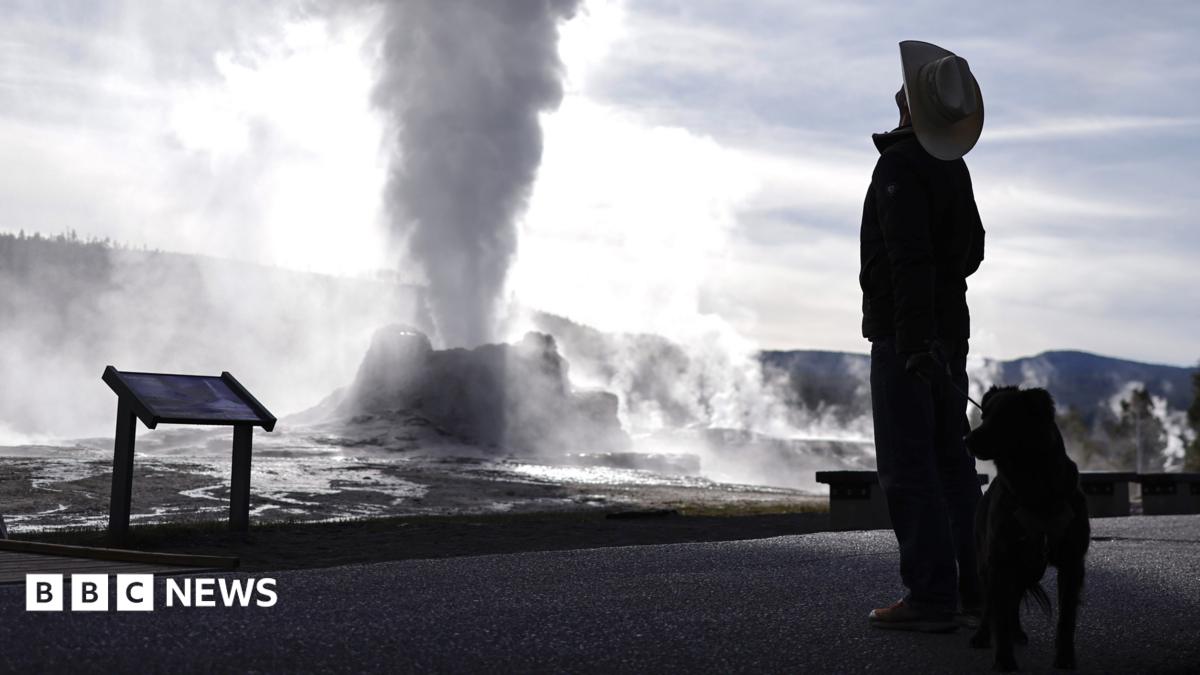
To go faster and deeper will require advances in drilling technologies.
Companies are developing drilling equipment that is more stable when breaking through hard rock at high temperatures.
Some firms are even aiming to penetrate rock without using standard drills.
Quaise, a company with roots at the Massachusetts Institute of Technology (MIT), is using a technology called millimetre wave drilling. The frequency is similar to that of microwaves.
Quaise’s application involves “sending electromagnetic waves in the microwave millimetre wave spectrum to essentially melt and vaporise through the rock,” explains Harry Kelso, Quaise’s communications manager.
Traditional geothermal energy clusters around hotspots on the earth’s surface where very hot rocks can be easily accessed.
“Millimetre wave drilling really enables you to access super-hot geothermal just about anywhere in the world,” says Kelso.
While Quaise is planning to use some conventional drilling at the project site it’s developing in Oregon, Kelso says that conventional drills start to break down more quickly when it reaches very hard rock.
Replacing drill bits increases the cost and time of drilling.
In Quaise’s case, Kelso says, “millimetre wave drilling is really what changes that because we’re not using a physical drill bit.”
Other companies are also working on advanced drilling technology, such as projectiles that move several times faster than the speed of sound.
Another crucial resource in the process is water. While some types of next-generation geothermal could create risks of water contamination or overconsumption, careful design can avoid this problem.
Initially Quaise’s system requires a lot of water, but according to Kelso, once the water is in the system it is continually circulated over the super-hot rocks.
“We’re essentially just recycling the water over and over,” he says.
Quaise is continuing to raise funds, with the aim of its Oregon project being up and running by 2030.
Like other early versions of geothermal systems, it’s an expensive project to get up and running.
“The economics are somewhat challenging,” Kelso admits. “Geothermal today is still more expensive because you are not getting as much power out of the well as you would if you were using that well for fossil fuel.”
But Quaise hopes that by targeting very high temperatures, of between 300C and 500C, the economics will improve.
While the higher end of that temperature range is ambitious, it’s a case of the-hotter-the-better.
“It allows you to get 10 times more energy per well from geothermal, which changes the economics and the power potential of geothermal,” according to Kelso.

Form 4 Clearwater Analytics Holdings Inc For: 25 June

The NSE Nifty 50 rose 0.1%, or 34.35 points, to close at 24,056, while the BSE Sensex gained 0.1%, or 109.25 points, to end at 77,100.47. Both indices were up about 0.4% for the week.
Markets had gained as much as 1% intraday before paring advances ahead of the prolonged weekend. Financial markets will be shut on Friday for Muharram. Brent crude extended its decline for a fourth straight session, slipping to as low as $72.4 a barrel.
“The Street was anticipating that the reopening of the Strait of Hormuz by June, and now that it has played out, oil prices have settled favourably for India, lending some investor confidence,” said Dharmesh Kant, head of research, cholamandalam securities.
Kant said dips are likely to attract buying interest with the downside appearing limited. While monsoons remain a key variable, he expects no major correction even with up to a 15% rainfall deficit. “Margins and profitability will improve from Q2 onwards, though Q1 numbers could be tepid,” he said.
The India VIX fell 2.5% to 13.1, pointing to easing near-term volatility expectations.
“This week, Nifty remained range-bound, taking support around its 20-day moving average of 23,800,” said Ruchit Jain, head of technical research at Motilal Oswal Financial Services. He expects the index to test the 24,200-24,250 zone in the near term, though a breakout above this level is needed for a sustained upmove.The Nifty Midcap 150 and Nifty Smallcap 250 indices fell 0.5% each. Out of 4,406 shares traded on the BSE, 1,602 advanced, and 2,627 declined. The Nifty Auto index gained 2.3% on softer crude prices, while the Nifty Metal index fell 1.4% and the Nifty IT index declined 0.9%.
Foreign portfolio investors bought shares worth a net ₹383.8 crore on Thursday.

Flowers and Jubair’s trial heard they were part of the cyber-crime collective, Scattered Spider.
The loosely organised gang of young English-speaking cyber-criminals has been linked to dozens of other cyber-attacks including on retailers Marks and Spencer and the Co-op.
But the BBC has learned Flowers initially came to the attention of police shortly after he turned 16 years old.
In October 2023 he was caught carrying out low-level cyber-crime and visited by West Midland’s Regional Cyber Crime Unit prevent officers.
Police say that during the visit Flowers did not engage with officers and was given a cease and desist order to deter him from further offending.
Police had the option to invite him to enrol in the national Cyber Choices programme, which works to steer young people away from cyber-crime.
However Flowers was already being investigated for an offence and was reluctant to engage with officers, so they deemed him not suitable.
Just months later, the teenager – who was living with his grandmother – went on to commit a series of increasingly serious cyber-offences with Scattered Spider which culminated in the TfL attack.
NCA deputy director Paul Foster, head of its National Cyber Crime Unit, said the case highlighted the challenges posed by a small number of highly capable offenders.
He called for stronger legal powers – such as the proposed Cyber Crime Risk Orders (CCROs) – to deal with cases like this.
CCROs, announced by the UK government as part of planned reforms to the Computer Misuse Act, are designed to let police and courts place restrictions on people considered high risk before they carry out further serious breaches.
They would “enable earlier law enforcement interventions against high-risk cyber-crime offenders,” Foster said.
Operator
Good day, everyone, and welcome to the American Outdoor Brands, Inc. Fourth Quarter and Full Year Fiscal 2026 Financial Results Conference Call. This call is being recorded.
At this time, I would like to turn the conference over to Ms. Liz Sharp, Vice President of Investor Relations. Please go ahead, ma’am.
Elizabeth Sharp
Vice President of Investor Relations
Thank you, and good afternoon. Our comments today may contain predictions, estimates and other forward-looking statements. Our use of words like anticipate, project, estimate, expect, intend, should, could, indicate, suggest, believe and other similar expressions is intended to identify those forward-looking statements. Forward-looking statements also include statements regarding our product development, focus, objectives, strategies and vision, our strategic evolution, our market share and market demand for our products, market and inventory conditions related to our products and our industry in general, and growth opportunities and trends.
Our forward-looking statements represent our current judgment about the future, and they are subject to various risks and uncertainties. Risk factors and other considerations that could cause our actual results to be materially different are described in our securities filings. You can find those documents as well as a replay of this call on our website at aob.com. Today’s call contains time-sensitive information that is accurate only as of this time, and we assume no obligation to update any forward-looking statements. Our actual results could differ materially from our statements today.
A few
Business
Kuwait International Airport Is Open Today, With Oman Air Resuming Service Through Terminal 4
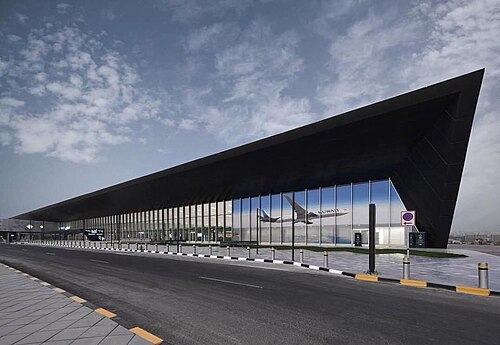
Kuwait International Airport is open and operating today, with Kuwait Airways and Jazeera Airways running normal schedules and a key foreign carrier resuming service for the first time since the airport’s earlier conflict-related disruptions.
Current Operational Status
Kuwait reopened its airspace and Kuwait International Airport is open and operating, with the region now moving from a ceasefire to a wider peace following the U.S.-Iran conflict. Kuwait Airways is flying from Terminal 4 and Jazeera Airways from Terminal 5, with schedules steadily returning to normal as the situation stabilizes. A brief, precautionary airspace closure during the conflict has long since been lifted.
Oman Air Resumes Service Today
Today marks a notable milestone in the airport’s gradual recovery, with one of the foreign carriers that had been waiting to resume operations now back in the air. Among the foreign carriers resuming, Oman Air has confirmed its Kuwait flights restart on June 25, 2026, temporarily operating through Terminal 4 instead of its usual Terminal 1.
Terminal 1 Remains the Main Outstanding Issue
While the airport overall continues operating, one of its primary facilities remains closed pending repair work tied to earlier damage. Terminal 1 remains closed for repairs after earlier damage, and there is no confirmed date for it to reopen. Terminals 4 and 5 are fully operating in the meantime.
The damage to Terminal 1 traces back to a series of attacks earlier this year. Between February 28, 2026, and June 2026, the airport was targeted by Iranian drone attacks as part of Iran’s strikes on Persian Gulf states, causing damage to Terminal 1. That reopening of Terminal 1 proved short-lived after an earlier repair, with the facility suffering more serious structural damage in a subsequent attack. Terminal 1 suffered significant damage during drone and missile strikes on June 3, 2026, with parts of the terminal experiencing a partial roof collapse and other structural damage, making the facility unsafe for passenger operations. That second closure has remained in effect since, with no confirmed reopening date currently available.
Terminal 3 Permanently Shut, Terminal 2 Still Under Construction
Beyond Terminal 1’s temporary closure, the airport’s broader terminal lineup includes additional facilities at different stages of completion. Terminal 2 is still under construction, while Terminal 3 is permanently closed.
A Long Road to Today’s Reopening
The airport’s current state reflects a complicated recovery process that unfolded over several months earlier this year. Since February 28, 2026, all flights to and from Kuwait International Airport were suspended following the closure of Kuwaiti airspace due to the broader regional conflict. Local carriers like Jazeera Airways diverted operations to Qaisumah International Airport in Saudi Arabia, located approximately two and a half hours from Kuwait by road, during the suspension.
The airport was hit by suicide drones between late February and April, causing damage to the facility, including its radar installation, though there were no casualties from those attacks. Kuwait Airways and Jazeera Airways restarted operations from the airport on April 26, operating from Terminals 4 and 5. Terminal 1 reopened on June 1, with some non-Kuwaiti airlines restoring service to the airport at that time, before the second strike on June 3 forced its closure once again.
Government Statements on the Reopening Process
Kuwaiti aviation officials have emphasized a careful, coordinated approach to restoring full operations throughout the recovery. Sheikh Hamoud Mubarak Al Sabah, Chairman of the General Civil Aviation Authority, said the move to reopen the airspace was coordinated with relevant domestic and international authorities to ensure operations resumed in line with the highest safety and security standards. Sheikh Hamoud also praised the efforts of aviation staff and government entities involved in managing the situation and accelerating recovery, expressing appreciation for Saudi Arabia’s support in facilitating Kuwaiti carriers through its airports, along with broader coordination among Gulf Cooperation Council countries to maintain air traffic continuity during the crisis.
What Travelers Should Do
Given the airport’s recent history of repeated disruptions, officials and travel advisories continue to recommend that passengers verify their specific flight status directly with their airline before heading to the airport. Confirm your flight with your airline before heading to the airport, as timings can still vary while schedules normalize. Travelers with urgent concerns should use official airline customer service channels for the latest updates regarding canceled or diverted flights, including options for rebooking, refunds, or rerouting.
Getting To and From the Airport
For travelers planning their journey, Kuwait International Airport is located approximately 15.5 to 16 kilometers south of Kuwait City’s center. A taxi to the city center takes approximately 20 to 25 minutes and costs between 5 and 10 Kuwaiti dinars, or roughly $16 to $33. Public buses on lines 13, 99, and 501 connect the airport to surrounding districts including Hawalli and Salmiya, running every 45 to 60 minutes for a fare of 0.250 Kuwaiti dinars, or about 80 cents, one way, though no direct metro or train service is currently available.
A Major Aviation Hub for the Region
Kuwait International Airport is the country’s primary aviation hub and the main airport serving the State of Kuwait, handling over 15 million passengers annually and offering connections to more than 100 destinations worldwide. As the central hub for Kuwait Airways and Jazeera Airways, the airport’s continued recovery carries significant importance for both regional connectivity and Kuwait’s broader economic activity.
The Broader Regional Context
The airport’s repeated cycle of closures and reopenings has occurred against the backdrop of a broader, easing regional conflict. With the region moving from a ceasefire to a wider peace, conditions have eased considerably, though officials and travel advisories continue to recommend that travelers check their government’s latest travel advisory before making plans, as guidance continues to be updated as the broader situation settles.
With Terminals 4 and 5 fully operational and Oman Air now resuming service as of today, Kuwait International Airport’s recovery appears to be continuing on a positive trajectory, even as Terminal 1 remains closed indefinitely pending repairs and Terminal 2’s broader expansion project continues working toward its targeted late-2026 opening. Travelers planning trips through Kuwait in the coming weeks should expect continued gradual normalization of service, but should not assume full pre-conflict operational capacity has yet been restored across all of the airport’s facilities.
“Love Island USA” bombshell Alannah Keyser pulled from show after N-word controversy

Menkeu purbaya Buka Bukaan Soal Nasib Gaji ASN 2026 #pns #pensiunanpns
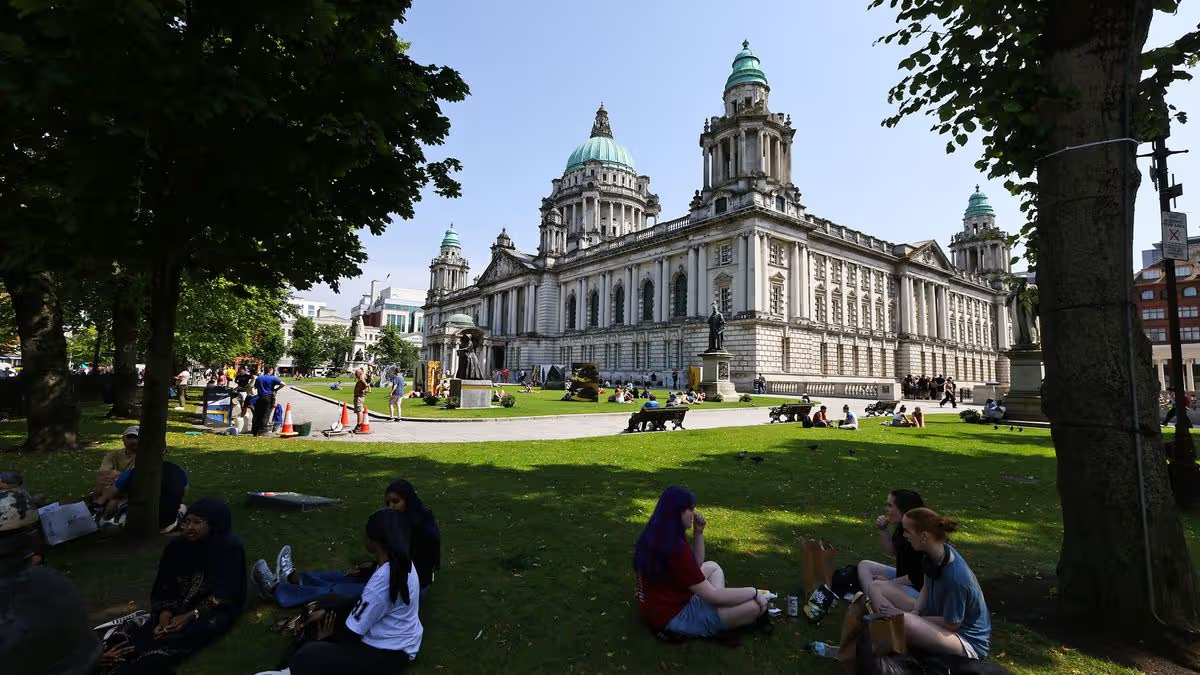
Northern Ireland weather latest amid thunder warning


-

 Fashion6 days ago
Weekend Open Thread: Miami – Corporette.com
-

 Entertainment5 days ago
Renter of Home in Anne Heche Crash Denies Settlement With Son
-
 Sports2 days ago
Two goals and an assist by sheer aura: Cristiano Ronaldo just entered the World Cup chat
-

 Tech4 days ago
Microsoft accidentally kills epic Outlook email threads
-

 Business5 days ago
Soccer-U.S. defends Iran World Cup travel restrictions, says discussions ongoing
-

 Politics6 days ago
Andy Burnham and the meaning of Makerfield
-

 NewsBeat6 days ago
Keir Starmer Allies Question His Chances For No 10
-

 Tech5 hours ago
A Look At A Gaggle Of Transputer Boards
-
Crypto World2 days ago
Bitcoin (BTC) Dips Below $62K, Ethereum (ETH) Plunges 6% Daily: Market Watch
-

 Crypto World2 days ago
Securitize Wraps Roubini's SEC-Registered ETF as Dubai VARA Digital Security
-
Business2 days ago
Entergy settles forward sale agreements, raises $672 million in cash proceeds
-
 Business6 days ago
Wall Street Week Ahead: Investors see Micron earnings as pulse check of AI rally momentum
-
 Crypto World6 days ago
Can Charles Hoskinson Really Rescue Cardano?
-

 Crypto World6 days ago
HIVE shares jump as $220M AI deal speeds Bitcoin mining pivot
-

 Crypto World6 days ago
Jake Chervinsky accuses CME of protecting derivatives monopoly
-

 Entertainment6 days ago
Jose Alvarado Wants Taylor Swift at More Knicks Games
-
 Tech5 days ago
Signal’s Meredith Whittaker says AI chatbots ‘are not your friends’ and calls Copilot agents a backdoor
-

 Sports12 hours ago
India vs Bangladesh LIVE Score, Women’s T20 World Cup: Bangladesh Opt To Bat; India Enter ‘Do-Or-Die’ Stage As Semi-Final Race Heats Up
-

 Tech3 days ago
Nearly 7,000 fake Amazon domains registered ahead of Prime Day 2026, researchers warn
-

 Business5 days ago
MHP SE 2026 Q1 – Results – Earnings Call Presentation (OTCMKTS:MHPSY) 2026-06-20
You must be logged in to post a comment Login