

Business
Estrogen patches are in short supply as women seek menopause support


Woman applying estrogen patch during hormone therapy.
Halfpoint Images | Moment | Getty Images
Estrogen patches are in short supply as demand for the menopause medications skyrockets, and it could take at least a year for manufacturers to catch up.
Prescriptions of estrogen patches have increased 162% over the past two years, according to data from HealthVerity. Already rising demand was turbocharged last fall when the Food and Drug Administration removed a more than 20-year-old black box warning discouraging women from taking hormone replacement therapy.
Manufacturers are struggling to keep pace. Three types of patches are in shortage, according to data from the American Society of Health-System Pharmacists, which relies on reports from healthcare providers. The FDA, using a different methodology, hasn’t declared a shortage of estradiol.
“You can get them, but it takes a lot of time and effort when we’re all so busy at this time of our lives,” said Dr. Susan Loeb-Zeitlin, director of the Women’s Midlife Center at Weill Cornell Medicine.
Doctors across the country describe the difficulty their patients are experiencing to find hormone replacement therapies, particularly estrogen patches. When asked how much time she spends trying to help people find the medication, Dr. Francesca Turner, a doctor in Iowa, just laughs.
“Between my nurse, patients’ pharmacists and myself, we are doing this pretty much every day trying to figure out how to navigate this for our patients,” Turner said.
Doctors prescribe estrogen to treat the symptoms of menopause, including hot flashes and brain fog, which occur when a woman’s body produce less of the hormone. Estradiol is the most potent type and is commonly administered through a patch that gradually releases the hormone on the skin to help ease physical and mental symptoms of menopause. Doctors prefer giving estrogen topically because it’s considered a safer option than orally, Loeb-Zeitlin said.
For more than two decades, the FDA advised women to avoid treating menopause with estrogen because a 2002 study called the Women’s Health Initiative suggested it could put women at greater risk of breast cancer and other conditions like dementia. Later analyses found the participants in the study were older than most women starting hormone replacement therapy and the risks of taking it were overstated. The FDA reversed course last fall and said it would work with companies to remove references to the risks in the labels of the medications.
By then, interest had already rebounded. Doctors credit prominent voices like Oprah Winfrey and social media users for shining a light on menopause, the life-altering symptoms that some women experience and how hormone replacement therapies can help.
“The demand has actually come from more of the community of women saying within their groups or communities that they are still suffering,” said Dr. Jessica Shepherd, chief medical officer of Hers. “This was much more brought about by social media, where people are really able to air their voice, and you see a lot of celebrities that were talking about their journey as well.”
Seeing the momentum, Hers, part of the telehealth provider Hims & Hers that’s best known for offering erectile dysfunction drugs and GLP-1s, about a year and a half ago decided to get into the perimenopause and menopause business, Shepherd said. Interest in the program has tripled since the company introduced it in October, the company said.
Prescriptions of all types of estrogen have risen 78% over the past two years, according to data from HealthVerity. The patches have proven particularly popular, with prescriptions more than doubling to 1.6 million in May from 594,000 in June of 2024, HealthVerity found. They now account for 44% of all estrogen prescriptions.
Phynart Studio | E+ | Getty Images
That popularity has strained supply.
Three types of estradiol patches are now facing shortages, according to the ASHP database. Two of the affected manufacturers – Zydus and Noven – didn’t respond to CNBC’s request for comment.
The third drugmaker, Amneal, said it’s working to increase production to help meet growing demand. The company said it doesn’t provide specific production details or timelines but remains focused on continuity of care for patients.
Other manufacturers of estrogen products said they are seeing similar trends. Sandoz in a statement said recent changes in prescribing behavior have “created an unprecedented demand that cannot be fully met at present.” The company said it’s working to increase manufacturing of estradiol patches, but it’s challenging to do so because the patches are “highly complex” to manufacture.
The heightened demand could explain why the FDA hasn’t declared a shortage, according to drug industry experts. The agency evaluates whether supply from all manufacturers of a drug meets historical demand of a drug.
And while the ASHP’s shortage database is driven entirely by public reports, the FDA’s data comes from manufacturers, said Michael Ganio, senior director of pharmacy practice and quality at the ASHP. That leaves the FDA trying to quantify new demand for a drug without being able to easily track prescriptions that go unfilled.
“It’s really, really hard to understand how much demand is out there because you don’t know how many physicians, nurse practitioners and prescribers in general are switching patients to alternate products, so it’s always challenging for the FDA to put a label on yes, there’s a shortage, without really being able to quantify the true market demand,” Ganio said.
An FDA spokesperson said estradiol patches are currently not in shortage and all six manufacturers report manufacturing at full capacity while working to keep up with increased demand. The agency said it continues to monitor supply and is offering assistance to manufacturers to increase supply.
It could take time to see the result of that effort. Making transdermal patches involves more complex manufacturing than treatments like pills.
Generic manufacturers typically switch lines throughout the year, Ganio said, meaning they might dedicate a line to making an estradiol product for the first three months then be done for the year. And in order to increase output, they would either need to wait until the following year or run another batch. It’s a harder calculation for generic drugmakers to make since the products carry lower profit margins than brand-name drugs, he said.
The strain already appears to be spreading to other hormone replacement therapies, with ASHP recently listing several estradiol creams and progesterone pills, which are given alongside estrogen, as being in shortage.
In the meantime, some people are looking for alternatives. Loeb-Zeitlin suggests her patients try estrogen gels if they can’t find patches. Some doctors are turning to creams from compounding pharmacies.
Jenn Burch, a pharmacist in Durham, North Carolina, started marketing creams to doctors in her area earlier this year when she started struggling to stock the patches. She’s finding that some patients are preferring them because she can customize them to combine estrogen with other hormones like progesterone or testosterone.
Insurers rarely cover compounded medicines, meaning patients need to pay out of pocket. Burch says she charges about $50 for a month’s supply of cream, a price she says helps cover the investment she has made to comply with a recent regulation about compounding hazardous substances. The special handling requirements could be another factor limiting manufacturers’ ability to quickly ramp up production, Ganio said.
He predicts it will take a year or two for manufacturers to find the sweet spot between supply and demand. That means women could be left scrambling for some time.

Business
Oracle Shares Slip Again as AI Spending Concerns and Tech Selloff Continue to Pressure the Stock Friday

Shares of Oracle continued their retreat Friday, falling 0.90% to $151.22 in midday trading, as the database and cloud-computing giant remains caught in a broader market reassessment of how much technology companies should be spending — and borrowing — to fund the artificial intelligence buildout.
The decline, while modest on its own, extends a punishing stretch for Oracle that has seen the stock fall dramatically from its highs earlier this year, even as the company’s underlying cloud business continues to post strong growth.
A stock far removed from its peak
Oracle’s current price tells only part of the story without context from where the stock has traveled this year. The stock’s 52-week high of $345.72 was set on September 10, 2025, while its 52-week low of $134.57 came on April 10, 2026. At Friday’s level near $151, shares remain much closer to that low than to the highs reached less than a year ago — a decline that reflects a dramatic shift in how investors are pricing Oracle’s aggressive AI infrastructure bet.
That volatility has been particularly pronounced in recent weeks. Oracle is on pace for its worst month since 2001, a sharp reversal following the strongest month in a generation — the stock had surged 39.9% in May, its best monthly performance since February 2000, driven by enthusiasm over the company’s AI-related order backlog.
The earnings report that triggered the slide
Much of Oracle’s recent struggles trace back to its fiscal fourth-quarter earnings report, which beat Wall Street’s expectations on the surface but rattled investors over the company’s spending plans. Oracle reported adjusted earnings of $2.03 per share, ahead of the $1.96 analysts had expected, on revenue of $19.18 billion versus a $19.10 billion estimate, with revenue up 21% year over year. Despite beating those numbers and raising its profit forecast, the stock still tumbled. Shares dropped 10% in extended trading after Oracle disclosed plans to raise more money to finance its AI buildout, with the company saying it foresees raising $40 billion through additional debt and equity financing, including a previously announced $20 billion share sale.
The scale of that financing push, layered on top of what the company had already raised, is what spooked investors. That $40 billion in fresh financing comes after Oracle already raised $43 billion in debt and $5 billion in equity during fiscal 2026 — a combination that has concerned investors given lingering uncertainty about whether demand for artificial intelligence can ultimately justify that much new capital.
The cash flow picture behind the spending
The financial commitments tied to Oracle’s AI expansion have shown up clearly in its cash flow statements. For the fiscal year, Oracle reported $23.7 billion in negative free cash flow, with depreciation nearly doubling to $7.62 billion, while capital expenditures jumped 162% to $55.7 billion. Looking ahead, the company has signaled spending will remain elevated. Oracle’s new chief financial officer, Hilary Maxson, said the company’s net cash outlay for capital expenditures in fiscal 2027 will be around $70 billion, excluding $20 billion to $25 billion in prepayments from customers and timing impacts.
A workforce reshaped around AI priorities
Alongside the spending increases, Oracle has been making significant changes to its workforce as it reorients the business toward AI and cloud infrastructure. Oracle’s recent regulatory disclosures show a notable restructuring that reduced its workforce by 13%, alongside a record $638 billion in remaining performance obligations. Coverage of the filing put a more specific number on those job losses. Oracle disclosed in its latest annual report that it cut about 21,000 jobs over the past fiscal year, shrinking its workforce roughly 13% as the company reshapes its business around AI.
Where the demand is coming from
Despite the financial strain, Wall Street has pointed to one customer in particular as the anchor behind Oracle’s massive backlog of future business. Bank of America analysts, who recommend buying Oracle shares, said over 50% of the company’s remaining performance obligation comes from OpenAI. Oracle’s leadership has also emphasized the physical scale of the infrastructure buildout underway. Oracle CEO Clay Magouyrk said on a conference call with analysts that the company is looking to bring online almost one gigawatt worth of computing power in the current quarter alone, roughly matching the total brought online for all of fiscal 2026.
That data center expansion has continued to draw outside investment as well. Related Digital and Blackstone said they secured funding for a $16 billion Oracle data center site in Michigan.
Mixed signals from analysts
Not all of Friday’s pressure traces back to the broader AI spending debate — some of it appears tied to company-specific financing mechanics. One recent analyst note warned that preferred stock conversions and at-the-market equity issuances may dilute shareholders and pressure Oracle’s stock price.
Even so, some independent analysis has pushed back on the idea that Oracle’s long-term growth story is in jeopardy. Investment firm Evercore said Oracle’s 10-K filing further strengthens the view that the company’s outlook for fiscal 2027 remains intact, despite ongoing investor concerns about the scale of its spending.
Part of a broader sector retreat
Friday’s dip in Oracle shares is unfolding alongside declines across much of the rest of the technology sector, as investors reassess AI-related valuations more broadly following a long rally. Several of the market’s largest technology names were trading lower in the same session, reflecting a pattern of selling that has spread well beyond any single company’s specific circumstances.
What investors are watching next
With Oracle’s next earnings report not expected until September, investors are likely to spend the coming weeks parsing the company’s spending disclosures, its OpenAI-anchored backlog, and broader sentiment around AI infrastructure investment for clues about where the stock goes from here. Oracle delivered more than 1.2 gigawatts of data center capacity in fiscal 2026, underpinning 77% year-over-year growth in its cloud infrastructure business — a figure bulls point to as evidence that demand remains robust even as the stock continues to struggle. Whether that underlying growth can eventually outweigh concerns about Oracle’s ballooning capital needs remains the central question hanging over the stock as it searches for a floor well below its highs from less than a year ago.


Julian Lin is a financial analyst. He finds undervalued companies with secular growth that appreciate over time. His approach is to look for companies with strong balance sheets and management teams in sectors with long growth runways.
Julian is the leader of the investing group Best Of Breed Growth Stocks where he only shares positions in stocks which have a large probability of delivering large alpha relative to the S&P 500. He also combines growth-oriented principles with strict valuation hurdles to add an additional layer to the conventional margin of safety. Features include: exclusive access to Julian’s highest conviction picks, full stock research reports, real-time trade alerts, macro market analysis, individual industry reports, a filtered watchlist, and community chat with access to Julian 24/7. Learn more.
Analyst’s Disclosure: I/we have a beneficial long position in the shares of NVDA either through stock ownership, options, or other derivatives. I wrote this article myself, and it expresses my own opinions. I am not receiving compensation for it (other than from Seeking Alpha). I have no business relationship with any company whose stock is mentioned in this article.
Seeking Alpha’s Disclosure: Past performance is no guarantee of future results. No recommendation or advice is being given as to whether any investment is suitable for a particular investor. Any views or opinions expressed above may not reflect those of Seeking Alpha as a whole. Seeking Alpha is not a licensed securities dealer, broker or US investment adviser or investment bank. Our analysts are third party authors that include both professional investors and individual investors who may not be licensed or certified by any institute or regulatory body.
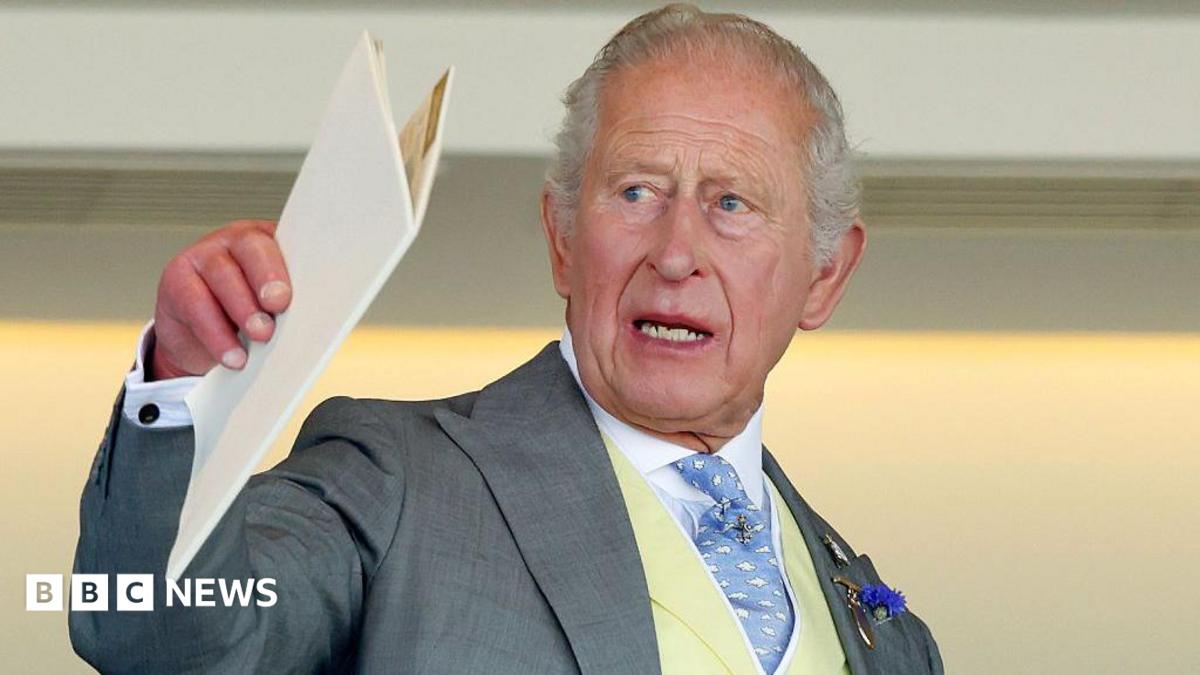
Another thing not detailed in the report is what proportion of the Privy Purse income has been spent by the King personally and what proportion of it has been spent for official royal duties.
This matters because the King only voluntarily pays tax on income spent personally, meaning the King can effectively deduct royal business from his tax bill.
The King also does not pay tax on the Sovereign Grant, which is money paid from the Treasury to the Royal Household to pay for official duties.
This system is a bit like how a self-employed person can file expenses on their self-assessment tax return for things like uniform or training.
Except that the King has two tax-free ways in which he can he can fund official duties.
Also, what counts as official duties is very different from what a regular self-employed taxpayer can expense.
For example, the untaxed Sovereign Grant can be used to fund the staff costs and running expenses of the King’s official household while untaxed official duties that can be paid by Privy Purse include the personal income of working members of the Royal Family.
The Keeper of the Privy Purse, James Chalmers, said: “While Royal finances can sometimes appear complex, the underlying system is clear in principle, structured in law and refined over time to ensure the Monarch can serve with independence, accountability and in the long-term interests of the nation.”


US seizes nearly 400 websites that were illegally streaming World Cup, DOJ says

Form 4 Atlanticus Holdings Corporation For: 26 June

A retired FBI agent says investigators may be closing in on the masked man caught on Nancy Guthrie’s home security camera the night she disappeared, raising fresh questions about why no arrest has been made nearly five months into the case.
Nancy Guthrie, the 84-year-old mother of “Today” co-anchor Savannah Guthrie, went missing on February 1 from her home in the Catalina Foothills, a suburb of Tucson, Arizona. Investigators believe she was abducted overnight, and her case has remained one of the most closely watched missing-persons investigations in the country in the months since.
A retired agent’s confident prediction
Speaking on SiriusXM’s “The Megyn Kelly Show” Tuesday, retired FBI Special Agent Maureen O’Connell said she believes law enforcement is nearing a breakthrough in identifying the masked figure seen on Guthrie’s doorbell camera footage. “I think they’re close right now to pulling this case together,” O’Connell said. “That’s what my sources are telling me… Things are happening.”
O’Connell went further when pressed for specifics, putting a number on her confidence level. Asked directly about the masked individual, she said, “I think they’re getting close to the porch guy. And when they get the porch guy, the floodgates shall swing open.”
The remarks visibly surprised the show’s host. “What?!” Kelly responded, before asking O’Connell to elaborate on why she believed authorities were nearing an answer. When Kelly followed up by asking for her level of confidence, O’Connell put the figure at “75 percent.”
Why the case has moved so slowly
O’Connell offered an explanation for why nearly five months have passed without a public arrest, despite the doorbell footage being replayed repeatedly across television and social media. She argued that the delay reflects the meticulous nature of building a case rather than a lack of leads.
“You’re gonna have the greatest defense attorney in the world handling this case, whoever takes it,” O’Connell said, explaining that prosecutors have to plan for the possibility that key evidence could later be ruled inadmissible. “So you have to operate under the assumption that a couple of big chunks of your evidence may get tossed. So you have to put a case together in such a way that it would withstand losing some of these chunks of evidence.”
She described the methodical approach investigators are likely taking from the earliest stages of the case. “From day one, you’re doing your trial prep, practically,” O’Connell said. “Everything you do is geared toward the trial and prosecution.”
Pima County Sheriff Chris Nanos, whose department has led the investigation alongside the FBI, has made similar comments in recent weeks emphasizing the importance of conducting the investigation “by the book” rather than rushing toward an arrest.
What the doorbell footage shows
The security footage at the center of the case was released roughly 10 days after Guthrie vanished and has become one of the most widely circulated pieces of evidence in the investigation. The video shows a masked figure standing on Guthrie’s porch, staring directly into the camera lens, in what authorities have described as an apparent attempt to tamper with the doorbell device itself.
According to multiple accounts of the footage, the individual appeared to be carrying a pistol and held a flashlight in his mouth while using a gloved hand, and later flowers pulled from Guthrie’s garden, in an apparent attempt to obscure the camera’s view. Investigators have publicly confirmed that the person in the footage appears to be armed and that the video was captured shortly before Guthrie’s disappearance.
Beyond the visual evidence, investigators have pursued other forensic avenues. DNA evidence connected to the case has been sent to the FBI’s laboratory in Quantico, Virginia, for testing, though no suspects have been publicly named as of Friday.
A case shaped by a chilling ransom note
The renewed attention on the “porch guy” footage comes in the same week that the contents of a second ransom note sent in connection with Guthrie’s disappearance became public. According to multiple law enforcement sources, that note, sent in February, indicated that Guthrie had died shortly after she was taken, with the senders expressing regret over her death and making no further demands for payment.
A separate, earlier note had focused on demanding payment for her safe return and included specific details about her home, including a broken floodlight in the yard and a description of her clothing — details investigators believe lent credibility to the communication. Authorities have said both notes were sent from the same IP address, deepening their belief that they originated from whoever was responsible for Guthrie’s disappearance.
Community alerts issued by both authorities and Guthrie’s family in the weeks following her disappearance had also noted that she was in poor health at the time she vanished and did not have access to her necessary emergency medications, a detail that heightened concerns for her safety from the earliest days of the search.
Savannah Guthrie keeps the case in the public eye
Throughout the five-month investigation, Savannah Guthrie has remained one of the most consistent public voices pushing to keep attention on her mother’s case, regularly using her platform on “Today” to renew appeals for information. In an emotional segment last week, she told viewers, “Her family cannot be at peace, no matter how much I try to come out here every day and smile and find that joy.”
No confirmation from official sources
Despite O’Connell’s optimistic timeline, neither the FBI nor the Pima County Sheriff’s Department has publicly confirmed that an arrest is imminent. Officials have continued to circulate reward notices and appeal for tips related to the masked suspect, while declining to comment further on the specifics of where the investigation currently stands.
For now, the case remains open and unresolved nearly five months after Guthrie’s disappearance, with investigators publicly maintaining a cautious posture even as outside voices like O’Connell suggest a resolution may be closer than it has appeared from the outside. Anyone with information related to the case has been urged to contact the FBI directly as the search for answers continues.


Major beef exporters near China quota caps, clouding second-half trade, report says

GameStop Corp. shares advanced more than 2 percent on Friday, reaching $21.55 after gaining $0.54, as the video game retailer continued experiencing volatility characteristic of meme stocks.
The movement reflected ongoing retail investor interest in the company despite its challenges in the evolving video game retail landscape. GameStop has transformed its business model in response to digital distribution and changing consumer habits.
The company has reported mixed financial results as it navigates declining physical game sales while exploring new revenue streams. Its focus on collectibles, merchandise and potential e-commerce expansion aims to diversify beyond traditional retail.
GameStop’s financial position includes significant cash reserves that provide flexibility for strategic initiatives. The company’s efforts to reduce costs and optimize operations have shown some progress.
Business Transformation
GameStop has undergone substantial changes since its peak as a dominant video game retailer. The shift toward digital downloads and online distribution has reduced demand for physical game sales.
The company has responded by expanding its product offerings to include collectibles, electronics and gaming accessories. Its online presence and e-commerce capabilities have grown to complement physical stores.
Strategic initiatives include potential partnerships and technology investments to enhance customer experience. GameStop’s efforts to evolve its business model continue amid industry challenges.
Management has emphasized operational efficiency and inventory management. Cost reduction measures have aimed to improve profitability in a difficult retail environment.
Market Position
The video game industry has shifted dramatically toward digital platforms and subscription services. Traditional retailers like GameStop have faced structural headwinds as consumers move online.
The company’s physical store network provides advantages in certain product categories and customer segments. Its knowledgeable staff and hands-on experience remain differentiators for some shoppers.
Competition from online retailers and digital storefronts has intensified. GameStop’s ability to carve out a sustainable niche will determine its long-term viability.
The rise of esports, mobile gaming and cloud gaming has created new dynamics in the industry. Companies adapting to these trends may find opportunities for growth.
Meme Stock Phenomenon
GameStop gained prominence as a meme stock during the 2021 trading frenzy driven by retail investors coordinating through social media. The phenomenon highlighted the power of collective retail trading and market dynamics.
The company’s stock has experienced significant volatility in subsequent years, with periodic surges driven by social media attention rather than fundamental developments. Such movements create both opportunities and risks for investors.
Short interest and trading volume often spike during periods of heightened attention. The company’s market capitalization can fluctuate dramatically based on sentiment rather than business performance.
Regulatory authorities have examined various aspects of meme stock trading, including market manipulation concerns and retail investor protection. The GameStop case has been cited in discussions about market structure and transparency.
Financial Challenges
GameStop has faced declining revenue as physical game sales have decreased. Its transition to new business models has required significant investment and operational changes.
The company’s cash position provides a buffer for strategic initiatives and potential acquisitions. However, sustaining operations while transforming the business model remains challenging.
Analysts have expressed varied views about GameStop’s long-term prospects. Some see potential in its brand and customer base while others remain skeptical about its ability to compete in digital markets.
The company’s financial reporting and guidance are closely watched for signs of successful adaptation. Consistent execution on strategic plans could support improved performance.
Retail Investor Interest
GameStop maintains a dedicated following among retail investors who view it as a symbol of individual investor power. Social media communities continue discussing the stock and coordinating trading activity.
The company’s communications with shareholders and transparency efforts have evolved in response to increased attention. Management balances traditional investor relations with engagement through modern platforms.
The meme stock phenomenon has created unique challenges and opportunities for GameStop’s leadership. Navigating volatility while executing business strategy requires careful communication.
Retail investor sentiment can significantly influence short-term trading patterns. Understanding these dynamics has become important for all market participants.
Future Outlook
GameStop’s ability to successfully transform its business model will determine its long-term viability. Strategic initiatives in e-commerce, collectibles and potential new ventures could provide growth opportunities.
The company continues evaluating various options for enhancing shareholder value and operational performance. Its cash position and brand recognition provide resources for potential initiatives.
Investors will monitor upcoming financial results and strategic updates for signs of progress. Management’s ability to articulate and execute a clear vision will influence market perception.
The video game industry’s evolution continues creating both challenges and opportunities for traditional retailers. GameStop’s adaptation strategy will be tested against changing consumer behaviors and competitive dynamics.
The company’s unique position as a meme stock adds complexity to its business operations and investor relations. Balancing traditional retail challenges with social media-driven volatility requires careful management.
As GameStop navigates its transformation, its role in the evolving video game ecosystem will continue evolving. The company’s progress will be watched closely by investors, customers and industry participants.
Business
Tesla Shares Advance More Than 3 Percent as EV Maker Maintains Leadership in Electric Vehicles

Tesla Inc. shares rose more than 3 percent on Friday, closing at $386.80 after gaining $11.68, as investors responded positively to the company’s continued dominance in electric vehicles and progress in autonomous driving technology.
The gain reflected ongoing confidence in Tesla’s position as the leading electric vehicle manufacturer with a vertically integrated business model. The company’s focus on innovation, manufacturing efficiency and energy solutions has sustained investor interest despite competitive pressures.
Tesla’s vehicle deliveries have remained strong, supported by its expanding product lineup and global manufacturing footprint. Its ability to scale production while maintaining quality has been a key differentiator in the electric vehicle market.
The company’s energy storage and solar businesses have shown significant growth, providing diversification beyond automotive revenue. Tesla’s integrated energy solutions address both consumer and utility-scale needs.
Vehicle Production and Deliveries
Tesla has reported robust vehicle production and delivery numbers across its models. The Model Y and Model 3 continue driving volume while Cybertruck production ramps up to meet demand.
The company’s manufacturing facilities in the United States, China and Germany support global distribution and reduce transportation costs. Its ability to adapt production to regional demand has enhanced efficiency.
New model development and refreshes keep the lineup competitive. Tesla’s approach to over-the-air updates provides continuous improvement and new features for existing owners.
Autonomous driving technology, including Full Self-Driving capability, represents a significant growth area. Regulatory approval and technical advancement will determine the pace of commercialization.
Energy Business Expansion
Tesla’s energy generation and storage segment has grown rapidly, with Megapack deployments supporting grid stability and renewable energy integration. The business provides high-margin revenue with strong demand.
Solar roof and Powerwall products offer residential energy solutions with increasing adoption. The company’s virtual power plant initiatives demonstrate innovative approaches to energy management.
Energy storage deployments have accelerated as utilities and businesses seek solutions for renewable integration and grid resilience. Tesla’s technology and manufacturing scale provide competitive advantages.
Market Position and Competition
Tesla maintains leadership in electric vehicle sales globally despite increasing competition from traditional automakers and new entrants. Its brand strength, charging network and technology ecosystem create significant barriers to entry.
The company’s Supercharger network has expanded through partnerships and open access initiatives. This infrastructure advantage supports customer ownership experience and generates additional revenue.
Traditional automakers have accelerated electric vehicle development but face challenges in matching Tesla’s vertical integration and software capabilities. New competitors focus on specific market segments and price points.
The global transition to electric vehicles continues, supported by government incentives and corporate sustainability goals. Tesla’s first-mover advantage and execution have positioned it favorably in this shift.
Investment Considerations
Tesla’s share price performance reflects its unique position as both an automaker and technology company. Its valuation incorporates expectations for vehicle growth, energy business expansion and autonomous driving potential.
The stock appeals to growth-oriented investors seeking exposure to electric vehicles, renewable energy and artificial intelligence. Its volatility reflects the high expectations and execution risks inherent in its ambitious vision.
Risks include production challenges, competitive responses, regulatory hurdles and capital requirements for expansion. Tesla’s ability to deliver on multiple fronts simultaneously will influence long-term success.
Analysts maintain varied outlooks, with some highlighting significant upside potential while others express caution about valuation and execution. The company’s fundamental progress and market leadership support positive long-term views.
Industry Trends
The electric vehicle market continues expanding globally with improving battery technology, charging infrastructure and consumer acceptance. Government policies and corporate commitments support the transition from internal combustion engines.
Autonomous driving technology development has accelerated across the industry. Regulatory frameworks and technical challenges will determine adoption timelines and competitive dynamics.
Renewable energy integration and energy storage solutions gain importance as grids adapt to variable generation sources. Tesla’s dual role in vehicles and energy storage positions it uniquely in this ecosystem.
Supply chain localization and battery technology advancement remain focus areas for electric vehicle manufacturers. Tesla’s investments in these areas support cost reduction and supply security.
Future Outlook
Tesla’s strategic direction encompasses vehicle production scaling, energy business growth and autonomous technology development. Its ability to execute across these fronts will shape its trajectory.
The company continues investing in manufacturing capacity, research and development, and global expansion. Its vertical integration provides advantages in cost control and innovation speed.
Investors will monitor vehicle delivery numbers, energy deployment figures and progress on autonomous capabilities. Management guidance will provide insight into execution priorities and market conditions.
The electric vehicle and renewable energy sectors’ fundamental growth drivers remain strong. Tesla’s technology leadership and brand strength position it for continued market leadership.
As the company advances its ambitious goals, its contribution to sustainable transportation and energy solutions will expand. Tesla’s progress will be watched closely by investors, competitors and policymakers worldwide.


Nick Ackerman is a former financial advisor using his experience to provide coverage on closed-end funds and exchange-traded funds. Nick has previously held Series 7 and Series 66 licenses and has been investing personally for over 14 years.He contributes to the investing group CEF/ETF Income Laboratory along with leader Stanford Chemist, and Juan de la Hoz and Dividend Seeker. They help members benefit from income and arbitrage strategies in CEFs and ETFs by providing expert-level research. The service includes: managed portfolios targeting safe 8%+ yields, actionable income and arbitrage recommendations, in-depth analysis of CEFs and ETFs, and a friendly community of over a thousand members looking for the best income ideas. These are geared towards both active and passive investors. The vast majority of their holdings are also monthly-payers, which is great for faster compounding as well as smoothing income streams. Learn More.
Analyst’s Disclosure: I/we have a beneficial long position in the shares of ECF, GDV either through stock ownership, options, or other derivatives. I wrote this article myself, and it expresses my own opinions. I am not receiving compensation for it (other than from Seeking Alpha). I have no business relationship with any company whose stock is mentioned in this article.
Seeking Alpha’s Disclosure: Past performance is no guarantee of future results. No recommendation or advice is being given as to whether any investment is suitable for a particular investor. Any views or opinions expressed above may not reflect those of Seeking Alpha as a whole. Seeking Alpha is not a licensed securities dealer, broker or US investment adviser or investment bank. Our analysts are third party authors that include both professional investors and individual investors who may not be licensed or certified by any institute or regulatory body.

Oracle Shares Slip Again as AI Spending Concerns and Tech Selloff Continue to Pressure the Stock Friday

Michael Saylor’s Strategy Enters a Dangerous Feedback Loop as STRC Cracks and Bitcoin Falls

The Coolest, Weirdest Easter Eggs You Missed In Supergirl


-

 Entertainment6 days ago
Renter of Home in Anne Heche Crash Denies Settlement With Son
-
 Sports3 days ago
Two goals and an assist by sheer aura: Cristiano Ronaldo just entered the World Cup chat
-

 Tech4 days ago
Microsoft accidentally kills epic Outlook email threads
-

 Business6 days ago
Soccer-U.S. defends Iran World Cup travel restrictions, says discussions ongoing
-

 Fashion6 hours ago
Weekend Open Thread: Staud – Corporette.com
-

 Politics17 hours ago
The House | Manchesterism won’t survive the painful trade-offs unless it gets citizens on board
-

 Politics7 days ago
Andy Burnham and the meaning of Makerfield
-

 Politics21 hours ago
Potential 2028er World Cup attendee leaderboard
-

 Tech1 day ago
A Look At A Gaggle Of Transputer Boards
-
Crypto World3 days ago
Bitcoin (BTC) Dips Below $62K, Ethereum (ETH) Plunges 6% Daily: Market Watch
-

 Business16 hours ago
Asia stock markets slide as tech shares slump
-

 Crypto World3 days ago
Securitize Wraps Roubini's SEC-Registered ETF as Dubai VARA Digital Security
-
 Crypto World1 day ago
Dell (DELL) Shares Tumble Over 5% Following Analyst Downgrade to Hold
-
Business3 days ago
Entergy settles forward sale agreements, raises $672 million in cash proceeds
-
 Crypto World7 days ago
Can Charles Hoskinson Really Rescue Cardano?
-
 Business7 days ago
Wall Street Week Ahead: Investors see Micron earnings as pulse check of AI rally momentum
-

 Sports3 hours ago
FIH Pro League: India defeat Pakistan 7-1, register biggest win of campaign | Other Sports News
-

 Entertainment7 days ago
Jose Alvarado Wants Taylor Swift at More Knicks Games
-

 Crypto World7 hours ago
RTX holders must register wallets before token distribution begins
-

 Crypto World7 days ago
HIVE shares jump as $220M AI deal speeds Bitcoin mining pivot
You must be logged in to post a comment Login