

Connect with us
DAPA Banner
DAPA Coin
DAPA
COIN PAYMENT ASSET
PRIVACY · BLOCKDAG · HOMOMORPHIC ENCRYPTION · RUST
ElGamal Encrypted MINE DAPA
🚫 GENESIS SOLD OUT
DAPAPAY COMING

NewsBeat

Nintendo Switch Online is what Game Pass wanted to be – Reader’s Feature

Published

on

Nintendo Switch Online is what Game Pass wanted to be - Reader’s Feature
Nintendo Switch Online – better than Game Pass? (Nintendo)

As Xbox struggles with an uncertain future, a reader argues that Nintendo Switch Online is a far more successful subscription service than Game Pass.

There’s a lot of post-mortems going on at the moment for Xbox and I can’t say they don’t deserve to have the benefit of the doubt taken away from them. Personally, I’ve never owned one and I’m certainly not going to start now, but while playing Star Fox 64 on Nintendo Switch Online last night (to make comparisons with the remake) a thought occurred to me that it has come a lot closer to being the Netflix of gaming than Game Pass ever did.

Like most people (including Microsoft) I thought Game Pass was going to be a massive hit that would change the industry. In fact, I was pretty sore about the whole idea because I felt like Microsoft was cheating and doing something with their money that no other company could match, thereby giving them an unbeatable advantage. Obviously, I shouldn’t have worried.

It took a while for people to understand why Game Pass hadn’t worked and then they realised that most people don’t really have time to play that many games, so not only do they not have the money to spend on playing something they might not like they don’t have the spare time either. Combine that with Game Pass’ rising prices and the lack of decent first party games and you’ve got a problem.

Advertisement

Nintendo Switch Online is something I very rarely hear anyone talk about and yet apparently it’s got the same number of subscribers as Game Pass. I put this down to more people owning a Switch and it being quite a bit cheaper.

But there’s also the fact that it’s all retro based so you kind of already know what you’re getting. Even if you’ve never played a game before you’ve probably heard about it and maybe always meant to give it a go. You’re not paralysed with choice because there’s not that many per format and yet the service has been going long enough that it already has most of the top games available.

Expert, exclusive gaming analysis

Sign up to the GameCentral newsletter for a unique take on the week in gaming, alongside the latest reviews and more. Delivered to your inbox every Saturday morning.

Advertisement

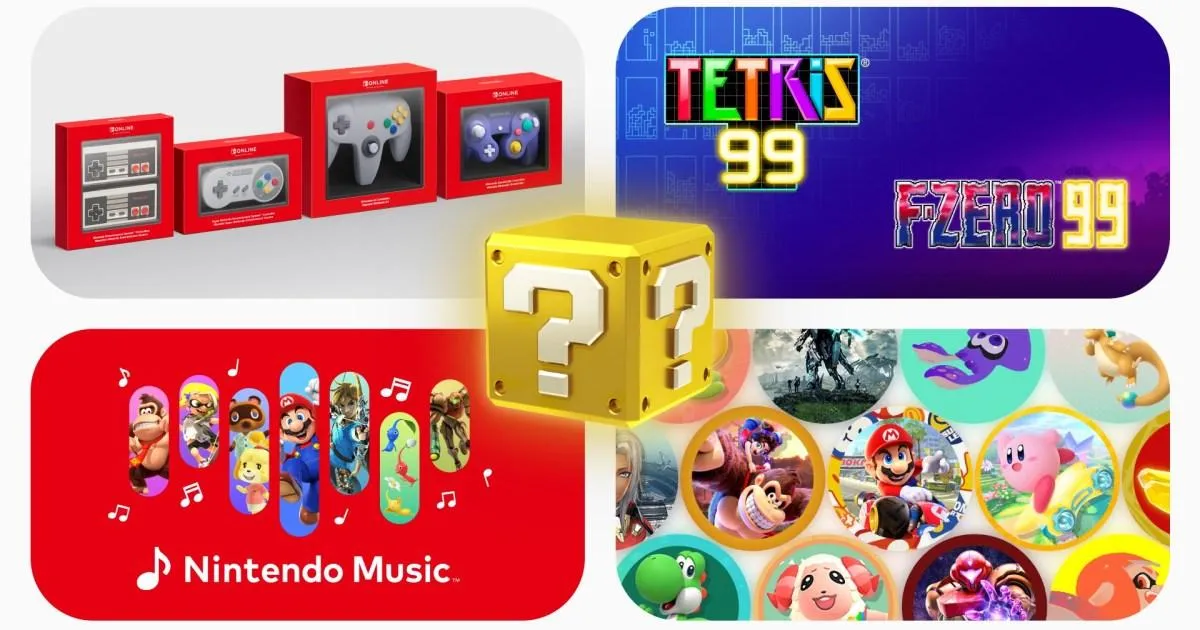
It’s not a lazy crash grab either, as some of the games have never been released in the UK before and they have different versions of the same one from different countries. Also, Nintendo Switch Online has exclusive games sometimes – I really liked Tetris 99 – and you need it to play online for most games, so there’s always some reason to have it.

Personally, I also pay for the Expansion Pack, which is basically the Premium tier, but it’s still not that much money and it gives you more retro formats and most DLC for free.

Advertisement

The thing is though, and this is where I think the big difference with Game Pass is, I often forget I’ve got it, because it’s cheap enough that it’s not a burden and, unlike Microsoft with Game Pass, Nintendo aren’t banging on about it every five minutes, making me sick of hearing about it.

Microsoft are constantly pushing Game Pass in your face, but Nintendo just gets on with it, and I think Nintendo Switch Online has quietly become just a given that most Switch owners pay for. Its reasonably priced, it doesn’t pretend to be the be all and end all of gaming, and it offers things you actually want.

The secret of Netflix’s success is kind of the same. It’s also something that a lot of people just consider a basic necessity, or at least one of the last luxuries they’d give up on. I feel that Nintendo Switch Online has reached that point for Switch, but the failure of Game Pass is that it never did for Xbox.

By reader Onibee

Advertisement
Star Fox key art of the four main characters
Star Fox – you can’t get the remake for free on Nintendo Switch Online but you can play the original (Nintendo)

Source link

Advertisement
Continue Reading
Click to comment

You must be logged in to post a comment Login

Leave a Reply

NewsBeat

As the temperature rises, so do the risks for people living with interstitial lung disease

Published

on

As the temperature rises, so do the risks for people living with interstitial lung disease

For most people, a hot summer’s day is uncomfortable. For someone with scarred lungs, it can become a medical risk.

People living with interstitial lung disease (ILD) are especially vulnerable during extreme heat. As climate change drives more frequent and intense heatwaves, people with ILD will need better protection from hot weather and related health risks.

ILD is an umbrella term for more than 200 lung conditions. These conditions cause inflammation, the body’s immune response to injury or irritation, and fibrosis, which means lung scarring. As scar tissue builds up, the lungs become stiffer and less able to transfer oxygen into the bloodstream, making breathing harder.

Many ILDs, particularly idiopathic pulmonary fibrosis (IPF) – a form of lung scarring that develops without a clear known cause – affect people over 65. Older adults with ILD often also live with other long-term conditions, such as heart disease, diabetes, high blood pressure or chronic kidney disease. These can reduce the body’s ability to cope with stresses such as extreme heat.

Advertisement

Hot weather forces the body to work harder to stay cool. The heart pumps more blood towards the skin, breathing can become more difficult, and oxygen demand may increase. For people with ILD, whose lungs already struggle to supply enough oxygen, this can lead to worsening breathlessness, fatigue and reduced exercise tolerance.

Dehydration, which is common during heatwaves, can cause weakness, dizziness or low blood pressure. This can be a particular problem for older adults taking medicines such as diuretics, often known as water tablets, which help the body get rid of excess fluid.

Heatwaves can also bring environmental hazards. Higher levels of ground-level ozone, a harmful air pollutant formed when sunlight reacts with emissions from vehicles and industry, can irritate the lungs. Wildfire smoke and airborne particles, meaning tiny pieces of pollution in the air, can also worsen breathing symptoms. A 2026 review concluded that these exposures may trigger flare-ups and could contribute to disease progression by increasing inflammation and biological processes linked to lung fibrosis.

Risk reduction

There are practical steps that can reduce the risks.

Advertisement

People with ILD should check local weather forecasts and heat-health alerts during hot weather. It can also help to make a simple plan: who to contact if symptoms worsen, where to go if the home becomes too hot, what to do during a power cut if using oxygen equipment, and how to get medical advice.

During extreme heat, people with ILD should avoid being outdoors during the hottest part of the day. For people with moderate to severe ILD, fatigue is often already a limiting factor. Essential activities are best planned for the early morning or evening, when temperatures are lower.

Keeping indoor spaces cool is equally important. Closing curtains or blinds during the day, improving ventilation during cooler evenings, and using air conditioning where available can help maintain a safer indoor temperature. Fans may also help some people manage breathlessness. A small pilot study of handheld fans in people with ILD found that some patients considered them useful for breathlessness relief, although they should not replace medical care. Where air conditioning is unavailable, public buildings such as libraries, community centres or shopping centres may provide a cooler refuge.

Staying hydrated is another important measure. Drinking water regularly helps replace fluid lost through sweating, although people with heart failure or kidney disease should follow advice from their healthcare team if they have fluid restrictions.

Advertisement

People with ILD should continue taking prescribed medications exactly as directed. Antifibrotic medicines, which are drugs used to slow lung scarring in some types of ILD, remain important during hot weather and should be stored according to the manufacturer’s recommendations.

Those using home oxygen should ensure they have an adequate supply. People who use an oxygen concentrator, a machine that takes oxygen from room air and delivers it through tubing, should know what to do during power cuts. Oxygen equipment should also be kept away from heat sources.

Some people with ILD use home spirometry to monitor lung function between clinic visits. Spirometry is a breathing test that measures how much air a person can blow out and how quickly. While home spirometry can provide useful information, it should not be interpreted in isolation, especially during a heatwave. Qualitative research has shown that patients value home spirometry but can find fluctuating results difficult to interpret without support. Heat, dehydration, fatigue or difficulty blowing out the fullest possible breath may also affect readings.

Advertisement

Instead of focusing on spirometry alone, people should pay attention to the bigger picture. Increasing breathlessness, needing more oxygen than usual, walking shorter distances, worsening cough, unusual fatigue or finding everyday activities more difficult may all be signs that the body is struggling with the heat. These changes should prompt discussion with a GP, specialist nurse or ILD team.

Because many people with ILD are older and may live alone, support from family members, neighbours and carers becomes important during heatwaves. A simple phone call or visit to check that someone is staying cool, drinking enough fluids and coping with symptoms can make a significant difference.

People should also know when to seek medical advice. Worsening breathlessness, increasing oxygen requirements, chest pain, confusion, fainting, fever or symptoms that do not improve with rest should never be ignored. Early assessment can help identify an exacerbation, also called a flare-up, which is a sudden worsening of the condition. Prompt treatment may help limit serious complications.

As the climate continues to warm, healthcare will need to adapt to protect people who are especially vulnerable to heat. Helping people understand environmental risks, prepare for extreme weather and recognise changes in symptoms will become an essential part of living well with ILD.
Advertisement

Source link

Continue Reading

NewsBeat

Belmont village ice sign on side of the road in heatwave

Published

on

Belmont village ice sign on side of the road in heatwave

An amber warning for extreme heat is currently covering the region – and certainly not ice.

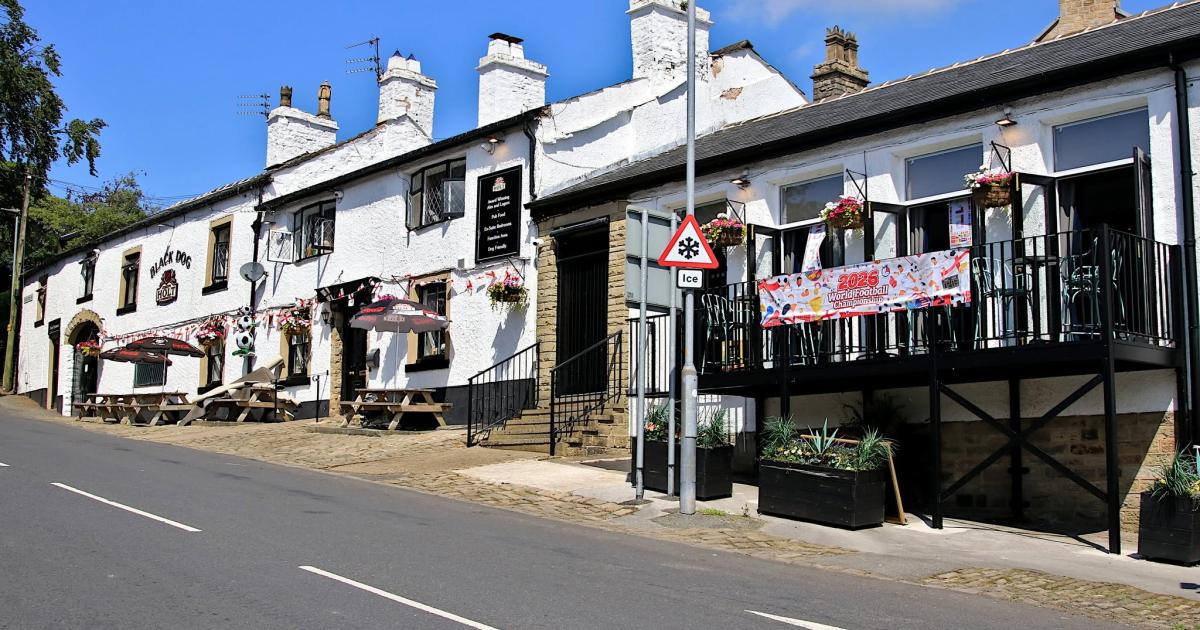
While on a trip to Tockholes, photographer Henry Lisowski spotted the sign.

During a blazing heatwave peaking at over 30C, he spotted Belmont’s roadside sign, stating plain and simple, “Ice.”

Advertisement

It was accompanied by an image of frost.

Henry said: “I was actually taking a photograph of the Black Dog, the pub, because it had the football flag on.

“So I just stood there, and then I thought, hang on a minute. That snow sign, ice warning sign’s still there.

“They usually have electronic signs that flash to warn you. Well, this has just been up.

Advertisement

“You’d have thought they could just cover it up with summer and then, you know. It just looked bizarre.

“You know, it was like 30 degrees, and there’s a sign there that says ice warning.”

The sign is usually there because of the higher altitude of Belmont, causing icier weather in the colder months.

It is to warn motorists and residents about the conditions that may be up ahead, especially going towards Rivington.

Advertisement

The hilly area going towards Egerton on Egerton Road, and upwards towards the top of the village, can cause danger if not paid attention to by motorists in cold weather.

Source link

Advertisement
Continue Reading

NewsBeat

Why Scotland have not been eliminated from World Cup after Senegal win

Published

on

Why Scotland have not been eliminated from World Cup after Senegal win

Scotland’s wait to find out their World Cup fate will drag on longer, despite Senegal’s victory over Iraq dropping them into the bottom four third-place teams.

Source link

Continue Reading

NewsBeat

Man Utd news: Bruno Fernandes makes exit decision as asking price set for replacement

Published

on

Daily Mirror

Manchester United are aiming to build a squad capable of dealing with Champions League football on top of the Premier League and Bruno Fernandes’ future could be key to that

It has already been a busy transfer window for Manchester United, but the Red Devils are far from done. A number of senior stars have confirmed transfer exits, and there could be more on the way.

Advertisement

As far as incomings are concerned, Ederson looks like being the first of many, with a deal to sign the Atalanta midfielder all but done. Several permanent exits have been announced already, with Rasmus Hojlund and Casemiro chief among them, while Andre Onana’s departure looks as though it will be another loan.

Last summer brought plenty of headlines about Marcus Rashford and Bruno Fernandes, and it’s more of the same right now. Rashford’s Barcelona loan didn’t bring a permanent deal, leaving his future up in the air, but we could soon have a resolution regarding captain Fernandes after he opted against a Saudi Pro League switch in 2025.

We’ve also got more on another of United’s midfield targets as the rebuild begins following Casemiro’s exit. Here are our latest lines from around Old Trafford.

FOLLOW OUR MAN UTD FB PAGE! Latest United news and more on our dedicated Facebook page

Advertisement

Fernandes ‘decides to stay’

Bruno Fernandes has told his Manchester United team-mates he plans to stay, according to talkSPORT. A final decision on the captain’s future isn’t expected until after the World Cup but there is not thought to be any fear that he might leave.

Fernandes was targeted by several Saudi clubs last summer but decided to stay put. There are reports of renewed interest from clubs in the gulf this year, especially Al Nassr, who could have Portugal boss Roberto Martinez in the dugout next term, but the midfielder’s decision to stay put is believed to be family-related and therefore unlikely to change.

The 31-year-old has started both of Portugal’s first two World Cup group games, grabbing an assist in the 5-0 victory over Uzbekistan. Martinez’s team need a win in their final group game against Colombia to top their group but are still guaranteed to progress as runners-up if they draw.

Nmecha asking price set

Germany star Felix Nmecha is among the midfielders linked with United as they look to restock their midfield after Casemiro’s exit and a potential departure for Manuel Ugarte. However, they’re unlikely to get the 25-year-old on the cheap.

Nmecha, who spent time with Manchester City as a youngster and played for England at youth level, would qualify as a homegrown player. According to Kicker, though, he is valued at £86million by his club Borussia Dortmund and doesn’t have a release clause in his deal.

The 25-year-old didn’t start any of his country’s World Cup qualifiers but has been a mainstay for Julian Nagelsmann at the tournament proper. He started all three group games, scoring on his major tournament debut as Nagelsmann’s team beat Curacao 7-1.

Join our new MAN UTD WhatsApp community and receive your daily dose of Manchester United content from Mirror Football. We also treat our community members to special offers, promotions, and adverts from us and our partners. If you don’t like our community, you can check out any time you like. If you’re curious, you can read our Privacy Notice.

Advertisement

FOR LIVERPOOL STORIES

Join our LFC WhatsApp community and get all the latest LFC news, views, transfer gossip and more, as it happens We also treat our community members to special offers, promotions, and adverts from us and our partners. If you don’t like our community, you can check out any time you like. If you’re curious, you can read our Privacy Notice.

Get Man United’s new 2026/27 home kit

This article contains affiliate links, we will receive a commission on any sales we generate from it. Learn more
Content Image

£85

Fanatics

Advertisement

Buy Now on Fanatics

Manchester United have launched their new home kit for the 2026/27 season, inspired by the club’s heritage and featuring a classic polo collar with iconic adidas details.

Source link

Continue Reading

NewsBeat

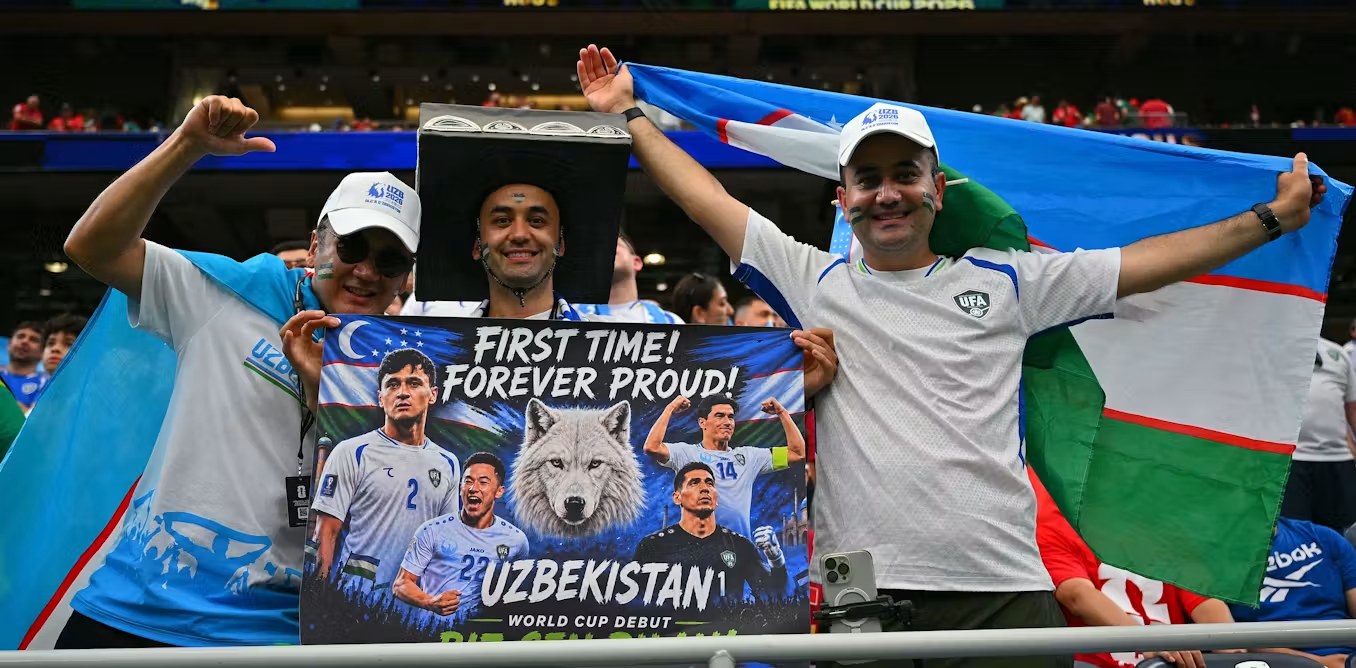
Uzbekistan’s World Cup appearance is a moment of pride and shows off central Asia’s peaceful development

Published

on

Uzbekistan’s World Cup appearance is a moment of pride and shows off central Asia’s peaceful development

The expanded men’s World Cup in 2026 has given fans the chance to cheer on the exploits of first-time qualifiers, some of which many people might previously have struggled to locate on the map. Standout moments have already included Curaçao’s goal-keeping heroics in earning a draw against Ecuador and Cabo Verde’s upset by pegging back reigning European champions Spain.

But one story has largely gone under the radar: the participation of Uzbekistan. According to some pundits, Uzbekistan should have collapsed into violent chaos years ago. Instead, it has become the first central Asian state to play on football’s grandest stage. Behind this lies a fascinating tale of geopolitics and peace.

In the 1990s, overwrought geopolitical analysis portrayed the region as dangerous and in desperate need of western salvation. This was particularly true of the US. In 1997, Zbigniew Brzezinski, national security advisor to Jimmy Carter and an éminence grise of the US foreign policy establishment, dubbed central Asia “the Eurasian Balkans” on what he called the “grand chessboard” of great-power competition.

At the intersection of Uzbekistan, Kyrgyzstan and Tajikistan sits the Ferghana Valley. With its complex patchwork of borders, enclaves and ethnic minorities, it became the focal point of this discourse of danger. A 1999 policy report written by American academics warned that, without US help, the valley could become “a breeding ground of terrorism” and “a hotbed of religious and political extremism”.

Advertisement

The Ferghana Valley sits on the borders of Uzbekistan, Kyrgyzstan and Tajikistan.
Bennian/Shutterstock

Like most parts of the world, Uzbekistan has had its problems. Rapid economic growth has led to serious urban pollution, and youth unemployment is high, thanks to the growing population. Like other countries in the region, a lack of political pluralism limits its ability to effectively grapple with these problems.

But the dire scenarios predicted by western analysts have not come to pass. For my research on borders, nation-building and geopolitics in the Ferghana Valley, I interviewed policymakers across the region. They all stressed the region’s ability to draw on historic cultural ties and practices of statecraft to manage the difficult transition from Soviet republics to independent nations.

After Uzbekistan, Kyrgyzstan and Tajikistan gained their independence from the Soviet Union in 1991, the Ferghana Valley states inherited a set of complicated and disputed borders originally drawn as internal Soviet boundaries in the 1920s. These have proved contentious – yet in recent years the three countries have made a series of deals to transfer territory and fully delimit their boundaries.

Advertisement

The Khujand Declaration of March 2025 defined the boundary between the three valley states and put an end to decades of tension. In terms of international experience, this counts as remarkably quick progress.

Resolving border tensions

It is in the Ferghana Valley itself where progress is most visible. I saw border tensions ratchet up in the late 1990s and early 2000s. But in the past decade, a new generation of leaders has not only resolved territorial disputes but pushed a significant growth in cross-border economic, social and cultural connections. They have reopened dozens of previously closed border crossings, relaxed red tape and incentivised cross-border trade. This has led to significant increases in regional trade and has eased ethnic tensions.

In October 2025, the first Ferghana Valley Peace Forum brought governments and civil society together under a new platform for dialogue. A key organiser of the event, Akramjon Ne’matov, the first deputy director of the Institute for Strategic and Regional Studies, an influential state-affiliated thinktank in Tashkent, emphasised that “the forum’s goal is to strengthen trust and good-neighbourly relations, promoting a shared vision of the region as a space of cooperation and mutual benefit”.

According to Ne’matov, it serves as a robust response to the vision presented in Brzezinski’s “grand chessboard”. This outdated narrative was not only flawed but risked becoming a self-fulfilling prophecy. It sowed mistrust rather than fostering development.

Advertisement

Despite initiatives like the ill-fated Central Asian Union, central Asia has not succeeded in creating formal EU-style regional institutions. Western academics have routinely dismissed such attempts as mere “virtual regionalism”. But research from St Andrews University shows that informal arrangements between authoritarian governments to respect each other’s sovereignty and not allow single external powers to dominate have led to the emergence of an effective, informal regional order premised on personal diplomacy, stability and coexistence.

Shared destiny

This digs deep into historical notions of shared destiny. As a politician in Tashkent put it to me: “The important thing to keep in mind is that we are one home in central Asia, one culture.” As the dissolution of Yugoslavia in the 1990s, and the wars in Armenia and Azerbaijan and Russia and Ukraine wars suggest, central Asia has arguably been more successful at resolving post-cold war ethnic and border disputes than Europe.

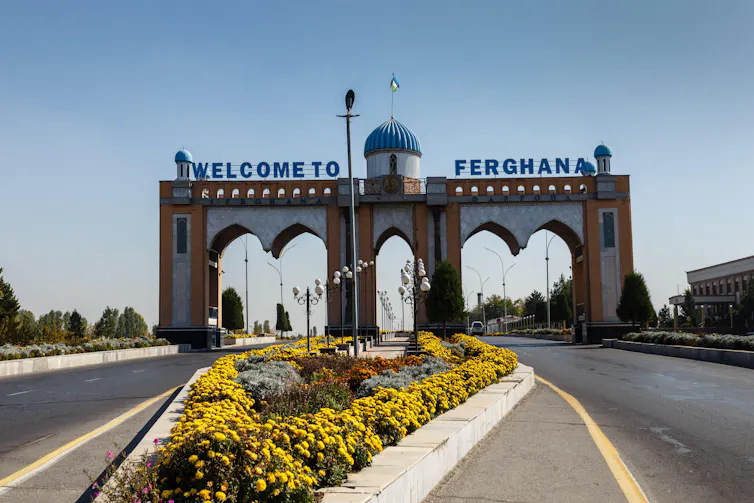
An archway with the sign Welcome to Ferghana.
Welcome to Ferghana: the entrance gateway to the strategically important Ferghana Valley in Ukbekistan.:
Priakhin Mikhail

In March this year, I joined a sell-out crowd at an Uzbek Super League match, cheering on Ferghana Neftchi as they beat Tashkent Lokomotiv 3-1. The game took place in an impressive modern stadium in Ferghana. This confounded the predictions of 1990s analysts who saw the Ferghana Valley as the supposed locus of all the region’s ills.

Fellow fans were already looking forwards to the World Cup – although one wryly repeated to me a quip by comedian Hojiboy Tojiboev that the Uzbek team would “go there, eat ice-cream, and then come back”.

On the pitch, this first foray onto football’s biggest stage has been challenging for the “White Wolves”, as the Uzbek team is known. But away from football, in our age of border closures and ratcheting geopolitical tensions, the west can learn a lot from Uzbekistan about how to manage regional tensions and plan shared futures.

Advertisement

Source link

Advertisement
Continue Reading

NewsBeat

Donald Trump threatens 100% tariffs on European countries over digital services tax

Published

on

Daily Record

Donald Trump has threatened to impose a 100 per cent tariff on all goods from any country that imposes a digital services tax on US tech giants, posted on social media

Donald Trump has issued a stark warning that he’ll impose a “100% TARIFF” on all goods from any nation that introduces a digital services tax targeting US tech giants.

“Numerous European Countries have been discussing the imminent implementation of a Digital Services Tax on American Companies,” the US president declared in a Truth Social post on Friday.

“Some of these Countries are close ⁠to actually doing this. Please let this statement serve to represent that any Country that imposes such a Tax will immediately be met with a 100% TARIFF on any and all Goods sent to the United States of America.”

Advertisement

Trump emphasised that the proposed tariff would take precedence over any existing trade agreements with the US, “whether implemented, signed or not”.

The announcement follows French President Emmanuel Macron’s declaration last week that France would stand firm against Trump’s pressure and maintain its digital tax on American tech firms, reports the Mirror.

His remarks came just hours before the two leaders convened at the G7 summit in Evian-les-Bains, France.

Prior to departing for the summit, Trump had cautioned that the US would “have no choice” but to slap 100 per cent tariffs on French wine unless Paris withdrew its digital tax.

“I asked [Macron] not to charge American companies, and if they do, I have no choice but to charge a 100% tariff on all champagnes and all wines coming out of France,” Trump told The New York Post. “All [Macron] has to do is get rid of the sales tax, and he wouldn’t have that kind of pressure.”

France has imposed a 3 per cent digital services levy since 2019 on revenues generated by firms earning over €25 million domestically and €750 million globally.

Trump has consistently resisted international attempts to tax or regulate America’s technology behemoths. Last year, he warned of potential tariffs against any nation implementing such policies, declaring on Truth Social in August that digital taxes and regulation “are all designed to harm, or discriminate against, American Technology”.

Advertisement

This latest warning arrives before Trump’s July 4 deadline for both the European Union and the United States to finalise a tariff agreement capping duties on most EU exports at 15 per cent.

The transatlantic deal was reached in July last year, when discussions between Trump and European Commission President Ursula von der Leyen in Scotland concluded months of commercial uncertainty.

Digital taxation wasn’t included in that arrangement and continues to be a contentious issue between Washington and the European bloc.

Advertisement

Source link

Continue Reading

NewsBeat

What law says about leaving kids home alone as hundreds of cases reported in Wales

Published

on

Wales Online

The NSPCC made more than 200 referrals to the authorities last year after calls reporting children being left home alone

The issue of when a child can safely be left at home by themselves is a divisive one.

There’s also no clear legal standpoint on it with the issue of when a young person is ready to be left at home unaccompanied ultimately being a judgement call for individual parents and their kids.

While UK law doesn’t actually stipulate a specific age when you can leave a child unattended it does make clear that it constitutes an offence to leave a child alone “if it places them at risk”. For the biggest stories in Wales first sign up to our daily newsletter.

Advertisement

Now the NSPCC has said it made 202 referrals to Welsh agencies, including the police and children’s services, following contacts to its helpline about children being left home alone or unsupervised last year.

Such referrals are made if charity staff believe additional support or intervnetion is needed.

The NSPCC suggests children under 12 are “rarely mature enough” to be left unaccompanied for extended periods and states children under 16 shouldn’t be left alone overnight.

The charity emphasises that babies, toddlers, and very young children should “never” be left unattended.

Advertisement

A charity spokesman said: “There is no legal age limit for leaving children but the NSPCC recommends not leaving a child aged under 12 years old at home alone. Also, if a child has expressed worries about being left without a parent or carer, those should be taken seriously and respected.”

Bearing this in mind parents and guardians are encouraged to exercise their finest judgement when determining whether their child is sufficiently mature to be left unaccompanied, for instance at home or in the vehicle, and to avoid leaving them alone until they’re entirely confident their child is prepared for such independence – particularly if they’ll be looking after other children or animals while their parent or guardian is absent.

While the UK Government doesn’t stipulate a specific age or criteria for when a child can be left unattended it does provide legal guidance and endorses NSPCC recommendations.

The UK Government website notes: “Parents can be prosecuted if they leave a child unsupervised ‘in a manner likely to cause unnecessary suffering or injury to health’.”

Advertisement

The NSPCC stresses a ‘one-size fits all’ approach doesn’t work for the matter of children being left home unaccompanied as every child develops differently.

The NSPCC advice states: “Learning to be independent is an important part of growing up.

“Between work, appointments, and other family commitments every parent may need to leave their child home alone at some point so it’s good to have a plan in place.

“You might wonder what age your child should be before they can be left alone at home. But there’s no ‘one-size-fits all’ answer.

Advertisement

“Every child is different so build up their independence at their pace – and check in with them to make sure they feel safe.”

Their guidance continues: “A child who isn’t old enough or who doesn’t feel comfortable should never be left home alone. If this is the case it’s best to look into childcare options that might work for your family.”

The NSPCC goes on to specify that young children should never be left alone – even if their parent or guardian is just popping out briefly.

“Infants and young children aged nought to three years old should never be left alone – even for 15 minutes while you pop down the road. This applies not just to leaving them home alone but also in your car while you run into the shops,” the NSPCC says.

Advertisement

“While every child is different we wouldn’t recommend leaving a child under 12 years old home alone, particularly for longer periods of time.

“Children in primary school aged six to 12 are usually too young to walk home from school alone, babysit, or cook for themselves without adult supervision.

“If you need to leave them home it’s worth considering leaving them at a friend’s house, with family, or finding some suitable childcare.”

Providing advice to parents of secondary school-aged youngsters the NSPCC adds: “Once your child reaches this age you could talk to them about how they’d feel if they were left alone at home.

Advertisement

“Whether they’re 12 years old or almost 18 years old there might be reasons that they don’t feel safe in the house alone.

“Just because your child is older doesn’t necessarily mean they’re ready to look after themselves or know what to do in an emergency.

“It can help to go over the ground rules and remind them how to stay safe at home.

“Remember – you should never leave a child home alone if they don’t feel ready or if you don’t feel they’re ready.

Advertisement

“Sometimes it’s just better to leave them with someone – particularly if they’re nervous or have complex needs.”

Source link

Continue Reading

NewsBeat

Can Scotland still qualify for the knockout rounds and who will they play?

Published

on

Can Scotland still qualify for the knockout rounds and who will they play?

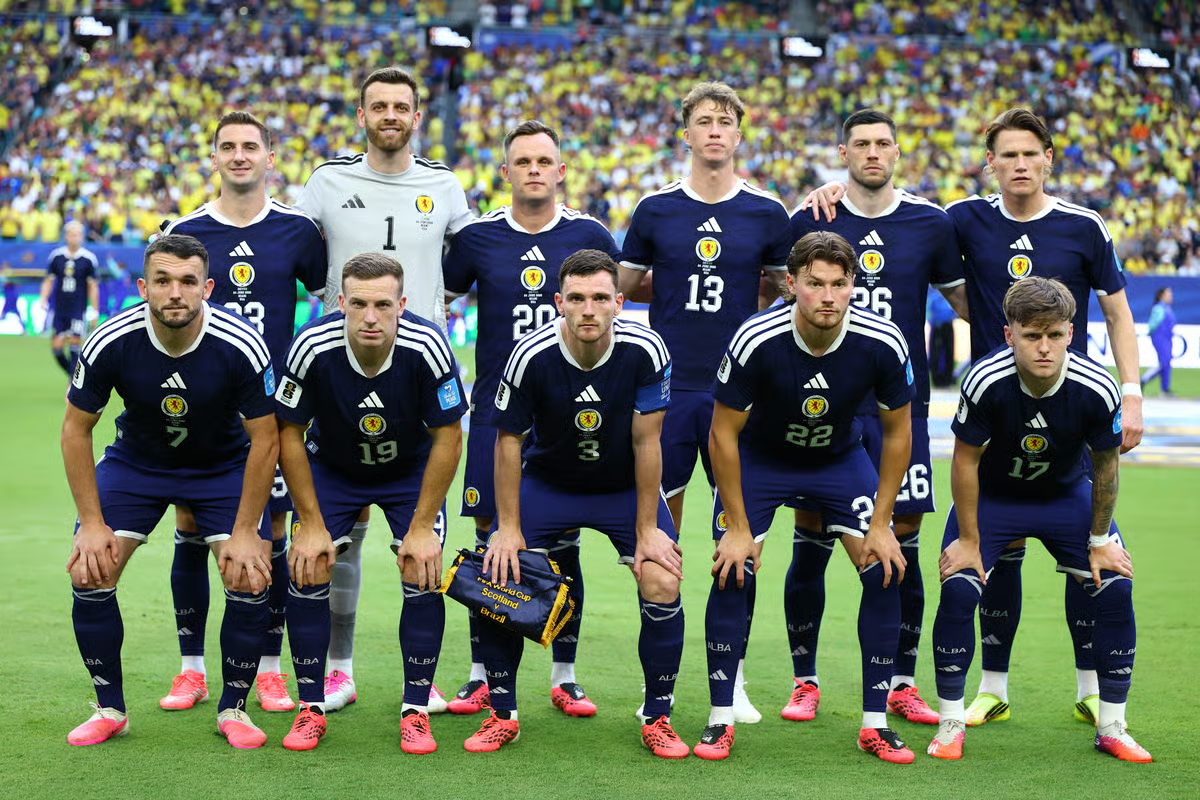
Scotland‘s World Cup hopes are on the brink after finishing third in Group C following a 3-0 defeat to Brazil – and their fate is out of their hands.

Steve Clarke’s side defeated Haiti in their opening match before a slim 1-0 loss to Morocco. A dispiriting defeat to Brazil left them with just three points and a goal difference of -3, as well as an agonising wait to determine if they’ll make it into the knockout rounds.

From 12 groups only the best eight third placed finishers will progress meaning Scotland need four teams to finish third with fewer than three points or a worse goal difference than them (-3) to qualify.

The Scots may not know their fate until the final group stage matches have been played meaning a wait until Sunday and the conclusion of Group J’s fixtures. South Africa’s victory over South Korea in Group A and Ecuador’s stunning triumph over Germany in Group E are already significant blows that have severely narrowed their route to the knockouts.

Advertisement

How can Scotland qualify for the knockout rounds?

Following their defeat to Brazil, Scotland’s progress to the next stage of the tournament – which would put them in the knockout rounds for the very first time – is out of their hands.

Over the next few days, certain results will need to fall in their favour in order for them to book a spot in the last-32, but what scenarios from each group will hand the Scots a place in the next stage of the competition? Scotland need at least four results to go their way.

Here is how the third-placed sides currently stand:

Advertisement

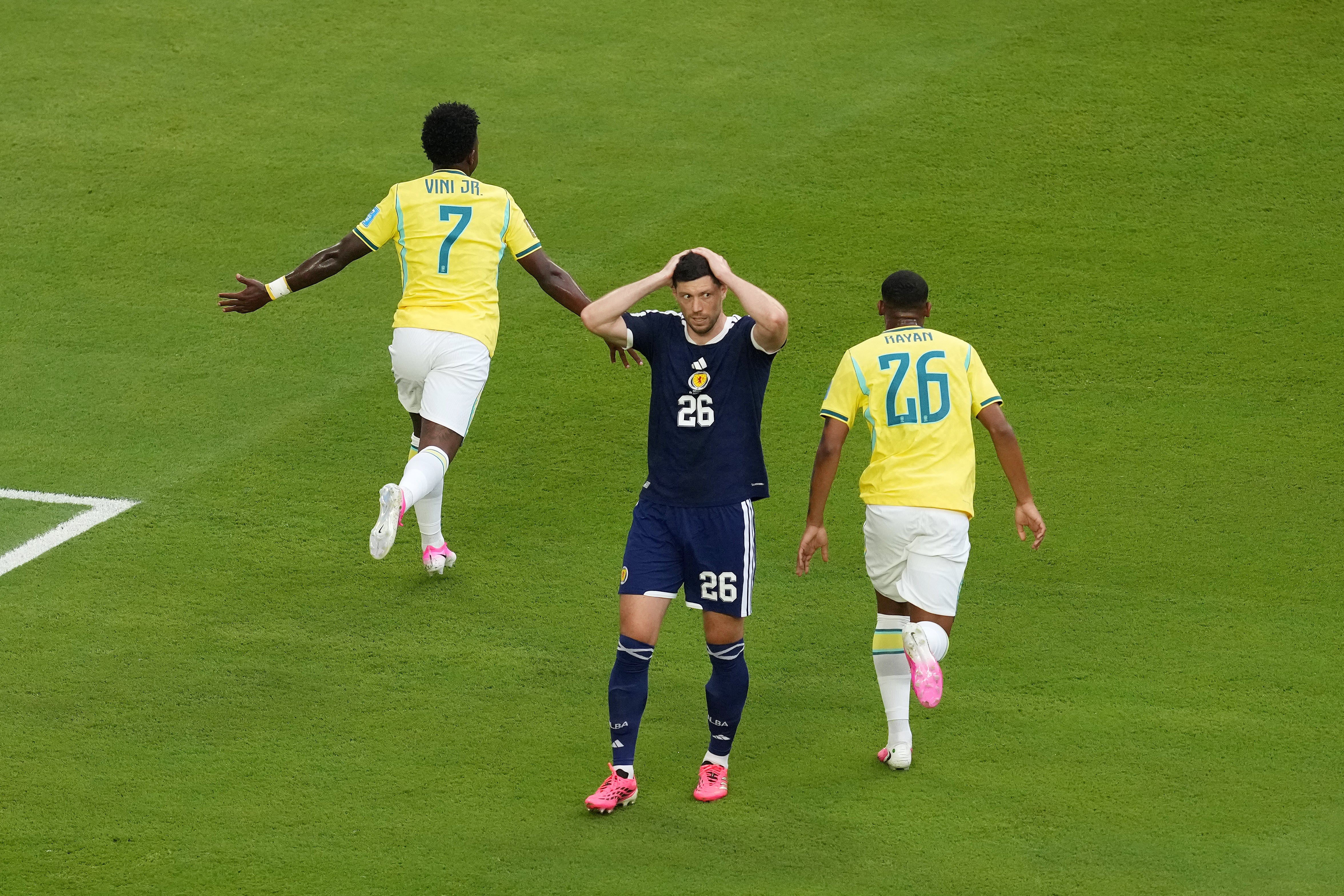
Scott McKenna was caught in possession leading to Brazil’s opening goal
Scott McKenna was caught in possession leading to Brazil’s opening goal (PA)

Friday 25 June

Fixtures

Norway vs France (Group I) – 8pm BST

Senegal vs Iraq (Group I) – 8pm BST

Advertisement

Cape Verde vs Saudi Arabia (Group H) – 1am BST

Uruguay vs Spain (Group H) – 1am BST

Egypt vs Iran (Group G) – 4am BST

New Zealand vs Belgium (Group G) – 4am BST

Advertisement

What Scotland need

In Group I, a draw between Senegal and Iraq would be the ideal result. Iraq would need to win 3-0 to qualify while for Senegal, even a one-goal win would be enough. Scotland require a draw between Senegal and Iraq, or a narrow Iraq win.

In Group H, while at least one of Cape Verde or Saudi Arabia are guaranteed to better Scotland’s total, a victory for Spain against Uruguay would result in the third-placed team only finishing on two points. Scotland require a Spain win.

Group G sees the crucial match played between Egypt v Iran. A win for Egypt means the team finishing third could have fewer than Scotland’s three points. Scotland require an Egypt win, as long as Belgium v New Zealand is not a draw.

Advertisement

Saturday 26 June

Fixtures

Croatia vs Ghana (Group L) – 10pm BST

Advertisement

Panama vs England (Group L) – 10pm BST

Colombia vs Portugal (Group K) – 12.30am BST

DR Congo vs Uzbekistan (Group K) – 12.30am BST

Algeria vs Austria (Group J) – 3am BST

Advertisement

Jordan vs Argentina (Group J) – 3am BST

What Scotland need:

In Group L, should Croatia earn a point or better against Ghana then the third-place finisher would have more points than Scotland. Scotland need Ghana to beat Croatia by three goals.

Group K sees DR Congo and Uzbekistan face off for third place. A draw would be ideal or a win for Uzbekistan by three or less goals, with the Asian side’s goal difference set at -7 after two games. If DR Congo win they will finish third with four points. Scotland need DR Congo to fail to win.

Advertisement

In Group J, Austria and Algeria sit second and third respectively and both have three points. Algeria have the worse goal difference heading into their meeting so Scotland need an Austria win, and by two goals or more. Alternatively, if Algeria win by four or more goals, it would leave Austria’s goal difference -4 or worse.

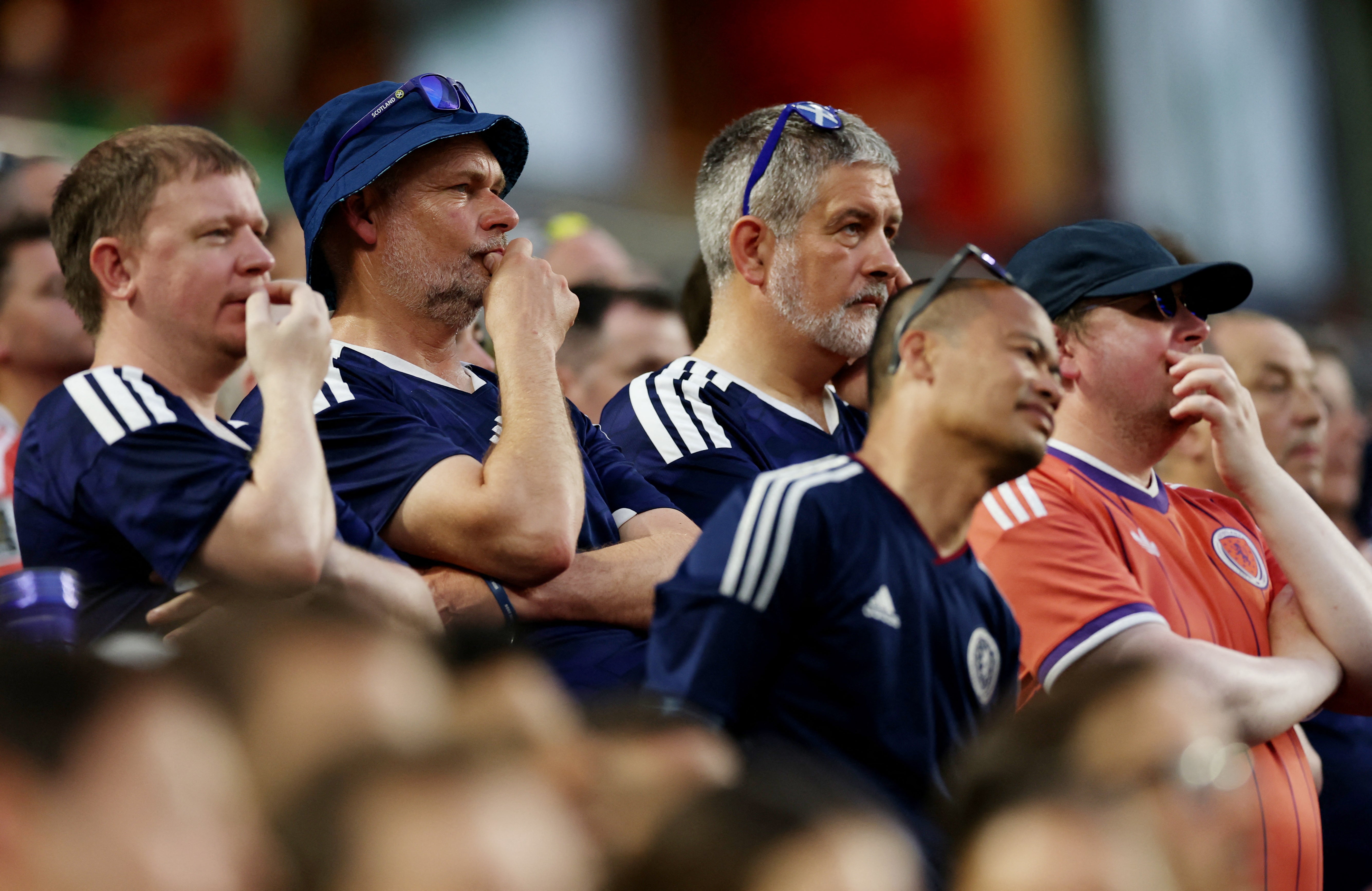
Scotland fans now face a nervous wait to see if their side will qualify for the knockout rounds
Scotland fans now face a nervous wait to see if their side will qualify for the knockout rounds (Reuters)

Here are the full group stage standings:

Who will Scotland play in the knockout rounds if they advance?

There are still plenty of scenarios and results which will influence Scotland’s route through the knockout rounds should they get there. But, having finished third in Group C, they are set to face Group A winners Mexico in the last-32 in Mexico City.

Advertisement

If Steve Clarke’s men win that tie they could then face England in the round of 16, also in Mexico City, providing Thomas Tuchel’s men finish top of Group L and then defeat probable opponents DR Congo or Senegal in the last-32. If the Scots defeat their old enemy, then a rematch against Brazil could be on the cards otherwise they could face one of Japan, Ivory Coast or Norway in the quarter-finals as things stand.

Source link

Continue Reading

NewsBeat

Georgia Harrison breaks silence on Stephen Bear after conviction for breaching restraining order

Published

on

Daily Record

Georgia Harrison’s ex, Stephen Bear, has been convicted of breaching the terms of the restraining order against him.

Georgia Harrison has broken her silence after her ex-boyfriend Stephen Bear was convicted of breaching a restraining order put in place to protect her.

Advertisement

The Celebrity Big Brother winner, 36, pleaded guilty to breaching the restraining order after he launched an online campaign against Georgia, 31.

He had already served time in prison for illegally sharing a sex tape of of the former couple on OnlyFans. But after Bear was released from prison in early 2024, he embarked on a social media campaign in which he accused Georgia of being part of a conspiracy against him, with his guilty verdict being the result of a hidden plot.

Some of the posts were viewed millions of times and many included images of Georgia along with defamatory statements, reports the Mirror.

Georgia, who was pregnant at the time, chose not to go to court this week to see Bear convicted. She told The Sun: “I didn’t go to court this week. I didn’t stay away because it’s too hard.

Advertisement

“I stayed away because being there would give him the one thing he has always wanted, and the one thing the manosphere machine runs on: attention. A reaction and a spectacle.”

She added that “attention was worth more” to Bear “than the consequences” of his crimes and that the ‘manosphere system’ was rewarding him for that. As such, she wanted to focus on changing “the culture“.

Love Island star, Georgia, who gave birth to her first child, Sahara Jean, in October, has long campaigned for the law to better protect women and girls from acts of violence.

Advertisement

She first rose to fame when she appeared on Love Island in 2017, but by 2021, she had become an activist. Her work as a campaigner for women has earned her an MBE, making her the first Love Islander to be honoured in this way.

In January 2021, Bear was arrested after he uploaded a sex tape of himself and Harrison, that he had secretly recorded, to his OnlyFans account.

The following year, he was found guilty of voyeurism and disclosing private, sexual photographs and films. He was sentenced to 21 months in prison and given a five year restraining order forbidding contact with Harrison. He served just half of his sentence before he was released from prison.

Advertisement

During the criminal and civil cases, Georgia waived her right to anonymity in order to raise awareness about the impact ‘revenge porn’ can have on victims. The mum-of-one has also campaigned to increase the support for women and girls who have faced sexual crimes.

Georgia’s campaigning led to the government’s crackdown on image-based abuse through reforms to the Online Safety Act, which passed in October 2023.

Bear is due to be sentenced next month at Chelmsford Crown Court.

Get Daily Record Premium for just £1 per month in exclusive offer to celebrate the world cup. Click HERE.

Source link

Advertisement
Continue Reading

NewsBeat

Uruguay vs Spain explodes with touchline bust-up after horror World Cup red card

Published

on

Daily Mirror

Uruguay’s World Cup run ended in tatters with a red card shown at the very end of their defeat to Spain

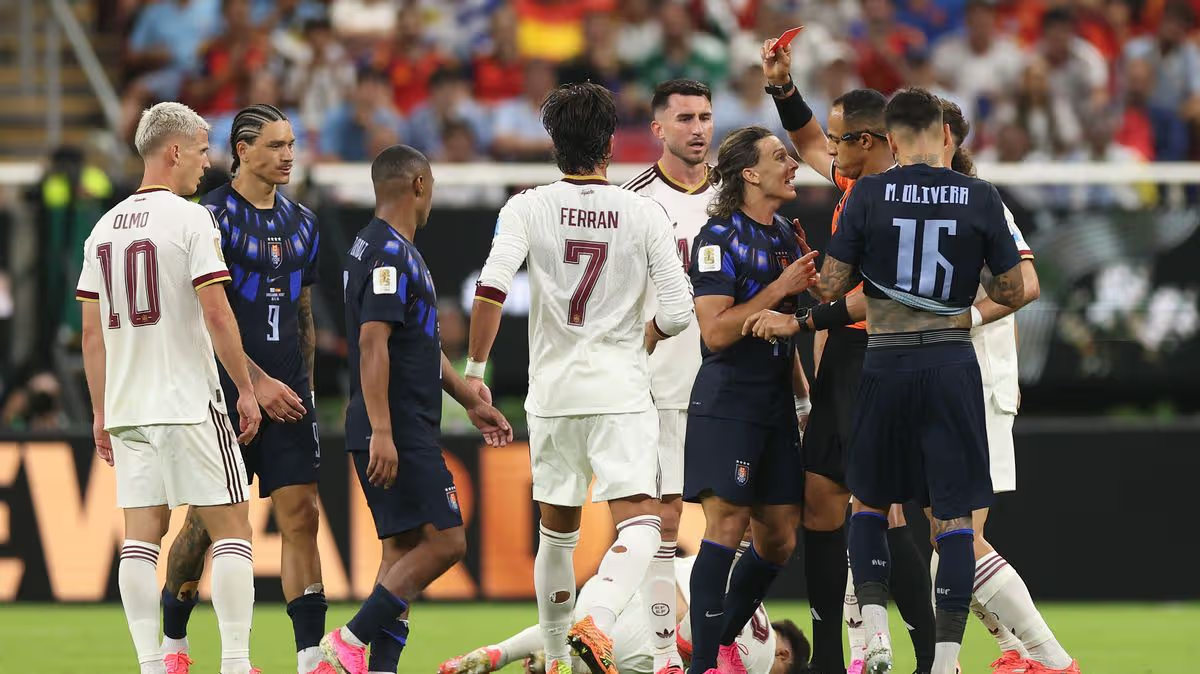
The World Cup clash between Spain and Uruguay exploded in the final stages with Agustin Canobbio shown a straight red card for a horror challenge.

The 27-year-old was involved in several heated moments before he was sent off for a reckless challenge on Pau Cubarsi. He was fortunate to not be punished earlier in the clash for numerous bad tackles and his reaction to Nico Williams’ clash with Nicolas de la Cruz.

The latter was one of four players shown yellow cards before Canobbio’s dismissal with referee Ismail Elfath doing well to keep the game flowing, much to Spain’s anger.

Advertisement

Eventually, he was left with no choice but to send Canobbio off as he launched into a challenge on Cubarsi with Marc Cucurella among those furious at the incident.

As he made his way off the pitch, the two benches clashed with Canobbio attempting to return to the field of play to continue arguing against his dismissal.

The full-time whistle followed soon after the flashpoint with Canobbio heading over towards the officials before being dragged away from the volatile situation by his team-mates.

It has been a particularly disastrous tournament for Marcelo Bielsa’s side as they failed to beat both Cape Verde and Saudi Arabia.

Advertisement

They also lost Manuel Ugarte to injury with goalkeeper Fernando Muslera also asking to be subbed off, as per Bielsa, following his error that led to Spain’s goal.

Their failure to claim any points against Spain resulted in Cape Verde finishing in second and qualifying for the knockout stages with a draw against Saudi Arabia, who finished bottom, enough to get the job done.

A meeting with World Cup holders Argentina in the round of 32 is their reward with Lionel Messi and Co. already confirmed as group-winners.

Advertisement

The latest set of results have also made it mathematically impossible for Ghana, England and Egypt to be eliminated. The latter are due to face New Zealand in just a few hours as they look to try and set up a favourable round of 32 tie.

Get the latest World Cup news straight to your inbox by _ signing up to our Make Football Great Again newsletter now!

Join our new WhatsApp community and receive your daily dose of Mirror Football content. We also treat our community members to special offers, promotions, and adverts from us and our partners. If you don’t like our community, you can check out any time you like. If you’re curious, you can read our Privacy Notice.

Upgrade your World Cup TV setup with the Sky Glass ‘designed for football’

Advertisement
This article contains affiliate links, we will receive a commission on any sales we generate from it. Learn more
Content Image

from £4.50

Sky

Get the deal here

Sky is knocking 20% off its entire range of Glass TVs to mark the start of the 2026 FIFA World Cup. Until June 17, shoppers can upgrade to the Sky smart TV that’s ‘designed for football’ from £4.50 per month when taken alongside a Sky TV and Netflix package.

Source link

Advertisement
Continue Reading

Trending

Copyright © 2025