

Crypto World
SEC and CFTC launch crypto rules review after futures approval



The Securities and Exchange Commission and Commodity Futures Trading Commission have launched a joint review of crypto derivatives regulations, opening a 60-day public comment period following the approval of U.S. crypto perpetual futures.
Summary
- SEC and CFTC have opened a 60-day public consultation on harmonizing crypto derivatives and portfolio margining rules.
- The review follows the approval of U.S. crypto perpetual futures and covers risk management and regulatory coordination.
- The consultation comes as the CFTC faces legal disputes over crypto perpetual futures and prediction market oversight.
According to a joint press release, the SEC and CFTC have requested public comment on possible ways to better align portfolio margining requirements across securities, security-based swaps, futures, swaps, and related positions.
The agencies said comments will remain open for 60 days after the proposal is published in the Federal Register.
Regulators seek feedback on derivatives oversight
As outlined by the two regulators, the review will help determine whether closer coordination on portfolio margining could improve risk management, reduce market fragmentation, and strengthen consumer protections. The request comes as crypto derivatives and tokenized financial products continue to expand in the United States.
The consultation follows the recent launch of regulated crypto perpetual futures. Kalshi received CFTC approval to list perpetual futures tied to Bitcoin, Ether, XRP, and HYPE, while platforms such as Hyperliquid have also expanded access to perpetual products linked to tokenized securities.
SEC Chair Paul Atkins said better coordination between the agencies can prevent overlapping regulatory responsibilities from slowing innovation or reducing market efficiency.
“Cross-margining offers a clear opportunity to unlock liquidity that remains frozen in separate accounts, and we encourage market participants to provide feedback on ideas that will help improve coordination between both agencies.”
CFTC Chair Michael Selig also supported the initiative, saying closer cooperation on portfolio margining “promises to unleash untapped capital while ensuring a more robust risk management framework and market protections.”
Earlier this week, the agencies separately asked the public to comment on how U.S. rules define swaps, security-based swaps, and related derivatives under Title VII of the Dodd-Frank Act.
According to the SEC and CFTC, market structure and trading practices have changed since those rules were first adopted, prompting questions about whether existing definitions still match today’s derivatives markets.
The earlier consultation also seeks feedback on swap exclusions, mixed swaps, jurisdictional issues, alternative compliance, and new financial products. According to the agencies, the responses will help build a common regulatory record that could guide future staff interpretations and court proceedings.
Court disputes continue over crypto derivatives
The latest consultation arrives as the CFTC faces multiple legal disputes tied to crypto derivatives and prediction markets.
Earlier this week, the CFTC sued Kentucky in federal court after the state sought to enforce its gaming laws against prediction market operators, including Kalshi and Polymarket. The regulator argued that the Commodity Exchange Act gives it exclusive authority over federally regulated futures, options, and swaps, while Kentucky maintains that sports-linked event contracts should remain subject to state gambling laws.
At the same time, CME Group continues its legal challenge against the CFTC over the approval of crypto perpetual futures.
As previously reported by crypto.news, CME argues that Kalshi’s perpetual crypto contracts should be regulated as swaps rather than traditional futures and alleges that the regulator approved the products without following the framework established under Dodd-Frank.
The classification question has become increasingly important because swaps and futures follow different rules for clearing, reporting, execution, and regulatory oversight.
The SEC and CFTC’s parallel consultations on derivatives definitions and portfolio margining may help shape how future crypto products are supervised as new trading models continue to enter regulated U.S. markets.

Key Takeaways
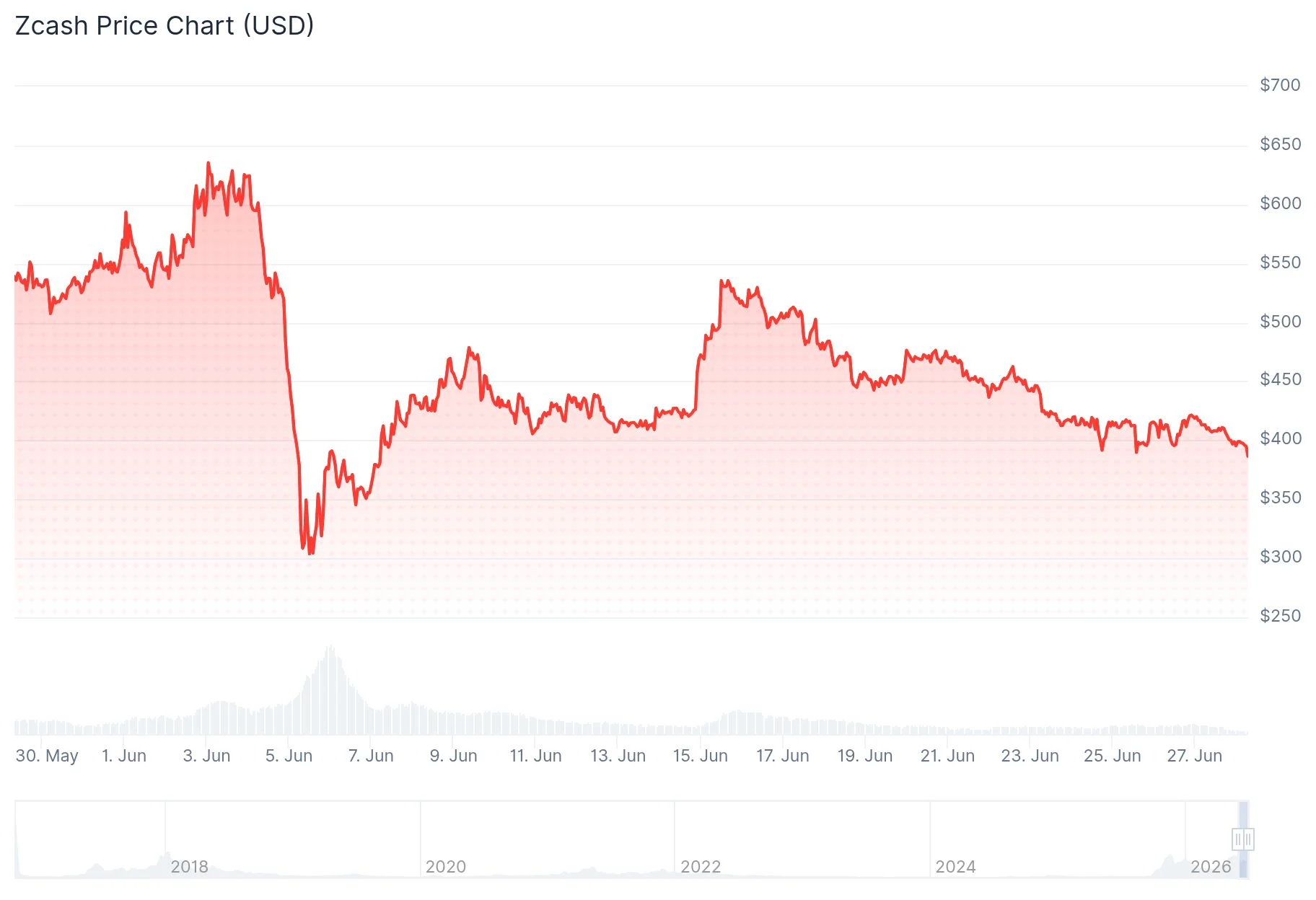
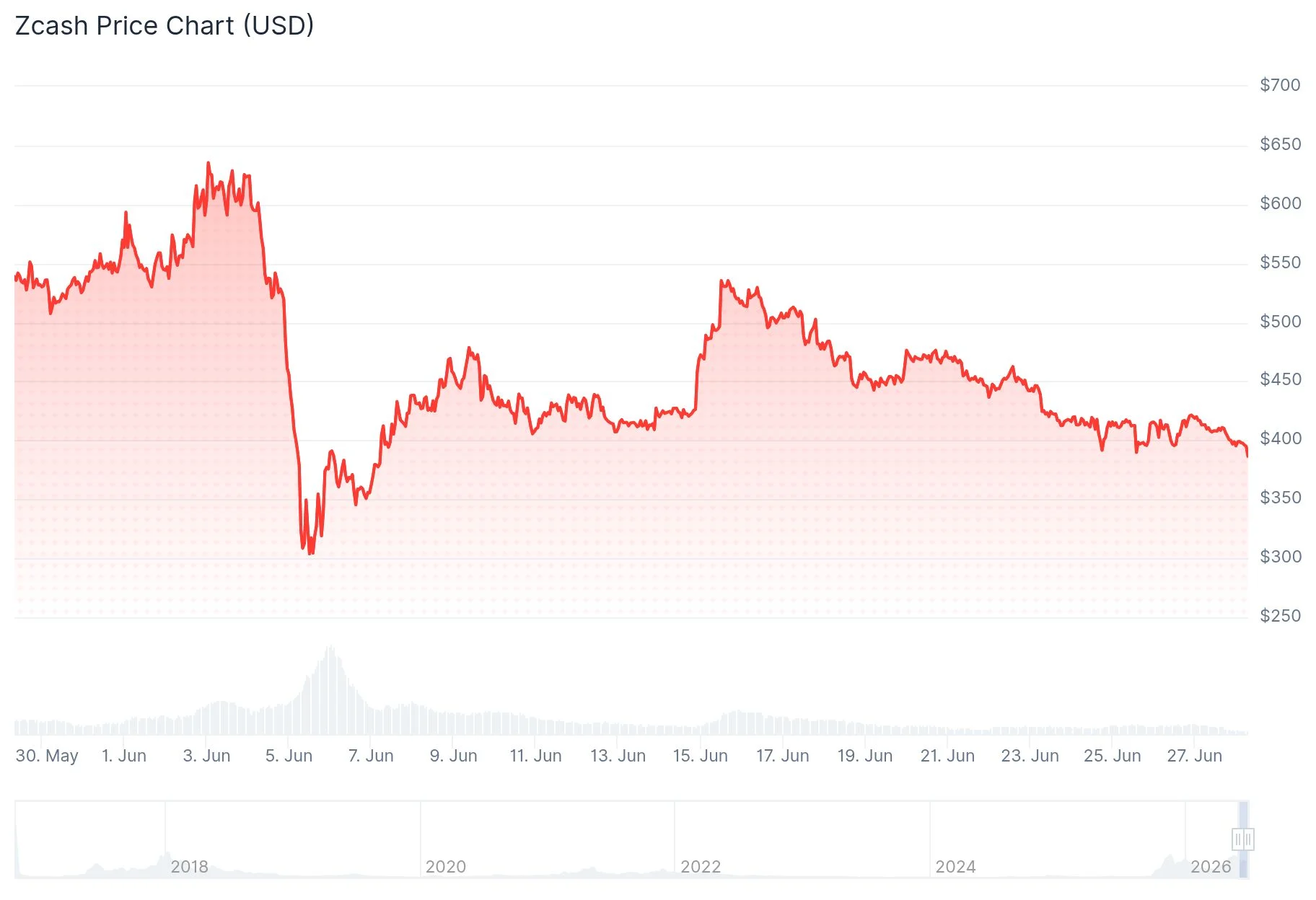
- ZEC is currently valued at approximately $388 with a total market capitalization approaching $6.7 billion
- The moderate scenario projects ZEC reaching $600–$1,000 by the end of 2031
- An optimistic scenario envisions $2,000–$3,500 should privacy features gain mainstream adoption
- A pessimistic outlook anticipates $120–$220 amid intensifying regulatory challenges
- Weighted average projection indicates approximately $850 as the target price for 2031
Introduced to the cryptocurrency ecosystem in 2016, Zcash emerged as a privacy-centric counterpart to Bitcoin. While Bitcoin operates with complete transaction transparency, Zcash enables users to conduct confidential transfers utilizing zero-knowledge cryptographic protocols.
This positions ZEC as a unique investment proposition. Rather than challenging platforms like Ethereum or Solana, it represents a strategic bet on whether financial confidentiality will resonate with cryptocurrency participants and corporate entities.
Presently trading at roughly $388, ZEC maintains a market valuation close to $6.7 billion, with approximately 16.7 million tokens currently circulating. Mirroring Bitcoin’s economic model, Zcash incorporates a maximum supply ceiling of 21 million coins alongside a halving mechanism that reduces mining rewards approximately every four years.
Industry observers from CoinDesk indicated that privacy-oriented cryptocurrencies such as Zcash and Monero were projected to maintain investor interest throughout 2026, despite ongoing challenges related to exchange removals and financial institution restrictions.
Moderate Projection: $600–$1,000 Range
The middle-ground forecast for ZEC through 2031 anticipates valuations spanning $600 to $1,000. This translates to a market capitalization between approximately $12 billion and $20 billion.
This pathway doesn’t demand that Zcash ascends into the top tier of cryptocurrency assets. It simply requires maintaining its status as the premier privacy-focused digital asset offering regulatory-compliant optional transparency features.
Three fundamental drivers support this trajectory: expanding privacy consciousness among users, sustained availability on major trading platforms, and robust technical foundations. Zcash’s Bitcoin-inspired monetary policy and proof-of-work consensus mechanism reinforce this projection.
Optimistic Projection: $2,000–$3,500 Range
Should privacy emerge as a central theme within cryptocurrency markets, ZEC could potentially climb to $2,000–$3,500. Such appreciation would elevate its market capitalization to the $40 billion–$70 billion territory.
Realizing this scenario requires widespread implementation of confidential transaction features, significant improvements in user interface design, and revitalized institutional participation in privacy-preserving technologies.
Additionally, Zcash would need market recognition as a “privacy-enhanced Bitcoin” rather than merely another aging alternative cryptocurrency.
Pessimistic Projection: $120–$220 Range
The downside scenario centers on regulatory enforcement. Privacy-focused cryptocurrencies currently face removal pressures across numerous jurisdictions, representing tangible rather than theoretical risks.
Should major exchanges impose restrictions or completely eliminate ZEC trading pairs, resulting in severely diminished liquidity, valuations could contract to $120–$220 by 2031.
Maintaining access to reputable trading venues constitutes one of the most significant threats to Zcash’s future market value.
Calculating probability-weighted outcomes across these three distinct scenarios yields an approximate target price of $850 for 2031.



Grayscale Research Head Zach Pandl has put Strategy’s Bitcoin treasury under fresh review. His comments focus on whether a larger BTC sale could ease investor concern better than another increase in STRC dividends.
Summary
- Pandl says a larger Bitcoin sale could clear doubts around Strategy’s cash obligations and dividends.
- STRC trading below $100 keeps pressure on Strategy’s preferred stock model and future funding choices.
- Crypto.news reports tied Strategy’s small BTC sale to wider concerns about leverage and liquidity risk.
Pandl said Strategy raising the STRC dividend by 50 basis points next week would add about $100 million in dividend obligations over the next two years. He said that move “would likely not restore market confidence” because it would not remove the question around future cash needs.
He argued that selling more than $3 billion in BTC could be more effective. In his view, such a sale could cover nearly all cash obligations over the next two years and give investors a clearer view of how Strategy plans to manage its preferred stock costs.
Strategy, formerly known as MicroStrategy, remains the largest corporate Bitcoin holder. The company built its public market identity around buying and holding BTC, while using equity, debt and preferred shares to fund the strategy.
STRC keeps pressure on the treasury model
The debate centers on STRC, Strategy’s variable-rate preferred stock. The company designed the product to trade near $100, and it currently pays an 11.5% annual dividend. Still, STRC has traded below its target level during recent market stress.
As crypto.news reported earlier, Strategy sold 32 BTC for about $2.5 million between May 26 and May 31. The sale was small compared with its Bitcoin treasury, but it drew attention because it was the company’s first reported BTC sale since December 2022.
That sale also changed how investors view the company’s funding model. Strategy had long acted as a steady Bitcoin buyer. Even a small sale raised doubts about whether the firm may need to sell more BTC if preferred stock costs keep rising.
Crypto.news also reported that STRC later fell as low as $82.50, while its effective yield moved near 13.2%. A higher yield can show that investors want more return to hold the stock.
Cash runway becomes the key question
CryptoQuant has estimated that Strategy’s annualized dividend obligations tied to STRC reached about $1.2 billion. The firm also estimated that dividend coverage fell to roughly 14 months as cash reserves declined during 2026.
Those figures explain why Pandl’s $3 billion sale idea has attracted attention. A planned BTC sale could raise cash before pressure grows. It could also show that Strategy can meet fixed obligations without depending only on new share sales or a higher Bitcoin price.
Recent market reports said Strategy later bought 520 BTC for about $34.9 million, bringing total holdings to 847,363 BTC. The company also raised cash reserves by about $300 million, which showed it had not stopped using capital markets to support both Bitcoin holdings and dividend needs.
For investors, the next focus is STRC’s price against the $100 level. If the preferred stock stays below that mark, Strategy may face more pressure to adjust payouts, raise cash or sell Bitcoin in a more planned way.

The evident divergence in how ETF investors behave toward the largest cryptocurrencies by market cap continues. The past week saw some record-setting withdrawals from the BTC funds, but those following HYPE and XRP have maintained their green dominance.
At the same time, the SOL funds have turned red after the previous week’s positive performance.
XRP and HYPE Still Dominate
CryptoPotato reported last week that the spot ETFs tracking HYPE, XRP, and SOL defied the trend set by the two largest digital assets and attracted notable capital. The trend extended in the past week for two of those assets, and one day was particularly positive for the HYPE funds.
Data from SoSoValue reveals that Thursday stands out with just over $108 million in net inflows, making it by far the best single-day performance from the funds. With a lot more modest $1.46 million on Tuesday and $1.82 million on Friday, the week ended with $111.36 million in net inflows. It also set the record for the most significant weekly inflows, surpassing the previous of $72.38 million marked during the funds’ second week of existence.
The spot XRP ETFs also ended the week strongly, albeit nowhere near HYPE’s Thursday inflows. They attracted $15.63 million on Friday, building on the $5.31 million on Monday and $2.05 million on Wednesday. With Tuesday and Thursday being $0.00 days, the week ended with $23 million in net inflows, the best in a month and a half.
The cumulative total net flows have risen to another all-time high of $1.47 billion. Moreover, both XRP and HYPE ETFs have been on a green-only weekly streak for 8 and 7 consecutive weeks now, respectively.
SOL Joins BTC and ETH
While the HYPE and XRP products have continued their impressive streak, SOL has fallen behind with a $3.8 million net outflow. Thus, the Solana ETFs have joined the two market leaders.
The spot Bitcoin ETFs registered another massive withdrawal in the past week, with nearly $1.8 billion leaving the funds. This was their second-worst weekly performance in their 2.5-year history. The Ethereum funds were also in the red, with more than $273 million withdrawn.
The post XRP and HYPE Keep Winning the ETF Race as SOL Joins BTC and ETH appeared first on CryptoPotato.
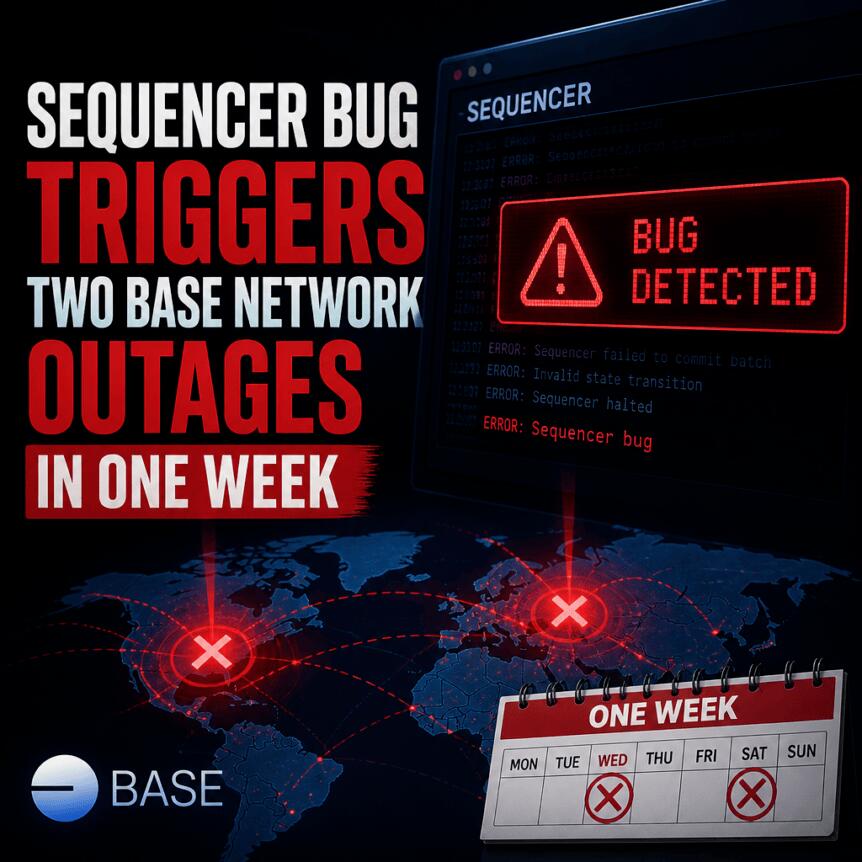
Coinbase’s Base layer-2 network suffered two block production outages last week, and the project’s engineering team has traced both issues to problems in its sequencer infrastructure. According to a Saturday post-mortem, a bug in the block-building process caused “stale journal state” to remain after an execution failure—preventing the network from progressing until operators applied fixes.
Because Base runs with a single sequencer, the incident underscores a structural risk familiar to many rollups: when sequencer logic fails, block ordering and forward progress can stall across the whole chain. Base experienced a first outage on Thursday lasting 116 minutes, followed by a second that lasted 20 minutes, with a complete halt of new layer-2 block production during both events.
Key takeaways
- Base’s engineering team linked the outages to sequencer block-building logic that left “stale journal state” after a transaction validation failure.
- Base operates a single sequencer, so a sequencer-level defect can halt the entire network’s block production.
- The second outage was worsened by a “race condition” after a system reset that prevented sequencers from catching up.
- Engineers say remediation took longer than expected due to infrastructure conditions, not the original bug.
- Planned follow-ups include more protocol “fuzz testing” and “graceful recovery” measures to reduce manual restarts.
What the post-mortem says went wrong
In the post-mortem, the Base engineering team explained that an invalid transaction reached the block builder and failed during execution—consistent with expected behavior. The failure, however, was followed by an unintended state-management outcome: the sequencer did not clear the journal state that records which accounts and storage slots were accessed during processing.
That journal state is critical to correct execution bookkeeping. If it persists when it should be cleared, later stages of block building can be forced into an inconsistent pathway, preventing the sequencer and validator nodes from moving past the problematic block. In this case, that’s what ultimately stopped progress on Base’s chain.
The post-mortem also points out why this is particularly disruptive on Base: the network uses a single sequencer. Unlike architectures that distribute sequencer responsibilities across multiple components, a single sequencer becomes a single point of failure for block production. The team’s analysis places the incident squarely in the sequencer layer, rather than the broader execution environment.
Two outages, one root process—and a second failure mode
Base mainnet halted block production twice over the Thursday–Friday window. The first incident lasted 116 minutes, while the second ran for 20 minutes. During both events, new layer-2 blocks stopped being produced, and the sequencer and validator nodes could not progress past the invalid block until sequencing was restored.
Engineers said they resolved the outages by patching the sequencers to ensure the journal state is properly updated during execution. However, they emphasized that the time required for mitigation exceeded expectations. The team attributed the delay to “infrastructure conditions unrelated to the original bug,” implying the remediation itself was more operationally complex than the underlying code fix.
Beyond the initial state-clearing issue, the post-mortem describes an additional complication after system reset: a “race condition” prevented the sequencers from catching up. This race condition, following the restart, is presented as the driver behind the second outage—meaning the chain did not simply fail once and recover, but experienced a follow-on stall tied to how components re-synchronized.
Why sequencer fragility matters to rollup users
While outages are never ideal, sequencer incidents carry a special weight for users because ordering is foundational to how rollups coordinate transactions. A centralized sequencer decides the order of transactions and packages them into blocks. When its block-building logic or recovery flow breaks, users can see cascading effects: delayed confirmations, stalled finality progress, and operational interruptions that can be difficult for end users to predict.
The Base team’s findings also resonate with a broader pattern across the rollup ecosystem. The post-mortem narrative aligns with earlier reporting that sequencer or sequencer-adjacent failures have triggered outages on other layer-2 networks as well, including Arbitrum, OP Mainnet, and zkSync Era. Those precedents help explain why developers and investors pay close attention to sequencer fault tolerance, restart behavior, and how systems handle invalid transactions under real-world conditions.
For Base specifically, the incident is likely to intensify scrutiny around resiliency and recovery mechanisms, given its “single sequencer” setup. In a centralized sequencer design, even small logical errors can have system-wide consequences if recovery pathways require manual intervention or are sensitive to timing.
What Base plans to do next
After identifying the immediate cause and applying patches, Base’s engineering team outlined improvements intended to reduce the likelihood of recurrence. Two steps are highlighted in the post-mortem: enhanced protocol “fuzz testing” and better “graceful recovery.”
Fuzz testing generally involves bombarding the system with large volumes of randomized inputs—including malformed or unexpected cases—to uncover edge-case failures that may not appear in standard testing. In this context, the goal is to better stress sequencer logic such that state-handling bugs—like improper journal state clearing—are caught earlier.
“Graceful recovery,” as described by the team, aims to ensure validator nodes don’t need manual restarts during future incidents. That matters because recovery time affects user experience and operational risk: the faster and more automatic the system can re-stabilize, the less time the network spends in a stalled state.
Base isn’t new to sequencer incidents
This isn’t Base’s first sequencer-related interruption. The post-mortem notes an earlier episode in September 2024 where block production stopped for 17 minutes, and another incident in August 2025 lasting around half an hour.
The network’s scale also makes these events more consequential. According to L2beat, Base is the second-largest layer-2 network by total value secured, just under $11 billion. With that level of capital and activity, sequencer reliability becomes more than a technical metric—it directly influences the perceived operational maturity of the chain.
As Base continues to grow, the industry will likely watch whether the promised improvements translate into faster, smoother recovery and fewer extended stalls. Even if the sequencer remains centralized, the fault-tolerance of its software pathways—especially around state management and reset behavior—can make a meaningful difference in how often outages cascade.
For now, Base users and builders should focus on how quickly engineering can validate the patched behavior under stress, and whether the planned fuzz testing and recovery upgrades reduce the chance of repeat failures—particularly those tied to invalid transaction handling and post-reset synchronization.


Bitcoin dipped below $60,000 over the weekend, trading around $59,940 on Sunday, down 0.6% over 24 hours and nearly 7% on the week, per CoinDesk data, as a quarter of selling neared its final days.
The altcoins again led the way down. Ether fell 9.5% on the week to about $1,567, dogecoin dropped 11.7% to $0.073, Hyperliquid’s HYPE lost 10.6% and XRP slid 8.7% to $1.04. Solana held up better at $70, off 3.5%, and tron was the most resilient, down 1.5%.
The market has spent the week leaning on bitcoin’s relative steadiness while everything riskier fell faster.
The weekend marks the end of a weak first half, with just two days to go. Bitcoin is on track to finish the second quarter down about 12%, after a roughly 22% drop in the first, according to data from Coinglass. Ether has fared worse, down about 25% in the second quarter following a 29% first-quarter fall.
Key Takeaways
- BNB serves multiple functions including trading fee reductions, staking rewards, DeFi applications, gaming utilities, and payment solutions within Binance’s infrastructure
- Regular token burn events each quarter progressively decrease BNB’s circulating supply, aiming to halve the total from 200 million down to 100 million coins
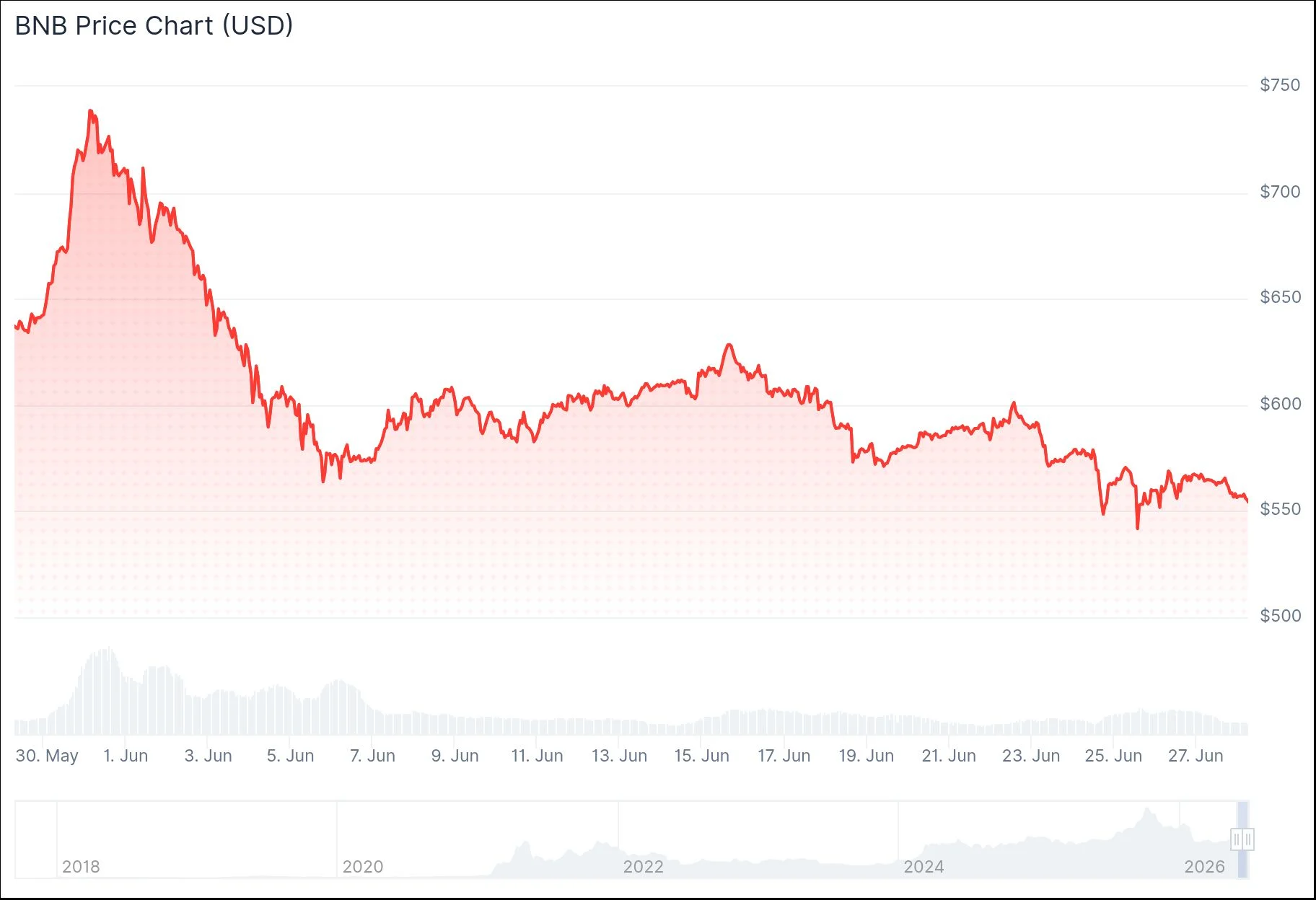
- Conservative projections for 2031 place BNB between $1,200–$1,800, assuming steady market conditions without major disruptions
- Optimistic scenarios suggest $2,500–$4,000 valuations if BNB Chain gains widespread adoption and institutional interest accelerates
- Regulatory challenges pose the greatest threat, with pessimistic forecasts estimating $400–$600 price levels
Binance Coin has consistently ranked among the strongest-performing major cryptocurrencies in recent years. Projecting its value through 2031 requires examining several critical variables.
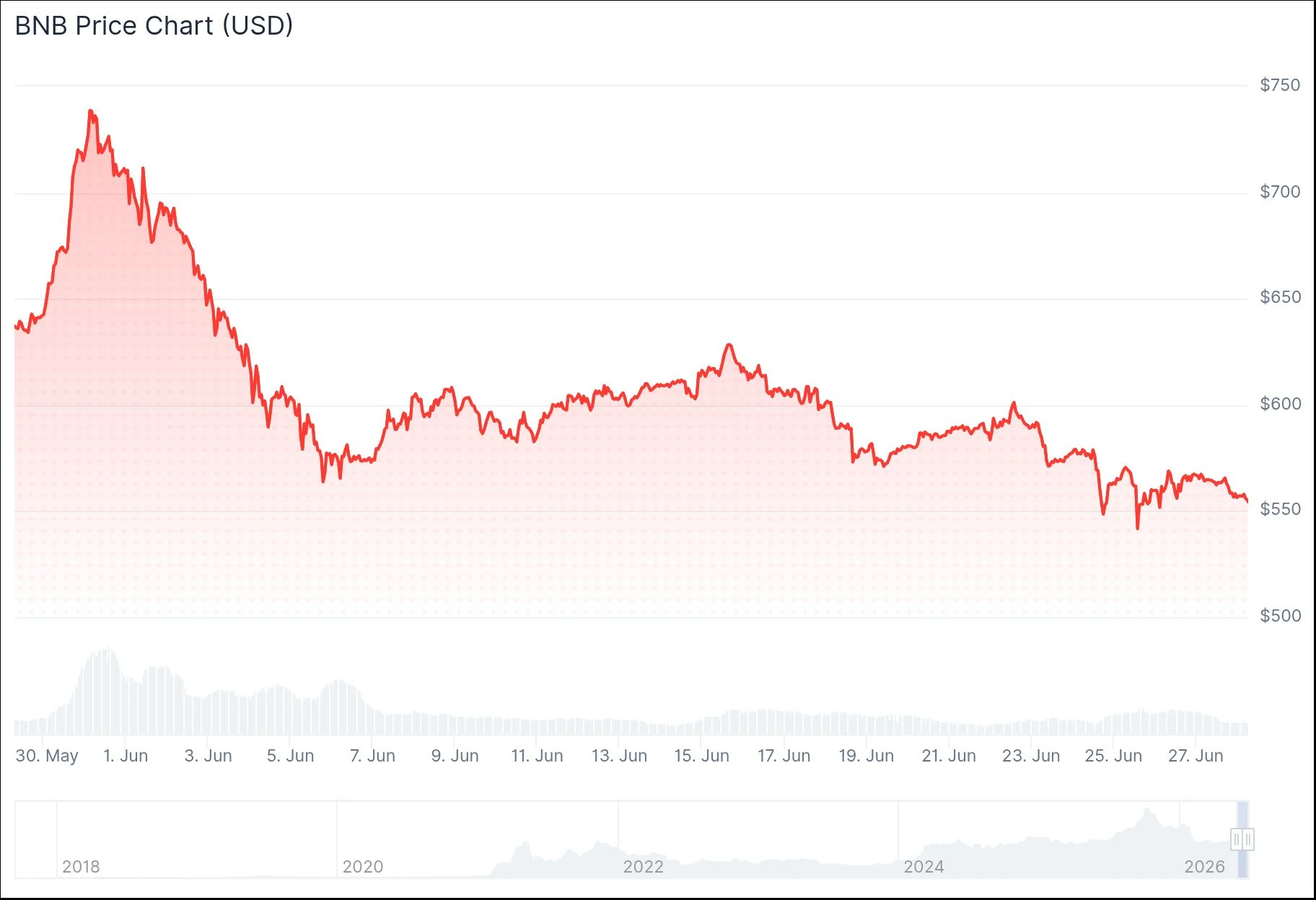
BNB maintains an intrinsic connection to the Binance platform. Countless traders hold the token to benefit from reduced transaction fees, participate in initial exchange offerings, cover network fees on BNB Chain, and utilize various Binance services.
This practical use case provides BNB with tangible value that distinguishes it from purely speculative digital assets.
Additionally, Binance implements a systematic quarterly burn mechanism. Every three months, a portion of tokens gets permanently eliminated from the available supply. The ultimate objective is reducing total token count by 50% — decreasing from 200 million to 100 million BNB.
This deflationary mechanism, combined with sustained market demand, forms the foundation of BNB’s long-term valuation thesis.
Moderate Scenario: $1,200 to $1,800
The most probable outcome for 2031 positions BNB trading within the $1,200 to $1,800 corridor. This forecast presumes Binance maintains its position among leading cryptocurrency exchanges worldwide while digital asset adoption continues expanding at moderate rates.
This valuation bracket corresponds to a market capitalization ranging from approximately $180 billion to $270 billion. Considering the trajectory of cryptocurrency markets, these figures remain achievable.
This scenario doesn’t demand extraordinary developments. It simply requires consistent user base expansion and ongoing supply reduction through burns.
Optimistic Scenario: $2,500 to $4,000
Under favorable conditions, BNB could climb to anywhere between $2,500 and $4,000. This projection assumes heightened institutional participation in cryptocurrency markets, BNB Chain establishing itself as a dominant infrastructure for decentralized applications and commerce, and continued aggressive token burning.
Such pricing would translate to market capitalization between $375 billion and $600 billion. While substantial, these figures don’t necessitate BNB surpassing Bitcoin or Ethereum in total value.
Primary Concern: Regulatory Pressure
BNB lacks the decentralized structure characteristic of Bitcoin. Its fortunes remain tightly bound to Binance’s corporate operations.
Should regulatory authorities impose restrictions on Binance across significant jurisdictions, exchange activity could decline substantially, pulling BNB demand downward correspondingly.
In a pessimistic scenario, BNB might trade between $400 and $600 by 2031.
The probability-adjusted price projection from this assessment centers around $1,650 for 2031. BNB’s future valuation depends more heavily on Binance’s operational success than on market speculation alone.


Coinbase and OKX are trying to win European crypto users after Binance moved to suspend several services in the European Union. The shift comes before the July 1 MiCA deadline, when crypto firms must hold approval from one EU state to keep serving the bloc.
Summary
- Coinbase and OKX moved fast as Binance prepared to restrict several EU services under MiCA.
- Transfer bonuses show licensed exchanges are competing for users before Europe’s crypto rulebook fully starts.
- Binance says assets remain accessible while it searches for a new EU authorization route elsewhere.
The campaigns add a commercial race to a regulatory deadline. Binance has told users that access to some services will change because it has not secured a MiCA license in time.
Rivals move with transfer offers
As reported, Coinbase is using the opening to court users in Germany, France, Italy, Belgium, Poland, Sweden and the U.K. The exchange says it holds MiCA approval and is offering a “5% transfer bonus” for users who move funds before July 13.
The offer puts Coinbase’s regulated status at the center of its pitch. It also gives affected users a time-limited reason to move funds before Binance fully adjusts its European services.
OKX has launched a similar push for eligible users in the European Economic Area. The exchange is offering welcome rewards and “deposit matching of up to 8%” as it promotes itself as a licensed platform for long-term access in Europe.
OKX Europe General Manager Erald Ghoos said the exchange saw record new customer sign-ups ahead of the MiCA transition deadline. The rise suggests some users are already moving before the new rules take full effect.
Binance keeps withdrawal access open
Binance has said it will restrict new registrations and certain services in the EU after missing the licensing deadline. The exchange has also told users that their assets “remain accessible at all times.”
The company withdrew its Greek MiCA application and said it would seek approval in another EU country. Binance also said its European goals “remain the same” and that it expects to secure a license in the coming months.
As previously reported, Binance had already been exploring another EU approval route before the cutoff. Reports said regulators had raised concerns tied to compliance history, corporate structure and executive oversight.
The service pause does not mean a full exit from Europe. It means Binance cannot keep offering the same range of services to EU users without MiCA approval after the transition period ends.
MiCA changes Europe’s exchange market
MiCA creates one rulebook for crypto service providers across the EU. From July 1, firms without approval must stop serving EU users or manage an orderly wind-down.
The rule gives licensed exchanges a clear marketing edge. Coinbase, OKX, Kraken and other approved firms can present themselves as stable routes for users who want to keep trading under EU rules.
Customers now have to check eligibility, fees, asset support and local rules before transferring assets. Campaign rewards can lower moving costs, but users still need to compare custody, trading pairs and withdrawal terms.
Data shared by OKX Europe earlier showed many European crypto users were still using unlicensed exchanges weeks before the deadline. That created a large pool of users who may need to review their platform choices.
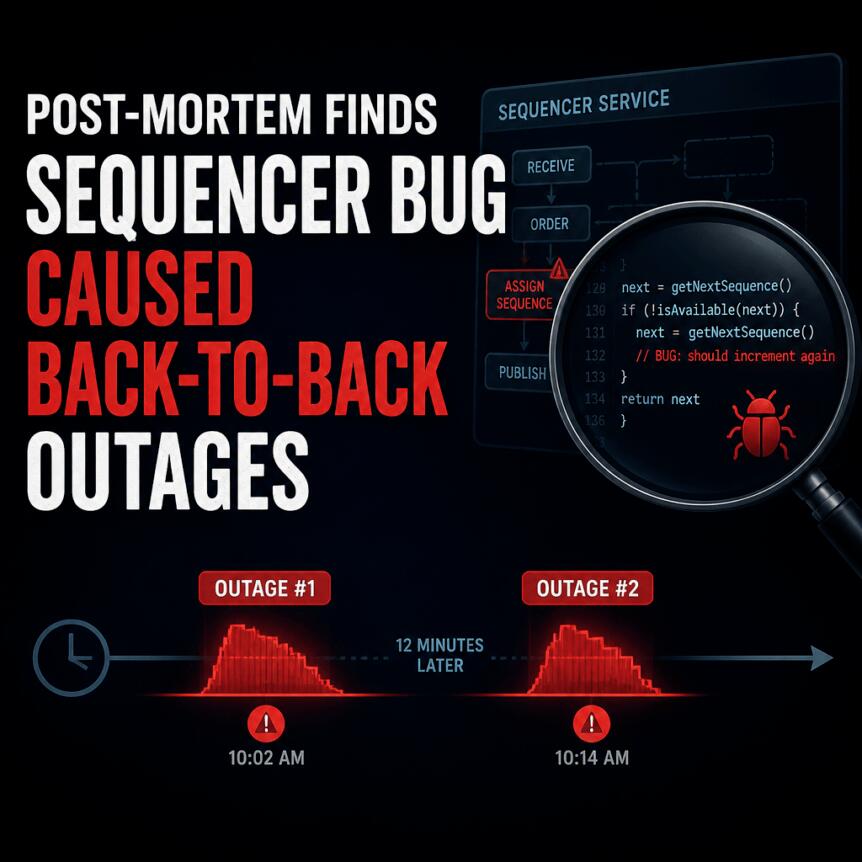
Coinbase’s Base layer-2 network faced two block production outages last week, and a post-mortem published by the Base engineering team attributes both incidents to a bug in the chain’s sequencer block-building logic.
According to the report, the problem allowed “stale journal state” to persist after a transaction validation failure—meaning the system did not properly clear account and storage slot data after an invalid transaction failed during execution. Because Base uses a single sequencer, the defect had system-wide consequences.
Key takeaways
- Base’s post-mortem says a sequencer bug caused “stale journal state” to remain after an execution failure, contributing to two outages.
- Both incidents stopped new layer-2 block production; sequencer and validator nodes could not move forward past the invalid block until recovery steps completed.
- The engineering team applied a patch to update journal state correctly during execution.
- Mitigation took longer than planned, partly due to unrelated infrastructure conditions, and a follow-on “race condition” after a system reset delayed full recovery for the second outage.
- Base says it will strengthen testing through “fuzz testing” and work toward “graceful recovery” to avoid manual validator restarts in future incidents.
What went wrong in Base’s sequencer
In its Saturday post-mortem, the Base engineering team described how the system handled an invalid transaction received by the block builder. The transaction failed during execution “as expected,” the team said—but the sequencer did not clear the journal state associated with the accounts and storage slots that had been accessed.
That lingering state, the report explains, stemmed from sequencer logic that built blocks while leaving “stale journal state” intact. In typical operation, clearing or rolling back intermediate state is essential to ensure subsequent blocks are constructed from a clean execution context. Here, the failure to do so prevented normal progression.
Two outages, tied to the same failure path
Base mainnet suffered two separate block production outages on Thursday and Friday, according to the post-mortem. The first incident lasted 116 minutes, while the second was shorter at 20 minutes.
In both events, the practical outcome was the same: a complete halt in new layer-2 block creation. The sequencer and validator nodes were unable to progress past the invalid block until sequencing was restored, effectively freezing the chain’s ability to finalize new blocks.
The team implemented a fix by patching the sequencers so journal state is properly updated during execution. However, the report notes that the time required to mitigate the problem exceeded expectations “due to infrastructure conditions unrelated to the original bug.” That distinction matters for operators and builders watching for operational reliability, because it suggests the initial logic flaw was not the only factor affecting service restoration.
A follow-on “race condition” delayed full recovery
The post-mortem also points to additional complexity after a system reset. It states that a “race condition” occurred during recovery, which prevented the sequencers from catching up after the restart—contributing to the second outage.
This kind of sequencing delay is particularly important for layer-2 chains that rely on correct synchronization between components. Even after patching the underlying logic, if the system cannot re-align its execution pipeline cleanly, validators may remain blocked waiting for proper sequencer outputs. Base’s report indicates this is what happened in the follow-up period.
Sequencer centralization raises the stakes
Base is designed with a single sequencer, as the post-mortem and the team’s public communications emphasize. That architecture makes the sequencer a critical dependency: when the sequencer stalls or encounters a logic failure, the chain’s block production can stop.
This is not a theoretical risk. The report notes that outages tied to sequencer behavior have also affected other layer-2 networks, including Arbitrum, OP Mainnet, and zkSync Era. With Base, the single-sequencer model means a bug in block construction logic can become immediately visible to users across the network.
What Base plans to change next
Looking ahead, the engineering team outlined two forward-looking measures aimed at reducing the odds of similar incidents and improving recovery speed.
First, it plans to improve protocol “fuzz testing,” a technique that tests systems by generating large volumes of random, malformed, or unexpected inputs. For blockchain execution and sequencing code paths—where edge cases can trigger state inconsistencies—fuzzing is often used to uncover failure modes that normal testing may miss.
Second, the team intends to build “graceful recovery,” aiming to prevent validators from requiring manual restarts during future incidents. The operational goal is straightforward: even when something goes wrong, systems should return to service without extended human intervention or prolonged uncertainty.
Base has seen similar issues before
This week’s outages follow earlier sequencer-related disruptions on Base. The post-mortem indicates Base stopped producing blocks for 17 minutes in September 2024 and for around half an hour in August 2025—another reminder that sequencer reliability remains an ongoing focus area for the network.
In terms of scale, Base is described as the second-largest layer-2 network by total value secured, which is just under $11 billion, according to L2beat’s data. For investors and users, that positioning increases the significance of uptime and recovery mechanics: disruptions may affect activity and settlement on the network, especially during periods when other infrastructure remains stable.
As Base rolls out its planned testing and recovery improvements, the next key signal to watch is whether the fixes reduce both the likelihood of state-related sequencing failures and the time needed to fully recover after resets—particularly if future incidents still surface around tricky execution-state edge cases.
A sequencer bug was responsible for two outages of the Coinbase layer-2 network Base last week, according to a post-mortem.
The Base engineering team said in a Saturday post-mortem that they identified a bug in sequencer block-building logic that allowed “stale journal state” to persist after a transaction validation failure.
“An invalid transaction was received by the block builder and failed during execution, as expected, but erroneously did not clear the journal state that contained the accounts and storage slots that had been accessed,” said the team.
The Base layer-2 network runs a single sequencer, which means one bug can stop everything. It is a centralized blockchain component that decides the order of transactions and has been responsible for outages on other layer-2 chains, including Arbitrum, OP Mainnet and zkSync Era.
On Thursday and Friday, Base mainnet experienced two block production outages, the first incident lasted 116 minutes and the second lasted 20 minutes.
There was a complete halt of new layer-2 blocks, and the sequencer and validator nodes could not progress past the invalid block until sequencing was restored.
The team fixed the outages by applying a patch to the sequencers to ensure the journal state was properly updated during execution.
However, mitigation took longer than expected “due to infrastructure conditions unrelated to the original bug,” they said.
There was also a “race condition” after the system reset, which prevented the sequencers from catching up, causing the second outage.
Related: Coinbase’s Base resumes block production after 2-hour outage
Going forward, the Base engineering team plans to improve protocol “fuzz testing,” which involves bombarding the system with large volumes of random, malformed, or unexpected inputs to find bugs, and building “graceful recovery” so that validator nodes don’t need manual restarts during future incidents.
Not the first outage for Base
It is not the first sequencer-related outage for Base, which stopped producing blocks for 17 minutes in September 2024 and for around half an hour in August 2025.
Base is the second-largest layer-2 network by total value secured, which is just under $11 billion, according to L2beat.
Magazine: AI is banking the unbanked in Africa… faster than crypto

On-chain analysis is pointing to a familiar kind of late-cycle stress in Bitcoin: investors appear to be running out of profit and increasingly spending coins at a loss. According to a CryptoQuant analyst posting under the name Darkfost, the ratio of spent Bitcoin outputs that are in profit versus at a loss has dropped to the lowest level seen in this bear market cycle.
The signal is notable because it has historically aligned with bear-market bottoming phases—periods when long-term holders tend to find more favorable risk-reward conditions, even if the market still feels unstable for weeks.
Key takeaways
- CryptoQuant analyst Darkfost says the Bitcoin UTXO profit/loss spent-output ratio has hit the cycle’s lowest point.
- He describes the move as the first trigger of this kind since the correction began, indicating more widespread capitulation.
- The prior time the metric was this low was during the mid-2023 bear market, when Bitcoin traded around $26,000.
- Other on-chain observers agree price may be beyond the first breakdown, but warn the base-formation phase is still underway.
- Near-term uncertainty could rise alongside geopolitical developments, as BTC reacts to evolving risk conditions.
Bitcoin’s “spent at a loss” signal reaches a cycle low
Darkfost highlighted an on-chain pattern derived from Bitcoin unspent transaction outputs (UTXOs). In his view, the latest move reflects capitulation: more coins are being spent after being underwater than at a profit.
In a post on Saturday, Darkfost said the UTXO metric—specifically the ratio of the number of UTXOs spent in profit versus at a loss—has fallen to its lowest point in the current bear market cycle. He added that it is the first time the signal has triggered since the correction started.
“This signal… demonstrates that the number of UTXOs spent at a loss is reaching significant levels, reflecting the start of a broader capitulation,” Darkfost said, framing the development as an indicator that the market is entering a bottoming phase.
Darkfost also argued that historically, these windows have tended to be profitable for long-term investors, because they often coincide with a stage where the majority has “given up and loses interest.” At the same time, he cautioned that the transition is not instantaneous and should be understood on a long time horizon.
Why the signal matters: capitulation can take time
The key nuance in the on-chain research is timing. Even if the UTXO profit/loss ratio has reached a bear-market extreme, market behavior can remain unsettled afterward. Analyst DurdenBTC echoed that point, stating that the signal “caught every cycle low since 2016,” but warning it will “still feel terrible for weeks.”
DurdenBTC’s commentary suggested that investors should not interpret a capitulation trigger as a guarantee of immediate stabilization. Instead, it can be read as evidence that selling pressure is becoming more exhausted, while price still needs time to form a durable base.
That distinction is important for traders and investors because on-chain capitulation signals can cluster around major inflection points while price action still oscillates. The more useful takeaway is not a precise “bottom price,” but the broader shift in who is selling and at what cost basis—an environment that often changes the character of subsequent moves.
What else is changing on-chain: SOPR and exchange inflows
Darkfost later reiterated the theme in a separate update, saying long-term holders are starting to enter a capitulation phase. In that context, he pointed to the Spent Output Profit Ratio (SOPR) moving into negative territory for that cohort.
However, Darkfost also identified a driver behind the correction: he said the decline has been largely fueled by a rapid increase in BTC inflows to exchanges originating from short-term holders. That distinction matters because it implies the selling pressure may not be uniform across investor groups. Long-term holders can show capitulation patterns, while the immediate supply to exchanges may be more concentrated among those who entered closer to the recent trading range.
For market participants, the interplay between these factors—loss realization signals among longer-duration holders and exchange flows from shorter-duration holders—can help explain why on-chain “bottoming” indicators sometimes appear before volatility meaningfully subsides.
Is Bitcoin stabilizing? Analysts point to base formation, not instant recovery
While some indicators are improving, other on-chain commentary suggests the market is still working through the early stages of recovery. Swissblock said on Saturday that Bitcoin likely moved beyond the initial breakdown, but that the network is “still in the base formation phase.”
In the same general line of assessment, Swissblock described conditions as mixed: price is stabilizing, yet momentum remains deeply negative. The implication is that even with a capitulation trigger on the UTXO profit/loss ratio, traders should expect a process rather than a straight-line rebound.
The current narrative, therefore, looks like a transition from active distribution toward early stabilization—where the worst of forced selling may be passing, but market structure and momentum have not fully repaired.
External risks: geopolitical headlines may add volatility
Beyond on-chain data, near-term risk factors can still influence Bitcoin’s tape. The article notes potential uncertainty and selling pressure linked to resumed strikes by the US military on Iranian targets over the weekend.
Central Command reported that US fighter jets conducted strikes on 10 Iranian military targets across multiple locations in and near the Strait of Hormuz following an Iranian drone attack on a commercial ship. At the time of reporting, BTC traded around $59,800 early on Sunday morning before recovering the $60,100 level.
This matters because capitulation signals don’t eliminate macro and geopolitical volatility. In practice, the market can still test support levels even while on-chain metrics suggest profit exhaustion is progressing.
Going forward, readers should watch whether the capitulation signals deepen or fade—particularly the continued behavior of SOPR for long-term holders and whether exchange inflows from short-term holders remain elevated or normalize—while also tracking whether momentum indicators improve as geopolitical risk stabilizes.

Iyo Sky wins Queen of the Ring, challenges Liv Morgan at SummerSlam

Today’s NYT Wordle Hints, Answer and Help for June 27 #1834

No One Cares! (Financial Advisors React to @CalebHammer Audit)


-
 Sports5 days ago
Two goals and an assist by sheer aura: Cristiano Ronaldo just entered the World Cup chat
-

 Tech6 days ago
Microsoft accidentally kills epic Outlook email threads
-

 Fashion2 days ago
Weekend Open Thread: Staud – Corporette.com
-

 Politics2 days ago
The House | Manchesterism won’t survive the painful trade-offs unless it gets citizens on board
-

 Politics2 days ago
Potential 2028er World Cup attendee leaderboard
-

 Business2 days ago
Asia stock markets slide as tech shares slump
-

 Tech2 days ago
A Look At A Gaggle Of Transputer Boards
-
Crypto World4 days ago
Bitcoin (BTC) Dips Below $62K, Ethereum (ETH) Plunges 6% Daily: Market Watch
-

 Crypto World4 days ago
Securitize Wraps Roubini's SEC-Registered ETF as Dubai VARA Digital Security
-
 Crypto World3 days ago
Dell (DELL) Shares Tumble Over 5% Following Analyst Downgrade to Hold
-
Business4 days ago
Entergy settles forward sale agreements, raises $672 million in cash proceeds
-

 Crypto World1 day ago
Kraken's xStocks Opens Bending Spoons IPO Registration to EEA Retail
-

 Sports1 day ago
FIH Pro League: India defeat Pakistan 7-1, register biggest win of campaign | Other Sports News
-

 Crypto World2 days ago
RTX holders must register wallets before token distribution begins
-
 Crypto World2 days ago
Hyperliquid Named on Singapore MAS Investor Alert Register
-

 Sports3 days ago
India vs Bangladesh LIVE Score, Women’s T20 World Cup: Bangladesh Opt To Bat; India Enter ‘Do-Or-Die’ Stage As Semi-Final Race Heats Up
-
 Tech7 days ago
Signal’s Meredith Whittaker says AI chatbots ‘are not your friends’ and calls Copilot agents a backdoor
-
Crypto World2 days ago
The DATA Foundation Launches to Tackle AI’s Multi-Billion Dollar Training Data Bottleneck
-

 Crypto World3 days ago
Strategy (MSTR) has a 10-month cash runway for dividends, but retail investors are losing faith
-
 Crypto World2 days ago
AAVE price tests 9-month trendline after 17% rebound as breakout hopes build
You must be logged in to post a comment Login