Craft Recordings and Bluesville are adding two more essential titles to one of the stronger all-analog blues reissue programs currently on vinyl: Jimmy Reed’s Jimmy Reed at Carnegie Hall and Skip James’ Devil Got My Woman. Both LPs have been cut from the original analog master tapes by Grammy-nominated engineer Matthew Lutthans at The Mastering Lab, using an AAA mastering chain, and pressed on 180-gram vinyl in partnership with Acoustic Sounds.
The packaging is not an afterthought, either. Each release comes in a tip-on jacket with an obi strip and new album reflections by Grammy-winning producer, songwriter, and bluesman Scott Billington—details that help distinguish Bluesville from the usual bare-bones catalog recycling. High-resolution and standard digital remasters will also be released alongside the vinyl editions.
Reed’s 1961 Jimmy Reed at Carnegie Hall is a studio recording despite the misleading title, and includes “Bright Lights Big City.” Skip James’ Devil Got My Woman, released in 1968, is a far starker and more intimate affair, built around the Delta blues legend’s singular guitar work, fractured vocals, and the title track that became his signature song.
The new releases follow Bluesville’s recent AAA editions of Albert King’s I’ll Play the Blues for You and Eddie Kirkland’s It’s the Blues Man!, both of which we just reviewed. Those records demonstrated that Craft is taking the series seriously: strong tape work, clean pressings, properly made jackets, and prices that have not yet wandered into the usual audiophile nonsense.
Advertisement
Related Reviews:
Jimmy Reed at Carnegie Hall Vinyl Reissue Brings a Blues Essential Back
Jimmy Reed’s Jimmy Reed at Carnegie Hall is not a live album, despite the title’s rather shameless attempt to borrow some Manhattan prestige. Originally released by Vee-Jay in 1961 as a double LP, the record was assembled from studio material rather than Reed’s actual Carnegie Hall appearance the previous year. Bluesville’s new edition focuses on the first disc, collecting sides A and B on a single 180-gram LP.
That distinction matters less once “Bright Lights Big City” begins rolling out of the speakers. Reed’s best work was built from deceptively modest ingredients: a loose, infectious shuffle, clipped electric guitar, harmonica, and a vocal delivery so relaxed it could sound almost casual. Yet the groove was nearly impossible to resist. “Bright Lights Big City” reached No. 3 on the R&B chart in 1961, crossed onto the Billboard Hot 100, and later became a No. 1 country hit for Sonny James. The song’s influence on British rock, country, and American blues is difficult to overstate.
Born Mathis James Reed in Dunleith, Mississippi, Reed became one of the defining figures of postwar electric blues after signing with Vee-Jay in 1953. Working closely with guitarist Eddie Taylor and drummer Earl Phillips, he built an extraordinarily successful run of singles that included “You Don’t Have to Go,” “Honest I Do,” “Baby What You Want Me to Do,” and “Big Boss Man.” His appeal was never about virtuoso fireworks. Reed made the blues feel conversational, danceable, and accessible enough that everyone from Elvis Presley and the Rolling Stones to Van Morrison and the Grateful Dead eventually came knocking.
Advertisement
The new Bluesville pressing includes “Bright Lights Big City,” “Tell Me You Love Me,” “Hold Me Close,” and “Blue, Blue Water,” the latter featuring Eddie Taylor and Phil Upchurch. It also benefits from the same careful production approach as the recently reviewed Bluesville editions of Albert King’s I’ll Play the Blues for You and Eddie Kirkland’s It’s the Blues Man!.
For listeners who know Reed only through compilations, or through somebody else covering “Big Boss Man” — this is a strong place to start. It is not the full double album, but it contains enough of Reed’s particular magic to explain why so many musicians spent the next several decades trying to find that same pocket.
There are plenty of Delta blues records that sound old. Devil Got My Woman sounds as though it was transmitted from a place slightly outside time, where conventional tuning, meter, and emotional restraint were politely asked to leave the building.
Born Nehemiah Curtis “Skip” James in Bentonia, Mississippi, James was never a conventional bluesman. His singing could rise into a high, ghostly falsetto, while his guitar work moved through unusual minor-key voicings and open D-minor tuning with a fluidity that still feels unnerving almost a century later. He was also a formidable pianist, and the music rarely follows the tidy twelve-bar rules that made other Delta blues artists easier for later generations to imitate.
James recorded for Paramount in 1931, but the records did not turn him into a star. The Depression did not help, nor did the fact that his music was too strange, too personal, and too far removed from the more accessible blues styles of the day. He largely disappeared from public view for more than three decades before John Fahey, Bill Barth, and Henry Vestine found him in a Tunica hospital in 1964.
That rediscovery brought James to the Newport Folk Festival and back into the studio, where he recorded a run of material for Melodeon, Takoma-related sessions later issued as She Lyin’, and Vanguard. Today! arrived in 1966, followed by Devil Got My Woman in 1968, his final album released during his lifetime.
Advertisement
The Vanguard set is a solo performance in the truest sense. James handles the vocals, guitar, and piano himself, moving between instruments rather than relying on a backing band to soften the edges. The title track, a revisiting of one of his 1931 Paramount sides, remains the centerpiece, but the album is deeper than a single famous song. “Little Cow, Little Calf Blues,” “22-20 Blues,” “Sickbed Blues,” and “Illinois Blues” reveal a musician still capable of making familiar blues language feel unsettling, intimate, and completely his own.
James died in 1969, only a year after Devil Got My Woman was released, but the music kept finding new listeners. The title track later reached a wider audience through Ghost World and was inducted into the Grammy Hall of Fame in 2020. That is deserved recognition, although the better reason to own this album is simpler: nobody else in blues sounded remotely like Skip James, and nobody has managed to replace him since.
The US government has eased the restrictions it imposed on Anthropic’s most advanced AI model, Claude Mythos 5, allowing the company to grant access to more than 100 US organizations, including large corporations and government agencies.
In a letter sent to Anthropic’s cofounder and chief compute officer Tom Brown obtained by WIRED, US Commerce Secretary Howard Lutnick told the AI lab it would permit certain trusted partners to access Mythos because he had “determined that appropriate safeguards are in place.” Semafor first reported the existence of the letter.
“Anthropic has worked with the U.S. government to address risks associated with the Covered Models. These efforts have yielded significant progress,” Lutnick wrote.
However, the government stopped short of permitting a broader rollout of the model, and said nothing about the fate of Claude Fable 5, the consumer-facing version of Mythos that Anthropic released with significant additional safeguards. Lutnick noted in his letter that the other requirements outlined in the initial directive he sent on June 12 remain in effect.
Advertisement
“We received notice from the US government that Mythos 5, our strongest cybersecurity model, can be redeployed to a small group of cyber defenders and infrastructure providers,” Anthropic spokesperson Eduardo Maia Silva said in a statement to WIRED. “We are working to provision the approved set of providers and restore their access to Mythos 5 as quickly as possible. We are pleased to see this progress and continue to work with the government to expand access to Mythos 5 and make Fable 5 available for general use again.”
Anthropic is still in discussions with the White House about restoring access to Fable 5, and they are expected to continue over the weekend, according to a person familiar with the matter. Both parties are hopeful the resolution of this incident will help inform a lasting policy framework for future model releases, the person said.
The partial reinstatement comes roughly two weeks after the White House sent an export control directive to Anthropic that required the company to limit foreign nationals from accessing Mythos and Fable 5, including people working and living in the United States. In response, Anthropic disabled access to the models entirely. In his latest letter, Lutnick wrote that organizations approved to use Mythos may now allow their foreign national employees to access the model, and Anthropic may do the same for its own foreign national employees.
The Trump administration grew concerned about Anthropic’s rollout of Mythos after it learned the company granted access to a South Korean telecommunications firm it believed had ties to China, WIRED previously reported. Amazon and the National Security Agency also separately raised concerns to the White House that Fable 5 could be jailbroken, and the confluence of events convinced officials they needed to take action.
Getting Mythos 5 back online marks a promising step forward for Anthropic and the White House, but the saga has raised broader questions about the overall direction of US AI policy, particularly the extent to which the Trump administration will seek to control future model releases. On Friday, OpenAI announced it was delaying the release of its upcoming GPT 5.6 models in response to a request from the Trump administration.
Virginia-based AI startup Trase is expanding its presence in the Seattle region, with plans to grow from about 20 employees in the area today to as many as 100 in the coming months.
The 56-person company this week publicly launched and raised a $107 million seed round to focus on highly regulated industries like healthcare. Arch Venture Partners led the seed round.
GeekWire previously reported on the company’s hiring of Baskar Sridharan — a longtime Microsoft, Google Cloud and Amazon Web Services engineering leader — as president. It is now using the Seattle area as a key engineering hub, with plans to expand in the region with new offices to accommodate growth plans.
Sridharan, who is growing the Seattle-area team, said AI adoption is stalling where it’s needed most.
“AI adoption is faltering within sectors that need it most: complex, highly regulated enterprises overburdened with administrative tasks that are ripe for automation,” Sridharan wrote in a previous LinkedIn post. “The issue isn’t innovation, it’s implementation.”
Advertisement
He added: “The next era of technology will be increasingly defined by those willing to solve the messy, complex problems of real-world AI deployment at scale.”
Before joining Trase, Sridharan spent nearly 16 years at Microsoft, where he helped build Azure storage technologies. He later became vice president of engineering for Google Cloud before joining Amazon Web Services as vice president of AI, machine learning services, and infrastructure.
The company also recently hired Srirama Koneru, the former general manager of Bedrock Agentic AI Infrastructure and GenAI Services at Amazon Web Services and former senior director of engineering at Google and at Salesforce. The company’s CEO is Grant Verstandig, the founder and CEO of Red Cell.
Trase, incubated by the venture studio Red Cell Partners, is building an agentic platform that enables enterprises in healthcare, national security and energy to deploy autonomous AI agents within existing infrastructure while meeting security and compliance requirements.
Advertisement
Customers include Duke University Health System, which is using the specialized agents in its Division of Cardiology to automate the more than 5,000 faxes the clinic receives each month.
The expansion adds to Seattle’s growing reputation as a hub for enterprise AI talent, particularly among startups recruiting experienced cloud infrastructure leaders from Microsoft, Google and Amazon. GeekWire tracks a list of more than 100 engineering centers in the Seattle area.
We’ve reached out to the company and we’ll update this post as we learn more. The expansion in Seattle was first reported by The Puget Sound Business Journal. Update: The company confirmed its expansion plans in the region and provided this statement: “Seattle is one of the nation’s leading technology hubs, making it a natural market for Trase as it continues to scale its operations.”
Porsche lifted the curtain this week, with a clear message for its customer racing community. The new 911 GT4 R replaces the long-running Cayman-based GT4 models and becomes the first car in this category to wear the iconic 911 shape. Built on the same foundation as the current 911 Cup, the car arrives in time for the 2027 season and carries a starting price of $375,500 in the United States, including delivery.
The shift away from the mid-engine Cayman chassis makes a lot of sense, considering that Porsche has discontinued producing gas-powered 718s and has already invested heavily in the 992.2-generation 911 Cup vehicle. Now, teams and drivers are looking at a single platform to climb the ranks, with the potential to move from the Porsche one-make series to the GT4 R and then to the GT3 R without having to relearn an entirely new car layout or support network, and let’s be honest, the rear-engine balance and wider track give the new car a much more stable feel on track than the old Cayman version.
BUILD A RACING LEGEND – Boys and girls ages 9 years old and up can construct the LEGO Speed Champions Porsche 911 GT3 RS Super Car (77239) building…
AUTHENTIC PORSCHE DETAILS – Young builders can recreate the real-life vehicle’s signature elements including the famous rear wing, air intake…
1 PORSCHE DRIVER MINIFIGURE – Kids can place the driver minifigure with helmet and red Porsche Track Day Experience outfit behind the wheel to stage…
The new car is powered by a 4.0-liter flat-six boxer engine, which is identical to the one used in the 911 GT3, but has been tuned during Cup development. In its unrestricted form, it produces a strong 520 PS (513 horsepower) at 8,400 rpm and 470 Nm of torque at 6,150 rpm, with a redline of 8,750 rpm. Of course, most race series now limit power to 430 PS thanks to factory-installed 53.7-millimeter air restrictors. The power is transmitted to the rear wheels via a six-speed sequential dog-ring gearbox with paddle shifters and a four-disc racing clutch, which is all linked together by a limited slip differential.
The chassis retains the 911 Cup’s steel structure and integrated roll cage while being modified to comply with GT4 regulations. They’ve also begun to use natural fiber-reinforced plastic on the doors, engine cover, aerodynamic components, and even some interior trim to decrease weight without losing strength. With an overall weight of roughly 1,515 kg (3,340 pounds), ballast plates can be used to achieve specified series minimums if necessary. The front and rear track widths are slightly larger than the original Cayman GT4, and the car comes with 18-inch forged wheels with a five-bolt layout, rather than center-lock hubs.
The suspension setup remains highly flexible, with dual-adjustable dampers paired with three different spring rates, allowing you to tune the car to the circuit and the driver’s preferences. The brakes have huge two-piece steel rotors (380mm in diameter), six-piston front calipers, and four-piston rear units. What about aerodynamics? They’ve simply built straight on the Cup package, with a manually adjustable rear wing with eleven settings on swan-neck mounts, additional cooling apertures on the nose, functional vents on the fenders, and side skirts with splitters to help manage airflow underneath the car. Finally, a small ducktail feature provides some rear treatment.
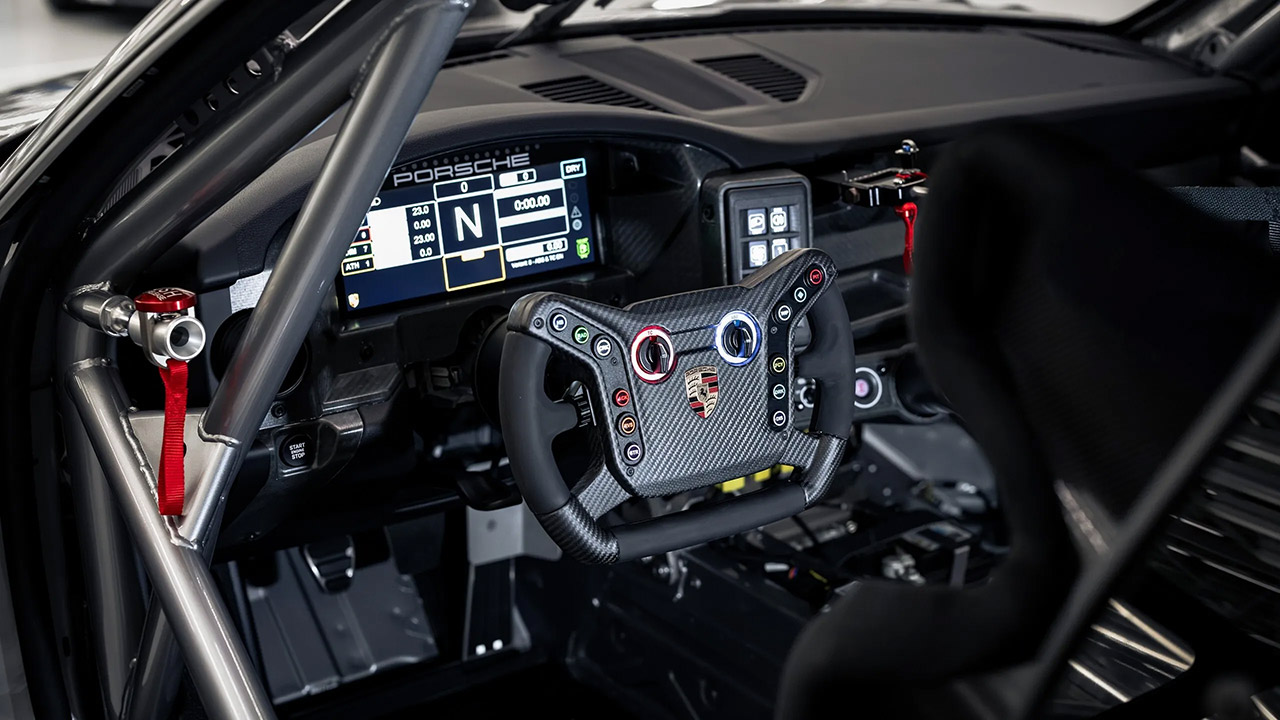
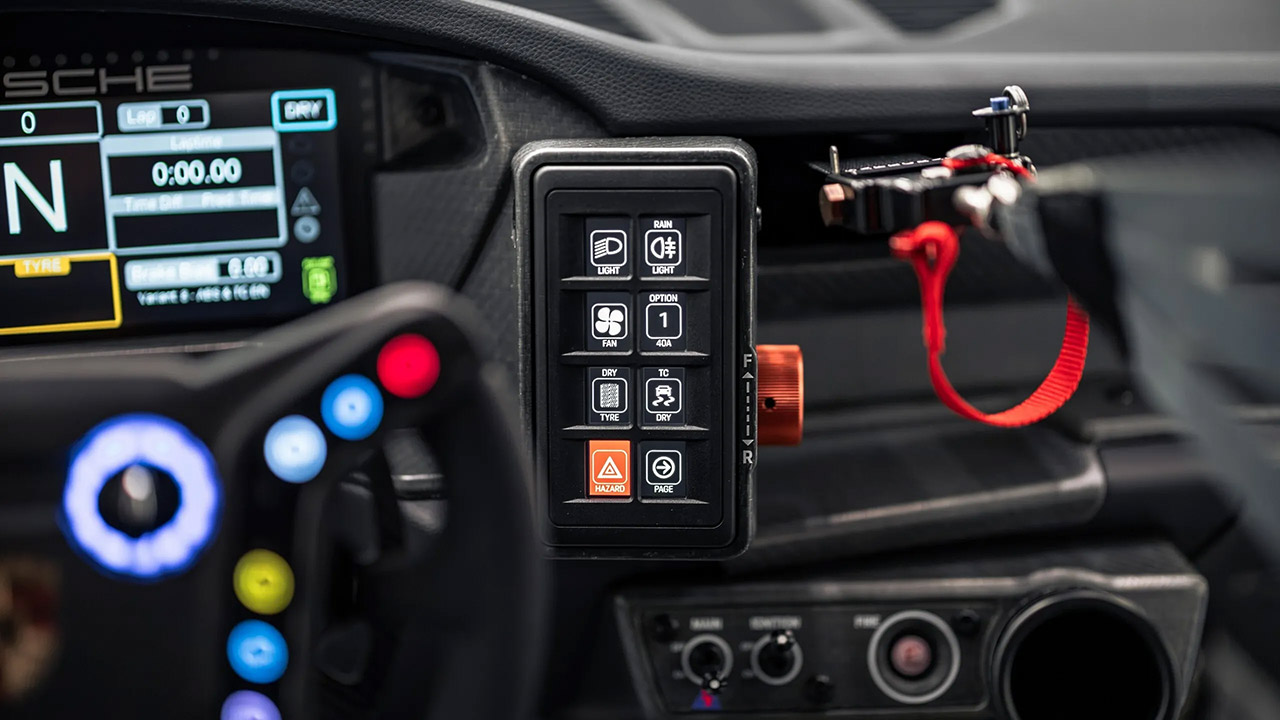
Inside the cockpit, you are kept focused on the road because the entire setup is designed to put you in the zone. A big 10.3-inch color display in front of you, accompanied by a built-in data logger and a very precise GPS system, allows you to examine your performance after each session. Everything is wrapped in natural fiber inside panels, which adds a nice touch. You also have air jacks and ventilation ready in case you need to shift your vehicle into the fast lane.
Porsche intended the 911 to compete in GT4 America, the IMSA Michelin Pilot Challenge Grand Sport class, and their own one-make series, such as the Porsche Carrera Cup North America and the Sprint Challenge. Since 2016, more than 1,500 Cayman-based GT4s have raced, earning Porsche numerous factory titles and driver victories. The new 911 aims to build on that success while also giving drivers a clearer path up Porsche’s customer motorsport ladder. Deliveries are slated to begin in late 2026, as teams currently running 911 Cup cars will notice a plethora of shared parts and setup expertise that has already been dialed in from their current cars, resulting in lower running costs and a speedier development period upfront. [Source]
Apple has sharply raised prices across its Mac, iPad, HomePod, and Apple TV lineups as surging AI-driven demand creates a global memory and storage shortage. Increases range from $30 for the HomePod mini to $1,300 for the M3 Ultra Mac Studio, with Apple CEO Tim Cook saying efforts to shield customers from higher costs had become “unsustainable.” The Verge reports: On Thursday, the company adjusted the price of its new MacBook Neo, which will now start at $699 instead of $599, while the base MacBook Air will jump to $1,299 from $1,099, as reported earlier by Bloomberg. The 14-inch MacBook Pro is getting an increase as well, going from $1,699 to $1,999. Meanwhile, the iPad Air will now start at $749 instead of $599, while the iPad Pro is increasing to $1,199 from $999.
As spotted by MacRumors, the M4 Max Mac Studio will now cost $2,499, a big jump from $1,999. The M3 Ultra Mac Studio is now priced at $5,299, up from $3,999. Apple is even raising the prices of its HomePod, which now costs $349 instead of $299, as well as bumping the price of the HomePod mini to $129 instead of $99. The Apple TV also now costs $199 instead of $129.
For years, Bungie kept Destiny 2 online with a big technical footprint, from backend systems for progression and matchmaking to tools for live events and constant content updates. Now, with that pipeline winding down and new games still in early incubation, the studio is cutting back the team that supports… Read Entire Article Source link
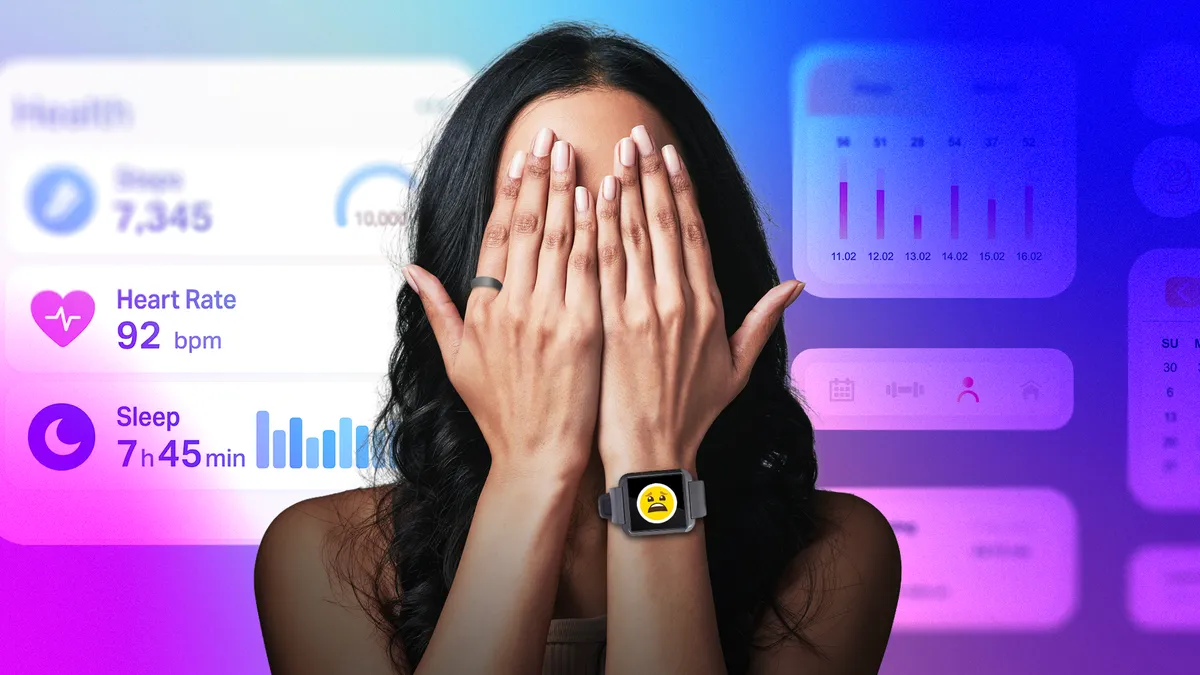
Whenever I wear a smartwatch, I find that my anxiety increases — specifically, my health anxiety. Also known as hypochondria or illness anxiety disorder, this type of anxiety makes me worry that I am or may become ill even when I’m healthy.
What’s ironic is that part of my job involves testing health-monitoring wearables, including fitness trackers and smart rings. While I love exploring this technology and do think it can help you learn more about your body, I have to be careful about how I use it so my anxiety isn’t triggered.
“Healthy adults and individuals with pre-existing medical conditions are increasingly using these devices to manage their health. Whether 24/7 access to health information from a wearable actually helps or potentially harms people is really unclear,” says Dr. Lindsey Rosman, assistant professor of medicine in the Division of Cardiology and co-director of the Cardiovascular Device and Data Science Lab at the University of North Carolina School of Medicine.
Advertisement
When you add in the ability to search your symptoms online or ask an AI chatbot in your wearable’s app about every anxiety-induced health question that pops into your head, it becomes even more difficult to discern between what’s helpful and harmful.
To help myself and others with health anxiety navigate the world of wearables so we can either enjoy using them or know when it’s time to stop, I reached out to experts for their advice.
1. Turn off health-related alerts
Rosman has observed clinically that it can be beneficial to either scale back or turn off the features that make you anxious. This can be especially helpful for people with pre-existing conditions that are already being treated, such as atrial fibrillation (AFib, an irregular heartbeat), as your wearable’s irregular heart rhythm notifications will only make you anxious and can prompt you to see your doctor when it’s not medically necessary.
Plus, certain medications can affect the accuracy of wearable sensors, provoking false alarms.
Advertisement
“We published a case report on a patient who performed over 900 EKGs [electrocardiograms or ECGs, which measure the heart’s electrical activity] on her smartwatch in a single year,” says Rosman. While most of the EKGs were normal, inconclusive alerts fueled her anxiety, leading to multiple ER visits, spousal conflict and the need for therapy to reclaim her daily life. The patient had no psychiatric history prior to getting a smartwatch.
When you get an unexpected health alert on your device, it can understandably cause panic.
Cole Kan/CNET/Apple
Dr. Karen Cassiday, author of Freedom from Health Anxiety and owner and managing director of the Anxiety Treatment Center of Greater Chicago, says that even patients who don’t have health anxiety can find wearables to be intrusive when they get too many alerts. “They discover they want to be less aware of every moment of their body’s functioning,” she says.
Advertisement
Thankfully, most wearable health features can be turned off completely or customized.
For instance, Shyamal Patel, SVP of science at Oura, maker of the Oura Ring, shares that the device’s Personalized Activity Goals allow you to choose to see steps instead of calories, adjust your daily activity goal or hide calories completely, which can be necessary for anyone who finds calorie counting triggering or overly rigid.
Advertisement
2. Avoid checking your device all the time
Referring to a 2024 study she worked on that examined the impact of wearables on the psychological well-being of patients with AFib, Rosman says that about half of the participants were checking their heart rate every day out of habit, not because they felt symptoms.
Cassidy explains that while people with health anxiety may initially find wearables helpful, compulsively checking to make sure their vitals are normal can accidentally become a form of negative reinforcement that further propels the anxiety.
“Often when I work with anxious people, we try to cut back or eliminate the need to compulsively check for reassurance on their wearables, as well as with ChapGPT or other digital ‘doctors,’” says Cassiday.
When people refrain from compulsively checking, wearables can provide useful feedback that counters the false belief that something terrible will happen to their health.
Advertisement
If checking your health metrics causes anxiety, try reducing how often you view them on your device or in its app. Setting an alert to check weekly, at a minimum, could help — especially since it’ll give you a broader picture, making you less likely to hyperfocus on a single data point that seems off.
You should also avoid checking your wearable’s health information right after you wake up or before you go to bed, as this can set the tone for an anxious day or make it harder to fall asleep.
If having a screen on your wrist makes it difficult for you to stop checking, a screenless smart ring or fitness tracker such as the Whoop 5.0 may be a better option, since they rely on apps instead of screens.
Advertisement
A screenless smart ring may help you stop compusively checking your device.
Anna Gragert/CNET
“You choose how much or how little you engage with the app, which gives those who might be anxious about their health the option to limit the amount of time they spend with their data,” says Patel.
3. Focus on trends, not one-off metrics
When I asked both Patel and Dr. Jacqueline Shreibati, head of clinical for platforms and devices at Google, how people who wear their devices can reduce health anxiety, they emphasized the importance of tracking trends — not individual metrics.
“We focus on long-term trends (rather than isolated metrics) to help users maintain a balanced relationship with their data,” says Shreibati. “What being healthy means differs for everyone, and we encourage users to consult their physician if they have any concerns.”
Advertisement
Patel points to the Tags and Trends features in the Oura app. Tags lets you tag lifestyle factors such as travel, alcohol, meditation or late meals, which you can then view in Trends to see how your behavior affects your recovery and sleep over weeks, rather than looking at a single score that may one day seem abnormal.
Instead of viewing a single sleep or stress score, consider looking at that data weekly or monthly.
Vanessa Hand Orellana/CNET
4. Remember that your smartwatch can’t replace a doctor
“Most consumer wearables were originally developed as personal wellness devices, which are not required to demonstrate safety and efficacy like traditional medical devices (e.g., a blood pressure cuff or pacemaker),” Rosman explains.
Advertisement
Yet we’ve begun using these wearables to monitor our health, using metrics such as heart rate and rhythm, blood oxygen, stress, sleep and physical activity. Now, some of these devices have medical-grade sensors, software and algorithms approved by the US Food and Drug Administration to detect irregular heart rhythms, hypertension and sleep apnea.
Despite FDA approval, wearables are simply not doctors, and they cannot provide medical diagnoses or treatment. That’s why it’s essential to understand what your device actually measures.
The ECG feature on many smartwatches is just one example of this. FDA-cleared as it may be, a single-lead ECG that only uses one electrode to record your heart’s electrical activity from your wrist is not the same as the 12-lead, hospital-grade ECG a cardiologist would use.
While your wearable’s ECG can surface a potential symptom worth investigating with your doctor, it can’t replace a professional or their medical-grade equipment.
Advertisement
Performing an ECG on your smartwatch is not the same as having that same measurement taken in a doctor’s office.
Viva Tung/CNET/Apple
The gap is even wider for features including stress and sleep scores, which haven’t been clinically validated because there’s no one single gold standard to validate against. These numerical scores are calculated from bodily signals such as heart rate, temperature, movement and heart rate variability, which tend to correlate with your stress and sleep states. But the translation from raw signal to “your stress score is 74” is more of an educated estimate.
“What you’re seeing is a rough indicator of how your nervous system is functioning, not a medical diagnosis,” Rosman emphasizes.
Advertisement
Patel adds that not all physiological stress is inherently negative. “Some forms of short-term physiological stress can be healthy and adaptive,” he says. “That’s why we aim to pair data with in-app context and insights, so members can better understand what they’re seeing rather than receiving that information in a vacuum.”
Nonetheless, when you don’t know exactly what your wearable is measuring, a “bad” stress or sleep score can seem scary when it isn’t necessarily a cause for alarm, but rather a sign that you may want to have a deeper conversation with your doctor.
5. Get your doctor’s thoughts
Just like you should talk to your doctor before starting a new medication or diet, you should get their thoughts on whether you could benefit from using a wearable.
“Education is probably the most underused tool we have,” Rosman says.
Advertisement
When you don’t know what a healthy heart rate or ECG looks like, one seemingly atypical reading can send you into a panic. That’s why it’s essential to speak with your doctor so you understand your own baseline and if a wearable makes sense for your current health condition.
As a guide, Rosman provides the following questions you can ask your doctor:
Advertisement
What type of wearable should I use?
How often should I check this data?
What are healthy numbers for me?
What do I do when I get an alert?
When should I call the clinic or seek emergency care versus waiting?
“A fast heart rate after climbing stairs is not the same as a dangerous arrhythmia, but without that context, a notification can feel terrifying,” Rosman adds. “So much wearable-related anxiety comes not from the data itself, but from not knowing what to do with it.”
6. Know when it’s time to remove your device and get help
When asked when someone should consider parting with their wearable or seeing a professional for health anxiety, Cassiday says that it’s similar to what many notice when they keep checking their smartphone for the next text, TikTok or other digital data.
“If you find yourself interrupting pleasurable activities or your free time to check, or if you feel anxious about not checking, you have a problem,” Cassiday states.
For instance, if you only stop thinking that you’ll have a heart attack when you check your wearable and see your resting heart rate. Or, put simply, if you only feel at peace after someone or something, such as a wearable reassures you that you’re in good health, it’s time to get professional support.
Advertisement
If health anxiety is making it difficult for you to enjoy life, then it’s time to talk to a professional.
When you have health anxiety, the gold standard for care is cognitive behavioral therapy. It involves exposure to health-related worries without any form of reassurance and learning to accept the uncertainty that comes with not knowing our future health status, manner of death or time of death.
“People need to learn that all the vague symptoms that trigger their health anxiety are just normal variations of normal body functioning and aging,” Cassiday explains. “They have to reframe the symptoms they notice as nothing to examine, discuss or manage and instead trust the facts of their other evidence of good health.”
CBT can help you live in the present instead of spiraling into the anxiety-inducing “What if?” of the future.
Who should and shouldn’t use wearables
Wearables can be great for people who like tracking their fitness to motivate them toward their goals, or for patients and their care teams when medically necessary. Though they usually cost hundreds of dollars, wearables can be less expensive than medical tests. Some are even HSA- or FSA-eligible.
Advertisement
“In AFib specifically, being able to correlate your symptoms with actual rhythm data can be genuinely empowering,” Rosman says. She’s observed that the patients who thrive with wearables are those who use the data as information — not as something to fear — and those who don’t participate in 24/7 surveillance.
In Rosman’s 2024 study, two-thirds of AFib patients said their wearable made them feel safer and more in control. Even so, there is still the risk of unintended consequences.
While they can be beneficial, wearables can also come with risks — especially since there isn’t enough research on the subject.
Advertisement
Giselle Castro-Sloboda/CNET
Just as doctors would never prescribe a medication without knowing the potential benefits, risks and how to manage them, wearables should be no different. “The technology has moved so much faster than the science, and we need the scientific evidence from clinical trials to catch up,” Rosman explains.
Since the evidence isn’t there yet, Rosman is hesitant to say anyone should categorically avoid wearables.
Despite that, people who are highly anxious about their heart or prone to obsessive symptom monitoring should approach with caution. The same goes for those with conditions involving unpredictable, abrupt symptoms, such as paroxysmal AFib and POTS, because the uncertainty of not knowing when the next episode will hit is stressful enough, and constant monitoring can make it worse.
A note on the science (or lack thereof)
Rosman has conducted research on the connection between wearables and anxiety, including a 2025 review describing the psychological effects of wearables on patients with cardiovascular disease and a 2024 study examining their impact on the psychological well-being of patients with AFib.
The 2025 review found that while wearables can help promote healthy behaviors and provide data for diagnosis and treatment, they also pose risks, such as adverse psychological reactions.
In the 2024 study, it was concluded that wearables were connected with higher rates of patients becoming preoccupied with their symptoms, being concerned about their treatments and using both formal and informal health care resources.
Advertisement
On the other hand, a 2021 study that analyzed the 2019 and 2020 US-based Health Information National Trends Survey found that using wearable devices for self-tracking can indirectly reduce psychological distress. Still, misinterpretation of wearable data may cause unnecessary panic and anxiety.
A 2020 qualitative interview study featuring patients with chronic heart disease also found that while wearables’ data may be a resource for self-care, it can create uncertainty, fear and anxiety.
Ultimately, more studies are needed.
“Honestly, we don’t have good scientific evidence in this area yet,” says Rosman. “Despite widespread use, there have been no clinical trials I’m aware of that have looked at the benefits and potential health risks of specific wearable health features.”
Advertisement
Rosman’s team plans to be the first to investigate this in patients with pre-existing heart conditions.
Wearables’ impact on our health care system
When wearables cause health anxiety, they can prompt healthy individuals to schedule unnecessary doctor’s appointments. This places a burden on our health care system, which is already experiencing shortages, making it difficult for people who actually require medical attention to access care.
Rosman’s 2024 study found that those using a wearable sent nearly twice as many patient portal messages to their doctors. Responding to these messages from patients takes time, isn’t reimbursed by insurance and can contribute to burnout.
Advertisement
When health anxiety caused by wearables prompts people to message their doctors, it can put a strain on the health care system.
MoMo Productions/Getty Images
As a result, Rosman believes we need better systems for managing wearable data in clinical settings before we scale it further: “Wearables are changing how we deliver care in ways we haven’t fully prepared for.”
Wearables can further widen health care inequity due to their cost.
“These devices are expensive, they were mostly designed and tested in young healthy people and they’re marketed toward higher-income consumers,” Rosman explains. “If we’re not thoughtful about access, wearables could actually widen health disparities rather than close them. That’s the opposite of what we want.”
The bottom line
While wearables have their benefits, there are also risks to consider, especially given the limited research on the subject.
If you purchase a wearable and it triggers health anxiety, you don’t have to use every available feature, wear it constantly or continue to wear it at all. Before you even buy that device, you can arm yourself with anxiety-reducing knowledge by getting your doctor’s expert opinion.
Advertisement
However, if health anxiety continues to take over your life, it may be time to remove your wearable and seek professional help.
As for me, writing this piece has been a necessary reminder that, while there’s a lot we can’t control in life, the power is in our hands (or on our wrists or fingers) when it comes to the technology we put on our bodies or invite into our homes. Just like an itchy sweater or a lumpy armchair, we can send the technology that doesn’t serve us packing.
“The US government has allowed Anthropic to release its powerful Mythos AI model to select companies and organizations,” reports CNN, “revising license requirements after ordering an export block earlier this month in the wake of national security fears.”
Since the export ban earlier in June, “Anthropic has worked with the US government to address risks associated with the Covered Models,” Commerce Secretary Howard Lutnick wrote to the company in a letter dated Friday. In light of progress in that work, Lutnick wrote, “I have determined that appropriate safeguards are in place to permit certain trusted partners to access the Claude Mythos 5 Model.”
The letter does not include permission for Anthropic to release Fable, a less powerful version of Mythos. “We received notice from the US government that Mythos 5, our strongest cybersecurity model, can be redeployed to a small group of cyber defenders and infrastructure providers,” Anthropic said in a statement…
Conversations between Anthropic and the government are expected to continue into the weekend, with an eye to restoring access to Fable, as well, a source familiar with the discussions told CNN.
Astronomers have discovered two Jupiter-sized exoplanets with densities lower than cotton candy, making them the lightest known worlds of their size. The rare “super-puffs,” located about 1,110 light-years away, are likely composed mostly of hydrogen and helium, with follow-up observations by the James Webb Space Telescope expected to probe their atmospheres. The Associated Press reports: [University of Oxford’s George Dransfield] suspects these fluffy, wispy worlds are probably white or blue, depending on whether the skies there are cloudy — no shades of cotton-candy pink. The planets are probably mostly hydrogen and helium, although it will take follow-up observations by NASA’s Webb Space Telescope to confirm their chemical makeup.
Detected by NASA’s Tess satellite over the past decade, these two especially puffy-puffs orbit a star in the southern constellation Volans, known as the flying fish. The researchers studied the planets’ orbits using telescopes on Earth to determine their density, from 1,110 light-years away. A light-year is nearly 6 trillion miles (9.7 trillion kilometers). Jupiter, by comparison, is as much as 35 times denser than these two lightweights.
Considered rare in the cosmos, super-puffs are thought to form around the disk of gas and dust around a newborn star where there is more gas than dust. They shed much of the material over time, stripping down even more. NASA’s tally of worlds outside our solar system currently stands at nearly 6,300 confirmed. Fewer than 40 are super-puffs, according to Dransfield. The findings have been published in the journal Monthly Notices of the Royal Astronomical Society.
There’s no questioning [Throaty Mumbo]’s uncanny skill at answering questions that nobody ever asked, such as whether it’s possible to watch YouTube videos on a Nintendo Game Boy Color handheld gaming system.
Of course the answer here is a resounding ‘sorta’, loosely defined by what you mean with ‘watch’ and ‘video’ exactly. For the impatient there’s the GitHub project page with the project summary, along with a detailed video containing hijinks and a playback demo on real Game Boy Color hardware with the cobbled-together GBCTube cartridge.
The nice thing about these cartridge-based gaming systems is that you get direct access to the system’s hardware via the cartridge bus, with for systems like the GBC a basic cartridge PCB readily available if you’re feeling that prototyping itch.
Such a cartridge breakout board for the GBC was thus used as the core of this project, with an ESP32-C6 acting solely as Wi-Fi bridge for the RP2350B MCU which handles basic player firmware and bridging duty between the GBC and the streamed video data from the host PC. It’s the latter does the heavy lifting of wrangling the YouTube experience into something that sort of works on the GBC’s amazing, very vibrant, backlight-free 160×144 resolution color LCD.
Advertisement
With the cartridge inserted you can search for a video title on the GBC, select a video which is then downloaded with yt-dlp on the host PC and prepared for streaming. Audio is handled by the RP2350B to free up CPU cycles on the GBC, for which a separate speaker is slapped into the cartridge for high-fidelity mostly-synced audio.
Perhaps the most fascinating question that one is left with is whether a more powerful Espressif MCU like e.g. the ESP32-S31 could combine all these tasks into a single package. Not because there’s a particular reason to do so, but more out of sheer morbid curiosity, perhaps.
OpenAI has started previewing its GPT‑5.6 series, which will be available in three versions, to a limited number of trusted partners. The company says the variant Sol is its strongest model yet, while Terra is for everyday use and has a similar performance to GPT‑5.5 despite being twice as cheap. Luna, the last variant, is the company’s lowest cost model. OpenAI plans to give them a broad release sometime in the coming weeks.
The company gave the US government a preview of GPT‑5.6 and its capabilities before today. It’s also by the administration’s request that it is previewing the model to a small group of trusted partners “whose participation has been shared” with the government. “We don’t believe this kind of government access process should become the long-term default,” OpenAI wrote in its announcement. It said it’s taking the “short-term step,” for now, because it ensures it can release its latest model series to the public soon.
President Trump signed an AI cybersecurity order earlier this month, which asks companies to present their most powerful models for voluntary government review 30 days before making them publicly available. According to a recent report by The New York Times, OpenAI, Anthropic, Google, xAI and Microsoft have been giving the government early access to their latest models even before Trump signed the order. Meta was the only holdout, and the US government has reportedly been urging it to submit its AI models for evaluation.
GPT‑5.6 introduces a “max” reasoning effort, which gives Sol more time to reason deeply. Sol is also OpenAI’s most capable model for cybersecurity and is the best option to help users find and fix vulnerabilities. OpenAI says Sol comes with strengthened protections for high-risk activities and sensitive requests. It also says that the company had spent several weeks finding its weaknesses and fortifying it against real-world attacks.
Advertisement
The company put safeguards on all the variants, however, to make sure they hold up to real adversarial pressure. In addition, OpenAI trained GPT-5.6 to refuse “prohibited cyber assistance,” including attempts at jailbreaking the model. It spent 700,000 GPU hours to find universal jailbreaks to develop measures against them, and it pledges to implement a “rapid-response process to reproduce, assess, prioritize, and remediate newly discovered jailbreaks.”
OpenAI’s focus on jailbreak prevention likely stems from what happened to Anthropic. A couple of weeks ago, Anthropic suspended all access to its Mythos 5 and Fable 5 models after a directive from the government. While the company didn’t say it outright, Amazon and other companies had reportedly notified authorities that its models could be jailbroken and used for malicious purposes. It has started lifting its access block, though, since US government has just given Anthropic permission to redeploy Mythos to a select group of organizations.
The company has priced GPT‑5.6 Sol at $5 per million input tokens and $30 per million output, much less than what Fable cost when it was still available. ($10 for input and $50 for output for the same amount of tokens.) Terra costs $2.50 for input and $15 for output, while Luna costs $1 for input and $6 for output.






















 There’s no questioning [Throaty Mumbo]’s uncanny skill at answering questions that nobody ever asked, such as whether it’s possible to watch YouTube videos on a Nintendo Game Boy Color handheld gaming system.


































You must be logged in to post a comment Login