
Security teams log 54% of successful attacks and alert on just 14%. The rest move through your environment unseen.
The Picus whitepaper shows how breach and attack simulation tests your SIEM and EDR rules so threats stop slipping by detection.



Friday Bitcoin closed at just $59,948 — dropping 19% just for June and more than 50% lower than its record high in October of $124,310.
To commemorate the occasion CNBC interviewed long-time bitcoin skeptic Jeremy Grantham, reporting that the 87-year-old cofounder/chief investment strategist of the massive asset-management firm GMO is “predicting it will gradually fade into irrelevance over decades.”
[The] longtime market commentator known for his calls on asset bubbles said bitcoin is a “useless, speculative” asset without intrinsic value, speaking on CNBC’s “Squawk Box” Friday. He also said bitcoin hasn’t outperformed during a bull market and questioned its practical use. “[Over] years and years, decades and decades, it will dwindle away, I suspect — not with a bang, but a whimper,” he said. “It’s not a stable form of value — it just halved … for no particular reason in a strong economy, so you can’t depend on it in that way.”
He added that gold has still delivered solid gains over the same period, even after pulling back from its highs. Bitcoin not only hasn’t proved itself as a useful asset to speculate on, it doesn’t provide any real world utility either, Grantham argued. “People don’t use it to make serious trades, they don’t use it to buy their dinner and pay at the supermarket. … What it does is allows crooks to move money around,” he said.
Bitcoin has become notorious over the years for its dramatic bear market crashes, which has taken it down at least 70% from its peak in every cycle.
The article adds that “many investors believe the current price slump could drag on for several more months.”


The FBI and CISA are warning that a phishing campaign targeting Signal users tied to Russian intelligence services has evolved to steal Signal Backup Recovery Keys, allowing attackers to access victims’ historical messages.
The updated public service announcement is an update to a March 2026 advisory that warned the threat actors were targeting users of commercial messaging applications, particularly Signal, through phishing campaigns designed to hijack accounts rather than break end-to-end encryption.
“RIS cyber threat actors continue to masquerade as automated CMA support accounts in updated phishing messages but have evolved their tactics to attempt to elicit victims’ Backup Recovery Keys,” warns an FBI PSA published today.

According to the FBI, the campaign continues to target individuals of high intelligence value, including current and former US and international government officials, military personnel, political figures, journalists, and key officials located in Ukraine.
The agencies attribute the activity to Russian Intelligence Services (RIS), including officers embedded with Russia’s Federal Security Service (FSB) Border Guards and other actors working on behalf of the Russian military. The campaign is publicly tracked as UNC5792 and UNC4221.
While the original advisory focused on phishing messages that attempted to steal verification codes or account PINs, or to trick users into linking attacker-controlled devices to their Signal accounts, the updated alert says the attackers have evolved their tactics.
The FBI says the threat actors continue to impersonate Signal support teams, sending phishing messages that falsely claim Signal is introducing mandatory two-factor verification following an alleged wave of attacks by hackers from Iran and post-Soviet countries.
“Recently, attempts to hack users of our messenger with the connection of third-party devices to the account have become more frequent,” reads the initial phishing message.
“An investigation conducted jointly with the US government and European partners revealed that the attacks on accounts were carried out by hackers from Iran and post-Soviet countries. In this regard, Signal updates Terms of Service & Privacy Policy, and introduces Mandatory Two-factor Verification for users.”
“Not to lose your messages and media, set up your Signal Backup (Settings -> Backups -> Enable backups -> View recovery key -> Copy to clipboard -> Next -> Enter the recovery key -> Next -> Continue -> Choose your backup plan). Click the “Accept” button in the pop-up and stay tuned for security updates on our messenger.”
When a target follows these instructions, their Signal messages are backed up using Signal’s Secure Backups feature, which stores encrypted copies of conversations on Signal’s cloud servers.
The data is end-to-end encrypted using the recovery key created in the steps above and should never be given to anyone else, as anyone with the key can use it to recover the backed-up data on their own devices.
The threat actors later send a second phishing message, still posing as Signal support, warning that your data is at risk of loss due to a synchronization issue.
“Your Signal Account data (messages and media) is at risk of permanent loss due to a sync issue,” reads the second Signal message.
The threat actors then prompt you to go into the Backup settings, copy your recovery key to the clipboard, and paste it into the message to prevent the loss of your stored data.
However, once you provide your recovery key, they can restore the backup to their own devices and gain access to the victim’s historical messages, including private and group conversations.
The updated advisory also warns of a recovery scenario that users may miss after their account was compromised.
The FBI warns that if an attacker obtains a user’s Backup Recovery Key, creating a new Signal account using the same phone number does not invalidate the old stolen key.
Instead, users must generate a new Backup Recovery Key through Signal’s backup settings, which invalidates the previous key for future backup downloads.
However, the agencies warn that generating a new recovery key will not prevent attackers from accessing backups they already downloaded using the compromised key.
The updated advisory reminds users that legitimate messaging application support teams only communicate through official company email addresses, never request verification codes within the application, and do not send links asking users to verify or restore their accounts.
Anyone who believes they have fallen victim to the campaign is encouraged to report the incident to the FBI’s Internet Crime Complaint Center (IC3), a local FBI field office, or CISA.

Security teams log 54% of successful attacks and alert on just 14%. The rest move through your environment unseen.
The Picus whitepaper shows how breach and attack simulation tests your SIEM and EDR rules so threats stop slipping by detection.
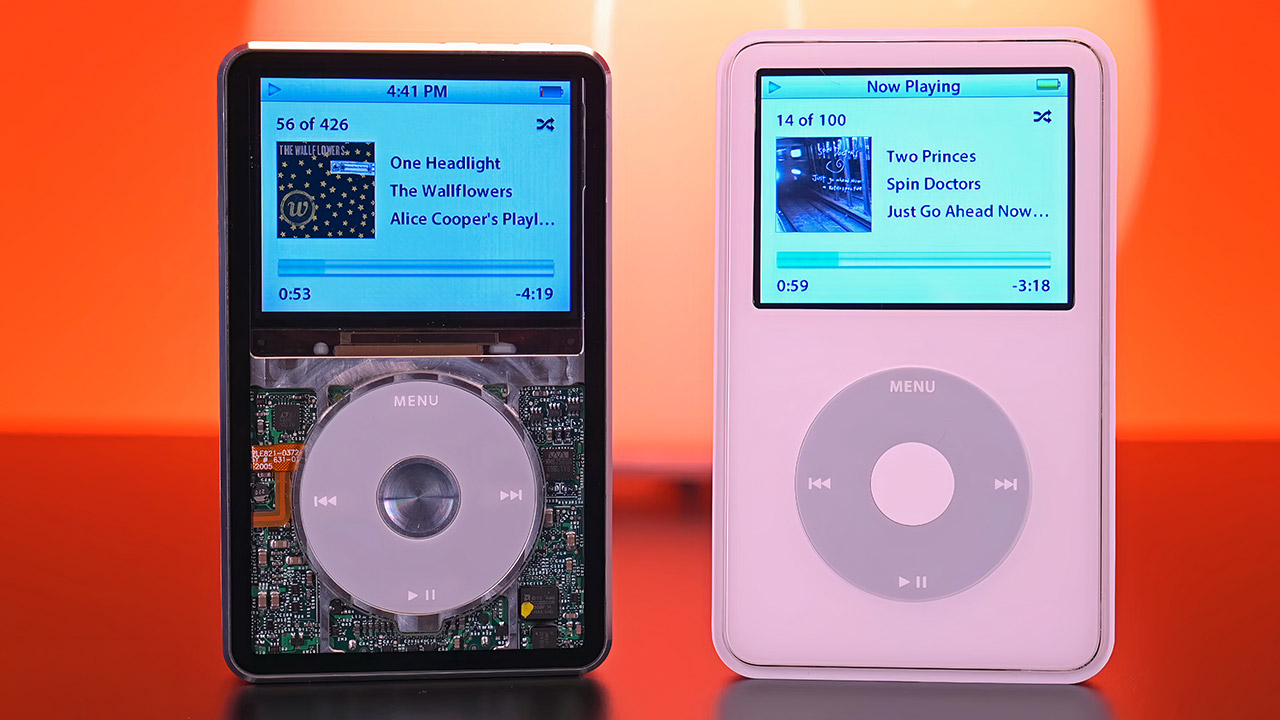
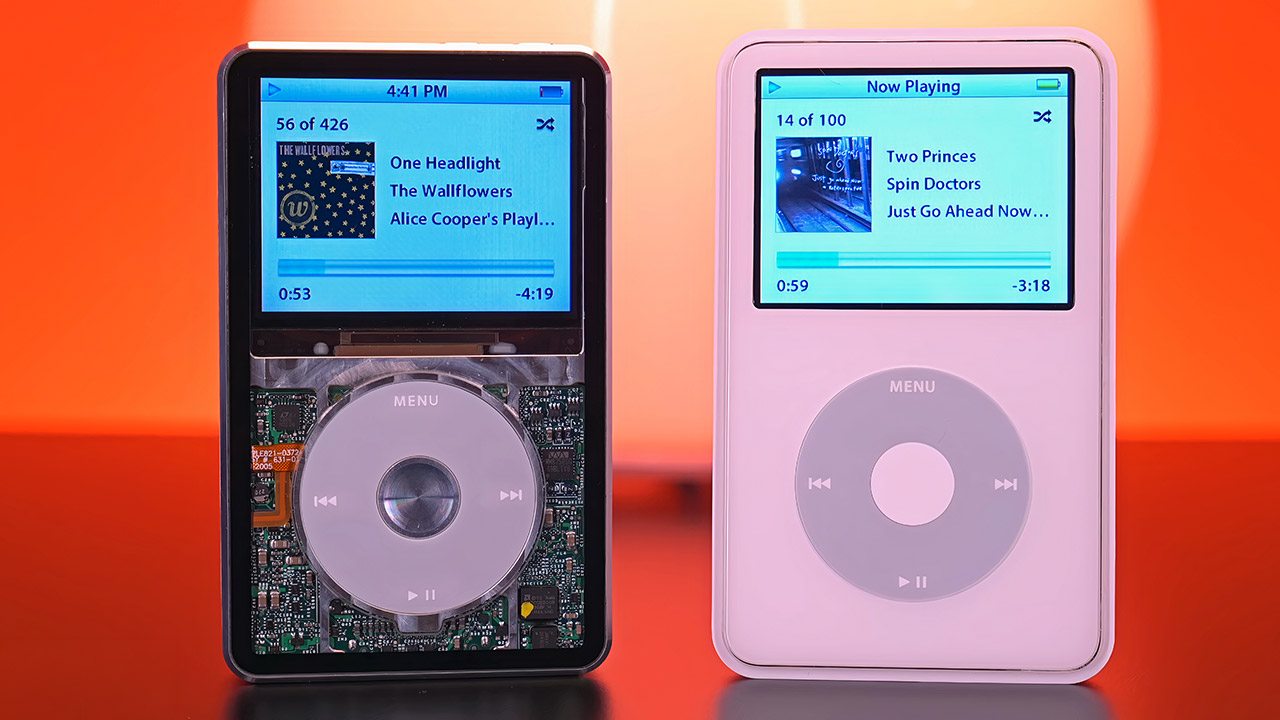
Old iPod Classics still draw people in with their click wheel, physical buttons, and the simple joy of a dedicated music player that never pushes notifications or drains itself on background apps. The hardware holds up surprisingly well decades later, yet the original design shows its age in daily use. Proprietary cables, failing hard drives, and no easy way to connect wireless headphones turn what should feel timeless into something that requires workarounds.
Tito from Macho Nacho Productions embarks on an ambitious quest to make a completely upgraded 5th Generation iPod Classic using the Moonlit Market Classic Connect 2 kit, and he takes us through every step of the process. The final product appears to be straight out of the past, with its vintage interface and respectable sound signature, but then you realize all of the modern technologies that have been added, such as Bluetooth, USB-C, wireless charging, haptic feedback, and a larger battery. What stands out is how simple this build is in comparison to past custom projects. The kit is mostly assembled, making life much easier. It contains a frosted translucent replacement back shell pre-fitted with the larger battery, wireless charging coil, and main board that handles Bluetooth 5.2 and the haptic motor, as well as a tube of B7000 glue to finish the process. Tito uses it with an iM Cory SD card converter board and a microSD card for storage, discarding the old spinning hard drive because it will not fit with the new one.
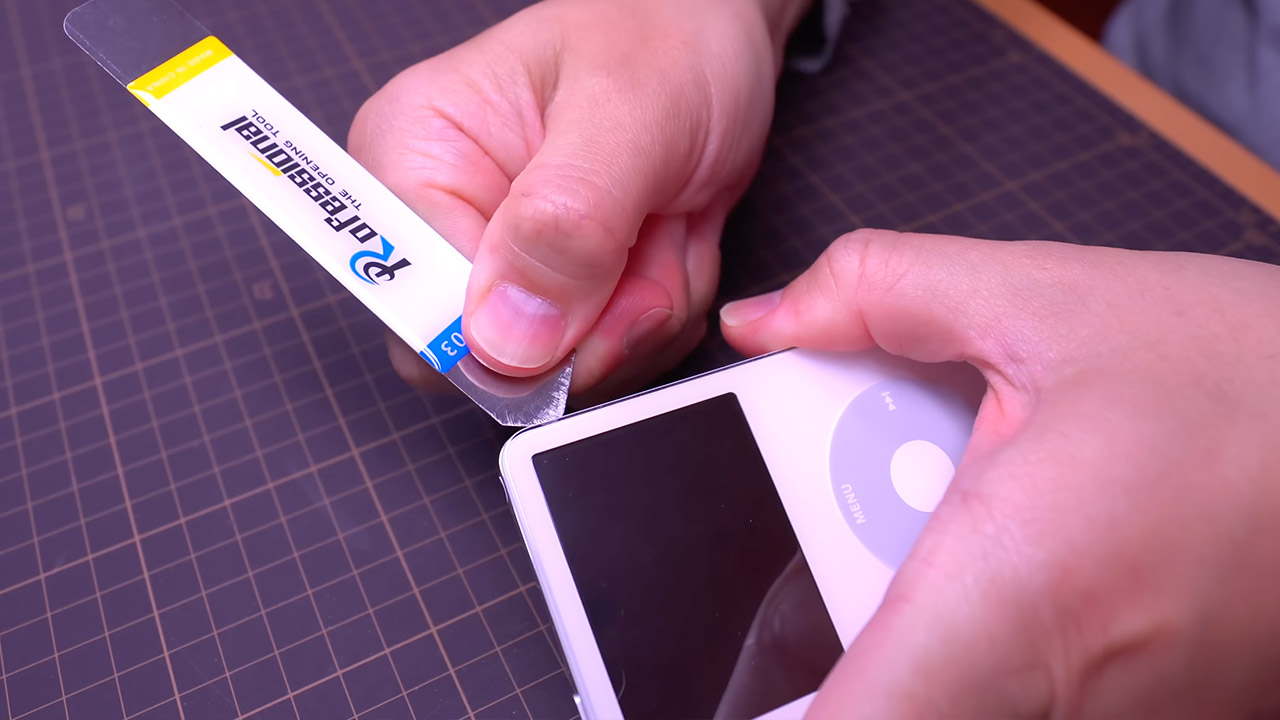
Opening the iPod requires some pressure from tiny plastic tools to remove the front and back parts without harming the plastic. Tito disconnects the battery and drive connections before removing the old hard drive. He swiftly cuts the small plastic clip above the screen to create space for the new board. The SD adapter is then inserted into the drive bay and connected to its own ribbon.
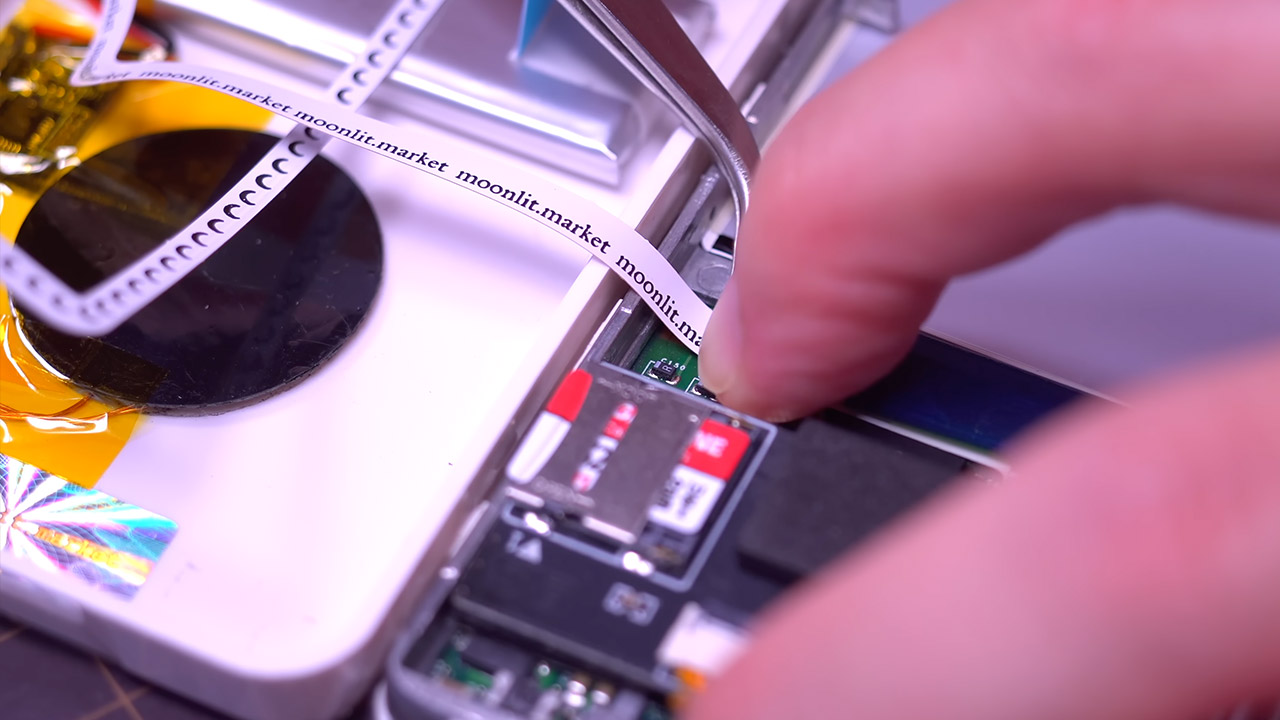
The Moonlit board is then attached to the iPod’s main circuit board with a few extra connections. Tito gives it a quick test run before using the B7000 adhesive to keep everything together. He runs into a couple of minor snags along the way, both of which are easily fixed, as he replaces his microSD card with one that the adapter prefers and fixes a dead ribbon on the haptic feedback by reseating the connection and reactivating the vibration motor. These little obstacles highlight how straightforward this method is, as no soldering or specialized electronics knowledge is necessary.

When the adhesive has entirely cured, the finished player feels complete. Bluetooth connectivity works easily with any AirPods or existing headphones, and higher-quality codecs do an outstanding job of preserving fine sound detail, which is frequently lost with basic wireless connections. The USB-C connector supports both charging and file transfers via a single interface, eliminating the need for cords.
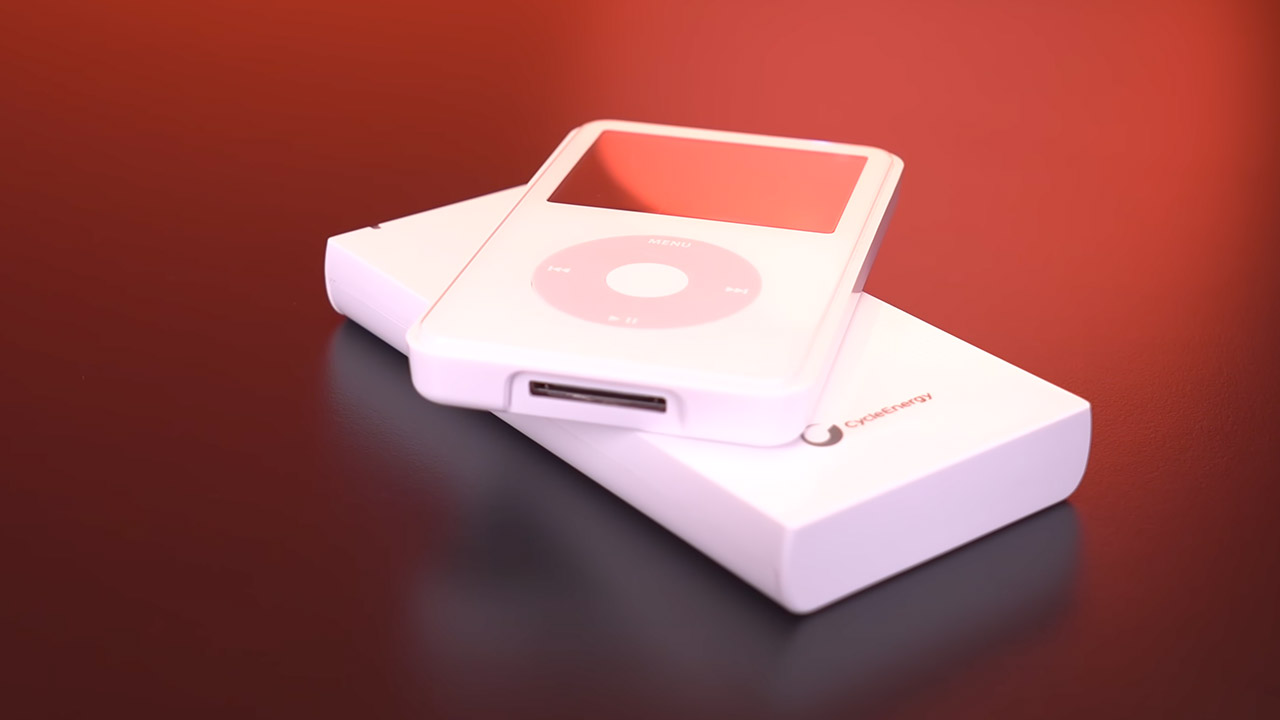
Even better, you can just place it on a wireless charging pad and it will charge automatically. The haptic feedback adds a pleasant light touch to each click wheel turn and button press, offering some of the tactile input that the original mechanical design did. The new battery cell hidden beneath the new shell delivers much longer runtime. Tito compares the finished product to the Boxy Pixel aluminum-and-glass kit he showed in an earlier video. The Moonlit option foregoes the luxury machining in favor of a much simpler installation and a few more functions from the start, such as wireless charging and haptics. The translucent frosted surface gives the player a unique appearance while yet feeling like an iPod and not an entirely other device.

When we talk about the scourge of anti-vaxxer philosophy within the federal government, we naturally spend a great deal of that time talking about RFK Jr. He’s the Secretary of Health and Human Services and perhaps the most infamous anti-vaxxer on the planet, after all. But if you thought HHS was the only part of the government infected with this dangerous unscientific nonsense, you’d be wrong.
In April of this year, Pete Hegseth, Secretary of Whatever-We’re-Calling-It-Today, rescinded a requirement for America’s fighting forces to be inoculated against influenza. Why? Well, because it just wasn’t necessary, you see. Also, freedom. Probably bald eagles. Perhaps apple pie and baseball are involved. It’s really anyone’s guess these days. Hegseth stated the following publicly on his decision:
“The notion that a flu vaccine must be mandatory for every service member, everywhere, in every circumstance, at all times, is just overly broad and not rational,” the secretary said. “Our new policy is simple: If you, an American warrior entrusted to defend this nation, believe that the flu vaccine is in your best interest, then you are free to take it; you should. But we will not force you.”
“Our men and women in uniform were forced to choose between their conscience and their country, even when those decisions posed no threat to our military readiness,” Hegseth said. “That era of betrayal is over. Under President [Donald J.] Trump, the War Department continues to take decisive action to once again restore freedom and strength to our joint force. We’re seizing this moment to discard any absurd overreaching mandates that only weaken our warfighting capabilities.
So, to summarize, the requirement that soldiers be vaccinated against influenza was as follows:
I assume that analysis still holds, other than the last, now that the military is once again mandating the flu vaccine for its soldiers because, and this will shock you, a bunch of soldiers got sick.
The Army, Navy, and Air Force are once again requiring basic trainees to get vaccinated against influenza after the virus quickly swept through an Air Force base in Texas, sickening at least 222 recruits and hospitalizing four. Last week, news broke of a flu outbreak sweeping through Lackland Air Force Base, part of Joint Base San Antonio in Texas. Two unnamed sources told ABC News that the situation at the base has been worsening.
In addition to the 222 cases and four hospitalizations reported as of Tuesday, one recruit, Keon McDaniel, died. McDaniel was in his sixth week of basic training and suffered a medical emergency on June 12. It’s unclear if his death was related to the outbreak.
ABC News reported that sources think only about 40 percent of the new Air Force trainees at the base were vaccinated and that the outbreak began in early June.
So, according to Hegseth himself mere months ago, sixty percent of the new Air Force trainees at the base are going to be subject to a broad, irrational, absurd, freedom-stealing betrayal mandate to get the flu vaccine? Cool.
It’s absolutely incredible just how shallow the anti-vaxxer mentality can be. Freedom, I am told, is worth fighting and dying for. If a flu vaccine mandate is anti-freedom, why are we letting some illnesses and potential deaths cause us to take actions that are anti-freedom?
The answer is because it isn’t about freedom at all. It’s about placating the dumbest corners of our society just because they happen to be a voting bloc aligned with Donald Trump, a man not exactly known for his incredible good health and fitness.
Pentagon spokesperson Sean Parnell said that the Pentagon had granted exceptions to Hegseth’s optional flu shot policy to the Army, Navy, Air Force, National Security Agency, and the Defense Health Agency. The exceptions came after a “comprehensive review” and are in line with a standard policy of “adapting force health protection measures to critical operational realities.”
“The decisions were based upon thorough risk assessments and are designed to maximize operational readiness, lethality, and force generation, while safeguarding at-risk populations,” Parnell said.
And that’s any different than the situation three months ago, exactly?
It’s not different at all, of course. Pete Hegseth directly, and of his own accord, managed to get hundreds of soldiers sick, at a minimum. He reduced our war-fighting readiness as a result. And he reversed course the moment the inevitable outcome reared its ugly, feverish, coughing head.
Vaccine mandates are bad when its politically advantageous to say they are, but good when you’re in charge and need to prepare for an invasion of Cuba, or who knows where else.
Filed Under: air force, anti-vaxxers, flu, flu vaccine, pete hegseth, vaccines

LastPass says hackers stole customers’ personal information, support case records, and sales data by breaching market research partner Klue. The password manager told TechCrunch that its own systems and password vaults were unaffected. However, the hackers used their access to obtain “reams of data about LastPass customers,” the report says. From the report: In a blog post that shared information about the incident, LastPass said the hackers took customers’ names, phone numbers, email addresses, and physical addresses, as well as customer support case data and sales-related data. It’s not yet known what was in the contents of customer support tickets, although they likely contain fragments of potentially private or sensitive information. Customers typically contact customer service when they are having a billing issue or need assistance in gaining access to their accounts. Past incidents involving customer support tickets have included credentials and government-issued identity documents. The last data breach LastPass reported was in 2022, when hackers stole the company’s entire store of customer password vaults.

OpenAI is making yet another big, visible bet on India. It has appointed former Uber India and South Asia president Prabhjeet Singh as its first managing director for the country to scale its presence in what it has called its second-largest market after the U.S.
Singh, who announced his resignation from Uber on Friday, will join OpenAI in September and report to Kiran Mani, the company’s managing director for Asia Pacific, the company told TechCrunch. He will be responsible for OpenAI’s performance in India across consumer growth, enterprise adoption, partnerships, regulatory engagement, and operations, the company said.
The hire marks OpenAI’s latest investment in India. The company opened its first office in New Delhi last August and earlier this year said it would establish new offices in Mumbai and Bengaluru. In 2024, it hired former Truecaller and Meta executive Pragya Misra to lead public policy and partnerships before expanding her role to head of strategy and global affairs last year. OpenAI had earlier brought on former Twitter India head Rishi Jaitly as a senior adviser to help establish its engagement with the Indian government on AI policy.
Over the past few months, OpenAI struck partnerships in the nation spanning higher education, enterprise payments, AI-powered commerce, and web streaming, while also becoming part of the country’s growing data center build-out. OpenAI has pointed to India’s rapidly growing adoption of ChatGPT as a sign of the market’s importance. Indian conglomerates Reliance and Tata Group are also among its early partners in the market.
The company has simultaneously ramped up hiring in India, with openings including AI deployment engineers, developer experience engineers, a developer marketing lead, a partner director, and solutions engineers.
India has emerged as one of the key battlegrounds for U.S. AI companies, driven by its vast developer base, more than a billion internet users, and surging demand for generative AI. Rival Anthropic opened its India office in Bengaluru in late 2025 and earlier this year named former Microsoft India managing director Irina Ghose as its India head.
When you purchase through links in our articles, we may earn a small commission. This doesn’t affect our editorial independence.
Emotiva has built its reputation on delivering high-performance audio components with solid engineering, serious build quality, and prices that usually make the competition look a little too comfortable.
For 2026, the company is taking another run at the serious two-channel market with the XSP-2 Differential Reference Stereo Preamplifier, a major update to the well-regarded XSP-1 that first arrived in 2013. The new XSP-2 keeps the separates-first mindset intact, but adds a more modern modular platform, including a fully balanced ESS-based DAC module installed from the factory and an expansion path for a future streaming module.
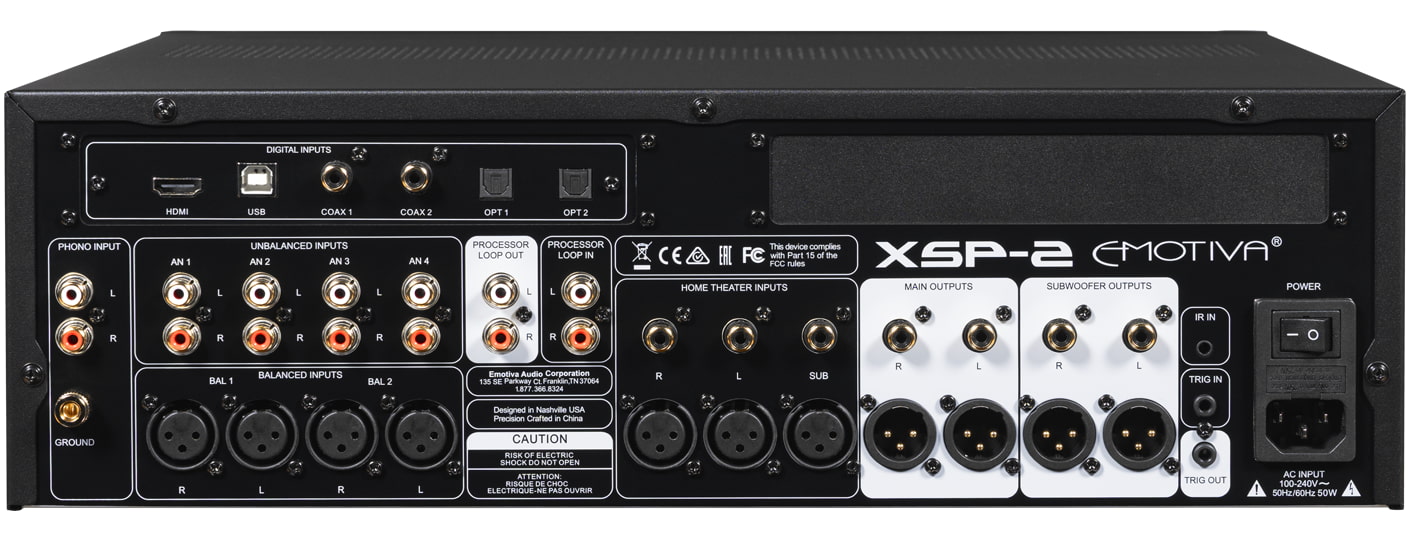
The XSP-2 ships with a pre-installed DAC module that expands its connectivity with HDMI-ARC, USB-C, two coaxial inputs, and two optical inputs. Dedicated shielding keeps the digital section isolated from the preamplifier’s pure analog signal path.
The XSP-2’s fully balanced, fully differential analog signal path is designed to lower noise, reject interference, and preserve low-level detail. It also includes fully balanced bass management for 2.1 or 2.2-channel systems, with independent high-pass and low-pass crossover settings at 40, 60, 80, or 100 Hz, plus stereo or summed mono subwoofer output options.
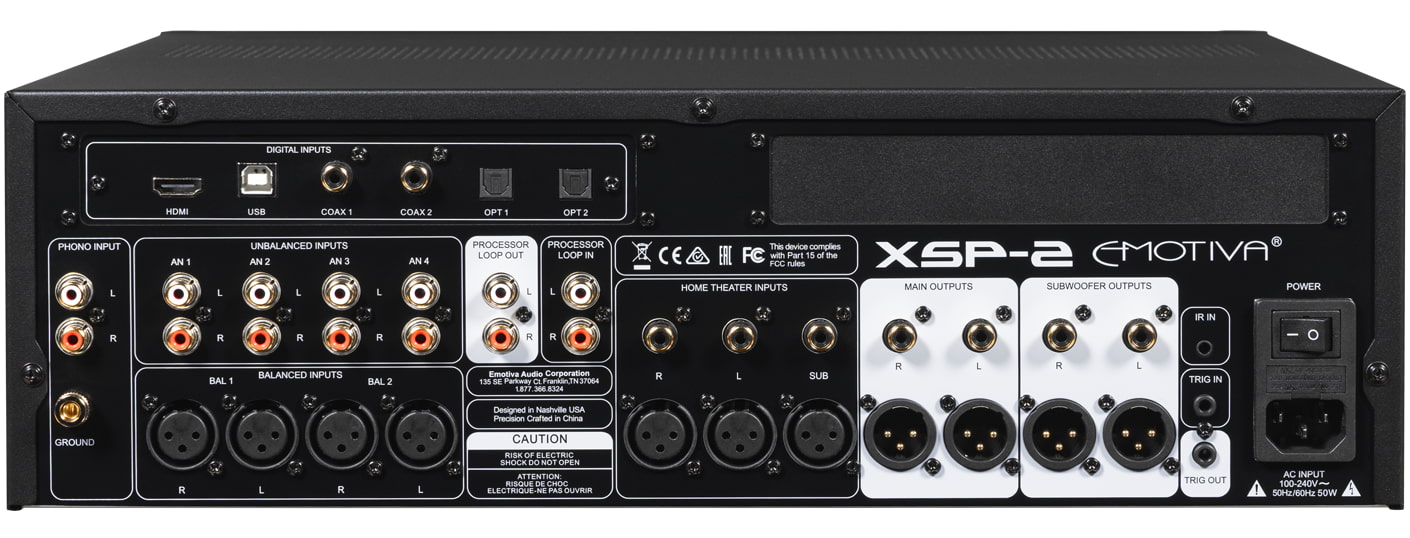
The XSP-2 also includes an onboard MM/MC phono section for easy connection to most turntables, along with a dedicated headphone output driven by a current-mode feedback amplifier designed to handle more demanding headphone loads.
All audio switching is handled by fourth-generation hermetically sealed subminiature relays, helping preserve signal purity throughout the audio path while reducing noise, crosstalk, and switching artifacts.
An external processor loop and Home Theater Bypass provide additional flexibility, allowing the XSP-2 to integrate more easily into mixed two-channel and home theater systems.
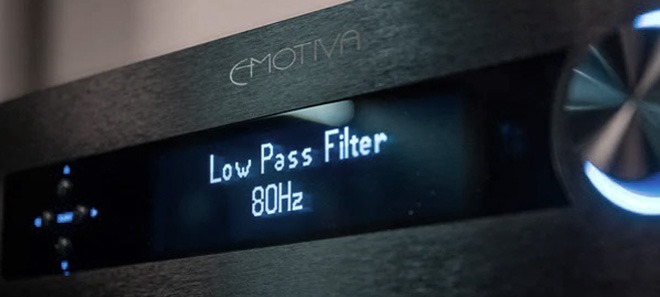
The front panel features a large blue OLED display, which is larger than the display used on its predecessor, along with a flexible menu system that can be controlled from the front panel or the included remote. The display is easy to read, and the menu system provides quick access to the XSP-2’s core setup and control features such as MM/MC cartridge select, balance, high pass filter, low pass filter, and selectring subwoofer mono/stereo choices.
“The XSP-1 is one of the most popular products in the history of the brand,” says Dan Laufman, President, Emotiva Audio Corporation. “It’s famous for being a highly flexible preamp that performs well above its price…After years of focused R&D, we’re finally ready to launch a worthy successor that retains the sonic benefits that made the original a hit, but with added flexibility across the board…The XSP-2 is not only a best-in-class preamp for today’s consumers, but it’s also ready for whatever comes next, including a streamer module that is currently in the works. When it launches, all it will take is a few easy steps to add it to the XSP-2.

| Emotiva Model | XSP-2 (2026) | XSP-1 (2013) |
| Price | $1,599 | $999 |
| Product Type | Preampllifier | Preampllifier |
| Number of Channels | 2 | 2 |
| Analog Inputs | 4 pairs – unbalanced RCA inputs
2 pairs – balanced XLR inputs 1 pair – unbalanced RCA Processor Loop Inputs 1 pair – MC/MM phono input (switchable) 1 set (L/R/sub) – unbalanced (RCA) HT Bypass Inputs 1 set (L/R/sub) – balanced (XLR) Bypass Inputs |
4 pairs – unbalanced RCA inputs
2 pairs – balanced XLR inputs 1 pair – unbalanced RCA Processor Loop Inputs 1 pair – MC/MM phono input (switchable) 1 set (L/R/sub) – unbalanced (RCA) HT Bypass Inputs 1 set (L/R/sub) – balanced (XLR) Bypass Inputs |
| Digital Inputs | 1 – HDMI-ARC Input
1 – digital USB (DAC Input); stereo; supports up to 24/768k, DoP up to DoP256, and native DSD up to DSD512 2 – digital coax (S/PDIF) Inputs; stereo; support up to 24/192k 2 – digital optical (Toslink) Inputs; stereo; support up to 24/192k |
– |
| Audio Outputs | 1 pair – stereo line level balanced (XLR) Left and Right Main Outputs
1 pair – stereo line level unbalanced (RCA) Left and Right Main Outputs 1 pair – stereo line level balanced (XLR) Left and Right Subwoofer Outputs 1 pair – stereo line level unbalanced (RCA) Left and Right Subwoofer Outputs 1 pair – stereo unbalanced (RCA) Processor Loop Outputs 1 x Headphone; 1/4” stereo jack (front panel). |
1 pair – stereo line level balanced (XLR) Left and Right Main Outputs
1 pair – stereo line level unbalanced (RCA) Left and Right Main Outputs 1 pair – stereo line level balanced (XLR) Left and Right Subwoofer Outputs 1 pair – stereo line level unbalanced (RCA) Left and Right Subwoofer Outputs 1 pair – stereo unbalanced (RCA) Processor Loop Outputs 1 x Headphone; 1/8” stereo jack (front panel). |
| Control Inputs and Outputs | 1 – 12 VDC Trigger Output – delivers a 12VDC trigger signal when the unit is on
1 – Trigger Input – accepts inputs between 5V and 12V AC or DC 1 – IR input; wired; accepts standard “passive IR eye.” Note: The XSP-2 will work with a variety of passive 3-wire IR sensors |
1 x Trigger input and output:
1 x IR input and output |
| Remote Control | Yes | Yes |
| Analog Audio Performance (Line Level Inputs) | Maximum output level; balanced (XLR) is 8VRMS, and unbalanced (RCA) is 4 VRMS
Frequency response: 20 Hz to 20 kHz +0 / -0.1 dB Frequency response: 5 Hz to 80 kHz +0 / -2.7 dB THD+noise; 1 kHz; A-weighted: <0.0005% S/N ratio; balanced (XLR); A-weighted: > 119 dB S/N ratio; unbalanced (RCA); A-weighted: > 117 dB |
Maximum Output Level (main outputs): +12 dB.
Frequency response: 20 Hz to 20 kHz +/- 0.017 dB Not indicated THD+noise 1 kHz, < 0.006% (unbalanced into unbalanced out). S/N ratio > 114 dB (balanced into unbalanced out). S/N ratio 113 dB (unbalanced into unbalanced out). |
| Analog Audio Performance (Phonol Input) | THD+noise; 1 kHz; A-weighted; Moving Magnet: <0.01%
THD+noise; 1 kHz; A-weighted; Moving Coil: <0.1% S/N ratio; A-weighted; Moving Magnet: > 95 dB S/N ratio; A-weighted; Moving Coil: > 80 dB |
Moving Magnet – THD (total harmonic distortion, ref 10 mV): < 0.001%.
THD (total harmonic distortion, ref 1.0 mV) Moving Coil < 0.008% S/N A-weighted Moving Magnet > 96 dB. |
| Audio Performance (Digital Inputs) | Frequency response: 20 Hz to 20 kHz +0 / -0.1 dB
Frequency response: 5 Hz to 80 kHz +0 / -2.7 dB THD+noise; 1 kHz; A-weighted: <0.0008% S/N ratio; A-weighted: > 112 dB The frequency response shown was measured with a high-resolution digital source. At lower sample rates, the frequency response will be limited by the sample rate of the content. |
Not Applicable |
| Power Requirements | 115 VAC or 230 VAC @ 50 / 60 Hz (automatically detected) | 115 VAC or 230 VAC +/- 10% @ 50 / 60 Hz (automatically detected and switched). |
| Dimensions | 17” wide x 5-1/4” high (without feet) x 14-1/2” deep (without connectors)
17” wide x 5-2/4” high (including feet) x 15” deep (including knobs and connectors) |
17” wide x 6” high x 16.5” deep (includes feet and terminals) |
| Weight | 13 lbs (unboxed) | 28 lbs (unboxed) |
| Expansion Slots | 2 x rear panel slots | None |
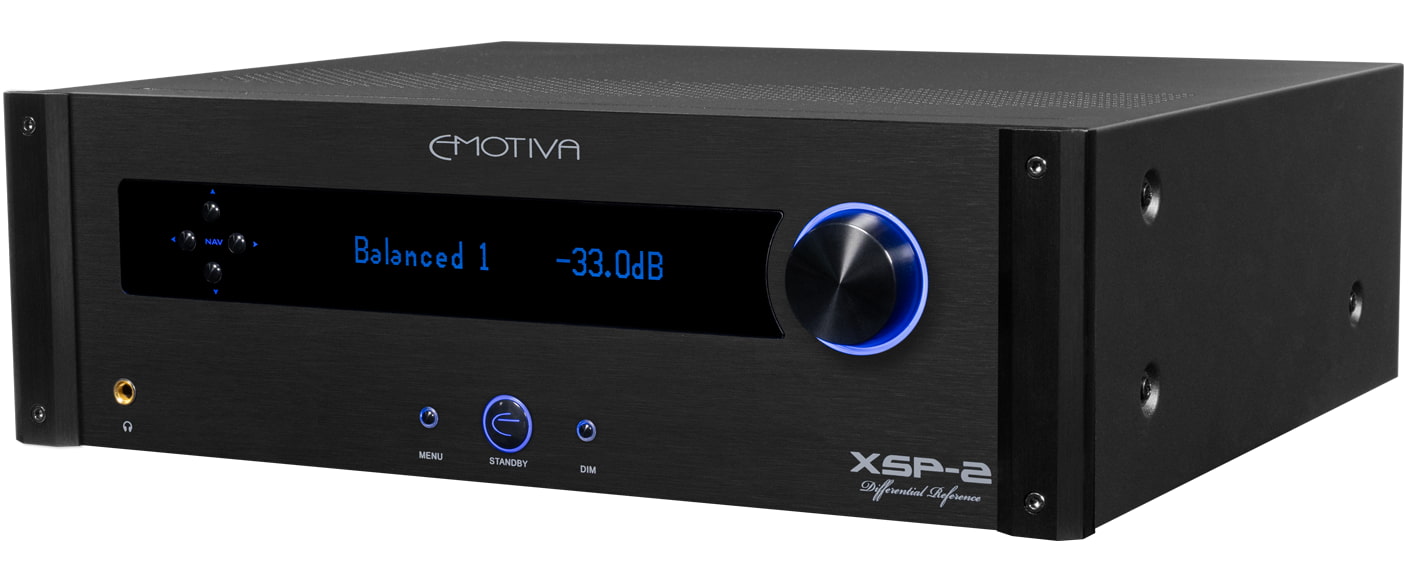
The Emotiva XSP-2 looks like a strong value play in the serious two-channel preamp category. It’s competitively priced and feature packed with a fully balanced analog signal path, built-in MM/MC phono stage, balanced bass management, Home Theater Bypass, an external processor loop, and a factory-installed ESS-based DAC module for $1,599.
What makes the XSP-2 more interesting than a typical stereo preamp is its modular architecture. The two rear expansion slots give Emotiva room to add future functionality, and the included DAC module already brings HDMI-ARC, USB, coaxial, and optical digital inputs without turning the XSP-2 into a compromised digital-first control box. The analog section remains the main event.
The catch is obvious but important: the XSP-2 is a preamplifier, not an integrated amplifier. It still needs to be connected to a power amplifier before it can drive a pair of loudspeakers. Emotiva’s own options include the XPA-2 Gen3 stereo power amplifier at $1,499, a pair of XPA-DR1 Differential Reference monoblocks at $1,699 each, or one of its Build-Your-Own XPA Gen3 power amplifiers starting at $1,499.
Also missing at launch is built-in streaming. Emotiva says a streaming module is in the works, but for now, anyone who wants network playback will still need to add an external streamer or use one of the XSP-2’s digital inputs. HDMI-ARC is useful for TV integration, but this is still a two-channel preamp, not a surround processor or all-in-one streaming amplifier.
Pro Tip: You may also desire to include one or two subwoofers into the mix, such as the xs12e ($399 each).
The Emotiva XSP-2 Differential Reference preamplifier is available now for $1,599 at Emotiva.com.

Repair costs are often unknown until you visit a service center. ASUS aims to address that with its new Part Price Checker, which lets customers check the prices of genuine spare parts online before booking a repair. The user just needs to provide the device’s serial number to view the prices of ASUS spare parts. This will give them an idea of the cost of repairs before going to a service center.

The Part Price Checker is part of the ASUS Assurance program, which aims to make after-sales support more convenient for customers. The program is built around four key pillars: Assured Quality, Always-on Support, All-around Coverage, and Added-value Services. The new tool lets customers check the prices of genuine spare parts online before visiting a service center. This makes it easier to estimate repair costs before taking the device for service.
ASUS recently expanded the availability of genuine laptop batteries through its Exclusive Stores and authorized partners across India. The Part Price Checker builds on that effort by giving customers another way to plan repairs before booking a service.
Instead of guessing replacement costs, customers can determine the true cost before visiting their authorized ASUS repair facility. This enables customers to budget for the repair and schedule visits to the repair facility at a convenient time.
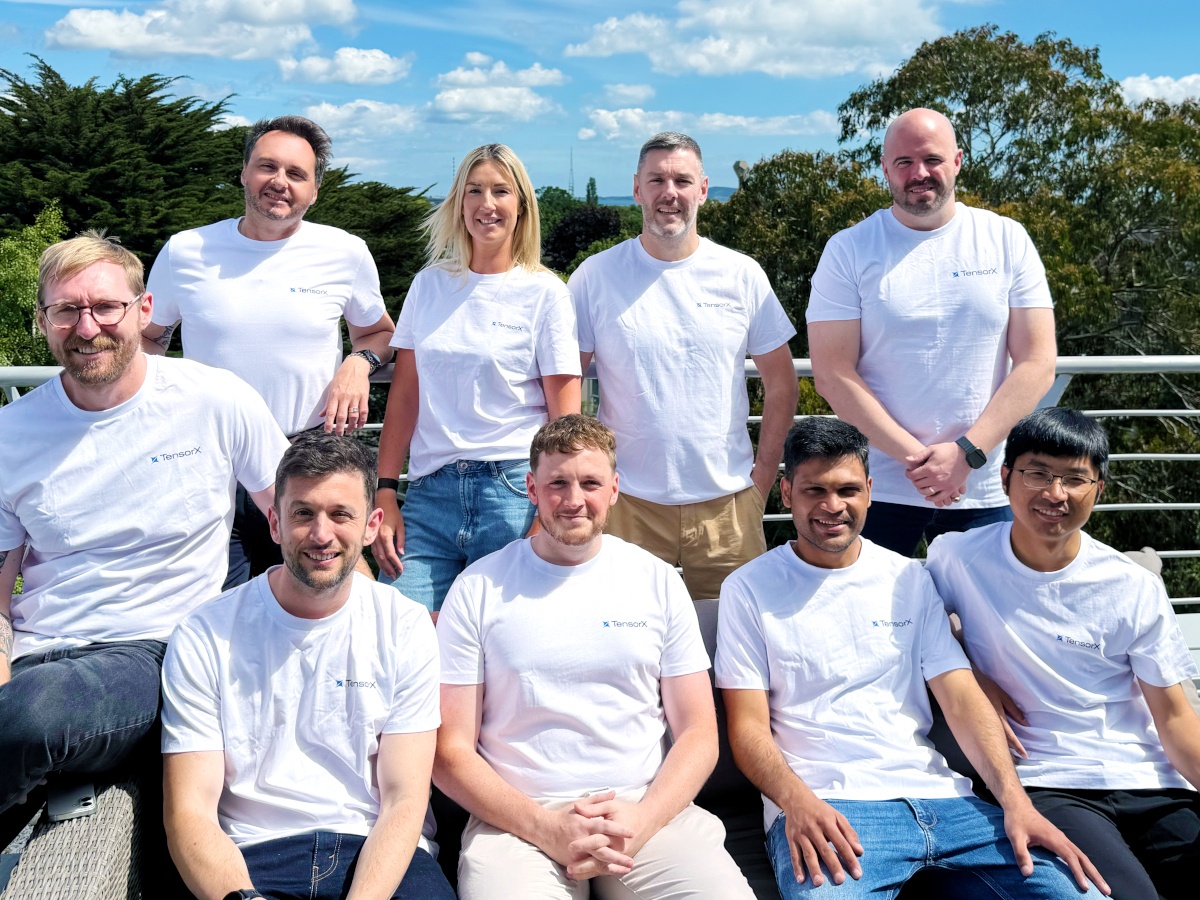

Earlier this week, TensorX raised €8m in a seed funding round, which its founder Shane Morton described as an ‘opening move’ ahead of a much larger build-out.
Irish AI infrastructure company TensorX is to collaborate with finance provider Solstice in a partnership to deliver up to $1bn-worth of sovereign European AI infrastructure.
The companies said they “will work together to create a facility … to finance AI hardware and data centre build-out to meet rising demand for sovereign compute across the EU”.
Dublin-based TensorX buys and runs AI hardware and data centre capacity across the EU, with the aim of connecting its start-up and enterprise clients to private compute and keeping “prompts and data on European infrastructure with full data residency and zero retention”.
Solstice is described as “an on-chain settlement and yield protocol and part of the Deus X Capital ecosystem”.
“Europe wants AI that can run on its own terms, on its own soil, without handing its data to someone else’s cloud on the world stage,” said Tim Grant, the chair of TensorX.
“Meeting that accelerating demand takes hardware, and a lot of it. The billion dollars going into GPUs and data centre capacity is the first step, and we expect to keep buying as demand grows. Solstice gives us a financing partner that can keep pace with this incredibly fast-moving market.”
Relatedly, Solstice will launch a yield asset named ‘aiUSX’ to help companies finance AI build-outs using capital they already hold.
“Every company is turning into an AI company, and every one of them watches its inference bill climb,” said Ben Nadareski, CEO of Solstice.
“aiUSX puts the money they set aside for AI to work in the meantime. They get access to the kind of AI-infrastructure lending that used to sit with large institutions, the capital stays liquid, and what it earns goes toward inference later.”
Earlier this week, TensorX raised €8m in a seed funding round with the goal of further contributing to European plans for sovereign AI infrastructure, which its founder Shane Morton described as an “opening move” ahead of a much larger build-out.
The EU is concerned about the control US technology companies wield over the bloc’s technology infrastructure and data.
“European companies don’t want to make a political statement about their AI stack. They want to make a practical one,” said Grant earlier this week. “Their data has to stay in Europe, on infrastructure they can trust, under laws they are required to comply with.”
Data from Accenture suggests that 62pc of European organisations seek sovereign AI, while 75pc of European enterprises plan to move AI workloads to local providers by 2030, according to Gartner.
“Sovereign AI is one of the biggest infrastructure build-outs of this decade, and it runs on capital as much as it runs on chips,” said Stuart Connolly of Deus X Capital.
“TensorX builds the compute, Solstice brings the financing and aiUSX lets more companies take part in funding it.”
Don’t miss out on the knowledge you need to succeed. Sign up for the Daily Brief, Silicon Republic’s digest of need-to-know sci-tech news.
Recent estimates approximate that there are 16.4 billion Google searches per day globally. A huge portion of those searches is for people’s names. Of those names, many are likely public figures, like Lionel Messi, Sabrina Carpenter, or any number of politicians doing something nefarious. But a great many of the name searches are ostensibly for normies. Maybe even you. Definitely me, based on the deluge of spam calls I get.
DeleteMe was founded in 2010 and claims to be one of the oldest companies in data removal. Services like DeleteMe and its competitor Incogni work by contacting data brokers on your behalf and getting them to remove your personal information, including your current and past mailing addresses, your phone numbers, and your email address. Theoretically, this process removes you from annoying marketing lists and makes it harder for randos to find you. I’ve used DeleteMe since January, and while it’s not a silver bullet for ensuring the complete absence of unwanted communication from strangers and scammers, it seems to have helped with the number of unsolicited marketing calls I get. It also helped clean up personal info from my Google results, so you’re more likely to read an old article I wrote than see where I live.
DeleteMe via Martin Cizmar

I have also used Incogni, where I managed an account for my elderly mother. She got similar results, which is to be expected, says DeleteMe executive Jason Dalrymple. Services like DeleteMe and others “all basically do the same thing,” he says. “We’re bound by the same laws and constraints in compliance. It’s a cat-and-mouse game.”
That’s because the degree to which data brokers need to cooperate with the requests of deletion companies is legally murky, given that there’s no comprehensive federal law in the US that regulates the way private companies can use personal data. Rather, most regulations are at the state level, where protections are varied (I live in Missouri, where I feel lucky to have running water). Some states, like California, have more protections, while many states have none. Regardless of where you live, data brokers aren’t necessarily just going to delete your information upon request. They may request further verification of your identity before complying and confirming the request was granted, they may deny the request, and they may ignore the request completely—all actions that require follow-up correspondence with the deletion service.
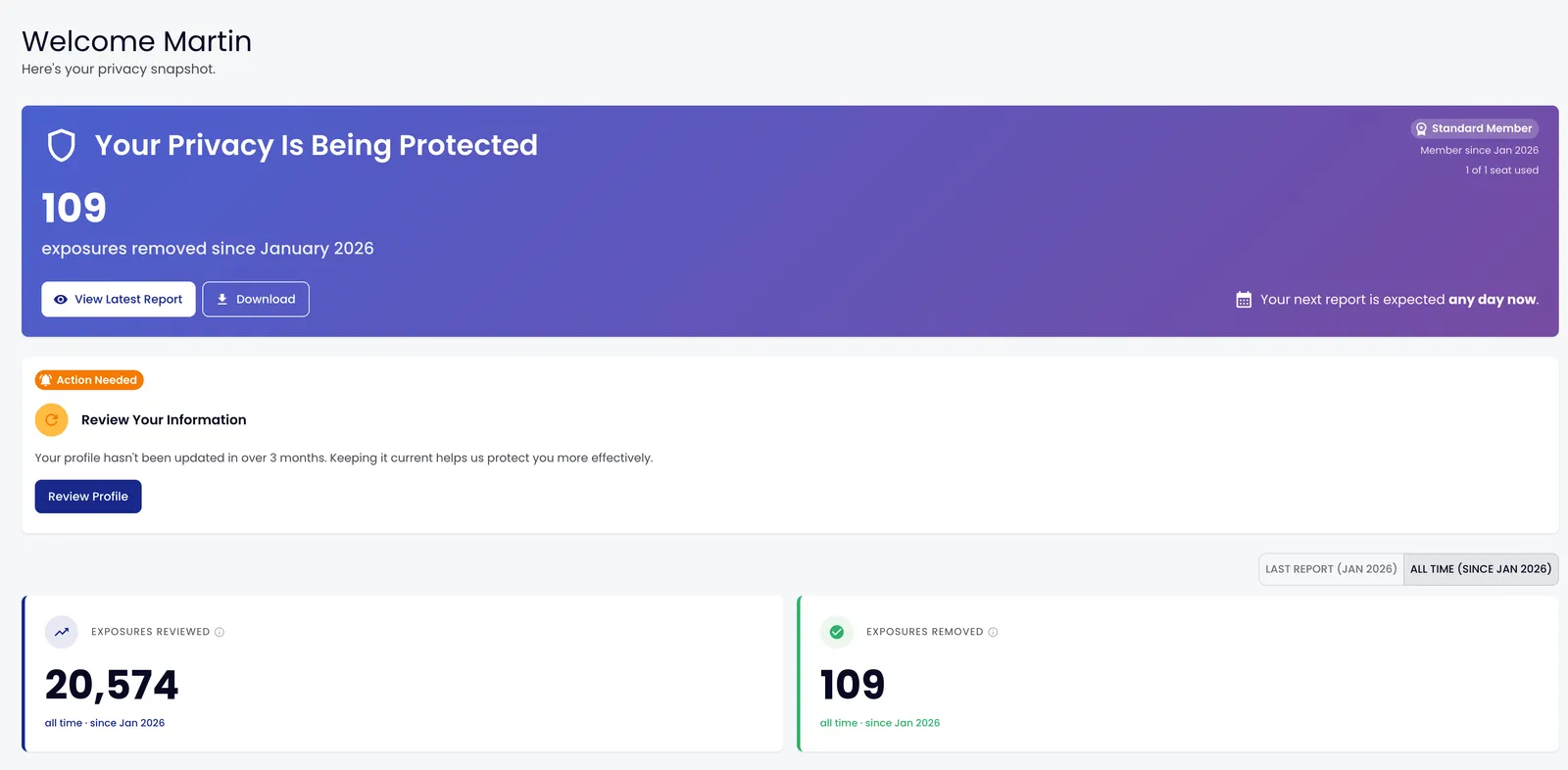
With DeleteMe and Incogni, you can track progress via a dashboard that provides an at-a-glance update on how many removal requests have been made and fulfilled. A few more clicks will show you specifics on each broker, though most of these will be unfamiliar to typical users. The main difference I noticed between DeleteMe and Incogni is that the former’s dashboard doesn’t update as often as the latter’s and also doesn’t show as many brokers being contacted.
I prefer the Incogni dashboard because it’s satisfying and reassuring to log in every few days and see that the company is crawling the web and busting brokers, each of which it rates based on their speed and general compliance. There are constant status updates for thousands of websites. DeleteMe, on the other hand, creates a report every few months showing progress on a smaller number of sites. Dalrymple argues that his company’s surgical approach is a feature, not a bug.


Apple said it couldn’t shield customers from rising component costs anymore.
An exacerbating chip shortage has led Apple to hike up prices for several of its products. Price jumps go from as little as €40 for the HomePod Mini, to nearly €1,000 for the Mac Studio M3 Ultra, though iPhones are unaffected for now.
Apple share prices dropped more than 6pc yesterday, before making marginal gains in pre-market trading today (26 June). Prices, however, have dropped more than 10pc in a month.
“The rapid expansion of AI data centres has created an extraordinary surge in demand for memory and storage”, a company spokesperson told news publications, adding that Apple has “never seen a component price increase this much, this quickly”.
Apple said that the worsening situation meant that it couldn’t shield customers from the rising component costs any longer.
The company previously raised prices for the iPhone 17 Pro, MacBook Air and MacBook Pro, but this is the first time it is hiking rates on products across several categories at once.
iPads will now cost EU customers €100 more at €529; the iPad mini will jump by €120 to €719. The new MacBook Neo, launched in March, is also seeing a price hike of €140, now costing customers €839 to purchase in the EU.
Outgoing CEO Tim Cook told investors in April that AI-led component shortages would constrain supply for Mac, Mac Mini, Mac Studio and MacBook Neo for the June quarter.
“Realistically, on the Mac Mini and the Mac Studio, I believe it will take several months to reach supply-demand balance,” he said at the time. “We are not at the point where we are saying this is going to end anytime soon.”
Chief financial officer Kevan Parekh, meanwhile, said that iPhones faced supply constraints in the March quarter. Bloomberg Intelligence expects iPhone prices to also rise, likely targeting the Pro models.
Apple isn’t alone in suffering from a shortage in memory chips. According to Counterpoint Research, global smartphone shipments are poised to drop nearly 14pc in 2026, with the squeeze particularly affecting entry-level and mid-range smartphones. Prices are expected to jump by as much as 13pc this year.
Meanwhile, rising prices allow for second-hand and refurbished sellers to fill in gaps with cheaper and environmentally better alternatives, according to Refurbed co-founder Kilian Kaminski.
Don’t miss out on the knowledge you need to succeed. Sign up for the Daily Brief, Silicon Republic’s digest of need-to-know sci-tech news.




Renter of Home in Anne Heche Crash Denies Settlement With Son

Two goals and an assist by sheer aura: Cristiano Ronaldo just entered the World Cup chat


Microsoft accidentally kills epic Outlook email threads


Weekend Open Thread: Staud – Corporette.com


Soccer-U.S. defends Iran World Cup travel restrictions, says discussions ongoing


The House | Manchesterism won’t survive the painful trade-offs unless it gets citizens on board


Potential 2028er World Cup attendee leaderboard


Asia stock markets slide as tech shares slump


A Look At A Gaggle Of Transputer Boards
Bitcoin (BTC) Dips Below $62K, Ethereum (ETH) Plunges 6% Daily: Market Watch


Securitize Wraps Roubini's SEC-Registered ETF as Dubai VARA Digital Security

Dell (DELL) Shares Tumble Over 5% Following Analyst Downgrade to Hold
Entergy settles forward sale agreements, raises $672 million in cash proceeds


FIH Pro League: India defeat Pakistan 7-1, register biggest win of campaign | Other Sports News


Kraken's xStocks Opens Bending Spoons IPO Registration to EEA Retail


RTX holders must register wallets before token distribution begins

Hyperliquid Named on Singapore MAS Investor Alert Register


India vs Bangladesh LIVE Score, Women’s T20 World Cup: Bangladesh Opt To Bat; India Enter ‘Do-Or-Die’ Stage As Semi-Final Race Heats Up

Signal’s Meredith Whittaker says AI chatbots ‘are not your friends’ and calls Copilot agents a backdoor
The DATA Foundation Launches to Tackle AI’s Multi-Billion Dollar Training Data Bottleneck


You must be logged in to post a comment Login