

Politics
Wings Over Scotland | Ping-Pong-Fiddle-Aye-No

Alert readers will have found it hard not to notice that Wings is currently focused on trying to solve one mystery above all others: why nobody in Scotland has been prosecuted for a massive theft of hundreds of thousands of pounds, which happened in open sight, beyond any dispute, and has been openly admitted by someone who was there at the time.

Until this week, nobody in the two organisations responsible for criminal prosecutions in the country – Police Scotland and the Crown Office and Procurator Fiscal Service (the Crown Office or COPFS for short) had issued any sort of explanation why the original Operation Branchform investigation apparently fell by the wayside when it led police to discover a second crime: that of embezzlement against the SNP by its then-Chief Executive, Peter Murrell.
But this week, with very little fanfare, the BBC quietly put out two extended interviews with senior representatives of those organisations, seemingly the unused footage from their half-hour televised documentary “Peter Murrell: The Man With The Money”.
The first was with Police Scotland’s Deputy Chief Constable, Stuart Houston.
The second was with the shadowy figure of John Logue, a Crown Agent at COPFS.
You can watch them in their entirety above, although we don’t particularly recommend it – they’re both pretty dull, and largely concerned with the embezzlement case, about which they provide no dramatic new revelations.
But both also touch on (the lack of) prosecutions over the original complaint. So what happened when the BBC’s Glenn Campbell brought the subject up?
Campbell admirably persists for several minutes, but Houston refuses to be drawn on any sort of answer other than that Police Scotland passed the question on to COPFS for “advice and guidance”, and when given several opportunities to confirm Sturgeon’s claim that she was “completely exonerated” by his force, steadfastly refuses to say whether the police wanted a prosecution or not.
Now without wishing to be rude to DCC Houston, much of what he says is barely in comprehensible English sentences, so let’s get it down in writing and tidy up all the ums and emms and ehs and see what it looks like.
GLENN CAMPBELL: Why was Nicola Sturgeon not reported for prosecution?
STUART HOUSTON: So again, part of the police investigation we’ve commented upon that Nicola Sturgeon was subject to arrest and interview during the investigation, as was Colin Beattie. The circumstances of those arrests, the information that the police held was all subject of [an] Advice And Guidance Report to the Crown Office and Procurator Fiscal Service, where it was laid out what their involvement or what their position was in relation to any crime. And –
GC: Did she do anything wrong?
SH: The police, you know, and I suppose for me to say that we report the circumstances to the Crown Office and Procurator Fiscal Service [to] allow them to make the decision whether someone is prosecuted. For us, we put in the circumstances to allow them to make an informed decision –
GC: You didn’t recommend prosecution in her case?
SH: We didn’t make any recommendations to prosecute or otherwise, our role is to report the circumstances.
GC: Well, the Crown are very clear that they accepted your recommendation that there was not enough evidence for a prosecution. Is that correct?
SH: So, our our role is to report all the circumstances to the Crown Office and Procurator Fiscal Service in relation to everything that’s happened. You know, whether that be any investigation and not necessarily unique to this inquiry. We then seek advice and guidance what way they think that that should go. It is their decision in relation to the prosecution of cases.
GC: Were you happy to leave it at that?
SH: Again, we we act and work in conjunction with the Crown Office and Procurator Fiscal Service and we have to do that, and the fact is that we are there to act on their behalf to carry out investigations, and it’s essential that we work together and reach agreement on certain things to make sure how we take things forward, whether about progressing to get warrants etc.
So as I say we report the circumstances and again it is for the Crown Office and Procurator Fiscal Service to assess that as well and provide any advice and direction.
GC: And just one last thing on that – were you in agreement with the Crown that there was no case to pursue that might lead to a prosecution?
SH: So again, our line was very much “Here is all the evidence that we have collated as much as we could find”. Our job is not to to have that final decision. Our job –
GC: But hang on a minute – in the case of Peter Murrell, you’re sending in a report saying that this guy’s committed a crime and should be prosecuted. I recognize that it was a different type of report that you sent in in relation to Nicola Sturgeon, but therefore can we conclude that you did not think there was the evidence there for her to be prosecuted or for further inquiries to be made?
SH: So I think to to distinguish between the two types of report is in the fact is of Peter Murrell there is a Standard Prosecution Report to say we have carried out an investigation and we can have evidence of certain offenses that we put forward.
An Advice And Guidance Report is that – the word is in it – is the fact is “here’s the circumstances that we’ve uncovered. We’re seeking your advice and guidance on where we go next” and that’s really important, and the fact is in those occasions where there is a circumstance that you need to examine, that’s for the Crown Office and Procurator Fiscal Service to give us advice on where we go next.
GC: Would you be happy for that report, that advice and guidance file that you sent into the Crown, to be published?
SH: Again, I think that’s something that we need to be very mindful of the fact is that that is a lot of information. Some of that is sensitive information regarding other individuals. And again, that is a report that is shared between the police and the Crown Office and Procurator Fiscal Service –
GC: You’re not saying no.
SH: That wouldn’t be a matter for the police to release that that information.
GC: But would you be comfortable if eventually that was put into the public do?
SH: That [wouldn’t] be a matter for us. We’ve delivered that to the Crown Office and any release of information for that would be a matter for the Crown Office and Procurator Fiscal Service.
Now, frankly that’s still pretty much just burbling word salad, but one theme does come across loud and clear:
“Not us, guv, you don’t wanna be asking us, ask the Crown Office, it’s all on them. We’re just evidence-gatherers, the Crown Office makes the decisions”.
In that short clip alone, DCC Houston mentions COPFS no fewer than eight times in nine answers. He couldn’t be any clearer where he wants us to look for accountability.
So what happened when Campbell DID go and ask the COPFS man?
John Logue (or as we believe he’s known to all his homies in the ghetto, J-Logue) is a rather more eloquent speaker than DCC Houston. But his theme is remarkably similar to the police officer’s:
“It weren’t me, guv, the police didn’t want to prosecute and we just agreed with them. They decided it. Not us. Them.”
He mentions the police 12 times in his answers, almost all asserting that the police had made a decision – something we’ve just watched the police unequivocally deny.
Again, here it is in text form:
GLENN CAMPBELL: Why no prosecution of Nicola Sturgeon?
JOHN LOGUE: There was no prosecution because the police came to the conclusion that while they had reported Peter Murrell to us for consideration of prosecution, the police came to the conclusion that before they would submit any report, they would check with us as prosecutors, which is a normal thing that happens in any other case, whether they had enough evidence to prosecute.
And it was clear, I think, to the police that if they had had enough evidence in their eyes to prosecute, then they would have reported Nicola Sturgeon. There would have been no reason not to having reported Peter Murrell. But their investigation in relation to Nicola Sturgeon reached a point where they felt the right thing to do was to check with us as the prosecutors whether there was enough.
And we looked at it and we agreed with their assessment that there was not enough evidence to report Nicola Sturgeon to us for prosecution. And so that police assessment was entirely correct.
GC: As you mentioned, you have a power of direction. Um, did you ask them to go and do more work on her?
JL: So, in looking at that evidence that they had investigated, our conclusion was we couldn’t see any further reasonable lines of inquiry that would allow you to develop and build the case.
So, that was an obvious point that we considered, but our conclusion was there didn’t appear to be anything else that could be done. And therefore the police assessment that they did not have enough to report Nicola Sturgeon to the prosecutor was an appropriate decision.
GC: So that’s not to say there was no evidence but insufficient evidence to develop into a prosecution.
JL: Well, we have to be very careful what we’re talking about when we talk about evidence because when you talk about evidence that doesn’t necessarily mean evidence of someone’s wrongdoing.
It can be evidence particularly in a case like this of the surrounding circumstances of what were the arrangements for the management of the funds within the SNP. Did Nicola Sturgeon have knowledge of how those funds were being used? Didn’t Nicola Sturgeon know that things that were being purchased were being purchased with SNP funds?
So you look at the evidence in the totality and we’re very careful when we say there was insufficient evidence.
That doesn’t mean there is always evidence that you’re looking at because you’re looking at these financial circumstances within an organisation.
But I want to be very clear that people shouldn’t read into that that there’s any sense of a quantity of incriminating evidence, but it just wasn’t enough. That’s not the way we look at it.
We look at the evidence in the round and some evidence can be incriminating, some evidence can be exculpatory. And our job as prosecutors is to look at it in its totality and reach a conclusion about could we persuade a jury to convict someone according to the normal procedures and laws in Scotland.
GC: So in her particular case, you didn’t think she knew what was going on.
JL: We thought the police were correct in their assessment that there was not sufficient evidence to report it to the prosecutor for the question of prosecution.
The reason I’m being quite careful about that is there are important legal differences. So this was not a case where the prosecutor decided not to prosecute having had a report from the police. That’s a very different type of decision and has different legal consequences.
So that’s why I think it’s important given the public interest in the issue to be as clear as possible that this was a case where no report was sent to the prosecutor and our view having looked at what the police had done was that that was the correct thing for the police to do.
GC: Why did it take seven months to reach that decision?
JL: Because of what I’ve explained about the need to look through the type of evidence that I’ve talked about. You’re talking about really complex financial records. Some pieces of evidence had tens of thousands of pages of files with many many lines of transactions.
GC: Not in her case, right?
JL: No, but the evidence was looked at together. We were looking at the question of the evidence against Peter Murrell and at the same time we were considering whether the police had reached the right conclusion in relation to Nicola Sturgeon.
And the other reason I think you’ve got to remember why this took time was the documents didn’t all easily match up. This wasn’t a financial case where you could easily get one set of records, get a second set of records and fit them together and they were a complete match because of what we could show Peter Murrell had done to change and alter the way in which the transactions were being recorded in the SNP. Nothing matched.
And so it takes time then you’ve got to really unpick all the records that are there which have for example reasons against them which turn out not to be true. And so you can’t just easily find a corresponding entry in each system.
GC: So is it reasonable for Nicola Sturgeon to say that she was cleared as a result of all this investigatory work that she was exonerated? Is that reasonable for her to say?
JL: All I can say is that Nicola Sturgeon was not reported to the prosecutor in Scotland by the police for consideration of prosecution. How anyone else chooses to characterize that, I have to leave it to them.
But my view of it is she was not reported to the prosecutor in Scotland for consideration of prosecution because the police took a view on the evidence that had come from their investigation and our view was that that was correct.
GC: Did Nicola Sturgeon fully cooperate with the police and the Crown in their inquiries?
JL: Nicola Sturgeon was interviewed by the police and after the interview provided information through her solicitor.
GC: Was that sufficient — that statement that she gave after her no comment interview?
JL: The statement was an explanation of her position and we were able to take that account into our assessment of the evidence and it didn’t materially change in one way or another the conclusion that we reached.
So what have we just learned? Basically it goes like this:
POLICE SCOTLAND: Here is all our evidence on Nicola Sturgeon. Please give us some advice and guidance on what to do next.
COPFS: We agree with your decision that we shouldn’t prosecute her.
POLICE: But that’s not what we said. We said we didn’t know what to do, and we asked you for advice and guidance.
COPFS: Our advice and guidance is that we agree with you.
POLICE: Agree with what? We asked you a question.
COPFS: Yes, we agree with your decision.
And so on, back and forth, ad infinitum. Ping follows pong follows ping follows pong. Neither man actually makes explicit reference to the disappearing fundraiser money, and Logue in particular keeps subtly trying to steer things back towards the separate crime of Murrell’s embezzlement.
Note this passage:
“Did Nicola Sturgeon have knowledge of how those funds were being used? Didn’t Nicola Sturgeon know that things that were being purchased were being purchased with SNP funds?”
That only makes sense with regard to the embezzlement. It is, plainly, ludicrous to suggest that the leader of the SNP wouldn’t know that SNP resources were being spent on what John Swinney described as the “ongoing activities” of the party.

Why, indeed, would anyone even attempt to hide that from her? “SNP spends SNP money on legitimate SNP activities” isn’t any sort of crime.
The problem, of course, and the trigger for there having been an investigation in the first place, was that this money expressly and explicitly WASN’T supposed to be spent on the normal “ongoing activities” of the party.

And in those circumstances it IS a crime. Sturgeon insisted there was no missing money, so she must have known that it had been spent intentionally, even if she didn’t know Murrell had diverted some of it into exotic tableware for her house rather than election leaflets.
So we have incontrovertible evidence of TWO crimes, only one of them dealt with, and the other being one that Sturgeon MUST have been up to her neck in.
But after 70 minutes of video from the two men whose job it was to decide who got prosecuted, we’re still absolutely none the wiser as to why she didn’t face charges, and indeed didn’t even have to face any proper questioning. We haven’t seen the report, and Sturgeon hasn’t produced the list of written answers she sent the police, despite saying she’d be happy to publish it, but it’s up to her lawyer.

Everyone’s batting the ball to everyone else, saying THEY’VE got the answers, and that we all need to stop asking, and that they’ll be making no further comment.
But we promise you this, readers: the questions are never going to stop. And unlike the SNP, we keep our promises.


The post The NHS is systematically failing mothers and babies appeared first on spiked.


SEATTLE — As a lesbian who was born in Egypt, Noha Mahgoub could have chosen to dress for what local organizers branded a “Pride Match” in colors associated with either her sexual orientation or her country of origin. The 43-year-old Democratic legislative aide — one of the top staffers in Washington state government — chose the latter, arriving in a red Egyptian national team jersey, a black hat emblazoned with YALLA and red-white-and-black tricolor facepaint.
“I’ve seen Pride shirts, I’ve seen Pride face paintings,” she observed from a concourse minutes before national anthems began echoing around Lumen Field. “It’s been really great, but I’m seeing a lot more Egypt and Iran and people cheering for their countries and singing their songs.”
Indeed, despite FIFA’s announcement that rainbow flags would be permitted in the stadium, few were visible as the match began. Instead, the stands rippled with the colors of the two Middle Eastern countries on the field, including many of the pre-revolutionary lion-and-sun flags that FIFA has attempted to ban under a stadium code of conduct that prohibits political displays.
Mahgoub had seen Egypt’s national team in person only once before, as a child while the team was angling to qualify for the 1990 World Cup. Since then, Mahgoub and her family relocated to Washington state, where she said the local Egyptian-American community has become enlivened by new arrivals coming to work at Seattle-based tech companies.
“You know how it is, you start calling everybody your cousins — a lot of cousins that I wasn’t related to,” Mahgoub said. “Well, I think a lot of them are here.”
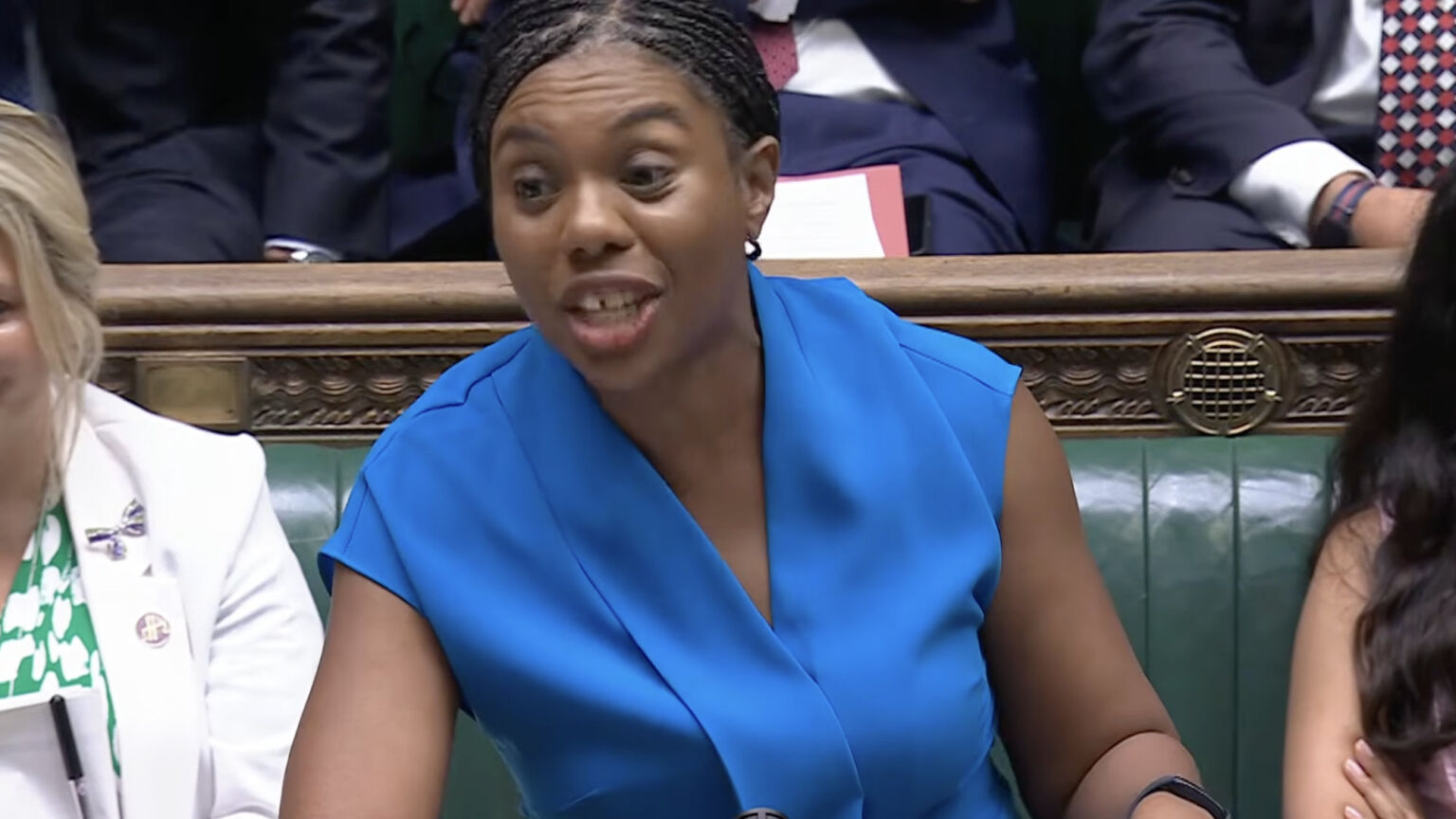
It wasn’t that long ago when the Westminster cognoscenti would assure us that Tory leader Kemi Badenoch was weak and inept. ‘Kemi Badenoch isn’t working’, declared Labour’s in-house magazine, the New Statesman, just last summer. The article quoted critics who described her as ‘fragile’ and ‘frightened’, an opposition leader who seemed incapable of holding Keir Starmer’s Labour government to account.
What a difference a year makes. Having once mocked her for being fragile and inept, Labour is now complaining Prime Minister’s Questions this week. And much of the press seems to agree.
The pearl-clutching response is mainly due to Badenoch’s criticisms of education secretary Bridget Phillipson and energy secretary Ed Miliband. Citing a poll by the National Education Union that found ‘zero per cent’ of its members believe Phillipson is doing a good job, Badenoch said, ‘It turns out appointing a spiteful class warrior as education secretary was a disaster’.
Before she turned her guns on the education secretary, Badenoch had some fun with Miliband. ‘When the going got tough, he jumped into bed with the mayor of Manchester [Andy Burnham]. It’s not the first time he’s betrayed someone close to him, is it?’, joked Badenoch, referencing Ed beating his brother, David, in the 2010 Labour leadership contest.
All of this was met with howls of dismay from the Labour Party. Starmer, apparently reprogrammed after Monday’s malfunction (close listeners to his resignation speech insist there was a brief lump in his throat), delivered a predictably robotic defense of his ministers and his premiership. Manufactured cheers broke out on the backbenches. To which Badenoch said: ‘I’ve never seen this much excitement on the Labour benches, cheering so loudly while there are 400 knives in his back.’
Apparently, these statements were enough to warrant an intervention from the speaker of the house, Lindsay Hoyle, who told Badenoch to show a ‘little bit more decorum and respect’. Phillipson was so aggrieved that she confronted the Conservative Party leader after PMQs, along with technology secretary Liz Kendall. Phillipson reportedly said Badenoch’s language had been ‘outrageous’.
She wasn’t the only one outraged. Indeed, the media response to Badenoch’s performance has been dripping with disdain. ‘Starmer dealt with this splurge of vitriol with good grace… he emerged from the exchanges as the better person’, went a sketch in the Guardian. The same newspaper published an extraordinary column only hours later. ‘It’s customary for the leader of the opposition to say something complimentary about the outgoing prime minister’, it said. ‘She has no idea how graceless she is. How charmless.’ Even the Spectator, which usually acts as the press office for the Conservative Party, wondered, ‘Did Kemi take the personal jibes too far at PMQs?’
Not only did Badenoch not ‘take things too far’, she arguably didn’t go far enough. At the very least, she should be applauded for giving Starmer and his frontbenchers the kind of send-off they richly deserved.
Phillipson, for one, has some nerve playing the hurt-feelings card. More than 100 independent schools have closed since she became the education secretary. Almost without exception, this is a direct consequence of Labour’s imposition of VAT taxes on private schools, thanks to which fees have increased by more than 20 per cent. Aspirational middle-class and lower-middle-class parents can no longer afford to send their children to these schools, so they have closed, and thousands of jobs have disappeared with them. Teachers without jobs and parents without a school to send their children to might have found even stronger words than ‘spiteful class warrior’ to describe Phillipson.
Miliband has been even worse. Putting his duplicity to one side (he was lobbying to become Burnham’s chancellor before the PM-to-be had even won his seat in Makerfield), the energy secretary has been a plague on the British economy. ExxonMobil’s ethylene plant in Scotland, Port Talbot’s steelworks, Vauxhall’s Luton factory and, more recently, the 200-year-old Denby Pottery in Derbyshire, are just some of the victims of his myopic pursuit of Net Zero. This is to say nothing about the wider economic impact of the UK’s crippling energy prices, which, thanks to Miliband, are now the highest in the developed world. A key figure behind the 2008 Climate Change Act, which established legally binding Net Zero targets, Miliband is now doing more to further deindustrialise Britain – destroying thousands of jobs in the process – than almost any of his predecessors combined. Again, history is likely to have harsher words for him than Badenoch found in the House of Commons on Wednesday.
As for Starmer, even if Badenoch had taken the Guardian’s advice and said something ‘complimentary’ about the prime minister, what would there be to say? The article certainly offered no suggestions. Even to say that he was ‘hardworking’ – a pretty low bar – wouldn’t be true of our part-time PM. This isn’t a prime minister deserving of any insincere praise.
Kemi Badenoch did her job in the Commons on Wednesday. The leader of the opposition gave this terrible government exactly what it deserves – a good kicking.
Hugo Timms is a staff writer at spiked.
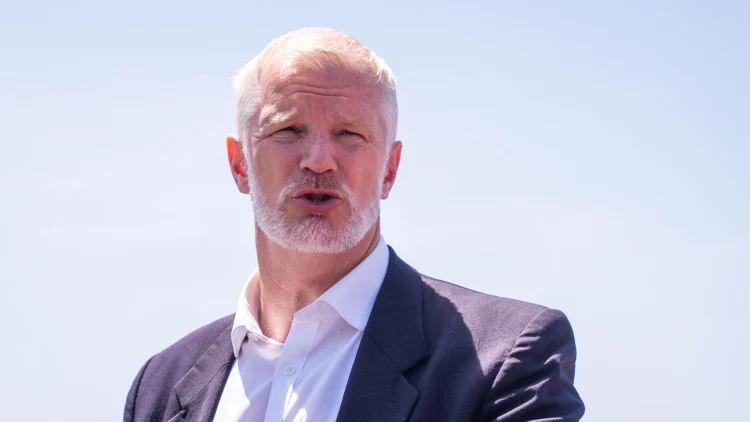

Al Carns, former armed forces minister. (Alamy)

3 min read
Labour MPs dismiss Al Carns leadership bid, leaving Andy Burnham on course for coronation as party leader.
The appetite for a contested leadership race has diminished in recent days after Darren Jones, the chief secretary to the Prime Minister, ruled himself out of a contest earlier this week.
Jones had been regarded by many MPs as the only figure capable of mounting a credible challenge to Burnham.
Carns, the former armed forces minister, has fuelled speculation about his own intentions following his resignation last week over a lack of new funding for the military. Since leaving government, he has embarked on a tour of broadcast studios calling for a national conversation about Labour’s future direction — a campaign that some colleagues interpret as an informal pitch for the leadership.
Although Carns has yet to formally declare his candidacy, PoliticsHome understands that he has spent recent weeks sounding out MPs about potential support. He previously signalled his willingness to enter a contest, saying: “If someone fires the starting gun, I’m not afraid of gunfire.”
Yet few of his parliamentary colleagues appear convinced.
“Everyone really likes and respects Al but he is beginning to look a little bit silly,” one Labour MP in favour of a contest said.
Several MPs question whether Carns, who has been in Parliament for less than two years, possesses the political experience required to lead the party into a general election.
His resignation has also angered some supporters of Starmer, who believe Carns and his former cabinet colleague John Healey accelerated the chain of events that led to the former prime minister’s departure.
A minister who had previously supported Carns’ leadership ambitions said they had now “lost trust” in the former Marine.
Another Labour MP was equally dismissive of Carns’ prospects. “He obviously isn’t a credible candidate for PM,” the MP said.
A third described the manoeuvring as a bid for “attention”.
Several close allies of Starmer who had hoped for a leadership contest and backed Jones as a potential challenger have told PoliticsHome they would not transfer their support to the former minister.
“The fundamental difference between Darren’s campaign and Al’s campaign is that Darren could have got the numbers to challenge. Al was never going to get more than a handful of MPs,” said one MP involved in organising support for Jones.
As support for a contest wanes, many MPs increasingly regard Burnham’s victory as a foregone conclusion.
One Labour MP described it as a “fait accompli” and said the party’s priority should now be unity.
“We need a smooth transition that’s as bloodless as possible,” the MP said.
Another points out: “Andy is going to win anyway.”
Even among those willing to consider backing Carns, support appears motivated less by enthusiasm for his candidacy than by broader concerns about Labour’s future economic direction.
One MP said they would consider supporting Carns as a protest against the prospect of Ed Miliband becoming Chancellor, while acknowledging that the former minister was likely “positioning” himself for a future role as defence secretary.
Indeed, for many Labour MPs the real struggle now concerns not who occupies No 10, but who controls economic policy from No 11.
Concerns about the possibility of Miliband becoming chancellor is a key concern among many of Jones’ former supporters. When Jones ruled out a leadership bid earlier this week, he said it was in part because he had received assurances from Burnham, particularly on economic policy.
As one Jones backer put it: “Everyone can see that the real contest is over the occupant of No 11, not No 10.”
Al Carns was contacted for comment.
This is the letter the SNP sent donors to the ringfenced 2017 fundraiser.

The terms are right there in the first sentence, and are repeated several more times. The money will be “ring fenced for a future referendum”. It’s to “build up a sizeable war chest to fight the campaign when the time comes”. It’s to “ensure we are not outspent in the referendum campaign”.
There is no ambiguity in the email. There’s no mention of the SNP anywhere except in Jim Henderson’s email address. No suggestion whatsoever that the money could be used by the SNP for anything but a referendum campaign.
And therefore, in law, it can’t be.
The terms were the same in the 2019 fundraiser.

Those aren’t just semantics. Spending in referendum campaigns is regulated entirely separately by the Electoral Commission to normal party spending. There are limits both for campaign organisations and, distinct from those, political parties (and others).

(In the 2014 indyref the allowances were based on each party’s share of the vote in the preceding Holyrood election – the SNP wouldn’t be allowed to spend as much now.)
So there are all kinds of reasons in law why the SNP isn’t allowed to just raise money for a referendum campaign but then weave it into its normal bank account and spend it on whatever it likes.
And after this site revealed in 2020 that the money had been blown, some angry donors asked for their contribution back. One of them was former SNP NEC member Allison Graham, who resigned in March 2021 on the basis that the party’s Finance & Audit Committee wasn’t being allowed to see the books in order to do their jobs and establish why the “ringfenced” cash was gone.

As you can see, she had the SNP bang to rights. And she got no argument.

The very same day, party fundraiser Jim Henderson (now retired), emailed her back to arrange repayment of the donation, which was duly done.


She was lucky. Previous refund requests had been refused on the basis (ironically) that the money was in a ring-fenced referendum fund and about to be used.

But the party seems to have realised after the balloon really went up in October 2020 that that kite wouldn’t fly any more.
Once again, this is rock-solid prima facie evidence of a serious crime, committed by those at the very top of the Scottish establishment and openly admitted, for which nobody has been held accountable. The BBC this week released extended interviews with both the Deputy Chief Constable of Police Scotland and Crown Agent John Logue of the Crown Office and Procurator Fiscal Service (which we’ll cover this weekend), but in over an hour of footage neither man came close to offering an even semi-coherent explanation for why nobody has been charged over the fundraiser frauds.
Our quest for answers, and for justice, continues. To that end, we would like to request that any readers who donated to either fundraiser and have not had their money refunded drop us an email via the Wings contact form. It’s time for action.


Norway’s fans became famous around New York City for plopping down wherever they are and pretending to row like Vikings — in Times Square, in rain-drenched parking lots before matches and inside MetLife Stadium so vigorously the stadium swayed. Today they bring the “Viking row” to Boston for Norway’s heavyweight clash with France.
For Norwegians, embracing ancestors known above all for rapacious pillaging is complicated stuff, but the country’s leaders are hoping to send some modern messages about their country, too. Princess Ingrid Alexandra and Prince Sverre Magnus’ first visit abroad without their parents was to cheer on Norway’s first men’s World Cup appearance in 28 years.
A former member of parliament and foreign minister, Ambassador Anniken Huitfeldt was posted to Washington in 2024, just in time for the election of President Donald Trump. At a New York party for Norwegian fans, she was treated like a celebrity.
When I met her in the crowd, another journalist from back home stopped to say hello. Some guys asked to be in a photo with her. After the interview was over and I was in the middle of a tailgate outside, a random Norwegian volunteered to help me understand some of the chants – and it turns out he said he knew her, too.
This interview was conducted in English, and Huitfeldt’s remarks have been edited for length and clarity.
This seems like an amazing exercise of soft power. The Viking army — you see Norwegians in the subway, on the escalators.
I think it’s been very important to how we look upon ourselves. Because the Viking history has always been important for Norwegians, but we never brag about it in a way. And we haven’t focused that much about it.
But here, it has really made us proud. And I think a lot of people were a little bit embarrassed at the beginning. But when they saw how well it was received here in the U.S., we have really taken part in it. So now we are super happy. I mean, everybody’s joining.
How are you using it for your job, beyond just sort of introducing Norway to Americans and North Americans? Is it helping you do diplomacy?
We put a lot of effort in social media. We have given interviews before to POLITICO about our chef and diplomacy, and we’ve got so much attention. But the video where we are rowing, the staff at the embassy, has been spread to 3 million people. [It had more than 4 million views by Wednesday.]
Hard pivot to foreign policy: Are you looking for anything in particular out of the NATO meeting this week with the president? Is there something Norway would like to see?
I think it’s very important to focus on how European countries over the years have really stepped up. And now it’s a pretty good deal for the U.S., I think, the whole NATO package. Because we spend more on defense than the U.S. does when it comes to GDP, and at the same time we purchase very much of the weapons from the U.S. that we send to Ukraine.
And not to forget how we are taking care of American security up in the high north. I mean all those nuclear weapons on the Kola Peninsula — the biggest nuclear arsenal in the world — those weapons are not directed at Oslo, but at the United States. So we are also taking care of American homeland security up in the high north. So it’s a pretty good package for the American people, the cooperation that we have in NATO.
How has the Trump administration’s positioning towards the Arctic, towards Greenland, towards other things, changed your job, or what you expected your job to be?
Well, it has been challenging, especially when it comes to Greenland, where we have been very united with the other European countries. I think we have been very coordinated in how we talk about this, and for us it’s extremely important that we don’t change the geography and borders up in the high north.
Politics
Politics Home Article | Migration Minister Says He “Won’t Be Intimidated” By Home Secretary
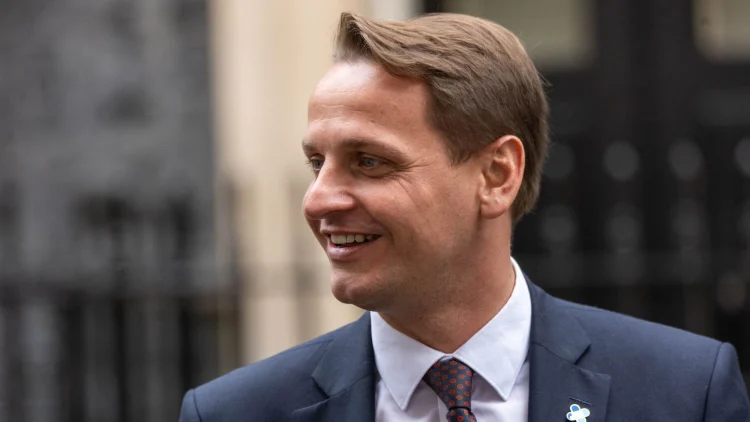

Home Secretary Shabana Mahmood wants the prime minister to sack migration minister Mike Tapp (Alamy)

3 min read
Migration minister Mike Tapp has said he “won’t be intimidated” by Home Secretary Shabana Mahmood’s calls for him to be sacked, as a row between No 10 and the Home Office continues over his future in the role.
Prime Minister Keir Starmer and Mahmood have clashed over whether Tapp should keep his job as parliamentary under-secretary of state for migration and citizenship, which he has held since last September.
Tapp wrote a piece for The Times on Thursday in which he said he supported care workers being made exempt from Home Office plans to change visa rules for migrants already living in the UK.
The plans, which have been criticised by many Labour MPs, include doubling the time it takes for most migrants to qualify for permanent residence from five to 10 years.
Mahmood, who has spearheaded the plans, wants Tapp to be sacked for breaching ministerial rules of collective responsibility, with a Home Office source telling reporters on Thursday that Tapp was expected to be fired.
“He has taken possible ideas that the home secretary and her team were working on, and briefed them as his own to try to win a job in the new administration,” they said.
Andy Burnham, who is widely expected to take over from Starmer as Labour leader and PM in the coming weeks, has said he supports the “broad thrust” of Mahmood’s proposals, but has previously said he would be against applying the changes retrospectively.
However, the prime minister has ultimate power over ministerial appointments and dismissals, and No 10 briefed out on Thursday that Tapp is “still in his job” and there is no intention to fire him.
On Friday, the prime minister’s official spokesperson told journalists that Starmer was taking advice on whether Tapp broke government protocol.
Tapp has been a loyal supporter of Starmer, and before the prime minister announced his resignation, insisted that if the PM was ousted, the country should go to the polls in a general election to stop the “constant churn” of politicians.
In a post on X on Friday morning, Tapp said: “It’s gone from ‘he broke the ministerial code’ to ‘he stole my idea’.
“I have put my views across on a policy I’ve been working on for months (I have the receipts) in an op ed in The Times. Give it a read, and let’s continue to discuss.
“I won’t be intimidated to drop my views. Stay classy!”
Accompanying the post with a selfie, Tapp added that he was at a wedding in San Francisco, but “happy to talk more when I’m back”.
Justice Minister Jake Richards told BBC Radio 4’s Today programme that the debate over the proposed immigration rules “should happen perhaps more privately than Mike – who is a friend and a good man – has shown in the last 24 hours”.
He urged other MPs to “take a deep breath” and criticised “some of the silliness we’ve seen over the last 24 hours”.
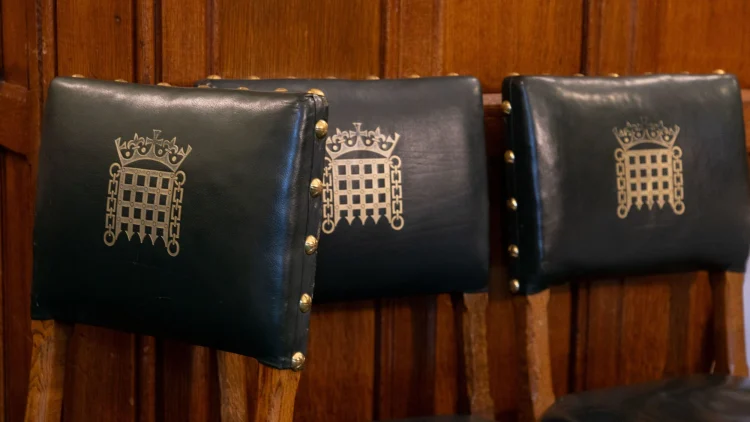

(Jonathan Goldberg / Alamy)

3 min read
Around a third of Parliament’s cleaners are facing job losses as the private contractor that employs them is preparing to make significant redundancies.
According to the GMB, the trade union that represents the cleaners, Churchill Cleaning is looking to cut over 1,100 hours of cleaning per week. GMB estimates that this equates to roughly 47 jobs, or around a third of the 132 cleaners employed on weekdays. About 30 further cleaners, who clean the kitchens and work on weekends, are understood to be exempt from the process.
It comes after the Chief Secretary to the Prime Minister, Darren Jones, earlier this month announced that the government plans to end “outsourcing by default” across government.
Under new guidance, government departments with over £100m in annual contract spend will create five-year roadmaps to rebuild their in-house capabilities for services like cleaners and security staff. In Parliament, the majority of cleaning services have been outsourced since 2004.
“This redundancy process is a prime example of why we must end outsourcing in the public sector,” said GMB regional officer Dan Anderson.
“Churchill Cleaning are placing their bottom line ahead of looking after staff and improving the service, as so many outsourcing firms do.
“They have been unwilling to seriously pursue options to reduce the number of workers who will face compulsory exits, such as voluntary redundancies.
“Such a substantial reduction in the workforce will be devastating for our members, who will either lose their jobs, or stay and face a far heavier workload.
“The cuts will also impact the entire estate and its staff, as the amount of cleaning delivered will inevitably be affected.”
According to GMB, the cuts also come after a significant round of voluntary redundancies less than two years ago, which saw 18 cleaners depart.
Labour MP Margaret Mullane said the situation was “a disgrace”, while her party colleague Tim Roca said Parliament should end the outsourcing of its cleaning service.
Leader of the House of Commons Alan Campbell told Roca such a decision would be “in the purview of the House authorities, and if my honourable friend should wish to make his case to the appropriate House official, then I would help him in that process”.
Churchill Cleaning has not responded to requests for comment.
A UK Parliament spokesperson said: “Cleaners in Parliament perform a vital role and are hugely valued. Contracts with our suppliers are awarded on the basis that high standards are always met, as well as ensuring that employment rights are respected.
“Both Houses are being kept updated and both House administrations are working to ensure there is no impact upon the cleaning standards expected by members, staff and the wider parliamentary community.”
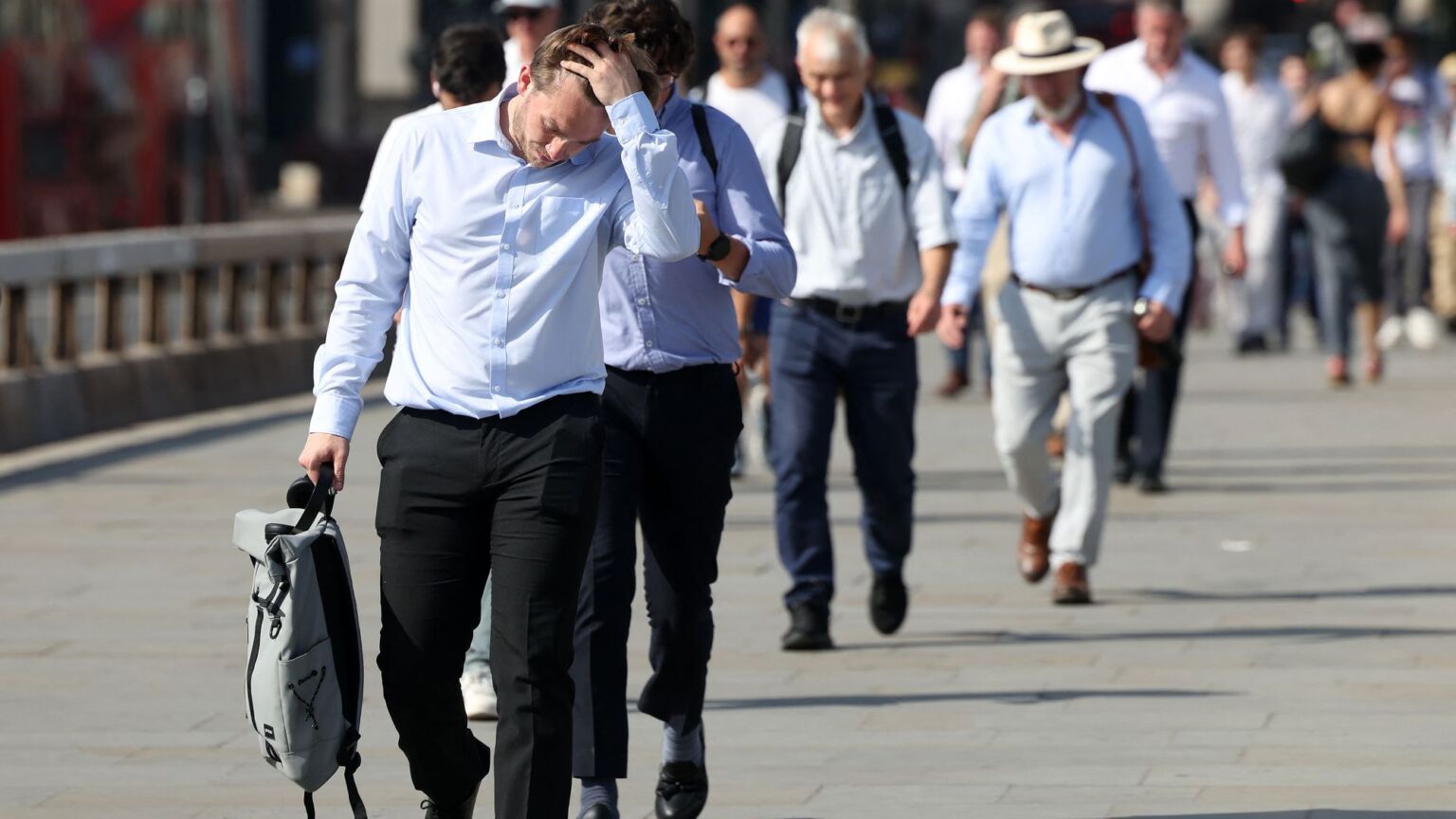
‘Mad Dogs and Englishmen go out in the midday sun.’ So goes the famous Noël Coward lyric, mocking the English willingness to head outside on baking hot days. Today, however, we no longer need to go out into the midday sun to suffer. We have now built a country that struggles to cope with the heat even when we stay indoors.
As this week’s heatwave has shown, Britain must change its approach to cooling down indoors. Above all, we need much more air conditioning in Britain. While around 90 per cent of homes in the US and Japan have it, only three per cent of British homes can say the same.
The same lack is apparent in our public infrastructure, especially our schools. As temperatures climbed this week, at least one thousand schools across England and Wales sent children home early or shut entirely. Pupils were forced to learn online, and working parents were sent scrambling for childcare. Some pupils were forced to sit exams in sweltering school halls-turned-saunas.
Our hospitals, offices and trains have been similarly affected by the intense heat. MRI scanners have stopped working, offices are shutting and trains are breaking down. In fact, it is so bad that two hospitals have declared critical incidents and cancelled hundreds of appointments.
These serious problems are the result of choices made by successive governments – and they follow a pattern that is all too familiar. Whether it is prisons, housing, welfare, water, migration, transport or energy – the same cycle repeats itself. Politicians repeatedly promise to address an emerging problem, but ideology, political incompetence and state incapacity prevent them from ever doing so.
As it stands, Britain’s energy system would likely struggle to cope with the demand that air conditioning in every home, school, hospital and office would place on it. Indeed, the system struggled to cope this week, with the National Energy System Operator issuing a notice warning of tight supplies.
This is not a surprise. We have not built the storage capacity necessary, and our reliance on renewables means that our energy supply is unreliable. Wind turbines are often quiet on the still, hot, high-pressure days that are driving the demand for cooling at the moment. On Wednesday morning, wind was only responsible for around 12 per cent of Britain’s energy consumption. Solar was responsible for just six per cent. To fulfil the necessary demand, Britain must fix its energy system. It needs to be secure, reliable and have sufficient capacity, whatever the weather.
There are other problems, too. For decades, we have known that our summers are going to become warmer, yet we have actively made it harder to cool ourselves effectively. Net Zero objectives have been pursued by government departments whatever the cost. In fact, in some cases, it has led to council-planning officers ordering residents to remove air-conditioning units. In one Camden building, officers told residents to remove the unit and cool their house by opening their windows and balcony doors instead.
Changes made by this government swept away many of the planning restrictions on heat pumps, but these reforms excluded air-conditioning systems, which have been trapped in the same labyrinth of permissions and restrictions as before. In some cases, this has led to the disabling of the air-conditioning feature on reversible heat pumps.
In short, the British state has decided that a machine designed to keep your home warm should be encouraged, but a system designed to cool it down must not. To our political class, the impact of a machine on energy consumption matters more than the benefits it delivers to the communities using it. If it helps deliver an ideological ambition, like Net Zero, it is encouraged. If it helps schools and offices open, hospitals to function, trains to run and people to sleep at night, people are left to battle the Westminster planning system.
The story of Britain’s air-conditioning troubles is therefore about much more than this week’s heatwave. Rather, it is a symbol and a case study of how the modern British state operates.
The solutions are not complicated. Abandon the de facto Net Zero clampdown on air conditioning, liberalise the planning laws so that the right to build an air-conditioning unit is the same as a heating pump, and build a diverse energy system capable of supplying cheap, secure, reliable energy.
Above all, Westminster must rediscover a basic principle that has been undermined in recent decades: it can just do stuff. It can ensure that schools stay open, our hospitals keep running and our homes stay cool. All we need now is a government willing to do it.
Dr Lawrence Newport is the CEO and co-founder of Looking for Growth, the political movement to end decline and save Britain.
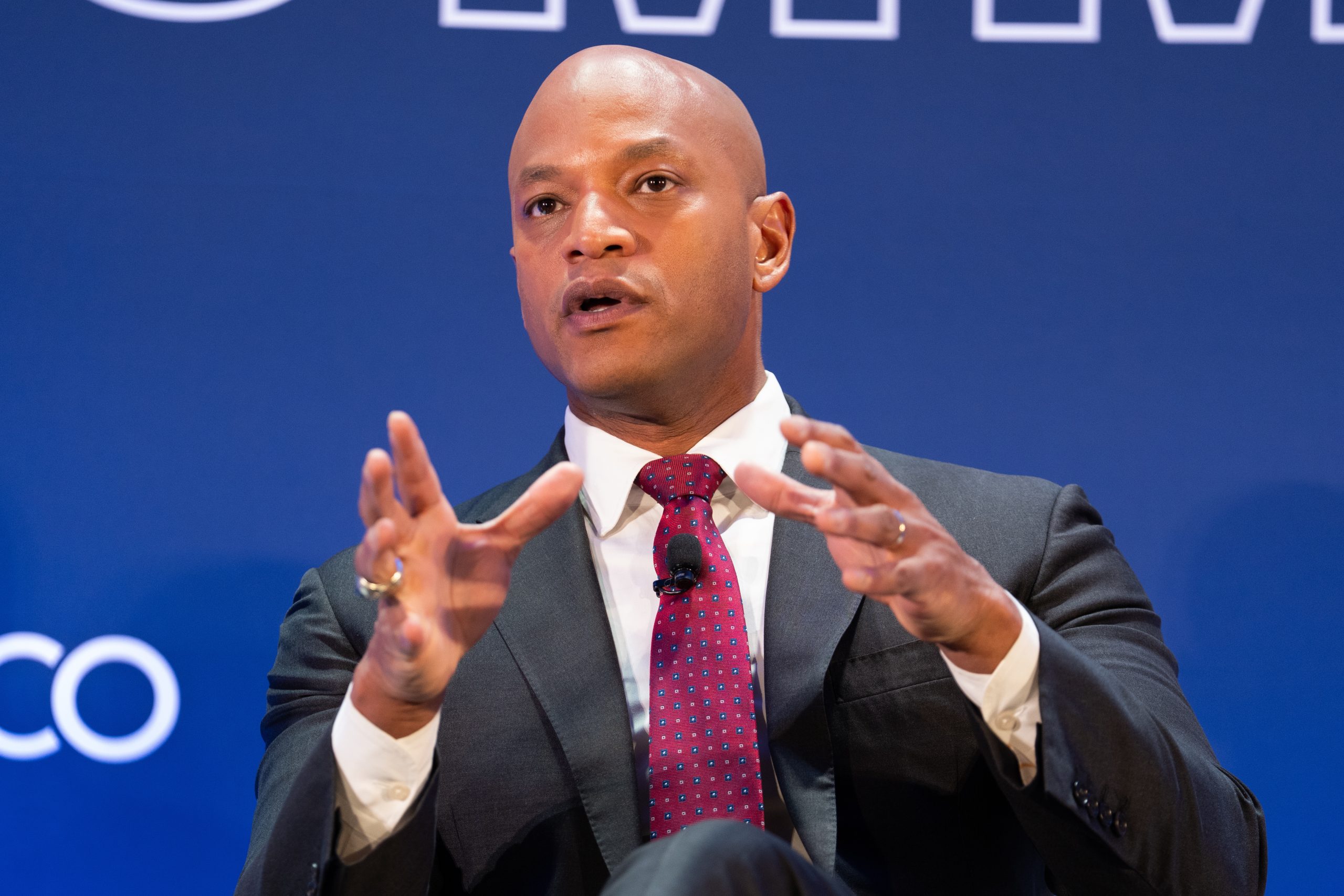

Maryland Gov. Wes Moore is on an Independence Day collision course with President Donald Trump.
Moore is planning to deliver a sweeping speech on patriotism on July Fourth from the Maryland State House in Annapolis — with the aim of counterprogramming what Trump promised would be the “most spectacular TRUMP RALLY of them all, a ‘TRIBUTE TO AMERICA.’”
In an interview with POLITICO, Moore said he thinks Trump is going to spend the 250th anniversary of the nation’s founding talking about himself — but that America deserves something more.
“The president is incapable of meeting the moment,” Moore said.
In his split-screen remarks, called “The Work of Patriotism,” the former Army captain and Afghanistan veteran is expected to “make the case that Democrats cannot cede patriotism to Donald Trump — and that love of country is not about loyalty to one man, one party, or one political spectacle,” according to Ammar Moussa, Moore’s press secretary.
Moore will “draw a contrast between patriotism and nationalism, making the case that nationalism is about allegiance to a person or a movement, while patriotism is about allegiance to the country and the people who make it worth fighting for,” Moussa said.
“We are a nation of strength because we are a nation of sacrifice,” Moore will say, according to a draft of his remarks.
But Moore insisted he’s not trying to be a foil to the president.
“I’m trying to be a foil to darkness,” Moore said. “I think I’m trying to be a foil to fatalism. I think I’m trying to be a foil to self-serving ideologies. What I want people to know in all this is that I believe strongly that we need a future-facing vision for this nation.”
That’s exactly what someone who’s “not running” for president would say, right? Standard Maryland gubernatorial reelection fare.
The speech follows a pattern of growing visibility for Moore. He’s been on numerous podcasts and in new media. The day after his speech, he’s expected to appear on an episode of Jubilee’s “Surrounded,” a booking that’s becoming routine for prominent Democratic figures such as Pete Buttigieg, Texas Senate candidate James Talarico and Rep. Ro Khanna (D-Calif.).
On Saturday, Moore is heading to battleground Michigan, a potential early 2028 primary state, where he’ll stump for gubernatorial candidate Jocelyn Benson in Detroit, Saginaw and Flint — all pivotal locales to win reelection in Maryland, of course.
Moore has said he’s “laser-focused” on his 2026 reelection campaign. Or, as he explained in an interview with POLITICO’s Jonathan Martin: “I’m hungry, but I’m not thirsty.”
The Maryland governor also had his own thoughts about what the progressive victories in New York’s primaries mean, and how that insurgent energy could be harnessed by 2028 Democrats.
“I think harnessing the energy means driving for the results that people are aspiring to,” Moore said, citing primary wins in his own backyard too: “I created an entire slate, the Leave No One Behind slate in Maryland that was wildly successful, and if you look at the candidates that I endorsed and supported, you can’t find an ideological thread in them. We endorsed the progressive legislator from Montgomery County, and we supported the prosecutor in Baltimore County.”
In fact, Moore endorsed some 200 candidates across the state, and his advisers say 93 percent have either won or are in the lead.
“What connects them is a belief that the status quo has got to be disrupted,” Moore said.
Like this content? Consider signing up for POLITICO’s Playbook newsletter.

Money 2 Burn

Jodie Sweetin On Escaping Her ‘Stuck-Up’ Image

Bitcoin – The Generational Moment Is Coming


-

 Entertainment7 days ago
Renter of Home in Anne Heche Crash Denies Settlement With Son
-
 Sports4 days ago
Two goals and an assist by sheer aura: Cristiano Ronaldo just entered the World Cup chat
-

 Tech5 days ago
Microsoft accidentally kills epic Outlook email threads
-

 Fashion23 hours ago
Weekend Open Thread: Staud – Corporette.com
-

 Business7 days ago
Soccer-U.S. defends Iran World Cup travel restrictions, says discussions ongoing
-

 Politics1 day ago
The House | Manchesterism won’t survive the painful trade-offs unless it gets citizens on board
-

 Politics2 days ago
Potential 2028er World Cup attendee leaderboard
-

 Business1 day ago
Asia stock markets slide as tech shares slump
-

 Tech2 days ago
A Look At A Gaggle Of Transputer Boards
-
Crypto World4 days ago
Bitcoin (BTC) Dips Below $62K, Ethereum (ETH) Plunges 6% Daily: Market Watch
-

 Crypto World3 days ago
Securitize Wraps Roubini's SEC-Registered ETF as Dubai VARA Digital Security
-
 Crypto World2 days ago
Dell (DELL) Shares Tumble Over 5% Following Analyst Downgrade to Hold
-
Business4 days ago
Entergy settles forward sale agreements, raises $672 million in cash proceeds
-

 Sports20 hours ago
FIH Pro League: India defeat Pakistan 7-1, register biggest win of campaign | Other Sports News
-

 Crypto World12 hours ago
Kraken's xStocks Opens Bending Spoons IPO Registration to EEA Retail
-

 Crypto World24 hours ago
RTX holders must register wallets before token distribution begins
-
 Crypto World1 day ago
Hyperliquid Named on Singapore MAS Investor Alert Register
-

 Sports2 days ago
India vs Bangladesh LIVE Score, Women’s T20 World Cup: Bangladesh Opt To Bat; India Enter ‘Do-Or-Die’ Stage As Semi-Final Race Heats Up
-
 Tech6 days ago
Signal’s Meredith Whittaker says AI chatbots ‘are not your friends’ and calls Copilot agents a backdoor
-
Crypto World1 day ago
The DATA Foundation Launches to Tackle AI’s Multi-Billion Dollar Training Data Bottleneck
You must be logged in to post a comment Login