What a fantastic year this has been for the horror genre, with Obsession and Backroomsdelivering a combined global box-office haul of more than $600 million. Both movies cost a pittance to produce, with Obsession reportedly carrying a price tag of under $1 million. The movie has emerged as a bona fide cultural sensation that will likely change the way Hollywood looks at making movies. The success of Backrooms, which was released only a few days later, cemented the fact that younger audiences are the future, and they aren’t interested in long-running horror franchises. In addition to their box-office success, both Obsession and Backrooms were also critically acclaimed. And now, a new horror movie has joined their ranks.
The movie in question hails from Australia, aka the land of The Babadook, perhaps one of the greatest horror movies of the last two decades. The new film is being distributed domestically by Neon, which delivered its biggest-ever hit — the horror movie Longlegs — only a couple of years ago. The Australian film premiered at the Midnight section of the Sundance Film Festival earlier this year, where it received high praise for its weighty themes and emotionally driven take on classic horror tropes. The movie opened in domestic theaters last week, and despite playing in only around 1,000 locations, has now passed its first official box-office milestone.
Advertisement
Advertisement
Collider Exclusive · Horror Survival Quiz Which Horror Villain Do You Have the Best Chance of Surviving? Jason Voorhees · Michael Myers · Freddy Krueger · Pennywise · Chucky
Five killers. Five completely different ways to die — if you’re not smart enough, fast enough, or self-aware enough to avoid it. Only one of them is the villain your particular set of instincts gives you a fighting chance against. Eight questions will figure out which one.
🏕️Jason
🔪Michael
💤Freddy
Advertisement
🎈Pennywise
🪆Chucky
Advertisement
01
Something feels wrong. You can’t explain it — you just know. What do you do? First instincts are the difference between the survivor and the first act casualty.
Advertisement
02
Where are you most likely to find yourself when things go wrong? Setting is everything in horror. Where you are determines which rules apply.
Advertisement
03
What is your most reliable survival asset? Every survivor has a quality the villain didn’t account for. What’s yours?
Advertisement
04
What kind of fear is hardest for you to fight through? Knowing your weakness is the first step to not dying because of it.
Advertisement
05
You’re with a group when things start going wrong. What’s your role? Horror movies are brutally clear about who survives group situations and who doesn’t.
Advertisement
06
What’s the horror movie mistake you’re most likely to make? Honest self-assessment is a survival skill. Denial is not.
Advertisement
07
What’s your best weapon against something that can’t be stopped by conventional means? Every horror villain has a weakness. The survivors are always the ones who find it.
Advertisement
08
It’s the final scene. You’re the last one standing. How did you make it? The final survivor always has a reason. What’s yours?
Advertisement
Your Survival Odds Have Been Calculated Your Best Chance Is Against…
Your instincts, your strengths, and your particular way of thinking under pressure point to one villain you actually have a fighting chance against. Everyone else — good luck.
Advertisement
Camp Crystal Lake · Friday the 13th
Jason Voorhees
Jason is relentless, but he is also predictable — and that is the gap you would exploit.
Advertisement
He moves in straight lines toward his target. He doesn’t strategise, doesn’t adapt, doesn’t outsmart. He simply pursues.
Your ability to keep moving, use the environment, and resist the panic that freezes most victims gives you a genuine edge.
The Crystal Lake survivors were always the ones who stopped running in circles and started thinking about terrain, water, and distance.
You think like that. Which means Jason, for all his indestructibility, would face someone who simply refused to be where he expected.
Haddonfield, Illinois · Halloween
Michael Myers
Michael watches before he moves. He is patient, methodical, and almost impossible to detect — until it’s too late for anyone who isn’t paying close enough attention.
Advertisement
But you are paying attention. You notice the shape in the window, the car parked slightly wrong, the silence where there should be sound.
Michael’s power lies in the invisibility of ordinary suburbia — the fact that nothing ever looks wrong until it already is.
Your spatial awareness and instinct to map every room, every exit, and every shadow before you need them is precisely the quality Laurie Strode had.
You are not a victim waiting to happen. You are someone who already suspects something is wrong — and acts on it.
Elm Street · A Nightmare on Elm Street
Freddy Krueger
Freddy wins by getting inside your head — using your own fears, your own memories, your own subconscious as weapons against you. That strategy requires a target who can be destabilised.
Advertisement
You are harder to destabilise than most. You’ve faced uncomfortable truths about yourself and you haven’t looked away.
The survivors on Elm Street were always the ones who understood what was happening and chose to face it rather than flee from it.
Freddy’s greatest weakness is that his power evaporates in the presence of someone who refuses to give him the fear he feeds on.
Your psychological resilience — the ability to stay grounded when reality itself becomes unreliable — is exactly the quality that keeps you alive here.
Derry, Maine · It
Pennywise
Pennywise is ancient, shapeshifting, and feeds on terror — but it has one critical vulnerability: it cannot function against someone who genuinely stops being afraid of it.
Advertisement
The Losers Club didn’t survive because they were braver than everyone else. They survived because they faced their fears together, and faced them honestly.
You ask the questions others avoid. You look directly at what frightens you rather than turning away.
That directness — the refusal to let fear fester in the dark — is Pennywise’s worst nightmare.
It chose the wrong target when it chose you. You are exactly the kind of person whose fear tastes like nothing at all.
Chicago · Child’s Play
Chucky
Chucky’s greatest advantage is that nobody takes him seriously until it’s already too late. He exploits the gap between how something looks and what it actually is.
Advertisement
You don’t have that gap. You take threats seriously regardless of how they present — and you never make the mistake of underestimating something because of its size or appearance.
Chucky relies on surprise, on the delay between recognition and response. You close that delay faster than almost anyone.
Your instinct to treat every unfamiliar thing with appropriate scepticism — rather than dismissing it because it seems absurd — is the exact quality that keeps you breathing.
Against Chucky, not laughing is already winning. You are very good at not laughing.
Advertisement
Your New Horror Obsession Is Here
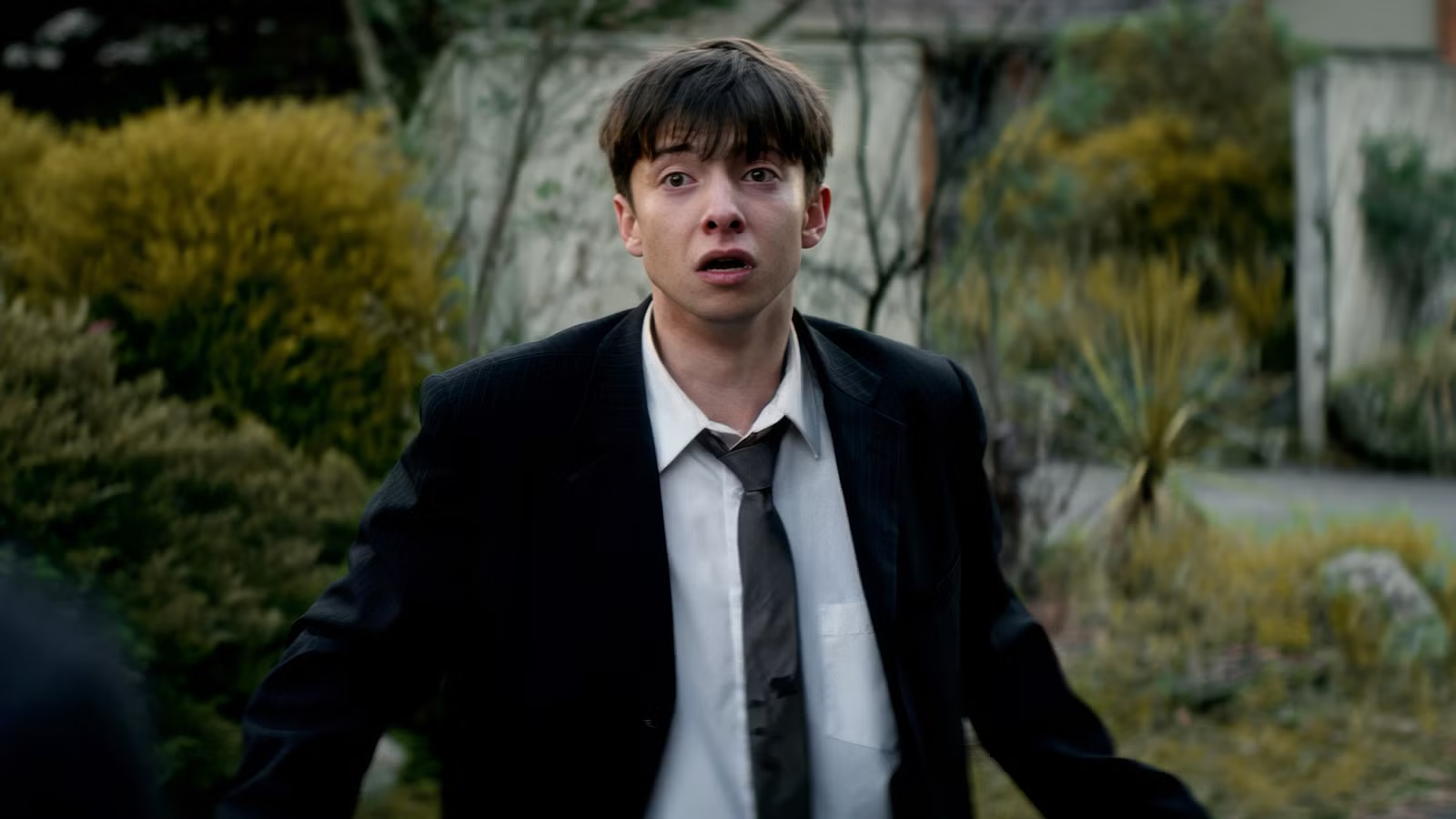
We’re talking about Leviticus, directed by Adam Chiarella and starring Joe Bird, Stacey Klausen, and Mia Wasikowska in a role that will make millennials feel old. Leviticus holds a “Certified Fresh” 92% score on the aggregator website Rotten Tomatoes, where the consensus reads, “Merging an emotionally-involving queer relationship with its clever monster concept, Leviticus executes its intriguing hook with eerie aplomb.” By comparison, Obsession holds a 94% score on Rotten Tomatoes, while Backrooms appears to have settled at an 88% score. Leviticus isn’t letting its limited release get in the way of box-office success, having grossed more than $5 million domestically. This is a higher total than The Death of Robin Hood, which was released in the same week. Stay tuned to Collider for more updates.
Image via Carla Van Wagoner/Future Image/Cover Images
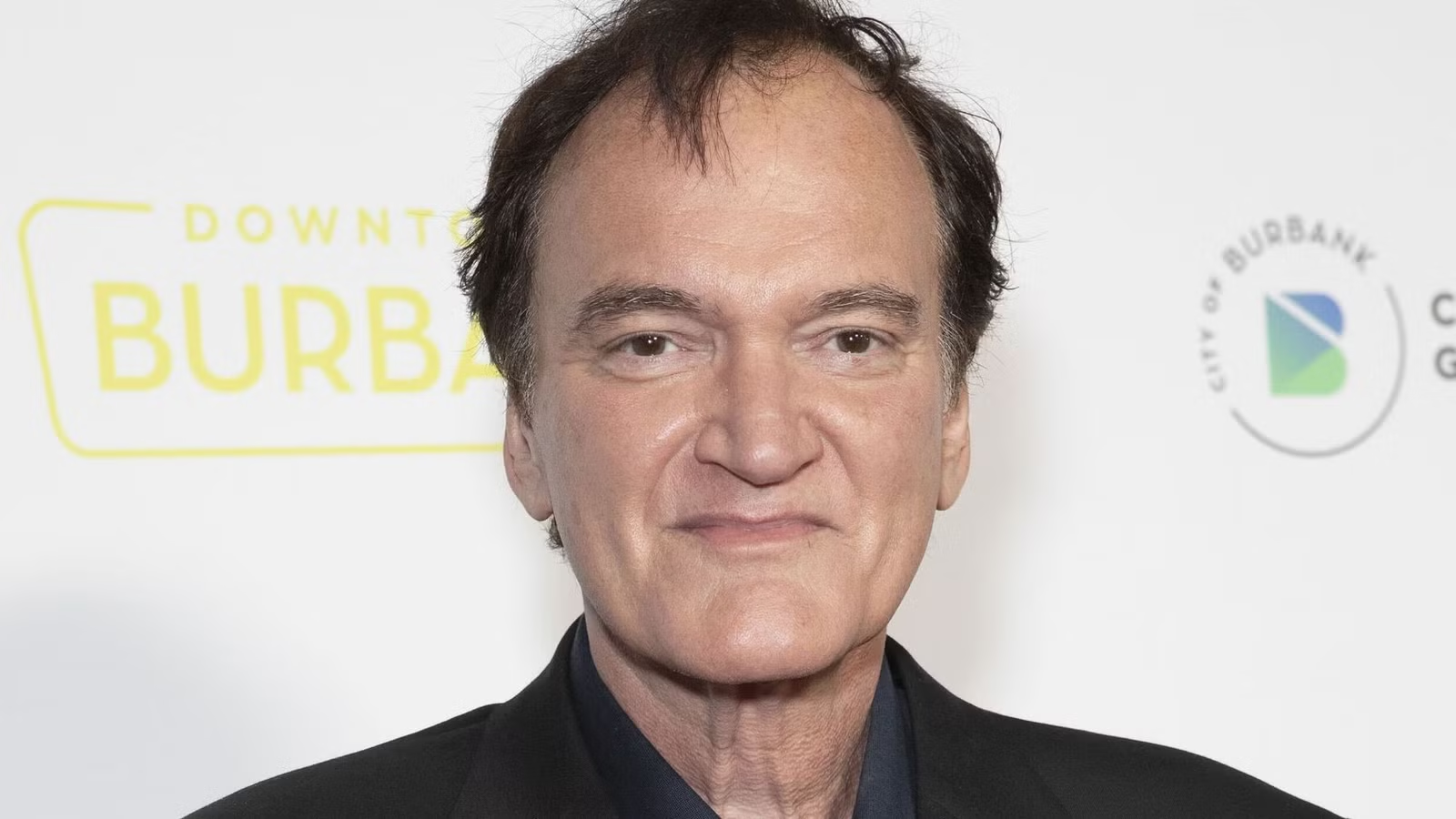
Few directors have had as polarizing or successful a career as Quentin Tarantino, who is well-regarded as one of the greatest filmmakers to ever step behind a camera. Fans could spend years arguing about which of Tarantino’s films is his magnum opus — some would point to Pulp Fiction (and rightfully so), while others would look at newer classics like Django Unchained. While it’s still unclear if Tarantino will ever direct another movie, he has written the script for a sequel film coming out later this year, The Adventures of Cliff Booth, starring Brad Pitt. Tarantino passed on the directing torch to David Fincher for the new Cliff Booth movie, which Netflix has now confirmed will play in theaters before it begins streaming this December. The film can safely be considered one of the most anticipated movies of the year.
The Adventures of Cliff Booth is a spin-off of Quentin Tarantino’s 2019 film, Once Upon a Time… in Hollywood, which won Brad Pitt his first and only acting Oscar to this day. Leonardo DiCaprio starred alongside Pitt in the original film, but he will reportedly not have a role to play in the sequel spin-off, which will take Cliff Booth on a brand-new adventure. Still, before Tarantino’s first movie in seven years heads to IMAX theaters this November, fans are revisiting the film that inspired it in droves. Not only has the film surged back into the Hulu top 10 in America, but it has also quietly become a VOD smash hit on Apple TV in more than 10 countries around the world. Once Upon a Time… in Hollywood certainly has a case for being Tarantino’s magnum opus, especially if it ends up being his final film.
Advertisement
Advertisement
Collider Exclusive · Oscar Best Picture Quiz Which Oscar Best Picture Is Your Perfect Movie? Parasite · Everything Everywhere · Oppenheimer · Birdman · No Country
Five Oscar Best Picture winners. Five completely different visions of what cinema can be — and what it can do to you. One of them is the film that was made for the way your mind works. Ten questions will figure out which one.
🪜Parasite
🌀Everything Everywhere
☢️Oppenheimer
Advertisement
🐦Birdman
🪙No Country for Old Men
Advertisement
01
What kind of film experience do you actually want? The best movies don’t just entertain — they leave something behind.
Advertisement
02
Which idea grabs you most in a film? Great films are driven by a central obsession. What’s yours?
Advertisement
03
How do you like your story told? Form is content. The way a story is shaped changes what it means.
Advertisement
04
What makes a truly great antagonist? The opposition defines the protagonist. What kind of opposition fascinates you?
Advertisement
05
What do you want from a film’s ending? The final note is the one that lingers. What do you want it to sound like?
Advertisement
06
Which setting pulls you in most? Where a film takes place shapes everything — mood, stakes, what’s even possible.
Advertisement
07
What cinematic craft impresses you most? Every great film has a signature — a technical or artistic element that makes it unmistakable.
Advertisement
08
What kind of main character do you root for? The protagonist is the lens. Who you choose to follow says something about you.
Advertisement
09
How do you feel about a film that takes its time? Pace is a choice. Some films sprint; others let tension accumulate slowly, deliberately.
Advertisement
10
What do you want to feel walking out of the cinema? The best films leave a mark. What kind of mark do you want?
Advertisement
The Academy Has Decided Your Perfect Film Is…
Your answers have pointed to one Oscar Best Picture winner above all others. This is the film that was made for the way your mind works.
Advertisement
Parasite
You are drawn to films that operate on multiple levels simultaneously — that begin in one genre and quietly, brilliantly migrate into another. Bong Joon-ho’s Parasite is a film about class, desire, and the architecture of inequality that manages to be darkly funny, deeply suspenseful, and genuinely shocking across a single extraordinary running time. Your instinct is for cinema that hides its true intentions until the moment it’s ready to reveal them. Parasite is exactly that — a film that rewards close attention and punishes assumptions, right up to its devastating final image.
Advertisement
Everything Everywhere All at Once
You want it all — and this film gives you all of it. The Daniels’ Everything Everywhere All at Once is one of the most maximalist films ever made: action comedy, multiverse sci-fi, family drama, existential crisis, and a genuinely earned emotional core that sneaks up on you amid the chaos. You are someone who responds to ambition, who doesn’t want cinema to choose between being entertaining and being meaningful. This film refuses that choice entirely. It is overwhelming by design, and its overwhelming nature is precisely the point — because the feeling of being crushed by infinite possibility is exactly what it’s about.
Advertisement
Oppenheimer
You are drawn to cinema on a grand scale — films that understand history not as a backdrop but as a force, and that place their characters inside that force and watch what happens. Christopher Nolan’s Oppenheimer is a film about the terrifying gap between what we can do and what we should do, told with the full weight of one of the most consequential moments in human history behind it. You want your films to feel important without feeling self-important — to earn their ambition through sheer craft and the gravity of their subject. Oppenheimer does exactly that. It is enormous, complicated, and refuses easy comfort.
Advertisement
Birdman
You are drawn to films that foreground their own construction — that make the how of the filmmaking part of the what it’s about. Alejandro González Iñárritu’s Birdman, shot to appear as a single continuous take, is cinema examining itself through the cracked mirror of a fading actor’s ego. You respond to formal daring, to the feeling that a film is doing something that probably shouldn’t be possible. Michael Keaton’s performance and Emmanuel Lubezki’s restless camera create something genuinely unlike anything else — a film that is simultaneously about creativity, relevance, self-destruction, and the impossibility of ever truly knowing if your work means anything at all.
Advertisement
No Country for Old Men
You are drawn to cinema that trusts silence, that refuses to explain itself, and that treats dread as a form of meaning. The Coen Brothers’ No Country for Old Men is a film about the arrival of a new kind of evil — implacable, arbitrary, and utterly indifferent to the moral frameworks we use to make sense of the world. It is one of the most formally controlled films ever made, and its controlled restraint is what makes it so terrifying. You want your films to haunt you, not comfort you. You are not interested in resolution if resolution would be dishonest. No Country for Old Men is honest in a way that most cinema never dares to be.
Advertisement
Advertisement
Is ‘Once Upon a Time… in Hollywood’ Quentin Tarantino’s Magnum Opus?
It’s up for debate whether Once Upon a Time… in Hollywood is Quentin Tarantino’s magnum opus, or whether that title belongs to another film like Pulp Fiction or Django Unchained, though it’s important to note that Tarantino did use the working title Magnum Opus for the 2019 showbiz drama. The latter is Tarantino’s highest-grossing movie, which earned nearly $450 million at the global box office. It also is one of two Tarantino-directed films that won Christoph Waltz an Oscar — the other film to do so is Inglourious Basterds, which also stars Brad Pitt and Michael Fassbender.
Check out Once Upon a Time… in Hollywood on Hulu, and stay tuned to Collider for more updates and coverage of The Adventures of Cliff Booth.
There has been more content released for Batman than for any other superhero, and it doesn’t seem to be slowing down anytime soon. Given the rich history and complexity of the source material, there is room for multiple iterations of the character in comics, shows, cartoons, and on the big screen. There have been many animated shows that have attempted to live up to the legacy of Batman: The Animated Series, but Batman: Caped Crusaderis a radical new take on the Dark Knight that brings the universe back to its origins in the ‘40s and ‘60s. By stripping away the DC universe’s larger worldbuilding and focusing directly on Batman’s relationship with Gotham City, Batman: Caped Crusader manages to say something new about a character that has existed for almost 90 years.
While not a direct continuation, Batman: Caped Crusader was developed by Batman: The Animated Series creator Bruce Timm and is set in a new timeline where a young Bruce Wayne (voiced by Hamish Linklater) is in the early stages of becoming a crime fighter. Although villains like the Penguin (Minnie Driver) and Catwoman (Christina Ricci) prove to be thorns in his side, Batman’s greatest opponent is the institutional corruption of Gotham City, as criminal activity has become rampant due to the compromised ethics of the police department. Batman: Caped Crusader isn’t just a noir series because of its art style, but one that embodies the genre’s moody atmosphere, hardboiled mysteries, and paranoid suspense.
Advertisement
‘Batman: Caped Crusader’ Remixes DC Mythology Into a Noir Series
Batman: Caped Crusader is unique compared to previous DC animated shows because it offers a serialized adventure about Batman’s attempts to dismantle the mob, led by the treacherous politician Rupert Thorne (Cedric Yarbrough). It’s an interesting way to recontextualize a rogues’ gallery, presenting classic villains as consequences of broader institutional issues but not the root cause. Batman might never be able to stop unpredictable accidents from creating costumed antagonists, but he does have an opportunity to expose the secret powerbrokers who are compromising the safety of Gotham City’s politicians. However, Batman: Caped Crusader also deals with Batman’s legacy as a vigilante, and how being a target of the police force makes it harder for him to be publicly viewed as a force of good. The series offers a compelling rival for Batman in Harvey Bullock (John DiMaggio), a sadistic cop who sees unmasking the fabled Caped Crusader as his best opportunity to attain personal glory.
The ‘Caped Crusader’ is up against his most iconic villain.
Advertisement
Batman: Caped Crusader is able to distinguish itself because the show offers fleshed-out versions of classic allies. Barbara Gordon (Krystal Joy Brown) is a public defender who seeks to use the system in order to attain justice by civil means, which puts her in stark contrast with her father, Jim (Eric Morgan Stuart), who has aided in providing police resources to Batman. The series also has one of the most compelling depictions of Harvey Dent’s (Diedrich Bader) tragic fall from grace during his transformation into the villain Two-Face. Prior adaptations often assume that his personality switched immediately after the acid attack melted half of his face, but Bader is able to show how Dent struggles with the two personas that exist within his mind, each of which feeds into the other. The notion of a true friendship between Dent and Bruce, who are initially unaware of each other’s secrets, makes the eventual standoff between Batman and Two-Face even more enthralling. Renee Montoya (Michelle C. Bonilla), who is a relatively recent addition to the comics, also plays a major role in the first season as both Gotham’s sharpest police detective and a love interest for Barbara.
Advertisement
‘Batman: Caped Crusader’ Embodies the ”World’s Greatest Detective”
Although the replication of period-accurate visual details makes for a vibrant series, Batman: Caped Crusader also homages the politics and philosophy of the ‘40s. It wouldn’t make sense in an era of less concentrated media for Bruce to be depicted as a lavish playboy, and thus Linklater’s portrayal of the character as an isolated, enigmatic member of Gotham’s high society makes sense. Similarly, Batman: Caped Crusader examines the post-war anxieties of cities that truly felt isolated and left to their own devices, as there is never the sense that the burgeoning criminal activity in Gotham could become a cause for intervention. It makes the pressure on Batman even greater, and it’s through his love of the city that the series is able to piece together an origin story that doesn’t quite fall in line with traditional interpretations.
Batman: Caped Crusader is the perfect series for those who are overwhelmed by the connected universes going on in the vast majority of DC animated programs, but the show is also drawn from the most classic era of Batmancomics, which haven’t been used as an influence on many of the recent cinematic adaptations. Although the show has introduced versions of many iconic characters, with a particularly notable villain teased for Season 2, it has also offered something new to the franchise rather than spending its focus on directly adapting specific comic storylines. There will likely continue to be even more Batman stories given the character’s enduring popularity, but Batman: Caped Crusader is both a stylized reimagination and a thoughtful reconsideration of the superhero’s timeless relevance.
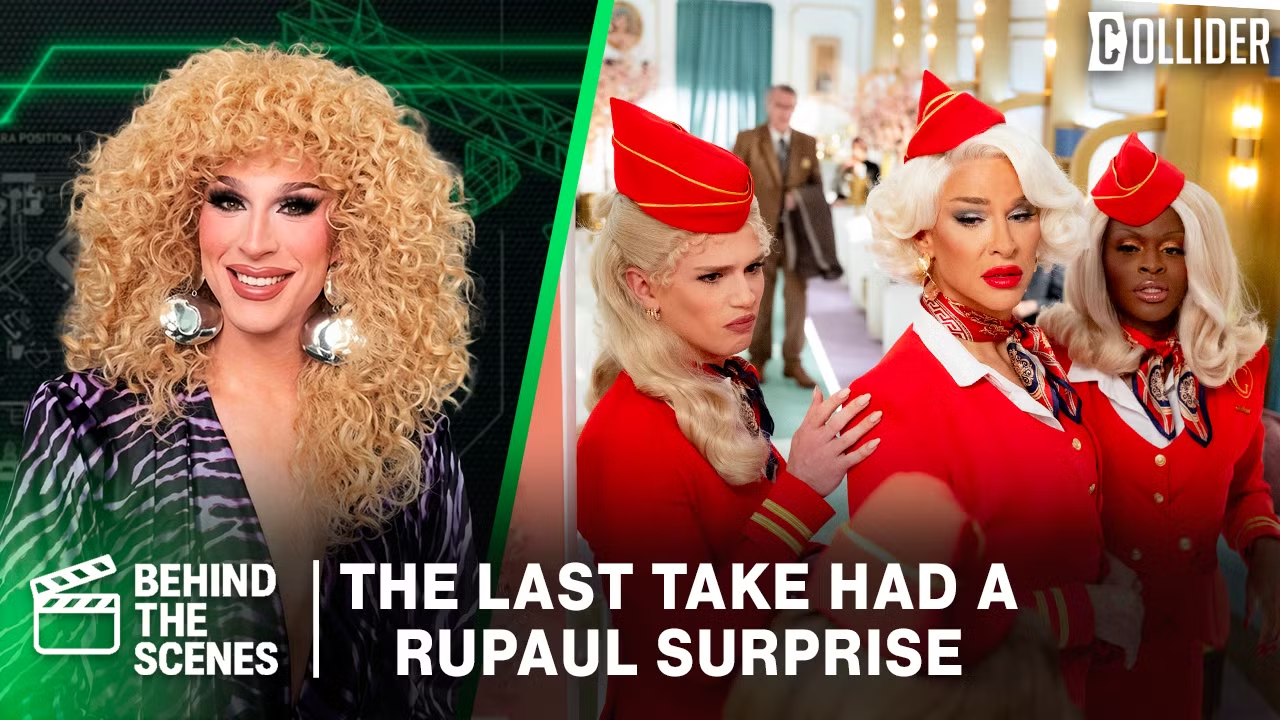
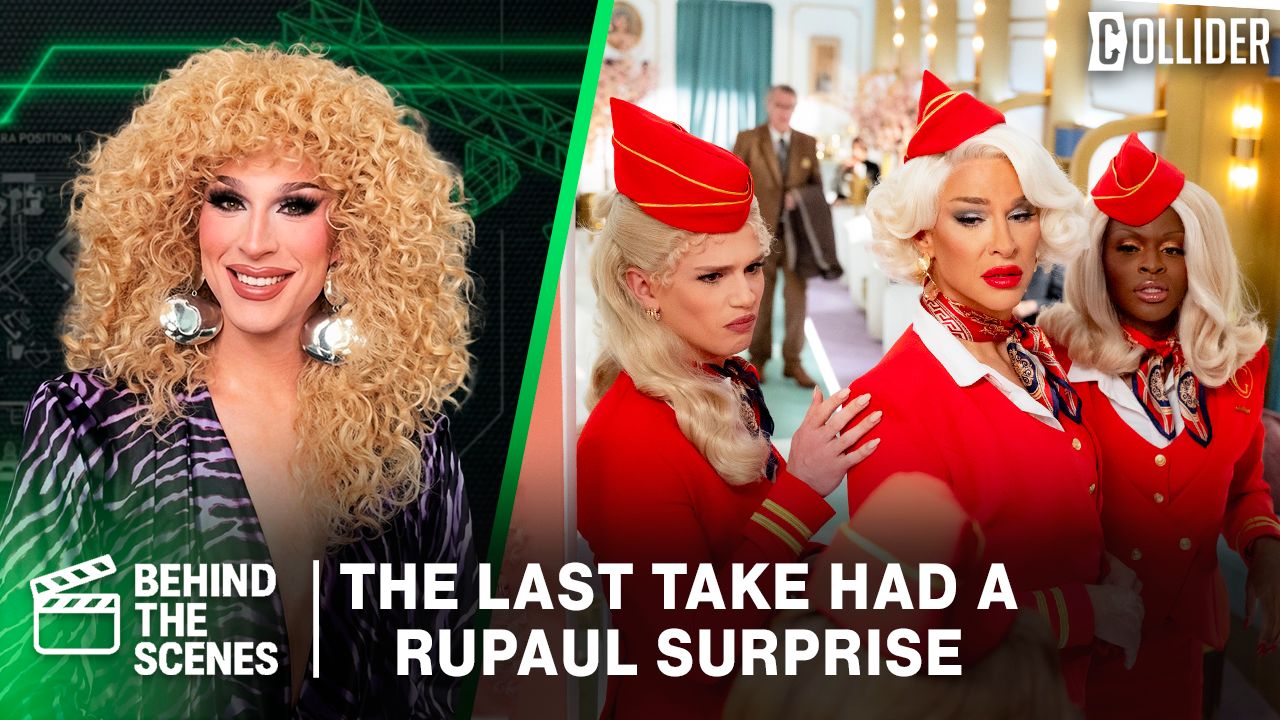
Brooke Lynn Hytes takes Collider behind the scenes of Stop! That! Train! to discuss landing her villainous role, working with RuPaul, Nicole Richie, Lisa Rinna, and the film’s all-star cast, plus why she believes celebrating queer joy on screen is more important than ever.
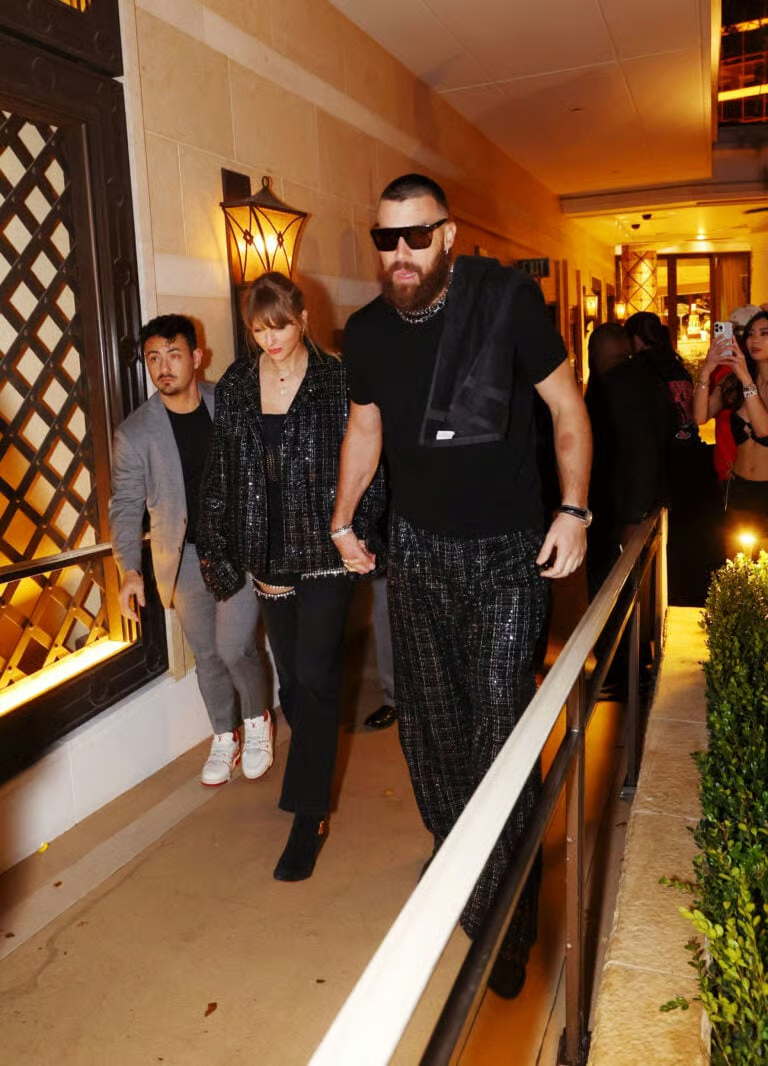
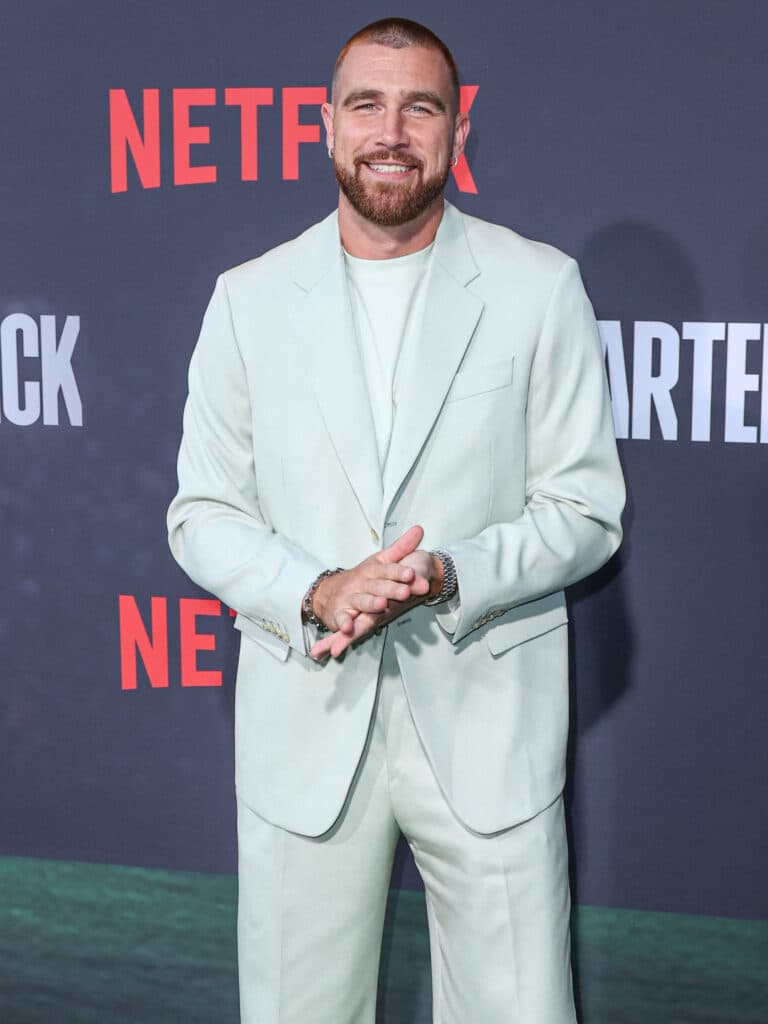
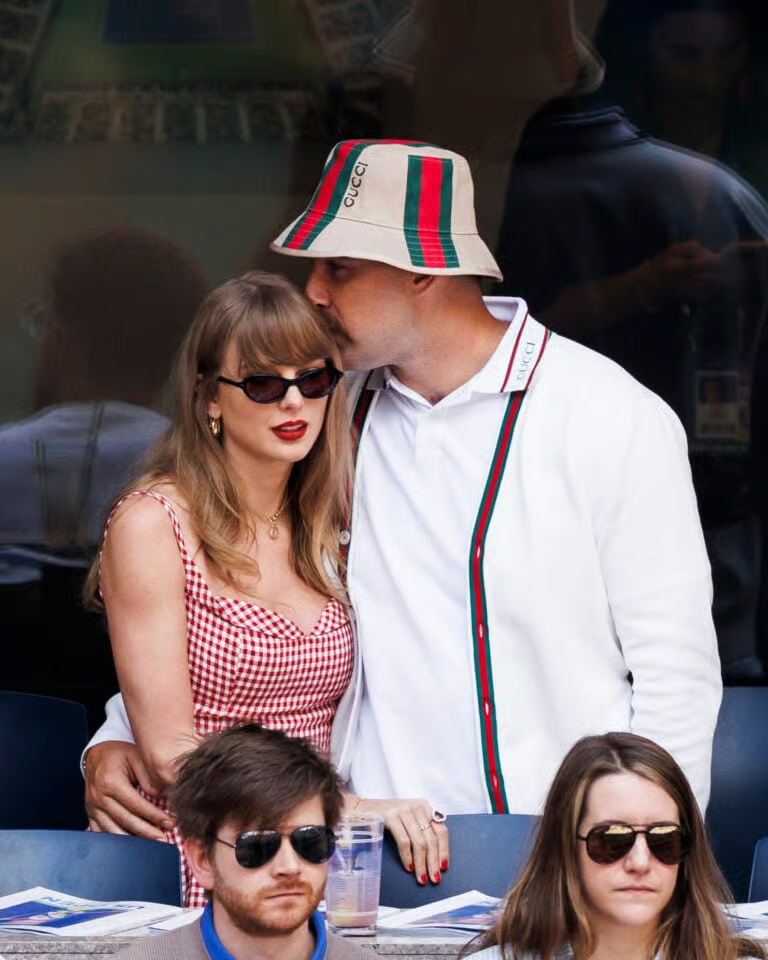
Taylor Swift and Travis Kelce’s romance has become one of pop culture’s biggest love stories, but new insider claims suggest it almost never reached that point.
Before they became one of entertainment’s most talked-about couples, they were reportedly on very different pages.
While Swift was ready to see where things could go, Kelce was said to be approaching the relationship far more casually.
Danny Mahoney/Wynn Las Vegas/MEGA
The now-famous romance first captured attention during the summer of 2023 after Travis Kelce publicly revealed on his “New Heights“ podcast that he had hoped to meet Taylor Swift during her Eras Tour stop at Arrowhead Stadium in Kansas City.
The Kansas City Chiefs star planned to hand the singer a friendship bracelet featuring his phone number, but the opportunity never came because, as he explained, Swift “doesn’t talk before or after her shows because she has to save her voice for the 44 songs that she sings.”
Advertisement
Rather than ending the story before it began, Kelce’s candid admission unexpectedly caught Swift’s attention.
Looking back on the moment during an appearance on Kelce’s podcast last year, the singer recalled, “This kind of felt more like I was in an 80s John Hughes movie, and he was just standing outside of my window with a boombox being like, ‘I want to date you!’”
Although their connection quickly attracted public fascination, new insider accounts claim their early expectations for the relationship were far from identical.
Travis Kelce Wasn’t Looking For Anything Serious
MEGA
According to multiple insiders who spoke with the Daily Mail, Kelce entered the relationship without expecting it to become long-term.
One insider claimed, “He wasn’t looking for anything serious – that’s for sure.” The same source added, “He was dating other people at the same time before they went public.”
Advertisement
Another insider echoed that account, saying, “He was definitely still dating around [in the beginning].”
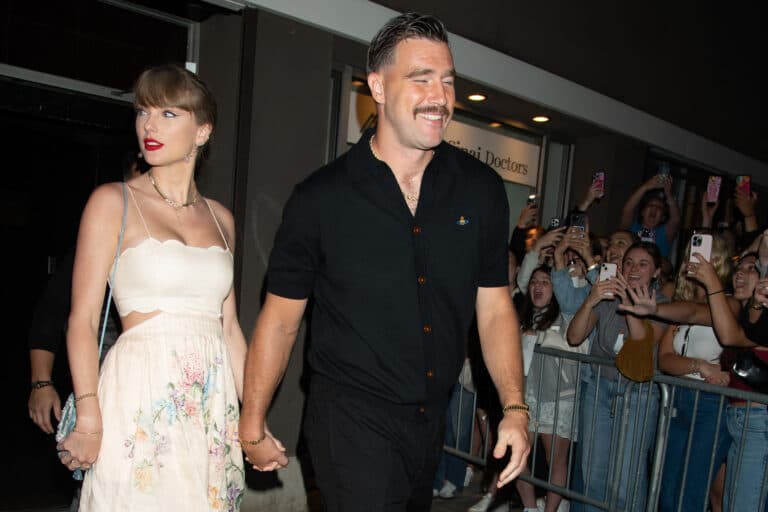
Sources stressed there was no overlap or infidelity because the pair had not yet become exclusive. Their relationship reportedly remained private and casual until September 2023, when Swift attended her first Chiefs game alongside Donna Kelce.
Insiders also suggested Kelce’s previous five-year relationship with Kayla Nicole, which ended in 2022, may have contributed to his slower approach toward dating again.
One source further claimed the football star initially viewed the friendship bracelet gesture as more playful than life-changing and “think it was going to go anywhere.”
Advertisement
That same relaxed attitude reportedly extended to their early communication.
Taylor Swift Pursued A Relationship While Travis Kelce Took His Time
Annie Wermiel/New York Post/MEGA
Several insiders claimed Kelce was occasionally slow to reply to Taylor Swift’s messages during those first months together, though they insisted it was never because he was trying to avoid her.
One source explained, “[He wasn’t avoiding her], but you’re not going to be pressed onto something if you’re not looking for something serious.” They added, “He just wasn’t pursuing her heavily. He’s a football player!”
Another insider suggested the difference came down to the level of commitment surrounding Swift’s world from the very beginning.
“Travis wasn’t looking for anything serious and once you get into the Taylor world, it’s instantly serious,” the source said.
Advertisement
By that point, Swift had already experienced years of intense public attention surrounding her relationships. Every new romance typically became headline news almost immediately, bringing relentless media coverage and public scrutiny.
Kelce has since admitted he learned to accept that spotlight.
Reflecting on his highly public relationship during an interview with CBS Mornings in September 2024, he said, “It’s the life I chose, I guess.” He added, “I have fun with it, it comes with the territory of wanting to do fun stuff like this and signing up for cool sponsorships like this and endorsements.”
Taylor Swift Had Doubts Before Giving Love A Chance
AdMedia / MEGA
Taylor Swift was not immediately convinced that dating an NFL star made sense either.
In her documentary “Taylor Swift: The End of an Era,” she admitted, “I had been very non-athlete.” She continued, “Because I’m not one, and I’ve always just been like, ‘Well, what would we talk about?’”
Advertisement
The singer ultimately received encouragement from someone she trusted deeply.
According to the documentary, her mother, Andrea Swift, contacted a relative who knew Kelce personally and came away reassured after hearing glowing things about him.
Andrea recalled being told, “He’s the nicest guy… and he really loves his mom.”
She later explained why Kelce’s original friendship bracelet attempt impressed her so much.
Advertisement
“I thought it was the sweetest thing in the world that he came to your show, he brought you something from your world,” Andrea said. “To me, that really said a lot. So, I thought that was really sweet, and I liked it.”
Reports also suggest Swift’s longtime friend Keleigh Teller, wife of actor Miles Teller, quietly helped the pair connect during the earliest stages of their romance by acting as a go-between.
Time Turned A Casual Romance Into A Lasting Relationship
ZUMAPRESS.com / MEGA
Despite their reportedly different expectations at the beginning, spending more time together gradually changed everything.
One insider explained, “Taylor continued to be a real presence and the family got to know her in the different football suites, and then they started socializing in the off season.”
The same source believes that growing familiarity strengthened their relationship naturally over time.
Advertisement
“I think it was just time together that brought them closer,” the insider added.
From there, the relationship became impossible to ignore. Swift regularly appeared at Chiefs games supporting Kelce, while he attended several stops on her Eras Tour, making public appearances together around the world.
Although insiders now claim the romance almost remained a casual fling, patience, timing, and shared experiences ultimately transformed an uncertain beginning into one of entertainment’s biggest love stories, proving that even relationships that start on different pages can eventually find common ground.
In cinema, retreading old ground can often lead to brilliance, as evidenced by the many well-made remakes and reimaginings Hollywood has produced over the decades. Some of those movies even rank among the best films of all time, with a greater impact on audiences than their original inspirations, like Scarface or Ocean’s Eleven. And though not every classic movie needs a remake, there are some that could do with a modern update.
Some of these are films that deserve a remake just for retrospective improvements in techniques and world-building, which may have been limited in their time simply because the technology didn’t exist yet. With others, the foundational concepts of their stories are so timeless that they capture the attention of every generation with their universal themes, becoming cultural touchstones that make just as much sense today as they did when they first premiered. With that in mind, here’s our selection of classic movies that we need to see remade.
Advertisement
1
‘Dial M For Murder’ (1954)
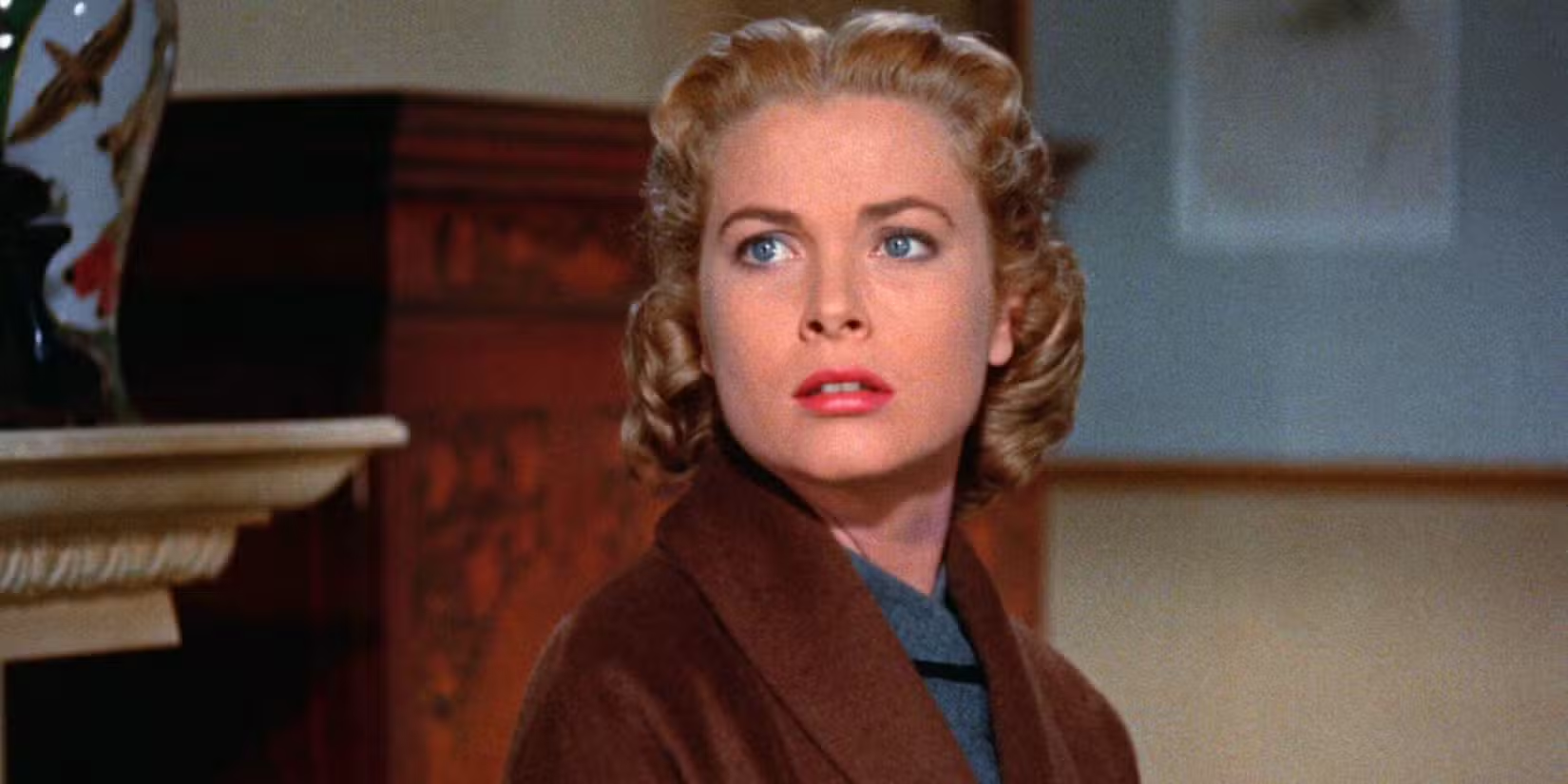
Grace Kelly as Margot looking at a person offscreen in Dial M for Murder (1954)Image via Warner Bros.
Directed by Alfred Hitchcock and based on Frederick Knott’s play, Dial M for Murder follows Tony Wendice (Ray Milland), a former tennis player who has devised a plan to kill his wife, Margot (Grace Kelly), for her inheritance. After finding out about Margo’s extra-marital affair, Tony blackmails an old acquaintance to kill her, but the plan goes haywire, forcing him to improvise. The movie also stars Robert Cummings, Anthony Dawson, and John Williams in notable roles.
One of Hitchcock’s crime thriller masterpieces, Dial M for Murder would make for a perfect remake with its inverted mystery narrative, which would appeal to the modern audience seeking something beyond the conventional whodunit format. Additionally, the original film was meant to be projected in 3D, but the technology was error-prone at the time, and it wasn’t released in 3D until the 1980s. Considering all the advancements made in 3D filming technology since then, a new version of Dial M for Murder would not only add an edge to the production and narrative but also bring a fresh perspective to Hitchcock’s brilliant original.
Advertisement
2
‘The Wizard of Oz’ (1939)
The Wizard of OzImage via Warner Bros.
Victor Fleming’s 1939 adaptation of L. Frank Baum’s children’s literary classic novel, The Wizard of Oz follows the story of Dorothy, a young farm girl from Kansas, and her pet dog, Toto. After getting caught in a tornado that transports them to the magical land of Oz, Dorothy and Toto set out on a fantastical journey to meet the mysterious wizard, running into various interesting characters along the way. Judy Garland stars as Dorothy in arguably her most iconic role, with Frank Morgan, Ray Bolger, Bert Lahr, Jack Haley, Billie Burke, and Margaret Hamilton in other lead roles.
The Wizard of Oz is a cinematic landmark and a cultural milestone that has since been readapted, reimagined, and rebooted several times. But a 21st-century remake of the original film, using the latest imaging technologies and special effects, would make for a brilliant rendition that fans would love to see far more than the many spin-offs, sequels, and prequels that we’ve seen so far this century. While it would be difficult to surpass the 1939 film’s reputation as a groundbreaking work of cinema, its themes of self-identity, individuality, non-conformity, and embracing the out-of-ordinary surely resonate with a modern audience.
Advertisement
3
‘Clue’ (1985)
Tim Curry and Lesley Ann Warren standing in a doorway as other characters group up behind them in Clue.Image via Paramount Pictures
Written and directed by Jonathan Lynn, Clue is a mystery dark comedy adaptation of the popular board game of the same name, invented in 1943. Set in 1954, the film follows seven strangers who are invited by a mysterious host to his remote New England mansion, where the sudden death of one of the guests causes tension and suspicion among the group. Eileen Brennan, Tim Curry, Madeline Kahn, Christopher Lloyd, Michael McKean, Martin Mull, Lesley Ann Warren, and Colleen Camp star as main characters.
A campy and colorful crime comedy, Clue is proof that some board games do merit a cinematic adaptation, and the movie has been hailed as a cult classic that would surely earn greater attention if it were made today. Inspired by the premise of Agatha Christie’s And Then There Were None, the film’s plot still holds appeal among genre fans. With its multiple endings and signature color-coding of characters and their personalities, a contemporary take on Clue would make for a stylish and fun, possibly even interactive, murder mystery that could redefine the genre.
Advertisement
Collider Exclusive · Oscar Best Picture Quiz Which Oscar Best Picture Is Your Perfect Movie? Parasite · Everything Everywhere · Oppenheimer · Birdman · No Country
Advertisement
Five Oscar Best Picture winners. Five completely different visions of what cinema can be — and what it can do to you. One of them is the film that was made for the way your mind works. Ten questions will figure out which one.
🪜Parasite
🌀Everything Everywhere
☢️Oppenheimer
🐦Birdman
Advertisement
🪙No Country for Old Men
Advertisement
01
What kind of film experience do you actually want? The best movies don’t just entertain — they leave something behind.
Advertisement
02
Which idea grabs you most in a film? Great films are driven by a central obsession. What’s yours?
Advertisement
03
How do you like your story told? Form is content. The way a story is shaped changes what it means.
Advertisement
04
What makes a truly great antagonist? The opposition defines the protagonist. What kind of opposition fascinates you?
Advertisement
05
What do you want from a film’s ending? The final note is the one that lingers. What do you want it to sound like?
Advertisement
06
Which setting pulls you in most? Where a film takes place shapes everything — mood, stakes, what’s even possible.
Advertisement
07
What cinematic craft impresses you most? Every great film has a signature — a technical or artistic element that makes it unmistakable.
Advertisement
08
What kind of main character do you root for? The protagonist is the lens. Who you choose to follow says something about you.
Advertisement
09
How do you feel about a film that takes its time? Pace is a choice. Some films sprint; others let tension accumulate slowly, deliberately.
Advertisement
10
What do you want to feel walking out of the cinema? The best films leave a mark. What kind of mark do you want?
Advertisement
The Academy Has Decided Your Perfect Film Is…
Your answers have pointed to one Oscar Best Picture winner above all others. This is the film that was made for the way your mind works.
Advertisement
Parasite
You are drawn to films that operate on multiple levels simultaneously — that begin in one genre and quietly, brilliantly migrate into another. Bong Joon-ho’s Parasite is a film about class, desire, and the architecture of inequality that manages to be darkly funny, deeply suspenseful, and genuinely shocking across a single extraordinary running time. Your instinct is for cinema that hides its true intentions until the moment it’s ready to reveal them. Parasite is exactly that — a film that rewards close attention and punishes assumptions, right up to its devastating final image.
Advertisement
Everything Everywhere All at Once
You want it all — and this film gives you all of it. The Daniels’ Everything Everywhere All at Once is one of the most maximalist films ever made: action comedy, multiverse sci-fi, family drama, existential crisis, and a genuinely earned emotional core that sneaks up on you amid the chaos. You are someone who responds to ambition, who doesn’t want cinema to choose between being entertaining and being meaningful. This film refuses that choice entirely. It is overwhelming by design, and its overwhelming nature is precisely the point — because the feeling of being crushed by infinite possibility is exactly what it’s about.
Advertisement
Oppenheimer
You are drawn to cinema on a grand scale — films that understand history not as a backdrop but as a force, and that place their characters inside that force and watch what happens. Christopher Nolan’s Oppenheimer is a film about the terrifying gap between what we can do and what we should do, told with the full weight of one of the most consequential moments in human history behind it. You want your films to feel important without feeling self-important — to earn their ambition through sheer craft and the gravity of their subject. Oppenheimer does exactly that. It is enormous, complicated, and refuses easy comfort.
Advertisement
Birdman
You are drawn to films that foreground their own construction — that make the how of the filmmaking part of the what it’s about. Alejandro González Iñárritu’s Birdman, shot to appear as a single continuous take, is cinema examining itself through the cracked mirror of a fading actor’s ego. You respond to formal daring, to the feeling that a film is doing something that probably shouldn’t be possible. Michael Keaton’s performance and Emmanuel Lubezki’s restless camera create something genuinely unlike anything else — a film that is simultaneously about creativity, relevance, self-destruction, and the impossibility of ever truly knowing if your work means anything at all.
Advertisement
No Country for Old Men
You are drawn to cinema that trusts silence, that refuses to explain itself, and that treats dread as a form of meaning. The Coen Brothers’ No Country for Old Men is a film about the arrival of a new kind of evil — implacable, arbitrary, and utterly indifferent to the moral frameworks we use to make sense of the world. It is one of the most formally controlled films ever made, and its controlled restraint is what makes it so terrifying. You want your films to haunt you, not comfort you. You are not interested in resolution if resolution would be dishonest. No Country for Old Men is honest in a way that most cinema never dares to be.
Advertisement
4
‘12 Angry Men’ (1957)
Henry Fonda with a knife in ’12 Angry Men’Image via United Artists
Advertisement
Sidney Lumet’s courtroom classic, based on Reginald Rose’s 1954 teleplay, 12 Angry Men centers on a group of 12 jury members who must deliberate on the fate of an 18-year-old boy accused of murder. As they discuss and debate the outcome of the trial, it sparks serious conflicts among the jurors, making them question their own sense of morality and judgment, and the very concept of reasonable doubt. The film stars Henry Fonda, Lee J. Cobb, Ed Begley, E. G. Marshall, and Jack Warden in the main roles.
One of the most influential legal dramas of the last 100 years, 12 Angry Men is a compelling commentary on justice, prejudice, civic responsibility, and the American justice system. With its closed-room setting and timeless themes, the film continues to fit into the modern landscape and is highly worthy of a remake. A 21st-century take on 12 Angry Men with updated perspectives, including gender diversity and psychosocial themes, could successfully revive its legacy and impact in a world where our biases continue to influence truth and justice.
5
‘The Hunchback of Notre Dame’ (1996)
The Hunchback Of Notre DameImage via Walt Disney Studios Motion Pictures
Advertisement
A Disney animated musical drama adaptation of Victor Hugo’s 1831 literary classic, The Hunchback of Notre Dame tells the story of Quasimodo, a deformed bell-ringer in the titular cathedral in Paris, who is suppressed and isolated from the outside world by his tyrannical guardian, Claude. When Quasimodo meets a traveling dancer named Esmeralda, it sparks courage in him to break free of his controlling father and society at large. Directed by Gary Trousdale, the film stars the voices of Tom Hulce, Demi Moore, Tony Jay, and Kevin Kline.
With themes of genocide, social prejudice, sin, and redemption, The Hunchback of Notre Dame is a much darker and more complex Disney film that was way ahead of its time. A live-action remake of the same would allow Hugo’s classic to be explored with more depth and realism, navigating serious topics like systemic oppression, marginalization, and bigotry against the current landscape. Furthermore, translating the 15th-century Gothic setting and the sweeping animation into real-world cinematography would yield a visually stunning film, ranking a step above Disney’s other live-action remakes.
6
‘Nineteen Eighty-Four’ (1984)
Image via Virgin Films
Advertisement
Directed by Michael Radford, Nineteen Eighty-Four is an adaptation of George Orwell’s classic, set in a totalitarian regime ravaged by war, where people are constantly under surveillance by their totalitarian leader, Big Brother, and persecuted for any sign of individualism (including thoughts). The plot centers on a low-ranking civil servant named Winston, who struggles to maintain his grasp on reality and his sanity against the overwhelming influence and power of the tyrannical rule. The film stars John Hurt, Richard Burton, Suzanna Hamilton, Cyril Cusack, James Walker, and John Boswell in main roles.
With themes of political authoritarianism, mass surveillance, and manipulation of the populace, Nineteen Eighty-Four has never been timelier, and it certainly deserves to be revisited with a contemporary lens. The film’s grim atmosphere, tragic story, and incisive socio-political commentary can be seamlessly updated to fit modern sentiments. A contemporary reimagining of the Orwellian classic has the potential to deliver a critical and necessary exploration of the nuances of social media influence, AI bias, digital surveillance, and the constant fight between facts and misinformation.
7
‘A Clockwork Orange’ (1971)
Malcolm McDowell as Alex DeLarge during the opening scene of A Clockwork Orange (1971)Image via Warner Bros.
Advertisement
Written, directed, and produced by Stanley Kubrick and based on the 1962 novel of the same name, A Clockwork Orange is a dystopian thriller that centers on Alex, a sociopathic teenager who is arrested for his acts of extreme violence. In captivity, he is forced to undergo a rehabilitation technique using experimental psychological therapy that renders him free of individualism. Malcolm McDowell stars in his most iconic role as Alex, alongside Michael Bates, Patrick Magee, Adrienne Corri, James Marcus, Warren Clarke, and Michael Tarn.
Despite facing plenty of criticism and controversy in its day, A Clockwork Orange remains an iconic dystopian thriller of the 20th century that deserves to be revisited through the 21st-century perspective. With modern audiences’ love for antiheroes, a new adaptation of the film would put the premise and the protagonist right at the heart of that cultural evolution. While it might be impossible to match Kubrick’s profound and surrealist vision, a remake of A Clockwork Orange could provide a crucial update on its social, cultural, political, and economic themes.
8
‘Invasion of the Body Snatchers’ (1956)
Dana Wynter and Kevin McCarthy as Becky and Myles, running in Invasion of the Body SnatchersImage via Paramount Pictures
Advertisement
A sci-fi classic directed by Don Siegel and based on Jack Finney’s 1954 novel The Body Snatchers, The Invasion of the Body Snatchers follows an alien invasion in a fictional California town, where extraterrestrial plant pods replace existing humans with a visually identical copy devoid of emotions. When a local doctor stumbles on the phenomenon, he realizes the full scale of this “quiet invasion” and attempts to stop it. The film stars Kevin McCarthy and Dana Wynter, with Larry Gates, King Donovan, Carolyn Jones, Jean Willes, and Ralph Dumke as supporting characters.
One of the most definitive alien movies of all time, Invasion of the Body Snatchers is a timeless classic that has resonated with fans and filmmakers ever since, meriting several remakes in the later decades. From political paranoia to the silent conformity of the “pod people,” the film’s themes hold relevance even today and would make for a perfect alien thriller. While the movie has been remade once in 2007, a more contemporary reimagining of Invasion of the Body Snatchers could reshape the premise to reflect the current world, while simultaneously elevating the production values with state-of-the-art filmmaking capabilities.
A trilogy with great acting is difficult in a way single films rarely have to be. One performance can impress in two hours. Across three films, actors have to survive time, repetition, tonal shifts, aging, grief, corruption, romance, spiritual exhaustion, or complete moral defeat without making the character feel artificially consistent.
That is why these trilogies stand apart. The performances carry history from one film to the next. You can see people harden, soften, lie better, love worse, lose patience, lose innocence, and sometimes lose themselves completely. The best acting here is not always the loudest. Sometimes it is a glance held too long, a voice that has changed after years, or a person realizing too late that they have become someone they once feared.
Advertisement
8
The Dark Knight Trilogy (2005–2012)
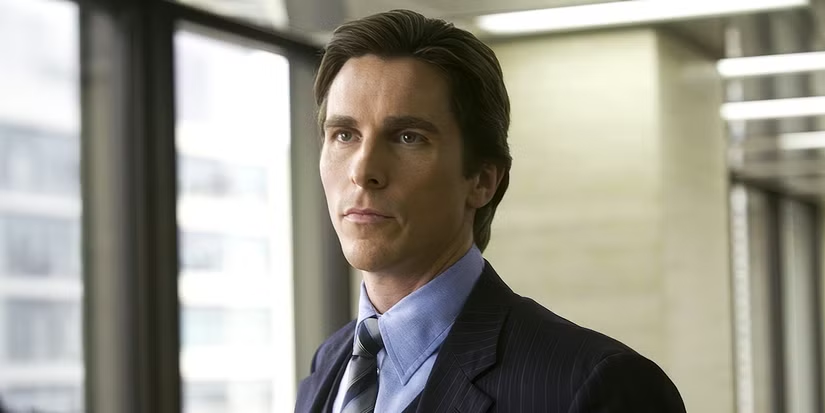
Christian Bale as Bruce Wayne in The Dark Knight.Image via Warner Bros.
Bruce Wayne (Christian Bale) is a risky role because the costume can easily become more interesting than the man. Bale avoids that by treating Bruce as three different public performances before Batman even enters the picture: the careless billionaire act, the controlled private heir, and the wounded obsessive who can only explain himself through mission language. Across the trilogy, Bale makes the body change too. In Batman Begins, Bruce is restless and hungry. In The Dark Knight, he is more disciplined but also more uncertain. In The Dark Knight Rises, he looks like a man whose ideals outlived his strength.
The supporting performances are the reason the trilogy earns a place here. The Joker (Heath Ledger) feels unpredictable without turning him into empty chaos. Gordon (Gary Oldman) gives ordinary decency under impossible pressure. Alfred (Michael Caine) makes his love for Bruce feel warm, angry, and sometimes helpless. Harvey Dent (Aaron Eckhart), Selina Kyle (Anne Hathaway), Bane (Tom Hardy), Scarecrow (Cillian Murphy), and Ra’s al Ghul (Liam Neeson) all understand the world they are in. This trilogy has spectacle, but the actors give it its moral pain.
Advertisement
7
The Vengeance Trilogy (2002–2005)
A scene from Park Chan-wook’s Lady Vengeance starring Lee Young-aeImage via CJ Entertainment.
Park Chan-wook’s vengeance films do not share one continuing cast of characters, so the acting achievement is different. Each film asks performers to enter a world where revenge has already damaged the person seeking it. Nobody gets to play pain in a simple line. In Sympathy for Mr. Vengeance, Ryu (Shin Ha-kyun) is painfully inexpressive without being blank, while Park Dong-jin (Song Kang-ho) turns a grieving father’s rage into something frighteningly human.
ThenOldboy takes everything further through Oh Dae-su (Choi Min-sik), whose performance is physical, humiliating, funny, disgusting, broken, and strangely tender, sometimes within the same stretch of screen time. He plays a man rebuilt by captivity, then destroyed by knowledge. Lady Vengeance depends on Geum-ja (Lee Young-ae) doing something quieter and more difficult. Geum-ja has to seem controlled, holy to some people, terrifying to others, and privately consumed by guilt. The trilogy’s acting is extraordinary because revenge keeps changing shape: panic, grief, performance, obsession, shame, and punishment all demand different emotional languages.
Advertisement
6
The Lord of the Rings Trilogy (2001–2003)
Image via New Line/courtesy Everett Collection
Fantasy acting can go wrong fast when performers either underplay the scale or become too theatrical for the camera. The Lord of the Rings gets the balance right almost everywhere. Frodo (Elijah Wood) gives Frodo a softness that makes the later exhaustion genuinely painful. He plays heroism as endurance that becomes harder to access each time the Ring tightens its hold on him. Sam (Sean Astin) gives the trilogy’s most open heart without making him childish or simple.
The ensemble keeps Middle-earth emotionally readable. Aragorn (Viggo Mortensen) makes Aragorn’s reluctance feel tied to fear of failure, not false modesty. Gandalf (Ian McKellen) gives authority, humor, irritation, grief, and deep affection. Gollum (Andy Serkis) changes the entire trilogy, making him pathetic, funny, frightening, and heartbreaking without letting the digital performance lose human detail. Théoden (Bernard Hill), Éowyn (Miranda Otto), Boromir (Sean Bean), Arwen (Liv Tyler), Saruman (Christopher Lee), and Denethor (John Noble) each add weight to their corners of the story. The acting makes the mythology feel personal.
Advertisement
Collider Exclusive · Middle-earth Quiz Which Lord of the Rings Character Are You? One Quiz · Ten Questions · Your Fate Revealed
Advertisement
The road goes ever on. From the green hills of the Shire to the fires of Mount Doom, every soul in Middle-earth carries a destiny. Ten questions stand between you and the truth of who you are. Answer honestly — the One Ring has a way of revealing what we most want to hide.
💍Frodo
🌿Samwise
👑Aragorn
🔥Gandalf
Advertisement
🏹Legolas
⚒️Gimli
👁️Sauron
🪨Gollum
Advertisement
01
Advertisement
You are handed a responsibility that could destroy you. What do you do? The weight of the world falls on unlikely shoulders.
02
Advertisement
Your closest companion is heading into terrible danger. You: True loyalty is revealed not in comfort, but in crisis.
03
Advertisement
Enormous power is within your reach. Your instinct is: Power corrupts — but only those who reach for it.
04
Advertisement
What does “home” mean to you? Where we long to return reveals who we truly are.
05
Advertisement
When a battle is upon you, your approach is: War reveals what we are made of — whether we like it or not.
06
Advertisement
Someone comes to you for advice in their darkest hour. You: Wisdom is not knowing all the answers — it’s knowing which questions to ask.
07
Advertisement
How do you see yourself, honestly? Self-knowledge is the most dangerous kind.
08
Advertisement
Which of these best describes your relationship with the natural world? Middle-earth speaks to those who know how to listen.
09
Advertisement
You encounter a wretched, pitiable creature who has done terrible things. You: How we treat the fallen reveals the height of our character.
10
Advertisement
When the quest is over and the songs are sung, what do you hope they say about you? In the end, we are all just stories.
The Fellowship Has Spoken Your Place in Middle-earth
Advertisement
The scores below reveal your true character. Your highest number is your match. Even a tie tells a story — the Fellowship was never made of simple people.
💍 Frodo
🌿 Samwise
Advertisement
👑 Aragorn
🔥 Gandalf
🏹 Legolas
⚒️ Gimli
Advertisement
👁️ Sauron
🪨 Gollum
You carry something heavy — and you carry it alone, even when you don’t have to. You were not born for greatness, and that is precisely why greatness chose you. Your courage is not the roaring, sword-swinging kind; it is quiet, stubborn, and terrifying in its refusal to quit. The Ring weighs on you more than anyone can see, and still you walk toward the fire. That is not weakness. That is the rarest kind of strength there is.
Advertisement
You are, without question, the best of them. Not the most powerful, not the most celebrated — but the most essential. Your loyalty is not a trait; it is a force of nature. You would carry the person you love up the slopes of Mount Doom if it came to that, and we both know you’d do it without being asked. The world needs more people like you, and the world is lucky it has even one.
You were born to lead, and you have spent years running from it. The crown is yours by right, but you know better than anyone that right means nothing without the will and the worthiness to back it up. You are tempered by loss, shaped by long roads, and defined by a code of honour you hold to even when no one is watching. When you finally step forward, the world shifts. Because it was always waiting for you.
Advertisement
You have seen more than you let on, and you say less than you know — which is exactly as it should be. You are a catalyst: you do not fight the battles yourself, you ignite the people who can. Your wisdom comes not from books but from an age of watching what happens when it is ignored. You arrive precisely when you mean to, and your presence alone changes what is possible. A wizard is never late.
Graceful, perceptive, and almost preternaturally calm under pressure — you see things others miss and act before others react. You do not need to make a scene to be remarkable; your presence speaks for itself. You are loyal to those you choose to stand beside, and that choice is not made lightly. You have lived long enough to know that the most beautiful things in this world are also the most fragile, and that is why you fight to protect them.
Advertisement
You are loud, proud, and absolutely formidable — and beneath all of that is one of the most fiercely loyal hearts in Middle-earth. You don’t do anything by half measures. Your friendships are forged like iron, your grudges run as deep as mines, and your courage in battle is the kind that makes legends. You came into this fellowship suspicious of everyone and ended it willing to die for an elf. That is not a small thing. That is everything.
You think in centuries and act in absolutes. Order, dominion, control — not because you are cruel by nature, but because you have decided that the world left to itself always falls apart, and you are the only one with the vision and the will to hold it together. You were not always this. Something was lost, or taken, or betrayed, and the version of you that stands now is the answer to that wound. The tragedy is that you’re not entirely wrong — just entirely too far gone to course-correct.
Advertisement
You are a study in contradiction — pitiable and dangerous, cunning and broken, capable of both cruelty and something that once resembled love. You are defined by loss: of innocence, of self, of the one thing that gave your existence meaning. Two voices war inside you constantly, and the tragedy is that the better one sometimes wins, just not often enough, and never at the right moment. You are a warning, yes — but also a mirror. We are all a little Gollum, given the right ring and enough time.
Advertisement
5
The Human Condition Trilogy (1959–1961)
Tatsuya Nakadai as Kaji in The Human Condition III: A Soldier’s Prayer (1961)Image via Shochiku
Advertisement
There are performances that feel impressive, and then there is Kaji (Tatsuya Nakadai), which feels almost physically punishing to watch by the end. Across Masaki Kobayashi’s trilogy, Kaji begins as a principled man trying to protect Chinese laborers under Japanese imperial rule, then is forced into military life, war, defeat, hunger, and moral isolation. Kaji never becomes a clean symbol of goodness. That is the greatness of the performance. He is sincere, stubborn, naïve, angry, frightened, proud, and sometimes wrong even when his conscience is right.
The acting has to carry an enormous historical and ethical burden without flattening Kaji into a lesson. Kaji’s face changes across the three films in a way that feels severe and earned. His eyes lose expectation. His voice becomes harsher. His attempts to argue with power become more desperate because he understands the cost better each time. Michiko (Michiyo Aratama) is just as essential because her love for Kaji never feels decorative. She represents the life he keeps trying to deserve and keeps being pulled away from. Few trilogy performances show idealism being tested this completely.
4
The Apu Trilogy (1955–1959)
Image via Aurora Film Corporation
Advertisement
The acting in The Apu Trilogy is devastating because so much of it feels unforced. Satyajit Ray’s films ask performers to show life changing through small domestic gestures, disappointments, silences, and moments of joy that pass quickly. In Pather Panchali, young Apu and Durga are played with such natural curiosity that the film seems to remember childhood from the inside. Harihar (Kanu Banerjee) gives warmth and weakness, while Sarbajaya (Karuna Banerjee) becomes one of cinema’s great portraits of maternal strain.
The later films deepen everything. Apu grows through different performers, and the trilogy allows that change to feel natural rather than disruptive. Adolescent Apu (Smaran Ghosal) captures the adolescent pull between home and education in Aparajito. Adult Apu (Soumitra Chatterjee) gives charm, intelligence, romantic surprise, and later a grief so severe that it changes how he moves through the world. Aparna (Sharmila Tagore) is unforgettable because she turns a sudden marriage into something tender with tiny shifts of trust and amusement. The performances never beg for attention. They become powerful because they feel completely tied to ordinary life.
3
The Three Colours Trilogy (1993–1994)
Juliette Binoche in ‘Three Colours: Blue’Image via mk2 Diffusion
Advertisement
The Three Colours Trilogy needed actors who can make abstract ideas feel painfully private and it nailed that part. Blue belongs to Julie (Juliette Binoche), and her work is almost frightening in its restraint. Julie loses her husband and child, then tries to detach from memory, music, friendship, and desire. Julie shows that refusal through her breathing, her stillness, the way she listens, and the way pain interrupts her even when she tries to control the room around her.
White shifted into a completely different acting register. Karol (Zbigniew Zamachowski) is wounded, funny, humiliated, petty, and determined without losing sympathy, while Dominique (Julie Delpy) gives enough sharpness to keep the film from making their marriage too easy to judge. Red is the most generous of the three, and Valentine (Irène Jacob) has a rare openness that never feels naïve. Opposite her, the retired judge (Jean-Louis Trintignant) is cold, ashamed, amused, and lonely in ways that slowly become moving. The acting across the trilogy is remarkable because each film uses a different emotional temperature and every lead adjusts perfectly.
2
The Before Trilogy (1995–2013)
Image via Columbia Pictures
Advertisement
This ranking would collapse without Jesse (Ethan Hawke) and Céline (Julie Delpy) near the top. Hawke and Delpy play two people learning how their own charm changes with age. In Before Sunrise, Jesse and Céline are curious, flirtatious, insecure, clever, and young enough to think one night can reveal everything. The performances have awkwardness built into them, which is why the romance feels alive instead of polished.
Nine years later in Before Sunset, the acting becomes sharper and more guarded. Jesse uses jokes and stories to hide regret. Céline keeps shifting between warmth, anger, and self-protection because she knows exactly what that Vienna night cost her. In Before Midnight, Hawke and Delpy make long-term love feel brutally specific: interruptions, old complaints, parenting fatigue, sexual history, intellectual sparring, resentment, tenderness, and the terrible skill of knowing how to hurt someone precisely. The achievement is almost unfair. You do not feel actors returning to roles and instead, feel two people carrying eighteen years of unfinished conversation.
1
The Godfather Trilogy (1972–1990)
Marlon Brando as Don Vito Corleone, getting a message from someone in The Godfather.Image via Paramount Pictures
Advertisement
No trilogy gives actors more room to show power changing people than The Godfather. Michael Corleone (Al Pacino) is one of cinema’s great long-form performances because the transformation is so carefully measured. In the first film, Michael watches the family business with distance, then starts making choices that narrow his soul without him fully admitting it. In the second, he has become controlled, suspicious, brilliant, and emotionally unreachable. In the third, he wants forgiveness, but Michael makes that desire feel trapped inside a man who still knows how to command before he knows how to confess.
The surrounding performances are just as essential. Vito Corleone (Marlon Brando) gives warmth, calculation, age, and authority without ever needing to raise the performance into caricature. Young Vito Corleone (Robert De Niro) becomes a separate person rather than a Brando imitation. Kay (Diane Keaton) gives the trilogy’s clearest moral injury. Fredo Corleone (John Cazale) is weak, loving, resentful, and unbearable to dismiss. Connie Corleone (Talia Shire), Sonny Corleone (James Caan), Tom Hagen (Robert Duvall), Vincent Mancini (Andy Garcia), and Don Altobello (Eli Wallach) all add different kinds of family pressure. The acting is top-notch because every major relationship changes meaning as the trilogy continues. Love becomes leverage. Loyalty becomes fear. Family becomes the place where nobody survives untouched. When you look back and understand that Francis Ford Coppola made the first film in 1972, it feels unreal.
Based on the Off-Campus book series by Elle Kennedy, the show follows an elite ice hockey team and the women in their lives as they “grapple with love, heartbreak and self-discovery — forging deep friendships and enduring bonds while navigating the complexities that come with transitioning into adulthood,” per the official synopsis.
Season 1 focused on Hannah (Ella Bright) and Garrett (Belmont Cameli), but despite Logan’s (Antonio Cipriano) story being based on the books, Dean (Stephen Kalyn) will be the focus next and then Tucker (Brooks) is expected to follow after Logan’s turn.
“You’re gonna see a lot of Tucker becoming this guy that he’s known to be in the books,” Brooks exclusively told Us Weekly in May 2026 about his character’s journey in season 2.
Advertisement
Despite there still being plenty of time for the show to introduce Sabrina, fans have been eagerly awaiting cast news. Luckily, some actresses, including Chandler Kinney and Shabana Azeez, have weighed in on the possibility of them appearing on the highly anticipated role.
Keep scrolling to see the most popular fan casts for Sabrina:
Chandler Kinney
Theo Wargo/Getty Images)
Kinney is booked and busy coming off Pretty Little Liars but she just wrapped the first two seasons of Elle … and told Us she would love to venture over to the Off Campus set for the role of Sabrina.
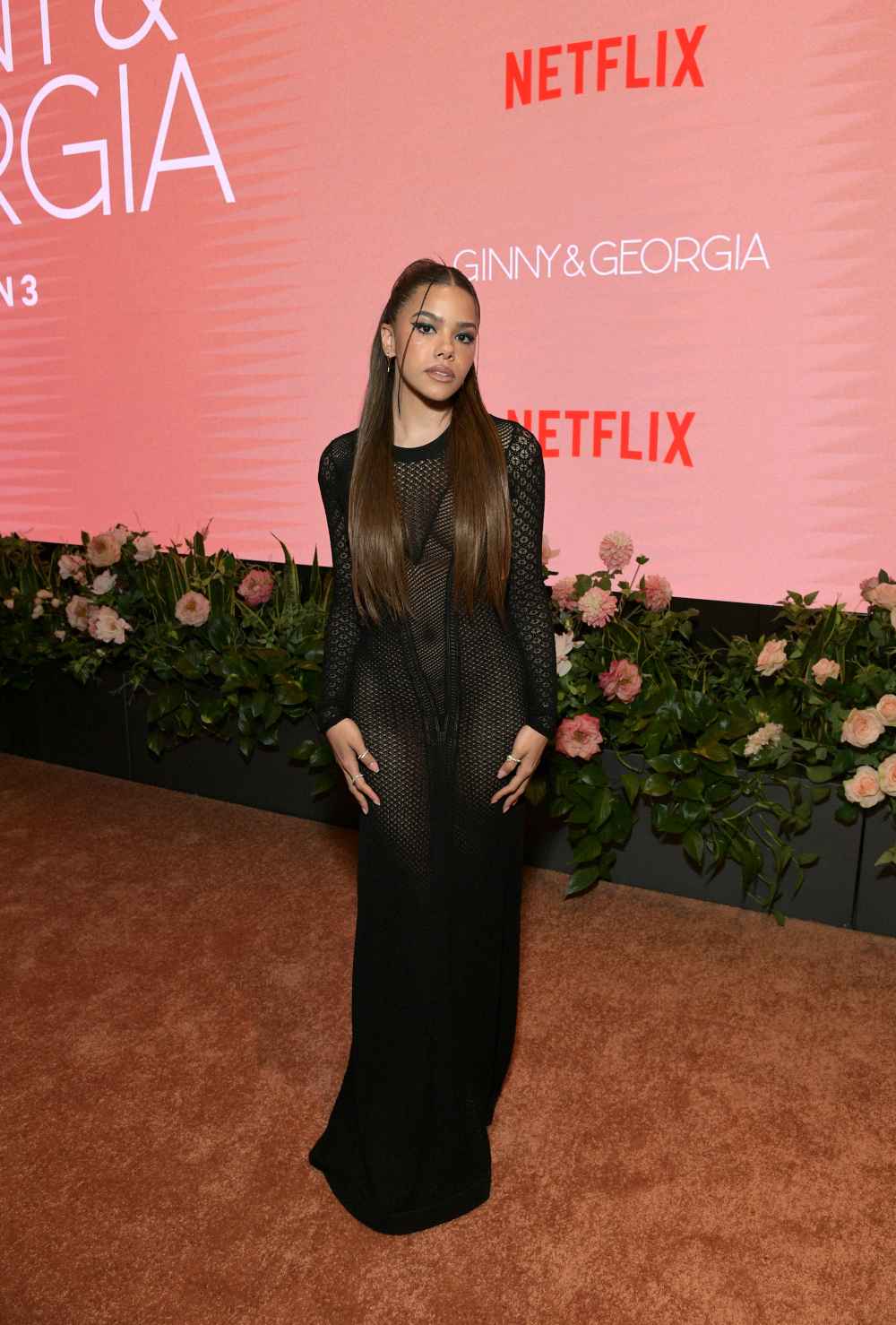
Antonia Gentry
Charley Gallay/Getty Images for Netflix)
When Gerry isn’t focused on Ginny & Georgia, something tells Us she would nail it as Sabrina.
Maitreyi Ramkrishnan
Jamie McCarthy/Getty Images for Christian Siriano)
Fresh off Never Have I Ever (and a mysterious role in season 2 of Elle), Ramakrishnan is due for another project centered on romance.
Shabana Azeez
Don Arnold/Getty Images for AACTA)
If The Pitt fans won’t get to see Javadi and Mateo date on the HBO show, then the least Azeez and Brooks can do is play love interests somewhere else. It doesn’t hurt that Azeez has already given her stamp of approval to play Sabrina — as long as she doesn’t have to play hockey.
Sydney Park
Before becoming a popular fancast choice, Park appeared on The Walking Dead, Pretty Little Liars: The Perfectionists and more.
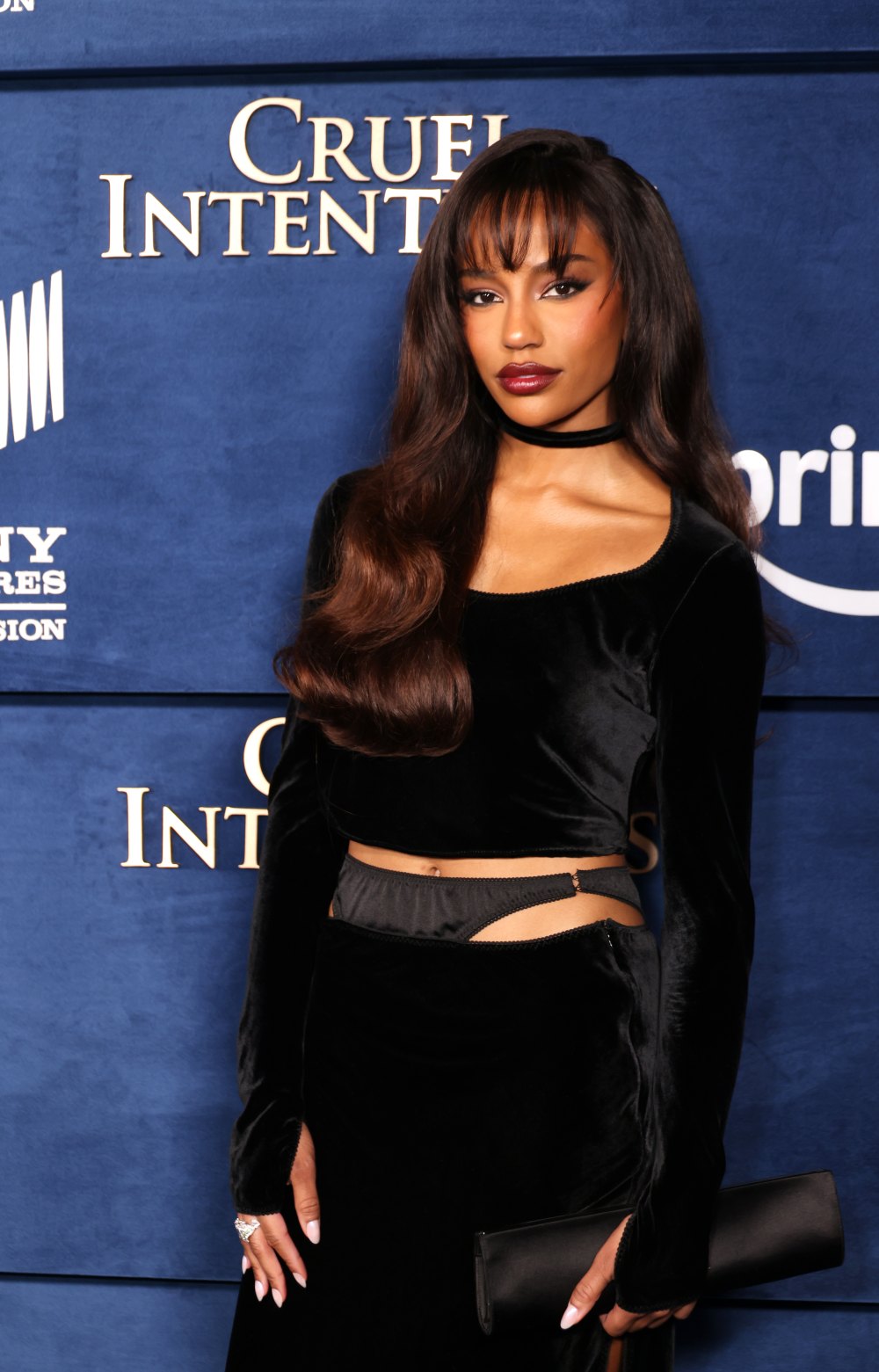
Savannah Lee Smith
Anna Webber/Getty Images for Prime Video)
The Gossip Girl and Cruel Intentions alum could be the perfect opposite for Brooks on Off Campus.
Isabella Briggs
Michael Loccisano/Getty Images)
Briggs needs to be more booked after The Summer I Turned Pretty and there’s no better time than now with Off Campus.
Thank You!
You have successfully subscribed.
Advertisement
Sofia Wylie
Kate Green/Getty Images for Netflix)
High School Musical: The Musical: The Series proved that we need more of Wylie on our screens — preferably in a romance project.
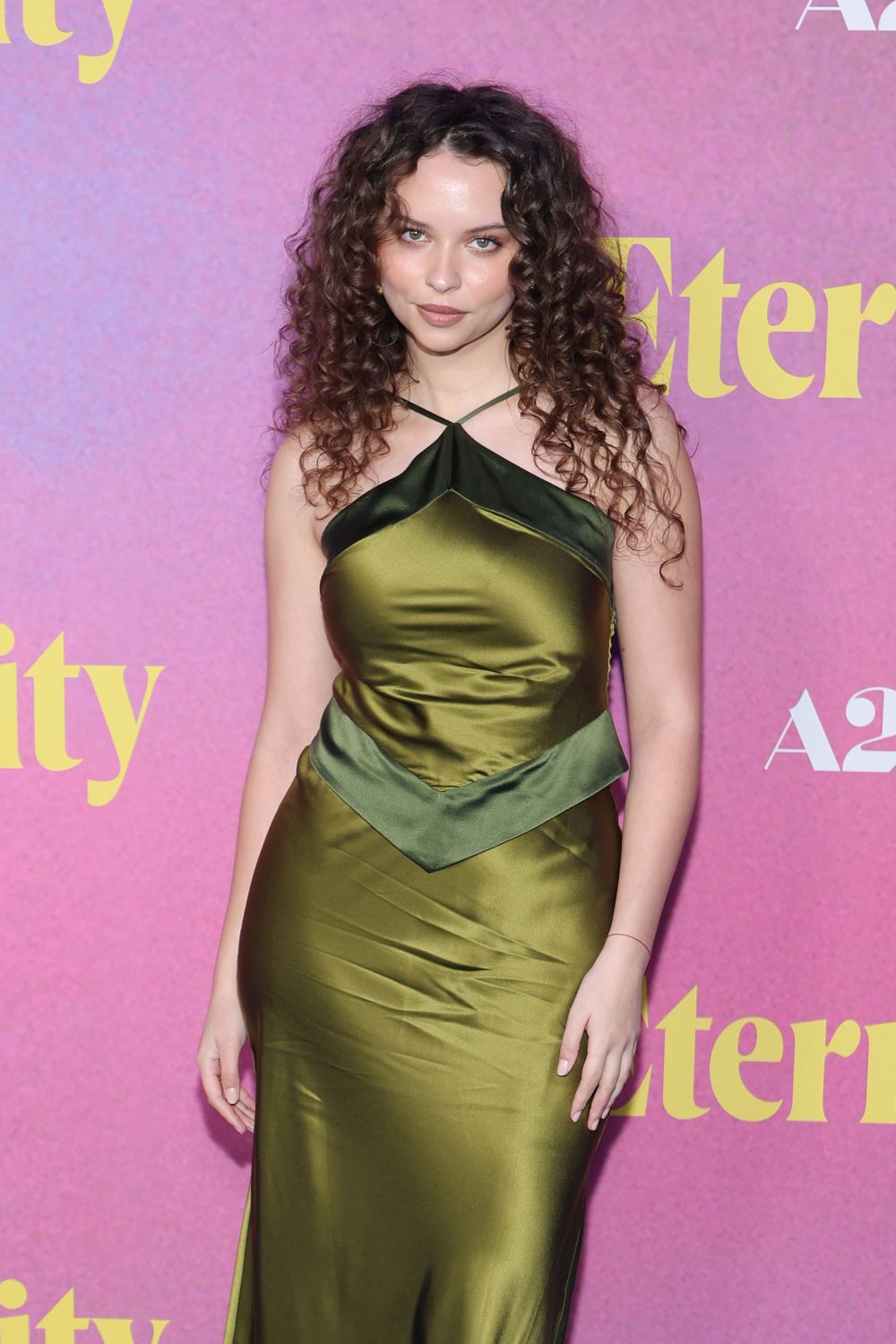
Rainbow Wedell
Wedell is best known for her roles in The Wilds, School Spirits and more.
Lexi Underwood
Kevin Win
Us has had our eye on Underwood after her time on Little Fires Everywhere and Cruel Summer.
Roomies, Big Tigger is making headlines after a serious situation involving his wife, Alicia Brown, took another turn. As more information continues to come to light, newly surfaced footage and court filings are shedding light on allegations that have now sparked widespread conversation online.
According to TMZ, Ring camera footage from inside the couple’s home appears to capture part of an alleged May 9 altercation between Big Tigger and Alicia Brown. In the video, Alicia allegedly tells someone to “take a picture” before Big Tigger approaches her, grabs her by the neck, and tells her to stop. The footage then shows him grabbing her arms as the two struggle while Alicia repeatedly yells, “Get off of me!” Moments later, the pair move out of the camera’s frame behind a door before a loud noise is heard, followed by what sounds like Alicia crying.
⚠️ CONTENT WARNING ⚠️ 🚨 Security footage in Big Tigger’s home appears to capture part of a fight with his wife, including his alleged assault of her … TMZ has learned.
Alicia Brown Addressed “False Narratives” On Instagram
On Thursday, June 25, Alicia Brown shared a message on her Instagram Story, saying the past few weeks had been difficult and expressing frustration over what she called “false narratives” and attacks surrounding the situation. She also said she took “full responsibility” for posting the video of her injuries but added that the “lack of accountability, remorse and acknowledgement” had weighed heavily on her. Brown concluded by asking for patience as she works with her legal team and determines the appropriate platform to share more about what happened.
Court Documents Detail Alleged Altercation
As previously reported, an arrest warrant issued on Saturday, June 20, revealed additional details about the alleged incident that led to Big Tigger’s arrest. Alicia Brown reportedly told investigators the altercation began after she confronted him over text messages with a woman he worked with. Brown alleged that Big Tigger then called her a “psycho.” Additionally, he admitted to deleting other messages, and began recording her before the argument turned physical. Furthermore, she claimed he tackled her to retrieve his phone. He also allegedly shoves her into a door inside their home office. Moreover, this reportedly caused a deep laceration above her left eye.
Authorities reportedly reviewed Ring camera footage of the incident. Meanwhile, medical staff later contacted police after Brown sought treatment for her injuries. Investigators also noted that the couple’s 13-year-old son was home during the alleged incident. Therefore, the event lead to a third-degree cruelty to children charge.
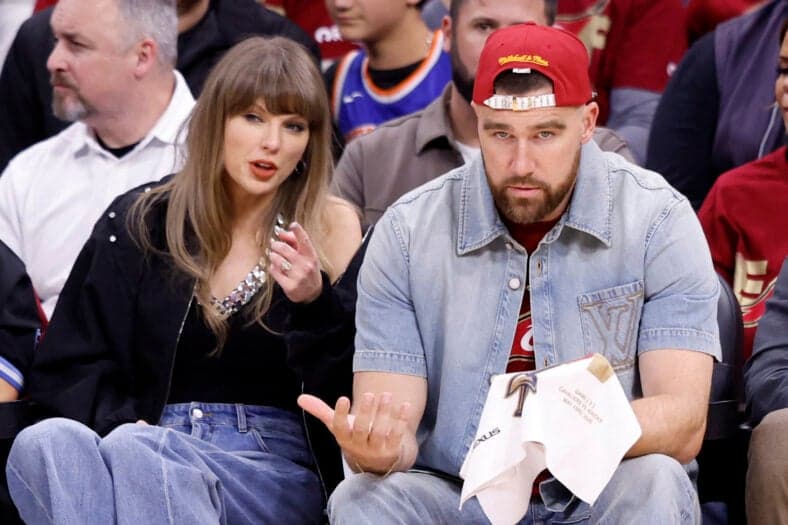
Taylor Swift and Travis Kelce continue to fuel speculation about their wedding celebration, which will reportedly take place at Madison Square Garden.
Reports of celebrity guests, with surprise performances from A-list stars, and multiple planned events have sparked intense interest among fans.
At the same time, a playful exchange between Travis Kelce and his brother has reignited conversations about marriage and family, with many connecting the jokes to themes in Taylor Swift’s music.
Annie Wermiel/New York Post/MEGA
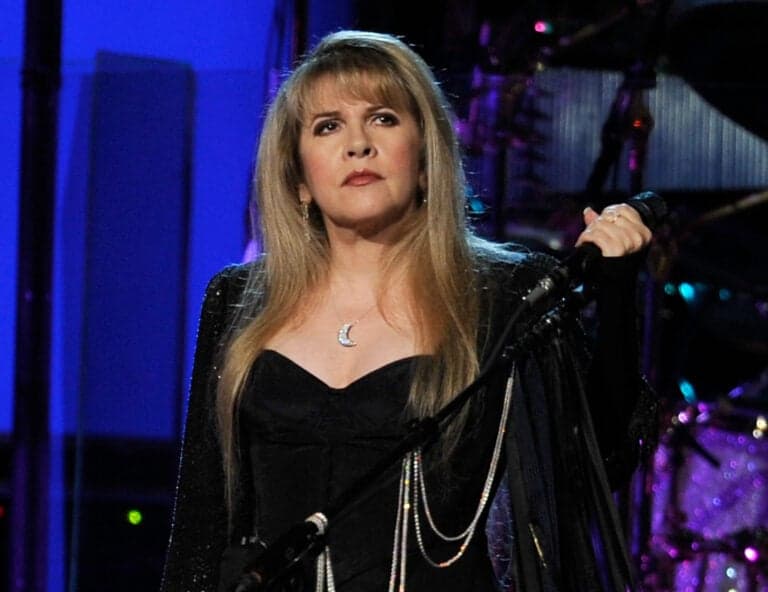
According to Page Six, Swift and Kelce’s wedding celebrations could include performances from music legends Stevie Nicks and Tim McGraw.
The latter holds special significance for Swift, whose debut Billboard hit as a teenager was the song “Tim McGraw.”
Advertisement
Adding fuel to the rumors, fans have pointed to Swift’s recent appearance at Game 4 of the NBA Finals at Madison Square Garden, where she wore a shirt featuring the phrase “Stevie Knicks,” a move some believe may have been a subtle hint in true Swift fashion.
MEGA
Sources claim the guest list is massive, with one industry insider suggesting the gathering could rival the scale and star power of the Met Gala.
Public records show permits have been approved for events at Madison Square Garden, including a large gathering expected to host more than 1,000 attendees and a separate, smaller event believed to be a rehearsal dinner.
The Singer’s Wedding Reportedly Has Nashville In A Frenzy As Country Stars Adjust Their Schedules
Aaron Josefczyk Newscom/MEGA
Despite the excitement, some sources close to the singer suspect the actual wedding ceremony may not take place during the highly publicized celebrations.
Several insiders believe Swift and Kelce could choose to exchange vows privately before the larger festivities begin, and considering their net worths, the couple can certainly afford multiple ceremonies.
Meanwhile, Nashville has become a hub of speculation. Rumors are circulating that several country music stars have adjusted their schedules around the reported wedding dates, prompting speculation that they may attend.
Advertisement
Names frequently mentioned include Kenny Chesney, Kesha, Dierks Bentley, members of Little Big Town, Sugarland, and Kelsea Ballerini.
Beatles Legend Paul McCartney Could Do A Surprise Performance During Taylor Swift And Travis Kelce’s Wedding
MEGA
Swift and Kelce’s reported guest list spans music, film, television, and sports. Friends and longtime collaborators such as Abigail Anderson, the Haim sisters, Ed Sheeran, Jack Antonoff, Margaret Qualley, Selena Gomez, Benny Blanco, Cara Delevingne, Gigi Hadid, Bradley Cooper, Suki Waterhouse, and Mariska Hargitay are all rumored to be invited.
There is also talk that the Madison Square Garden event could feature surprise performances from multiple artists. Among the names being discussed is Paul McCartney, who famously shared a stage with Swift during the 40th anniversary celebration of Saturday Night Live.
Although McCartney is reportedly overseas, his daughter, fashion designer Stella McCartney, is believed to be among the guests and may even contribute to Swift’s wedding wardrobe.
Some Notable Faces May Be Absent From The Power Couple’s Wedding
ZUMAPRESS.com / MEGA
Like Swift, Kelce also has a star-studded guest list, which includes several NFL figures, such as teammates and fellow players from around the league.
Reports also suggest that “Saturday Night Live” cast members could be in attendance due to the couple’s strong connections to the show.
Advertisement
However, one notable absence from the rumored guest list is Blake Lively, following reports of a strain in her friendship with Swift amid ongoing legal controversies involving actor-director Justin Baldoni.
Recently, it was also revealed that Swift was no longer on good terms with Keleigh Teller, due to a difference in lifestyles, with sources telling TMZ that the model and her husband, actor Miles Teller, might not attend the singer’s wedding if they don’t resolve their issues before the big day.
Jason Kelce References Taylor Swift Lyric While Teasing Travis About Future Kids
Danny Mahoney/Wynn Las Vegas/MEGA
As wedding rumors continue to swirl, the couple sparked fresh discussion about their future during a recent episode of the “New Heights” podcast. During a sponsored segment, Travis and his brother Jason Kelce jokingly discussed the possibility of the Kelce family growing in the years ahead.
Referencing one of Swift’s lyrics, Jason playfully imagined a future neighborhood filled with children who are Travis’ “look-alikes.”
“Do I sense a Kelce family reunion in the works? We really don’t have a big family. It might be nice to meet some of the Kelce relatives that we don’t know,” Jason quipped per The Blast.
Advertisement
Travis laughed along and admitted he could picture having a larger family one day and would put it on his “wish list,” though the exchange was clearly made in jest.
The conversation quickly prompted fans to connect the remarks to Swift’s latest music. On her recent album, “The Life of a Showgirl,” the song “Wish List” explores dreams of love, family life, and the possibility of building a lasting future with someone.
























:max_bytes(150000):strip_icc():format(jpeg)/drag-race-2-062526-f92404d1926742ff9cf260640b9237b8.jpg)
































You must be logged in to post a comment Login