

Business
Coherent: Architect Of Post-Electrical AI Datacenters Against Compute Deflation Trap




Regenxbio: 'Strong Buy' On FDA Course Reversal For NAVSUNLI And Potential AA DMD Filing
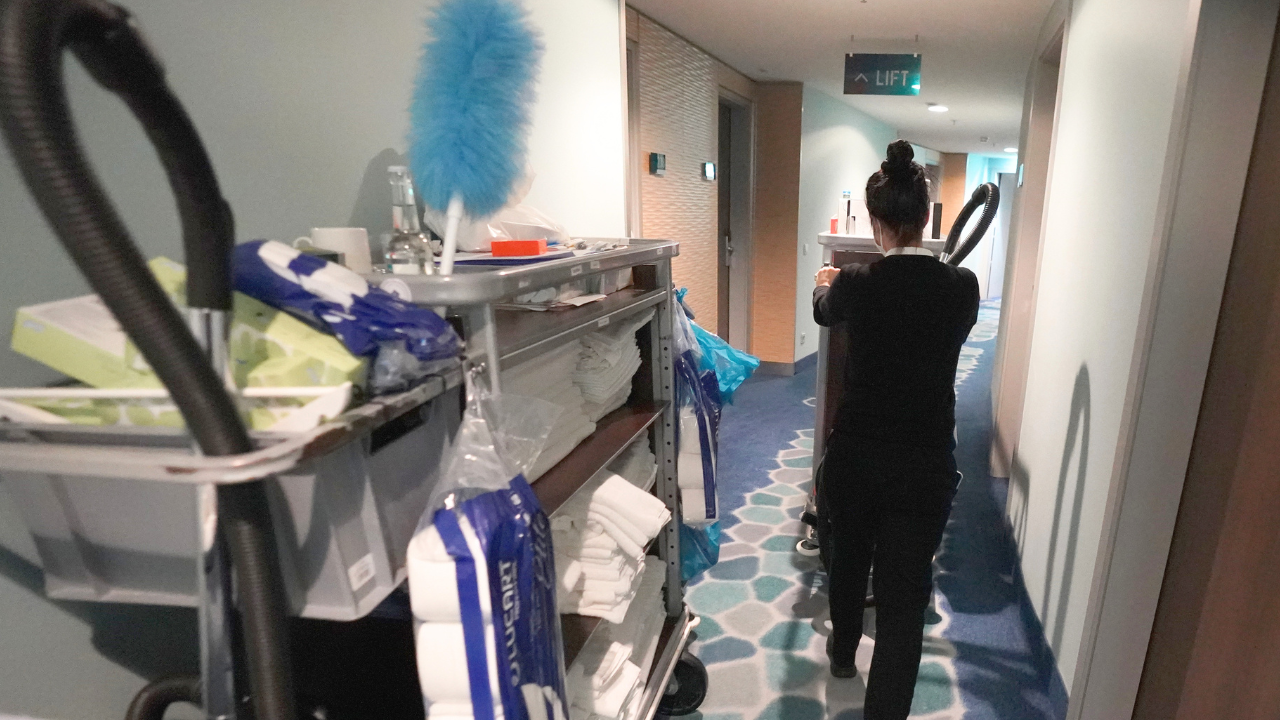
Los Angeles is delaying a hotel pay mandate that would raise wages to $30 an hour by 2028 after industry leaders warned the increase from $22.50 is causing job cuts and hiring freezes, according to Rebekah Paxton of the Employment Policy Institute.
Los Angeles officials have delayed implementation of a controversial plan to raise the minimum wage for hotel and airport workers to $30 an hour after the hospitality industry warned the mandate could result in layoffs, reduced hiring and increased automation.
The measure, often referred to as the “Olympic Wage,” was originally designed to increase wages to $30 an hour by 2028 as Los Angeles prepares to host the Summer Olympics.
But city leaders recently voted to push back full implementation until 2030 amid concerns about rising labor costs as hotels prepare for a surge in visitors tied to the 2026 FIFA World Cup and the 2028 Olympics.
AOC-BACKED $25 MINIMUM WAGE COULD SQUEEZE SMALL BUSINESSES IN RED STATES
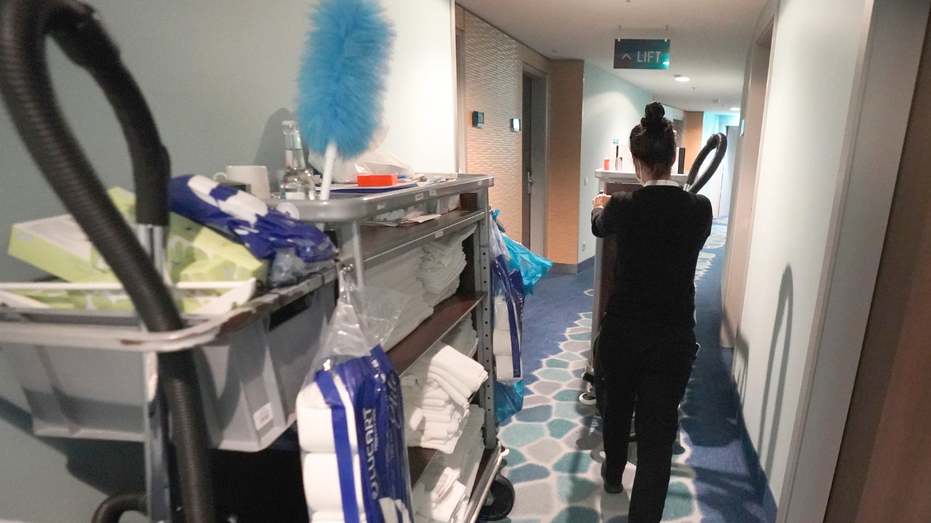
Supporters say a $30 minimum wage would help Los Angeles hotel workers keep pace with the city’s high cost of living, while opponents warn it could reduce jobs. (Marcus Brandt/picture alliance/Getty Images / Getty Images)
Rebekah Paxton, research director at the Employment Policies Institute, said city leaders began reconsidering the timeline after concerns emerged from the hospitality industry ahead of several major international events.
“There were concerns from the hotel community,” Paxton told Fox News Digital. “There was some data that came out that the hotels were struggling ahead of the Olympics, even as we’re approaching the World Cup this summer.”
The proposal also comes as New York City officials consider a separate plan to raise the city’s minimum wage to $30 an hour over several years, a concept aligned with broader progressive efforts to increase wage floors in high-cost areas.
AOC-BACKED $25 MINIMUM WAGE PLAN SOUNDS GREAT — BUT AT WHAT COST?

Los Angeles will welcome athletes from around the world for the 2028 Summer Olympics as city leaders weigh policies aimed at preparing for the global event (Frederic J. Brown/AFP/Getty Images / Getty Images)
Paxton noted that hotel workers currently earn a minimum wage of roughly $22.50 an hour, meaning the proposal would raise pay by about one-third over just a few years. She said hotel operators warned the higher labor costs were already affecting hiring decisions as Los Angeles prepares for the World Cup and Olympics.
Citing a report from the Los Angeles hotel industry, Paxton said some hotels had reduced hiring and staffing because they could not absorb the anticipated labor costs.
City officials ultimately voted to delay the $30 wage requirement from 2028 to 2030, a move Paxton said gives hotels “a little bit of breathing room as we ramp up toward the Olympics.”
Still, she argued the delay does not resolve the industry’s underlying concerns.
“A $30 minimum wage is still a $30 minimum wage,” Paxton said. “A pause is certainly a step in the right direction, but it’s not going to solve the ultimate problem, which is a lot of folks saying that they can’t sustain that level of a wage increase.”
Paxton said supporters of the wage increase argue workers should receive higher pay, particularly as Los Angeles prepares to welcome millions of visitors for upcoming international sporting events.
“For proponents of this $30 minimum wage, this is sort of a junction where they can sort of make an emotional plea to the public,” Paxton said. “And of course, who doesn’t want to give workers more money?”
However, Paxton argued the higher wage requirement could further strain an industry that has already experienced hiring challenges.
GET FOX BUSINESS ON THE GO BY CLICKING HERE
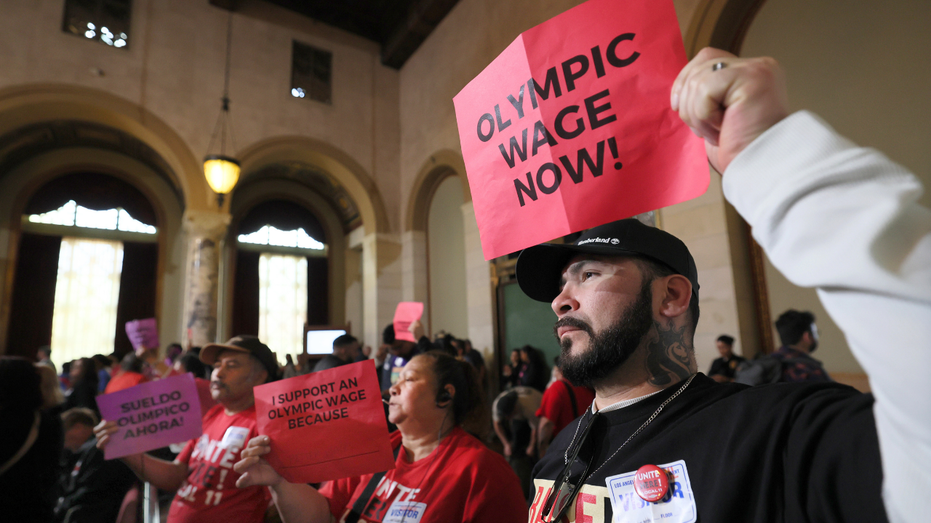
Los Angeles officials delayed a plan to raise the minimum wage for hotel and airport workers to $30 an hour until 2030. (Allen J. Schaben / Los Angeles Times via Getty Images / Getty Images)
“My team at EPI has done some work looking at the hotel industry since 2015,” she said. “And even before this went into place, hiring was stagnating. There were fewer jobs available for folks who wanted to be in the hospitality industry.”
“And so, by proposing this kind of super-sized hotel minimum wage on top of what already existed, you’re just going to exacerbate those negative economic impacts.”
The debate over the so-called Olympic Wage is expected to continue as Los Angeles prepares for a series of major international events while city leaders weigh competing priorities of worker pay, business costs and economic growth.
Selling a company is, for many business owners, the first time they have ever needed a private bank. For years — sometimes decades — their capital was tied up in their enterprise. When that changes, the transition can be abrupt.
Mirabaud & Cie (Europe) SA, the European arm of the Geneva-founded Mirabaud Group, has designed its model notably around that moment. Émilie Serrurier-Hoël, who became CEO of the Luxembourg-based entity in June 2025, describes a structure that works with entrepreneurs before a sale closes — not after. The Bank coordinates with both in-house advisory services and external partners to help clients structure their assets and plan for family succession ahead of a business transfer.
What sets this approach apart is the nature of the platform itself. Rather than positioning as a traditional private bank, Mirabaud & Cie (Europe) SA functions closer to what Serrurier-Hoël calls a large family office — one that retains the full infrastructure of a regulated bank. Clients get access to relationship managers, investment specialists, and management, with a service model built for long-term engagement rather than transactional volume.
A Platform Across Six Markets
Mirabaud & Cie (Europe) SA operates from six locations across the continent: Luxembourg, Paris, Madrid, Barcelona, Valencia, and London. Luxembourg serves as the entity’s booking center and regulatory anchor. Each national office adapts the Group’s investment approach to local tax and regulatory conditions, while overall portfolio direction is set at the Group level.
For entrepreneurs whose interests often span multiple jurisdictions, that structure carries practical weight. A French business owner selling a family company faces different succession rules than a counterpart in Spain. Mirabaud’s presence in each market means the Bank draws on local knowledge without applying a uniform solution.
Nicolas Mirabaud, Managing Partner of Mirabaud Group, has noted that Luxembourg’s combination of political stability and openness to international talent makes it a key hub for the Group’s European operations. Talent recruitment remains competitive in the Grand Duchy, but its status as a business-friendly financial center supports the platform’s ability to serve clients with cross-border needs.
Private Assets as a House Practice
Mirabaud’s approach to private assets sets it apart from firms that have recently added alternatives to their menus. The Group has committed capital to private markets over multiple generations — a history that shapes how the Bank offers similar access to clients. Structures include semi-liquid evergreen strategies providing access to leading private equity managers, as well as direct co-investments through club deals.
Nicolas Mirabaud has described the club deal process as deliberate: each opportunity is vetted for portfolio fit, regulatory compatibility, and tax treatment before being presented to clients with the appropriate risk profile. These are not broadly distributed products — they are offered selectively, consistent with a relationship-based model.
For entrepreneurs who have spent years building illiquid wealth in a single business, gaining access to private market opportunities through a bank that invests alongside them carries a different quality of alignment than a standard wealth management relationship.
A Two-Century Perspective on Succession
Mirabaud Group was founded in Geneva in 1819 and has remained family-controlled across seven generations. Nicolas Mirabaud currently serves as Managing Partner alongside Camille Vial and Lionel Aeschlimann. That continuity shapes how the Group approaches client relationships — not as account holders to be managed through a lifecycle, but as families whose interests evolve over decades.
Serrurier-Hoël describes a growing demand from clients who want the Bank to engage with the next generation — not by revealing the full details of the family’s wealth upfront, but by gradually familiarizing heirs with investment concepts and decisions. Mirabaud has developed programming to support that, including the Mirabaud Academy, which brings clients’ children to the Bank for multi-day educational experiences each year.
“Our mission is to ensure our clients’ assets are secure today and positioned for growth tomorrow,” Serrurier-Hoël said in a 2025 publication.
That framing — security first, growth second — reflects a long-term orientation that runs through the Group’s two centuries of history. For entrepreneurs stepping away from the enterprise that defined their careers, it is precisely the kind of continuity that matters.

Harbor Capital is an asset manager focused on curating an intentionally select suite of active ETFs that they believe have the potential to produce compelling, risk-adjusted returns within a portfolio. Note: This account is not managed or monitored by Harbor Capital, and any messages sent via Seeking Alpha will not receive a response. For inquiries or communication, please use Harbor Capital’s official channels.

InvestingPro Fair Value flagged Opendoor drop before 49% decline
Ask a finance director about the events line in the marketing budget and you tend to get a raised eyebrow. Events are visible, expensive and hard to measure, which makes them an easy target when money is tight.
Yet for all the scrutiny, businesses are putting more into in-person events, not less. After a few years of doing almost everything on a screen, the room has come back into fashion, and the brands bringing it back are not doing so on a whim. They have worked out that a well-run event still earns its keep, provided you are honest about where the return actually comes from.
The question every finance director asks
The challenge with events has always been attribution. A campaign on paid search hands you a cost per click and a conversion rate. An event hands you a roomful of people and a feeling that it went well. The temptation is to conclude that the channel you can measure neatly is the one that works, and the one you cannot is indulgence.
That is a mistake, and a common one. The fact that something is hard to measure does not make it ineffective; it makes it harder to defend in a spreadsheet. Plenty of the most valuable things a business does, building trust with a major client, aligning a leadership team, giving a launch enough momentum to carry itself, resist a tidy cost-per-acquisition figure. Events sit squarely in that category. The job is not to pretend they behave like performance marketing. It is to understand the specific kind of value they create and to track it on its own terms.
Where the return actually comes from
Strip an event back and the return tends to come from four places.
The first is pipeline. A focused event with the right people in the room compresses months of relationship-building into a single evening. Conversations that would have taken a quarter of back-and-forth happen over dinner. For complex, high-value sales, that acceleration is worth far more than the raw cost of the night.
The second is retention and trust. It is cheaper to keep a client than to win one, and nothing reinforces a relationship like time and attention in person. An existing customer who spends an evening with your team, your product and your other clients leaves more committed than any email sequence could manage.
The third is brand. A launch or a flagship event is a statement about who you are, made in three dimensions. Where you hold it, how it feels, the standard of the detail; all of it tells your market something about your seriousness and your taste. That signal compounds long after the night itself.
The fourth, and the most underrated, is your own people. Bringing a dispersed, hybrid workforce together with purpose does something no all-hands video call achieves. It rebuilds the shared sense of mission that quietly erodes when everyone works from their spare room. Engagement and retention are real numbers with real costs attached, and the in-person gathering moves them.
None of these fit neatly under a single conversion metric, but all of them can be tracked: opportunities created and accelerated, renewal and retention rates, brand and earned-media lift, employee engagement scores before and after. Measure those, and the events line stops looking like a leap of faith.
Hybrid as a multiplier, not a replacement
The pandemic-era assumption was that streaming would replace the room. In practice, the businesses getting the most from events use broadcast to multiply the room instead. The people present get the full experience, the relationships and the spectacle, while a wider audience gets a polished window onto it. One event can now serve the hundred people in attendance and the thousands watching live or later, each at the right level of intimacy.
That changes the maths in your favour. The cost of the event is carried by a much larger reach, and the content produced on the night, the keynote, the panel, the product reveal, has a second life across your channels for months afterwards. The organisations that plan for this from the outset, designing the in-person experience first and the broadcast around it, get two assets for the price of one.
The venue is part of the equation
Here is the part that is easy to underestimate: the venue is not a cost centre sitting underneath the event, it is part of what generates the return. When the goal is trust, brand signal and a genuine experience, the building does a meaningful share of the work. A space that adapts from conference to reception across a single day, that has the production infrastructure built in rather than bolted on, and that impresses the moment guests arrive, lifts everything that happens inside it.
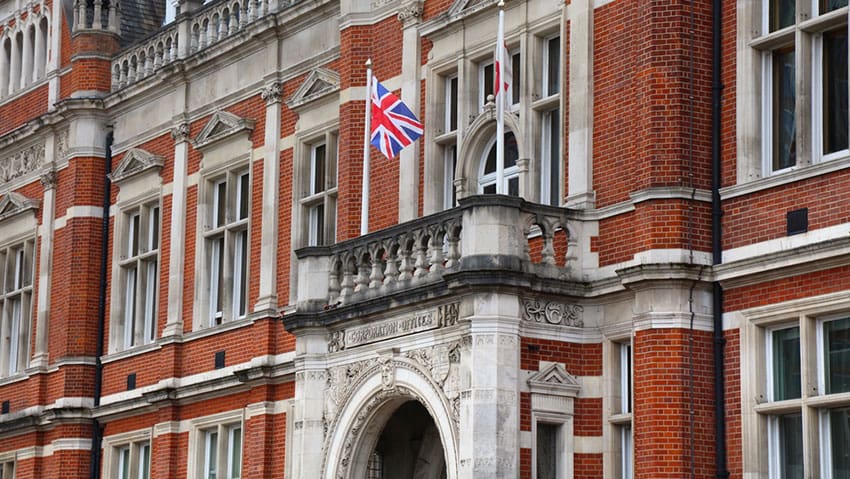
This is why a new generation of London venues has invested so heavily in flexibility and character. Town Hall Spaces in King’s Cross is a useful illustration: a restored neo-classical landmark, reimagined with contemporary interiors and broadcast-ready technology integrated into the fabric of the building, operated by a group with a track record of producing events for the likes of Chanel and the Royal Family. Brands including Adidas, Prada and Sony have used spaces of this kind precisely because the setting does part of the persuading for them. The lesson for any business weighing an event is that the venue is not where the budget leaks away; chosen well, it is where a good deal of the value is made.
The honest bottom line
In-person events are not free, and they are not magic. Run without a clear objective, in a forgettable space, measured against the wrong metric, they will indeed look like money poorly spent. Run with a sharp purpose, in a setting that does them justice, with the right people in the room and a plan to measure pipeline, retention, brand and engagement, they remain one of the most powerful tools a business has.
The screen earned a permanent place in how we work, and it deserves it. But the brands quietly increasing their events spend have spotted something their more cautious competitors have not. When you want to win trust, accelerate a deal, or make your market and your own people believe in you, there is still no substitute for getting everyone in a room worth being in, and measuring what happens next.

Injection pens for the weight loss treatment Wegovy, manufactured by Novo Nordisk A/S, on display during a news conference in Mumbai, India, June 24, 2025.
Dhiraj Singh | Bloomberg | Getty Images
Millions of older Americans in Medicare are about to gain access to obesity drugs for the first time — but that landmark shift may be flying under the radar for many of them.
Starting Wednesday, eligible beneficiaries can get obesity drugs through Medicare’s new Bridge demonstration program for a monthly copay of just $50. The coverage marks a long-sought victory for patients, physicians and obesity advocates who have pushed for broader access to the blockbuster treatments from Novo Nordisk and Eli Lilly, which have remained out of reach for many Americans.
But a staggering 82% of all older Americans — including 79% of Republicans and 84% of Democrats — say they are unaware that Medicare is about to begin covering obesity drugs, according to a survey released in early June by the Obesity Care Advocacy Network. The survey, conducted in late March among more than 2,100 adults ages 65 and older, was completed weeks before the government announced it would extend the Bridge program through 2027.
That data may not come as a surprise: While the government has done robust outreach to healthcare providers and pharmacists, some physicians and other experts told CNBC that they have noticed limited advertising of the new coverage to the general public from the Centers for Medicare & Medicaid Services or Novo and Lilly.
There may be good reasons for it. CMS has done limited public outreach on the program ahead of July 1 because beneficiaries are “most moved to take action” when a benefit is actually available to them, an agency official told reporters on Thursday. They added that CMS will put out more promotions after the launch, “in the interest of being good stewards of our taxpayer dollars.”
Other experts also told CNBC that it may come down to making sure providers and pharmacies are prepared and resources are in place before pursuing broad public outreach.
Still, some experts say the lack of awareness may delay some eligible adults from taking advantage of the new coverage and getting on the treatments immediately.
“I have not seen a lot of information out there for the public, and I think there are going to be plenty of people who have zero knowledge of the Bridge program,” said Dr. Shauna Levy, medical director of the Tulane Bariatric and Weight Loss Center. “And I think for patients, it’s just going to take even longer for them to find out about it, and then see if they’re eligible.”
Unlike traditional Medicare drug coverage, enrollment in the Bridge program is not automatic. Patients must meet eligibility requirements, obtain a prescription and receive prior authorization approval through CMS before coverage begins.
A quiet lead-up to launch
The relatively quiet lead-up to the rollout stands in contrast to the marketing campaigns Novo and Lilly have historically deployed for their obesity and diabetes medicines, which have appeared everywhere from television commercials to subway advertisements.
Novo spent nearly $500 million on U.S. advertising for its obesity drug Wegovy and its diabetes counterpart Ozempic in the first 9 months of 2025, more than double the just over $200 million Lilly spent promoting its rival injections, Zepbound and Mounjaro, Reuters reported, citing data from the ad-tracking firm MediaRadar.
“I was a little surprised that there hasn’t been more advertising by Lilly and Novo for seniors to be ready to get their prescription,” said Leerink Partners analyst David Risinger, adding that it takes time to book an appointment with a provider to obtain one.
The Eli Lilly and Novo Nordisk logos.
Mike Blake | Tom Little | Reuters
Medicare beneficiaries must be enrolled in Part D, a prescription drug plan, to qualify for the new coverage. But because the Bridge program is administered directly by CMS rather than through Part D plans, private insurers don’t need to play a role in educating beneficiaries about the new coverage.
“All of that marketing advantage of having it run through the Part D plans doesn’t exist,” said Kenneth Thorpe, health policy professor at Emory University.
He said “getting the word out” about the program and who is eligible will likely be among the largest challenges of the rollout.
The eligibility for the program is broad, but certain patients will not qualify. That includes those already receiving coverage of a GLP-1 from their Part D plan for a use already covered by Medicare, such as Type 2 diabetes, cardiovascular disease risk reduction or sleep apnea.
While advertising of the GLP-1 coverage may not mirror previous rollouts, there has been some promotion ahead of the launch.
Targeted mentions on social media and Novo’s website are advertising the Bridge program, said Jamey Millar, the company’s executive vice president of U.S. operations, in an interview on Wednesday.
He acknowledged that no linear TV ads are promoting the new coverage, but said he believes awareness among patients will come from providers and pharmacies. CMS has done comprehensive outreach to both about the upcoming program, according to some physicians.
Millar likened the dynamic to the annual flu vaccine or shingles shot for older adults.
“Any seniors that walk into a retail pharmacy post-July 1, on average, they’re on eight medications, most of them oral, so the pharmacist has an opportunity to say, did you know about Bridge?” he told CNBC. “So they’re equipped to do it, and then [health-care providers] as well.”
The move may be intentional
Adamkaz | E+ | Getty Images
The limited public outreach ahead of July 1 may be by design. A slower rollout could give physicians, pharmacies and CMS time to prepare before a potentially large number of beneficiaries begin seeking treatment.
“We typically take the view that let’s make sure that the physicians are prepared, similar to what we did with Foundayo, before getting broad awareness for consumers,” Ilya Yuffa, president of Lilly USA and global customer capabilities, said in an interview on Wednesday.
Yuffa was referring to the recent launch of Lilly’s obesity pill, Foundayo. Building awareness among providers and the broader healthcare system first helps avoid “friction” between patients and physicians, he said.
Still, Yuffa said consumers should expect to see broader marketing efforts from Lilly around the availability of Foundayo and one form of Zepbound through the Bridge program.
Some experts suggested CMS may also be trying to ensure the program can handle an influx of interest. Beneficiaries must obtain prior authorization before receiving coverage, and processing those requests could become a significant undertaking if demand surges immediately after launch.
“It may be, let’s get the first month down and see what mistakes we make, so we can fix it, rather than everything crashes and burns within a month or two,” said Dr. Holly Lofton, director of the Medical Weight Management Program at NYU Langone.
“The thing is, the access is there, and hopefully the world will get around,” she said.
Musk says Grok 4.5 enters private beta at SpaceX and Tesla
Deutsche Bank surges 69% after InvestingPro Fair Value signal

We tend to judge a garden by how it looks. Photographs reward the view, so the view is what most people plan for.
Yet the gardens people actually find calming work on far more than sight. They are planned for sound, scent and touch as well, and that approach now has a name and a following: the sensory garden.
The idea has moved from therapy gardens and care homes into ordinary back gardens, pushed by rising interest in wellbeing and the spread of green-prescribing schemes through the NHS. Wellbeing gardens have featured heavily at recent RHS shows. The thinking is simple: a garden that engages every sense holds your attention and quiets a busy mind better than one you merely look at.
Sound is the sense most gardens ignore
Walk into a well-designed sensory garden and the first thing you notice is what you hear, or stop hearing. Moving water is the tool that does it.
The reason is masking. A steady trickle of water sits in a similar pitch range to distant traffic and conversation, and the brain stops tracking the background drone once a closer, gentler sound covers it. You do not need a waterfall. A small, constant flow works better than a loud one.
The Babbling Basalt Column Water Feature is built for this job. Water rises through a drilled natural basalt bowl and slips over the rim in a soft, even babble, recirculating on a small pump. The low octagonal stone reads as a quiet sculptural object in a border, while the sound it makes carries across a small garden and softens road noise. Set it near a seating area, where you will actually hear it.
“Sound is the sense people forget until they have it,” says Matt W, who has installed water features across the UK for 16 years. “I have fitted a small bubbling feature outside a bedroom window and had owners tell me they sleep with it on through summer. It changes how a garden feels far more than its size suggests.”
Touch belongs in the planting and the stone
A sensory garden invites contact. Plant things that ask to be brushed and rubbed: the soft spikes of lamb’s ears, the cool ribbon leaves of grasses, the resinous needles of rosemary that release scent on the slightest touch.
Hard surfaces matter too. Natural stone carries real texture, from the gritty face of granite to the smooth, cool skin of polished basalt. Running a hand over weathered stone is part of the pleasure of a tactile garden, and it is something resin and plastic cannot offer.
A stone bird bath brings that texture to a reachable height. The Cascade Pink Granite Bird Bath has a coarse, sparkling granite surface and a generous bowl, set on a sturdy column. It rewards touch, and it does a second job described below.
Scent peaks at the edges and the evening
Scent is the sense that triggers memory hardest. Place fragrance where people pass and pause: by the back door, along a path, beside a bench.
Lean on lavender, rosemary, sweet peas, jasmine and night-scented stock. Many scents strengthen at dusk, so a fragrant plant near an evening seat earns double its space. Keep aromatic plants where they get brushed, because a leaf only gives up its oils when touched or warmed.
Movement and the sound of wildlife
The fifth element is life. A garden full of birds and insects supplies its own changing soundtrack and constant small movement, and both deepen the sense of calm.
This is where the bird bath earns its keep again. Water draws birds more reliably than any feeder, and a granite bowl gives them a safe, gritty surface to land on and drink from. Position it three to five metres from dense cover so birds can reach safety quickly but cats cannot ambush them. The birdsong that follows is part of the garden’s sound design, free and self-renewing.
Build it around a seat
A sensory garden has a centre, and that centre is somewhere to sit still. Choose the spot first. Then layer the senses around it: moving water within earshot, scented planting within reach, textured leaves and stone close to hand, and a bird bath in clear view.
You do not need a large garden or a big budget. A single bench, one small water feature, a bird bath and a handful of aromatic plants will change how a space feels within a season. Most people find they linger far longer once a garden gives them something to hear and touch, not just admire.
For water features, stone bird baths and the natural-stone pieces that bring texture and sound to a sensory scheme, the specialists at gardenornaments.com carry a deep range and can advise on placement and frost resistance.

Who is Ancy Sojan? Kerala jumper who broke Anju Bobby’s 22-year-old record | Other Sports News

TikTok’s road to becoming a super app

Scots with hay fever could also suffer from one food allergy this summer


-
 Sports5 days ago
Two goals and an assist by sheer aura: Cristiano Ronaldo just entered the World Cup chat
-

 Tech6 days ago
Microsoft accidentally kills epic Outlook email threads
-

 Fashion2 days ago
Weekend Open Thread: Staud – Corporette.com
-

 Politics2 days ago
The House | Manchesterism won’t survive the painful trade-offs unless it gets citizens on board
-

 Politics2 days ago
Potential 2028er World Cup attendee leaderboard
-

 Business2 days ago
Asia stock markets slide as tech shares slump
-

 Tech3 days ago
A Look At A Gaggle Of Transputer Boards
-
Crypto World4 days ago
Bitcoin (BTC) Dips Below $62K, Ethereum (ETH) Plunges 6% Daily: Market Watch
-
 Crypto World3 days ago
Dell (DELL) Shares Tumble Over 5% Following Analyst Downgrade to Hold
-

 Crypto World4 days ago
Securitize Wraps Roubini's SEC-Registered ETF as Dubai VARA Digital Security
-
Business5 days ago
Entergy settles forward sale agreements, raises $672 million in cash proceeds
-

 Crypto World1 day ago
Kraken's xStocks Opens Bending Spoons IPO Registration to EEA Retail
-

 Sports2 days ago
FIH Pro League: India defeat Pakistan 7-1, register biggest win of campaign | Other Sports News
-

 Crypto World2 days ago
RTX holders must register wallets before token distribution begins
-
 Crypto World2 days ago
Hyperliquid Named on Singapore MAS Investor Alert Register
-

 Sports3 days ago
India vs Bangladesh LIVE Score, Women’s T20 World Cup: Bangladesh Opt To Bat; India Enter ‘Do-Or-Die’ Stage As Semi-Final Race Heats Up
-
Crypto World2 days ago
The DATA Foundation Launches to Tackle AI’s Multi-Billion Dollar Training Data Bottleneck
-

 Crypto World3 days ago
Strategy (MSTR) has a 10-month cash runway for dividends, but retail investors are losing faith
-
 Crypto World2 days ago
AAVE price tests 9-month trendline after 17% rebound as breakout hopes build
-

 Crypto World2 days ago
21Shares Cuts 2026 Crypto Forecasts as Institutional Demand Rises
You must be logged in to post a comment Login