

Business
Japan government reportedly calls for appropriate monetary policy in draft plan




Keeping in regular contact with loved ones who live in another country can easily become a major monthly expense. Whether you have children studying overseas, parents living in their home country, or siblings who moved for work, the costs pile up quickly.
Fortunately, several reliable methods can keep these bills to a minimum. From free messaging apps that rely on your internet connection to traditional voice services, you have plenty of choices to stay connected without breaking your budget.
How Dedicated International SIM Deals Cut Costs
While internet apps work well when everyone has a good web connection, they are not always ideal if your relatives live in areas with spotty coverage or don’t use smartphones. This is where specialised UK mobile networks provide an excellent solution by bundling international minutes directly into their monthly allowances. Instead of paying steep per-minute rates on traditional networks, you can get a budget plan that treats international calls much like local ones.
For example, the Lebara 5GB SIM-only plan costs just £5 a month and includes 100 international minutes to around 40 countries alongside its UK allowance. Destinations covered include most of Europe, the United States, Canada, Australia, India, and China, among many others. Plus with their Roam Like Home scheme, you can use your data when roaming in the EU and India.
This makes it an incredibly affordable option for people who want to call landlines or mobile numbers abroad directly from their phone. Lebara runs on Vodafone’s network, which delivers reliable coverage all over the UK, and all plans support Wi-Fi calling and 5G technology at no additional cost, so calls hold up even in lower-signal areas.
Why Messaging Apps Work for Daily Updates
For daily updates and quick check-ins, data-based applications remain the most popular choice for families worldwide. WhatsApp works on both Android and Apple devices and allows free voice and video calls over Wi-Fi. It’s widely installed across the world, making it the most practical starting point for keeping in touch at no extra cost.
Apple users can also use FaceTime for calls with other Apple device owners, though this does not extend to people on Android phones.
These applications are incredibly useful for sharing photos, sending voice notes, and holding group video chats so everyone can stay involved. However, they rely on both parties having access to a stable internet connection. If your family members travel frequently or reside in regions with high data costs, relying solely on these apps can lead to missed connections.
How to Keep Data Usage Low on International Calls
Voice and video calls through apps like WhatsApp and FaceTime use your internet connection, which means they eat into your mobile data allowance. A standard voice call typically uses around 30-40MB per hour, but a video call can use anywhere from 250MB to over 1GB per hour depending on the quality and number of participants.
The simplest way to keep usage down is to make calls over Wi-Fi whenever possible. If you are on mobile data, switching to a voice-only call instead of video will make a big difference. You can also lower the data usage in WhatsApp by going to Settings, then Storage and Data, and turning on the “Use less data for calls” option.
For group calls with multiple family members, keeping cameras off for most of the call and only turning video on briefly will help stretch your data allowance much further. Scheduling calls for times when you know you will be connected to Wi-Fi, such as evenings at home, is another easy way to avoid using mobile data altogether.
Points to Remember
Staying in touch with family abroad doesn’t have to break the bank if you select the right tools. Free messaging apps are perfect for daily text updates and casual video calls when you have access to Wi-Fi.
For calling landlines and older mobile phones, a dedicated budget SIM offers the best value. By combining these different methods, you can maintain strong family ties while keeping your monthly costs completely under control.


Eleven people killed in plane crash in northeastern France, officials say

QQQE Vs. QQQ: After A 16% Move, Here Is The Smarter Way To Hold The NDX


Saudi Aramco helicopter crash kills 14 nationals, state news agency says

Regenxbio: 'Strong Buy' On FDA Course Reversal For NAVSUNLI And Potential AA DMD Filing
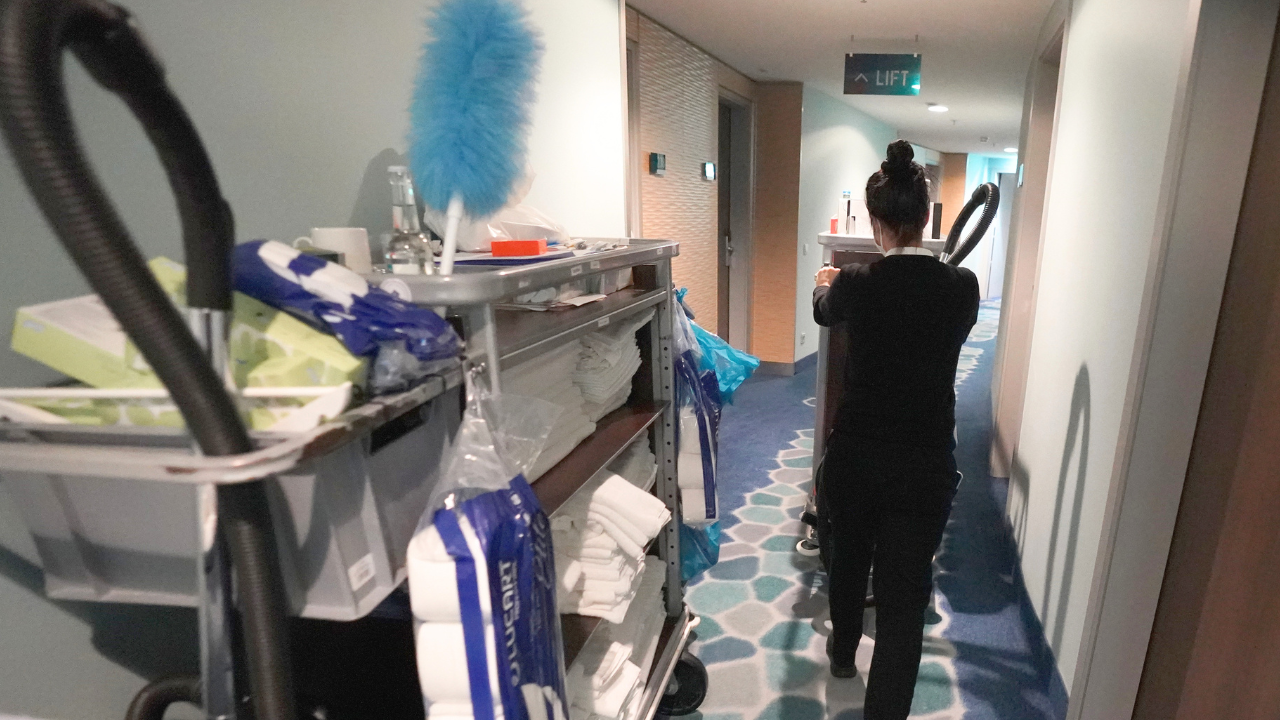
Los Angeles is delaying a hotel pay mandate that would raise wages to $30 an hour by 2028 after industry leaders warned the increase from $22.50 is causing job cuts and hiring freezes, according to Rebekah Paxton of the Employment Policy Institute.
Los Angeles officials have delayed implementation of a controversial plan to raise the minimum wage for hotel and airport workers to $30 an hour after the hospitality industry warned the mandate could result in layoffs, reduced hiring and increased automation.
The measure, often referred to as the “Olympic Wage,” was originally designed to increase wages to $30 an hour by 2028 as Los Angeles prepares to host the Summer Olympics.
But city leaders recently voted to push back full implementation until 2030 amid concerns about rising labor costs as hotels prepare for a surge in visitors tied to the 2026 FIFA World Cup and the 2028 Olympics.
AOC-BACKED $25 MINIMUM WAGE COULD SQUEEZE SMALL BUSINESSES IN RED STATES
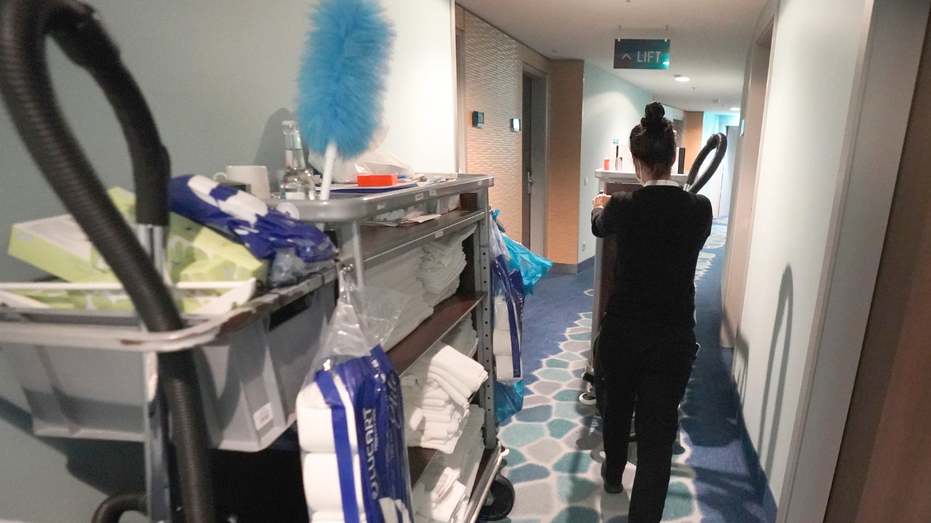
Supporters say a $30 minimum wage would help Los Angeles hotel workers keep pace with the city’s high cost of living, while opponents warn it could reduce jobs. (Marcus Brandt/picture alliance/Getty Images / Getty Images)
Rebekah Paxton, research director at the Employment Policies Institute, said city leaders began reconsidering the timeline after concerns emerged from the hospitality industry ahead of several major international events.
“There were concerns from the hotel community,” Paxton told Fox News Digital. “There was some data that came out that the hotels were struggling ahead of the Olympics, even as we’re approaching the World Cup this summer.”
The proposal also comes as New York City officials consider a separate plan to raise the city’s minimum wage to $30 an hour over several years, a concept aligned with broader progressive efforts to increase wage floors in high-cost areas.
AOC-BACKED $25 MINIMUM WAGE PLAN SOUNDS GREAT — BUT AT WHAT COST?

Los Angeles will welcome athletes from around the world for the 2028 Summer Olympics as city leaders weigh policies aimed at preparing for the global event (Frederic J. Brown/AFP/Getty Images / Getty Images)
Paxton noted that hotel workers currently earn a minimum wage of roughly $22.50 an hour, meaning the proposal would raise pay by about one-third over just a few years. She said hotel operators warned the higher labor costs were already affecting hiring decisions as Los Angeles prepares for the World Cup and Olympics.
Citing a report from the Los Angeles hotel industry, Paxton said some hotels had reduced hiring and staffing because they could not absorb the anticipated labor costs.
City officials ultimately voted to delay the $30 wage requirement from 2028 to 2030, a move Paxton said gives hotels “a little bit of breathing room as we ramp up toward the Olympics.”
Still, she argued the delay does not resolve the industry’s underlying concerns.
“A $30 minimum wage is still a $30 minimum wage,” Paxton said. “A pause is certainly a step in the right direction, but it’s not going to solve the ultimate problem, which is a lot of folks saying that they can’t sustain that level of a wage increase.”
Paxton said supporters of the wage increase argue workers should receive higher pay, particularly as Los Angeles prepares to welcome millions of visitors for upcoming international sporting events.
“For proponents of this $30 minimum wage, this is sort of a junction where they can sort of make an emotional plea to the public,” Paxton said. “And of course, who doesn’t want to give workers more money?”
However, Paxton argued the higher wage requirement could further strain an industry that has already experienced hiring challenges.
GET FOX BUSINESS ON THE GO BY CLICKING HERE
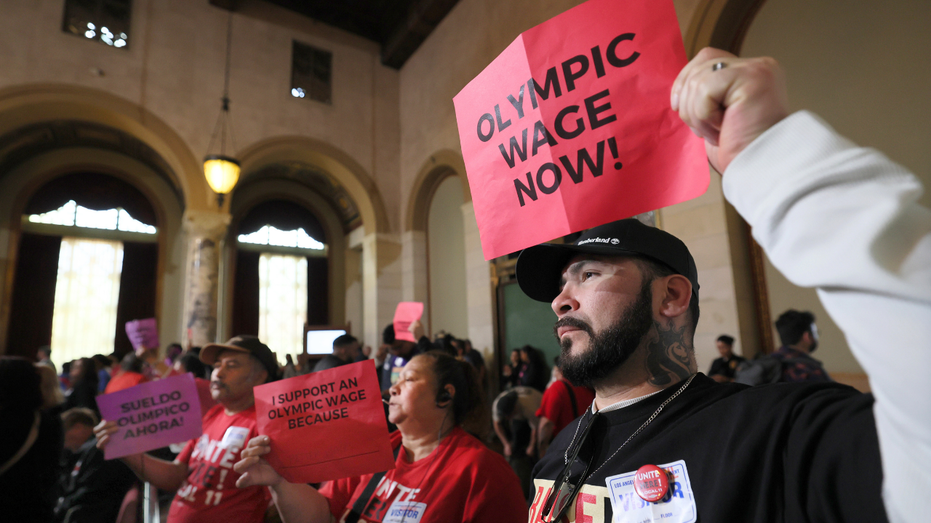
Los Angeles officials delayed a plan to raise the minimum wage for hotel and airport workers to $30 an hour until 2030. (Allen J. Schaben / Los Angeles Times via Getty Images / Getty Images)
“My team at EPI has done some work looking at the hotel industry since 2015,” she said. “And even before this went into place, hiring was stagnating. There were fewer jobs available for folks who wanted to be in the hospitality industry.”
“And so, by proposing this kind of super-sized hotel minimum wage on top of what already existed, you’re just going to exacerbate those negative economic impacts.”
The debate over the so-called Olympic Wage is expected to continue as Los Angeles prepares for a series of major international events while city leaders weigh competing priorities of worker pay, business costs and economic growth.
Selling a company is, for many business owners, the first time they have ever needed a private bank. For years — sometimes decades — their capital was tied up in their enterprise. When that changes, the transition can be abrupt.
Mirabaud & Cie (Europe) SA, the European arm of the Geneva-founded Mirabaud Group, has designed its model notably around that moment. Émilie Serrurier-Hoël, who became CEO of the Luxembourg-based entity in June 2025, describes a structure that works with entrepreneurs before a sale closes — not after. The Bank coordinates with both in-house advisory services and external partners to help clients structure their assets and plan for family succession ahead of a business transfer.
What sets this approach apart is the nature of the platform itself. Rather than positioning as a traditional private bank, Mirabaud & Cie (Europe) SA functions closer to what Serrurier-Hoël calls a large family office — one that retains the full infrastructure of a regulated bank. Clients get access to relationship managers, investment specialists, and management, with a service model built for long-term engagement rather than transactional volume.
A Platform Across Six Markets
Mirabaud & Cie (Europe) SA operates from six locations across the continent: Luxembourg, Paris, Madrid, Barcelona, Valencia, and London. Luxembourg serves as the entity’s booking center and regulatory anchor. Each national office adapts the Group’s investment approach to local tax and regulatory conditions, while overall portfolio direction is set at the Group level.
For entrepreneurs whose interests often span multiple jurisdictions, that structure carries practical weight. A French business owner selling a family company faces different succession rules than a counterpart in Spain. Mirabaud’s presence in each market means the Bank draws on local knowledge without applying a uniform solution.
Nicolas Mirabaud, Managing Partner of Mirabaud Group, has noted that Luxembourg’s combination of political stability and openness to international talent makes it a key hub for the Group’s European operations. Talent recruitment remains competitive in the Grand Duchy, but its status as a business-friendly financial center supports the platform’s ability to serve clients with cross-border needs.
Private Assets as a House Practice
Mirabaud’s approach to private assets sets it apart from firms that have recently added alternatives to their menus. The Group has committed capital to private markets over multiple generations — a history that shapes how the Bank offers similar access to clients. Structures include semi-liquid evergreen strategies providing access to leading private equity managers, as well as direct co-investments through club deals.
Nicolas Mirabaud has described the club deal process as deliberate: each opportunity is vetted for portfolio fit, regulatory compatibility, and tax treatment before being presented to clients with the appropriate risk profile. These are not broadly distributed products — they are offered selectively, consistent with a relationship-based model.
For entrepreneurs who have spent years building illiquid wealth in a single business, gaining access to private market opportunities through a bank that invests alongside them carries a different quality of alignment than a standard wealth management relationship.
A Two-Century Perspective on Succession
Mirabaud Group was founded in Geneva in 1819 and has remained family-controlled across seven generations. Nicolas Mirabaud currently serves as Managing Partner alongside Camille Vial and Lionel Aeschlimann. That continuity shapes how the Group approaches client relationships — not as account holders to be managed through a lifecycle, but as families whose interests evolve over decades.
Serrurier-Hoël describes a growing demand from clients who want the Bank to engage with the next generation — not by revealing the full details of the family’s wealth upfront, but by gradually familiarizing heirs with investment concepts and decisions. Mirabaud has developed programming to support that, including the Mirabaud Academy, which brings clients’ children to the Bank for multi-day educational experiences each year.
“Our mission is to ensure our clients’ assets are secure today and positioned for growth tomorrow,” Serrurier-Hoël said in a 2025 publication.
That framing — security first, growth second — reflects a long-term orientation that runs through the Group’s two centuries of history. For entrepreneurs stepping away from the enterprise that defined their careers, it is precisely the kind of continuity that matters.

Harbor Capital is an asset manager focused on curating an intentionally select suite of active ETFs that they believe have the potential to produce compelling, risk-adjusted returns within a portfolio. Note: This account is not managed or monitored by Harbor Capital, and any messages sent via Seeking Alpha will not receive a response. For inquiries or communication, please use Harbor Capital’s official channels.

InvestingPro Fair Value flagged Opendoor drop before 49% decline

Ask a finance director about the events line in the marketing budget and you tend to get a raised eyebrow. Events are visible, expensive and hard to measure, which makes them an easy target when money is tight.
Yet for all the scrutiny, businesses are putting more into in-person events, not less. After a few years of doing almost everything on a screen, the room has come back into fashion, and the brands bringing it back are not doing so on a whim. They have worked out that a well-run event still earns its keep, provided you are honest about where the return actually comes from.
The question every finance director asks
The challenge with events has always been attribution. A campaign on paid search hands you a cost per click and a conversion rate. An event hands you a roomful of people and a feeling that it went well. The temptation is to conclude that the channel you can measure neatly is the one that works, and the one you cannot is indulgence.
That is a mistake, and a common one. The fact that something is hard to measure does not make it ineffective; it makes it harder to defend in a spreadsheet. Plenty of the most valuable things a business does, building trust with a major client, aligning a leadership team, giving a launch enough momentum to carry itself, resist a tidy cost-per-acquisition figure. Events sit squarely in that category. The job is not to pretend they behave like performance marketing. It is to understand the specific kind of value they create and to track it on its own terms.
Where the return actually comes from
Strip an event back and the return tends to come from four places.
The first is pipeline. A focused event with the right people in the room compresses months of relationship-building into a single evening. Conversations that would have taken a quarter of back-and-forth happen over dinner. For complex, high-value sales, that acceleration is worth far more than the raw cost of the night.
The second is retention and trust. It is cheaper to keep a client than to win one, and nothing reinforces a relationship like time and attention in person. An existing customer who spends an evening with your team, your product and your other clients leaves more committed than any email sequence could manage.
The third is brand. A launch or a flagship event is a statement about who you are, made in three dimensions. Where you hold it, how it feels, the standard of the detail; all of it tells your market something about your seriousness and your taste. That signal compounds long after the night itself.
The fourth, and the most underrated, is your own people. Bringing a dispersed, hybrid workforce together with purpose does something no all-hands video call achieves. It rebuilds the shared sense of mission that quietly erodes when everyone works from their spare room. Engagement and retention are real numbers with real costs attached, and the in-person gathering moves them.
None of these fit neatly under a single conversion metric, but all of them can be tracked: opportunities created and accelerated, renewal and retention rates, brand and earned-media lift, employee engagement scores before and after. Measure those, and the events line stops looking like a leap of faith.
Hybrid as a multiplier, not a replacement
The pandemic-era assumption was that streaming would replace the room. In practice, the businesses getting the most from events use broadcast to multiply the room instead. The people present get the full experience, the relationships and the spectacle, while a wider audience gets a polished window onto it. One event can now serve the hundred people in attendance and the thousands watching live or later, each at the right level of intimacy.
That changes the maths in your favour. The cost of the event is carried by a much larger reach, and the content produced on the night, the keynote, the panel, the product reveal, has a second life across your channels for months afterwards. The organisations that plan for this from the outset, designing the in-person experience first and the broadcast around it, get two assets for the price of one.
The venue is part of the equation
Here is the part that is easy to underestimate: the venue is not a cost centre sitting underneath the event, it is part of what generates the return. When the goal is trust, brand signal and a genuine experience, the building does a meaningful share of the work. A space that adapts from conference to reception across a single day, that has the production infrastructure built in rather than bolted on, and that impresses the moment guests arrive, lifts everything that happens inside it.
This is why a new generation of London venues has invested so heavily in flexibility and character. Town Hall Spaces in King’s Cross is a useful illustration: a restored neo-classical landmark, reimagined with contemporary interiors and broadcast-ready technology integrated into the fabric of the building, operated by a group with a track record of producing events for the likes of Chanel and the Royal Family. Brands including Adidas, Prada and Sony have used spaces of this kind precisely because the setting does part of the persuading for them. The lesson for any business weighing an event is that the venue is not where the budget leaks away; chosen well, it is where a good deal of the value is made.
The honest bottom line
In-person events are not free, and they are not magic. Run without a clear objective, in a forgettable space, measured against the wrong metric, they will indeed look like money poorly spent. Run with a sharp purpose, in a setting that does them justice, with the right people in the room and a plan to measure pipeline, retention, brand and engagement, they remain one of the most powerful tools a business has.
The screen earned a permanent place in how we work, and it deserves it. But the brands quietly increasing their events spend have spotted something their more cautious competitors have not. When you want to win trust, accelerate a deal, or make your market and your own people believe in you, there is still no substitute for getting everyone in a room worth being in, and measuring what happens next.

World Cup 2026 knockout fixtures, results and full tournament bracket

Omagh salon owner heartbroken as business destroyed in fire

CZ says AI, war fears and crypto cycle crushed 2026 market


-
Sports5 days ago
Two goals and an assist by sheer aura: Cristiano Ronaldo just entered the World Cup chat
-

 Tech6 days ago
Microsoft accidentally kills epic Outlook email threads
-

 Fashion2 days ago
Weekend Open Thread: Staud – Corporette.com
-

 Politics2 days ago
The House | Manchesterism won’t survive the painful trade-offs unless it gets citizens on board
-

 Politics2 days ago
Potential 2028er World Cup attendee leaderboard
-

 Business2 days ago
Asia stock markets slide as tech shares slump
-

 Tech3 days ago
A Look At A Gaggle Of Transputer Boards
-
Crypto World4 days ago
Bitcoin (BTC) Dips Below $62K, Ethereum (ETH) Plunges 6% Daily: Market Watch
-
 Crypto World3 days ago
Dell (DELL) Shares Tumble Over 5% Following Analyst Downgrade to Hold
-

 Crypto World4 days ago
Securitize Wraps Roubini's SEC-Registered ETF as Dubai VARA Digital Security
-
Business5 days ago
Entergy settles forward sale agreements, raises $672 million in cash proceeds
-

 Crypto World1 day ago
Kraken's xStocks Opens Bending Spoons IPO Registration to EEA Retail
-

 Sports2 days ago
FIH Pro League: India defeat Pakistan 7-1, register biggest win of campaign | Other Sports News
-

 Crypto World2 days ago
RTX holders must register wallets before token distribution begins
-
 Crypto World2 days ago
Hyperliquid Named on Singapore MAS Investor Alert Register
-

 Sports3 days ago
India vs Bangladesh LIVE Score, Women’s T20 World Cup: Bangladesh Opt To Bat; India Enter ‘Do-Or-Die’ Stage As Semi-Final Race Heats Up
-
Crypto World2 days ago
The DATA Foundation Launches to Tackle AI’s Multi-Billion Dollar Training Data Bottleneck
-

 Crypto World3 days ago
Strategy (MSTR) has a 10-month cash runway for dividends, but retail investors are losing faith
-
 Crypto World2 days ago
AAVE price tests 9-month trendline after 17% rebound as breakout hopes build
-

 Crypto World2 days ago
21Shares Cuts 2026 Crypto Forecasts as Institutional Demand Rises
You must be logged in to post a comment Login