TL;DR
Google capped Meta’s Gemini access due to compute constraints. Meta told staff to use AI tokens more efficiently and is shifting to its own Muse Spark model.



Google capped Meta’s Gemini access due to compute constraints. Meta told staff to use AI tokens more efficiently and is shifting to its own Muse Spark model.
Google has placed limits on Meta’s use of its Gemini AI models because it cannot provide as much computing capacity as the social media company wanted, the Financial Times reported on Sunday. The restrictions have affected several Google clients, with Meta hit particularly hard.
The move has had a knock-on effect on Meta’s internal projects. The company has told staff to make more efficient use of AI tokens, according to three people familiar with the matter cited by the FT. Both Google and Meta declined to comment.
Meta had initially relied on Gemini, which proved better than its own Llama open-source models, to automate safety processes like removing harmful content and wiping out scams. It has increasingly been shifting workloads to Muse Spark, a new internal model, as it looks to reduce dependence on external AI providers. Google itself is so compute-constrained that it agreed to pay SpaceX $920 million a month for access to 110,000 Nvidia GPUs, calling it “bridge capacity” to meet surging demand for Gemini Enterprise.
The situation illustrates how the AI compute shortage is reshaping relationships between the industry’s largest companies. Google, which owns one of the world’s largest pools of AI infrastructure and is spending over $180 billion on capex this year, still cannot serve all of its customers’ demand. That it is rationing access to a company as large as Meta, while simultaneously renting GPUs from a rocket company, is the clearest signal yet that AI infrastructure buildouts have not kept pace with consumption.

The 💜 of EU tech
The latest rumblings from the EU tech scene, a story from our wise ol’ founder Boris, and some questionable AI art. It’s free, every week, in your inbox. Sign up now!
For Meta, the dependence on a competitor’s AI models was always an uncomfortable arrangement. The company cut 8,000 jobs in May and redirected billions toward AI infrastructure, with capex guidance of $115 to $135 billion for 2026. It has reassigned 7,000 workers to AI-focused roles and launched Muse Spark under its Superintelligence Labs division. The Gemini restrictions accelerate a transition Meta was already pursuing, from relying on external frontier models to building internal alternatives capable of handling critical workloads like content moderation at scale.
The broader pattern is consistent across the industry. Demand for AI compute is growing faster than even the most aggressive infrastructure spending can supply. Google is buying capacity from SpaceX. Anthropic is renting an entire data centre from SpaceX. Meta is being told to use fewer tokens by its own cloud provider. The AI boom’s most tangible bottleneck is not algorithms or talent. It is the physical infrastructure required to run them.

This week on Uncanny Valley, we discuss the open- vs. closed-source debate in AI, key players in White House AI policy, and how to stop your chatbot logs from showing up in search-engine results.
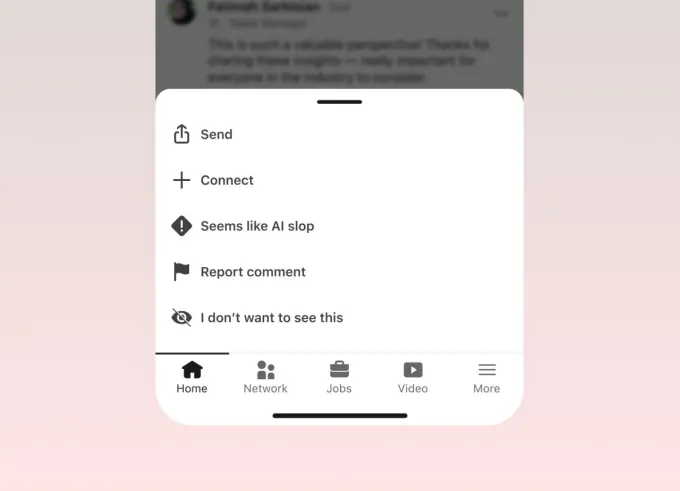
LinkedIn is taking aim at the “AI slop” — low-quality, artificially generated content — filling its feed. On Thursday, the company announced that it’s adding a new feature to let users click a “seems like AI slop” button when someone’s post appears to have been written with AI.
The move reflects a broader shift across online publishing platforms to cut back on AI content, as people have grown frustrated with the computer-written, inauthentic posts filling the web.
Last week, for instance, newsletter platform Substack added a tool to help users identify when the content they’re reading on its site was written by AI, through a partnership with Pangram. Meanwhile, Pangram this week announced $9 million in new funding to tackle the problems of AI content flooding the internet. The problem is also impacting new startups, as Digg had to shut down its Reddit competitor in March, saying it couldn’t get a handle on the number of bots flooding its site.
Internet infrastructure firm Cloudflare says the problem is just getting worse, as there is now more bot traffic on the web than human-generated requests — a milestone that was reached faster than it had previously predicted.

In a post on LinkedIn, the company’s Chief Product Officer Hari Srinivasan admitted the Microsoft-owned social network is facing similar problems. “AI slop is a top priority for all of us. We really care about this. People come to LinkedIn to connect with real people and share their real perspectives, ideas, and expertise,” he said.
The exec explained that the new “Seems like AI slop” button is now one of several measures LinkedIn is using to reduce the amount of low-quality, AI-generated content on its platform. The company is also investing in automation defenses, where it now blocks “hundreds of thousands” of automated comment attempts daily, and millions of other automation attempts in just the past couple of months.
Srinivasan said LinkedIn is also introducing new classifiers to identify if a post is AI slop or other low-quality content, which would reduce the amount of slop you’d see in suggested content recommendations from outside your network. (The button ties into this measure as it will provide a source of signal that will allow LinkedIn to tune its AI models to better identify slop.)
Plus, LinkedIn will begin privately flagging in users’ dashboards when people believe their content is coming off as inauthentic due to heavy use of AI. The company believes that this will help posters improve their writing, in the case that they’re simply using AI technology to refine their own work, rather than when they’re posting what’s considered full-on “slop” content.
Notably, the company is pulling its own “enhance your post” feature that had used AI to help you write. It’s replacing it with a feature that proofreads your words, instead of changing your voice.
Other improvements include expanding access to profile and page verification tools, and adding an option to block comments from company pages you no longer want to see, Srinivasan said.
When you purchase through links in our articles, we may earn a small commission. This doesn’t affect our editorial independence.

Logging and telemetry in remote controlled racing is a great thing, and not only does [jwachlin]’s Open RC Spotter do a fantastic job of that, it has quite a few clever tricks up its sleeve that make it extra special.
Open RC Spotter is an ESP32-based hardware platform for high performance RC car racing that reads from various sensors (including IMU, GPS, temperature, battery, and IR receiver for IR lap beacons) to create a filtered stream of readings that include position, velocity, lap time, battery voltage, and more.

This data gets logged to an SD card, but can also be broadcast wirelessly via ESP-NOW to a receiver that can in turn send it over serial USB, or do whatever else one wishes. There’s also a neat feature that fires up a temporary WiFi access point on demand so log files can be downloaded with a web browser, no need to hook up a cable.
So far, so cool. But there’s still another nifty feature. Open RC Spotter supports the Crew Chief telemetry protocol. Crew Chief is a piece of free Windows software that serves as a companion application for sim racing. It acts as a virtual race crew member, providing spoken information based on live telemetry read from supported racing sims.
Since Open RC Spotter supports the same telemetry format, one can use the virtual race engineer with RC car racing by simply feeding Open RC Spotter‘s serial data to the Crew Chief application. The RC telemetry data isn’t as rich as what comes from the racing sim APIs, but it’s more than enough to be useful.
People come up with all kinds of neat ideas when it comes to RC racing, and most of them depend on having access to good data. For example, a load cell in the steering mechanism can provides the data for force-feedback steering. We’ve even seen LiDAR and a depth camera used to automatically compute optimal racing lines.
Steven Bartlett has built one of the world’s biggest podcasts on the idea that the right people, obsessively managed, make the machine. Now four of those people have walked out the door. The star host of “The Diary of a CEO” has lost four core staffers in five months, Business Insider reported.
The exits are not junior. One is Jack Sylvester, who calls himself a co-founder of the show and built its YouTube presence to more than 18 million subscribers. Also gone: executive producer Jem Erith, trailers director Anthony Smith, and Grace Miller, whose job title was “head of failure and experimentation.”
Former colleagues did not undersell them. One described Sylvester and Erith as the “inner circle” behind the “heavy lifting” of the podcast. “They’re the reason it gets delivered twice a week,” another said of the four.
Everyone is being nice about it. Bartlett’s company, FlightStory, said the departures were planned over almost a year and that the staff left on good terms. All four posted warm goodbyes. “I owe Steve more than I could ever put into words,” Sylvester wrote, while admitting he did not know what was next.
The 💜 of EU tech
The latest rumblings from the EU tech scene, a story from our wise ol’ founder Boris, and some questionable AI art. It’s free, every week, in your inbox. Sign up now!
Bartlett returned the compliment, saying nobody had a bigger impact on the show. Sylvester told Business Insider he was looking for his next move after the podcast left its early growth phase. Turnover is normal at fast-growing startups, and Bartlett’s previous company, Social Chain, spun off plenty of founders.
The timing is the story. The nine-year-old show is pushing hard into the US just as its longtime team thins out. Bartlett has moved to Los Angeles and opened a studio there. He is closing on Joe Rogan in YouTube subscribers, and regularly beats him on views.
Around the podcast, he is building a media company. FlightStory has about 150 staff and took in roughly $47m last year, and recently raised an eight-figure round. It now runs a speakers arm and a distribution unit for other creators. It is also exploring a paid membership to squeeze more from its superfans.
Bartlett is also a self-styled operating guru. He is known for obsessing over details, down to the carbon-monoxide level in the studio. He also screens hires with a “Culture Test” that scores how they would handle workplace scenarios. Losing four people who aced that test, all at once, is a curious look for a leadership brand.
There is a harder edge to the DOAC story, too. A BBC World Service investigation found a problem, according to reporting on the probe. Many of the show’s health episodes carried claims that ran against the scientific evidence.
It examined 23 health-related episodes and flagged an average of 14 harmful claims across most of them.
Bartlett has since added fact-check labels to some YouTube episodes where guests make contentious claims. The tension is the interesting bit. He has moved from interviewing chief executives to platforming wellness and self-help voices, the format that drives the biggest numbers and the loudest criticism.
None of that is slowing the growth. Like the wider creator economy, DOAC is a business built on one person’s name, scaling faster than the team around it.
The departures raise a real question. Can a show defined by its inner circle keep its edge once that circle is gone? Like so many media empires before it, DOAC now has to prove the brand outlasts the moment.

When gaming chair maker Secretlab announced the release of its very first home office chair, I wasn’t shocked.
There’s been a gradual trend with office chair makers like Herman Miller teaming up with Logitech to create a gamer-focused version of the Embody, alongside brands like FlexiSpot and Eureka Ergonomic launching its own line of gaming chairs.
On the flips-side, companies like Boulies, which has a long gaming heritage with its Master series, have branched out into office chairs (I still think the EP200 is the best value all-rounder, after over a year of constant use). With the rise of hybrid and remote working, it seemed like just a matter of time before Secretlab got in on the action.
Latest Videos FromTechRadar
I’ve been using mine for over a month now, and, as resident office furniture expert here at TechRadar Pro, I think the company nailed it. It’s a world away from the magisterial Titan Evo, and I suspect Evo fans may not appreciate what the Atlas is doing here. But it’s one of the top office chairs I’ve used precisely because it’s such a terrible gaming chair.
I’m obsessed with gaming chairs that look right at home in an office. I’ve covered stealth gaming and office chairs for years. Those understated seats that don’t draw attention on a Zoom call with the boss, but are perfect for late-night play sessions (the Corsair TC100 Relaxed is a good budget example).
On that score, the Secretlab Atlas is a total success. Now, it’s not a gaming chair. But you can see it’s taken inspiration from the Titan Evo. Sit them side by side and it’s clear they share the same brand heritage, with those cleanly carved and subtle contours.
However, the design skips on two aggressive elements you’ll find on pretty much every gaming chair: the racing-style bucket seat bolsters and the shoulder wings. Both are designed to lock you into position that’s perfect for precision play on controller or M+K.
But an office worker needs that unrestricted extra space, allowing upper body movement. Fingers flying over the keyboard, constantly sweeping the mouse, and pivoting at the desk.
So, instead, it’s got a sleek look – Secretlab calls it “our lightest silhouette yet”, and I totally agree here. Because of that style, I find it works very well in the home office, even smaller ones. I carted it downstairs so my wife could use it in the dining room when she was working from home.
The Atlas blended in so well, feeling more like home furniture than any bulky leatherette bucket chair ever could. Weirdly, despite the higher backrest, it’s far less noticeable than her office-engineered Boulies OP180 was.

Professionally styled in Dune, Cookies & Cream, and Black³, the base model Secretlab Atlas features a SoftWeave Plus Fabric covering over cold-cure foam for a firm, ergonomic fit. It’s available in Regular and Large to accommodate your height and weight class.
All the best office chairs my team and I have reviewed have one thing in common: adjustability.
Given Secretlab’s experience, it’s no surprise that the Atlas has plenty to help tailor the sit. That includes mechanisms for tweaking the seat depth, backrest, and armrests, as well as synchronous tilt.
What this means in practice is that you can lean back with your feet on the ground, and the backrest and seat move as one for continued support. Effectively, it’s designed to keep your hips open to relieve pressure on your lower back.
It’s a world away from the traditional gaming setup, where the backrest tilts and reclines independently. It’s absolutely perfect for laying back, playing games, watching movies. But this mechanism also sends you into a horizontal slouch – one of the main reasons why so many modern chairs come with built-in footrests.
However, it’s not as adjustable as many of the office chairs I’ve tested out. When our gaming editor Dash Wood spoke to Vincent Sin, the company’s head of product development and industrial design, he explained: “What we found is that more often than not, with task chairs that have a lot of adjustments, it’s very confusing and people often will get it wrong. And I would say that’s worse than having something that automatically adjusts for you.”
But this brings me to the one adjustable element I actually would change. The chair does feel low to the ground – a view echoed in our Secretlab Atlas review.
The Large model does offer slightly more height over the Regular version, but I still think extra height range would’ve stripped away the only real complaint I have here. As an average man of average height, it’s not a deal-breaker for me. But it’s definitely something I’ve noticed during my time with it compared to other office chairs.

Also missing is the adjustable or dynamic lumbar support I tend to see on more premium office and gaming chairs. The Titan Evo famously uses the 4-Way L-Adapt Lumbar Support System, giving you control over the lower back support.
Instead, the Atlas uses a simplified Re-Curve backrest. Again, Sin said this design choice was intentional. “People don’t know that having too much lumbar support is also a bad thing.” Instead, the company pressure-mapped sitters to figure out where back support is needed and where it isn’t.
Now, I’m not entirely convinced by that. I still think adjustable support is essential, especially for those who need lower back pain relief. I suspect economics and aesthetics are playing a bigger role here than anyone is prepared to admit.
For a chair costing over $500 / £400, I was a little concerned when I first parked myself into the Secretlab Atlas.
The results, though, surprised me. Maybe Secretlab are right: we are over-engineering modern office chairs.
So far, so gaming and office chair. But there’s one major change with the Secretlab Atlas that I think makes it an ideal task chair, but absolutely useless for gaming.
It’s firm.
I think a lot of people expect office chairs to feel like a well-worn armchair or a couch. Soft, cushiony, like sinking into a foamy cloud.
That squishiness feels good for an hour or two while working. And it’s perfect for gaming – you want to feel snug, even during the sweatiest of battles. But it’s not recommended for an 8-hour workday, 5 days a week where you’re upright, typing away, maintaining your posture.
Now, I’m not saying you need to sit on a concrete slab at your desk. And the Atlas definitely doesn’t feel that way. I appreciate support it has as I work, and actually look forward to sitting on it.
I’m not the only one convinced by it.
My pregnant wife is suffering chronic back pain during her pregnancy. She’s hijacked the Secretlab Atlas because her softer office chair just made the pain worse. The Atlas eased the pressure. Her verdict (politely sanitized for this family-friendly publication: “It’s ridiculously comfortable.”
The Atlas is basically designed for a very different sitting profile. You’ll immediately notice the difference coming from a Titan Evo or similar. So, it’s not the best gaming chair, but it was never meant to be.
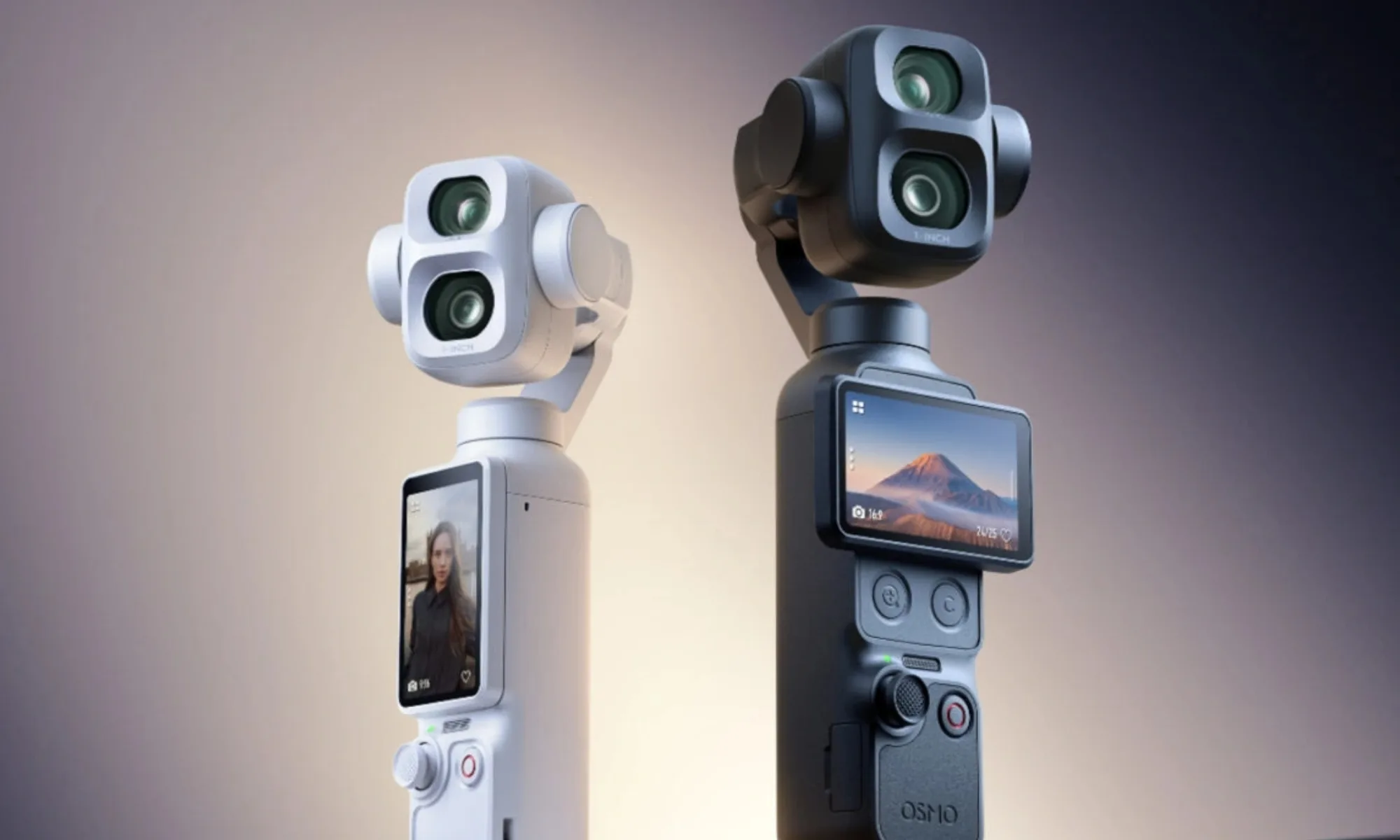
DJI has now given the Osmo Pocket 4P a wider global release after initially limiting its most capable pocket camera to China. It is now available across the UK, Europe, Canada, and Australia, but the US remains missing from the list.
The Standard Combo starts at £529 or €599 and includes the camera, a fill light, carrying pouch, and a handle with a tripod thread. In Canada, DJI lists the same bundle at US$619, as prices on its Canadian storefront are displayed in US dollars. The Vlog Combo costs £605, €689, or US$669 in Canada and adds a Mic Mini 2, Mini Tripod, larger carrying bag, and the Osmo FrameTap remote.
The Osmo Pocket 4P uses a 1-inch primary sensor paired with a 20mm equivalent f/2.0 lens. It supports up to 17 stops of dynamic range using DJI’s new 10-bit D-Log 2 profile, giving creators more room to adjust highlights, shadows, and colors during editing.

The bigger addition is a second 1/1.28-inch sensor paired with a 60mm equivalent f/1.8 telephoto lens. It delivers 3x optical zoom and gives creators another framing option for portraits, products, and distant subjects without relying entirely on digital cropping. The wide camera records slow-motion video at up to 4K/240 fps, while the telephoto reaches 4K/200 fps. A 2-inch OLED screen offers 1,000 nits of brightness, and DJI claims up to 210 minutes of battery life.
DJI has not announced US pricing or a release date for the Pocket 4P. The company’s recent launches continue to face roadblocks as the FCC tightens restrictions around DJI and foreign-made technology. Older products such as the Osmo Pocket 3 remain available because they received authorization before the crackdown.
The government has since expanded the same Covered List approach to foreign-made robots, including future robot vacuums and Roombas. For US creators, the Pocket 4P is therefore another DJI product they can see launched almost everywhere else but cannot officially buy at home.

Flock Safety’s aggressive expansion into the law enforcement market has been coupled with nearly constant negative coverage of its tech and its practices. Multiple cities have paused or cancelled their agreements with Flock following public outcry over the surveillance tech.
Flock’s willingness to allow law enforcement agencies to search a nationwide network of cameras has generated plenty of negative headlines of their own, including the fact that Texas cops were using Flock to track someone (possibly) seeking an abortion after she’d already left the state.
Flock’s statements in its defense are, well, super-defensive. It claims it can’t control what cops do with its tech. That’s somewhat true, but it’s also true that Flock has made zero effort to limit abusive access until it’s been forced to by its government customers or outside pressure.
Flock also claims its tech has contributed to investigations and reducing crime. This is probably true but it doesn’t mean all that much when pretty much any extensive surveillance network is going to generate some additional arrests. It’s the trade-off that’s the problem and Flock doesn’t seem to care at all about the millions of people subjected to its surveillance. Martial law would likely lower crime rates, but that’s not a an acceptable justification for martial law.
The problem with ALPR tech being ubiquitous is that it isn’t really making police work better or smarter. Instead, it just seems to be allowing cops to be wrong faster and at scale. And police officials who love this tech will always remind us that there’s a price to be paid to live in a safe society. What they never admit is that they keep changing the price tag with each new rollout of surveillance tech.
Flock’s contribution to the problem means it’s just going to keep making headlines. And while Flock may not be a direct contributor to what’s discussed here, these things wouldn’t have happened if it weren’t for Flock.
First, there’s this story, which involves automotive journalist Joel Felder and the Range Rover he was test driving. His loaner from Range Rover kept getting flagged by Flock as stolen. That Felder is alive to tell his story is more due to his race and location than the so-called police work that resulted in him being ambushed by Minneapolis cops in mall parking lot.
On an otherwise normal Sunday afternoon in late June, I’d decided to take the $155,000 Range Rover I was testing that week out to run some errands with my wife. Little did I know that choice would complete a technological chain linking surveillance cameras, AI, and law enforcement that led to me and my wife being surrounded by police, hands on their guns, in a Kohl’s parking lot in suburban Minnesota.
After dropping off our Amazon returns, we’d just gotten back in the Range Rover and reversed maybe two feet out of the spot when four cop cars came flying out of nowhere and boxed us in. The officers jumped out and started shouting. It’s a situation that can quickly and frequently turn bad, so as unprepared as I was, I followed their orders, got out with my hands up, and tried to figure out what the hell was happening.
It turns out cops in the area had been tracking the Range Rover for days, following alerts from Flock. But they kept losing the trail when Felder returned home. When he passed a Flock camera near his stop, Plymouth, MN police showed up to accost him.
The main problem was something either Flock or the PD could have taken a closer look at. The Range Rover loaner had New Jersey plates. And on NJ plates, two digits are printed smaller than the rest of them.
The New Jersey plates that were allegedly stolen from the LA dealer were 34 03 DTM, not 34 10 DTM. But when the police report was created and the plate was entered into Flock’s system, it was just recorded as 34 DTM. Just the five large characters, no little number in the middle. And Flock’s AI tech wasn’t registering that non-standard little number when it began picking up the Range Rover around town. It just saw 34 DTM in large type and started alerting the local police.
Which means this is also a nationwide problem, on top of being a specifically New Jersey problem. The automated plate readers are reading these plates wrong, meaning any plate starting with 34 and ending with DTM would automatically be flagged as stolen. Who knows how bad that’s going in New Jersey (we’ll wait for those headlines to roll in!), but it’s already a bit of problem in Minnesota, and not just for this particular The Drive contributor.
In fact, four other 34 ## DTM cars were being tracked around Minnesota that week, according to Officer Ganshyn. I was just the first one to get nabbed. The only way to stop it would be for the LAPD to correct their initial report and update Flock’s system, which Jaguar Land Rover was now racing to make happen following the phone call.
And just to let you know how the cop problem possibly outweighs the Flock problem, I’ll let these Plymouth (a suburb of Minneapolis) cops speak for themselves:
“You’re lucky we’re in Plymouth. If you were in Minneapolis, they definitely would’ve come at you with guns drawn.”
Cool cool cool.
No doubt this also kept the gun-play to a minimum, according to the Plymouth PD report:
“I observed the driver, who was a white male wearing shorts and a green shirt, as he was putting something in the back seat of the car. I could also see a white female getting into the front passenger seat…”
But Flock’s contribution to public danger isn’t limited to stolen plates. Its system also tracks vehicles of people who are suspected to have stolen something other than the vehicle they’re riding in. Here’s what happened to an unlucky Colorado resident who found herself on the wrong side of this surveillance tech:
Chrisanna Elser got a summons from Columbine Valley police accusing her of stealing a package. The evidence? A license-plate-reader camera that placed her truck near the scene. The problem? She wasn’t there. According to Denverite, Elser had to dig up her own timestamped truck video and a neighbor’s doorbell camera footage to prove it. Nobody verified the camera’s implication before the summons landed. The camera spoke, and the system listened — no further questions asked.
Elser was forced to prove her own innocence as a cop stood in her doorway. Fortunately, she had the evidence on her phone. Otherwise, who knows what would have happened? Certainly not the officer who did nothing more than convert the faulty data into a summons.
When Elser tried to get the officer to watch the time-stamped video from her truck, the officer told her he simply wasn’t interested in anything she had to show him that might prove her innocence:
On her doorstep, the officer issued a summons, without ever looking at the surveillance video Elser had.
“We can show you exactly where we were,” she told him.
“I already know where you were,” he replied.
It took Elser five weeks to get the charges dropped and it took escalating it to the Chief of Police to get it done. While the chief didn’t go so far as to apologize, he did at least let her know she did a “great job” proving her innocence, when that’s not how it’s supposed to work in the first place.
While I understand the presumption of innocence only really applies once criminal proceedings are underway, law enforcement’s reliance on unreliable tech is now forcing people to document their own movements and actions just as thoroughly as Flock tracks theirs, just in case the cops have it wrong. That’s fucked up. We shouldn’t be obligated to constantly generate a history of our movements just to get bogus criminal charges dropped, especially when we know that doing so just means providing the government with additional ways to track our movements.
When cops are boxing you in as you’re trying to leave the mall, they’re the ones who should be as absolutely sure as possible that their actions are justified. The imbalance of power between citizens and law enforcement demands better from law enforcement, but every new tech tool that cops embrace just makes it easier to make more mistakes faster. There’s nothing out there that even slightly suggests pervasive surveillance is reducing crime, but cops treat everything an algorithm spits out as gospel because it means they won’t have to think for themselves. This is unacceptable. And just because no one got arrested or killed doesn’t mean these errors are harmless.
Filed Under: alprs, colorado, false positives, license plate readers, minnesota, surveillance
Companies: flock safety


Since the early days of smartphones, storage space continues to be a persistent problem. More specifically, running out of it. For Android users, that often translates to your Google account storageand with Google now counting Android device backups toward your account storage limits, it’s worth reviewing your backup settings to check for any redundancies. After all, no one wants to pay for more cloud storage space if they don’t actually need it.
Android device backups themselves typically only need a small amount of storage, but there’s an overlooked setting that might be wasting gigabytes of extra space in your cloud: backing up WhatsApp media through Google Photos. Turns out, this giant messaging app is probably already saving those very same files to the cloud. So by opting in for separate WhatsApp backups to your Google account storage, you’re actually backing them up twice.
It’s like this: WhatsApp automatically downloads any photos and videos you open and places them into a specific folder on your device. And if you chose to back up every device folder to Google Photos (which you probably did during initial setup way back when), then those downloaded files might also be getting uploaded to Google Photos. The result is the same images and videos being stored twice to your Google account. Messaging apps eat up storage as it is, but this issue doubles the trouble.

If you send and receive a ton of photos and videos through WhatsApp, you could be wasting dozens of gigabytes of duplicated data over the course of a year. Backing up isn’t a bad idea, but backing up twice is just unnecessary. So, rather than turning off WhatsApp backups altogether, the smarter solution is to simply stop Google Photos from backing up WhatsApp folders. That way, you can keep allowing this Facebook-owned app to do its chat backups without creating duplicates in your Google account.
For most Android users, the easiest thing to do is to change your Google Photos settings to stop backing up the folders that contain WhatsApp images and videos. Open the Google Photos app, hit your profile picture in the top right corner, tap “Photos settings,” then hit “Backup.” From there, scroll down to “Back up device folders” and toggle off WhatsApp.
WhatsApp users can also adjust the specific app’s backup frequency to daily, weekly, monthly or never within WhatsApp’s chat backup settings. You can also reduce backup size by excluding videos, which are typically going to be the largest files included in backups. Past WhatsApp backups can also be removed separately through Google One’s WhatsApp backup management tools.


Security
A lesson for aspiring vandals: Take out all the cameras, not just the ones that flout your ideals
Note to privacy-conscious vandals: If you’re going to destroy Flock license plate readers, make sure you also take out the other CCTV cameras in the area that could catch you in your crime. Otherwise, you’ll end up like one unlucky Californian.
Marcus Bee, 40, was arrested by the Monterey County Sheriff’s Office on Tuesday, accused of joining the ever-growing band of US citizens damaging the controversial cameras popping up across the country.
A police report filed this week stated that Bee, of Pismo Beach, was arrested on suspicion of attacking at least three Flock cameras in Lockwood and Bradley.
According to the deflock.org website, which maps Flock camera deployments, there are only three of the automated license plate readers (ALPRs) running in the two communities – one in Lockwood and two in Bradley, roughly 25 miles away.
Police allege Bee caused thousands of dollars’ worth of damage to “public safety infrastructure.”
Monterey County Sheriff’s Office added that Bee was caught after “his actions were captured by other surveillance cameras located nearby,” along with other investigative leads.
“This arrest sends a clear message that anyone who intentionally damages public safety equipment will be identified, arrested, and held accountable,” said Monterey County Sheriff Tina Nieto.
“These cameras have become an invaluable investigative resource that helps us solve crimes, recover stolen vehicles and ag equipment, locate missing persons, and protect our communities. Any attempts to disable these systems will not prevent us from doing our job.
“In this case, the suspect’s own actions were captured on surveillance cameras, leading directly to his arrest. We will continue to aggressively investigate these crimes and seek prosecution against anyone who targets public safety infrastructure.”
Bee was jailed with bail set at $30,000.
The case follows a similar one in Georgia last week, although local police were unable to identify the suspect(s) behind the two attacks, which involved setting two ALPRs on fire.
The two attacks were timed fairly close together, although the phenomenon of inflicting criminal damage onto Flock cameras is something of a long-running trend.
Several US police forces have been tasked with arresting alleged Flock vandals, including Jeffrey Scott Sovern, 41, who authorities believe was behind a spate of attacks on ALPR cameras in North Suffolk, Virginia, between April and October 2025.
He said, at a hearing in June, that he believed the technology was unconstitutional.
Monterey County Sheriff’s Office said Flock’s cameras “are an important investigative tool” used to help solve various types of crimes, including missing persons cases, car thefts, and violent crimes such as shootings and homicides where suspect vehicles are involved.
Contrary to the opinions held by many, it went on to say that the cameras “are used exclusively to support legitimate criminal investigations,” and refuted the notion that they are used to support the US government’s anti-immigration efforts.
Likewise, Flock has repeatedly denied offering contracts to agencies such as Immigration and Customs Enforcement (ICE), although reports suggest police were instead carrying out searches on ICE’s behalf. Customs and Border Protection (CBP) has also allegedly used Flock data in its own immigration investigations.
Other critiques of the technology used by thousands of police departments across the US include problematic abuses, such as police officers using it to stalk romantic interests.
The Institute of Justice is aware of at least 26 cases of this behavior, it reported earlier this month, with the majority taking place since 2024.
Additionally, the American Civil Liberties Union (ACLU) takes issue with the scale of data gathering by ALPRs.
It claims that less than 1 percent of the cars scanned are connected to crime, yet they still have details added to a database, such as vehicle manufacturer, model, color, license plate number, bumper stickers, and scratches.
Flock CEO Garrett Langley claimed this week in an interview with The Drive that the company’s cameras were used to solve around 1 million crimes across the US last year.
Responding to claims such as Sovern’s – that the cameras are unconstitutional, specifically that they violate Americans’ Fourth Amendment rights – Langley said there are no legal issues, and he doesn’t foresee any arising in the future.
Flock’s spokespeople have repeatedly condemned the cases of camera vandalism, highlighting the risk of losing evidence that could be crucial to solving ongoing criminal cases. ®
This article is republished from The Conversation under a Creative Commons license. Read the original article.
A little-noticed presidential national security directive is now the legal engine behind a wave of terrorism prosecutions against left-wing protesters.
That domestic campaign now has an international dimension, one that American officials had been planning for months, culminating on July 16, 2026, when Secretary of State Marco Rubio’s Ministerial on the Resurgence of Political Terrorism drew representatives from more than 65 countries to Washington. The gathering was informally called the “Antifa summit.”
Rubio described antifa-aligned networks as sharing infrastructure across borders and accused Iran and Cuba of helping bankroll the movement, without offering evidence. The White House declared the summit the start of an “unprecedented global offensive” against what it calls “radical left terrorism.”
This offensive is built on the same domestic legal architecture that has now sent American activists to prison for decades.
That architecture is National Security Presidential Memorandum/NSPM-7, issued on Sept. 25, 2025, which for the first time appeared to authorize preemptive law enforcement measures against Americans based not on whether they are planning to commit violence but for their political or ideological beliefs.
Nearly a year later, that blueprint has moved from paper into practice.
The Justice Department has built task forces staffed by counterterrorism prosecutors. The FBI has set up its own NSPM-7 mission center to oversee investigations into left-wing movements, including a joint effort with the IRS to investigate nonprofit groups.
The Justice Department has used this machinery to convict activists and send some of them to prison for decades.
NSPM-7 was not passed by Congress. It’s a lesser-known tool of executive power: a presidential memorandum.
As an international relations scholar who has studied U.S. foreign policy decision-making and national security legislation, I recognize that presidents can take several types of executive actions without legislative involvement: executive orders, memoranda and proclamations.
This structure allows the president to direct law enforcement and national security agencies, with little opportunity for congressional oversight.
Executive memorandums direct agencies to prepare reports, implement policies or align programs with the administration’s priorities. Unlike executive orders, they aren’t required to be published. When they relate to national security, like NSPM-7, they’re called national security directives – many of which stay classified and may not be declassified for years or decades.
The stated purpose of NSPM-7 is to counter domestic terrorism and organized political violence, focusing mainly on perceived threats from the political left. The memorandum identifies “anti-Christian,” “anti-capitalism” or “anti-American” views as potential indicators that a group or person will commit domestic terrorism.
The memorandum claims that political violence originates with “anti-fascist” groups that hold the following views: “support for the overthrow of the United States Government; extremism on migration, race, and gender; and hostility towards those who hold traditional American views on family, religion, and morality.”
The strategy includes preemptive measures to disrupt groups before they engage in violent political acts, empowering multiagency task forces to investigate potential federal crimes related to radicalization and the groups’ funders. Former Attorney General Pam Bondi’s December 2025 implementation memo went further, ordering a five-year review of agency files on antifa. A task force staffed with counterterrorism and organized-crime prosecutors is carrying out these investigations.
The memorandum directs the Department of Justice to focus FBI resources from approximately 200 Joint Terrorism Task Forces on investigating “acts of recruiting or radicalizing persons” for the purpose of “political violence, terrorism, or conspiracy against rights; and the violent deprivation of any citizen’s rights.”
NSPM-7 also allows the attorney general to propose groups for designation as “domestic terrorist organizations.” That includes groups that engage in “organized doxxing campaigns, swatting, rioting, looting, trespass, assault, destruction of property, threats of violence, and civil disorder.”
Existing laws allow the secretary of state to designate groups as “foreign terrorist organizations” that are then subject to financial sanctions.
But these laws do not permit the president to label domestic groups this way.
That gap hasn’t stopped prosecutions. In Texas, eight defendants tied to a “North Texas Antifa Cell” were sentenced in June 2026 for a 2025 armed confrontation at the Prairieland immigration detention center. One man received 100 years, and others who never fired a weapon still drew decades in prison under terrorism sentencing guidelines.
In Minnesota, 15 members and associates of a group called Direct Action Minnesota were indicted in June 2026 on conspiracy and assault charges. A 94-page indictment cited behavior such as wearing an “I’m Antifa!” sweatshirt, possessing a bullhorn or including a devil emoji in a Signal message.
NSPM-7 marks a major conceptual shift in U.S. counterterrorism policy, departing from approaches that primarily targeted foreign threats.
Earlier directives, dating to Ronald Reagan’s presidency, treated terrorism as a global menace countered through military power and diplomacy. In the 1990s, the Clinton administration reframed it as a domestic challenge after the 1993 World Trade Center bombing and 1995 Oklahoma City bombing.
After 9/11, the Bush administration fused counterterrorism with national defense through the global war on terrorism. The Obama administration later tried to narrow those powers, asking whether targeted individuals “pose a continuing, imminent threat to U.S. persons” — a standard focused on tactics and capture feasibility, not ideology.
The first Trump administration used a “travel ban” against several “terror-prone” countries, while President Joe Biden redirected focus toward weapons of mass destruction.
Notably, the “domestic terrorist” label itself has rarely produced actual charges. The State Department designated four antifa-aligned groups as foreign terrorist organizations. But antifa is a decentralized movement, not a formal group with a roster.
This designation lacks any real legal weight because U.S. law has no formal domestic terrorist organization category. Creating one risks infringing on First Amendment protected speech. Domestic terrorism itself is not a chargeable offense.
Prosecutors have instead leaned on older statutes such as material support for terrorism and conspiracy laws, tools originally built for cases like the ones above, not protest movements.
There is no single official definition of terrorism in U.S. law; definitions vary by purpose – criminal law, intelligence collection, civil liability.
Definitions in all those areas typically focus on identifying violent or dangerous acts done with the intent to intimidate or coerce civilians or influence government policy.
But more than redefining terrorism, NSPM-7 reorients the machinery of national security toward the policing of belief.
The First Amendment generally prevents the government from punishing people for unpopular opinions. It also protects the ability for people to associate to advance public and private ideas in pursuit of political, economic, religious or cultural goals.
The directive’s emphasis on ideological orientations – “anti-Christianity,” “anti-capitalism” and “anti-American” views – as indicators of domestic terrorism potentially jeopardizes First Amendment rights.
Thirty-one members of Congress sent a letter to Trump in October 2025 expressing “serious concerns” about NSPM-7, warning that it poses “serious constitutional, statutory and civil liberties risks, especially if used to target political dissent, protest or ideological speech.”
As the ACLU warns, any definition of terrorism that includes ideological components risks criminalizing people or groups based on belief rather than based on violence or other criminal conduct.
Congress has declined to create a domestic complement to the foreign terrorist designation in large part because of the potential for impinging on First Amendment–protected association and speech.
But I fear that chilling speech may be the point.
NSPM-7 does not criminalize previously legal conduct.
Rather, it states that the Trump administration will focus investigations around the identity and ideology of supposed perpetrators. Prioritizing investigations into this broad swath of ideologies serves to instill fear, silencing anti-fascist and other messages in opposition to the Trump administration.
Law professor Steve Vladeck frames this chill as “obeying in advance,” in which organizations self-censor rather than risk investigation, prosecution or defending against the “domestic terrorist” label. Federal judges in the Prairieland case have shown little sympathy for that distinction: One judge described the protest itself as “an assault on democracy,” even for defendants who never touched a weapon.
Although left-wing violence has risen in the past decade, empirical evidence shows it remains far below historical levels of right-wing or jihadist violence.
Most domestic terrorists in the U.S. are politically on the right, accounting for the vast majority of domestic terrorism fatalities.
Yet NSPM-7 focuses disproportionately on left-wing ideologies. NSPM-7 departs from prior U.S. counterterrorism frameworks by prioritizing the suppression of ideologically motivated dissent, even where, as in Minnesota, judges have already dismissed roughly half of similar federal cases for lack of evidence.
Melinda Haas is Assistant Professor of International Affairs at the University of Pittsburgh
Filed Under: 1st amendment, censorship, domestic terrorism, fbi, free speech, marco rubio, nspm-7, presidential memorandum, radical extremism




Weekend Open Thread: Brooks Brothers

Commonwealth Games boxing: Jadumani Singh seals dominant 5-0 win over Pakistan’s Sumama Rehman to enter quarter-finals | Commonwealth Games News


Why Trees Belong on the Risk Register


Intel is reversing course and bringing hyper-threading back to its server chips


Ripple bought a bank in pieces. The $4 billion audit


Luke Littler dismantles Gerwyn Price to retain title in Blackpool


The Part of the Electric Transition Nobody Wants to Discuss

A New Post-Apocalyptic Gundam Anime Series Blasts Into SDCC


BITCOIN JUST ENTERED THIS CRITICAL ZONE…


16 Dresses for the High Summer Event


2026 3M Open leaderboard: Scottie Scheffler finds putter in Round 1, sits three back


Major shareholder moves on Canyon


The Peugeot Family: How 200 Years of an “Old Money” Dynasty Died in A Boardroom


XRP Ledger adds $2.6B as RWA inflows rank second


Bitcoin Enters the 3rd Stage of the Bear Market


Spain sweeps the board at 2026 World Cup with individual awards

‘Stargate’ Creator’s New Sci-Fi Series Returns for Season 3 Tomorrow


Kraken Enables Retail Access to Jersey Mike’s IPO via Tokenized Shares


Anthropic launches Claude Opus 5, a cheaper AI model for coding, agents and enterprise workflows


Sara Gilson Killed By Husband After Viral “Pedophile” TikTok Video



You must be logged in to post a comment Login