

Business
How a Unit Linked Insurance Plan Offers Life Insurance and Market Returns Under One Policy


Financial planning today often requires a balance between protection and long-term wealth creation. Many individuals look for solutions that can support family security while also offering opportunities for capital growth.
A unit linked insurance plan combines these two objectives within a single policy. It provides life insurance coverage and allows a portion of the premium to be invested in market-linked funds. This structure gives policyholders the chance to build wealth over time while maintaining financial protection for their loved ones. Understanding how these plans work can help individuals make informed financial decisions.
What is a unit linked insurance plan?
A unit linked insurance plan is a life insurance product that combines protection and investment features. When a policyholder pays a premium, one portion goes towards life insurance coverage. The remaining amount is invested in market-linked funds such as equity, debt, or balanced funds.
The value of the investment component depends on the fund’s performance. As a result, returns are not guaranteed and may rise or fall based on market conditions. This feature allows policyholders to participate in financial markets while maintaining life insurance coverage under a single policy.
How does a unit linked insurance plan work?
A unit linked insurance plan follows a straightforward structure that combines two financial objectives.
Premium allocation
The premium paid by the policyholder is divided into different components. One portion covers life insurance protection, while the remaining amount is invested in selected funds.
Investment in market-linked funds
Policyholders can choose from different fund options based on their financial objectives. These funds may invest in equities, debt instruments, or a combination of both.
Unit allocation
The invested amount purchases units in the selected fund. The number of units depends on the fund’s prevailing net asset value (NAV).
Fund value movement
The value of the investment changes according to market performance. Strong market conditions may increase fund value, while weaker conditions may reduce it.
Life insurance benefit
The policy provides a death benefit during the policy term, subject to policy conditions. This benefit supports the financial needs of beneficiaries if the insured individual passes away.
How life insurance protection is included
remains an important component of a unit linked insurance plan. The policy offers financial protection throughout the coverage period.
The insurance benefit generally becomes payable upon the death of the insured person during the policy term. Depending on policy terms, beneficiaries may receive the sum assured, fund value, or a combination specified under the plan.
This protection feature allows families to maintain financial stability while the investment component continues supporting long-term financial goals.
How market-linked returns are generated
The investment portion of a unit linked insurance plan is linked to financial market performance. Returns depend on the assets held within the chosen funds.
Equity funds
Equity funds primarily invest in company shares. These funds may offer higher growth potential but usually involve greater market fluctuations.
Debt funds
Debt funds invest in fixed-income securities such as bonds and government instruments. These funds generally focus on stability and lower volatility.
Balanced funds
Balanced funds combine equity and debt investments. This approach aims to provide a mix of growth opportunities and relative stability.
The performance of these funds influences the overall value of the policy’s investment component.
Benefits of combining insurance and investment
A unit linked insurance plan offers several practical advantages for individuals seeking multiple financial benefits within one policy.
| Benefit | Description |
| Dual purpose | Combines life insurance coverage and investment opportunities. |
| Goal-based planning | Supports long-term financial objectives such as education or retirement planning. |
| Fund choice | Allows selection from multiple investment options. |
| Switching flexibility | Enables movement between available funds according to changing needs. |
| Long-term participation | Encourages disciplined investing through regular premium contributions. |
These features make the product suitable for individuals seeking both protection and wealth-building opportunities.
Factors to consider before choosing a plan
Several factors should be reviewed before selecting a unit linked insurance plan.
Risk appetite
Different funds carry different levels of market risk. Investors should choose options aligned with their comfort level and financial goals.
Investment horizon
Longer investment periods often provide greater opportunities to manage market fluctuations.
Charges and costs
Policies may include fund management charges and other applicable costs. Understanding these expenses is important before making a decision.
Financial objectives
Investment choices should match specific goals such as retirement planning, children’s education, or wealth accumulation.
Market exposure
Returns are linked to market performance. Individuals should be prepared for periods of both growth and decline.
Conclusion
A unit linked insurance plan provides life insurance protection and market-linked investment opportunities under one policy. It allows policyholders to maintain financial security while participating in potential market growth. The combination of fund choice, flexibility, and long-term investing makes it a practical option for many financial plans. Reputable platforms like Tata AIA offers various life insurance and wealth-oriented solutions designed to support different financial goals. Reviewing policy features carefully can help individuals choose an option that aligns with their long-term requirements.


peshkov/iStock via Getty Images
Market Review
The MSCI EAFE Index returned -1.24% in the first quarter of 2026, struggling after an extremely strong 2025, up 31.22%. International equities navigated a volatile and challenging environment in the first quarter, facing headwinds from geopolitical tensions in the

Worries about AI and private credit. Continuing supply-chain disruptions from the war. Higher interest rates. The stock-market rally has run headlong into a series of challenges—some new, and some familiar.
Stocks limped to the end of a five-day slump on Friday, a run in which even blowout earnings from chip maker Micron couldn’t build any traction in major indexes. The S&P 500 and Nasdaq composite fell in every day of a calendar week for the first time since April 2024, losing about 2% and 4.6%, respectively.
Copyright ©2026 Dow Jones & Company, Inc. All Rights Reserved. 87990cbe856818d5eddac44c7b1cdeb8

Why is TUHU Car stock surging today?
Business
Over 10% of luxury home sales now come from NRIs across key global markets: Whiteland’s Sudeep Bhatt

According to Sudeep Bhatt, Director – Strategy at Whiteland Corporation, NRIs from the Middle East, Singapore, the UK, Australia and Canada now account for 10–12% of the company’s luxury home sales, driven by India’s robust economic growth, improving infrastructure and the appeal of globally benchmarked branded residences.
In an interaction with Kshitij Anand of ETMarkets, Bhatt also discusses the evolution of Dwarka Expressway as a luxury housing destination, the growing role of branded residences, changing preferences of high-net-worth buyers, and why he believes India’s premium housing market is undergoing a structural transformation. Edited Excerpts –
Q) Thanks for taking the time out. Dwarka Expressway and Gurgaon have emerged as one of India’s strongest luxury housing markets. What structural changes are driving this demand, and how sustainable is the current momentum?
A) In 2026, Dwarka Expressway is no longer an emerging corridor. It has become one of the most compelling residential destinations in the Indian real estate landscape. What we’re witnessing is not a cyclical surge but a transformation driven by infrastructure, connectivity, and changing consumer aspirations.

The completion of the expressway, expanding metro connectivity, uninterrupted access to IGI Airport, UER2, Mumbai expressway, cities like Jaipur and proximity to major commercial districts have fundamentally improved the liveability of the region. Unlike mature, established markets where growth is saturated, Dwarka Expressway still offers the scale required to create integrated, world-class developments.
Equally important is the evolution of the home buyers. Luxury today is no longer defined solely by size or location. It is about curated lifestyles, wellness, hospitality, and professionally managed communities. This shift is creating sustained demand for high-quality developments rather than speculative inventory.
We believe the momentum is durable as it is supported by long-term infrastructure investments, rising household incomes, and rising preference for branded, professionally managed residences. At the same time, India’s strong economic growth, disposable incomes, expanding entrepreneurial ecosystem, and increasing popularity of high-net-worth individuals are significantly contributing to the demand for premium and luxury housing. These are key drivers that will continue shaping the market for years to come.
Q) The company built a portfolio spanning luxury residences, branded residences, low-rise developments, and commercial assets. How do you see the revenue mix evolving over the next 3–5 years?
A) Our strategy has always been about building a balanced and resilient portfolio rather than chasing individual asset classes.
Over the next three to five years, we expect premium and branded residences to contribute a larger share of our revenue as buyers highly seek developments backed by globally recognised brands and exemplary service standards. This segment commands strong pricing power while also delivering greater long-term value for homeowners.
At the same time, our project, Urban Cubes 71 will redefine the high street retail experience, bringing together a curated mix of brands to further establish it as a gourmet and retail destination.
Our objective is not simply to develop projects but to build enduring destinations where residential, commercial, hospitality, and lifestyle experiences complement each other. That diversified approach positions Whiteland for sustainable long-term growth. Our projects, The Aspen high rise is on its way to completion, while Blissville low rise development is getting ready for possession this year itself.
Q) Westin Residences! Tell us more about the collaboration with Marriott International with Whiteland.
A) With Marriott International, Westin Residences Gurugram represents a shared commitment to deliver a globally benchmarked residential experience to its buyers.
The collaboration allows us to integrate hospitality into everyday residential living, from wellness-led design principles and personalised concierge services to professionally managed amenities and global service standards. Residents experience the comfort, consistency and attention to detail that define Westin Residences as a brand.
Perhaps the most significant aspect of the partnership is Marriott’s long-term management commitment. This helps preserve quality, operational excellence and asset value over time, ensuring that homeowners benefit not only from an exceptional living experience today but also from stronger long-term value creation.
Q) What is the biggest misconception investors have about the luxury real estate market today?
A) One of the biggest misconceptions is that luxury is primarily about premium pricing and prestigious branding. In reality, true luxury is defined by execution, consistency of experience, and long term management.
This becomes even more relevant in the branded residences segment. A globally recognised brand is not simply lending its name to a project, but brings curated design standards, operational expertise, service protocols and long-term management that continue well after possession.
Luxury real estate should therefore be evaluated as a long-term asset rather than a short-term trade. Today’s buyers consciously recognise that professionally managed developments tend to retain quality, command stronger resale value, and remain desirable over decades.
Ultimately, true premium lies not in the brand itself, but in the quality of life and long-term value that the brand consistently delivers.
Q) Will FY27 be stronger than FY26 in terms of launches, sales, and collections? From a long-term perspective, what does the next 5–10 years look like for luxury real estate?
A) We remain optimistic about FY27. The market fundamentals that supported FY26, including strong end-user demand, infrastructure-led growth and rising buyer confidence continue to remain intact.
More importantly, India’s luxury housing market is undergoing a structural change. Rising disposable incomes, wealth creation, changing lifestyle aspirations and exposure to global standards are encouraging buyers to prioritise quality, wellness, and professionally managed home environments.
Over the next five to ten years, we expect branded residences and premium developments to become a significant part of India’s residential landscape. As luxury becomes more experience-driven rather than product-driven, developers who consistently deliver quality, transparency, and long-term value will be best positioned to lead the market.
Q) How are HNIs looking at luxury real estate – as a long-term investment, wealth preservation tool or a second home for vacation?
A) For HNIs, luxury real estate has evolved beyond being a lifestyle purchase. It has become an important component of long-term wealth planning.
In the current economic environment, market volatility and geopolitical uncertainty prevail in the current global environment. For affluent buyers, high-quality real estate provides both asset stability and tangible value. It serves as a hedge against inflation while offering the potential for long-term capital appreciation.
At the same time, affluent buyers are placing considerable emphasis on lifestyle. They are seeking homes that combine wellness, privacy, hospitality-led services, and superior design. As a result, branded residences are highly seen not only as investments but also as primary homes that improve everyday living.
The distinction between investment and lifestyle is becoming blurred, with buyers expecting both financial resilience and exceptional living standards from the same asset.
Q) Are HNIs and NRIs becoming a larger part of your buyer base? What percentage of sales currently comes from these segments?
A) Yes, we are witnessing a meaningful surge in interest from both HNIs and NRIs. These buyers are seeking globally benchmarked developments that offer transparency, strong governance, professional management, and long-term value creation.
For NRIs in particular, India continues to present compelling opportunities backed by economic growth, currency advantages, and developing infrastructure. Branded residences resonate strongly with this audience since they offer globally familiar service standards and professionally managed communities.
As luxury housing continues to mature, we expect these particular customer segments to play an even more significant role in our overall buyer mix. We are getting major traction from the Middle East, Singapore, UK, Australia, Canada which contributes 10-12% sales.
Q) Are you witnessing any slowdown in booking velocity after the strong run-up in property prices over the past two years?
A) While the market has naturally become more discerning, we have not seen any meaningful decline in demand for well-located, high-quality developments. Today’s buyers are far more selective than they were a few years ago. They are evaluating developers based on credibility, execution capability, product differentiation and long-term value rather than simply comparing prices.
In that environment, projects that offer strong fundamentals, distinctive positioning, and trusted brand partnerships continue to perform well. We believe the market is moving towards quality-led demand, which is a healthy and sustainable sign for the luxury housing sector.
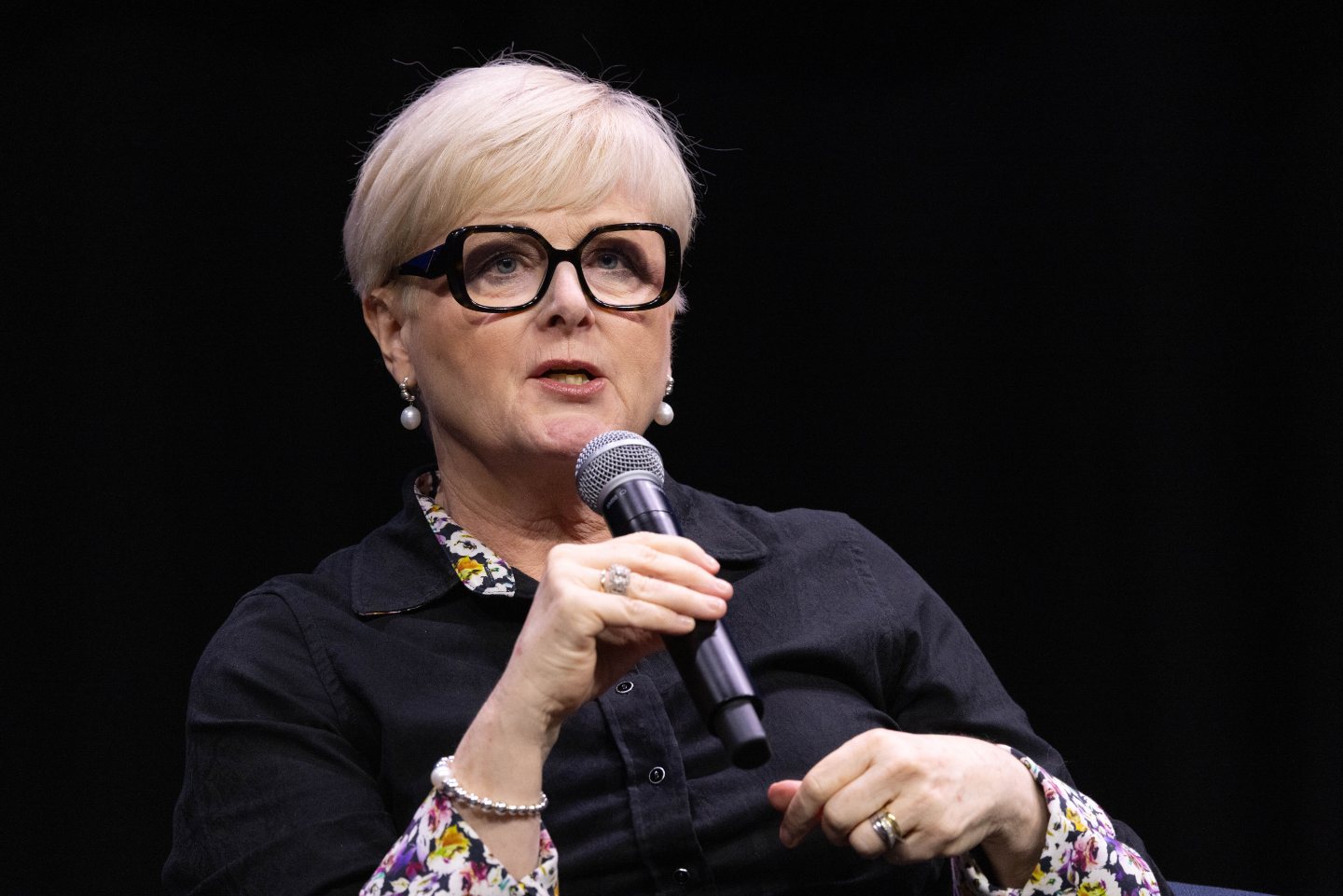
Linda Reynolds has clapped back at suggestions the Aukus agreement would draw Australia into a war with China, instead insisting Australia had been at war with our largest trading partner for the better part of a decade.

champc/iStock via Getty Images

• The fund posted returns of -1.30% ((Institutional shares)) and -1.47% (Investor A shares, without sales charge) for the first quarter of 2026.
• The fund’s underperformance of its benchmark was partly due to equity selection, particularly


China’s factory activity likely returned to meagre growth in June: Reuters poll


Facing China, one Taiwan Coast Guard officer draws strength from the gods

China adds 20 Japanese entities to export control list over military ties
Why is Mitsui E&S stock falling today?

Jac Morgan: Wales flanker backs captaincy credentials of Dewi Lake

Building a Star Wars Galaxy With Cardboard and Ten Dollars

Top 5 Hindi Books that Teach You How to Gain Financial Freedoma


-
 Sports5 days ago
Two goals and an assist by sheer aura: Cristiano Ronaldo just entered the World Cup chat
-

 Tech7 days ago
Microsoft accidentally kills epic Outlook email threads
-

 Fashion2 days ago
Weekend Open Thread: Staud – Corporette.com
-

 Politics3 days ago
The House | Manchesterism won’t survive the painful trade-offs unless it gets citizens on board
-

 Politics3 days ago
Potential 2028er World Cup attendee leaderboard
-

 Business3 days ago
Asia stock markets slide as tech shares slump
-

 Tech3 days ago
A Look At A Gaggle Of Transputer Boards
-
Crypto World5 days ago
Bitcoin (BTC) Dips Below $62K, Ethereum (ETH) Plunges 6% Daily: Market Watch
-
 Crypto World3 days ago
Dell (DELL) Shares Tumble Over 5% Following Analyst Downgrade to Hold
-

 Crypto World5 days ago
Securitize Wraps Roubini's SEC-Registered ETF as Dubai VARA Digital Security
-
Business5 days ago
Entergy settles forward sale agreements, raises $672 million in cash proceeds
-

 Crypto World2 days ago
Kraken's xStocks Opens Bending Spoons IPO Registration to EEA Retail
-

 Sports2 days ago
FIH Pro League: India defeat Pakistan 7-1, register biggest win of campaign | Other Sports News
-

 Crypto World2 days ago
Coinbase, Circle Deepen Crypto Stock Losses Despite Resilient S&P 500
-

 Crypto World2 days ago
RTX holders must register wallets before token distribution begins
-
 Crypto World3 days ago
Hyperliquid Named on Singapore MAS Investor Alert Register
-

 Tech1 day ago
Bluekit phishing kit adopts browser-in-the-middle for login theft
-

 Sports4 days ago
India vs Bangladesh LIVE Score, Women’s T20 World Cup: Bangladesh Opt To Bat; India Enter ‘Do-Or-Die’ Stage As Semi-Final Race Heats Up
-
Crypto World3 days ago
The DATA Foundation Launches to Tackle AI’s Multi-Billion Dollar Training Data Bottleneck
-

 Crypto World3 days ago
21Shares Cuts 2026 Crypto Forecasts as Institutional Demand Rises
You must be logged in to post a comment Login