

Crypto World
Record Bitcoin Holder Supply Points to Early Bottom: Swan CEO


The Bitcoin holding level of long-term investors has reached a record high of 14.7 million Bitcoin, which could suggest that the crypto market bottom will come early, according to Cory Klippsten, CEO of Swan Bitcoin.
“We’re at an all-time high of BTC held in addresses of long-term holders,” Klippsten told Cointelegraph in an interview, which he said has “marked cycle lows historically.”
Bitcoin (BTC) supply held by long-term holders reached 14.7 million BTC on Wednesday, an all-time high that “signals continued conviction” among seasoned investors, according to crypto analytics platform Glassnode.
Klippsten said these figures suggest that Bitcoin may find its cycle bottom earlier compared to previous cycles. That stands in contrast to several other analyses, including Lebit Mining Pool founder Jiang Zhuoer, who predicted that Bitcoin would only bottom between October and December 2026, or about six months after Strategy’s Multiple to Net Asset Value (mNAV) found its cycle low.
“MSTR’s mNAV has already dropped to 0.72,” approaching the lowest point of 0.7 seen on May 11, 2022, wrote Zhuoer, adding that Bitcoin may bottom with a six-month gap following Strategy’s mNAV, which may result in a cycle low near $42,000 to $44,000.
The mNAV measures a company’s stock market value compared to the intrinsic value of its treasury holdings. Both predictions suggest that Bitcoin’s price may sink lower, offering cheaper entry points for investors.

Cointelegraph’s Ciaran Lyons (left) and Swan Bitcoin CEO Cory Klippsten (right), during an interview. Source: Cointelegraph
BTC long-term holder supply up 14% since November
Long-term holders restarted their Bitcoin accumulation at the end of 2025, nearly two months after early October’s record $19 billion liquidation event.
The supply of Bitcoin held by long-term holders was 16.65 million BTC at publication time, up 14% from 14.6 million BTC on Nov. 26, data provider Coinglass shows.
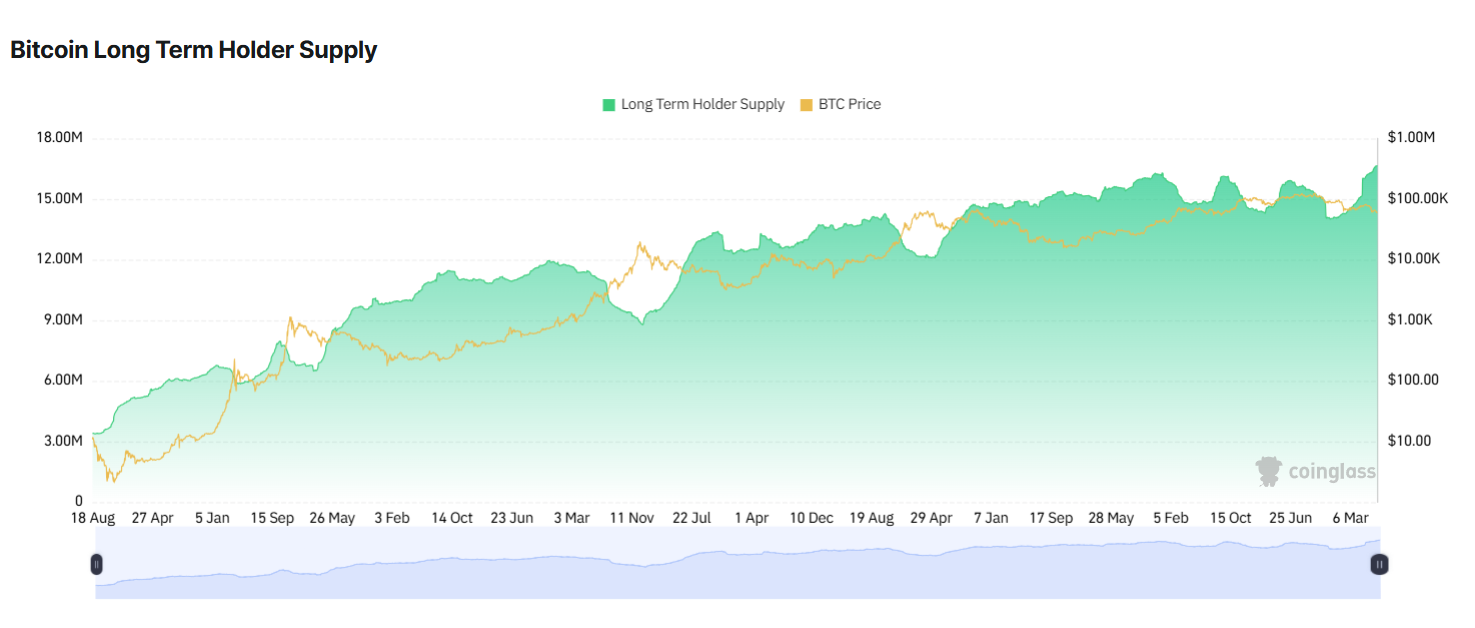
Bitcoin long-term holder supply chart. Source: Coinglass
Coinglass tracks Bitcoin held by long-term holders, or addresses that held BTC for at least 155 days. Increases in that cohort are often seen as a sign of confidence in Bitcoin’s future value, showing reluctance to sell at current prices.
Related: DeFi TVL drops 39% in 2026 amid market downturn and record hack activity
CLARITY Act uncertainty weighs on Bitcoin demand
Other regulatory developments may also influence Bitcoin’s price action, such as the uncertainty about the passage of the CLARITY Act, according to crypto-focused asset manager Grayscale.
If the CLARITY Act doesn’t pass this year, Strategy and other treasury companies may continue to further “deleverage,” causing Bitcoin to “fall moderately further,” wrote Grayscale’s head of research, Zach Pandl, in a Friday report.
On Monday, Galaxy Digital cut its odds of the CLARITY Act becoming law in 2026 to 50%, warning that the US Senate is running out of time to move the crypto market structure bill before its August recess.
The legislation is set for a House of Representatives committee hearing on July 17. The bill aims to establish the first regulatory framework for digital assets in the US, but has faced pushback from the banking industry over allowing yield on stablecoin holdings.
Magazine: Bitcoin, the ‘canary in the coal mine,’ XRP transaction demand falls 91.5%: Market Moves

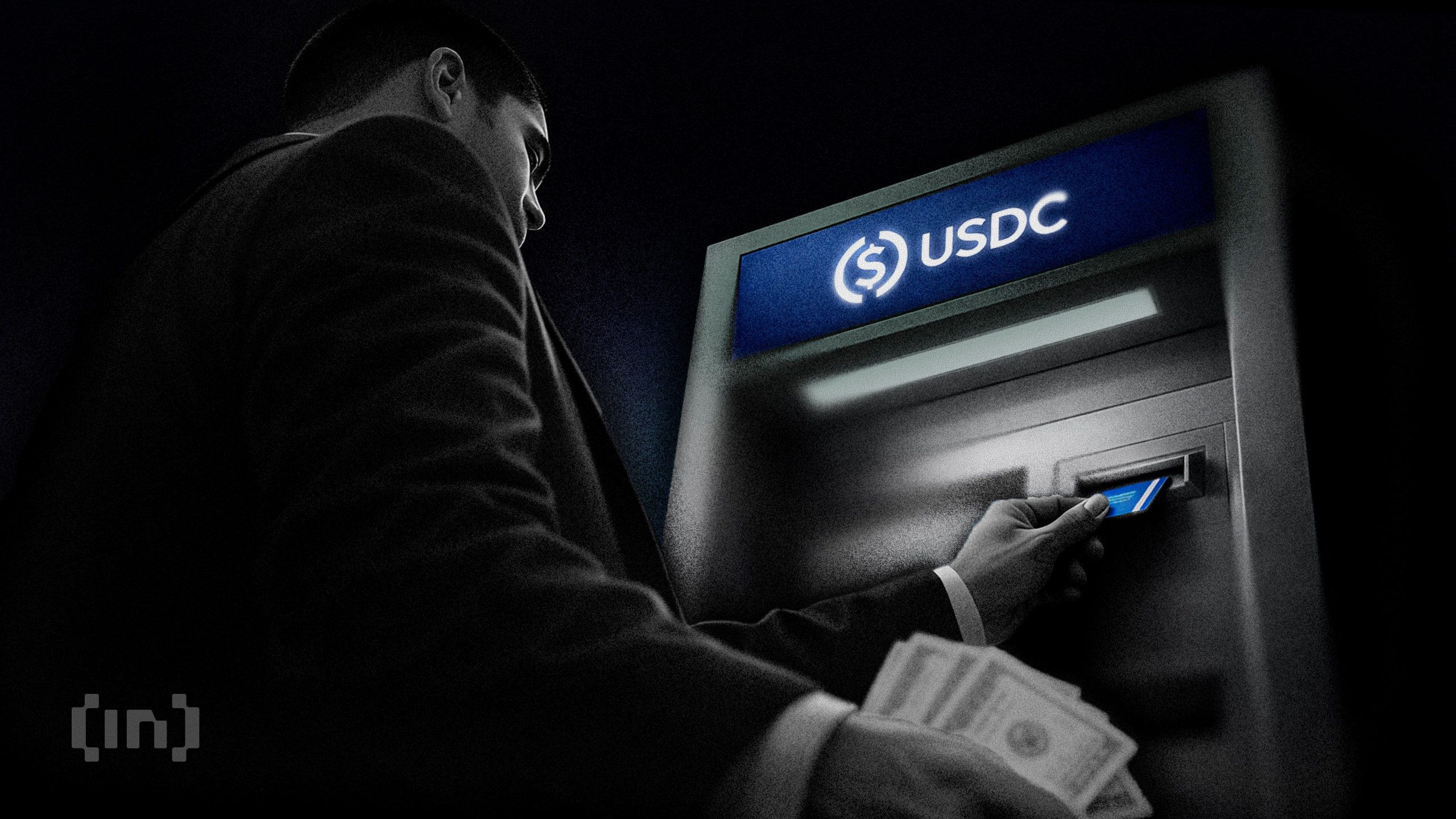

The EU’s Markets in Crypto-Assets regulation hits its final deadline today, July 1. Licensed exchanges are pulling Tether’s USDT from their platforms. Circle is stepping into the gap.
The split falls cleanly along regulatory lines. One issuer spent years building toward this deadline. The other bet Europe wasn’t worth the compliance cost.
Why Circle Is Walking Away With Europe
Circle prepared for this moment years in advance. The company secured MiCA compliance for both USDC and its euro-denominated EURC. Among the top ten stablecoins by market cap, Circle is the only issuer that cleared that bar.
Tether never applied for the e-money-token authorization MiCA requires. That decision now locks its roughly $185 billion USDT out of licensed European exchanges.
Tether’s decision wasn’t an oversight. CEO Paolo Ardoino has publicly defended the company’s stance, arguing that MiCA’s requirement to hold 60% of e-money token reserves in European bank deposits introduces its own risk. Rather than restructure its reserve model to meet that bar, Tether’s leadership has chosen to prioritize markets outside the EU.
The timing sharpens Circle’s advantage. A day before the deadline, BNY (Bank of New York Mellon) confirmed it made USDC the first stablecoin on its Digital Asset Custody platform.
Institutional clients can now store, transfer, mint, and burn USDC there. Together with the EU exchange shift, the move gives Circle regulatory validation on two continents in the same week.
A Business Story, Not Just a Compliance One
The shakeout extends well beyond stablecoins. Of the roughly 1,200 virtual-asset firms that held pre-MiCA national registrations across the EU, only around 210 converted to full CASP authorization, a conversion rate near 17%.
The more durable story is what Circle built toward for years. Regulated venues can no longer route liquidity through USDT, and Circle stands ready to absorb it. Tether may still seek authorization someday, but nothing signals that shift is coming.
The real test arrives over the next few weeks: how much EU trading volume actually migrates to USDC.
The post Circle Emerges as MiCA’s Quiet Winner While USDT Exits Europe appeared first on BeInCrypto.

For years, Bitcoin has been viewed primarily as a store of value—a digital asset designed to preserve wealth rather than actively generate it. While decentralized finance (DeFi) has transformed blockchains like Ethereum by enabling lending, borrowing, staking, and yield generation, Bitcoin has largely remained on the sidelines.
That narrative is rapidly changing.
Bitcoin Finance, commonly known as BTCFi, is emerging as one of the fastest-growing sectors in decentralized finance. By unlocking Bitcoin’s liquidity and allowing BTC holders to participate in financial applications without selling their assets, BTCFi has the potential to become the next multi-billion-dollar market.
What Is BTCFi?
BTCFi refers to the ecosystem of decentralized financial services built around Bitcoin. Rather than simply holding BTC in a wallet, users can now:
- Earn yield on idle Bitcoin
- Borrow stablecoins using BTC as collateral
- Provide liquidity to decentralized exchanges
- Participate in decentralized lending markets
- Trade Bitcoin-based assets
- Access structured financial products
- Use Bitcoin in cross-chain DeFi ecosystems
The goal is simple: transform Bitcoin from passive capital into productive capital.
Why the Timing Is Right
Several major developments have aligned to make BTCFi more viable than ever.
Bitcoin Holds Massive Untapped Liquidity
Bitcoin remains the largest cryptocurrency by market capitalization, representing hundreds of billions of dollars in value. Yet only a small fraction of this capital is actively used in DeFi.
Even modest participation from long-term Bitcoin holders could inject enormous liquidity into decentralized financial markets.
Institutional Interest Is Growing
The approval of Bitcoin exchange-traded funds (ETFs), increasing corporate treasury adoption, and rising institutional investment have strengthened Bitcoin’s position as a mainstream financial asset.
As institutions seek additional yield opportunities, BTCFi offers ways to generate returns while maintaining Bitcoin exposure.
Better Infrastructure Is Finally Here
Early attempts to bring DeFi to Bitcoin struggled due to limited programmability.
Today, new technologies are changing the landscape:
- Bitcoin Layer-2 networks
- Sidechains
- Cross-chain bridges
- Smart contract platforms secured by Bitcoin
- Native Bitcoin lending protocols
These innovations make sophisticated financial applications possible without compromising Bitcoin’s core security model.
The Rise of Bitcoin Layer-2 Networks
Scaling solutions are becoming the backbone of BTCFi.
Modern Layer-2 ecosystems enable:
- Faster transactions
- Lower transaction fees
- Smart contract execution
- Better user experiences
- Expanded developer ecosystems
These improvements create the foundation necessary for a thriving Bitcoin financial ecosystem.
New Yield Opportunities
One of BTCFi’s biggest attractions is allowing Bitcoin holders to earn passive income.
Instead of letting BTC sit idle in cold storage, users can:
- Supply liquidity
- Lend assets
- Participate in decentralized money markets
- Stake wrapped or tokenized Bitcoin in supported ecosystems
- Earn protocol incentives
This represents a significant shift from Bitcoin’s traditional “buy and hold” strategy.
Expanding Use Cases
BTCFi is moving beyond basic lending.
Emerging applications include:
- Decentralized exchanges
- Stablecoin collateralization
- Prediction markets
- Tokenized real-world assets
- On-chain derivatives
- Cross-chain liquidity protocols
- Automated yield strategies
- AI-powered financial management
As these applications mature, Bitcoin becomes increasingly integrated into the broader decentralized economy.
Why Developers Are Paying Attention
Developers are increasingly building products around Bitcoin because of its unmatched security, liquidity, and global recognition.
Innovative startups are creating:
- Native Bitcoin lending markets
- Bitcoin-backed stablecoins
- Cross-chain liquidity hubs
- Decentralized trading infrastructure
- Institutional-grade custody solutions
- Advanced financial automation tools
A growing developer ecosystem typically leads to stronger network effects and increased adoption.
Challenges Still Remain
Despite its promise, BTCFi is still in its early stages.
Some of the biggest challenges include:
- Cross-chain security risks
- Smart contract vulnerabilities
- Limited user education
- Liquidity fragmentation
- Regulatory uncertainty
- User experience complexity
Addressing these issues will be essential for sustainable long-term growth.
Why BTCFi Could Become a Multi-Billion-Dollar Industry
Several factors support BTCFi’s long-term growth potential:
- Bitcoin possesses the largest liquidity base in crypto.
- Infrastructure has matured significantly over the past few years.
- Institutional demand for Bitcoin-based financial products continues to increase.
- Developers are launching innovative protocols at a rapid pace.
- More users are seeking passive income opportunities without selling their BTC.
- Cross-chain technology continues to improve accessibility and capital efficiency.
If only a small percentage of Bitcoin’s total market value becomes actively utilized within decentralized finance, the BTCFi ecosystem could expand into one of the largest sectors in the blockchain industry.
Looking Ahead
BTCFi represents the next phase in Bitcoin’s evolution.
Instead of serving solely as digital gold, Bitcoin is increasingly becoming a productive financial asset capable of powering lending markets, liquidity pools, payments, and decentralized financial infrastructure.
While the sector remains young, its momentum is accelerating. Continued innovation in Layer-2 solutions, interoperability, security, and institutional adoption could transform BTCFi from a promising niche into a foundational pillar of decentralized finance.
For investors, developers, and long-term Bitcoin holders alike, BTCFi is more than just another trend—it is a growing movement aimed at unlocking the full economic potential of the world’s most valuable digital asset.
REQUEST AN ARTICLE
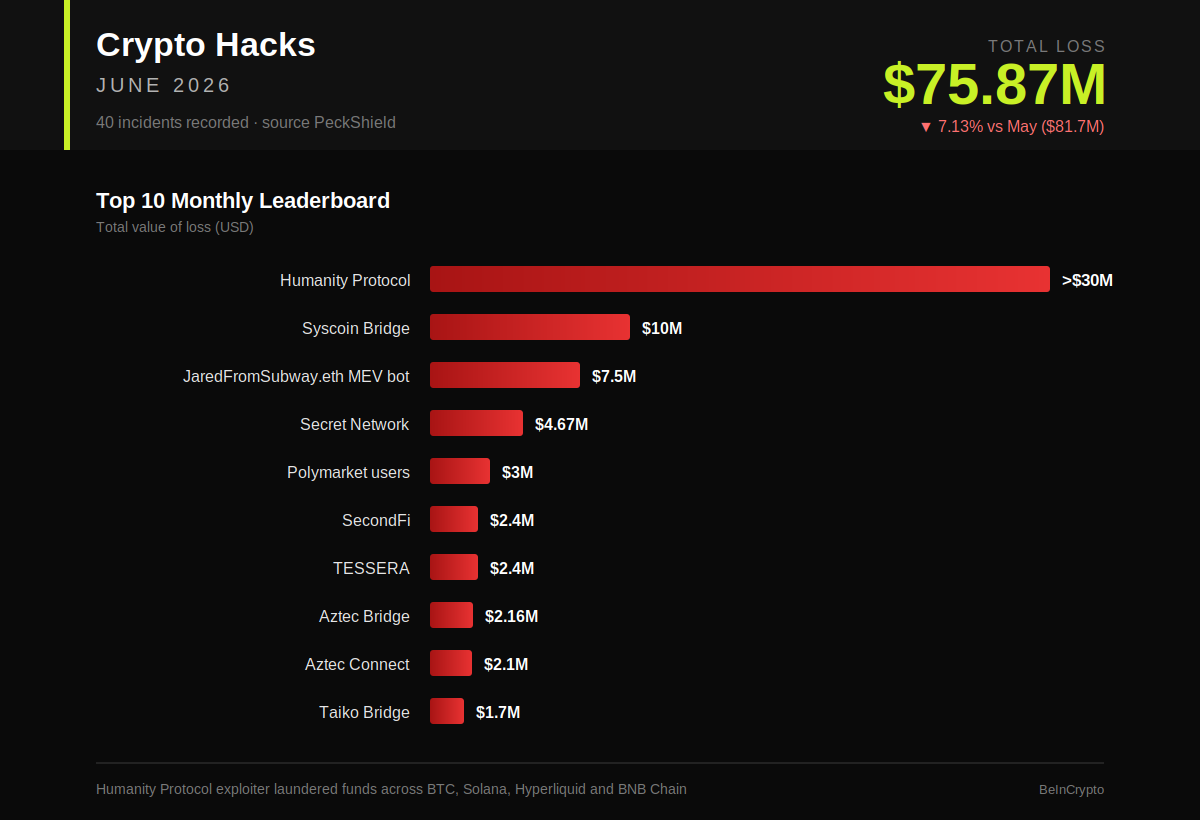
Crypto platforms lost roughly $75.87 million to 40 hacks in June 2026, according to security firm PeckShield.
The monthly total reinforces a familiar pattern for the sector, where bridges, smart contracts, and compromised keys remain the most common failure points.
Humanity Protocol Exploit Tops June Crypto Hacks
According to PeckShield, June’s figure marks a 7.13% decline from May’s $81.7 million. The Humanity Protocol breach headlined June with over $30 million in losses. Attackers compromised private keys that had been backed up to a malware-infected developer machine.
According to Quantstamp, the attacker relied on tooling and techniques commonly associated with North Korean hacking groups.
The exploiter has since laundered proceeds across multiple networks, including Bitcoin (BTC), Solana (SOL), Hyperliquid (HYPE), and BNB Chain.
These funds have also been commingled with proceeds linked to the KelpDAO exploiter, suggesting a potential overlap between the threat actors behind both incidents,” the security firm said.
Follow us on X to get the latest news as it happens

Syscoin Bridge followed with a $10 million loss after an attacker minted unauthorized SYS tokens. The JaredFromSubway.eth Maximal Extractable Value (MEV) bot lost $7.5 million, while Secret Network was drained for $4.67 million.
Aztec Products Hit Despite Years of Dormancy
Two separate attacks targeted Aztec-linked products within the month. Aztec Payments Product lost $2.16 million, and Aztec Connect lost $2.1 million, for a combined total near $4 million.
Both products had been deprecated years earlier, and Aztec Labs said it held no control over the affected systems.
Other June incidents included Polymarket users losing $3 million after reportedly being targeted in a phishing campaign, along with $2.4 million in losses for SecondFi and TESSERA. The Taiko Bridge exploit closed out the top 10 at $1.7 million.
With both deprecated code and cross-chain laundering in play, June showed that old contracts remain in attackers’ crosshairs long after teams walk away.
Subscribe to our YouTube channel to watch leaders and journalists provide expert insights
The post Hackers Steal $75.87 Million From Crypto Platforms in June 2026 appeared first on BeInCrypto.
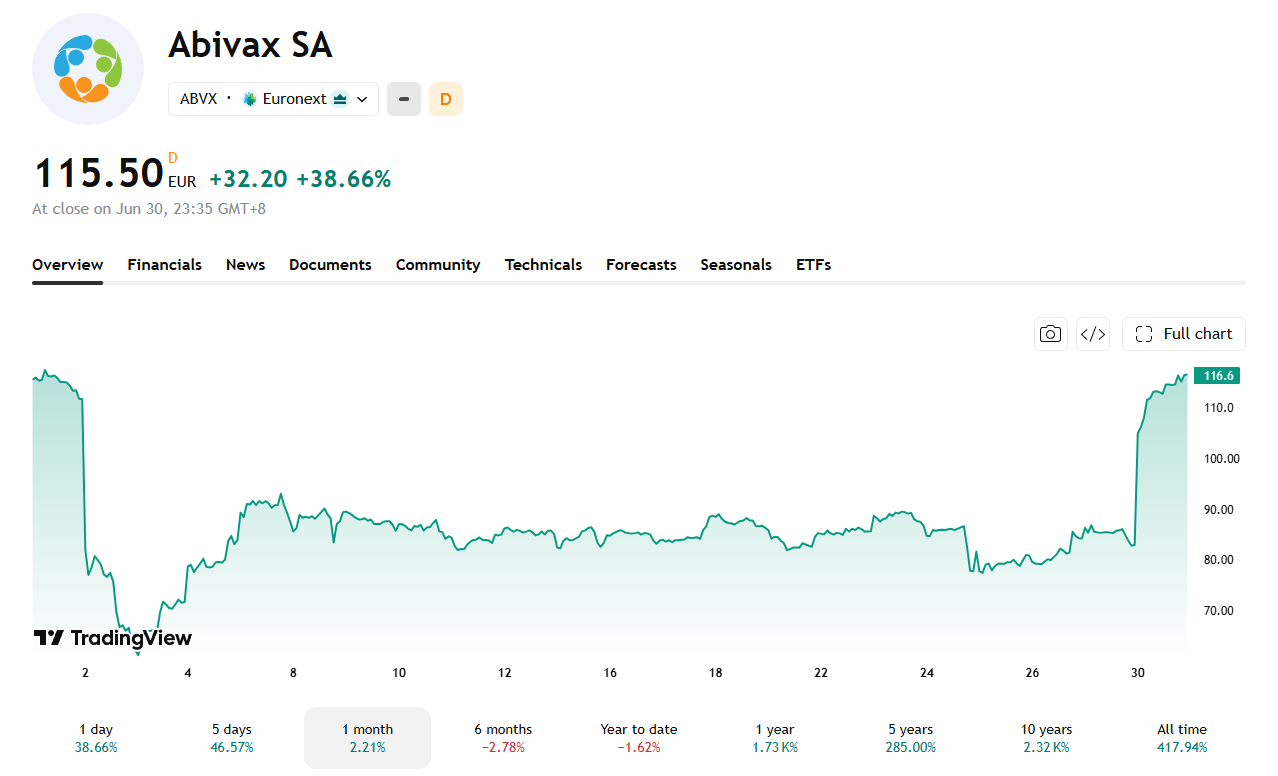
Abivax shares surged over 38% on June 30, 2026, after new Phase 3 data eased cancer-safety fears that had erased 43% of the French biotech’s value earlier in June.
The rally follows fresh results for obefazimod, Abivax’s lead ulcerative colitis drug. The data showed durable remission with no new safety signals.
A Reversed Safety Signal
Abivax’s stock crashed 43% on June 2. Early trial data had shown a rise in malignancies among patients taking obefazimod.
The company released new Phase 3 data on Sunday, June 28, covering patients who failed initial treatment. Researchers found malignancy rates within the range doctors typically see in ulcerative colitis patients. The update calmed the safety concern that triggered the June 2 sell-off.

Among patients who failed initial treatment, 37.2% reached clinical remission and 34.5% reached endoscopic remission at week 44. Those results reinforced the drug’s efficacy case in harder-to-treat patients.
Abivax shares have now climbed more than 1,730% over the past year.
Wall Street Splits on the Risk
Analysts did not agree on how much risk remains. Citizens raised its Abivax price target to $187 and kept its Outperform rating, pointing to the drug’s placebo-adjusted remission benefit.
Wedbush took a more cautious view. The firm upgraded Abivax from Underperform to Neutral but cut its price target to $90. Wedbush cited lingering malignancy questions at the 50 mg dose as a regulatory risk.
Abivax still plans to file a new drug application with the FDA in the fourth quarter of 2026. That filing will keep the stock sensitive to any additional safety data before then.
The post From Cancer Scare to Comeback, Abivax Shares Erase a Month of Losses in a Day appeared first on BeInCrypto.
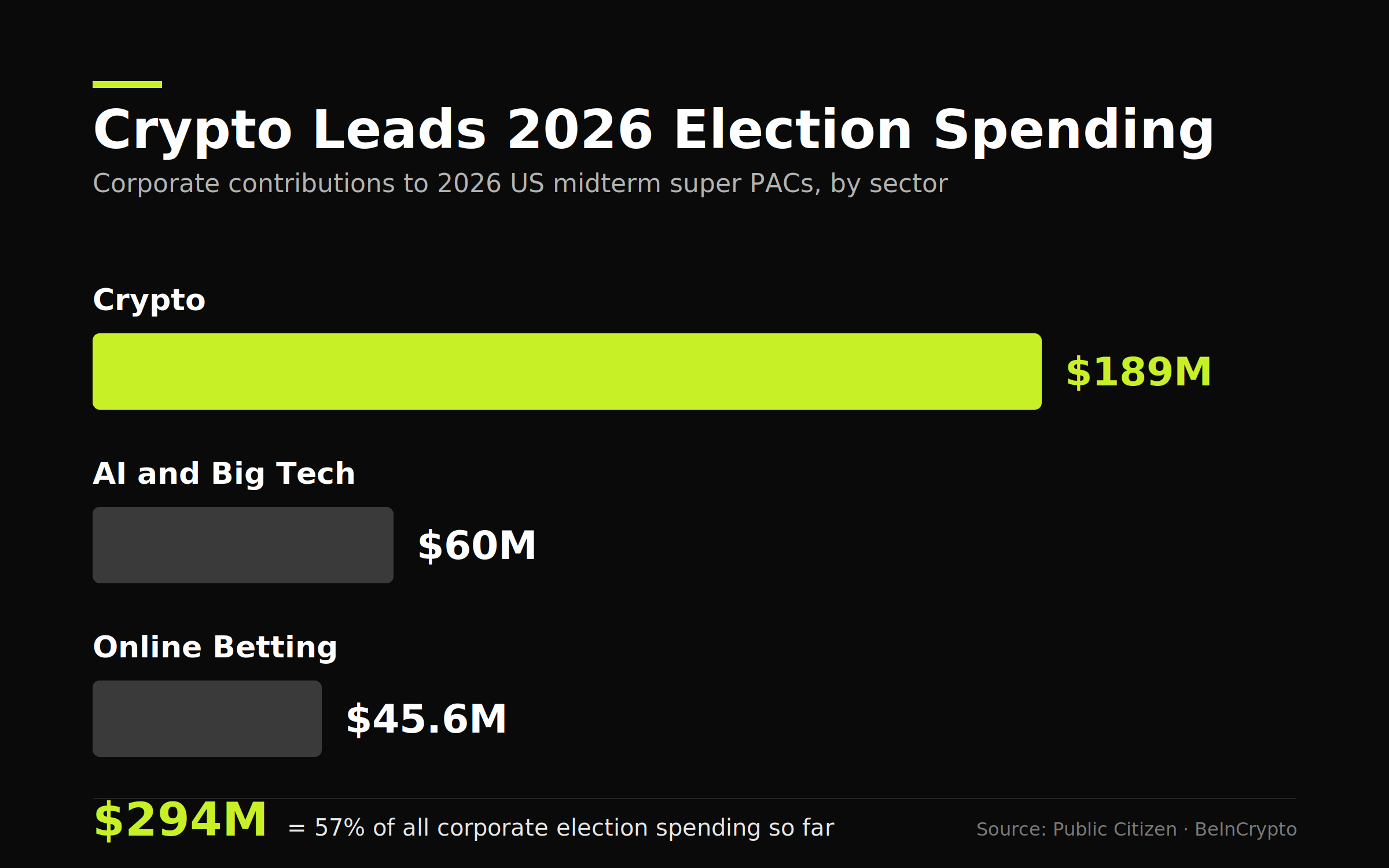
Cryptocurrency corporations have spent $189 million on the 2026 US midterm elections, roughly 37% of all reported corporate election spending, according to a Public Citizen report.
The figure keeps crypto ahead of every other industry in funding federal races this cycle. It reflects a strategy the sector introduced in 2024 that other industries now imitate.
Crypto Leads The Corporate Spending Surge in 2026 Elections
Total corporate spending on the 2026 midterms reached $517 million, according to the watchdog group. That marks a 12% rise over the $461 million corporations spent across the entire 2024 cycle.
“In the 2026 midterm elections, corporate money is poised to play a bigger role than ever before in influencing how Americans vote,” the report read.
Crypto’s $189 million exceeded the combined totals from artificial intelligence and Big Tech firms at $60 million and online betting companies at $45.6 million. Together, these sectors contributed $294 million, or 57% of all corporate spending so far.
Follow us on X to get the latest news as it happens

The report frames the trend as a copycat effect. Crypto firms pioneered the model of routing large sums into sector-focused super PACs during the last presidential cycle. AI and gambling companies have since built their own versions.
Where the Crypto Money Went
Fairshake, the crypto-aligned super PAC, received $82 million in corporate contributions. That sum represents 60% of its total 2026 receipts of $135 million.
The Trump-backing MAGA Inc. super PAC drew a separate $56.2 million from crypto donors. Ripple Labs and Coinbase steered $81.5 million toward Fairshake, while Crypto.com, Gemini, and Blockchain.com directed funds to MAGA Inc.
Crypto.com operator Foris Dax alone gave $35 million to MAGA Inc., making it the largest single corporate backer of that committee across all industries. The Winklevoss twins funded a separate Republican-only vehicle, the Digital Freedom Fund, with $21.3 million.
Public Citizen notes that its total likely undercounts real spending, since dark-money groups and state-level contributions escape federal disclosure rules.
Voter Interest Tells a Different Story
The spending contrasts sharply with public sentiment. A Politico poll conducted with Public First found only 4% of Americans weigh a candidate’s crypto position when voting. Just 18% want Congress to prioritize crypto rules.
Another survey found that 41% of respondents said special interest groups hold too much political influence. Whether that skepticism converts into ballot-box pressure against heavily funded candidates remains an open question for November.
Subscribe to our YouTube channel to watch leaders and journalists provide expert insights
The post Crypto Corporations Fund 37% of All 2026 Corporate Election Spending appeared first on BeInCrypto.
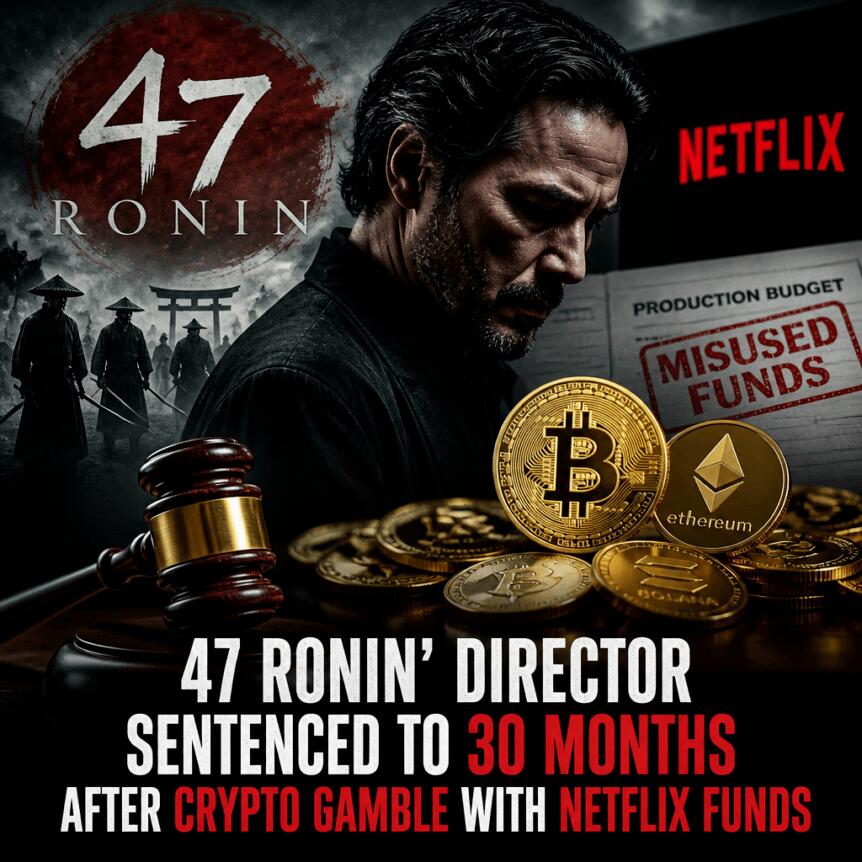
Hollywood director Carl Rinsch has been sentenced to 30 months in federal prison after prosecutors said he defrauded Netflix out of $11 million intended to finance a science-fiction television production. According to U.S. authorities, Rinsch diverted the funds into speculative trading—including cryptocurrency—before spending large portions on personal expenses and luxury purchases.
The case, handled in Manhattan federal court, closes a 15-month legal saga that began with Rinsch’s arrest in March 2025. He was convicted in December on charges that included wire fraud and money laundering and then faced sentencing for additional counts related to financial transactions tied to alleged unlawful activity.
Key takeaways
- Rinsch received a 30-month prison sentence for a scheme prosecutors say involved $11 million wired by a streaming company for a TV project.
- Prosecutors said the money was used for speculative bets in crypto and stocks, rather than completing the show.
- The court ordered $11 million in forfeiture on top of the prison term and supervision.
- The sentence was far below the maximum penalty the government said he faced across all counts, which totaled up to 90 years.
Fraud scheme tied to a streaming production
Manhattan U.S. Attorney Jay Clayton said in a statement that Rinsch “orchestrated a scheme to steal millions” by seeking $11 million from a subscription streaming service, claiming the funds would be used to finance his television show. Prosecutors said that representation was false.
Instead, Clayton stated, Rinsch made what the government characterized as risky bets on speculative stock options and cryptocurrency and also spent millions on luxury goods. “Today’s sentence sends a deterrent message: fraud will not be tolerated,” Clayton added.
Rinsch, best known for directing the 2013 film “47 Ronin” starring Keanu Reeves, was convicted in December on counts including fraud and money laundering. At sentencing, the court also considered defense arguments that he had mental health issues, including support letters submitted by people close to him.
Prosecutors said the case began as a continuation of an earlier funding arrangement. Earlier reporting and court filings cited in the case describe that Rinsch initially received $44 million from the streaming service for a project later renamed “Conquest,” after a show initially titled “White Horse.” The additional $11 million was wired in March 2020, according to the indictment and accounts described in court materials.
Crypto trading and the Dogecoin liquidation
One of the central claims in the case involved how Rinsch allegedly used part of the new $11 million to attempt to multiply the money through market speculation. According to a March 2025 indictment and reporting connected to a confidential arbitration described by the New York Times, Rinsch used $10.5 million from the additional funding to gamble in the stock market and quickly lost about half within weeks, as described in the indictment.
Prosecutors also said Rinsch moved more than $4 million of remaining funds to the crypto exchange Kraken and then “went all in” on Dogecoin (DOGE). The indictment materials referenced by the article state that the DOGE trade generated about $27 million after he liquidated in May 2021, based on a statement described as seen by The Times.
For readers tracking how court cases interpret crypto activity, the case offers a clear example of prosecutors linking on-exchange transfers and concentrated positions to broader alleged intent. Here, the government framed crypto trading not as a detached investment decision but as part of an overall use of client funds that prosecutors argued was deceptive.
Spending that allegedly followed the trades
After the reported DOGE winnings, prosecutors alleged Rinsch spent about $10 million on personal expenses and luxury purchases instead of completing the show or returning the money. The indictment described expenditures including $1.8 million on credit card bills, $1 million for lawyers to sue Netflix, $3.8 million on furniture and antiques, and large purchases of luxury vehicles, including Rolls-Royces and a Ferrari.
The indictment also cited smaller but specific categories such as $652,000 for watches and clothes, alongside other personal spending. Prosecutors said Rinsch never finished the television project and did not return the funds that had been provided.
While the sentence itself is a criminal-law outcome, the underlying narrative—funds intended for production allegedly redirected into speculative markets and then into personal consumption—highlights how financial misuse allegations can draw on both traditional asset trading records and crypto exchange activity.
What prosecutors sought vs. what the court imposed
At trial, Rinsch was convicted of one count each of wire fraud and money laundering. Each of those counts carried a maximum of 20 years in prison, prosecutors said, while five additional counts involving monetary transactions tied to unlawful activity carried maximum penalties of up to 10 years each.
In a mid-June sentencing memo filed in court, prosecutors asked for a five-year prison term, after Rinsch argued for a sentence without incarceration. The court ultimately imposed a 30-month term—shorter than the government’s request.
Along with prison time, prosecutors said the judge ordered three years of supervised release, $11 million in forfeiture, and $700 in mandatory special assessments.
The defense argued Rinsch’s mental health played a role in his behavior around the time of the alleged offenses, and support letters included submissions from friends and family, as well as a letter from Keanu Reeves. Authorities, however, emphasized the deliberate nature of the scheme, including the alleged misrepresentations used to secure the $11 million.
For investors and crypto users, the practical takeaway is less about any single coin and more about how courts may interpret crypto trading activity when prosecutors tie it to alleged fraud, money laundering, and diversion of funds. Readers should watch how similar cases develop evidence standards—particularly how exchange withdrawals, concentrated token bets, and liquidation timing are presented as part of intent and purpose in fraud prosecutions.

Nasdaq-listed crypto treasury firm Solana Company signed an agreement to support the development of Alatau City, Kazakhstan’s planned digital-first megacity.
The company signed a memorandum of understanding to advise and help build Alatau City’s blockchain and crypto infrastructure during the Alatau City Roadshow in Shenzhen and Hong Kong in June, which reportedly secured 30 cooperation agreements with a combined investment potential of over $6 billion.
“We look forward to deepening this partnership and expanding the Solana ecosystem’s footprint across the region,” said Solana Company chair and CEO Joseph Chee.
The deal further pushes Kazakhstan into Solana’s corner. Last year, Kazakhstan launched Central Asia’s first Solana Economic Zone in the country’s capital of Astana with the Solana Foundation.
The Kazakhstan Stock Exchange (KASE) launched its first Solana ETF last week, giving investors regulated exposure to Solana (SOL) through one of the biggest stock exchanges in Central Asia.
The Solana Foundation also signed a memorandum of understanding with Alatau City to develop its blockchain capabilities during the China roadshow.
Solana Co.’s work in Alatau City
The collaboration between Solana Company and Alatau City will cover four areas: digital asset treasury, blockchain infrastructure, accelerating the institutional adoption of blockchain and platform development.
Alisher Abdykadyrov, CEO of the Alatau City Authority, said the MOU will also see Solana Company participate in the development of the Alatau Crypto Cluster, a dedicated pilot zone and special economic area in the upcoming city where crypto will be permitted for everyday transactions.
Alatau City’s ambitious plans for megacity
The Alatau City megaproject was first unveiled to an international audience by Kazakh President Kassym-Jomart Tokayev in May 2024. The city is still primarily in early development and planning stages.

The village of Zhetygen, pictured in March 2023, before it was designated a city and renamed to Alatau. Source: Wikimedia Commons
Planners envision it as a fully integrated smart city with low-altitude aircraft, robotaxis and autonomous drones handling urban transportation and deliveries, with hydrogen energy powering its economy.
During the Solana Summit Kazakhstan 2026, Arman Tastanbekov, deputy CEO of the Alatau City Authority, said that Alatau City would be built with artificial intelligence, digital identity and blockchain technology from the beginning.
It hasn’t come without its challengers, however, with Kazakhstan’s National Bank and Financial Monitoring Agency reportedly expressing concerns about the constitutional changes required to support a crypto-based economy, The Diplomat reported in March.
Other independent news reports suggest that the current residents of Alatau City are still dealing with a lack of gas, water, electricity and internet connectivity, suggesting the futuristic city is still far from reality.
Cointelegraph reached out to Alatau City for comment.
Magazine: Bitcoin slides to $58K, XRP hits $1 but onchain data promising: Market Moves


Investment firm Spiko has integrated Coinbase’s stablecoin payment infrastructure into two regulated EU Treasury-bill funds, allowing eligible investors to fund subscriptions and receive redemption proceeds using USDC and EURC.
Coinbase said Tuesday the integration covers Spiko’s EU T-Bills Money Market Fund and US T-Bills Money Market Fund. Both are structured as Undertakings for Collective Investment in Transferable Securities, or UCITS. Coinbase Payments will provide the payment, wallet and application programming interface (API) infrastructure, with the transactions settling on Base, Coinbase’s layer-2 network.
The exchange said the products are the first UCITS funds in Europe to accept direct stablecoin payments.
The move into UCITS funds comes as net sales of the assets rebounded in April, the latest data from trade group EFAMA showed on Monday. UCITS saw net inflows of 104 billion euros that month, compared to net outflows of 41 billion euros in March. Net sales reached a new record in 2025, totaling 828 billion euros and surpassing the previous 2021 high of 813 billion euros.
Tokenized funds push toward 24/7 utility
Coinbase described the integration as an example of how stablecoins could reshape payments infrastructure for mutual funds by removing bottlenecks for investors as they enter and exit a product. It positions stablecoins as settlement infrastructure, connecting onchain capital with regulated investment funds.
Investors can submit subscriptions at any time, including weekends and holidays. At the same time, redemption proceeds can be delivered to a stablecoin wallet within minutes after a position is liquidated.
Despite this, round-the-clock stablecoin transfers do not necessarily mean that the underlying fund continuously processes subscriptions and redemptions. Spiko said the Coinbase integration introduces a new payment method rather than changing the funds themselves.
Cointelegraph reached out to Coinbase for more information on order execution, but did not receive a response before publication.
Related: Coinbase, Kraken and OKX move to swoop up EU users affected by MiCA restrictions
Other asset managers have tested ways to provide 24/7 access to tokenized funds. In February, WisdomTree received approval for round-the-clock secondary trading and instant USDC settlement of its tokenized Treasury fund, with liquidity supplied by its broker-dealer while primary fund processes remained unchanged.
Tokenized money market funds are also increasingly being used as infrastructure beyond subscriptions and redemptions. In February, Franklin Templeton and Binance introduced a program allowing institutions to pledge tokenized fund shares as off-exchange trading collateral while the assets remain in regulated custody
Magazine: China’s 107 Bitcoin memory thief, Bithumb CEO booked: Asia Express


Taiwan has passed its Virtual Asset Service Act, giving crypto exchanges and stablecoin issuers a clear licensing path after years of legal uncertainty.
Summary
- Taiwan’s new crypto law requires exchanges and other virtual asset firms to obtain FSC licenses.
- Stablecoin issuers must secure central bank and FSC approval while keeping full reserve backing.
- Existing registered crypto firms get a transition period before the new licensing system fully applies.
Taiwan’s Legislative Yuan passed the Virtual Asset Service Act in its third reading on June 30, sending the bill to President Lai Ching-te for the next step. The Financial Supervisory Commission said the law moves Taiwan’s crypto oversight from anti-money laundering registration to wider supervision of operations, market order and customer protection.
The act creates rules for seven types of virtual asset service providers, including exchanges, trading platforms, transfer firms, custodians, underwriters and lending service providers. The law covers internal controls, cybersecurity, asset listing reviews, customer asset segregation, outsourcing, civil liability and financial reporting, according to the FSC statement.
Taiwan sets new licensing rules for crypto firms
Under the new law, crypto businesses must obtain approval from the FSC before operating. Existing firms that already completed anti-money laundering registration before the law takes effect will have 12 months to apply for approval and 21 months to obtain the required license, according to the FSC.
The law also gives firms a limited buffer if more time is needed. The FSC said the transition period may be extended by three months, but only once. Firms that fail to complete the process by the deadline will not be allowed to continue virtual asset business in Taiwan.
Stablecoins get central bank role
Stablecoin issuers will need approval from both Taiwan’s central bank and the FSC before issuing tokens in the country. The law requires issuers to maintain full reserve assets, place reserves in trust and carry out regular audits and public disclosures, according to the FSC.
As previously reported by crypto.news, Taiwan’s FSC had earlier planned a draft law that would allow local banks to issue stablecoins tied to the New Taiwan dollar. That plan gave the central bank a role in stablecoin oversight and placed local stablecoin approval under the FSC.
The final law also creates criminal penalties for unlicensed activity and market abuse. Focus Taiwan reported that illegal VASP operations or stablecoin issuance can bring up to seven years in prison and fines of up to NT$100 million, or about $3.14 million.
Fraud and market manipulation carry heavier penalties. Offenders can face three to 10 years in prison and fines from NT$10 million to NT$200 million, according to Focus Taiwan.
New rules end legal gray area
The law gives Taiwan’s crypto sector a formal legal base after a period where many businesses relied on anti-money laundering registration rather than a full license. The legislative document said the act aims to protect customers, support sector development and bring Taiwan closer to global standards used in markets such as the European Union, Japan and South Korea.
Moreover, the FSC released the draft Virtual Asset Service Act in March 2025 with licensing rules for crypto firms, stablecoin standards and investor protection measures. The new passage turns that draft direction into a law awaiting promulgation and an effective date from the cabinet.
Previously, crypto.news reported that Taiwan’s central bank and FSC were pushing tighter stablecoin rules while lawmakers debated the government’s seized crypto holdings. That earlier debate showed how digital assets had moved from a narrow compliance issue into a wider policy topic in Taiwan.
The FSC said it will continue drafting authorized sub-rules and will consult industry groups and other stakeholders. The next stage will decide how licensing standards, personnel rules, internal controls and stablecoin procedures work in practice.
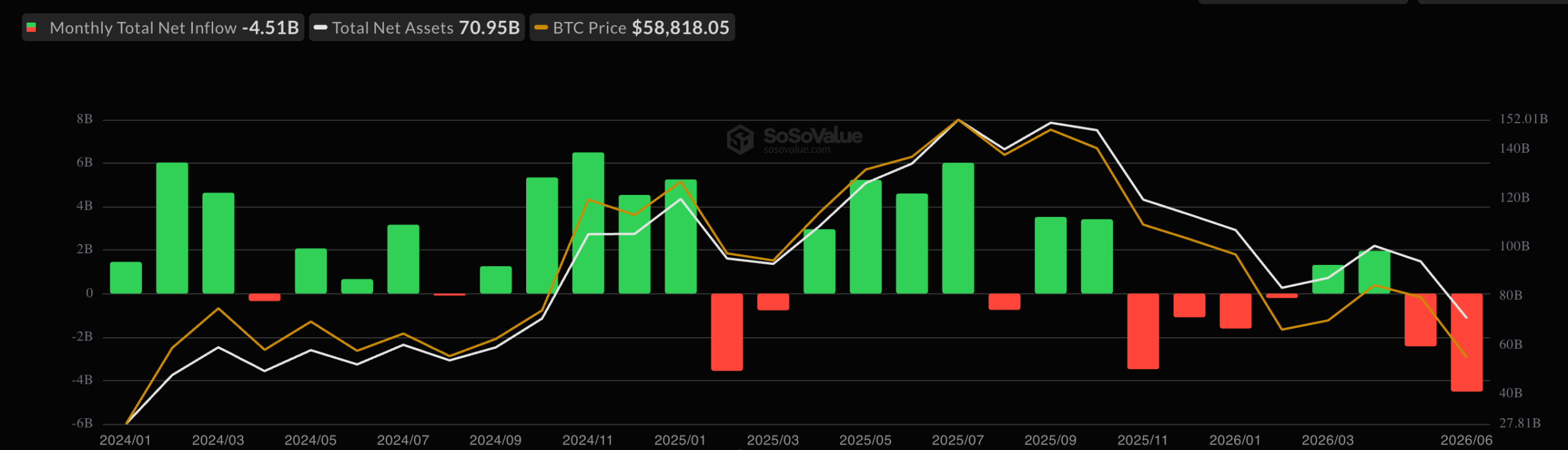
US-listed Bitcoin (BTC) exchange-traded funds (ETFs) recorded $4.5 billion in net outflows during June 2026. This was the worst monthly figure since the products launched in January 2024.
The redemptions coincided with a sharp price decline. Bitcoin fell 20.48% over the month, its steepest monthly drop since June 2022, when the asset shed 37.28% during that cycle’s collapse.
IBIT Leads the Institutional Retreat
June’s outflows broke the previous monthly record of $3.56 billion, set in February 2025 during an earlier stretch of market stress.
Follow us on X to get the latest news as it happens

BlackRock’s iShares Bitcoin Trust (IBIT) accounted for the bulk of the outflows. The fund alone shed $3.55 billion, close to 79% of the category’s total redemptions.
That concentration is striking. IBIT’s single-fund outflow nearly matched the entire category’s prior monthly record on its own.
The price data reinforces the pressure. Bitcoin closed four of 2026’s first six months in negative territory, with June’s 20.48% decline the deepest of the year.
How Crypto ETFs Performed in June 2026
The weakness extended beyond Bitcoin, though the scale varied across categories. Ethereum (ETH) ETFs posted $528.99 million in June outflows, SoSoValue data showed.
Solana (SOL) ETFs recorded net outflows of roughly $786,580. The figure is small, but it marks the first monthly outflow for Solana ETFs since their launch, ending a run of positive months.

Not every category turned negative. XRP (XRP) ETFs drew $59.46 million in net inflows during June, holding positive despite the broader downturn.
Hyperliquid (HYPE) ETFs led the group with $161.05 million in inflows, the strongest June showing across the products.
The split suggests capital rotated within crypto rather than exiting entirely. Newer altcoin products absorbed fresh money even as the two largest categories saw sustained redemptions.
Whether that rotation hardens will depend on how Bitcoin trades in July, since a price rebound could pull capital back toward the incumbents.
Subscribe to our YouTube channel to watch leaders and journalists provide expert insights
The post Bitcoin Spot ETFs Post Worst Month on Record With $4.5 Billion June Outflow appeared first on BeInCrypto.

Business confidence plunges as IoD warns Burnham on Whitehall reform

Circle Emerges as MiCA’s Quiet Winner While USDT Exits Europe

Police search through the night amid concerns for man last seen in Newmarket





-

 Fashion5 days ago
Weekend Open Thread: Staud – Corporette.com
-

 Politics5 days ago
The House | Manchesterism won’t survive the painful trade-offs unless it gets citizens on board
-

 Crypto World1 day ago
Strategy authorizes up to $1.25B in Bitcoin sales under new capital plan
-

 Politics5 days ago
Potential 2028er World Cup attendee leaderboard
-

 Business5 days ago
Asia stock markets slide as tech shares slump
-

 News Videos2 days ago
MAJOR BITCOIN & MARKET UPDATE!!!! (MUST WATCH ASAP!!!)
-

 Tech5 days ago
A Look At A Gaggle Of Transputer Boards
-
 Crypto World6 days ago
Dell (DELL) Shares Tumble Over 5% Following Analyst Downgrade to Hold
-

 Crypto World4 days ago
Coinbase, Circle Deepen Crypto Stock Losses Despite Resilient S&P 500
-

 Business1 day ago
Australia treasurer says alleged access of prime minister’s bank data ’incredibly concerning’
-

 Crypto World4 days ago
Kraken's xStocks Opens Bending Spoons IPO Registration to EEA Retail
-

 Sports4 days ago
FIH Pro League: India defeat Pakistan 7-1, register biggest win of campaign | Other Sports News
-

 Crypto World5 days ago
Bitcoin Sparks $600M Hourly Liquidations With $65,000 Set To Become Resistance
-

 Tech3 days ago
Bluekit phishing kit adopts browser-in-the-middle for login theft
-

 Tech4 days ago
Russian hackers now target Signal backup recovery keys
-
 Crypto World5 days ago
Hyperliquid Named on Singapore MAS Investor Alert Register
-

 Crypto World6 days ago
Ripple and SBI launch RLUSD in Japan after JFSA approval
-

 Crypto World5 days ago
RTX holders must register wallets before token distribution begins
-

 Tech1 day ago
Anonymous researcher drops 0-day ‘exploitarium’ repo
-
 Business2 days ago
The AI boom won’t burst all at once. It will pop in ‘rolling bubbles’: Macquarie
You must be logged in to post a comment Login