
Business
Nasdaq Edges Higher to Close at 25,884 as Tech Sector Shows Resilience in Mixed Market Session

NEW YORK — The Nasdaq Composite Index climbed 64.59 points, or 0.25%, to close at 25,884.73 on Tuesday, extending a modest rebound amid ongoing investor rotation and selective buying in technology shares.
The modest gain came as broader markets displayed caution following recent volatility. Major averages ended mixed, with technology-heavy benchmarks showing relative strength while other sectors faced pressure from economic data and corporate developments. The performance underscored continued investor focus on artificial intelligence-related stocks and big technology names even as concerns about valuations lingered.
Trading volume remained elevated as participants assessed the Federal Reserve’s latest signals on interest rates and digested a steady stream of corporate earnings. The session reflected a market environment where selective optimism in growth sectors offset broader uncertainty.
Technology shares led the Nasdaq’s advance, with several major companies posting gains on bargain hunting after recent pullbacks. Chipmakers and software firms contributed to the index’s upward move, though gains were tempered by losses in other areas. The Philadelphia Semiconductor Index participated in the modest recovery, though it trailed stronger performances seen in prior sessions.
The S&P 500 and Dow Jones Industrial Average showed varied results, highlighting sector rotation at play. Defensive sectors and value-oriented stocks drew interest as investors balanced growth exposure with more stable holdings. Market breadth remained neutral, with advancing and declining issues roughly balanced on major exchanges.
Analysts noted that the Nasdaq’s small advance capped a period of consolidation. The index has navigated fluctuating sentiment around monetary policy expectations and geopolitical developments. Tuesday’s close left the Nasdaq below recent peaks but demonstrated resilience amid crosscurrents.
Federal Reserve officials have continued to emphasize data-dependent decisions on rates. Recent economic indicators, including inflation readings and employment figures, have kept markets attuned to the possibility of policy adjustments later in the year. Bond yields moved modestly, influencing equity valuations particularly in rate-sensitive sectors.
Corporate earnings provided additional context. Several technology firms reported results that met or exceeded expectations, supporting share prices in the sector. However, caution prevailed regarding forward guidance amid economic uncertainties.
The broader market context included ongoing discussions around fiscal policy and global trade. Investors monitored developments in international relations and their potential economic spillover effects. Energy prices and commodity trends also factored into sentiment, with oil prices influencing related equities.
Smaller companies in the Russell 2000 index showed mixed performance, reflecting divergent outlooks for domestic-focused businesses. While some segments benefited from economic resilience, others faced headwinds from higher borrowing costs and consumer spending patterns.
Market participants pointed to artificial intelligence as a continuing theme. Companies positioned in AI infrastructure, semiconductors and cloud computing attracted attention. Yet valuation concerns and profit-taking created volatility within the group.
Tuesday’s trading unfolded against a backdrop of seasonal factors. The end of the quarter often brings rebalancing activity from institutional investors, contributing to volume and price swings. The Nasdaq’s closing cross and related activity highlighted sustained interest in technology names.
Looking ahead, investors await further economic data, including employment reports and inflation metrics. These releases will shape expectations for Federal Reserve actions and influence asset allocation decisions across equities, bonds and other classes.
The technology sector’s outperformance in recent years has been driven by innovation and strong earnings growth. However, periods of consolidation have become common as the market digests rapid gains. The Nasdaq’s 0.25% advance on Tuesday fit this pattern of measured recovery.
Broader participation could support further upside if economic conditions remain favorable. Conversely, persistent inflation or slower growth might prompt shifts toward defensive assets. Professional investors continue to stress diversification and risk management in the current environment.
Trading activity reflected a balance between optimism around technological progress and prudence regarding macroeconomic risks. Large-cap technology names anchored the Nasdaq’s performance, while mid- and small-cap stocks offered varied results.
Global markets provided mixed cues, with European and Asian indexes showing selective gains. Currency movements and commodity prices added layers to the analysis for multinational companies listed on the Nasdaq.
The session’s modest gain left the Nasdaq Composite with solid year-to-date performance, though below peak levels reached earlier. Long-term investors have benefited from the index’s historical upward trajectory, powered by innovation-driven companies.
Market strategists emphasize monitoring key technical levels and corporate fundamentals. Support and resistance points on the Nasdaq will be watched closely in coming sessions as traders position for potential catalysts.
Economic resilience in the United States has supported corporate profitability, particularly in technology. However, challenges such as labor market dynamics and geopolitical tensions remain in focus.
Tuesday’s close at 25,884.73 marked a incremental step in the Nasdaq’s ongoing journey. While not dramatic, the positive finish contributed to sentiment as markets prepare for upcoming events.
Analysts will continue parsing earnings reports and guidance for clues about second-half performance. Guidance from major firms often sets the tone for sector expectations and broader market direction.
The technology sector’s weight in the Nasdaq means its performance disproportionately influences the index. Gains in key constituents helped offset weakness elsewhere, producing the net positive result.
Investor sentiment indicators showed a cautious tilt, with some measures of fear receding after recent volatility. Options activity and volatility indexes provided additional insight into market psychology.
As the trading day concluded, attention shifted to after-hours developments and overnight news flow. Global events and corporate announcements could influence Wednesday’s open.
The Nasdaq’s role as a barometer for growth stocks remains central to market narratives. Its daily movements often signal broader appetite for risk and innovation exposure.
In summary, Tuesday’s session exemplified the market’s nuanced environment. The Nasdaq’s modest gain reflected selective buying amid broader caution, setting the stage for continued monitoring of economic data and corporate results.
This incremental advance contributes to the index’s longer-term story of adaptation and growth amid evolving economic conditions. Market participants will remain attuned to signals that could influence future direction.


This is an edition of the Markets P.M. newsletter, a recap of the day’s most important markets moves, delivered after the closing bell. If you’re not subscribed, sign up here.
What Happened in Markets Today
Amazon shares surged 15% on strong cloud sales. The company reported 37% revenue growth in Amazon Web Services, the fastest growth rate in 18 quarters. Apple stock fell roughly 7% after it gave a disappointing forecast for the September quarter. Supply chain constraints are making it difficult for the company to source components for its iPhones and iPads.
Copyright ©2026 Dow Jones & Company, Inc. All Rights Reserved. 87990cbe856818d5eddac44c7b1cdeb8


I’m an individual investor looking to grow my wealth over the long term. I’ve tried many different styles of investing over the last 25 years and have found that buying dividend growth stocks and reinvesting the dividends is one of the easiest ways to grow wealth over the long term. Over the years, I’ve owned stocks, options, ETFs, treasury notes, and mutual funds. I operate a blog, HarvestingDividends.com, that provides information on the S&P Dividend Aristocrats and other dividend growth stocks.
Analyst’s Disclosure: I/we have no stock, option or similar derivative position in any of the companies mentioned, and no plans to initiate any such positions within the next 72 hours. I wrote this article myself, and it expresses my own opinions. I am not receiving compensation for it (other than from Seeking Alpha). I have no business relationship with any company whose stock is mentioned in this article.
I may take a position in any of the stocks mentioned in this article in the near future.
Seeking Alpha’s Disclosure: Past performance is no guarantee of future results. No recommendation or advice is being given as to whether any investment is suitable for a particular investor. Any views or opinions expressed above may not reflect those of Seeking Alpha as a whole. Seeking Alpha is not a licensed securities dealer, broker or US investment adviser or investment bank. Our analysts are third party authors that include both professional investors and individual investors who may not be licensed or certified by any institute or regulatory body.

Why Roblox Had Its Worst Day Ever After Earnings
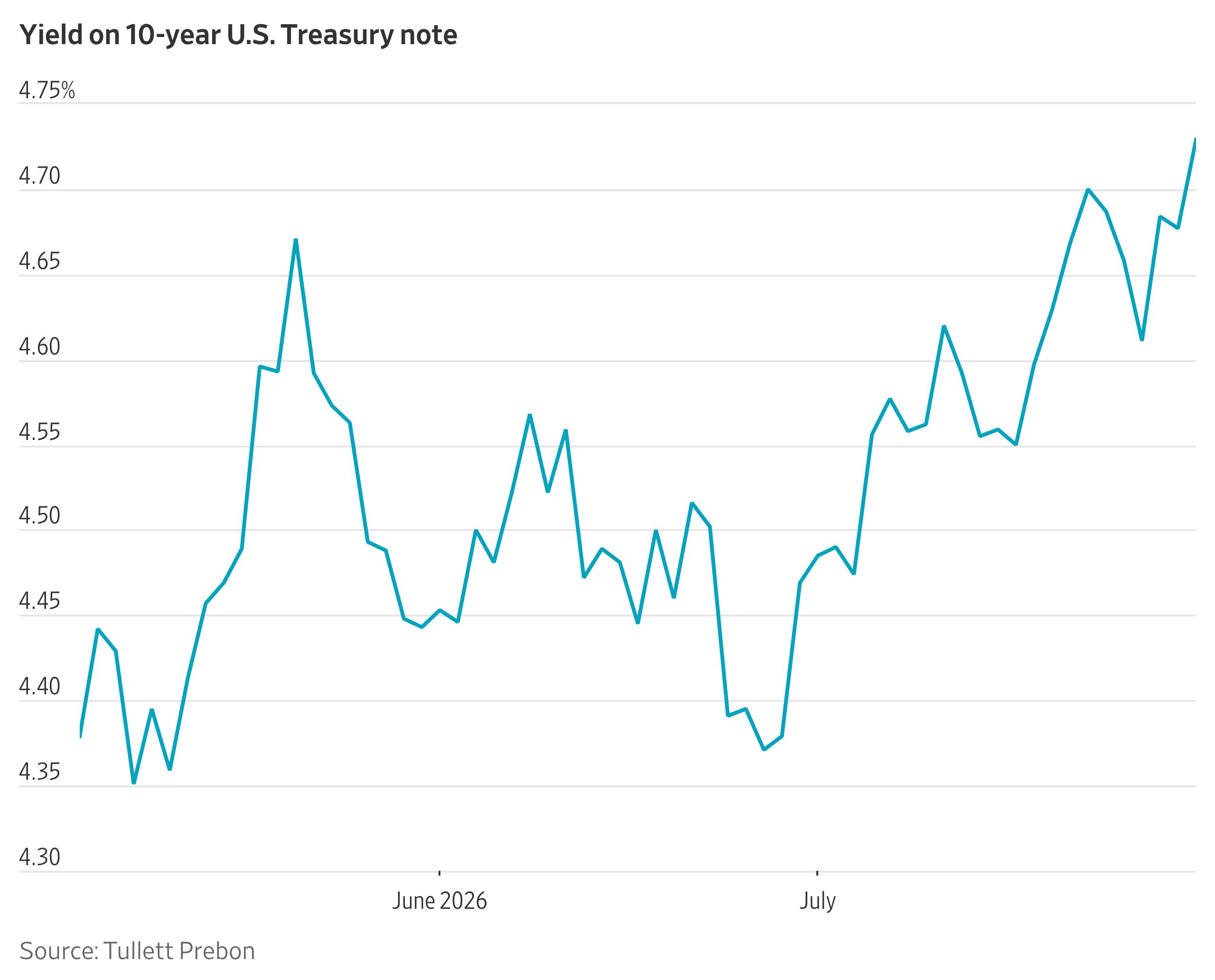
Treasury yields extended their recent gains Friday after three Federal Reserve officials explained why they cast dissenting votes in favor of raising interest rate this week.
Yields, which rise when bond prices fall, were also driven higher by economic data, including a stronger-than-expected reading on Chicago-area economic activity.
The yield on the 10-year U.S. Treasury note settled at 4.743%, according to Tradeweb, its highest closing level since January 2025. The 30-year yield closed at 5.274%, its highest since July 2007.

South Korean stocks surged on Friday, with the KOSPI index rising nearly 18%.
Despite the dramatic gains, the index was still down for the week and the month, a testament to how volatile Korean equities have been as of late.
Not counting today, the KOSPI has gained more than 10% in a single day in only six instances, according to Dow Jones Market Data. History shows that in the week following those six times, the S&P 500 traded lower two-thirds of the time, with an average decline of 1.6%.

1539 ET – Oil futures end July with hefty gains as the month saw renewed Iranian attacks on shipping in a dispute with the U.S. over control of the Strait of Hormuz. Concerns that a return to negotiations could quickly reduce risk premium and lead to oversupply have kept prices from reaching the lofty levels seen in March and April. “Traders are essentially betting on two very different geopolitical outcomes, and neither one is a safe assumption right now,” says Baron Lamarre, co-founder of Index Litro and former head of trading at Petronas. “My base view is we won’t end up with either a massive glut or a full-blown supply crisis by the end of the year,” he adds. “Instead, we’re in for a period of stubbornly tight, volatile conditions that will stick around longer than the optimists are hoping.” WTI settles up 1.3% at $84.67 a barrel for a 22% monthly gain. Brent for September delivery goes off the board at $90.12 a barrel, up 1.2% on the day and up 24% from the end of June.(anthony.harrup@wsj.com)
Oil Futures on Track for Big Monthly Gains
0951 ET – Oil futures turn higher in early U.S. trading and are on track for hefty gains for July, which saw the U.S.-Iran Memorandum of Understanding fall apart and Iran resume attacks on shipping in the Strait of Hormuz. “All things held equal, the market should go a lot higher and led by diesel and gasoline as refinery run rates arejust too low on a lack of crude,” Scott Shelton of TP ICAP says in a note. “The reality is that we are back to a very small amount of crude versus what is needed.” WTI is up 2.2% at $85.42 a barrel. September Brent is 1.5% higher at $90.36 ahead of today’s expiry, while the October contract gains 1.8% to $88.47.(anthony.harrup@wsj.com)
Copyright ©2026 Dow Jones & Company, Inc. All Rights Reserved. 87990cbe856818d5eddac44c7b1cdeb8
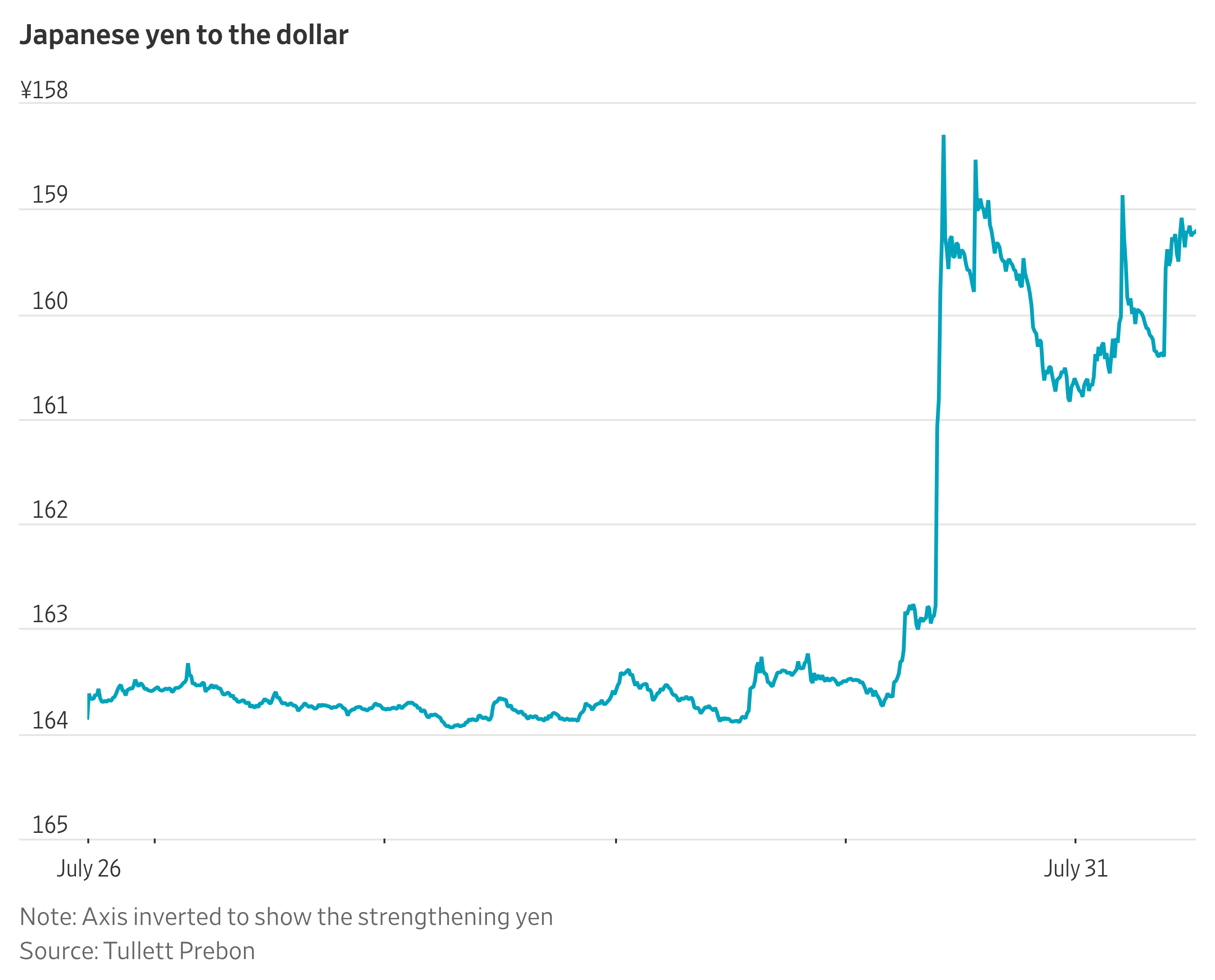
Currency traders broadly believe that the yen’s recent strengthening reflected yen purchases by Japanese authorities, as well as speculation of a possible U.S. intervention. The U.S. Treasury Department meanwhile has informed banks that it might make currency trades on Friday to support the Japanese yen and strengthen its exchange rate against the dollar, the Wall Street Journal reported today.

Global reforms emphasize control and decision-making authority over legal forms, shifting regional headquarters evaluation to governance, risk management, and value creation, impacted by tax rates and regulatory expectations.
Evolving Evaluation of Regional Headquarters
Global minimum tax, stricter substance enforcement, and geopolitical fragmentation have reshaped how regional headquarters are assessed. Singapore, Hong Kong, and Dubai now serve distinct roles, each aligned with different strategies for controlling operations and managing risks. They are no longer interchangeable hubs competing on similar benefits, but rather centers tailored to specific business models and regulatory environments.
Authority and Control Define a Headquarters
The focus has shifted from a legal entity’s structure to the authority it exercises within an organization. Regulators and counterparties increasingly scrutinize where key decisions—related to capital allocation, pricing, treasury, and risk management—are made. An entity exercising discretion in these areas is viewed as a true control center, influencing regulatory treatment and compliance risk instead of mere administrative support.
Governance and Control in Practice
Beyond reporting functions, the extent of authority impacts governance, documentation, and accountability standards. These factors determine a company’s regulatory exposure and defenses. While corporate tax rates like Singapore’s 17% and Hong Kong’s 16.5% are still relevant, emphasis now also rests on where value creation and control are evidenced within the organization.
Read the original article : Singapore vs Hong Kong vs Dubai: Regional HQ Trade-Offs for Investors
Other People are Reading

Are you tired? I’m tired. In addition to four Big Tech companies reporting earnings this past week, the calendar included results for second-quarter gross domestic product and the June personal consumption expenditures price index, along with the Federal Reserve’s interest-rate decision. Unscheduled, there was a meltdown of the artificial-intelligence trade, as highly leveraged bull positions were liquidated. The iShares Semiconductor exchange-traded fund was down 12% across three days, and one of the most successful AI investors—hedge fund Situational Awareness—saw margin calls and forced sales.
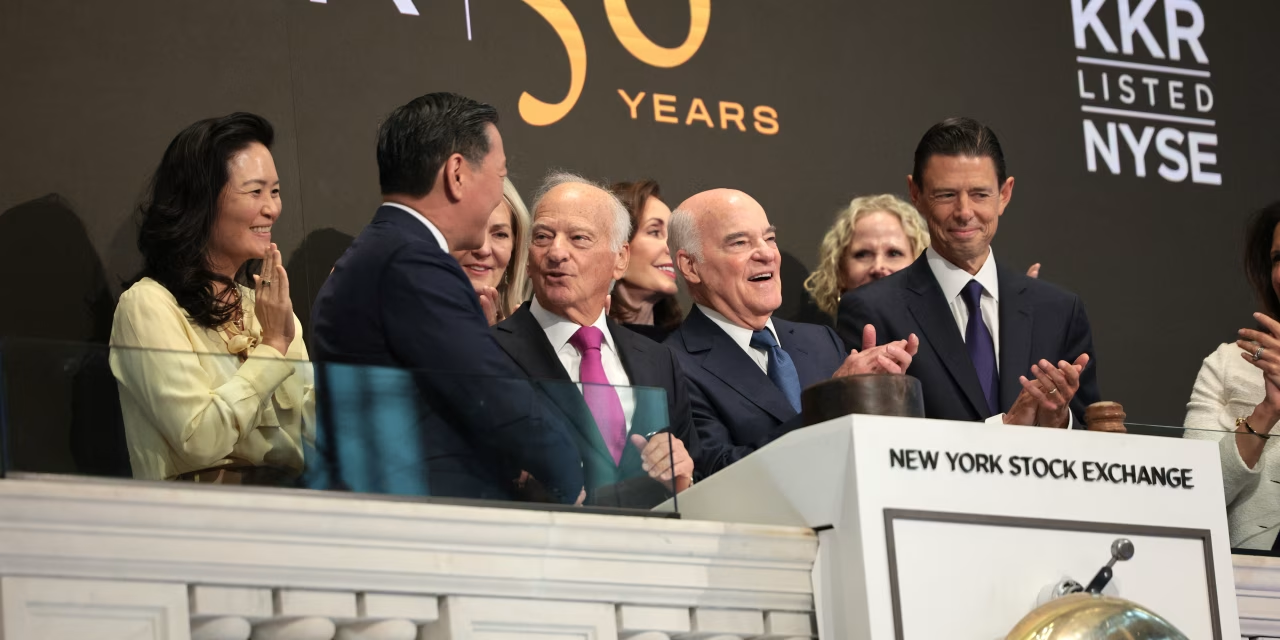
Private-equity firm KKR KKR is near a deal to take medical-device outsourcing company Integer Holdings ITGR private, according to people familiar with the matter.
The details
The deal, which could come as soon as next week, would value the Plano, Texas-based company at roughly $127 a share, the people said. There are no guarantees a deal will come together.
Copyright ©2026 Dow Jones & Company, Inc. All Rights Reserved. 87990cbe856818d5eddac44c7b1cdeb8

The Next Vikings Extension Candidate

100 Money Tips That Will Change Your Life

Daily horoscope August 2, 2026: Predictions for your star sign


-
 Sports6 days ago
Commonwealth Games boxing: Jadumani Singh seals dominant 5-0 win over Pakistan’s Sumama Rehman to enter quarter-finals | Commonwealth Games News
-

 Business3 days ago
Why Trees Belong on the Risk Register
-

 Fashion1 day ago
Weekend Open Thread: Wit & Wisdom
-

 Tech6 days ago
Intel is reversing course and bringing hyper-threading back to its server chips
-

 Politics1 day ago
Meta enters AI-training agreement with far-right ‘propaganda rag’ Newsmax
-

 Politics6 days ago
Luke Littler dismantles Gerwyn Price to retain title in Blackpool
-

 Crypto World12 hours ago
MicroStrategy Post-Earnings CLARITY Act Push Could Add New Catalyst for Its Stock
-

 Politics5 days ago
The Part of the Electric Transition Nobody Wants to Discuss
-

 News Videos6 days ago
BITCOIN JUST ENTERED THIS CRITICAL ZONE…
-
 Entertainment4 days ago
‘Stargate’ Creator’s New Sci-Fi Series Returns for Season 3 Tomorrow
-

 Business4 days ago
Major shareholder moves on Canyon
-

 Crypto World7 days ago
XRP Ledger adds $2.6B as RWA inflows rank second
-

 Politics7 days ago
Spain sweeps the board at 2026 World Cup with individual awards
-

 News Videos3 days ago
Bitcoin Enters the 3rd Stage of the Bear Market
-
Crypto World21 hours ago
XRP Ledger v3.3.0 brings five institutional features
-

 Crypto World4 days ago
Kraken Enables Retail Access to Jersey Mike’s IPO via Tokenized Shares
-

 Tech5 days ago
New macOS Sequoia & Sonoma security updates for older Macs
-

 News Videos4 days ago
Claude: Build Financial Dashboards in Minutes (2026)
-

 Sports2 days ago
Seema Kaliramna Wins Discus Throw Bronze, Takes India’s CWG Medals Tally To 17
-

 Politics2 days ago
Luke Littler’s dominance sparks GOAT debate
You must be logged in to post a comment Login