

Related: Inside Taylor Frankie Paul‘s Relationship With Ex-Husband Tate Paul
Advertisement




There’s a reason why Taylor Sheridan‘s television empire has become so expansive. The tentacles of Sheridan’s artistic vision, notably the various spin-offs of his crown jewel, Yellowstone, have ostensibly become the backbone of Paramount’s entire streaming library. Regardless of his political beliefs, Sheridan has tapped into the American Midwest in a way that is often ignored by prestige TV. One of his most recent triumphs on the small screen, Lioness, sees Sheridan tackling a familiar sentiment in American media throughout the century: the war on terror. Initially positioned as a new take on government intervention in the Middle East, Lioness, starring Zoe Saldaña as the leader of a CIA program to thwart terrorist plots, focused on the drug cartel and its intersection with government affairs overseas. Without trying to predict the future, Sheridan’s writing has eerily mirrored real-life headlines involving U.S. action against the drug trade.
Season 1 of Lioness follows Joe McNamara (Saldaña) as she leads a covert CIA unit comprised of women to thwart terrorist groups in the Middle East — a familiar concept, given the typical Sheridan touch, that makes it feel fresh and revelatory about top-secret military operations. Now heading into its third season, premiering on August 2, Lioness has unexpectedly embraced a new kind of drama thanks to its timeliness. Centered around the international drug trade, Season 2 features the Lioness squad embarking on an extraction of a kidnapped high-ranking government official and infiltrating cartels to serve the interests of political forces domestically. The squad’s target is Alvaro Carrillo (Marcus DeAnda), who becomes the focal point of the government’s various espionage tactics and their broader attempt to control economic interests internationally.
Season 2 debuted on October 27, 2024, over a year before the United States launched a military strike in Venezuela and apprehended President Nicolás Maduro on charges of drug trafficking, a striking turn of events that has been one of the many political disputes dividing the nation. For those catching up with Lioness before its Season 3 premiere, Season 2 appears to be a dramatic reinterpretation of events ripped from the headlines, but Sheridan actually beat the political cycle to the punch.
As a guest on The Joe Rogan Experience, Sheridan discussed his writing process for Season 2. However, he denied any attempt to predict the future and said the decision to center the season around such eerily timely matters was purely coincidental. If anything, his scripts were merely an educated guess about the current state of political affairs overseas. Despite his prominence in television as a voice for middle America, particularly audiences in red states, Sheridan has vowed that he approaches his work without a political agenda, with Lioness meant to be a literal dissection of the relationship between intelligence agencies and the military.
There’s been plenty of discussion surrounding Sheridan’s alleged political beliefs and how they are reflected in his Westerns, crime and war thrillers, and dramas about oil tycoons. Regardless of where he stands or whether he sympathizes with his characters, there’s no doubt Sheridan resonates with the mainstream public, and his wealth of new shows on Paramount speaks to the demand for more of his stories. Although it has been proven to predict real news stories, Lioness is rooted in an understanding of modern U.S. history and the nation’s dealings overseas, as the series echoes 2000s-era media coverage of the Iraq War and the murky divide between patriotic vengeance and the protection of the oil trade.
Whatever your preconceived notions of Sheridan’s work, both seasons of Lioness end not with a sense of rah-rah jingoism, but instead with a sobering indictment of the American military-industrial complex. In Season 1, our idyllic heroes realize they’re only fighting over oil, and in Season 2, the grueling labor and hardships to overthrow the cartel are futile, as someone else on the ladder will take over Carrillo’s throne. Conservative or not, Sheridan has tapped into the cynicism of the American spirit in 2026.

Taylor Frankie Paul‘s ex-husband, Tate Paul, has filed a restraining order against the Secret Lives of Mormon Wives star.
According to documents viewed by Us Weekly, Tate, 32, filed a motion for a temporary restraining order in a Utah court on Tuesday, June 30. A hearing has been requested.
The exes, who were married from 2016 to 2022, share two kids together: daughter Indy, 8, and son Ocean, 6. Per People, the order was filed against Taylor, 32. Tate also filed a petition to modify the terms of their divorce and custody agreement. Additionally, TMZ reported that Tate is requesting sole custody of both children.
Us has reached out to Tate and Taylor’s reps for comment.
Years before The Secret Lives of Mormon Wives premiered on Hulu, MomTok became a TikTok craze in 2020. The interest intensified when Taylor, 31, revealed in 2022 that she indulged in “soft swinging” with other people’s partners — and she was subsequently going through a divorce from Tate.
At the time, Taylor, who shares two kids with Tate, reflected on addressing her past marriage on screen, exclusively telling Us, “I don’t know how [Tate] feels. It was a lot less bad than he thought. He saw the trailer and he and his fiancée were worried. Obviously that’s really triggering to hear that, especially for her.”

Long before Taylor Frankie Paul earned the title of ABC’s Bachelorette, the Secret Lives of Mormon Wives star found herself married to Tate Paul. In 2016, the couple got married and welcomed a daughter named Indy less than a year later. At the end of 2019, Taylor announced she was expecting another child, and their […]
She continued: “I can’t imagine wanting to hear that with someone else. So I think they struggled, but when they watched it. I guess it wasn’t as bad as they thought.”
Most of Taylor’s arc on the show, however, has centered around her romance with ex Dakota Mortensen. The pair have been involved in an ongoing custody battle over their 2-year-old son, Ever, following multiple domestic violence incidents and allegations. Earlier this year, Mortensen alleged Paul had been physically violent with him during a February incident, in which Mortensen claimed that Paul had allegedly choked him and shoved him into a window, per documents obtained by TMZ at the time. Paul denied the allegations of child abuse.
Mortensen was later granted temporary custody of Ever, while Paul filed for a protective order against Mortensen and claimed that he assaulted her in his truck. The order was granted and a judge ruled that the exes have to stay at least 100 feet away from each other. Earlier this month, a judge ruled that Taylor no longer needed supervised visitation of Ever and that she can have her son on alternative weekends and one midweek day.


Earlier this week, the Bluffdale Police Department confirmed to Us that Mortensen called the cops with questions about the exes’ protective order amid their ongoing custody battle. The case was ultimately sent to the District Attorney’s office, who will decide if a violation occurred. The exes’ next hearing is scheduled for July 8.

Taylor Frankie Paul and Dakota Mortensen‘s complicated romance was thrust into the spotlight on The Secret Lives of Mormon Wives — and their relationship status remains unclear. Before the show premiered on Hulu in September 2024, Taylor and Dakota started dating following her divorce from husband Tate Paul in the wake of a high-profile “soft […]
In March, TMZ released unseen footage from Taylor and Dakota’s 2023 domestic dispute where Taylor was seen throwing chairs before one hit her and Tate’s daughter. Tate, for his part, has not publicly spoken out in the years since his ex-wife became a public figure.
“I just respect his privacy a lot, and I know that’s what he likes,” Taylor exclusively told Us for her March cover story. “But he and I have always been really good friends and [have a] very healthy coparenting relationship.”
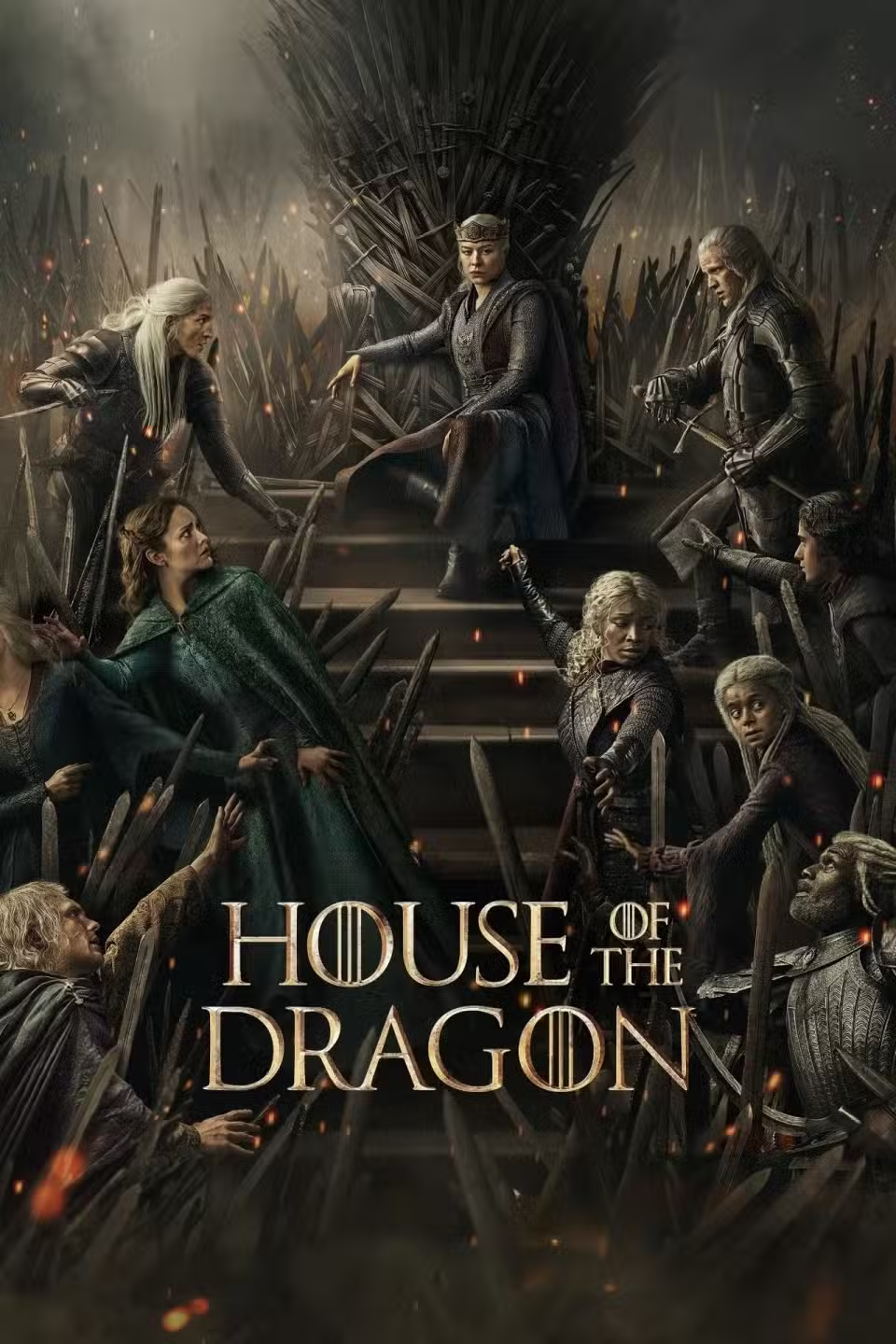
For two seasons, House of the Dragon has struggled with the allegations that it is a slower and less interesting version of Game of Thrones. Even after the divisive finale of HBO’s flagship fantasy series, George R.R. Martin’s labor of love is beloved in prestige drama circles. After its conclusion, the prequel series about the Dance of the Dragons was intriguing but didn’t provide the same zest as its predecessor.
Now into Season 3, House of the Dragon has achieved the potential it was always meant to. The series has rewarded audiences’ patience for its slow-burn pace. The political intrigue of the fantasy story has differentiated the show from Game of Thrones in the best way possible, elevating it to a modern classic.
House of the Dragon seasons 1 and 2 did the hard work of setting up the generational trauma of the characters, and now the show is yielding results. The early years of the fantasy were instrumental, setting up the lifelong friction between Princess Rhaenyra and her childhood best friend, Alicent Hightower. As they grew, so did their resentment, and Season 3 finally reached the boiling point.
After an adult Alicent (Olivia Cooke) orchestrates a coup to put her son, Aegon (Tom Glynn-Carney), on the throne instead of his older half-sister, Rhaenyra (Emma D’Arcy), the tension rises. It is the Battle of the Gullet, however, that marks the best years of the show. House of the Dragon Season 3 marks a Rotten Tomatoes best for the series and has been a decided improvement from Season 2.
The sophomore season of House of the Dragon was divisive, to say the least, particularly with fan-favorite character Daemon Targaryen’s (Matt Smith) plotline at Harrenhal. The Rogue Prince was wasted in the cursed castle as he grappled with his niece-wife’s claim to the throne and was plagued with nonsensical visions for a time. Daemon returns at the end of the season to pledge fealty to Rhaenyra, and the story finally reaches its full potential.
Now with Daemon being Rhaenyra’s unrelenting supporter, the Dance of the Dragons has finally begun, promising more fire and blood than ever before. This is a comeback that fans have been waiting for and one that is as thought-provoking as it is exciting.
Game of Thrones was such a popular fantasy show in its day that it would be difficult for any fantasy series to surpass it. House of the Dragon was slow going in establishing itself, but it was time well spent. The Fire & Blood adaptation is at its best when it is nothing like its predecessor. Game of Thrones was high-octane from the first episode, but House of the Dragon succeeds in drawing out the drama.
At its core, the prequel is an anti-war narrative that needs time to gestate. It can – and should – exist outside the realm of Game of Thrones. Its recent success proves that the Song of Ice and Fire adaptation doesn’t need carbon copies. Shows that exist in the extended universe should be different from one another.
Streaming hit A Knight of the Seven Kingdoms demonstrates that as well. It takes archetypal characters, but instead of placing them in life-or-death situations, it succeeds with comedy and low-stakes drama. Additionally, House of the Dragon isn’t the long-form epic that Game of Thrones is. This is a brutal civil war where there is no obvious winner.
Whether viewers root for the Blacks or the Greens, neither side comes out ahead. This is the war that drives dragons to extinction and decimates more than one House. Westeros may survive, but it is never the same. Thanks to Season 3, House of the Dragon has become must-see TV that has established itself as a classic.

August 21, 2022
HBO
George R.R. Martin
Clare Kilner, Geeta Patel
Gabe Fonseca


Fabien Frankel
Ser Criston Cole

By Chris Snellgrove
| Published

Star Trek: Voyager wasn’t every fan’s cup of tea, especially if you preferred the darker, more serialized misadventures over on Deep Space Nine. However, Voyager did one thing arguably better than any Trek before or since: demonstrating just how weird exploring the galaxy can get. This is especially true in “Persistence of Vision,” an episode where the crew is forced to have increasingly bizarre hallucinations that cause some characters to reflect on the past. This includes Captain Janeway, who sees a vision of the husband that she left back in the Alpha Quadrant. Other characters hallucinate in different ways, including Chief Engineer B’elana Torres.
Normally, this hotheaded half-Klingon is all business, especially during an emergency. However, she ends up hallucinating a sexual fantasy involving Commander Chakotay, which many fans thought meant that she secretly had feelings for him. Incidentally, Chakotay actor Robert Beltran thought the same thing, and he imagined this episode might be setting up a relationship between their characters in later episodes. However, Torres actor Roxann Dawson pushed back against these claims, arguing there was simply no way that her character would fall in love with the ship’s first officer.

The premise of “Persistence of Vision” begins like many Star Trek: Voyager episodes: with the ship getting ready to make contact with an exotic race of aliens. The Botha are standoffish at first, but are willing to negotiate with Captain Janeway about safe passage through their little corner of the Delta Quadrant. Soon, crew members start seeing wild hallucinations and have no idea why this is happening. Eventually, it is revealed that these hallucinations are being caused by a telepathic Bothan. While everyone sees different things, B’elanna Torres gets an especially spicy fantasy involving Commander Chakotay.
Somewhat disappointingly, we find out that the Bothan caused all these chaotic hallucinations simply because he could. Janeway speculates that the alien might have done everyone a favor by forcing them to confront buried emotions. Because of this, Chakotay actor Robert Beltran believed that Torres must be secretly holding a candle for his own character. In an interview with The Official Star Trek: Voyager Magazine, he said, “That was very interesting to me because it revealed in Torres how she might be feeling about Chakotay. This entity reveals all of our fantasies, and we got to see how she feels about him.”

In that same interview, Beltran speculated that his character might harbor secret feelings for Torres. “Maybe he’ll feel the same for her,” he said. “That’s not quite confirmed, but it’s possible, and it sets the stage for some further development of their relationship.” It’s a provocative idea, one that is even explored in Pathways, a Star Trek: Voyager book written by “Persistence of Vision” screenwriter Jeri Taylor. However, one person who has been fighting this interpretation from the very beginning is B’elanna Torres actor Roxann Dawson.
In an interview with Cinefantastique, Dawson said, “the strength of that alien, the way he could get to us as Humans, was that he understands the deep need…we all have to love and to be loved.” She believes that her character’s “trance” was not “a reflection of a direct attraction to Chakotay” but instead “a desire to give in to a side that she does not give into easily…I don’t think that necessarily means that he is always on her mind…it was more of a reflection of her need to please, to fulfill, all of these things are very real, very human.”

In other words, since Torres is half-human, half-Klingon, the telepathic trance temporarily brought out human aspects (like being a lonely people pleaser) that she often tries to repress. In another interview with Star Trek Monthly, she opened up about how weird it would be for her character to love Chakotay, someone who is basically a surrogate father to her. “I see Chakotay as a combination of mentor and father figure for B’Elanna. She might have some romantic feelings towards him in a kind of Freudian sense, but I don’t see them getting together on any other level than as a mentor and pupil.”
This is one argument that Roxann Dawson ultimately won. There weren’t many sparks between B’elanna Torres and Commander Chakotay after this, and her character eventually ended up with Robert Duncan McNeil’s Tom Paris. Chakotay remained relatively unlucky in love, never hooking up with Captain Janeway despite lots of heavy-handed flirting. He finally hooked up with Seven of Nine in the last four episodes of Star Trek: Voyager, but they are apparently broken up by the time of Star Trek: Picard. That’s okay, though: Chakotay likely would have been just as checked out of any romantic relationship as Robert Beltran was checked out of his performance!
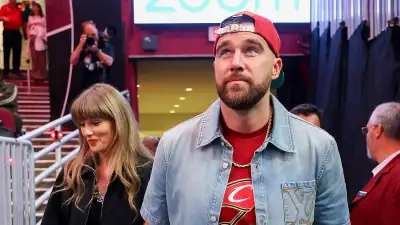
Lucky guests invited to Taylor Swift and Travis Kelce’s wedding are keeping the magic of the enchanted day a mystery for a reason.
“The save the date was sent electronically, and guests had to agree to an NDA before they could see any details,” a source exclusively shares with Us Weekly.
Another insider reveals that invites were sent electronically “and included guests’ names so those who were on the guest list wouldn’t make the invites public.”
Although Swift and Kelce, both 36, have yet to confirm any details about their upcoming nuptials, all signs point to a magical Fourth of July weekend in New York City as Madison Square Garden prepares for a special event.

Wedding planner RoseMarie Terenzio knows a thing or two about pulling off a secret ceremony — and she has some theories about Taylor Swift and Travis Kelce’s upcoming nuptials. Terenzio, known for planning John F. Kennedy and Carolyn Bessette’s secret 1996 wedding, appeared on the Monday, June 29, broadcast of CBS Mornings to share her […]
A third source tells Us that a wedding event will take place at Madison Square Garden.
The New York Times reported on June 24 that a permit was filed with New York City to close the streets surrounding MSG from July 2 to midday July 4 for an event on July 3. The outlet cited three people who have knowledge of the matter, with a city official who was briefed on the preparations further insinuating that MSG is planning to host the wedding on July 3.
Us has reached out to Swift and Kelce’s reps for comment.
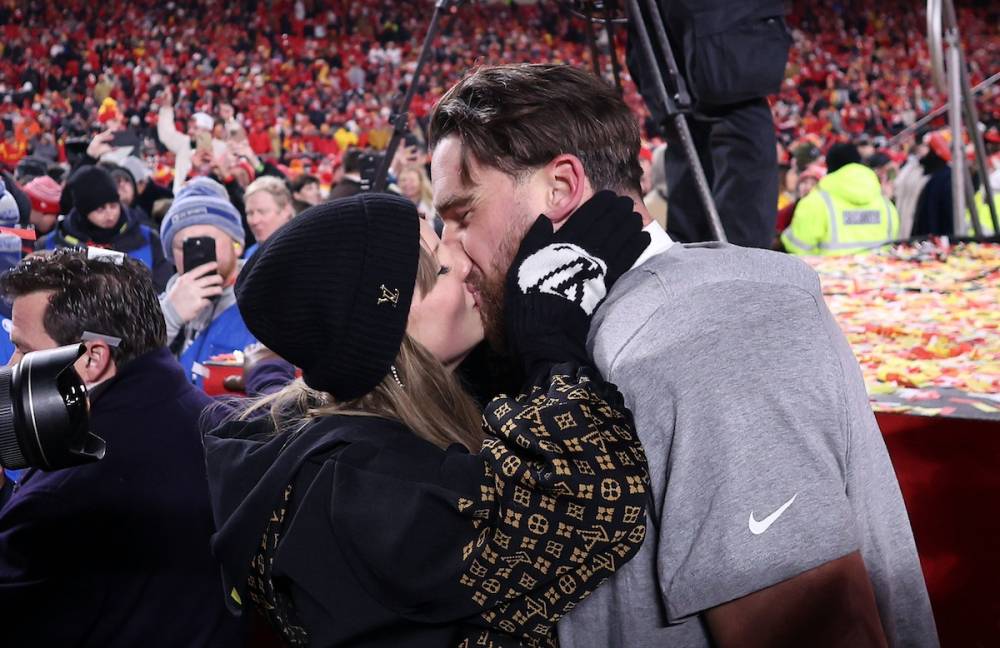
Taylor Swift and Travis Kelce Jamie Squire/Getty Images
Swift and Kelce have been together since 2023, getting engaged two years later in August 2025.
While a source previously told Us that the couple initially were hoping to get married in Rhode Island, both parties agreed it would be better to pivot to the Big Apple.
“Rhode Island wasn’t great because the nature of the access and the perimeters were too difficult to secure,” the source explained. “So the main issue with Rhode Island ended up being security.”
While Swifties eagerly wait for any and all updates ahead of the July 4th holiday, one insider previously told Us that lucky guests still don’t have all the details about what could unfold during Hollywood’s wedding of the year.
“Taylor and Travis told guests to be in NYC. No other location was provided,” a source previously dished to Us. “They’re putting their guests on hold for a couple of days. They are spending a lot of money – in the millions.”
While all could be revealed in just a matter of days, the Grammy winner has been looking forward to her wedding day for quite some time.
“I’m so excited about it,” Swift previously said on an October 2025 episode of the Graham Norton Show. “I know it’s gonna be fun to plan because I think the only stressful weddings are the ones where you have a small amount and people are on the bubble.”
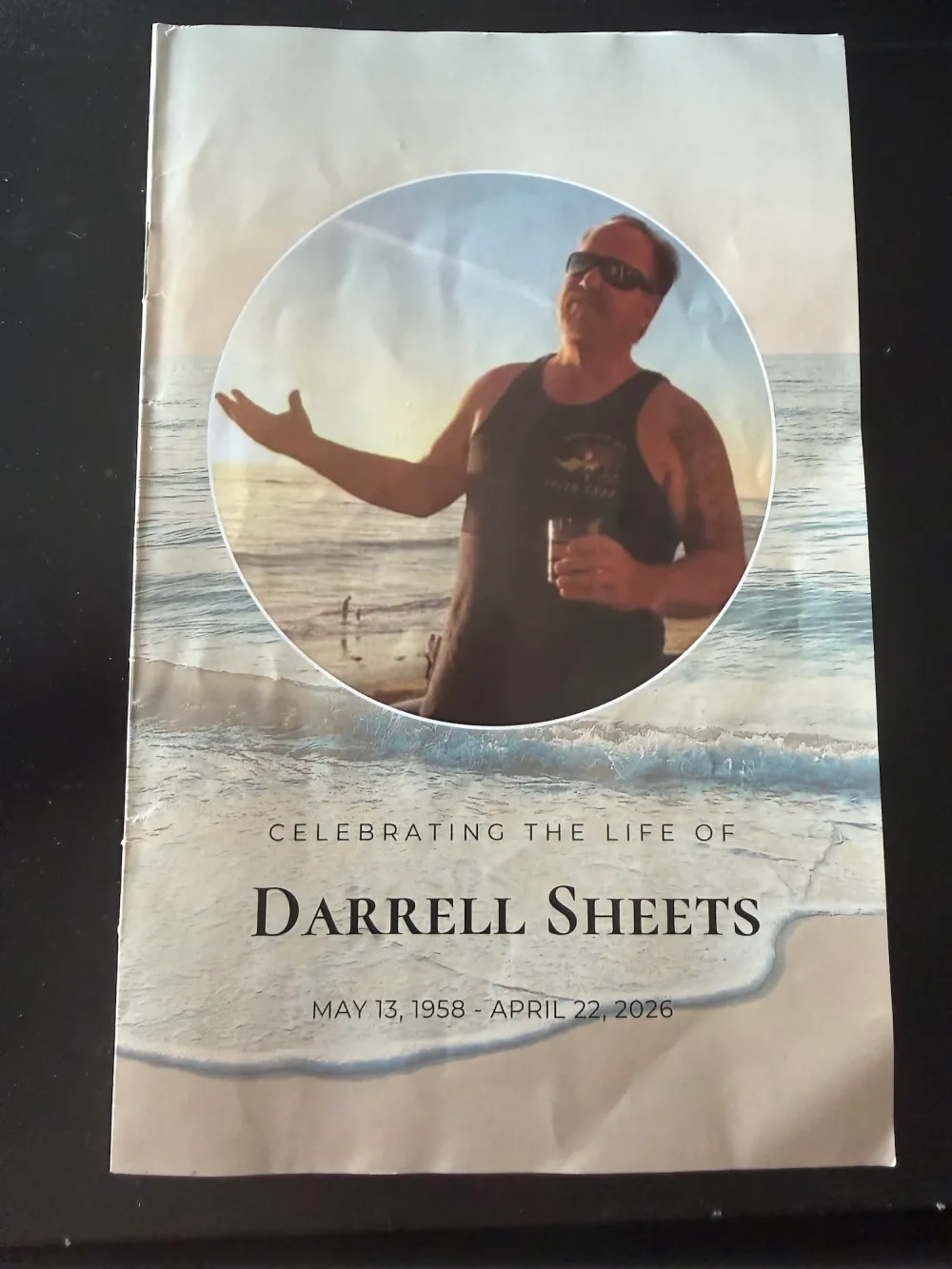
Darrell Sheets’ son, Brandon Sheets, paid tribute to his father in an emotional celebration of life speech.
“He was like a pillar. [He was] stellar, he was strong. He reminds me of his father so much,” Darrell’s Storage Wars costar Laura Dotson exclusively told Us Weekly of Brandon’s presence at the memorial service held at the Hyatt Regency in Huntington Beach, California on Monday, June 29. “He has a lot of the same anecdotes and funny things that he does. He also says, ‘That’s the wow factor, baby,’ and when he does that it sounds just like Darrell in the room.”
Laura, who attended the event alongside husband Dan Dotson, also shared that Brandon, 42, spoke about the impact that Darrell had on him.
“He got to talk about him being a wonderful father, grandfather and friend, and how much Darrell really helped him through his life, becoming the man that he is, and the father that he is,” Laura recalled.
Brandon shares two kids with his wife, Melissa. In addition to Brandon, Darrell was father to daughter Tiffany, who has a daughter named Zoie, 22. Before his death, Darrell helped raise Zoie, who was in attendance for the memorial.
“She seems to be doing really well. She has so much support,” Laura, 58, said of Zoie. “All of Darrell’s sisters were there, [his] brothers were there, family members were there, his cousins were there and they all kind of look like him. His friends look like him.”
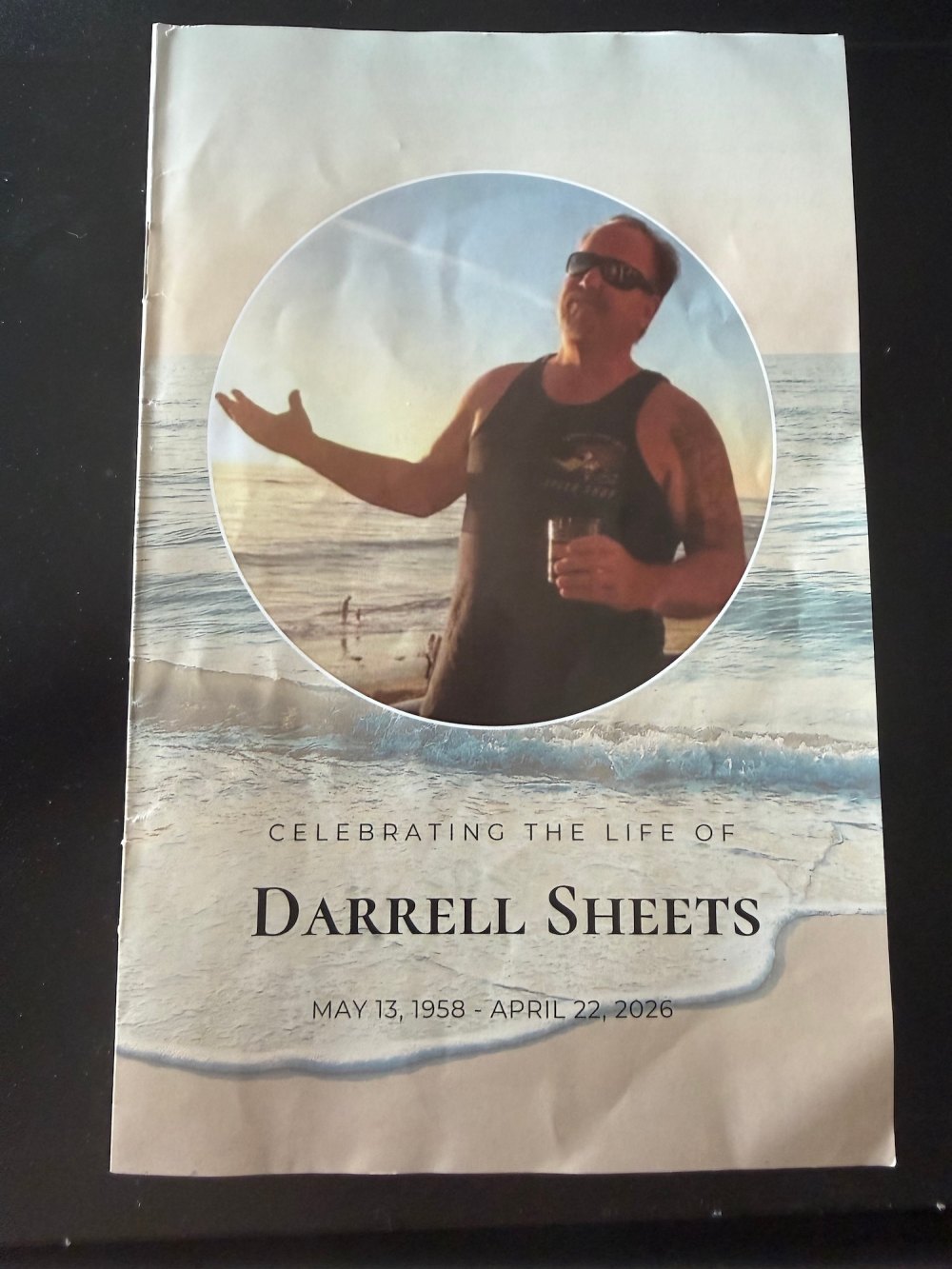
Darrell’s ex-wife Kimber Wuerfel, whom was with from 2011 to 2016, also attended the service. According to Laura and Dan, Wuerfel was “right up at the front” and “so accommodating” with Darrell’s family.
“Everybody was so concerned for her and her health, but she looked strong,” Laura said of Wuerfel. “She was just attending to everybody, and just full of love and stories, and saying, ‘Share, share the story of Darrell,’ and [it was] bringing her comfort I could see, so that was really, really wonderful.”
Kimber also spoke at Darrell’s celebration, recalling the good times the pair shared together.

The cast of A&E’s reality series Storage Wars has come together to mourn their late costar Darrell Sheets following his death at age 67 from suicide. Lake Havasu City, Arizona, police confirmed to Us Weekly on April 22 that officers responded to calls about a “reported deceased individual” earlier in the day and subsequently “pronounced […]
“I did see tears and breakdowns from all of them,” Laura said of all the speeches made in honor of Darrell. “Everybody would be hugging and praying and lifting Darrell up again, and then they would start laughing at something somebody would say, so it was tears of joy and happiness, and [they were] talking about, ‘We know that Darrell is with God. We know he’s in heaven,’ and just the feeling that you know that they know that he’s there, so they can have peace.”
Earlier this year, Us confirmed that Darrell died at age 67. His death was ruled a suicide by the Mohave County Medical Examiner’s Office in Arizona.
“We are saddened by the passing of a beloved member of our Storage Wars family, Darrell ‘The Gambler’ Sheets,” A&E said in an April statement to Us. “Our thoughts are with his family and loved ones during this difficult time.”
If you or someone you know is struggling or in crisis, help is available. Call or text 988 or chat at 988lifeline.org.

There isn’t a single defining quality that marks the difference between a great movie and an all-out masterpiece. The latter transcends the boundaries of its genre entirely, delivering groundbreaking truths about the human condition that remain timeless across generations. But often, no matter how much of a masterpiece a motion picture is, it’s still so heavy that it’s undeniably tough to get through.
Likewise, there are many factors that can make a cinematic masterpiece feel heavy. Whether it’s because it’s emotionally devastating, because it has a runtime and sense of pacing that demand patience, or because it’s bleak and pessimistic, a heavy film can nevertheless be counted among the greatest masterpieces in movie history. These ten gems, ranked from worst to best, prove it.

Nearly four hours long, the Chinese arthouse drama An Elephant Sitting Still is definitely not for everyone; but all those looking for an absolutely fascinating slow-burner ought to give this masterpiece a chance at least once in their lives. It’s also, however, one of the most depressing movies of the last 10 years, which adds another layer of challenge to an already impenetrable movie.
Even still, the inaccessibility of this slice-of-life anti-drama is the whole point, since the film is all about the suffocating sense of meaninglessness and isolation of life with depression. Directed Hu Bo, who was only 29 years old when he finished the movie, suffered from depression himself. Shortly after finishing the film, he took his own life. It’s a background that only adds further weight to an already incredibly heavy movie, but it also adds another reason to witness the incredible legacy that Bo left behind.

Though he was also an actor, Nick Cassavetes was particularly important as a director, one of the most important voices of independent cinema during the New Hollywood movement. His biggest masterpiece from that period is almost undoubtedly A Woman Under the Influence, one of Gena Rowlands‘ most essential movies, where she delivers what’s by far one of the greatest acting performances of 20th-century cinema.
It’s largely Rowlands’ powerhouse performance as a housewife exhibiting signs of severe mental distress that makes A Woman Under the Influence such an emotionally heavy film. Its depiction of mental illness, marital troubles, and the pressure of patriarchal societal expectations on both men and women is so raw, exhibiting Cassavetes’ usual commitment to realism, that it’s not an easy feat to get through all 2-and-a-half hours of this masterpiece’s runtime.

By now, Denis Villeneuve is widely praised as one of the greatest filmmakers currently working in Hollywood, but even the greats have to start somewhere. In Villeneuve’s case, that was his native Canada. There, he made Incendies, one of the greatest Canadian movies of all time. It’s the country’s highest-rated film of all time on Letterboxd by a decent margin, and for good reason.
A harrowing exploration of the cyclical nature of violence and trauma, complete with one of the most shocking plot twists in the modern history of cinema, Incendies is not for the faint of heart. Far more than just a family mystery, it’s a thematically sharp and emotionally profound experience that you just can’t shake, one of the films that best depict the brutality of war.

Park Chan-wook is one of the greatest filmmakers in the history of South Korean cinema, and his Vengeance Trilogy is one of the best R-rated movie trilogies of all time. As phenomenal as its predecessor and successor are, however, there’s really no question regarding which is the best installment of the three: It has to be Oldboy, based on the Japanese manga Old Boy by Garon Tsuchiya and Nobuaki Minegishi.
This action thriller is packed with some of the most thrilling action set pieces and most shocking plot twists in the history of the genre, but one of those twists is particularly brutal. It’s a reveal that recontextualizes the entire film, making rewatches more of a daunting challenge—however tempting—than an inviting comfort watch. As brutal and emotionally heavy as the rest of the film is, it’s that final twist that really makes Oldboy such a relentlessly gut-wrenching experience.

Paul Thomas Anderson has been making some of the greatest motion pictures of his generation for years, but when the conversation is about what his best work to date is, there tends to be agreement: It has to be There Will Be Blood, the period drama where Daniel Day-Lewis delivers what some still think is the greatest acting performance of the 21st century thus far.
Even aside of its exceptional cast, however, There Will Be Blood is one of the most perfect movies of the last 30 years, with some of the strongest writing and most impressive production values of any PTA masterpiece. But with its slow pacing, oppressively dark atmosphere, unrelenting misanthropy, and Day-Lewis’ terrifying performance, it may also very well be the heaviest movie in its director’s body of work.
David Fincher is the modern Master of Suspense, and he has directed several of the greatest thrillers of any filmmaker from his generation—chief among which is Se7en. In almost 30 years, it hasn’t ceased to be deeply admirable that such a bleak and pessimistic movie became a blockbuster that grossed over $300 million dollars at the box office worldwide. Indeed, it’s one of the scariest mystery movies ever made.
It’s such a terrifying film, in fact, that some may even consider it part of the horror genre, placing it next to icons of the genre like The Silence of the Lambs as one of the best crime horror movies ever. At no point does Se7en give the audience room to truly breathe; on the contrary, it only keeps growing more oppressive and cynical as the runtime keeps progressing, concluding with one of the most harrowing third acts in the history of Hollywood cinema.

As well-known as he is for his work in the realm of blockbusters, which he pretty much brought to life, Steven Spielberg happens to have made his magnum opus in the form of a World War II drama that’s not a blockbuster at all. Because as enormous of a box office hit as it was, Schindler’s List was clearly not designed as a crowd-pleaser, and it still remains the most depressing movie that Spielberg has made thus far.
Nevertheless, it’s one of the best biopics of all time, with one of John Williams‘ most haunting scores and a phenomenal cast whose every member is at the top of their game. Films about the Holocaust are always incredibly heavy and harrowing movies, but Schindler’s List in particular is so raw and relentless in its depiction of the subject matter that it stands out among its peers. It’s not all doom and gloom, however, with Spielberg being able to find surprising amounts of humanity and hope even in such a dark story.

The world of Latin American cinema is one filled to the brim with underappreciated masterpieces, and Brazil’s filmography is no exception; but City of God is no underappreciated masterpiece. Rather, as one of the highest-rated films of all time on both Letterboxd and IMDb, it’s almost universally recognized to be one of those crime movies that are perfect from the first scene to the last.
City of God shows life on the slums of Rio with unparalleled rawness, finding ample shock value to barrage the audience with. At the same time, however, it never feels like it’s sensationalizing its subject, but rather treating it with all the sensitivity and realism that it deserves. As brutal as it is emotionally weighty, City of God is nevertheless one of those masterpieces that every film fan should watch at least once in their lives.

Learning to understand and appreciate the silent days of cinema takes time and some degree of work; but once you get there, the window opens up to several of the most artistically gifted filmmakers in the art form’s history. One such artist is Carl Theodor Dreyer, whose The Passion of Joan of Arc is far and away one of the most intense silent movies of all time.
The story of the titular saint was already an incredibly dense, intense, and heavy story on paper, but the many ways that Dreyer finds to elevate all of those qualities in his 1928 masterpiece is truly admirable. Visually striking, perfectly paced, and anchored by Maria Falconetti delivering what may very well be the greatest female acting performance in cinema’s history, The Passion of Joan of Arc is unexpectedly moving for a movie that has no dialogue.

Calling Elem Klimov‘s gut-wrenching Soviet masterpiece Come And See one of the heaviest World War II movies of all time would be kind of an understatement. The fourth-highest-rated feature film of all time on Letterboxd, this war drama is one of countless films that depict how war destroys innocence through the eyes of a child protagonist; but no movie with such a premise executes it with quite as much quasi-surreal horror as Come And See.
Indeed, this may not be a horror movie, but it sure feels like one more often than not. Loud, nightmarish in tone, and unrelentingly committed to the utmost realism, the film is absolutely relentless in its barraging the audience with constant noise, pain, death, and trauma. It’s definitely the kind of war movie that demands a strong stomach, but those courageous enough to watch it will be treated to one of the most admirable cinematic masterpieces in history.

October 17, 1985
142 Minutes
Elem Klimov
Elem Klimov, Ales Adamovich


The iconic comedy that gave us “bend and snap!” lives on!
Released in 2001, Legally Blonde follows Reese Witherspoon‘s Elle Woods, a sorority girl who is dumped by her boyfriend who thinks he’s too good for her. In an effort to prove him wrong and win him back, she hits the books and is accepted to Harvard. Luke Wilson (Emmett Richmond), Jennifer Coolidge (Paulette Bonafonte), Selma Blair (Vivian Kensington), Matthew Davis (Warner Huntington III) and many more appear in the now-iconic film.
Two years after the release of the original film, Witherspoon returned in Legally Blonde 2, which followed her character’s journey as an animal rights activist. A musical adaptation hit the stage in 2007 and Witherspoon coproduced a spinoff called Legally Blondes, starring twin sisters Milly and Becky Rosso playing Elle’s younger cousins.
Plus, Legally Blonde 3 is underway. Written by Mindy Kaling and Dan Goor, very little details are known about the future film besides the release date of May 2022. Witherspoon is set to return as Elle Woods once more.
Remembered for the optimistic protagonist and a message that digs below the surface, Legally Blonde has remained relevant for years. While waiting for the release of the third movie, keep scrolling to see what the cast has been up to since the original film.
:max_bytes(150000):strip_icc():format(jpeg)/Sara-Bareilles376-06302026-1aba5dc7897f4502915068efa7ba3eb3.jpg)
The “Brave” singer has known the band members since college and opened for them early in her career.
Books certainly aren’t restricted the way movies generally are, though there are definitely experimental films that run for far longer than two hours. But books can be hundreds and hundreds of pages long, and some are in the 1000-to-2000-page range before the notion of splitting things into volumes has to be considered, which makes the time commitment to reading some books much more like watching a multi-season TV show or a lengthy video game than watching a film.
So, there are probably more ambitious and overall gargantuan books than there are movies. Some are classics, including a bunch below. There’s a mix of older and some slightly newer works here, but they’re included because they’re all among the most ambitious books of all time, with a lot of ground covered, so many words to read, and – for most of them – approximately 1000 or so pages you’ll need to physically turn to get through everything.

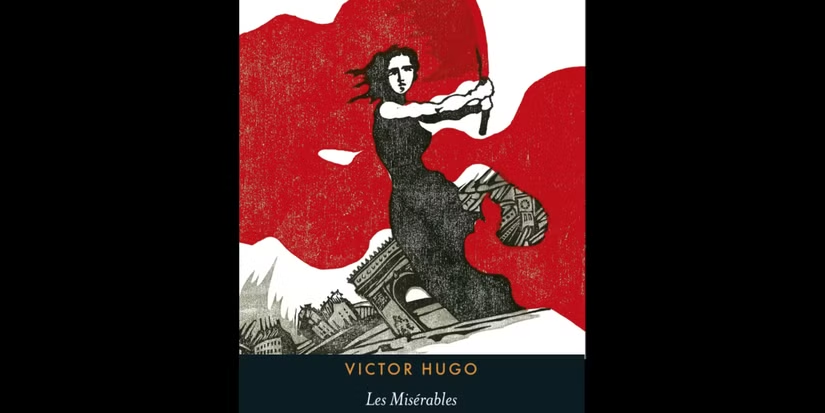
To start with an easy and obvious pick, here’s Les Misérables, which is famous for being very long and very heavy-going. There are almost two decades covered, with fictional characters existing and struggling during a tumultuous time in French history; namely, from the mid-1810s until the June Rebellion in Paris, which took place in 1832 (so not part of the French Revolution of the late 1700s, though that mistake does sometimes get made).
If you want to be flippant, you could also say Les Misérables is a novel about a guy who steals a loaf of bread, and then miserable (or misérable?) things happen. There are some tangents, lots of side characters and subplots, and just a lot of stuff that feels sprawling in general, but it is all rewarding and interesting, even if there are parts that don’t necessarily focus on the main plot, nor the truly “main” characters. It’s a classic for good reason, and one of those books everyone seems to agree, uncontroversially, is an essential one as far as world literature is concerned.

House of Leaves is written and presented in a way that’s meant to make you feel like you’re going more than a little mad, and it’s also impressively layered, to say the least. There are a few different accounts of a documentary called “The Navidson Record,” with analysis of the contents of said documentary being covered throughout, and it’s mostly about a house with a mortifying secret (or some kind of portal) inside.
There’s a lot more to it than it being a haunted house novel, though, with some parts of House of Leaves also being weirdly funny, other parts being just weird, and even more parts that manage to be scary in ways that aren’t necessarily related to “The Navidson Record.” It’s a probably unadaptable beast of a book that finds so many interesting and unique things to do with certain horror conventions, and stands as the kind of thing you do need to read if you want to believe it (and even then, believing might remain somewhat difficult).

If Underworld progressed in chronological order, it would still qualify as quite ambitious, what with it being dense, covering a great deal of history (much of the second half of the 20th century), and being lengthy, at over 800 pages. Structurally, though, it’s all those things plus something told largely in reverse, starting with a story about a prized baseball from a match in the early 1950s, and then jumping forward to the 1990s.
It’s about people who had – or wanted to have – that baseball in their possession, but everything keeps jumping back, and though there are some people in it who are sort of main characters, Underworld goes off on tangents fairly often. It does so in a way that works unusually well, with there being something powerful about the novel overall, even if it sometimes feels hard to say just what exactly makes it feel such a way.

The ambition here goes a little further than you might expect, since The Second World War covers some events that happened in the lead-up to 1939, which was the “official” start of World War II. It’s a way to set things up before the bulk of the book focuses on a very complex, sizable, and world-shattering event, with about as much detail as you can get when you’re doing only one book on the whole subject.
There are 50 chapters all up, and they’re about a whole range of different battles, events, and developments within the overall conflict. If you want more than an overview, it would, naturally, be better to find books that focus on a more specific part of the Second World War, but for a breathless recount of so much that happened during the biggest – and most impactful – event of the 20th century, you do get that here, condensed into a single book, which is undoubtedly impressive.

Having a one book per author limit here makes things a bit difficult, because there’s an argument to be made that Gravity’s Rainbow is Thomas Pynchon’s most ambitious book, owing to it being his densest, or maybe Mason & Dixon, since that one is so stylistically surprising and singular. Both of them are long and sprawling for sure, but Against the Day is longer than either, and it feels like more of a conventional epic.
Well, a conventional epic in the sense that it spans a good deal of time and has many characters, but then the rest of it’s quite unconventional in the way you can usually rely on a Pynchon novel to be. It’s a work of historical fiction that spans 1893 to 1918, and has countless characters, some borderline fantasy/sci-fi elements, and cameos from real-life figures throughout. Against the Day is often bewildering and a bit exhausting, but it’s also extremely impressive and, for the most part, rather rewarding, if you’ve got the time and patience for it.

Infinite Jest is a psychological something of a novel. Not really a psychological thriller, but maybe a psychological dramedy would be the best way to describe it? Even then, it’s kind of a mystery just because of how confounding it is, and how little certain things seem to line up with everything else. You’re also dealing with non-chronological storytelling here, and a massive number of characters, with some of them being residents at a drug and alcohol recovery program, others being members of a tennis academy, and some other people being radicals/revolutionaries.
You need two bookmarks and probably about 30 hours (at a minimum) to read a book like this, and then re-reads are necessary if you want to even come close to getting a grip on most of it.
And that’s before getting to the fact that Infinite Jest is over 1000 pages long (the font is small, and the style is such that most pages are filled with text), plus there’s all the footnotes to take into account, because they’re about the length of a short novel on their own. You need two bookmarks and probably about 30 hours (at a minimum) to read a book like this, and then re-reads are necessary if you want to even come close to getting a grip on most of it. As for understanding all of it… if you want to dedicate your life to reading and analyzing Infinite Jest, sure. No, not sure. Maybe. Godspeed.

Reclaiming History: The Assassination of President John F. Kennedy is the longest book here, at over 1600 pages, and it’s also a hefty-sized book with so many words per page. By comparison, the Kindle version of Reclaiming History (which doesn’t have to worry about being bound), is 5,919 pages, though that surely includes the approximately 1000 pages of footnotes. If you want to see them after buying a physical copy of the book, you can, but they come on a CD with each physical copy.
So, 2600 pages, and those pages have the number of words you’d probably find on two pages of a more regularly formatted book. And so many of those pages exist to refute every single conspiracy theory regarding the assassination of John F. Kennedy, with a decent chunk of those pages also serving as a comprehensive overview of the event itself, and the chaotic/eventful days that immediately followed. It’s exhaustive, but perhaps the ultimate resource for covering just about everything you could want from a book on the subject (there are fictional and even sci-fi-related stories about it, sure, but this is arguably the definitive non-fiction book about the event).

There are two versions of The Stand, and they both tell the same story, but the 1990 uncut version is much longer, and it shifts the events of the story forward by a decade. You got either an 800-ish-page-long book about a flu wiping out most of humanity and a battle for the human race’s future, or a book that’s about 1200 pages long about the same thing.
Stephen King went all out for both, since The Stand (1978) was easily his most ambitious book at the time, and remained so until arguably IT (1986), but then The Stand (1990) outdid IT, in terms of page-count and scale, so it’s about as big as a Stephen King book has gotten. There are other beefy ones, of course, and if you were to count The Dark Tower as one cohesive story, then that would technically be his biggest and most sweeping epic to date, given there are seven main books that make up the overall continuous story in that series, all of them published over a period of a bit over 20 years.

The one book that will rank ahead of The Lord of the Rings here is a work of historical fiction, but then again, The Lord of the Rings almost is, too. It’s just a history that’s entirely fictional, and there’s an argument to be made that J.R.R. Tolkien inventing it all and planning everything so thoroughly, all the while doing more by way of world-building than just about anyone ever, is more astounding than doing a more conventional work of historical fiction.
There’s a narrative here about a war that’s building while two Hobbits undertake a dangerous journey to destroy a very important Ring, but there’s also so much more to The Lord of the Rings than just the main narrative. It could be only the narrative, and it would still be a classic, but it’s the way Tolkien makes Middle-earth feel so convincing and tangible that makes The Lord of the Rings particularly special. As corny as it might sound, you can almost believe that Middle-earth did really exist, at some point. Tolkien does an outstanding job at maintaining – and building upon – that illusion, so to speak.

War and Peace feels a little in line, ambition-wise, with Les Misérables, and they were both published in the same decade, too. War and Peace involves Russian history, though, even if France does factor into the plot and some of the conflict, seeing as War and Peace takes place during the Napoleonic Wars, and there’s a similar amount of time covered in Les Misérables, going from about 1805 to 1820, rather than that previously mentioned novel’s span of 1815 to 1832.
There are stretches of War and Peace that aren’t too narrative-focused, with Leo Tolstoy using some of his 1200+ pages to unpack history and philosophical ideas, too. Like with Les Misérables, it’s all compelling and well-written, so he more than gets away with it. War and Peace is famously huge, and beyond iconic, as an epic… maybe even the ultimate epic, so here it is, trumping all the other books, and standing, arguably, as the most ambitious piece of literature of all time.

March 14, 1966
393 Minutes
Sergey Bondarchuk
Sergey Bondarchuk, Vasiliy Solovyov, Leo Tolstoy
By Chris Snellgrove
| Published

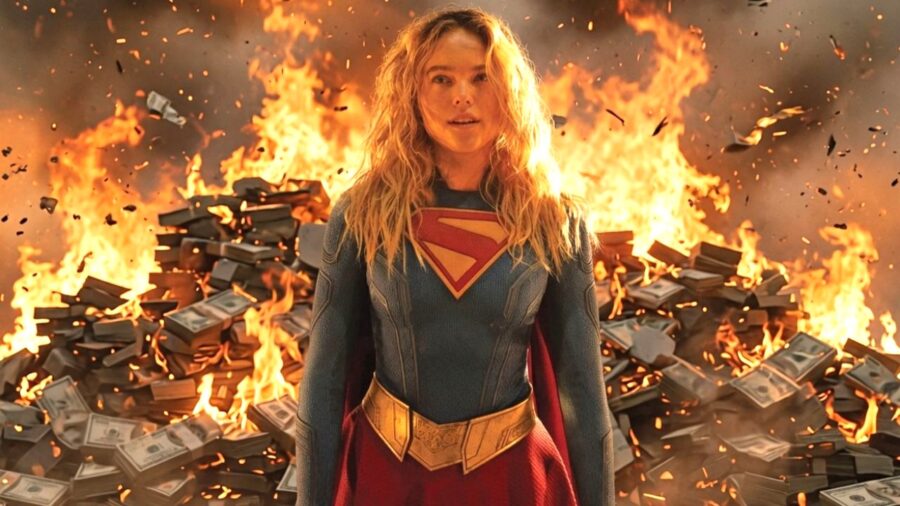
For most DC fans, the critical and commercial failure of Supergirl comes as quite a shock. After all, last year’s Superman was the breakout blockbuster of the summer, earning more at the box office than either of Marvel’s films (The Thunderbolts and The Fantastic Four: First Steps). It was directed by geek king James Gunn, the same man who runs DC Studios. He absolutely loved the script for Supergirl and pushed the movie’s production schedule up. With Gunn’s seal of approval, the spinoff featuring Superman’s cousin seemed destined for greatness. But as the opening weekend projections plummeted and the critical reviews came in, it soon became clear that this movie was a failure.
What we didn’t know was how much of a failure. Now, we have the answer, and it’s actually much worse than you thought. According to Deadline, the movie is currently set to lose Warner Bros. a cool $125 million. That would be bad news for any blockbuster and in any circumstance. However, Supergirl bombing is that much worse because it’s not just losing the studio plenty of cold, hard cash; it’s also shaking confidence in Gunn’s ability to lead the DCU in its fight with Marvel for box office supremacy. Now, a sobering fact emerges: the DCU may implode long before we even see the new Justice League onscreen.

Right now, some of the film’s biggest fans are trying to make the movie into another culture war flashpoint. The more militant fans are claiming that Supergirl’s critics are misogynists and incels who just weren’t ready to see a strong woman on the big screen. However, it genuinely seems like Supergirl was doomed more by the forces of apathy than misogyny. The low opening weekend (lower than Morbius, yikes!) is an indicator of how few people actually bothered to see the movie. Plus, in a bit of Morbin’ (er, morbid) irony, Supergirl undermines much of its girlpower street cred because of a very prominent storyline about sex trafficking.
But how did Deadline arrive at the conclusion that Supergirl will lose the studio $125 million? They looked at factors such as the production cost (somewhere between $170-$186 million) and the movie’s opening weekend box office ($68 million). They also considered how much the domestic publicity and advertising budget was ($120 million) and how much the movie needed to make in order to break even (about $315 million). Throw in the estimates for declining weekly box office, and you get a bleak conclusion: Supergirl is going to lose somewhere around $125 million, making this a very public, very expensive failure for Warner Bros.

With this kind of box office loss, it’s unlikely that Supergirl will ever headline another future film in the DCU. However, there may be a downstream effect where this impacts larger projects in the future. For example, Supergirl is supposed to be a major character in Superman: The Man of Tomorrow; if audiences hate that film because of her presence, it could spell bad news for James Gunn. If that Superman sequel is a hit, then it will pave the way for Wonder Woman, The Brave and the Bold, and, eventually, a Justice League film. If it bombs, though, the DCU could die before the JL even team up onscreen.
All DC fans should care about Supergirl’s failure because this movie is effectively the canary in the coal mine for the entire cinematic universe. Considering how many skipped seeing Supergirl, how much worse will it be for future projects featuring even more obscure heroes and villains? DC Studios has already shot a Clayface film, and they are currently working on a Deathstroke and Bane movie and a TV show that pairs Jimmy Olsen up with Gorilla Grodd. These are big creative swings, and they might all connect. But even if they all turn out to be excellent, that won’t matter if hardly anybody is watching them.

It’s worth noting that while critics dragged the DCEU for years, it produced about five commercial flops before Warner Bros. pulled the plug. Therefore, it might not be the end of the world now that James Gunn’s DCU has only produced one flop. However, superhero fatigue is dragging down box office earnings, and Gunn is facing stiff competition from Marvel in the form of Spider-Man: Brand New Day and Avengers: Doomsday. Supergirl losing $125 million right before WB gets new leadership potentially changes the game for Gunn, and not in a good way. He’s not going to get five strikes; in fact, he’ll be lucky to get more than one!




Weekend Open Thread: Staud – Corporette.com


The House | Manchesterism won’t survive the painful trade-offs unless it gets citizens on board


Strategy authorizes up to $1.25B in Bitcoin sales under new capital plan


Potential 2028er World Cup attendee leaderboard


Asia stock markets slide as tech shares slump


MAJOR BITCOIN & MARKET UPDATE!!!! (MUST WATCH ASAP!!!)


A Look At A Gaggle Of Transputer Boards

Dell (DELL) Shares Tumble Over 5% Following Analyst Downgrade to Hold


Coinbase, Circle Deepen Crypto Stock Losses Despite Resilient S&P 500


Australia treasurer says alleged access of prime minister’s bank data ’incredibly concerning’


Kraken's xStocks Opens Bending Spoons IPO Registration to EEA Retail


FIH Pro League: India defeat Pakistan 7-1, register biggest win of campaign | Other Sports News


Bitcoin Sparks $600M Hourly Liquidations With $65,000 Set To Become Resistance


Bluekit phishing kit adopts browser-in-the-middle for login theft


Russian hackers now target Signal backup recovery keys

Hyperliquid Named on Singapore MAS Investor Alert Register


Ripple and SBI launch RLUSD in Japan after JFSA approval


RTX holders must register wallets before token distribution begins

The AI boom won’t burst all at once. It will pop in ‘rolling bubbles’: Macquarie


Anonymous researcher drops 0-day ‘exploitarium’ repo





You must be logged in to post a comment Login