
Entertainment
How Darrell Sheets’ Son Honored Him at Celebration of Life


Darrell Sheets’ son, Brandon Sheets, paid tribute to his father in an emotional celebration of life speech.
“He was like a pillar. [He was] stellar, he was strong. He reminds me of his father so much,” Darrell’s Storage Wars costar Laura Dotson exclusively told Us Weekly of Brandon’s presence at the memorial service held at the Hyatt Regency in Huntington Beach, California on Monday, June 29. “He has a lot of the same anecdotes and funny things that he does. He also says, ‘That’s the wow factor, baby,’ and when he does that it sounds just like Darrell in the room.”
Laura, who attended the event alongside husband Dan Dotson, also shared that Brandon, 42, spoke about the impact that Darrell had on him.
“He got to talk about him being a wonderful father, grandfather and friend, and how much Darrell really helped him through his life, becoming the man that he is, and the father that he is,” Laura recalled.
Brandon shares two kids with his wife, Melissa. In addition to Brandon, Darrell was father to daughter Tiffany, who has a daughter named Zoie, 22. Before his death, Darrell helped raise Zoie, who was in attendance for the memorial.
“She seems to be doing really well. She has so much support,” Laura, 58, said of Zoie. “All of Darrell’s sisters were there, [his] brothers were there, family members were there, his cousins were there and they all kind of look like him. His friends look like him.”

Darrell’s ex-wife Kimber Wuerfel, whom was with from 2011 to 2016, also attended the service. According to Laura and Dan, Wuerfel was “right up at the front” and “so accommodating” with Darrell’s family.
“Everybody was so concerned for her and her health, but she looked strong,” Laura said of Wuerfel. “She was just attending to everybody, and just full of love and stories, and saying, ‘Share, share the story of Darrell,’ and [it was] bringing her comfort I could see, so that was really, really wonderful.”
Kimber also spoke at Darrell’s celebration, recalling the good times the pair shared together.

The cast of A&E’s reality series Storage Wars has come together to mourn their late costar Darrell Sheets following his death at age 67 from suicide. Lake Havasu City, Arizona, police confirmed to Us Weekly on April 22 that officers responded to calls about a “reported deceased individual” earlier in the day and subsequently “pronounced […]
“I did see tears and breakdowns from all of them,” Laura said of all the speeches made in honor of Darrell. “Everybody would be hugging and praying and lifting Darrell up again, and then they would start laughing at something somebody would say, so it was tears of joy and happiness, and [they were] talking about, ‘We know that Darrell is with God. We know he’s in heaven,’ and just the feeling that you know that they know that he’s there, so they can have peace.”


Earlier this year, Us confirmed that Darrell died at age 67. His death was ruled a suicide by the Mohave County Medical Examiner’s Office in Arizona.
“We are saddened by the passing of a beloved member of our Storage Wars family, Darrell ‘The Gambler’ Sheets,” A&E said in an April statement to Us. “Our thoughts are with his family and loved ones during this difficult time.”
If you or someone you know is struggling or in crisis, help is available. Call or text 988 or chat at 988lifeline.org.

Continue Reading

Sen. Bernie Moreno of Ohio is unable or unwilling to say if his daughter Emily Moreno’s ex-husband, Rep. Max Miller, should resign after Emily accused the Ohio congressman of domestic violence, including breaking their daughter’s — the senator’s granddaughter’s — collarbone.
“I don’t know,” Moreno told political outlet NOTUS on Friday, July 31, when he was asked if Miller should be replaced in a contested race that could determine which political party controls the House.
According to court documents obtained by Mother Jones and The New York Times, Emily — who filed for divorce in 2024 — has accused her ex of throwing hot water on her body, holding a gun to her head, pushing her with enough force to hurt her and breaking their daughter’s collarbone.
Miller has vehemently denied the allegations, claiming his ex-wife is not “all there.” He has subsequently sued Emily for defamation, according to The Guardian.

Congressman Eric Swalwell is facing sexual assault allegations from multiple women, a Manhattan District Attorney’s investigation and calls from top Democrats to end his campaign for California governor. Four women — including a former staffer who claims the politician raped her — accused Swalwell in April 2026 of sexual misconduct and harassment. Swalwell has categorically […]
Like Moreno, many Republicans are either staying silent or continuing to support Rep. Miller in the wake of the allegations.
“While we won’t dignify this baseless attacks by Democrats and their media allies, Senator Moreno will not speak on active litigation involving his family,” Raagan McCarthy, a spokesperson for Sen. Bernie, told NOTUS in a statement.

WASHINGTON, DC – FEBRUARY 05: Senator Bernie Moreno speaks onstage during the Puck Power Breakfast at Riggs Washington D.C. on February 05, 2026 in Washington, DC. (Photo by Paul Morigi/Getty Images for Puck) Getty Images
Current Speaker of the House Mike Johnson told reporters, “The key word here is ‘allegation,’” when asked about the domestic violence claims levied against the congressman.
Ohio Gov. Mike DeWine, also a Republican, told a local ABC affiliate news station that while the allegations are “serious and certainly troubling,” he believes “the people” of Rep. Miller’s district “are going to have to weigh the facts,” falling short of calling for the congressman to resign or drop out.
“They’re the ones who decide who they want to represent them,” DeWine added.
President Donald Trump — who has been credibly accused of sexual assault by over a dozen women, including his late ex-wife Ivana Trump, and was ordered by a judge to pay E. Jean Carroll $5.6 million after a jury found him liable for sexually assaulting her — gave Rep. Miller his “complete and total endorsement” in May, adding that the rep “will not let you down.”
Miller is just one of many sitting or would-be politicians on both sides of the political aisle to stand accused of gross misconduct.
In July, Graham Platner, a Democrat, withdrew from Main’s senate race among a slew of allegations, including sexual assault, inappropriate messages and abuse. (Graham has maintained his innocence and denied the allegations.)

The husband of one of the women who have accused Rep. Eric Swalwell of sexual assault and harassment has responded to the congressman’s video denying the allegations. “My wife’s name is Ally Sammarco. Obviously you know that, but she’s not named anonymous,” Adam Parkhomenko, a Democratic strategist and former DNC National Field Director, wrote via […]
Former congressman Eric Swalwell, also a Democrat, suspended his gubernatorial run on April 12 before resigning from Congress amid multiple allegations of sexual assault and misconduct. While Swalwell admitted to extramarital conduct, he denied the allegations before ultimately leaving office amid threats of an expulsion vote.
According to a recent Politico poll, 66 percent of MAGA voters who voted for Trump, 80, said they would back a Republican candidate even if “a former partner has accused the Republican candidate of sexual assault” rather than vote for a Democrat.

Former reality star Teresa Giudice is breaking her silence on the tragic death of her daughter Milania Giudice’s best friend, Victoria Zardoya.
“My sweet beautiful Victoria,” the former The Real Housewives of New Jersey star wrote via Instagram on Saturday, August 1. “This just doesn’t seem real. You were like a daughter to me and an incredible built in best friend and sister to Milania. I watched the two of you grow up into such beautiful young women, and seeing you both follow your dreams at the University of Tampa warmed my heart because I always knew she had you by her side.”
Teresa continued, “I wish we could go back so I could watch you guys running around the soccer field again, laughing, smiling, and just being carefree little girls. Those are the memories I’ll hold onto forever.”
Zardoya died after suffering a fatal fall on July 24 during a trip to Egmont Key, an island off the coast of Tampa Bay, Florida. She was 20. It remains unclear how the college student fell at the time of publication. On Wednesday, July 29, a spokesperson for the Manatee County Medical Examiner’s Office confirmed to Us that Zardoya’s autopsy has been delayed due to her status as an organ donor.

Milania Giudice’s friend Victoria Zardoya’s twin sister, Alexandra Zardoya, has broken her silence following her sibling’s sudden death at age 20. “Victoria, I can’t believe this is real life. Tears are falling down my cheeks as I type every word,” Alexandra, 20, wrote via Instagram on Friday, July 31. “My twin sister, my other half, […]
“You were so full of life — kind, ambitious, and unstoppable,” Teresa continued in her moving Saturday tribute to the late young woman. “You had the biggest heart and the brightest future ahead of you. I can’t believe I’m writing this right now. The thought of you not walking through my front door anymore doesn’t feel real. It feels like a nightmare I keep hoping I’ll wake up from.”
The reality TV star concluded, “I love you so much sweet angel. Heaven gained one of the most beautiful souls, and I know you’ll be watching over all of us. You will be loved, missed, and remembered forever.”
Teresa also shared a slew of throwback photos and videos featuring Zardoya and her daughter Milania over the years, from childhood to their time in high school and beyond.
Days earlier, Milania revealed that she was undertaking the daunting and heartbreaking task of cleaning out her late best friend’s hospital room in the wake of her untimely death.
“Hello, this is my first time,” Milania, 20, began a Friday, July 31, TikTok video, getting emotional. “They are packing up Victoria’s hospital room. She just went in, she’s saving eight people’s lives [via organ donation]. … I’m spreading awareness about Victoria.”

Teresa Giudice’s 18-year-old daughter, Milania, is college-bound. Milania’s sister Gia, 23, documented her departure for the University of Tampa in a Thursday, August 22, TikTok video. “I’m a little bit sad right now, leaving,” Milania said to the camera before hugging Gia and thanking her for helping her pack. The sisters then shared a long […]
She added at the time, “I can’t really say much right now because this is, obviously, really new. I just can’t believe this is real, like, seriously just hug your loved ones.”
Milania spent nearly one week at Zardoya’s bedside in the hospital in the days ahead of the college student’s tragic death.
“Milania slept 7 days in a chair until her BFF was ready to give life to 7 people,” Teresa wrote in the comments section.
“I would sleep in a chair next to her forever,” Milania responded.
Entertainment
17 Years Later, Peter Jackson’s 135-Minute Supernatural Crime Thriller Returns to Streaming

The return to Middle-earth is starting to take shape, as more news is revealed about the upcoming The Lord of the Rings: The Hunt for Gollum. Set for theatrical release on December 17, 2027, this first mainline live-action film in the franchise for over a decade will feature many fan-favorite original faces returning, including Lee Pace as Thranduil, Elijah Wood as Frodo, Ian McKellen as Gandalf, and Andy Serkis as Gollum. There will also be some new faces joining the franchise, including Leo Woodall as Halvard, Kate Winslet as Marigol, and Anya Taylor-Joy as Seren.
Fans might not be too pleased that Viggo Mortensen is being replaced by Jamie Dornan as Aragorn, but the other glaring omission from the team is Peter Jackson, with the aforementioned Serkis stepping in as director. However, Jackson is still heavily involved in the film as a producer and co-writer, with his original vision that transformed the novels into movie masterpieces hopefully able to evolve for a 2027 audience. But there’s no doubt that Jackson’s directing prowess will be missed by many, although those yearning for his ability to adapt a fantasy story into big-screen magic will be pleased with a recent streaming acquisition.
Starting August 1, you’ll be able to stream Jackson’s The Lovely Bones, based on Alice Sebold‘s 2002 novel of the same name, on Paramount+. Jackson didn’t just direct this adaptation; he also co-wrote the screenplay alongside Fran Walsh and Philippa Boyens, in only his second project after finishing The Lord of the Rings trilogy. The Lovely Bones features a star-studded cast, led by the likes of Mark Wahlberg (who replaced original star Ryan Gosling), Rachel Weisz, Susan Sarandon, and Stanley Tucci, with the movie also acting as many people’s introduction to future Hollywood star Saoirse Ronan.
Was ‘The Lovely Bones’ a Box Office Hit?
Jackson was no stranger to box office success in the Noughties, thanks to The Lord of the Rings trilogy and the near-$600 million haul of King Kong. Sadly, The Lovely Bones broke his streak, only returning $95 million against a reported $95 million budget. This disappointment was no doubt spurred on by the lackluster reviews the film received from critics, illustrated by a somewhat woeful 31% approval rating on review aggregator Rotten Tomatoes.
The Lovely Bones is streaming on Paramount+ this August. Stay tuned to Collider for more updates.

- Release Date
-
December 11, 2009
- Runtime
-
135 minutes
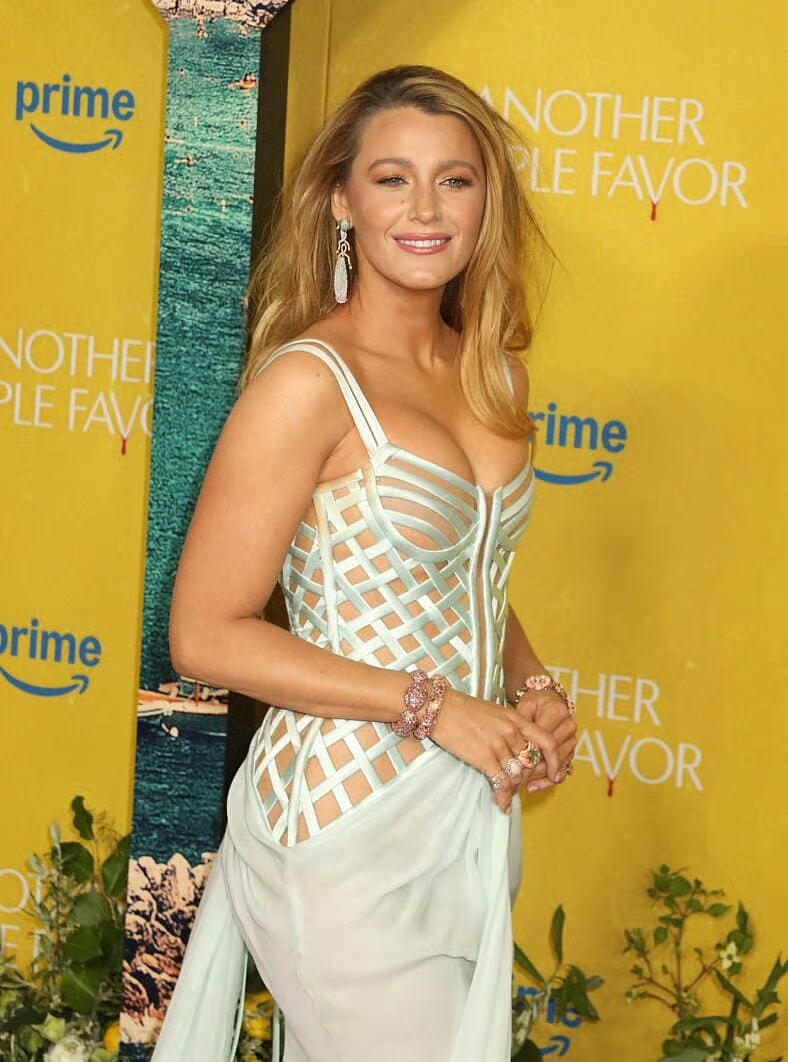
Taylor Swift’s longtime friendship with Blake Lively reportedly reached its breaking point after the actress was allegedly left off the singer’s Super Bowl guest list. Sources claim Lively was so upset about missing the 2025 game that she wanted Swift to publicly explain her absence and give fans the impression that there was no tension between them.
The alleged demand reportedly came with a far more serious warning. If Swift refused to cooperate, years of private messages involving the singer’s relationships and personal life could allegedly be released. Lively and her attorney have forcefully denied that any such threat was made.

Lively attended the 2024 Super Bowl with Swift, watching the game from the VIP suite reserved for Kansas City Chiefs tight end Travis Kelce. When the Chiefs returned to the NFL championship the following February, however, Lively was not among Swift’s guests in New Orleans. Her absence immediately fueled speculation that the two women had fallen out after maintaining a close friendship for approximately a decade.
By then, Swift had been pulled into the growing legal conflict between Lively and her “It Ends With Us” co-star and director, Justin Baldoni. Sources familiar with the alleged fallout told the Daily Mail that Lively felt humiliated after being excluded from the Super Bowl gathering.
Taylor Swift Allegedly Faced Threat Involving Private Messages

The most explosive part of the report concerns what allegedly would happen if Swift refused to post the message. Sources claim Lively possessed “ten years’ worth” of private text messages and conversations involving Swift’s failed romances and other personal experiences. The singer was allegedly warned that those communications could become public if she did not offer the requested show of support.
The claim mirrors allegations that surfaced during Lively and Baldoni’s legal battle. Baldoni’s attorney, Bryan Freedman, previously asserted in court filings that Lively’s legal team attempted to pressure Swift into publicly backing the actress.
Freedman wrote in a May 14 letter to Judge Lewis J. Liman that a “source who is highly likely to have reliable information” had described alleged “extortionate threats” made to the law firm representing Swift. According to the filing, Lively’s attorneys allegedly demanded that Swift “release a statement of support” for her.
It further alleged that if “Swift refused to do so, private text messages of a personal nature in Ms Lively’s possession would be released.”
Blake Lively’s Attorney Denies The Explosive Allegations

Lively’s attorney, Michael Gottlieb, rejected the accusation in the strongest possible terms. “This is categorically false. We unequivocally deny all of these so-called allegations, which are cowardly sourced to supposed anonymous sources, and completely untethered from reality,” Gottlieb said.
Freedman later filed a signed affidavit under penalty of perjury offering additional information about the unnamed source and the allegations. However, the affidavit was subsequently withdrawn after the judge ruled that it was “improper” and “irrelevant to any issue before this Court.”
The ruling did not establish whether the alleged threat occurred. Instead, it determined that the material was not appropriately before the court in that matter.
A source close to Lively has also directly rejected the claim involving Swift’s private communications. “Blake has never threatened to leak Taylor’s personal or private text messages,” the source told the Daily Mail.
Alleged Super Bowl Ultimatum Was Reportedly The ‘Ultimate Blow’

Despite the denials, insiders maintain that the alleged Super Bowl dispute was the final straw for Swift. “It was the ultimate blow to their friendship,” one source claimed. “The threat to expose Taylor’s most intimate confidences unless she posted something to explain why Blake was missing at the Super Bowl was outrageous. There was no going back from that.”
Neither Swift nor Lively has publicly confirmed that their friendship ended because of the alleged ultimatum.
Taylor Swift Was Pulled Into The ‘It Ends With Us’ Legal Battle

The two women were frequently seen together, and Swift has served as godmother to Lively’s children with Ryan Reynolds. Their close connection made Lively’s absence from the 2025 Super Bowl particularly noticeable to fans.
Swift’s name became connected to the dispute after Baldoni accused Lively of using her influential friends during conversations surrounding “It Ends With Us.”
The singer was not a cast member or producer in the movie, but her song was featured in the movie and its trailer. Plus, her relationship with Lively placed increased attention on any role she may have played behind the scenes.
Entertainment
Forget ‘Dungeons & Dragons,’ Netflix’s Best High Fantasy Series Is a Perfect Weekend Binge

Crafting excellent television is akin to creating excellent meals. The genre of the show is the type of cuisine following a culture and tradition built from community connections. Its characters are the ingredients, ranging from simple to complex in flavor and combined to elevate and enhance. Both can tell a story; both can be divisive; both can be exceptional. As with the fusion of different cuisines, the combination of different genres in a television series can be hit-or-miss with audiences. But when a show hits that sweet spot, balancing the ingredients and honoring the cuisine to create something new and fresh, there’s nothing quite like it. And it’s certainly true that there’s nothing quite like Netflix’s new show, Delicious in Dungeon.
No show achieves its ambitious concept as effectively and creatively as Delicious in Dungeon. Also known as Dungeon Meshi (literally ‘dungeon meal’), the series is an adaptation of the hit manga by Ryōko Kui and was animated by Studio Trigger. Part fantasy adventure, part cooking show, the series is a daring combination of two types of entertainment so distinct that it feels like their flavors should clash. Fans of Dungeons & Dragons: Honor Among Thieves will recognize the familiar fantasy framework, but Delicious in Dungeon elevates it with a culinary twist all its own.
And yet, not only does it fulfill all its promises of magical adventure, but Delicious in Dungeon contains a surprisingly detailed culinary element in its story that makes the show distinct from anything else on television. Containing style and substance, the series is meticulously crafted with unifying themes, endearing characters, and a truly stunning art style that is so thoroughly enjoyable that audiences are going to keep on craving another bite.
‘Delicious in Dungeon’ Keeps the Fantasy Genre Fresh
Delicious in Dungeon has the bones of a traditional fantasy adventure, chock-full of all the knights, mages, and monsters any Lord of the Rings or Dungeons & Dragons fan could ask for. But it’s where the series expands on the genre, subverting expectations and introducing fresh new ingredients to a classic story, that the series truly leaves a lasting impression. Set in a world where magic and monsters exist, dungeon exploration is a potentially lucrative profession for courageous or reckless adventurers. Though the magical underground world is dangerous and full of monsters, the promise of treasure, wealth, and even an entire kingdom is enough to beckon folks into its dark underbelly. After they are defeated by a red dragon, the human adventurer, Laios (voiced by Kentarō Kumagai), and his adventuring party delve back into the dungeon to rescue his sister, Fallin (Saori Hayami), before she’s digested by the mythical creature.
However, lacking funds and resources, the party is forced to enter the dungeon without the necessary rations to reach the deeper levels. This would be an insurmountable problem were it not for Laios’s ingenious idea to eat the monsters they slay for food. Unlike adventurers seeking fame or fortune, Laios became an explorer because of his deep love and fascination with monsters.
But Laios’ encyclopedic knowledge of monsters doesn’t exactly translate into culinary skill, which is where Senshi takes center stage. A mysterious yet unerringly friendly dwarf, Senshi (Hiroshi Naka) had been living in the dungeon for several years and developed a keen understanding of how to survive in a dangerous environment. Senshi joins the party to help rescue Fallin, becoming the resident chef who teaches Laios and his friends how to survive in the dungeon and make delicious meals from the unlikeliest ingredients.
The Characters are Brilliantly Designed and Memorable
However, two adventurers alone do not make a party, and the rest of the characters in Delicious in Dungeon are equally entertaining as the eccentric monster-eating dwarf and human. There is Marcille (Sayaka Senbongi), the brilliantly talented and studious elven mage. Chilchuck (Asuna Tomari), the half-foot picklock who expertly leads the party through the winding routes and traps of the dungeon. And Fallin, the friendly and powerful mage whose kindhearted nature motivates her party to rescue her at all costs.
Though each character is based on a fantasy archetype, they each add something new to the table, adding complexity to ideas audiences are already familiar with. Marcille feels youthful and lively, unlike the more classic interpretation of stuffy and stoic elves. Though Chilchuck looks like a spritely youth himself, he’s actually middle-aged for his species and holds plenty of secrets in his small stature. And when Chilchuck does finally share his past, it’s one of the most shocking and hilarious moments in the entire series.
Each character in Delicious in Dungeon is a masterclass in direct and effective storytelling from Ryōko Kui, with character design and interactions so meticulously crafted that there’s no wasted moment. Marcille’s hairstyle changes every episode, showing her meticulous personality, because hair is an integral component of the world’s magic. Even though Chilchuck is the smallest of the party, he still removes his extra clothes when disarming traps so that he triggers even fewer sensors. The monsters, too, are creatively designed, drawing inspiration from folklore, mythology, and even regional cryptids but with additional features unique to this series.
‘Delicious in Dungeon’s World-Building Is Detailed and Exhaustive

Even with the already impressive character design and writing, the most impressive aspect of Delicious in Dungeon is arguably its comprehensive world-building. Unlike other fantasy stories, which substitute logic for mystique and intrigue, there’s a cohesive logic that permeates the show. The monsters Laios so gleefully obsesses over are still living things with complex biologies and instinctive behaviors that can be researched and understood. The monsters are integral parts of the dungeon’s ecosystem, with a legitimate food web that can be tracked from the algae at the bottom of the pond all the way up to an enormous kraken.
This attention to detail translates to the cooking as well. Senshi breaks down the preparation of every dish into simple, digestible steps that genuinely feel like an engaging cooking show. Each episode features at least one brand-new dish that is an adventurous combination of monster ingredients and classic foods, some more startling than others. A basilisk, a monster that is part rooster and part snake, can be cooked on a spit like a roast chicken. A pumpkin with a human-like face on it can be turned into a soup. At the end of the day, a man-eating plant is still a plant, and its fruit can be turned into a delicious tart.
But like a good dish, plating is everything, and Delicious in Dungeon’s animation is so crisp and beautiful that even the most insane monster meal genuinely looks appetizing. The animation is defined by its clean line work, simple yet vibrant color blocking, and that exhaustive forethought that makes every detail an irreplaceable addition. But don’t let the simple art style lull you into a false sense of security because the series can get surprisingly vicious in a snap moment— reflective of the genuine dangers and threats in the sprawling dungeon. The action can get intense, featuring some truly stunning animation in visceral and dynamic combat sequences. Studio Trigger was cooking with gas when they animated this series, and the sizzle reel of Dungeon Meshi highlights is exceptional, even compared to the biggest shōnen anime. Even with the availability of healing and revival magic, some of the deaths and injuries in the show are startlingly brutal but remain cohesive within the reality of the show.
‘Delicious in Dungeon’ Is Funny, Heartwarming, and Action-Packed

For all the wildness and whimsy that the series has, Delicious in Dungeon is utterly unafraid to get serious when it needs to be. Underneath all the jokes and humor, the series explores some notably profound and complex ideas, as the external politics of different nations and the internal politics of party relationships are all integral to the overarching plot. The series tackles questions about greed, power, and the volatility of relationships. Though this all seems like it should be too much, the series blends them together in such a way that the contrast of different concepts only enhances the final product.
The key to this is the simple ethos that Senshi shares with the group early on: take care of oneself by eating right, sleeping well, and exercising, because that’s all it takes to become better than you were before. Few shows can truly boast about achieving something new and exciting in their genre, but Delicious in Dungeon deserves Michelin Star-level praise for its daring choice to combine even the boldest ingredients into one dish, and the series is only getting started.
Delicious in Dungeon is streaming now on Netflix in the U.S.

Lollapalooza’s opening days were hit by weather-related chaos as Lorde stopped her performance to get help for concertgoers who reportedly passed out in the intense Chicago heat. The crowd-safety scare unfolded during Thursday night’s kickoff, with the singer pausing her headlining set after noticing people struggling in the audience.
The disruption was followed by confusion surrounding Lil Uzi Vert’s Friday appearance. Festival organizers initially announced that the rapper would not perform because of weather issues, only to reverse course hours later with a surprise update.

Lorde, whose full name is Ella Yelich-O’Connor, was performing before a packed crowd when multiple attendees reportedly lost consciousness because of the extreme heat, according to Rolling Stone. The 29-year-old singer paused the music and directed security toward people who appeared to need assistance. “You look hot from up here,” the outlet reported that Lorde told the crowd at one point.
The interruption allowed festival workers and security personnel to reach those affected before the performance continued. Further information about the concertgoers’ conditions was not included in the report.
Lorde later admitted that she was also feeling the effects of the temperature while performing.
Singer Admits She Felt ‘Dizzy In The Heat’

Lorde reflected on the demanding performance in an Instagram post shared with her 11 million followers Friday. The Grammy winner uploaded several photographs showing the festival grounds following her set. She was pictured standing onstage covered in colorful paint, while a distant sign instructed attendees to “Stay safe Lolla.” “Last night felt crazy, very out of body, doubting myself a bit, period due, dizzy in the heat,” Lorde began her caption.
She also revealed that she had been battling her own physical discomfort while attempting to deliver the performance. The singer also addressed the internal pressure she experiences after taking the stage. “I am brutally hard on myself sometimes and almost never feel like I did good enough,” she told her followers.
Despite those doubts, Lorde described feeling a powerful connection with the audience during the emotionally and physically demanding show.
Lorde Felt ‘Connection And Love’ From The Crowd
Although the night included alarming moments, Lorde emphasized that her overall experience remained deeply meaningful. “I felt the crowd last night as a heaving organism of connection and love,” she wrote. “I felt for the millionth time in my life that my work has taken me to the right place and I’m right where I need to be, always growing and being taught.”
Her reflection extended beyond her own performance to the workers responsible for transforming and cleaning the festival grounds after thousands of people departed. “At midnight I went back onto the stage with Jimmy, just stood there for a while and watched tomorrow’s crew ripping off our spikes and the pit crew cleaning up bottles and felt nature at work,” Lorde said.
“Nothing ever the one thing, all part of the constellation, felt everything that holds me as I do this work, the many many people who help me get it done, you, the land we perform on, the language and the music that have moved through me since I was a child,” the singer added before closing the emotional message by adding, “The moon was full. I love you very much.”
Lil Uzi Vert’s Performance Appeared To Be Canceled

The weather continued disrupting Lollapalooza’s schedule on Friday, when organizers announced that Lil Uzi Vert would no longer be appearing. The 31-year-old Philadelphia rapper was initially removed from the lineup “due to weather issues.”
Only hours after indicating that Lil Uzi Vert would not appear, Lollapalooza announced that the rapper would take the stage after all. Organizers did not elaborate on what changed between the initial weather-related cancellation and the later announcement that Uzi would join Major Lazer.
Festival organizers also informed attendees that Zara Larsson’s hourlong set had been moved to a different time.
Festival Warns Attendees About Continuing Rain

The extreme heat affecting Lorde’s Thursday performance gave way to intermittent rain as the weekend continued.
Lollapalooza advised attendees that organizers were monitoring the changing weather conditions and would provide additional information if necessary.

Jax Taylor is accusing his estranged wife, Brittany Cartwright, of allegedly attempting to “sabotage” his career amid the former couple’s contentious divorce.
“Yesterday was just another example of Brittany going out of her way to publicly embarrass and humiliate me,” Jax, 47, exclusively tells Us, referring to his now-viral fake brand partnership. “Instead of reaching out privately to address the situation, she chose to contact the brand, laugh about it on her podcast, and post false accusations on social media, turning something that could have been handled privately into a public spectacle.”
Jax adds, “Unfortunately, this has become a pattern. It’s just another example of her ongoing attempts to damage my reputation, interfere with my ability to work and earn a living, and make it as difficult as possible for me to move forward and rebuild my life.”
On Friday, July 31, Jax addressed his non-existent partnership with Smartwater, claiming he made a “simple mistake” when he posted about the fake brand deal. The former Vanderpump Rules star tells Us he was presented the brand opportunity from VideoForce.ai, a legitimate creator website, which contributed to the mistake.

The Valley alum Jax Taylor is addressing his now-viral fake brand partnership. “A few weeks ago, I accepted what I believed was a legitimate campaign opportunity through a third party influencer platform, like many creators use,” Jax, 47, wrote in a Friday, July 31, statement shared via social media. “I received the offer, emails, creative […]
“A few weeks ago, I accepted what I believed was a legitimate campaign opportunity through a third party influencer platform, like many creators use,” Jax wrote in a statement shared via social media. “I received the offer, emails, creative brief and deliverables. I trusted a platform that turned out not to be legitimate. As soon as I was notified that the campaign was unauthorized, I removed the content immediately. I have never and would never intentionally misrepresent a partnership.”
Jax’s ex, Brittany, addressed the fake brand partnership on her podcast.

Jax Taylor and Brittany Cartwright Getty Images
“I opened that DM [about the situation] LIVE while recording a podcast,” The Valley star, 37, alleged. “Blame people for their awful actions, not the person who is having to live with it daily. I’m done.”
When speaking to Us, Jax acknowledged that it has been “over two and a half years” since the pair separated and “nearly two years of trying to finalize” their divorce. (The pair, who got married in June 2019, share a son, Cruz, born in 2021.)
“During that time, I’ve worked incredibly hard on my sobriety, my mental health and becoming the best father I can be,” he says. “I’ve stayed silent for the past year out of respect for Cruz and because I believed taking the high road was the right thing to do. But staying silent while Brittany continues to lie about me publicly and find any opportunity to humiliate me has been incredibly difficult.”
He continues, “Last week we spent eight hours in court hoping to finally move this divorce forward, but it went nowhere because Brittany had not provided the financial disclosures that were required and came completely unprepared. She has also been subpoenaed by her own attorneys because she’s failed to provide the information they needed. My attorney has also gone on record confirming that she has never had to pay for my taxes, despite her continuing to publicly claim otherwise. This process has dragged on way longer than it should, and I just want to close this chapter and move on with my life.”
Jax also alleges that Brittany has “interfered” with various opportunities he has made to “rebuild” his career, including an alleged stint on the hit reality TV series Special Forces: World’s Toughest Test.

There’s a new plot twist in Jax Taylor’s split from Brittany Cartwright. Taylor, 45, was served divorce papers on camera while filming season 2 of Bravo’s The Valley, a reality spinoff of Vanderpump Rules, Us Weekly has learned. The news, which was first reported by TMZ on Wednesday, August 28, came one day after Cartwright, […]
“On top of that, every time I’ve been presented with an opportunity to rebuild my career, those opportunities have been interfered with by Brittany. She has contacted networks and brand opportunities I had secured, resulting in jobs being jeopardized or lost. Her actions have directly impacted my ability to work, support myself and earn a living,” Jax claims. “I was set to film this season of Special Forces and after all the paperwork completed and taking multiple vaccines and my uniform in hand the offer was retracted days prior to me leaving. I came to find out that Brittany contacted them and once again interfered with an amazing job opportunity that would have helped me move forward.“
Us has reached out to Brittany for comment on Jax’s latest claims.
“I just want the same opportunity Brittany has had — to tell my truth, continue my recovery, focus on my son and build the next chapter of my life in peace,” Jax says. “I’m not dismissing my past actions or behavior. I know I’ve made mistakes, and I’ve worked hard in my recovery and I’m sober now for 1 year and 8 months.”
He adds, “I just wish there was space for me to grow, heal, and move forward instead of having every step I take toward rebuilding my life met with another attempt to tear me down.”
A source close to Brittany tells Us that the Brittany “is and always has been the victim” of Jax’s, adding that it’s “time people stop trying to rewrite that reality.”
“Watching someone continue to blame Brittany for the consequences of his own actions is beyond disappointing and frustrating. Brittany is not responsible for his behavior, and she never has been. The accountability lies with Jax, yet he continues to lie, deflect, and refuse to take responsibility for the damage he’s caused,” the source says. “If he’s struggling to book jobs, it’s because of his own actions — both on and off camera — not because of Brittany.”
The source adds, “We already know, and it has been stated multiple times that the divorce has been prolonged because of Jax’s multiple stays in rehab, but instead of focusing on bettering himself, he continues grasping at straws to try to continually make Brittany look bad. It isn’t working and he keeps showing everyone exactly who he is. The narrative that Brittany somehow needs him is laughable. She has been raising and providing for their son without meaningful financial help from Jax for years. Brittany has worked incredibly hard to build a stable life for her child despite everything she’s had to endure.”
The source alleges that Jax’s claims are simply “more of the same behavior we’ve all seen for years.”
“Brittany is done allowing him to rewrite history and perform as though he’s ‘changed,’” she source adds, “while his actions continue to tell a completely different story. Enough is enough.”
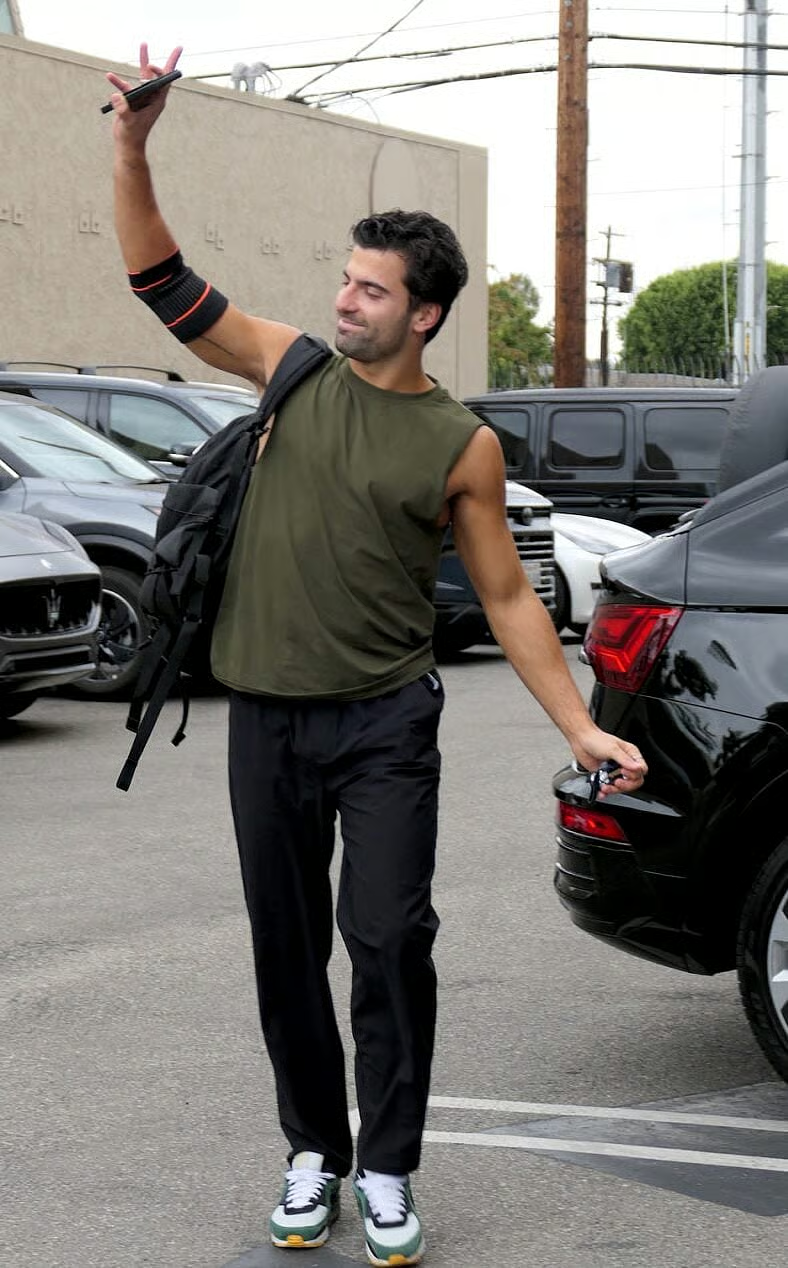
Taylor Swift and Travis Kelce’s star-studded Madison Square Garden wedding continues to generate new details nearly one month after the couple exchanged vows. Jan Ravnik, the “Dancing with the Stars” professional who previously performed as a backup dancer on Swift’s record-breaking Eras Tour, was among the approximately 1,000 guests invited to the lavish July 3 ceremony in New York City. Ravnik has now addressed his experience attending the highly private celebration, which featured celebrity guests, emotional vows and performances from music legends.

Although Ravnik is remaining protective of the newlyweds’ privacy, he confirmed that the star-studded celebration lived up to its enormous expectations. “I can’t share a lot,” the professional dancer admitted before adding, “It was a great night, yes.”
Ravnik discussed the wedding while speaking with PEOPLE on the DWTS Con red carpet in Palm Springs, California, on July 31. The 31-year-old developed a close professional relationship with Swift after joining the Eras Tour as a backup dancer in March 2023. He remained part of the production until the global tour concluded in December 2024.
Ravnik has also appeared in Swift’s music videos for “The Fate of Ophelia,” “I Can Do It with a Broken Heart” and “Karma.” His inclusion on the wedding guest list proved to fans that their connection extended beyond the stage, but Ravnik refused to disclose any intimate details about the ceremony or reception. His restraint is consistent with the approach reportedly taken by most of the approximately 1,000 guests, as legitimate photographs and videos from inside the celebration have largely remained private.
Taylor Swift And Travis Kelce Transformed Madison Square Garden

Swift and Kelce exchanged vows inside Madison Square Garden after becoming engaged 11 months earlier. Although the iconic venue is best known for concerts and sporting events, it was reportedly transformed into an intimate woodland setting for the ceremony.
One source said the arena was decorated with trees and ferns, while its seats were covered in white. “It looked like a forest,” the insider shared.
After the couple officially tied the knot, the jumbotrons outside the arena reportedly displayed the announcement, “JUST&T MARRIED!”
Ravnik was among the many famous guests invited to witness the moment. The A-list crowd also reportedly included Selena Gomez, Bradley Cooper, Ed Sheeran, Zoë Kravitz, Jason Sudeikis, Ethan Hawke and Jimmy Fallon.
Couple Read Lengthy Vows From Gold Books

Swift and Kelce reportedly exchanged handwritten vows during an emotional portion of the ceremony. According to a source, the couple read their words from gold books, and their “vows were about 20 minutes each.”
Guests were provided with embroidered handkerchiefs to use during particularly emotional moments. The reception began after Swift’s mother directed everyone into a separate room containing a stage. “After the ceremony, Taylor’s mom invited everyone into the reception room where a stage was set up,” the source explained.
Paul McCartney reportedly performed The Beatles’ classic “I Want to Hold Your Hand,” while Stevie Nicks also took the stage during the celebration.
Attendees were served Italian food and sushi from stations positioned throughout the reception area. “There were bars everywhere,” an insider said.
Despite the massive size of Madison Square Garden, the number of guests created a surprisingly packed atmosphere. “It was very crowded!” the source added.
Jason Kelce Says The Wedding Was ‘More Than 10 Out Of 10’

Ravnik was not the only wedding guest to praise the celebration. Jason Kelce, who served as his brother’s best man, described the ceremony as “incredible” and “more than 10 out of 10” during an appearance on Philadelphia radio station 94WIP.
The retired NFL star admitted that watching Travis and Swift exchange vows left him more emotional than expected. “I am a crier. I did cry … Probably cried more at this wedding than I cried at my own wedding, which probably is not acceptable,” Jason joked, before acknowledging that his wife, Kylie Kelce, was “probably not happy about that.”
Jason also confirmed that Adam Sandler officiated the ceremony and praised the comedian for balancing humor with the emotional weight of the occasion. “Obviously, he’s hilarious and he knows how to make it entertaining and funny, but there’s a sweetness to Adam in everything he does, all of his movies, that really resonated throughout,” Jason explained. “I think that Taylor and Travis were fantastic in the ceremony.”
Brad Pitt Was Among Jason Kelce’s Memorable Encounters

Rather than holding a conventional reception, Swift and Kelce reportedly turned the evening into an enormous party attended by people from dramatically different stages of their lives. “My favorite moments were just the different people that are at this wedding, right?” Kelce said.
He added, “Like, in one moment, I’m going (from) seeing Brad Pitt pop out of a corner and talking to him, and then in the next moment, I’m seeing Mrs. Clark who ran the attendance at Cleveland Heights High School.”
Jason also expressed amazement that so little footage from inside the celebration has become public despite the enormous guest list. “I haven’t seen any legitimate photos really from the wedding. It’s remarkable that there was a thousand people inside Madison Square Garden … and there’s really not a lot out there,” he said.
He suggested that the lack of leaks come from the amount of planning Swift and Kelce devoted to making the ceremony feel private.

Us Weekly has affiliate partnerships. We receive compensation when you click on a link and make a purchase. Learn more!
Not to be dramatic, but Scarlett Johansson found the most timeless wardrobe staple. Instead of a tight tank, she wore flowy knit version, and it screamed ‘old money.’ We uncovered Johansson’s classy look on Amazon . . . and it also happens to be on sale for $15.
In an Instagram Reel for The Outset, Johansson had a .02-second blip showcasing one of the brand’s beauty products. That was all we needed to see her chic tank style, and honestly, it might be even more luxurious than the serum. This capsule twin is selling out for good reason, so run!
Get the Anrabess Wool-Blend Sleeveless Top for $15 (was $27) at Amazon! Please note, prices are accurate at the date of publication but are subject to change.
Minimal, sophisticated and effortlessly sexy, the Anrabess Wool-Blend Sleeveless Top hits every elevated-basic note. The stretchy knit material skims your frame without squeezing, offering a tailored shape and lounge-like comfort. Better yet, the wool-blend fabric gives it an incredibly luxe appearance, one that usually costs triple the price.
This tank top makes you rethink every so-called ‘versatile’ piece in your closet. Tuck it into wide-leg trousers for the office, or layer it under an open cardigan with jeans for brunch. You can even pair it with a silk midi skirt and gold hoops for date night with your boo.
One happy reviewer wrote, “It’s such a perfect staple for my wardrobe, looks great tucked in or out, and goes with everything — pants, jeans, skirts, shorts.”
Another shopper wrote, “It has that effortless Ivy League, upper-class energy that looks right at home in tailored settings and polished wardrobes . . . [it’s] not casual, not trendy, but timeless and chic in the best way.”
This tank slips into your existing wardrobe, quietly upgrading everything with little to no effort. From summer to fall to winter, you’ll be glad to have this capsule top that elevates every pant style in your closet — yes, even sweats.
Get the Anrabess Wool-Blend Sleeveless Top for $15 (was $27) at Amazon! Please note, prices are accurate at the date of publication but are subject to change.
Looking for something else? Explore more chic tops, and don’t forget to check out all of Amazon’s Daily Deals for more great finds!
UsNow Summer Sale Alert: These Chic Fashion Finds are over 30% off – Plus Free Shipping
Welcome to summer with our biggest sale of the year. This summer’s chicest dresses, tops and swimsuits are all over 30% + free shipping. Inventory is limited so hurry before they’re gone.

Roomies, the back-and-forth between Kandi Burruss and Tamar Braxton is heating up! Kandi recently sat down for an interview and kept it 100 about how she REALLY feels about Tamar and why their history has been so complicated. She also cleared the air on all of the speculation surrounding their interaction during Essence Fest weekend in July. Buckle up, y’all, because the recaps, the receipts, and the tea are HOT!
RELATED: Tea Time? Kandi Burruss Seemingly Fires Back At Tamar Braxton Amid Rumored Feud As Fans Get Messy (VIDEOS)
Kandi Burruss Speaks On Longstanding Tension With Tamar Braxton
Okay, so BOOM! Kandi Burruss stood on every word while opening up about her relationship with Tamar Braxton on her ‘Speak On It’ podcast. Kandi said it with her whole chest and admitted she doesn’t rock with Tamar at all! She even called Tamar fake and said she’s never going to put on a fake face for someone who constantly talks “crazy” about her on the internet.“I’m just going to be straight up. I do not like that b***h,” Kandi said. “She is a fake a** b***h to me.”
Kandi Addresses Viral Interaction With Tamar At Essence Black Women In Music Event
While chatting on her podcast, Kandi also cleared the air about why her interaction with Tamar seemed awkward during the Essence Black Women in Music Awards. Kandi admitted Tamar caught her off guard because she didn’t understand why Tamar joined her and the other women onstage when she wasn’t being honored. She also questioned why Tamar tried to acknowledge her in front of everyone after continuously throwing shade at her. Kandi also shut down claims that she intentionally left Tamar out of her Instagram post. Burruss said she simply shared photos with the women who were being honored that night.
From there, Kandi said their run-ins have only gotten more awkward. A few weeks after the Essence event, she crossed paths with Tamar again at a party. As Tamar walked past her, she claims she mumbled, “b***h.” Kandi said she kept giving Tamar the cold shoulder for the rest of the night so that she wouldn’t be able to say anything about her in new interviews. “She didn’t go around saying nothing this time, because I paid her dust. So she wasn’t able to gaslight me like she was trying to at this party.”
Kandi went on to admit that she actually tried to squash the beef with Tamar years ago, but now she’s completely over it. The ‘RHOA’ star said she has her own motion going and doesn’t have time for the negative energy. She also added that Tamar only seems to get attention when she’s talking about her and somebody else.
“‘Cause just remember this b***h […] I’m the one that got something going on,” Kandi said. “You the one that sings so beautifully, but yet don’t nobody give a f**k about it, because the only reason you ever get air time lately is when you talking about me or you talking about somebody else.”
Where Does Tamar Stand In All Of This?
Shortly after Essence’s Black Women in Music event, Tamar stopped by ‘The Morning Hustle Show’ and shared her side of the interaction. She said she had no bad intentions when she greeted Kandi onstage and simply wanted to show respect and gratitude. From there, Tamar made it clear that she just wants peace and doesn’t want any beef in her life. “I don’t care.” Tamar added, “I said congratulations, and I went on about my business. I do not regret saying congratulations. I am not that kind of person. I do not want beef in my life. I really do enjoy my peace.” However, she did share that the only person she will always want smoke with is “the devil.”
RELATED: Back On? Fans Shocked To See Todd Tucker On Kandi Burruss’ Family Vacation, Question Their Relationship Status (VIDEO)
What Do You Think Roomies?

Business13 seconds ago
Q1 earnings this week: Infosys, Eternal, Bajaj Auto among 573 companies set to announce June quarter results

Tech4 minutes ago
CISA warns of cyberattacks disrupting U.S. water utilities

NewsBeat6 minutes ago
Three top UK family dog walks are close to Bolton

Entertainment1 month ago
Renter of Home in Anne Heche Crash Denies Settlement With Son

Business2 months ago
No Jackpot Winner as $257 Million Prize Rolls Over to $269 Million Monday Draw

Fashion1 month ago
Weekend Open Thread: Staud – Corporette.com

News Videos12 minutes ago
What is Finance? | Definition Financial Company|Financial Information| Accounts Video #financial

News Videos19 minutes ago
Howard prints money on the anniversary of the creation of the U.S. Monetary System (August 8, 1786)

News Videos34 minutes ago
Complete Finance MasterClass 2025 | For people in 20’s & 30’s
-
 Sports6 days ago
Commonwealth Games boxing: Jadumani Singh seals dominant 5-0 win over Pakistan’s Sumama Rehman to enter quarter-finals | Commonwealth Games News
-

 Business3 days ago
Why Trees Belong on the Risk Register
-

 Fashion2 days ago
Weekend Open Thread: Wit & Wisdom
-

 Tech6 days ago
Intel is reversing course and bringing hyper-threading back to its server chips
-

 Politics1 day ago
Meta enters AI-training agreement with far-right ‘propaganda rag’ Newsmax
-

 Politics6 days ago
Luke Littler dismantles Gerwyn Price to retain title in Blackpool
-

 Crypto World15 hours ago
MicroStrategy Post-Earnings CLARITY Act Push Could Add New Catalyst for Its Stock
-

 Politics5 days ago
The Part of the Electric Transition Nobody Wants to Discuss
-
 Entertainment4 days ago
‘Stargate’ Creator’s New Sci-Fi Series Returns for Season 3 Tomorrow
-

 News Videos6 days ago
BITCOIN JUST ENTERED THIS CRITICAL ZONE…
-

 Business4 days ago
Major shareholder moves on Canyon
-

 Crypto World7 days ago
XRP Ledger adds $2.6B as RWA inflows rank second
-

 Politics7 days ago
Spain sweeps the board at 2026 World Cup with individual awards
-

 News Videos3 days ago
Bitcoin Enters the 3rd Stage of the Bear Market
-
Crypto World23 hours ago
XRP Ledger v3.3.0 brings five institutional features
-

 Crypto World4 days ago
Kraken Enables Retail Access to Jersey Mike’s IPO via Tokenized Shares
-

 Tech5 days ago
New macOS Sequoia & Sonoma security updates for older Macs
-

 News Videos4 days ago
Claude: Build Financial Dashboards in Minutes (2026)
-

 Politics3 days ago
Luke Littler’s dominance sparks GOAT debate
-

 Sports2 days ago
Seema Kaliramna Wins Discus Throw Bronze, Takes India’s CWG Medals Tally To 17
You must be logged in to post a comment Login