

Politics
The New Dating Language Is Therapy, But Not Everyone Speaks It


In London, it’s almost impossible to date without speaking therapy. Attachment styles come up on first dates. Arguments are framed as ‘boundary violations’. Compatibility becomes a question of emotional availability.
I’ve lost count of the number of dates where an ex was described as ‘avoidant’ before I’d even learned what music the other person liked.
When I refer to “therapy-speak”, I don’t mean therapy itself or careful psychological practice. I mean the growing vocabulary of terms like gaslighting, narcissist, holding space and doing the work that has moved from consulting rooms into dating apps, podcasts and social media.
Some of this shift reflects real progress. Mental health language has helped many people name patterns that once stayed buried under shame and given them permission to expect emotional safety in relationships.
But as that vocabulary spreads globally through social media and dating culture, it also carries cultural assumptions that don’t always travel with it.
Many popular Western psychological frameworks prioritise autonomy, privacy and boundaries. Those ideas can be valuable, but they also emerged within particular Western traditions and don’t always translate cleanly into cultures organised around family interdependence.
What my Sri Lankan upbringing made me notice
I grew up Sri Lankan, and one of the biggest differences I noticed living in London is how private relationships are expected to be.
In my community, problems were rarely treated as something that existed purely between two people. They were spoken about: aunties asked questions, friends offered blunt opinions, cousins challenged your version of events.
I’ll be the first to admit it isn’t always comfortable. But love was never just a two-person project, it existed within a network.
I remember the first time an ex-boyfriend told me he had a boundary around being offered advice. He was struggling financially. I responded instinctively and began suggesting practical ways to help.
He gently explained that unsolicited advice made him feel worse and that he needed space to process things alone.
If I were struggling financially, my family would sit me down and map out 10 possible solutions. They wouldn’t ask whether I’d consented to input. That’s what they perceive to be love.
What struck me was we were speaking the same words, but different cultural languages of love.
In urban Britain, saying “I have a boundary” is widely understood as emotionally literate and self-respecting. But in collectivist cultures, that phrasing can feel distancing, even rejecting.
The meaning shifts depending on the cultural grammar of care.
Love exists inside culture
Not all relational frameworks start from the idea that the individual is the central unit of wellbeing. In Māori culture in Aotearoa New Zealand, for example, the concept of whanaungatanga emphasises kinship, relationships and collective responsibility.
Yet many therapeutic models prioritise individuation and autonomy. And while those values can be important, they aren’t the only way to define healthy love.
Psychologists have raised concerns about the casual expansion of clinical language in everyday conversation. Research on “concept creep”, coined by psychologist Nick Haslam in 2016, suggests that harm-related language can gradually broaden, sometimes stretching to cover behaviours that fall within ordinary human imperfection.
When diagnostic terms are treated as universal, they can also override cultural context. A family stepping in can be reframed as enmeshment. Direct advice can be interpreted as emotional unsafety. Close involvement may be labelled ‘unhealthy’ simply because it doesn’t centre independence.
Dating is already a negotiation between two worldviews. When therapy language is applied without cultural sensitivity, things can get sticky.
None of this is an argument against therapy. It’s an argument for recognising that therapeutic language is culturally situated.
A person can be fluent in psychological terminology and still misunderstand the cultural logic of someone else’s behaviour.
For many of us, love unfolds inside migration histories, extended families and inherited expectations about duty and care. Those traditions deserve to be understood on their own terms, not automatically translated through the language of Western psychology.
If we want healthier relationships across cultures, we may need to slow down before we diagnose and to ask what support, privacy and care mean in someone else’s world – because the way we speak about love shapes the way we practise it.

Politics
Politics Home Article | Dozens Of Organisations Urge Burnham To Strengthen Online Safety Laws


Andy Burnham is widely expected to become the next prime minister within a matter of weeks (Alamy)

4 min read
Exclusive: A coalition of charities, campaign groups, researchers and academics has urged Andy Burnham to strengthen online safety laws if, as expected, he enters No 10.
A statement coordinated by the Online Safety Network, published on Wednesday, calls on Burnham to step up the government’s response to online harms, including through new legislation that would be regularly updated to keep pace with evolving technology.
The Digital Media, Data and Communications Bill, which was previously proposed by Burnham ally Lucy Powell when she was shadow digital secretary, would be scrutinised and monitored by a standing Committee of both Houses to ensure it can tackle online harms.
In the statement, seen by PoliticsHome, 47 organisations, including the NSPCC, Molly Rose Foundation, Full Fact, Internet Watch Foundation, Hope not Hate, the Fawcett Society and the Center for Countering Digital Hate, argued that the government’s approach to online safety has been “fragmented and slow” and that Ofcom’s enforcement has lacked urgency.
“The new prime minister now has an opportunity to reset the narrative, refocus the government and the regulator and show leadership internationally by taking back control from the global businesses whose pursuit of profit runs counter to the achievement of a good digital life for British citizens,” the statement said.
“The UK urgently needs a much more comprehensive and adaptive approach to online safety and AI regulation that tackles the profit-driven business model, resets the parameters for doing business in the UK, addresses the role of online advertising in fuelling content-based harms, and secures the integrity of our information environment and democracy.
“None of this is a bar to growth and innovation: good, outcome-focused regulation sets the foundation for both.”
They called on Burnham, who is expected to become PM later this month following the resignation of Keir Starmer, to “restore faith in politics” and adopt the Online Safety Network’s Safety by design code of practice.
The statement comes after the government has committed to banning children under the age of 16 from accessing certain major social media platforms, following controversy around Grok AI producing sexualised images of children and women earlier this year.
Backbench Labour MP Jess Asato is taking legal action against xAI in the UK after Grok created sexually explicit non-consensual images of her, telling PoliticsHome that she wants the government to create a legal definition of technology-facilitated violence against women and girls to provide stronger protections against AI-generated abuse.
The signatories of the statement also criticised the move to ban under-16s from social media rather than “bolder moves to address the unsafe intentional design of those products that are the root cause of harms”. They argued that AI chatbots and social media platforms should face stronger accountability for harm caused by their products, and accused the government of having “kicked into the long grass” any regulations to allow researchers access to social media data.
Maeve Walsh, director of the Online Safety Act Network, said: “The arrival of a new PM is an opportunity for a reset of online safety policy and wider tech regulation. Civil society experts and campaigners stand ready to work with Andy Burnham to ensure his government delivers a more coherent, ambitious approach.”
Andy Burrows, Chief Executive of the Molly Rose Foundation, said: “The new prime minister will inherit a patchwork of online safety measures, including a flawed ban on certain social media platforms, but this represents an opportunity to be bolder and more ambitious.
“By delivering comprehensive safety by design measures, Andy Burnham can show he is committed to standing up for UK families with solutions that work, moving beyond performative action that will not deliver comprehensive safety for young people.
“Parents are understandably crying out for change but want change that works. A Burnham Government must commit to holding big tech to account with evidence-based measures that finally make safety and wellbeing the price to pay for doing business in the UK.”
The signatories of the statement include:
- Online Safety Act Network
- FlippGen
- Minderoo Centre for Technology & Democracy, University of Cambridge
- Gender + Tech Research Lab, University College London (UCL), Department of Computer Science
- End Violence Against Women Coalition (EVAW)
- Elect Her
- Antisemitism Policy Trust
- Centre for Protecting Women Online
- Full Fact
- NSPCC
- Molly Rose Foundation
- Institute for Strategic Dialogue (ISD)
- The Digital Gender Harms Research Unit (DiGHRU), University of Portsmouth
- The Coalition to End Gambling Ads
- Check My Ads
- 5Rights Foundation
- Equality Now
- Alliance for Universal Digital Rights (AUDRi)
- Chayn
- Internet Watch Foundation
- Womankind Worldwide
- Adele Zeynep Walton
- Clean Up The Internet
- My Image My Choice
- Thomas William Parfett Foundation
- Fawcett Society
- Shout Out UK
- Kick It Out
- Plan International UK
- Conscious Advertising Network
- The Jo Cox Foundation
- Dr. Elinor Carmi, City St. George’s, University of London
- Samaritans
- HOPE not hate
- Center for Countering Digital Hate (CCDH)
- Professor Emma Short, London Metropolitan University
- Welsh Women’s Aid
- #NotYourPorn
- SWGfL
- Internet Matters
- Demos
- Reset Tech
- Professor Lorna Woods OBE, Emeritus Professor, Essex University
- Save the Children UK
- Centenary Action
- Professor Clare McGlynn, Durham University
- Mental Health Foundation
Andy Burnham likes a joke.
He can deliver them too, either sprinkled into his plentiful online videos or as a banter-foil to opposition jibes. Remember his cheeky smile on being told as he was sworn in as the MP for Makerfield that he wasn’t the Messiah and shot back the Python response – “naughty boy”, or the eye flutter before saying “it’s dark blue actually” after Kemi branded him “a black T-shirt and a pair of lashes”.
I make no judgement on the quality of comedy, the more important observation is that Starmer would dream of doing it, and couldn’t remotely carry it off if he tried.
I doubt the ‘King-in-the-North-in-Westminster’ will be in the chamber again for PMQs until we know it’s him on the front bench with, I’m told, quite a few new faces. In total victory he can afford to do Starmer a favour and not embarrass him by turning up- but as the lads might put it like the investiture of an ‘Archbishop of Banterbury’ – a target rich environment for Kemi Badenoch:
“I wonder if the real Prime Minister has turned up today? Where is he? Oh yes up there in the back benches. Perhaps he’d like to come down to the despatch box so I can ask him questions, otherwise this seems a waste of everyone’s time”
You get the picture.
So does this Northern cocktail of wry soliloquy and the lashes mean Burnham IS any better than Starmer?
The communication is – that wouldn’t have been hard – but the plan and the vision are potentially no better and possibly worse albeit a better told and sold story.
Perhaps Burnham’s penchant for the cheery quip and political joke is the reason he’s been the subject of one, for many years.
“A Blairite, a Brownite, a Milibandian, and a Corbynite walk into a pub and the landlord says, “what’ll it be Andy?”
Burnham has a such a long history of flexibility in his political postures he could host yoga sessions in this new Number 10 North.
And given political nerds like myself forget he’s not a household name in normal households (outside Manchester) when it comes to Andy Burnham the man, the myth, the Mancunian messiah the British public are entitled to steal a line from Nigel Farage’s ‘low grade bank clerk, damp rag speech:
“Who ARE you?”
Because given the authors of Labour’s soap opera look like writing “Our Andy” into the lead role in Coronation Street, we are entitled to ask which Andy Burnham has turned up on set.
The public ought to know, opposition parties want to know, and the media want to find out.
Burnham it seems is not so keen on the latter. That is his first mistake.
Twenty six and a half years ago the Labour Party made the same mistake at the opening of the Millenium Dome. Oh I know this Tory idea -project managed by New Labour was a famous white elephant, right? Well maybe, but part of that narrative that embedded with the public, was from a relentless negative review from the media from the start. Why? Because on a near freezing, drizzling New Years Eve 1999 the press were held for two hours outside before gaining entry.
Keep the media out, treating them mean, is a risky business.
Burnham has avoided their questions and whilst some privately supportive but publicly neutral old guard commentators have explained his Manchester speech would have been overshadowed with a Q&A:
Who will your Chancellor be? Does he feel sorry for Keir Starmer having ousted him? Will he be calling an election, given he advocated for one when the Tories swapped PMs like intoxicated 10 year olds on an 80’s Noel Edmond’s kids show?
It makes internal Comms sense. Shut it down and manage the message you want. Fair enough, but first, like on Millenium Eve don’t make the lobby angry and second, they and the British people deserve to see their probable next PM subjected to rigorous questioning.
Indeed the increasingly frustrated Speaker should probably insist MPs get to grill him first, as Badenoch has suggested – perhaps he should do a pre-recess PMQs?
Because we are entitled to more than the carefully crafted cheeky chap with his dress down bonhomie but answers to politically serious questions about Britain’s future and his plans for shaping that.
Yes, he gave a speech which Oliver Dean drilled into yesterday but for me a lot of it sounded like a poor pastiche of Oasis and Beetles lyrics. Know what else has dark eyes and long lashes? The Walrus.
Interpretations of what exactly he was advocating have varied from an answer to the assumptions of the 80’s and Thatcherism the promise of council house building and the like to a geographic repositioning of the distribution of power in the UK.
Perhaps the most intriguing was the reaction from aides in Starmer’s-still number 10 that apart from hiving off part of the wheel house of U.K. power and moving it to Manchester, they are reported to have said “we were doing much of this already”
Here’s where the Tories come in, rightly nervous, whatever Kemi says about election readiness – and they aren’t – they have options here. Either it is just a differently told version of the same, which mark my words will not cut it, or it’s really different sounding but fails on the same central issue.
Burnham came across as a man with a plan built of slogans. Detail was thin and the costings, and money details non-existent. Like a major speech rich on words but pumped full of policy Monjarro. Enough big questions remain to make observers queasy.
That’s why not letting people, including the markets, know now who the Chancellor will be if Reeves is off matters. How he pays for this plan and who the Robbing to his Batman is going to be is a vital part of judging what is about to happen.
He’s had to swallow the thin gruel of the Defence Investment plan unveiled by a vanishing Prime Minister clutching at legacy life rafts which only escapes John Healey’s charge of being too little too late by two weeks and £1.5bn. There are big holes still that Burnham will have no choice but to fill, and explain how.
If he truly wants cross party consensus, he should accept the Conservative offer of votes to support welfare reform.
Then there’s the move to Manchester so our new leader can truly be the King in the North, but I doubt the actual King will ride forth for weekly meetings. If the Monarch won’t go the Mancunian, then the Mancunian must go to the Monarch, in London.
But the biggest issue of all is the motivation for this northern devolution revolution.
It’s about growth.
We are back via tackling child poverty, protection of women and girls, through Chagos, trade deals and national security to economic growth as the Government’s “number one priority”
So far nothing Burnham has said convinces he isn‘t either going to have to raise tax or borrow more. Or both. That’ll put ‘hope in your hearts’
He talked of creating economic growth via the apparatus of the state, albeit devolved to the local level.
The new order is to be an attractive environment for the private sector to be co-opted into. But that ignore the fundamental, that economic growth will only come from the private sector, flourishing not from nationalising, state controlling, largely unaccountable metro mayors. And by the way the most successful metro mayors know this.
Manchester is pointed to as growing under Burnham’s reign there, but it’s far from certain that he can translate that across a nation.
A Labour MP was at pains to tell me that Burnham isn’t ultimately destined to be like the glossy progressive hope of Canada’s Justin, glitzily successful until becoming the unpopular steward of a bloated welfare state.
It’s true though.
Politics
Politics Home Article | How we build Sizewell C is crucial for the UK’s golden age of nuclear


(Credit: Adobe Stock)
As the newest nuclear project in the UK, Sizewell C is uniquely placed to be cost efficient, accelerate delivery and strengthen UK energy security. Dr Mina Golshan CBE, Sizewell C’s Safety, Security and Assurance Director, explains how smarter construction and proportionate regulation can make that a reality
For a long time, the UK has been grappling with some big questions about energy. How do we responsibly develop an energy supply that tackles climate change? How do we best take control of our energy system and achieve energy security in a volatile world? How do we build an energy system that delivers value for the UK and for consumers – and that is, ultimately, affordable?
Last year, with the release of a report from the Nuclear Regulatory Taskforce led by John Fingleton, another question received greater focus. By looking at the nuclear sector specifically, and the regulatory burden currently placed upon it, the report asked us to consider how we wanted to build our energy infrastructure in Britain.
It’s an important question, and it’s one that has numerous implications for many of the other big questions we’re asking about energy. For nuclear specifically, it has implications for the cost and efficiency of the projects we build here in the UK. It has implications for how those projects deliver for the communities and the environment in which they’re based. And it has implications for how regulation functions.
How we build our energy infrastructure projects really matters.
Long before the release of the Nuclear Regulatory Taskforce report, we’d been thinking hard about this question at Sizewell C. As a replica of the Hinkley Point C (HPC) nuclear power station in Somerset, we already have the answer to what we’re building. Thanks to HPC, we have unprecedented design certainty: we know the quantities of materials we need, and we have a readymade supply chain to build them.
Sizewell C will power six million homes a year for the next sixty years and deliver £2bn a year in energy system savings
That gives us a unique advantage to think more about the question of how we build. Without the need to grapple with countless design changes in flight, we have an incredible opportunity to be innovative, to learn from the rapidly developing lessons of HPC, and to build on the accumulating advantages they’re realising from Unit 1 to Unit 2.
We’ve already put many of these innovations and learnings into practice – from developing more modularisation and prefabrication to more off-site storage and manufacture, more digitisation and more use of AI.
We’re thinking differently about how our project interacts with and benefits the local environment: we’ve built three nature reserves around our site, for example, which are already three times the size of the permanent footprint of the power station.
We’re thinking differently about jobs and skills development, about how we can ensure that people and businesses in the UK benefit from our project – that’s why we’ve committed to delivering 70 per cent of the project’s construction value to the UK, and announced plans to build a permanent post-16 college, apprentice hub and centre of excellence.
And we’re thinking differently about how we build Sizewell C in a way that least disrupts the communities around us and that leaves the greatest legacy once it’s complete: that means, for example, delivering 60 per cent of materials by rail and sea to minimise disruption on the roads, and building new rail and road infrastructure that will improve accessibility and safety in Suffolk for generations to come.
All of these innovations on how we build have the aim of either reducing cost, accelerating the pace of delivery, improving safety, or delivering better outcomes for local communities and the environment.
However, from the outset, it’s also been clear that we face complex regulatory frameworks in our sector with inflexibilities – legislative or cultural – built into the system. For us, it was clear that a culture change was needed: a culture in which regulators and industry are encouraged to innovate and feel safe to adopt more flexible and proportionate approaches to regulation and delivery, focused on safety outcomes and protection of the environment.
There is significant headroom for change here – and this is where the outcomes of the Nuclear Regulatory Taskforce report come in. The report is an important catalyst for our sector, setting out a framework that will help us to go further in creating regulatory efficiencies, more savings opportunities and better value for the UK.
As a replica project and the most recent nuclear power construction project in the UK, Sizewell C has a unique role to play in showcasing some of the report’s recommendations. We can be a lighthouse project, highlighting the value of putting the recommendations into action and demonstrating how the UK can set a template for efficient, predictable and repeatable nuclear construction.
There are several areas where we see significant opportunity – and where we’re already taking action. We’re instilling a culture that values outcomes over unnecessary processes. We’re addressing complex bureaucracy to enable faster, outcome-focused decisions and delivery, removing duplication, creating more automation and simplifying governance processes to manage change. We’re assessing over-specification with the aim of removing unnecessary measures from non-safety critical systems and ‘gold-plated’ solutions – identifying innovative approaches to improve cost efficiency and productivity gains. We’re pushing for better ways to align our supply chain with our target delivery outcomes – and to increase the efficiencies in the way we contract and incentivise delivery.
We’re also working with the Office for Nuclear Regulation (ONR) and the Environment Agency (EA) to progress a number of pilot opportunities that will help our project avoid or reduce costs, improve environmental outcomes, deliver at greater pace and provide better overall value to consumers.
Earlier this year, for example, Defra announced that the EA will take the helm as our Lead Environmental Regulator for a pilot, acting as a single point of contact to co-ordinate streamlined, joined-up advice and smooth the regulatory process. It gives us a simple framework to build on our already constructive relationship with the EA – and demonstrate how regulation can work more effectively and efficiently for both project delivery and environmental protection. We now have an Environment Agency Officer who is regularly on site too, which means immediate communication and immediate attention to issues and opportunities.
We’re also working closely with the ONR to discuss changes in regulation and standards that could impact our delivery schedule and add cost to our project. If certain standards are safe enough for HPC, for example, why add millions in cost and risk delays to Sizewell C to make changes with negligible benefits with no material impacts on quality or safety? We have already agreed with the ONR that replication is the safest route forward – we are now working with them to ensure replication is implemented in practice. We have no doubt that the approaches we establish here will shape the construction of both future large-scale and small modular reactors.
We’re already seeing the significant positive potential of the Nuclear Regulatory Taskforce report at our project. To ensure there is cross-industry action, however, the support from the government is vital – to help implement the report’s recommendations, to join up national infrastructure projects, and to ensure that the supply chain and consumers see projects like ours as vital national endeavours that deliver on our economic and security goals.
After all, there is no doubt about the benefits of what we are building: Sizewell C will power six million homes a year for the next sixty years and deliver £2bn a year in energy system savings. With the implementation of the Nuclear Regulatory Taskforce recommendations, and with a unified approach of industry, regulators, supply chain and government, we have a big opportunity to set the template for how we build too. The impacts could be felt for generations to come.
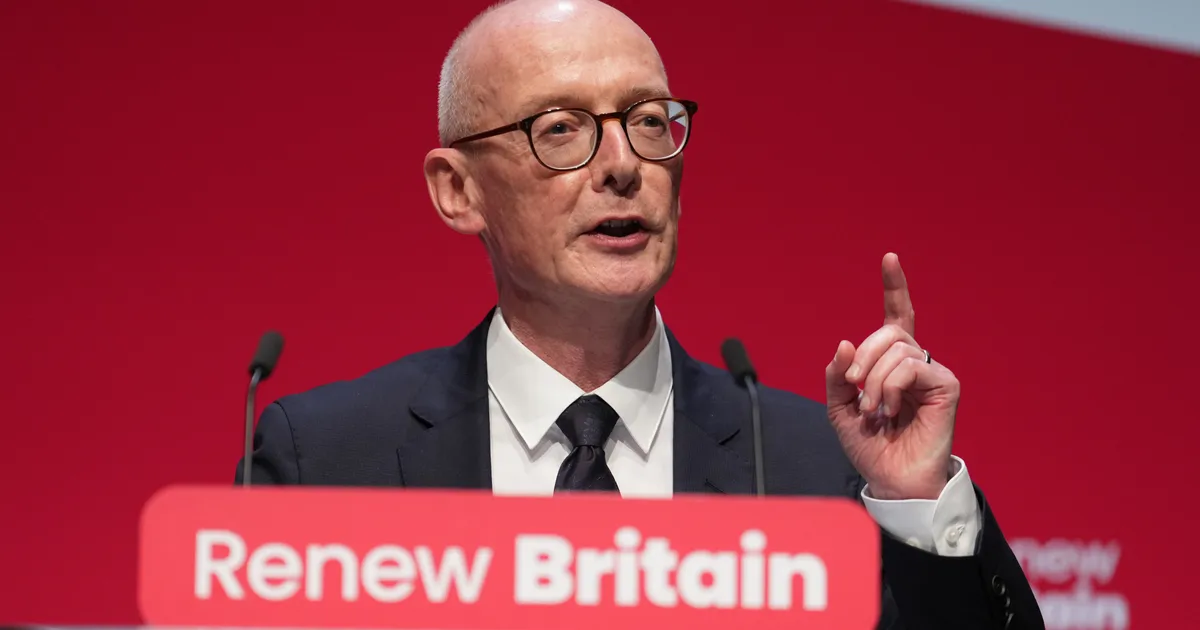
Labour MPs want Pat McFadden to be the next chancellor to stop Ed Miliband getting the job, HuffPost UK has learned.
They believe the energy secretary, who has widely-tipped to replace Rachel Reeves once Andy Burnham becomes prime minister, would be “a disaster” in the role.
Miliband is a close ally of the former mayor of Greater Manchester, who is expected to become PM on July 20.
Who he chooses to be chancellor is seen as the key decision Burnham will have to make as he appoints his first cabinet.
Miliband is seen as the frontrunner, but support McFadden, the work and pensions secretary, is growing among Labour MPs.
One said: “Pat is the ultimate safe pair of hands and would be an excellent choice as chancellor.
“Andy becoming prime minister is bound to give us a bit of a bounce in the polls, but making Ed the chancellor would just destroy that because he is such a divisive figure.”
Glasgow-born McFadden was a minister in both Tony Blair and Gordon Brown’s governments, and has been a key figure in Keir Starmer’s cabinet since Labour’s general election victory in 2024.
One former Labour minister said: “Pat as chancellor would be like a Scottish bank manager in the mould of [former Labour leader] John Smith and Alistair Darling. He’s just what the country needs.”
Another MP said Miliband’s well-known opposition to opening up new oil fields in the North Sea would kill off any hopes of a Scottish Labour revival.
The backbencher told HuffPost UK said: “There’s growing support amongst MPs for Pat McFadden, no doubt about it.”
“Making Ed chancellor would be a disaster,” one MP said. “He’s a Marmite politician who completely divides opinion, which is the last thing the government needs.
“How would it look to the public if the guy they rejected as prime minister in 2015 was given the second most important job in government?”
Sharon Graham, general secretary of the Unite union, has also spoken out against Miliband.
She said: “Ed only seems to be interested in one side of the equation, rushing Britain to net zero with almost no thought for jobs, skills and national security.”
The GMB union, which has thousands of members in the North Sea oil industry, are also opposed to Miliband becoming chancellor.
But he has won the support of other union leaders.
Andrea Egan, general secretary of Union, said: “We need a chancellor who will rewire the economy and properly invest to improve the lives of the majority.
“Of those reported to be in the running, only Ed Miliband could enact the kinds of policies trade unions and our members urgently need.”
Other names in the frame to replace Rachel Reeves include Shabana Mahmood, Wes Streeting and Yvette Cooper.
Listen to Commons People, the podcast that makes politics easy. Every week, Kevin Schofield and Kate Nicholson unpack the week’s biggest stories to keep you informed. Join us for straightforward analysis of what’s going on at Westminster.

Vladimir Putin will see that the UK’s defence spending proposals is not fully funded and is all “smoke and mirrors”, according to a former Nato commander.
Keir Starmer unveiled the long-awaited Defence Investment Plan (DIP) on Tuesday, just three weeks before he set to officially step down as prime minister.
While he announced an extra £15 billion would be spent on defence by 2030, chancellor Rachel Reeves admitted that only two-thirds of that sum (£10.3bn) had been identified.
The remaining £4.7bn needed will have to be found at the next Budget in the autumn – when Andy Burnham is expected to be in No.10.
Sir Richard Shirreff, former Nato commander who served as deputy Supreme Allied Commander Europe, tore into the DIP on BBC Radio 4′s Today programme.
He said: “The enemy has a vote here. The enemy, as in Putin, will be watching what is going on.
“When he sees that this is smoke and mirrors, that it is not being properly funded, then it sends a message of weakness.
“It sends a message of opportunity for our enemies and quite frankly it sends an appalling message to our allies in Nato.”
Starmer had been scrambling to find more money for defence before heading to his last Nato summit as leader on July 7.
He managed to find an extra £1.5bn more in recent weeks after John Healey quit as Starmer’s defence secretary over funding concerns.
But the DIP does not explain how the government intends to reach its target of 3.5% of gross domestic product (GDP) on defence by 2035.
Nato allies also pledged last year to reach 5% of national income on combined national security by the mid-2030s, with 1.5% going on defence-related areas like resilience and security.
The split target is meant to placate US president Donald Trump who has been pressuring for Nato allies to spend more on defence so they relied less on America.
Listen to Commons People, the podcast that makes politics easy. Every week, Kevin Schofield and Kate Nicholson unpack the week’s biggest stories to keep you informed. Join us for straightforward analysis of what’s going on at Westminster.
Politics
Politics Home | How consumer-led flexibility can benefit households and our future energy system


(Credit: Adobe Stock)
Smart meters can help households cut electricity bills while supporting a cleaner, more resilient energy system. Sara Higham, Director of Corporate Affairs for Smart Energy GB, emphasises all types of households could benefit, with the right support and options available
Consumer-led flexibility can help households lower their electricity bills by using power at times when it is cheaper, while also supporting a more efficient, resilient and secure energy system.
For example, the government highlights that electric vehicle users could save £332 a year, by charging their cars on a time-of-use tariff.1
How do households get involved?
Households can get involved by shifting when they use electricity, for example by running a washing machine at times when renewable energy, such as wind or solar, is abundant or when overall demand is lower.
Smart meters are a key enabler. Without one, suppliers cannot see when electricity is being used and so cannot reward households for shifting demand. Broadly, suppliers do this in two ways:
- Time of use tariffs: which offer cheaper electricity at off-peak times, often overnight, at weekends and sometimes during the day.
- Flexible reward schemes: which sit alongside a normal tariff and offer free or cheaper electricity at certain times, or reward households for reducing demand when the electricity system is under pressure.
Many households are already taking part in consumer-led flexibility, and many more may be able to benefit if the right options and support are in place.
Why is this important?
Consumer-led flexibility can play an important role in building a more efficient, resilient and secure electricity system, while also helping households reduce their energy bills.
As Great Britain relies more on renewable electricity, supply becomes more variable. At the same time, demand for electricity is expected to rise as more households switch to electric vehicles and low-carbon heating.
Shifting electricity use to times when renewable power is more abundant can help reduce waste, ease pressure on the grid at peak times and make better use of low-carbon energy. This can lower system costs overall, while also giving households more opportunities to save money through flexible tariffs and reward schemes.
At a time when many households continue to feel pressure on their finances, these savings can make a real difference.
What about vulnerable households?
Consumers must be at the heart of the future energy system, and it is important that no one is left behind, particularly those in vulnerable circumstances. Our latest report looks at how consumers in vulnerable circumstances can, and in some cases already are, benefiting from consumer-led flexibility. It highlights conditions that might support further take-up such as:
- Financial protections
- Predictable savings windows
- User-governed automation
- Simple tariffs and billing
- Timely communications that can be revisited
- Advice and support from trusted intermediaries
Ultimately, consumer-led flexibility has the potential to help lower household energy bills and support a more efficient energy system. Making that system more inclusive will help ensure that all households can make informed choices about whether and how to take part and can share in the benefits where it is suitable for them.
Want to learn more about consumer led flexibility? Click here to watch Smart Energy GB’s video, which brings together industry experts to explain how smart meters support consumer-led flexibility and how households can benefit.
Reference
- DESNZ; New smart appliance standards will help consumers save on bills. April 2025

The UK’s landmark Tobacco and Vapes Act, which became law in April this year (and has since been buried by a typically, and very modern, frenetic news cycle), was hailed as a triumph for public health. By permanently phasing out the legal sale of cigarettes to anyone born on or after 1 January 2009, it promises to create the world’s first ‘smoke-free generation’.
It’s difficult (though not impossible) to object to this from a medical perspective. Smoking remains one of the leading preventable causes of death in Britain. Fewer smokers will mean fewer cancer patients, fewer heart attacks, fewer loved ones losing family members prematurely and, in theory, less of a burden on the NHS. Put like that, it all seems pretty admirable.
But it’s important to look beyond the medical perspective to what this legislation represents. It is, perhaps, the clearest expression yet of the creeping sanitisation of Britain that has been underway over the past two to three decades.
Sanitisation is an entirely sensible principle in the right context. We sanitise hospitals to prevent infection. We sanitise kitchens to stop disease. But increasingly, the instinct to sanitise has escaped those settings and begun to shape everyday life itself. More and more, our politics is driven by the assumption that unhealthy pleasures should not merely be discouraged, but gradually engineered out of existence altogether.
I’m not trying to defend cigarettes – but they don’t really deserve it, do they? The ban is significant because it asks a different question from previous tobacco legislation. Successive governments raised duties, banned advertising and introduced plain packaging in order to reduce smoking. The new law goes a step further, though. It envisages a future in which smoking simply ceases to exist as a legal choice for successive generations of adults.
This is incredible. Whether you support the outcome or not, it reflects a new understanding of the relationship between citizen and state. Government is no longer content to inform us of the risks involved with smoking, or even to nudge us towards better choices through ruinous taxation on proscribed goods. It is now outright deciding more and more how we should be allowed to lead our lives.
Tobacco proscription is far from an isolated case. Scotland introduced minimum-unit pricing for alcohol. Sugar is taxed in soft drinks. Junk-food advertising faces ever-tighter restrictions. And supermarkets are told where sweets may be displayed.
Each measure taken by itself may seem pretty sensible – alcoholism, for instance, has historically been high in Scotland. But taken together, they reveal a broader philosophy. Health is no longer simply one consideration among many. It has become the guiding principle for policymakers, the main lens through which they view ordinary life.
Look at the steady ratcheting-up of alcohol taxation and pricing. Defenders will understandably point to the health benefits of pricing people out of excessive drinking. However, there have been massive social costs that are rarely spoken about.
Meeting friends at the pub has become prohibitively expensive for many people, accelerating the decline of an institution that has long been one of Britain’s great social levellers. As pubs close, high streets lose yet another reason for people to gather, while more socialising retreats into the private home – or disappears altogether. At a time when loneliness, anxiety and depression are widely recognised as defining features of modern life, it seems oddly self-defeating to make one of our oldest and most accessible forms of community ever more difficult to afford.
This carries consequences beyond public health. A civilisation cannot be measured solely by reductions in smoking prevalence, obesity or alcohol consumption. Human beings should not be treated as optimisation projects. We are soulful creatures, dancing animals, as Kurt Vonnegut put it. So let us dance! Or, at least, don’t dare to stand in the way as we do so. We need the unexpected, the excessive and the gloriously imperfect. Because some of the things that make life so rich and enjoyable (and at times simply bearable) are, by definition, a little indulgent. A long evening in the pub with friends is unlikely to impress a public-health policymaker. Yet these things endure because they bring people together, create memories – they feed our souls.
Public-health analysis is exceptionally good at measuring costs to the NHS or years of life gained. It is much less capable of measuring the value of conviviality, ritual, celebration or simple pleasure. What metric would you use to measure the value of lingering over another pint with friends; or standing outside smoking with a couple of co-workers, released for a moment from the day’s mundanity; or of sitting in your garden with a nice Scotch and a cheeky smoke at the end of the day. There is no real calculation for what is lost when life becomes incrementally cleaner, safer and more carefully managed.
The danger is not that Britain suddenly becomes joyless. This kind of sanitisation can be a subtler thing. Many interventions might appear modest and reasonable (though I wouldn’t describe the Tobacco and Vapes Act as either), and many restrictions are introduced in pursuit of a worthy objective. But they accumulate over time. Life’s rough edges are smoothed away.
And where does this health-policymaking logic ultimately lead? If the government sees its principal role as maximising healthy life expectancy, there will always be another habit to discourage, another risk factor to regulate and another pleasure whose costs can be quantified. Leaving your house can be risky, you know (if memory serves, there was a time in the not-so-distant past when we were indeed banned from doing that).
None of this is an argument against reducing smoking or informing people about genuine risks. But there is a profound difference between helping adults make informed decisions and gradually deciding which decisions adults ought no longer to be permitted to make at all.
The smoke-free generation may well prove healthier than those who came before it. Lung cancer and heart disease will probably fall; younger generations will probably, on average, be more athletically capable than us oldies. But the legislation also marks another step in a broader cultural journey, one in which Britain increasingly seeks to sanitise everyday life. The question is not whether we will become physically healthier – or, at least, less ill. We almost certainly will. It is whether, in our pursuit of longer lives, we are slowly forgetting what makes life rich enough to be worth prolonging in the first place.
James Dixon is a Glasgow-based novelist, poet and playwright.
Politics
Democratic socialist Melat Kiros topples a nearly 30-year incumbent to win Colorado House primary
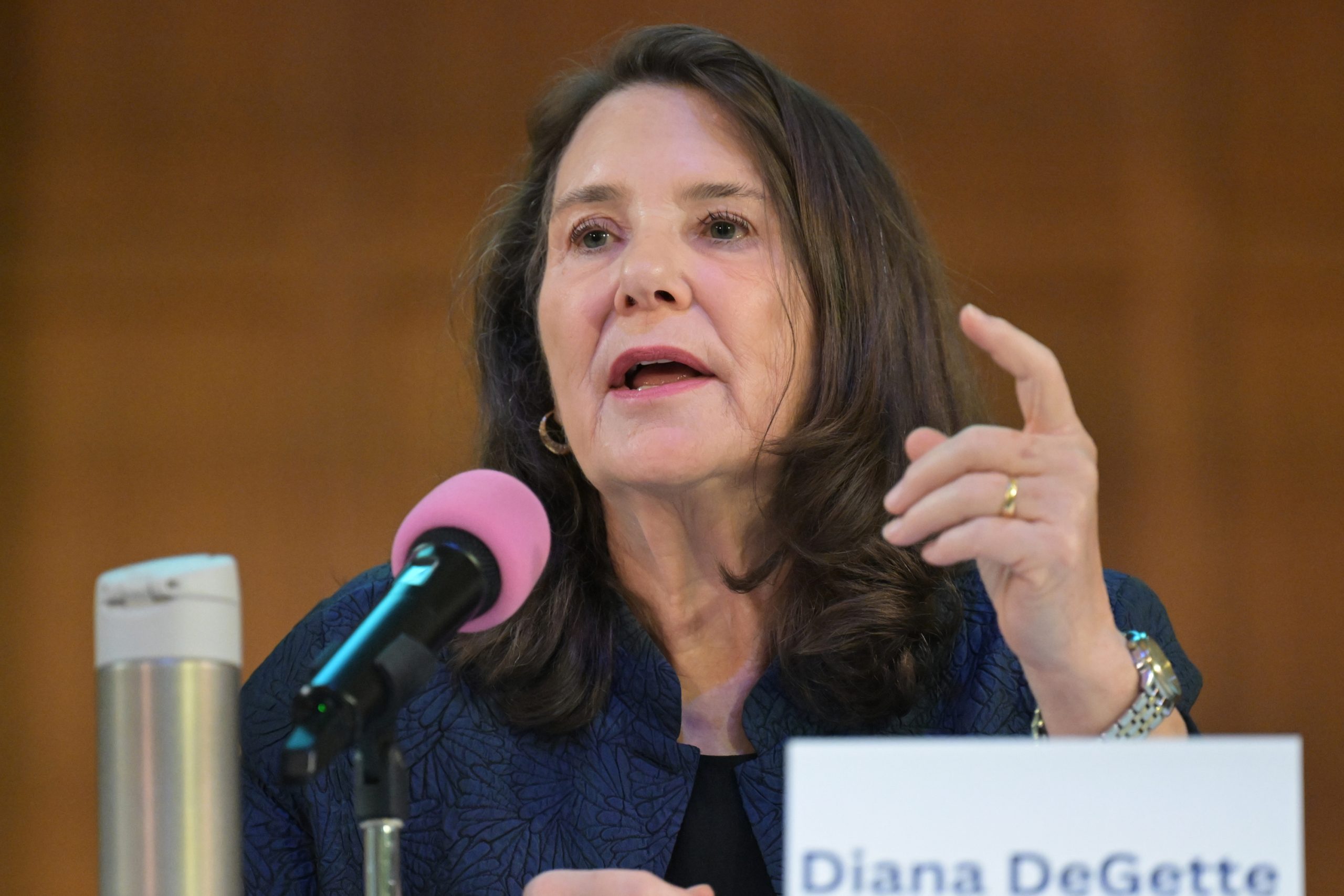

Democratic socialist Melat Kiros defeated 15-term Colorado Rep. Diana DeGette on Tuesday, delivering one of the biggest shocks of the Democratic primary season amid a growing streak of wins for the insurgent left.
Kiros’ win in the contest for Colorado’s 1st District topples a 68-year-old representative who had held the seat since before her 29-year-old challenger was born.
It’s a victory that echoes Rep. Alexandria Ocasio-Cortez’s (D-N.Y.) stunning 2018 upset over 10-term incumbent Joe Crowley in New York, and delivers democratic socialists fresh momentum.
DeGette’s loss, after representing the district since 1997, seemed unthinkable in the state just months ago, but Kiros rode the same anti-incumbent wave that swept through New York’s Democratic primaries last week, where Reps. Adriano Espaillat and Dan Goldman were ousted in a dramatic show of the left’s growing strength.
The defeat is a stunning one for the Democratic establishment, though warning signs had been building for months inside DeGette’s campaign, with allies privately acknowledging the race was tightening and the representative’s team spending weeks urging national Democrats and allied groups to come to her aid.
Kiros launched her campaign nearly a year ago, framing it from the outset as a generational reckoning with the Democratic establishment. She cast DeGette, a longtime progressive who served as an impeachment manager against President Donald Trump, as a corporate-backed incumbent who was out of step with her constituents, and called for a new era of progressive leadership in Congress.
Kiros’ campaign drew major outside support from progressive leaders, including endorsements from Sen. Bernie Sanders and the Working Families Party, as well as backing from the candidates who upended New York’s Democratic delegation last week.
Her win marks the seventh primary victory this cycle for Justice Democrats, the progressive group that recruited and backed her, making 2026 the organization’s most successful primary year to date.
“We are so proud to be sending Colorado’s first Justice Democrat to Congress,” said Alexandra Rojas, executive director of Justice Democrats. “Melat built a movement that inspired Denverites to remember they themselves have the power to transform what kind of Democratic Party they want to be represented by. Melat and our candidates continue winning this cycle because Democratic voters are finally getting leaders acting on their demands.”
Down the final stretch of the campaign, DeGette’s allies scrambled to hold off Kiros’ rise, with outside groups pouring roughly $2.3 million into the race over the final month, including $1.3 million in the race’s final days. DeGette’s side held a nearly three-to-one spending advantage down the stretch.
DeGette also secured last-minute endorsement videos from Rep. Pramila Jayapal (D-Wash.), a former chair of the Congressional Progressive Caucus, and progressive Rep. Jamie Raskin (D-Md.), who like DeGette was a manager of Trump’s impeachments. Still, that wasn’t enough to help her keep her seat.
The new class of hard-left members of Congress could prove a tough group to wrangle for House Minority Leader Hakeem Jeffries (D-N.Y.), particularly if Democrats win a narrow majority in the House this fall.
“If the day comes to vote and he continues taking corporate PAC money, I won’t be voting for him,” Kiros said in an interview prior to Tuesday’s win.
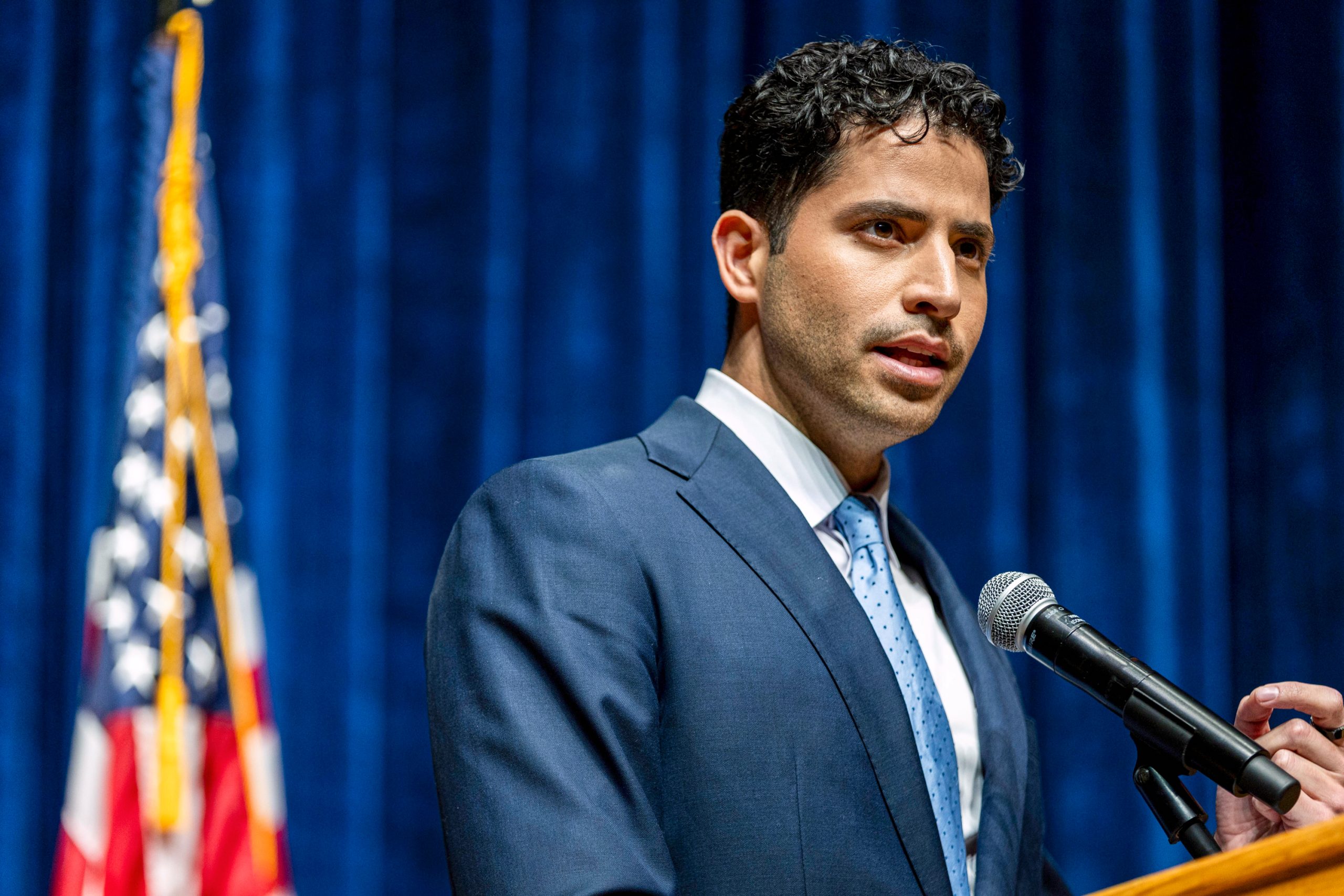

Progressive state Rep. Manny Rutinel will take on GOP Rep. Gabe Evans this fall, setting up a contentious general election in one of Democrats’ top pickup targets — and giving Republicans the candidate they hoped to face.
Rutinel defeated the more-moderate former state Rep. Shannon Bird in Tuesday’s primary for Colorado’s 8th District, bolstered by big spending from his campaign and its allies, including prominent Latino groups that see Rutinel as the best candidate to court the key voting bloc back to Democrats. The district is 40 percent Latino.
But Republicans believe they have a better chance at beating Rutinel than they would have Bird in the battleground seat. They’ve boosted pictures of the progressive rallying alongside democratic socialist New York City Mayor Zohran Mamdani and are quickly recycling statements from Bird’s allies who said Rutinel would be unable to win in November.
Rutinel has softened his positions on some of the left’s top issues, including his previous support for Medicare for All and opposition to fracking.
The primary was defined by the Democratic Party’s ongoing ideological civil war. While Bird racked up endorsements from moderate establishment Democratic groups, like EMILYs List and the centrist Blue Dogs, Rutinel was able to capitalize on a committee vote Bird took as a state legislator that he argued didn’t do enough to stand up to Immigration and Customs Enforcement officers.
Democrats remain bullish they can flip the district, which President Donald Trump won by less than a 2-point margin in 2024. Democrats’ top House super PAC has already reserved millions of dollars in ads ahead of November.
Meanwhile, Evans, a freshman Republican who flipped the district for his party in 2024, has stockpiled $3.4 million for the general election as Democrats duked it out in the primary.


The Supreme Court struck down limits on coordinated spending between candidates and political parties on Tuesday, a win for Republicans that will fundamentally change how tens of millions of dollars are spent in congressional elections.
The decision will have an almost immediate impact on the midterms. Removing the limit on coordinated spending effectively gives candidates direct control over a far greater amount of money being spent on their races. It is also likely to increase the flood of political advertising that hits the airwaves each fall.
The 6-3 decision, which divided the court along its usual ideological lines, held that the limits violate the First Amendment.
The decision is a blow to Democrats, who argued that eliminating the limit on coordination would put more power into the hands of large donors who can cut bigger checks to party committees than to candidates. Republicans tend to get more money from large donors, while Democrats have been more reliant on small-dollar donors.
Justice Brett Kavanaugh, writing for the majority, called the limits a “severe infringement on First Amendment-protected political speech.” He also argued the ruling eliminating the limits could bolster political parties generally.
“To uphold the political-party coordinated-expenditure limits here could therefore help consign political parties to continued second-tier status as compared to outside groups,” Kavanaugh wrote. “Weakened political parties distort the political system.”
President Donald Trump hailed the ruling allowing parties to spend unlimited amounts in coordination with individual campaigns.
“The Supreme Court just took restrictions off political spending!” Trump wrote on Truth Social. “A BIG WIN FOR REPUBLICANS and, more importantly, The First Amendment!”
The National Republican Senatorial Committee brought the case seeking to overturn the limits in 2022 alongside now-Vice President J.D. Vance’s Senate campaign. Trump’s Justice Department declined to defend the law in court, while Democratic groups intervened to oppose the lawsuit.
“By striking down these unconstitutional caps on coordinated spending, the Court has restored core political speech and ensured parties can compete on a level playing field,” NRSC Chair Tim Scott (R-S.C.) and National Republican Congressional Committee Chair Richard Hudson (R-N.C.) said in a joint statement. “We are ready to fully support our candidates and put them in the strongest possible position to win in 2026 and beyond.”
Democrats, who are already staring down substantial disadvantage in party fundraising this midterm cycle and are worried that the ruling will only amplify the impact of that disparity, were quick to deride the decision Tuesday.
“Today’s ruling is a win for billionaire donors and special interests who want more influence over the GOP agenda and an invitation for corruption,” Democratic Senatorial Campaign Committee Chair Kirsten Gillibrand, Democratic Congressional Campaign Committee Chair Suzan DelBene and Democratic National Committee Chair Ken Martin said in a joint statement.
The ruling strengthens the parties themselves, allowing them to directly support their preferred candidates in a way that could empower their roles in the political ecosystem — and potentially weaken the influence of super PACs. Party committees on both sides have been preparing for the possibility for months and the decision is likely to have an immediate impact on campaign spending ahead of the November midterms.
Previously, coordinated spending between candidates and party committees, such as the NRCC or the DCCC, was capped, with the specific amounts depending on the size of the district or state. Those limits no longer apply.
That significantly alters the campaign finance landscape because parties can accept far larger donations than individual candidates — $44,300 per year for national party committees compared with $3,500 per cycle for candidates. Removing the limit on coordinated spending effectively gives candidates the ability to control a far greater sum of money that is being spent on their race.
That could also substantially change the makeup of political advertising on television, because candidates get far lower rates on TV ads than other groups. If their coordinated efforts with campaigns get the similarly low rate, they would have far more cash to tap to flood the airwaves, while super PACs will still have to pay a higher rate. As a result, campaigns might spend more of their budget on TV advertising, while super PACs may be more likely to pick up other campaigning costs, such as mailers and digital advertising.
Democrats have largely had the advantage in candidate fundraising, which has generally given them a leg up in battlegrounds when candidate fundraising was the most important. But NRSC has slightly more cash on hand than the DSCC, according to recent campaign finance reports, while the Republican National Committee has wildly outraised the DNC. Those party funds could now give the GOP the financial advantage in key states.
The court’s decision additionally eliminates the need for parties to mount their own independent expenditure arms, where they have traditionally spent tens of millions of dollars.
The decision is the latest in a series of blows the high court has dealt to campaign finance regulation over the past two decades. The 2010 Citizens United and Speechnow.org decisions enabled the rise of super PACs with no limit on donations. In 2014, the court struck down aggregate limits on individual donations. And in 2022, it struck down limits on candidates using donor funds to repay personal loans they had made to their campaigns.
“Today’s decision follows a string of disastrous campaign finance rulings from the Roberts Court that began with Citizens United,” Michael Beckel, director of money-in-politics reform at Issue One, said in a statement. “By eliminating the limits that have long governed how much money parties can spend in coordination with candidates, the Supreme Court has further empowered wealthy donors and special interests with outsized influence in elections.”

Comcast Splits, Lisa Cook Gets a Reprieve and Tech Stocks Rebound | Markets P.M. for June 29

Bitcoin’s 20% June crash looks even deadlier on the charts. Here’s why
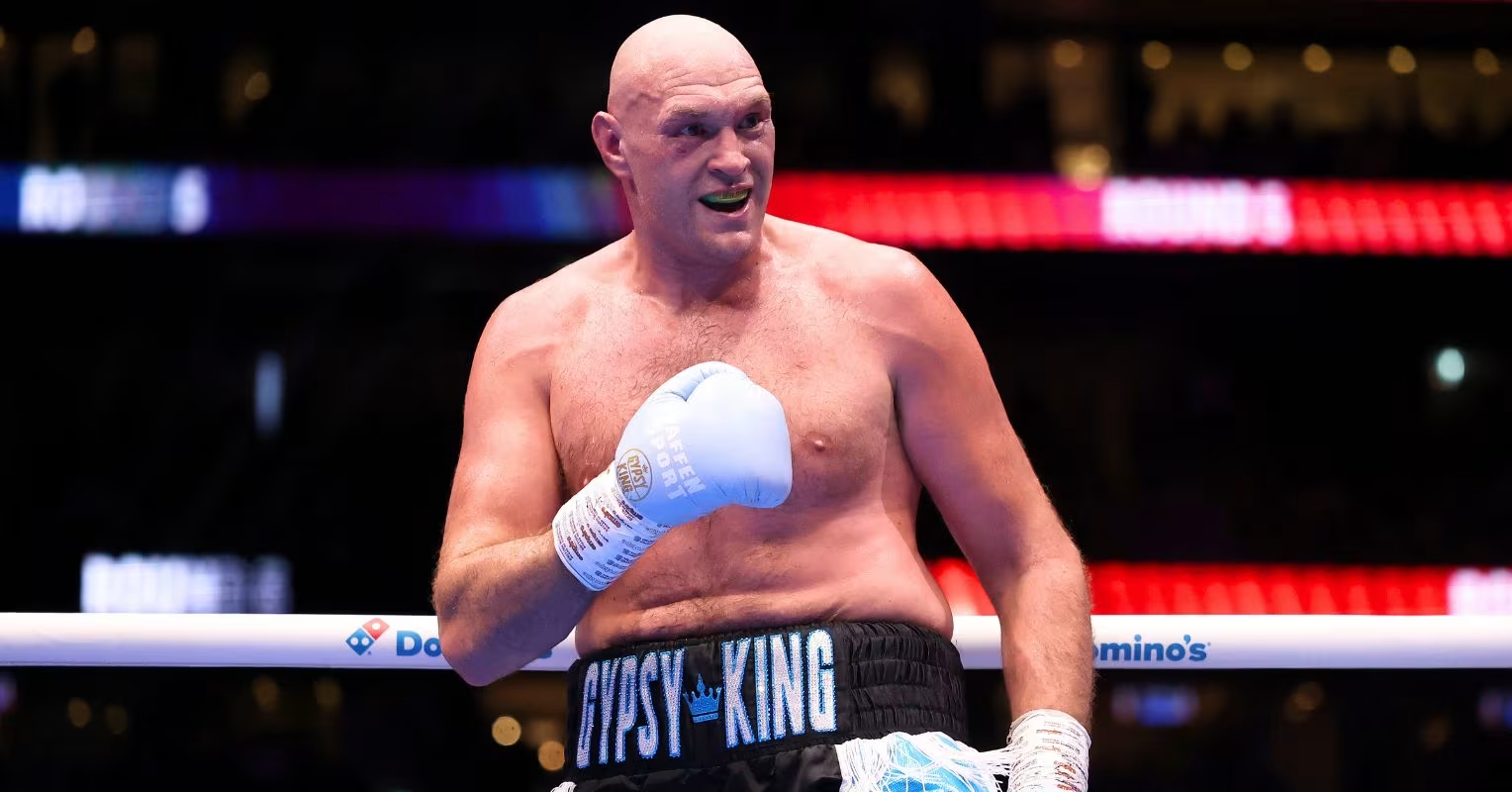
Tyson Fury offered world title shot by new heavyweight champion: “Come on we’ll make the fight”





-

 Fashion5 days ago
Weekend Open Thread: Staud – Corporette.com
-

 Politics5 days ago
The House | Manchesterism won’t survive the painful trade-offs unless it gets citizens on board
-

 Crypto World1 day ago
Strategy authorizes up to $1.25B in Bitcoin sales under new capital plan
-

 Politics5 days ago
Potential 2028er World Cup attendee leaderboard
-

 Business5 days ago
Asia stock markets slide as tech shares slump
-

 News Videos3 days ago
MAJOR BITCOIN & MARKET UPDATE!!!! (MUST WATCH ASAP!!!)
-

 Tech6 days ago
A Look At A Gaggle Of Transputer Boards
-
 Crypto World6 days ago
Dell (DELL) Shares Tumble Over 5% Following Analyst Downgrade to Hold
-

 Crypto World4 days ago
Coinbase, Circle Deepen Crypto Stock Losses Despite Resilient S&P 500
-

 Business1 day ago
Australia treasurer says alleged access of prime minister’s bank data ’incredibly concerning’
-

 Crypto World4 days ago
Kraken's xStocks Opens Bending Spoons IPO Registration to EEA Retail
-

 Sports4 days ago
FIH Pro League: India defeat Pakistan 7-1, register biggest win of campaign | Other Sports News
-

 Crypto World5 days ago
Bitcoin Sparks $600M Hourly Liquidations With $65,000 Set To Become Resistance
-

 Tech3 days ago
Bluekit phishing kit adopts browser-in-the-middle for login theft
-

 Tech4 days ago
Russian hackers now target Signal backup recovery keys
-
 Crypto World5 days ago
Hyperliquid Named on Singapore MAS Investor Alert Register
-

 Crypto World6 days ago
Ripple and SBI launch RLUSD in Japan after JFSA approval
-

 Crypto World5 days ago
RTX holders must register wallets before token distribution begins
-
 Business2 days ago
The AI boom won’t burst all at once. It will pop in ‘rolling bubbles’: Macquarie
-

 Tech1 day ago
Anonymous researcher drops 0-day ‘exploitarium’ repo
You must be logged in to post a comment Login