

Crypto World
Winklevoss twins move $67M in Bitcoin as Arkham flags selloff signal

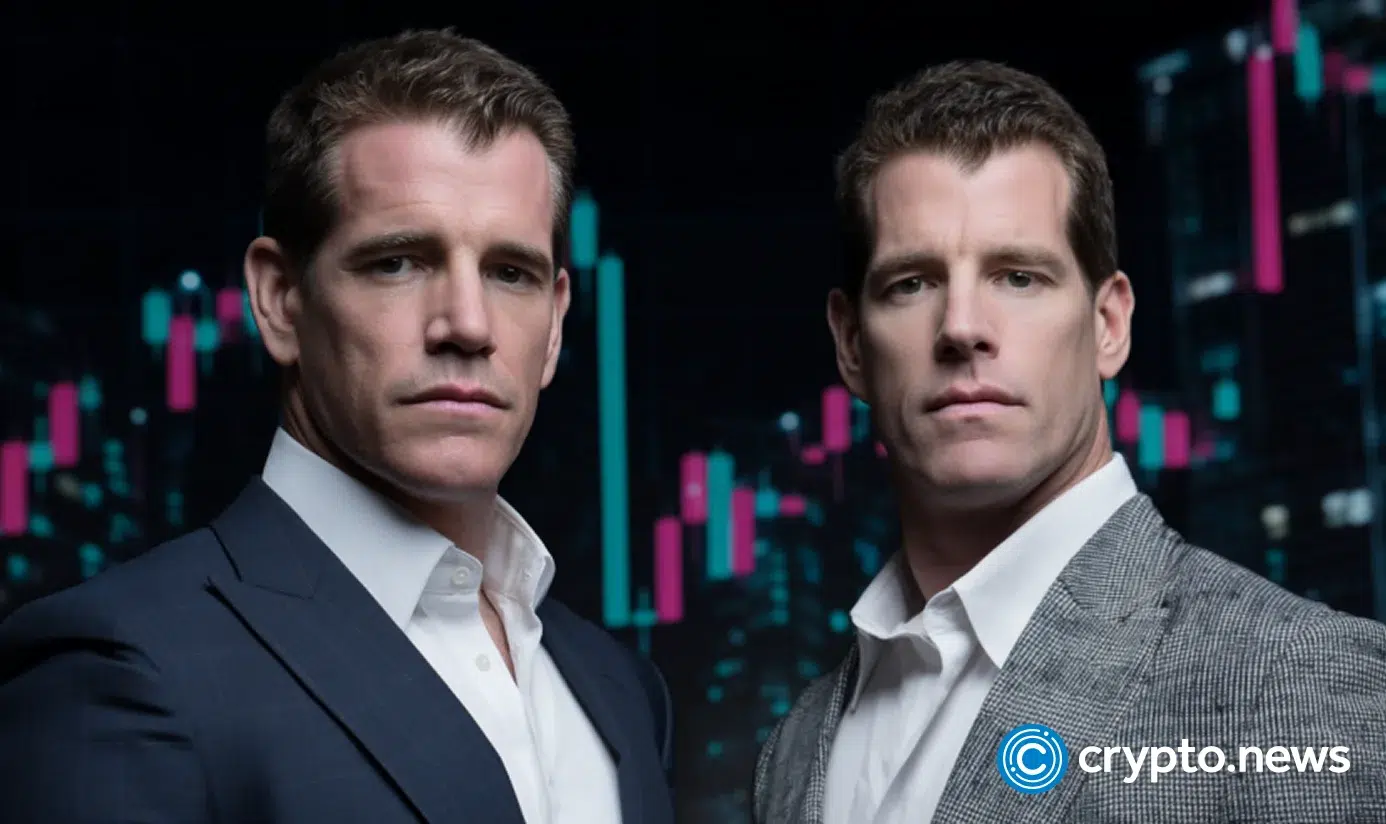
The Winklevoss twins have transferred about $67 million worth of Bitcoin and Ethereum to Gemini wallets, with Arkham Intelligence identifying the transactions as matching their usual selling pattern.
Summary
- Arkham Intelligence flagged the Winklevoss twins’ $67 million Bitcoin and Ethereum transfers to Gemini as matching previous selloff patterns.
- Bitcoin remains under pressure as Citigroup cuts its price target and ETF outflows continue weighing on market sentiment.
- Ethereum holds near key support despite continued treasury purchases from SharpLink and Bitmine failing to offset whale selling.
According to blockchain analytics firm Arkham Intelligence, Cameron and Tyler Winklevoss moved roughly $60 million in Bitcoin (BTC) and another $7 million in Ethereum (ETH) from custody to hot wallets linked to the Gemini crypto exchange on July 1. Arkham characterized the transfers as consistent with the twins’ previous selloff behavior, although the firm did not confirm that the assets had already been sold.
The latest transfers come as Bitcoin and Ethereum continue trading under pressure following quarter-end selling and persistent weakness in investor sentiment. Recent price declines have also coincided with reduced expectations that the CLARITY Act will pass this year after U.S. President Donald Trump disclosed a $1.4 billion crypto-related windfall, a development some market participants have linked to shifting legislative expectations.
Since accumulating Bitcoin in 2015, the Winklevoss twins have realized about $1.7 billion in profit, according to Arkham Intelligence. Despite the latest transfers, they still control more than $300 million worth of Bitcoin. The July movement also follows earlier transfers to Gemini, including about $67.5 million in Bitcoin during June and another $130 million moved in March.
Bitcoin continues to face selling pressure
Citigroup has turned more cautious on the two largest cryptocurrencies, lowering its 12-month Bitcoin price target to $82,000 from $112,000 while reducing its Ethereum forecast to $2,240 from $3,175.
Bitcoin fell as low as $57,747 over the past 24 hours before recovering to trade near $58,600. Trading volume rose about 9% during the same period, while June recorded roughly $4.5 billion in net outflows from U.S. spot Bitcoin exchange-traded funds, adding to the pressure on market sentiment.
Commenting on current market conditions, crypto analyst Ted Pillows wrote, “Sellers are still dominating, while Coinbase Bitcoin Premium is at its lowest level this cycle.” He added that losing the $57,000-$58,000 support region could expose Bitcoin to a deeper decline toward the $50,000 level.
Ethereum buyers continue accumulating despite weakness
Ethereum has also remained under pressure even as several companies continue adding the asset to their corporate treasuries. As previously reported by crypto.news, quarter-end selling, whale distribution, and weak institutional flows have kept Ether pinned near the $1,500 support area despite ongoing buying from public companies.
Corporate accumulation has nevertheless continued. SharpLink recently disclosed the purchase of another 10,000 ETH at an average price of $1,611, spending about $16.1 million to expand its treasury.
Separately, Bitmine acquired 27,084 ETH over the past week, increasing its holdings to more than 5.7 million ETH. According to crypto.news, those purchases have so far failed to offset continued selling by whales and institutional investors.
Ether was trading around $1,572 at the time of writing, down about 1% over the past 24 hours after moving between an intraday low of $1,549 and a high of $1,600. Trading volume also declined during the session.
Crypto.news reported earlier today that the $1,500-$1,510 region remains Ethereum’s most important support zone. A break below that level would invalidate the current consolidation structure and could open the door to declines toward $1,400 before attention turns to the $1,200 area identified by several market participants.


Ethereum price is holding a precarious line. ETH trades around $1,617, up roughly 3% over the past 24 hours, and the $1,500 support directly below is the number every desk is watching right now.
Robert Kiyosaki’s March forecast projecting ETH at $95,000 by mid-2027 has resurfaced across crypto social media, reigniting debate about long-term valuation at exactly the wrong moment for short-term price action.
Kiyosaki’s call is tied to a macro reset thesis: a global financial crisis triggers a sharp repricing of hard and alternative assets, sending Bitcoin to $750,000, gold to $35,000 per ounce, silver to $200, and Ethereum to $95,000 within a year of the event.
— Fantastic Market (@FxSadia) July 1, 2026
 Robert Kiyosaki predicts that after a major financial crash:
 Gold: $35,000 Silver: $200 Bitcoin: $750,000 Ethereum: $95,000#Bitcoin #Ethereum #Gold #Silver pic.twitter.com/Og4SaQMTrc
Corporate treasury data adds a layer of credibility to the demand narrative, Bitmine disclosed it purchased another 27,084 ETH last week, bringing its total holdings to approximately 5.7 million ETH (roughly 4.7% of circulating supply) valued at nearly $9 billion, with most staked.
SharpLink has also continued accumulating. Big buyers, weak chart. That tension is the story.
The broader market isn’t helping: total crypto market cap slipped 1% to $2.11 trillion, Bitcoin fell 1.6% amid spot ETF outflows, and altcoins traded broadly lower. Whether $1,500 holds defines the next directional move for ETH.
Can Ethereum Price Defend $1,500 and Stage a Recovery?
ETH is trading inside a descending channel, below both the 100-day and 200-day moving averages on daily and 4-hour timeframes.
The 24-hour range of $1,550 to $1,600 reflects indecision rather than accumulation. Resistance is stacking around $1,600 where price has repeatedly stalled. Weak institutional demand on Coinbase is flagged as a limiting factor, implying continued downside risk unless that dynamic shifts.
ETH reclaiming and holding above $1,600, flipping it to support, opens a path back toward $1,800 to $2,000. That requires a reversal in ETF flows and a catalyst, regulatory clarity or a macro risk-on shift would qualify.
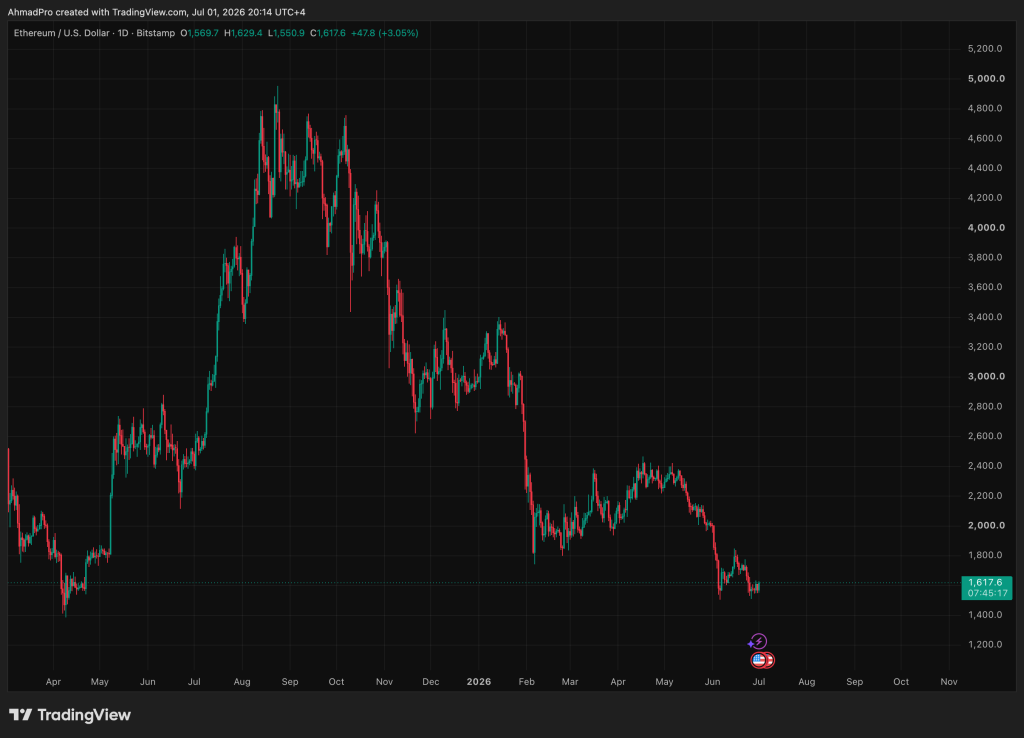
Without that, consolidation continues between $1,500 and $1,600 with buyers defending the level but lacking the firepower to push through overhead resistance.
A daily close below $1,500 opens accelerated selling with no obvious technical floor until $1,300 to $1,350, the scenario traders are hedging against most actively right now.
Kiyosaki’s $95,000 target and Tom Lee’s ETH forecast framework are both multi-year macro calls, not trading signals. Useful for framing long-term conviction. Not useful for near-term entry timing. The current technical setup needs to clean up considerably before either longer-range thesis becomes actionable for active traders.
LiquidChain Targets Early Mover Upside as Ethereum Tests Key Levels
Ethereum grinding at $1,500 raises a fair question. If near-term upside is capped and downside risk is real, where does fresh capital find asymmetric exposure right now?
ETH at current prices offers leverage to a recovery but also full drawdown risk if support breaks. Early-stage infrastructure plays present a different risk profile entirely, with their own category of uncertainty.
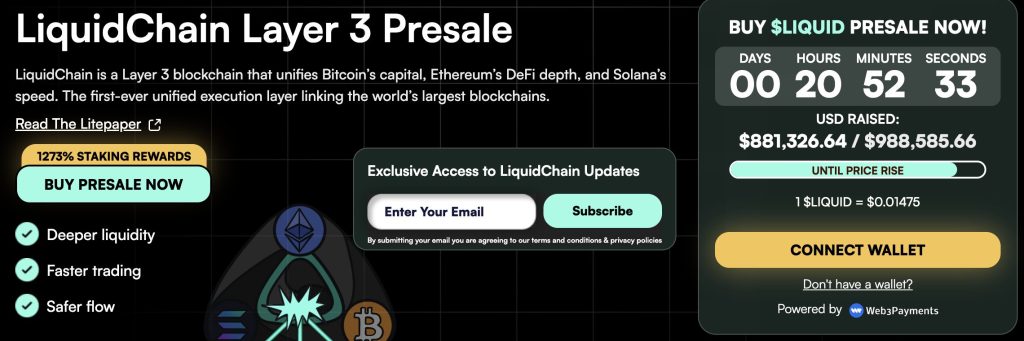
LiquidChain is a Layer 3 project positioning itself as the cross-chain liquidity layer the market is missing. The architecture fuses Bitcoin, Ethereum, and Solana liquidity into a single execution environment through a Unified Liquidity Layer, Single-Step Execution, Verifiable Settlement, and a Deploy-Once model that lets developers access all 3 ecosystems without redeployment.
The L3 thesis underpinning this raise is gaining traction as cross-chain fragmentation becomes harder to ignore. The presale is currently priced at $0.01475 with $881,054 raised to date.
Execution risk is real. Tech delivery, adoption timelines, and liquidity at launch are all unproven. That is the nature of early-stage infrastructure. The question is whether the asymmetry justifies the uncertainty.
Research LiquidChain before allocating.
The post Ethereum Price: Kiyosaki Forecats $95K as Ethereum Battles $1.5K appeared first on Cryptonews.
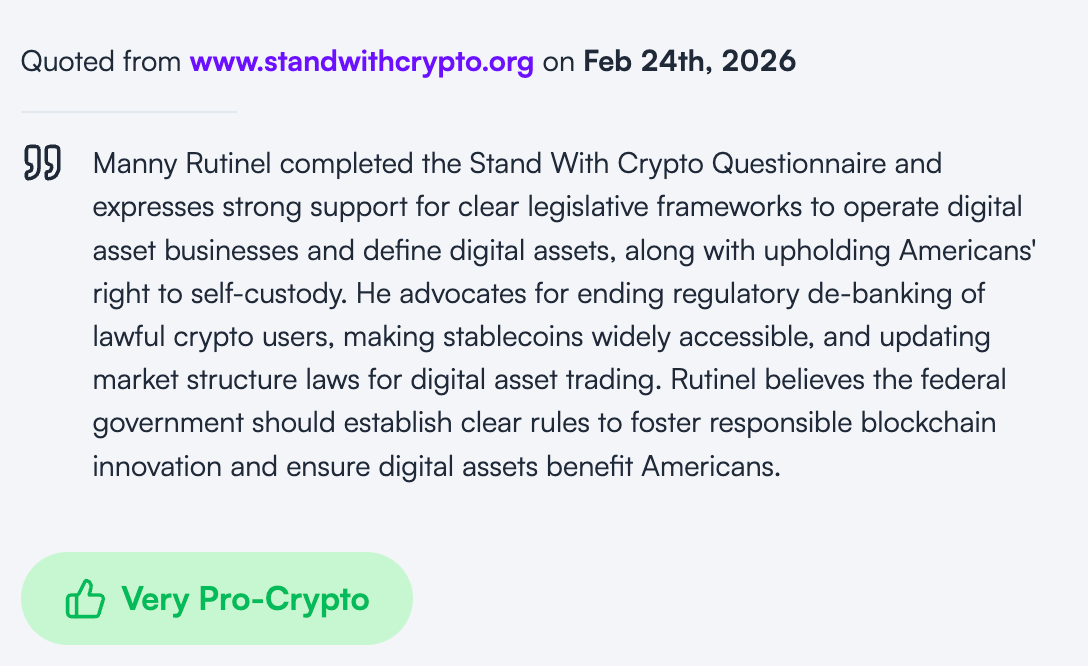
Manny Rutinel, a Democratic candidate running to represent Colorado’s 8th congressional district, has won his party’s primary and will head to the November election after being supported by a crypto-aligned political action committee (PAC).
Early on Wednesday, Rutinel reported that Rutinel would be the Democratic nominee for Colorado’s 8th district, having won with 61.7% of the vote against Shannon Bird’s 33.6%. Before the primary, the You Can Push Back Super PAC, backed by $3.5 million from Ripple Labs co-founder Chris Larsen, reportedly spent $1 million on media to support Rutinel’s run.
The Colorado Democrat has a “strongly supports crypto” rating from the Coinbase-affiliated Stand With Crypto organization, based on his answers to questions about stablecoins, market structure and regulatory clarity. Coinbase is also a major contributor to the Fairshake PAC, which supports what it considers “pro-crypto” Democratic and Republican candidates for Congress.
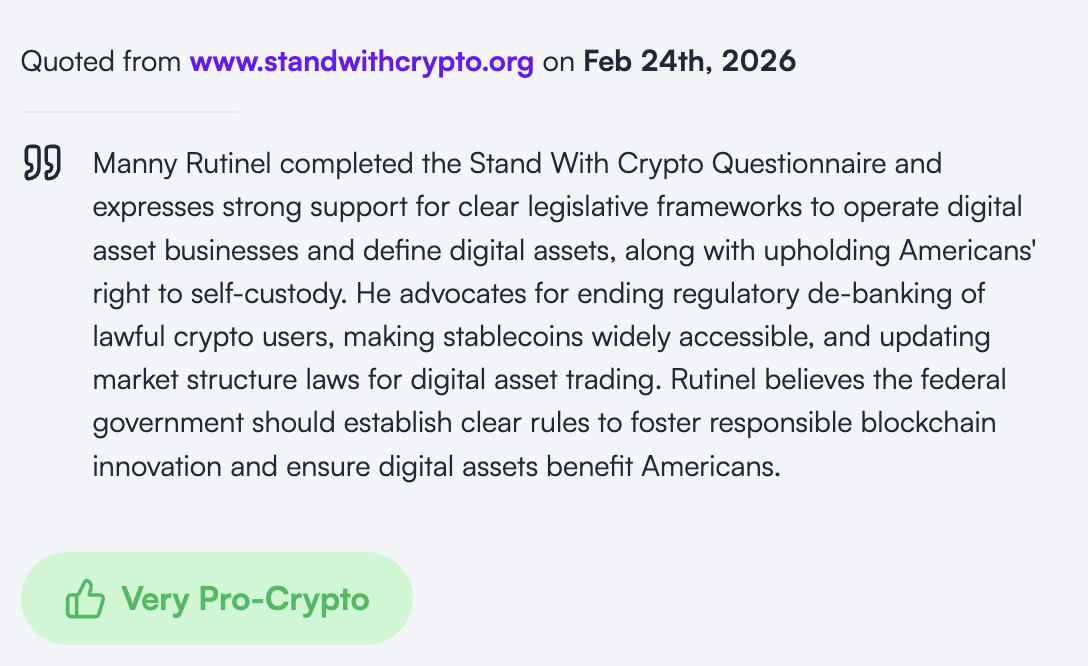
Source: Stand With Crypto
On Tuesday, the consumer advocacy group Public Citizen reported that the cryptocurrency industry had spent about $189 million so far on contributions to influence the 2026 US elections, largely through PACs. In what some experts say is the industry repeating its 2024 strategy, crypto-aligned groups are expected to continue spending to elect what they consider “pro-crypto” politicians.
Related: Senate leaders push for July passage of CLARITY Act
Cointelegraph reached out to a spokesperson for You Can Push Back but did not receive an immediate response.
Poll shows Americans think crypto has too much influence in Washington, DC
A new poll commissioned by Americans for Financial Reform released on Wednesday showed that a majority of Americans are concerned about the influence the crypto industry has on US lawmakers. The results followed financial disclosures showing that US President Donald Trump profited by more than $1.4 billion from his crypto investments.
“Voters have seen serious crypto corruption and high ranking government officials raking in profits while everyday people experience crypto-fueled losses and scams,” said Mark Hays, the associate director of crypto and fintech at Americans for Financial Reform. “Voters want crypto to have to play by the same kinds of rules as other financial companies, not dictate special privileges for itself.”
White House Deputy Press Secretary Anna Kelly said on Tuesday that neither Trump nor his family “has ever engaged — or will ever engage — in conflicts of interest.”
Among the poll’s results included a majority of Democrats, Republicans and Independents being concerned about crypto-related laws being influenced by donations from those in the industry. Americans for Financial Reform concluded that voters were likely to agree that the crypto industry needs sensible regulation.
Magazine: The end of anonymity? AI could unmask crypto’s hidden identities
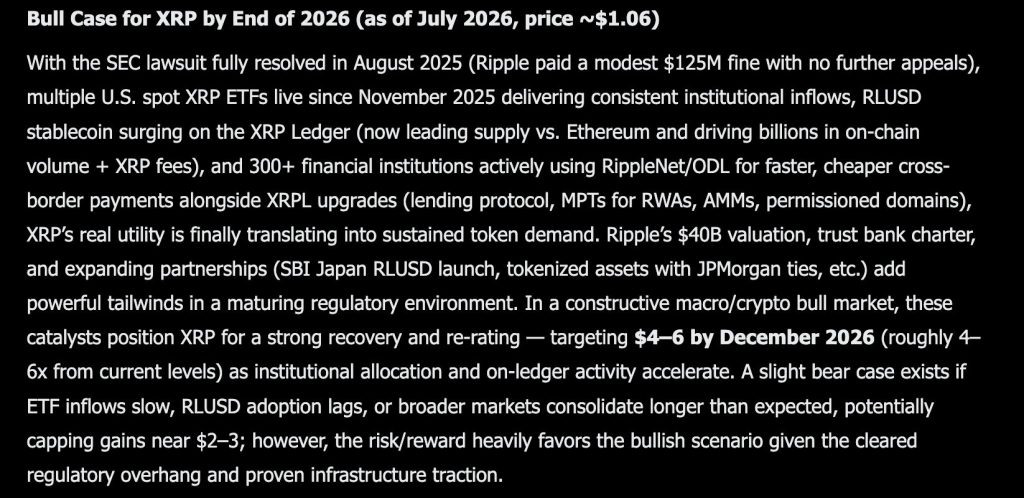
Elon Musk Grok AI just put together what might be the most detail rich XRP price prediction bull case in this entire series. The model predicts $4 to $6 by December 2026, roughly four to six times where the coin sits right now.
The bull case treats XRP as an asset whose actual utility has finally started translating into real sustained token demand, even while price refuses to acknowledge it.
XRP sits near $1.06 today, and the foundation of this thesis is a full legal clean slate, with the SEC lawsuit completely resolved in August 2025 after Ripple paid a modest $125 million fine with no further appeals.
That outcome unlocked multiple US spot XRP ETFs which have been live since November 2025 and delivering consistent institutional inflows ever since.
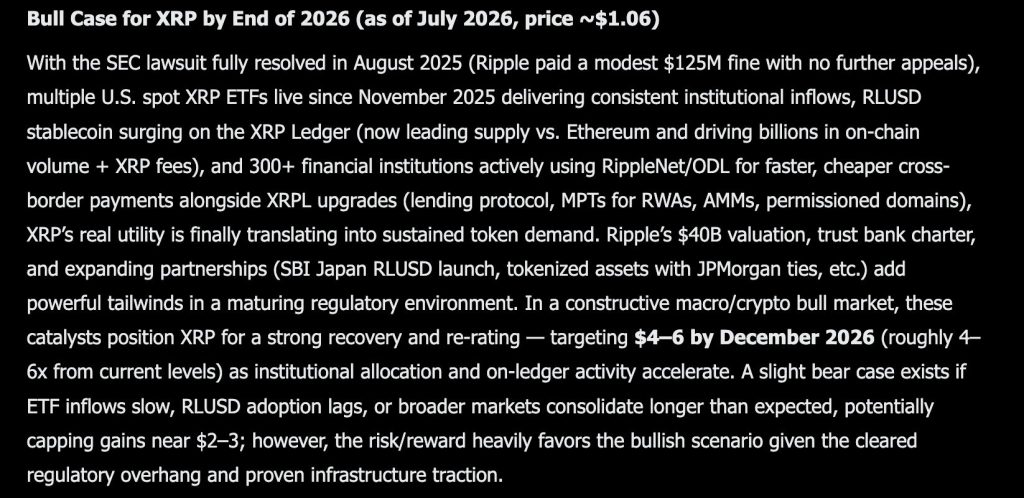
RLUSD stablecoin is surging on the XRP Ledger and has actually pulled ahead of Ethereum in supply, driving billions in on chain volume and XRP fee generation at the same time.
Over 300 financial institutions are now actively using RippleNet and On Demand Liquidity for faster and cheaper cross border payments, while the XRPL itself keeps adding infrastructure through a lending protocol, multi purpose tokens for real world assets, automated market makers, and permissioned domains.
Ripple itself carries a $40 billion valuation, has secured a trust bank charter, and keeps expanding partnerships including an SBI Japan RLUSD launch and tokenized asset work with JPMorgan ties.
If a constructive macro and crypto bull market materializes alongside all of that, Grok sees institutional allocation and on ledger activity accelerating together toward that $4 to $6 target by year end.
The bear case is narrow compared to the weight of the bull thesis. If ETF inflows slow, RLUSD adoption lags, or broader markets consolidate longer than expected, gains could end up capped near $2 to $3 instead.
Even under that scenario the model still frames the risk reward as heavily tilted toward the bull case given cleared regulatory overhang and proven infrastructure traction that now exists beneath the price surface.

XRP Price Prediction: XRP Carries A Year Of Cleared Catalysts Into A Chart That Has Not Moved Yet
The daily chart shows XRP at $1.06010 after a long, grinding decline from highs above $3.65 set back in early August of last year.
That drop has been almost entirely one directional, interrupted only briefly by a bounce near $2.40 in November before sellers regained control completely.
The most recent leg lower in June pushed price to a fresh low below $1.03 before a modest recovery brought it back to current levels. That kind of late stage capitulation after such an extended downtrend often signals sellers running out of ammunition rather than a healthy pause on the way lower.
Resistance sits first near $1.20, the level that has capped every recent bounce attempt, then a heavier ceiling near $1.60 where price stalled out multiple times earlier this year.
Support is being tested right at current levels near $1.04 to $1.06, the exact zone the chart has been grinding along for the past several days. The overall structure remains a clean descending staircase stretching back nearly a full year, with every relief rally setting a lower high than the one before it.
Momentum on the daily candles looks cautiously stabilizing rather than reversing right now, with slightly more green candles visible in the most recent sessions compared to the weeks prior.
That is a thin read but worth noting after such a long stretch of one sided selling. Given how far XRP would need to travel just to reach the low end of this prediction, the chart tells you this is entirely a story about the next five months rather than the last five, and a decisive close back above $1.60 would be the first real technical signal that Grok’s re-rating scenario has actually started.
Don’t Miss Out on Our $1,000 USDT Airdrop on ByBit
Discover: The best crypto to diversify your portfolio with
Here is What Grok AI Predicts For LiquidChain Near Future, Very Bullish
Sitting at resistance waiting for a breakout is not positioning. It is standing in line.
Bitcoin, Ethereum, and XRP have been pressing against the same ceilings for weeks. The catalyst that unlocks the next leg is perpetually one data print away.
The institutional inflows are perpetually next quarter. Every large-cap trader waiting for a breakout is waiting on a decision that belongs to someone else’s balance sheet.
Early-stage infrastructure plays by completely different rules, Copilot AI predicts. Capital that would vanish as statistical noise at Bitcoin’s scale moves a small undiscovered project by multiples.
The asymmetric return lives in one place only: the gap between what something is genuinely worth and what the market currently thinks it is worth. That gap exists because the project has not been found yet. The moment it gets found, the gap is gone.
Cross-chain fragmentation has been extracting value from DeFi participants since the first bridge went live and nobody has eliminated it. Bitcoin, Ethereum, and Solana were engineered as independent systems with no shared architecture and no intent to interoperate.
Every transaction that crosses those boundaries pays the price of that design in fees, slippage, and execution failures. Bridges were supposed to be the solution. They became the mechanism through which the problem collects its fee.
LiquidChain eliminates the fee entirely. Three networks inside a single execution layer. One deployment reaches all of them. No cross-chain tax on any interaction anywhere.
ChatGPT AI flagged it as worth watching. The presale is at $0.01454 with just over $860,000 raised.
Execution is unproven. Adoption is unknown. Established assets offer a predictable ride toward a ceiling that is already fully visible. LiquidChain is an entry point that disappears once the market finds it.
The post Elon Musk Grok AI Predicts Shocking XRP Price by End of 2026 appeared first on Cryptonews.
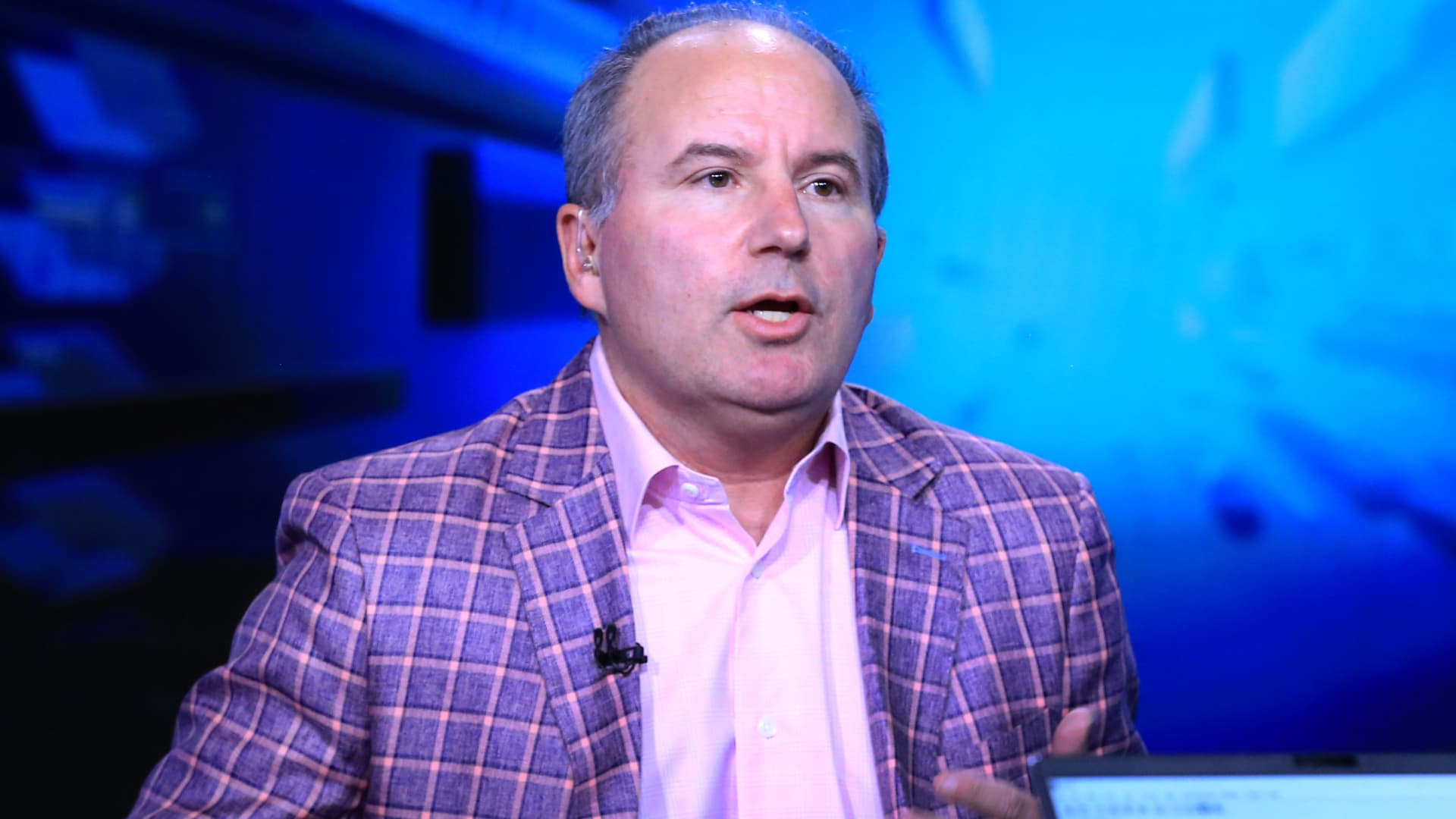
Dan Ives, Wedbush Securities analyst.
Scott Mlyn | CNBC
Dan Ives, one of Wall Street’s most recognizable technology analysts, is leaving his longtime role at Wedbush Securities to launch a merchant bank aimed at combining research, advisory, capital raising and investing under one roof.
Ives, who has spent the past eight years at Wedbush and more than 25 years covering technology stocks, said the new firm will seek to build what he described as a “modern merchant bank” focused on helping companies and investors capitalize on opportunities created by artificial intelligence and other structural shifts across the economy.
“It’s been a phenomenal eight years at Wedbush,” Ives said in an interview. “But in looking at the next opportunity, it’s to create a modern merchant bank with great partners, long-term capital and something I think will change the way Wall Street looks at investment banks.”
The firm, which Ives said will be formally announced in the coming weeks, plans to provide proprietary research, strategic advisory services, capital raising and investments across sectors including technology, energy and financials. Ives said he also intends to continue covering technology stocks in a research capacity while helping build the broader business.
The move marks an unusual career pivot for one of the sell side’s highest-profile analysts, whose bullish calls on AI beneficiaries and energetic television appearances have made him a familiar face to investors. Known for his colorful jackets and outspoken style, Ives even launched his own clothing line last year.
At Wedbush, Ives also held roles rarely seen among sell-side analysts, serving on the advisory board of Zeta Global and briefly as chairman of Eightco Holdings. At Eightco, he led a crypto treasury strategy centered on Worldcoin, the digital token associated with Sam Altman’s identity venture, World.
Ives said the firm aims to recruit talent from across Wall Street and position itself at the center of the AI-driven transformation reshaping industries.
“My career has almost built up to something like this,” Ives said. “In this AI revolution, it’s seeing the opportunities that are around the corner, and that’s what I think this firm is going to be able to do.”
President Donald Trump’s positive comments on U.S.-Iran negotiations have lifted crypto markets, pushed oil below $70, and added more than $74 billion to gold’s market value as investors reposition for easing geopolitical risks.
Summary
- Trump’s positive comments on U.S.-Iran talks helped lift crypto prices while pushing oil below $70.
- Bitcoin topped $60,400, Ethereum gained 2.8%, and the total crypto market cap rose to $2.14 trillion.
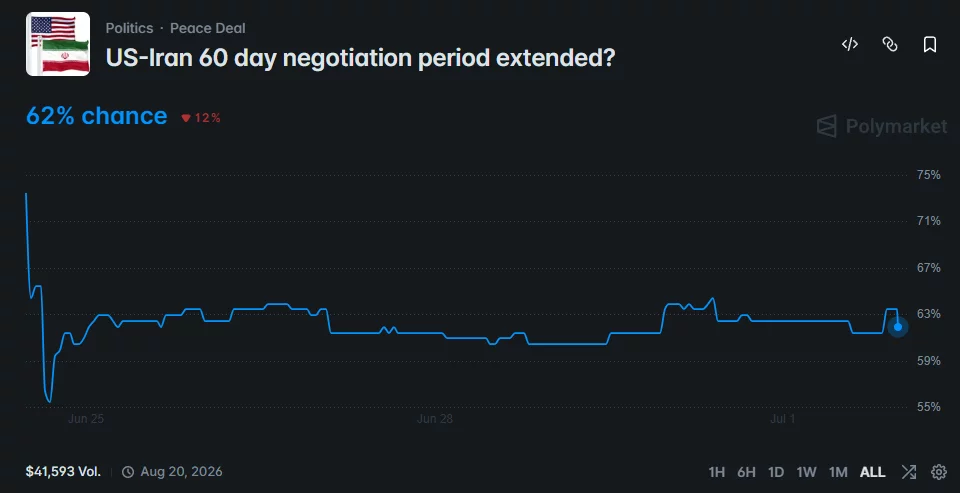
- Polymarket assigns a 62% chance of extending the U.S.-Iran negotiation period, keeping markets focused on Doha.
According to President Donald Trump, relations with Iran have remained positive and ongoing negotiations in Qatar are progressing well, prompting a swift reaction across financial markets as traders reassessed the likelihood of a prolonged Middle East conflict.
Speaking on Wednesday, Trump said Iran’s “denuclearization is well on its way” and described the meetings as “excellent” before adding, “We’ll see.” His remarks followed a Truth Social post earlier this week in which he said U.S. officials would meet Iranian representatives in Doha at Tehran’s request.
Crypto extends gains as geopolitical tensions ease
While diplomatic discussions continued in Qatar, Bitcoin climbed more than 3% to an intraday high of $60,401 before easing to $60,120 at press time. Ethereum gained 2.8% to $1,620, XRP added 1.5%, and Solana outperformed with a 5% advance. The total cryptocurrency market capitalization also increased about 2% to $2.14 trillion.
The rally came as investors reduced demand for traditional safe-haven assets tied to geopolitical uncertainty. Gold added more than $74 billion in market value during the session, while U.S. benchmark WTI crude oil fell more than 2% for the first time since tensions between the United States and Iran intensified, closing below the $70 level.
Analysts nevertheless urged traders to remain cautious despite the rebound, noting that negotiations are still underway and that market direction will continue to depend on diplomatic developments.
Earlier this week, as reported by crypto.news, renewed attention also returned to comments from Rich Dad Poor Dad author Robert Kiyosaki, whose March prediction that Ethereum could reach $95,000 by mid-2027 resurfaced across crypto social media.
Kiyosaki argued that a major global financial crisis could trigger a sharp repricing of alternative assets, forecasting Ethereum at $95,000, Bitcoin at $750,000, gold at $35,000 per ounce, and silver at $200 following such an event.
Markets remain focused on the outcome of Doha negotiations
Diplomatic efforts have continued beyond Trump’s latest remarks. U.S. representative Jared Kushner and envoy Steve Witkoff are in Qatar for another round of discussions, while Qatar and Pakistan are serving as mediators during the negotiations.
Separate talks have also taken place between Iran and Oman, which recently established a joint committee to address issues surrounding the Strait of Hormuz and other ceasefire-related matters. Those discussions have added to expectations that negotiations are expanding beyond the immediate nuclear issue.
Prediction market Polymarket currently assigns a 62% probability that the United States and Iran will extend their 60-day negotiation period. Although that estimate suggests traders expect diplomacy to continue, it does not guarantee an agreement.
For now, Trump’s latest comments and the ongoing meetings in Doha have encouraged investors to price in a lower risk of further escalation. At the same time, market participants continue watching for concrete progress, since a formal agreement could extend the current rally across risk assets, while another breakdown in negotiations or the expiration of the 60-day deadline without an extension could reverse recent moves in cryptocurrencies, oil, and other global markets.


To support its case, the report highlighted Ethereum’s technical track record, noting that the network has maintained uninterrupted uptime since launching in 2015. Citing a recent OpenZeppelin report, the foundation said Ethereum was secured by roughly $76 billion worth of staked ETH as of March 2026, while emphasizing its geographically distributed validator network, multiple independent client implementations and large developer ecosystem.
Beyond technical metrics, the report framed Ethereum as digital public infrastructure rather than simply a financial network. It pointed to existing deployments, including decentralized identity initiatives in Bhutan and Buenos Aires and Ethereum-based land registry projects in India, as examples of governments already experimenting with the technology.
The publication comes as governments around the world increasingly explore blockchain-based infrastructure for identity, asset tokenization and public records. The Ethereum Foundation said policymakers should distinguish between decentralized public blockchains and networks that remain controlled by corporations or foundations, arguing that governance structures will play a critical role in determining which platforms are suitable for long-term public sector use.
Read more: Ethereum gets a new nonprofit focused on institutional adoption
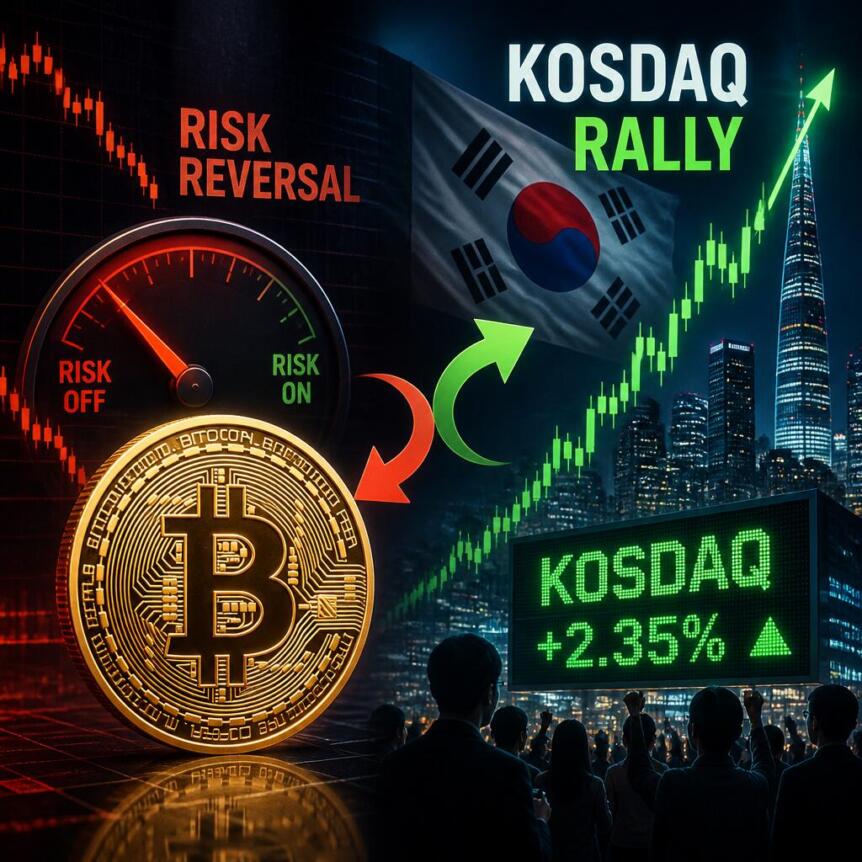
Bitcoin has made its way back into market conversations following some interesting developments in South Korea’s equity markets, which could indicate that investors are gradually increasing their appetites for risky assets. In particular, while the benchmark KOSPI has seen wide-ranging losses from various companies listed, the tech-heavy KOSDAQ saw an impressive rally.
This contrast may lead market participants to speculate whether the improvement in risk appetite could possibly move into other asset classes, including digital currencies like Bitcoin. There is no indication of any capital inflow into cryptos at the moment, but previous developments have been similar in nature.
Rotation of Capital Pushes Up KOSDAQ Index
According to market information provided by CryptoSavingExpert, about $65 billion worth of market capitalization was lost by firms listed on the KOSPI during the latest market trading session. On the other hand, KOSDAQ gained over $100 billion worth of market capitalization while appreciating by roughly 7.5%.
The trend did not indicate a general pullback from the South Korean stock market. Instead, it pointed to investors shifting their capital from big companies to small companies with high growth prospects. It indicated growing confidence among speculators and their preference for companies with higher risks but potentially bigger gains.
Pressure on Large-Cap Stocks From All Sides
Market heat maps highlighted weaknesses of major stocks in the Korean market, showing mostly red across major industry groups.
Samsung Electronics, the biggest listed firm in South Korea based on its market capitalization, saw a decline of 0.93%, which was one of the causes of weakness for the KOSPI index. The list of weak firms includes many others.
Among the biggest losers:
- Samsung Electronics – 0.93%
- SK Hynix – 0.97%
- Kumho Tire – 1.30%
- Hyosung – 0.90%
The companies belong to various industries, such as technology, manufacturing, automotive, and industrial. This indicates that institutions were selling off large-cap stocks rather than anything specific going on within a certain company.
Bitcoin Under Investor Watch Again
The equity rotation cycle has put the spotlight back on Bitcoin, as the question remains whether improved risk sentiment will extend into crypto assets.
It has been observed in the past that during periods of high interest in risky assets, crypto assets—especially Bitcoin—have occasionally seen positive performance, as they are considered high-risk assets. When investors start being more risk-tolerant, their attention tends to move towards alternate asset classes outside traditional stocks. Nevertheless, there is no certainty involved.
Prices of cryptocurrency will still be determined by a host of other factors, such as liquidity conditions in the global economy, monetary policies, macroeconomic trends, institutional involvement, and investor positioning in general. Equity rotation alone will not suffice in driving flows into Bitcoin.
Market Sentiment Might Give Early Indications
Even though Bitcoin has not enjoyed any particular upside because of changes in South Korea’s market dynamics, there is another way changing investor sentiment can be tracked through equity rotation.
The performance of the KOSDAQ and selling pressure in the KOSPI are indicators that investors have become more comfortable taking risks following a period when they preferred safe havens.
Market players will keep track of how far this changing sentiment spreads into other financial markets around the world before it starts affecting cryptocurrencies. If speculative demand strengthens, Bitcoin might be one of the coins set to gain as investor sentiment shifts toward risky assets.


Beyond the Robinhood Chain ecosystem, the company announced several additional product launches and international expansion efforts. Robinhood said it is expanding perpetual futures trading in Europe to include commodities, ETFs and foreign exchange markets alongside crypto. It also plans to launch crypto trading in the U.K. and said its services are now available in Canada following its acquisition of WonderFi.
The company also unveiled Agentic Accounts for crypto, an AI-powered trading tool that will allow eligible U.S. users to connect AI models to Robinhood’s trading infrastructure while retaining control over capital allocation and trading parameters.
“Decentralized finance unlocks possibilities beyond what traditional finance can offer, but historically, it has required technical expertise to navigate,” Johann Kerbrat, Robinhood’s senior vice president of crypto.
Robinhood’s product push shows how the lines between crypto and traditional finance are continuing to blur. The brokerage has steadily expanded beyond stocks and spot crypto trading into tokenized equities, derivatives and event contracts, better known as prediction markets. That strategy fits into the race for the “everything exchange” to host all kinds of trading and financial activity under one roof, increasingly on top of blockchain rails.
At the same time, the company also said last month it would lay off 10% of its workforce, some 290 employees, to streamline its organization and management structure.
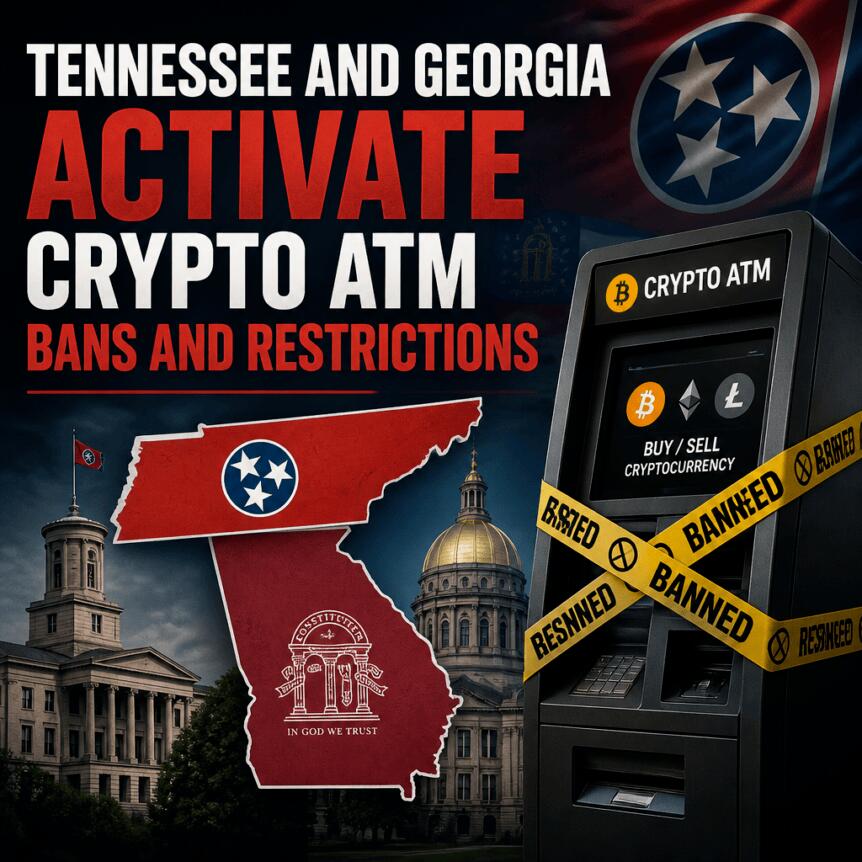
Crypto ATM availability is shrinking in the United States as new state laws designed to curb fraud and tighten consumer protections move into force. Tennessee and Georgia are the latest states to impose restrictions effective this week, following earlier actions in Indiana and upcoming enforcement in Minnesota.
The changes reflect a broader pattern: regulators and lawmakers across the US are targeting kiosks after scammers used them—often to trick vulnerable residents—into sending funds. For operators, the result is a more complex compliance landscape and, in some cases, an unsustainable business model.
Key takeaways
- Tennessee has implemented a statewide ban that prohibits the use and installation of crypto ATMs and kiosks.
- Georgia allows crypto ATMs to operate but introduces transaction caps, customer warnings, and reporting requirements, with provisions that can include refunds in certain fraud cases.
- Earlier state bans include Indiana (effective in March), while Minnesota is set to enforce a ban on Aug. 1.
- Regulatory pressure is already showing up financially, with Bitcoin Depot filing for Chapter 11 bankruptcy after signaling “substantial doubts” about its future.
Tennessee and Georgia tighten rules on crypto kiosks
Georgia and Tennessee each passed crypto ATM legislation that takes effect on Wednesday, but the approaches differ sharply. Tennessee’s law—signed by Governor Bill Lee in April—implements a complete prohibition on both installing and using cryptocurrency ATMs and kiosks.
Georgia’s law is more permissive while still aiming to reduce consumer harm. It requires operators to limit the amount of money sent by users, issue warnings to customers, and in some scenarios refund people who may have been defrauded.
Before Tennessee’s statewide ban took effect on July 1, CoinATMRadar data cited by CoinATMRadar’s Tennessee listing indicates there were 185 crypto ATMs and kiosks operating in the state.
Why lawmakers are moving from “local bans” to statewide action
The Tennessee and Georgia measures follow a wave of earlier regulatory efforts aimed at crypto ATM operators. Cointelegraph previously reported that multiple jurisdictions and municipalities have begun cracking down on kiosks, largely in response to scams in which victims—particularly older adults—were persuaded to send cryptocurrency through ATM-style machines.
Delaware and New Jersey, for example, have considered proposals that would impose complete bans, according to earlier coverage referenced in the original reporting. The direction of travel is consistent: lawmakers increasingly view crypto ATMs as high-risk access points for fraud rather than neutral on-ramps.
As these restrictions expand, operators face more than just reduced machine counts. Compliance obligations—such as monitoring transactions, handling fraud-related disputes, and meeting consumer protection requirements—can increase costs while limiting revenue options.
Regulation’s downstream effects: bankruptcy risk for operators
For the industry, the regulatory tightening is not only theoretical. The restrictions may have already contributed to at least one major operator’s distress.
In May, Bitcoin Depot filed for Chapter 11 bankruptcy. In the days leading up to the filing, the company disclosed that it had “substantial doubts” about its future amid a challenging regulatory environment and ongoing litigation.
Roshan Dharia, CEO of Echo Base and a restructuring adviser, told Cointelegraph after the Chapter 11 filing that Bitcoin Depot’s bankruptcy likely foreshadows broader pressure on the crypto ATM sector. Dharia argued that the traditional operator model relied on relatively high transaction spreads and fewer regulatory constraints, which helped offset the high costs of compliance, cash logistics, fraud remediation, and retail revenue-sharing arrangements.
That equation, Dharia said, is breaking down as states increasingly impose consumer-protection standards. Those standards can compress fees while increasing operator liability for scam-related activity and raising expectations for transaction monitoring and reimbursement—factors that can strain business viability, especially for operators with thinner margins.
Canada signals a wider policy debate
While the latest developments are focused on US states, Canada’s regulatory conversation is also moving toward harsher restrictions. Earlier, federal policymakers in Canada proposed a total ban on crypto ATMs across the country.
The proposal would still allow Canadians to buy digital assets from brick-and-mortar money services businesses, but it would remove the kiosk pathway. Officials described crypto ATMs as the “primary method” used by scammers to defraud victims and as a channel for criminals to put cash proceeds of crime into the digital asset ecosystem.
What to watch next
With Tennessee now operating under a full ban and Georgia enforcing limits and reporting, attention will likely shift to how quickly other states follow suit—particularly Minnesota ahead of its Aug. 1 deadline—and whether operators adjust by exiting certain markets or restructuring their compliance and fraud-handling processes.


Reform UK has removed a proposed crypto bill from its website amid ongoing controversy around billionaire Tether investor Christopher Harborne’s secret £5 million “gift” to the party’s leader, Nigel Farage.
The Cryptoassets and Digital Finance Bill was announced last year during the Bitcoin 2025 conference in Las Vegas. However, The Nerve reports that the bill was scrubbed from the website on May 30 this year.
The Nerve also notes that the bill’s PDF can still be found online but is no longer present on Reform UK’s own website.
A month before the bill’s removal, The Guardian revealed that Reform leader Farage was given £5 million by billionaire Christopher Harborne before he ran for election in June 2024.
Read more: Nigel Farage: £5M Christopher Harborne gift was ‘reward’ for Brexit
The gift from Harborne, who holds a 12% stake in billion-dollar stablecoin firm Tether, was kept a secret and not declared on the parliamentary register of interests.
Weeks after this report, the UK’s Parliamentary Standards Commissioner launched a probe to determine whether or not the gift breached any rules. Farage maintains it never had to be declared, and how he spends it isn’t “the public’s business.”
Reform UK crypto bill appears ‘made up by a schoolkid’
The now-deleted bill made numerous promises in a seeming attempt to portray Reform UK favorably in the eyes of crypto traders.
For example, it promised to reduce the crypto capital gains tax to 10%, introduce a UK BTC reserve, and bar banks from restricting services based on crypto transactions.
The Nerve spoke to various finance and law experts who reviewed the bill and determined that it would benefit the super-rich while failing to do little to protect users from fraud and scams.
Read more: Nigel Farage said shady alleged crypto ATM owner is ‘like a son to me’
Professor of finance at Sussex University, Carol Alexander, told The Nerve that the bill appears like it was “made up by a schoolkid.”
Meanwhile, financial economist Frances Coppola said the bill features policies “which, from an economic standpoint — even from a welfare standpoint — really make little sense.”
Dr Philipp Paech, an associate professor of law at the London School of Economics, said, “It is a nonsensical proposal in terms of public policy and would directly benefit a specific clientele.”
The Nerve also notes that across the entire bill, stablecoins are mentioned once within a list of definitions. This is despite the highly-publicised stablecoin lobbying Farage undertook against the Bank of England last year.
Many believe that the controversy over the gift has been the reason for Farage drastically cutting back on his media duties. Indeed, The Financial Times reports that he reduced his interactions with the press from 20 conferences between January and April 2026 to just one in May.
Read more: UK’s Liberal Democrats want inquiry into Nigel Farage’s £2M bitcoin purchase
Now, according to a Reform UK insider interviewed by The i Paper, Farage is scared that he may face a by-election in his constituency if the parliamentary probe concludes that he broke the rules.
One potential punishment is a 10-day suspension from Parliament. If this happens, The i Paper reports that a successful recall petition could trigger a by-election if it receives signatures from more than 10% of eligible voters
Got a tip? Send us an email securely via Protos Leaks. For more informed news and investigations, follow us on X, Bluesky, and Google News, or subscribe to our YouTube channel.

Wales breaking news plus weather and traffic updates (Wednesday, July 1)

Getty Abandons $3.7bn Shutterstock Merger After CMA Demand
Ethereum Price: Kiyosaki Forecats $95K as Ethereum Battles $1.5K

No Jackpot Winner as $257 Million Prize Rolls Over to $269 Million Monday Draw

Renter of Home in Anne Heche Crash Denies Settlement With Son

Two goals and an assist by sheer aura: Cristiano Ronaldo just entered the World Cup chat

The Big Crash – Bitcoin & The 100 Year Blueprint

UHURU WA KIUCHUMI NA FEDHA – 2026/27 (ECONOMIC & FINANCIAL FREEDOM) / REV. DR. ELIONA KIMARO

7 Financial Tips #trending #money #motivation #viral #podcast #duet #love #inspiration #best #wow
-

 Fashion5 days ago
Weekend Open Thread: Staud – Corporette.com
-

 Politics6 days ago
The House | Manchesterism won’t survive the painful trade-offs unless it gets citizens on board
-

 Crypto World2 days ago
Strategy authorizes up to $1.25B in Bitcoin sales under new capital plan
-

 Politics6 days ago
Potential 2028er World Cup attendee leaderboard
-

 Business6 days ago
Asia stock markets slide as tech shares slump
-

 News Videos3 days ago
MAJOR BITCOIN & MARKET UPDATE!!!! (MUST WATCH ASAP!!!)
-

 Tech6 days ago
A Look At A Gaggle Of Transputer Boards
-
 Crypto World6 days ago
Dell (DELL) Shares Tumble Over 5% Following Analyst Downgrade to Hold
-

 Crypto World4 days ago
Coinbase, Circle Deepen Crypto Stock Losses Despite Resilient S&P 500
-

 Business2 days ago
Australia treasurer says alleged access of prime minister’s bank data ’incredibly concerning’
-

 Crypto World5 days ago
Kraken's xStocks Opens Bending Spoons IPO Registration to EEA Retail
-

 Sports5 days ago
FIH Pro League: India defeat Pakistan 7-1, register biggest win of campaign | Other Sports News
-

 Crypto World6 days ago
Bitcoin Sparks $600M Hourly Liquidations With $65,000 Set To Become Resistance
-

 Tech4 days ago
Bluekit phishing kit adopts browser-in-the-middle for login theft
-

 Tech4 days ago
Russian hackers now target Signal backup recovery keys
-
 Crypto World5 days ago
Hyperliquid Named on Singapore MAS Investor Alert Register
-

 Crypto World5 days ago
RTX holders must register wallets before token distribution begins
-

 Crypto World7 days ago
Ripple and SBI launch RLUSD in Japan after JFSA approval
-

 Tech2 days ago
Anonymous researcher drops 0-day ‘exploitarium’ repo
-

 Sports7 hours ago
Broncos roster: OL Ben Powers (No. 74) entering final year of contract
You must be logged in to post a comment Login